What's inside
- Key Takeaways
- Quick Picks
- What Qualified a Machine for This List
- The Five Libraries, Compared Honestly
- Satin, Blanket, or Raw Edge: Choosing Your Applique Dialect
- How to Test a Machine for Applique in the First Week
- Where Applique Projects Usually Go Wrong
- Fusible, Turned-Edge, and Raw-Edge: The Three Roads Into a Motif
- Thread Is Half the Picture: Weight, Sheen, and the Bobbin’s Quiet Role
- Designing Motifs a Machine Can Actually Sew
- Settings, Worked Slowly: A Satin Stitch From First Principles
- Stabiliser, Taken Seriously: The Layer Nobody Sees
- Applique Beyond Quilts: Garments, Gifts, and the Nursery
- A First Month of Projects That Teaches in the Right Order
- Hand Applique’s Shadow: Knowing When the Machine Should Stop
- Keeping Satin Edges Clean Across a Whole Project
- Applique on Knits: The Stretch Problem and Its Manners
- The Small Print of Feet: Systems, Shanks, and the Order to Buy In
- What a Year of Applique Does to a Sewist’s Eye
- Final Recommendation
- Frequently Asked Questions
- Related Guides
As an Amazon Associate I earn from qualifying purchases. This post may contain affiliate links at no extra cost to you.
cottageverdict.com is reader-supported. When you buy through links on our site, we may earn an affiliate commission.
Here is the truth this guide is built on: no sewing machine listing on Amazon calls itself an applique machine. Search the titles below and the word never appears. The best sewing machines for applique are therefore not a product category but a set of capabilities — a satin stitch you can narrow and densify until it covers a raw edge like paint, a blanket stitch for folk-style work, stitch width and length you can adjust in fine steps, speed control for corners and curves, and compatibility with an open-toe foot so you can see the edge you are stitching. Every pick here was chosen against that capability list, from what its listing title actually states, and the gaps in those titles are named as gaps. Applique is a technique in search of the right stitch library, and this guide grades libraries, not labels.
It is worth pausing on why applique rewards this capability-first approach more than most techniques do. A straight seam either holds or it does not, and any honest machine sews one. Applique, by contrast, is a hundred small judgements per motif — width against edge, pace against curve, density against fabric — and the machine’s job is to make those judgements executable: settings that move in small steps, a pace that can be governed, a view of the needle that is never blocked. Read the five reviews below as five different answers to that single job description, ranging from a 37-stitch teacher to a 417-application library, and the right one will usually identify itself by the scale and dialect of the work you already do.
Where to buy is the ordinary online route: these are Amazon listings, and the pick names link to them. What deserves attention is not the channel but the accessory question. An open-toe applique foot is the one accessory this technique genuinely needs, and no title in this guide guarantees one in the box — so treat the foot as a planned small purchase alongside any pick, confirm the machine’s foot system before ordering it, and let the stitch library, which cannot be added later, carry the buying decision.
Key Takeaways
- No title here claims to be an applique machine; the picks earn their places through satin and blanket stitch capability, adjustability, and control.
- The Singer C7250 states the deepest library at 417 stitch applications, plus lettering, an extension table, and speed control.
- The SewLaVie 1130 counters with 300 stated stitches and a large work surface for quilt-scale applique.
- The Brother GX37 is the mechanical-hearted value route: 37 stitches, six feet included, and the stitch chart printed on the machine itself.
- An open-toe foot is a separate, planned purchase for most of these picks — budget it from the start.
Quick Picks
| Machine | Library per title | Why applique hands will like it |
|---|---|---|
| Singer 7285Q Patchwork | Not stated in title | A patchwork-and-quilting machine, the natural home ground of raw-edge and fusible applique. |
| Singer C7250 | 417 stitch applications | The deepest stated library, with speed control and an extension table for controlled satin stitching. |
| Brother CS5055 | Not stated in title | A computerised Brother with LCD, from the brand whose stitch menus applique sewists know well. |
| Brother GX37 | 37 built-in stitches | Six feet in the box and the stitches printed on the machine — the honest beginner’s applique route. |
| SewLaVie 1130 | 300 stitches | A large work surface and speed control under a wide library, aimed at home sewists. |
What Qualified a Machine for This List
The filter was technique-first. A machine needed a stitch library broad enough to plausibly contain satin and blanket variants — stated outright where the title gives a count, as the C7250’s 417 applications and the SewLaVie’s 300 stitches do — or a quilting and patchwork identity that places it in applique’s home territory, as the 7285Q’s own name declares. Adjustability mattered next: applique lives in the fine end of stitch width and length settings, where a satin stitch is tuned stitch by stitch for the fabric and thread in use. Speed control, stated in two titles, was weighted heavily, because applique’s hard moments are slow moments — pivots at points, curves around petals — and a machine that can be capped at a calm pace produces calmer edges.
Two titles state almost nothing — the 7285Q’s is a product description rather than a specification, and the CS5055’s offers only its computerised nature and LCD display. Those machines are reviewed for what their identities support and flagged where verification is owed, in the same discipline this site applies everywhere. Three of these models have appeared in earlier pools here under different buying questions; each review below is written for the applique question alone. Readers whose applique is really one part of a curtain-and-home-decor life will find the neighbouring ground covered in Best Sewing Machine for Curtains, where the same stitch judgement is applied to long seams instead of small shapes.
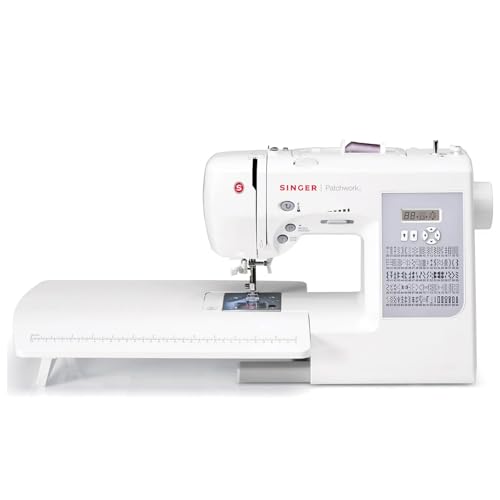
Singer 7285Q Patchwork — The Quilter’s Applique Native
The 7285Q’s title calls it a patchwork quilting and sewing machine, and patchwork is applique’s native soil: the fusible-web motifs on quilt blocks, the raw-edge flowers on wall hangings, the lettering on nursery quilts. A machine designed and sold for that world is designed for the fabric sandwiches, the small precise work, and the decorative stitching that applique consists of. Singer built the Patchwork line for quilters who piece and decorate on one machine, and the model’s long presence in that niche is its credential.
The title states no stitch count and no feature list, so this review will not invent one. What a buyer must verify is precisely the applique checklist: a satin stitch with fine width and length adjustment, a blanket stitch, and the foot system’s compatibility with an open-toe applique foot. Those are answerable questions from the full listing and the manual, and they should be answered before purchase, because a patchwork identity makes them likely but not guaranteed. Bought with that verification done, the 7285Q is the choice of the quilter who wants the machine her community already speaks the language of.
- Identity: patchwork quilting and sewing machine, stated in the listing title
- Stitch count: absent from the title — the manual’s stitch chart is the document to consult
- Satin and blanket stitches: verify presence and adjustability before ordering
- Open-toe foot compatibility: confirm the foot system on the listing
- Home territory: quilt-block and fusible applique work
- Buying route: check price on Amazon for the Singer 7285Q Patchwork, under its quilting description.
Strengths
- Born in patchwork, the discipline where applique is a daily technique.
- A long-established model with a deep owner community in quilting.
- One machine for piecing and decorating a quilt top.
Trade-offs
- The title withholds every figure, so the applique checklist needs manual verification.
- Quilting-first design may include less garment-oriented convenience.
- Newer computerised rivals state their libraries outright.
Best for: quilters whose applique lives on blocks, wall hangings, and quilt tops. Not suited for: buyers who want the stitch library printed in the listing title.
One more consideration for quilt-block artists: applique rarely travels alone. The same machine will piece the blocks the motifs land on and may quilt the finished top, so judge the 7285Q as a three-role instrument rather than a single-technique one. A machine that pieces accurately, appliqués willingly, and quilts without complaint collapses three purchases into one footprint — the arithmetic that built this model’s following in the first place.

Singer C7250 — The Library With a Throttle
The C7250’s title is the applique buyer’s favourite kind of sentence: 417 stitch applications, an extension table, accessories included, a metal frame, lettering, an LCD screen, a one-step buttonhole, and speed control. Translate that into technique. Four hundred seventeen applications means the satin and blanket families are present in depth — multiple widths, densities, and decorative edging variants to match fabric weights and design styles — and lettering opens personalised applique, where names and words are the motif. Speed control is the feature experienced applique hands ask for first, because a capped pace turns a frightening pivot into a calm one, and calm pivots are where applique quality visibly lives.
The extension table supports the work from below, which matters more as pieces grow: a quilt block or garment front dragging off the machine’s edge distorts the very edge you are satin-stitching. The metal frame keeps stitch formation consistent while you work slowly and precisely, the regime where flimsy frames produce wandering satin columns. Of the five picks, this is the one whose title alone answers the most applique questions, and it is the guide’s first recommendation for a sewist whose applique spans garments, quilts, and gifts rather than one narrow form.
- Stitch applications: 417, stated in the listing title
- Speed control: stated in the title — the applique-critical feature
- Extension table: included, stated in the title
- Frame: metal, stated in the title
- Lettering: included in the stitch offering, per the title
- Display: LCD screen, stated in the title
- Buying route: the Singer C7250 listing on Amazon itemises its accessories — check price there before adding the open-toe foot.
Strengths
- The deepest stated library here, with lettering for personalised motifs.
- Speed control and an extension table serve applique’s two physical needs.
- Metal frame steadies slow, precise satin stitching.
Trade-offs
- Library depth is wasted on a sewist who appliqués twice a year.
- The open-toe foot is still a compatibility check, not a title promise.
- Computerised controls ask a learning investment from mechanical-machine owners.
Best for: committed applique sewists across garments, quilts, and gifts. Not suited for: occasional decorators who would use a tenth of the library.
A library this size also changes how a sewist browses her own machine: the productive habit is a favourites list, built over the first month, of the dozen stitches that actually serve her motifs — two satin widths, a blanket, a few edging stitches, a straight stitch for detail. The other four hundred applications are not waste; they are the insurance that the day a project asks for the unusual stitch, it exists. Depth in a library is option value, and option value is exactly what a committed decorative sewist is buying.

Brother CS5055 — The Understated Computerised Option
The CS5055’s title says only that it is a computerised sewing machine with an LCD display, which makes it this guide’s exercise in disciplined reviewing. What is known from its identity: it sits in Brother’s computerised range, a family whose machines are staples of craft rooms precisely because their stitch menus are broad and their operation is gentle for newer sewists. Brother’s computerised models are the machines a generation of applique beginners learned on, through craft classes and quilt-along communities, and that ecosystem of shared knowledge is a real ownership asset.
What is not known from the title is everything numerical, so the applique buyer verifies: the stitch chart for satin and blanket variants, the fineness of width and length adjustment, and the foot system for open-toe compatibility. This model has appeared in an earlier pool on this site for a different intent; judged purely for applique, its case is the Brother computerised formula at an accessible position, and its risk is the homework its listing demands. A buyer willing to spend twenty minutes with the manual before ordering gets a well-mannered machine for decorative work; a buyer who purchases from the title alone is buying a surprise, and surprises are not a stitch technique.
- Class: computerised sewing machine, stated in the listing title
- Display: LCD, stated in the title
- Stitch count: absent from the title — consult the manual’s chart for satin and blanket stitches
- Speed control: not claimed in the title, so confirm if slow pivots matter to your work
- Foot system: verify open-toe applique foot availability for this model
- Buying route: check price on Amazon on the Brother CS5055 listing, then verify the stitch chart before checkout.
Strengths
- Brother’s computerised formula, familiar to craft-room communities.
- LCD-guided stitch selection suits decorative work.
- An accessible entry into computerised applique sewing.
Trade-offs
- The sparsest specification in this guide alongside the 7285Q.
- Speed control is unconfirmed by the title.
- Serious quilters may want the table support rivals state outright.
Best for: newer applique sewists who value a gentle computerised machine and will verify its chart. Not suited for: buyers who refuse pre-purchase homework on principle.
Brother’s craft-room presence carries one more practical benefit worth naming: patterns, tutorials, and class projects in the applique world are disproportionately written and filmed on Brother computerised machines, because that is what the classrooms own. A beginner following along at home on the same family of machine meets fewer translation problems — the stitch numbers, the menu logic, the foot names all correspond — and correspondence is a genuine accelerant in the first year of a technique.
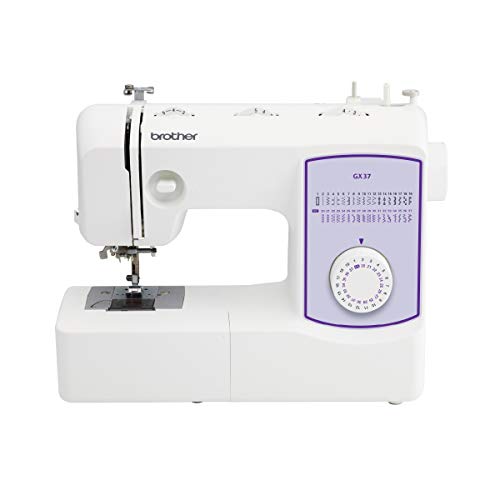
Brother GX37 — The Honest Beginner’s Route
The GX37’s title contains a detail the expensive machines should envy: the stitches are conveniently printed on the machine. Thirty-seven built-in stitches, six included sewing feet, decorative stitches among them — and the chart right there on the body, where a beginner’s eyes actually are. For applique specifically, a 37-stitch library is a focused one: the utility stitches, a zigzag family from which satin stitching is built, and decorative options for blanket-style edging. What it asks in return is technique: on a machine of this class, satin stitch quality is made by the sewist’s settings — short length, matched width, stabiliser beneath — more than by electronic assistance.
That is not a criticism; it is a description of where applique skill actually comes from. The GX37 is the pick for the sewist beginning applique who wants to learn the technique’s fundamentals on a machine that shows its whole hand, costs the least commitment in this guide, and includes six feet to start experimenting with. Its limits are real — fine width adjustment and slow-speed finesse will eventually send a growing applique artist shopping upward, likely to the C7250 — but a first machine’s job is to teach, and a printed stitch chart teaches every single day. This model appeared in an earlier pool here under another question; for applique beginners, its honesty is the recommendation.
- Stitches: 37 built-in, stated in the listing title
- Included feet: 6, stated in the title
- Stitch reference: printed on the machine itself, per the title
- Decorative stitches: included in the library, per the title
- Speed control: not claimed in the title — pace is managed by foot and hand
- Buying route: look for the Brother GX37 on Amazon and check price on the 37-stitch listing.
Strengths
- The printed stitch chart makes selection a glance, not a manual hunt.
- Six included feet start a beginner’s technique kit immediately.
- The most accessible commitment in the guide for learning applique.
Trade-offs
- A 37-stitch library bounds decorative ambition.
- Satin quality depends on the operator’s settings more than on assistance.
- Growing applique artists will outgrow it, by design.
Best for: beginners learning applique fundamentals on a transparent machine. Not suited for: experienced decorative sewists who need library depth and speed control.
There is also a household argument for this pick: it is the machine in the guide most likely to be shared — with a child learning to sew, a partner mending a shirt, a friend borrowing for a weekend project. Shared machines should be legible, and a body that prints its own stitch chart is legibility itself. Applique learned on a shared, legible machine tends to become a household skill rather than one person’s guarded hobby.

SewLaVie 1130 — The Big-Surface Library Machine
The SewLaVie 1130’s title makes three promises that map neatly onto applique at quilt scale: 300 stitches, a large work surface, and LCD with speed control, in a computerised sewing and quilting machine pitched at home sewists. The large work surface is its distinguishing claim in this guide — applique on quilt tops and large panels is a wrestling match with fabric weight, and surface is what wins it, keeping the piece supported so the needle area stays flat and the satin edge stays where you aimed it. Three hundred stitches is depth in the C7250’s direction, enough for satin variants, blanket styles, and decorative edging families to choose among rather than make do with.
Speed control completes the trio, giving the slow-pivot control the technique demands. Against the Singer, the SewLaVie trades a smaller stated library and a younger brand for its surface emphasis and home-sewist positioning; against the Brothers, it states far more of its case in its title. It appeared in an earlier pool on this site for another intent, and its applique case stands on its own three stated legs. Buyers should still run the open-toe foot compatibility check — no title here removes that step — and confirm which accessories the listing includes before assuming the surface story is the whole story.
- Stitches: 300, stated in the listing title
- Work surface: large, stated in the title — the quilt-scale applique advantage
- Controls: LCD and speed control, stated in the title
- Class: computerised sewing and quilting machine, per the title
- Intended user: home sewists, per the title’s own framing
- Buying route: the SewLaVie 1130 listing on Amazon holds the accessory details — check price there.
Strengths
- Large work surface supports quilt-scale applique pieces properly.
- 300 stitches with speed control covers the technique’s core demands.
- A fully stated title that answers most questions before purchase.
Trade-offs
- A younger brand with a thinner owner community than Singer or Brother.
- Smaller stated library than the C7250 at a similar concept.
- Accessory inclusions need the listing’s detail section to confirm.
Best for: home sewists appliquéing at quilt and panel scale. Not suited for: buyers who lean on large owner communities for patterns and troubleshooting.
Surface deserves one more sentence, because its benefit is easy to underrate from a specification sheet. Applique quality degrades at the edges of a piece first, where unsupported fabric droops and the motif’s outline drifts as you sew it. A large work surface defends exactly those edges. If your applique ambitions are measured in quilt tops rather than in motifs per onesie, weight this machine’s surface claim as heavily as any stitch count in the guide.
The Five Libraries, Compared Honestly
| Machine | Stated library | Speed control per title | Surface story | Applique personality |
|---|---|---|---|---|
| Singer 7285Q Patchwork | Not stated | Not stated | Quilting machine | Patchwork native |
| Singer C7250 | 417 applications | Yes | Extension table included | Deep and controlled |
| Brother CS5055 | Not stated | Not stated | Not stated | Gentle computerised |
| Brother GX37 | 37 stitches | Not stated | Standard bed | Transparent teacher |
| SewLaVie 1130 | 300 stitches | Yes | Large work surface | Quilt-scale library |
Satin, Blanket, or Raw Edge: Choosing Your Applique Dialect
Applique is three techniques wearing one name, and the right machine emphasis shifts with the dialect you speak. Satin-stitch applique — the smooth, dense edging of monograms, baby quilts, and team logos — demands the finest stitch adjustment and the steadiest slow-speed behaviour, which is why the speed-controlled picks lead this guide. Blanket-stitch applique, the folk dialect of wool and primitive quilts, needs a clean blanket stitch and forgives more elsewhere; even the GX37’s focused library serves it well. Raw-edge applique, where a straight or loose zigzag secures a deliberately fraying edge, asks least of the machine and most of the fabric choice. Name your dialect before you shop, and the comparison table above sorts itself: satin speakers buy control, blanket speakers buy the stitch, raw-edge speakers buy whatever sews their other work best.
Thread colour strategy belongs to the dialect decision too, and beginners underrate it. Matched thread makes the edging disappear and lets the fabric shapes carry the design — the quiet, gallery style. Contrasting thread draws a line around every shape and turns the piece graphic, almost printed. Metallic or variegated thread makes the edging itself the ornament, which suits festive and nursery work and punishes sloppy pivots without mercy, since every wobble catches the light. Decide the strategy per project, write it in the project notes, and buy the thread before the fabric is cut; the number of quilts wearing a nearly-right shade because the right one was out of stock is a small tragedy repeated in every sewing community.
Whichever dialect you choose, the support act is the same, and it is the same logic that makes unattended service work in Best Commercial Self-Serve Coffee Machines: the system around the star decides the result. For applique the system is fusible web, stabiliser matched to the base fabric, sharp small scissors, and an iron that gets used between every step. A modest machine inside a good system out-appliqués a flagship inside a careless one, every time.
How to Test a Machine for Applique in the First Week
Cut one motif — a simple leaf or heart with a point and a curve — in three fabrics, and sew it three ways on your new machine: satin edge, blanket edge, raw edge. The satin test exposes everything: whether the stitch width stays consistent around the curve, whether the point pivots cleanly at your slowest controlled pace, whether the underside shows bobbin thread where it should not. Adjust length and width in small steps and keep the samples; they become your settings diary for that fabric family. If a machine passes the leaf test on cotton, knit, and felt, it will appliqué your real projects. If it fails, it fails in the returns window, which is exactly when you want to know.
Where Applique Projects Usually Go Wrong
Before the failures, one success habit deserves naming, because it prevents most of them: the ten-minute sample. Every new combination — fabric, motif, web, stabiliser, thread — gets a small trial motif sewn, washed if the real piece will be washed, and judged before the real work begins. Ten minutes feels like a tax on inspiration. It is actually the cheapest insurance in the craft, and the artists whose work looks effortless are, without exception, the ones who pay it gladly and keep the samples as evidence.
The first failure is skipping stabiliser, because the motif looked small and the fabric looked calm; satin stitching is dense enough to tunnel and pucker almost any unsupported base, and the pucker appears at the fortieth motif, not the first. The second is satin width chosen by habit rather than by edge: too narrow and the raw edge escapes in the wash, too wide and the motif looks upholstered. The third is speed at the pivot — rushing the point is how points become blobs — which is a machine-buying failure as much as a technique one when the machine offers no pace control. The fourth is the wrong foot: a closed foot hides the edge you are meant to be watching, which is why this guide keeps returning to the open-toe question no title answers for you.
The fifth failure is subtler and lives in the garden of good intentions: choosing motifs whose inner corners and narrow bridges exceed the technique entirely. Even the fire-side patience taught by Best Wood Smokers for BBQ has its analogue here — some designs need a slower method, a turned-edge hand finish, or a simpler shape, and the mature applique artist recognises them before the fusible web comes out. Machines do not rescue geometry; they execute it.
Fusible, Turned-Edge, and Raw-Edge: The Three Roads Into a Motif
Machine applique begins before the machine, in how the motif is prepared, and each preparation asks something different of the picks above. Fusible-web applique — shapes ironed into place, then edged — is the fastest road and the one most home sewists travel; it asks the machine for edge stitching only, and every pick here can drive that road once its satin or blanket stitch is verified. Turned-edge applique, where seam allowances are folded under for a hand-look finish, asks for a delicate invisible or blanket stitch and rewards the finest stitch control, which pushes the decision toward the C7250’s depth. Raw-edge work asks least of the stitch and most of the design sense, and it is where beginners on the GX37 produce genuinely charming results in their first week.
The preparation also decides the motif’s lifespan. Fusible pieces on garments that will be washed hard need their edges fully covered — satin, not a hopeful zigzag — while wall hangings can wear the lightest edging in this guide and outlive their makers. Match the road to the object’s life, and the machine question narrows again: hard-wearing fusible work is a satin-stitch purchase, decorative wall work is a library purchase, and raw-edge charm is a fabric purchase wearing a machine’s clothes.
Thread Is Half the Picture: Weight, Sheen, and the Bobbin’s Quiet Role
Satin stitch is thread made visible — the motif’s edge is quite literally a cord of thread — so thread choice shows in applique more than in any other machine technique. A quality polyester or rayon embroidery-weight thread gives the smooth, light-catching column the technique is loved for; ordinary sewing thread works, with a flatter, more utilitarian finish that suits blanket-stitched folk work. Contrast is a design decision: thread matched to the motif disappears into it, thread contrasted outlines it like illustration, and variegated thread does the shading for you on leaves and petals. The bobbin plays the quiet role — a fine bobbin thread in a neutral shade keeps the underside tidy and stops the top thread being dragged down at density, a fault beginners misdiagnose as tension trouble for weeks.
Needles follow the thread: a fresh needle sized to the thread and fabric, changed when the satin column starts to look tired rather than when it snaps. Applique consumes needles faster than plain seaming because the needle passes through fusible web, motif, stabiliser, and background on every stitch — four layers of quiet abrasion. Every pick in this guide will show you the difference a fresh needle makes within one motif; the experienced hands simply change it before the lesson is taught.
Designing Motifs a Machine Can Actually Sew
The prettiest applique failures begin as drawings. Machine satin stitch has a minimum viable width, which means motifs with bridges narrower than that width cannot be edged cleanly — the two sides of the column meet and the shape dissolves. Inner corners sharper than a needle pivot can turn become rounded apologies. Tiny isolated details — eyes, seeds, distant birds — belong to hand embroidery or to a French knot, not to a satin column. Designing for the machine means bold shapes, generous curves, points that can be pivoted in two or three needle-down turns, and detail added afterwards with straight stitching or hand work. Every experienced applique artist designs with an invisible ruler in the drawing hand, and the ruler’s unit is the width of her favourite satin stitch.
Scaling deserves the same realism. A motif enlarged doubles its edge length but not its difficulty; a motif halved can cross the minimum-width line and become unsewable, however innocent it looks on the screen. When you fall for a small design, test the smallest bridge first, on scrap, at final size. Ten minutes of testing has saved more quilts than any feature in this guide, including the ones with four hundred stitches.
Settings, Worked Slowly: A Satin Stitch From First Principles
Set the machine up for satin as a deliberate ritual and the technique stops being mysterious. Choose the zigzag or satin stitch. Set width to cover the raw edge with a small margin — most home applique lives in a modest band of widths, wider for bold motifs, narrower for fine work. Shorten the length until the stitches lie side by side like a cord, with no background peeking between them and no ridge building up. Lower the pace if your machine allows it — two picks here state speed control, and this is the moment it earns its place in their titles. Stitch a sample on the real fabric sandwich, motif, web, stabiliser and all, and adjust one variable at a time. Width first, then length, then tension only if the underside misbehaves.
One adjustment hides inside the ritual and deserves daylight: presser foot pressure. On thick sandwiches the foot must not plough the motif ahead of the needle; on light fabrics it must hold the work firmly enough that the column forms evenly. Machines differ in how this is adjusted, and the titles here do not discuss it, so add it to the verification list for your chosen pick and to the first week’s experiments. A quarter-turn of pressure has rescued more satin edges than any thread upgrade ever sold.
Corners and points follow a choreography worth learning on the first day: sew to the point, stop with the needle down outside the edge, lift the foot, pivot the work, lower the foot, and continue — narrowing the width for a stitch or two at very sharp points so the column does not pile up. Curves are sewn slowly with frequent small pivots rather than one brave sweep. None of this is talent. It is procedure, and procedure is why two sewists with the same machine produce applique that looks a skill level apart.
Stabiliser, Taken Seriously: The Layer Nobody Sees
Ask experienced applique artists what separates their early work from their current work and most will name the invisible layer. Stabiliser is not a precaution; it is a structural material that carries the stitching while the stitching is formed, and its families map to fabric behaviour. Tearaway supports stable wovens and removes cleanly afterwards. Cutaway stays in the work, which makes it the choice for knits and any piece that will be washed and worn, because the stitches need permanent company. Wash-away serves lace-like and freestanding experiments. Fusible versions bond to the background and stop it shifting under the motif, a quiet superpower on slippery cloth. The weight matters as much as the family: too light and the satin column tunnels the fabric into ridges; too heavy and a baby quilt wears a suit of armour at every motif.
Hooping and framing deserve a mention for larger work. Most home applique is sewn flat, hand-guided, but a hoop or frame that holds the sandwich drum-tight converts wobbly edges into straight ones on big motifs, at the cost of slower repositioning. Whether your chosen machine’s bed and foot height accommodate the hoop you favour is another small verification with large consequences, and it belongs on the same pre-purchase list as the open-toe foot.
The working habit is a swatch library: for each background fabric you use regularly, one proven sandwich — fabric, web, stabiliser, settings — kept in a folder with notes. Building the library costs one quiet afternoon. Consulting it saves every future project from re-deriving physics at the moment inspiration is least patient. This is the least purchasable wisdom in the guide, and the most valuable; no machine in these five picks can stabilise for you, and every one of them will reward the sewist who stabilises well.
Applique Beyond Quilts: Garments, Gifts, and the Nursery
Although quilting claims the technique’s heartland, applique’s working life is wider, and the wider life argues for the deeper libraries. On garments, motifs must survive washing and wearing, which means satin edges fully covered, cutaway support, and thread chosen for laundry rather than for the photograph. On gifts — tote bags, aprons, cushion fronts — lettering joins the party, which is where the C7250’s stated lettering stops being a bullet point and becomes the reason a name appears on a Christmas stocking. In the nursery, applique is almost a native language: animals on blankets, initials on bibs, shapes a baby will learn words from. Nursery work adds one rule of its own — everything must be sewn down as if a determined small hand will test it, because one will.
Seasonal work concentrates these territories into a few intense weeks — stockings and gifts in December, nursery pieces around every baby shower, team and school motifs each autumn. The seasonal sewist should buy in the quiet season, learn the machine on unhurried projects, and meet the rush with a settings diary already written. Every December, craft rooms fill with people learning a new machine against a deadline, and every December the lesson is retaught: the machine was never the slow part; the learning was, and learning has its own calendar that ignores yours.
Each territory also re-weights the picks. Garment applique values the free, controlled stitch and washes its work hard; gift work values lettering and decorative range; nursery work values reliability and softness of finish. A sewist whose applique lives in all three territories is, once again, the C7250’s natural owner, while the single-territory artist can let that territory choose more narrowly and keep the change.
A First Month of Projects That Teaches in the Right Order
Week one belongs to the leaf test from earlier in this guide, sewn in three fabrics and three finishes, with every sample kept. Week two is a single bold motif on a tote front — large curves, no inner corners, satin edge — because a useful object teaches more than a sampler and forgives more than a garment. Week three introduces lettering or a name, where the sewist learns spacing, stabiliser discipline on a finished item, and the patience of small shapes; owners of the lettering-capable C7250 will feel its library earning its keep here. Week four is a quilt block with two motifs and a blanket-stitch finish, the folk dialect, which teaches how much personality a simpler stitch can carry.
Keep the four objects. Pin them where you sew. A year later they will embarrass you slightly and encourage you enormously, which is the correct emotional ratio for a craft that improves by accumulation — and they are the physical proof, when a new motif defeats you for an afternoon, that afternoons like it have been survived before.
Notice what the sequence avoids: no tiny motifs, no knits until the woven lessons are in the hands, no gift with a deadline. Skill in applique compounds quietly, and the month’s real product is not the four objects but the settings diary and the swatch folder that now exist beside the machine. Every later project consults them. Sewists who skip the apprenticeship spend the same month anyway — they spend it unpicking, and the diary they build is written in frustration rather than in samples.
Hand Applique’s Shadow: Knowing When the Machine Should Stop
A guide to machines should admit the hand’s remaining territory. Turned-edge motifs with deep inner curves, heirloom pieces meant to be repaired by future hands, and wool work where the blanket stitch is the visible soul of the object — these still belong partly or wholly to the needle held in fingers. Machine applique wins on speed, consistency, and washability; hand applique wins on softness, invisibility, and control at the smallest scales. Many serious artists work in both, machine-edging the bold shapes and hand-finishing the details, and the picks in this guide serve that hybrid practice well precisely because none of them pretends to abolish it. Buy the machine for the work it does better, and let the hand keep the work it still does best.
Keeping Satin Edges Clean Across a Whole Project
Long projects expose habits that single motifs forgive. Thread nests gather under the plate and change tension by degrees; a bobbin running low alters the underside before it runs out; fusible web residue builds on the needle until stitches start skipping in a pattern that looks electronic and is actually glue. The production habits that prevent all three are unglamorous: clean the bobbin area at every bobbin change, swap the needle at the first whisper of trouble rather than the first shout, and keep a scrap of the project’s own sandwich beside the machine for a ten-second test whenever anything feels different. Applique is dense stitching, and dense stitching is a magnifier — of good settings and of neglected ones alike.
Colour management is the other long-project discipline. A motif repeated across a quilt — twelve blocks, one flower — wants its thread bought in one purchase, because dye lots drift and a flower that changes shade at block nine announces itself forever. The same logic applies to the motif fabrics themselves. None of this is machine specification, and all of it decides whether the finished piece looks like the picture in the maker’s head. The machine executes; the system around it, once again, is where quality is actually manufactured.
Applique on Knits: The Stretch Problem and Its Manners
T-shirts and onesies are where applique earns its applause, and they are also where it fails most instructively. Knit fabric stretches under the foot, the satin column stitches the stretch into the motif, and when the garment relaxes the motif puckers into a permanent wince. The countermeasures are a system, not a setting: cutaway stabiliser that stays in the garment, a ballpoint needle that parts the knit fibres instead of piercing them, a slightly gentler stitch density so the column does not saw at its own foundation, and hands that guide without pulling — the feed must move the work, because any stretch you sew in stays in. Test the whole system on a sacrificed shirt from the same drawer as the real one; knit families differ enough that last month’s settings are a rumour, not a reference.
Machine choice plays its part through control. Slow, even feeding and fine stitch adjustment are worth more on knits than library depth, which is one more reason the speed-controlled picks sit where they do in this guide. But the honest headline stands: on knits, the stabiliser and the needle decide, and the machine referees. Buy accordingly — the sewist whose applique is ninety percent onesies should weight control and foot compatibility over raw stitch counts, and should budget the cutaway by the roll.
The Small Print of Feet: Systems, Shanks, and the Order to Buy In
Feet are where applique purchases go quietly wrong, because feet are not universal. Machines use different shank heights and attachment styles, and a foot bought for one system will not mount on another, however similar it looks in a photograph. The correct sequence is: choose the machine, read its manual’s foot specification, then buy the open-toe applique foot made for that system — ideally before the machine’s first project, so the learning month is spent sewing rather than waiting for parcels. While the parcel is open, add the other two feet applique hands reach for: a clear-view or open embroidery foot for general decorative work, and an edge-joining or stitch-guide foot for the straight detail lines that finish motifs. Three feet, correctly fitted, transform any pick in this guide more than a hundred extra stitches would.
What a Year of Applique Does to a Sewist’s Eye
There is a side effect worth warning beginners about, because it will happen to them: after a year of applique, you start seeing motifs everywhere. A child’s drawing becomes a quilt block. A logo becomes a tote design. Fabric prints stop being backgrounds and start being inventories of cuttable shapes — this flower, that bird, the exact leaf the project was missing. This is not a distraction from sewing; it is the technique’s real curriculum, the training of an eye that composes in layers. The machine facilitates it, the library feeds it, and the settings diary keeps it honest. Sewists who worry they will run out of ideas have the causality backwards: applique manufactures ideas faster than hands can sew them, which is why its practitioners accumulate project lists the way gardeners accumulate seed catalogues.
It is also why the machine decision, made well once, pays for years. The eye keeps developing long after the stitch library is memorised, and a machine bought for genuine capability — control, surface, depth — keeps pace with the eye. A machine bought as a compromise becomes the ceiling the eye keeps bumping into. Of the five picks here, each has a sewist whose eye it will never limit; the guide’s whole labour has been matching them.
Final Recommendation
For most applique sewists, the Singer C7250 is the complete answer its title advertises: depth, speed control, table support, and a metal frame. Quilt-scale workers should weigh the SewLaVie 1130’s surface just as seriously. Quilters loyal to the patchwork tradition will feel at home on the 7285Q once its chart is verified, the CS5055 serves the sewist who values Brother’s gentle computerised manners, and the GX37 remains the right first teacher. Buy the library and the control, add the open-toe foot, stabilise everything, and your motifs will sit on their backgrounds like they were always part of the cloth — which is, in the end, the whole beautiful pretence of applique.
Frequently Asked Questions
What stitch is actually used for applique?
Most often a satin stitch — a dense, narrow zigzag that covers the motif’s raw edge — or a blanket stitch for a hand-look finish. Both are built from the zigzag family, which is why stitch width and length adjustment, not a dedicated applique mode, is what a machine must offer.
Do I really need an open-toe foot?
For satin work, it is close to essential: the open centre lets you watch the needle land exactly on the motif’s edge, which is the entire skill. Many machines accept one as an accessory even when it is not included, so confirm compatibility for your pick and order it with the machine.
What stabiliser should a beginner start with?
A medium tearaway for woven cotton work and a cutaway for knits cover most beginner projects. The rule underneath the products: the denser the stitching and the stretchier the base, the stronger the support must be. Test on scraps of the real fabric before the real motif.
Can a basic machine do applique at all?
Yes — the GX37 in this guide is proof of concept. Any machine with an adjustable zigzag can satin-stitch. What better machines add is finer adjustment, slower controlled speed, and library depth, which show up as cleaner curves and calmer pivots rather than as a different technique.
Is applique a good reason to upgrade from a basic machine?
It is one of the best reasons, because applique exposes exactly the refinements better machines sell: fine stitch adjustment, governed speed, visibility at the needle, and library depth. If your basic machine’s applique frustrates you at the pivots and the curves, the frustration is diagnostic — those are the places an upgrade will be felt on the first motif.
Why does my satin stitch pucker the fabric?
Usually missing or insufficient stabiliser, sometimes a stitch density too high for the fabric, occasionally tension. Work through them in that order on scrap, changing one variable at a time, and keep the successful sample as your reference for that fabric.
Can I appliqué without fusible web?
Yes — pinning, basting, or temporary spray adhesive all hold motifs for stitching, and turned-edge work traditionally uses none. Fusible web is simply the fastest and most forgiving registration method for machine work, which is why it dominates the technique’s modern practice.
Why do my motif corners fray after washing?
The satin column likely missed the raw edge at the corner, where pivots shorten coverage, or the width was too narrow for the fabric’s fray rate. Widen slightly at corners, slow the pivot, and choose satin over loose zigzag for anything destined for the laundry.
Related Guides
Applique lives inside quilting for most of its practitioners, and the natural companion read is Best Home Quilting Sewing Machines, which covers the machines built for the quilt itself — the ground your motifs will live on.


