What's inside
- Key Takeaways for the Middle Tier
- Quick Picks: Six Mid-Range Dishwashers at a Glance
- How We Chose These Picks From a Crowded Middle
- Side by Side: The Six Machines on the Numbers That Are Actually Stated
- What Actually Separates the Middle Tier From the One Below It?
- Loading a Third Rack Without Turning It Into a Junk Drawer
- Keeping a Steel Tub Bright and a Filter Honest
- Measuring the Opening, the Aisle, and Your Own Habits Before Ordering
- Decoding the Cycle Menu You Will Actually Use
- Slip-Ups That Shrink a Mid-Range Machine to a Basic One
- Parts, Service, and the Decade After the Delivery Van Leaves
- Three Households, Three Different Winners
- Final Recommendation
- Installation Day: What This Tier Asks of Your Plumbing and Wiring
- Frequently Asked Questions
- Related Guides
As an Amazon Associate I earn from qualifying purchases. This post may contain affiliate links at no extra cost to you.
cottageverdict.com is reader-supported. When you buy through links on our site, we may earn an affiliate commission.
Where these machines are sold: every pick below is a built-in 24-inch model listed on Amazon, and each name in this guide links to its own listing so you can check price on Amazon and read the current configuration before ordering. Mid-range stock turns over faster than the premium brands, so if a finish or rack layout matters to you, confirm it on the listing page rather than trusting a screenshot from an older model year.
The best mid-range dishwashers occupy the most contested ground in the appliance aisle, and that is exactly why they reward careful reading. Step below this tier and you get plastic tubs, two racks, and drying that leaves puddles in upturned mugs. Step above it and the extra money mostly buys silence measured in single decibels, designer panels, and wash systems whose benefits are hard to see on a plate. In between sits a band of machines with stainless or stainless-lined tubs, a genuine third rack, top controls that keep the front clean, and sound ratings in the mid-to-high forties — the features that change daily life without the flagship surcharge. This guide sorts six of them by the one thing each does best.
What “mid-range” should mean in practice is a tub that resists staining and helps drying, enough rack flexibility for a household that cooks, and a sanitize option for baby bottles, cutting boards, and the casserole dish that held raw chicken. All six picks here clear that bar on paper, because their listing titles confirm those traits directly. Where a title stays silent — interior light, soil sensor brand names, exact cycle lists beyond what is printed — this guide says so instead of guessing, and the spec boxes flag those gaps so you can check the manufacturer documentation before the machine is plumbed in.
One more framing note before the picks: three of the six are Kenmore models, and that is not laziness. Kenmore’s current built-in line is heavily concentrated in this tier, with overlapping names that confuse shoppers. Part of the work below is separating three Kenmores that look interchangeable in a search result but differ in rack design, drying system, and noise — the EasyReach lift rack, the UltraWash Plus wash system, and a plainer three-rack stainless model. If you only read one section closely, read those three against each other.
Key Takeaways for the Middle Tier
- A stainless steel tub appears in five of these six listings, and it is the single feature that most separates this tier from builder-grade machines.
- Every pick here carries a third rack in some form, but only one — the Kenmore 22-14632 — describes its third rack as removable in the title.
- Sound ratings cluster tightly: two models state 45 dBA, three state 49 dBA, and none of the six claims the ultra-quiet low forties.
- Drying is where these machines diverge most: fan-assisted TurboDry, heated dry, and the Empava’s auto-opening door are three different answers to the same wet-plastics problem.
- All six titles state ENERGY STAR certification, so efficiency alone will not separate them; rack design and drying should.
Quick Picks: Six Mid-Range Dishwashers at a Glance
| Machine | Badge | Why it earned its slot |
|---|---|---|
| Kenmore EasyReach Lift Rack | Lift-rack pick | Its bottom rack lifts toward you, which changes loading more than any cycle on this list. |
| Empava 24-Inch 15-Place | Door-drying pick | The door opens itself at the end of the cycle to let steam escape. |
| Kenmore UltraWash Plus 22-14632 | Fast-cycle pick | Accela Wash plus a removable third rack makes it the flexible sprinter of the group. |
| Kenmore Three-Rack Stainless Tub | Straightforward stainless pick | Three racks, a steel tub, and top controls with nothing you need to decode. |
| Cosmo COS-DIS6502 | Smudge-resistant pick | Fingerprint-resistant stainless suits kitchens where the dishwasher front is always being touched. |
| KOSTCH 24-Inch Third Rack | Quiet value pick | Eight programs and a 45 dBA rating at the accessible end of this tier. |
How We Chose These Picks From a Crowded Middle
The screening started with the listing titles themselves, because a title is the one specification a manufacturer cannot quietly revise later. To stay in contention a machine needed a confirmed third rack or an equivalent capacity answer, a stated sound rating, and ENERGY STAR certification printed in the title. That filter removed the plastic-tub entry models and the panel-ready specialty machines, leaving the six reviewed here. Readers comparing across finishes will also find our companion piece on Best White Dishwashers useful, since several of these same wash systems are sold in white with different rack compromises.
Within the survivors, we weighted drying more heavily than cycle count. Eight wash cycles versus six sounds like a rout until you notice that most households rotate between two cycles for years; nobody’s Tuesday depends on a dedicated crystal program. Drying, by contrast, is experienced after every single load. A machine that leaves the tops of mugs pooled will annoy you roughly three hundred times a year, which is why the Empava’s auto door dry and Kenmore’s TurboDry variants get long discussions below while cycle menus get short ones.
Noise was the third filter, and here honesty matters: the difference between 45 and 49 dBA is audible in a quiet open-plan room and nearly irrelevant behind a closed kitchen door. We treated 45 dBA models as open-plan picks and 49 dBA models as perfectly reasonable for separated kitchens, rather than pretending four decibels should decide a purchase on its own. Rack mechanics came fourth — a lift rack or a removable third rack is a daily physical interaction, not a spec-sheet abstraction — and control placement last, since top versus front control is mostly an aesthetic and household-habit question.
Finally, a note on what this guide refuses to do. It does not import specifications from retailer Q&A threads, prior model years, or look-alike model numbers. When a title does not state a feature, the spec box below says the listing is silent on it and points you to the manufacturer’s documentation. That discipline costs a few dramatic claims, but it means every number you read here — 45 dBA, 15 place settings, 8 cycles — can be traced to the listing itself.

Kenmore EasyReach Lift Rack — Lift-rack pick
The EasyReach idea sounds like a gimmick until you picture the actual motion it replaces. Loading a conventional bottom rack means bending at the waist while holding a heavy skillet, then reaching to the back corners where the big bowls live. Kenmore’s answer, stated plainly in the title, is a lift bottom rack: the rack rises toward you so the loading happens nearer counter height. For anyone with a bad back, a pregnant belly, or a tall stack of sheet pans, that single mechanical change is worth more than a dozen wash programs, and it is unique among the six machines here.
Around that rack sits a specification that reads like the tier’s checklist done properly. The tub is stainless steel, the rack count is three, the controls hide on the top edge, and the stated sound rating is 45 dBA — tied for quietest in this guide. The title does not name a drying system, which is the one gap to interrogate before buying: steel tubs help condensation drying considerably, but if your loads are heavy on plastic storage containers, ask the manufacturer documentation how this model handles them. Everything else about the package is unambiguous.
- Configuration: 24-inch built-in, top control
- Tub: stainless steel, per the listing title
- Racks: 3 rack design with EasyReach lift bottom rack
- Stated sound level: 45 dBA
- Drying system: the listing title is silent on drying — confirm the method in Kenmore’s own documentation
- Certification: EnergyStar certified, per the title
- Where to buy the Kenmore EasyReach Lift Rack: sold through its Amazon listing — head there to check price on Amazon for the current configuration
Strengths
- The lift rack removes the deepest bend in the loading routine, a benefit you feel twice a day.
- At 45 dBA it matches the quietest machines in this roundup while keeping a steel tub.
- Top controls leave the door front completely clean, which suits handle-matched kitchen designs.
Trade-offs
- A lifting mechanism is one more moving system to keep aligned and clean over the machine’s life.
- The title names no drying technology, so plastic-heavy households must verify before committing.
- Lift racks can reduce the effective clearance drama at the bottom only if you actually use the feature daily.
Best for: households where loading comfort matters as much as washing power, especially anyone who finds deep bending genuinely difficult. Not suited for: buyers who want a named, fan-driven drying system confirmed in writing before they spend.

Empava 24-Inch 15-Place — Door-drying pick
Empava’s distinguishing move is at the very end of the cycle: the door opens automatically to release steam, a feature the title calls Auto Door Dry. Anyone who has cracked a dishwasher door by hand on a winter evening to let a load finish drying will recognise the logic instantly. Escaping steam is the cheapest drying energy there is, and automating it means the benefit arrives even when you start the machine before bed and unload at breakfast. In a tier where drying systems are the real battleground, this is the most elegant answer on the list.
The rest of the specification is full-sized and conventional in the best sense: a stainless steel tub, 15 place settings, eight wash cycles, a third rack, and a stated 49 dB sound level. That noise figure is the joint loudest here, so the Empava makes most sense in a kitchen separated from living space, or in a household that runs the machine while out or asleep. Its brand support network is thinner than Kenmore’s, which is worth a thought about long-term parts, but on features per the title it is the most complete sheet in this guide.
- Configuration: 24-inch built-in
- Tub: stainless steel, per the listing title
- Capacity: 15 place settings
- Programs: 8 wash cycles, with a 3rd rack fitted
- Stated sound level: 49 dB
- Drying: Auto Door Dry — the door opens at cycle end, per the title
- Certification: ENERGY STAR certified, per the title
- Where to buy the Empava 24-Inch 15-Place: available via its Amazon listing — visit the listing to check price on Amazon before you order
Strengths
- Automatic door opening tackles the wet-plastics problem without a fan or a heating element working overtime.
- Fifteen place settings and eight cycles give it the broadest stated menu in this group.
- The steel tub supports the condensation side of drying as well as resisting odours and stains.
Trade-offs
- At 49 dB it is among the louder picks here, noticeable in open-plan living.
- An auto-opening door needs clear space in front and a household that will not trip over it at midnight.
- Empava’s service footprint is smaller than the legacy brands, which matters more in year eight than year one.
Best for: families who run the dishwasher overnight and want dry dishes at breakfast without touching the door. Not suited for: open-plan flats where a 49 dB wash cycle would compete with the television.
Kenmore UltraWash Plus 22-14632 — Fast-cycle pick
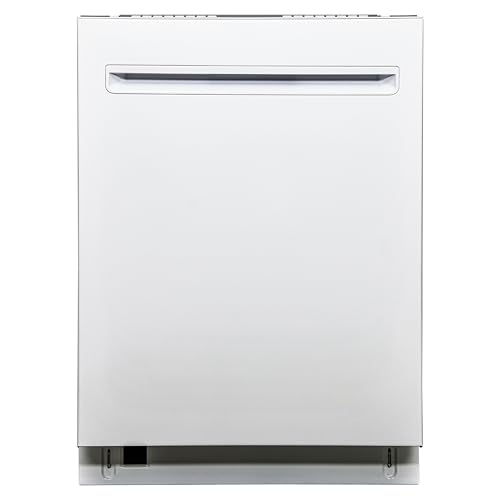
The 22-14632 is the Kenmore for people who run the dishwasher like a laundry machine — frequently, impatiently, and with mixed loads. Its title stacks the evidence: UltraWash Plus as the wash system, SmartWash to sense the load, Accela Wash when the load cannot wait, a Sanitize Rinse for the loads that need heat with intent, and TurboDry to finish. Then it adds the detail that quietly matters most: the third rack is removable. Most third racks are fixed furniture you either love or endure; this one can come out on the days a tall stockpot needs the clearance instead.
Capacity is 15 place settings at a stated 49 DBA, and the finish on this listing is white — the only white-fronted machine in an otherwise stainless-leaning group, which makes it a natural bridge to readers who want mid-range mechanics without a stainless front. The wash-system names are Kenmore’s own vocabulary, and the title does not translate them into cycle minutes or water figures, so treat Accela Wash as a promise of a faster option rather than a timed claim. Judged on flexibility, though, no other pick here lets you reconfigure the interior this completely.
- Configuration: 24-inch built-in, white finish on this listing
- Wash systems named in the title: UltraWash Plus, SmartWash, Accela Wash
- Rinse and dry: Sanitize Rinse and TurboDry, per the title
- Racks: removable third rack
- Capacity and sound: 15 place settings, 49 DBA stated
- Certification: ENERGY STAR certified, per the title
- Where to buy the Kenmore UltraWash Plus 22-14632: listed on Amazon — open its page to check price on Amazon and confirm the white finish
Strengths
- The removable third rack solves the tall-item problem that fixed third racks create.
- A named fast cycle plus sensor washing covers both the rushed and the routine load.
- TurboDry gives plastic containers a better chance than condensation alone.
Trade-offs
- At 49 DBA it shares the group’s louder end, so placement near bedrooms is a compromise.
- The marketing names tell you a system exists, not how many minutes it saves — verify timings in the manual.
- White will either blend with a white kitchen or look like the odd appliance out in a stainless one.
Best for: busy households that alternate between marathon Sunday loads and quick midweek turnarounds. Not suited for: silence-first buyers, who should stay with the 45 dBA pair at the top and bottom of this list.

Kenmore Three-Rack Stainless Tub — Straightforward stainless pick
Some buyers read the 22-14632’s feature stack and feel tired. This is their Kenmore. The title is almost plain: three racks, a stainless steel tub, top control, energy efficiency, an ultra-quiet claim quantified at 49 dBA, and a high-capacity description. There is no trademarked wash-system vocabulary to decode and no special rack mechanism to maintain. What you are buying is the tier’s core hardware — steel tub, third rack, hidden controls, stainless front — assembled without ornament, and for a rental property, a second home, or a household replacing a dead machine under time pressure, that plainness is a feature.
The honest caveat is that the title’s plainness extends to drying: no drying system is named at all. Steel tubs retain heat and shed condensation better than plastic, so everyday ceramic and glass loads will dry respectably, but the manufacturer documentation is where you confirm what happens to a load of lunch containers. The 49 dBA figure also deserves a shrug rather than alarm — it matches two other picks here and sits comfortably within what a closed door renders irrelevant. Think of this model as the reference point of the group: everything else in the guide is a variation on its formula.
- Configuration: 24-inch built-in, top control, stainless steel finish
- Tub: stainless steel, per the listing title
- Racks: 3 racks
- Stated sound level: 49 dBA, described as ultra-quiet in the title
- Drying method: not named in the listing title — check the manufacturer’s documentation for the drying specification
- Certification: described as energy efficient in the title
- Where to buy the Kenmore Three-Rack Stainless Tub: sold on Amazon — go to the product page to check price on Amazon
Strengths
- The essential mid-range hardware is all present, with no gimmick tax added.
- Top controls and a stainless front give it the integrated look this tier is bought for.
- A simple feature set means fewer proprietary systems to understand or service.
Trade-offs
- No named drying system leaves the plastics question open until you read the manual.
- Nothing here distinguishes it for a specific household problem the way the lift rack or door-dry do.
- The energy wording in the title is qualitative, so compare its certification detail on the listing itself.
Best for: buyers who want the tier’s standard specification without learning a new vocabulary of wash systems. Not suited for: shoppers whose main frustration with their old machine was wet plastics — pick a named drying system instead.
Cosmo COS-DIS6502 — Smudge-resistant pick
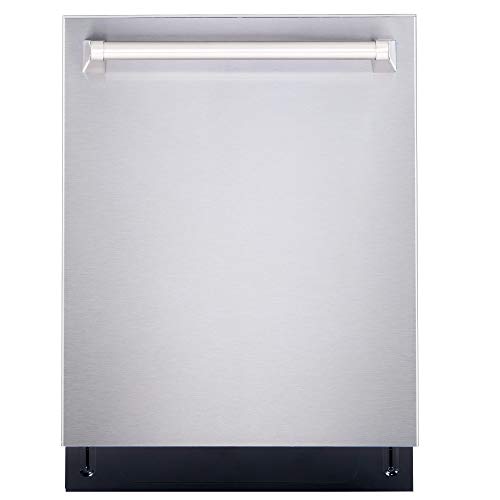
Cosmo’s COS-DIS6502 comes from the brand’s Lumin Collection, and its headline trait is the one stainless owners complain about most: the title states fingerprint resistance. In a household with children, the dishwasher front is a handprint gallery within a week, and a finish that shrugs off smudges saves a small but real daily irritation. Behind the front, the specification is tall-tub and top-control, with three racks, a heated dry function, and what Cosmo calls advanced sanitize technology — a combination that covers the tier’s bases with a slightly design-led accent.
Two silences in the title shape the buying conversation. No sound rating is stated, and no place-setting count is given, so both numbers must come from the listing body or Cosmo’s documentation rather than from this guide. That is not a disqualification — the machine has been sold in this configuration for years — but it does mean the Cosmo rewards a careful pre-purchase read more than its rivals do. Households sensitive to noise should treat the missing dBA figure as a genuine unknown, not a detail to wave through, especially in open-plan spaces.
- Configuration: 24-inch built-in, top control, tall tub
- Finish: stainless steel, fingerprint resistant per the title
- Racks: three racks, per the title
- Drying: heated dry function, per the title
- Sanitize: advanced sanitize technology, per the title
- Sound level and capacity: neither figure appears in the listing title — look them up in the manufacturer’s documentation
- Where to buy the Cosmo COS-DIS6502: available through Amazon — follow its listing link to check price on Amazon
Strengths
- Fingerprint-resistant stainless answers the most common cosmetic complaint about this finish.
- Heated dry is the old, reliable answer to wet dishes and it is confirmed in the title.
- A tall tub with three racks gives flexible loading without a premium brand badge.
Trade-offs
- The absence of a stated dBA figure makes it the riskiest pick for noise-sensitive open-plan homes.
- Capacity is unstated in the title, so large families should confirm place settings before ordering.
- Cosmo’s dealer and parts network is narrower than Kenmore’s long-established channels.
Best for: design-conscious households with children, where the front of the machine is touched constantly. Not suited for: buyers who need a guaranteed decibel figure in writing before they commit.

KOSTCH 24-Inch Third Rack — Quiet value pick
KOSTCH is the name least likely to be recognised in this guide, and its title works hard to overcome that: top control, eight wash programs, a third rack, a large-capacity claim quantified at 15 place settings, ENERGY STAR certification, and — the headline — a 45-dBA ultra-quiet rating that ties the Kenmore EasyReach for the quietest stated figure here. On paper, that is the complete mid-range formula at the tier’s accessible end. The question the brand asks you to accept is not about features but about longevity: parts availability and service familiarity in ten years’ time.
For the right buyer, that trade is rational. If the machine is going into a renovation you expect to redo, a rental you manage yourself, or a first home where budget discipline matters more than brand heritage, the KOSTCH’s specification is difficult to argue with. The title does not name a tub material or a drying system, and both omissions matter — a plastic tub would change the drying and staining conversation entirely — so this is the pick where reading the full listing and the manufacturer’s documentation is not optional homework but the purchase itself. Readers who enjoy this kind of specification detective work may also like Best Manual Pasta Machines, another category where lesser-known makers reward close reading.
- Configuration: 24-inch built-in, top control, slide-in style
- Programs: 8 wash programs, per the listing title
- Racks: third rack fitted
- Capacity: 15 place settings
- Stated sound level: 45 dBA, described as ultra-quiet
- Tub material and drying: the title does not state either — verify both in the manufacturer’s documentation before ordering
- Certification: ENERGY STAR certified, per the title
- Where to buy the KOSTCH 24-Inch Third Rack: offered on Amazon — use the listing to check price on Amazon and confirm the tub material
Strengths
- A 45 dBA rating with 15 place settings is a combination the big brands charge more to badge.
- Eight programs give small households unusual cycle choice at this end of the tier.
- The third rack is standard, not an option buried in a higher trim.
Trade-offs
- Brand recognition and long-term parts support are the weakest in this group.
- Unstated tub material is a significant unknown for drying performance and durability.
- Resale-minded renovators may find an unknown badge harder to present to buyers.
Best for: budget-disciplined buyers who will verify the tub and drying details and accept brand risk for specification. Not suited for: anyone buying a fifteen-year appliance who wants a service network with a long local history.
Side by Side: The Six Machines on the Numbers That Are Actually Stated
| Machine | Tub (per title) | Stated sound | Drying named in title |
|---|---|---|---|
| Kenmore EasyReach Lift Rack | Stainless steel | 45 dBA | None named |
| Empava 24-Inch 15-Place | Stainless steel | 49 dB | Auto Door Dry |
| Kenmore UltraWash Plus 22-14632 | Not stated | 49 DBA | TurboDry |
| Kenmore Three-Rack Stainless Tub | Stainless steel | 49 dBA | None named |
| Cosmo COS-DIS6502 | Stainless steel finish, tall tub | Not stated | Heated Dry |
| KOSTCH 24-Inch Third Rack | Not stated | 45 dBA | None named |
Read the table as a map of certainty rather than a league ladder. The Empava and the 22-14632 answer the drying question in writing; the Cosmo answers it with heated dry; the other three ask you to consult documentation, which is a task, not a verdict. Sound shows the opposite pattern — four stated figures, one silence, and a cluster tight enough that kitchen layout matters more than the number itself.
What Actually Separates the Middle Tier From the One Below It?
Walk one tier down and three things disappear. The tub becomes plastic, which stains, holds odours longer, and sheds condensation less willingly. The third rack vanishes, so cutlery returns to a basket that eats lower-rack space and utensils nest together and emerge spotted. And the sound rating drifts into the mid-fifties, a level at which a dishwasher stops being background and becomes a presence. Every machine in this guide answers at least two of those three regressions directly from its title, and most answer all three.
The subtler separator is drying architecture. Budget machines dry by residual heat and hope. This tier adds machinery to the problem: fans that move air, doors that open themselves, elements that heat deliberately. That is why this guide weighted drying so heavily in selection — it is the clearest line between a machine that merely washes and one that finishes the job. If your current dishwasher’s failure mode is a puddle in every upturned mug, shop this tier by its drying column and ignore almost everything else.
Controls tell the same story. The tier below still leans on front-facing button strips that interrupt the door’s face and collect splashes; this tier hides its controls along the door’s top edge, which is why five of these six machines can present an unbroken stainless or white front. The practical gain is a cleaner look and buttons a toddler cannot reach; the cost is that you judge a running cycle by a small indicator rather than a countdown you can read from the sofa. Neither is objectively better, but the shift is one of the visible signatures that you have crossed into this band of the market, and it is worth deciding which side of it your household prefers before the machine is installed and the preference becomes permanent.
There is also a longevity argument. Stainless tubs tolerate the hottest sanitize water without degrading, resist the micro-scratches that harbour smells in plastic, and generally outlast the pumps around them. A mid-range machine is typically bought as a ten-to-fifteen-year appliance, and the tub is the one component that cannot be swapped when it ages. Paying the tier’s premium for steel is less about this year’s performance than about year twelve’s.
Loading a Third Rack Without Turning It Into a Junk Drawer
The third rack fails in most households for a predictable reason: it becomes the place utensils go to be forgotten, laid in overlapping piles that shield each other from the spray. Used deliberately, it is the best cutlery system a dishwasher offers. Lay pieces in a single layer, handles aligned, with spoons separated from forks so nothing nests. Long, flat items — spatulas, tongs, serving spoons, the knife from the carving set — belong up here, laid lengthwise where they cannot slip through and foul the spray arm below.
Reserve the lower racks by weight and soil. Plates stand in the bottom rack’s plate slots facing the centre; bowls angle rather than stack; the heaviest pots go at the back and sides where the rack structure is strongest. The middle rack takes glasses and mugs, angled so their bases cannot pool water — the single habit that most improves drying on any machine in this guide. And learn your machine’s one removable element: on the 22-14632 the whole third rack lifts out, which converts the machine for a stockpot day in seconds.
A word on the lift rack of the EasyReach, since technique matters there too. Raise it for loading and unloading, then confirm it has settled fully back before closing the door; a rack left half-latched changes spray-arm clearance underneath. Treat the mechanism like a drawer slide — keep the tracks free of grit, and never use the raised rack as a shelf for items waiting their turn. Small disciplines, but rack mechanisms reward them disproportionately.
Keeping a Steel Tub Bright and a Filter Honest
Maintenance in this tier is unglamorous and decisive. The filter — on modern machines a cylindrical mesh at the tub floor — should be rinsed monthly; a clogged filter recirculates fine soil onto glassware and is the leading cause of the gritty film owners blame on detergent. Spray-arm nozzles clog with the same debris, so spin each arm by hand occasionally and clear any blocked jet with a toothpick. These tasks take four minutes and restore a machine’s original wash pressure more completely than any premium detergent pod.
For the tub itself, run an empty hot cycle with a dishwasher cleaner or a cup of white vinegar in an upright bowl on the top rack once a month, especially in hard-water postcodes where scale dulls steel and coats heating elements. Wipe the door gasket’s lower fold weekly — it is the one place moisture and food residue sit undisturbed — and leave the door ajar between runs when the household routine allows, which keeps the interior smelling like nothing at all. Readers in hard-water districts will find the dedicated guidance in our related coverage below worth their time as well.
Water temperature at the tap matters more than most owners realise. A dishwasher fills with hot water from the household supply, and if the heater is set low or the run from the tank is long, the first fill arrives lukewarm and every cycle starts behind. Running the kitchen tap until it steams before starting the machine is an old installer’s trick that costs a litre of water and returns it in cleaning performance, particularly on the fast cycles that have no time to recover from a cold start. Machines with sanitize rinses heat their own final water regardless, but the wash phase still benefits from an honest hot beginning.
Detergent choice interacts with these machines more than marketing suggests. Sensor cycles such as SmartWash judge soil from the water’s cloudiness, and an overloaded pre-rinse by hand defeats them: scrape, do not rinse, and let the sensor see honest soil. Use rinse aid even with all-in-one pods if your water is hard, because the drying systems in this tier — fans, door openings, heated air — all work measurably better when water sheets off surfaces instead of beading on them.
Measuring the Opening, the Aisle, and Your Own Habits Before Ordering
Every machine in this guide is a 24-inch built-in, but “24-inch” is a category, not a measurement of your kitchen. The opening should be measured in three places across its width, because older cabinetry is rarely square, and at its shallowest depth, because a protruding pipe or junction box at the back steals the centimetres a tall tub needs. Height matters most of all: flooring added after the original dishwasher was installed — a layer of tile over tile, a new hardwood surface — can lower the effective opening enough that a tall-tub mid-range model will not slide in where a basic one did. Measure from the finished floor to the underside of the counter, and write the number down before you fall for any feature in this guide.
Then measure the room, not just the hole. A dishwasher door opens into the aisle, and the racks pull out into your shins’ territory; in a galley kitchen, check that the open door does not trap you between it and the opposite counter, and that the fridge or oven door opposite can still swing. Top-control models like most of these hide their buttons under the counter edge, which is elegant until a very thick stone counter with a deep overhang makes the buttons awkward to reach — worth a thought if your worktop is unusually chunky. None of this appears on a spec sheet, and all of it decides whether a good machine feels good.
Finally, audit your own loads for a week before choosing. Count how often the load is mostly plastics (drying system decides), how often a stockpot or roasting pan displaces half the bottom rack (removable third rack decides), and how often the machine runs while someone sleeps nearby (the dBA figure decides). Three honest tallies will point at one of these six machines more reliably than any ranking, including this one. The mid-range tier is wide precisely because households differ; the correct response to that width is self-knowledge, not a bigger budget.
Decoding the Cycle Menu You Will Actually Use
Manufacturers name cycles like cocktails, but underneath the names sit a small number of physical variables: water temperature, spray pressure, duration, and how the machine decides when to stop. A sensor cycle — SmartWash in Kenmore’s vocabulary — varies all four by reading the soil in the drain water, which is why it is the right default for mixed family loads. A fast cycle such as Accela Wash trades time for energy and water pressure, and it performs best on fresh soil; baked-on cheese from Sunday will not surrender to a sprint, and asking it to try twice erases the time saved.
The sanitize rinse deserves separate respect because it is the one cycle with a hygiene claim behind it: a final rinse at genuinely high temperature, intended for chopping boards that held raw meat, baby feeding equipment, and the jars you plan to preserve in. It costs energy and time, so save it for loads that earn it rather than running it as a default. Delicate and glass cycles, where offered among the Empava’s and KOSTCH’s eight programs, lower pressure and temperature to protect thin glass and decorated pieces — useful monthly, irrelevant daily.
Drying options layer on top of the wash choice, and this is where owners most often sabotage their own machines. Heated dry on the Cosmo, TurboDry on the Kenmores, and the Empava’s opening door all assume the load was arranged so water can leave: mugs angled, bowls unstacked, plastics on the top rack where heat and air movement are gentlest and pooling is easiest to shake off. No drying system in this tier can rescue a bowl loaded upright like a bucket. When a review elsewhere complains that a named drying system “does nothing,” the photograph in the complaint usually shows exactly that bowl.
One last decoding note: place settings. The 15-place figure shared by several picks counts a standardised place setting of plates, bowls, glasses, and cutlery under test conditions; your real loads of mixing bowls and sheet pans will never match it. Use the number only to compare machines against each other, which is all it was ever designed for, and let rack design — the subject of half this guide — carry the real capacity decision.
Slip-Ups That Shrink a Mid-Range Machine to a Basic One
The first is buying by cycle count. A household uses two cycles; the other six are decoration. The second is ignoring the drying column entirely and then blaming the machine for wet plastics that its (unstated, unresearched) drying system was never built to handle. The third is skipping the measurement ritual: a 24-inch dishwasher needs a 24-inch opening with the right height and depth, and mid-range tall tubs can be less forgiving of a raised floor or a thick new countertop than the basic model they replace.
Fourth, shoppers routinely compare sound ratings across brands as if they were laboratory constants. They are manufacturer-stated figures measured under each brand’s own conditions, useful for ranking within a brand and roughly across them, but a 45 versus 49 gap will not survive contact with a kitchen’s real acoustics. Fifth — and this one is specific to this tier — buyers pay for a third rack and then remove it permanently because the first week’s loading felt awkward. Give any new rack layout a fortnight before judging it; the awkwardness is unfamiliarity, not design failure. A related trap awaits readers of our sewing coverage too, where Best High-End Sewing Machines makes the same point about premium features needing a learning week before they pay off.
Parts, Service, and the Decade After the Delivery Van Leaves
A dishwasher purchase is really a subscription to a parts catalogue, and the brands in this guide differ sharply in what that subscription looks like. Kenmore’s long presence in American kitchens means its racks, seals, pumps, and control boards circulate through independent parts channels for years, and most general appliance technicians have seen its platforms before. Empava, Cosmo, and KOSTCH run smaller networks; their parts exist, but a repair may wait on shipping rather than a van’s existing stock. None of that makes the smaller brands bad purchases — it makes them purchases to enter with eyes open, ideally keeping the model and serial numbers photographed somewhere safer than a sticker inside a damp door edge.
Two habits protect any of these machines. Register the product when it arrives, while the paperwork is still on the counter, and keep the receipt with the house documents rather than the kitchen drawer. Then, in the first month, run every cycle once — including the sanitize and fast options you may rarely use — so that a defective valve or a misbehaving sensor reveals itself while returns are still simple. Machines that survive a varied first month with clean dishes and dry floors almost always settle into uneventful service, which is the highest praise a dishwasher can earn.
Three Households, Three Different Winners
Consider the young family in a terraced house, kitchen opening onto the living room, a toddler whose bottles and beakers fill half of every load. Their binding constraints are noise during evening television and drying for plastics. The EasyReach tempts them with its 45 dBA figure, but the Empava’s door-drying answers their plastics problem directly, and its noise penalty matters less once the machine is scheduled to run after the toddler’s bedtime rather than during it. For them the Empava wins on the load they actually wash, which is the only honest way to win.
Now the keen cook in a separated kitchen, the one whose Sunday involves a stockpot, two roasting tins, and a board that held a raw chicken. Noise is irrelevant behind her door; geometry and hygiene are everything. The 22-14632 was built for her week: the third rack comes out for the stockpot, the Sanitize Rinse handles the board, and Accela Wash turns around the midweek load of everyday plates while dinner is still being eaten. She should not pay for silence she cannot hear, and in this guide she does not have to.
Finally, the landlord fitting out a quality rental, or the couple renovating a flat they will sell within five years. Their question is not delight but defensibility: a specification a future tenant or buyer recognises as proper. The plain three-rack Kenmore, steel-tubbed and top-controlled, is the defensible choice, with the Cosmo as the alternative if the kitchen’s other fronts are fingerprint-prone stainless and the audience for the flat will judge by appearances. Matching the machine to the household’s actual constraint — not to a ranking — is the whole method of this guide, and these three sketches are its worked examples.
Final Recommendation
If one machine has to be named for the typical household, it is the Empava: the self-opening door solves the tier’s defining problem automatically, the steel tub and 15-place capacity are confirmed in writing, and its only real concession is a 49 dB rating that a closed door forgives. The Kenmore EasyReach is the better answer the moment bending is part of your calculation, and the 22-14632 wins for households that prize reconfiguration — a removable third rack is freedom no fixed design matches. Choose the plain three-rack Kenmore for uncomplicated reliability of specification, the Cosmo when fingerprints are your household’s running battle, and the KOSTCH when budget leads and you are willing to verify its unstated details yourself. In a tier defined by sensible compromises, the Empava simply makes the fewest of them — and a dishwasher you never have to prop open with a wooden spoon is a small daily luxury that compounds for a decade.
Installation Day: What This Tier Asks of Your Plumbing and Wiring
A built-in dishwasher is one of the few appliances whose purchase price is only the beginning of the transaction, and mid-range models make the same demands as any other tier. The machine needs a hot-water supply with a shutoff valve you can actually reach, a drain connection with a proper high loop or air gap to keep sink water from siphoning back, and an electrical supply that meets local code — hardwired or corded depending on your jurisdiction and the model’s instructions. If the outgoing machine was installed decades ago, budget the possibility that the installer finds a corroded valve or an undersized drain connection and the simple swap becomes a plumbing visit. None of the six picks here is unusual in its requirements, but the titles do not detail them, so the manufacturer documentation for your chosen model is the document to read the week before delivery, not the morning of it.
Levelling deserves its own paragraph because owners misdiagnose its symptoms constantly. A machine that is not level pools water against one side of the door seal, drips occasionally onto the floor, and racks that roll out eagerly or refuse to stay open. All three complaints get blamed on build quality when the cure is five minutes with the adjustable feet and a spirit level during installation. If you install yourself, level front-to-back and side-to-side before the first test wash, and run that first cycle empty while you watch the connections — a slow weep at the inlet is far cheaper to fix before the machine is pushed home and the toe-kick fitted.
Running costs in this tier are dominated by behaviour rather than badge. All six titles claim ENERGY STAR certification where stated, which sets a ceiling on water and energy per cycle under test conditions, but a household that runs half-loads twice daily will outspend one that runs full loads once, on any machine ever made. The sensor cycles help here, trimming water and time on light loads, and the drying choice matters too: letting the Empava’s door do the work costs nothing, while heated dry on every load adds up across a year. The cheapest cycle is the full one you only run once.
Frequently Asked Questions
Is a stainless steel tub really worth paying for in this tier?
Yes, for two reasons that compound over time. Steel sheds condensation better than plastic, which improves drying on every cycle, and it tolerates sanitize heat and resists staining across a decade of tomato sauces and turmeric. The tub is also the one part you can never replace, so its material decides how gracefully the whole machine ages.
How much does the gap between 45 and 49 dBA matter?
Less than kitchen geography. In an open-plan space where the sofa is three metres from the dishwasher, 45 dBA is a genuine comfort advantage. Behind a closed door or down a hallway, the difference fades into inaudibility, and you should choose on drying and racks instead. Treat the figures as a rough ranking, not laboratory truth.
What does a removable third rack actually change?
It converts the machine between two shapes. With the rack in, cutlery and long utensils get a dedicated shallow layer and the bottom rack gains room. With it out, tall stockpots and vase-shaped items reclaim the clearance. On the Kenmore 22-14632 that flexibility is stated in the title, which is why it anchors the flexibility argument in this guide.
Should I prefer heated dry, fan dry, or a door that opens?
Each wins somewhere. Heated dry is the most forceful on plastics but uses the most energy. Fan-assisted systems like TurboDry balance energy and results well. A self-opening door, as on the Empava, uses almost no energy and excels on ceramics and glass, though plastics still benefit from being shaken off as you unload. Match the system to what your loads are mostly made of.
Does a third rack slow down loading?
For the first week, yes — any new layout does. After that, most households find cutlery faster to load flat than into a basket, because there is no untangling forks from a slotted lid and no stabbing risk from an upward knife. Unloading is quicker too: a handful of sorted cutlery lifts straight from the shallow rack to the drawer. Judge the layout after a fortnight of real loads, not after the first experimental evening.
Do I need to rinse dishes before loading a sensor-cycle machine?
No — scrape solids into the bin and load. Sensor systems judge how hard to wash from the water’s soil level, and hand-rinsed dishes can fool them into a too-gentle cycle that under-washes the genuinely dirty items sharing the load. Modern detergents also need some soil to work against. The exception is anything that will sit for days: run a rinse-and-hold if your model offers one, or simply run the machine more often.
What does “high-capacity” mean when two machines both claim 15 place settings?
It means their test loads matched, not that their interiors behave identically. Rack geometry decides real capacity: how the third rack is shaped, whether the middle rack adjusts, and how the bottom rack’s tines fold or stand. Two 15-place machines can differ by a whole roasting tin in practice. That is why this guide spends more words on rack design than on the place-setting figure, and why the removable rack on the 22-14632 counts as a capacity feature in its own right.
How long should a dishwasher in this tier last?
Plan on a decade or more from the steel-tub models here, with the usual caveats about water quality and maintenance. Pumps, seals, and control boards are the typical failure points rather than the tub, and they fail on their own schedule regardless of tier. The monthly filter rinse and the occasional spray-arm check described above are the cheapest longevity insurance available, and they cost nothing but attention.
Related Guides
For households whose water leaves scale on every glass, Best Dishwashers for Hard Water Areas looks at the dishwasher question from the mineral side — softeners, rinse strategy, and the models whose titles speak to hard-water life. Read it alongside this guide if your postcode’s water is part of the purchase decision.