What's inside
- Key Takeaways
- Quick Picks
- How We Chose These Picks
- How Do the Six Compare at a Glance?
- What Infrastructure Does a Gas Dryer Truly Need?
- Who Should Install It, and What Does Installation Involve?
- How Do Gas and Electric Running Costs Compare, Honestly?
- How Do You Vent a Gas Dryer Correctly?
- What Maintenance Does a Gas Dryer Ask For?
- How Does Gas Heat Change the Drying Itself?
- What Should You Ask Before Converting From Electric to Gas?
- How Do These Dryers Handle Bulky and Mixed Loads?
- What Does the Laundry Room Need Around a Gas Dryer?
- How Long Will an Affordable Gas Dryer Last?
- Which of the Six Fits Which Household?
- What Should You Do in the First Week of Ownership?
- What About Noise, Heat, and the Room’s Comfort?
- Which Mistakes Make Gas Dryers Seem Like a Bad Idea?
- Final Recommendation
- Frequently Asked Questions
- Related Guides
As an Amazon Associate I earn from qualifying purchases. This post may contain affiliate links at no extra cost to you.
cottageverdict.com is reader-supported. When you buy through links on our site, we may earn an affiliate commission.
Where to buy: the six dryers in this guide are sold through Amazon, and the linked names in the Quick Picks table, the detailed sections, and the comparison chart lead to each model’s listing, where you can check price on Amazon and confirm fuel type, dimensions, and venting specifications before ordering. The best affordable gas dryers all rest on one precondition that no review can wish away: your home must already have, or be willing to gain, a gas supply at the laundry spot. A gas dryer burns natural gas or propane for heat while still plugging into a standard 120-volt outlet for its motor, controls, and ignition — it is a gas appliance with an electric heartbeat, and it needs both services plus a proper exhaust vent to the outdoors.
Why accept that infrastructure bargain at all? Because where gas is already plumbed to the laundry, a gas dryer heats fast, treats large loads briskly, and — in most regions, stated qualitatively rather than in invented figures — costs less to run per load than its electric equivalent, since gas delivers heat energy at a lower price than resistance electricity in much of the country. The six machines here are the affordable end of that proposition: full-size drums from 7.0 to 8.0 cubic feet, sensor drying to stop cycles at dryness rather than at a guess, and brands whose service networks reach ordinary towns. None requires the premium tier’s steam cabinets or designer panels to do the week’s laundry well.
This guide will be plain about the other side of the ledger too. Gas installation is licensed work in most jurisdictions, the vent run has rules, and a home without a gas line at the laundry is looking at a plumbing project that can erase the affordable part of affordable gas dryer before the machine arrives. Read the infrastructure sections as part of the review, because for this category they are the review.
Key Takeaways
- Every pick needs three services: a gas line, a 120-volt outlet, and an exhaust vent to outside.
- Gas line installation is professional, permitted work — budget it before the dryer, not after.
- Sensor drying appears across the list and is the feature that most protects clothes and running costs.
- Drums run 7.0 to 8.0 cu ft, so all six swallow family loads and bedding without splitting.
- Running costs favour gas in most regions, qualitatively; the honest comparison depends on your local tariffs.
- The two Kenmores bookend the range — 7.0 cu ft of essentials, 8.0 cu ft with steam — while GE, Samsung, and LG contest the middle.
Quick Picks
| Pick | Badge | Why it earns its place |
|---|---|---|
| Kenmore 7.0 Gas Dryer | Essentialist’s Choice | Sensor drying, Wrinkle Guard, and touch controls in a 7.0 cu ft drum — the category’s core brief, cleanly delivered. |
| Kenmore 8.0 Gas Dryer with Steam | Biggest Drum, Steam Finish | The largest capacity here, adding Accela Steam to refresh and relax loads in the same cabinet class. |
| GE 7.2 cu ft Gas Dryer GTD48GASWWB | Long Vent Run Specialist | Rated for venting up to 120 feet, it suits laundry rooms whose exhaust path is anything but direct. |
| GE Profile PTD60GBSRWS | Step-Up GE | The Profile line’s refinement over the standard GE, in a 7.4 cu ft front-load format. |
| Samsung DVG45T6000W | Sensor Dry All-Rounder | A 7.5 cu ft drum with Samsung’s Sensor Dry, sized for family throughput. |
| LG 7.4 cu ft Gas Dryer DLGX4001B | Connected Steam Pick | TrueSteam, sensor drying, and Wi-Fi in an ultra-large 7.4 cu ft drum for households that run laundry remotely. |
How We Chose These Picks
Affordable, for a gas dryer, was judged against the whole installation rather than the appliance alone: a machine is only a bargain if its requirements are ordinary. Every pick here vents conventionally, connects to a standard residential gas supply with a normal shut-off arrangement, and runs its electronics from a household outlet, so a competent installer faces no surprises. Within that frame we weighted drum capacity for real family laundry, the presence of genuine moisture sensing rather than timed-only cycles, and the maker’s parts and service reach, because a gas appliance will eventually want a professional’s hands and the visit should be easy to arrange.
We also looked for honesty in the listings themselves. The six below state their capacities, their fuel, and their headline features without inflation — a 7.2 cu ft dryer is called 7.2, a steam feature is named rather than implied. In a category where the purchase is half appliance and half plumbing, that plainness is a feature in itself, and it is why some familiar premium names are absent: this list is for households buying drying, not theatre.
Finally, the set was balanced across the realistic budgets of the category: a value anchor, a capacity step-up, a venting specialist, and the three big makers’ mainstream contenders, so that whichever constraint binds you — price, drum, vent run, or brand loyalty to the washer already in your laundry — one of the six was chosen with that constraint in mind.
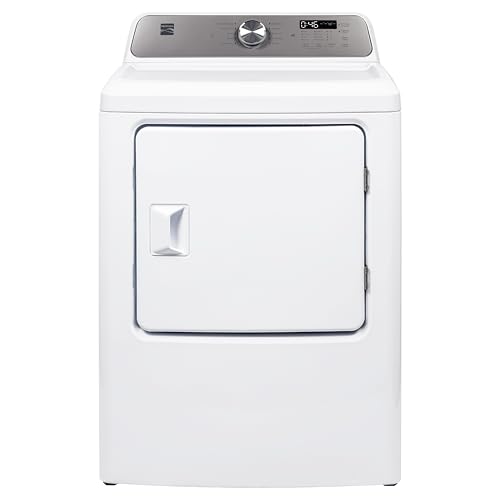
Kenmore 7.0 cu ft Front Load Gas Dryer — Essentialist’s Choice
The smaller Kenmore is the category reduced to its essentials and none the worse for it. Its listing promises a 7.0 cu ft front-load gas dryer with smart sensor drying, Wrinkle Guard to reduce wrinkles and static, and touch controls. Start with the drum: seven cubic feet is the size at which family laundry stops being portioned — a king duvet cover fits, a week of towels fits, the children’s bedding fits — and a gas dryer’s fast heat makes that volume genuinely usable rather than theoretical, because the machine is not spending its first quarter-hour warming up to the task.
Sensor drying is the second essential, and it is present rather than sacrificed to the price. In a gas machine the cost of over-drying is doubled: wasted fuel and clothes baked by a heat source that responds quickly and runs hot. A sensor that ends the cycle at dryness protects both the utility bill and the elastic in everything you own. Wrinkle Guard’s intermittent tumble then guards the finished load against the household’s schedule, which in a family home means the dryer will finish during dinner, homework, or the school run more often than not.
Touch controls complete a specification that asks the buyer to give up remarkably little. What you forgo against the larger Kenmore is a cubic foot and the steam programme; what you keep is the entire core experience of modern gas drying. For a household replacing a dead dryer on a budget, or adding gas drying where the line already exists, this is the machine against which the other five must justify their extra claims — and several of them will struggle to justify them to a single-car household with ordinary laundry.
- Capacity: 7.0 cu ft, front load
- Heat: gas burner; 120V outlet powers motor, controls, ignition
- Drying: smart sensor cycles
- Finishing: Wrinkle Guard intermittent tumble
- Controls: touch panel
Strengths
- Full family-size drum without paying for capacity theatre.
- Sensor drying guards both fuel use and fabrics.
- Wrinkle Guard suits households that cannot unload on the buzzer.
Trade-offs
- No steam refresh programme for creased garments.
- Smallest drum of the six, if only by a margin.
- Gas installation costs apply in full, as with every pick here.
Best for: families replacing a dryer on a budget where a gas line already waits. Not suited for: homes needing the largest possible drum for bulky bedding rotations.

Kenmore 8.0 cu ft Front Load Gas Dryer — Biggest Drum, Steam Finish
The larger Kenmore adds a full cubic foot and a steam programme, and both additions are aimed at the same household: the one whose laundry includes things that defeat ordinary dryers. Eight cubic feet is bedding territory — the comforter itself, not just its cover; the family’s entire towel population in one load; the sleeping bags after the camping weekend. Its listing pairs that space with Accela Steam, Wrinkle Guard, smart sensor drying, and touch controls, a specification that reads like the smaller machine’s after a growth spurt and a finishing school.
Accela Steam’s honest job is rescue and refresh. A shirt that set its creases in yesterday’s forgotten load, a suit jacket that smells of the restaurant rather than of anything worse, bedding that needs reviving between washes — steam relaxes fibres, releases odours, and returns garments to service without a full wash cycle. In a household with school uniforms and office clothes in daily rotation, that programme quietly replaces a share of the ironing and a share of the washing, and both replacements are worth money and evenings.
The sensor and Wrinkle Guard systems carry over from the smaller model, and in the bigger drum they matter more, because an 8.0 cu ft load represents more clothing value per cycle than any other load in this guide. Over-drying a drum that size is an expensive habit; the sensor prevents it by measurement rather than by the owner’s vigilance. Buy this Kenmore over its sibling when your laundry genuinely includes the bulky stratum — and be honest, because households that never wash a comforter are paying for air.
- Capacity: 8.0 cu ft — the largest drum in this guide
- Heat: gas burner with 120V electrical supply
- Programmes: Accela Steam refresh alongside sensor cycles
- Finishing: Wrinkle Guard tumble after the cycle
- Controls: touch panel
Strengths
- Comforter-class capacity ends the laundromat trip for bedding.
- Steam refresh rescues creased clothes without a wash.
- Sensor drying protects the largest, most valuable loads here.
Trade-offs
- The big drum is wasted on households with modest loads.
- More programmes to learn than the essentialist sibling.
- Needs the laundry space to match its full-size cabinet.
Best for: families with bulky bedding and uniform-heavy weekly laundry. Not suited for: couples whose loads would rattle around in eight cubic feet.

GE 7.2 cu ft Gas Dryer GTD48GASWWB — Long Vent Run Specialist
One line in this GE’s listing earns its place in the guide: venting up to 120 feet. Most laundry rooms sit on an exterior wall and vent in a few feet of duct; the rest — the basement laundry under the middle of the house, the interior utility room in a condo tower, the converted space whose exhaust must travel — live or die by the dryer’s ability to push air down a long run without choking on its own lint and back-pressure. A dryer rated for a long vent is not a luxury in those rooms. It is the difference between a machine that dries and a machine that merely warms.
The rest of the specification is GE at its most workmanlike: 7.2 cu ft of capacity, an extended tumble that keeps finished loads moving so wrinkles cannot set, and the backing of the deepest appliance service operation in the country. Extended tumble is the same philosophy as the Kenmores’ wrinkle programmes, executed in GE’s idiom — the load keeps breathing after the heat stops. For a dryer installed far from the living rooms, in the basement its long vent implies, that unattended finishing matters, because nobody hears the buzzer from two floors up.
Choose this machine by your duct, not your drum. Its capacity sits mid-list, its feature set is sensible rather than sparkling, and its party trick is invisible until the day a shorter-rated dryer would have failed your floor plan. If your vent run is genuinely long — measure it, counting elbows as the equivalent length the manual prescribes — the GE is the safest affordable answer in the category. If your vent is four feet of straight duct, its special gift is wasted on you and the value picks will serve better.
- Capacity: 7.2 cu ft
- Venting: rated for runs up to 120 ft per the listing
- Finishing: extended tumble for unattended loads
- Heat: gas with standard 120V electrical supply
- Support: national maker service network
Strengths
- Long-vent rating rescues interior and basement laundry rooms.
- Extended tumble finishes loads nobody is present to unload.
- Service and parts reach is the category’s deepest.
Trade-offs
- Feature set is plainer than the steam and connected rivals.
- Its signature strength is wasted on a short, straight vent.
- Mid-pack capacity for buyers chasing the biggest drum.
Best for: basement and interior laundry rooms with long exhaust paths. Not suited for: a garage laundry venting straight through the wall behind it.

GE Profile 7.4 cu ft Front Load Gas Dryer — Step-Up GE
GE Profile is the maker’s step-up line, and this 7.4 cu ft Profile machine — model PTD60GBSRWS in the listing’s naming — is what the standard GE becomes when the brief allows refinement alongside utility. The capacity grows a notch past its sibling, the front-load format pairs naturally with the front-load washers most gas households already run, and the Profile badge historically brings the better control feel, the quieter cabinet work, and the more considered cycle design of the maker’s range. It is the GE for buyers who found the standard model right in every way except polish.
In daily use, the front-load configuration is the substantive point. A front-load dryer tumbles loads with a gentler, more even action than the category’s older top-load-matching designs, and it stacks or pairs in the arrangements modern laundry rooms assume. Matched beside a GE Profile washer, the pair presents one design language and one service relationship — a small thing until the day a single technician visit covers both machines, when it becomes the kind of small thing owners write reviews about.
Nothing here changes the category’s fundamentals: gas line, vent, outlet, professional installation. What the Profile premium buys is the ownership texture around those fundamentals — and in an appliance a household will use several times a week for a decade, texture is not a frivolous purchase. Buyers cross-shopping the two GEs should decide by how much they value that finish, because on capacity and core drying the siblings are close enough that the standard model remains the value answer.
- Capacity: 7.4 cu ft, front load
- Model reference: PTD60GBSRWS
- Line: GE Profile step-up range
- Heat: gas burner, 120V supply for controls and motor
- Pairing: designed to match GE Profile front-load washers
Strengths
- Refined controls and cabinet work over the standard GE.
- Front-load format suits modern matched laundry pairs.
- Capacity edges past its sibling for bedding loads.
Trade-offs
- Premium over the standard GE buys polish more than drying power.
- No long-vent specialisation like its sibling’s.
- Profile pairing tempts a washer purchase you may not need.
Best for: households building a matched GE Profile laundry pair. Not suited for: strict value shoppers, whom the standard GE serves fully.

Samsung 7.5 cu ft Front Load Gas Dryer — Sensor Dry All-Rounder
Samsung’s entry — the DVG45T6000W in its listing — stakes its claim on balance: 7.5 cu ft of front-load drum, the maker’s Sensor Dry system, and a white cabinet designed to sit beside the enormous population of Samsung front-load washers already installed in American laundry rooms. That installed base is not a trivial consideration. A dryer that matches the washer’s dimensions, door swing, and design language turns a replacement purchase into a non-event, and Samsung’s mainstream gas dryer is engineered to be exactly that non-event at a family size.
Sensor Dry is the working heart of the machine, Samsung’s name for the moisture-sensing discipline this guide has praised in every pick: the cycle ends when the load is dry, not when a timer’s estimate expires. In a 7.5 cu ft drum the savings compound, because big loads are where timed drying wastes the most — the towels at the drum’s core still damp while the shirts at its edge bake. Sensing resolves the contradiction continuously, and the household sees it in clothes that come out uniformly dry and in gas that was not burned proving a timer right.
The Samsung asks the usual gas questions — line, vent, outlet, installer — and adds one of its own: parts and service for the brand run through different channels than the old-line makers’, and a quick check of local service coverage before purchase is the prudent version of brand loyalty. With that confirmed, this is the all-rounder of the six: no single superlative, no obvious deficit, and a drum sized for the way families actually wash.
- Capacity: 7.5 cu ft, front load
- Model reference: DVG45T6000W/A3
- Drying: Sensor Dry moisture-sensing cycles
- Heat: gas, with 120V electrical supply
- Pairing: matches Samsung front-load washer dimensions
Strengths
- Balanced specification with no weak point for family laundry.
- Sensor Dry handles mixed heavy-and-light loads intelligently.
- Seamless match for the many Samsung washers already installed.
Trade-offs
- Local service coverage deserves a check before buying.
- No steam programme at this point in the maker’s range.
- White-only finish in this listing.
Best for: Samsung washer owners replacing or adding a gas dryer. Not suited for: buyers wanting steam refresh in the same machine.
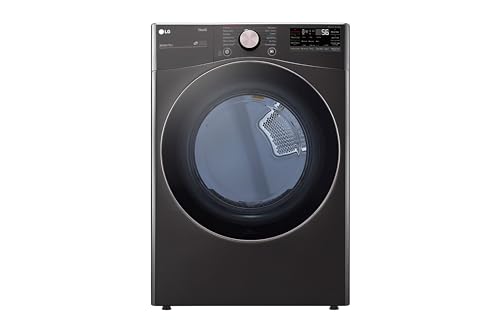
LG 7.4 cu ft Gas Dryer DLGX4001B — Connected Steam Pick
LG’s DLGX4001B is the technologist’s gas dryer: the listing cites an ultra-large 7.4 cu ft capacity, Sensor Dry, TrueSteam, and Wi-Fi in a black steel cabinet. Take the features in order of daily consequence. Sensor Dry does the same honest work here as in the Samsung — ending cycles at measured dryness. TrueSteam adds the refresh-and-relax programme the Kenmore 8.0 also argues for, releasing creases and odours without a wash. The Wi-Fi, so easy to dismiss as decoration, earns its place the first week the dryer lives in a basement: cycle-end alerts on a phone end the era of laundry forgotten in a warm drum two floors below the living room.
The black steel finish is the visible signature, and it matters in the laundry rooms this machine will inhabit — the finished basement suite, the main-floor laundry visible from the kitchen, the remodel where appliances are part of the design. A gas dryer is a decade-long fixture; its face is not a trivial specification. Inside, the drum’s 7.4 cu ft handles family loads and bedding with the same ease as its rivals, and LG’s gas burner brings the category’s characteristic fast heat to all of it.
Against the Samsung, the LG trades a whisker of capacity for steam and connectivity; against the big Kenmore, it trades capacity for the connected layer. The household that runs its home from a phone — lights, locks, laundry — will find this the natural citizen of that ecosystem. The household that regards an app-enabled dryer as a solution seeking a problem should save the difference and buy drum size instead; the guide respects both conclusions, and the LG’s section is written for the first household without apology.
- Capacity: 7.4 cu ft ultra-large drum
- Programmes: TrueSteam refresh plus Sensor Dry cycles
- Connectivity: Wi-Fi with cycle alerts
- Finish: black steel
- Heat: gas burner; household outlet powers the rest
Strengths
- Steam and sensing together cover refresh and everyday drying.
- Connected alerts solve the basement laundry’s forgotten load.
- Black steel finish suits design-finished laundry spaces.
Trade-offs
- Connected features reward only households that use the app.
- Capacity trails the Kenmore 8.0 for the bulkiest loads.
- Dark finish shows lint dust in a working laundry.
Best for: connected households wanting steam refresh in a gas dryer. Not suited for: buyers who prefer appliances with no software layer at all.
How Do the Six Compare at a Glance?
| Model | Capacity | Signature feature | Decide by |
|---|---|---|---|
| Kenmore 7.0 Gas Dryer | 7.0 cu ft | Sensor drying, Wrinkle Guard | Value |
| Kenmore 8.0 Gas Dryer | 8.0 cu ft | Accela Steam | Bulkiest loads |
| GE 7.2 cu ft Gas Dryer GTD48GASWWB | 7.2 cu ft | 120 ft venting rating | Your duct run |
| GE Profile PTD60GBSRWS | 7.4 cu ft | Profile refinement | Matched pair polish |
| Samsung DVG45T6000W | 7.5 cu ft | Sensor Dry balance | All-round family duty |
| LG DLGX4001B | 7.4 cu ft | TrueSteam plus Wi-Fi | Connected home fit |
Capacities cluster within a single cubic foot, so the table’s last column is the honest one: these machines are separated by the constraint they solve, not by their size. Identify your binding constraint — budget, bulk, duct, or ecosystem — and the table collapses into a recommendation.
What Infrastructure Does a Gas Dryer Truly Need?
Three services, none optional. First, the gas: a supply line to the laundry position with a shut-off valve within reach of the machine, sized for the appliance, installed and inspected by a licensed gas fitter in most jurisdictions. Homes with gas service for heating or cooking often have the line nearby; homes with no gas at the laundry should price the run before pricing the dryer, because a long run through finished space can cost more than the appliance it feeds. Propane households need the dryer configured for propane — a conversion performed by the installer, not a setting.
Second, the electricity, which surprises buyers who imagine a gas dryer as unplugged: the drum motor, the blower, the controls, and the ignition all run on a standard 120-volt outlet. Third, the exhaust: a gas dryer must vent outdoors, carrying away moisture, lint, and the products of combustion. That last duty is why the vent is not a suggestion and why indoor vent kits — acceptable compromises for some electric portables — have no place on a gas machine. Rigid or semi-rigid metal duct, as short and straight as the room allows, with the GE’s long-run rating reserved for the floor plans that genuinely need it.
Who Should Install It, and What Does Installation Involve?
A licensed professional, in almost every jurisdiction and in every sane household policy. Gas work punishes improvisation in ways electrical work merely threatens: the installer connects and leak-tests the supply, verifies the shut-off, sets the machine level, fits the vent with proper materials and clearances, and confirms combustion and exhaust behave before leaving. Many retailers bundle authorised installation with delivery; where they do not, a local gas fitter’s visit is the correct purchase to make alongside the dryer, and permits or inspections follow your locality’s rules rather than your optimism.
Your preparation makes the visit short: the old machine disconnected and the space clear, the gas valve’s location known, the vent path decided, and a working outlet within cord reach. Keep the installer’s paperwork with the manual. If the home lacks a carbon monoxide detector near the laundry and sleeping areas, installation week is the time to add one — a cheap, standard companion to any combustion appliance, recommended without alarmism and without exception.
How Do Gas and Electric Running Costs Compare, Honestly?
Qualitatively, and with your region as the referee. In much of the country, a unit of heat from natural gas costs the household less than the same heat from resistance electricity, so a gas dryer typically runs cheaper per load than its electric twin — sometimes modestly, sometimes clearly. Propane narrows or reverses that gap depending on local pricing, and regions with inexpensive hydroelectric power narrow it from the other side. Any guide quoting you a precise saving without your tariffs is inventing it, and this one declines.
What can be said without invention: the gap is per-load small and lifetime large, because a family dryer runs hundreds of loads a year for a decade or more. Sensor drying shrinks both fuels’ bills by ending cycles at dryness. And the installation side of the ledger is one-time, while the running side recurs — which is why households with an existing gas line find the arithmetic so persuasive, and households pricing a new line should spread that cost honestly across the machine’s whole working life before deciding.
How Do You Vent a Gas Dryer Correctly?
Outdoors, through metal duct, by the shortest honest route. Each elbow in the run costs effective length, which is why the GE’s 120-foot rating exists as a ceiling rather than a target — most homes should land far beneath it. The duct’s outdoor termination needs a damper that opens under airflow and closes against weather and wildlife, positioned away from windows and intakes as codes prescribe. Inside, joints are clamped or taped with foil tape, never screwed in ways that catch lint, and the run is accessible enough to clean, because a gas dryer’s vent is cleaned on a schedule like any other: lint accumulation is the enemy of drying performance first and of safety always.
Two venting errors deserve naming. The first is venting into an attic, crawl space, or garage — the moisture and combustion products belong outside the building envelope, full stop. The second is the crushed flexible duct behind a machine pushed hard against the wall, which throttles airflow from the first day and masquerades as a slow dryer. Give the machine its specified clearance, use a periscope or recessed vent box where space is tight, and the dryer you bought is the dryer you get.
What Maintenance Does a Gas Dryer Ask For?
The daily layer is identical to any dryer’s: the lint filter cleaned with every load, without negotiation, because airflow is performance. The seasonal layer is the vent run — inspect and clean it, check the outdoor damper’s swing, and confirm the duct’s joints remain sealed. The annual layer belongs to the appliance itself: a technician’s eye on the burner, the igniter, and the gas connections every year or two is the standard of care for combustion appliances, cheap insurance that also catches the small faults — a weakening igniter, a lazy sensor — while they are still small.
Inside the drum, wipe the moisture sensor’s strips occasionally with a soft cloth, because fabric-softener residue films them and a filmed sensor ends cycles early, leaving loads mysteriously damp. Keep the cabinet’s top clear of the laundry products that migrate there, and leave the door ajar between washes in humid climates. None of this is burdensome; all of it is the difference between a dryer that performs at year eight as it did at month one and one that fades so gradually the household blames the technology instead of the lint.
How Does Gas Heat Change the Drying Itself?
A gas burner brings a drum to working temperature quickly, and that responsiveness shapes the whole cycle. Where an electric element warms gradually, gas heat arrives promptly and recovers fast after the door has been opened for a mid-cycle check, so the load spends more of its cycle actually drying and less of it warming up. In practice, households switching from electric notice loads finishing a little sooner and bulky items — the towel bale, the bedding — drying more evenly, because the heat supply keeps pace with the moisture load instead of trailing it.
The same responsiveness asks for the sensor discipline every pick here includes. Fast heat applied by a timer’s guesswork over-dries efficiently and expensively; fast heat governed by measured moisture is simply good drying. This is why the guide treated sensor systems as non-negotiable in its selection, and why a cheap gas dryer without sensing is a false economy in both fuel and fabric life. The flame is the easy part of a gas dryer. Governing it is the engineering, and all six picks govern it by measurement.
There is also a texture to gas-dried laundry that long-time owners describe and newcomers notice: loads emerge thoroughly, evenly dry without the scorched edges that an oversized electric element can leave on a small load run too long. Treat the claim modestly — cycle choice and load sizing matter more than fuel — but the underlying physics, strong heat precisely metered, is real, and it is the experience the category’s loyalists are actually loyal to.
What Should You Ask Before Converting From Electric to Gas?
Begin with the line’s existence and route. A gas service at the house is not a gas supply at the laundry: the fitter must run pipe to the machine’s position, and the route’s length, the walls it crosses, and the permitting it triggers compose the true conversion cost. Ask for that figure in writing before the dryer is ordered, and compare it against the honest alternative — a good electric dryer on the existing circuit — with the running-cost difference spread across a decade. Sometimes conversion wins clearly; sometimes the electric incumbent was the right answer all along, and a good guide should be willing to say so.
Ask also about the vent’s future. A conversion is the natural moment to correct a vent run that was always too long, too crushed, or terminated in the wrong place, because the installer is already present and the machine is already out. Bundling the correction into the conversion visit is dramatically cheaper than commissioning it later as its own project. Finally, ask your insurer and, if applicable, your landlord or association, in advance and in writing. Gas appliances are ordinary, but the paperwork of permission is cheaper before the pipe is cut than after.
How Do These Dryers Handle Bulky and Mixed Loads?
Bulky loads are where gas capacity stops being a number and becomes an experience. A comforter in a 7.0 cu ft drum dries; the same comforter in an 8.0 cu ft drum dries evenly, because tumbling room is what exposes every fold to the airflow in turn. Households with king bedding, ski gear, or a dog’s worth of blankets should read the capacity column as their primary specification and treat the Kenmore 8.0 as the guide’s centre of gravity rather than its outlier. Everyone else is buying insurance they will cash a few times a year — which may still be worth it, at the one-size-up step these prices represent.
Mixed loads are the sensor’s examination. Denim and tees in one drum present the classic contradiction — the tees dry while the jeans’ waistbands still hold water — and a sensing dryer resolves it by continuing until the load’s moisture, not its average appearance, says done, at some cost to the lightest items. The owner’s countermeasure is ancient: sort by weight when the laundry allows, and let the machine handle the mixed loads that life actually produces with its sensor as referee. All six picks referee competently; none repeals the physics that makes sorting wise.
What Does the Laundry Room Need Around a Gas Dryer?
Clearances first: the cabinet needs the air space its manual prescribes, for combustion air, for cooling, and for the day a technician must reach its back. The floor needs to be level and honest, because a full-size drum’s spin in a gas machine is no gentler than in any other, and a rocking dryer stresses its own gas connection’s flex line over years. A shut-off valve you can reach without moving the machine is a requirement dressed as a detail — insist on it at installation, and learn its location the same day.
Detection belongs in the room’s kit: a carbon monoxide detector maintained on schedule, as with any combustion appliance in the home, and a note of the gas utility’s emergency number kept where a household member would actually find it. None of this is cause for anxiety — gas dryers are among the most ordinary appliances in the housing stock — but the category’s safety culture is part of its ownership, and households that adopt it find it costs an afternoon across a decade.
How Long Will an Affordable Gas Dryer Last?
The honest horizon for a mainstream gas dryer, maintained as the earlier section describes, is the same decade-plus expected of any full-size laundry appliance, and the affordable tier does not obviously shorten it: the wear items — igniter, belt, rollers, sensor — are shared across price tiers and are individually replaceable by any competent technician. What the premium tiers buy is more often features and finish than years. A value Kenmore with a clean vent and a serviced burner at year six is a younger machine, functionally, than a flagship neglected since delivery.
The parts story favours the big makers gathered here. Kenmore, GE, Samsung, and LG all support deep catalogues through national channels, so the year-nine igniter is a parcel rather than a quest. When a repair quote eventually approaches half the cost of a new machine, the category’s arithmetic turns — but with gas infrastructure already in place, replacement stays a like-for-like swap, and the line, the vent, and the outlet serve the next machine as faithfully as the first. Infrastructure, once built, is the gift that keeps amortising.
Which of the Six Fits Which Household?
Run the decision by constraint, as the comparison table suggested. If the constraint is the purchase itself, the Kenmore 7.0 is the answer and the deliberation can end early — it lacks steam and a whisker of drum, and nothing else that matters. If the constraint is bulk, the Kenmore 8.0 ends the bedding problem permanently. If the constraint is architecture — a vent run that wanders — the standard GE was quite literally built for your floor plan, and its plainer panel is the price of a dryer that will actually perform at the end of that duct.
If the constraint is coherence — a laundry that should look and behave like one designed room — the GE Profile and the LG contest the brief, the Profile with matched-pair discipline and the LG with steam and connectivity in black steel. If the constraint is the washer already standing in the room, the Samsung’s dimensions and design language make it the path of least resistance for the largest number of existing laundry rooms. Notice that each answer is a different machine, which is what a well-built shortlist looks like: six genuine answers to six different versions of the same question.
What Should You Do in the First Week of Ownership?
Run the loads you actually own, in the combinations you actually wash, and learn the sensor’s judgement against your own hand. Check the vent’s outdoor damper during a cycle and confirm it opens fully; feel the duct’s joints for escaping warmth that would betray a leak; and note the cycle times the machine chooses for your standard loads, because those baselines are how you will recognise a clogging vent or a filming sensor in year two, when the times quietly lengthen.
Register the warranty, photograph the installation — gas connection, vent path, valve — for the household file, and put the installer’s number in the phone while the visit is fresh. Then do the least technical and most valuable thing: show every laundry-doing member of the household the lint filter and the sensor’s location, and make the filter’s cleaning a shared religion from the first load. A gas dryer asks little of its owners, but it asks it of all of them, every time.
What About Noise, Heat, and the Room’s Comfort?
A gas dryer’s working sounds are the category’s usual ones — drum, blower, the soft ignition at cycle start — at volumes comparable to its electric cousins. Its heat, though, stays inside the drum and the duct by design; unlike a portable venting indoors, a properly installed gas machine adds little warmth to the laundry room beyond its cabinet’s surface. The room’s comfort story is therefore mostly the vent’s story: a sealed, correctly routed duct leaves the room as it found it, while a leaking joint announces itself in warmth and lint dust long before it announces itself in performance.
Placement courtesies still apply. A laundry adjoining a nursery or a study will be heard through the wall at spin-adjacent moments regardless of fuel, and the household’s scheduling — the delay start used for waking hours rather than against them — is the perennial answer. Gas dryers also reward a door that can close on the laundry space, not for safety theatre but for the simple acoustic fact that a closed door is the cheapest soundproofing in the building.
Finally, respect the machine’s own breathing. Combustion appliances draw room air, and a laundry sealed to laboratory standards serves no appliance in it well. The clearances and air provisions in the manual are the manufacturer’s statement of the room the dryer expects; provide that room, and the appliance’s manners — thermal, acoustic, and mechanical — will match the brochure’s promises for the whole of its working life.
One more comparison belongs in an honest gas guide, because shoppers arrive at it sideways: gas against the ventless machines elsewhere in this batch of guides. The categories barely compete. Ventless exists for homes that cannot vent; gas presumes a vent and a fuel line and repays them with speed and capacity an apartment machine cannot approach. A household choosing between them is really reporting its architecture — the ventless buyer has no duct to offer, the gas buyer has both duct and line — and the appliances are answers to different buildings rather than rivals for the same one. If your home offers gas and venting, this guide’s six are your shortlist; if it offers neither, the ventless guides are, and neither household should envy the other’s list.
And a word about resale and the next owner, since laundry appliances outlive tenancies: a home with a gas laundry connection is a listing feature, and a well-documented installation — permits, installer, service history — travels with the house as evidence of care. Keep the file. The machine will be replaced someday; the infrastructure and its paperwork are the permanent asset, and they began, if you are converting, with the decision this guide is helping you make.
Budgeting the whole project on one page is the last discipline this guide recommends. Write down the machine, the delivery, the installer’s visit, any gas-line work, the vent materials, and the detector, and look at the total rather than at the appliance’s tag alone. Affordable in this category is a property of that total — and for the home with infrastructure waiting, the total is genuinely modest for a decade of fast, capacious drying. For the home without it, the total tells the truth early, while the truth is still cheap. Either way, the page of figures is the most valuable review document you will read, because it is the only one written about your house.
Treat the delivery window as part of the installation, too: the old dryer should leave by the same door the new one enters, the gas installer and the delivery crew should be booked as one choreography rather than two coincidences, and the household’s laundry should be washed ahead so the gap between machines is measured in hours rather than in a week of accumulating baskets. Households that stage the swap this way remember the conversion as an afternoon; households that improvise it remember a fortnight. The machines are identical either way — only the planning differs, which is this category’s whole sermon in miniature.
Keep the receipt, the permit, and the installer’s card together in the laundry file, and add the date of the first vent cleaning when it happens. A gas dryer’s history, kept in one folder, is what turns a year-eight service visit from an investigation into a formality — and it is the kind of household paperwork that quietly raises a home’s credibility with its next buyer, its insurer, and its future self alike.
Which Mistakes Make Gas Dryers Seem Like a Bad Idea?
- Ordering the dryer before confirming a gas line actually reaches the laundry.
- Treating installation as a DIY weekend project instead of licensed gas work.
- Venting into an attic or garage, or crushing the duct behind the cabinet.
- Assuming gas means no electricity, then finding no outlet near the laundry spot.
- Skipping the propane conversion on a propane supply.
- Neglecting the vent and lint path until cycle times double.
Every failure on that list is administrative rather than mechanical. Gas drying itself is a mature, well-understood technology; the households unhappy with it are almost always households whose installation or upkeep was improvised.
Final Recommendation
Start with the Kenmore 7.0 cu ft Front Load Gas Dryer if your needs are ordinary and your budget is the binding constraint — it is the category’s core, honestly delivered. Step to the Kenmore 8.0 steam model when bedding and bulk rule the laundry, or to the LG DLGX4001B when steam and connectivity will genuinely be used. The GE pair answers the duct and the design briefs respectively, and the Samsung remains the balanced middle.
Whichever name ends up on the laundry room door, spend your care on the installation rather than the badge: a properly gassed, properly vented, properly levelled affordable dryer will out-dry a premium machine plumbed by optimism, every load, for years.
Frequently Asked Questions
Does a gas dryer need an electrical outlet?
Yes. Gas provides the heat; electricity runs the drum motor, blower, controls, and ignition. A standard 120-volt household outlet near the laundry position covers it, but it must exist — check before ordering, especially in older laundry rooms arranged for gas alone.
Can I install a gas dryer myself?
In most jurisdictions, no — gas connections are licensed, permitted work, and insurers and landlords tend to agree with the rule. Hire the fitter, keep the paperwork, and reserve your DIY enthusiasm for the lint filter and the vent cleaning, where it is genuinely useful.
Is a gas dryer cheaper to run than an electric one?
Usually, where natural gas is the fuel and local tariffs follow the common pattern — gas heat generally costs less per load than resistance electric heat. Propane and cheap-electricity regions narrow the gap. The direction is reliable; the size of the saving is your utility bill’s to state, not a guide’s.
How long a vent run can a gas dryer handle?
It varies by model, and elbows consume length as surely as straight duct does. Most dryers suit ordinary runs; the GE in this guide is rated to 120 feet for the exceptional floor plan. Your manual’s venting table, applied to your measured run, is the authority — consult it before the machine is chosen.
Can a gas dryer be converted to propane?
Typically yes, with a conversion kit fitted by the installer, who adjusts the burner for propane’s different characteristics. It is not a user setting and not optional: a natural-gas configuration on a propane supply will not burn correctly. Tell your installer the fuel before the visit.
What size gas dryer does a family need?
Match the dryer to the washer: the dryer should equal or exceed the washer’s capacity, and for most families a drum in the 7.0 to 7.5 cu ft band handles bedding and weekly volume comfortably. The 8.0 cu ft Kenmore serves households whose loads are bulky as a matter of routine.
Related Guides
Continue with our companion guides: compact drying for smaller homes in Best Apartment-Size Dryers, low-heat care for delicate hair in Best Blow Dryers for Fine, Thin Hair, and family food storage in Best 7 Cu Ft Freezers.



[…] planning with our companion guides: full-size drying on a budget in Best Affordable Gas Dryers, gentle heat for fragile hair in Best Blow Dryers for Damaged Hair, and compact cold storage in […]