Our Top Picks
 Patio Watcher 40" Rectangle Coffee Table40"L x 20''W x 14"H40 x 20 x 14 inches60 poundsCheck on Amazon
 247 HOME 47.3" Faux Travertine Low Profile Rectangular47.3"W X 23"D X 14"H23 x 47.3 x 14 inches49 poundsCheck on Amazon
 Hyfirm Wabi Sabi Beige Travertine Style Side Table15.75" D x 19.88" H15.5 x 15.5 x 20 inches21.2 poundsCheck on Amazon
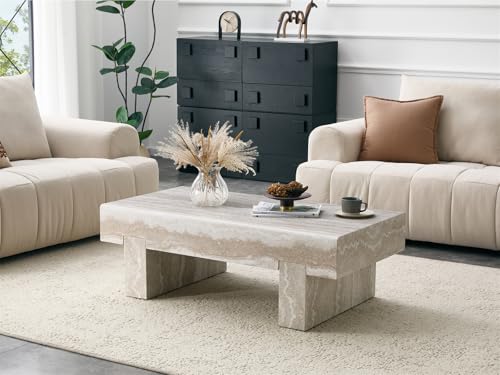 45.3'' Modern Coffee Table for Living Room45.27"L x 23.62"W x 15.35"H23.62 x 45.27 x 15.35 inches68 poundsCheck on Amazon


What's inside
- Understanding travertine before you choose a single chair
- Reading the warm beige tones in your stone
- Chair materials that sit comfortably beside limestone
- Upholstered softness versus wooden clarity beside stone
- Scale and proportion against a table with real mass
- Leg room: pedestal bases versus four table legs
- Chair legs, glides, and protecting floors and stone
- Spills, crumbs, and cleaning where chairs meet porous stone
- Indoor rooms and outdoor settings ask different questions
- Measuring before you buy: a room-by-room method
- Comfort details that decide whether chairs get used daily
- Frequently asked questions
- Check prices on Amazon
- Checklist before you commit to a set
As an Amazon Associate I earn from qualifying purchases. This post may contain affiliate links at no extra cost to you.
Heads-up before you settle in: some links in this guide may earn this site a small commission if you buy through them, at no extra cost to you. That support helps keep these pairing guides free to read, and it never decides which chair styles get described here — every inclusion below follows from published dimensions, materials information, and recurring themes in owner feedback about comfort, care, and fit beside stone.
A travertine dining table changes the conversation around it before anyone sits down. The stone brings weight, warmth, and a surface full of quiet movement — soft veining, tiny pits, bands of cream and sand that shift under daylight. Chairs that ignore all of that can look stranded, as if they wandered in from another room and stayed by accident. Chairs chosen with the stone in mind do something different. They echo a tone without copying it, add softness where the table is hard, and respect how heavy, porous, and particular travertine can be in daily use.
This guide stays firmly on the chair side of the pairing. The table is the context, not the purchase. What follows covers how dining chairs relate to travertine in colour, material, scale, and leg geometry, how their feet should meet the floor and the table base, what happens when food and drink stray toward porous limestone, and how indoor and outdoor settings change the shortlist. It draws on manufacturer specifications for seat dimensions and frame construction, published guidance on travertine composition and care, and patterns that appear again and again in buyer comments about wobble, fabric wear, and cramped knees.
There is no single correct companion for this stone. A pale bouclé seat can soften a monolithic pedestal base into something welcoming. A cane back can let light pass through a room where a solid table already claims visual territory. Warm oak can bridge the gap between cool flooring and honeyed stone. Leather can bring a deeper note that makes cream travertine feel intentional rather than washed out. The right answer depends on your base shape, your floor, your household, and how honestly you plan to use the room — for lingering Sunday lunches, weekday homework, or both.
Understanding travertine before you choose a single chair
Travertine is a form of limestone deposited by mineral springs, and that origin story explains almost everything about living with it. As water moved and gases escaped during formation, small voids opened through the stone. Those pits and troughs are not flaws introduced later; they belong to the material itself. On a dining table they appear as tiny craters along the surface and edges, sometimes left open for a rustic, tactile finish, sometimes filled and smoothed during fabrication.
Most dining tables arrive with a honed, filled surface. Honed means the finish is matte or low-sheen rather than polished to a mirror, which suits dining because glare stays low and the stone reads as warm rather than formal. Filled means the natural voids have been levelled with a filler that approximates the surrounding colour, giving plates a steadier resting place and reducing the number of crumbs that vanish into open pores. Unfilled, tumbled, or more heavily textured tops exist too, and they ask slightly more of the chairs around them, because the overall mood leans rougher and more organic.
Why the porosity matters to seating choices
Porosity sounds like a table problem, yet it shapes chair decisions in practical ways. A porous top discourages the kind of dining where glasses sweat unattended for hours and sauces travel freely. Households that choose highly upholstered, pale, difficult-to-clean chairs alongside an unsealed-feeling stone surface are signing up for two high-maintenance surfaces at once. Pairing maintenance levels sensibly — a forgiving chair fabric beside a stone that already needs coasters and prompt wiping — keeps the room enjoyable instead of precious.
Sealing helps, and many tables are sealed at installation or recommended for periodic resealing, but a sealant is not armour. Acidic foods, coloured drinks, and oils can still mark limestone if they linger. That reality nudges chair selection toward materials that tolerate a quick stand-up, a cloth grabbed mid-meal, and the occasional splash without drama. It also favours chairs light enough to move without scraping when someone needs to reach a spill quickly.
Weight, presence, and the feeling of permanence
Travertine tables are heavy in the literal sense and heavy in the visual sense. A thick top on a stone or substantial timber base occupies a room the way a fireplace does: everything else arranges itself in response. spindly chairs with narrow legs and low backs can disappear against that mass, looking temporary beside something so grounded. At the other extreme, oversized throne-like seating competes with the table and leaves guests feeling penned in. The middle ground — chairs with a clear silhouette, some substance in the frame, and a back height that holds its own without towering — usually flatters the stone best.
Weight also affects moving day, delivery, and the humble act of pulling up to dinner. Because the table will not budge casually, chairs carry the entire burden of flexibility. They get pulled out, angled for conversation, shifted for a high chair, and stacked or pushed aside for cleaning. A pairing that looks perfect in a still photograph but makes everyday movement awkward will quietly fail, so handling and clearance deserve as much attention as colour swatches.
Reading the warm beige tones in your stone
Travertine is often described simply as beige, which undersells how much variation lives inside a single slab. Look closely in natural light and you may find ivory, oatmeal, sand, taupe, pale walnut, and faint grey threads running side by side. Some tables lean golden and sunlit. Others lean greyer and more contemporary. Chairs respond to those undertones: a fabric that sings beside warm, honeyed stone can look dingy beside a cooler, greyer cut, and vice versa.
Start by deciding whether your table reads warm, cool, or genuinely mixed. Warm stone welcomes oak, walnut-stained timber, rattan, cognac leather, and creamy textiles with yellow or peach hints buried in the weave. Cooler stone pairs more comfortably with ash, ebonised wood, black metal accents kept away from direct stone contact, and fabrics in greige, stone grey, or muted olive. Mixed stone gives you the widest latitude, though it rewards restraint — pick one undertone to emphasise and let the rest stay quiet.
Matching without mimicking
The most common misstep is trying to match the stone exactly. A chair upholstered in a flat beige that almost equals the tabletop creates an uneasy near-miss, where neither surface looks deliberate. Better approaches use contrast in value, texture, or both. Go noticeably lighter, with an off-white or pale oatmeal seat that lifts the setting. Go noticeably deeper, with tobacco leather or dark-stained timber that anchors it. Or stay in the same tonal family while changing texture completely, so a nubby woven seat reads as a cousin to the smooth honed top rather than an imitation of it.
Texture is doing heavy lifting in travertine rooms because the colour palette often stays narrow. That narrowness can be serene, but only when surfaces differ enough for the eye to separate them. Smooth stone beside slubbed linen, pitted stone beside tight bouclé loops, filled and levelled stone beside open cane webbing — these small contrasts keep a neutral scheme from flattening into a single beige blur, especially in photographs and in low evening light.
If your dining area receives strong sun, check fabric samples at the table in the morning and again late in the day. Travertine shifts character as light rakes across its pits and veins, and chair fabrics shift with it. A pairing that feels balanced under midday brightness may feel stark at dusk, when the stone darkens slightly and warm bulbs pull amber from timber frames. Readers planning a companion stone scheme may also find the discussion in best chairs for marble dining table useful for contrast, since marble tends toward cooler veining and a more polished presence than travertine’s earthier grain.
Pattern, veining, and visual noise
Some travertine is cut so its linear banding runs prominently along the top, a pattern sometimes called vein-cut, while other tops show the softer, cloudier movement of cross-cut stone. A strongly banded top already supplies pattern. Around it, chairs in solid colours or very fine textures tend to settle the room. A quieter, cloudier top can carry chairs with a more pronounced weave, a two-tone cane pattern, or timber with visible grain, because the table is not competing for attention line by line.
Keep nearby textiles in the same negotiation. A bold rug, busy curtains, patterned seat cushions, and dramatic stone together can overwhelm a modest room. Usually one or two of those elements should lead while the others support. Since the table is fixed and dominant, let it lead, and let the chairs provide rhythm through repeated shape rather than competing print.
Chair materials that sit comfortably beside limestone
Material choice is where travertine pairings succeed or stumble, because the stone sits at an unusual crossroads: ancient and modern, rugged and refined, warm and mineral. Chairs can pull it toward any of those poles. Natural fibres and timber emphasise its geology and make the room feel grounded. Sleek metal and moulded forms push it contemporary. Plush upholstery domesticates it, turning a slab of stone into a place where people linger for a second coffee.
Bouclé and textured woven upholstery
Bouclé earns its popularity beside travertine honestly. Its looped, irregular surface mirrors the stone’s organic irregularity at a completely different scale and softness, so the two textures converse without repeating each other. In ivory, cream, or pale sand, bouclé brightens heavy stone and photographs beautifully. In deeper camel or mushroom shades, it adds warmth without the shine of leather or the flatness of plain cotton.
The cautions are practical. Looped piles can catch on jewellery, pet claws, and the rough edge of a belt buckle, and crumbs settle into the texture during long meals. Performance versions woven from synthetic blends generally release stains more readily and resist fading better than delicate natural-fibre versions, according to manufacturer care descriptions. If your household includes small children or enthusiastic pasta nights, consider bouclé on the back with a smoother, tighter weave on the seat itself, a combination some makers offer and many owners praise for balancing looks with wipeability.
Leather and leather-look seats
Leather brings depth that pale stone often needs. A cognac or saddle seat against cream travertine is a classic pairing because both materials share warm undertones and both develop character with use. Darker espresso or black leather sharpens the setting and suits cooler, greyer stone. Full-grain and top-grain options are described by makers as developing a patina, softening at contact points, and resisting spills that are wiped promptly, while coated or faux alternatives trade some of that ageing behaviour for easier cleaning and a more uniform colour.
Think about temperature and sound as well as colour. Leather feels cool at first contact in an air-conditioned room and warm in a sunlit one, and it can make a faint creak as guests shift — part of its charm for some households, a distraction for others. Against a stone table in a hard-surfaced room with tile or timber floors and bare windows, leather seats add less acoustic softening than fabric, so the overall echo of the space is worth considering if you entertain larger groups.
Cane, rattan, and woven backs
Cane webbing and rattan frames lighten a travertine setting in a way few other materials can. Their open weave lets light and sightlines pass through chair backs, which matters when a dense stone table sits in a smaller room or in front of a window. The honeyed tones of natural cane sit comfortably within travertine’s palette, and the hand-made irregularity of woven material suits stone that also shows natural variation.
Durability notes from manufacturers and owner feedback follow a consistent pattern: cane is resilient under normal seated use but dislikes being used as a step, a handle, or a leaning post for heavy bags. A chair that combines a cane back with a padded or timber seat often suits dining better than an all-cane piece, because the seat takes the most abrasion from clothing fasteners and moving weight. In humid climates, natural fibres appreciate ventilation and distance from steamy radiators or constantly damp walls, points covered further in the indoor and outdoor discussion below.
Oak and other timber frames
Wooden chairs give travertine a familiar partner. Oak is the frequent favourite because its grain is visible without being theatrical and its natural colour range — from pale limed finishes to deeper smoked treatments — overlaps the stone’s own spectrum. Walnut adds richness beside lighter stone. Ash offers a paler, more Scandinavian note. Beech, often stained, provides a smooth and economical frame that takes colour evenly.
Pay attention to finish undertone rather than species name alone. Two chairs both sold as oak can lean quite differently once a lacquer or oil is applied, and the sample that matters is the one placed against your table in your light. Timber also solves a tactile problem: stone tabletops and stone bases feel cool and unyielding at every contact point, while a wooden chair back or arm gives hands something warmer to hold as people settle, stand, and move around the table between courses.
For readers drawn to statement silhouettes in timber and upholstery, the shapes surveyed in best designed dining chairs show how strongly a chair’s outline can steer a stone table toward gallery-like formality or relaxed domestic ease, depending on the proportions you favour.
Metal, moulded, and mixed-material frames
Metal-framed chairs can work beside travertine, particularly in contemporary interiors where the stone is the only rustic element. Powder-coated finishes in matte black, bronze, or warm white give a cleaner line than bright chrome for most beige stone, and they resist the visual coldness that polished metal can introduce. The critical conditions concern contact and flooring rather than appearance: metal feet need proper protective glides, and metal chair legs should never be dragged against a stone table base, because both the finish and the stone edge can mark.
Moulded seats in plastic, fibreglass-look composites, or bent plywood bring easy cleaning and often the lightest handling weight in the category. Beside a substantial stone table they need enough design presence to avoid looking disposable — a well-shaped shell, a considered base, or an upholstered pad can supply it. Mixed-material chairs, such as timber legs under an upholstered seat or a metal frame softened by a woven back, often land the balance most easily, borrowing warmth from one material and structure from another.
Upholstered softness versus wooden clarity beside stone
Fully upholstered chairs wrap the sitter in fabric or leather from seat to back, sometimes including padded arms. Beside travertine they create the strongest contrast available: everything the table is not — soft, yielding, quiet — the chair becomes. That contrast suits long meals, older guests who appreciate back support with some give, and rooms where acoustics need help. Upholstery absorbs a portion of the clink and chatter that hard stone, hard floors, and plaster walls would otherwise bounce around.
The trade-offs accumulate slowly rather than dramatically. Upholstered chairs are usually wider, so fewer fit along a given table length. They are heavier to slide, more likely to hold crumbs in seams, and less tolerant of a wet glass set down carelessly on a seat while someone reaches across the table. Their fabrics fade unevenly if one side of the table sits in direct sun. None of that disqualifies them; it simply means the household should choose upholstery with eyes open and preferably with removable covers, cleanable performance weaves, or leather where the use pattern demands it.
Wooden chairs answer with clarity. A shaped timber seat and back show their structure honestly, clean in seconds, and slide easily on suitable glides. They occupy less visual and physical width, which helps when you need seating for six around a table that comfortably shows four upholstered places. Their hardness is the obvious limit. A well-contoured wooden seat can be comfortable for a normal meal, yet guests may shift and perch rather than settle during a three-hour evening, unless a cushion joins the arrangement.
Many households resolve the contest by mixing. Upholstered host chairs at the two ends give presence, support, and a sense of occasion, while wooden or cane side chairs along the flanks keep the setting open and the seating count flexible. Mixing works when the two styles share something deliberate — a timber tone, a leg shape, a seat height, or a fabric colour picked up in the wood chair cushions. Without a shared thread, mixed seating reads as accidental rather than collected, especially beside a stone table that already draws the eye.
Scale and proportion against a table with real mass
Travertine tops are frequently thicker than timber or glass equivalents, and their bases can be broad cylinders, slabs, or clustered columns. Chairs must hold a conversation with that bulk. A useful starting point is back height. Very low backs can vanish behind a thick top when viewed across the room, making the table appear to float unaccompanied. Very tall backs, especially in solid upholstery, can wall off the table and block light or sightlines to a garden, artwork, or an adjoining kitchen.
For most standard-height dining tables, chairs whose backs rise moderately above the top tend to look settled: enough presence to register, not so much that they dominate. The exact relationship matters less than the overall silhouette in your room, so if possible, stand a sample chair at the table and view it from the doorway, from seated eye level, and from any raised area such as a split-level step. Proportion is a three-dimensional judgement that a product photograph taken at one angle cannot make for you.
Seat width, elbow room, and the honest seating count
Manufacturers list seat width and overall width, and the difference between those numbers decides how many chairs genuinely fit. Arms, flared legs, and wide upholstered backs consume inches that a simple seat measurement hides. A common planning allowance gives each diner a generous stretch of table edge, with more room feeling comfortable and less feeling like a banquet squeeze. Measure your table length, divide honestly, and then check the overall chair width against that allowance before ordering a full set based on a photograph of two chairs at a table twice your size.
Armrests deserve special scrutiny in this calculation. Arms add comfort for lingering and support for anyone who uses them to stand, but they widen each setting and can collide with the table edge or apron. If you love armchairs, consider them for the ends only, where width is less constrained, and choose armless side chairs for the long edges. That arrangement also creates a pleasing hierarchy beside a monumental stone top, echoing the way traditional dining sets distinguished host seats without requiring matching everything.
Seat height and the thick stone top
Seat height interacts with top thickness in a way buyers overlook. A standard table height paired with a deep stone slab or a low apron leaves less thigh room than the headline numbers suggest. Chairs with higher seats, thick box cushions, or arms at the wrong height can leave diners feeling perched too close under the edge. Published seat heights from makers are usually measured to the top of an uncompressed seat; a deep cushion will sit lower once occupied, while a firm wooden seat will not change at all.
Where possible, account for the people who will actually sit there. Taller households may welcome a slightly higher seat and deeper seat pan. Shorter diners often prefer a seat that lets feet rest flat, with a foot rail or lower stretcher as a bonus on taller frames. Children complicate any fixed answer, which is one more reason to favour chairs that remain stable when a booster cushion raises a small sitter and shifts their centre of gravity upward.
Round travertine tables change the geometry again, because chairs must angle around a curve and pedestal bases gather legs toward the centre. The placement principles in best dining chairs for a round table translate well to stone versions: allow swing room for each chair to pull out on its own arc, and watch how wide backs overlap when every seat is occupied.
Leg room: pedestal bases versus four table legs
The base beneath a travertine top dictates where chair legs, human legs, and knees can go. Two broad families dominate. Pedestal tables rest the top on a central support — a drum, a cone, a sculptural cluster, or a broad panel — while four-leg tables carry the top at the corners, sometimes with an apron rail connecting the legs beneath the edge. Each rewards a different chair choice.
Dining beside a central pedestal
A pedestal frees the perimeter. No corner legs interrupt the long edges, so chairs can slide in anywhere and diners can sit closer to the ends without straddling a table leg. That freedom suits armless chairs and allows an extra seat to join for a larger gathering, within the limits of elbow room. The constraint moves inward instead: the pedestal itself occupies the central floor space where feet and chair legs naturally travel.
Wide pedestals, especially stone drums or slab panels, can clash with chairs whose legs splay outward or whose stretchers sit low and broad. When such a chair pushes in, its front legs may strike the base before the seat reaches a comfortable distance from the edge, leaving the diner oddly far from their plate. Chairs with a relatively vertical leg stance, a compact footprint, and no low front stretcher usually tuck closest to a pedestal. Before buying a set, note the pedestal width at floor level and at knee height, because sculptural bases often flare where ankles want to be.
Swivel chairs tempt pedestal owners because rotation eases entry around a fixed central base, and many owners enjoy them. Check the swivel footprint carefully: a broad disc base under a chair plus a broad pedestal under the table can leave very little floor for feet, and disc bases are unforgiving if they edge into the stone. A four-leg swivel with a modest spread is usually the safer geometry in tight rooms.
Dining beside four legs and an apron
Four-leg travertine tables, often with stone or timber legs of considerable thickness, return the constraint to the corners. Chairs placed at the ends must negotiate a leg on each side, so end chairs should be narrower or armless if the space between the legs is snug. Along the sides, the question becomes the apron: a deep rail beneath the top reduces knee clearance and can meet the tops of chair arms or the thighs of taller diners.
Measure the underside, not just the top. Record the height from floor to the bottom of any apron, the distance between inner faces of the legs, and how far the legs inset from the table edge. Then compare those figures with chair arm height, overall width, and seat height from the product specifications. This unglamorous arithmetic prevents the most common disappointment in stone dining rooms — beautiful chairs that physically cannot push in far enough for anyone to eat comfortably.
Chair stretchers, the horizontal bars joining chair legs, interact with table legs during the everyday shuffle of seating. A chair pulled out at an angle can swing a stretcher into a stone table leg with a surprising crack. Timber or upholstered chair legs are more forgiving in that accidental contact than bare metal, and households with lively seating habits — children, frequent guests, chairs borrowed for other rooms — may weigh that forgiveness more heavily than a showroom would suggest.
Chair legs, glides, and protecting floors and stone
Every chair leg ends in a decision. Beneath that ending sits your floor — perhaps timber, tile, another stone, or a rug — and nearby stands a table base that can chip or mark if struck carelessly. Glides, the small pads fitted to chair feet, mediate all of it. They let chairs move quietly, protect flooring from scratches, and keep the act of sitting down from becoming a scrape that everyone in the room hears and feels.
Choosing glide material for your floor
Felt pads are the familiar choice on timber and other scratch-prone floors. They slide smoothly, silence movement, and are inexpensive to replace, which matters because felt compresses and picks up grit over time. A gritty felt pad can itself become an abrasive disc, so regular inspection and replacement belong in the care routine for any chair used daily beside stone. Felt performs less happily in damp areas, where it can absorb moisture and loosen its adhesive.
Rubber and soft plastic glides grip rather than glide. They suit tile or polished concrete where a chair that slides too freely would wander, and they help keep dining chairs planted when children climb or guests lean back. The trade-off is effort: a gripping foot makes a heavy upholstered chair harder to move, tempting people to drag it by the back — a habit that stresses back joints. Nylon glides occupy the middle ground, sliding reasonably on hard floors while wearing slowly, and many manufacturers fit them as standard on contract-style frames.
On rugs, the calculus flips. Small hard glides can catch pile and make chairs tippy to move, while a broader foot spreads weight across the fibres. If chairs will stand partly on and partly off a rug edge, expect rocking and uneven wear until the layout settles; either commit the whole chair to the rug or keep it fully off. A generously sized natural fibre rug under a stone table can soften sound and define the dining zone, and sizing guidance such as best 9×12 natural fiber rugs helps judge whether chair legs at full pull-out will still rest on the rug rather than straddling its border.
Keeping metal away from stone edges
Dragging is the enemy. A metal chair leg pulled sideways across a stone floor, or swung into a travertine table leg, concentrates force on a tiny contact point, and both surfaces can record the encounter as a scratch, a shiny streak, or a small chip at an edge. Teach the household, gently and early, to lift chairs slightly when repositioning them, or at least to pull them straight out rather than sideways under load. Guests will do what the chairs invite: light chairs with good glides move gracefully, while heavy chairs with missing pads almost demand to be dragged.
Inspect the vulnerable junctions when chairs first arrive. Some metal frames have exposed welds or cut tube ends low on the leg that could meet a stone base during normal shuffling. A small self-adhesive bumper placed on the chair leg at the contact height is an invisible insurance policy, and it costs almost nothing compared with stone repair. Similarly, check that glide stems or nail-in fittings cannot work loose and present a bare metal point to the floor; tap-in and screw-in glides generally stay put longer than thin adhesive discs on heavily used chairs.
Stability on uneven stone and tile floors
Stone and tile floors are rarely perfectly flat across the footprint of a dining set, and travertine tiles in particular may have filled pits and slight lippage between pieces. Rigid four-leg chairs reveal every irregularity as a wobble. Some frames flex a fraction and settle; others rock persistently until a glide is adjusted or a pad of differing thickness evens the stance. Adjustable glides, offered on many metal and some timber frames, solve this elegantly and are worth seeking if your floor is rustic or visibly uneven.
Owner feedback returns to wobble more than almost any other chair complaint, and the cause is often assembly rather than design. Legs attached on site need even tightening in a cross pattern, then a re-check after the first weeks as joints settle into use. A chair that rocks on a flat showroom floor should not be excused, but a chair that rocks only in one spot at home is telling you about the floor, and rotating it or swapping its position can confirm which story is true before you blame the maker.
Spills, crumbs, and cleaning where chairs meet porous stone
Dining involves spills; travertine records them if given time. The chair’s role in this drama is mostly about access and materials. You need to be able to move chairs quickly and quietly when a glass tips, without the chair itself becoming a second casualty. You also need seat materials that shrug off the same foods that threaten the table, because whatever leaves a plate tends to visit both surfaces during an eventful meal.
Prompt blotting, rather than wiping, is the advice repeated across stone care guidance for limestone surfaces, since wiping can spread a coloured spill across more pores. Chairs that stack or push fully under the table give you room to work around a spill zone. Chairs with arms that catch on the table edge, or bases so wide they cannot tuck away, slow that response by precious seconds. It is a small consideration on paper and a vivid one the first time red sauce arcs toward the stone.
Fabrics that forgive family meals
Performance fabrics earn their name beside travertine because the whole setting already asks for vigilance. Manufacturer descriptions typically emphasise stain resistance woven into the fibre rather than sprayed on top, easier release of oils, and tolerance of stronger cleaning solutions than delicate natural cloth allows. Mid-tone colours and subtle flecks hide the interval between a mark happening and laundry day far better than flat pale upholstery, while still keeping the light, calm feeling that suits beige stone.
Leather and quality faux leather wipe clean fastest of all, which is why they recur in households with toddlers at the table. Their weakness lies elsewhere: sharp cutlery dropped point-first, pet claws, and sun exposure. Wooden seats forgive spills entirely but transfer the problem to cushions if you add them, so choose cushion covers that unzip and wash, and keep a spare set if the chairs are used daily. Cane seats should not be soaked during cleaning; a damp cloth and prompt drying suit the fibres better than enthusiastic scrubbing under a tap.
Crumbs, pits, and the after-meal routine
Travertine’s filled surface still has texture, and crumbs find every seam between chair cushion and frame as readily as every pit in the stone. A realistic routine beats an idealised one: shake loose cushions outside or over a bin, brush chair seams with a soft hand brush kept nearby, and lift chairs rather than sliding them when sweeping beneath the table, so debris trapped under a glide does not score the floor on its way out. Vacuum attachments with hard bristles belong away from both cane and softer stone edges; a soft brush head handles the whole zone safely.
Cleaning products need the same caution for chairs as for the table. Acidic or abrasive cleaners that stone care guidance warns against for limestone can also dull leather finishes, cloud cane, and strip timber lacquer if splashed during an energetic table wipe-down. Keep one mild, neutral cleaner for the dining zone and use it for stone, wood, and most fabrics according to each maker’s directions, rather than introducing a different chemical for every surface in the same square metre.
Indoor rooms and outdoor settings ask different questions
Travertine thrives outdoors as paving and pool surround, and travertine-topped tables appear on terraces and in garden rooms as readily as in dining rooms. It is tempting to carry a favourite indoor chair outside for a long summer, or to buy one set meant to serve both worlds. Resist the shortcut unless the chair was built for exterior use, because the failure modes — rust blooming inside a frame, cane unravelling in damp air, upholstery foam holding rain — arrive quietly and then all at once.
Chairs for an indoor travertine table
Indoors, your priorities are comfort over long sittings, acoustic softness, floor protection, and fabrics that manage crumbs and fading. Timber, upholstered, and cane chairs all belong here, provided cane stays away from constant steam or radiator heat that dries fibres unevenly. Indoor chairs can assume a stable temperature, a dry floor, and glides chosen purely for the flooring rather than for weather. This is also the setting where heavier statement chairs make sense, because they will not be carried in and out with the seasons.
Sunlight is the main indoor hazard. A travertine table near glazing will share that light with chair backs, and natural fibres, leather, and dyed fabrics fade at different rates, which can leave a set looking mismatched after a few summers if half the chairs sit in sun and half in shade. Rotating chair positions every few months evens the exposure, a tiny habit with an outsized effect on how long a set looks like a set.
Chairs for travertine under the sky
Outdoor chairs need frames and finishes rated for exterior conditions: powder-coated aluminium or suitably treated steel that resists corrosion, teak or other weather-tolerant timbers that silver gracefully, and synthetic weaves designed to imitate cane or rattan without absorbing water. Solution-dyed outdoor fabrics resist fading and can usually be cleaned more vigorously than indoor textiles. Cushions should drain and dry quickly, with covers that come off, because a cushion that stays damp against a stone table leg invites mildew in the whole corner.
Weight behaves differently outside. A chair heavy enough to feel reassuring indoors may be miserable to move when a storm approaches, while a very light chair can travel in a gust and strike the stone base or top edge. Look for a middle weight with a low centre of gravity, and store or secure chairs when severe weather is forecast. Glides outdoors should be hard-wearing and non-absorbent; felt has no place on a terrace. After rain, lift chairs to let trapped water escape from beneath their feet rather than leaving rings of damp against paving or a rug.
Covered outdoor rooms — verandas, loggias, glazed garden rooms — sit between the two worlds. Rain may never land directly, yet humidity, pollen, and temperature swings still exceed indoor norms. Chairs described by makers as suitable for covered outdoor use can serve here, but indoor-only upholstery and untreated cane remain risky over a full season. When in doubt, bring cushions inside and let frames be the weather-tolerant part of the arrangement.
Measuring before you buy: a room-by-room method
Most disappointing chair purchases beside stone tables are measurement failures wearing a disguise of taste. The chairs looked right; they simply did not fit the base, the apron, the rug, or the people. A tape measure, a roll of painter’s tape, and twenty unhurried minutes prevent nearly all of it. Work through the steps in order, write the numbers down, and keep them beside the product specifications while you compare options.
Start with the table itself
Record the top’s length, width or diameter, and thickness, then the height from floor to the underside of the top or apron, whichever hangs lower. Note the base type and its footprint: pedestal width at the floor and at knee height, or leg positions and the clear distance between them on each side. Photograph the underside if you can; memory edits out aprons and support rails that chair arms will later discover the hard way.
Decide your true seating count from the table edge available. Allow each diner a comfortable span and subtract the space lost at corners or beside pedestal panels where knees cannot go. If the arithmetic says five chairs and your heart says six, believe the arithmetic, or plan on narrower armless chairs and accept a cosier setting knowingly rather than discovering it at the first dinner party.
Map the chairs on the floor
Tape the footprint of a candidate chair — overall width and depth, not just seat size — at each intended position, then tape the pull-out zone behind it. People need room to slide back and stand without the chair striking a wall, sideboard, or the stone base. In walk-through dining areas, preserve a clear path behind seated guests so others can pass without asking everyone to tuck in. A chair that fits when empty but traps its occupant once seated has not truly fit at all.
Sit in judgement on heights next. Compare seat height with your table’s clear underside height, leaving comfortable space for thighs and for crossing legs if that is how your household sits. Compare arm height with the underside measurement if arms are in play; arms that cannot slide under the top force the chair outward and the diner away from the plate. Compare back height with windowsills, artwork, and pendant lights, because a tall chair back under a low pendant can crowd a sightline you currently enjoy.
One chair first, whenever the seller allows it
Ordering a single chair to live with before committing to a set is the oldest advice in furniture buying because it keeps working. One chair reveals its true colour against the stone, its glide behaviour on your floor, its comfort across a full meal, and its clearance against your particular base. It also tests delivery handling for a bulky item. If a full set follows, the sample either joins it or becomes a desk or bedroom chair, rarely a wasted purchase.
Comfort details that decide whether chairs get used daily
A dining chair beside a beautiful stone table can still fail at its main job if nobody wants to sit in it past dessert. Comfort hides in small geometry. Seat depth that is too generous leaves shorter diners perched at the edge without back contact. A backrest pitched too upright feels attentive for twenty minutes and tiring by the second hour. A seat edge that presses behind the knees, sometimes called the waterfall or its absence, quietly governs how long legs stay comfortable.
Lumbar shape matters more than padding thickness for most people. A gently curved back that meets the lower spine supports posture without forcing it, while a flat, heavily padded back can push the sitter forward. Timber chairs achieve this with shaped splats or steam-bent rails; upholstered chairs with sculpted foam over a shaped shell. Manufacturer photographs taken from the side reveal more about this curve than front views, so study profiles when you cannot sit in the piece first.
Seat firmness divides households. Firm seats feel supportive and keep their shape, and they suit shorter meals and anyone who dislikes sinking. Softer seats invite lingering but can make standing harder for older guests, particularly when the seat is also low. If your table hosts both quick breakfasts and long celebrations, a medium firmness with a supportive back is the compromise most families settle into, sometimes with a cushion added for the longest evenings rather than built into every chair.
Frequently asked questions
What colour chairs suit beige travertine best?
Chairs either noticeably lighter or noticeably deeper than the stone tend to look most deliberate. Pale oatmeal, ivory, and soft white lift a warm table, while cognac leather, walnut tones, and deep mushroom fabrics anchor it. Avoid a flat fabric that almost matches the top, because near-matches read as mistakes under changing light.
Are upholstered chairs sensible beside a porous stone top?
Yes, with the right textile. Performance weaves, leather, and quality faux leather handle the same spills that threaten limestone far better than delicate natural cloth. Choose mid-tones or subtle flecks if meals are lively, and favour chairs that move easily so you can reach a spill on the stone quickly.
How do I stop chair legs marking the floor or the table base?
Fit intact glides suited to your floor — felt for scratch-prone timber, nylon or rubber for tile — and replace them when they compress or collect grit. Lift chairs instead of dragging them, add small bumpers where a leg could swing into a stone base, and check glide fittings regularly so no bare metal point is ever exposed.
Which chairs tuck best under a pedestal travertine table?
Look for upright legs and a small floor footprint, especially if the central support flares near the ground. Sculptural bases often widen exactly where ankles and stretchers travel, so compare base measurements at two heights against the chair you favour before committing to several.
Can indoor cane chairs live beside an outdoor travertine table?
Natural cane belongs indoors or in genuinely sheltered, dry spaces. For a terrace, choose synthetic weave on a weather-rated frame, which keeps the light, open look while tolerating humidity and rain far better. Bringing indoor cane outside for a season usually shortens its life noticeably.
How many chairs should fit around my stone table?
Let the table edge and the chairs’ overall width decide, not the seat width alone. Give each diner a comfortable span of edge, subtract space lost to table legs or a pedestal, and test the layout with tape on the floor. A slightly smaller count that lets everyone pull out freely beats a crowded extra seat.
Check prices on Amazon
Live listings for the shortlist in this guide are pulled from Amazon below, so prices and availability are always current at the moment you look.


Checklist before you commit to a set
- Undertone of the stone identified in morning and evening light, with chair samples checked against it at both times.
- Chair colour clearly lighter, clearly deeper, or separated from the stone by an obvious change in texture.
- Seat material matched to household reality: performance weave, leather, cane, or timber chosen for cleaning as much as looks.
- Overall chair width measured, and the honest seating count calculated from usable table edge.
- Seat height and any arm height compared with the clear space beneath the top or apron.
- Base type mapped: pedestal footprint at floor and knee height, or leg spacing and apron depth on a four-leg table.
- Chair leg stance and stretchers checked for clashes with the table base when pushed in and pulled out.
- Glides fitted for the actual floor, spares on hand, and bumpers considered where legs could meet stone.
- Back height viewed from the doorway and from seated level so the chairs hold presence without walling off the room.
- Cleaning plan agreed: mild neutral cleaner, prompt blotting for spills, and covers or cushions that can be washed.
- Indoor or outdoor rating confirmed for the setting, with cushions stored dry if the table lives outside.
- One sample chair tried at the table for a full meal whenever the seller’s terms make that possible.
Choosing chairs for a travertine table is ultimately an exercise in respect — for a stone formed by springs long before dining rooms existed, for the people who will pull these chairs out thousands of times, and for the small daily rituals that gather around a shared surface. Get the tones talking, give knees and legs an honest map of the base, protect the floor and the stone from each other, and pick materials your household can care for without resentment. When those pieces fall into place, the chairs stop looking selected and start looking inevitable. And on the first evening when nobody notices the furniture at all because the meal, the light, and the company have taken over the room, you will know the stone has finally found the company it was waiting for.