Our Top Picks
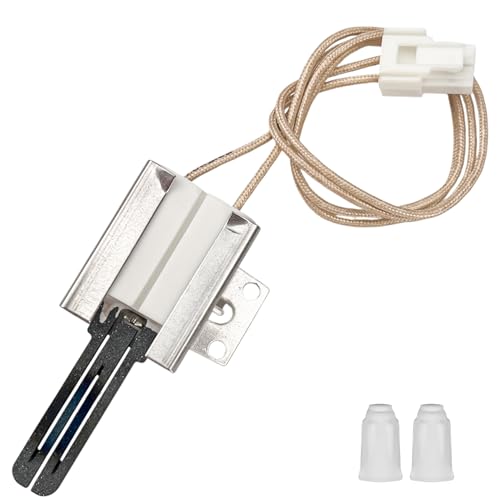
 COZZIVITA MP22YA Electric Stove Burner Element Replacement SetWhirlpool& Drip Pan14 x 4 x 7 inchesCheck on Amazon


What's inside
- What a Coil-Top Electric Range Actually Is
- Why This Segment Still Exists
- How Calrod Coil Elements Are Built and Rated
- Drip Bowls Beneath Every Element
- The Lift-Up Cooktop and What Hides Underneath
- Cookware Compatibility, Heavy Pots, and Canning
- Stability, Tip Risk, and Everyday Safety
- Inside the Oven: Capacity, Racks, and Cleaning Systems
- Dimensions, Electrical Supply, and Installation Clearances
- Cleaning and Maintenance Without the Drama
- Durability and the True Cost of Owning One for Years
- Who Should Buy a Coil Range, and Who Should Walk Past
- How to Read a Coil Range Spec Sheet Without Being Fooled
- Check prices on Amazon
- Frequently Asked Questions
As an Amazon Associate I earn from qualifying purchases. This post may contain affiliate links at no extra cost to you.
A coil-top electric range looks almost defiantly old-fashioned next to the flat glass panels that dominate showroom floors, yet that exposed spiral of metal is not a leftover waiting to disappear. It is a distinct cooking system, with its own physics, its own maintenance rhythm, and its own loyal group of owners who choose it on purpose. Understanding a coil range means looking past nostalgia and past the assumption that newer automatically means better for every kitchen. The burners sit above the surface instead of beneath it, heat travels directly into the pan through contact and radiant energy, and nearly every working part can be seen, lifted, cleaned, or swapped without special tools. For a cottage kitchen, a rental property, a first home, or a busy household that cans tomatoes every August, those traits carry real weight.
This guide works through the segment in detail, from the construction of a Calrod element to the amperage printed on a breaker panel. It draws on published manufacturer documentation, installation manuals, and established editorial research into how these appliances are specified and serviced. No single model is crowned here, because coil ranges differ in quieter ways than marketing pages suggest: one has a sturdier lift-up top, another routes its broiler differently, a third offers a genuinely useful oven volume behind a familiar-looking door. Learning to spot those differences matters more than memorizing a ranking.
What a Coil-Top Electric Range Actually Is
At its simplest, a coil-top range combines four exposed electric heating elements on top with an electric oven cavity below, packaged either as a freestanding unit with finished sides and a backguard, or as a slide-in unit designed to sit flush between cabinets with controls at the front. The elements themselves are tubes of heat-resistant alloy formed into flat spirals, typically supported a short distance above a recessed well in the cooktop surface. When current passes through the resistance wire sealed inside each tube, the outer sheath glows dull red at high settings and transfers energy to whatever rests across its turns.
A smoothtop range hides similar resistance elements beneath a sheet of glass-ceramic. The pan never touches the heat source; energy must pass through the glass first, which smooths the appearance but adds a fragile, expensive layer between burner and cookware. Induction goes further still, generating heat inside the pan itself through a magnetic field, which demands compatible cookware and considerably more electronics. A coil range skips both intermediaries. The pan sits directly on the glowing spiral, wobbles included, and that directness explains both its appeal and its frustrations.
Terminology on retail listings can blur these categories. Some manufacturers describe any electric range without gas as a radiant range, a label that technically covers both coil and smoothtop designs. Others file coil models under traditional or standard-clean headings, a holdover from an era when the coil top was simply the default. When comparing listings, ignore the category label and look at photographs and parts diagrams instead. If the surface shows raised spirals seated in round wells, it is a coil top, regardless of the marketing language wrapped around it.
The control layout follows the same traditional pattern on most freestanding models. Burner knobs and oven controls live on a raised backguard at the rear, keeping them away from small reaching hands but forcing taller cooks to reach across hot pans to adjust a setting. Slide-in coil models, which are far less common than their smoothtop counterparts, move those controls to the front panel and drop the backguard, producing a cleaner line against a backsplash. That distinction affects daily ergonomics more than any wattage figure, so decide which layout suits your household before narrowing the field further.
Why This Segment Still Exists
Manufacturers keep building coil ranges because demand never fully left. Part of that demand is economic in the most straightforward sense: a coil range is the least expensive full-size cooking appliance most brands sell, and the gap at purchase is only the beginning. A damaged smoothtop can end an appliance’s useful life because replacing the glass panel often approaches the cost of a new range, while a failed coil element is a modest part swapped in minutes. Landlords, property managers, and owners of seasonal homes do that arithmetic quickly, which is why coil models remain fixtures of rental housing and second kitchens.
Durability under rough handling forms the second pillar. A heavy cast iron Dutch oven dragged across a glass surface can score or crack it; the same pot set down hard on a coil merely flexes the spiral slightly. Coil tops tolerate the kind of cooking that happens in real households: stockpots shifted half off a burner to make room, canning kettles wider than the element beneath them, skillets that have warped a little over decades of use. The surface forgives because there is no brittle panel to protect.
The third reason is repairability by the owner. Nearly every wear item on a coil range — elements, drip bowls, receptacle blocks, infinite switches behind the knobs, oven bake and broil elements — can be reached with basic hand tools and replaced without disturbing sealed systems. Parts commonality across decades of production means hardware stores in small towns still stock the most failure-prone pieces. For a rural cottage hours from the nearest service technician, that self-sufficiency is not a quaint bonus. It is the deciding factor.
Finally, some cooks simply prefer how coil heat behaves. The element cycles on and off to hold a setting, producing a slower, more forgiving response than gas but a more tactile one than glass, where the pan’s underside never shows the burner’s state. Experienced coil cooks read the color of the spiral the way gas cooks read a flame. That learned intuition, built over years, is a genuine skill, and switching platforms means rebuilding it from scratch.
How Calrod Coil Elements Are Built and Rated
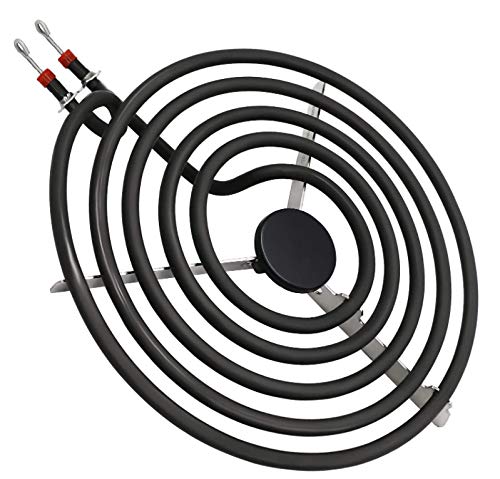
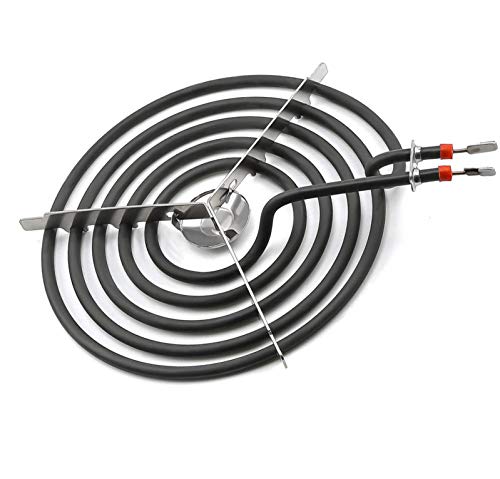
The word Calrod began as a trade name and settled into generic use for the sheathed tubular element found on nearly every coil range sold in North America. Inside the visible tube sits a helix of nickel-chromium resistance wire, centered within compacted magnesium oxide powder that insulates it electrically while conducting heat outward. The outer sheath, usually a stainless or nickel-alloy tube, resists oxidation through thousands of heating cycles. The whole assembly is bent into a flat spiral, flattened slightly on its upper face so pans rest on a broader contact band rather than a knife edge of round tubing.
Turn count and tube diameter shape how an element behaves. A typical large element carries three to four full turns and measures eight inches across, while a small element spans six inches with a tighter spiral. More turns spread heat across a wider footprint of the pan bottom, reducing the single fierce hotspot that a two-turn element can produce. When you examine a parts diagram, count the turns rather than trusting diameter alone; two eight-inch elements with different turn counts will simmer quite differently even at identical wattage.
Wattage ratings follow a fairly consistent pattern across brands. Small six-inch elements generally fall between 1,250 and 1,500 watts, enough for sauces, grains, and gentle reheating. Large eight-inch elements usually rate between 2,000 and 2,600 watts, with the upper end reserved for models that emphasize faster boiling. Those figures assume the full 240-volt supply; on a 208-volt circuit, common in some apartment buildings, actual output drops noticeably because wattage falls with the square of the voltage change. A range that feels sluggish in a high-rise may be performing exactly to its specification on reduced voltage.
Most coil elements connect through a plug-in arrangement. Two or three prongs at the element’s tail slide into a receptacle block mounted in the cooktop well, held by friction and a small retaining clip or screw. That design lets an owner pull an element straight out for cleaning or replacement without opening the appliance. A minority of models, often older or commercial-leaning designs, hard-wire their elements or use a hinged mounting that tilts rather than removes. Plug-in construction is worth seeking out deliberately, because it transforms the two most common service tasks — swapping a dead element and scrubbing beneath it — from projects into errands.
Heat control on a coil range comes from an infinite switch behind each knob, a device that cycles the element on and off in varying proportions rather than delivering a steady reduced current. At a low setting the element pulses briefly and rests; at high it stays energized almost continuously. This is why a coil at medium never glows uniformly and why simmering demands a watchful first few minutes while the pan and element settle into a rhythm. Heavy cookware smooths those pulses through thermal mass, one reason thick-bottomed pans feel calmer on coil than thin stainless does.
Drip Bowls Beneath Every Element
The shallow bowl seated under each coil, variously called a drip bowl, drip pan, or burner bowl, does three jobs at once. It catches the boilovers and splatter that inevitably escape a pan, it shields the cooktop well and wiring below from that moisture, and its reflective inner surface throws a portion of radiant heat back upward toward the pan instead of letting it soak into the body of the range. Remove a bowl and the element still heats, but efficiency dips and the cavity beneath collects every spill.
Two materials dominate. Porcelain enamel over steel is the workhorse: dark, usually black or speckled, tolerant of high heat, and slow to show the baked-on discoloration that heavy use produces. Chrome-finished bowls start brighter and reflect more heat when new, yet they blue and brown with heat cycling and show scratches readily. In practice, porcelain bowls age more gracefully in a busy kitchen, while chrome bowls suit lighter use where their initial reflectivity stays intact longer. Either material eventually succumbs to acidic spills left uncleaned, which pit the surface and turn a smooth bowl into one that grips residue.
Sizing sounds trivial until replacement time. Bowls are sold by the element diameter they serve, six inch or eight inch, but the outer lip diameter, center hole size, and depth vary between brands and even between production eras of the same brand. A bowl that sits slightly high will rock the element and tilt every pan placed on it. The reliable method is to match the range’s model number to the manufacturer’s parts list rather than buying a universal bowl by diameter alone. Universal sets fit many ranges adequately, yet the word adequately is doing real work in that sentence when a heavy kettle is involved.
Bowl condition quietly signals how a used range was treated, and it also affects a new range’s daily tidiness. A bowl with a warped rim lets the element sit crooked. A bowl lined with foil, a common shortcut, can trap heat against the receptacle block, block ventilation designed into the well, and in some configurations reflect enough heat to damage the element’s terminals. Manufacturer manuals consistently discourage foil liners for those reasons. Disposable liners shaped for the specific bowl are a safer convenience, though plain washing remains the cheapest route, since porcelain bowls tolerate soaking and most tolerate a dishwasher cycle as well.
The Lift-Up Cooktop and What Hides Underneath
One feature separates coil ranges from every other platform in daily ownership: on most models, the entire cooktop panel lifts. Release the front edge, raise it like a car hood, and a support rod props it open, exposing the shallow tray cavity beneath the elements where months of crumbs, drips, and the occasional lost pea have gathered. Smoothtops seal that space away. Gas ranges open it only partially around their burners. A coil range invites you in, which is both an advantage and a mild accusation every time you lift the top and see what has been accumulating.
That access changes the cleaning equation fundamentally. A boilover that would bake onto glass and demand a scraper can, on a coil range, run through the bowl’s center hole into the tray cavity below, where it waits to be wiped up at leisure rather than smoking through the next three meals. The elements unplug, the bowls lift out, the top rises, and every surface that food can reach becomes a surface a sponge can reach. Kitchens that fry often, boil pasta aggressively, or cook for crowds benefit disproportionately, because their spills are a matter of when rather than if.
Construction quality varies in ways listings rarely mention. Better lift-up tops use a continuous hinge and a sturdy prop rod that holds the panel without wobble; flimsier designs flex at the corners and can twist an element’s receptacle alignment over years of lifting. When examining a model in person or studying its parts breakdown, look for a metal rather than plastic prop rod, hinges that span a reasonable width, and a tray cavity pressed from a single sheet without sharp folded seams that trap grime. Those details never appear in headline specifications, yet they decide whether the lift-up feature stays pleasant in year eight.
Lifting the top also exposes the receptacle blocks and the wiring runs to each element, which makes diagnosis visual. A receptacle that has overheated shows discoloration and a loosened grip on the element prongs, producing the classic symptom of a burner that works only when jiggled. Catching that wear early, during a routine cleaning, prevents the arcing that eventually ruins both block and element. Few other major appliances let an owner inspect their own wear points so casually, and that transparency is a quiet argument for the platform.
If your household is still deciding on overall width before burner style, the broader overview in best 30 electric ranges walks through the standard thirty-inch electric category that most coil models belong to.
Cookware Compatibility, Heavy Pots, and Canning
Coil elements ask one thing of cookware: a reasonably flat bottom that contacts as many turns of the spiral as possible. A pan that rocks on a countertop will rock worse on a coil, concentrating heat on the points that touch and scorching food above them while the rest of the pan lags. Thin aluminum with a bowed base is the worst pairing. Flat, heavy-gauge pans — clad stainless with a level base, enameled cast iron, well-cast raw iron — spread contact across the spiral and repay their weight with steadier results.
Cast iron deserves a specific note because its owners often worry about scratching, a concern borrowed from glass-top ownership. On coil, there is no surface to scratch in that sense; the element itself is the contact point, and iron resting on alloy tubing harms neither. The real cautions are weight and sliding. A loaded twelve-inch skillet plus its contents can strain a plug-in element’s support if it is habitually dropped rather than set down, and dragging any rough-bottomed pan across the turns can bend a coil out of level over time. Lift, place, and lift again is the whole technique.
Canning is where the coil platform earns its most devoted defenders. Water-bath canning demands a large kettle, often wider than the element beneath it, filled with many quarts of water plus jars, held at a rolling boil for extended processing times. Pressure canning adds a heavy vessel and sustained heat. Several smoothtop manufacturers restrict or discourage canning on their glass surfaces because of the prolonged concentrated heat and the risk of a kettle fusing to or cracking the panel. Coil ranges carry no glass to endanger, and their manuals more commonly address canning directly with guidance on kettle diameter and flatness. The exposed element tolerates an oversize canner whose base extends modestly beyond the spiral, provided the bottom stays flat and the load remains stable.
Even on coil, canning has limits worth respecting. A canner that overhangs excessively can trap heat against the cooktop and backguard finishes, and an extremely heavy filled vessel tests both the element support and the cook’s ability to move it safely. Alternating which large element handles long canning sessions distributes wear, and letting an element cool fully before removing it for cleaning protects the receptacle from heat-softened handling. Households that preserve food every season often choose coil for exactly this workload, accepting slower everyday boil times as the trade.
Diameter matching still governs ordinary cooking efficiency. A small saucepan centered on a large element wastes energy around its edges and overheats its handle; a wide skillet on a small element cooks a pale ring of food around a hot center. The six-and-eight-inch pairing on a standard coil top covers most pans between those extremes, and choosing the element that matches the pan’s base, rather than the one that happens to be free, is the simplest performance improvement available to any coil cook.
Stability, Tip Risk, and Everyday Safety
Honesty about coil cooking starts with the wobble. A spiral of tubing is not a perfectly level plane, and even a well-made element can sit a fraction off flat, especially after years of heavy pots. Pans may rock slightly, handles may drift toward the low side, and a light empty saucepan can feel unsettled until its contents give it ballast. Manufacturers address this with leveling rings and with element supports designed to seat the spiral firmly, but no coil top achieves the absolute stillness of a sheet of glass. Cooks who sauté with constant pan motion usually adapt; cooks who need a pan to stay exactly where it was placed sometimes do not.
Leveling is partly the owner’s responsibility. An element that tilts after being removed for cleaning usually has not seated fully into its receptacle, or its retaining clip has loosened. Reseating it with the range unplugged or the breaker off, and confirming the bowl below sits in its notches, corrects most tilt before it becomes a cooking complaint. A spiral bent out of plane can be coaxed gently by hand when cold, though an element that repeatedly sags under ordinary loads has reached the end of its service and should be replaced rather than adjusted indefinitely.
Residual heat is the platform’s main burn hazard. A coil that has been switched off stays hot enough to burn skin or ignite a stray towel for several minutes, and unlike a glowing element under glass, it gives no light-based warning once its color fades to black while it is still dangerously warm. Most modern coil ranges include a hot-surface indicator light tied to a temperature sensor, plus individual burner-on indicators, and those lights deserve attention rather than habituation. In homes with children, the backguard control layout of freestanding models offers a genuine advantage, placing knobs beyond a young child’s reach, while front-control slide-ins trade that protection for adult convenience.
Electrical safety inside the cooktop depends on connections the owner can actually inspect. A receptacle block whose contacts have loosened through heat cycling can arc, pit the element prongs, and eventually fail or overheat surrounding insulation. The warning signs are mundane: a burner that cuts out, a faint clicking or buzzing from beneath the top, scorch marks near the prongs. Because the elements unplug, checking those contact points during seasonal cleaning costs nothing and catches the failure mode early. Any element with a blistered, swollen, or cracked sheath should come out of service immediately, since a breached sheath can energize the pan resting on it.
Grease management ties back to the drip bowls. A bowl allowed to accumulate a deep layer of carbonized grease sits close beneath a very hot element, and that reservoir can smoke or catch during high-heat cooking. Regular bowl washing is therefore a safety habit disguised as a cosmetic one. The same logic applies under the lift-up top, where pooled grease near wiring has no business lingering through a year of roasts.
Inside the Oven: Capacity, Racks, and Cleaning Systems
The oven below a coil top follows the range’s width. Compact twenty-inch models hold roughly two to two and a half cubic feet, enough for a single sheet pan used carefully and modest casseroles. Twenty-four-inch models step up to around three cubic feet, a size that suits small households and tight galley kitchens. The mainstream thirty-inch freestanding oven typically offers close to five cubic feet in current production, swallowing a large turkey or two half-sheet pans side by side on one rack, though advertised volume and usable volume diverge in ways the spec-reading section below addresses.
Rack configuration is plain in this segment and better for it. Most coil-range ovens ship with two flat racks and four to six embossed positions in the cavity walls. Broiling happens in the main cavity on nearly all current models, using the upper element, with the rack raised close beneath it; the separate broiler drawer of older designs has largely vanished from new production. A storage drawer below the oven is standard on freestanding models, useful for sheet pans and lids, though it sits close enough to the oven floor that storing plastics or wooden utensils there is poor practice during long roasts.
Cleaning systems divide sharply by price tier within the segment. Manual-clean ovens, still common at the entry level, have a porcelain cavity the owner wipes and occasionally treats with oven cleaner; they are simple, they never lock the owner out during a cleaning cycle, and they demand elbow grease after a spilled fruit pie. Steam-clean models add a shallow reservoir in the cavity floor: pour in water, run a short low-temperature cycle, and loosened residue wipes away, a middle path that handles light soil gracefully and heavy soil barely at all. True self-cleaning ovens, using pyrolytic high heat to reduce soil to ash, appear on step-up coil models and add insulation, a door lock, and cost. For a household that roasts weekly, that upgrade may be the single most valuable option in the whole segment; for occasional bakers, manual cleaning remains entirely workable.
Bake performance depends on element arrangement more than on any electronic feature. A visible bake element along the cavity floor, common in this class, can be lifted or removed for cleaning spills beneath it and replaced as easily as a cooktop coil. Hidden bake elements, borrowed from higher tiers, smooth the cavity floor but complicate service. Temperature accuracy varies between individual units of any brand, and an inexpensive oven thermometer, checked against a few settings, tells an owner more than any brochure claim. Preheating patience matters too: a coil range’s oven signals readiness by thermostat, not by the cavity’s thermal saturation, so giving roasts and breads an extra ten minutes of soak produces more consistent results.
Renters and owners of narrow older kitchens should note that compact coil models follow the same design logic at smaller scale, and the roundup at best 24 inch electric ranges covers those twenty-four-inch electric options for tight footprints.
Dimensions, Electrical Supply, and Installation Clearances
Width names the category, but depth and height decide whether a range settles into an existing kitchen. A standard thirty-inch freestanding model stands roughly forty-seven inches tall to the top of its backguard, about twenty-six to twenty-eight inches deep including the handle, and adjusts on leveling legs to meet a thirty-six-inch countertop. Slide-in versions omit the backguard, present front controls, and are shaped to overlap the countertop edge slightly to block crumbs from falling into the gap. Measuring the opening means checking width at counter height and at the floor, since older cabinetry is not always parallel, and confirming the door’s swing clears island corners and opposite drawers.
Electrical demand is substantial and non-negotiable. A full-size coil range runs on a 208/240-volt circuit protected at forty or fifty amps, with the exact requirement printed on the rating plate near the oven door frame or behind the storage drawer. The receptacle is a large four-prong NEMA 14-50 outlet in homes wired to current code, providing two hot legs, a neutral, and a separate ground. Older installations may still hold a three-prong outlet from an era when the frame was grounded through the neutral; manuals describe bonding-strap configurations for that legacy case, but any uncertainty about grounding belongs to a licensed electrician rather than to improvisation. The cord itself is usually sold separately, matched to the outlet style, and must be secured with a strain-relief clamp where it enters the range’s terminal block.
Placement of that outlet matters more than first-time buyers expect. Installation manuals specify a floor or wall zone behind the range, low enough that the receptacle and plug do not prevent the unit from sliding fully back. An outlet mounted too high pushes the range inches into the room, breaking the line of the counters and opening a gap behind the backguard where utensils vanish. Planning the outlet location from the manual’s diagram before delivery day prevents the most common installation disappointment in this category.
Clearances around the appliance follow fire-safety logic. Manufacturers specify minimum distances to combustible surfaces above and beside the cooktop, commonly thirty inches of unprotected vertical space above the elements, reduced when a listed hood or microwave combination covers the area. Side clearances to cabinetry, the need for the range to sit level for both pan stability and oven-door sealing, and anti-tip protection all appear in the same manual pages. The anti-tip bracket, screwed to the floor or wall so the range’s rear leg engages it, is the most skipped step in home installation and the most consequential: a child climbing on an open oven door, or a heavy turkey leaned on that door, can lever an unsecured range forward. Verifying the bracket’s engagement takes a gentle pull test and a minute of attention.
Ventilation deserves a thought while measurements are out, because coil cooking sends the same grease-laden air upward as any other platform, and pairing a new range with an appropriately sized hood keeps cabinets and ceilings cleaner over the years — the options gathered at best 30 range hoods address that thirty-inch hood pairing directly.
Cleaning and Maintenance Without the Drama
Daily care on a coil top is a short routine performed cool. Once the elements lose their heat, a damp cloth takes fresh splatter off the porcelain surface around the bowls, and anything that reached the bowls themselves comes out with hot soapy water after they lift free. The mistake that creates most of the platform’s ugly reputation is deferral: sugary spills left through repeated heating cycles carbonize into a glaze that no gentle method will move. Attended to the same evening, nearly every spill on this surface is a thirty-second task, because nothing can bake into a sealed glass layer that does not exist.
Element replacement is the signature repair. With the range unplugged, grip the cold element opposite its connection point, lift its outer edge slightly, and pull it straight from the receptacle; the replacement slides in until its prongs seat firmly and it rests level in the bowl. The entire exchange takes less time than boiling a kettle. If a new element still misbehaves, suspicion moves to the receptacle block, which a handy owner can also replace after lifting the cooktop and disconnecting its wires, though anyone uneasy around household wiring should hand that job to a technician. Infinite switches, the controls behind the knobs, fail gradually — a burner that only works on high, or not at all — and are likewise replaceable from the backguard on many models.
Drip bowls should be treated as consumables with a long fuse rather than as permanent fixtures. When porcelain chips through to steel, rust follows, and a rusted bowl flakes into the tray cavity below; when chrome blisters, its surface turns abrasive. Replacing a set restores both appearance and the snug seating the elements depend on. Keeping one spare set on hand lets a household soak a dirty set overnight without taking the range out of service, a small luxury unique to a platform whose parts lift out by hand.
Odors after a spill usually trace to residue beneath the cooktop rather than to the oven. A sweet, acrid smell that appears whenever a particular burner runs means something reached the tray cavity through that bowl’s center opening and is reheating each time. Lifting the top, letting everything cool fully first, and wiping the tray cavity resolves it. Persistent electrical smells are a different category entirely: a sharp chemical or fishy odor near the backguard or receptacle suggests overheating insulation or a failing block, and the correct response is to stop using that burner and have the connection inspected.
The oven asks for seasonal rather than weekly attention in most homes. Rack guides collect polymerized grease that makes racks drag; a paste of baking soda and patience, or a manual-approved cleaner, restores the glide. The door gasket, a woven high-temperature seal, should be checked for tears or flattened sections that leak heat onto the front panel, discoloring it and wasting energy. The oven light bulb, shielded by a glass cover that unscrews once cool, is another owner-level part. None of this requires a service call, which is precisely the ownership experience this segment promises.
Durability and the True Cost of Owning One for Years
Comparing a coil range with a smoothtop over a decade of ownership is less about which cooks better in month one and more about which failure you would rather face in year nine. Glass-ceramic tops fail catastrophically and expensively: a dropped jar, a pan set down on a stray grain of sugar at full heat, or simple thermal stress can crack the panel, and the replacement part plus labor frequently rivals the price of an entry-level new range. Coil tops almost never fail all at once. They degrade in small, cheap increments — an element here, a bowl there, a switch after many thousands of turns — each repair restoring full function for the cost of a modest grocery trip’s worth of parts.
The body of a coil range is correspondingly simple. Porcelain enamel over steel, a stamped tray cavity, mechanical switches, and resistive elements leave few electronic boards to be discontinued. That last point matters for longevity in a way buyers underestimate: control boards for feature-rich ranges become scarce a decade after production ends, orphaning otherwise sound appliances, while coil-range wear parts follow standardized designs shared across brands and eras. A twenty-year-old coil range in a farmhouse kitchen is not an anomaly or a testament to luck. It is the predictable outcome of an appliance whose every weak point was designed to be unbolted and renewed.
Energy use sits in the middle of the electric field. Coil transfers heat efficiently to a well-matched flat pan, wastes more around a mismatched one, and lacks induction’s precision in converting electricity into pan heat. Over a year of ordinary family cooking, the difference between electric platforms amounts to a modest sum compared with the purchase and repair differences above, which is why efficiency alone rarely decides this particular purchase honestly. Households cooking on reduced 208-volt service should remember that longer boil times, not higher consumption per task, are the usual consequence, since the element simply delivers its energy more slowly.
Resale and disposal follow the same practical pattern. A used coil range with fresh bowls and four working elements finds ready buyers among landlords and first-apartment furnishers, and its largely steel construction recycles straightforwardly at end of life. None of this glamour appears in a showroom, yet ownership is lived in years rather than in the showroom’s afternoon, and by that measure the plain platform’s ledger looks strong.
Who Should Buy a Coil Range, and Who Should Walk Past
The clearest candidates are households whose cooking is heavy, frequent, and hard on equipment. If stockpots live on the stove, if canning season reorganizes your late summer, if cast iron is the default rather than the exception, a coil top absorbs that workload without asking for gentleness in return. Owners of cottages and cabins, where a range may sit cold for weeks and then feed twelve people for a weekend, benefit from an appliance with no electronics to sulk after power interruptions and no glass to crack in a freezing house. Anyone furnishing a rental, an accessory dwelling, or a first home on a disciplined budget gets a full cooking capability that leaves money for the cookware that actually touches food.
People who maintain their own appliances will feel at home here, as will anyone far from service networks. So will cooks who learned on coil and trust their instincts on it; there is no virtue in relearning heat management to satisfy a trend. A coil range also suits households that keep appliances for a long time by preference, repairing rather than replacing, since its design philosophy matches that intention at every joint and connection.
The platform is a poor match for different cooks, and naming them is equally useful. If your cooking relies on sliding pans constantly, tossing ingredients with the pan in motion, the raised spirals will fight you at every turn. If rapid, precise simmer control matters — delicate custards, chocolate work, sauces that break when a pulse of heat arrives late — induction’s steadiness serves better. Households that prize a cooktop wiped clean in one pass will find bowls and lifted tops fussy by comparison with glass. And anyone whose kitchen design centers on a seamless built-in look may find even the slide-in coil models visually plain, since this segment invests in function long before styling.
There is also a middle group worth addressing: buyers tempted by coil purely for its low entry price who actually cook lightly and entertain visually. For them, the honest question is whether the savings outweigh years of looking at a surface they find dated. Appliances are among the most-seen objects in a home. Buying the platform whose trade-offs match your habits, rather than the one with the smallest tag, is the decision that still feels right in the fifth year.
Shoppers whose kitchens can accept a wider professional-style footprint and who are weighing fuel types rather than burner surfaces will find a useful contrast in best 36 gas ranges, which examines thirty-six-inch gas ranges and the ventilation and line requirements that come with them.
How to Read a Coil Range Spec Sheet Without Being Fooled
A specification sheet for this segment is short, which makes each line worth reading carefully. Start with element wattage, listed per position rather than as a single total. Front elements matter most because they handle the majority of cooking; a model whose large front element rates near the top of the segment’s range will boil noticeably faster than one that reserves its strongest element for the rear. Note whether wattage is quoted at 240 volts or 208, since a sheet that lists both reveals the output your building will actually deliver if its supply is the lower figure.
Oven capacity requires the most skepticism. The cubic-foot figure on a listing is usually the cavity’s gross volume measured wall to wall, including space that racks and elements render unusable. A better gauge is the interior dimension line — width, height, and depth in inches — compared against the pans you own. A cavity that accepts a half-sheet pan lengthwise with clearance for air circulation will serve a baker better than a nominally larger one whose depth falls an inch short. Rack count and the presence of a recessed or offset rack position, useful for tall roasts, tell you more about Thanksgiving than the headline volume ever will.
Model numbers encode useful information once you learn a brand’s pattern. Letters and digits within the string typically indicate fuel, width, color, feature tier, and sometimes the cleaning system, while a changing suffix marks a production revision that may alter parts compatibility. When ordering elements or bowls years later, the full model and serial numbers from the rating plate — not the marketing name from the listing — are what parts catalogs match against. Photographing that plate on delivery day is a thirty-second habit that saves real frustration a decade on.
Cleaning type, control location, and drawer function hide in plain sight on spec sheets under bland headings. Confirm whether the oven is manual, steam, or self-cleaning rather than assuming the tier includes it; confirm whether the bottom drawer is storage or, on rare older-style designs, a broiler, since that changes what can be stored there; and confirm the indicator-light arrangement if residual-heat warning matters to your household. Finally, check the listed shipping and product weights. A heavier range in this class often signals a sturdier stamped body and hinge hardware, while unusually light models sometimes achieve their price through thinner panels that oil-can and flex when the top is lifted.
Warranty language completes the picture. Coverage in this segment is typically one year on parts and labor for the whole appliance, with no extended glass coverage to compare because there is no glass. What varies is the availability of service in your area and the brand’s parts pipeline, both of which local appliance dealers will describe frankly if asked. A platform this repairable rewards buying from a channel that will still answer the phone when you need a receptacle block in year six.
Delivery day offers one more chance to catch problems while they are still the seller’s responsibility. Before signing anything, confirm that all four elements are present and undamaged, that each one seats firmly in its receptacle without rocking, and that the drip bowls match one another in finish and size. Open the oven and count the racks against the packing list, check the door gasket for gaps where it meets the frame, and look along both side panels for transit dents that could interfere with sliding the unit between cabinets. Shipping bolts, foam blocks, and tape inside the cavity are easy to miss and unpleasant to discover during the first preheat, so a slow inspection with the manual’s unpacking page in hand is time well spent.
The first hours of ownership call for a short, deliberate routine. Level the range using its adjustable legs until a small pan of water sits still on the largest element and the oven racks roll without drifting toward the back. Run the oven empty at a moderate temperature for the period the manual recommends, with the kitchen ventilated, because protective oils on new elements and cavity surfaces produce a noticeable odor as they burn away; that smell should fade during this initial cycle and not return. Boil a modest pot of water on each element in turn, noting how evenly each spiral glows and whether any burner cycles erratically, since a fault reported in the first week is far simpler to resolve than one documented months later.
Keep the paperwork that arrives in the oven cavity rather than discarding it with the carton. The installation booklet records the clearances and electrical figures an electrician or future owner will ask about, the use-and-care guide lists the exact part numbers for elements and bowls, and the warranty statement starts its clock from a delivery date you may not remember in three years. Storing those pages in the storage drawer, inside a sealed bag to protect them from kitchen moisture, keeps the whole service history of the appliance within arm’s reach of the appliance itself. Owners who follow that small habit rarely struggle to identify a part, prove a purchase date, or explain to a technician exactly which configuration sits behind the range.
Check prices on Amazon
Live listings for the shortlist in this guide are pulled from Amazon below, so prices and availability are always current at the moment you look.


Frequently Asked Questions
Can any pan be used on a coil element?
Most metal cookware works, provided its base is flat enough to rest across the spiral without pronounced rocking. Glass and ceramic pans conduct heat poorly and can develop hot spots, so they suit the oven better than the cooktop. Extremely warped bases waste energy and cook unevenly on any electric platform, and coil exposes that flaw most visibly.
Why does one burner heat more slowly than the others?
Size explains most cases, since small elements are rated well below large ones by design. If a large element has slowed compared with its earlier performance, suspect a loose receptacle connection, a partially failed element, or reduced building voltage before assuming the control switch is at fault. Swapping positions with another element of the same size, once everything is cold and unplugged, quickly shows whether the problem travels with the element or stays with the socket.
Is canning really safer on coil than on glass?
The advantage is about the surface, not the food process itself. Coil has no glass panel to crack under a heavy canner’s prolonged heat, and many coil manuals give explicit canning guidance. Processing times, jar preparation, and altitude adjustments remain exactly as published canning references direct; the range only supplies steady boiling water.
How long should a coil element last?
Service life depends on use intensity, exposure to boilovers, and how often heavy loads are dropped onto it rather than placed. Elements are consumable parts by design, and a household that cooks daily may replace individual elements several times across a range’s long life. That pattern is normal ownership for this platform, not a sign of a defective appliance.
Can a three-prong outlet be used with a new range?
Many manuals describe a bonding arrangement for existing three-wire installations, but current electrical code for new work calls for a separate ground through a four-wire connection. Because grounding protects against a breached element energizing the appliance frame, any doubt about an older outlet should be resolved by a licensed electrician before the range is installed.
Why does the oven seem cooler than its setting?
Thermostat cycling means the displayed setting represents an average the cavity swings around, and rack position changes what a dish experiences. An oven thermometer left inside through a full preheat and several cycles reveals the pattern. Many models allow a calibration adjustment described in their manual if the average is consistently off by a modest margin.
A brief seasonal routine keeps nearly every observation in this guide from becoming a repair bill. Twice a year, pull each cold element, wash its bowl, wipe the tray cavity beneath the lifted top, and glance at the receptacle prongs for discoloration or looseness. Check that the oven door closes evenly along its gasket, confirm the anti-tip bracket still grips the rear leg after any deep cleaning that moved the range, and boil a small pot of water on the largest element to confirm it still glows evenly from center to rim. Twenty unhurried minutes, spring and autumn, is the entire programme.
Disclosure: This guide rests on factory literature released for these models, the installation booklets packed with them, and editorial research into how such ranges are built, specified, and maintained; it makes no claim of having used the products discussed. Readers should confirm dimensions, electrical requirements, and parts compatibility against the documentation for a specific model before buying or installing. As an Amazon Associate we earn from qualifying purchases.
Choose the coil range whose elements, oven, and upkeep match the way your kitchen actually works on an ordinary Tuesday, and that unglamorous fit will quietly prove itself at every meal that follows.