Our Top Picks
 DUMOS Ab Workout Equipment for Home Gym28.1''*44.6''*20''44.6 x 20 x 28.1 inches16.53 poundsCheck on Amazon
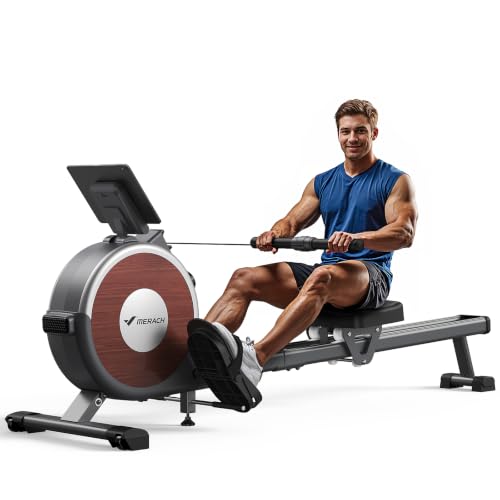
 Sunny Health & Fitness Smart Upright Row-N-Ride ExerciserOne Size19.3 x 45.3 x 50 inches24.5 poundsCheck on Amazon
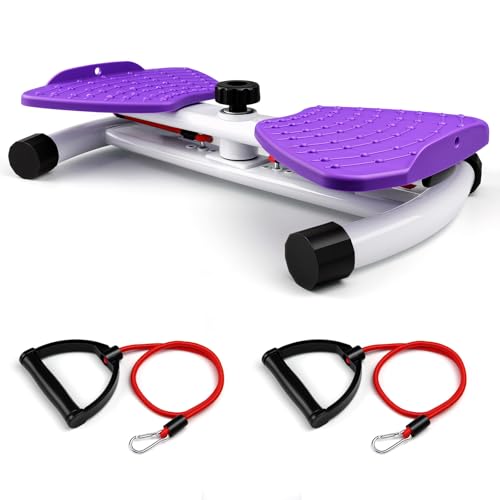 Waist Twister Machine with 300 lbs Weight Capacity21.65 x 12.79 x 4.72 inches8.2 poundsCheck on Amazon


What's inside
- Frame geometry and reach: why smaller frames matter
- Mini steppers: compact, simple and knee-aware
- Rowers and low step-through designs that are easy to mount
- Compact ellipticals and stride length for average heights
- Resistance types and noise in an apartment
- Machine weight, moving it and storing it in small spaces
- User-weight limits and what they say about stability
- Low-impact work for knees and back
- Displays and basic training programmes
- Assembly at home, honestly considered
- Safety: child locks, feet and everyday habits
- Choosing by goal: weight management, toning and staying active
- Choosing by space: studio flat, spare room, basement corner
- Care, upkeep and the small checks that prevent big annoyances
- Measuring yourself and your room before shortlisting
- A side-by-side method for comparing shortlisted models
- Building a weekly pattern you can actually keep
- How the three categories compare head to head
- Buying mistakes that measurements would have prevented
- Check prices on Amazon
- A short note on clothing, footwear and grip comfort
As an Amazon Associate I earn from qualifying purchases. This post may contain affiliate links at no extra cost to you.
How this guide stays independent is worth stating plainly: As an Amazon Associate, we earn from qualifying purchases.
Many exercise machines are designed around a tall, long-limbed reference body, and then sold to everyone. For a large share of women, that mismatch shows up immediately: handles that sit too far away, a seat that cannot drop low enough, pedals spaced so widely that hips roll with every stride, or a step-up height that turns mounting the machine into a small climb. None of those flaws appear on a specification sheet as a warning, yet together they decide whether a machine gets used daily or quietly becomes a clothes rack. This guide focuses on fit first, because a machine that suits your frame, your room and your joints is the one that earns its floor space.
The categories covered here are the ones that work in ordinary homes: mini steppers, rowing machines and low step-through designs, and compact ellipticals. Each stresses the body differently and occupies a room differently. Steppers are small and simple but load the knees in a particular way; rowers spread effort across the back, arms and legs while demanding floor length; ellipticals offer a standing, gliding motion with a stride that must match your legs. Resistance type, noise, weight of the machine itself and the honesty of its stated user-weight limit all receive close attention, since apartment living and shared walls punish careless choices.
Recommendations throughout rest on published dimensions and specifications: frame geometry, stride length, step height, resistance mechanism, machine weight, footprint and stated capacity. Those numbers, compared against your own height, reach and room measurements, predict the ownership experience far better than photographs of much taller models demonstrating the equipment. Measure yourself and your space before shortlisting anything, keep those figures beside you while reading, and treat any machine whose key dimensions fall outside your measurements as eliminated, however appealing its console or colour scheme may be.
Frame geometry and reach: why smaller frames matter
Frame geometry governs every minute on a machine. On an elliptical, the distance between the pedals, often called the Q-factor, affects hip comfort: a wide spacing forces the legs outward and can irritate hips and knees over a long session, while a narrower spacing lets the feet track closer to the body’s natural line. Handlebar reach matters just as much. If the moving handles sit far forward, a shorter user leans, rounds the shoulders and grips with straight, locked arms, shifting strain into the neck and lower back. Handles that come back toward the user allow a tall posture with soft elbows, which is the position you can actually hold for half an hour.
Seat height and adjustment range decide fit on rowers and any seated machine. A low seat that still leaves the knees below the hips makes mounting easy and keeps the hip angle open, while a seat that cannot drop far enough forces shorter legs to point the toes and strain the calves at full extension. Adjustment increments matter too: holes spaced widely apart can leave you between positions, forever slightly too high or slightly too low, whereas a sliding rail or finely spaced notches let you land on the setting that matches your leg length. When comparing models, look for the actual seat height range in the specifications rather than a general claim of adjustability.
Step-over and step-up height form the third geometry question. A low step-through frame, where the central bar or flywheel housing sits close to the floor, lets you mount without lifting a leg high or balancing on one foot, which matters after a tiring session as much as before it. For anyone with a stiff hip, a healing knee or balance concerns, a few centimetres of step height can be the difference between independent use and needing a steadying hand nearby. Published step-up heights appear in many specification lists; where they do not, the overall machine height and platform position offer clues worth weighing before purchase.
Grip diameter and pedal size complete the fit picture. Slimmer grips suit smaller hands and reduce forearm fatigue during rowing or on elliptical handles, while oversized pedals with a raised rear lip keep heels seated without conscious effort. Pedal spacing, grip reach, seat range and step height together form a fit profile for each machine, and writing that profile down for every model on your shortlist turns a vague impression of comfort into a comparison you can defend. The sections that follow apply this profile category by category, beginning with the smallest machines of all.
Mini steppers: compact, simple and knee-aware
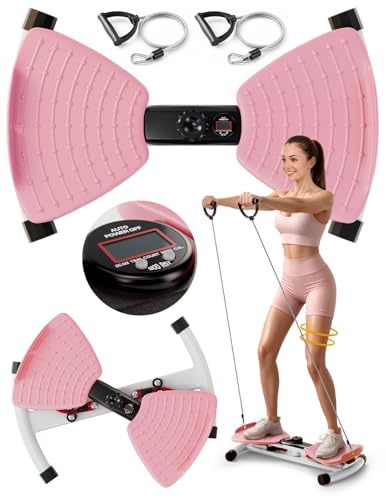
A mini stepper reduces exercise equipment to two pedals, a small frame and a resistance mechanism, and that simplicity is its charm. It fits under a desk, slides into a wardrobe and asks almost nothing in assembly. The stepping motion works the calves, thighs and glutes in a climbing pattern, and many models add removable resistance bands for light upper-body work. Because the pedals travel in a short, fixed arc, the effort concentrates in a narrower range of knee bend than a full stair climb, which some users find comfortable and others find repetitive; session length and pedal resistance decide which experience you get.
Pedal travel and angle deserve scrutiny in this category. A stepper with a slightly inclined pedal path tends to keep the heel involved and spreads load across the whole foot, while a purely vertical path can push effort toward the front of the knee. Twisting steppers, whose pedals rotate slightly as they descend, engage the waist and hips more and change the feel considerably; they also demand better balance, since the platform moves in two planes at once. If balance is a concern, a straight stepper with a wide, low base and an optional stabilising handle frame is the steadier choice.
Because mini steppers are small, their stated user-weight limits and frame stability vary widely, and the gap between a sturdy steel frame and a flexing light one is obvious within minutes of use. Look for a broad footprint relative to the pedal height, rubber feet that grip rather than slide, and a resistance system rated for continuous use rather than short bursts. Hydraulic cylinders, common in this category, warm up during a session and can soften noticeably, so a model whose resistance still feels consistent at the twenty-minute mark reflects better cylinder quality than one that fades early.
Steppers reward modest expectations and consistent habits. They will not replicate a hill walk, but they raise heart rate, keep legs active during a workday and store in spaces where no other machine fits. Pairing stepping with a stretching corner keeps the whole routine in one small area, and for readers arranging that corner, the natural companion read is best yoga mat towels.
Rowers and low step-through designs that are easy to mount
A rowing machine spreads work across the legs, back and arms in one seated movement, and its low profile makes mounting simpler than climbing onto a tall standing machine. You sit down rather than step up, which suits users who distrust their balance on raised platforms. The geometry that matters most is the rail length and seat height: a rail that is too short cuts the leg drive for taller users, while a seat set very low can challenge stiff knees on the way down and up. For the average heights this guide centres on, a mid-length rail with a comfortably padded, contoured seat covers the widest range of bodies without wasted floor length.
Rowing technique interacts with fit. At the catch position, shins should reach roughly vertical without the heels lifting excessively or the back rounding to compensate for a short reach to the handle. Machines whose handle strap and footplate positions adjust allow that posture; fixed footplates with a single heel position can force shorter feet into a compromise. Foot straps should sit across the widest part of the shoe and release quickly, and the footplate angle should let the whole sole share the drive rather than concentrating force through the toes.
Low step-through design language also appears in recumbent-style and hybrid machines, where a walk-through gap between seat and pedals removes the need to swing a leg over a central frame. That arrangement particularly suits anyone returning to exercise after injury, managing joint stiffness, or simply preferring to sit down and stand up without choreography. When comparing such designs, check the width of the walk-through gap and the presence of a handle or frame section to hold while sitting, because a gap that exists on paper but offers nothing to grip still leaves the hardest moment of the session unsupported.
Rowers occupy length rather than height in a room, and many store upright against a wall, balancing on their front end. Verify the ceiling height against the stored length if you plan to stand one up in a flat, and check the transport wheels roll smoothly on your flooring type, since a rower dragged sideways across a room quickly loses its welcome. Folding rail models shorten the stored footprint at the cost of a joint in the rail that must lock firmly; a rail joint that develops play will announce itself as a clunk at every stroke, so the locking mechanism’s solidity belongs on your inspection list.
Compact ellipticals and stride length for average heights
Stride length is the headline specification on any elliptical, and it must match leg length to feel natural. A stride that is too long forces an overextended, shuffling gait that strains the front of the hip, while a stride that is too short produces a cramped, choppy motion that never settles into rhythm. For users of average height, a mid-range stride typically suits best, and adjustable-stride models widen that comfort window for households sharing one machine. Treat extreme stride claims on very compact machines with caution, because a short frame physically limits how far the pedals can travel.
Compact ellipticals achieve their smaller footprint through several layouts. Front-drive designs place the flywheel ahead of the user and tend to produce a flatter, longer-feeling stride; rear-drive layouts feel slightly more circular; centre-drive models wrap the mechanism around the user and can offer the narrowest pedal spacing of all. Each layout changes where the machine’s length sits relative to your body and your wall, so the footprint diagram in the specifications matters as much as the footprint number. Allow clearance behind the machine for the pedal arc and for stepping off safely at the end of a session.
Incline features alter the muscle emphasis by raising the pedal path, shifting work toward the glutes and calves, but on compact frames the incline mechanism adds weight and another moving joint to maintain. Fixed-incline compact models keep things simple and suit users whose priority is a smooth, repeatable, low-impact session. Moving handlebars add upper-body involvement and help distribute effort, though they also add the reach question discussed earlier; fixed rails alongside the moving handles give a place to rest the arms and steady yourself, and their height and spacing decide whether that rest position feels natural or forced.
Ceiling height is the forgotten constraint with ellipticals. Your standing height on the machine equals your own height plus the pedal height at its highest point, plus a margin for the natural rise of the body during the stride. In rooms with low ceilings, including many basement conversions, that sum can run uncomfortably close. Measure the ceiling, add the machine’s stated pedal height to your height, and keep a sensible margin. Readers converting a basement corner into the workout space will also want flooring that damps vibration under the frame, and the guide that pairs with that project is best basement workout rugs.
Resistance types and noise in an apartment
Magnetic resistance
Magnetic systems create resistance by moving magnets toward or away from a metal flywheel, so nothing physically rubs and there is little to wear out. The feel is smooth and the adjustment can be fine-grained, whether by a manual dial or a motorised control tied to the console. Crucially for flats, magnetic resistance is quiet: the dominant sounds become the movement of the frame and your own breathing rather than any mechanical whir. That quietness, combined with consistent resistance at low speeds, makes magnetic ellipticals and rowers considerate neighbours for early-morning or late-evening sessions.
Hydraulic resistance
Hydraulic cylinders appear on mini steppers and some compact rowers, using fluid pushed through a restricted passage to resist each stroke. They are inexpensive, compact and silent in operation, but their character changes as the fluid warms: resistance that feels firm in minute two can feel lighter in minute twenty. Adjustment, where offered, is often a simple collar that changes the restriction, giving a coarse rather than precise range. For short, frequent sessions a hydraulic stepper performs perfectly well; for long, structured workouts where repeatable settings matter, the heat fade becomes a genuine limitation worth planning around.
Elastic bands and cords
Elastic resistance, from bands on steppers to cords in some compact trainers, offers a light, progressive pull that increases as the band stretches. It suits gentle toning and mobility work, adds almost no noise and keeps machine weight low. Its limits are precision and lifespan: bands do not offer numbered, repeatable settings, and the material fatigues over time, especially when stored in sunlight or stretched to the same point daily. Inspect bands for nicks and pale stress marks, replace them at the first sign of fraying, and treat them as consumables in the same way a rower treats its strap. For users whose goal is regular gentle movement rather than measured progression, that trade remains entirely reasonable.
Noise in practice comes from the whole installation, not the resistance alone. A machine on a hard floor transmits vibration into the structure of the building, and a mat or rug layer beneath the frame absorbs much of that energy before it reaches a neighbour’s ceiling. Loose bolts and worn bushings add rattles that no resistance type can disguise, so a periodic check of frame fasteners is also a noise-control measure. Sessions on any machine grow quieter still when footwear is soft-soled and the machine sits level, since a rocking frame knocks at the end of every stroke or stride.
Machine weight, moving it and storing it in small spaces
The weight of the machine itself cuts both ways. A heavier frame generally feels more planted during vigorous use, resists creeping across the floor and conveys an impression of solidity that encourages confidence. The same weight, however, must be carried up stairs on delivery day, shifted for cleaning and possibly moved every time the room changes purpose. Published machine weight should be read alongside your own circumstances: a ground-floor room with a permanent exercise corner tolerates weight that a third-floor flat with a folding-away routine cannot.
Transport wheels, lift handles and folding mechanisms determine whether the stated storage plan survives contact with daily life. Wheels that only engage when the machine is tilted at a precise angle are manageable; wheels that require lifting most of the machine’s mass are not. Folding ellipticals and rowers reduce their footprint substantially, but the folded shape still needs a home, and the folding action itself should be a one-person job with a positive lock you can verify by touch. Measure the storage nook, not just the room, and compare its dimensions with the folded or upright figures from the specification sheet.
Mini steppers win the storage contest outright, fitting in a wardrobe, under many beds or beside a desk, and that invisibility is a real feature for anyone whose living room cannot permanently host equipment. The compromise is capability: the smallest machines offer the narrowest exercise range. A useful way to decide is to count how many days a week the machine must disappear. If the answer is most days, prioritise folding and weight ruthlessly; if the machine can live in place, spend the same budget on frame quality and resistance feel instead, because those are what your body notices during every session.
Floor protection belongs in the storage conversation too. A machine stored upright on a painted wall will mark it; a machine rolled daily across wooden flooring will track it. A mat that lives under the machine in use can double as its parking pad in storage, keeping feet, wheels and floor in the same relationship. Households building a fuller corner sometimes add a seated core station beside the main machine for variety across the week, and readers planning that addition can continue with best captain chairs for exercise.
User-weight limits and what they say about stability
Every machine states a maximum user weight, and that figure deserves respect in both directions. Exceeding it strains the frame, accelerates wear in bearings and pedal pivots, and can void the maker’s warranty. Approaching it closely on a lightly built frame produces flex that you feel as a sway or creak at the extremes of each movement, which undermines confidence even when nothing is close to failing. A comfortable margin between your weight and the stated limit, on the order of a clear buffer rather than a kilogram or two, correlates with the planted, quiet feel people describe as quality.
Stability also depends on footprint and centre of gravity, not capacity alone. A long, low rower remains composed under strong leg drives because its mass spreads along the floor; a tall, narrow stepper can feel tippy at the same user weight because its base is short. Adjustable floor levellers or wide stabiliser bars with end caps that actually grip make a measurable difference on slightly uneven floors, which describes most real rooms. When reading specifications, note the stabiliser design and whether the feet adjust, especially if the machine will live on carpet over hard flooring, where one corner can sink further than the others.
Dynamic load is the hidden part of the rating. Standing machines experience forces above static body weight at the bottom of each stride or step, and seated rowing loads arrive in pulses at each catch. Frames engineered with sensible margins absorb those pulses silently; frames built down to a number announce them. Since published ratings rarely describe dynamic behaviour, the practical proxies are frame weight, tube thickness where stated, warranty length on the frame specifically, and the width of the stabilisers. Weigh those together rather than treating the capacity figure as a complete description of strength.
Low-impact work for knees and back
Low impact describes how force reaches your joints, and it is the reason ellipticals and rowers dominate home recommendations for sensitive knees. On an elliptical, the feet stay on the pedals through the whole cycle, so there is no repeated landing shock, and the knee bends through a controlled range set by the stride and incline. On a rower, the load arrives seated, with the legs pressing rather than pounding. Steppers sit between those poles: the feet remain planted, yet the knee works through a climbing bend under load, which many knees tolerate happily in moderate sessions and some prefer to approach gradually.
Back comfort depends on posture the machine encourages. Rowing rewards a hinged hip and a neutral spine; a handle that returns too low or a seat that tips the pelvis backward can pull the lower back into rounding at the catch, especially as fatigue builds. Elliptical posture depends on handle reach, as discussed earlier, and on resisting the temptation to lean heavily on the rails, which unloads the legs and twists the trunk. Stepper posture is the simplest of the three, though leaning forward over a support handle for long stretches can still load the wrists and shoulders more than expected.
Session structure protects joints as reliably as machine choice. Warming up at light resistance lets joint fluid circulate and muscles take over load gradually; finishing while form is still tidy prevents the sloppy final minutes where knees drift inward and backs round. Footwear with a stable sole and modest cushioning supports alignment on pedals, and pain that sharpens rather than eases during a warm-up is a signal to stop and, where it persists, to discuss the activity with a clinician. Equipment can lower impact, but it cannot overrule what a joint is reporting on a given day.
Comfort accessories are modest but real: a towel within reach keeps grips dry and hands secure, and keeping that kit beside the machine removes one more excuse on a busy morning, which is why the small companion guide worth bookmarking is best workout towels.
Displays and basic training programmes
Consoles on home machines range from a single-button counter to a full colour screen, and the useful middle ground is narrower than marketing suggests. The figures that genuinely guide a session are time, distance or step count, an effort indicator such as strokes or strides per minute, and an estimate of energy use that should be read as a comparison between your own sessions rather than a precise measurement. Heart-rate reading through handle sensors offers a rough guide when your grip is steady and your hands are dry; chest-strap compatibility, where offered, gives steadier data for those who train by heart-rate zones.
Built-in programmes earn their place when they vary resistance automatically through intervals, hills or a gentle ramp, because variety is what home exercisers most often fail to programme for themselves. A manual quick-start mode remains essential: the best programme library is useless if reaching it requires navigating menus while standing on pedals. Check how many button presses stand between you and moving, and whether the console remembers your previous settings. Battery-powered consoles free you from placing the machine near a socket, while mains-powered ones wake instantly and drive brighter screens and motorised resistance changes.
Device shelves and connectivity divide opinion. A stable ledge that holds a phone or tablet at reading height extends any machine’s entertainment life considerably, and Bluetooth links to fitness apps can log sessions automatically for those who enjoy reviewing trends. None of that compensates for poor frame fit, and a console should be the last specification compared, not the first. Prioritise the order used throughout this guide: geometry, resistance feel, stability, storage, and only then the screen. A machine that fits your body will still be used when its console feels dated; the reverse is rarely true.
Assembly at home, honestly considered
Most machines in these categories arrive partly assembled, with the frame’s welded core complete and the buyer fitting stabilisers, pedals, seat, console and covers. The task typically needs the supplied tools plus a second pair of hands for the moment a heavy frame section must be held while bolts start. Time estimates in listings are optimistic; doubling them gives a calmer plan, and laying all fixings out in order before beginning prevents the classic pause midway with a half-built machine and a missing bolt rolling somewhere under it.
Assembly quality shapes the machine’s whole life. Bolts tightened in the sequence the instructions specify pull joints square; bolts fully tightened one at a time can leave a frame fractionally twisted, which later appears as a rhythmic knock or uneven pedal feel. Leaving cosmetic covers until after a first short session lets you re-check every structural fixing once the machine has settled under load, because new joints often relax slightly during initial use. Keep the tools that came with the machine in a labelled bag near it, since the same drivers fit the periodic checks described in the safety section below.
Packaging disposal and delivery logistics deserve a thought before ordering. Large elliptical cartons may not fit through a narrow hallway turn or a small lift, and carriers typically deliver to the building entrance rather than the room of choice. Measure the route as carefully as the room. Retain the carton and internal padding until the machine has completed several sessions to your satisfaction, because returning a large item without its packaging ranges from awkward to impossible, and faults that only appear under real use rarely announce themselves on assembly day.
Safety: child locks, feet and everyday habits
Homes with children need machines that can be made inert. Useful features include a resistance dial that can be set to a locking position, a console that requires a deliberate start, pedal straps that can be removed, and on some models a physical lock pin that immobilises the flywheel or pedals. Where no lock exists, storage position becomes the safety measure: a rower standing upright with its handle secured, or a stepper in a closed wardrobe, presents far less temptation than equipment left mid-room. Teach children explicitly that the machine is not climbing equipment, and treat that rule as part of the purchase rather than an afterthought.
Non-slip feet and floor grip protect adults as much as children. A machine that walks forward during rowing or rotates slightly during stepping changes pedal alignment mid-session and can eventually reach a wall, a cable or a rug edge that trips the user on dismount. Check the feet after the first week of use, once the machine has settled into the carpet or mat, and adjust levellers so all contact points share the load. Route any power cable so it cannot be stepped on while mounting, and keep the dismount area clear of the small clutter that migrates toward exercise corners: shoes, bottles, charging leads and the machine’s own tools.
- Verify stabilisers and levelling feet after the first week, then monthly alongside bolt checks.
- Store resistance bands away from sunlight and inspect them for nicks before each use.
- Keep the mounting and dismounting zone clear, with a handhold available on step-through designs.
- Immobilise or store the machine where children play unsupervised, using lock pins where fitted.
- Stop a session if a new knock, sway or grinding appears, and find its source before continuing.
Clothing and footwear complete the safety picture. Loose hems and untied laces find pedal mechanisms with surprising reliability, so close-fitting clothing and secured shoes belong to the routine. Long hair tied back stays clear of moving handles on an elliptical, and jewellery that can catch on a rowing handle is better removed for the session. These habits sound fussy in print and become automatic within a fortnight, forming the quiet background that lets attention stay on breathing and form instead of on avoiding the machine itself.
Choosing by goal: weight management, toning and staying active
For weight management, the decisive factors are session length you can sustain and effort you can repeat most days, which points toward the machine you find most comfortable rather than the one with the fiercest reputation. Ellipticals suit longer steady sessions and interval programmes in one package; rowers deliver high overall effort in shorter sessions and reward technique; steppers accumulate movement across a day in short bouts. Any of the three supports the goal when used consistently, so choose by joint comfort, noise constraints and the time of day you will realistically train, since a machine that fits your schedule beats a theoretically superior one that conflicts with it.
For toning and strength emphasis, look at resistance ceiling and the muscle groups each motion loads. Rowing develops the back, arms and legs together and gives a clear sense of progression as splits and stroke rates improve. Steppers with meaningful resistance concentrate on calves, thighs and glutes, and adding the supplied bands rounds out the shoulders and arms. Ellipticals with incline shift emphasis toward the glutes and the backs of the legs. In every case, progression comes from gradually raising resistance or duration over weeks, not from chasing the maximum setting early; a machine whose resistance adjusts in small, repeatable steps serves toning goals better than one with a few widely spaced levels.
For maintaining everyday mobility and gentle activity, priorities reorder again: ease of mounting, low starting resistance and a motion that feels secure from the first minute. Low step-through designs, recumbent-style seats with back support, and mini steppers used in short bouts all serve this goal well. The console features that matter here are large, legible numbers and a single start button. A machine that greets you with minimal friction gets used on the low-energy days, and those days, accumulated across months, are where maintenance of fitness is actually won or lost.
Choosing by space: studio flat, spare room, basement corner
In a studio flat, the machine competes with living space hourly, so storage dimensions outrank almost everything. A mini stepper disappears entirely; a folding rower claims a wardrobe-depth slot along a wall; a compact elliptical that cannot fold must justify a permanent footprint, which few studios can offer. Noise discipline also peaks in studios, favouring magnetic resistance and a proper mat. Measure the stored shape against the exact nook intended, including skirting boards and door swing, because published footprints describe the machine in use and sometimes omit the folded depth that decides whether a cupboard door still closes.
A spare room relaxes the storage question and shifts attention to comfort and variety. With the machine living in place, a mid-sized elliptical or a full-length rower becomes practical, and the budget can favour frame mass, a better seat and finer resistance steps. Ventilation and light matter more than expected in a dedicated room: a session in a stuffy, dim space feels longer than the same session near a window, and small comforts like a fan position and a water bottle holder within reach quietly raise the odds that the room gets used as intended rather than as storage with a machine in it.
Basement and garage corners introduce their own checks: ceiling height for ellipticals, damp air for electronics and elastic components, and floor levelness for everything. Rubber-sealed consoles tolerate cool rooms well, while bands and hydraulic cylinders prefer the steadier temperatures of living spaces. Dust in garages finds flywheel housings and rail surfaces, so a cover or a regular wipe of the rowing rail and elliptical tracks belongs in the plan. None of these factors forbids a basement gym; they simply reward choosing sealed, simple mechanisms and keeping the maintenance habits described below.
Care, upkeep and the small checks that prevent big annoyances
Upkeep for these machines is light but not zero. Sweat is salty and corrosive, so a wipe of handles, seat and frame after sessions protects finishes and keeps grips pleasant. Rowing rails and chains or straps benefit from the maker’s stated cleaning routine, elliptical pedal pivots from a periodic check for lateral play, and stepper cylinders from storage away from radiators that accelerate seal ageing. A monthly pass over structural bolts with the supplied tools, as noted in the assembly section, catches the slow loosening that vibration guarantees.
Listen to the machine as an early-warning system. A new squeak at the same point of every stride usually marks a dry pivot or a cover rubbing; a clunk that arrives with each rowing catch can be a seat roller with a flat spot; a stepper pedal that descends faster than its partner suggests a cylinder losing its seal. Addressing these small signals early usually involves a cloth, a driver or a single replacement roller, while ignoring them lets a minor wear point score a rail or oval a bolt hole. Keep a short note of any sound change and what resolved it, in the same spirit as a training log.
Finally, revisit fit after the first month. Flexibility, strength and confidence all change with regular use, and a seat height or resistance habit chosen in week one may no longer be the best setting in week five. Small adjustments compound: raising resistance by one step, lengthening sessions by a few minutes, correcting handle reach with a different grip position. The machine you bought for the body you had becomes, through those adjustments, the machine that suits the body you are building, and that ongoing fit is the real return on the care taken at the choosing stage.
Measuring yourself and your room before shortlisting
Five personal measurements eliminate most unsuitable machines before any other comparison begins. Start with your height and inseam, since stride length, rail length and seat range all trace back to leg proportions rather than height alone. Add your reach, measured as the comfortable forward distance your hands travel while your shoulders stay down and back, because that figure predicts whether elliptical handles and a rowing handle will meet you or drag you forward. Note your weight honestly against stated capacity limits, keeping the margin discussed earlier, and record any joint that currently limits you, since that note should steer category choice more than any advertisement does.
Room measurements deserve the same rigour. Record length, width and ceiling height of the intended space, then the dimensions of the storage position if the machine will move between uses. Mark the swing of doors and the location of sockets, radiators and windows, because a machine that fits the floor plan but blocks the only socket or bakes beside a radiator has not truly fit the room. Allow a margin around the machine in use: enough behind an elliptical to step off without turning sideways, enough beside a rower to sit down and stand up without brushing a wall, and enough in front of a stepper to mount facing a stable support if you use one.
Flooring completes the survey. Deep carpet softens noise but lets small machines rock and can overheat motors that draw cooling air from beneath; hard floors transmit vibration but keep frames honest and level. A firm mat reconciles both, giving grip on hard floors and a stable platform over carpet, provided the mat itself is dense rather than spongy. Note stairs, lifts and doorway widths on the delivery route as well, because the finest-matched machine is still the wrong purchase if its carton cannot reach the room where those careful measurements were taken.
A side-by-side method for comparing shortlisted models
With measurements in hand, build a simple comparison grid for the three or four models that survive the first cut. Give each specification its own row: stride or rail length, pedal spacing where stated, seat height range, step-up height, resistance type and number of levels, machine weight, in-use footprint, stored footprint, stated user capacity, console power source and frame warranty. Filling the grid from published specifications exposes gaps quickly; a model whose maker will not state pedal spacing or seat range is asking you to buy blind on precisely the dimensions this guide has argued matter most.
- Eliminate any model whose stride, rail or seat range conflicts with your leg measurements.
- Rank the survivors by resistance quietness if walls are shared, or by resistance ceiling if toning is the priority.
- Compare stored dimensions against the measured nook, not against a general impression of the room.
- Check the margin between your weight and the stated capacity on each remaining model.
- Read the assembly manual before purchase where it is published, and count the steps honestly against your patience.
The grid also disciplines the budget conversation. When two models fit equally well, the differences that remain visible on paper, such as a longer frame warranty, finer resistance steps or a genuinely smaller folded shape, are the ones worth paying for, while differences that live only in console cosmetics rarely survive a month of ownership as sources of satisfaction. If a grid cell cannot be filled from published material, treat that absence as information in itself and favour the maker who documents their machine completely, because documentation quality tends to follow the product through spare parts, manuals and support for years.
Building a weekly pattern you can actually keep
The best machine still needs a rhythm around it. Anchor sessions to existing habits, such as immediately after waking or directly after work, because a floating intention to exercise later competes with every other demand of the day. Begin with shorter sessions than enthusiasm suggests, and let the second week, rather than the first day, set the baseline; muscles and motivation both report more honestly after the novelty fades. Alternate harder and gentler days on the same machine by using resistance and pace, which protects joints and keeps the training varied without requiring a second piece of equipment.
Track a few numbers and nothing more: minutes, resistance setting, and a simple note on how knees and back felt the following morning. That minimal log reveals progression, exposes the session length at which form begins to fray, and shows whether a resistance increase was absorbed or resented. Review it monthly and adjust one variable at a time, extending duration before raising resistance for joint-sensitive users, or adding brief faster intervals for those whose goal is weight management and whose joints report no complaints. Small, recorded adjustments turn a machine from furniture into a programme.
Social and environmental details support the pattern more than willpower does. Keep footwear, towel and water in a fixed place beside the machine so starting requires no gathering; queue entertainment you enjoy only during sessions, giving the workout an association with something looked forward to; and let household members know the session times so interruptions route around them. When a week inevitably goes wrong through travel, illness or workload, resume at the previous comfortable level rather than attempting to repay missed sessions, because consistency across months is built from easy restarts, not from punishment workouts that make the next restart harder.
How the three categories compare head to head
Seen side by side, the categories divide by posture, footprint shape and effort distribution. Steppers keep you standing in one small square of floor, load the legs almost exclusively and ask the least of a room while asking the most of knee tolerance in a climbing pattern. Rowers seat you at floor level, spread effort across the whole body and claim a long, narrow strip of floor that many rooms can spare along a wall. Ellipticals stand you upright again, distribute effort between legs and arms, and claim a rectangle of floor plus the ceiling height above it, repaying that claim with the smoothest joint-friendly motion of the three.
Learning curve differs as well. A stepper teaches itself in a minute, though balance on a twisting model takes a few sessions to settle. An elliptical feels natural quickly but rewards attention to posture, since leaning on the rails silently converts a full-body session into an arm-supported leg exercise. Rowing carries the steepest technique curve: the sequence of leg drive, hip swing and arm draw takes practice, and early sessions often load the arms and back out of proportion until the legs learn to lead. That curve is not a defect, but buyers who want immediate, thoughtless movement should weigh it honestly against rowing’s considerable benefits.
Households with two users of different heights should look hardest at adjustment range. A rower with a long rail and movable footplates accommodates a wide span of leg lengths with no structural compromise, while an elliptical’s fixed stride inevitably favours one user’s proportions over the other’s. Adjustable-stride ellipticals exist precisely for this situation and justify their complexity in shared homes. Steppers, with no stride to fix, split the difference: both users step on the same pedals, and only resistance and session length need individualising. The grid method described earlier, filled in for both bodies rather than one, settles the question with numbers instead of optimism.
Buying mistakes that measurements would have prevented
The most common mistake is buying by photograph. Images show machines with tall demonstrators whose knees, hips and shoulders sit exactly where the frame expects them, and a shorter buyer discovers the mismatch only after assembly, when returns are hardest. The second mistake is trusting a footprint figure without asking which configuration it describes, in use or folded, and whether the pedal arc or the rowing rail extends beyond it. The third is choosing resistance by maximum setting rather than by the quality of the lowest settings, even though beginners and joint-sensitive users may live at the gentle end of the range for months.
Capacity figures invite a fourth mistake: treating the stated maximum as a target rather than a ceiling, and buying a frame whose limit sits barely above the user’s weight. The fifth is ignoring the delivery route and assembly reality, ordering the largest carton that the hallway cannot turn and the heaviest frame that one person cannot safely position. Each of these errors shares a root cause, which is deciding from impressions instead of from the measured grid, and each is avoidable in an afternoon with a tape measure and the published specification sheet open side by side.
A subtler mistake is neglecting the second month. Novelty carries the first weeks of almost any purchase; the machine that remains in use afterwards is the one whose small frictions were lowest: the console that starts in one press, the seat that needs no readjustment because its setting is marked, the storage action that takes seconds rather than a wrestling match. When two finalists remain close on the grid, choose by imagining the fortieth session on a tired weekday evening, not the first session on an enthusiastic weekend morning, and the right answer usually announces itself without further deliberation.
Check prices on Amazon
Live listings for the shortlist in this guide are pulled from Amazon below, so prices and availability are always current at the moment you look.

A short note on clothing, footwear and grip comfort
What you wear changes how a machine feels more than most accessory marketing admits. Shoes with a firm, flat sole transmit rowing and stepping force cleanly and keep the heel seated on elliptical pedals, while very soft, high-cushion soles wobble on pedal edges and blur the sense of alignment at the knee. Close-fitting leggings or shorts keep fabric away from pedal pivots and rowing rails, and a supportive top matters on standing machines where the motion is continuous. Grip comfort deserves a trial of attention too: handles that feel merely acceptable for one minute can chafe across thirty, so padded or textured grips, and gloves for rowing if your palms are sensitive, prevent the small discomforts that shorten sessions. Keep a dedicated set of workout clothing near the machine rather than in another room, because reducing the number of small decisions and searches before a session is a legitimate training aid, and the exercisers who stay consistent for years are usually those who engineered the start of each session to be nearly effortless.
One more consideration belongs to households rather than individuals: courtesy. A machine used at dawn in a flat with thin walls succeeds socially when its resistance is magnetic, its feet are level and its session sits on a mat, and that courtesy protects the routine itself, because a single complaint from a neighbour can push training into hours that suit nobody. Mention your planned schedule to those who share walls or floors, keep the noisiest maintenance tasks for daytime, and the home gym becomes a settled part of the building’s life instead of a recurring negotiation.
Picture the first quiet morning when the machine is simply there, sized to you, silent enough for the flat, and ready in under a minute; from that morning onward, the hardest part of training is no longer the equipment at all, but merely deciding which playlist deserves your next half hour.