Our Top Picks
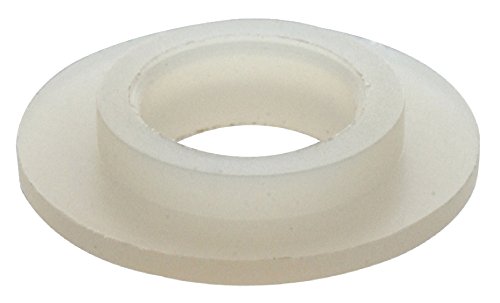 Hillman Nylon Shoulder Washer White Non-Abrasive Low-Friction Insulating0.4 Inches2.4 x 2.7 x 1.7 inches0 poundsCheck on Amazon
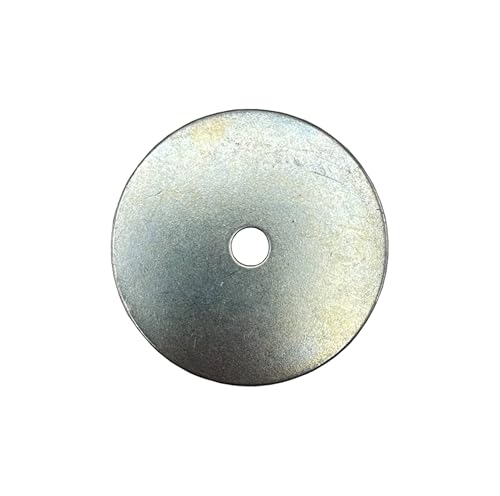
 Hillman Zinc-Plated Low-Carbon Steel USS Pattern Flat Washers1/4"2.5 x 2.6 x 1.6 inches0 poundsCheck on Amazon


What's inside
- How to read this guide
- What friction coefficient actually tells you
- How a thin disc lowers friction at a joint
- PTFE: the slipperiest option and its cold-flow problem
- Nylon 6/6: tough, cheap to mould and thirsty
- UHMW-PE: the wear fighter
- Acetal: the machinist’s favourite
- Vulcanised fibre and the older materials
- Reading a size chart without guessing
- Temperature ceilings, material by material
- Compressive load, creep and the relaxing bolt
- Chemical resistance in real rooms
- Hinges and pivots: the classic application
- Drawer slides and linear motion
- Swivel joints in plumbing and hoses
- Shafts, exercise equipment and rotating gear
- Appliance pivot points around the home
- When a plastic washer is the wrong answer
- Measuring inside and outside diameter before you order
- Fitting, pairing and first checks
- Diagnosing squeaks, binding and wobble
- Check prices on Amazon
- A selection workflow that avoids returns
As an Amazon Associate I earn from qualifying purchases. This post may contain affiliate links at no extra cost to you.
How to read this guide
This guide is about flat hardware washers that reduce friction, not about laundry machines. A low-friction washer is a thin annulus of slippery polymer placed between two surfaces that move against each other, so the movement happens across a engineered sliding face instead of across bare metal. As an Amazon Associate, this site earns from qualifying purchases, and that relationship never changes the material limits, dimensions or temperature ceilings reported below. Every figure here comes from published material data sheets and standard fastener references, cross-checked against the size charts that manufacturers print for their own washer ranges, rather than from any claim of having handled a particular branded pack.
Read the sections in whatever order matches your project. If a hinge already squeaks, start with the troubleshooting pages further down. If nothing is bought yet, begin with the measurement section, because a washer with a perfect friction coefficient and the wrong inside diameter is simply scrap. Material choice comes second, thickness third, and only then does it make sense to think about quantity, spares and replacement intervals.
One vocabulary point matters throughout. Friction coefficient is a property of a pair of surfaces, never of a single object in isolation. A value quoted for polytetrafluoroethylene against polished steel will not describe the same disc pressed against rough cast iron, painted timber or another polymer. Wherever a number appears below, the counterface and the conditions travel with it, and you should treat any bare number printed without a counterface as marketing shorthand rather than engineering information.
What friction coefficient actually tells you
Friction coefficient, usually written with the Greek letter mu, expresses the ratio between the force resisting sliding and the force pressing two surfaces together. Double the clamping load and, within ordinary limits, you double the resistance to sliding, which is why a pivot that turns sweetly when the bolt is finger-tight can feel locked once the nut is properly torqued. Static friction governs the effort needed to start movement, while kinetic friction governs the effort needed to keep it going, and the gap between those two values explains the jerky, stick-slip motion of a dry steel pivot.
Stick-slip deserves attention because it produces most of the noises people blame on wear. When static friction sits far above kinetic friction, a surface holds, loads up elastically, breaks free, overshoots, then holds again, dozens of times per second. The result is squeak, chatter and a stepped wear pattern. Slippery polymers narrow that gap considerably. Their kinetic value sits close to their static value, so movement begins smoothly and continues without the grabbing rhythm that makes a gate hinge groan on a quiet street.
Load and speed also bend the numbers. Polymer friction often falls slightly as contact pressure rises, because the real contact area grows more slowly than the nominal area, then climbs again if pressure starts to deform the disc. Speed matters in the opposite direction for some materials: a film of transferred polymer builds on the counterface during the first cycles, after which friction settles to a lower steady value. Data sheets call this running-in, and it explains why a new assembly can feel marginally stiffer on its first morning than it does a week later.
Temperature shifts the picture further. Most of the polymers covered here soften gradually as they warm, and a softer surface conforms more closely, enlarging contact and sometimes raising friction even while the material itself feels more slippery to a fingertip. Cold has the reverse effect, stiffening the disc and shrinking it slightly. None of this makes the published coefficients useless; it simply means they describe a band of behaviour around room temperature, moderate pressure and modest sliding speed, which happily covers most household pivots, slides and hinges.
How a thin disc lowers friction at a joint
The mechanism is substitution. Bare steel on bare steel gives a dry friction coefficient commonly somewhere between 0.5 and 0.8, with microscopic high points welding briefly and tearing apart as movement proceeds. Slip a polymer disc between the faces and the contact becomes steel on polymer, where the weaker material shears internally at low stress instead of tearing. The joint still carries the same clamping load, spread over the same annular area, yet the tangential force needed to rotate it falls dramatically.
Several of these materials also self-lubricate in a literal sense. Polytetrafluoroethylene transfers an extremely thin film onto the counterface during early movement, so after running-in the interface is partly polymer sliding on polymer. Acetal and ultra-high-molecular-weight polyethylene rely less on transfer and more on a naturally low surface energy combined with a waxy molecular structure that resists adhesion. Nylon behaves differently again, absorbing a small amount of environmental moisture that plasticises its surface layer and changes both friction and dimensions in ways the nylon section examines closely.
Separation is the second job. Even where friction hardly matters, a washer keeps two metals apart, preventing galvanic couples between, say, a stainless bolt and an aluminium bracket, and stopping paint or zinc coatings from fretting through at a moving contact. Fretting damage looks like rust-coloured dust around a joint that barely moves, perhaps a gate latch vibrating in wind, and a sacrificial polymer disc absorbs that micro-motion far more gracefully than a hard coating can.
Finally, the disc acts as a tolerance sponge. Castings and pressed brackets rarely present perfectly parallel faces, so a rigid metal washer concentrates load on one edge. A polymer washer a millimetre or two thick yields just enough to distribute pressure across most of its face, which lowers local wear and keeps friction consistent around the full circle of rotation. That compliance has limits, and the sections on creep and compressive load explain where helpful yielding ends and permanent thinning begins.
PTFE: the slipperiest option and its cold-flow problem
Polytetrafluoroethylene, universally shortened to PTFE, posts the lowest friction figures in this entire comparison, typically between 0.04 and 0.10 against smooth steel under light to moderate load. Its carbon-fluorine chemistry gives it an almost complete indifference to household chemicals, adhesives refuse to bond to it, and water beads off rather than wetting the surface. For a slow pivot that must turn with fingertip effort and never receive oil, nothing else in the polymer family matches it.
The same molecular looseness that makes PTFE slippery also makes it mechanically soft. Under sustained compressive load it creeps, flowing slowly away from the loaded zone in a process engineers call cold flow, because it happens at room temperature without any melting. A PTFE washer under a firmly torqued bolt can lose a noticeable share of its thickness over months, relaxing the clamping force it was meant to preserve. Designers answer this in three ways: they enlarge the washer diameter to cut contact pressure, they confine the disc in a shallow recess so it cannot extrude sideways, or they choose a filled grade.
Filled PTFE grades trade a little slipperiness for a great deal of strength. Bronze-filled material improves compressive resistance and thermal conductivity, glass-filled grades resist creep and wear better than the virgin polymer, and carbon-filled versions add stiffness plus a path for static charge. Each filler raises the friction coefficient somewhat and can abrade a soft counterface, so a glass-filled disc against an anodised aluminium rail deserves a second thought, whereas the same disc against hardened steel is a well-proven pairing.
Temperature range is a genuine PTFE strength. The material stays serviceable from deep-freeze conditions near minus 200 degrees Celsius up to roughly 260 degrees Celsius in continuous use, wider than any other polymer in this guide. It does not absorb water in any meaningful quantity, so dimensions stay put in a damp shed or beside a swimming pool. Against those virtues, set poor wear resistance in gritty environments, a tendency to deform under point loads, and a softness that lets sharp bracket edges cut in. PTFE wins on friction and chemistry; it rarely wins on brute durability.
Where PTFE earns its place
Slow, lightly loaded pivots suit PTFE best: the swivel of a monitor arm that moves twice a day, a lazy-Susan bearing surface, the base rotation of a workshop stool, or a telescope mount axis that must glide without stiction. It also excels where oil is forbidden, near food preparation surfaces, painted finishes or textiles that a lubricant would stain. In gritty outdoor hinges, by contrast, embedded sand turns the soft surface into a lapping compound, and a harder polymer will usually outlast it.
Nylon 6/6: tough, cheap to mould and thirsty
Nylon 6/6 washers occupy the middle ground of this market: friction against steel typically around 0.15 to 0.25 dry, excellent toughness, good resistance to abrasion, and a long record in everything from furniture glides to automotive trim clips. The material tolerates repeated flexing without cracking, shrugs off most solvents and fuels, and can be moulded or machined into precise dimensions. For a general-purpose separating washer that also needs to survive knocks, nylon is often the sensible default.
Its complication is water. Nylon 6/6 absorbs moisture from the air, up to around 2.5 percent by weight at ordinary indoor humidity and more if submerged, and absorbed water swells the part slightly while softening it. A washer pressed to a precise thickness in a dry factory may measure a few hundredths of a millimetre thicker after a humid summer, and its friction can fall as the surface plasticises. In most household joints that movement is irrelevant, but in a finely adjusted pivot it can change the end-float you set in January by the time August arrives.
Heat sets nylon’s ceiling. Continuous service is generally quoted up to about 85 to 100 degrees Celsius, with short excursions higher, and the material grows brittle at low temperatures, particularly below minus 20 degrees Celsius, especially in its dry state. Ultraviolet light also degrades unstabilised nylon, chalking the surface of a garden-gate washer over a few seasons. None of these are reasons to avoid it indoors; they are reasons to pick a different polymer for a sun-baked, load-bearing outdoor hinge.
Molybdenum-disulphide-filled nylon deserves a mention because it was developed precisely for sliding applications. The dark grey filled grade lowers friction, improves wear behaviour and reduces the stick-slip tendency of the unfilled polymer, at the cost of some impact strength. If a specification sheet lists nylon washers in both natural white and black, the black version is frequently this lubricated grade rather than a colour variant, and checking the filler line on the data sheet takes less than a minute.
UHMW-PE: the wear fighter
Ultra-high-molecular-weight polyethylene has a name that describes its structure honestly: extremely long polymer chains, millions of units long, entangled so thoroughly that the material resists abrasion better than many metals in sliding contact with grit and slurry. Its friction coefficient against steel sits around 0.10 to 0.20, not quite PTFE territory, yet its wear life in dirty conditions routinely outlasts PTFE by a wide margin. Conveyor engineers line chutes with this polymer for exactly that reason.
For washers, the practical consequence is a disc that tolerates imperfect environments. A drawer slide in a workshop, a pivot under a garden cart, a hinge on a compost-bin lid: all of these invite dust, and UHMW-PE treats embedded particles by swallowing them into its surface rather than letting them plough grooves. It also handles impact gracefully, stays flexible well below freezing, and resists the acids and alkalis found in cleaning cupboards. Its surface feels waxy, cuts cleanly with a sharp blade, and machines without melting if speeds stay moderate.
The weaknesses are heat and creep. Continuous service tops out near 80 degrees Celsius, lower than every other material here except perhaps plasticised fibre, and the polymer softens noticeably before that point. Under constant compressive load it also creeps, though more slowly than virgin PTFE, and its very low surface energy makes adhesive bonding nearly impossible without specialised treatment. If a washer must be glued in place during assembly, choose something else or capture it mechanically with a recess or a shoulder.
Thickness availability is a quiet advantage. Because UHMW-PE is widely stocked as sheet and tape, washers and shim discs appear in fine increments, including very thin skived film for adjusting end-float in model engineering and instrument pivots. When a mechanism needs its axial play trimmed by tenths of a millimetre, a small stack of these discs, checked with a micrometer as you build the stack, gives finer control than swapping machined metal shims.
Acetal: the machinist’s favourite
Acetal, sold for decades under the Delrin trade name among others, behaves like a polymer designed by someone who also liked metal. It is stiff, dimensionally stable, low in friction at roughly 0.15 to 0.25 against steel, and it absorbs very little water, so the dimensions you measure in the workshop are the dimensions the joint keeps in the house. It machines beautifully, turning and drilling without the stringy burrs that plague softer plastics, which is why small precision washers and thrust discs so often come from acetal rod.
That stability makes acetal the natural choice where a washer forms part of a measured assembly: clock and instrument pivots, camera tripod heads, quality drawer runners, and the thrust faces inside small gearboxes. Its fatigue resistance is the best in this group, so a disc that flexes slightly with every cycle, such as the pivot washer in a folding mechanism opened daily, will outlast nylon in the same duty. Spring-like snap and recovery are part of its character.
Limits still apply. Strong acids attack acetal, and prolonged strong alkali exposure is unwise, though ordinary household cleaners pose no problem at washer scale. Continuous temperature capability reaches roughly 90 to 100 degrees Celsius depending on grade, respectable but not exceptional. It also burns more readily than PTFE and produces sharp decomposition products at high temperature, one more reason the later section on hot environments steers structural, heat-exposed joints back toward metal.
A subtle point separates acetal homopolymer from copolymer grades. Homopolymer offers slightly higher stiffness and strength, while copolymer resists hot water and alkaline conditions better and avoids a tendency toward centre-line porosity in thick sections. For a washer two millimetres thick, the distinction rarely decides success or failure, yet if the joint lives in a dishwasher-adjacent appliance or a laundry-room fitting, the copolymer line on a data sheet is the one to look for.
Vulcanised fibre and the older materials
Before engineering polymers existed, vulcanised fibre washers did this work. Made by chemically gelling layers of cotton or paper fibre and compressing them into a dense sheet, fibre washers offer moderate friction, good electrical insulation and a slight compressibility that helps them seal as well as separate. Plumbers know the red fibre washer from tap and valve service, where its small controlled swell on contact with water improves the seal against a valve seat.
Fibre is not a low-friction champion, and nobody should choose it where minimum turning effort is the goal. Its coefficient against metal sits closer to ordinary dry materials than to PTFE. Its virtues are conformability, insulation and behaviour in wet plumbing joints, plus a tolerance for intermittent heat that surprises people, with short exposure possible well above the limits of UHMW-PE. It does absorb water, it can dry out and shrink in hot dry air, and it wears faster than any polymer above when used as a true sliding surface.
Leather deserves a footnote for historical honesty. Leather washers served in pumps and hinges for centuries, swelling to seal and sliding acceptably when greased. Modern fibre and polymer discs outperform it on consistency, but a leather washer inside an old hand pump is a working part, not a museum piece, and replacing it with hard plastic can change the pump’s feel and sealing behaviour for the worse. Matching the original material family is sometimes the conservative, correct repair.
Reading a size chart without guessing
Washer sizes confuse buyers because three different numbers all claim to describe the same disc. The nominal size names the bolt or shaft the washer is meant to fit, so an M6 washer belongs with a 6 millimetre bolt. The actual inside diameter is deliberately larger, commonly 6.4 millimetres for M6 in a normal series, giving clearance for the bolt to pass and for slight misalignment. The outside diameter and thickness then vary by series, with wide-series washers spreading load over more area than narrow ones.
Metric hardware washers for low-friction duty follow the same clearance logic as their steel counterparts, because they must fit the same bolts. A typical progression runs M3 with an inside diameter near 3.2 millimetres and an outside diameter around 7 millimetres, through M5 at roughly 5.3 by 10, M8 at roughly 8.4 by 16 or 17, M12 at roughly 13 by 24, up to M20 at roughly 21 by 37 millimetres in standard series. Polymer ranges sometimes trim outside diameters slightly to save material, so verify the actual printed dimensions rather than assuming the steel standard was copied exactly.
Imperial sizing in North America names washers by the bolt in inches, with SAE and USS patterns differing mainly in outside diameter and thickness for the same nominal bolt. A quarter-inch SAE washer has a smaller outside diameter than its USS counterpart, which matters when the disc must fit inside a recess or counterbore. Polymer discs sold into that market usually follow SAE outlines, but the only safe method is the one in the measuring section: compare your required inside diameter, maximum outside diameter and thickness against the chart, line by line.
Thickness deserves separate attention because it controls two things at once. Mechanically, a thicker disc creeps less in percentage terms, distributes edge loads better and survives more wear before it must be replaced. Geometrically, thickness adds directly to the stack height of the joint, changing bolt grip length and possibly moving a circlip groove or a shoulder out of alignment. Common polymer washer thicknesses run from 0.5 millimetres in shim-like discs through 1, 1.5, 2 and 3 millimetres for general duty, and the right answer is usually the thinnest disc that still covers the wear and compliance needs of the joint.
Some readers reach this page while actually shopping for a laundry appliance, because the word washer points in two directions at once. If a heavy-duty laundry machine for a busy household is the real errand, the buying guide below follows that thread properly.
best commercial washers for home use
Temperature ceilings, material by material
Heat destroys polymer joints in two stages. First comes reversible softening: stiffness falls, creep accelerates and friction behaviour drifts. Then, past a material-specific threshold, chemistry takes over and the polymer degrades permanently, losing strength even after it cools again. Published continuous-service temperatures already include a margin below that second stage, which is why respecting them matters even when a part survives a brief accidental excursion.
PTFE stands apart with continuous capability around 260 degrees Celsius, a figure no other candidate here approaches. Nylon 6/6 follows at roughly 85 to 100 degrees, acetal sits in a similar band near 90 to 100, vulcanised fibre tolerates intermittent exposure beyond its modest continuous rating, and UHMW-PE brings up the rear near 80 degrees. These ceilings explain material choices inside appliances: a pivot near a motor that runs warm, or a hinge on an oven-adjacent cabinet, quickly narrows the field.
Cold performance reverses some rankings. UHMW-PE remains ductile at temperatures that would embarrass nylon, and PTFE is famously indifferent to deep cold. Acetal stays serviceable to around minus 40 degrees Celsius. A freezer-room door hinge, a ski-workshop binding jig or an unheated outbuilding latch in a northern winter all reward the materials that keep their toughness when the building sits below freezing for weeks.
Thermal expansion adds a hidden variable. Polymers expand several times more than steel for the same temperature rise, so a large-diameter polymer washer trapped tightly in a metal recess can buckle or bind as it warms, while a small disc on a bolt shank simply grows its clearance slightly. Designers leave radial room for that growth. At household scale the effect is small, yet on a 50 millimetre thrust disc beside a warm motor it becomes a real dimension, worth a line in your notebook before assembly.
Compressive load, creep and the relaxing bolt
A thrust washer earns its keep under compressive load, and polymers set firm limits here. Contact pressure is simply clamping force divided by the annular face area, and doubling the outside diameter roughly triples the face area available on a typical washer, which is why wide-series discs transform marginal designs. As a working guide, virgin PTFE prefers single-digit megapascals of sustained pressure, filled grades accept considerably more, nylon and acetal handle pressures in the low tens of megapascals, and UHMW-PE sits between, with creep rather than crushing usually setting its practical ceiling.
Creep is time-dependent deformation under constant load. The bolt does not loosen by turning; instead the washer thins, the joint stack shortens, and clamping force decays as the bolt’s elastic stretch is consumed. Symptoms arrive quietly: a pivot that was snug in spring develops play by autumn, a previously silent hinge begins to knock, a bolted bracket starts to fret. The cure is rarely more torque, because extra torque raises pressure and accelerates the very flow causing the trouble.
Better cures attack pressure or confinement. Step up one outside-diameter series. Add a steel backup washer on each side so the polymer disc is sandwiched between flat, rigid faces that spread the load and shield it from bolt-head rotation during tightening. Confine the disc in a shallow counterbore so sideways flow has nowhere to go. Or switch material: moving from virgin PTFE to a filled grade, or from UHMW-PE to acetal, often removes the creep problem while keeping friction acceptably low for the duty involved.
Rotation during tightening is an underappreciated enemy. When a nut or bolt head turns directly against a soft polymer face, it can twist, score and even wrinkle the disc before the joint ever enters service. A thin steel washer between the turning element and the polymer solves this completely, letting the fastener spin against metal while the polymer only experiences compression. Many failed installations trace back to skipping that one cheap disc, and the post-mortem usually shows a spiral score mark that tells the whole story.
Chemical resistance in real rooms
Kitchens, bathrooms, garages and workshops each bring their own chemistry to a joint. PTFE ignores essentially all of it. UHMW-PE resists acids, alkalis and most solvents, though strong oxidising acids and some aromatic solvents attack it. Nylon handles fuels, oils and many solvents well but suffers in strong acids and absorbs certain chemicals along with water. Acetal dislikes strong acids and strong alkalis yet copes with the fuels and alcohols it meets in small machinery. Fibre tolerates water and mild solutions, which suits its plumbing niche, but it is not a solvent-service material.
Cleaning products cause more washer failures than industrial chemicals ever will in a home. A pivot wiped weekly with a bleach-based spray, a hinge splashed by oven cleaner, a drawer slide degreased with a strong alkaline solution: each exposure is brief, but hundreds of repetitions accumulate. If a joint lives in a cleaning splash zone, PTFE or UHMW-PE removes the question entirely, and that peace of mind often outweighs a small friction advantage elsewhere in the table.
Ultraviolet exposure belongs in this section because it is chemical degradation driven by light. Nylon and UHMW-PE both need stabilised grades for long outdoor service, acetal chalks slowly, and PTFE remains essentially unaffected. A black colour often signals carbon-black UV protection in polyethylene, though colour alone proves nothing, so the data sheet’s outdoor-use line is the document to trust for a gate, a boat fitting or a greenhouse vent opener.
Hinges and pivots: the classic application
A butt hinge on a cupboard door concentrates everything a low-friction washer does well. The knuckle of the hinge carries the door’s weight as an axial load on tiny annular faces, the movement is slow and partial, and lubricant migrates away or collects dust. A thin polymer disc slipped over the hinge pin between knuckle segments converts that dry, graunching contact into a quiet polymer-on-steel slide, while also lifting the door by exactly the disc thickness, a side effect that occasionally cures a door dragging on a threshold.
Sizing a hinge washer starts with the pin diameter, which becomes the inside diameter with a small clearance, and the knuckle diameter, which caps the outside diameter if the disc must not protrude. Thickness is whatever the knuckle gap accepts without forcing the segments apart. Where no gap exists, the honest options are a thinner shim-grade disc or a different remedy altogether, because compressing a soft washer into a space it does not fit simply preloads the hinge and can make the door spring back toward open.
Gate hinges scale the same idea upward and add weather. Loads rise, pins are thicker, and grit arrives with every rain shower. Here UHMW-PE or filled PTFE generally outlasts virgin PTFE, and a steel backup washer protects the polymer from the rough, sometimes burred faces of heavy fabricated hinges. Expect to treat outdoor hinge washers as consumables with a multi-season life, inspected when the gate is oiled or adjusted, rather than as fit-and-forget components.
Folding mechanisms, ironing boards, step ladders and deck chairs all pivot on rivets or shoulder bolts where a polymer disc on each side of the moving member centres it and stops metal faces from galling. The disc also quietens the characteristic scissor clatter of such furniture. When a rivet is the fastener, the washer must go on before the rivet is set, which makes these parts a planned repair during a strip-down rather than a five-minute addition, and ordering spares while the mechanism is apart is plain common sense.
Drawer slides and linear motion
Not every sliding joint rotates. Drawer runners, sliding cupboard doors and the guide blocks of a saw sled all translate instead of turning, and a washer-shaped disc still helps wherever a bolt passes through a slot or a wheel runs on a shoulder. The physics is unchanged: replace a steel-on-steel contact with a polymer interface and both friction and noise fall, while the polymer absorbs the small impacts that occur when a drawer is shut with enthusiasm.
Wooden drawer runners are a special case worth dwelling on. A waxed wood-on-wood runner works acceptably, but a nylon or UHMW-PE glide disc under the drawer’s rear corners, or a thin strip of the same material along the runner, cuts the effort dramatically and survives the seasonal swelling that makes wooden drawers stick each summer. Because the polymer does not swell with humidity, it stabilises the very dimension that weather keeps changing, and a drawer that once needed two hands in August behaves itself.
Ball-bearing slides already roll rather than slide, so adding washers there solves different problems: spacing a slide away from a warped cabinet side, isolating a metal runner from a metal bracket to stop a rattle, or spacing a wheel so it tracks centrally. Polymer discs excel at this spacing work because they compress just enough to forgive the warp. Keep them out of the ball track itself, where a stray disc fragment would jam the race, and use them only at mounting interfaces.
Readers who came here from a laundry search sometimes ask whether any of this applies inside a washing machine, and the honest answer is that appliance internals use purpose-moulded bearings rather than loose discs. If your actual project is a matched laundry pair for a small room, the guide linked below covers that separate question.
best compact washers and dryer pairs
Swivel joints in plumbing and hoses
A swivelling hose connector, a shower head on its ball joint, a tap tail that must rotate while sealing: these joints ask a washer to do two jobs simultaneously, sliding and sealing, and the balance between them decides the material. Fibre built its reputation here because it swells slightly and seals. PTFE slides superbly and seals well against smooth faces at moderate pressure because it conforms under load. UHMW-PE slides and resists the chlorinated water that slowly attacks some alternatives.
Rotation speed in plumbing swivels is trivially low, a few turns during installation and occasional adjustment afterwards, so friction coefficient matters less than conformability and water chemistry. What matters enormously is not over-tightening. A swivel union is designed to seal at modest torque and still turn; crushing the washer by treating the joint like a structural bolted connection raises turning effort, accelerates cold flow in PTFE, and can split a fibre disc outright. The manufacturer’s torque guidance, or the traditional hand-tight plus a measured fraction of a turn, exists precisely to protect that washer.
Scale and grit change the maintenance picture. In hard-water districts, limescale builds at the edge of a swivel joint and works into the sliding interface, raising effort year by year. A washer material that tolerates a vinegar soak during servicing, as PTFE and UHMW-PE both do, simplifies the decennial clean-up. Fibre washers usually get replaced at that service rather than cleaned, which is acceptable because the part is inexpensive and the joint is already open.
Shafts, exercise equipment and rotating gear
Exercise equipment concentrates cyclic loading into small joints. A rowing machine’s handle pivot, the swing arms of an elliptical trainer, a weight bench’s adjustment knuckle and a stationary bike’s pedal crank all cycle thousands of times in a single workout, under loads that spike well above body weight at the extremes of the stroke. Thrust washers in these machines live or die by wear rate and fatigue behaviour, which pushes the choice toward acetal and UHMW-PE, with nylon appearing where impact toughness matters most.
Sweat is the hidden chemical in this environment. It is warm, salty and persistent, and it creeps into joints that look sealed. Corrosion on a steel thrust face roughens it, the roughened face then chews the polymer disc, and friction climbs in a spiral that ends with a squeaking machine and a complaint about build quality. Polymer washers interrupt the first step by keeping sweat off the load-bearing steel interface, and a disc material indifferent to salt water, again PTFE or polyethylene, slows the whole spiral.
Rotating equipment also introduces speed. A washer on a slowly oscillating pivot and a washer on a continuously rotating shaft face different thermal realities, because frictional power, and therefore heat, scales with sliding velocity multiplied by load. At shaft speeds beyond gentle rotation, engineers check a pressure-velocity limit published for each material, and exceeding it melts or glazes a disc that would have lasted for years in a hinge. Household equipment rarely spins a plain washer fast enough to trouble that limit, but a washer improvised onto a grinder, sander or lathe accessory can cross it quickly, and those are jobs for proper bearings instead.
Appliance pivot points around the home
Domestic appliances are full of quiet pivots: the lid hinges of a chest freezer, the door of a tumble dryer, the tilting head of a stand mixer, the folding handle of a vacuum cleaner, the reclining mechanism inside a washer-dryer’s detergent drawer front. Manufacturers mould many of these bearings directly into housings, yet where a metal pin or screw forms the axle, a loose polymer thrust washer frequently appears in the original build, and replacements need matching dimensions rather than matching branding.
Heat sorts these applications quickly. A dryer door pivot sits in warm, humid air and suits nylon or acetal. A stand mixer head pivot carries high intermittent load in a small diameter and suits acetal. A freezer lid lives cold and suits UHMW-PE or PTFE. Reading the appliance’s location and duty this way, rather than reaching for whatever disc is in the parts drawer, is the difference between a repair that lasts the appliance’s remaining life and one revisited next year.
Vibration adds a final twist. Appliances that spin, pump or compress generate continuous small-amplitude vibration, and a washer under a vibrating bolted joint must resist fretting as much as sliding. Polymer discs are genuinely good at this, damping micro-motion that would otherwise worry a bolt loose or powder a coating. Where a fastener keeps loosening despite correct torque, a polymer washer in the stack is sometimes the unglamorous fix, provided its creep behaviour is respected and the joint is rechecked after the first weeks of service.
Top-loading laundry machines use agitator pivots and thrust surfaces of their own, although those are moulded appliance parts rather than loose hardware. Readers researching that style of machine as a purchase, rather than as a repair, will find the dedicated guide below more useful than any dimension chart here.
best agitator top loader washers
When a plastic washer is the wrong answer
Three situations should send you back to metal without debate. The first is high sustained load in a small area: structural connections, engine and drivetrain joints, and any bolted assembly whose clamping force is itself the safety mechanism. Polymer creep will relax such a joint, and no friction benefit justifies a connection that quietly unloads itself over a season.
The second is heat beyond the ceilings already discussed, including joints near exhausts, brake components, heating elements and lamp housings. A softened washer extrudes, the joint loosens, and the failure arrives at temperature, exactly when the assembly is working hardest. Metal washers, or purpose-built high-temperature composites specified for the application, belong in those places, and a general buying guide is not the document to qualify them.
The third is electrical bonding. Many metal washers exist to guarantee an earth path or to bite through paint and oxide so that two parts share a reliable electrical connection, notably serrated and external-tooth designs. Substituting an insulating polymer disc silently breaks that path. In an appliance chassis, an electrical enclosure or an aerial mount, that invisible break can matter far more than friction. If a washer’s teeth, plating or position suggest an electrical job, replace like with like.
A fourth, softer warning concerns precision. In assemblies adjusted to fine clearances, a polymer washer’s thermal expansion, moisture uptake in nylon’s case, and slow creep all move the adjustment over time. Instrument makers still use polymer thrust discs, but they choose stable acetal, design in spring compensation, or accept the drift within the instrument’s service interval. Copying the material without copying the compensation is how a careful adjustment becomes next month’s mystery fault.
Measuring inside and outside diameter before you order
Start with the shaft, pin or bolt the washer must fit. Measure its diameter with calipers at several points around the circumference, because worn pins go oval and a washer chosen for the average may bind on the high spots. Your washer’s inside diameter should exceed the measured shaft by roughly 0.2 to 0.5 millimetres for a free fit on small hardware, more if the shaft is rough, painted or likely to corrode. A disc that must be forced on will buckle, crack at the hole in brittle grades, or grip the shaft and rotate with it, defeating its purpose.
Outside diameter is set by the space available and the load to be spread. Measure the diameter of the faces the washer will sit between, note any recess, counterbore or nearby edge that limits size, and choose the largest standard disc that fits with a small margin. A washer overhanging the edge of a narrow bracket gains nothing and invites damage, while one much smaller than the face concentrates pressure needlessly. Photograph the joint with a ruler in frame before dismantling anything unusual; that single image answers questions that memory will not, a week later when parts are on the bench.
Thickness measurement sounds trivial until a worn washer is your only sample. Measure at several points around the annulus, because a disc worn by a misaligned joint will be thinner on one side, and the thinnest reading may be well below the original specification. If the stack height matters, aim for the original nominal thickness from a size chart rather than copying the worn sample, and check the assembled joint’s end-float or preload against its specification before calling the job finished.
Counting washers in a stack is part of measurement too. Some joints deliberately use two thin discs, one against each face, so the sliding happens between polymer and the moving member’s polished face rather than at a rough casting. Others use a polymer disc paired with a steel backup. Sketch the order of parts as they come off, in sequence, on paper. Reassembly in the wrong order is the most common cause of a repair that feels worse than the fault it replaced, and it costs nothing to prevent.
Fitting, pairing and first checks
Cleanliness decides more outcomes than material choice. Grit trapped under a new washer scores both faces within the first dozen movements, and old hardened grease acts as a grit carrier. Wash the joint faces, dry them, and inspect the metal under a bright light for burrs, raised corrosion or a lip worn into a thrust face. A raised burr will cut a polymer disc like a lathe tool. Stone or file such defects flat before fitting anything, and if a thrust face is deeply grooved, a polymer washer alone will not restore it; the disc will mould into the groove and friction will stay high.
Decide the lubrication question per material. PTFE and UHMW-PE usually run dry by design, and adding oil can attract the dust that shortens their lives. Acetal tolerates light lubrication and sometimes benefits in high-cycle duty. Nylon’s relationship with grease is complicated by its moisture behaviour, and some greases plasticise it. The conservative rule is to fit these washers dry unless the equipment manufacturer specifies a lubricant for that joint, in which case use exactly that product in a thin film, not a generous dollop.
Steel backup washers belong on both sides of a soft disc in a bolted joint, for the load-spreading and anti-rotation reasons already covered. Tighten progressively, checking that the moving member still turns freely at each stage, because the moment of binding tells you whether the problem is stack height, a buckled disc or simple over-torque. A joint that only binds at full torque is often a joint whose polymer is being crushed past its sensible pressure, and backing off is not a solution if the fastener then lacks clamping force; the design, usually the disc area, needs to change.
After the first period of service, recheck. A week of household use, or the first long session for exercise equipment, seats the disc, reveals early creep and shows any witness marks from misalignment. A healthy installation shows an even polish around the full annulus. A crescent of heavy wear on one side announces angular misalignment between the faces, and correcting that alignment will do more for washer life than any upgrade of material.
Diagnosing squeaks, binding and wobble
A squeak that appears only at one point in a hinge’s travel points to a local defect: a burr, a dry patch, a disc that has worn through at its most loaded crescent. A squeak throughout the travel suggests general dryness, overload or a material pairing that stick-slips by nature. Opening the joint and reading the wear pattern, rather than spraying lubricant from outside and hoping, separates these causes in minutes. Lubricant sprayed into a joint with a failed washer mostly lubricates the failure, briefly, while washing grit deeper into the interface.
Binding that grows worse as a joint warms up implicates thermal expansion or a lubricant thinning and escaping. Binding that is worst on cold mornings implicates stiffened polymer, congealed grease or moisture that froze in the interface outdoors. Each pattern narrows the material choice for the replacement: warm-binding joints want dimensional stability, cold-binding joints want a polymer that stays ductile and dry-running in winter, and both want a careful look at whether the original trouble was clearance rather than friction at all.
Wobble means lost thickness or lost clamping. Measure the fitted disc against its nominal dimension, inspect for the spiral scoring that betrays rotation during tightening, and check whether the fastener itself has relaxed because the stack beneath it crept. Replacing a crept disc with an identical one restarts the same clock. The durable fix pairs the new disc with more area, better confinement or a less creep-prone grade, and records the fitted thickness somewhere you will find it at the next inspection.
Small laundry rooms create their own pivot problems, with folding doors, stacked appliances and tight access panels all competing for millimetres. Anyone planning that kind of room around a compact appliance, rather than repairing a hinge, can follow the planning thread in the guide below.
best compact clothes washers for apartment
Check prices on Amazon
Live listings for the shortlist in this guide are pulled from Amazon below, so prices and availability are always current at the moment you look.

A selection workflow that avoids returns
Work through five questions in order. What moves, and how often? That answer sets the wear class. What load presses the faces together, over what area? That sets pressure and rules out the softest grades if the number runs high. What temperature and chemistry surround the joint? That trims the material list to survivors. What space exists, measured rather than remembered? That fixes inside diameter, outside diameter and thickness. Finally, what failure would you most like to avoid: squeak, looseness, wear or seizure? That priority breaks any remaining tie between two otherwise suitable polymers.
Worked briefly, a bathroom cabinet hinge with a 5 millimetre pin, light load and cleaning-spray exposure resolves to PTFE or UHMW-PE at around 1 millimetre thick, chosen on whichever is stocked in the measured size. A workshop drawer carrying tools resolves to UHMW-PE for grit tolerance. A folding step ladder’s pivot, cycled daily under real load, resolves to acetal with steel backups. A greenhouse vent hinge, sunlit and weather-exposed, resolves to a UV-stabilised grade or PTFE. Notice that no single material won twice in a row; that is the honest shape of this topic, and any guide claiming one universal winner is selling something.
Buy a small surplus. Washers are inexpensive, light and easy to lose on a workshop floor, and the second disc in a pair often reveals wear only once the joint is open. Keep the spares with a note of the joint they belong to, its measured dimensions and the date of fitting. That note, written once, converts the next replacement from a research project into a five-minute job, and it is the closest thing this unglamorous corner of hardware has to a professional secret.
One last habit separates tidy installations from recurring ones: keep the removed washer, however worn, until the replacement has survived its first weeks in service. The old disc is evidence. Its wear crescent, its thinned edge and its scoring record exactly how the joint behaves under real loads in your building, and comparing the new part against that evidence at the first recheck tells you whether the diagnosis was right or merely plausible.
Choose the disc that fits the measured joint, survives the room it lives in and fails slowly enough to be caught at inspection, and a five-millimetre circle of polymer will quietly out-perform the expensive hinge it was bought to save.