Our Top Picks



What's inside
- What pressure points are and why they disrupt sleep
- How a topper helps shoulders, hips, and the waist between them
- EGO 3 Inch Queen Mattress Topper Gel Memory Foam
- SHOUREN 5 Inch Memory Foam Mattress Topper Queen
- Niagara Sleep Solution Queen Ultra Soft Mattress Topper
- 3 Inch 7-Zone Queen Mattress Topper, Egg Crate Memory Foam
- BEDLORE Queen Mattress Topper, Thick Soft Pillow Top
- EGOHOME 3 Inch Queen Memory Foam Mattress Topper
- SINWEEK 5-Zone Cooling Gel Memory Foam Mattress Topper, 2 Inch Twin
- Niagara Sleep Solution Full Ultra Soft Mattress Topper
- How to choose: thickness, material, zoning, and size
- Topper or new mattress: an honest comparison
- Frequently asked questions
- Our verdict
- Check prices on Amazon
- Disclosure
As an Amazon Associate I earn from qualifying purchases. This post may contain affiliate links at no extra cost to you.
Pressure points are the places where your body presses hardest into the bed, and for most people they have familiar names: the shoulder, the hip, the outer knee, and sometimes the ribs or the ankle when one leg rests on the other. When a mattress is too firm, too thin, or simply worn unevenly, those few spots carry a share of body weight that should be spread across a much wider surface. The result is rarely dramatic in the first hour. It builds through the night as you shift, curl tighter, roll onto your back to escape a sore shoulder, then wake with a stiff neck, an aching hip, or the heavy, restless feeling that comes from sleep broken into short pieces. A mattress topper will not turn a worn-out bed into a new one, but the right topper can change the surface your body actually meets, adding cushioning exactly where the pressure concentrates and helping a decent mattress feel far more forgiving.
Side sleepers feel pressure points most clearly, and that is no accident. Sleeping on your side narrows the contact area between body and bed, so the shoulder and hip become load-bearing points rather than just parts of a broad sleeping surface. Back sleepers spread weight more evenly, though the heels, shoulder blades, and lower back can still complain on a hard bed. Combination sleepers meet both problems in a single night. People who are lighter often find that a firm mattress barely gives under them at all, so their shoulder never quite sinks in. People with broader shoulders or curvier hips face the opposite geometry problem: the gap at the waist needs support while the shoulder and hip need room, and a flat, hard surface cannot do both jobs at once.
What pressure points are and why they disrupt sleep
A pressure point forms wherever a bony or prominent part of the body meets a surface that does not give enough. The shoulder is the classic example for side sleepers because the joint is relatively narrow, carries the weight of the upper body, and sits next to muscles and nerves that dislike being compressed for hours. The hip is similar: the greater trochanter, the bony outside of the hip joint, presses into the bed while the pelvis tries to stay level with the spine. If the surface is too hard, the shoulder cannot sink, the spine bends, and the hip takes the strain. If the surface is far too soft with no support underneath, the hip drops too far and the spine bends the other way. Comfort lives in the middle, where the prominent points sink enough to spread the load while the waist and lower back still feel held.
It helps to be honest about limits. A topper adds comfort at the surface; it does not rebuild a sagging mattress core, straighten a broken bed base, or address a medical condition. If your mattress has a deep visible dip, if the base slats are damaged, or if pain is sharp, persistent, or accompanied by numbness that lingers into the day, those are problems to solve at their source, and a clinician is the right person for ongoing pain concerns. Where a topper shines is the common middle case: a mattress that is basically sound but too firm, too thin on comfort layers, or simply wrong for a side sleeper who has moved in, downsized, or started sharing the bed with a partner who prefers a firmer feel.
How a topper helps shoulders, hips, and the waist between them
Memory foam is the material most associated with pressure relief, and the reason is mechanical rather than magical. It softens in response to warmth and pressure, so the parts of the body that press hardest sink furthest and end up cradled over a wider area. Instead of the shoulder meeting a flat wall of foam, the surface wraps a little around it. That wrapping spreads force, reduces the peak pressure at the bony point, and fills in around the waist so the spine is not left hanging between a raised shoulder and a raised hip. Gel infusions and ventilation, which appear on several toppers in this guide, are attempts to deal with memory foam’s well-known trade-off: traditional foam can sleep warm, because the same close contact that relieves pressure also limits airflow around the body.
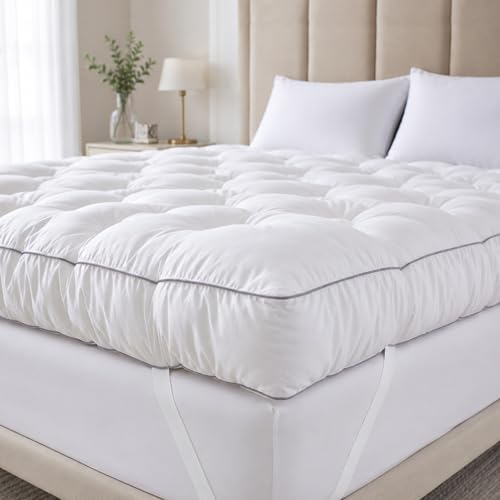
Zoned designs take a different approach. Instead of one uniform sheet of foam, a zoned topper varies the surface or density across its length, aiming to feel more yielding under the shoulders and hips and more supportive under the torso and legs. Egg crate foam, with its raised peaks and valleys, changes pressure in another way: the peaks give first, air moves through the valleys, and the surface feels less like a solid slab. Pillow top and fibre-filled toppers work at a simpler level, adding a soft, lofty layer that takes the hard edge off a firm mattress. They usually do not contour as precisely as memory foam, but they can feel instantly plusher, they tend to sleep less warm, and they often include a fitted pocket that keeps everything in place on the bed.
Thickness is the decision that ties all of this together. A two-inch topper changes the feel of a bed modestly and is often enough when the mattress underneath is close to right and just needs its hard edge softened. Three inches is the versatile middle ground for pressure relief, deep enough for a shoulder to sink into without completely changing the height or support character of the bed. Five inches is a major intervention. It can transform a very firm or thin mattress, and some sleepers with significant hip and shoulder discomfort prefer that depth, but it also raises the bed noticeably, can make sheets fit awkwardly, and may feel too enveloping for people who move a lot or dislike the slow, moulded sensation of deep memory foam. Throughout this guide we return to that balance, because the thickest option is not automatically the most comfortable one for every body.
best foam and latex mattresses
EGO 3 Inch Queen Mattress Topper Gel Memory Foam
The EGO topper is the straightforward centre of this guide: three inches of gel memory foam in Queen size, presented for pressure relief, with cooling gel infusion and a ventilated design. That combination addresses the two requests side sleepers make most often. They want the shoulder and hip to sink and be cradled, and they do not want to pay for that comfort by sleeping hot inside a close-fitting foam surface. Three inches gives the foam enough depth to do real contouring work. On a firm mattress, a layer this thick usually changes the first impression of the bed completely, because the body meets the topper rather than the hard surface underneath, while the mattress below still provides the underlying support that keeps the pelvis from dropping too far.
The gel infusion and ventilation deserve a measured explanation. Gel in memory foam is intended to draw and disperse heat, and ventilation channels or a ventilated structure are intended to let air move through the foam rather than trapping warmth at the surface. Neither feature turns memory foam into a cool, springy material, and warm sleepers should keep realistic expectations. What these features can do is take the edge off the trapped feeling that plain, dense memory foam sometimes produces, especially in the first part of the night. For a sleeper whose main complaint is pressure but who has avoided memory foam because of warmth, this is the kind of design compromise that makes the category worth reconsidering.
Who the EGO topper suits best
Choose this EGO model if you sleep mainly on your side, your Queen mattress is sound but too firm, and you want a proven thickness without going to the extreme depth of a five-inch topper. It also suits couples, because memory foam tends to absorb movement rather than passing it across the bed, so one partner’s turning is less likely to disturb the other. Back sleepers who feel pressure at the shoulder blades and heels may also like the contouring, provided they prefer a bed that feels more hugged than bouncy. People who dislike sinking in at all, who need to sit and swing out of bed with minimal effort, or who already find their mattress too soft should look elsewhere in this guide, because adding three inches of moulding foam to a soft bed usually makes the support problem worse, not better.
SHOUREN 5 Inch Memory Foam Mattress Topper Queen
The SHOUREN is the deepest foam option in this line-up by a wide margin: five inches of extra-thick gel memory foam in Queen size, presented for back pain relief and, by design, well suited to serious pressure relief as well. Five inches changes the conversation. This is not a light softening layer; it is closer to rebuilding the comfort system of the bed. On a very firm mattress, a thin guest bed, or a hard platform setup where the sleeper feels every bit of the surface through a slim mattress, that depth gives the shoulder an unusually generous amount of material to sink into, and the hip can settle without quickly reaching the firmer layer beneath.
Depth brings trade-offs that deserve equal emphasis. A five-inch topper raises the bed height substantially, which affects fitted sheet fit, how high the bed feels to sit on, and how easy it is for shorter sleepers or anyone with limited mobility to get in and out. Deep memory foam also feels enveloping. Some sleepers love that cocooned sensation and find it settles them. Others, especially combination sleepers who change position often, find that a deep, slow-responding surface makes movement feel like more work. The gel element in the foam is a sensible inclusion at this thickness, because a deeper foam layer holds more warmth around the body, and anything that helps disperse heat is working on a real characteristic of the design.
Who the SHOUREN topper suits best
This is the option to consider when lesser changes have not been enough: the mattress is genuinely hard, the sleeper is a committed side sleeper with prominent shoulder or hip pressure, or the bed in question is a basic, thin setup in a guest room or rental that needs a major comfort upgrade without buying a new mattress. Heavier sleepers may also appreciate the extra material, since a thinner topper can compress fully under concentrated weight and stop helping. On the other hand, if your mattress is medium or soft already, if you sleep mostly on your stomach, or if you share the bed with someone who strongly prefers a firm, flat feel, five inches of memory foam is likely to overshoot. Stomach sleeping in particular tends to work better on thinner, firmer surfaces that keep the hips from sinking and arching the lower back.
Niagara Sleep Solution Queen Ultra Soft Mattress Topper
The Niagara Sleep Solution Queen takes a different route from the foam blocks above. It is an ultra-soft topper presented for back pain relief, made with rayon derived from bamboo, and its comfort comes from plushness rather than from a thick slab of moulding memory foam. That distinction changes how pressure relief feels. Instead of sinking into a surface that shapes itself around the shoulder, you lie on a soft, cushioned layer that takes the hard edge off the mattress and spreads contact more gently. For sleepers who dislike the slow, held sensation of memory foam, or who have tried foam and found it warm or restrictive, a plush topper like this can be the more welcome answer to the same sore-shoulder problem.
Who the Niagara Queen suits best
Pick the Queen Niagara if your mattress support is fine but its surface feels unforgiving, if you prefer a plush hotel-bed softness over a moulded foam feel, or if you are a back or side sleeper who wants gentle cushioning at the shoulders and hips without a major change in bed height or feel. It can also be a diplomatic choice for couples who disagree about firmness, because it softens the shared surface without turning the bed into deep foam. Skip it if your mattress already sags or feels too soft, if you want strong zoning or targeted support, or if you are a stomach sleeper who needs the hips held up. As noted elsewhere in this guide, this same Niagara line also appears here in a Full size, covered separately below, so readers with a Full bed are not being shown a different product concept, just the size that fits their bed.
3 Inch 7-Zone Queen Mattress Topper, Egg Crate Memory Foam
The seven-zone egg crate topper is the most structurally interesting foam option here. It combines three inches of memory foam in Queen size with an egg crate surface and a seven-zone design described as breathable. Each element has a job. The memory foam provides the base contouring. The egg crate profile, a surface of peaks and valleys, lets the top of the foam give more easily at first contact and creates channels where air can move. The zoning aims to vary the feel along the length of the bed, so the areas under the shoulders and hips are not treated identically to the areas under the legs or the midsection.
For pressure points specifically, zoning is an appealing idea because the body is not uniform. The shoulder needs to sink, the waist needs filling, the hip needs room, and the legs need comparatively little. A well-judged zoned surface tries to meet those different needs in one piece of foam, rather than asking one uniform density to compromise everywhere. The egg crate texture also reduces the flat, sealed feeling some people dislike in smooth memory foam. Initial contact feels lighter, and the surface can feel less warm simply because less of it is in full contact with the body at any moment and air has somewhere to go.
Who the 7-zone egg crate topper suits best
This topper suits side and combination sleepers who like the idea of memory foam but prefer a surface with some texture and airflow, and people whose discomfort is not in one spot only but moves between shoulder, hip, and lower back. The three-inch thickness keeps it in the versatile middle: enough depth for real cushioning, not so much that the bed is transformed beyond recognition. It is also a reasonable choice for a partner with different pressure needs, since zoning attempts to respond differently along the body rather than imposing one feel everywhere.
best and most economical memory foam pillows
BEDLORE Queen Mattress Topper, Thick Soft Pillow Top
The BEDLORE approaches pressure relief as a pillow top problem. It is a thick, soft Queen bed topper with viscose derived from bamboo and a stretchable pocket, designed to sit over the mattress like a fitted, cushioned layer. Where memory foam answers pressure by moulding, a pillow top answers it by padding: a lofty, soft surface that puts forgiving material between the bony parts of the body and the firm mattress beneath. The first-night impression is usually plushness rather than contour, and for a good number of sleepers that is precisely what a too-hard bed needs.
The stretchable pocket is more important than it may sound. Loose toppers can drift, bunch, or slide toward one side of the bed, and a bunched topper creates new pressure ridges instead of relieving old ones. A pocket that stretches over the mattress, similar in spirit to a deep fitted sheet, holds the padding evenly in place and keeps the sleeping surface smooth. That makes this style particularly practical for restless sleepers, couples, and beds that get remade often. The viscose-from-bamboo element, as with the Niagara models, points toward a soft, smooth surface feel that many sleepers find comfortable and less clammy than synthetic-feeling fabrics.
Who the BEDLORE topper suits best
Choose the BEDLORE if you want a noticeably softer, plusher bed without the sinking, slow feel of memory foam, if your topper staying put matters to you, or if you are upgrading a guest bed and want an improvement guests notice immediately. It suits back sleepers and side sleepers whose complaint is general hardness at the contact points rather than a need for deep, shaped support. It is also a friendly option for people who sit up in bed to read, because a padded surface feels comfortable under the shoulder blades and elbows in a way a hard mattress does not.
EGOHOME 3 Inch Queen Memory Foam Mattress Topper
The EGOHOME model sits alongside the EGO as the other three-inch Queen gel memory foam option in this guide, described as a cooling gel infused, pressure relieving pad supplied in a box. Having two similar-sounding toppers in one line-up is actually useful, because this is the most contested and popular configuration in the whole category: three inches is the thickness many side sleepers land on, Queen is the most common shared-bed size, and gel infusion is the standard answer to memory foam warmth. Readers choosing between the two three-inch gel models should focus on the details of each current listing, such as cover arrangements, exact construction notes, and care guidance, since the headline specification is closely matched.
On the substance, the same reasoning applies as with any quality three-inch gel memory foam topper. The foam warms and softens under the body, the shoulder and hip sink into a cradle that spreads their load, and the waist receives some of the fill it needs to keep the spine in a more neutral line. The gel infusion works on the heat that close contact generates. Supplied in a box means the topper arrives compressed and rolled, which makes it far easier to carry to the bedroom and position on the bed than a full-size flat slab, and it then needs time to expand to its full three inches before its feel can be judged fairly.
Who the EGOHOME topper suits best
This is a strong default recommendation for the classic case in this guide: a side sleeper, or a couple, on a Queen mattress that is supportive but too firm, who wants meaningful pressure relief without changing the bed beyond recognition. It also suits people furnishing a room where delivery and handling matter, since a boxed topper is simply easier to move through hallways and up stairs. If you run very warm, keep expectations measured and pair the topper with breathable sheets rather than heavy bedding. If you want either the maximum softness of a plush pillow top or the maximum depth of the five-inch SHOUREN, those designs serve those extremes better.
SINWEEK 5-Zone Cooling Gel Memory Foam Mattress Topper, 2 Inch Twin
The SINWEEK is the small-bed specialist in this guide, and its specifications should be read carefully because they differ from the rest of the line-up: it is a two-inch Twin size topper with a five-zone cooling gel memory foam design and CertiPUR-US certification. Twin beds are where many pressure problems quietly live. They are common in dorm rooms, children’s and teenagers’ rooms, spare rooms, and single adult bedrooms, and they are often paired with thin, basic, or ageing mattresses that offer very little comfort layer. A two-inch topper is a proportionate upgrade for that setting: enough to take the hardness out of the surface and add zoned contouring, without overwhelming a smaller bed or a lighter sleeper.
The five-zone design applies the same logic as the seven-zone Queen model, varying the surface response along the body so the shoulder and hip areas are treated differently from the legs. At two inches, the effect is gentler, which is appropriate here. A lighter body does not compress foam the way a heavier one does, so a thinner, zoned layer can relieve pressure without the sleeper feeling swallowed. The cooling gel element addresses warmth, and the CertiPUR-US certification is a meaningful detail for buyers who care about foam standards: it indicates the foam has been certified by that programme in relation to its content and emissions standards, which is the kind of verifiable credential worth looking for in a category full of vague claims.
Who the SINWEEK topper suits best
Pick the SINWEEK for a Twin bed in a dorm, a teen’s room, a guest corner, or a single sleeper who is lighter in build and finds a basic mattress too hard at the shoulder and hip. It is also the sensible choice when the goal is improvement rather than transformation, or when budget and bed size make the big Queen foam slabs irrelevant. Do not buy it for a Queen or Full bed, obviously, and do not expect two inches to rescue a mattress that is deeply sagging or to satisfy a heavier side sleeper who bottoms out thinner foam. Within its intended job, though, it is one of the most thoughtfully specified options in this guide, because size, thickness, zoning, and certification all point in the same direction.
Niagara Sleep Solution Full Ultra Soft Mattress Topper
The second Niagara in this guide is the Full size version of the same ultra-soft line covered above in Queen. We list it separately and say so plainly, because honesty about sizes matters more than pretending the line-up contains eight unrelated inventions. If you have a Full bed, sometimes called a double, this is your version of the plush, rayon-derived-from-bamboo Niagara design: an ultra-soft topper presented for back pain relief, intended to cushion a too-firm surface rather than to mould around the body like memory foam.
Who the Niagara Full suits best
Choose this topper if you sleep on a Full mattress that feels too hard, prefer a soft fabric-based cushion to foam, or are improving a guest room where a welcoming, hotel-like softness matters more than technical contouring. It suits single sleepers who use the full width of the bed and side sleepers who want the hip and shoulder padded rather than cradled. As with its Queen sibling, avoid it if the mattress underneath is already soft or sagging, if you need firm targeted support, or if you sleep on your stomach and need a flatter surface. Anyone choosing between the two Niagaras should simply match the size to the bed; the decision is about fit, not about one being a different tier of product.
best gel pillows for side sleepers
How to choose: thickness, material, zoning, and size
- Match the size exactly to your mattress before anything else.
- Pick thickness by body weight, sleeping position, and mattress firmness.
- Choose gel foam for contouring, zoned foam for varied support, or a plush pillow top for general softness.
- Check sheet depth, bed height, and how the topper stays in place.
Start with the mattress you already own, because a topper is a correction, not a standalone bed. Run your hand across the surface and lie down in your usual position. If the bed feels hard within minutes and your shoulder cannot settle, you need cushioning depth. If the bed feels almost right and only the first contact is harsh, a thinner or plusher layer may be enough. If you sink in the middle or roll toward a dip, stop: a topper will follow the dip, and the money is better spent toward a mattress. This honest first check prevents most disappointing purchases in the category.
Then choose thickness by body and problem, not by the assumption that more is better. Two inches, like the SINWEEK, suits lighter sleepers, smaller beds, and mild firmness problems. Three inches, the EGO, EGOHOME, and seven-zone models, is the all-round pressure relief choice for most side sleepers on firm Queen mattresses. Five inches, the SHOUREN, is for hard or thin beds and sleepers who want a dramatic change and accept the height and enveloping feel that come with it. Remember that every inch you add also affects sheet fit, bed height, and how easy the bed is to get out of, which matters more to older sleepers and anyone with sore knees than product pages tend to mention.
Material comes next. Gel memory foam gives the closest contouring and the strongest pressure-spreading effect at the shoulder and hip, with gel and ventilation helping on warmth. Zoned and egg crate foam trade a little of that deep moulding for airflow, texture, and varied support along the body. Pillow top and plush fibre-style toppers, like the BEDLORE and the Niagara models, give immediate softness, a smoother fabric feel, and usually an easier fit, at the cost of precise shaping. None of these is universally best. The foam route suits people whose pain point is literally a point, concentrated and bony. The plush route suits people whose whole surface feels too hard and who want the bed to feel kinder in general.
Finally, check the unglamorous details before you buy. Confirm the exact size against your mattress measurements. Look for a way the topper stays in place, whether that is a stretchable pocket, a fitted design, or simply enough weight and friction from a foam slab. Note any certification that can actually be verified, such as the CertiPUR-US certification on the SINWEEK, rather than relying on undefined comfort claims. Consider care: whether a cover is present, how the topper should be aired or rotated, and where you will keep packaging until you are sure the choice is right. These details decide whether a good topper stays good after the first week.
Topper or new mattress: an honest comparison
A topper is the right purchase when the support core of your mattress is still doing its job. If the bed is level, the base is sound, and the problem is confined to the surface feel, a topper costing a fraction of a mattress can correct that feel for years. It is also the right purchase when the bed is not really yours to replace: rentals, dorms, guest rooms, furnished homes, and the spare bed at a relative’s house all respond well to a removable improvement. Couples use toppers as diplomacy, softening a shared mattress that one partner chose and the other merely tolerates. In all of these cases the topper’s removability is a feature, not a compromise.
A new mattress is the right purchase when the problem is structural. Visible sagging, a hammock feeling in the middle, springs or foam that no longer recover, lumps, or a damaged base will defeat any topper placed on top, because the topper follows the shape beneath it. Age matters too: a topper on a very old mattress may improve a few months while the underlying bed continues to decline. If you find yourself considering the thickest topper in this guide purely to hide a failing mattress, treat that as a signal to price a mattress instead. Conversely, if your mattress is new but simply firmer than expected, which is one of the most common regrets in bed buying, a topper is almost always the sensible first move, because the support you paid for is fine and only the comfort layer needs adjusting.
Frequently asked questions
Will a mattress topper really help pressure points?
For the common case of a sound but too-firm mattress, a well-chosen topper can help by spreading body weight over a wider area at the shoulder and hip, which reduces the peak pressure at those points and can mean fewer position changes and less morning stiffness. It adds comfort at the surface rather than treating a medical condition, so expectations should stay in that frame. The biggest gains usually come from matching thickness and material to your body and bed instead of buying the thickest option available.
What thickness is best for a side sleeper?
Three inches of memory foam is the most versatile answer for side sleepers on a firm Queen bed, which is why several options in this guide use it. Lighter sleepers and Twin beds often do well with two inches, especially in a zoned design. Five inches suits very hard or thin mattresses and sleepers who want a dramatic change, but it raises the bed and feels enveloping, so it is a deliberate choice rather than a default.
Does gel memory foam sleep cool?
Gel infusion and ventilation are designed to reduce the warmth that plain memory foam can hold, and many sleepers find gel models more comfortable than older foam. They do not make foam feel like a spring or latex surface, though. If you sleep very warm, combine a gel or egg crate topper with breathable sheets, lighter bedding, and a cool room, and treat cooling features as helpful moderation rather than air conditioning.
What is the difference between zoned and regular foam?
A regular foam topper has a broadly uniform feel across its surface. A zoned topper varies the surface or support along its length, aiming to give more under the shoulders and hips and firmer support elsewhere. Egg crate foam adds peaks and valleys that change first contact and allow more airflow. Zoning suits sleepers whose discomfort appears in several places or who dislike the flat, uniform sink of a plain slab.
Can a topper fix a sagging mattress?
No. A topper follows the shape underneath it, so it will sink into a dip along with your body and may even make the unevenness feel more pronounced. If the mattress sags visibly or the base is damaged, address that first. Toppers are for correcting surface firmness on a bed whose support is still sound, and within that job they can be very effective.
Our verdict
For most side sleepers on a firm Queen bed, the three-inch gel memory foam models, the EGO and the EGOHOME, are the balanced starting point: deep enough to cradle a shoulder, ordinary enough to live with every night. If your bed is very hard or thin and you want the biggest possible change, the five-inch SHOUREN is the heavyweight option. If you like the idea of foam but want airflow and varied support, the seven-zone egg crate topper is the thoughtful alternative. If foam itself is the problem and you simply want a softer, smoother, plusher bed, the BEDLORE pillow top and the two Niagara models, in Queen and Full, cover that taste in the main shared-bed sizes. And if the bed in question is a Twin in a dorm or spare room, the two-inch zoned SINWEEK is sized and specified for exactly that job. Pressure relief is mostly a matching exercise, and this line-up gives you an honest option for each of the common matches.
Check prices on Amazon
Live listings for the shortlist in this guide are pulled from Amazon below, so prices and availability are always current at the moment you look.


Disclosure
As an Amazon Associate we earn from qualifying purchases. Links in this guide may be affiliate links, which means a purchase made through them can support our work at no additional cost to you. Our research for this article drew on the product information provided for each topper listed, the stated size, thickness, and material details, and general knowledge of how these topper materials behave across the category. We checked each product against the pressure relief needs described in this guide, including sleeping position, mattress firmness, and bed size, and we have presented the two Niagara sizes as versions of the same line rather than as unrelated products. Prices and availability change over time, so please confirm the current details on the product page before buying. Nothing in this guide is medical advice, and persistent pain or numbness should be discussed with a qualified clinician.