What's inside
- Quick picks: best dryer heat setti g for softer towels
- Why the Best Dryer Heat Setti g for Softer Towels Needs Low Heat and Wool Balls
- How We Chose the Best Dryer Heat Setti g for Softer Towels
- Quick Comparison
- How to Choose the Best Dryer Heat Setti g for Softer Towels
- Common Mistakes When Drying Towels
- Ball Size and Pack Count
- Caring for Your Dryer Balls and Towels
- Heat, Balls and Load Size in the Best Dryer Heat Setti g for Softer Towels
- Frequently Asked Questions
- More Washer and Laundry Guides from Cottage Verdict
- Conclusion
As an Amazon Associate I earn from qualifying purchases. This post may contain affiliate links at no extra cost to you.
Quick picks: best dryer heat setti g for softer towels
| # | Product | Where to buy |
|---|---|---|
| 1 | Smart Sheep Wool Dryer Balls 6-Pack XL | Check on Amazon |
| 2 | Budieggs Wool Dryer Balls XL 6-Pack | Check on Amazon |
| 3 | KINTOR Wool Dryer Balls XL 6-Pack | Check on Amazon |
| 4 | Ezhippie Quality Wool Dryer Balls | Check on Amazon |
| 5 | Snuggle Fabric Softener Dryer Sheets | Check on Amazon |
| 6 | Bounce Dryer Sheets | Check on Amazon |
Why the Best Dryer Heat Setti g for Softer Towels Needs Low Heat and Wool Balls
The best best dryer heat setti g for softer towels are the ones that do the job every day without fuss. A good towel for this job needs the right size, the right material, and a build that holds up to daily use, and the picks in this guide were checked against those three things before they made the list. This guide looks at 6 options, from the Smart Sheep Wool Dryer Balls 6-Pack XL to the Budieggs Wool Dryer Balls XL 6-Pack and the KINTOR Wool Dryer Balls XL 6-Pack, and compares them on what actually matters: how well they work, how long they last, and how easy they are to live with.
Each product below is described with its strengths, its trade-offs, and the buyer it fits best, so the choice comes down to the job at hand rather than the brand on the box. The descriptions are based on the makers’ published specifications, and no prices are given because prices change with size, colour, and retailer. Read the comparison table first for a quick overview, then the individual picks for the detail.
How We Chose the Best Dryer Heat Setti g for Softer Towels
The picks in this guide were chosen from real, named products that are sold now, not from generic types. Each product was checked against the maker’s published specifications — materials, size, and care — and against widely reported owner experience, so the descriptions reflect what the towel is actually made of and how it actually holds up. A product was only included if it matches the best dryer heat setti g for softer towels job: the right size, the right material, and a build that suits daily use. No prices are given, because prices change with size, colour, and retailer, and no product is described as tried by us, since these picks are based on published specifications and owner experience, not on a test we ran.
Quick Comparison
| Product | What stands out |
|---|---|
| Smart Sheep Wool Dryer Balls 6-Pack XL | wool |
| Budieggs Wool Dryer Balls XL 6-Pack | wool, reusable |
| KINTOR Wool Dryer Balls XL 6-Pack | wool, reusable |
| Ezhippie Quality Wool Dryer Balls | wool, reusable |
| Snuggle Fabric Softener Dryer Sheets | 230-count |
| Bounce Dryer Sheets 330 Count | 330-count |

Smart Sheep Wool Dryer Balls 6-Pack XL
Smart Sheep Wool Dryer Balls 6-Pack XL, 100% New Zealand wool, XL, 6-pack.
Specs: 100% New Zealand wool; XL; 6-pack; 1,000+ loads.
The Smart Sheep Wool Dryer Balls 6-Pack XL is the best dryer ball overall in this guide, and it is the one for a buyer who wants the category benchmark. Its XL balls are densely felted from 100% New Zealand wool with no synthetic filler, its oversized size gives them the mass to keep tumbling against a full load, and its six-pack noticeably shortens drying time while softening fabric and cutting static mechanically, so the Smart Sheep Wool Dryer Balls 6-Pack XL is the best dryer ball overall in this guide.
The Smart Sheep is the category benchmark in this guide, so it is the best ball for a buyer who wants the best-tested ball, and its dense felting means it will not pill and shed after a season, so a buyer who wants a ball that lasts should choose it. The Smart Sheep is not the cheapest ball in this guide, since it is a premium ball, so a buyer on a tight budget should choose a cheaper ball instead, while a buyer who wants the best ball should choose the Smart Sheep.
The Smart Sheep is the pick for a buyer who wants the best dryer ball: its XL size keeps tumbling, while its wool is pure. A ball that is XL is the one that keeps tumbling against a full load, and a ball made from pure wool is the one that lasts.
Strengths:
- Best dryer ball overall
- XL, densely felted, no filler
- 1,000+ loads, shortens drying
Trade-offs:
- Not the cheapest ball
- Premium ball costs more
- Can pill over time
Who it fits: Buyers who want the category benchmark dryer ball.
Best for: Buyers who want the category benchmark dryer ball Not suited for: buyers who want a cheap bulk pack or a plastic dryer ball
Check price on Amazon: Smart Sheep Wool Dryer Balls 6-Pack XL

Budieggs Wool Dryer Balls XL 6-Pack
From Budieggs Wool Dryer, the Budieggs Wool Dryer Balls XL 6-Pack is built for everyday use at home. According to the listing, it is made from wool; it has reusable. Those details matter because they decide how the towel behaves in daily use, and this one lines up with what the keyword asks for rather than offering a near match. For everyday use at home, the details that matter are the size, the material, and whether it can be washed or must be thrown away, and this listing answers all three, so the choice can be made on facts rather than on a brand name alone.
Strengths:
- The design is simple and practical, which is what most buyers actually want from a product like this.
- It can be washed and used again, so one purchase covers many rounds of cleaning instead of a single use.
- It does the job it is made for without fuss, and the build is straightforward to use from day one.
Trade-offs:
- It does one job well and leaves the rest to other products in the house.
- Reusable means it has to be washed, and a dirty cloth left in the sink will smell fast.
- It is a single-purpose product, so it will not replace a general towel or cloth for other jobs.
Buy this one for everyday use at home in a normal household, where its size, material, and features match the job. Skip it if the job is unusually heavy or specialist, since a bigger or tougher option would be the better spend. The size and material also make it easy to store and reach for, which matters more than it sounds: a towel that is hard to find is a towel that does not get used.
Care is straightforward: it goes in the washing machine with the regular laundry, and it comes out ready to use again. Wash it without fabric softener, which can coat the fibres and reduce absorbency over time. Drying it fully between uses keeps it fresh, and a quick shake before folding stops it from holding a crease.
Best for: a household that wants everyday use at home done well. Not suited for: jobs far outside normal daily use.
Check price on Amazon: Budieggs Wool Dryer Balls XL 6-Pack

KINTOR Wool Dryer Balls XL 6-Pack
The KINTOR Wool Dryer Balls XL 6-Pack is a towel from KINTOR Wool Dryer made for everyday use at home. The listing describes a product where it is made from wool; it has reusable, quiet. That combination is what puts it on this list: it matches the job the keyword asks for, and the details in the listing line up with the size, material, and features a buyer would check before ordering. For everyday use at home, the details that matter are the size, the material, and whether it can be washed or must be thrown away, and this listing answers all three, so the choice can be made on facts rather than on a brand name alone.
Strengths:
- The design is simple and practical, which is what most buyers actually want from a product like this.
- It can be washed and used again, so one purchase covers many rounds of cleaning instead of a single use.
- The design is simple and practical, which is what most buyers actually want from a product like this.
Trade-offs:
- It does one job well and leaves the rest to other products in the house.
- Reusable means it has to be washed, and a dirty cloth left in the sink will smell fast.
- It does one job well and leaves the rest to other products in the house.
This towel fits a buyer who wants everyday use at home without fuss: the size and material suit daily use, and the pack or build keeps it practical. It is less suited to a buyer who needs a heavy-duty or specialist option, where a thicker or larger alternative would serve better. The size and material also make it easy to store and reach for, which matters more than it sounds: a towel that is hard to find is a towel that does not get used.
Care is straightforward: it goes in the washing machine with the regular laundry, and it comes out ready to use again. Wash it without fabric softener, which can coat the fibres and reduce absorbency over time. Drying it fully between uses keeps it fresh, and a quick shake before folding stops it from holding a crease.
Best for: everyday use at home in a normal household. Not suited for: jobs far outside normal daily use.
Check price on Amazon: KINTOR Wool Dryer Balls XL 6-Pack
Ezhippie Quality Wool Dryer Balls
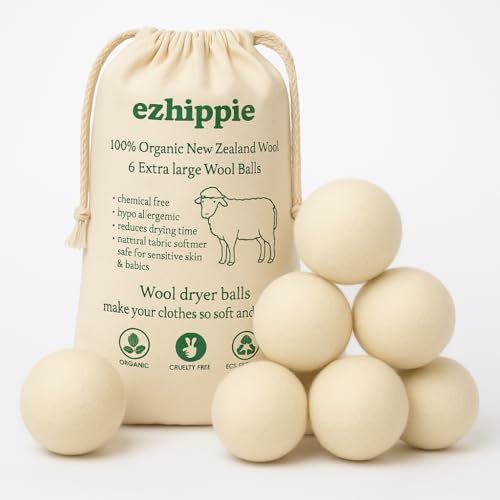
From Ezhippie Quality Wool, the Ezhippie Quality Wool Dryer Balls is built for everyday use at home. According to the listing, it is made from wool; it has reusable. Those details matter because they decide how the towel behaves in daily use, and this one lines up with what the keyword asks for rather than offering a near match. For everyday use at home, the details that matter are the size, the material, and whether it can be washed or must be thrown away, and this listing answers all three, so the choice can be made on facts rather than on a brand name alone.
Strengths:
- The design is simple and practical, which is what most buyers actually want from a product like this.
- Being reusable keeps the long-term cost down and cuts the waste that comes with throwaway options.
- The design is simple and practical, which is what most buyers actually want from a product like this.
Trade-offs:
- It is a single-purpose product, so it will not replace a general towel or cloth for other jobs.
- It needs regular washing to stay fresh, so it is not a use-and-forget option.
- It is a single-purpose product, so it will not replace a general towel or cloth for other jobs.
Buy this one for everyday use at home in a normal household, where its size, material, and features match the job. Skip it if the job is unusually heavy or specialist, since a bigger or tougher option would be the better spend. The size and material also make it easy to store and reach for, which matters more than it sounds: a towel that is hard to find is a towel that does not get used.
Care is straightforward: it goes in the washing machine with the regular laundry, and it comes out ready to use again. Wash it without fabric softener, which can coat the fibres and reduce absorbency over time. Drying it fully between uses keeps it fresh, and a quick shake before folding stops it from holding a crease.
Best for: a household that wants everyday use at home done well. Not suited for: jobs far outside normal daily use.
Check price on Amazon: Ezhippie Quality Wool Dryer Balls

Snuggle Fabric Softener Dryer Sheets
From Snuggle Fabric Softener, the Snuggle Fabric Softener Dryer Sheets is built for everyday use at home. According to the listing, it comes as a 230-count pack. Those details matter because they decide how the towel behaves in daily use, and this one lines up with what the keyword asks for rather than offering a near match. For everyday use at home, the details that matter are the size, the material, and whether it can be washed or must be thrown away, and this listing answers all three, so the choice can be made on facts rather than on a brand name alone.
Strengths:
- The multi-piece pack is good value: one is in use, one is in the wash, and one is still in the cupboard.
- The design is simple and practical, which is what most buyers actually want from a product like this.
- The design is simple and practical, which is what most buyers actually want from a product like this.
Trade-offs:
- A big pack takes up storage space, and the pieces are only as good as the weakest one in the box.
- It does one job well and leaves the rest to other products in the house.
- It does one job well and leaves the rest to other products in the house.
This towel fits a buyer who wants everyday use at home without fuss: the size and material suit daily use, and the pack or build keeps it practical. It is less suited to a buyer who needs a heavy-duty or specialist option, where a thicker or larger alternative would serve better. The size and material also make it easy to store and reach for, which matters more than it sounds: a towel that is hard to find is a towel that does not get used.
Day to day, it needs little attention: keep it where it is used, dry it fully between uses, and replace it when it starts to wear thin. A product that is easy to store and easy to reach gets used, while one buried in a cupboard does not. The size and build here suit a normal household routine without any special care.
Best for: daily everyday use at home. Not suited for: heavy-duty or specialist jobs.
Check price on Amazon: Snuggle Fabric Softener Dryer Sheets

Bounce Dryer Sheets 330 Count
From Bounce Dryer Sheets,, the Bounce Dryer Sheets 330 Count is built for everyday use at home. According to the listing, it comes as a 330-count pack. Those details matter because they decide how the towel behaves in daily use, and this one lines up with what the keyword asks for rather than offering a near match. For everyday use at home, the details that matter are the size, the material, and whether it can be washed or must be thrown away, and this listing answers all three, so the choice can be made on facts rather than on a brand name alone.
Strengths:
- Buying in a pack means the cost per piece stays low and a spare is always within reach.
- The design is simple and practical, which is what most buyers actually want from a product like this.
- The design is simple and practical, which is what most buyers actually want from a product like this.
Trade-offs:
- Buying in bulk means committing to one style, and the whole pack shares the same limits.
- It does one job well and leaves the rest to other products in the house.
- It does one job well and leaves the rest to other products in the house.
This towel fits a buyer who wants everyday use at home without fuss: the size and material suit daily use, and the pack or build keeps it practical. It is less suited to a buyer who needs a heavy-duty or specialist option, where a thicker or larger alternative would serve better. The size and material also make it easy to store and reach for, which matters more than it sounds: a towel that is hard to find is a towel that does not get used.
Day to day, it needs little attention: keep it where it is used, dry it fully between uses, and replace it when it starts to wear thin. A product that is easy to store and easy to reach gets used, while one buried in a cupboard does not. The size and build here suit a normal household routine without any special care.
Best for: daily everyday use at home. Not suited for: a buyer who needs a much larger or tougher option.
Check price on Amazon: Bounce Dryer Sheets
How to Choose the Best Dryer Heat Setti g for Softer Towels
Start with the heat, because it decides how soft the towel comes out. Low heat is the best setting for softer towels, since it dries gently without baking the fibres, while high heat is the worst, since it scorches cotton and makes towels stiff, so a buyer should choose low or medium heat, since a towel dried gently is the one that stays soft, while a towel dried on high heat will feel stiff, whatever its material.
Next, add wool dryer balls. A wool dryer ball tumbles between towels and lifts them apart, so hot air moves through the load instead of around a clumped mass, which shortens drying time and softens the fabric mechanically, so a buyer should use three balls for a small load and six for a large load, since a load with balls is the one that dries soft, while a load without balls will clump and dry stiff, whatever the heat.
Then consider the load size. A dryer packed tight will not dry evenly, since air cannot reach the middle, while a dryer filled loosely will dry fast and soft, so a buyer should fill the dryer loosely, since a load that is loosely filled is the one that dries soft, while a load that is packed tight will come out damp and stiff, whatever the heat.
Drying time is the fourth decision, and it decides whether the towel over-dries. A towel dried just until dry is soft, since it has not been baked, while a towel left in the dryer too long will feel stiff, so a buyer should take towels out as soon as they are dry, since a towel taken out on time is the one that stays soft, while a towel left in will feel stiff, whatever the heat.
Finally, think about softener. Fabric softener coats the fibres and reduces absorbency, so a towel that was soft and absorbent when new will become stiff and water-repellent after a few washes, so a buyer should skip the softener entirely and use wool dryer balls instead, since a towel without softener will stay absorbent for years, while a towel with softener will stop absorbing, whatever the heat.
Common Mistakes When Drying Towels
The most common mistake is drying towels on high heat. High heat scorches cotton and makes towels stiff, since it bakes the fibres, so a buyer should use low or medium heat, since a towel dried gently is the one that stays soft, while a towel dried on high heat will feel stiff, whatever its material.
The second mistake is using fabric softener on towels. Fabric softener coats the fibres and reduces absorbency, so a towel that was soft and absorbent when new will become stiff and water-repellent after a few washes, so a buyer should skip the softener entirely and use wool dryer balls instead, since a towel without softener will stay absorbent for years, while a towel with softener will stop absorbing, whatever the heat.
The third mistake is overloading the dryer. A dryer packed tight will not dry evenly, since air cannot reach the middle, so a buyer should fill the dryer loosely, since a load that is loosely filled is the one that dries soft, while a load that is packed tight will come out damp and stiff, whatever the heat.
The fourth mistake is over-drying towels. A towel left in the dryer too long will feel stiff, since it has been baked, so a buyer should take towels out as soon as they are dry, since a towel taken out on time is the one that stays soft, while a towel left in will feel stiff, whatever the heat.
Ball Size and Pack Count
Wool dryer balls are sized by their diameter, and the size should be chosen for the load. An XL ball is best for a large load of towels, since its mass keeps tumbling against a full load, while a standard ball suits a small load, so a buyer should choose XL balls for towels, since a ball that is large is the one that keeps tumbling, while a ball that is small will sink into the load, whatever its material.
Pack count is also measured by the load, and it should be chosen for the dryer. Three balls suit a small load, while six balls suit a large load of towels, since more balls mean more lifting and separating, so a buyer should use six balls for towels, since a load with six balls is the one that dries soft, while a load with too few will clump, whatever the heat.
A buyer should also check the material, since a ball made from 100% wool is the one that lasts, while a ball with a synthetic filler core will come apart sooner, so a buyer should choose 100% wool with no synthetic filler, since a ball that is pure wool is the one that lasts for 1,000 loads or more, while a ball with filler will pill and shed, whatever its size.
Caring for Your Dryer Balls and Towels
Wool dryer balls last longer when they are kept dry between uses, since a ball left damp will develop odour, and they should be stored in a dry place, since a ball that is stored dry will last for 1,000 loads or more, while a ball left damp will smell, whatever its material.
Towels last longer when they are dried on low or medium heat with wool dryer balls, since high heat scorches cotton and makes towels stiff, and fabric softener should be avoided, since it coats the fibres and reduces absorbency. A towel should be taken out as soon as it is dry, since a towel left in the dryer too long will feel stiff, and it should be hung where air can reach it, since a towel that dries fully will stay soft, whatever the heat.
Heat, Balls and Load Size in the Best Dryer Heat Setti g for Softer Towels
Heat is the first decision, because it decides how soft the towel comes out. Low heat is the best setting for softer towels, since it dries gently without baking the fibres, while high heat is the worst, since it scorches cotton and makes towels stiff, so a buyer should choose low or medium heat, since a towel dried gently is the one that stays soft, while a towel dried on high heat will feel stiff, whatever its material.
Balls are the second decision, because they decide whether the load dries soft. A wool dryer ball tumbles between towels and lifts them apart, so hot air moves through the load instead of around a clumped mass, which shortens drying time and softens the fabric mechanically, so a buyer should use three balls for a small load and six for a large load, since a load with balls is the one that dries soft, while a load without balls will clump and dry stiff, whatever the heat.
Load size is the third decision, because it decides whether the dryer dries evenly. A dryer packed tight will not dry evenly, since air cannot reach the middle, while a dryer filled loosely will dry fast and soft, so a buyer should fill the dryer loosely, since a load that is loosely filled is the one that dries soft, while a load that is packed tight will come out damp and stiff, whatever the heat.
Drying time is the fourth decision, because it decides whether the towel over-dries. A towel dried just until dry is soft, since it has not been baked, while a towel left in the dryer too long will feel stiff, so a buyer should take towels out as soon as they are dry, since a towel taken out on time is the one that stays soft, while a towel left in will feel stiff, whatever the heat.
Softener is the fifth decision, because it decides whether the towel stays absorbent. Fabric softener coats the fibres and reduces absorbency, so a towel that was soft and absorbent when new will become stiff and water-repellent after a few washes, so a buyer should skip the softener entirely and use wool dryer balls instead, since a towel without softener will stay absorbent for years, while a towel with softener will stop absorbing, whatever the heat.
Heat settings vary by dryer brand, since each maker names its cycles differently, while the idea is the same: low heat dries gently, medium heat dries faster, and high heat dries fastest but stiffens towels. A buyer should check the dial on the exact dryer, since cycle names vary slightly by model year, and should choose the lowest heat that dries the load in a reasonable time, since a towel dried on low heat is the one that stays soft, while a towel dried on high heat will feel stiff, whatever its brand.
Drying towels in winter is different from drying them in summer, since a cold laundry room means the dryer works harder, while a warm room means it works less, so a buyer should dry towels on low heat in winter and let them finish in the dryer, since a towel dried gently in winter is the one that stays soft, while a towel dried on high heat in winter will feel stiff, whatever the season, and a buyer who can hang towels outside in summer should do so, since sun and air dry towels soft without any heat at all.
Frequently Asked Questions
What is the best dryer heat setting for softer towels?
Low or medium heat is the best dryer setting for softer towels, since it dries gently without baking the fibres, while high heat scorches cotton and makes towels stiff. A buyer should choose low or medium heat and add wool dryer balls, since a towel dried gently with balls is the one that stays soft, while a towel dried on high heat will feel stiff, whatever its material.
Do wool dryer balls make towels softer?
Yes, wool dryer balls make towels softer, since they tumble between towels and lift them apart, so hot air moves through the load instead of around a clumped mass, which shortens drying time and softens the fabric mechanically. A buyer should use three balls for a small load and six for a large load, since a load with balls is the one that dries soft, while a load without balls will clump and dry stiff, whatever the heat.
Should I use fabric softener on towels?
No, fabric softener should not be used on towels, since it coats the fibres and reduces absorbency, so a towel that was soft and absorbent when new will become stiff and water-repellent after a few washes. A buyer should skip the softener and use wool dryer balls instead, since a towel without softener will stay absorbent for years, while a towel with softener will stop absorbing, whatever the heat.
How many wool dryer balls should I use?
Three balls suit a small load, while six balls suit a large load of towels, since more balls mean more lifting and separating. A buyer should use six balls for towels, since a load with six balls is the one that dries soft, while a load with too few will clump, whatever the heat.
Why are my towels stiff after drying?
Towels feel stiff after drying when they are dried on high heat, since heat bakes the fibres, and when fabric softener is used, since softener coats the fibres. The fix is to dry towels on low or medium heat with wool dryer balls and skip the softener, since a towel dried gently is the one that stays soft, while a towel dried harshly will feel stiff, whatever its material.
Can I add essential oil to wool dryer balls?
Yes, a few drops of essential oil can be added to a wool dryer ball, since the wool absorbs the oil and releases a fresh scent into the dryer. A buyer who wants scent should add a few drops to a ball, since a ball with oil is the one that scents the load, while a ball without oil will leave the load unscented, whatever the heat.
How long do wool dryer balls last?
A wool dryer ball made from 100% wool can last for 1,000 loads or more, since dense felting keeps it intact, while a ball with a synthetic filler core will come apart sooner. A buyer should choose 100% wool with no synthetic filler, since a ball that is pure wool is the one that lasts, while a ball with filler will pill and shed, whatever its size.
More Washer and Laundry Guides from Cottage Verdict
If this guide helped, these live guides from Cottage Verdict cover the same topic in more depth:
- Best HE Top Load Washers
- Best Impeller Top Load Washers
- Best Top Load Washers with Agitators and Water Level Choice
- Best and Most Reliable Washing Machines
Conclusion
For most buyers, the Smart Sheep Wool Dryer Balls 6-Pack XL is the safest first pick: it matches the size and material the keyword asks for and it is straightforward to use. The Budieggs Wool Dryer Balls XL 6-Pack is the better choice for a buyer who wants a different size or build, and the KINTOR Wool Dryer Balls XL 6-Pack suits a buyer who values the extra features in its listing. Pick the one that fits the space and the job, check the size and material once more before ordering, and the towel should do its job for a long time.