What's inside
- Key Takeaways
- Quick Picks
- How Did We Assess Reliability Without Inventing Numbers?
- How Do the Six Reliability Cases Differ?
- What Can a Buyer Actually Know About Reliability Before Purchase?
- Why Do Tub Materials and Format Matter More Than Features?
- How Does Loading Behaviour Decide a Washer’s Fate?
- What Role Do Parts and Service Networks Play?
- Are Portable Washers a Reliability Compromise or a Different Bet?
- Which Habits Make Any Washer in This Guide Last Longer?
- How Does Installation Quality Quietly Decide Longevity?
- What Do Warranty Terms Actually Tell a Careful Buyer?
- How Should You Judge a Washer in Its First Month?
- Why Does the Drain Filter Deserve Its Own Paragraph?
- How Do Water and Detergent Choices Affect a Machine’s Life?
- When Should a Reliable Machine Be Repaired, and When Replaced?
- How Should You Read a Cycle List as a Reliability Document?
- How Does a Household’s Rhythm Wear a Machine?
- What Records Should You Keep for the Machine’s Whole Life?
- Which Buying Mistakes Undermine Reliability Before the First Wash?
- Final Recommendation
- Frequently Asked Questions
- Related Guides
As an Amazon Associate I earn from qualifying purchases. This post may contain affiliate links at no extra cost to you.
cottageverdict.com is reader-supported. When you buy through links on our site, we may earn an affiliate commission.
Where to buy: the six washers below are sold on Amazon, and the linked names in the Quick Picks table and the detailed sections lead to the matching listing, where you can check price on Amazon and confirm cycle lists, tub materials, and warranty documents before ordering. Reliability is the hardest word in appliance shopping, so this guide begins by defining what it can honestly mean here. We cannot quote failure rates or promise a lifespan in years, because no listing publishes trustworthy numbers of that kind and inventing them would be a disservice. What we can assess, from the listings themselves, is the stuff reliability is made of: construction, tub material, drive and format simplicity, capacity matched to load, and the support standing behind the machine.
That framing shapes the six picks. Two are full-size household machines from an established maker, one front load and one top load with a stainless steel tub. One is a compact front loader whose fifteen cycles and stackable build suit smaller homes. Two are portable machines whose mechanical simplicity is itself a reliability argument, and one is a mid-size front loader from a newer name whose specification must carry the case. Each pick below states plainly which kind of reliability it offers and which it cannot.
A washer earns trust slowly, across years of unremarkable service, and no review can accelerate that. What a buyer can do is stack the odds: choose proven formats, avoid chronic overloading, prefer materials that do not chip or rust, and buy from makers whose parts and service networks will still exist when a pump eventually needs replacing. This guide is organised to help you stack exactly those odds.
Key Takeaways
- Reliability here is argued from construction, materials, format, and support, never from invented failure statistics or promised lifespans.
- Stainless steel tubs and simple, proven formats are the strongest listing-level signals a buyer can actually verify.
- A machine run at its intended capacity outlasts a strained one; matching size to load is a reliability decision.
- Established makers offer the practical reliability of parts and service networks years after purchase.
- Portable machines trade capacity for mechanical simplicity, which some households will experience as dependability.
Quick Picks
| Pick | Badge | Why it earns its place |
|---|---|---|
| BLACK+DECKER BFLW45M 4.5 | Best Full-Size Front Load Case | A 4.5 cubic foot ENERGY STAR front loader with twelve cycles and dual inlets, from a maker with a wide support network. |
| BLACK+DECKER BTLW41MW Top Loader | Best Stainless-Tub Top Load | A 4.1 cubic foot top loader whose stainless steel tub, agitator drive, and glass lid make a materials-led reliability argument. |
| West Bend Compact Front Loader | Best Compact Case | West Bend’s 2.2 cubic foot front loader keeps a full fifteen-cycle range and a stackable build at apartment scale. |
| COMFEE’ 2.4 Portable | Best Portable Simplicity | COMFEE’s 2.4 cubic foot portable offers eight programs, a child lock, and a simple full-automatic design for dorms and RVs. |
| TABU 4.0 Front Loader (Black) | Best Specification-Led Case | TABU’s 4.0 cubic foot front loader brings fifteen cycles and a stackable design; its case rests on specification rather than heritage. |
| BLACK+DECKER BPW30MW 3.0 Portable | Best Big Portable | BLACK+DECKER’s 3.0 cubic foot portable gives 26.5 lb capacity, six cycles, and a quick-connect sink adapter under an established name. |
How Did We Assess Reliability Without Inventing Numbers?
We limited the evidence to what a listing can support. Tub material is stated and checkable, and stainless steel’s resistance to chips and rust is a matter of physics rather than opinion. Format maturity is observable: front load and agitator top load designs have been refined over decades, and their failure modes are known and serviceable. Maker support is a matter of record: an established brand’s parts pipeline is a form of reliability that only becomes visible when something breaks in year six.
We also weighed how a machine will be treated. A washer’s hardest enemy is its owner’s loading habit, so designs that forgive, with drums sized generously for their intended household and controls that make the right cycle easy to choose, protect themselves. Machines whose listings suggest they know their household, full-size family drums here, honest compacts there, scored better than machines claiming to be everything at once. The result is a line-up where each pick’s reliability story is different, stated in its own terms, and never exaggerated into a statistic.

BLACK+DECKER 4.5 cu ft Front Load Washer BFLW45M — Best Full-Size Front Load Case
The BFLW45M builds its reliability case the conventional way: a full-size front load format that the industry has refined for decades, a capacity generous enough that a family need not strain it, and an established maker’s network behind it. Front loaders have no agitator to stress fabrics or gearboxes in the old style, and their known wear items, door seals, pumps, and bearings, are parts any competent technician has replaced many times on many brands.
Capacity headroom is an underrated durability feature. A 4.5 cubic foot drum asked to wash a family’s ordinary loads works well within itself, while a smaller machine loaded to its door on every cycle lives at its limit, and machinery kept at its limit ages faster. The ENERGY STAR certification adds a measured-efficiency credential, and the hot and cold inlets mean temperature control is handled by the machine as designed rather than improvised by the plumbing.
No listing can promise this machine a trouble-free decade, and we will not pretend otherwise. What can be said is that nothing in its specification is experimental, its format’s service knowledge is everywhere, and its maker will answer for parts long after newer names have moved on. For a household buying a washer as infrastructure, that combination is what reliability shopping actually looks like.
- Capacity: 4.5 cu ft, generous headroom for family loads
- Cycles: 12 wash cycles with an LED display
- Efficiency: ENERGY STAR certified performance
- Inlets: hot and cold hoses for true temperature control
- Format: mature full-size front load design
Strengths
- Proven format with widely understood service needs
- Capacity headroom reduces strain on every component
- Established maker with a real parts pipeline
Trade-offs
- Large footprint demands a proper laundry space
- Front load door seal needs the usual wiping care
- No agitator for households that prefer that wash action
Best for: families buying a long-term household machine on proven-format grounds.
Not suited for: small flats, where its size will be strained against the room instead.

BLACK+DECKER 4.1 cu ft Top Load Washer BTLW41MW — Best Stainless-Tub Top Load
The BTLW41MW makes the most material argument in this guide: its tub is stainless steel, and tubs are where washers quietly die. Coated and plastic tubs can chip, crack, or harbour damage that snags clothes and invites rust at the wound. Stainless steel does none of those things on any realistic timescale, resists the detergent and heat chemistry of a decade of laundry, and can be inspected at a glance through this machine’s glass lid every time you load it.
The top load agitator format adds a second, mechanical argument. Agitator machines are among the most understood appliances in existence; their drives, belts, and pumps are conventional, their faults are familiar to every repair technician, and their parts are stocked accordingly. A household far from a major service centre is not being nostalgic in choosing the format a local technician can fix with parts from the van.
The trade-offs are the format’s own and they are about laundry, not longevity: an agitator is rougher on delicates, and the machine cannot stack. Ten cycles and an LED display keep it current. If your definition of reliable is a machine that can be maintained indefinitely by ordinary means, this top loader’s stainless heart and conventional bones make the strongest case in the guide.
- Capacity: 4.1 cu ft top load drum
- Tub: stainless steel, resistant to chips and rust
- Wash action: central agitator, a mature drive format
- Cycles: 10 cycles with an LED display
- Lid: glass, for inspecting loads and tub alike
Strengths
- Stainless tub removes a whole class of ageing failures
- Conventional drive that any technician knows
- Top loading suits users who cannot kneel at a door
Trade-offs
- Agitator action is hard on delicate fabrics
- No stacking option above the machine
- Bulky items must wrap around the central post
Best for: households that define reliability as maintainable, inspectable, and fixable.
Not suited for: delicate-heavy wardrobes or stacked laundry cupboards.

West Bend Compact Front Load Washer — Best Compact Case
Compact washers live harder lives than their size suggests, because small households run them often and landlords, students, and RV owners rarely treat them gently. The West Bend’s reliability case rests on being purpose-built for that life rather than shrunk from a larger machine: a stackable front load body designed for apartments and small spaces, a see-through door for the load checks small-space laundry constantly requires, and a fifteen-cycle range that means the right program exists instead of a compromise being forced.
Cycle range is a durability feature in disguise. A machine with too few programs invites owners to wash delicates on normal and bedding on quick, and both habits cost the fabrics and the machine. Fifteen cycles at 2.2 cubic feet is a manufacturer declining to cut the corner that compact machines usually cut, and it suggests the rest of the engineering was approached with the same refusal.
Its limits remain capacity limits. It cannot swallow a family’s week, and a household that grows will replace it for size rather than for failure, which is a distinction worth keeping in mind. For the flat, the RV, and the small household it was designed for, it offers the compact class’s most complete specification, and completeness, in appliances, is a cousin of dependability.
- Capacity: 2.2 cu ft compact front load drum
- Cycles: 15 cycles, a full range at small scale
- Door: see-through for load inspection
- Form: stackable, designed for apartments and RVs
- Display: LED control display
Strengths
- Purpose-built compact rather than a cut-down machine
- Full cycle range prevents damaging compromises
- Stackable shape suits the spaces it will actually serve
Trade-offs
- Capacity ceiling is permanent and low
- Family laundry would overwhelm it quickly
- Compact parts are less universal than full-size ones
Best for: apartments, RVs, and small households wanting compact dependability.
Not suited for: families, whose volume makes any compact a short-term answer.
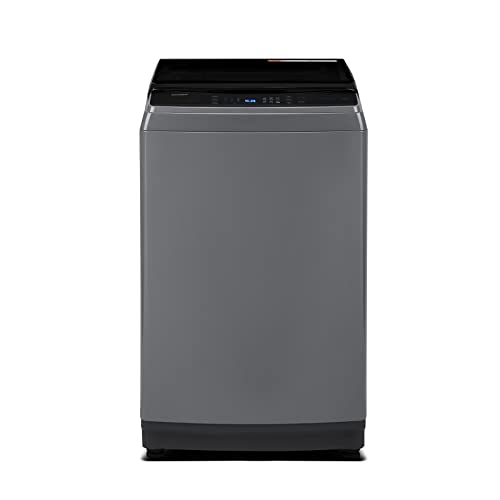
COMFEE’ 2.4 cu ft Portable Washing Machine — Best Portable Simplicity
The COMFEE’ 2.4 cubic foot portable argues reliability from simplicity. Portable full-automatic washers are mechanically modest machines: a compact drum, a straightforward drive, a drain arrangement without the plumbing permanence of a fixed install. Fewer systems mean fewer systems to fail, and when something does wear, the machine’s scale makes it approachable rather than intimidating. For dorms, RVs, and apartments where it is aimed, that modesty is a feature with a long pedigree.
Eight programs is the right count for its life: enough to separate delicates from cottons from the quick rinse of gym kit, without pretending to be a full-size laundry. A child lock appears in the listing, a small sign of design attention to the shared and family spaces these machines inhabit, and the magnetic gray finish tolerates the scuffs of a machine that may be moved, stored, and moved again across its life.
The honest caveat is that portable convenience and decade-long infrastructure are different products. This machine connects, washes, and can be put away; it is not plumbed into a house’s future. Buy it for the years of apartment and dorm life it is sized for, treat its hoses and fittings kindly, and its simple design will repay you in the currency it deals in: unremarkable, repeatable washing without a laundrette.
- Capacity: 2.4 cu ft portable full-automatic drum
- Programs: 8 wash programs for everyday categories
- Safety: child lock included
- Form: compact body for RV, dorm, and apartment use
- Finish: magnetic gray that hides travelling scuffs
Strengths
- Mechanical simplicity limits what can go wrong
- Right-sized program list for its intended life
- Portable format needs no permanent plumbing
Trade-offs
- Not a substitute for a full-size household install
- Hoses and fittings need gentle handling over time
- Capacity suits small loads only
Best for: dorms, RVs, and renters who value simple, movable dependability.
Not suited for: families seeking a plumbed-in, decade-scale laundry solution.
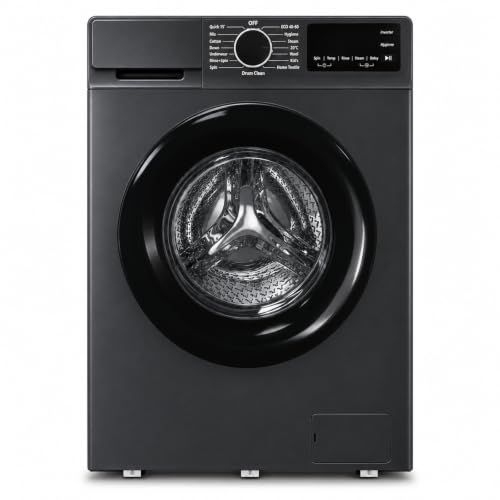
TABU 4.0 cu ft Front Load Washer Black — Best Specification-Led Case
TABU’s 4.0 cubic foot front loader is included with its eyes open about what it is: a newer name whose reliability cannot rest on heritage, so it must rest on specification and on the buyer’s sensible precautions. The specification is genuinely strong. Fifteen cycles, an LED display, a stackable space-saving body, and exactly the four cubic feet a family calculates it needs, in a black finish that distinguishes it in a white category.
The format itself does part of the reassuring. Front load washing is a mature technology whoever builds it, and a machine that follows the format’s conventions, standard connections, conventional cycles, a stackable cabinet, is serviceable by the same technicians who service every other front loader. Reliability risk with a newer brand concentrates less in the drum and drive than in parts pipelines and documentation, which is why registering the warranty and keeping the paperwork matters more here than with an established badge.
We recommend it as the guide’s calculated choice rather than its conservative one. A buyer who values the exact capacity, the cycle range, and the design, and who is comfortable being an early adopter with paperwork in order, gets a specification the conservative picks do not match at this size. A buyer who wants the quietest possible decade should look at the established names above, and this guide respects both instincts.
- Capacity: 4.0 cu ft family-size front load drum
- Cycles: 15 washing cycles
- Display: LED control display
- Form: stackable, space-saving cabinet
- Finish: black, distinctive in its class
Strengths
- Exact family capacity with a full cycle range
- Mature front load format any technician can service
- Stackable design protects small laundry rooms
Trade-offs
- Newer brand, so parts history is unwritten
- Warranty registration matters more than usual
- Heritage-based reassurance is not available
Best for: buyers who prioritise specification and design and keep their paperwork in order.
Not suited for: buyers who want a brand track record above all other evidence.
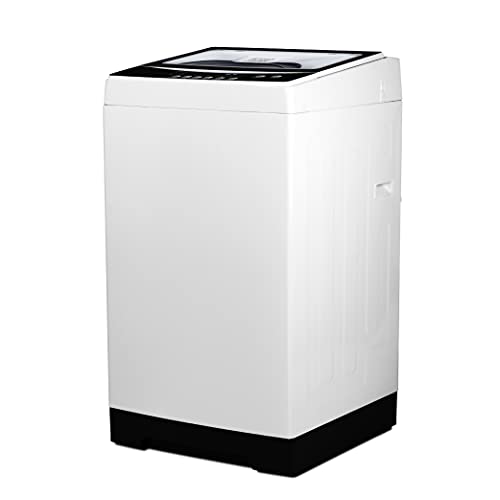
BLACK+DECKER 3.0 cu ft Portable Washer BPW30MW — Best Big Portable
The BPW30MW is the portable for people who distrust portables, because it carries an established maker’s name at the largest portable capacity in this guide: 3.0 cubic feet, rated at 26.5 pounds of laundry, with six cycles and the quick-connect sink adapter and drain hose that define the format. That combination, real capacity plus brand support, is its reliability argument. It does the apartment job at near-household scale while remaining a machine that can move when the lease does.
Six cycles sounds modest beside the fifteen-cycle machines here, and for portable life it is well judged. Portable laundry is everyday laundry: cottons, synthetics, delicates, a quick wash, and the rinse-and-spin rescue. The transparent lid lets you watch the small drama of a load without opening it, and the sink connection means the machine’s dependability is not hostage to a landlord’s plumbing decisions, a form of reliability renters understand immediately.
Its ceiling is the portable ceiling: it is not a plumbed family install, and 26.5 pounds, while generous, is not a king duvet’s natural home. Treat the adapter threads and hose with the respect soft fittings deserve, store it drained in winter, and it will do apartment laundry at a scale and with a backing that most portables cannot offer.
- Capacity: 3.0 cu ft, 26.5 lb rated load
- Cycles: 6 wash cycles for everyday categories
- Hookup: sink adapter and drain hose supplied in the box
- Lid: transparent for watching the load
- Use: hot and cold water capable per its format class
Strengths
- Largest portable capacity here, with brand backing
- Sink connection frees it from fixed plumbing
- Simple cycle list suits daily apartment laundry
Trade-offs
- Still a portable, not a plumbed household machine
- Fittings reward careful handling
- Six cycles is a working list, not an enthusiast’s one
Best for: renters who want near-household capacity with established-brand support.
Not suited for: homeowners ready for a permanent full-size installation.
How Do the Six Reliability Cases Differ?
| Pick | Format | Headline trait | Watch out for |
|---|---|---|---|
| BLACK+DECKER BFLW45M 4.5 | Full-size front load, 4.5 cu ft | Proven format, capacity headroom, brand network | Large footprint; seal care needed |
| BLACK+DECKER BTLW41MW Top Loader | Top load, 4.1 cu ft | Stainless tub, conventional agitator drive | Hard on delicates; cannot stack |
| West Bend Compact Front Loader | Compact front load, 2.2 cu ft | Purpose-built, full 15-cycle range | Low permanent capacity ceiling |
| COMFEE’ 2.4 Portable | Portable, 2.4 cu ft | Mechanical simplicity, 8 programs | Not a plumbed long-term install |
| TABU 4.0 Front Loader (Black) | Front load, 4.0 cu ft | Strong specification, mature format | Newer brand; paperwork matters |
| BLACK+DECKER BPW30MW 3.0 Portable | Portable, 3.0 cu ft | Big capacity plus established name | Portable fittings need care |
What Can a Buyer Actually Know About Reliability Before Purchase?
Less than the marketing implies, and more than nothing. No honest seller can tell you a specific machine’s lifespan, because lifespan is decided by water hardness, load habits, installation quality, and luck as much as by the factory. Anyone quoting you precise failure percentages for consumer washers is performing certainty rather than possessing it, and this guide declines to join the performance.
What is knowable is structural. Materials are stated in listings and behave predictably: stainless steel tubs resist the chips and rust that end coated tubs. Formats have histories: the agitator top loader and the modern front loader are understood by every technician alive, and their wear parts are stocked accordingly. Makers have footprints: an established brand’s service network is a fact you can verify before purchase, and it converts many potential disasters into ordinary repair bills.
The third knowable is yourself. The household that overloads, never cleans a filter, and installs on an uneven floor will shorten any machine’s life, while the household that loads sensibly and maintains seals and filters will extend a mediocre machine past a neglected good one. Reliability is a partnership between a specification and a routine, and only half of it arrives in the box.
Why Do Tub Materials and Format Matter More Than Features?
A washer’s features are software and plastic; its tub and drive are its skeleton, and skeletons decide longevity. The stainless steel tub in the top loader here cannot chip its coating because it has none, cannot rust at a scratch, and presents a smooth, inspectable surface for the life of the machine. Front loaders stake their case differently, on a tumble action with no central agitator to wear fabrics or strain a drive, and on seals and bearings whose replacement is a routine, documented job.
Features fail gracefully by comparison. A dead display is an annoyance; a cracked tub is a funeral. This is why the guide weighs a stated tub material and a mature format more heavily than a long cycle list, and why the compact pick earns its place through being purpose-built rather than feature-stuffed. When two machines compete, ask which one’s skeleton you would rather own in year eight, and the answer is usually the recommendation.
None of this makes features worthless. The right cycle range prevents owners from abusing fabrics and machines with wrong programs, and a clear display prevents loads sitting damp for hours. Features that guide good treatment are reliability features in disguise; features that merely glitter are not, and listings rarely label which is which. The sections above try to do that labelling for you.
How Does Loading Behaviour Decide a Washer’s Fate?
Chronic overloading is the leading owner-inflicted cause of premature washer death, and it is easy to commit because a drum always looks like it can take one more towel. An overloaded drum strains the drive on every rotation, defeats the suspension on every spin, and wears bearings at a rate the designers never budgeted for. The machine does not fail dramatically; it grows louder, walks further, and dies younger, and the owner concludes the brand was unreliable.
The capacity-matched picks in this guide are partly a defence against that story. A family given 4.5 cubic feet rarely needs to stuff; a couple with a portable sized to their loads fills it properly by default. Buying enough drum is a reliability purchase, and buying far too much has its own cost, since habitually under-filled drums wash poorly and can unbalance on small, heavy loads. The reliable size is the honest size.
Two habits complete the defence. Leave the door or lid ajar between washes so seals dry rather than mildew, and clean the drain filter on the schedule the manual gives rather than the schedule the smell suggests. Neither takes five minutes. Both are worth years, on any machine, from any maker, at any price.
What Role Do Parts and Service Networks Play?
A washer is reliable in the way a car is reliable: partly in how rarely it breaks, and partly in how fixable it is when it does. Pumps, belts, seals, and boards are wear or chance items across every brand, and the difference between a bad week and a bad month is whether the part exists in the country, the technician has seen the model, and the documentation is findable. Established makers maintain those pipelines as a matter of business, which is the practical substance behind brand loyalty in appliances.
This is also the fairest frame for the newer name in this guide. A mature format means the machine’s systems are conventional and a competent technician can diagnose them, but a model-specific board or trim piece depends on the maker’s own pipeline, which has no track record yet. The mitigation is administrative rather than technical: register the warranty, keep the receipt and manual together, and note the model number somewhere safer than a sticker inside a steamy door.
Buyers far from cities should weight this section double. A machine that a local technician can service with van-stock parts is, in a rural postcode, more reliable than a theoretically superior machine whose parts travel for a fortnight. Reliability is partly geography, and the honest guide says so.
Are Portable Washers a Reliability Compromise or a Different Bet?
Portables bet on simplicity. A compact full-automatic portable has a modest drum, a simple drive, and a connection you make by hand at a sink. There is no permanent plumbing to leak inside a wall, no installation to get wrong, and very little between the motor and the drum to go expensively wrong. For the dorm, RV, and rental years they are designed for, that simplicity is a rational reliability strategy rather than a cut corner.
Their wear items are the fittings: sink adapters, inlet hoses, and drain arrangements that are connected and disconnected, or left under pressure, by human beings. Treated gently, checked occasionally, and stored drained, those parts last; yanked, cross-threaded, and forgotten, they become the machine’s biography. The two portables here, one compact and one unusually large, both reward the gentle pattern.
What portables cannot offer is the plumbed-in, decade-scale service of a household install, and pretending otherwise would be the kind of exaggeration this guide exists to avoid. They are reliable the way a good bicycle is reliable: simple, maintainable, and entirely sufficient for the journeys it was built for. Judge them on those journeys and they hold up their end.
Which Habits Make Any Washer in This Guide Last Longer?
Level the machine at installation and check it after the first month, because a washer that rocks will shake its own fittings loose across a year of spins. Use the detergent quantity the load actually needs; excess suds cushion the wash, stress the pump, and leave residues that invite smells owners misdiagnose as mechanical decline. Run the hottest cycle occasionally with an empty drum if your household mostly washes cold, since warm, clean water through the system discourages the films that form in cool, soapy corners.
Treat the seal or lid gasket as a part, not a decoration. A thirty-second wipe after the last load of the day keeps the front load seal dry and sweet, and leaving the door ajar between washes does the rest. Inspect hoses yearly for bulges and weeping, because a hose failure is the one washer fault that damages the house rather than the laundry, and it is also the cheapest to prevent.
Finally, listen to the machine. Washers announce their troubles early, in new noises, longer cycles, and small leaks, and the owner who investigates a new sound in week one usually pays for a belt, while the owner who turns the radio up pays for a drum. Reliability is partly a specification and partly an attention span, and the second half is entirely in your hands.
How Does Installation Quality Quietly Decide Longevity?
A surprising share of what owners later call reliability is decided in the first hour, by the installation. A machine levelled properly spins within its design tolerances for its whole life; a machine left rocking concentrates every spin’s energy into its feet, its suspension, and its fittings, and ages in dog years. Transit bolts, the packaging that locks a front loader’s drum for shipping, must be removed before the first wash, because a machine run with them in place damages itself immediately and voids sympathies everywhere. These are not exotic concerns; they are the commonest installation errors in the category.
The plumbing half matters as much. New inlet hoses rather than the perished pair from the old machine, connections snug and checked after the first cycle, and a drain hose secured so it cannot work free under the pump’s pulse: each is a five-minute virtue that prevents the one failure mode, water where water should not be, that damages the house rather than the laundry. A washer that floods is remembered as unreliable whatever its drum was made of, which is unfair to the machine and entirely avoidable by the owner.
Keep the installation evidence. Photograph the connections, file the receipt and warranty registration together, and note the model and serial numbers in the same place. When service is needed in year six, the household that can produce its paperwork in one minute gets a faster, cheaper repair than the household excavating a steamy door sticker, and that difference, too, is part of what reliability feels like from the inside.
What Do Warranty Terms Actually Tell a Careful Buyer?
A warranty is a document about the maker’s expectations, and it repays reading at that level. Note what is covered for how long, and particularly whether the parts most likely to be claimed, the motor, the drum, the control board, carry longer terms than the whole-machine cover, since makers extend terms exactly where their own confidence is highest. A long motor warranty is a signal; a short everything warranty is also a signal, and neither requires invented statistics to interpret.
Equally important is what the warranty demands of you: registration within a window, proof of purchase, and sometimes installation conditions. The newer brand in this guide is the clearest case for administrative diligence, because an unregistered warranty on an unproven maker is the weakest position a buyer can occupy, while a registered one with paperwork filed is a reasonable bet on a strong specification. Established makers forgive administrative sloppiness with deeper networks; newer ones cannot, and the buyer should price that difference honestly.
Finally, understand that a warranty repairs failures; it does not prevent them, and it does not compensate for a flooded floor or a fortnight without laundry. The hierarchy of this guide stands: construction and format first, capacity matching second, support network third, and warranty terms as the readable summary of all three. Buy the machine whose warranty you hope never to test, and file it as if you will.
How Should You Judge a Washer in Its First Month?
The first month is the proving period, and it should be used actively rather than passively. Run the full range of your real laundry through the machine: the heavy towel load, the delicates, the bedding, the quick wash you will actually live on. Note whether cycles finish when the display promised, whether the spin leaves loads evenly damp rather than partly soaked, and whether any new sound appears that was not there in week one. Machines with genuine faults usually announce them early, inside the window where remedies are easiest, and the owner who is listening gets the remedy.
Keep a simple log for those weeks, because memory edits itself kindly and a written record does not. Date, load, program, and anything unusual: three lines per wash is enough. If a pattern emerges, you have evidence for a service conversation. If none does, you have the beginning of trust in the machine, which is its own household asset, and the log can retire to the manual’s folder with honour.
Resist two temptations in that month. The first is overloading to test the machine’s limits, which teaches you nothing the designers did not know and costs the suspension real wear. The second is judging the machine by a single disappointing load, which is almost always a loading or dosing event rather than a character flaw. A month of ordinary laundry, honestly observed, is the fairest trial any appliance can be given.
Why Does the Drain Filter Deserve Its Own Paragraph?
Because it is the most neglected component in laundry and the cause of a disproportionate share of service calls. The drain filter catches the coins, hairpins, lint, and sock-adjacent debris that escape pockets, and as it fills, the machine drains slowly, leaves loads wetter, and eventually stops mid-cycle with an error that owners read as electronic death. Cleaning it takes minutes: a shallow tray for the water that will escape, a rinse under the tap, and a check of the housing for the hairpin that started the trouble.
The manual gives the interval, and the interval should be shortened by households with pets, whose hair accelerates everything in laundry, and by anyone who washes new towels often, whose lint output is industrial in the first months. Put the task on the same calendar as descaling and hose inspection and the three together form a ten-minute quarterly ritual that prevents the majority of the decline owners attribute to their machine’s character.
There is a diagnostic dividend too. A filter that suddenly fills faster, or fills with unusual material, is the machine reporting a change: a disintegrating garment, a pocket habit that needs addressing, a load type that sheds. Owners who clean the filter read those reports. Owners who do not meet them later, at greater length, in the company of a technician.
How Do Water and Detergent Choices Affect a Machine’s Life?
Hard water is the quiet tax on washer longevity, laying scale on heating elements and stiffening seals year by year in the districts unlucky enough to have it. The owner in a hard-water area cannot change the supply, but can change the machine’s experience of it: regular descaling cycles, detergent dosed for hard water rather than by optimism, and an occasional hot empty wash to clear the films that cool, soapy water leaves behind. None of this is exotic, and all of it is cheaper than the elements and pumps that scale eventually claims.
Detergent itself is a mechanical variable in disguise. Too much produces suds that cushion the wash action, stress the pump with foam it was not designed to move, and leave residues in the drum’s hidden surfaces that feed the smells owners blame on the machine. Too little merely washes badly. The correct dose is the one on the packet for your load size and water hardness, a sentence so dull that households ignore it for decades while spending real money on machines, and it belongs in a reliability guide precisely because it is dull.
Pods and powders and liquids each have their partisans, and the machine is largely indifferent provided the product is made for it and dosed sanely. What it is not indifferent to is the improvised substitute: washing-up liquid in an emergency produces a foam event that the pump, the seals, and the floor will all remember. Reliability, in the end, includes the reliability of the hands feeding the machine, and the kindest specification in this guide cannot protect a washer from its own kitchen shelf.
When Should a Reliable Machine Be Repaired, and When Replaced?
The decision deserves a framework rather than a feeling. A repair makes sense when the fault is a wear item, a pump, a belt, a seal, a hose, on a machine whose drum, tub, and motor are sound, and when the repair’s cost is a modest fraction of a comparable replacement. It makes little sense when the fault is structural, a drum bearing on a machine whose other systems are also ageing, or when the part itself must travel from an discontinued line at a collector’s price. The stainless tub and conventional formats in this guide tilt the arithmetic toward repair for longer, which is a large part of their case.
Age reframes every quote. The same pump replacement that is obvious value in year three is a gamble in year eleven, because it buys a working pump inside an otherwise old machine whose next fault is already forming. Owners should ask the technician the only question that matters: if this were yours, at this age, with this fault, what would you do? Technicians answer that question honestly and their answers, aggregated over a career of other people’s machines, are worth more than any statistic this guide has declined to invent.
There is also an environmental ledger that belongs in the decision. A repaired machine keeps its embodied materials in service and its bulk out of the waste stream, and a household that maintains and repairs sound appliances participates in the least wasteful version of ownership. That is a further argument for buying maintainable machines in the first place: the top loader’s conventional bones and the front loaders’ documented parts are what make the repair choice available when the day comes.
How Should You Read a Cycle List as a Reliability Document?
A cycle list is a maker’s confession of what the machine is for, and read that way it tells a careful buyer more than its length suggests. A list built around the honest categories, cottons, synthetics, delicates, heavy loads, a quick wash, a rinse and spin, describes a machine designed by people thinking about laundry. A list padded with novelty programs nobody can define describes a machine designed by people thinking about the shelf edge, and the distinction, while not proof of anything, is the kind of signal this guide has used throughout: construction and intent, visible in the open, rather than statistics whispered from nowhere.
The display belongs to the same reading. A control panel that shows time remaining, cycle stage, and honest error codes is a maintainability feature, because a machine that can describe its own fault gets repaired faster and cheaper than one that communicates by dying silently. When the West Bend and the larger machines here put clear LED displays on compact and full-size bodies alike, they are making a small promise about the service years, and promises of that kind, kept in the specification, are the ones a buyer can actually collect on.
None of this replaces the skeleton: tub, drive, format, and support still outrank every electronic virtue. But between two machines of equal skeleton, choose the one whose controls respect your intelligence and whose errors you will be able to describe to a technician in one sentence. Reliability is partly the art of being repairable, and repairability begins with a machine that can tell you what hurts.
How Does a Household’s Rhythm Wear a Machine?
Two households can own the same washer and produce opposite biographies for it, because machines wear by cycles and by treatment rather than by calendar alone. The household that washes little and often, at matched loads, gives its machine thousands of gentle cycles. The household that saves everything for one weekly mountain gives it fewer cycles and harder ones, each at the drum’s limit, each spin a maximum event. Neither pattern is a moral failing, but they argue for different purchases: the mountain household should buy headroom, and the daily household should buy the machine whose controls make frequent small loads economical rather than wasteful.
This is the last form of the guide’s central argument. Reliability is not a substance a factory pours into a drum; it is the product of a sound machine meeting a compatible household and being maintained by it. The picks here were chosen to give different households their best chance of that meeting: proven skeletons, honest capacities, support that exists, and formats whose wear items are known. What remains is the household’s half of the bargain, and it is paid in level floors, clean filters, and loads sized to the drum they were bought for.
What Records Should You Keep for the Machine’s Whole Life?
Keep one envelope, physical or digital, that travels with the machine: the receipt, the warranty registration confirmation, the manual, and a single page of notes recording the installation date, the installer’s level check, every descale, every filter clean, and every fault however trivial. That page becomes the machine’s service history, and service histories do for appliances what they do for cars: they make diagnosis faster, warranty conversations shorter, and resale, if it ever comes, honest and valuable. Ten lines a year is the whole cost of the system.
Photograph the rating plate the day the machine arrives, because the sticker inside a steamy door will be illegible exactly when a technician asks for it, and keep the photograph with the envelope. When the first fault arrives, and on a long enough timeline some fault always does, the household with records gets the repair it is entitled to at the speed it deserves. Reliability, one last time, is a partnership, and paperwork is the part of the partnership that takes the least effort and pays out of all proportion.
Which Buying Mistakes Undermine Reliability Before the First Wash?
- Believing invented lifespan statistics. Precise failure rates and promised decades in listings or reviews are not data; buy on construction, format, and support instead.
- Undersizing the drum to save money. A strained machine loaded to its door daily ages faster than a larger one working within itself; capacity headroom is durability.
- Ignoring the parts pipeline. A washer is a decade-long commitment to a maker’s service network, and the time to check that network exists is before purchase.
- Installing on an unlevel floor and forgetting it. Vibration from poor levelling loosens fittings and punishes bearings on every spin for the machine’s whole life.
- Skipping the filter and seal routine. The cheapest reliability programme in laundry is a wiped seal, an ajar door, and a cleaned drain filter, and skipping it voids no warranty but plenty of machines.
Final Recommendation
Buy reliability where it can actually be seen. The strongest all-round case here belongs to the BLACK+DECKER BFLW45M 4.5, whose mature format, generous drum, and established support make the fewest demands on luck. Buyers who think in materials and maintenance will gravitate to the BLACK+DECKER BTLW41MW Top Loader, with its stainless tub and conventional drive that any technician can keep alive. And renters should not overlook the BLACK+DECKER BPW30MW 3.0 Portable, which trades plumbed permanence for honest capacity under a name that will still answer in five years.
No machine in this guide, or any guide, comes with a guaranteed decade, and you should distrust anyone who sells you one. What these picks offer instead is the observable anatomy of dependability: sound materials, proven shapes, capacity matched to the load, and support that exists. Add level installation and a wiped seal, and you have done everything a buyer can honestly do.
Frequently Asked Questions
How long should a washing machine last?
We deliberately do not attach a number of years to any pick, because lifespan depends on water, loads, installation, and luck as much as manufacture. What we can say is that the factors within your control, matched capacity, levelling, filter and seal care, move the outcome more than small specification differences between sound machines.
Is a stainless steel tub worth prioritising?
It is one of the few listing claims with direct longevity meaning. Stainless steel cannot chip a coating or rust at a scratch, and it stays smooth and inspectable for the machine’s life. In the top loader here it anchors the reliability case; in any machine it is a genuinely good sign.
Are front loaders or top loaders more reliable?
Both formats are mature, and their wear items differ rather than their worth. Front loaders ask for seal care and bearing service eventually; agitator top loaders use conventional drives any technician knows. Choose by your room, your body, and your laundry, then maintain the format you chose.
Should I avoid newer brands entirely?
Not entirely, but knowingly. A newer brand in a mature format, like the TABU here, is serviceable in principle; its unproven ground is parts and documentation over time. Register warranties, keep paperwork, and weigh how much that uncertainty matters to you against the specification offered.
What maintenance matters most?
Keep the machine level, clean the drain filter on schedule, wipe the door seal and leave it ajar between washes, and inspect hoses yearly. Those four habits, none longer than minutes, prevent the majority of the decline owners later blame on the machine.
Does an extended warranty make a machine reliable?
No; it makes a failure cheaper, which is a different thing. A warranty can be sensible economics on a major appliance, but it does not change the machine’s construction or your maintenance. Buy the sound machine first, then decide about the paperwork with clear eyes.
Related Guides
If dependability is your theme, the neighbouring guides cover quiet running, the kitchen’s hardest workers, and the other machines in the house: Best Anti-Vibration Washing Machines Best Automatic Pasta Makers Best Brother Sewing Machines for Beginners


