What's inside
- Key Takeaways
- Quick Picks
- How We Chose These Picks
- Why Does the Bedroom Matter More Than Any Other Room?
- Pollen Season Versus Dust Mites: Two Different Campaigns
- What Do CADR and Air Changes Mean for an Allergy Shopper?
- How Should a Pollen Season Run, Week by Week?
- Why Do Some Allergy Households Swear by Their Purifier and Others Notice Nothing?
- How Do Humidity and Ventilation Fit Alongside Filtration?
- Where Does Each of the Six Picks Stand Overall?
- How Do You Build an Allergy-Friendlier Bedroom Around the Purifier?
- How Do You Keep the Purifier Itself From Becoming Part of the Problem?
- Which Mistakes Do Allergy Households Make With Purifiers?
- What Does Allergy-Grade Ownership Cost Across the Years?
- What About Children’s Rooms and Older Relatives?
- Final Recommendation
- Frequently Asked Questions
- Related Guides
As an Amazon Associate I earn from qualifying purchases. This post may contain affiliate links at no extra cost to you.
cottageverdict.com is reader-supported. When you buy through links on our site, we may earn an affiliate commission.
Where to buy: Each machine below is sold on Amazon, and the linked picks lead to their listings so you can check price on Amazon and confirm filter details. If your worst season is approaching, check the delivery estimate too — a purifier that arrives after the pollen peak is a lesson learned the expensive way.
There is a particular misery to waking up in your own bed feeling as though you slept in a field. For people who react to pollen and household dust, the bedroom — the room meant to restore them — becomes the scene of the crime: eight hours of breathing whatever drifted in during the day, settled into the bedding, and rose again with every turn of the pillow. The best air purifiers for allergies attack exactly that problem. They cannot change what your immune system thinks of pollen, and no honest guide should pretend otherwise; a purifier is not a medical device and it does not treat allergy conditions. What it can do, measurably and mechanically, is lower the amount of pollen, dust, and dander floating in the air of the room where you spend a third of your life — and for many households, that reduction in exposure is the difference between a rough season and a manageable one. Health questions beyond air comfort belong with your clinician; this guide handles the air.
Two enemies dominate the allergy conversation, and they behave differently. Pollen is a seasonal invader: it arrives on clothes, hair, and open windows, spikes on dry windy days, and retreats when the season turns. Dust mites are permanent residents: they live in mattresses, pillows, and carpets, feed on shed skin, and leave their debris in the bedding itself, worst in warm humid months and in beds that are rarely disturbed. A purifier fights the airborne half of both — the pollen grain in flight and the mite debris that housekeeping launches into the air — which is why this guide pairs every machine with the habits that handle the settled half. The picks span the range from a long-running allergen classic to a wall-mountable design for bedrooms with no spare floor, all built around true HEPA or equivalent tested filtration.
A note on tone before we begin: this is a long-season subject, and the households that fare best treat it as a season to be managed rather than a battle to be won once. The machines below are the durable part of that management — chosen to still be running, quietly and without any complaint, in their fifth long pollen season as in their very first.
Key Takeaways
- True HEPA filtration is the core technology for allergy-focused air cleaning, because pollen and mite debris are particles and particles can be trapped.
- The bedroom is the highest-value room: a purifier earns its keep during the eight sealed-in hours of sleep more than anywhere else.
- Seasonal strategy matters — run harder and smarter during pollen peaks, and keep windows closed on the worst days even if the weather is lovely.
- A purifier handles airborne allergens only; mattress encasements, hot washing of bedding, and regular vacuuming handle the settled reservoir.
- Auto modes with particle sensors suit allergy households, because pollen load swings with weather faster than anyone adjusts a dial.
Quick Picks
| Pick | Badge | Why it made the list |
|---|---|---|
| Coway Airmega Mighty AP-1512HH | Best overall for allergies | The long-running allergen classic: true HEPA, sensible auto and eco modes, and coverage for big bedrooms. |
| Levoit Vital 200S | Best for pet-owning allergy households | A pet-focused intake design and quiet bedroom manners for homes where dander joins the pollen. |
| Winix 5520 | Best sensor-driven pick | A responsive air-quality monitor and strong carbon stage for rooms that face both pollen and city odors. |
| Blueair Blue 211i Max | Best for large rooms | Big-room airflow at a low noise cost, verified ratings, and a washable pre-filter for the dust load. |
| Medify MA-40 | Best value workhorse | Straightforward true HEPA cleaning for large spaces without paying for smart features. |
| Rabbit Air MinusA2 SPA-780A | Best wall-mount design | Hangs on the wall or stands slim, with customizable filter choices including an odor-focused set. |
How We Chose These Picks
Allergy duty imposes a specific hierarchy. First, the particle stage must be true HEPA or a tested equivalent — no exceptions, because the entire point is capturing grains and debris measured in microns. Second, airflow must be generous relative to a bedroom, since the strategy that works is several air changes per hour at a speed quiet enough to sleep beside; a machine that only performs on its loudest setting fails the bedroom test no matter how good its filter is. Third, we favored machines with credible verification — AHAM-verified ratings appear across this list — because allergy shoppers are marketed to aggressively and tested numbers are the antidote.
Beyond the core three, we weighed the supporting cast: pre-filters that catch the coarse dust load before it reaches the HEPA stage (bedrooms generate remarkable amounts of lint and skin-scale dust), carbon for the households whose windows face traffic, and controls that make seasonal surges effortless — auto modes, timers, and filter indicators that arrive before performance fades rather than after. We deliberately included different ownership philosophies: cartridge convenience, layered filters, a wall-mount, and a premium design object, because allergy households live with these machines for years and the right one is the one whose upkeep you will actually perform.
One more filter shaped the list quietly: every machine here had to be plausible as the only purifier in the home for a while. Allergy budgets often arrive in stages — bedroom this spring, living room next year — and a pick that only makes sense as part of a pair fails the household that is starting. Each of these six can hold a bedroom alone with honor while the longer plan unfolds.
Why Does the Bedroom Matter More Than Any Other Room?
Arithmetic. A living room hosts you for perhaps four waking hours, in clothes you will change, with doors opening and closing. A bedroom hosts you for eight hours lying still, face inches from the single most allergen-loaded object in the home — the bed. Mattresses and pillows accumulate years of mite debris in their depths, and every roll and fluff of the duvet puffs a little of it into the air you then breathe at point-blank range. Meanwhile the room is sealed: door shut, windows shut, the day’s pollen that settled on your hair and clothes now sharing the space. No other room concentrates exposure so completely, which is why allergists’ practical advice and purifier placement advice converge on the same room.
There is a sleep-quality dividend hiding in that arithmetic. Rest is when the body does its repair work, and a night spent breathing cleaner air in a quiet, dark, sealed room is simply better rest by every ordinary measure a household can feel — fewer wakeful stretches, an easier morning. People buy these machines for their airways and end up praising their sleep, and while this guide makes no medical promises, it is allowed to notice that a comfortable bedroom is a compounding asset.
The good news is that a bedroom is also a small, controllable volume. Close the door, run a properly sized machine continuously, and the airborne load falls steadily through the night as the filter works faster than the bedding re-releases. Owners often describe the change in morning terms — waking clearer-headed in comfort terms — within the first week of pollen season, and the effect compounds with the bedding habits in the how-to section below. If budget forces one machine, it sleeps where you sleep; a second machine for the living room is a luxury the bedroom is not.
Pollen Season Versus Dust Mites: Two Different Campaigns
Pollen is a siege from outside. Its calendar is public — tree pollen in spring, grass in early summer, weed pollen in late summer and autumn for many regions — and its daily tactics follow the weather: dry, breezy days launch it; rain washes the air clean for a few blessed hours. The household counter-strategy is border control. Windows stay shut on high-count days however tempting the breeze, outer clothes come off before the bedroom, hair collects a day’s pollen and rewards a rinse before bed, and the purifier runs on auto or a notch higher than winter settings so the grains that do slip in are captured before they settle into the carpet’s long memory.
Mites are an occupation from inside. They ask only for warmth, humidity, and a food supply of shed skin, and a bed provides all three in abundance. The purifier’s role here is narrower but real: mite debris becomes airborne mainly when disturbed — bed-making, vacuuming, children bouncing — and a running machine draws that cloud down in minutes rather than letting it resettle over hours. The decisive weapons, though, are domestic: encasements on mattress and pillows, bedding washed hot on a regular rhythm, bedroom humidity kept moderate, and soft furnishings in the bedroom kept to a washable minimum. Run both campaigns at once — border control for pollen, housekeeping for mites, filtration for the air between — and the bedroom becomes the calmest room in the house instead of the hardest.
Notice what the two campaigns share: neither is a product. Both are calendars — the pollen calendar written by the seasons and the weather, the mite calendar written by your laundry rhythm — and the purifier’s job is to hold the line between the events those calendars schedule. Households that grasp this stop asking whether the machine “works” in the abstract and start asking the more useful question: which of this week’s events did we let refill the room, and which habit closes that gap next week?
What Do CADR and Air Changes Mean for an Allergy Shopper?
Two numbers decide whether a purifier can hold a bedroom against a season, and both are widely misunderstood. CADR — clean air delivery rate — measures how much filtered air a machine actually delivers, usually expressed per particle type. It is the honest number, because it already accounts for the difference between a great filter on a weak fan and a good filter on a strong one. The second number, air changes per hour, translates CADR into your room: divide the machine’s delivery by the room’s volume and you learn how often the whole room’s air passes through the filter each hour. For allergy bedrooms, several changes per hour at a sleep-tolerable speed is the working target; a machine that achieves it only on turbo achieves it in theory.
This is why verified ratings matter so much in this category. An AHAM-verified CADR is measured by an independent program against a standard method, while an unverified coverage claim may assume anything from cathedral ceilings to a single air change. When two machines both claim a thousand square feet, the verified one is making a promise someone checked. Allergy shoppers should also read coverage claims as ceilings, not working ranges: buy the machine whose verified delivery gives your bedroom its several changes per hour on a middle speed, and let the headline maximum describe some other, larger room’s emergency setting.
A quieter implication follows for filter life. A machine cruising at low speed in a bedroom processes less air per day than the same machine fighting a living room, so its HEPA stage often lasts toward the long end of the maker’s estimate — while a machine undersized for its room, run hard for months, consumes its filter early. Right-sizing is therefore both a comfort decision and a running-cost decision, and it is the strongest argument for the generous coverage ratings that dominate this list.
How Should a Pollen Season Run, Week by Week?
Before the season: service the machine. Fit a fresh HEPA stage if the old one is near its interval, wash or vacuum the pre-filter, and place the unit in the bedroom with clearance around its intakes. Check the encasements on the mattress and pillows, launder the duvet, and do the deep vacuum of the bedroom carpet or floor while the purifier runs high — the season should start from a clean baseline, not from last year’s reservoir.
During the peak weeks: boring consistency wins. The machine runs continuously, on auto if it has it, a notch higher than your winter habit if it does not. Windows in the bedroom stay shut on high-count days; the evening routine — outdoor clothes off outside the bedroom, a rinse for hair on the worst days — becomes as automatic as locking the door. Vacuum the bedroom midweek rather than only on weekends, because the settled load now includes a daily pollen ration, and run the purifier high for an hour afterward to harvest the disturbance. Sheets get their hot wash weekly without debate.
As the season fades: resist switching everything off at the first comfortable day. Pollen tails are ragged, and the machine’s marginal cost for a few extra weeks is trivial against a late spike. When the count truly settles, drop back to your maintenance rhythm — lower speeds, windows open again, pre-filter check — and note what worked. Allergy households that keep that small seasonal log find each year easier than the last, because the routine stops being reinvented and starts being inherited.

Coway Airmega Mighty AP-1512HH — Best overall for allergies
The Mighty has been the default recommendation in allergy conversations for so long that its name reads like a category, and it holds that position the honest way: a true HEPA filter, a coverage rating up to about 1,748 square feet that lets it loiter at low speed in any bedroom, and controls that think in the rhythms allergy households actually live. Its auto mode follows a particle sensor; its eco mode goes further, stopping the fan entirely when the air has stayed clean for a stretch and waking when the sensor stirs — a feature that makes eminent sense in a bedroom, where midnight air is usually the cleanest air of the day and silence is precious.
A washable pre-filter handles the coarse load and a carbon stage minds everyday odors, while a filter indicator keeps the maintenance honest. The design is a rounded, unobtrusive box that has furnished a decade of bedrooms without dating badly, and the warranty is longer than most rivals offer. In tier terms it is a mid-priced machine with mid-priced filters, which is precisely the profile of a best-overall pick: nothing about owning it is extreme, including how well it works.
For the seasonal campaign it asks almost nothing of you. Leave it on auto through the pollen months, let eco mode idle it on clean winter nights, vacuum the pre-filter when you change the bedding, and the bedroom’s airborne pollen and dust load stays pressed down week after week. Households graduating from a bargain unit usually name the same revelation: the machine disappears from attention, and the season simply feels shorter.
There is a steadiness to the Mighty that suits its role as the household’s night watchman: the fan note is even, the indicator light is informative without being a bedside lantern, and the whole machine asks so little attention that owners report forgetting it exists until a filter reminder appears. In allergy management, where the winning strategy is a routine sustained for months, that forgettability is not a minor virtue — it is the mechanism by which the strategy survives contact with busy lives.
- Filtration: true HEPA with carbon stage and washable pre-filter
- Coverage: rated up to about 1,748 sq ft
- Extras: auto and eco modes, air-quality indicator, timer
- Warranty: longer coverage than most in its class
Strengths
- Proven allergen-focused design with true HEPA
- Eco mode saves noise and power on clean nights
- Generous coverage means quiet low-speed running
Trade-offs
- No app control for remote adjustments
- Design is functional rather than decorative
- Carbon stage is modest for heavy odor homes
Best for: Most allergy households wanting one dependable bedroom machine. Not suited for: Anyone who needs smart-home integration above all else.

Levoit Vital 200S — Best for pet-owning allergy households
Plenty of allergy households also keep a dog, a cat, or both, and the Vital 200S is designed as though its maker had met them. Its intake is arranged to draw in the floating hair and dander that pets shed into room air — including a U-shaped inlet intended to catch pet hair before it settles — and the whole machine is tuned for the large-room, pet-heavy brief: coverage up to about 1,875 square feet, AHAM-verified, with a sleep mode the maker rates around 27 decibels for bedroom duty.
The relevance to allergies is direct: pet dander is one of the most persistent indoor allergens precisely because it is light, sticky, and endlessly resupplied by its adorable source. A machine that treats the pet load as a first-class design problem, rather than an afterthought, keeps the bedroom’s background level lower between cleanings. App control and an air-quality display round out a package that sits in the middle tier for purchase and filters.
Practical pairing matters here: keep the pet’s favorite sleeping spot out of the bedroom if your comfort demands it, or — for households where the cat has already won that argument — let the Vital run its night shift beside the bed and wash bedding a touch more often. Either way, this is the pick that treats the whole household, fur included, as the design brief.
One honest note on expectations: dander control is a campaign of levels, not victories. The Vital presses the bedroom’s background level down and keeps it there, but a cat that sleeps on the pillow will out-pollute any machine at point-blank range, so pair the hardware with the household rules your comfort actually requires — decided kindly, enforced consistently, and reviewed when the season changes rather than in the middle of a bad night.
- Filtration: HEPA with pet-focused intake design
- Coverage: rated up to about 1,875 sq ft
- Extras: app control, air-quality monitor, quiet sleep mode
- Verification: AHAM Verifide rating
Strengths
- Pet hair and dander treated as a core design target
- Quiet enough for bedroom nights at working speeds
- Smart controls suit seasonal surges
Trade-offs
- Filters cost more than budget-brand cartridges
- Pet-focused intake still needs regular pre-filter cleaning
- Larger body than a nightstand-scale unit
Best for: Allergy households with cats or dogs, especially in the bedroom. Not suited for: Tiny bedrooms where floor space is already spoken for.
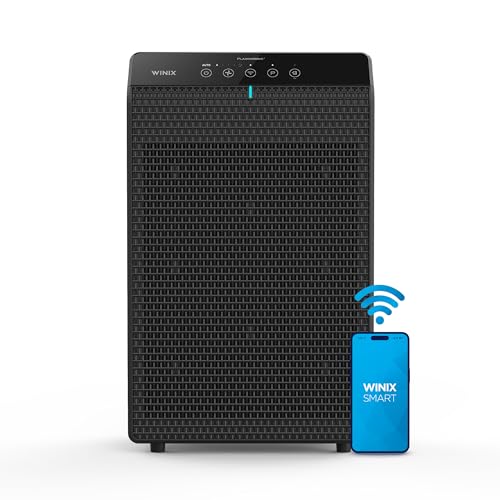
Winix 5520 — Best sensor-driven pick
The 5520 is for the household that wants evidence. Its air-quality monitor does not merely light a reassuring color; it tracks the room’s particle load and drives an auto mode that reacts within moments when a door opens on a pollen-heavy day or the bed gets made with enthusiasm. In allergy terms that responsiveness is the product: exposure is spiky, not steady, and a machine that surges exactly when the air spikes flattens the peaks that make evenings miserable.
Filtration pairs true HEPA with a high-deodorization carbon filter — the strongest odor stage among the mid-priced picks here — which suits bedrooms in city homes where the window that must stay shut against pollen also faces traffic. Coverage is rated up to about 1,882 square feet per hour, far beyond bedroom needs, so the machine spends its life in the quiet end of its range. Winix’s PlasmaWave feature is fitted and can be switched off for households that prefer purely mechanical cleaning; the HEPA stage does the allergy work either way.
It is also a good-looking argument for the living room if your allergy strategy extends there: the sensor display gives guests a visible answer to why the room feels fresh, and the auto mode handles the pollen that shoes and coats import through the day without anyone touching a control.
Sensor-driven machines teach their owners something over a season: the visible record of spikes — after the dog comes in, after the windows were opened for an hour, after the spare-room bed was stripped — turns vague impressions about “bad days” into a map of the household’s actual habits. Allergy households frequently change one or two routines because of what the display showed them, and those changes outlast any single machine.
- Filtration: true HEPA with high-deodorization carbon
- Coverage: rated up to about 1,882 sq ft per hour
- Extras: air-quality monitor, responsive auto mode
- Note: PlasmaWave feature can be turned off
Strengths
- Fast, sensor-led response to pollen spikes
- Strong carbon stage for urban bedrooms
- Huge coverage headroom keeps running quiet
Trade-offs
- Display may need dimming for very light-sensitive sleepers
- Ion feature will not suit every household
- Mid-to-upper tier filter pricing
Best for: Data-minded allergy households and city bedrooms. Not suited for: Anyone wanting the simplest possible dial-only machine.

Blueair Blue 211i Max — Best for large rooms
Primary bedrooms in newer homes have quietly become suites — sleeping area, sitting corner, dressing space, sometimes a desk — and a bedroom purifier sized for a box room drowns in them. The 211i Max is rated for large rooms up to about 3,235 square feet, verified under the AHAM program, and it delivers that scale at a noise cost the maker puts around 23 decibels at its low end: big-room airflow without big-machine racket, which is the entire trick of allergy purification in a suite.
Blueair’s HEPASilent technology blends mechanical filtration with an electrostatic stage, moving more air per watt and per decibel than a purely mechanical design of the same size. The purist’s caveat from our apartment guide applies — it is not a traditional true HEPA cartridge — but its tested clean-air delivery is the metric that decides how a room actually fares, and on that metric this machine is formidable. A washable pre-filter in fabric finishes handles the coarse dust and comes in subdued colors that suit bedroom decor.
App control, auto mode, and a clean Scandinavian silhouette complete a premium-tier package. For a large primary suite in pollen country — or an open living space where the family spends its evenings during the season — it is the pick that never has to run hard to keep up, and a machine that never runs hard is a machine nobody turns off.
Energy use deserves a mention at this scale: moving this much air gently is cheaper, watt for watt, than moving less air violently, and the 211i Max’s efficient design means its large coverage does not translate into a large electricity habit. For a machine that will run through every night of every pollen season for years, that efficiency is a real part of the premium’s justification.
- Filtration: HEPASilent with washable fabric pre-filter
- Coverage: rated up to about 3,235 sq ft
- Extras: WiFi app, auto mode, low-noise operation
- Verification: AHAM Verified rating
Strengths
- Largest verified coverage on this list
- Quiet running even at meaningful speeds
- Pre-filter washes instead of needing replacement
Trade-offs
- Premium tier purchase and filter pricing
- Not a conventional true HEPA cartridge
- Physically large for a standard double bedroom
Best for: Large primary suites and open living spaces in pollen season. Not suited for: Small bedrooms or budget-first shoppers.

Medify MA-40 — Best value workhorse
The MA-40 skips the smart-home pageant and spends its budget on the fundamentals: a true HEPA filter, coverage rated around 1,793 square feet in an hour, and a cabinet simple enough that anyone in the house can operate it half asleep. For allergy households furnishing a bedroom plus perhaps a child’s room over time, that straightforwardness has real value — this is the machine you can buy twice without a family summit.
Medify built its name on medical-office-adjacent seriousness, and the MA-40’s plainspoken design reflects it: touch controls, a timer, a filter indicator, and speeds you set deliberately. The absence of an auto sensor is the honest trade — you choose the speed the season demands rather than the machine noticing for you — and many owners settle into a rhythm of medium by day and low by night that serves perfectly well.
As a second machine it is arguably the smartest buy here: the guest room that hosts an allergic grandparent twice a year, the teenager’s room where the dust gathers, the home office where you spend sealed-in afternoons. Mid-tier filters and a mid-tier price keep the whole arrangement painless, and the air it cleans is indistinguishable in kind from the flagships’ — HEPA is HEPA, and the pollen grain does not check the badge on the cabinet.
It also travels between roles gracefully: the household that buys it for the main bedroom during a bad season often finds it migrating to a child’s room the following year, its simplicity making it the machine nobody needs instructions to run. Equipment that can be reassigned without a manual is equipment that stays in service, and staying in service is the whole game in allergy air.
- Filtration: true HEPA filter
- Coverage: rated around 1,793 sq ft per hour
- Extras: timer, filter indicator, touch controls
- Tier: mid-priced purchase and filters
Strengths
- True HEPA performance without smart-feature pricing
- Coverage suits bedrooms and living rooms alike
- Simple controls anyone can run
Trade-offs
- No sensor-driven auto mode
- Design is plainly utilitarian
- Carbon stage is basic for odor-heavy homes
Best for: Value-focused allergy households and second-room duty. Not suited for: Anyone who wants the machine to manage itself entirely.
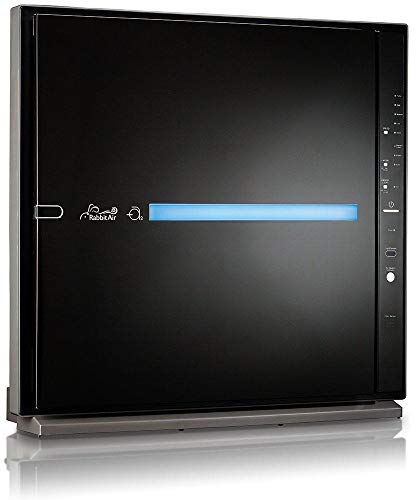
Rabbit Air MinusA2 SPA-780A — Best wall-mount design
The MinusA2 solves the bedroom’s geometry problem by leaving the floor entirely. Slim enough to stand against a wall like a panel, it can also mount on the wall itself — freeing the corner the chair wanted, removing the trip hazard from a small bedroom, and putting the machine at breathing height in a room where a toddler or a robot vacuum rules the floor. For allergy households in compact bedrooms, that placement freedom is not a gimmick; it is often the difference between owning a purifier and owning a purifier-shaped obstacle.
Rabbit Air’s other distinction is filter choice: the MinusA2 accepts different specialized filter sets, and the SPA-780A ships with the odor-remover configuration, layering its HEPA stage with carbon aimed at household smells. Households can re-spec the machine as needs change — a genuinely unusual flexibility in a category of sealed cartridges. Operation is famously quiet, the design has won the kind of awards that get mentioned in architecture magazines, and the price sits firmly in the premium tier, which the build and the five-year-warranty confidence do something to justify.
For the allergy bedroom specifically, wall mounting carries one more quiet benefit: the machine’s intake sits away from the floor’s dust-settling zone and its cleaned air washes across the bed’s height, the exact stratum its sleeping audience breathes. It is the connoisseur’s pick — expensive, deliberate, and beautiful about it.
Ownership has a craft element other picks lack: choosing and changing filter sets, deciding between odor emphasis and allergen emphasis as the household’s life changes — a baby arriving, a dog departing, a move to a house by a busy road. Owners who enjoy that kind of stewardship find the MinusA2 rewarding in a way sealed-cartridge machines never attempt to be.
- Filtration: HEPA with specialized, swappable filter sets
- Configuration: odor-remover filter set on this model
- Extras: wall-mountable, ultra-quiet operation, slim panel design
- Tier: premium purchase; long warranty coverage
Strengths
- Wall mounting frees bedroom floor space completely
- Filter sets can be re-specified as needs change
- Among the quietest machines in its class
Trade-offs
- Premium pricing across machine and filters
- Wall mounting needs a drill and commitment
- Coverage trails the big Blueair for suite-size rooms
Best for: Small, design-conscious bedrooms and floor-space misers. Not suited for: Renters who cannot drill, or budget-led purchases.
Why Do Some Allergy Households Swear by Their Purifier and Others Notice Nothing?
The divergence is rarely about the machine. Households that notice a clear difference tend to share a pattern: the purifier is in the bedroom, it runs all night every night, the bedding is encased and washed hot, and the household’s expectations were set at “less exposure, better nights” rather than at a cure. Households that notice little tend to share the opposite pattern: the machine visits the bedroom on bad evenings, competes with an unwashed decade of bedding reservoir, or was bought to neutralize a problem — a moldy wall, a smoker’s flat, an unmanaged damp corner — that filtration alone cannot carry.
There is also an honest biological wrinkle: people react to different triggers in different proportions. A household whose burden is mostly airborne pollen will feel a purifier’s work keenly; a household whose burden is dominated by contact with bedding reservoirs will feel the encasements’ work more and the purifier’s less, until both halves are in place. This is why the guide insists on the campaign rather than the appliance. The purifier is the strongest single tool for the air itself — but the air is one department of the bedroom, and the households that win are the ones that staff the other departments too.
How Do Humidity and Ventilation Fit Alongside Filtration?
A purifier cleans the air it is given; humidity and ventilation decide what kind of air that is. Dust mites thrive in warm, humid bedding, so a bedroom kept at a moderate humidity — the range ordinary comfort already prefers — quietly suppresses the mite population’s enthusiasm in a way no filter can. In humid climates that means the air conditioner or a dehumidifier is the purifier’s silent partner; in dry winter climates it means resisting the urge to over-humidify a bedroom into mite-friendly territory in pursuit of comfort. The target is the middle, held steady.
Ventilation is the subtler partner, because it both helps and harms depending on the day. A bedroom aired after rain on a low-pollen morning starts the day with genuinely fresh air that the purifier then maintains. The same window opened on a dry, windy, high-count afternoon undoes an hour of filtration in minutes. The skill is timing: exchange air when the outdoors is offering a good deal, and seal and filter when it is not. Households near busy roads add one more consideration — rush-hour air carries a particle load of its own — and often learn to ventilate in the quieter hours and let the machine guard the room while traffic peaks outside.
None of this requires instruments beyond a weather app with a pollen count and a cheap humidity gauge on the nightstand. Together they turn the purifier from an appliance running on hope into one element of a small, understood system — which is, in the end, what separates households that feel a real difference from households that bought a box and wondered why the season felt the same.
Where Does Each of the Six Picks Stand Overall?
| Model | Filtration | Coverage guide | Standout trait |
|---|---|---|---|
| Coway Airmega Mighty AP-1512HH | True HEPA plus carbon | Up to ~1,748 sq ft | Eco mode and proven record |
| Levoit Vital 200S | HEPA, pet-focused intake | Up to ~1,875 sq ft | Pet dander design |
| Winix 5520 | True HEPA, strong carbon | ~1,882 sq ft/hr | Sensor-driven auto mode |
| Blueair Blue 211i Max | HEPASilent | Up to ~3,235 sq ft | Large-room quiet airflow |
| Medify MA-40 | True HEPA | ~1,793 sq ft/hr | Value workhorse |
| Rabbit Air MinusA2 SPA-780A | HEPA, swappable sets | Bedroom scale | Wall-mount design |
How Do You Build an Allergy-Friendlier Bedroom Around the Purifier?
Treat the purifier as the air department of a larger campaign and staff the other departments. Bedding first: encase the mattress and pillows in mite-proof covers — the single highest-yield purchase after the purifier itself — and wash sheets and pillowcases hot on a weekly rhythm during your worst season. Duvets and blankets should be washable and actually washed; a beautiful dry-clean-only throw is a pollen archive with fringe. Floors next: bedroom carpet is a reservoir that vacuuming stirs, so vacuum with the purifier running on a higher speed and leave the room for half an hour afterward while the machine harvests what you launched. Hard floors, if you ever renovate, make the whole campaign easier.
Then manage the borders. Shoes and outdoor clothes stay out of the bedroom during pollen season; the day’s shirt does not get draped over the bedroom chair. A quick evening rinse of hair — or at minimum a brush-out away from the bed — keeps the pillow from becoming a pollen press. Windows open for pleasure on low-count days and after rain, and shut without guilt on the dry, windy, high-count ones; the purifier makes the shut-window bedroom comfortable rather than stuffy, which is precisely its gift. None of these habits costs much, and each multiplies the machine’s effect rather than merely adding to it.
Add one weekly rhythm to bind it together: a bedroom reset. Strip and wash the bedding, vacuum the floor and the mattress surface, wipe the hard surfaces with a damp cloth, clean the purifier’s pre-filter, and let the machine run high while you work and for an hour after. Done on the same morning each week it takes less than an hour, and it resets every reservoir the week has been filling — the closest thing a bedroom has to a fresh start, repeated until the season ends.
How Do You Keep the Purifier Itself From Becoming Part of the Problem?
A neglected purifier slowly defects to the other side. The pre-filter, loaded with months of bedroom lint, sheds its burden back into the airstream each time the fan starts; a HEPA stage run far past its interval passes less air and lets the room’s load creep up while the machine’s hum stays reassuringly identical. The maintenance that prevents this is measured in minutes: vacuum or wash the pre-filter monthly during the season, wipe the cabinet’s intake grilles when you dust the room, and respect the filter indicator — or the calendar, on machines without one — rather than negotiating with it.
Placement hygiene matters too. A machine shoved against curtains cleans the curtain’s air and little else; a machine under a shelf of dusty books processes the shelf’s fallout before the room’s. Give it the clearance its manual asks for, keep the top outlet unobstructed, and resist using the cabinet as a nightstand for items that shed — the basket of laundry waiting to be folded is a pollen reservoir with a handle. Treated as a small appliance with a real job, the purifier repays the little attention it asks; treated as furniture, it quietly becomes some.
Which Mistakes Do Allergy Households Make With Purifiers?
The first is buying for the wrong room — putting the new machine in the living room because it is the nicest room, while the bedroom, where exposure concentrates, keeps its old air. The second is running the machine like a guest instead of a resident: on for an hour before bed, off at midnight. Airborne allergens resupply continuously from bedding and carpet, so the benefit lives in continuous running at a tolerable speed. Third is neglecting the pre-filter until the HEPA stage is wearing a felt coat of dust; a two-minute vacuum of the pre-filter monthly keeps the whole stack honest.
A related error is sizing by optimism: reading the maximum coverage figure, applying it to a large bedroom, and then discovering the machine must run at a roar to hold the room — whereupon it gets turned down, then off, then listed for sale. The several-changes-per-hour rule at a quiet speed is the correction. Buy for the speed you will actually live with, and the season becomes a background condition of the house rather than a nightly negotiation with an appliance.
Fourth is expecting the machine to compensate for an unmanaged reservoir — bedding never washed hot, a decade-old pillow, a bedroom carpet that has hosted three dogs. Filtration lowers the airborne fraction faithfully, but a huge settled reservoir keeps refilling the air faster than a bedroom machine should have to work. Fifth is medical overreach in the other direction: assuming that because the air feels better, prescribed routines can be dropped. A purifier is a comfort and air-quality tool; decisions about medication and treatment belong with your clinician, full stop.
What Does Allergy-Grade Ownership Cost Across the Years?
The honest way to compare these machines is across a five-year horizon, because allergy households keep purifiers the way they keep mattresses. The purchase divides into three tiers on this list: a mid-priced working group, a premium pair in the Blueair and Rabbit Air, and nothing here that qualifies as disposable. Filters then set the rhythm of ownership — cartridge machines ask for a single periodic purchase, layered machines spread smaller costs across pre-filters and main elements, and the Rabbit Air’s swappable sets let a household re-aim its spending as its needs change. Electricity, on the low and auto speeds these machines live at, is the smallest line of the three and rarely decides anything.
Two habits keep the total down without touching performance. First, buy the replacement filter when the indicator first suggests it rather than at the crisis point, because a filter bought calmly can be shopped for, while a filter bought in a panic during peak season cannot. Second, protect the expensive stage with the cheap one: every minute spent vacuuming a washable pre-filter is paid back in HEPA life. Households that adopt both habits routinely find the five-year cost of the “expensive” machine and the “cheap” machine converging — one more reason this guide ranks by fit rather than by sticker.
What About Children’s Rooms and Older Relatives?
The same physics applies, with a few human adjustments. In a child’s bedroom, the machine should be placed where small hands cannot easily reach its controls or topple it, its cord routed out of the play zone, and its night setting chosen for steadiness — children, like adults, are woken by changes in sound rather than by a low constant hum. The bedding campaign matters even more, since children play on their beds, host soft toys in drifts, and treat the floor as furniture; washable toys on rotation and a hard-working vacuum rhythm keep the reservoir honest.
For an older relative — whether in their own home or in your spare room — prioritize simplicity over specification. A machine with a legible dial, an obvious filter indicator, and filters that a visiting family member can change in minutes will outperform, in real life, a smarter machine whose app nobody opens. If the relative’s comfort is the goal of a visit rather than a residence, start the spare-room machine a day before they arrive so the room greets them already settled. And in both cases, keep the medical framing straight: cleaner air is a comfort measure and a sensible household practice, while questions about a child’s or a parent’s health management belong with their clinician.
Final Recommendation
Start where you sleep. For most allergy households the Coway Airmega Mighty remains the reference bedroom machine — true HEPA, thoughtful modes, coverage that lets it whisper. Add the Levoit Vital 200S if a pet shares your home and your symptoms, the Winix 5520 if you want the machine to chase pollen spikes on its own, and the Blueair 211i Max if your bedroom is really a suite. The Medify MA-40 covers second rooms and value-led first purchases with honor, and the Rabbit Air earns its premium in bedrooms where the floor is fully spoken for. Pair whichever you choose with encased bedding and a hot wash rhythm, and the room that used to end your day with a sneeze becomes the room that gives you the whole night back.
Frequently Asked Questions
How long before an allergy household notices a difference?
Most people judge within the first week of continuous bedroom running, because the change they notice is the night’s and morning’s comfort rather than a number. Give it a full pollen cycle before final judgment, though: a rainy week flatters any machine, and a dry windy week tests it honestly. Keeping a few words of notes — the date the machine started, the mornings that felt notably better or worse, the weather alongside — turns that judgment from an impression into a small, trustworthy record you can act on next season.
Does a purifier help with dust mite allergy specifically?
It helps with the airborne fraction — the debris that bed-making and vacuuming launch into the air — and that fraction is a real part of exposure. The reservoir in the mattress itself is handled by encasements and hot washing. Used together, the two strategies cover both halves of the problem; used alone, each leaves the other’s half untouched. Households often notice the purifier’s half most on the mornings after a bedding change, when the disturbance of the day before would otherwise still be hanging in the room’s air.
Should windows stay closed all season?
On high-pollen days, yes, at least in the bedroom, and the purifier keeps that room’s air fresh enough that the closed window stops feeling like a sacrifice. After rain and on low-count days, open them and enjoy it — then close up again when the count climbs. Think of it as weather-based border control rather than a season-long lockdown. A free pollen forecast for your area, checked with the morning weather, is all the intelligence this strategy needs.
Is a bigger machine always better for allergies?
Only up to the point where it can run quietly at the speed your room needs. Beyond that, extra capacity buys little and costs floor space and money. A right-sized machine running continuously beats an oversized one that gets switched off for being intrusive, every night of the season. The one exception is the genuinely large bedroom or suite, where stepping up a class — as with the Blueair pick — is what makes quiet, continuous running possible at all.
Can a purifier replace allergy medication or treatment?
No. A purifier improves the air in a room; it does not treat an allergy, and it is not a medical device. Many households find the cleaner air a valuable complement to whatever their clinician recommends, but changes to any treatment plan are a conversation for that clinician, not for an appliance guide. The most a guide like this can honestly offer is a cleaner room and a better night’s rest in it — which, in season, is no small thing.
Related Guides
Allergy season rarely travels alone. For the combined damp-and-sneeze household, see Best Air Purifiers for Allergies and Mold; for a broader tour of cleaning technologies, Best Air Cleaners and Purifiers compares the categories; and readers managing a household where breathing comfort is a year-round project should read Best Air Purifiers for Asthma and Allergies next.


