What's inside
- Key Takeaways
- Quick Picks
- How We Chose These Picks
- How Do the Six Refrigerators Compare on Size?
- How Do You Measure a 30-Inch Opening Correctly?
- Should You Choose Counter Depth or Standard Depth?
- How Do You Plan the Delivery Path for a Narrow Kitchen?
- What Should You Check in the First Week of Ownership?
- How Should You Organise a Narrower French Door Interior?
- How Loud and Hungry Are Refrigerators in This Class?
- What Changes When You Move From a Top-Freezer Model?
- How Do You Keep a Compact Refrigerator Running Well for a Decade?
- Which Finish Suits a Small Kitchen Best?
- How Should Renters and Landlords Judge These Models?
- What Should You Verify on the Listing Before Ordering?
- How Does a 30-Inch Model Handle Holiday and Party Loads?
- What About Second Refrigerators and Garage Duty?
- How Do You Decide Between the Kenmore and the Cosmo?
- What Role Does the Freezer Drawer Play in Daily Life?
- How Should a Small Household Grow Into a Larger One?
- How Do You Set Temperatures and Zones Sensibly?
- How Does Living With Narrow Doors Change Shopping Habits?
- What Should You Do on the Day the Old Refrigerator Leaves?
- How Do You Judge Value in This Narrow Class?
- What Mistakes Do Buyers of Narrow Refrigerators Make Most Often?
- Final Recommendation
- Frequently Asked Questions
- Related Guides
As an Amazon Associate I earn from qualifying purchases. This post may contain affiliate links at no extra cost to you.
cottageverdict.com is reader-supported. When you buy through links on our site, we may earn an affiliate commission.
Where to buy: all six refrigerators below are sold through Amazon, and their names in the Quick Picks table, the detailed reviews and the comparison table link to the matching listing so you can check price on Amazon and confirm the exact width, depth and capacity figures before ordering. The best 30 wide french door refrigerators exist for one specific kitchen problem: a thirty-inch opening — in a galley kitchen, an older house, a condo carved from a bigger room — and a household that refuses to go back to a single swinging door. Thirty inches is three inches narrower than the standard French door class, and those three inches change everything about what fits inside.
Read the capacities in this guide with that constraint in mind. The six picks run from 16 to 20 cubic feet, and the spread is not a ranking: the 20-cubic-foot Frigidaire Gallery buys its extra room with standard-depth cabinetry that projects further into the kitchen, while the counter-depth Kenmore and Cosmo models, both at 17.5 cubic feet, sit nearly flush with the counters and pay for that elegance in shelf depth. Capacity per inch of width is the honest metric here, and depth is where the bill arrives.
Width itself needs a tape measure, not trust. A thirty-inch opening in an older kitchen may measure twenty-nine and three-quarters at the skirting board, and manufacturers list case widths that can sit a fraction either side of the headline number. Every review below repeats the model’s stated width class and capacity from its listing, and the buying sections explain the clearances — door swing, handle depth, the delivery path through your own hallways — that decide whether a correct-on-paper refrigerator becomes a correct-in-the-kitchen one.
French doors at this width behave slightly differently from their wider siblings, too. Each door is narrow, which is a blessing in tight kitchens where a full-width door would sweep the opposite counter, and the freezer drawer below glides toward you rather than asking you to excavate a top freezer. If that layout inside a thirty-inch footprint sounds like your kitchen, the six below are the current field.
Key Takeaways
- Every pick is built for a 30-inch-wide opening; verify your actual opening, because older kitchens often measure under the headline figure.
- Capacities run 16 to 20 cubic feet, with the largest model using standard depth and the counter-depth pair holding 17.5 each.
- Counter depth trades shelf room for a flush, built-in look and clearer walkways in small kitchens.
- The Kenmore and Cosmo are the counter-depth choices; the Frigidaire Gallery is the capacity choice.
- Narrow French doors swing safely in galley layouts where a single wide door would strike the opposite run.
- Delivery path and door clearance matter as much as the cabinet opening at this size class.
Quick Picks
| Pick | Badge | Why it earns its place |
|---|---|---|
| Kenmore 17.5 Cu Ft 30 Inch French Door Refrigerator Counter Depth | Best Counter-Depth Pick | A 17.5-cubic-foot counter-depth cabinet with an ice maker, shaped for a flush fit in a 30-inch opening. |
| Frigidaire Gallery 30 Inch 20 Cu Ft French Door Refrigerator | Best Capacity Pick | The roomiest model here at 20 cubic feet, using standard depth to out-store every rival in the class. |
| ICEVIVAL 18 Cu Ft French Door Refrigerator with Ice Maker | Best Mid-Size Balance | An 18-cubic-foot frost-free design with a freezer drawer and an ice maker in the middle of the range. |
| Cosmo Vista 30 Inch 17.5 Cu Ft French Door Refrigerator Stainless | Best Counter-Depth Alternative | Another 17.5-cubic-foot counter-depth option, giving flush-fit shoppers a genuine second choice. |
| Avanti French Door Refrigerator Bottom Freezer 30 Inch Wide | Best Simple Layout | A frost-free 30-inch French door model with a bottom freezer and an uncomplicated brief. |
| BLACK+DECKER 16 Cu Ft French Door Refrigerator White | Best White Finish Pick | A 16-cubic-foot model in white with a built-in ice maker for lighter, traditional kitchens. |
How We Chose These Picks
We began with the tape measure. Any refrigerator in this guide had to be a genuine thirty-inch-class French door model — not a thirty-three wearing a misleading title — with its capacity stated in the listing so readers can compare like with like. Five of the six publish a cubic-foot figure; the Avanti listing leads with its width and layout instead, and its review says so plainly rather than borrowing a number from elsewhere.
Depth was the second filter, because it splits the class into two philosophies. Counter-depth models — the Kenmore and the Cosmo, both 17.5 cubic feet — keep the cabinet close to counter depth so the kitchen keeps its walkways and sightlines. Standard-depth models — led by the 20-cubic-foot Frigidaire Gallery — reach back further and convert that reach into the shelving that larger households feel every single day. Neither philosophy wins in the abstract; the kitchen decides.
Finally we weighed the everyday equipment: ice makers where the listing confirms them, frost-free operation where stated, and the freezer-drawer layout that defines this format. Brand support and the clarity of each listing’s dimensions also counted, because a refrigerator is a decade-long appliance whose delivery day alone involves doors, hinges and a route through your home.
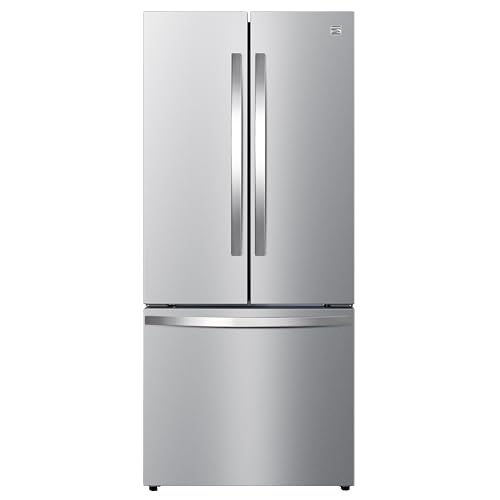
Kenmore 17.5 Cu Ft 30 Inch French Door Refrigerator Counter Depth — Best Counter-Depth Pick
Kenmore’s entry is the model that understands why this size class exists. At thirty inches wide and counter depth, its cabinet stops roughly where your worktops stop, so the doors and handles become the only projection and a small kitchen keeps both its floor space and its dignity. The stated capacity is 17.5 cubic feet — mid-pack in this guide — and the honest way to read that figure is as the price of the flush fit, itemised in advance rather than discovered at the first big shop.
The listing confirms an ice maker, which matters more at this size than at any other: narrow refrigerators that skip ice force their owners back to trays, and trays in a compact freezer drawer are a daily small misery. The fingerprint-resistant stainless finish named in the listing suits the reality of a small kitchen, where the refrigerator is touched constantly and stands within arm’s reach of cooking splashes. French doors keep the fresh-food section at eye and hand height, with the freezer drawer below doing the bending work.
Who should measure twice before choosing it? Households that shop in bulk. Seventeen and a half cubic feet swallows a weekly family shop comfortably, but the counter-depth shelves are shallower, so wide platters, pizza boxes and party trays need a plan — often the door bins or a turned angle — rather than a shove. If your kitchen’s problem is space to move rather than space to store, this Kenmore solves the right problem, and its flush profile will make the whole room feel calmer every day you own it.
- Width class: 30 inches, for standard narrow openings
- Capacity: 17.5 cu ft as stated in the listing
- Depth: counter depth for a near-flush fit
- Ice: built-in ice maker confirmed in the listing
- Finish: fingerprint-resistant stainless steel
Strengths
- Flush profile preserves walkways in tight kitchens
- Ice maker included despite the compact class
- Fingerprint-resistant finish suits heavy daily use
Trade-offs
- Shallower shelves challenge wide platters and trays
- Capacity trails the standard-depth Frigidaire clearly
- Counter-depth format carries a style premium
Best for: small kitchens where floor space beats shelf depth. Not suited for: bulk shoppers who store wide trays and party food.

Frigidaire Gallery 30 Inch 20 Cu Ft French Door Refrigerator — Best Capacity Pick
Twenty cubic feet inside a thirty-inch width is the headline here, and Frigidaire achieves it the straightforward way: standard depth. The cabinet reaches back further than the counter-depth pair, and that reach becomes shelving a household can feel — deeper crisper space, room for the weekly shop and the leftovers at once, and shelves that accept the wide, flat items the Kenmore makes you negotiate with. In a thirty-inch opening, this is as much refrigerator as the laws of geometry currently allow.
The Gallery name signals Frigidaire’s step-up line, and the listing places the model’s storage features internally rather than through a door dispenser, which keeps the stainless front clean and unbroken — a look many small-kitchen owners prefer, since a dispenser recess also nibbles at door storage. The French door layout keeps fresh food at standing height, and the freezer below follows the drawer format the rest of this class uses.
The cost of capacity is projection. Measure not only whether the cabinet fits the opening but how far the box and its handles will stand proud of your counters, and whether the open doors clear the opposite run, an island or the cook’s working space. In kitchens with a thirty-inch opening but a generous room around it — common in older houses with a pantry nook — that projection is painless and the extra two and a half cubic feet over the counter-depth pair is free storage forever. In a true galley, it may be the difference between cooking comfortably and sidling.
- Width class: 30 inches, narrow-opening format
- Capacity: 20 cu ft, the largest in this guide
- Depth: standard depth, projects past counters
- Layout: French doors over a freezer drawer
- Line: Frigidaire Gallery step-up series
Strengths
- Most storage available in the 30-inch class here
- Deep shelves accept wide and bulky items
- Clean door front without a dispenser recess
Trade-offs
- Projects furthest into the kitchen of any pick
- Door swing needs the most clearance planning
- Heavier, deeper cabinet complicates delivery
Best for: larger households stuck with a 30-inch opening. Not suited for: true galley kitchens where every inch of walkway counts.

ICEVIVAL 18 Cu Ft French Door Refrigerator with Ice Maker — Best Mid-Size Balance
ICEVIVAL parks itself deliberately between this guide’s two philosophies. Eighteen cubic feet is a touch more than the counter-depth pair and a clear step below the Frigidaire’s twenty, and the listing pairs that capacity with an ice maker, a frost-free design and a freezer drawer, plus smart cooling modes the title counts at three. For the shopper who found the counter-depth models elegant but tight and the big Frigidaire imposing, this is the refrigerator arguing that the middle is a place, not a compromise.
Frost-free operation deserves its sentence, because at this size class it is not universal background noise: it means no manual defrost weekends, no chipping ice from the freezer walls while food melts in the sink. The freezer drawer format keeps frozen goods in a pull-out space you survey from above, which in practice wastes less food than a deep chest you excavate by memory. An ice maker in the listing removes the tray question entirely.
Brand homework matters more here than with the heritage names. ICEVIVAL sells widely through marketplaces, and the sensible buyer reads the listing’s dimension table carefully — this guide’s whole premise is that thirty-inch-class claims must be verified against the stated figures — and checks the warranty and service terms the seller publishes. Judged on its stated specification, the balance is real: family-scale capacity, modern frost-free convenience and ice, inside the narrow footprint that brought you to this guide.
- Width class: 30-inch French door format
- Capacity: 18 cu ft as stated in the listing
- Cooling: frost-free with three smart modes per listing
- Ice: built-in ice maker confirmed in the listing
- Freezer: pull-out drawer below the French doors
Strengths
- Capacity sits above the counter-depth pair
- Frost-free design ends manual defrosting
- Ice maker and freezer drawer both included
Trade-offs
- Smaller brand footprint than Kenmore or Frigidaire
- Dimensions deserve extra care when verifying fit
- Still two cubic feet behind the class leader
Best for: families wanting balance over extremes in a narrow opening. Not suited for: buyers who prioritise a long-established service network.
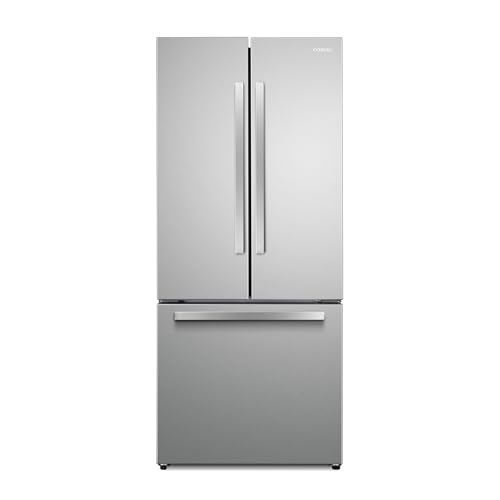
Cosmo Vista 30 Inch 17.5 Cu Ft French Door Refrigerator Stainless — Best Counter-Depth Alternative
Cosmo’s Vista model — the listing carries its COS-RFFV183GHS designation — matches the Kenmore’s essential geometry almost exactly: thirty inches wide, counter depth, 17.5 cubic feet, stainless steel. That near-tie is precisely why it earns a full review rather than a footnote. Counter-depth shoppers in this narrow class usually face a take-it-or-leave-it market; here are two credible flush-fit options whose prices, availability and listing details can be compared head to head on the day you buy.
The experience it promises is the counter-depth experience described earlier in this guide, delivered under a different badge: a cabinet that respects the counter line, French doors over a freezer section, and fresh food stored at standing height in a kitchen that keeps its walkways. Cosmo positions its appliances toward buyers furnishing compact, design-conscious spaces — apartments, condos, smaller renovated kitchens — and the Vista’s stainless front is styled to sit happily beside other modern appliances rather than apologise for its size.
Choosing between this and the Kenmore comes down to the day’s specifics rather than a specification knockout. Compare the two listings directly: the stated dimensions in each table, what each says about ice and interior layout, the delivery terms to your address, and the warranty language each publishes. Where the Kenmore trades on a long appliance heritage, the Cosmo trades on focus — a brand built around exactly this compact-premium niche. Either way, the flush fit you are actually buying is identical in spirit.
- Width class: 30 inches, narrow-opening format
- Capacity: 17.5 cu ft as stated in the listing
- Depth: counter depth, model COS-RFFV183GHS
- Finish: stainless steel front
- Line: Cosmo Vista collection for compact kitchens
Strengths
- Gives counter-depth shoppers a real alternative
- Flush fit preserves small-kitchen walkways
- Design-led styling suits renovated compact spaces
Trade-offs
- Specification nearly mirrors the Kenmore rival
- Shallow shelves share the counter-depth limits
- Brand service network smaller than heritage names
Best for: flush-fit buyers comparing two live options on price and terms. Not suited for: shoppers needing maximum shelf depth above all.
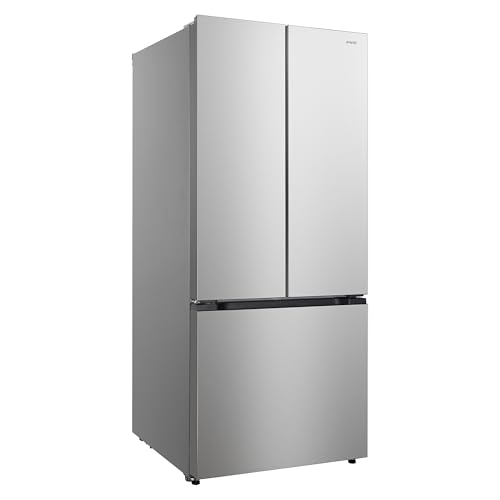
Avanti French Door Refrigerator Bottom Freezer 30 Inch Wide — Best Simple Layout
Avanti’s listing leads with layout rather than a capacity headline: a French door refrigerator with a bottom freezer, thirty inches wide, frost free, described as large capacity. We will not invent the cubic-foot figure the title omits — check the listing’s specification table for the current number before comparing it against the stated capacities elsewhere in this guide — because the discipline of this size class is that dimensions come from documents, not from vibes.
What can be said from the listing itself is coherent and appealing. Avanti has built its name on compact and space-conscious appliances, and this model applies that thinking at family scale: French doors for the fresh section you open twenty times a day, a bottom freezer for the section you open twice, and frost-free technology so the freezer never demands a defrosting afternoon. For households stepping up from a cramped top-freezer model in the same thirty-inch slot, that layout rearrangement alone transforms the daily experience — fresh food at eye level changes what gets eaten before it wilts.
The bottom-freezer arrangement here also suits shorter households and anyone who dislikes hoisting frozen goods overhead. Assess it the way this guide assesses everything: verify the full dimension set in the listing, confirm the door configuration and swing against your kitchen’s obstacles, and weigh its published terms beside the Kenmore and Cosmo if a flush fit tempts you, or the Frigidaire if raw capacity does. On layout clarity and frost-free convenience, it holds a legitimate place in the six.
- Width class: 30 inches wide as titled
- Capacity: stated in the listing’s specification table
- Layout: French doors over a bottom freezer
- Cooling: frost free technology per the listing
- Brand focus: compact and space-conscious appliances
Strengths
- Eye-level fresh storage transforms daily use
- Frost-free freezer removes defrost chores
- Compact-appliance specialist behind the design
Trade-offs
- Headline listing omits the capacity figure
- Fewer published frills than Gallery-class rivals
- Fit figures require a careful listing check
Best for: households upgrading layout inside the same 30-inch slot. Not suited for: buyers who compare purely on published cubic feet.

BLACK+DECKER 16 Cu Ft French Door Refrigerator White — Best White Finish Pick
Sixteen cubic feet makes this the smallest refrigerator in the guide, and its white finish makes it the most distinctive. Neither fact is an apology. A 16-cubic-foot French door model suits couples, small households, first homes and anyone whose weekly shop is a basket rather than a trolley, and the white front answers a real aesthetic: cottage kitchens, bright rental spaces and rooms where a slab of stainless would dominate everything else in view.
The listing confirms a built-in ice maker, which at this capacity is a genuinely considerate inclusion — small refrigerators are the ones usually asked to survive on trays. The French door arrangement preserves the format’s core virtue at this smaller scale: fresh food split across two narrow doors at standing height, frozen food in the section below, and door swings short enough for the tightest galley. A white finish also hides the minor scuffs of a busy small kitchen differently from stainless — less fingerprint theatre, more gentle uniformity.
Size your life honestly against the sixteen cubic feet. It holds a couple’s week easily and a small family’s with ordinary planning, but holiday cooking, bulk warehouse runs and batch-meal prep will overflow it into cool bags and neighbourly favours. Buyers in that overflow category should step up to the ICEVIVAL or Frigidaire above and accept their footprints. Buyers whose shops are modest and whose kitchens crave the lighter finish have found the pick tailored to them.
- Width class: 30-inch French door format
- Capacity: 16 cu ft, the smallest in this guide
- Finish: white, suited to bright traditional kitchens
- Ice: built-in ice maker confirmed in the listing
- Household size: couples and small families
Strengths
- White finish suits cottage and rental kitchens
- Ice maker included at a modest capacity
- Scale matches smaller households honestly
Trade-offs
- Least storage of the six picks
- Holiday and bulk loads will overflow it
- White finish narrows future kitchen restyles
Best for: couples and small households wanting a white French door model. Not suited for: large families or bulk-buying cooks.
How Do the Six Refrigerators Compare on Size?
| Pick | Badge | Distinguishing detail |
|---|---|---|
| Kenmore 17.5 Cu Ft 30 Inch French Door Refrigerator Counter Depth | Best Counter-Depth Pick | 17.5 cu ft, counter depth, ice maker |
| Frigidaire Gallery 30 Inch 20 Cu Ft French Door Refrigerator | Best Capacity Pick | 20 cu ft, standard depth, largest here |
| ICEVIVAL 18 Cu Ft French Door Refrigerator with Ice Maker | Best Mid-Size Balance | 18 cu ft, frost-free, freezer drawer |
| Cosmo Vista 30 Inch 17.5 Cu Ft French Door Refrigerator Stainless | Best Counter-Depth Alternative | 17.5 cu ft, counter depth, Vista series |
| Avanti French Door Refrigerator Bottom Freezer 30 Inch Wide | Best Simple Layout | 30 inches wide, bottom freezer, frost free |
| BLACK+DECKER 16 Cu Ft French Door Refrigerator White | Best White Finish Pick | 16 cu ft, white finish, built-in ice maker |
How Do You Measure a 30-Inch Opening Correctly?
Measure the opening in three places — top, middle and bottom — and trust the smallest number, because old cabinetry leans and skirting boards intrude exactly where refrigerator cases are widest. Measure depth from the wall to the counter edge, and separately from the wall to any skirting or pipework, since the shallowest point governs how far back the cabinet can sit. Then measure height under any overhanging cupboard, allowing the ventilation clearance the manufacturer specifies rather than the clearance you hope is enough.
Doors are the second measurement set. Each French door on a thirty-inch model swings in a modest arc, but handles add inches to the open position, and a door that opens against a wall will never reach the angle that lets crisper drawers slide out. Stand in the opening with a tape and mime the worst case: both doors open, freezer drawer pulled toward you, while another person needs to pass behind. That small theatre, done before ordering, prevents the most expensive disappointment in this category.
Should You Choose Counter Depth or Standard Depth?
Counter depth buys calm. A cabinet that ends near the counter line keeps sightlines open, preserves the walkway a second cook needs, and makes a small kitchen photograph like a larger one. Its price is measured in shelf depth: the Kenmore and Cosmo at 17.5 cubic feet hold a normal shop gracefully but ask wide items to adapt. Kitchens where people cook together, or where a wheelchair or child’s highchair shares the floor, feel this benefit daily.
Standard depth buys food room. The Frigidaire Gallery’s twenty cubic feet is not a vanity figure; it is the difference between a freezer that swallows a batch-cooking Sunday and one that negotiates. If your kitchen’s opening is thirty inches but the room around it is generous — a farmhouse layout, a pantry absorbing the overflow — depth costs you nothing you value. Choose by which scarcity rules your home: floor scarcity or shelf scarcity. The refrigerator should relieve the one that actually binds.
How Do You Plan the Delivery Path for a Narrow Kitchen?
Walk the route from the street with a tape measure before the truck is booked. Note the narrowest doorway, the turn at the stair or hall corner, and any door that can be lifted off its hinges to buy an inch. Refrigerators in this class often travel best with their own doors removed by the delivery team, a normal service worth confirming when you order, and the freezer drawer front is another piece that may come off for a tight turn.
Prepare the destination too: clear the old appliance’s route out, protect floors on the path, and have the water line for the ice maker identified and reachable if your chosen model needs one. Measure the new refrigerator’s packed dimensions against the route as well as its bare ones, since a boxed unit is larger in every direction. Delivery day for a thirty-inch model in an older house is a logistics exercise; treated as one, it ends with a level, humming refrigerator instead of a standoff in the hallway.
What Should You Check in the First Week of Ownership?
Level first. A refrigerator that leans will swing its French doors unevenly, pool water where it should not and run its compressor harder than designed; the adjustable feet exist precisely for old floors, so use them and re-check the door alignment after the cabinet settles. Then verify temperatures with an ordinary thermometer in both sections across a day, because the display’s confidence and the interior’s reality are cousins, not twins.
Load gradually and watch the mundane things: whether door bins accept your household’s actual bottles, whether the freezer drawer glides fully loaded, whether the ice maker cycles and fills without drama. Keep the packaging and paperwork until those checks pass. Small annoyances found in week one are warranty conversations; the same annoyances found in month three are personality traits you will live with for a decade.
How Should You Organise a Narrower French Door Interior?
Thirty inches of width rewards zoning. Give the door bins to the tall and the daily — milk, juice, sauces in active rotation — because door storage is the warmest and most accessible, and keep the shelves in loose territories: proteins low where it is coldest, leftovers at eye level where they cannot be forgotten, produce in the drawers the makers designed for it. In a smaller cabinet, a leftover pushed to the back is not stored; it is composting in private.
The freezer drawer benefits from the opposite of excavation: flat freezing. Soups, sauces and portions frozen flat in bags stack like books and thaw quickly, while irregular parcels create the frozen geology that swallows peas for a season. A small basket or divider for the odd-shaped residents — ice packs, the pastry, the emergency pizza — keeps the flat system honest. Review the drawer monthly; in a compact freezer, inventory discipline is capacity.
How Loud and Hungry Are Refrigerators in This Class?
Modern compressors in this size range run as a low background presence rather than the clunk-and-hum of older machines, but small kitchens place the refrigerator close to living space, so listen for the sounds that matter: the ice maker cycling, water filling, and the fan’s note when the kitchen is otherwise silent at night. None of the listings in this guide publishes a noise figure we can quote honestly, so treat the first nights as the test and keep the cabinet level, since an unlevel box amplifies every vibration it makes.
Running costs follow capacity and habit more than brand. A counter-depth cabinet cycles a smaller volume of air; a standard-depth one holds more cold food, which itself stabilises temperature. The expensive habits are universal: doors held open during long deliberations, hot dishes loaded straight from the stove, and coils or seals neglected until the compressor works double shifts. In a narrow model the door seals are shorter and easier to inspect — wipe them, check for gaps with a torch at night, and the machine will repay the attention quietly.
What Changes When You Move From a Top-Freezer Model?
Everything you touch daily moves down to where your hands already are. Fresh food, formerly split between a stoop and a stretch, gathers at standing height behind two light doors, and the bending that remains — into the freezer drawer — is reserved for the section you visit least. Households consistently find they waste less, because food at eye level is food remembered, and a thirty-inch French door model can cut the archaeological layer of forgotten jars that top-freezer layouts breed.
Some habits must be relearned. Two narrow doors mean deciding which side a thing lives on; a wide single door’s careless sweep disappears. The freezer drawer rewards the flat-freezing discipline described above and punishes the old toss-it-in approach within a month. Give the new layout a fortnight before judging it: most converts report the second week, not the first, is when the arrangement starts feeling inevitable.
How Do You Keep a Compact Refrigerator Running Well for a Decade?
Ventilation is the first commandment, and it is the one narrow kitchens break. These cabinets breathe through clearances the manufacturer specifies at the sides, top and back; a thirty-inch opening fitted with millimetre enthusiasm can cook a compressor slowly. Leave the stated gaps even when the tape measure begs otherwise, and pull the machine out yearly to vacuum the dust that gathers where warm air and kitchen grease conspire.
Inside, the disciplines are small and monthly: seals wiped and inspected, drawers and bins washed before residue becomes archaeology, temperatures verified with a thermometer rather than trusted to the dial, and the ice maker paused when the household travels so it does not cycle pointlessly against a full bin. A refrigerator has almost no moving parts an owner can service, which is precisely why the few that exist — air, seals, cleanliness — deserve the whole of your attention.
Which Finish Suits a Small Kitchen Best?
Stainless steel dominates this class — five of the six picks wear it — because it borrows light and reads as built-in at counter depth. Its cost is visibility: fingerprints and splashes announce themselves, which is why the Kenmore’s fingerprint-resistant treatment is a practical feature rather than a brochure phrase. In a kitchen where the refrigerator stands within reach of the stove, that resistance is felt weekly.
The BLACK+DECKER’s white finish is the deliberate alternative. White recedes in bright, traditional rooms, pairs with painted cabinetry instead of competing with it, and shows a different, gentler kind of wear. Choose the finish for the kitchen you have and the decade you expect: stainless flatters renovations and resale photographs, white flatters cottages and calm. Either way, order the finish you will enjoy at breakfast, because you will look at this appliance more than any other object you own.
How Should Renters and Landlords Judge These Models?
A thirty-inch opening is the classic rental constraint, and a French door model transforms a listing’s photographs while solving the tenant’s daily stoop-and-stretch. Landlords should weigh the delivery realities hardest: an older building’s stairs and doors decide what is installable at all, and a model whose doors remove easily is worth more than a slightly larger capacity that cannot reach the kitchen. Durability of finish matters too — fingerprint-resistant stainless survives tenant turnover with its dignity intact.
Tenants buying for a rented home should think about the exit as well as the entrance. A thirty-inch French door refrigerator is unusually portable between homes, because the same narrow opening recurs in flat after flat, and a well-kept unit resells to exactly the audience reading this guide. Keep the delivery paperwork, photograph the condition at installation, and the appliance becomes an asset that follows your life rather than a fixture you abandon to the next lease.
What Should You Verify on the Listing Before Ordering?
Dimensions first, in the seller’s own table: case width, depth with and without handles, height to the top of the hinge, and the door-open depth that decides your walkway. Compare those figures against your three opening measurements and your delivery route, not against the headline in the product name. Then confirm the equipment the listing actually promises — ice maker, frost-free operation, freezer configuration — because trim variations within a model family are common and photographs travel between them.
Finally, read the logistics as carefully as the specification: who delivers, whether doors are removed for access as part of the service, what the haul-away of the old appliance involves, and the warranty’s length and administrator. A refrigerator purchase is half appliance, half freight operation. The listings for all six picks here contain what a careful buyer needs; the mistakes in this category belong almost entirely to buyers who read the title and stopped.
How Does a 30-Inch Model Handle Holiday and Party Loads?
Feasts are the stress test every narrow refrigerator eventually faces, and the honest answer is that it passes with planning rather than capacity. The turkey or its vegetarian centrepiece claims a shelf days in advance; drinks, the true volume thieves of any celebration, belong in a cooler with ice from the freezer drawer or a neighbour’s spare shelf. Counter-depth owners feel the squeeze first, standard-depth owners later, but both discover the same truth: a party is a logistics problem that happens to involve a refrigerator.
Build the habit before the holiday. A monthly freezer-drawer audit frees the space celebrations need, door bins can be re-zoned for the week’s bottles, and a written shelf plan on the morning of a big cook prevents the desperate tetris that ends with cream balanced on the eggs. Households that entertain often and cook largely should weight the Frigidaire’s twenty cubic feet heavily in their decision — it is the only pick here that treats a feast as a normal Tuesday.
What About Second Refrigerators and Garage Duty?
Some households solve the narrow-kitchen problem by demoting overflow to a second unit in a garage, utility room or basement. If that is your plan, be careful about which pick plays which role: the kitchen deserves the French door ergonomics you touch daily, while the second space takes the bulk. A thirty-inch model is itself a plausible second refrigerator — narrower than a full-size spare, kinder to a garage corner — particularly the simpler Avanti layout or the white BLACK+DECKER in a utility space.
Check ambient conditions before exiling any refrigerator. Garages that swing from frost to heatwave ask more of a compressor than kitchen duty does, and not every model is specified for it; the listing’s stated operating conditions govern. A second unit also doubles the seal-wiping, coil-cleaning and temperature-checking rounds described earlier. Overflow storage is a genuine solution, but it is a commitment wearing a bargain’s clothes.
How Do You Decide Between the Kenmore and the Cosmo?
These two are this guide’s closest contest — same width class, same depth philosophy, same stated 17.5 cubic feet — so the decision properly moves to the second-order details. Read both listings completely on the day you buy: the exact case dimensions in each table, what each promises about ice, the interior layout each describes, and the delivery and warranty terms each offers to your postcode. Prices in this class move with promotions, and a specification tie is exactly when the day’s terms should rule.
Brand temperament is the remaining tiebreaker. Kenmore carries a long appliance heritage that many buyers find reassuring for a decade-long purchase; Cosmo builds its identity around compact, design-led kitchens and speaks directly to this size class. Neither argument is foolish. Choose the one whose listing answers your questions most completely, because a seller that documents a refrigerator thoroughly tends to support it the same way.
What Role Does the Freezer Drawer Play in Daily Life?
A larger role than its cubic footage suggests. The drawer converts frozen storage from a vertical excavation into a horizontal survey: everything visible from above, nothing ageing invisibly at the back of a shelf. For households that freeze batch cooking, garden produce or a fisherman’s luck, that visibility is the difference between a freezer that rotates its stock and one that archives it.
The drawer’s discipline is loading order. Heavy, flat and long-term items settle at the bottom; small, quick and this-week items ride on top where hands land first. Ice, where a maker is fitted, lives in its own territory and should not be buried under peas. Treat the drawer as a shallow shop you stock deliberately, and a thirty-inch refrigerator’s freezer stops feeling like its compromise and starts feeling like its second-best idea.
How Should a Small Household Grow Into a Larger One?
Buy for the household arriving within the appliance’s first years, not the one in a decade’s imagination. A couple expecting a family, or grown children returning with partners and appetites, will feel a 16-cubic-foot cabinet tighten quickly; the ICEVIVAL’s eighteen or the Frigidaire’s twenty absorbs that growth without a second purchase. Conversely, a household about to empty its nest may find the counter-depth pair’s calmer footprint the better long-term companion, as shopping shrinks and kitchen space reasserts its value.
Where growth is uncertain, favour flexibility inside the cabinet: layouts that re-zone easily, door storage that accepts tall bottles as readily as jars, and a freezer drawer that tolerates both batch cooking and ready meals. Capacity figures are static, but a well-arranged interior stretches. The refrigerator that survives a household’s changes is rarely the biggest or the sleekest — it is the one whose shelves never argued with the life being lived around it.
How Do You Set Temperatures and Zones Sensibly?
Start at the maker’s recommended settings and verify them with thermometers left in both sections for a full day, because a dial’s number is an intention, not a measurement. The fresh section should hold a steady chill that keeps milk sweet to its date without freckling lettuce at the back wall; the freezer should hold hard cold that keeps ice cream firm rather than spoon-soft. Adjust in small steps, a day apart, since a loaded cabinet answers slowly and impatient twiddling teaches you nothing.
Placement inside the cabinet is zoning by other means. The door runs warmest and suits condiments and drinks; the lower back runs coldest and suits raw proteins in sealed containers; drawers buffer humidity for produce. In a thirty-inch interior these gradients are compressed but real, and using them deliberately is worth several cubic feet of careless capacity. Recheck seasonally — a kitchen that bakes in August asks more of the machine than the same kitchen in January.
How Does Living With Narrow Doors Change Shopping Habits?
Slightly, and for the better. A thirty-inch cabinet rewards a household that shops twice lightly instead of once heroically: fresher produce, less forgotten depth, a freezer drawer that turns over instead of archiving. The first month may feel like vigilance; by the third it feels like a kitchen that edits itself. Many owners report the unexpected dividend that a smaller, well-zoned refrigerator wastes noticeably less food, because everything inside remains visible and therefore accountable.
Keep a running list on the door — the appliance’s own irony — and let the list, not the supermarket’s theatre, drive the shop. When a household’s rhythm matches its refrigerator’s size, capacity stops being a grievance and becomes a style of housekeeping. That is the quiet endpoint this whole size class aims at, and why so many thirty-inch owners, given a larger kitchen later, hesitate surprisingly long before upsizing.
What Should You Do on the Day the Old Refrigerator Leaves?
Treat swap day as a small logistics operation with a cold chain attached. Move perishables into coolers with ice packs the night before, or borrow a neighbour’s shelf for the few hours the kitchen stands empty, and photograph the opening once the old cabinet is out — that photograph, with the tape measure’s verdicts, is your last cheap chance to discover a pipe, a socket or a skirting surprise before the new machine is in the hallway demanding decisions.
Once the new refrigerator stands in place, resist loading it immediately. Let it sit level and run until both sections reach temperature, which takes hours rather than minutes, and use the wait to wash its shelves and bins in warm soapy water so factory dust never meets food. Load the freezer last and the most perishable fresh items just before the doors close for the night; by morning the cabinet will have settled into the quiet routine it should keep for years.
How Do You Judge Value in This Narrow Class?
Price per cubic foot misleads here, because the scarce resource being bought is not volume but fit. A counter-depth model that costs more per cubic foot yet returns a usable walkway has bought something real with the difference; a capacity leader that devours the room has spent your floor instead of your money. Judge each pick against the problem it solves in your kitchen — projection, capacity, finish, layout — and the value ordering rearranges itself honestly.
Longevity completes the calculation. These are decade appliances from established appliance names and focused compact specialists alike, and the cheapest week in a refrigerator’s life is its first. A model whose dimensions, delivery and support were verified carefully at purchase tends to be the model still earning its place when the kitchen around it has been repainted twice. In this class, diligence is the discount that never expires.
What Mistakes Do Buyers of Narrow Refrigerators Make Most Often?
Trusting the headline width is the founding error. “Thirty-inch class” describes a family, not a promise that every case measures exactly thirty inches or that your opening does; the tape measure sections above exist because returns in this category are heavy, awkward and entirely preventable. The second error is measuring the opening and forgetting the room: a standard-depth cabinet that fits the slot but devours the walkway has solved the wrong problem beautifully.
Capacity daydreaming follows close behind. Shoppers imagine the holiday turkey, the warehouse run and the batch-cooking weekend simultaneously, then buy twenty cubic feet for a household that shops lightly — or, in mirror image, romantics choose a flush counter-depth profile and discover their cooking style needed depth all along. Shop for your ordinary fortnight, with one eye on your largest regular load, and let rare feasts borrow a cooler like they always have.
Final Recommendation
Match the depth to your kitchen’s real scarcity. If walkways and calm are scarce, the counter-depth pair leads — the Kenmore 17.5 Cu Ft on heritage and finish, the Cosmo Vista as its like-for-like rival — while the Frigidaire Gallery is the unambiguous answer when storage itself is the scarcity, with the ICEVIVAL between them and the Avanti and BLACK+DECKER serving layout-first and smaller white-finish households respectively.
Whatever you choose, do the unglamorous work first: three width measurements, a walked delivery route, and a door-swing rehearsal in the empty opening. A thirty-inch French door refrigerator chosen that way arrives as an upgrade in every direction — and in a small kitchen, few purchases are felt as often, or as gratefully, as this one.
Frequently Asked Questions
Will a 30-inch French door refrigerator fit through my front door?
Usually, with planning. These cabinets are around thirty inches wide but deeper than they are wide, so the delivery team may remove the refrigerator’s doors or turn the unit through the doorway on its narrower profile. Measure your tightest point and confirm the delivery terms before the truck arrives.
How much capacity does a household actually lose at 30 inches?
Against a standard 36-inch French door model, expect to give up roughly a quarter to a third of the volume. Against that loss, weigh what the format preserves: eye-level fresh storage, narrow door swings and a freezer drawer — the daily ergonomics that make the smaller box feel bigger than its figure.
Is counter depth worth the smaller interior?
It is worth it when the kitchen is genuinely tight or when two people cook together and need the walkway. It is not worth it when the room can absorb a standard-depth cabinet without noticing, because then the lost shelf depth buys nothing you will ever feel.
Do all of these models need a water line?
Only the ice maker needs water. Models in this guide with confirmed ice makers — the Kenmore, ICEVIVAL and BLACK+DECKER among them — require a reachable water supply line, while a household without one can choose a model or configuration that skips ice and uses trays instead.
How long should a refrigerator in this class last?
A well-kept refrigerator commonly serves well beyond a decade, and the narrow class is no exception: the compressors and cabinets are built to the same standards as wider models. The habits that decide lifespan are the unglamorous ones in this guide — ventilation clearances respected, seals clean, coils dusted and temperatures verified rather than assumed.
Can the doors be reversed on a French door refrigerator?
No. French doors are a fixed pair, unlike single-door models whose hinges can swap sides. What you can plan is which side of the kitchen the opening faces and whether nearby walls limit either door’s swing, since a door restricted by a wall also restricts the drawers behind it.
Related Guides
A refrigerator decision usually travels with the rest of a kitchen plan, and the neighbouring guides cover the companions. Party drinks and their slow-made ice live in our Best Clear Ice Maker Machines roundup, overflow frozen storage is handled by the Best 12 Cf Freezers guide, and sale-season timing for the whole appliance list is the subject of Best Black Friday Sale on Pressure Washers and its companion research.


