What's inside
- Key Takeaways
- Quick Picks
- How We Chose These Picks
- How Do the Six Compare at a Glance?
- How Do You Decide Between Electric and Gas in the First Place?
- What Maintenance Keeps a Dryer Honest for Fifteen Years?
- How Should the Laundry Room Itself Be Arranged Around the New Dryer?
- How Do You Dry Different Fabrics Without Shortening Their Lives?
- What Should You Know About Pairing, Stacking, and Second Machines?
- How Do Running Costs Compare Across a Year of Family Laundry?
- Which Mistakes Do Dryer Buyers Make Most Often?
- What Does the First Month With a New Dryer Teach You?
- How Much Noise and Vibration Should You Expect, and What Tames Them?
- Final Recommendation
- Frequently Asked Questions
- Related Guides
As an Amazon Associate I earn from qualifying purchases. This post may contain affiliate links at no extra cost to you.
cottageverdict.com is reader-supported. When you buy through links on our site, we may earn an affiliate commission.
Where to buy: the six dryers below link to their Amazon listings, where fuel type, electrical or gas connection requirements, and the origin statement for the specific model can be confirmed before a delivery slot is booked. People searching for the best american made dryers usually carry two questions at once — where was it built, and will it still be drying towels in fifteen years — and this guide refuses to answer either one sloppily, because laundry appliances punish sloppy answers for a very long time.
The provenance ledger, stated up front. Speed Queen builds its laundry equipment in Ripon, Wisconsin, and has done so for generations; we claim Ripon confidently for both Speed Queen picks. GE Appliances manufactures in Louisville, Kentucky, and we claim Louisville confidently for the GE pick. Kenmore is an American brand whose production arrangements vary by model, so the three Kenmore picks carry the advice to verify country of origin on the specific listing rather than a city we cannot honestly name. Five of the six machines here are electric. One — the final Kenmore — is a gas dryer, and it is labelled as gas wherever it appears in this guide, because fuel is the one specification a buyer must never discover on delivery day.
Capacity clusters tightly: 7.0 cubic feet dominates, with an 8.0 Kenmore and a 7.8 GE giving larger households headroom. The real divisions are philosophy. Speed Queen sells commercial bones and mechanical longevity. GE sells smart sensing and steam. Kenmore sells family features — wrinkle management, sensor drying, one steam model, one gas model — across the middle. Choose your philosophy first and the pick nearly chooses itself.
Key Takeaways
- Speed Queen dryers are built in Ripon, Wisconsin; the GE dryer here comes from Louisville, Kentucky — both stated without hedging.
- Kenmore remains an American brand with model-dependent assembly, so confirm the origin line on the exact listing you order.
- Five picks are electric and one, the Kenmore 7.0 gas model, burns gas — it is flagged as gas in its badge, specs, and review.
- Drum capacities run 7.0 to 8.0 cubic feet, enough for family loads and most bedding short of the largest duvets.
- Steam appears on the Kenmore 8.0 and the GE 7.8, serving wrinkle release and sanitising rather than everyday drying.
- Speed Queen’s galvanized cylinder and commercial testing culture target owners who measure appliance life in decades.
Quick Picks
| Pick | Badge | Why it earns its place |
|---|---|---|
| Speed Queen DR7000WE Electric Dryer 7 Cu Ft | Ripon Commercial Flagship | Wisconsin-built electric drying with electronic controls tested for commercial-grade endurance. |
| Speed Queen DC5003WE Electric Dryer 7 Cu Ft | Ripon Galvanized Workhorse | A galvanized cylinder, reversible door, and 220 CFM airflow from the same Ripon line. |
| Kenmore 7.0 Cu Ft Front Load Electric Dryer White | Family Electric All-Rounder | Wrinkle Guard and smart sensor drying in a 7.0 cubic foot electric format; verify origin per listing. |
| Kenmore 8.0 Cu Ft Front Load Electric Dryer White | Largest Drum, With Steam | Eight cubic feet plus Accela Steam wrinkle care for big households; verify origin per listing. |
| GE 7.8 Cu Ft Smart Front Load Electric Dryer | Louisville Smart Steam | Kentucky-built smart electric drying with steam and a sanitize cycle at 7.8 cubic feet. |
| Kenmore 7.0 cu ft Front Load Gas Dryer | The Gas-Fuelled Option | A GAS dryer — not electric — with Wrinkle Guard and sensor drying for homes with a gas line; verify origin per listing. |
How We Chose These Picks
Origin grading followed the same discipline as our dishwasher guide, because consistency is what makes a grading worth trusting. A confident city requires an established plant story attached to the product family: Ripon for Speed Queen, Louisville for GE Appliances. A brand story without model-level certainty earns the verification advice instead, which is where Kenmore honestly sits. We would rather a reader check one line on a listing than inherit a claim we dressed up beyond its evidence.
Fuel came second, and it was treated as a hard filter rather than a feature. Electric dryers need a suitable high-voltage outlet and venting; gas dryers need a gas supply, a smaller electrical connection, and equally serious venting. Every pick states its fuel in its heading, badge, and specification list, and the comparison table repeats it, because a household shopping at midnight should not be able to miss the one detail that decides whether the machine can be installed at all.
Capacity, drum material, airflow, and fabric-care features settled the order after that. Galvanized steel drums, published airflow figures, steam systems, sanitize cycles, and wrinkle-management programmes are all named by their manufacturers and therefore fair game for comparison. Features nobody named were not invented. The result is a list where a longevity buyer, a steam buyer, a big-drum buyer, and a gas buyer each have a door to walk through.

Speed Queen DR7000WE Electric Dryer 7 Cu Ft — Ripon Commercial Flagship
Ripon, Wisconsin is not a marketing garnish for Speed Queen; it is where the company has manufactured laundry equipment for well over a century, supplying laundromats and institutions alongside homes. The DR7000WE is the residential face of that culture: a 7.0 cubic foot electric dryer whose electronic controls carry the brand’s “Extreme Tested” language, a phrase that points at the commercial validation behind the platform rather than at a laboratory fantasy. Buyers who keep appliances until they are old enough to vote start their reading here, and most of them can stop here too.
The ownership proposition differs from every smart dryer on the market. There is no app to deprecate, no screen vying for your attention, no feature whose value depends on a phone you will replace five times during the dryer’s life. What the money buys is structure: a cabinet and drum built to commercial habits, controls engineered for repetition, and a manufacturer whose replacement parts culture assumes machines will be repaired rather than discarded. In a category drifting toward disposable electronics, that stance is the product.
Seven cubic feet handles the genuine family load — a week of towels, bedding in rotation, the denim pile — without the overpacking that slows drying and wrinkles everything. Electric fuel makes installation the familiar exercise: the right receptacle, a clean vent run, level feet. Drying quality in machines of this philosophy is a story of airflow and heat applied consistently, load after load, year after year, rather than of programmes with names. Expect competence delivered with metronomic reliability, and expect to still be receiving it when trendier machines have been replaced twice.
The compromises are philosophical rather than mechanical. Households wanting steam refresh, app notifications, or a sanitize badge should look further down this page, where GE and Kenmore answer those wants directly. Buyers wanting the quiet confidence of Ripon manufacturing and a control panel that will never need a firmware update have found their machine, and they tend to be the owners still praising it in year twelve.
- Origin: built in Ripon, Wisconsin
- Fuel: electric
- Capacity: 7.0 cu. ft.
- Controls: electronic, extreme-tested commercial platform
Strengths
- Confident Wisconsin production with commercial laundry heritage.
- Build philosophy centred on repair and long service.
- No dependence on apps or connected features to age out.
Trade-offs
- No steam system for wrinkle release or refreshing.
- Feature set is deliberately plain beside smart rivals.
- Commercial positioning carries a premium over basic electric models.
Best for: longevity-first households and anyone burned by short-lived appliances. Not suited for: buyers wanting steam, sanitize cycles, or app control.

Speed Queen DC5003WE Electric Dryer 7 Cu Ft — Ripon Galvanized Workhorse
The DC5003WE is the other Ripon answer, aimed at buyers who read specification sheets from the drum outward. Its cylinder is galvanized steel, a material choice with a long memory in laundry: resistant to the rust that eventually freckles lesser drums, tolerant of zippers, snaps, and the occasional forgotten coin. The listing publishes an airflow figure of 220 CFM, and airflow is the unsung engine of drying — heat matters, but moving moist air out of the drum is what actually finishes a load of towels, which is why a stated CFM number deserves more respect than a dozen programme names.
A reversible door sounds minor until a laundry room argues otherwise. Doors that swing the wrong way turn every load transfer into a wrestle around the washer, and the ability to hang the door for your room’s geometry is the kind of practical mercy owners appreciate weekly for a decade. Combined with the same 7.0 cubic foot electric format as its sibling, the DC5003WE presents as the engineer’s Speed Queen: same Ripon origin, same commercial bones, specified by drum and airflow rather than by control theatre.
Choosing between the two Speed Queens is a matter of taste in interfaces and emphasis. The DR7000WE leads with its tested electronic control platform; this model leads with galvanized construction and airflow. Neither offers steam, neither offers connectivity, and neither apologises for it. Households replacing a dryer that died young, landlords equipping a property they intend to hold, and anyone whose laundry room floods the machine with workwear and towels will recognise the priorities immediately.
Vent discipline matters more to this machine’s real-world speed than any setting: a short, smooth, clean vent run lets 220 CFM mean something, while a crushed or lint-choked duct throttles it. Budget the installation properly — rigid or semi-rigid ducting, minimal bends, an accessible cleanout — and the workhorse will repay the care with loads that finish when the timer says they should, in year one and in year ten alike.
- Origin: built in Ripon, Wisconsin
- Fuel: electric
- Capacity: 7.0 cu. ft., galvanized cylinder
- Airflow: 220 CFM, reversible door
Strengths
- Galvanized drum resists rust across a long working life.
- Published airflow figure supports genuinely effective drying.
- Reversible door adapts to awkward laundry room layouts.
Trade-offs
- No steam or sanitize programmes for feature-led buyers.
- Plain presentation beside styled smart dryers.
- Performance depends on a properly installed, clean vent run.
Best for: spec-led buyers, landlords, and heavy towel-and-workwear households. Not suited for: shoppers wanting steam refresh or connected controls.
Kenmore 7.0 Cu Ft Front Load Electric Dryer White — Family Electric All-Rounder
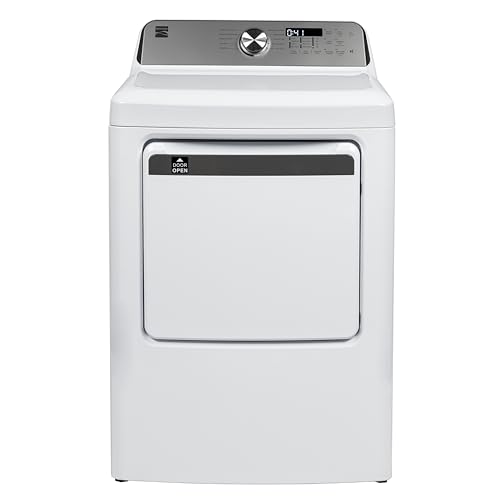
Kenmore’s provenance sentence is the careful one used throughout this guide: an American brand, with assembly arrangements that vary by model, so verify the country of origin on this listing before counting it as settled. With that said plainly, the machine itself addresses the two complaints family laundry rooms voice most. The first is loads emerging dry in patches — jeans waistbands damp while shirts are baked — which sensor drying exists to prevent by reading moisture and ending the cycle when the load, not the timer, says so. The second is the forgotten load wrinkling in a cooling drum, which Wrinkle Guard answers by tumbling intermittently after the cycle so clothes wait more gracefully for their owner.
Seven cubic feet in a front load electric format is the family standard for good reason: it pairs with the common washer sizes, swallows bedding in rotation, and does not demand the laundry room of a hotel. White keeps the price logic honest and matches the installed base of American laundry rooms, where white pairs still outnumber styled suites. The specification is deliberately unexotic — sensor, wrinkle care, a drum sized for real life — and that unexoticism is the appeal for households replacing a dryer under the pressure of a growing laundry pile.
Judge this pick as the middle of the market done sensibly. It does not claim Ripon’s commercial lineage or Louisville’s smart platform, and it should not be bought by someone for whom a confident factory city is the whole point — the Speed Queen and GE sections above serve that buyer with claims this guide can make in full sentences. It should be bought by the family that wants sensor-accurate drying and wrinkle insurance from a familiar American brand, having checked the origin line on the listing and found the answer acceptable.
One practical note on sensor drying, whichever badge you choose: sensors read the load best when loads are honestly sorted. A drum mixing heavy towels with light synthetics confuses every sensor ever built, drying to the average and satisfying neither fabric. Sort by weight, use the wrinkle programme as insurance rather than as a laundry storage system, and this Kenmore will deliver the quiet, competent service its specification promises.
- Brand: Kenmore, an American brand; assembly varies by model
- Origin advice: verify country of origin on this specific listing
- Fuel: electric, front load
- Capacity: 7.0 cu. ft., Wrinkle Guard and smart sensor drying
Strengths
- Sensor drying ends cycles by moisture rather than by guesswork.
- Wrinkle Guard rescues loads that sit after finishing.
- Familiar format and brand for mainstream family laundry rooms.
Trade-offs
- Origin cannot be claimed as confidently as Ripon or Louisville.
- No steam system for refreshing or sanitising.
- White finish only, for suites moving toward styled colours.
Best for: families wanting sensor drying and wrinkle care at the market’s centre. Not suited for: buyers needing a guaranteed factory city or steam features.

Kenmore 8.0 Cu Ft Front Load Electric Dryer White — Largest Drum, With Steam
Eight cubic feet is the largest drum in this guide, and size is a feature with daily consequences: fewer loads per week, bedding that tumbles freely instead of wadding into a damp-centred ball, and the household duvet standing a chance of drying at home rather than at the laundromat. Onto that capacity Kenmore layers Accela Steam, its wrinkle-and-static care system, alongside the Wrinkle Guard tumbling and sensor drying of its smaller sibling. The same origin guidance applies unchanged — American brand, assembly varies by model, verify the country of origin on this listing — and we repeat it here rather than assuming the reader scrolled through the previous review.
Steam in a dryer earns its place in specific, recurring moments rather than in every load. The shirt that must look presentable in twenty minutes, the tablecloth emerging from storage with fold lines, the school uniforms that sat in the drum overnight — a steam refresh addresses each without a full wash cycle, saving water, time, and fabric wear. Static reduction matters through winter, when synthetic blankets and fleece emerge crackling from lesser machines. None of this replaces an iron for formalwear, and this guide will not pretend otherwise; it replaces the iron for the broad middle of family life, which is the larger prize.
Large drums carry one discipline: they dry best loaded honestly. A cavernous drum with three shirts inside wastes the capacity you paid for and tumbles the load inefficiently, while a properly filled drum — full but with room for items to fall through the airstream — is where the 8.0 figure converts into fewer, better loads. Households of five and six, sports-kit families, and anyone washing bedding for a houseful of guests will feel the difference weekly. Smaller households should weigh the 7.0 picks first, because unused cubic feet are just expensive air.
As the family’s steam option from Kenmore, this model also suits buyers standardising on one brand across the laundry room while accepting the verification step on origin. Check the listing’s origin line, confirm the electrical supply matches an electric dryer’s demands, plan a short clean vent run, and the biggest drum in this guide is ready to absorb the laundry output of a busy house without drama.
- Brand: Kenmore, an American brand; assembly varies by model
- Origin advice: verify country of origin on this specific listing
- Fuel: electric, front load
- Capacity: 8.0 cu. ft., Accela Steam, Wrinkle Guard, sensor drying
Strengths
- Largest drum here for bedding and high-volume households.
- Steam refresh tackles wrinkles and static without a wash.
- Sensor drying protects mixed loads from over-drying damage.
Trade-offs
- Origin requires the same per-listing verification as all Kenmore picks.
- Oversized for couples, who will rarely fill it efficiently.
- Steam system adds components a plain dryer does not carry.
Best for: large families, bedding-heavy homes, and steam-refresh users. Not suited for: small households or buyers needing a confidently named factory.

GE 7.8 Cu Ft Smart Front Load Electric Dryer — Louisville Smart Steam
Louisville, Kentucky is the confident claim here: GE Appliances manufactures at Appliance Park, and this smart front load electric dryer carries that origin into the most feature-complete specification on the page. At 7.8 cubic feet it sits a breath below the Kenmore’s drum while adding the two programmes feature buyers actually ask for by name — steam, and a sanitize cycle — inside a smart platform that reports, reminds, and coordinates with the household’s phones for those who want laundry inside their connected routine.
Sanitize deserves its explanation. A high-heat cycle aimed at items that benefit from more than drying — washable soft toys after an illness week, the towels from a house with a newborn, work clothes from grubby trades — gives this machine a hygiene register the plainer picks do not claim. Steam handles the refresh-and-release work described in the Kenmore steam review, but the GE pairing of both systems in one drum is unique here, and for households that will genuinely use both, this is the obvious summit of the list.
Smart features should be bought with clear eyes. Notifications that a load has finished genuinely rescue wrinkles for forgetful households, and cycle downloads can add programmes over time; equally, the dryer must remain excellent with the Wi-Fi ignored, and on drum, heat, and sensing fundamentals this one is. Louisville’s service ecosystem stands behind it — the deep parts and technician familiarity that high-volume domestic production sustains — so the connected layer sits on an unconnected foundation of support, which is the right way round.
Choose this GE if your household’s laundry life is large, varied, and occasionally in need of sanitising heat, and if a Kentucky origin stated plainly matters to you. It is the pick that asks the fewest compromises of a feature-led buyer: near-largest capacity, both steam and sanitize, smart oversight, and a factory city this guide names without a caveat. The Speed Queens above remain the answer for a different temperament — the owner who wants none of those systems and all of that longevity — and the guide respects both temperaments equally.
- Origin: manufactured in Louisville, Kentucky
- Model: GFD65ESSVWW, smart front load
- Fuel: electric
- Capacity: 7.8 cu. ft., steam and sanitize cycle
Strengths
- Confident Louisville production behind a full feature set.
- Steam plus sanitize covers refreshing and hygiene in one drum.
- Smart notifications rescue loads from sitting and wrinkling.
Trade-offs
- Connected features add nothing for households that ignore apps.
- Feature richness means more systems than a plain dryer carries.
- Steam and sanitize cycles spend extra time and energy by design.
Best for: feature-led families wanting Louisville origin, steam, and sanitize together. Not suited for: minimalists who want a dryer with no connected layer at all.
Kenmore 7.0 cu ft Front Load Gas Dryer — The Gas-Fuelled Option
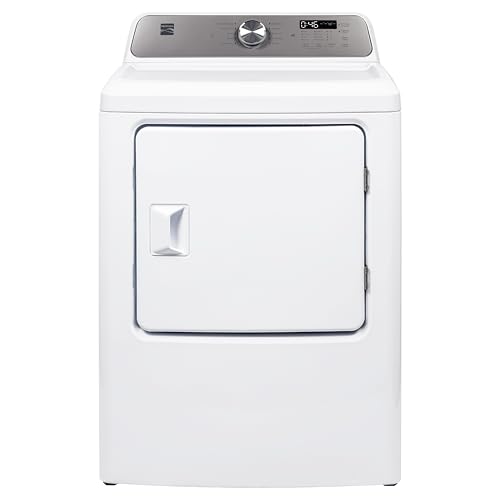
Read this heading twice, because it carries the most consequential word in the guide: gas. This Kenmore is a GAS dryer. It heats by burning gas, it requires a gas supply line and a proper flue path for its exhaust, and it must never be ordered for a home whose laundry room offers only an electric dryer circuit. The other five machines in this guide are electric; this one is not, and the distinction is repeated in its badge, its specification list, and the comparison table so that no skimming reader can miss it. Kenmore’s brand position matches its siblings — an American brand with model-dependent assembly, so verify country of origin on this listing — but fuel, here, outranks even origin as the fact to settle first.
Why choose gas at all? Households with an existing gas connection often find gas drying economical to run, and gas heat arrives quickly, which many owners experience as brisk, responsive cycles. Homes already plumbed for a gas dryer — common in older housing stock across much of the country — can install this model as a like-for-like replacement without electrical work, whereas switching fuel in either direction involves trades and permits. The machine itself mirrors its electric Kenmore sibling’s family virtues: 7.0 cubic feet, Wrinkle Guard tumbling to protect finished loads, and smart sensor drying that ends the cycle on moisture rather than on a timer’s guess.
Installation discipline is stricter for gas, and this guide will not soften that. A licensed installer should make or verify the gas connection, leak-test it, and confirm the vent run meets code, because exhaust from a gas appliance is a safety system, not a detail. Carbon monoxide awareness belongs in any gas laundry room as a matter of course. None of this is exotic — millions of American homes dry with gas safely across decades — but it is professional work at the connection point, and budgeting for that installation is part of this pick’s honest price.
If your home has the gas line, this is a coherent, family-featured dryer from a familiar brand, bought with the origin check performed on the listing. If your home does not have the line, close this section with relief that you read it, and choose among the five electric picks above — that fork, recognised early, is exactly what a buying guide exists to provide.
- Brand: Kenmore, an American brand; assembly varies by model
- Origin advice: verify country of origin on this specific listing
- Fuel: GAS — requires a gas supply line; not an electric dryer
- Capacity: 7.0 cu. ft., Wrinkle Guard and smart sensor drying
Strengths
- Suits homes already plumbed for gas with no electrical conversion.
- Gas heat delivers brisk, responsive drying for family loads.
- Sensor drying and wrinkle care match its electric sibling.
Trade-offs
- Absolutely requires a gas supply; unusable in electric-only laundry rooms.
- Gas connection should be made and tested by a licensed installer.
- Origin requires per-listing verification, as with all Kenmore picks.
Best for: homes with an existing gas dryer connection wanting Kenmore family features. Not suited for: electric-only homes — choose any of the five electric picks instead.
How Do the Six Compare at a Glance?
| Model | Origin position | Fuel | Capacity | Standout |
|---|---|---|---|---|
| Speed Queen DR7000WE Electric Dryer 7 Cu Ft | Ripon, WI | Electric | 7.0 cu. ft. | Commercial-tested controls |
| Speed Queen DC5003WE Electric Dryer 7 Cu Ft | Ripon, WI | Electric | 7.0 cu. ft. | Galvanized drum, 220 CFM |
| Kenmore 7.0 Cu Ft Front Load Electric Dryer White | Verify per listing | Electric | 7.0 cu. ft. | Sensor drying, Wrinkle Guard |
| Kenmore 8.0 Cu Ft Front Load Electric Dryer White | Verify per listing | Electric | 8.0 cu. ft. | Largest drum, Accela Steam |
| GE 7.8 Cu Ft Smart Front Load Electric Dryer | Louisville, KY | Electric | 7.8 cu. ft. | Steam, sanitize, smart |
| Kenmore 7.0 cu ft Front Load Gas Dryer | Verify per listing | GAS | 7.0 cu. ft. | Gas heat, sensor drying |
How Do You Decide Between Electric and Gas in the First Place?
Walk to your laundry room and look at what the house already offers, because the house usually decides. An electric dryer needs a high-voltage receptacle of the correct configuration; a gas dryer needs a capped or active gas stub, a standard outlet for its motor and controls, and venting either way. If the room provides one fuel only, your decision is made and this guide’s table tells you which five picks — or which single pick — belong on your shortlist. If the room provides both, running costs in your utility market, your household’s load volume, and your comfort with each fuel’s installation requirements become the arbiters.
Either fuel demands the same venting seriousness. A dryer moves gallons of water out of wet fabric as vapour, and that vapour needs a short, smooth, clean path outdoors. Foil flex duct crushed behind the machine, runs that climb and sag, and lint screens washed never are the quiet thieves of drying performance on every model in this guide. Before the new machine arrives, plan the vent as carefully as the purchase: measure the run, minimise bends, and commit to an annual clean. The best dryer in this guide on a bad vent will lose to a modest dryer on a good one, every load, for years.
Finally, match the dryer to its washer. Capacity should pair sensibly — a dryer slightly larger than the washer is the classic arrangement, since wet loads expand — and door swings should choreograph the transfer rather than fight it. Households replacing only the dryer should measure the surviving washer’s drum and door direction before ordering, a five-minute check that prevents a decade of awkward laundry ballet.
What Maintenance Keeps a Dryer Honest for Fifteen Years?
The lint screen is the whole religion in miniature: clean it every load, without exception, because a filmed screen throttles airflow, stretches cycle times, and wastes energy on every badge in this guide. Wash the screen with soap occasionally if fabric softener residue has glazed it — water should pour through it freely. Beyond the screen, the vent run wants an annual brush-out, the drum wants a wipe when dye or wax transfers, and the moisture sensor bars inside the drum want a gentle clean when loads start finishing unevenly, since softener film can blind them.
Listen to the machine the way you would to a car you intend to keep. New thumps often mean a load imbalance or an item with hardware; a developing squeal or rumble is a roller, belt, or bearing asking for attention while the repair is still small. On the gas pick, treat any gas smell as a stop-and-call event, always. Keep the area around the machine clear of stored chemicals and laundry clutter, level the feet so the drum runs true, and the commercial-boned Speed Queens and family Kenmores alike will repay the modest care with the long service their buyers came for.
How Should the Laundry Room Itself Be Arranged Around the New Dryer?
Measure the room as a system, not as a parking space. The dryer’s footprint is only the beginning: the door needs its full swing without striking the washer, a wall, or the person loading it, and the transfer path from washer drum to dryer drum should be a single comfortable motion rather than a shuffle around an open door. This is where the DC5003WE’s reversible door earns quiet gratitude, because rooms built with the hinges on the wrong side exist in every town, and a door hung for the room converts a daily annoyance into a non-event. Leave working clearance behind the machine for the vent connection and in front for the service visit nobody schedules but everybody eventually hosts.
Vent routing deserves a drawing before it deserves a drill. The shortest path outdoors with the fewest bends is the goal, ideally in smooth rigid duct, with any necessary elbows counted honestly against the machine’s pushing power. Runs that exit through the roof or travel the length of a house ask more of every dryer and repay an annual cleaning with interest. Where the vent must be long, say so in your expectations: loads will take a little longer, and the lint discipline described elsewhere in this guide becomes doubly important. A booster solution exists for extreme runs, but the first resort is always route design, and the time to design is before the machine is in the room.
Small comforts compound across a decade of laundry. A counter or shelf over the machines turns folding from a bed-making expedition into a laundry-room task. Light you can actually see stains by, a hamper system that sorts by fabric weight at the point of undress, and a door that closes against machine noise all raise the room’s contribution to the result. The dryer is the room’s engine, but the room decides how pleasant the engine is to live with, and an hour spent arranging it pays out across thousands of loads.
How Do You Dry Different Fabrics Without Shortening Their Lives?
Heat is both the dryer’s tool and its hazard, and fabric literacy is mostly heat literacy. Cotton towels and bedding tolerate — indeed need — robust heat and full dryness, and they reward the sensor’s patience by emerging fluffy rather than scorched at the edges. Denim wants thorough drying at moderate settings, turned out to protect its colour, and removed promptly before the drum’s creases set into the legs. Synthetics and gym wear dry quickly at lower temperatures and suffer under cotton settings, emerging with static and, over months, with degraded elastic. A household that sorts by weight and fabric, as this guide keeps advising, is not being fussy; it is extending the wardrobe’s life with every load.
Delicates deserve their own honesty. True delicates — silk, embellished items, anything whose label pleads for air — do not belong in any machine in this guide, and a dryer that respected them would still be the wrong tool. Wool sits in the middle: many modern wool items tolerate a gentle low cycle in a mesh bag, while heirloom knits should never meet a drum. The steam programmes on the Kenmore 8.0 and the GE offer a middle path for refreshing wool-blend garments without washing, relaxing wrinkles and odours with moisture and motion rather than immersion, which is often exactly the care a suit or a good sweater actually needs between wears.
Over-drying is the silent tax on all of it. Every extra minute of heat after dryness is reached costs energy, fades colour, weakens fibres, and sets wrinkles deeper — which is why sensor drying appears across this guide’s family picks as a headline virtue rather than a footnote. Set the sensor to the dryness your fabrics want, trust it over the timer, and clean its sensing bars when results drift. The wardrobe you already own is the most expensive laundry equipment you will ever buy; the dryer’s job is to protect it, and with sorted loads and honest settings, every machine here can.
What Should You Know About Pairing, Stacking, and Second Machines?
Most of these dryers will live beside a washer, and the pairing deserves a moment’s strategy. Matching brands is cosmetic; matching capacities and door choreography is functional. A dryer modestly larger than its washer handles the wet load’s expansion gracefully, and doors that open away from each other — or a reversible dryer door adjusted to suit — make the wet transfer a single sweep. Front load pairs invite a shared counter above, which returns folding space to the room, provided the machines’ heights align closely enough for the surface to sit level.
Stacking is a narrower question. Only combinations designed and kitted for stacking should ever be stacked, with the manufacturer’s own kit, and a full-size dryer of this class belongs in a stack only where the pair was engineered for it. When in doubt, side by side is the safer architecture, and the space-hungry should solve the problem with shelving above rather than with a dryer where it was never meant to stand. Basement and garage installations add their own notes: level, dry footing, protection from freezing for any water-adjacent components, and vent runs that respect the same rules as any other room.
A word for the households considering a second dryer — the large family, the home business, the sports club household drowning in kit. Two mid-size drums often serve such homes better than one cavernous one, because loads can run in parallel by fabric type and the failure of one machine leaves the household functional. If that is your arithmetic, the Speed Queen workhorse models make natural second machines: plain, durable, and indifferent to fashion. Size the electrical or gas supply for simultaneous running with professional advice, and the laundry bottleneck that shaped your weekends quietly dissolves.
How Do Running Costs Compare Across a Year of Family Laundry?
A dryer’s running cost is a multiplication problem: energy per load, loads per week, weeks per year. The variables an owner controls dominate it. Full, sorted loads cost less per garment than half loads run twice as often. Sensor endings cost less than timer guesses that overshoot. A clean vent costs less than a choked one that stretches every cycle by minutes the meter is counting. Even the premium machines in this guide run economically under those habits, and even the simplest machine runs wastefully against them, which is why this guide treats owner behaviour as a specification in its own right.
Fuel economics vary by region in ways no national guide can settle. Gas rates and electricity tariffs differ enough between states — and between suppliers in the same state — that the honest advice is arithmetic on your own bills: compare the per-load energy cost of each fuel at your prices, multiply by your household’s honest weekly load count, and let the difference argue with the installation cost of switching fuels, if switching is even on the table. For most households the existing connection wins that argument before it starts, which returns the decision to its proper ground: the machine, its drum, its features, and its origin, within the fuel your house already speaks.
There is one more line in the ledger: time. A dryer that finishes loads predictably returns hours across a year to the people waiting on uniforms, bedding, and work clothes, and a machine whose loads need a second cycle is spending both energy and life. Airflow, drum size matched to the load, and sensor accuracy are therefore economic features, not merely conveniences — another reason the specification-led picks in this guide publish their numbers where they have them and describe their behaviour where they do not.
Which Mistakes Do Dryer Buyers Make Most Often?
Ordering the wrong fuel is the catastrophic one, and it still happens weekly somewhere: an electric machine delivered to a gas-only room or — the dangerous mirror — a gas machine expected where no line exists. This guide has flagged its single gas pick relentlessly for exactly that reason. Read your room before you read reviews. The second mistake is ignoring the vent, reusing a crushed, lint-packed duct on a new machine and then blaming the dryer for slow loads that the duct caused.
Third comes capacity vanity in both directions: the couple buying 8.0 cubic feet they will never fill efficiently, and the family of six squeezing into a drum that forces double loads daily. Fourth, buyers chase programme counts while neglecting drum material and airflow, the fundamentals that decide drying in year eight. Fifth, steam and sanitize get purchased as aspirations and used twice; be honest about whether your household will actually run them, because the Speed Queen sections above exist for people whose honest answer is no. Finally, origin shoppers repeat the dishwasher error — inheriting a brand’s story onto a model unchecked. Verify the specific listing, as the Kenmore picks advise, and every claim in your purchase will be one you can defend.
What Does the First Month With a New Dryer Teach You?
Treat the first month as calibration. Note which programme your household actually presses for the weekday load, how the sensor’s idea of dry matches your hand’s idea on towels and denim, and whether the wrinkle programme rescues your real forgetting pattern or merely a theoretical one. Adjust defaults toward that evidence. Households discover, often with surprise, that they use two cycles for ninety percent of life and a third for bedding — and knowing your two cycles intimately beats owning twelve programmes superficially, on every machine in this guide.
The first month is also when the room’s flaws announce themselves: the door that should have been reversed, the vent bend that hums, the load transfer that crosses the room. Fix them now, while the installer’s visit is recent and the habits are unformed. A laundry room tuned in month one stays tuned for a decade, and the dryer you researched so carefully gets to be the dryer you actually bought — matched to the house, the fabrics, and the family it serves.
How Much Noise and Vibration Should You Expect, and What Tames Them?
A dryer is a rotating drum of wet weight above a blower, so a working hum is physics rather than fault. What varies is how much of that hum reaches the household: machines on suspended timber floors broadcast more than machines on concrete, and loads with buckles and zippers add their own percussion. Level feet are the first remedy, because a rocking machine amplifies everything it does; a mat beneath can soften transmission in upstairs laundry rooms, and balanced loads — heavy items distributed rather than clumped — prevent the thump cycle that wakes houses at midnight.
Placement diplomacy matters too. A laundry room sharing a wall with a nursery argues for the household’s drying to be scheduled with the same care as its quiet hours, whichever pick you choose, while a basement or garage installation can run at any hour without negotiation. Note new sounds as the machine ages rather than normalising them: the dryer that develops a squeal or a rumble is communicating early, when rollers and belts are inexpensive, and owners who answer early are the ones whose machines reach the long service lives this guide keeps promising. Silence was the dishwasher’s virtue; in the laundry room, a steady familiar hum is the sound of health, and change is the signal worth hearing.
Final Recommendation
Longevity buyers should begin and likely end in Ripon: the Speed Queen DR7000WE Electric Dryer 7 Cu Ft for its tested electronic platform, or its galvanized sibling for drum-and-airflow purists. Feature buyers should look to Louisville and the GE 7.8 Cu Ft Smart Front Load Electric Dryer, which combines a confident Kentucky origin with steam, sanitize, and smart oversight in one drum. Big households on the Kenmore path should take the Kenmore 8.0 Cu Ft Front Load Electric Dryer White and its steam care, after the origin check this guide keeps prescribing.
Before the order is placed, stand in the laundry room one final time with the tape measure and this page both open. Confirm the doorway the machine must travel through, the swing of its door against the washer’s, the receptacle or gas stub waiting behind the old unit, and the vent’s path to the outdoors. Five minutes of that confirmation, added to the origin check and the fuel check, converts a researched shortlist into a delivery day with no surprises in it — which is the true finish line of any appliance purchase, and the one this guide has been steering toward from its first paragraph.
And the gas household has exactly one door here, clearly labelled. Whatever you choose, let the fuel match the house, the drum match the family, and the origin claim match the evidence, and your laundry room will settle into the kind of decade-long truce that the best appliance purchases create — the truce in which nobody thinks about the dryer at all, because the towels simply keep coming out dry.
Frequently Asked Questions
Which dryers in this guide are actually built in the United States?
The two Speed Queen models are built in Ripon, Wisconsin, and the GE model is manufactured in Louisville, Kentucky; those claims are stated confidently. Kenmore is an American brand whose assembly varies by model, so verify the country of origin on the specific Kenmore listing before relying on it.
Which pick is the gas dryer, and how can I be sure not to confuse it?
The Kenmore 7.0 cu ft Front Load Gas Dryer is the gas model — the word gas appears in its name, badge, specifications, and comparison row. It needs a gas supply line and professional connection. Every other pick in this guide is electric.
Is 7.0 cubic feet enough for a family of five?
For most, yes, provided loads are sorted by fabric weight and the drum is filled sensibly rather than crammed. Households drying frequent bedding or very large weekly volumes will feel the step up to the 7.8 GE or the 8.0 Kenmore in fewer weekly loads.
Does steam in a dryer replace ironing?
It replaces ironing for the broad middle of family clothing — shirts, school wear, linens with fold lines — by relaxing wrinkles and cutting static. Formal garments still benefit from a press, and no dryer cycle in this guide claims otherwise.
How often should the vent be cleaned?
Clean the lint screen every load and the vent run at least annually, sooner if loads begin taking longer than they used to. Declining drying speed is usually an airflow story before it is a machine story.
Can I convert an electric dryer setup to gas, or the reverse?
Conversions are construction projects, not appliance settings: bringing a gas line to a laundry room, or adding a high-voltage circuit where none exists, means licensed trades, permits in many areas, and costs that belong in the purchase calculation from the start. Most households wisely choose the dryer that matches the fuel already present, which is why this guide separates its one gas pick so conspicuously from its five electric ones.
How long should a well-kept dryer in this guide last?
Service life depends on load volume and care more than on any single specification, but the commercial-boned Speed Queen models are bought precisely because their platforms are designed and supported for very long working lives, and the family machines here should also serve for many years under the maintenance rhythm this guide describes — clean screen, clean vent, level feet, prompt attention to new noises. The honest promise is not a number of years but a relationship: machines maintained like this are repaired when small things fail, and repaired machines are the ones still drying in their second decade.
Should the dryer and washer match in capacity?
Close, with the dryer modestly larger if anything, because a wet load expands as it dries and needs room to fall through the airstream. Every dryer in this guide sits between 7.0 and 8.0 cubic feet, which pairs naturally with the common family washer sizes; measure the surviving washer’s drum before ordering if you are replacing only the dryer.
What does sensor drying actually do?
Moisture sensors monitor the load and end the cycle when the fabric reaches the selected dryness, instead of running a fixed time. That protects clothes from heat damage, saves energy, and prevents the damp-waistband problem of timer-based drying.
Related Guides
The freezers that partner a hardworking laundry room in many homes get their own careful treatment in Best 12 Cf Freezers, sized for bulk storage beside the wash-day routine. Sale-season planning for the outdoor cleaning fleet is covered by Best Black Friday Sale on Pressure Washers, and the small machines that keep children entertained while laundry runs are rounded up in Best Bubble Machines.



[…] the same origin standards into the laundry room with Best American Made Dryers, where the confident and hedged claims are graded by the same rules used here. Plan the driveway […]