What's inside
- Key Takeaways
- Quick Picks
- How Did We Choose These Camping Grills?
- How Do the Six Camping Grills Compare Side by Side?
- How Much Weight Can You Honestly Carry to the Pitch?
- Propane or Charcoal: Which Fuel Suits Your Campsites?
- Tabletop or Legs: Where Will the Grill Actually Stand?
- How Fast Should a Camp Grill Assemble After a Long Drive?
- What Should You Cook First to Learn a New Camp Grill?
- How Do You Keep Camp Cooking Safe Around Tents?
- Which Accessories Actually Earn Their Packing Space?
- How Should You Plan Menus Around a Small Grill?
- How Do You Store a Camp Grill Between Trips?
- When Is a Bigger Grill Worth the Extra Bulk?
- What Mistakes Do Campers Make When Buying a Grill?
- Final Recommendation
- Frequently Asked Questions
- Related Guides
As an Amazon Associate I earn from qualifying purchases. This post may contain affiliate links at no extra cost to you.
cottageverdict.com is reader-supported. When you buy through links on our site, we may earn an affiliate commission.
Where to buy: Each pick below links to its Amazon listing, where you can check price on Amazon and confirm the current bundle before ordering. Start there rather than hunting through general outdoor retailers, because portable models change names and included accessories surprisingly often.
Finding the best camping grills starts with a confession: the walk from your car to the pitch decides more than any burner figure. A wonderful grill that stays home because it is heavy, awkward or slow to assemble helps nobody, while a modest unit that rides easily, sets up in minutes and cleans without drama cooks dinner after dinner. This guide weighs portability, assembly speed, fuel practicality and whether a grill belongs on a picnic table or on its own legs, then matches six very different machines to the campers they actually suit.
Think about your last trip honestly. Did you cook once for two people, or feed six friends across a long weekend? Did wind rake across an open field, or did trees shelter the pitch? Did the site allow charcoal at all? Those memories are better buying data than any headline output figure, and the sections after the detailed reviews return to them one by one.
One more filter before the reviews: think about who does the washing up. Camp sinks are small, hot water is scarce and queues form at the standpipe. A grill that needs soaking, scrubbing and three separate trays cleaned will quietly fall out of favour, however beautifully it cooks. The picks below were judged partly on how gracefully they clean with warm water, a brush and limited patience.
Treat this opening honestly and the rest of the guide becomes a shortlist rather than a catalogue, which is exactly what a tired camper choosing equipment on a weekday evening actually needs from any buying guide worth reading.
Key Takeaways
- Weight and folded size matter more than headline heat for walk-in pitches and small car boots.
- Propane wins on speed and site rules; charcoal wins on flavour where fires are allowed.
- Tabletop models need a stable bench, while legged models claim their own space beside it.
- Assembly you can manage tired and hungry beats clever engineering every single evening.
- A side burner or flat griddle changes breakfast more than an extra main burner does.
- Match grill size to your real group, not the biggest gathering you host once yearly.
Quick Picks
| Pick | Badge | Why it earns a place |
|---|---|---|
| Coleman RoadTrip 285 Portable Propane Grill | Best for Family Campsites | Three burners and folding legs turn a picnic table pitch into a proper cook station for a hungry group. |
| Charbroil Grill2Go X200 Portable Gas Grill | Toughest Travel Case | A latching lid and rugged case shape shrug off knocks in a packed boot better than open-frame rivals. |
| Cuisinart 14 Inch Portable Charcoal Grill | Lightest Charcoal Pick | Dual vents and three lid locks make this tiny kettle the charcoal purist’s carry-anywhere option. |
| Charbroil Portable 1-Burner Propane Grill | Simplest Solo Setup | One burner, minimal parts and an 11,000 Btu output keep solo camp cooking refreshingly uncomplicated. |
| Odoland Portable Folding Charcoal Grill | Packs Flattest | Folding iron panels collapse into a carry bag, suiting walk-in pitches where every centimetre counts. |
| Blackstone 12×14 Camping Griddle with Side Burner | Best Breakfast Griddle | A flat top plus a side burner covers fry-ups and kettle duty in one compact camp kitchen unit. |
How Did We Choose These Camping Grills?
We began by sorting portable grills according to the journey they must survive. Anything too heavy to carry from a car park, too bulky for an ordinary boot, or too fiddly to assemble with cold fingers was judged harshly, however impressive its cooking area looked. The survivors were then compared on fuel: small propane canisters for speed and cleanliness, charcoal for flavour and independence from canister supplies, and flat-top griddles for the breakfast-heavy style of camp cooking many families actually do.
Table manners formed the next test. A camping grill either sits on a picnic table, where it must stay compact and stable, or stands on its own legs, where it must not wobble on grass. We favoured designs whose lids latch, whose panels fold, or whose feet adjust, because campsite surfaces are rarely the level concrete of a showroom floor. Finally we checked that every recommended model appears in our verified pool with an official product image, so what you see beside each review is the machine being discussed.
One deliberate choice runs through the list: variety over sameness. Six near-identical gas boxes would have been easier to rank but useless to read. Instead you get a wheeled family station, a sealed travel case, two charcoal routes of very different shapes, a plain single-burner box and a griddle with a side burner, each defended on its own terms.
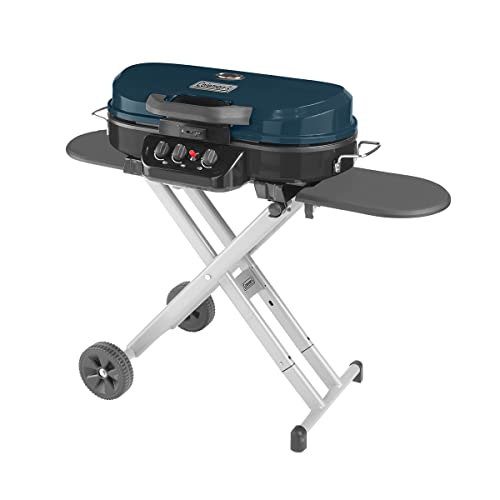
Coleman RoadTrip 285 Portable Propane Grill — Best for Family Campsites
At a busy campsite the RoadTrip behaves less like a portable toy and more like a shrunken backyard cooker. The three burners spread heat across a wide surface, so a parent can sear sausages on one side while corn stays warm on the other without constant shuffling. Folding legs lift the cooking height to something kind on your back, which matters when breakfast for five takes longer than ten minutes standing hunched over a low table.
Transport is the honest compromise here. Wheels help on gravel paths and hard standings, and the frame collapses for the drive home, but nobody sensible carries this unit up a fell path. Treat it as car camping equipment that happens to fold, plan boot space around it, and it rewards you with calm, roomy cooking once pitched. On a picnic table it feels oversized, so give it its own stand space beside the bench rather than on top of it.
Think of a wet Saturday at a large site: neighbours are sheltering under awnings, children want lunch now, and your pitch has turned into the social centre for three tents. This is where the RoadTrip quietly justifies its bulk. The wide surface swallows a full packet of sausages beside peppers and onions, the lid holds heat against the drizzle, and whoever is cooking can stand upright under the awning edge instead of crouching in the rain. Meals feel organised rather than improvised, and organisation is what large-group camping usually lacks by day two.
Fuel planning deserves a word because three burners invite generosity. Running everything on high drains small canisters at a pace that surprises first-time owners, so learn to preheat with the lid down, then drop burners to the lowest setting that holds temperature. A bulk tank with the proper adapter suits week-long base camps, while canisters remain tidier for weekends. Either way, keep a spare supply in the car; a family grill that runs dry at seven in the evening creates a particular kind of campsite silence.
Storage between trips decides whether a big folding grill stays loved. Hose it down only when cool, dry the grates before folding, and store the unit somewhere ventilated so trapped moisture cannot mark the surfaces. Keep the small parts, adapter and igniter spares together in one labelled pouch inside the boot. Owners who build that little routine find the RoadTrip ready in minutes each spring instead of demanding a rescue mission before the first trip of the year.
Wind tests big grills cruelly because a wide lid catches gusts like a sail. Pitch the RoadTrip with its back to the breeze, use the lid as a shield while cooking, and avoid opening it fully on exposed headlands. The burners hold temperature well once sheltered, and the stand’s weight becomes an ally rather than a burden. Choose pitch position with the same care you give the tent and both will behave better all weekend.
One final virtue deserves mention: resale and hand-me-down value. Sturdy family grills with a recognised name tend to find second homes easily when your camping style changes, and parts support usually outlasts no-name rivals. Buy once, maintain it honestly, and the cost per cooked meal across a decade of summers becomes genuinely small.
- Fuel: liquid propane, small canisters or bulk tank with adapter
- Output listed in pool title: 20,000 BTUs across 3 burners
- Stand: folding legs with wheels for rolling to the pitch
- Ignition: Instastart push-button lighting
- Surfaces: interchangeable grill and griddle tops are sold for this line
Strengths
- Burner zones let pancakes warm gently while bacon crisps harder nearby
- Legs fold flat enough for a car boot yet stand steady on grass
- Wheels spare your back on the walk from car park to pitch
Trade-offs
- Heavier than every other propane option gathered here
- Small canisters empty quickly when all three burners run high
- Needs a level patch or the wheeled frame can creep slightly
Best for: families cooking full meals at drive-in campsites over several nights
Not suited for: backpackers counting grams or hikers walking far from the car

Charbroil Grill2Go X200 Portable Gas Grill — Toughest Travel Case
The X200 earns its place through toughness rather than sheer cooking area. Its case-like body closes with a latch, so the whole unit rides in a boot without shedding parts or smearing grease across your tent bag. That sealed, suitcase feel suits festival weekends, fishing trips and forestry tracks where luggage gets knocked about between home and pitch.
On the bench it settles into simple work: burgers, skewers, halloumi and vegetables for two or three people at a comfortable pace. Expect to cook in relaxed batches instead of laying out everything at once. Heat control is straightforward rather than fancy, and the small footprint leaves room on a picnic table for boards, bowls and drinks, which on a cramped pitch can matter as much as another burner.
Durability shows in small details after a season of trips. A case that latches stays shut when the boot lid slams, hinges keep alignment after being dragged across gravel, and the cooking surface wipes clean without hidden channels trapping grease. Owners who tour monthly will value that robustness more than a slightly larger grate, because the grill they trust is the grill they bother to pack when the forecast looks mixed and space is tight.
There is also a social ease to a compact case grill. It sits at one end of the picnic bench leaving the rest for people, plates and conversation, so cooking stays part of the gathering rather than a separate operation across the pitch. For two people sharing skewers and grilled vegetables as the light fades, that closeness is the whole point of camping. A bigger machine would cook faster and somehow make the evening feel smaller.
A note on cooking for three or four with a case this size: choose menus that welcome batches. Skewers, wings and sliced vegetables all cook in waves and stay delicious warm, so nobody waits hungrily while a single steak monopolises the grate. Serve the first round as a starter, pour drinks, and let the grill work steadily. Small grills reward hosts who turn limitation into pacing, and campers rarely remember the wait when food keeps arriving hot.
Cold-weather camping suits a lidded case grill surprisingly well. The enclosed body traps heat that an open grill would lose, so autumn evenings and early spring trips stay practical. Warm the closed grill a little longer before loading food, keep the lid down between turns, and accept slightly longer cooking times. A hot, simple dinner on a frosty pitch feels like luxury precisely because the equipment stayed modest and dependable.
For anglers and hunters the case format has a particular logic: it rides in a boat or truck bed without rattling loose, opens on a tailgate, and cooks the day’s catch or simple sausages while stories are retold. Equipment that fits the vehicle and the ritual survives; equipment that demands ceremony gets left at the cabin.
- Fuel: liquid propane from small portable canisters
- Body: case-style shell with a lid that latches shut
- Carry: integrated handle for one-handed lifting
- Grates: designed for direct grilling of smaller camp meals
- Footprint: tabletop size for picnic benches and tailgates
Strengths
- Latched lid keeps ash, grease and loose parts contained in transit
- Compact case shape stacks neatly beside cool boxes and tents
- Sturdy shell tolerates being slid around a crowded boot
Trade-offs
- Cooking room suits couples far better than large groups
- No stand included, so a stable table becomes essential kit
- Single cooking zone limits elaborate two-temperature meals
Best for: couples and small groups who travel rough roads to reach camp
Not suited for: anyone planning banquet-style grilling for eight or more people

Cuisinart 14 Inch Portable Charcoal Grill — Lightest Charcoal Pick
Some campers refuse to give up charcoal, and this little kettle explains why they bother. At fourteen inches it looks modest, yet the dual vent system lets you calm a fierce fire for chicken or open everything up for a hard sear on steaks. Smoke curls properly, fat drips where it should, and food tastes like it came off a grill rather than a hot plate.
Carrying it explains the three lid locks in the listing. Clamp the lid down and the whole thing moves by one handle without raining ash through your car. The trade is patience: lighting takes time, ash needs a metal container once cold, and many organised sites restrict charcoal during dry spells. Check the site rules before packing it, keep it on bare ground away from tent fabric, and it delivers flavour no gas rival here quite matches.
Heat management on a small kettle rewards attention. Bank coals to one side and you create a fierce zone for burgers plus a gentler bank for chicken pieces finishing through. The dual vents then act like a volume control: close them slightly and the fire settles for a slow half hour, open them and fresh life returns for a final sear. Learning those moves on a grill this size teaches charcoal skills that transfer to any larger kettle at home.
Portability shapes the menu in a good way. Because the kettle travels so easily, it becomes the grill you take for a single night by the coast or an afternoon at a reservoir, trips where a heavy gas station would stay in the garage. Corn in husks, sardines, lamb chops and thick courgette slices all suit its scale. Just remember a small metal bucket for ash, because leaving a site clean is part of the bargain wherever you cook with charcoal.
Briquettes or lump charcoal change this kettle’s mood. Briquettes burn longer and steadier, suiting chicken and sausages, while lump lights faster and burns hotter for steaks, though it fades sooner. Carry a small chimney starter and lighting cubes in a sealed tin, and the whole lighting ritual shrinks to fifteen calm minutes. Experiment at home once and you will know exactly how much fuel a full grate of food actually needs.
This kettle also moonlights beautifully at home on a balcony or small patio between trips, which improves its value story considerably. Equipment used monthly stays familiar, and familiarity is what makes camp cooking calm. Keep its grate oiled, store it under cover, and the same little grill that seared sardines by the sea will handle weeknight burgers without demanding storage space like a full-size barbecue.
Budget honesty helps here too. Charcoal itself is cheap, but remember to count lighting supplies, a brush and eventual grate replacement in the real cost of ownership. Even fully counted, this kettle remains one of the least expensive routes to genuine grilled flavour, which is why it keeps appearing in the boots of experienced campers who could afford far more.
- Fuel: charcoal briquettes or lump charcoal
- Cooking area listed in pool title: 196 sq. in.
- Grate: chrome-plated cooking grate
- Vents: dual air vent system for heat management
- Carry: 3 lid locks allow one-handed carrying
Strengths
- Real charcoal flavour from a grill one person lifts easily
- Vent control gives surprising command over a small fire
- Lid locks stop spills when you move it between pitches
Trade-offs
- Charcoal lighting and ash disposal add time to every meal
- Small grate means patient batch cooking for bigger appetites
- No gas convenience when campsite rules restrict open charcoal
Best for: charcoal lovers camping light who still want proper smoke flavour
Not suited for: sites banning charcoal or cooks wanting instant weeknight heat

Charbroil Portable 1-Burner Propane Grill — Simplest Solo Setup
There is a particular pleasure in a grill that asks almost nothing of you. This single-burner Charbroil arrives with few parts, sits on a table, lights, and gets on with cooking sausages while you put the tent up with your remaining energy. For one or two people touring between sites, that simplicity can beat a larger machine that dominates packing and cleaning alike.
Limits appear quickly once ambitions grow. Everything shares one heat zone, so toast burns while eggs wait, and a family feast becomes a relay race. Fuel economy on short trips is a genuine virtue though, and the aluminized steel body shrugs off ordinary camp knocks. Pack it when the menu reads grilled sandwiches, burgers and corn rather than a three-course production, and expectations stay happily aligned with reality.
Solo touring reveals virtues that group campers overlook. When dinner is one steak, a handful of asparagus and a mug of tea made separately, a single burner is not a limitation but a match. The grill heats quickly, cools quickly and wipes down in moments, so evenings stay free for walking, reading or watching the light change rather than tending equipment. Campervan owners especially will appreciate how little cupboard it surrenders.
There are workarounds for its single zone worth learning. Rest cooked items on a warmed plate covered with foil while the next batch grills, or choose menus that cook in sequence naturally: peppers first for a salad, then sausages, then bread toasted last in the residual heat. Planned that way, one burner produces a complete meal without stress. What it cannot do is improvise for unexpected guests, so keep expectations and guest lists equally modest.
Value hides in running costs as much as purchase decisions. A small single burner sips fuel, needs no charcoal supplies and asks for minimal replacement parts over years of service. For campers who head out twice a month, that economy compounds quietly. The plain specification also means fewer features to break in the back of a van, and a grill that works every time earns more loyalty than a clever one awaiting a spare part.
Breakfast for one is this burner’s quiet triumph: a small pan of eggs beside grilled tomatoes, bread toasted at the edge, all done before a bigger grill would finish preheating. Touring cyclists with trailers and minimalist van travellers build whole routines around that speed. When the day’s plan involves miles rather than feasts, a grill that cooks and packs away in twenty minutes protects the itinerary as much as the appetite.
Renters and flat-dwellers should note the storage story: this little grill tucks onto a shelf or into a hall cupboard between trips, asking for none of the garage space a standing model demands. For city campers who tour from a small home, that compact afterlife matters as much as anything it does at the pitch.
- Fuel: liquid propane canisters
- Output listed in pool title: 11,000 Btu from a single burner
- Body: aluminized steel construction in black
- Layout: single cooking zone for straightforward meals
- Style: compact tabletop footprint for small pitches
Strengths
- Almost nothing to assemble before the first meal cooks
- Single burner keeps fuel use modest on short trips
- Small body stores easily in campervan cupboards
Trade-offs
- One zone means no gentle corner for resting cooked food
- Limited room rules out cooking for a crowd at once
- Basic build lacks the refinements of pricier travel grills
Best for: solo campers and couples wanting the plainest possible gas setup
Not suited for: group catering or dishes needing separate hot and warm zones

Odoland Portable Folding Charcoal Grill — Packs Flattest
The Odoland solves a different problem from the kettles and gas cases: volume. Its iron panels fold into a slim bundle that slides down the side of a rucksack or disappears into a picnic basket, then opens into a charcoal bed wherever regulations allow a fire. For walk-in pitches a short distance from the car, that flat pack changes what is realistic to carry alongside tents and sleeping mats.
Cooking over it feels closer to a managed campfire than to a lidded grill. Wind steals heat from the open sides, tall flames lick unevenly, and you manage the meal by moving food rather than turning a dial. Embrace that rustic rhythm for skewers, flatbreads and foil parcels, keep a spray bottle and gloves nearby, and let it cool fully before folding the panels back into their bag.
The folding design changes packing conversations. Instead of asking whether the grill fits, you ask where its slim bag slides: beside the tent poles, under a seat, along the cool box. That freedom suits cyclists with trailers, canoe campers watching volume, and families whose car already bulges with wellies and board games. Assembly becomes a small ritual of unfolding panels and settling the grate, best done on arrival before tiredness sets in.
Cooking over an open charcoal bed invites a different menu. Flatbreads puff directly at the edge, skewers turn by hand, and foil parcels of potatoes sit in the embers while the main grill handles vegetables. Because there is no lid to trap heat, choose foods that enjoy direct fire and forgive timing. Wind remains the enemy, so pitch a windbreak or choose a sheltered hollow, and never use it under a canopy where sparks and heat rise into fabric.
Ground choice matters more with a folding grill than with lidded models. Bare earth, gravel or a slab protects grass from heat and gives the panels a firm footing, while a slight hollow shelters the fire from gusts. Keep a bottle of water for flare-ups from fatty food, turn skewers with tongs rather than fingers, and let the iron cool until it can be handled comfortably before folding it away into its bag.
Teenagers and first-time campers often love this folder most, because cooking over visible coals feels like an event rather than a chore. Give them skewers to build, flatbreads to watch and marshmallows for afterwards, and the grill becomes the evening’s entertainment. Supervise the hot zone properly, keep the bag for afterwards, and a cheap folding grill ends up creating the memories that expensive equipment merely witnesses.
Weight watchers should weigh the whole system, not just the grill: panels, bag and a modest bag of charcoal together still travel lighter than most lidded alternatives. On a walk of any distance that difference decides whether grilled food features at all. Pack it once for a riverside night and the appeal becomes immediately obvious.
- Fuel: charcoal for grilling or an open campfire feel
- Body: heavy duty iron panels that fold down
- Packing: compact folded size with a carry bag
- Uses listed: picnic, patio, backyard and campfire cooking
- Setup: panel design unfolds without a bulky frame
Strengths
- Folds flatter than any kettle or case grill here
- Carry bag keeps soot contained inside your pack or boot
- Doubles as a small firepit-style cooker on suitable ground
Trade-offs
- Panel joints need care to stay tight after repeated trips
- Open design loses heat quickly on windy evenings
- Charcoal rules and ash handling apply just as with kettles
Best for: walk-in campers and picnic groups short on packing space
Not suited for: exposed windy sites or anyone wanting a sealed lidded cooker
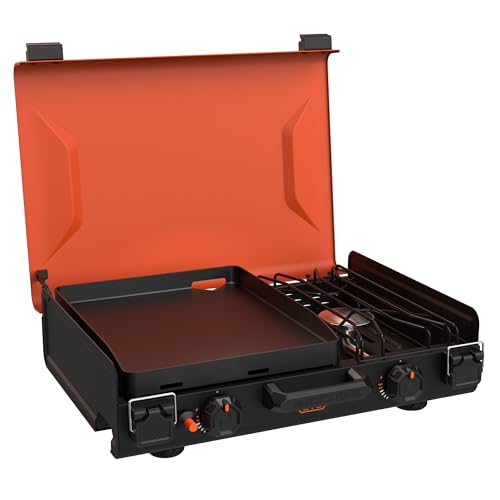
Blackstone 12×14 Camping Griddle with Side Burner — Best Breakfast Griddle
Breakfast is where this Blackstone unit argues its case most loudly. A flat griddle takes eggs, mushrooms, tomatoes and bacon in one sweep, with no food escaping between grate bars and no flare-ups from dripping fat. The side burner earns equal praise: while the griddle works, a kettle climbs to boiling for tea, or a small pan of beans warms without stealing flat-top space.
Leveling feet sound dull until you cook on a sloping Forest Service table and watch oil pool into one corner. Small adjustments restore an even surface and calmer cooking. Remember this is a griddle first, so steaks cook in their own juices rather than over open flame, and the plate wants oiling after use to stay slick. For groups who gather around morning cooking, that routine is a fair price.
Lunch and dinner suit the griddle better than sceptics expect. Smash burgers develop a deep crust across their whole surface, quesadillas crisp evenly, and a pile of onions can be pushed aside to sweeten while halloumi sears. The side burner then handles a pan of sauce, a pot of rice or mulled drinks on cold evenings, turning one unit into a small outdoor kitchen rather than a single-purpose plate.
Care of the plate decides long-term happiness. Warm it, oil it lightly, and cook; afterwards scrape while warm and wipe with oiled paper until the surface looks seasoned rather than scrubbed bare. Treat the steel kindly and eggs slide more freely each trip. Store it latched and dry, because a damp griddle left for a month between trips can develop surface rust that takes an afternoon of seasoning to undo.
Packing the Blackstone into a touring routine works best when it owns a fixed place: flat in the boot with its latches checked, utensils in a roll beside it, oil and seasoning in a small crate that never migrates. That fixed geography means setup at the pitch takes minutes and nothing essential hides in another bag. Camp kitchens fail through missing spatulas more often than through weak burners, so organise for the cook you are, not the one in the advertisement.
Rainy mornings reveal another strength: a griddle under an awning cooks breakfast without the smoke that a charcoal fire would push into everyone’s shelter. Pancake batter, eggs and bacon produce smells that lift a grey campsite mood in minutes. Keep the side burner for the kettle and the whole tent wakes to tea and hot food, which is as close to a campsite superpower as cooking equipment gets.
Hosts who cook for neighbouring pitches will enjoy the theatre of a griddle: food visible, sizzling and shareable, with the cook facing the audience rather than a lid. Camp cooking at its best is social, and a flat top that lets everyone watch breakfast appear turns a routine meal into the morning’s gathering point.
- Surface listed in pool title: 12 x 14 inch camping griddle
- Extra: side burner for kettles, pans and sauces
- Feet: leveling feet for uneven campsite tables
- Closure: latches hold the unit together for travel
- Style: flat-top cooking rather than open grill grates
Strengths
- Flat top excels at eggs, pancakes, onions and smash burgers
- Side burner boils the kettle while breakfast fries beside it
- Leveling feet calm wobbles on battered picnic tables
Trade-offs
- No open-grate char for campers who want flame-kissed marks
- Griddle seasoning and oiling become part of the routine
- Bulkier than a plain single-burner tabletop grill
Best for: camp cooks whose favourite meal is a big shared breakfast
Not suited for: purists chasing charcoal smoke or deep grill-bar char marks
How Do the Six Camping Grills Compare Side by Side?
| Pick | At a glance |
|---|---|
| Coleman RoadTrip 285 Portable Propane Grill | Propane, 3 burners, 20,000 BTUs, wheeled folding stand |
| Charbroil Grill2Go X200 Portable Gas Grill | Propane, latching lid, case-style body for rough transport |
| Cuisinart 14 Inch Portable Charcoal Grill | Charcoal, 196 sq. in. grate, dual vents, 3 lid locks |
| Charbroil Portable 1-Burner Propane Grill | Propane, 1 burner, 11,000 Btu, aluminized steel body |
| Odoland Portable Folding Charcoal Grill | Charcoal, folding iron panels, carry bag included in listing |
| Blackstone 12×14 Camping Griddle with Side Burner | Griddle plate 12 x 14 inches plus side burner, leveling feet |
How Much Weight Can You Honestly Carry to the Pitch?
Portable covers everything from a folding iron grill that slides into a bag to a wheeled station that fills half a boot. Be honest about your typical carry. Drive-in sites with the car beside the tent forgive weight; a ten-minute walk across a field does not. Weigh your current kit mentally: tent, chairs, cool box and water already compete for hands, and the grill usually travels in the second trip nobody enjoys making.
A useful rule is to match the grill to the shortest-handed version of your trip. If you sometimes camp solo, a unit needing two people to lift comfortably will eventually be left behind. Compact charcoal and single-burner gas models shine here, while the wheeled Coleman justifies itself only when the car stays close and the cooking justifies the bulk.
Propane or Charcoal: Which Fuel Suits Your Campsites?
Propane lights instantly, adjusts with a knob and leaves no ash, which is why most organised campsites welcome it even during dry weather. Small canisters are widely sold at site shops and petrol stations, though they cost more per hour of cooking than bulk charcoal and create empty cylinders to carry home. Charcoal answers with flavour, cheap fuel available almost anywhere, and freedom from worrying about a canister running dry mid-trip.
Rules decide many purchases before taste does. Sites in forests, on peat, or during drought often ban charcoal and disposable barbecues while permitting raised gas grills. Read the rules for the places you actually visit, not the places you imagine visiting. If your favourite site bans charcoal every summer, the finest kettle in this guide is the wrong purchase, however lovely its smoke.
Tabletop or Legs: Where Will the Grill Actually Stand?
Picnic tables look convenient until six people, plates and a cool box claim every plank. A tabletop grill then squeezes cooking into the social space and risks scorching wood if heat escapes underneath. Legged models move cooking to the edge of the pitch, free the table for eating, and usually offer a kinder working height. Their weakness is stability on soft or sloping ground, where one leg sinks and the whole station leans.
Before buying, picture the exact spot your grill will occupy. Measure the table you tour with, if you use one, and check the grill footprint against it. For legged models, look for wide feet, cross-bracing or wheels that lock the unit into a working position. Leveling feet, like those on the Blackstone griddle, quietly solve more campsite annoyance than many headline features.
How Fast Should a Camp Grill Assemble After a Long Drive?
Assembly speed is really about hunger management. Arriving at dusk with tired children is the worst moment to decode a bag of loose bolts. Favour designs that unfold, latch or drop together with few separate parts, and practise the setup once at home in daylight. Photograph the packed order of panels and parts on your phone; repacking neatly on a wet Sunday morning becomes far easier with a reference.
Cleaning belongs in the same calculation. Grates that lift out, drip trays that slide free and surfaces that wipe down before food dries on will decide whether the grill gets used on night three. Charcoal adds ash disposal once everything is stone cold, ideally into a metal container supplied by the site. Build ten unhurried minutes into your routine and the whole trip feels calmer.
What Should You Cook First to Learn a New Camp Grill?
Every portable grill has a personality that only appears under real food. Start with forgiving dishes: sausages, thick vegetable slices and chicken thighs teach you where heat gathers without punishing small errors. Avoid delicate fish or expensive steaks on the first outing, when you are still learning how wind, fuel and lid position interact on your particular machine.
Keep notes, even rough ones on your phone. Record how long preheating took, which setting held a steady medium heat, and where the cold corner sits. Those observations turn the second cook into a calm performance and the third into routine. Camp cooking improves faster through two noted experiments than through a season of guessing.
How Do You Keep Camp Cooking Safe Around Tents?
Distance and attention prevent nearly every campsite cooking accident. Set the grill on stable ground well away from tent walls, guy ropes and dry grass, and never cook inside a tent or enclosed awning where carbon monoxide gathers invisibly. Keep children and dogs briefed about the hot zone, and agree who tends the grill so responsibility never blurs during conversation.
After eating, the cooling period matters as much as the cooking. Lids closed, fuel off, and the unit left in place until surfaces are safe to touch; charcoal needs far longer than most people guess. Pouring water over ash creates steam and mess, so patience and a metal container remain the tidy solution. A headtorch check of the pitch before bed confirms nothing warm hides in the grass.
Which Accessories Actually Earn Their Packing Space?
Accessories multiply faster than any other part of camp cooking, so judge each one by trips used rather than novelty. Long tongs, a stiff brush, a heat-resistant mat and a headtorch earn their place on every outing. A chimney starter transforms charcoal cooking and deserves space in any charcoal camper’s kit. Spare fuel, matches in a waterproof case and a small spray bottle complete a genuinely useful set.
Leave behind single-purpose gadgets that duplicate what a knife and tongs already do. Every extra item competes with food, water and warm clothing for carrying capacity, and cluttered kits slow both setup and washing up. Review your accessory bag after each season and evict anything that travelled three times without being touched; your future self, packing in the rain, will be grateful.
How Should You Plan Menus Around a Small Grill?
Menu planning is where small grills stop feeling small. Choose one hero item per meal and build around it with foods that need no cooking: good bread, salads, cheeses and fruit. Grill vegetables while the main item rests, toast bread last in the fading heat, and let sauces prepared at home carry the flavour load. That rhythm produces generous meals from modest surfaces.
Prep at home is the camper’s secret weapon. Marinades in sealed boxes, vegetables cut and bagged, and dough portioned for flatbreads all shrink the work at the pitch to cooking and assembly. Label boxes by meal so helpers can fetch without instructions. When rain threatens, a well-prepped menu can be cooked in one efficient burst between showers instead of an hour of chopping under a tarp.
How Do You Store a Camp Grill Between Trips?
Storage decides whether next season starts with cooking or with repairs. Clean and dry every surface before the grill goes away, oil steel grates and griddle plates lightly, and empty any drip tray that would otherwise turn rancid in a warm garage. Store charcoal dry, canisters upright and ventilated, and loose parts together in one pouch so the first setup of spring is a pleasure rather than a scavenger hunt.
Check the grill a week before the first trip rather than the night before. Igniters, hoses, hinges and latches all reveal their problems in daylight at home, where spares can still be ordered. That single habit prevents more ruined first dinners than any other piece of advice in this guide, and it takes less time than one campsite argument about a missing part.
When Is a Bigger Grill Worth the Extra Bulk?
Sometimes the honest answer is that bulk earns its place. If your trips centre on base camps, group celebrations and long stays in one pitch, a larger grill cooks with a calm that compact models cannot imitate, and its weight is paid once per trip rather than nightly. Judge by how you actually camp across a whole season, not by the single most ambitious weekend you can imagine, and the right size usually reveals itself.
What Mistakes Do Campers Make When Buying a Grill?
The classic error is buying for the biggest imaginable gathering. A grill sized for twelve spends most trips cooking for three, burning extra fuel and hogging boot space every mile. Buy for your usual group and borrow or batch-cook for rare reunions. The second error is ignoring site rules until arrival, when a charcoal ban turns your new kettle into expensive luggage and dinner becomes sandwiches.
Fuel planning catches people out too. A single half-used canister is not a fuel plan for a weekend; carry a spare and keep it upright and shaded. Charcoal campers make the mirror-image mistake, packing briquettes but forgetting lighting cubes, a chimney starter or a safe place for ash. Finally, many buyers never test-assemble at home, so the first setup happens in failing light with an audience of hungry friends offering advice nobody requested.
A quieter mistake is forgetting the journey home. Hot grills, greasy grates and bags of ash all need a plan for the drive: let everything cool fully, latch lids, bag loose parts and keep charcoal remains in a metal container until they are certainly cold. Trips end badly when packing is rushed, so build the cool-down into your departure morning rather than discovering a warm grill as the car is being loaded.
Final Recommendation
Choose by journey first and menu second. Families driving to serviced pitches should take the Coleman RoadTrip 285 and enjoy cooking at a civilised height for the whole group. Couples travelling light over rough ground will appreciate the sealed toughness of the Grill2Go X200, while charcoal devotees can pick between the Cuisinart kettle for lidded control and the Odoland folder for the flattest possible pack. Solo tourers need nothing fancier than the single-burner Charbroil, and breakfast enthusiasts should let the Blackstone griddle anchor their mornings.
Whichever route you take, do one home setup, one practice cook and one full clean before the first trip. That small rehearsal exposes missing parts and awkward steps while solutions are still easy. When the tent is up and the light is fading, you want a grill that simply becomes dinner — and the right one here will do exactly that on your very first evening under canvas.
Still torn between two finalists? Let your calendar decide. Count the trips you took last year, note how many people ate, and be truthful about how far you carried everything. The grill matching that record wins. If the record says family base camps, the Coleman RoadTrip 285 Portable Propane Grill deserves the boot space. If it says light touring for two, the Charbroil Grill2Go X200 Portable Gas Grill will travel happier. And if it says slow mornings with friends, the Blackstone 12×14 Camping Griddle with Side Burner turns breakfast into the day’s main event. Numbers from your own life beat any specification table, because they describe the camper you already are rather than the one an advertisement imagines. Write the shortlist on paper, cross out anything whose weight makes you sigh, and what remains is almost certainly the grill you will still be using happily in five summers’ time.
Frequently Asked Questions
Can I use a camping grill on a wooden picnic table?
Only when the manufacturer designs the unit for tabletop use and the table stays stable and level. Place a heat-resistant mat beneath compact models, keep the grill away from table edges where elbows knock things, and never leave it unattended. If a grill runs unusually hot underneath or the table surface is precious to the site, move cooking to bare ground or a dedicated stand instead.
How many propane canisters should I pack for a weekend?
Plan generously rather than precisely. A single fresh canister handles several simple meals on a small grill, but wind, high heat and long breakfasts all increase consumption. Pack one canister per two days of regular cooking plus a spare, store them upright away from direct sun, and carry empties home for proper recycling rather than leaving them in site bins.
Why does food cook unevenly on my portable grill?
Wind is the usual culprit, stripping heat from one side while the sheltered side runs hot. Turn the grill so its back faces the breeze, use the lid whenever the dish allows, and rotate food rather than constantly lifting the lid to inspect it. On charcoal, spread coals in an even layer and wait for grey ash before cooking; on griddles, let the plate heat fully so cold patches disappear.
Are charcoal grills allowed at most campsites?
Policies vary widely and change with weather. Many sites permit raised charcoal grills but ban disposable barbecues and ground fires, while others prohibit charcoal entirely during dry spells. Check the specific site rules before travelling, keep water nearby while cooking, and dispose of ash only when completely cold in the metal containers provided.
How do I clean a grill when the site has no washing facilities?
Work while surfaces are warm rather than hot. Scrape grates with a brush or ball of foil held in tongs, wipe the griddle with oiled paper towels until they come away mostly clean, and empty drip trays into a sealed bag for the bin. A deeper wash can wait until home, provided grease is contained so it never leaks into your car or tent storage.
What size grill suits a family of four?
Look for enough surface to hold four portions at once without crowding, because overfilled grills steam food instead of searing it. The RoadTrip class suits full family meals, while compact models manage happily if you cook in two relaxed batches. Consider breakfast too: a griddle wide enough for eggs and bacon together saves more time than a slightly larger grate.
Can I cook pizza on a camping grill?
Yes, with modest expectations and the right setup. A lidded grill with a small pizza stone or heavy steel plate works best: preheat with the lid down, use a thin base, and keep toppings light so the top cooks before the underside scorches. Griddles handle flatbread pizzas well too. Treat the first attempt as an experiment and keep a backup sandwich plan for hungry campers.
How long should a portable grill last?
A well-kept portable grill should serve for many seasons. Lifespan depends on storage more than on price: dry storage, oiled cooking surfaces and gentle treatment of hinges and igniters matter most. Charcoal models suffer when ash is left sitting damp inside them, while gas models suffer when hoses perish unnoticed. Inspect everything each spring and replace worn seals or hoses promptly.
Related Guides
Keep planning your outdoor kitchen with our guides to Best Food Processors, Judged by Test-Kitchen Standards, Best Coffee Beans for Automatic Espresso Machines, Best BBQ Grills That Last Long.


