What's inside
- Key Takeaways
- Quick Picks
- How Does a Machine Cold-Brew in Ten Minutes?
- Six Cold Brewers, Compared Plainly
- Rapid Extraction Versus the Overnight Pitcher: an Honest Taste Account
- How Do You Brew a Batch That Keeps Well All Week?
- Grind, Ratio, and Water: the Variables the Machine Cannot Fix
- What Do New Cold Brew Drinkers Get Wrong?
- Cold Brew Beyond the Glass: Concentrate in the Kitchen
- Cold Brew in a House That Makes Things
- The Sediment Question: Filtering and the Last Sip
- Caffeine, Strength, and the Concentrate Illusion
- Where Does a Cold Brewer Live When It Is Not Brewing?
- Cold Brew Across a Working Week: a Rhythm That Works
- Reading a Cold Brew Listing With Cold Eyes
- Cold Brew for People Who Cannot Have Caffeine at Noon
- The Economics of the Cold Habit
- Serving Cold Brew to Guests Who Think They Do Not Like It
- Cleaning the Cold Brew Kit Before It Flavors the Batch
- Beans That Shine Cold, and Beans That Hide
- A Note on Bottles, Jars, and Taking Cold Brew With You
- When Cold Brew Is the Wrong Purchase
- Cold Brew in Winter: the Case for the Year-Round Jar
- One Sentence on Sustainability, Kept Honest
- A Last Word on Ice, Again
- Final Recommendation
- Frequently Asked Questions
- Related Guides
As an Amazon Associate I earn from qualifying purchases. This post may contain affiliate links at no extra cost to you.
cottageverdict.com is reader-supported. When you buy through links on our site, we may earn an affiliate commission.
Where to buy: Each electric brewer below is listed on Amazon, reachable from the shortlist table and from its own review heading. Cold brew machines are a young category and listings change their bundle contents — a carafe here, a lid there — more often than the machines themselves change, so confirm what ships with the model you pick, and let the purchase line in each spec box take you to that model’s current page.
Cold brew’s founding bargain was patience: coarse grounds, cold water, and twelve to twenty-four hours of steeping in exchange for a smooth, sweet, low-acid concentrate. The best cold brew coffee machines in this guide renegotiate that bargain with electricity. Five of the six picks are rapid brewers that use vacuum pressure, agitation, or powered circulation to extract in about ten minutes what a pitcher needs a night to do. The sixth, from Cuisinart, automates the slower traditional method. That split — minutes versus managed hours — is the real decision in this category, and it is a decision about your habits, not your palate alone: whether cold brew is a planned batch or an impulse you want answered before lunch.
One boundary, drawn plainly because this category blurs it in marketing: a glass pitcher with a filter basket, steeped by hand in the fridge, is a fine tool, and this guide discusses that immersion method in prose where it belongs — but it is not a machine, it carries no listing here, and no link below points to one. Everything linked in this roundup plugs in or charges up and does powered work on your behalf. If your cold coffee curiosity actually runs toward milk drinks built on a cold base, the espresso side of the family tree lives in Best Latte Machines for Home Use, where the frothers and steam wands are. Here, the subject is cold extraction itself: how fast, how strong, how much, and how the result keeps.
Expect the six picks to divide by lifestyle. Two are rechargeable and portable, built for desks, dorms, and travel bags. Two are countertop batch brewers with proper glass carafes for households that drink cold brew by the pitcher. One is a one-touch minimalist. And the Cuisinart serves the traditionalist who wants the slow method’s depth without babysitting a jar. None of them heats water, none makes a hot cup, and that single-mindedness is their honesty — they are specialists in a kitchen of generalists.
Key Takeaways
- Five picks extract cold brew in roughly ten minutes using powered methods; the Cuisinart automates a slower steep for traditionalists.
- Rapid machines trade a measure of the slow method’s depth for immediacy — the right trade depends on whether your cold brew is planned or impulsive.
- The VINCI carries the largest stated vessel here at 47 ounces, with three strength settings and a self-clean cycle.
- Mr. Coffee and Mueller run on rechargeable batteries rated in servings per charge, freeing them from the counter and the outlet.
- Hand-steeped immersion pitchers are discussed as a method, not sold as picks — every linked product in this guide is an electric machine.
- Concentrate keeps well refrigerated for days, so even a ten-minute machine rewards brewing ahead on a Sunday.
Quick Picks
| Machine | Extraction approach | Reach for it when |
|---|---|---|
| Mr. Coffee Express Cold Brew Coffee Maker (10-Minute) | Vacuum-powered brewing on a rechargeable battery, rated for 15+ servings per charge. | You want café-style cold brew at a desk, dorm, or campsite table |
| VINCI Express Electric Cold Brew Coffee Maker (47 oz) | A ten-minute powered brew into a 1.4L glass carafe, with three strengths and a self-clean cycle. | Your household drinks cold brew by the pitcher, daily |
| DASH Rapid Cold Brew Coffee Maker (40 oz) | One-touch electric extraction into a 40 ounce glass pitcher, with auto shut off. | You want the fewest possible decisions between you and the glass |
| Mueller RapidBrew Cold Brew Iced Coffee Maker | Rechargeable and portable, with adjustable strength across a 10 to 99 minute span and 20 servings per charge. | You like tuning strength and brewing wherever you happen to be |
| Presto Dorothy Electric Rapid Cold Brewer Coffee Maker | Presto’s rapid cold brewer from a brand built on countertop appliances, model 02937. | You trust an old appliance name and want the rapid method plainly done |
| Cuisinart DCB-10P1 Automatic Cold Brew Coffeemaker | An automatic take on the traditional method, serving into a 7-cup glass carafe. | You prefer the slow steep’s character with a machine minding it |
How Does a Machine Cold-Brew in Ten Minutes?
Slow steeping works because time substitutes for heat: cold water extracts coffee’s sugars and aromatics gradually while leaving many bitter and acidic compounds behind. A rapid machine must replace those hours with mechanical persuasion. Vacuum-powered designs pull water through the grounds repeatedly, refreshing the contact that a still pitcher achieves only by diffusion. Circulating and agitating designs keep the water moving for the same reason. The result, at its best, is a genuinely cold-extracted drink — no hot bloom, no ice-shock dilution — produced on a lunch break. At its worst, rapid extraction over-agitates fine grounds and pulls sediment and harshness into the cup, which is why grind discipline matters more on these machines than on any pitcher.
Our sorting criteria followed from that physics. Extraction method came first, then vessel size and material, strength adjustability, cleaning burden — cold brew leaves an oily film that punishes neglected machines — and power source, since a rechargeable brewer and a countertop brewer live different lives. As throughout this batch of guides, every number in a spec box traces to that model’s listing title; where the title is terse, as Presto’s is, the box says what is missing instead of filling silence with invention.

Mr. Coffee Express Cold Brew Coffee Maker (10-Minute) — Vacuum Power, No Outlet Required
Mr. Coffee built its name on the automatic drip machine, so its entry in this category carries a certain weight: the Express Cold Brew uses vacuum-powered brewing to pull cold water through the grounds until extraction happens in ten minutes, and it does the whole trick on a rechargeable battery rated for more than fifteen servings per charge. That battery changes where cold brew can live. A machine untethered from the outlet belongs on a desk, a dorm shelf, a boat’s galley counter, or a picnic table in a way no corded brewer does, and the compact design in its listing underlines the intention.
The vacuum method deserves a word of respect from skeptics of rapid brewing. Rather than blasting the grounds with turbulence, a vacuum cycle moves water through the bed in pulses, closer in spirit to the slow steep’s gentle saturation than to a blender’s violence, and the café-quality claim in the listing is at least aimed at the right target: smoothness. What the Express asks in return is charging discipline — a dead battery at the moment of craving is this machine’s version of an empty reservoir — and its batch scale suits personal and small-household drinking rather than a pitcher’s crowd. For one or two cold brew loyalists who brew where they sit, it is the most liberated design in this guide.
- Method: vacuum-powered brewing
- Time: 10 minutes, per the listing title
- Power: rechargeable battery, 15+ servings per charge
- Form: compact design
- Batch capacity in ounces: the listing title does not state it — verify the vessel size on the product page
- Desk brewers can check price on Amazon on the Mr. Coffee Express listing.
Strengths
- Battery freedom puts cold brew anywhere, no cord or counter required.
- Vacuum extraction is a gentler rapid method, kind to the smooth profile.
- Ten-minute turnaround turns an impulse into a glass.
Trade-offs
- A flat battery means no brew until it charges.
- Compact scale will not satisfy pitcher-a-day households.
- One more device in the charging rotation of a modern kitchen.
Best for: solo and duo cold brew drinkers at desks, dorms, and small counters. Not suited for: families brewing a daily pitcher or forgetful chargers.
VINCI Express Electric Cold Brew Coffee Maker (47 oz) — The Pitcher-Scale Rapid Brewer
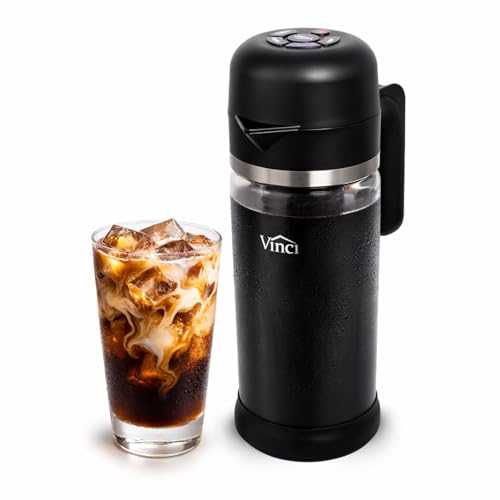
The VINCI Express is the rapid method grown to household scale: a ten-minute electric brew delivered into a 1.4L glass carafe — 47 ounces of cold brew, enough to fill the fridge door and carry a household through two days of glasses. Three brew strengths acknowledge that cold brew drinkers argue about intensity as passionately as espresso drinkers do, and the listing’s promises of smooth, low-acid coffee with minimal sediment describe exactly the failure modes this category must avoid: harshness and grit. An airtight storage lid turns the brewing vessel into the storage vessel, eliminating the transfer-and-spill step between making and keeping.
The self-clean cycle is the feature owners will praise in month three. Cold brew’s enemy after extraction is its own oily residue, which films carafes and gaskets and quietly flavors the next batch; a machine that cleans its own brew path lowers the discipline required from its owner to a button press. Against the portables, the VINCI trades mobility for scale and stays corded to the counter, which suits its mission. Against the Cuisinart, it bets that ten minutes and strength settings beat the slow method’s depth for most modern drinkers. For a household that has already decided cold brew is its house drink, this is the guide’s most complete answer.
- Vessel: 1.4L glass carafe (47oz)
- Time: 10-minute fast brew, per the listing title
- Strengths: 3 settings
- Storage: airtight storage lid included
- Cleaning: self-clean cycle
- Pitcher households can check price on Amazon under the VINCI Express listing.
Strengths
- Largest batch in this guide, brewed at rapid-method speed.
- Strength settings let a household tune one machine to several palates.
- Self-clean cycle defends the next batch from the last batch’s oils.
Trade-offs
- Countertop scale — this is a resident appliance, not a traveler.
- Glass carafe asks for the usual care around sinks and tile.
- Ten-minute extraction still asks purists to accept the rapid trade.
Best for: committed cold brew households drinking by the pitcher. Not suited for: travelers, tiny counters, or slow-steep absolutists.
DASH Rapid Cold Brew Coffee Maker (40 oz) — One Touch and Done
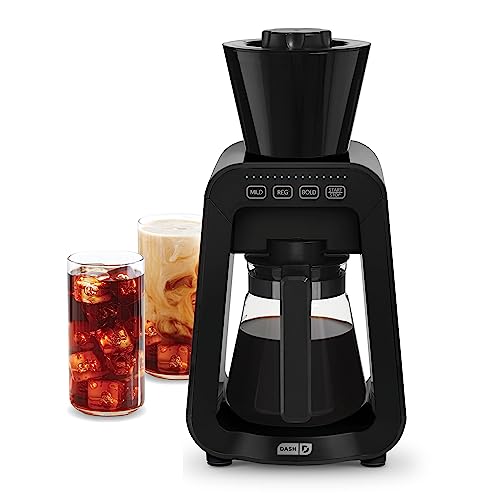
DASH sells simplicity the way other brands sell technology, and its Rapid Cold Brew Maker is the philosophy in a pitcher: a 40 ounce glass vessel, one-touch operation, auto shut off, and a promise of smooth iced coffee in minutes. There are no strength dials to debate and no app to pair. You load grounds and water, press the one control, and the machine extracts and then minds its own business. For drinkers who found the pitcher method’s overnight planning easy but its filtering fussy — the cheesecloth, the sludge, the second strain — this is the upgrade that removes the fuss and keeps the ritual short.
The 40-ounce pitcher lands in a useful middle: larger than the personal rechargeable machines serve, smaller than the VINCI’s family carafe, right for one devoted drinker across two days or two drinkers across one. Its glass pitcher with lid stores in the fridge door like any batch vessel. The trade for the one-touch purity is control — drinkers who want to steer strength by time or setting should look at the Mueller’s wide adjustment span instead. DASH’s bet is that most cold brew drinkers want the same good glass every time with the fewest intervening decisions, and for that majority this is the calmest machine in the roundup.
- Vessel: 40 oz glass pitcher with lid
- Operation: one-touch
- Safety: auto shut off
- Strength settings: none stated in the listing title — the design favors a fixed, repeatable brew
- Power source: the title does not specify corded or battery — confirm on the product page if it matters
- Minimalists can check price on Amazon on the DASH Rapid listing.
Strengths
- One-touch brewing is the shortest learning curve in the category.
- 40oz pitcher suits a two-day personal supply.
- Auto shut off suits forgetful, busy kitchens.
Trade-offs
- No strength steering for drinkers who like to experiment.
- Fixed method means the house ratio is the machine’s ratio.
- Smaller than the VINCI for crowd-scale households.
Best for: set-and-forget drinkers who want a reliable daily glass. Not suited for: tinkerers who adjust every batch.

Mueller RapidBrew Cold Brew Iced Coffee Maker — The Tunable Portable
Where DASH removes choices, Mueller multiplies them: its RapidBrew offers adjustable strength across a 10 to 99 minute span, an unusually honest design that admits extraction time is a dial, not a dogma. Ten minutes buys the rapid glass; longer settings walk the result toward the slow method’s depth while the machine, not a fridge shelf, does the waiting. It is rechargeable and portable, rated at 20 servings per charge — the strongest battery claim in this guide — which makes it the pick for drinkers who brew at a desk all week and a cabin all weekend without wanting two machines.
That adjustability asks something of its owner: curiosity. A drinker who never moves the dial off its fastest setting owns an ordinary rapid brewer carrying unused range, while one who experiments across the span learns their own palate’s map — how much depth another twenty minutes buys with their beans, where smoothness tips into flatness. Mueller’s black, compact form travels discreetly, and the brand’s kitchenware reputation rests on sturdy mid-market tools rather than showpieces. For the cold brew drinker who reads recipes as starting points, this is the machine that argues back least and accommodates most.
- Time and strength: adjustable, 10 to 99 minutes
- Power: portable rechargeable, 20 servings per charge
- Fast mode: 10 minute brew, per the listing title
- Finish: black
- Vessel size in ounces: not printed in the listing title — check the product page for the batch capacity
- Experimenters can check price on Amazon under the Mueller RapidBrew name.
Strengths
- Widest strength range here, bridging rapid and near-traditional extraction.
- 20 servings per charge is the best battery endurance in the roundup.
- Portability serves desk, dorm, and travel without a second purchase.
Trade-offs
- Long settings surrender the rapid category’s main thrill: immediacy.
- Choice-rich design overwhelms drinkers who want one button.
- Charging joins the ownership routine, as with the Mr. Coffee.
Best for: curious drinkers who tune strength and brew in several places. Not suited for: one-button households or pitcher-scale families.

Presto Dorothy Electric Rapid Cold Brewer Coffee Maker — The Old Name in a Young Category
Presto has put its name on pressure cookers and countertop staples for generations, and the Dorothy — model 02937 — is its entry in the rapid cold brew field. The listing title is the tersest in this guide: it tells you the maker, the model, the method class, and little else. Rather than inventing specifications the title withholds, this review rests on what the Dorothy represents: a legacy appliance brand applying its distribution and build experience to the powered cold extraction idea, for buyers who feel safer with an old name than with a category newcomer.
That buyer is real and underserved by gadget-forward rivals. A Dorothy on the counter reads as an appliance, not a project, and Presto’s manuals and support infrastructure are the kind that still answer questions years after purchase. Shoppers should do the homework the short title demands — vessel size, brew time, and cleaning method all live on the product page rather than in the title — and weigh what they find against the richer-stated rivals here. What can be said from the category’s logic: a rapid brewer from a mainstream maker will aim at the dependable middle, a good glass made without drama, and for many kitchens that aim is precisely the point.
- Maker and model: Presto 02937 Dorothy
- Method class: electric rapid cold brewer, per the listing title
- Brew time: not stated in the listing title — look for the minutes on the product page
- Vessel capacity: not stated in the listing title — verify before assuming pitcher scale
- Cleaning method: not stated in the listing title — check the manual summary on the page
- Brand loyalists can check price on Amazon on the Presto Dorothy listing.
Strengths
- A legacy appliance brand with long support horizons.
- Mainstream design intent: dependable results without gadget drama.
- Rapid method delivers cold brew without the overnight wait.
Trade-offs
- The sparse title forces extra homework before ordering.
- No stated strength system to rival the VINCI or Mueller.
- Category newcomers offer flashier, better-documented feature sets.
Best for: brand-trusting buyers who want rapid cold brew from a familiar name. Not suited for: spec-first shoppers who dislike verifying details.

Cuisinart DCB-10P1 Automatic Cold Brew Coffeemaker — The Traditionalist’s Automation
The Cuisinart DCB-10P1 is the guide’s bridge to the old religion: an automatic cold brew coffeemaker serving into a 7-cup glass carafe, in silver and black, from the brand that taught a generation what a food processor was. Where the rapid machines compress time, Cuisinart’s approach manages it — the machine minds the cold extraction process so the drinker is not hovering over a jar, checking a steep, and filtering through cloth at the sink. For drinkers convinced that the slow method’s depth is real and worth keeping, this is the pick that respects the conviction while removing its chores.
Seven cups of carafe capacity suits the batch rhythm cold brew was born for: brew once, refrigerate, and pour glasses across several days, diluting concentrate to taste at the glass. The automatic design also standardizes what the hand method leaves to chance — the same process each batch, rather than a steep that varies with whoever remembered to start it. Its costs are the traditional ones: fridge or counter time measured in hours rather than the rapid machines’ minutes, and a single-purpose footprint. But categories need their conservatives, and a household that tastes the difference between a managed steep and a ten-minute extraction will find this machine was designed by people who taste it too.
- Carafe: 7-cup glass
- Method: automatic cold brew (managed traditional extraction)
- Finish: silver and black
- Model: DCB-10P1
- Brew duration: the listing title does not print a time — expect the traditional method’s hours and confirm on the page
- Traditionalists can check price on Amazon under the Cuisinart DCB-10P1 listing.
Strengths
- Preserves the slow method’s character while automating its chores.
- 7-cup carafe matches the brew-ahead, drink-for-days rhythm.
- Repeatable process removes the hand method’s batch-to-batch drift.
Trade-offs
- Hours, not minutes — no rescue for an unplanned craving.
- Single-purpose machine in a category of flexible rivals.
- Batch scale still trails the VINCI’s 47 ounces.
Best for: slow-method believers who want consistency without the cloth-and-jar routine. Not suited for: impatient drinkers or one-glass households.
Six Cold Brewers, Compared Plainly
| Machine | Clock | Vessel | Power |
|---|---|---|---|
| Mr. Coffee Express | 10 minutes | Compact (size not stated in title) | Rechargeable, 15+ servings |
| VINCI Express | 10 minutes | 47oz / 1.4L glass carafe | Countertop electric |
| DASH Rapid | Minutes (one-touch) | 40oz glass pitcher | Not specified in title |
| Mueller RapidBrew | 10–99 minutes, adjustable | Not stated in title | Rechargeable, 20 servings |
| Presto Dorothy | Rapid class (time not stated) | Not stated in title | Electric |
| Cuisinart DCB-10P1 | Traditional, automated | 7-cup glass carafe | Countertop electric |
Rapid Extraction Versus the Overnight Pitcher: an Honest Taste Account
Let us give the hand method its due before the machines take their bow. A coarse-ground pitcher, steeped cold for a full night and filtered carefully, produces a concentrate of real depth — round, sweet, and forgiving of mediocre beans. The prose-only immersion route costs little, keeps indefinitely in a cupboard, and never needs charging. Its prices are paid in planning and in filtering labor, and in the fridge shelf it occupies while it works. Drinkers who brew twice a week on a rhythm — Sunday and Wednesday pitchers, say — often find the hand method entirely sufficient, and no honest guide should talk them out of a system that satisfies them.
What the electric machines sell is the removal of the two frictions: the wait and the filtering. Rapid extraction’s ten minutes will not out-depth a patient steep at its best, but it lands remarkably close for most palates, especially once the glass is diluted and iced, and it answers the Saturday-morning craving that a pitcher started Friday would have missed. The Mueller’s long settings and the Cuisinart’s automation exist for drinkers who want depth without the jar-and-cloth routine. Choose by which friction you actually feel. Households that never plan drinks a day ahead should not buy a method that requires it, whatever its depth advantage.
How Do You Brew a Batch That Keeps Well All Week?
Cold brew concentrate is coffee’s best keeper, but keeping is a skill. Brew at concentrate strength — more coffee against the water than a drinking-strength batch — then store it sealed and cold, diluting glass by glass with water or milk. Sealed matters: an open pitcher in a fridge full of leftovers absorbs the fridge’s diary of flavors within a day. The VINCI’s airtight storage lid exists for exactly this, and owners of open pitchers should decant into a lidded jar. Expect the concentrate’s prime to run several days, with the sweetest glasses early; by the end of a week the batch is drinkable but diminished, a shadow politely reminding you to brew again.
Fridge space is the unlisted spec in every batch method. A 47-ounce carafe, a 40-ounce pitcher, and the household’s ordinary groceries negotiate for the same cold shelf, which is why the rechargeable minis earn their fans in small flats — a personal batch lives in a door shelf. Households outfitting a kitchen around batch drinks, cold brew included, might glance at Best Ice Cream Machines for Home Use for the other resident of the cold shelf, since summer kitchens plan their frozen and chilled real estate as one map.
Grind, Ratio, and Water: the Variables the Machine Cannot Fix
Every machine here assumes three inputs the owner controls, and each can quietly ruin a batch. Grind first: cold extraction wants coarse grounds, because fine particles over-extract under agitation and slip filters as sediment — the grit at the bottom of a disappointing glass is usually a grinder setting, not a machine failure. Ratio second: cold brew forgives approximation but rewards a consistent hand, so weigh or measure the same way each batch until the machine’s character with your beans is known, then adjust deliberately. Water third: cold extraction is a long, intimate contact between water and coffee, and heavily chlorinated water leaves its signature undiluted by heat’s usual cover. Filtered water is the cheapest upgrade in the entire category.
Beans deserve a calm word. Cold methods flatter medium and darker roasts and forgive age better than hot brewing does, which makes cold brew the honorable retirement for the last third of a bag that has passed its aromatic prime. Save the precious single-origin for the hot cup where its subtleties perform; the cold glass rewards body and sweetness over nuance. That economy — good coffee, not precious coffee, extracted cold — is part of why the drink conquered summer.
What Do New Cold Brew Drinkers Get Wrong?
The first error is judging the concentrate at full strength, straight from the vessel, and declaring the machine harsh — concentrate is an ingredient, meant to be diluted at the glass, and its undiluted intensity is the point. The second is grinding fine because the espresso habit says so, then blaming the brewer for sludge. The third is leaving a finished batch unrefrigerated on the counter through a warm afternoon, which ages a drink built on freshness. The fourth is neglecting the rinse: cold brew’s oils film every surface they touch, and a machine or pitcher washed only when it looks dirty will flavor each new batch with the ghost of the last.
A fifth, subtler mistake is expecting rapid machines to replicate a specific café’s glass. Cafés guard their ratios like recipes, and your machine’s ten-minute result with your beans is its own drink — chase its best version rather than an imitation. Finally, new drinkers often brew drinking-strength batches and store them, losing the concentrate’s flexibility; brew strong, store sealed, dilute at the glass, and the same batch serves the black-coffee drinker and the milk drinker from one vessel.
Cold Brew Beyond the Glass: Concentrate in the Kitchen
A jar of concentrate is a kitchen ingredient in disguise. It folds into iced lattes as the coffee core, into coffee ice cubes that chill without diluting, into baking where a few spoonfuls deepen chocolate, and into the evening affogato poured over vanilla ice cream. Marinades for grilled meats borrow its bitterness the way they borrow a stout’s. None of this requires a better machine; it requires the habit of brewing slightly more than the week’s glasses demand, which the batch-scale VINCI and Cuisinart make painless. The rechargeable minis play along at smaller scale — a double batch on Sunday arms a desk worker with concentrate for two days of improvisation.
There is also the social use: a sealed jar of concentrate is the most portable coffee format ever devised, traveling to a picnic or a friend’s porch in a way no brewer can. Hosts who keep concentrate ready own a cold drinks station in embryo — ice, milk, syrup, glasses — and the machines in this guide are best understood as concentrate factories serving that station, whether the factory sits on a counter or charges on a desk.
Cold Brew in a House That Makes Things
Cold brew’s brew-ahead rhythm suits households whose kitchens double as workshops, because the drink waits patiently in the fridge while hands are busy elsewhere. A long afternoon of measuring, cutting, and stitching ends better with a glass that asks for thirty seconds of pouring than with a kettle’s ceremony. Readers setting up that kind of dual-purpose kitchen — drinks in the fridge, projects on the table — may find a kindred beginner-friendly spirit in Best Singer Sewing Machines for Beginners, where the machines likewise promise a craft without a steep apprenticeship. Cold brew and a first sewing machine share a philosophy: the barrier to starting should be low, the early results encouraging, and the depth there for those who stay.
The Sediment Question: Filtering and the Last Sip
Every cold brew method negotiates with sediment, because cold water and ground coffee part company reluctantly. Metal mesh filters pass a fine silt that gives the glass body — some drinkers prize that weight — while paper filtration strips it for a cleaner, thinner cup. The rapid machines filter as part of their powered cycle, and the minimal sediment the VINCI promises in its listing is a direct answer to the pitcher method’s muddiest flaw: the last glass from a hand-filtered batch, poured through a disturbed bed, arriving gritty. If your pitcher batches taught you to leave the final inch behind, a machine’s contained filtration will feel like a small liberation.
Home technique still matters. Let a finished batch rest ten minutes before pouring its first glass, so suspended fines settle below the pour line. Decant gently rather than swirling the vessel out of habit. And rinse filters promptly — dried coffee silt in a mesh filter becomes tomorrow’s off flavor, baked in by neglect. The final sip of a well-made batch should taste like the first, only colder; when it does not, the filter and the pour, not the beans, are the usual suspects.
Caffeine, Strength, and the Concentrate Illusion
Cold brew has a reputation as coffee’s strong stuff, and the reputation needs untangling. A concentrate is strong because it is brewed concentrated — more coffee per ounce of water — not because cold water extracts caffeine more aggressively. Diluted to drinking strength, a glass of cold brew lands near a hot cup’s caffeine, sometimes a little above, sometimes below, depending on the house ratio. Drinkers who chase a gentler cup should dilute more, not fear the category, and the strength settings on the VINCI or the time span on the Mueller exist to put that control in the owner’s hands rather than in folklore.
The practical lesson is to fix your dilution and keep it. Households that dilute by eye get a different drink every day and blame the machine’s inconsistency for their own. A marked mixing glass or a remembered ratio — one part concentrate to one part water, say — turns the batch into a reliable ingredient. Once the ratio is steady, adjusting strength becomes a brewing decision made at the machine, where it belongs, instead of a daily improvisation at the fridge door.
Where Does a Cold Brewer Live When It Is Not Brewing?
Storage separates the category’s two tribes. The rechargeable machines — Mr. Coffee’s Express and Mueller’s RapidBrew — are cupboard citizens, small enough to vanish between uses and reappear charged. The carafe machines are countertop residents whose vessels commute to the fridge, leaving the base behind; measure both homes before buying, the counter footprint for the base and the fridge shelf for the full carafe, because a 47-ounce vessel that cannot stand upright in your fridge is a storage problem wearing a solution’s clothes. The Cuisinart’s carafe asks the same fridge question.
Dorms and offices tilt the answer toward the portables, shared houses toward the carafe scale, and everyone should count the cord: a countertop brewer parked far from an outlet becomes a daily unplugging ritual that quietly discourages use. The best cold brew machine is the one whose storage story fits your kitchen’s geography, because a machine that lives awkwardly gets used rarely, and an unused specialist is just sculpture.
Cold Brew Across a Working Week: a Rhythm That Works
Here is the weekly pattern that batch drinkers converge on, offered as a starting rhythm. Sunday evening: brew a full batch at concentrate strength — ten minutes on a rapid machine while dinner cooks — seal it, and refrigerate. Weekday mornings: dilute a glass in under a minute, faster than any hot ritual, with the coffee already cold in a house that is already warm. Wednesday: judge the jar honestly; if the level and the flavor say the week will outlast it, brew a half batch rather than discovering an empty vessel on Friday. Weekend: let the batch play its social roles — porch glasses, coffee ice, an affogato — and let Sunday’s brew close the loop.
The pattern’s virtue is that the machine works twice a week while the drink appears daily, which is the deepest economy this category offers: not speed per glass, but labor amortized across glasses. Rapid machines shrink even that twice-weekly labor to minutes. The pitcher traditionalists reach the same rhythm with a night’s foresight, and the Cuisinart automates their version of it. However you arrive, a fridge with concentrate in it changes a household’s mornings out of proportion to the effort involved.
Reading a Cold Brew Listing With Cold Eyes
This young category attracts exuberant titles, so separate mechanism from adjective before you buy. A stated brew time in minutes, a vessel size in ounces, a strength system with named settings — those are facts a listing can be held to. Words like café-quality and smooth are weather reports, pleasant but unverifiable. Notice, too, what the titles in this guide do not say: several omit vessel capacity or power source, and those silences are instructions to check the product page rather than assumptions to make in the seller’s favor. A machine that will live in your fridge deserves the same measuring skepticism as one that lives on your counter.
Also distinguish the machine from its moment. Rapid cold brew is fashionable, and fashion inflates listings with bundle extras — lids, scoops, recipe cards — that rotate seasonally. Buy the extraction method, the vessel, and the cleaning story; let the extras be pleasant surprises. The six picks here survived that reading because their titles document a real mechanism, a real vessel, or a real power story, and that documentary standard is the one to carry into any listing this guide did not cover.
Cold Brew for People Who Cannot Have Caffeine at Noon
Cold brew’s smoothness has made it the afternoon coffee of choice for drinkers who love the ritual and ration the stimulant, and the category serves them better than hot coffee does. A half-caffeinated batch — half regular beans, half decaf, ground together — is trivially easy in a batch method and nearly impossible to order at a café counter. Decaf cold brew itself, brewed from decent decaf beans, loses less in cold extraction than decaf loses in hot, because the method’s forgiving sweetness covers the gaps decaffeination leaves. Evening glasses become possible: a small, diluted decaf cold brew over ice at eight o’clock delivers the flavor ceremony without the midnight ceiling-staring.
The batch machines serve this best, since a decaf or half-caf jar in the fridge is a standing option rather than a special production. The rechargeable minis answer the single decaf drinker in a caffeinated household, brewing a personal batch without colonizing the shared pitcher. Either way, cold brew’s make-ahead nature turns caffeine management from a daily decision into a weekly brewing choice, and many households find that alone worth the machine.
The Economics of the Cold Habit
Café cold brew is among the most marked-up drinks in the coffee economy — a glass of cold water, coffee, and time sold at a ceremony’s price — which makes the home math unusually kind. A batch machine’s cost divides across hundreds of glasses; the beans for a pitcher cost less than a single café glass in most cities; and the rapid machines remove even the planning tax that kept home cold brew a hobbyist’s drink. The honest ledger includes waste: a batch that outlives its prime is money in the sink, which is why brewing at the scale your household finishes — the DASH’s 40 ounces, the VINCI’s 47, a mini’s personal batch — is an economic decision disguised as a size preference.
Grounds disposal is the ledger’s footnote. Cold brew consumes coffee generously at concentrate ratios, and the spent bed is a heavy, wet handful each batch. Gardeners compost it happily; apartment drinkers should plan the bin trip into the ritual so the filter does not sit souring by the sink. None of this changes the conclusion — home cold brew is one of the clearest savings in the coffee world — but the households that sustain the habit are the ones that priced its whole cycle, grounds in and grounds out, before the first batch.
Serving Cold Brew to Guests Who Think They Do Not Like It
Many cold brew skeptics formed their opinion on a gas-station bottle or a café’s over-extracted batch, and a home host with a good jar holds a conversion opportunity. Serve the first glass diluted a touch weaker than your own, over fresh ice, with milk and syrup available but not pre-applied — skeptics distrust drinks that arrive pre-sweetened, suspecting camouflage. Let the smoothness make the argument; cold brew’s low bitterness is its own best advocate, and a guest who came in saying they only drink coffee hot often leaves asking how long the steep takes. That question, answered with the words ten minutes and a machine’s name, is this category’s entire marketing department.
For gatherings, a concentrate station scales gracefully: the jar, a pitcher of cold water, a jug of milk, syrup, ice, and glasses, with each guest diluting to their own strength. It is the rare drinks station that serves the strong-coffee drinker and the cautious one from the same vessel, and it asks the host for one batch of work in the morning. Keep a decaf or half-caf jar beside the main one and the station covers the whole table — a small foresight that guests remember longer than the drink itself.
Cleaning the Cold Brew Kit Before It Flavors the Batch
Cold brew leaves behind an invisible varnish. Coffee oils coat carafe walls, lids, gaskets, and filter meshes, and because the drink is served cold, the usual hot-water rinse that rescues a drip carafe does less here. A filmed vessel flavors the next batch with a stale, cardboard note that owners misdiagnose as tired beans. The discipline is simple: hot soapy water and a bottle brush after every batch for glass vessels, attention to lid seals where oils pool, and a periodic deep clean for any machine without a self-clean cycle. The VINCI’s self-clean earns its mention again here — in a category defined by oily residue, automating the rinse is a genuine quality feature, not a convenience garnish.
Rechargeable machines add one more surface to the routine: their compact brew chambers concentrate residue in small spaces, so a quick rinse immediately after pouring, rather than at the next use, keeps the small parts sweet. Filters deserve drying between batches, since a mesh stored wet in a closed machine grows the mustiness that ruins a Monday batch brewed from Friday’s neglect. None of this takes five minutes; all of it decides whether month three tastes like week one.
Beans That Shine Cold, and Beans That Hide
Cold extraction rearranges a coffee’s virtues. The bright, citrusy notes that make a light roast thrilling as a pour-over often mute in the cold glass, while body, chocolate, and caramel deepen. That is why cold brew drinkers gravitate to medium and dark roasts and to blends built for weight rather than sparkle — Brazilian and Colombian bases, chocolate-processed lots, the bags marketed for espresso often moonlight beautifully here. Single-origin enthusiasts need not despair; a naturally sweet, low-acid lot can be lovely cold, but buy it for its sweetness, not its acidity, because the method will file the acidity down whether you wanted it filed or not.
Freshness still matters, differently. Cold brew forgives a bean’s age more than hot methods do — the last of a bag, two weeks past its glory, makes a perfectly honorable batch — which turns the cold brewer into the pantry’s economist, rescuing coffee that hot brewing would expose. Grind just before brewing regardless; pre-ground coffee stales on a schedule of hours, and no extraction method, however gentle, restores what oxidation took. A household grinder set coarse and used twice a week is the cold brew machine’s best supporting appliance.
A Note on Bottles, Jars, and Taking Cold Brew With You
Concentrate travels in anything that seals, but the vessel shapes the experience more than travelers expect. A wide-mouth jar pours cleanly and washes easily at a campsite sink; a narrow bottle keeps a bag colder by huddling its contents but dribbles at the pour. Glass tastes neutral and breaks; steel insulates and hides the level; plastic is light and remembers flavors. The rechargeable machines collapse the whole question for their owners — brew at the destination instead of transporting the drink — which is the deepest reason travelers choose them. For everyone else, decant the day’s portion into the travel vessel and leave the mother batch sealed in the fridge, because every opening of the main jar is a small withdrawal from its freshness account.
When Cold Brew Is the Wrong Purchase
A specialist machine deserves a specialist’s honesty about who should walk past it. If your household drinks one cold glass a week in August and hot coffee the rest of the year, a dedicated cold brewer — even a charming rechargeable one — will spend its life in a cupboard, and a flexible hot machine with an iced mode serves that pattern better. If your palate runs to bright, acidic, aromatic coffee, cold extraction will file down exactly what you love, and no strength dial restores it. And if your kitchen’s fridge is a contested millimeter-war of leftovers and lunchboxes, a 47-ounce carafe has no home, whatever its virtues. Buy the machine your actual summer looks like, not the summer a listing photographs.
Cold Brew in Winter: the Case for the Year-Round Jar
Cold brew markets itself as summer’s drink, but its most devoted households keep the jar filled in January, and their reasoning is sound. The make-ahead rhythm suits dark mornings even better than bright ones — a glass diluted and briefly warmed, or microwaved gently from concentrate, becomes a smooth hot coffee with none of the drip machine’s wait, a trick shift workers and early risers prize. Iced in winter it remains the afternoon drink of people who heat their homes warmly and dress indoors for spring. And the concentrate’s fridge life makes it the household’s insurance coffee, the jar that covers the morning the main brewer fails, the beans run out, or guests outnumber the pot.
The machines here do not care about the calendar; a ten-minute extraction in December works exactly as in July. If your household’s cold brew habit is seasonal, a rechargeable mini earns its cupboard space in the off months by disappearing. If the habit is permanent, the carafe machines justify their counter all year. Either way, the category outgrows its summer costume quickly in the houses that adopt it.
One Sentence on Sustainability, Kept Honest
Cold brew’s footprint is mostly beans, water, and time: no pods, no paper filters in most of these designs, and grounds that compost readily — a quiet profile the category can claim without embroidery. The machines add a manufactured object to the ledger, which their years of service and the café trips they replace are left to justify.
A Last Word on Ice, Again
It bears repeating at the end of a cold brew guide: serve the concentrate over fresh ice, in a cold glass, and the machine’s work survives to the last sip; serve it over tired freezer ice in a warm glass and even the VINCI’s best batch tastes diminished. The drink is a system, and the glass is its final component.
Final Recommendation
Most households should start with the VINCI Express: pitcher scale, three strengths, ten-minute speed, an airtight lid for storage, and a self-clean cycle that protects batch two from batch one — the most complete cold brew answer in this guide. Drinkers who brew where they sit should take a rechargeable instead: the Mr. Coffee Express for its vacuum method’s gentleness, or the Mueller RapidBrew if tuning strength across its long range sounds like play rather than work. The DASH is the calm one-touch choice, the Presto Dorothy the familiar-name choice, and the Cuisinart the traditionalist’s — the machine for drinkers who believe the slow method tastes better and simply want it managed. Whichever you bring home, grind coarse, seal the batch, and let the concentrate wait in the cold for the afternoon that needs it — that patience, now measured in minutes of making rather than hours of steeping, is the whole pleasure of this category.
Frequently Asked Questions
Does rapid cold brew taste as good as the overnight method?
It tastes close for most drinkers, especially diluted and iced, with the slow method holding an edge in depth at its careful best. The Mueller’s longer settings and the Cuisinart’s automated steep narrow the gap further for drinkers who notice it.
How long does cold brew concentrate keep in the fridge?
Sealed and refrigerated, expect its best flavor across several days and acceptable drinking for about a week. An airtight lid is not a luxury here — open storage absorbs fridge odors quickly and flattens the batch.
What grind should I use in these machines?
Coarse. Fine grounds over-extract under powered agitation and escape filters as sediment. If your glass finishes gritty, coarsen the grind before blaming the machine — that single change fixes most disappointing batches.
Can these machines make hot coffee too?
No — every pick here is a cold-extraction specialist, and none heats water for a hot cup. Households wanting one machine for both should look at flexible hot brewers with iced or rapid cold modes rather than a dedicated cold brewer.
Is cold brew less acidic than hot coffee?
Cold extraction generally produces a drink perceived as smoother and lower in acidity, because cold water pulls fewer of the acidic compounds that hot water extracts readily. Individual beans and stomachs vary, but the reputation is earned.
Which pick suits a dorm room?
A rechargeable one. The Mr. Coffee Express and the Mueller RapidBrew both brew without claiming an outlet or a counter, and their compact batches fit a dorm fridge’s contested shelf better than a 47-ounce carafe.
Related Guides
Batch drinks live or die by cold storage, and if your fridge is negotiating between a carafe of concentrate and everything else, our guide to Best 10 Cu. Ft. Refrigerators covers compact models that give a small kitchen more cold room to work with.


