What's inside
- Key Takeaways
- Quick Picks
- How Did We Define Economical Without Printing a Price?
- The Ladder on One Page: Stated Ledgers Only
- What Does the Second Cavity Actually Do All Year?
- How Should You Read a Tier Like an Owner, Not a Shopper?
- Where Do Economical-Double Shoppers Misjudge?
- What Does Cleaning Cost Across Ten Years?
- The Feast-Day Stress Test
- Finishes, Handles, and the White Vomero Problem
- Service Networks as a Hidden Tier
- When Is a Single Oven the Economical Answer?
- How Should You Compare Capacities That Titles Mostly Do Not State?
- Preheating Two Cavities: The Operating Habit Nobody Budgets
- How Should a Renovation Divide Its Attention Across the Tiers?
- How Do Double Ovens Age?
- Final Recommendation
- Frequently Asked Questions
- Related Guides
As an Amazon Associate I earn from qualifying purchases. This post may contain affiliate links at no extra cost to you.
cottageverdict.com is reader-supported. When you buy through links on our site, we may earn an affiliate commission.
Each linked oven below is sold on Amazon and points to its own listing there, so when you have weighed the feature tiers you can check price on Amazon for the exact model. This guide itself prints no prices, no price bands, and no figures of any currency — economical here is a judgment about what a tier buys, not a number.
The best economical double wall ovens start from a puzzle: a double wall oven is inherently a premium object — two cavities, one column, a renovation’s worth of installation — so what can economical honestly mean inside it? This guide’s answer is feature-per-tier reasoning. Every double oven buys the same foundation: two cavities in a 30-inch column. What separates the tiers is the ledger above that foundation — convection in one cavity or both, self-cleaning or manual care, air fry, smart controls, the finish’s depth, the maker’s service estate. An economical double oven is not a cheap one; it is one whose ledger spends on the functions a household will use weekly and declines to spend on the ones it will use never. Read that way, the five verified picks below form a legible ladder, from the value-engineered KoolMore through the feature-complete ZLINE, and the right rung is a portrait of your cooking rather than of your wallet.
Two disciplines govern everything that follows. The first is the one already stated: no prices, no bands, no currency figures anywhere in this guide — value is argued in features, capacities, and ownership terms only, because a tier judgment ages well and a printed price does not. The second is the standing rule of this site: capacities and features are claimed only where a pick’s title states them. One pick states a total capacity — the Samsung, at 10.2 cubic feet. One states its mode count — the KoolMore, at seven. One states self-clean and air fry together — the ZLINE. The others state their format and their makers’ positions, and this guide reads them at exactly that depth.
The sixth entry is prose, by design: the 24-inch double class, discussed at brand level, because a household whose column is narrower deserves the honest news that the double format exists at that width too — and that the economical conversation changes shape when the cavities shrink. Between the five linked picks and that prose discussion, the whole economical-double landscape is on the table.
Key Takeaways
- Economical in this guide means feature-per-tier value, argued without a single printed price — the ledger of functions is the comparison, not the tag.
- All five linked picks are 30-inch electric double wall ovens; the class’s foundation — two cavities, one column — is identical, and the tiers differ in what is stacked on it.
- The Samsung states the field’s only total capacity: 10.2 cubic feet across both cavities, with a top broiler named in its title.
- The KoolMore states the field’s most detailed value ledger: rapid convection, seven cook and baking modes, and self-cleaning in one title.
- The ZLINE is the only pick stating true convection alongside air fry and a self-clean cycle — the fullest feature set, at the ladder’s top rung.
- The Forno and the THOR Kitchen entry argue the professional-styling tier: fewer stated features, more emphasis on the format’s presence and build.
Quick Picks
| Pick | Badge | Why it earned its place |
|---|---|---|
| KoolMore KM-WO30D 30-Inch Double Wall Oven | The value ledger, itemized | Rapid convection, seven modes, dual large capacity ovens, and self-cleaning, all stated — the economical argument made in a single title. |
| Forno Vomero 30-Inch Double Wall Oven (Stainless) | The convection essentialist | Electric convection in a stainless 30-inch double from a value-minded maker — the format’s essentials without a feature bundle. |
| Samsung NV51K7770DS Double Wall Oven | The stated-capacity giant | 10.2 cubic feet total stated, with a top broiler — the mainstream maker’s rung, bought for volume and service depth. |
| THOR Kitchen TEW30ED Double Wall Oven | The professional presence | A professional-styled 30-inch electric double whose proposition is the format’s gravitas from a range-maker’s hand. |
| ZLINE WAD-30 Double Wall Oven | The fullest stated feature set | True convection, air fry, and self-clean, all stated — the ladder’s top rung, where economical means nothing important omitted. |
| The 24-Inch Double Class (discussed in prose) | The narrower column’s doubles | The double format at 24 inches, at brand level — smaller cavities, the same two-oven logic, a different value equation. |
How Did We Define Economical Without Printing a Price?
By treating value as a ratio the reader computes in features rather than a figure we assert in currency. A double wall oven’s cost has three layers, and only one of them is the appliance. The second is the installation — the column, the circuit, the carpentry — which is roughly constant across tiers and which no bargain oven reduces. The third is the decade of ownership: cleaning labor, service access, the features used or ignored ten thousand times. An oven that saves money at the first layer by omitting self-cleaning spends it back at the third layer in weekends of scrubbing; an oven that spends at the first layer on smart features the household never opens has bought decoration at infrastructure prices. Economical, in this guide, names the ovens whose three layers are in honest proportion — and that judgment can be made, as we make it below, entirely from stated ledgers.
The method has a second virtue: it survives time. Prices drift with sales, seasons, and stock; a feature ledger is a fact about the machine. A reader next year can re-run this guide’s reasoning against whatever the listings then say and arrive at a sound rung, which is more than any price-printed roundup can promise. The same qualitative discipline governs careful buying in rooms where the appliance is smaller — the tier reasoning in Best Small Dishwashers makes its case the same way, by what each level of the class actually does rather than by what any of them cost on a given Tuesday.
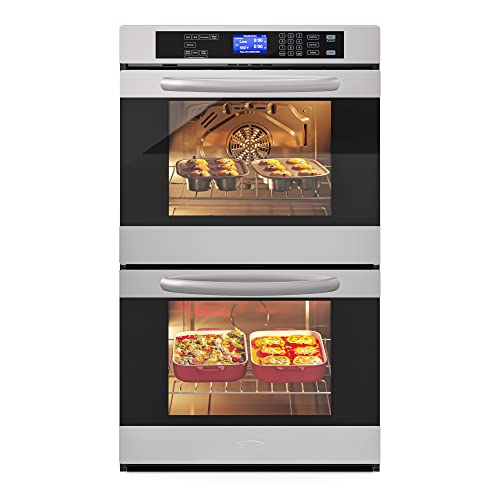
KoolMore KM-WO30D 30-Inch Double Wall Oven — The value ledger, itemized
The KoolMore’s title reads like a value argument that decided to itemize itself: a 30-inch electric double wall oven with quiet, rapid convection cooking, seven cook and baking modes, dual large capacity ovens, a stainless build, and self-cleaning. Count what that ledger covers. Convection addresses the cooking. Seven modes address the repertoire. Dual large capacity addresses the format’s whole reason — two real cavities, not a main oven and a apology. Self-cleaning addresses the decade. Quiet addresses the open-plan kitchen the column will live in. A buyer working through the economical question with a pencil will find that this single title answers most of the pencil’s questions before the listing is even opened, and that is precisely the quality the word economical should reward.
KoolMore’s position in the market sharpens the point. The maker builds its name on delivering appliance substance without the suite-brand premium — the same philosophy its compact microwave brought to the combo class — and in a double wall oven that philosophy has unusual leverage, because the installation’s fixed costs mean the appliance’s own tier is where all the choice lives. The KM-WO30D spends its ledger on the functions with weekly compound interest and declines, so far as its title states, the connected layer entirely. For the household whose value definition is use rather than display, this is the ladder’s most articulate rung: everything stated, everything usable, nothing theatrical.
- Format: 30-inch electric double wall oven
- Stated cooking: quiet, rapid convection cooking as stated in the listing
- Stated modes: 7 cook and baking modes as stated in the listing
- Stated capacity: dual large capacity ovens as stated in the listing
- Stated cleaning: self-cleaning as the listing states
- Finish: stainless steel per the listing
- Where to buy: the KoolMore KM-WO30D listing on Amazon — check price on Amazon
Strengths
- The most completely itemized value ledger in the field.
- Self-cleaning stated — the ownership feature that pays weekly interest.
- Convection and a real mode count, not a token pair of functions.
Trade-offs
- No total capacity figure is stated in the title; confirm cavity sizes on the listing.
- No smart or connected features are claimed.
- Air fry is not among its stated claims.
Best for: value-led renovators who want the economical case argued in features, and answered.
Think twice if: air fry in the wall is a weekly habit — the ZLINE states it, this title does not.
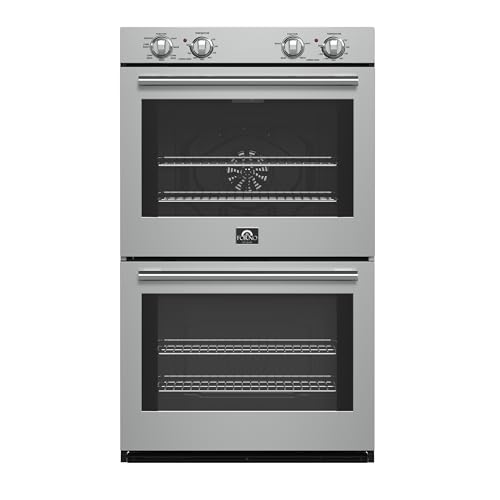
Forno Vomero 30-Inch Double Wall Oven (Stainless) — The convection essentialist
The Forno Vomero’s title is the field’s shortest: a 30-inch double wall oven, stainless steel, electric, convection oven. Four facts, and the economical reading of them is a philosophy of essentials. Convection is the one cooking technology that transforms a double oven’s daily life — even heat in the cavity that does the roasting — and the Vomero states it and stops. No mode census, no cleaning claim, no connected layer: the title’s restraint tells the buyer exactly where this maker’s money went, into the format and the fan, and where it did not. Forno, an Italian-rooted maker whose whole range argues European substance at un-Italian prices, is represented in this guide by the stainless listing; the same model exists in white, and it is the same model, not a sixth pick.
The household for the essentialist rung is easy to recognize: it cooks roasts, bakes, gratins, and holiday doubles; it cleans an oven the way ovens were cleaned for a century and regards the task as unremarkable; it wants the second cavity for the feast days and the first cavity’s convection for every day. What it must do, in fairness, is homework the KoolMore’s title spared it — capacity, cleaning method, and mode details all live on the Vomero’s listing, unstated in its title. That is the essentialist bargain in full: a leaner stated ledger, a format faithfully delivered, and a listing visit that is not optional. Buyers who run that errand and like the answers own the field’s purest expression of paying for the oven and only the oven.
- Format: 30-inch double wall oven
- Fuel: electric as listed
- Stated cooking: convection oven as its title states
- Finish: stainless steel (this listing); the model also exists in white
- Capacity and cleaning: the title is silent — see the listing
- Where to buy: find the Forno Vomero listing on Amazon to check price on Amazon
Strengths
- Convection stated — the essential technology, without a bundle around it.
- An essentialist ledger for households that clean and cook the traditional way.
- A maker’s whole range argues the same value philosophy, coherently.
Trade-offs
- The tersest ledger among the value picks; the listing must answer almost everything.
- No self-cleaning is claimed in the title.
- No mode count is stated.
Made for: traditional cooks who want two cavities and a fan, and nothing they must be sold on.
A poor match for: buyers who want the ownership conveniences verified before the listing page.
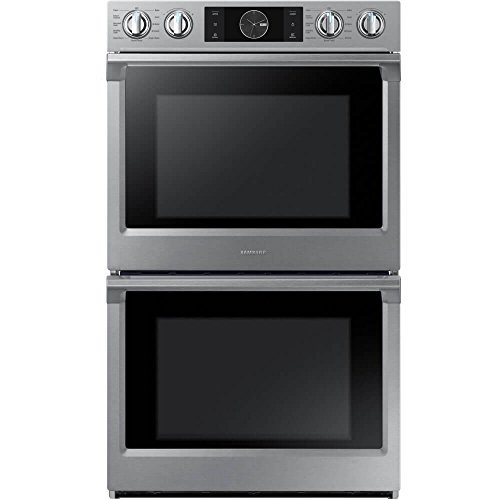
Samsung NV51K7770DS Double Wall Oven — The stated-capacity giant
The Samsung’s title states the number no other pick states: 10.2 cubic feet of total capacity across its two cavities, in a 30-inch electric double wall oven with a top broiler, in stainless steel. In a guide forbidden from printing prices, capacity is the closest thing to a hard currency the field offers — space is the double oven’s product, and the Samsung declares its holdings. Ten and a fifth cubic feet split across two cavities is a feast-scale estate: the bird below, the sides above, the desserts rotating through, with the top broiler named for the finishing work that separates a holiday table from a merely large dinner.
The economical reading of the Samsung runs through the third layer of cost — the decade. A mainstream maker’s double oven carries the service estate, parts pipeline, and documentation depth that a ten-year appliance eventually draws on, and a household that prices ownership honestly counts that estate as value received, not as brand tax. The title does not state convection, self-cleaning, or air fry, so this guide claims none of them; the Samsung’s verified proposition is volume plus establishment. For the renovator whose feast calendar is ambitious and whose risk tolerance for orphan appliances is low, that proposition is the economical one in the only sense that survives a decade: the oven whose size fits the cooking and whose maker will still be answering the phone when the second cavity’s fan turns ten.
- Format: 30-inch electric double wall oven
- Stated total capacity: 10.2 cu. ft. total capacity per the title
- Stated detail: top broiler as titled
- Finish: stainless steel from the listing
- Model: NV51K7770DS as printed in its title
- Convection and cleaning: not stated in the listing title — confirm on the listing
- Where to buy: the Samsung NV51K7770DS listing on Amazon — check price on Amazon
Strengths
- The field’s only stated total capacity — and it is a feast-scale figure.
- A mainstream maker’s service estate behind a decade-long installation.
- Top broiler stated, for the finishing work holidays demand.
Trade-offs
- Beyond capacity and broiler, the title’s ledger is the listing’s to complete.
- No air fry or smart claim is stated.
- Big capacity is wasted on small households — the tier logic cuts both ways.
Choose it if: your feast calendar is real, your parties are large, and maker’s depth is part of your value math.
Less happy in: a two-person household whose second cavity would host a casserole twice a year.
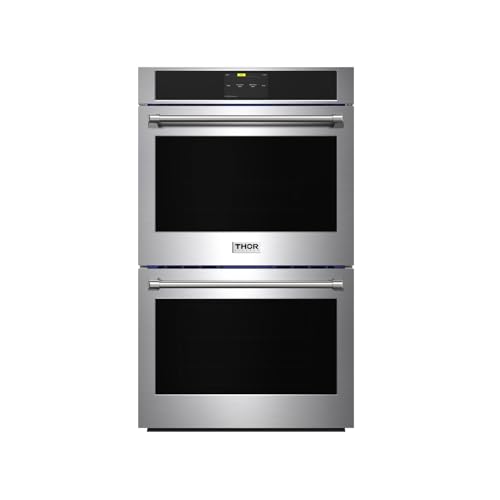
THOR Kitchen TEW30ED Double Wall Oven — The professional presence
THOR Kitchen built its name on professional-style ranges — big-knobbed, stainless, unapologetically theatrical cooking machines — and the TEW30ED carries that house style into the wall: a 30-inch professional electric double wall oven, as its title states, with the model number worn plainly. The economical reading of a professional-styled pick is subtler than the value picks above it. What the tier buys is presence and build language — the kitchen’s visual center of gravity, the sense that the wall oven belongs beside a serious range — together with the format’s foundation of two cavities. What its title does not buy, because it does not state, is a feature ledger: no convection claim, no cleaning claim, no capacity figure appears in the title, and this guide invents none of them.
That restraint defines both the pick and its buyer. The THOR household is renovating around a professional aesthetic and wants the column to hold up its end of the composition; it cooks seriously, cleans traditionally, and regards a wall oven’s first duty as being a formidable, handsome pair of cavities. Its homework is the field’s heaviest — every functional question routes to the listing — and it should be undertaken with the installer’s tape in hand, since professional styling sometimes carries professional dimensions. Judged by feature-per-tier arithmetic alone, the THOR is the ladder’s least itemized rung. Judged by the full definition of value — which includes the daily pleasure of a kitchen that looks like its owners cook — it has its own honest case, and this guide prints that case without inflating the ledger it rests on.
- Format: 30-inch professional electric double wall oven
- Model: TEW30ED the listing states it
- Stated positioning: professional as the title has it
- Capacity, convection, cleaning: not stated in the listing title — confirm on the listing
- Where to buy: shop the THOR Kitchen TEW30ED listing on Amazon to check price on Amazon
Strengths
- Professional styling from a maker whose ranges define the look.
- The format’s full presence for kitchens composed around a statement range.
- A model-numbered, plainly presented proposition.
Trade-offs
- The field’s least itemized title — the listing carries the entire functional case.
- Value here is partly aesthetic, which households should admit before buying.
- Dimensions deserve an installer’s verification, as professional lines vary.
Suits best: renovators composing a professional-style kitchen who want the column to match the range’s voice.
Not the one for: pencil-and-ledger buyers — the KoolMore itemizes what this pick implies.
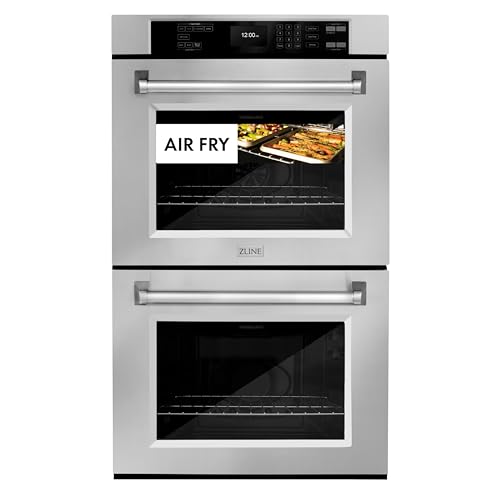
ZLINE WAD-30 Double Wall Oven — The fullest stated feature set
The ladder’s top rung states the three claims that, together, close the feature argument: the ZLINE WAD-30 is a 30-inch professional true convection double wall oven with air fry and self-clean, in stainless steel. Parse the adjectives as the title orders them. True convection — the term makers use for a fan working with its own heating element, distributing heat with an evenness plain convection approximates — is the cooking claim, made for both the roasting cavity and the baker’s conscience. Air fry is the modern habit’s claim, retiring the countertop appliance into the wall. Self-clean is the decade’s claim, the ownership convenience whose absence the value picks must excuse and whose presence here needs no apology. Professional is the positioning, ZLINE’s house language of attainable luxury — a maker that built its following by styling kitchens a tier above their spending.
The economical reading of the top rung is the guide’s thesis in its purest form: economical does not mean the least features, it means no wasted ones. A household that roasts with convection weekly, air fries constantly, and would genuinely use self-cleaning rather than scrub finds, in the ZLINE’s ledger, a tier where every stated feature has a weekly appointment — and a feature with a weekly appointment is never the expensive kind, whatever its rung. The household that would use none of the three should climb down the ladder without regret. That is the whole method: the rungs are not ranks of worth but portraits of habits, and the ZLINE’s portrait is the fullest-featured honest one in the field.
- Format: 30-inch professional double wall oven
- Stated cooking: true convection per its listing title
- Stated features: air fry and self clean as given in the listing
- Finish: stainless steel as the listing states
- Model: WAD-30 per the listing
- Capacity: the title gives none — the listing carries the figures
- Where to buy: the ZLINE WAD-30 listing on Amazon — check price on Amazon for the current listing
Strengths
- True convection, air fry, and self-clean — the field’s complete stated trio.
- Professional styling married to a functional ledger, not instead of one.
- The top rung for households whose habits cash every stated feature.
Trade-offs
- No capacity figure is stated in the title.
- Households that would not use air fry are funding a headline they will not cash.
- Top-rung positioning asks top-rung commitment to the tier’s logic.
The right rung for: full-habit cooks who roast, crisp, and clean by cycle, and want all three stated up front.
Skip it if: your cooking is simpler than its ledger — a lower rung is the economical one for you.
The 24-Inch Double Class — The Narrower Column’s Doubles (in prose)
The double format does not end at thirty inches. At brand level — no single model is linked here, deliberately — the 24-inch double class carries the two-cavity idea into the narrower European column: two smaller cavities stacked in the footprint of one compact oven, serving apartments, small homes, and the second-station kitchens that a big household adds in a pantry or suite. The economical conversation changes shape at this width. The installation layer shrinks with the cabinetry; the cavities shrink faster than the household’s ambitions usually do; and the tier question becomes less about features than about whether two small rooms serve the cooking better than one larger one — for the household that reheats in one while baking in the other, they do, and for the household whose signature dish is a single enormous roast, they never will.
Readers whose columns are 24 inches should therefore run this guide’s method at their own width: itemize each candidate’s stated ledger, weigh the features against the week’s actual cooking, and let the installation’s smaller scale forgive a simpler tier. The class exists, it is honest, and it rewards the same discipline — features with appointments, capacities measured against real dishes, and no tier bought for a portrait the household does not recognize as itself.
The Ladder on One Page: Stated Ledgers Only
| Pick | Capacity as titled | Convection as titled | Self-clean as titled | Air fry as titled |
|---|---|---|---|---|
| KoolMore KM-WO30D | Dual large capacity (no figure) | Rapid convection | Stated | Not stated |
| Forno Vomero | Not stated | Convection | Not stated | Not stated |
| Samsung NV51K7770DS | 10.2 cu. ft. total | Not stated | Not stated | Not stated |
| THOR Kitchen TEW30ED | Not stated | Not stated | Not stated | Not stated |
| ZLINE WAD-30 | Not stated | True convection | Stated | Stated |
What Does the Second Cavity Actually Do All Year?
It earns its column in four seasons of small mercies rather than one annual feast. In the weekly rhythm, the second cavity is the warming drawer that is actually an oven — plates and sides held at serving temperature while the main cavity finishes — and the small-batch chamber that heats for a two-person casserole without warming a feast-sized box. In the baking rhythm, it is the second temperature: the roast rests in one while the rolls bake in the other, the meringues dry low while dinner roasts high. In the holiday rhythm, it is the difference between a menu planned around oven logistics and a menu planned around appetite. And in the household rhythm, it is peace machinery — the teenager’s pizza and the adults’ dinner proceeding in parallel universes, each at its own temperature, neither waiting for the other. Households deciding whether the double format itself is economical should interrogate those four rhythms honestly; a second cavity used weekly is infrastructure, and one used twice a year is a very handsome cupboard. The same use-it-or-lose-it logic governs capacity thinking in the dishwasher aisle, where the load-shaped reasoning in Best Dishwashers for Pots asks what a machine must swallow before asking what it is called.
How Should You Read a Tier Like an Owner, Not a Shopper?
Project the purchase ten years forward and audit the features by their appointments. Self-cleaning keeps a monthly appointment for a decade — call it a hundred and twenty uses — and any tier that includes it should be credited with them. Convection keeps a weekly one. Air fry keeps the appointment your household’s crisping habit dictates, which is either fifty times a year or twice, and the honesty of that estimate is the entire tier decision in miniature. Smart features keep the appointments your household’s phone habits predict. Capacity keeps no appointments at all — it simply waits, and its value is realized entirely on the dozen largest cooking days of the year, which for feast-keeping households is more than enough and for quiet households is a subsidy to guests. An owner reading tiers this way stops asking which oven is best and starts asking which oven is theirs, which is the only question the word economical was ever really asking.
Installation belongs in the owner’s audit too, because it is the tier nobody can upgrade later. The column’s carpentry, the circuit’s sizing, the clearances’ honesty — these are bought once, with the first oven, and inherited by every successor. Spending the renovation’s care there, rather than on a feature tier the household will not cash, is the deepest form of the economical instinct, and it is available at every rung of this guide’s ladder.
Where Do Economical-Double Shoppers Misjudge?
The first misjudgment is reading economical as a synonym for the bottom rung, and buying a ledger too lean for the household’s habits — the savings are real and the regret is weekly. The second is the mirror image: buying the top rung as insurance, funding features whose appointments will never be kept. The third is forgetting the installation’s constancy — agonizing over appliance tiers while the column and circuit, the costs that never vary, get a afternoon’s casual carpentry. The fourth is comparing capacities that titles do not state; where a figure is absent, as with four of the five picks here, the listing is the only honest source, and a comparison built on assumed figures is fiction with a table around it. The fifth is ignoring the second cavity’s calendar — the format itself must be economical before any tier of it can be. Kitchens that also move the microwave into the wall should run the same audit there, and the over-the-range field in Best Microhood Microwaves rewards exactly the same feature-per-habit accounting.
What Does Cleaning Cost Across Ten Years?
Not in currency — this guide keeps its vow — but in weekends, which are the currency households actually spend. A double oven without a stated self-cleaning cycle asks its owner for the traditional liturgy twice over: two cavities, two sets of racks, the soak and the scrape and the chemical afternoon, repeated on whatever schedule the household’s roasting habits dictate. Multiply honestly. A household that roasts weekly soils an oven at a pace that makes manual cleaning a monthly appointment, and a monthly appointment across ten years is a hundred and twenty afternoons. The tiers that state self-cleaning — the KoolMore and the ZLINE among these picks — convert most of those afternoons into a cycle’s unattended hours and a wipe of ash. That conversion is the single largest ownership difference between the rungs, larger than any mode count, and it is why cleaning appears in this guide’s table beside convection rather than in a footnote.
The manual tiers are not thereby condemned; they are thereby described. Households that cook gently, line their pans, and regard oven cleaning as a seasonal rather than monthly fact will find the Forno’s and THOR’s unstated cleaning arrangements a fair trade for their other virtues. Households that blacken a chicken every Sunday should read a missing self-clean claim the way they would read a missing second cavity — as a fact about the appliance’s fit for their life. Economical, once more, is a resemblance judgment: the cheapest oven to own is the one whose maintenance matches the owner’s tolerance, and tolerance is a household fact, not a market one.
The Feast-Day Stress Test
Every double oven is bought, in part, for one day a year, and the honest shopper should stage that day mentally before choosing a rung. The bird — the largest object the household ever roasts — goes into the cavity it fits, and the first question is purely geometric: which cavity, with what clearance for air, and does the other cavity then hold the sides at their different temperature, or must the menu be sequenced around a single working oven and a warming drawer of patience? The Samsung’s stated 10.2 cubic feet speaks directly to this day. The second question is the broiler’s: gratins and finishes queue at the end, and a stated top broiler — again the Samsung’s title — is a feast-day asset. The third question is the baker’s: pies in one cavity at their temperature while the bird rests in the other, a simultaneity that is the double format’s whole holiday argument.
Run the test against your real feast, not an imaginary banquet. Households whose largest day is a chicken and two sides will find every rung here passes, and should choose by the weekly ledger instead. Households whose day involves a bird, four sides, two pies, and a vegetarian main for the niece will find the test discriminating — capacity, broiler, and convection all earning their statements at once. The feast is the double oven’s final exam, but the weekly cooking is its career; a wise purchase weights the career heavily and merely requires the exam to be passable.
Finishes, Handles, and the White Vomero Problem
Every linked pick in this field wears stainless steel, which settles most kitchens’ question by default — but the Forno Vomero’s existence in white, noted in its section, deserves its moment because it illustrates a tier subtlety. Finish variants of the same model are the same oven; the economical discipline is to choose the finish by the kitchen’s composition rather than by any imagined hierarchy, since the ledger behind the door is identical. White has returned to serious kitchens as a deliberate warmth, black stainless reads as stainless’s evening dress, and the classic brushed finish remains the safest against fashion’s clock. What a buyer should not do is treat a finish as a feature tier — the decade is lived with the cavities, not the complexion.
Lighting deserves its small mention in the same audit: a cavity you can actually see into — through the glass, under the interior light — is a cavity whose food gets judged by sight rather than by repeated door openings, and every avoided opening is heat and time kept. It will never headline a title, but owners notice it at the first roast, and it quietly separates the doubles that feel considered from the ones that feel merely doubled.
Handles and displays belong to the same daily-touch economy. A double oven is operated at eye and waist level a dozen times a day; the handle’s grip, the display’s legibility from across the room, the knobs’ or panel’s behavior under floured hands — these are the interfaces the household will actually remember, and they are worth a listing’s photographs and a showroom’s minute where one is available. Tier reasoning that ignores the tactile layer is incomplete, because value is experienced through hands as much as through ledgers.
Service Networks as a Hidden Tier
The last layer of the economical audit is the one no title states and every decade tests: who fixes it. A double wall oven is not a countertop appliance that can be boxed and shipped; service arrives at the house or the column comes out of the wall, and both events are priced in inconvenience before they are priced in anything else. Makers differ in the depth of their networks — the Samsung’s establishment estate, the specialists’ leaner channels — and the honest buyer weighs that difference as a tier fact alongside convection and cleaning. A household far from any city should weight it heavily; a household in a metro with three authorized servicers per brand can weight the ledgers more purely. Either way, the question belongs in the purchase, asked in advance, because the worst time to learn a network’s geography is with a dead oven before a feast.
Documentation is the owner’s half of the same insurance. Keep the manual, the model and serial numbers, the installer’s name, and the warranty’s terms in one known place, and the eventual service call — every long-lived appliance has one — becomes an appointment rather than an excavation. It costs nothing, it compounds quietly, and it is the final feature that every tier of this ladder shares equally, available to the essentialist and the flagship buyer alike.
When Is a Single Oven the Economical Answer?
This guide’s loyalty is to the reader’s kitchen, not to the double format, so the counter-case deserves its own honest section. A single wall oven plus a capable countertop companion — or a range with a real oven below — serves many households completely, and the households it serves share a profile: one cook, sequential cooking, feasts that fit one cavity and a stovetop’s patience. For them, the double’s second cavity is capital asleep, and the economical purchase is the single oven chosen well, at a tier whose features all have appointments. The double format’s case strengthens with every parallel habit a household can honestly name — two temperatures at once, holding while roasting, the teenager problem, the baker’s Saturdays — and a household that can name three such habits is not indulging itself. It is describing its life, and the double oven is simply what that life cooks in.
There is also the household arithmetic of counter space to credit to the double’s side of the ledger. A wall column that holds dishes at temperature retires the warming drawer, the countertop toaster oven’s second career, and the microwave’s misuse as a holding cabinet — three small appliances and their collective footprint, absorbed into a format that was being installed anyway. Households counting the double’s cost should count its absorptions too.
The borderline household — one feast a year, occasional parallel cooking — should weight the second cavity’s warming and holding duties more heavily than its roasting ones, because holding is the use that borderline households actually discover. A cavity that holds a finished dish at serving temperature, gently and indefinitely, changes how a cook schedules everything upstream of it; dinners stop being a countdown and become a composition. Many a double oven has been justified in retrospect by that single, unglamorous talent, which no title in this field states and every owner in this field eventually praises.
How Should You Compare Capacities That Titles Mostly Do Not State?
Carefully, and from the listings, because this field states exactly one figure — the Samsung’s 10.2 cubic feet total — and a comparison is only as honest as its emptiest cell. Total capacity itself needs unpacking wherever it appears: it is the sum of both cavities, and its split between them matters more than its sum, since a household’s largest single dish must fit one cavity, not the average of two. The listing-level figures to gather are each cavity’s own volume and, more useful still, its interior dimensions, against which the household’s largest roasting pan and tallest covered dish can be measured with a tape at home. A double oven whose lower cavity swallows the feast pan and whose upper cavity handles the week’s casseroles is correctly proportioned for most households, whatever the total says.
Rack positions are capacity’s silent partner. A cavity’s usable life is lived on its racks — how many, how they adjust, whether one glides — and two cavities with identical volumes can cook very differently if one offers the rack geometry for a tall bird and the other spends its height on a broiler’s hardware. None of the five titles here speaks of racks, so the subject belongs, like so much else, to the listing visit this guide keeps prescribing. The prescription is the point: economical buying in a title-silent field is a reading discipline, and the reader who does the reading owns the tier they meant to buy.
Preheating Two Cavities: The Operating Habit Nobody Budgets
Ownership has a daily texture that tier tables miss, and the double oven’s is the preheat decision, made twice as often as a single oven’s owner makes it. Two cavities invite a useful discipline: heat the cavity the dish needs, at the size the dish deserves, and let the other stay cold. The smaller cavity — in most doubles the upper — preheats faster and holds its temperature more cheaply for the week’s small bakes, and households that route their daily cooking through it find the double format paying an operating dividend no brochure mentions: the big cavity reserved for big work, the small one earning its keep nightly. Convection, where a title states it, sharpens the dividend, since fan-assisted heat reaches its working temperature with an evenness that shortens the cook’s patience and the cavity’s alike.
The habit extends to cleaning and care. Rotate the cavities’ duties where the menu allows, and the pair ages evenly rather than as a workhorse and a museum piece; run the self-clean cycle, where stated, on the cavity that earned it rather than both by reflex. These are small stewardships, but a double oven is a twenty-year room in the house, and rooms are kept by exactly such small, repeated attentions. The economical instinct, in the end, is not a purchase at all. It is a way of owning — and it begins, as this guide has argued from its first page, with buying the tier whose features your own life will keep busy.
How Should a Renovation Divide Its Attention Across the Tiers?
A renovation is a fixed pool of money and attention wearing many hats, and the wall oven competes inside it against counters, cabinets, and the floor. The economical instinct inside that competition is sequencing: fund the permanent layers first — the column’s carpentry, the circuit, the ventilation — because they are the layers the next thirty years inherit, and let the appliance’s tier take what the household’s habits justify from what remains. That ordering reverses the showroom’s instinct, which spends on the visible appliance and starves the invisible architecture, and it produces kitchens whose ovens can be upgraded in a decade without a carpenter’s return. Within the appliance decision itself, the same sequencing applies in miniature: capacity and cleaning before features, features before connectivity, connectivity before cosmetics — a ladder inside the ladder, climbed in the order the decade will test them.
Attention deserves the same budgeting as money. The household that spends its research hours on cavity dimensions, cleaning arrangements, and service geography — the facts that govern ten years — rather than on the fourth and fifth features of a mode list, will own the oven it meant to buy at any rung. This guide has modeled that attention deliberately, spending its longest paragraphs on ledgers, cleaning, capacity, and service, and its shortest on the claims that matter least to a decade. Imitate the proportions and the tier will choose itself.
How Do Double Ovens Age?
As two appliances sharing one biography, and unevenly, which is normal. The lower cavity, closer to the floor’s dust and usually the roasting workhorse, ages faster in seals and soil; the upper cavity, the baker’s and holder’s room, often looks years younger at the same birthday. Controls age by touches, displays by hours, fans by feasts. None of this is a defect of the format; it is the ordinary weathering of a hard-working room, and the owner’s countermeasures are the ones this guide has already prescribed — rotate duties where the menu allows, clean on the stated terms, keep the paperwork, and treat the first strange noise as an appointment rather than a personality trait. A double oven maintained that way does not merely last; it settles, becoming so completely the kitchen’s furniture that its eventual replacement feels like renovating a room the family has memories in. That settled quality is the last dividend of buying the right tier: the oven that matched the life gets kept, and the oven that gets kept is, by definition, the economical one.
Final Recommendation
Climb the ladder by your habits, not by your hopes. If you want the economical case itemized and answered, the KoolMore KM-WO30D states the value ledger most completely. If your cooking is traditional and your cleaning is unbothered, the Forno Vomero’s essentialism is the honest rung. If feasts and maker’s depth define your value, the Samsung’s stated 10.2 cubic feet is the field’s hard currency. If the kitchen is a composition and the column must hold its professional note, the THOR Kitchen TEW30ED sings it. And if your week cashes every feature — convection roasting, constant crisping, cycle cleaning — the ZLINE WAD-30 is not the extravagant rung but the economical one, because a feature used weekly is the cheapest kind there is. Buy the tier that resembles your life, and the double oven will repay the resemblance for a decade.
Frequently Asked Questions
Why does this guide print no prices?
Because economical is argued here as feature-per-tier value, and that argument should not expire with a sale. Prices move with seasons and stock; a stated ledger — convection, modes, cleaning, capacity — is a fact about the machine that a reader can weigh against the listings at any time. Judge each pick by what its tier buys, then let the listing’s current figure enter a decision the features have already framed.
Is a double wall oven worth it for a small household?
Only if the second cavity has weekly work: holding, warming, small-batch baking at a second temperature, parallel cooking for different tastes. A small household with those rhythms uses a double like a large one does. A small household without them is buying a handsome cupboard with a power cord, and a single oven — or the 24-inch double class discussed in prose above — is the economical answer.
Which pick states the most features in its title?
Two share that distinction by different measures. The KoolMore states the longest ledger — rapid convection, seven modes, dual large capacity, self-cleaning. The ZLINE states the most decisive trio — air fry, true convection, and self-clean. The Samsung states the field’s only capacity figure. Which ledger matters most is a portrait of the buyer’s week.
What does true convection mean in the ZLINE’s title?
It is the term makers use for a convection system whose fan works with a dedicated heating element, so the air being circulated is itself heated rather than merely moved. The practical promise is evenness — multi-rack baking and roasting with fewer hot spots to manage. Only the ZLINE’s title uses the word true; the KoolMore and Forno state convection without the qualifier, and this guide keeps each maker’s own wording.
Should I choose the 24-inch double class instead?
If your column is 24 inches, the question answers itself — and if you are choosing the column, the class deserves a hearing for small kitchens, suites, and second stations. Its cavities are smaller, its installation gentler, and its tier logic identical: features with appointments, capacity measured against real dishes. Buy the width your kitchen and your cooking agree on.
Does convection in one cavity matter if the other lacks it?
Titles in this field rarely specify which cavity carries the convection, so treat the distribution as a listing question — but the principle is simple: convection matters most in the cavity that does the roasting and multi-rack baking, which for most households is the larger, lower one. A household that knows its own division of labor between the cavities can judge a given model’s arrangement the moment the listing states it. Until it does, no guide should pretend to know, and this one does not.
How long should a double wall oven last?
A well-kept double wall oven is a decade-plus appliance, and the tier reasoning in this guide is built on that horizon: features are weighed by their appointments across ten years, cleaning by its weekends across ten years, service by its likelihood across ten years. Longevity itself is partly an owner’s product — rotation of duties, honest cleaning, prompt attention to small faults — and partly a maker’s, which is why the service estate appears in these pages as a value fact rather than a footnote. Buy for the decade and the decade is likelier to arrive.
Related Guides
The tier reasoning in this guide has a neighboring shelf in Best Mid-Range Wall Ovens — the single-oven field where the middle rungs of the wall-oven ladder are mapped for kitchens that need one cavity, chosen well.


