What's inside
- Where to buy these picks
- Quick Picks
- How these picks were chosen
- The six picks in detail
- Heat sources and stated facts, side by side
- Which kind of Korean BBQ grill fits your home?
- Setting the table so the grill can do its job
- Ventilation, honestly, for indoor cooking
- Marinade management across three heat sources
- The side dishes are not decoration
- Leftovers and the second-day meal
- Teaching children the tabletop ritual
- Budgeting the whole habit, not just the grill
- Common mistakes
- Final recommendation
- Frequently asked questions
As an Amazon Associate I earn from qualifying purchases. This post may contain affiliate links at no extra cost to you.
As an Amazon Associate, cottageverdict.com earns from qualifying purchases.
Korean barbecue at home lives or dies on the table arrangement: thin slices of marinated meat cooking in the middle of the spread, everyone reaching in with tongs, lettuce leaves and rice bowls circulating while the grill stays busy. Anyone pricing up the best korean bbq grills for home soon finds the category is really three categories wearing one name. There are stovetop grill pans that borrow your hob’s heat, a cassette gas grill that brings its own flame, and charcoal tabletop boxes for households chasing the flavour only coals give. The six picks below cover all three families, and each review sticks to what its listing title states, because these listings vary wildly in how much they are willing to put in writing.
Where to buy these picks
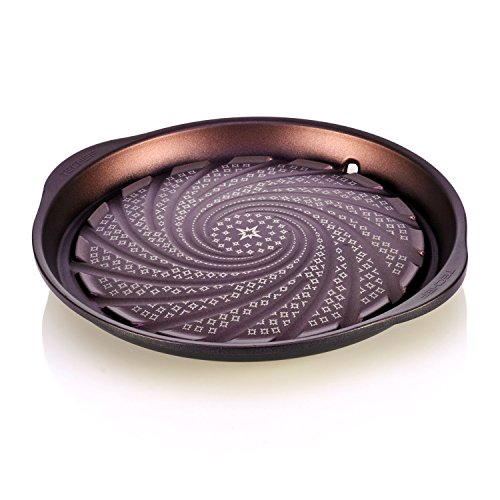
TECHEF opens with the simplest proposition of the six: a nonstick Korean grill pan, made in Korea, free of PFOA, and safe to put in the dishwasher or the oven.
Iwatani’s YAKIMARU II takes the opposite route, a cassette gas barbecue grill with its own burner and a model code, CB-SLG-2, for households that want tabletop flame without a hob underneath.
Baffect goes all-in on charcoal and on the parts list, bundling a grill body, a non-stick pan, a grill net, a charcoal holder, an ash bowl and a heat-guarded handle.
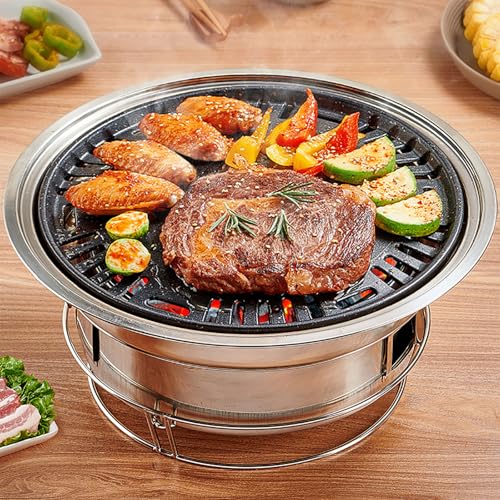
PHOJEWI keeps the charcoal format but shrinks it: a stainless steel tabletop grill with a stated 13.7-inch size for indoor and outdoor cooking and camping.
Sanbege returns to the pan family with a 13-inch round griddle, six-layer nonstick coating, a carry bag, and compatibility spanning induction, gas and electric heat.
Primst closes the set with a multifunctional charcoal barbecue that also calls itself a household Korean grill, a portable camping stove and a tabletop smoker.
Quick Picks
| Pick | Best for | Highlight from the listing title |
|---|---|---|
| TECHEF Korean BBQ Grill Pan | Stovetop households wanting the classic pan format | Nonstick, PFOA-free, made in Korea, dishwasher and oven safe |
| Iwatani YAKIMARU II CB-SLG-2 | Tabletop cooking away from the hob | Cassette gas grill with its own burner, model CB-SLG-2 |
| Baffect Korean Charcoal Grill | Charcoal cooks who want the full kit in one box | Pan, net, charcoal holder, ash bowl and guarded handle included |
| PHOJEWI Korean BBQ Charcoal Grill | Small tables and camping trips | Stainless steel body with a stated 13.7-inch size |
| Sanbege Korean Grill Pan 13 | Mixed hob types including induction | 13-inch round pan, 6-layer coating, induction compatible, bag included |
| Primst Korean BBQ Charcoal Grill | Experimenters who also want a smoker mode | Charcoal grill that also presents itself as a tabletop smoker |
How these picks were chosen
The first sort was by heat source, because that decision reshapes the whole meal. A pan on your own hob costs the household nothing in fuel logistics and heats exactly as your stove does; a cassette gas grill frees the table from the kitchen but introduces canisters to buy and store; charcoal asks the most work and returns the most distinctive flavour. Any honest shortlist for this category has to hold all three doors open, so two pans, one gas grill and three charcoal models were kept.
The second sort was by what the box demonstrably contains. Korean barbecue generates accessories — nets, pans, holders, ash management — and titles that name their inclusions let a buyer compare like with like. The Baffect title reads almost like a packing list, while the Iwatani title offers barely more than a name and a fuel type. Both approaches appear below, described as written, with silences flagged rather than filled in from photographs or from what rival brands usually include.
Coating claims were handled carefully. Where a title says nonstick or names a layer count, that is reported as the maker’s statement. Where a title says PFOA-free, that specific claim is noted without inflating it into a general safety verdict. And where a grill is described for indoor cooking, the reviews keep repeating an unfashionable truth: indoor describes the maker’s positioning, while ventilation remains the household’s own responsibility, especially over charcoal.
The six picks in detail
TECHEF Korean BBQ Grill Pan
The TECHEF pan is the reference design for stovetop Korean barbecue: a nonstick grill pan made in Korea, stated to be PFOA-free, and cleared by its maker for both the dishwasher and the oven. There is no burner, no fuel and no assembly story here — the pan borrows whatever heat your kitchen already makes, which is precisely why this format outsells every other branch of the category.
- Type: stovetop grill pan
- Surface: nonstick, stated PFOA-free
- Origin: made in Korea, per the title
- Cleaning: dishwasher safe and oven safe, per the title
- Pan diameter: the title omits any measurement
Strengths
- Made-in-Korea provenance matters in a category built on a Korean cooking format
- Dishwasher and oven clearance simplifies the two worst cleanup moments
- No fuel to buy, store or run out of mid-meal
Trade-offs
- Diameter never appears in the title, so hob and table fit need checking
- Your stove’s power and evenness become the grill’s performance ceiling
- Nonstick surfaces dislike metal utensil abuse and extreme preheating
A grill pan’s virtues are mostly about flow. Meat goes on in thin slices, fat needs somewhere to go, and the cook wants the surface hot again quickly after each batch of cold beef lands. The TECHEF’s job is to be the neutral stage for that rhythm, and its nonstick surface changes the cooking in a specific way: marinades that would weld themselves to bare metal release instead, so sugared bulgogi marinades become practical at home rather than a cleanup punishment. The trade is vigilance — nonstick rewards wooden or silicone tools and moderate preheating, and punishes the cook who treats it like a cast iron plate.
The dishwasher and oven notes sound like boilerplate until the first heavy session. Oven clearance means the pan can finish thick pieces or keep a batch warm at low heat while the table resets, and dishwasher clearance means the post-meal negotiation is short. What the title withholds is size, and size decides whether the pan straddles one burner gracefully or crowds the table. Check the full listing for diameter before ordering, and picture it against your largest hob ring rather than your smallest.
There is also a storage argument for the pan format that charcoal boxes cannot match. A pan hangs on a hook or slides into a cupboard with the frying pans, asks for no fuel shelf and no ash routine, and can be in service ten minutes after a spontaneous decision. Households that cook Korean barbecue monthly rather than weekly often find this format survives in their routine precisely because it demands nothing between uses. The meal becomes a shopping decision — meat, leaves, rice — rather than a logistics project.
One more TECHEF consideration is burner geometry at home. On a wide gas ring the pan’s centre can run fierce while the rim lags, so the cook learns to work in a spiral — new slices at the edge, finishing pieces pulled inward — a small choreography that becomes automatic by the third session. On a flat electric or induction surface the heat evens out and the choreography relaxes. Either way the pan rewards a cook who moves food deliberately rather than scattering it and hoping, which is really the thesis of this entire category in miniature.
Best for: stovetop households who cook Korean barbecue regularly and want the classic pan with the least friction
Not suited for: cooks who want flame or charcoal character at the table, because a pan on a hob delivers neither
Check price on Amazon — its appeal is the absence of everything except the pan itself.

Iwatani YAKIMARU II CB-SLG-2
Iwatani’s YAKIMARU II is a cassette gas barbecue grill, model CB-SLG-2, and its title stops almost there. That brevity hides the format’s real significance: this is a self-contained tabletop grill running on cassette gas, so the cooking can happen on a dining table, a balcony or a campsite bench with no hob, no charcoal and no power cord. The YAKIMARU name is Iwatani’s grill line, and the II marks this as the second generation of it.
- Fuel: cassette gas
- Model: CB-SLG-2
- Type: tabletop BBQ grill
- Included fuel: unmentioned in the title
- Grill surface details: absent from the title
Strengths
- Self-contained flame frees the meal from the kitchen hob
- Cassette gas lights instantly and adjusts with a dial rather than coal craft
- A named model code makes canister and accessory checking precise
Trade-offs
- Title is nearly silent on surface, size and inclusions
- Gas canisters are an ongoing purchase and storage item
- No charcoal flavour, which for some households is the whole point
The cassette format solves the oldest problem in home Korean barbecue: the best seat for the grill is the middle of the table, but the hob is fixed to the wall. A cassette grill relocates the fire to the company. Heat control becomes a dial, which changes the cooking social contract — anyone at the table can nudge the flame down when the garlic starts catching, without the cook performing coal redistribution. For apartment households whose kitchens are small or whose dining happens in another room, that relocation is not a luxury; it is what makes the meal possible at all.
What cannot be assessed from the title is the grill surface itself — its material, its shape, whether it is a plate or a grid — and those details shape how fatty cuts behave and how the unit washes up. A buyer should go to the full listing with a short checklist: surface type, stated dimensions, and what arrives in the box. The canister question deserves the same clarity, since cassette gas is a standard format but the title does not say whether any canister is included, so assume the shelf needs stocking before the first meal.
Running costs deserve a clear-eyed sentence. Cassette canisters are cheap individually and quietly cumulative across a winter of weekly barbecue nights, and they dislike being stored anywhere hot. None of that disqualifies the format — it is the same bargain every portable gas user accepts — but it does mean the YAKIMARU suits households that value instant, adjustable tabletop heat enough to keep a small canister shelf. Charcoal romantics and hob traditionalists both have their own picks elsewhere on this page.
Portability cuts both ways for the YAKIMARU. A cassette grill travels to a balcony, a garden or a friend’s house with no installation at all, which makes it the pick most likely to be lent — and lending exposes the one discipline cassette owners must keep: the grill and its canisters travel separately, stored cool, and the borrower gets a two-minute briefing rather than a wave. Households that entertain outdoors away from the kitchen will use that portability constantly; households that never move the meal from the dining table will simply enjoy the dial.
Best for: households that want the grill in the middle of the table with dial-controlled heat and no charcoal routine
Not suited for: a purchase that needs the cooking surface and dimensions confirmed in writing, since this title states almost nothing beyond fuel and model
Check price on Amazon — bring a checklist to the full listing; the format is the feature here.

Baffect Korean Charcoal Grill
Baffect’s charcoal grill arrives with the longest packing list in this group: a portable grill body, a non-stick barbecue pan, a grill net, a charcoal holder, an ash bowl and a handle described as hot-prevent — a heat-guarded grip, in plainer words. The maker positions it for indoor barbecue cooking and outdoor camping, and the component list tells the story of a system designed to be cooked on, cleaned and carried as one kit.
- Fuel: charcoal
- Included: grill body, non-stick pan, grill net
- Also included: charcoal holder, charcoal ash bowl
- Handle: heat-guarded design named in the title
- Overall dimensions: not stated in the listing title
Strengths
- Pan and net give two cooking surfaces for different cuts in one box
- A dedicated ash bowl answers charcoal’s messiest by-product
- Charcoal holder keeps the fire contained and movable as a unit
Trade-offs
- Six components mean six things to wash, dry and store
- Indoor positioning still leaves ventilation entirely to the household
- No dimensions are published in the title for table planning
Two cooking surfaces is the detail that changes dinner. The non-stick pan handles marinated slices and anything small or delicate — mushrooms, garlic, kimchi frying in the meat juices — while the net takes pieces that want direct coal contact and charred edges. Korean barbecue menus are built on exactly that contrast, and most single-surface grills force the cook to choose a lane. With both in the box, a single charcoal load can run a varied meal: bulgogi on the pan, unmarinated brisket slices flashing over the net, vegetables migrating between the two as space opens.
The ash bowl and charcoal holder reveal a maker who has actually cleaned a charcoal grill. Ash is the reason tabletop charcoal has a reputation for mess, and giving it a dedicated bowl — plus a holder that lifts the fire as one piece — turns the worst chore into a contained routine. The heat-guarded handle belongs to the same philosophy: this grill expects to be moved mid-session, carried to the table, shifted, taken away. Six parts is a real inventory, though, and small kitchens should count cupboard space before falling for the completeness.
For camping, the kit logic inverts: everything needed nests into one purchase, so there is no trail of forgotten accessories between home and site. The pan earns its place outdoors too, since campsite wind makes net cooking smoky and uneven while a pan keeps juices and small pieces under control. Back home, the routine that keeps this grill pleasant is unglamorous — ash out when cold, pan and net washed the same night, parts dried before they are stacked — and households willing to keep that routine get the most complete charcoal proposition on this page.
A note on the Baffect’s pan-and-net washing order, because kits live or die on it: the net wants attention first, while its residue is fresh from the heat, and the non-stick pan wants a soak while the table is cleared. Ash, once cold, leaves via the bowl without ever touring the sink. Households that build that fifteen-minute sequence into the end of the meal keep the kit looking new; households that stack everything into the sink until morning will come to resent the very completeness they bought, which would be a shame, because the design itself is sound.
Best for: charcoal households that want pan and net cooking plus proper ash handling in a single purchase
Not suited for: small kitchens with no room to store a six-part kit, or anyone who washes up resentfully
Check price on Amazon — count your cupboard space, then enjoy how complete the box is.
PHOJEWI Korean BBQ Charcoal Grill
PHOJEWI’s charcoal grill is the tape-measure pick of the charcoal trio: a stainless steel tabletop barbecue with a stated size of 13.7 inches, described for outdoor and indoor cooking and for camping. Stainless steel is a meaningful choice in this category — most rivals here are coated or cast — and the published dimension makes this the easiest charcoal model on the page to plan a table around.
- Material: stainless steel
- Fuel: charcoal
- Stated size: 13.7 inches
- Format: tabletop, portable
- Included accessories: none stated in the listing title
Strengths
- A published 13.7-inch size removes the fit guesswork
- Stainless steel shrugs off the rust worries that haunt stored charcoal gear
- Tabletop format suits both home tables and campsite benches
Trade-offs
- Title names no pan, net or ash accessories, unlike the Baffect kit
- Indoor wording still means charcoal smoke needs managing
- 13.7 inches is a couples-and-small-groups cooking area
Stainless steel changes the ownership experience more than the cooking. A charcoal grill lives a hard life — heat cycles, ash, marinade splashes, damp storage — and stainless tolerates that cycle with a wipe rather than a regime. For households whose grill will live in a garage or on a balcony between uses, that tolerance is worth real money in avoided rust. The cooking itself is classic small-bed charcoal work: a contained fire, food close above it, rounds succeeding each other while the table eats.
The 13.7-inch figure deserves respect as the only charcoal dimension on this page. It tells you this is a grill for two to four people eating in the Korean style — continuously, in rounds — rather than a device for grilling eight portions at once. It also tells you how the grill sits among tableware: a 13.7-inch centrepiece leaves room for the bowls, leaves and side dishes that define the meal. Buyers feeding a crowd in parallel should look at the pans or accept that this grill’s rhythm is sequential by design.
Accessory silence is the gap to probe. The title names no pan, no net and no ash solution, so a buyer should establish from the full listing what the cooking surface is and what, if anything, arrives beside the grill body. That is not a criticism of the grill — a simple body is a legitimate design — but the comparison with the Baffect’s itemised kit shows why titles matter: two charcoal grills at similar sizes can be entirely different purchases once the box is opened, and only the written inclusions tell you which one you are getting.
PHOJEWI ownership has a particular rhythm worth picturing: light the small bed, cook two people’s rounds unhurriedly, let the fire die in place, and brush the stainless body down once cold. There is no kit to reassemble and no coating to baby. That simplicity is why a grill like this survives in households that abandoned fussier equipment — the distance between wanting barbecue and eating it stays short. The buyer’s homework is only about the cooking surface and inclusions, which the title leaves open and the listing must answer.
Best for: couples and small households that want stainless steel durability and a known 13.7-inch footprint
Not suited for: hosts feeding large groups simultaneously, because the stated size cooks in rounds, not in bulk
Check price on Amazon — measure your table centre; this one actually lets you.

Sanbege Korean Grill Pan 13
Sanbege’s grill pan is a 13-inch round griddle with a nonstick coating the maker counts at six layers, a carry bag in the box, and a compatibility list that spans induction, gas stoves and electric cooktops. That hob list is the headline: induction ownership locks many households out of traditional Korean grill pans, and this pan is explicitly built to walk through that door.
- Size: 13 inches, round
- Coating: nonstick, stated as 6-layer
- Compatibility: induction, gas stove, electric cooktop
- Included: carry bag
- Dishwasher status: the title makes no claim either way
Strengths
- Induction compatibility opens the format to induction households
- A stated 13-inch size makes burner and table planning easy
- Included bag suits taking the pan to other kitchens and trips
Trade-offs
- Coating layer counts are a maker’s claim, not a measurable standard
- No dishwasher or oven clearance is claimed in the title
- Round pans on small burners can heat unevenly at the rim
Induction compatibility is an engineering tell. A pan that works on induction needs a suitable base, and that base usually brings even heating as a side benefit on gas and electric too. For Korean barbecue, evenness matters in a particular way: the table cooks continuously, slices land wherever there is space, and a pan with a fierce centre and a sulky rim produces two different meals at once. A 13-inch round is also a socially literate size — big enough for a family’s rolling rounds, small enough to sit on a table burner without annexing the side dishes.
The six-layer coating claim should be read as the maker describing construction, not as a promise that can be compared across brands, since layer counts are not standardised anywhere. What a buyer can actually use is the simpler fact of nonstick itself: marinated meats release, sugars wipe away more easily, and the pan asks for gentle tools. The title does not claim dishwasher clearance, so hand-washing is the safe assumption — a small discipline that nonstick owners generally accept in exchange for the release.
The included bag sounds minor and is not. Grill pans are awkward travellers — wide, round, prone to scratching whatever they touch — and a dedicated bag turns this pan into the one you bring to a friend’s kitchen or a rented cabin, which is where Korean barbecue often happens socially. Households that entertain across homes, or students moving between shared kitchens, will feel that inclusion weekly. At home it doubles as dust protection in the cupboard, keeping the coating away from stacked metal neighbours.
Sanbege’s bag hints at a social pattern worth naming: the travelling cook. Every circle has one person who becomes the designated barbecue bringer, and a pan with its own bag, that works on any hob including a stranger’s induction plate, is practically a uniform for that role. If that person is you, this pan’s compatibility list is worth more than any coating claim. If it is not you, the bag still earns its keep as scratch protection in a crowded cupboard at home.
Best for: induction households first, and anyone who wants a stated size plus a bag for cooking at other people’s tables
Not suited for: cooks who want dishwasher clearance stated in writing, because this title never claims it
Check price on Amazon — the hob list is the reason this pan exists; check yours against it.

Primst Korean BBQ Charcoal Grill
Primst’s entry wears four hats in one title: a multifunctional charcoal barbecue grill, a household Korean BBQ grill, a portable camping grill stove and a tabletop smoker grill. That is a lot of identity for one product, and the honest way to read it is as a charcoal tabletop unit whose maker emphasises versatility — grilling in the Korean style at home, travelling to campsites, and turning a hand to smoking on the table.
- Fuel: charcoal
- Roles claimed: Korean BBQ grill, camping stove, tabletop smoker
- Format: tabletop, portable
- Cooking surface details: none stated in the listing title
- Dimensions: not stated in the listing title
Strengths
- Smoker positioning adds a second cooking style to a charcoal tabletop
- Household and camping roles are both claimed in the title
- Charcoal fuel keeps the flavour traditionalists are shopping for
Trade-offs
- Four claimed roles and few concrete specifications to test them against
- No surface, size or inclusion details appear in the title
- Multifunction designs ask the buyer to verify each mode on the full listing
The smoker claim is the interesting one, because tabletop smoking is a genuinely different discipline from open grilling: lower heat, more time, food bathed in smoke rather than seared over coals. A charcoal unit that can plausibly do both — if its construction allows the airflow control smoking needs — covers a household’s two moods, the fast weeknight grill and the slow weekend experiment. The title asserts the capability without describing the mechanism, so the full listing’s account of lids, vents and configuration is where that claim must be checked.
Versatility claims deserve a buyer’s framework rather than cynicism. Ask of each claimed role what it requires: Korean barbecue needs a suitable surface and table manners; camping needs portability that survives packing; smoking needs containment and control. The Primst title asserts all three roles while specifying none of their hardware, which makes this the research-heaviest pick on the page — and potentially the most rewarding if the listing substantiates it, because a single charcoal unit covering home, camp and smoker duties is a genuinely economical idea.
There is a household type this suits precisely: the experimenter with limited storage. One charcoal box that grills skewers and brisket slices on Friday, travels on Saturday and smokes a small piece of fish on Sunday replaces two or three single-purpose devices in the cupboard. The risk is the mirror image — a household that only ever grills would carry the compromises of versatility without ever cashing its benefits. Know which household you are before the multifunctional label seduces you; the word describes possibility, not obligation.
For the Primst, the buyer’s verification list deserves writing down before visiting the full listing: what does the cooking surface look like, how is the smoker mode configured, what arrives in the box, and what are the dimensions. Four questions, all answerable from a careful listing read. A multifunctional product that answers them well is a bargain in space; one that answers them vaguely is a gamble. That homework, more than any other pick on this page, is the difference between a delighted experimenter and a disappointed one.
Best for: experimenters with limited storage who want charcoal grilling plus a claimed tabletop smoking mode
Not suited for: a shopper expecting every claimed role to arrive with stated hardware, because this title asserts roles without specifications
Check price on Amazon — take the four hats as questions to verify on the listing, not as answers.
Heat sources and stated facts, side by side
| Model | Heat source | Surface or kit stated | Key unknown |
|---|---|---|---|
| TECHEF Korean BBQ Grill Pan | Your hob | Nonstick pan, PFOA-free claim | Diameter |
| Iwatani YAKIMARU II CB-SLG-2 | Cassette gas | Own burner, model CB-SLG-2 | Surface type and size |
| Baffect Korean Charcoal Grill | Charcoal | Pan, net, holder, ash bowl | Dimensions |
| PHOJEWI Korean BBQ Charcoal Grill | Charcoal | Stainless body, 13.7 inches | Included accessories |
| Sanbege Korean Grill Pan 13 | Your hob | 13-inch pan, 6-layer coating, bag | Dishwasher status |
| Primst Korean BBQ Charcoal Grill | Charcoal | Grill plus claimed smoker role | Surface and dimensions |
The table exposes this category’s personality: heat source is always stated, surfaces sometimes, dimensions rarely. Readers whose mornings matter as much as their barbecue nights may also want two alarms working for them on the bedside table. Best Dual Alarm Clocks
Which kind of Korean BBQ grill fits your home?
Pan, gas or charcoal — which heat suits your household?
Start with the room, not the food. A stovetop pan keeps the cooking in the kitchen unless you own a portable burner, so pan households usually eat where they cook or carry cooked rounds to the table. A cassette gas grill and the charcoal boxes move the theatre to the diners. If the social heart of Korean barbecue — everyone cooking together — matters to you, that relocation is the first decision, and it eliminates half this list in one stroke.
Then count the friction you will tolerate weekly. Pans ask almost nothing: no fuel shelf, no ash, no canisters. Gas asks for canister stock and a cool storage spot. Charcoal asks for lighting time, ash disposal and ventilation discipline. Households routinely overestimate their tolerance in January and discover it in March, so choose for the cook you are on a tired Thursday, not the enthusiast you are on a free Saturday.
What will you actually cook on it?
Menu decides surface. Heavy marinades and small, sticky items — mushrooms, sliced garlic, kimchi, rice cakes — behave best on a pan surface where juices stay and sugars can be managed. Unmarinated brisket, pork belly and anything that wants char and smoke kiss belongs over charcoal on a net or grate. A mixed menu argues for the Baffect’s two-surface kit or for accepting a pan’s compromise with a very hot preheat for the plain cuts.
Thickness matters too. Korean barbecue cuts are thin by design, which is why tabletop formats work at all. A household planning to grill thick steaks and whole chicken pieces is shopping in the wrong category entirely, and no pick here will rescue that plan; these six are built for slices, strips and small pieces cooked in minutes.
How many people eat, and how patiently?
Korean barbecue feeds numbers gracefully because it is continuous: the grill produces, the table consumes, and nobody’s plate needs to fill simultaneously. Even so, surface area sets the tempo. A 13-inch pan or a 13.7-inch charcoal grill keeps two to four diners in a pleasant rhythm; six diners on the same surface creates a queue, and queues at a barbecue table turn festive into fractious. Bigger regular gatherings argue for the largest stated surfaces here or for running a pan and a second device in parallel.
Patience is the other variable. Charcoal’s lighting wait builds anticipation for some tables and irritation for others; gas and hob heat are ready when the meat is sliced. Households with small children eating early often find instant heat worth more than smoke character, and there is no snobbery in admitting it — the best grill is the one whose rhythm matches the family’s.
Barbecue nights tend to make mornings harder, and households planning the full kitchen usually size their coffee maker in the same breath. Best Eight Cup Coffee Makers
Setting the table so the grill can do its job
Korean barbecue tablecraft is half the meal. The grill takes the centre; around it, in reach of everyone, go the ssam leaves, rice, dipping sauces, scissors for cutting meat at the table, and the side dishes that reset the palate between rich bites. Raw meat should arrive on its own tray with its own tongs, and a second pair of tongs lives at the grill for cooked pieces — that two-tong discipline is the whole food-safety system of the format, and it costs nothing.
Heat management at the table is social too. On pans and gas grills the nearest diner becomes deputy heat-keeper; on charcoal, the host usually keeps that role because adjusting a coal bed mid-meal is a skill. Agree the roles before the first slice lands and the meal flows; leave them vague and four people will adjust the flame in four directions while the garlic burns.
Ventilation, honestly, for indoor cooking
Two of these listings use the word indoor, and several more imply tabletop use, so the subject deserves plain speech. Charcoal produces carbon monoxide and a great deal of smoke; gas produces less smoke but still combustion gases; even a pan of frying pork belly fills a room with aerosolised fat. A window, an extractor running from the first slice, or a balcony door is not an optional accessory for any of the six — it is part of the installation.
Households in small flats can still enjoy this food with a few habits: cook fatty cuts in shorter bursts, keep a portable fan aimed at the window, and accept that soft furnishings will hold the evening’s perfume until morning. If none of that is possible, the honest answer is that the stovetop pan under a strong extractor is the only format here that truly belongs in the room, and the charcoal models should live their lives outdoors.
Marinade management across three heat sources
The same bulgogi marinade behaves three ways on this page. On a nonstick pan it pools, simmers and glazes, rewarding the cook who drains slices well and works in small batches so the surface stays a grill rather than becoming a braise. On cassette gas the heat is responsive enough to rescue a sugary batch — drop the dial the moment the edges darken — which makes the gas grill quietly excellent for sweet marinades in nervous hands.
Over charcoal, marinade is a commitment: drips flare, sugars char fast, and the flavour payoff is the deepest of the three. The technique is timing — marinated pieces go on once the bed has settled to an even, ashed heat, never over young flames. Households that cook heavily marinated menus most nights should honestly weigh that discipline; the pan and gas formats forgive a sugary menu, while charcoal grades it.
The side dishes are not decoration
A home Korean barbecue with only meat on the table misses the format’s architecture. Banchan — the small dishes — do functional work: kimchi cuts richness, pickled radish resets the palate, seasoned sprouts and spinach give the lettuce wraps their crunch and contrast. None of this needs to be elaborate. Two or three bought or quickly made sides transform the same grilled meat from a protein event into a meal, and they cost less effort than any grill upgrade on this page.
Rice deserves the same respect as the grill choice. Short-grain rice, cooked slightly firm, holds a wrap together; a rice cooker ticking away in the corner frees the cook entirely. Households planning their first session should spend as long choosing the table’s supporting cast as they spent choosing between these six grills, because guests remember the whole arrangement, not the appliance at its centre.
Leftovers and the second-day meal
Korean barbecue is generous by design, and leftovers are a feature. Cooked slices keep well and reheat in a dry pan in a minute; raw marinated meat, kept cold and separate, cooks fresh the next day for lunch. The pan-format picks here earn a quiet point on day two, because reheating a handful of slices on the same pan you grilled on is effortless, and the nonstick surface releases the sugary edges that a plain pan would grab.
Plan the second day when you shop: an extra pack of leaves, rice portioned for fried rice, and the meal repeats in a new form without another fuel purchase or another charcoal lighting. Households that cook this way find their grill — whichever of the six — working twice per shopping trip, which is the real economy of the category.
Teaching children the tabletop ritual
Korean barbecue is unusually welcoming to children old enough to sit at a table, because the cooking is visible, the pieces are small and the wraps are assembled by hand. The safe architecture is simple: an adult owns the grill zone and the tongs that work it, children own the leaves, rice and assembly, and cooked pieces travel outward to their plates. Pans and the cassette grill suit this best, since their heat is steadier and their edges more predictable than a charcoal bed’s.
What children take from these meals is bigger than dinner. They learn heat by watching it, patience by waiting for a batch, and the pleasure of a meal that is an activity rather than a delivery. Households choosing a first grill with family evenings in mind should weigh that educational theatre honestly — it is a real feature of the tabletop formats, and it survives long after the specification differences between these six have blurred.
Budgeting the whole habit, not just the grill
The grill is the smallest cost in this hobby. Meat sliced for barbecue carries a premium, canisters and charcoal recur, and the supporting cast — leaves, rice, sauces, sides — repeats weekly. A household barbecue habit built on any of these six still undercuts restaurant Korean barbecue dramatically, but the honest planner budgets the routine, not the appliance. That is another argument for the low-friction formats: a pan that asks nothing between uses keeps the habit alive in months when money and energy both run short.
It is also an argument for buying once and buying suitably. The household that buys a charcoal kit for romance and a pan for reality owns two grills and a guilty conscience. Read the room descriptions in this guide again, choose the format your home genuinely supports, and let one good grill carry the whole habit.
Common mistakes
Using one pair of tongs for raw and cooked meat
It is the classic tabletop error, made because the meal is casual and the tongs are already in someone’s hand. Raw juices on the cooked-meat tongs undo the grill’s careful cooking in one gesture. Put two visibly different pairs on the table — different colours, different lengths — and announce the rule once. After the first meal it becomes as automatic as the scissors.
Marinating everything and charring nothing
New home cooks often marinate every cut, then wonder why nothing tastes like the restaurant meal they remember. Restaurants alternate: marinated pieces for sweetness, plain brisket and pork belly for pure meat and smoke, dipped after cooking. Leave at least one cut unmarinated, cook it hot and plainly, and the contrast will teach your table more about the format than any equipment upgrade.
Letting the pan or grill cool between rounds
Tabletop barbecue lives on momentum. A surface allowed to cool while the table chats reheats slowly and steams the next batch instead of searing it. Keep the heat ticking over during pauses — lower on gas or a hob, banked on charcoal — and add small batches often rather than one heroic load after a long gap. The meal’s rhythm is the recipe.
Buying charcoal gear for a home that cannot ventilate it
Enthusiasm outruns architecture in this category constantly. A charcoal grill in a sealed flat is not a compromise, it is a hazard and a smoke alarm concert. Read the ventilation section above before the charcoal picks seduce you, and if the room cannot clear smoke, choose the pan or the gas grill with a clear conscience — the food will still be excellent.
Judging a nonstick pan by its first sugary marinade
Sugar-heavy marinades scorch on any surface and look like coating failure on a new pan. The fault is sequencing, not the pan: cook plain and lightly marinated pieces first while the surface is hottest and cleanest, and bring the sweetest marinades on later at moderated heat. Both pans here will look after a household that cooks in that order.
Skipping the scissors
Cutting cooked meat at the table with kitchen scissors is not a shortcut, it is the technique: large pieces grill better, then get snipped into bite-size pieces directly on the pan or net. Households that pre-cut everything small fight falling pieces and overcooked edges all evening. Grill big, cut late, and let the scissors live on the table beside the tongs.
Overloading the surface to feed everyone at once
The urge is understandable and the result is steamed, grey meat. Every format here cooks in small, hot batches; the table eats continuously rather than simultaneously. Load a third of what instinct suggests, keep the cooked pieces flowing into wraps, and the grill will stay in its searing rhythm all evening. Hosts who master batch discipline get restaurant results from modest equipment, while hosts who pile food high defeat even the best charcoal bed.
After a smoky barbecue night, the morning-after clean-up has its own machinery questions, and the canister vacuum category is where thorough households tend to land. Best Canister Vacuums Under $200
Final recommendation
Match the heat to the household and this category becomes simple. The TECHEF is the default for hob households that cook this food often; the Sanbege is its induction-friendly sibling with a stated size and a bag for travel. The Iwatani is the table-theatre choice, instant and adjustable, for homes that cannot or will not run charcoal. Between the charcoal models, the Baffect is the complete kit, the PHOJEWI the durable measured minimalist, and the Primst the experimenter’s wildcard whose claims repay verification.
If a first purchase must be named: households with a decent hob and no induction should start with the TECHEF pan, because it will be used the most per unit of effort. Households whose dining room is the destination should start with the Iwatani or the Baffect, depending on whether they prefer a dial or a coal bed. Every route leads to the same table — leaves, rice, sizzling slices — and the right grill is simply the one your home can run happily every week.
A last word on sequence for first-time buyers: buy the grill your room supports, spend the money you saved not over-buying on good meat and a rice cooker you trust, and hold the first session for people who will forgive a learning curve. The second session is the one where the format clicks — the heat judged right, the table laid without thinking — and every pick on this page can carry a household to that evening. Buy for the room, the fuel shelf and the washing-up tolerance you actually have, and the grill will still be earning its place when the novelty of the first month has long worn off.
Frequently asked questions
Do I need a portable burner for a stovetop grill pan?
Only if you want to cook at the table. Both pans here work on an ordinary kitchen hob, and many households cook in the kitchen and bring rounds out. A portable burner — gas or induction, depending on the pan — turns the same pan into a tabletop grill, and the Sanbege’s stated induction compatibility matters precisely for that pairing.
Is charcoal Korean barbecue safe indoors?
The listings for two charcoal models here use indoor positioning, but charcoal indoors demands serious ventilation because it produces carbon monoxide as well as smoke. Treat indoor as the maker’s positioning, arrange extraction or open windows before lighting, and never leave a charcoal grill burning in a closed room. When in doubt, take the charcoal models outside.
What cuts of meat work best on these grills?
Thin ones. Brisket sliced thin, pork belly in strips, bulgogi-style marinated beef, chicken thigh pieces and mushrooms, peppers and onions alongside. The formats here — pans, a cassette grill, small charcoal beds — are all built for pieces that cook in a few minutes. Thick steaks and large joints belong on a full-size grill.
How do cassette gas canisters factor into running costs?
They are the Iwatani format’s consumable: inexpensive singly, recurring across a season of regular use, and they need cool storage away from heat sources. The title does not state that any canister is included, so plan to stock them from the first meal. Households that barbecue weekly should weigh that small ongoing errand against charcoal’s bags and ash.
Can these grills handle vegetarian meals?
Happily, and the pan surfaces especially shine: mushrooms, aubergine, courgette, peppers, firm tofu and rice cakes all suit the format, and the two-surface Baffect kit lets vegetables cook in the pan while anything else takes the net. Marinades and dipping sauces carry the flavour load for a meat-free table just as they do at a mixed one.
Which of these is easiest for a complete beginner?
A stovetop pan, without much contest. The heat is the stove you already know, there is no fuel to light and no fire to manage, and the nonstick surface forgives the timing errors beginners make while they learn how thin slices behave. Graduates of the pan format who crave smoke or tabletop theatre can move to gas or charcoal later with their tablecraft already learned, which is a far easier order than learning fire and format simultaneously.
How much smoke will a tabletop session make?
Enough to plan for. Fatty meat on any of these six produces visible smoke and a lingering aroma; charcoal adds its own from lighting onward. An extractor, an open window or a balcony setting keeps it pleasant. If your home cannot clear the air from a frying pan of bacon, it will not clear a barbecue session either, so choose the cooking spot with that comparison in mind.
Whichever heat you gather around, may your first home barbecue end with everyone still at the table, picking at the last mushrooms and planning the next one.


