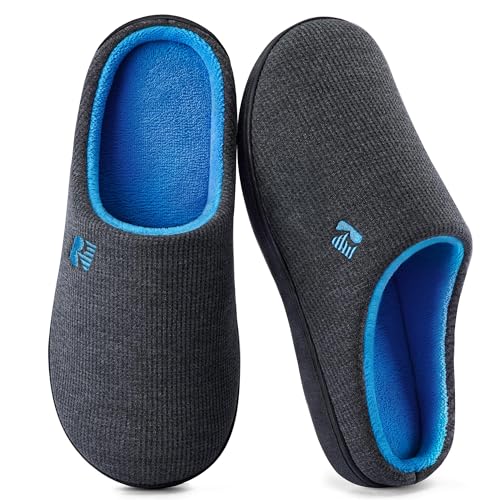
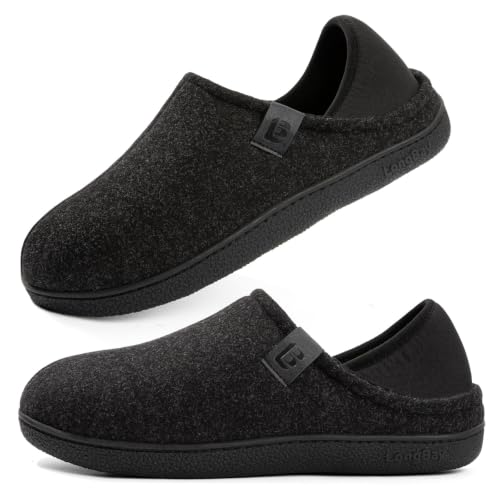
Our Top Picks


What's inside
- How to read this guide
- Where the extensor tendons actually run
- Three pain locations that should never be confused
- The core principle: relieve pressure from above
- Toe-box height matters more than toe-box width here
- Vamp depth, vamp softness and the front edge
- Closures that adjust across the instep
- Cushioning: enough to help, never so much it lifts the foot into the vamp
- Collar height and the ankle crease
- Sole stiffness, torsional behaviour and walking mechanics
- Weight: the quiet specification
- Upper materials compared: knit, neoprene, soft leather and firm fabrics
- Seams, stitching and interior finishing
- Sizing by length and by volume
- Managing the daily swelling cycle at home
- What usually causes this irritation in the first place
- Honest medical framing and warning signs
- Archetypes worth shortlisting
- Matching the slipper to the household routine
- Cleaning, stretch fatigue and knowing when to replace a pair
- Questions to ask of any listing before buying
- Socks: the layer that quietly changes the fit
- Insoles, orthotics and the volume they consume
- An evening fit-check protocol for new pairs
- Listing traps and marketing language to discount
- A second pair for outside the house
- Check prices on Amazon
- How long a well-chosen pair should be worn each day
As an Amazon Associate I earn from qualifying purchases. This post may contain affiliate links at no extra cost to you.
How to read this guide
This guide may earn a commission through qualifying purchases made from retailer links, because the site participates in the Amazon Associates Program. That relationship never changes which design details get emphasised here, and it never turns a house slipper into a medical device. Everything that follows rests on published specifications, construction diagrams, sizing charts and care instructions, compared side by side rather than on any claim of clinical benefit.
Extensor tendonitis changes the slipper question completely. Most footwear advice for sore feet concentrates on the heel or the sole, yet the irritated structures in this condition sit on the upper surface of the foot, directly underneath whatever a shoe or slipper presses down with. A design that earns praise for plush heel cushioning can still aggravate the top of the foot if its vamp rides high, its seams cross the midfoot, or its fit depends on gripping tightly across the instep. Readers should therefore treat this page as a study in downward pressure: where it comes from, which constructions reduce it, and where the honest limits of footwear begin.
One boundary deserves emphasis before any shopping criteria appear. Slippers can remove a source of mechanical irritation, and removing irritation matters, but no house shoe resolves inflammation on its own. Persistent pain, spreading swelling, numbness, or weakness when lifting the toes belongs in a clinical conversation, not in a product comparison. Sections near the end of this guide list those warning signs in plain language so the buying advice never drifts into diagnosis.
Where the extensor tendons actually run
Two tendon groups do most of the lifting work on the front of the ankle and the top of the foot. The extensor hallucis longus travels toward the big toe and raises it clear of the ground during each step. Beside it, the extensor digitorum longus fans out toward the four smaller toes and lifts them together. Both structures pass under a band of tissue at the ankle, then glide across the bony upper surface of the midfoot with very little padding between tendon, bone and skin.
That shallow anatomy explains the characteristic complaint pattern. Discomfort concentrates along the top of the foot, often in a line running from the ankle crease toward the toes, and it flares when something presses downward or when the toes work hard against resistance. Shoes laced firmly for a long run, boots with stiff tongues, and straps cinched across the midfoot all load exactly the tissue that is already irritated. Even the act of pointing the toes downward stretches the same structures, which is why some people notice symptoms while driving or while sleeping with the foot relaxed into a pointed position.
Swelling follows a daily rhythm that matters for footwear choices. Fluid collects gradually while a person stands and walks, so a foot that slips comfortably into a shoe at breakfast may feel crowded by evening. Tendons glide less freely when surrounding tissue is swollen, friction rises, and a vamp that seemed harmless in the morning starts to feel like a clamp. Any slipper chosen for this condition has to accommodate the evening version of the foot, not only the rested morning version.
Three pain locations that should never be confused
Heel pain at the back belongs to a different structure entirely. The Achilles tendon anchors the calf muscles to the rear of the heel bone, and footwear advice for that region focuses on heel counters, drop height and avoiding a stiff rim that saws against the back of the ankle. A soft, low collar helps the Achilles, but it does nothing for tendons crossing the top of the foot, and a slipper marketed around heel comfort may still carry a high, tight vamp that causes trouble elsewhere.
Sole pain tells yet another story. The plantar fascia runs along the underside of the foot from heel to forefoot, and support strategies for that tissue involve arch contour, firmness under the heel and resistance to bending through the midfoot. Those features can coexist happily with a gentle upper, yet they answer a separate problem. A reader whose pain lives on top of the foot should not assume that a heavily contoured footbed, by itself, addresses the source of irritation.
Keeping the three locations separate prevents a common purchasing error: buying the most cushioned slipper available and discovering that cushioning underfoot was never the issue. For extensor irritation, the decisive territory is the upper. Toe-box height, vamp depth, seam placement, closure adjustability and upper flexibility outrank almost everything happening below the foot, although sole stiffness and weight still play supporting roles covered later in this guide.
The core principle: relieve pressure from above
Every useful criterion in this guide traces back to a single mechanical idea. The slipper should hold itself on the foot using shape, a gentle heel grip and light overall structure, rather than by clamping down across the midfoot. Retention through clamping feels secure in a shop, yet that same downward force lands precisely on the extensor tendons. Designs that stay on through a well-shaped heel cup and a footbed that resists sliding ask far less of the upper.
Pressure also depends on area. A broad, soft panel distributes contact over a wider surface than a narrow strap, so peak pressure at any single point falls even when total holding force stays similar. That is why a wide stretch panel often feels kinder than a thin elastic band, and why a narrow decorative strap crossing the midfoot can cause a disproportionate amount of trouble. Readers comparing product photographs should look at how much of the top of the foot each design touches, and with what kind of edge.
Edges deserve their own scrutiny. A bound edge, a folded seam or a line of stitching creates a narrow ridge, and ridges concentrate force. On an uninflamed foot a ridge goes unnoticed; over swollen tendons it can feel like a cord pressed into the skin. Smooth interiors, seams moved toward the sides of the foot, and uppers that end before the most sensitive zone all follow from the same principle of spreading load and removing focal points.
Toe-box height matters more than toe-box width here
Width gets most of the attention in comfort footwear, but vertical room is the dimension that decides comfort over the toes and the front of the midfoot in this condition. A toe box can be generously wide yet shallow, forcing the tops of the toes and the front tendons against the ceiling of the shoe with every step. Published internal height figures are rare for slippers, so readers often have to judge from profile photographs: a domed, rounded front profile signals vertical space, while a flat, tapered profile signals a low ceiling even when the width numbers look generous.
Toes also need room to lift. The extensor tendons do their work when the toes rise during the swing phase of walking, and a shallow toe box turns that small movement into repeated rubbing against fabric. Over hundreds of steps around a house, minor rubbing accumulates into real irritation. A taller front section lets the toes move through their normal arc without negotiating with the upper on every stride.
Sock thickness interacts with vertical space in ways sizing charts rarely mention. A slipper that accommodates bare feet beautifully may lose its advantage the moment a thick winter sock enters the picture, because the sock consumes the very clearance the tendons needed. Anyone who rotates between thin summer socks and heavy cold-weather pairs should size for the thicker combination, or keep two pairs of slippers in different internal volumes rather than forcing one pair to cover both seasons.
Vamp depth, vamp softness and the front edge
The vamp is the part of the upper covering the front and middle of the foot, and its depth describes how far back toward the ankle that coverage extends. A short vamp ends early, leaving much of the midfoot uncovered, which removes pressure but also reduces how securely the slipper stays on. A long vamp covers more territory and feels stable, yet its rear edge lands closer to the ankle crease, close to where the tendons pass under their retaining band. For irritated extensor tendons, the middle ground usually wins: coverage that ends ahead of the most sensitive band, with an edge soft enough to flex rather than dig.
Softness can be judged from construction details. A vamp cut from a single layer of stretch knit behaves differently from a vamp built with a stiff lining, a foam interlayer and a bound edge, even when both look similar in photographs. Descriptions mentioning unlined uppers, raw or turned edges, and four-way stretch signal a panel that yields as the foot swells. Descriptions emphasising structure, shape retention and reinforced fronts signal a panel that holds its own shape and expects the foot to adapt instead.
Readers who want broader context on structured uppers and firm support can compare the approach described in best arch support bedroom slippers, where footbed contour takes priority over upper flexibility. That contrast is instructive: support-led designs and pressure-relief designs solve different problems, and a household may reasonably own one of each for different times of day rather than searching for a single slipper that maximises both.
Closures that adjust across the instep
An adjustable strap across the instep is arguably the most valuable single feature for this condition, because it converts a fixed fit into a variable one. Hook-and-loop straps with a long landing zone let the wearer set a loose hold in the evening and a slightly firmer hold in the morning, following the swelling cycle instead of fighting it. The strap should sit on a padded or fabric-backed base so its edges never contact skin directly, and its adjustment range should be judged by how loose it can go, not only by how tight.
Buckles offer a different adjustment character. They hold a setting reliably and resist gradual loosening through the day, but their hardware introduces a rigid object near the foot, and the strap material between holes changes fit in steps rather than continuously. A buckle placed toward the outer side of the foot, away from the central tendon path, can work well; a buckle sitting dead centre over the midfoot concentrates hardware exactly where clearance matters most.
Elastic gores and stretch inserts take a third approach, expanding automatically as volume changes. Their weakness is fatigue: elastic loses recovery over months of heat, washing and daily stretching, gradually turning a forgiving fit into a sloppy one, or in some constructions relaxing unevenly so one zone presses while another gaps. Laces appear rarely on slippers, yet when present they deserve caution, because the crossing pattern that makes laces effective on athletic shoes is the same pattern implicated in many cases of this condition in the first place. If a laced design is chosen, skipping the crossing nearest the ankle and lacing loosely through the remaining eyelets reduces downward load considerably.
Cushioning: enough to help, never so much it lifts the foot into the vamp
Underfoot cushioning earns a careful, limited role. A moderate layer softens heel strike on hard kitchen and bathroom floors, reducing the jolt that travels up the leg, and it keeps the foot from bottoming out against a thin sole during long periods of standing. Memory foam in the range commonly used for house slippers compresses substantially under body weight, so its effective thickness in use is far less than its photographed thickness, a point worth remembering when comparing lofty product images.
Excess stack height creates a subtle problem specific to this condition. Every millimetre of foam under the foot raises the foot inside the slipper, pushing the top of the foot closer to the vamp ceiling. A very thick footbed inside a fixed-volume upper quietly consumes the clearance that the upper was supposed to provide. Designs pairing a tall footbed with a stretch upper tolerate this trade-off; designs pairing a tall footbed with a rigid, low vamp stack two disadvantages on top of each other.
Firmness distribution matters as well. A footbed that is soft at the heel and slightly firmer through the midfoot discourages the foot from sliding forward, and forward sliding is a hidden source of upper pressure, because a foot that creeps toward the toe box wedges its upper surface against the front of the slipper. Heel cups with a defined rear wall, gentle arch contact and a surface texture that resists sliding all reduce how hard the vamp must work to keep the slipper in place.
Collar height and the ankle crease
The collar is where the slipper opening meets the ankle, and its height decides whether fabric interacts with the tendon group as it crosses the front of the joint. A low collar that ends well below the ankle crease leaves that crossing zone completely free, which is the safest arrangement for most readers. Collars that rise toward the ankle, including bootie-style slippers designed for warmth, place their upper edge and often an elastic gathering directly across the front of the ankle, exactly where external pressure is least welcome.
Warmth and clearance can still coexist. Some bootie constructions use a split front, a notch, or a stretch panel at the front of the ankle while keeping insulation around the heel and sides. Those details are worth hunting for in product photographs during colder months, because they show a designer thinking about the front of the ankle as a distinct zone rather than wrapping the whole foot in a uniform tube of fabric.
Heel coverage raises a parallel question. A fully closed heel keeps the slipper secure on stairs and during quick direction changes, while an open-back clog style removes all heel contact and lets the foot enter without any pulling or forcing. Readers whose feet swell significantly often prefer the open back during flare periods, accepting a less secure fit in exchange for zero entry resistance. For a closer look at enclosed designs and what their heel structure does for stability, see best closed toe and heel slippers, which covers the security side of that trade-off in depth.
Sole stiffness, torsional behaviour and walking mechanics
A sole that flexes easily at the forefoot asks the toes to grip and lift more with each step, increasing extensor workload. A moderately firm sole that bends mainly at the ball of the foot, and resists twisting through the midfoot, lets the foot roll rather than scrunch. That rolling motion, sometimes helped by a gently curved rocker profile, reduces how hard the toe extensors must work to clear the ground, particularly on long indoor walking stretches between rooms.
Torsional stiffness can be assessed from published construction details even without handling the product. A shank, a dual-density midsole, or a wide flat outsole with limited cut-outs all point toward a platform that resists twisting. Extremely thin, fully flexible soles that can be rolled into a ball sit at the opposite end of the spectrum; they feel marvellously soft for sitting, yet they offer the walking foot almost no mechanical assistance.
Traction belongs in the same conversation, because a slip changes muscle behaviour instantly. A wearer who feels the foot sliding inside or underneath the slipper braces with the toes, and bracing means sustained extensor effort. Outsoles with patterned rubber contact patches, rather than smooth fabric-covered bottoms, keep steps predictable on tile and timber, so the toes can stay relaxed instead of clawing for security with every stride across the kitchen.
Weight: the quiet specification
Slipper weight rarely headlines a product page, yet the extensor muscles are precisely the muscles that lift the front of the foot, shoe included, during every swing phase. A heavy slipper adds load to exactly the tendons under discussion, thousands of times a day. Lightweight constructions built on foam outsoles commonly weigh noticeably less per shoe than rubber-soled designs with thick uppers, and that difference matters more for this condition than for general comfort buying.
Weight also interacts with retention. A light slipper needs less clamping force to stay on, because there is less mass swinging at the end of the leg trying to escape. Designers of heavy winter slippers compensate with tighter uppers and stronger elastic, which reintroduces the downward pressure problem through the back door. Readers comparing a plush insulated model against a simpler knit model should count that hidden exchange: warmth purchased with weight is often paid for again in instep pressure.
Published weights, when given, usually describe a single shoe in a reference size, and larger sizes weigh more. Comparing figures across listings requires checking that both refer to the same basis, one shoe rather than a pair, before drawing conclusions. When no weight is published, material lists still offer clues: full rubber outsoles, leather uppers and thick shearling linings all push a design toward the heavier end of the category.
Upper materials compared: knit, neoprene, soft leather and firm fabrics
Stretch knit uppers
Knitted uppers built from polyester or blended yarns conform closely without relying on straps, and their give is distributed across the whole panel rather than concentrated at one closure point. Fine knits breathe reasonably well and dry quickly after washing. Their limitation is structure: a knit that stretches in every direction also stretches downward under its own closures, and after months of wear the panel may bag, letting the foot slide and creating friction in new places. Reinforced knits with a denser weave over the midfoot and a more open weave over the toes balance conformity against durability.
Neoprene and engineered stretch fabrics
Neoprene panels, familiar from water footwear, offer smooth interior surfaces with almost no seam bulk, and their elasticity is strong and consistent. Heat is their drawback; a neoprene vamp traps warmth and moisture during long indoor wear, and some wearers find the snug, even compression fatiguing over a full day even though peak pressure stays low. Thinner engineered stretch fabrics split the difference, providing a slick, low-friction interior with better airflow, at the cost of less padding between the foot and any external contact.
Soft leather and suede
Unstructured leather and suede mould gradually to the individual foot, which can produce an excellent long-term fit once the material has relaxed around the instep. The break-in period cuts the other way: new leather is at its stiffest during the first weeks, precisely when an irritated tendon least tolerates experimentation. Lined leather adds a seam and a layer boundary inside; unlined leather keeps the interior simpler but may feel less smooth against bare skin. Leather also responds poorly to repeated washing, so households wanting machine-washable slippers should look elsewhere.
Firm woven fabrics and canvas
Canvas and other firm wovens hold their shape admirably and shrug off abrasion, but shape retention is a mixed blessing over a swollen midfoot. A woven vamp that cannot expand transfers every increase in foot volume directly into pressure. Such fabrics perform best in designs with a genuinely adjustable closure that can create room the fabric itself cannot. In a fixed slip-on construction, firm wovens rank lowest for this condition regardless of how durable they prove in other respects.
Natural cork footbeds enter the material discussion from below rather than above, and readers curious about how cork moulds to the sole over time can follow best cork footbed slippers for a dedicated treatment of that footbed family. In the context of top-of-foot pain, a cork bed’s firmness can help by limiting forward slide, provided its raised contours do not lift the foot so high that the vamp clearance disappears.
Seams, stitching and interior finishing
A seam crossing the top of the foot creates a linear ridge, and linear ridges are the natural enemy of shallow tendons. Better constructions move structural seams toward the sides, where the foot presents more soft tissue and less tendon exposure, or eliminate the top seam altogether by knitting or moulding the upper in one piece. Product photographs taken from above reveal seam geography clearly: a centre line, a cross strap stitch, or a decorative overlay across the midfoot should each prompt caution.
Interior finishing matters as much as exterior stitching. A slipper can look clean outside while hiding a bulky seam allowance inside, pressed flat only until washing or wear lets it spring back into a ridge. Descriptions mentioning seamless interiors, bonded linings or turned construction suggest attention to this hidden layer. Sock liners and terry linings add their own thickness, which again consumes internal volume, so a heavily lined slipper needs a correspondingly more generous upper to preserve clearance.
Labels and tags are small but real offenders. A size label stitched inside the vamp sits exactly where clearance is tightest, and its stitched border forms a tiny rectangular ridge. Most labels can be removed carefully with a seam ripper, and doing so on a new pair, before irritation rather than after, is a simple intervention that costs nothing. The same applies to decorative bows, buttons and logo medallions mounted on the vamp: ornament placed over the midfoot is pressure placed over the midfoot, whatever the intention.
Sizing by length and by volume
Standard shoe sizing encodes length and, in width fittings, a rough indication of girth at the ball of the foot. Neither dimension describes instep volume, the measurement that decides comfort for this condition. Two feet of identical length can differ greatly in height over the midfoot, especially where a high arch raises the instep into a prominent ridge. Readers with high insteps should treat their feet as a volume category above their length size when choosing fixed uppers, or restrict the search to adjustable designs where volume can be set manually.
Measuring at the right time changes the answer. Feet measured in the morning, rested and cool, understate the dimensions that matter by evening. Tracing and measuring late in the day, after normal activity, gives the figures a slipper must actually accommodate. Comparing that tracing against published insole lengths, where brands provide them, is more reliable than trusting the nominal size label, because slipper sizing varies widely between makers and some ranges run notably short.
Between-sizes cases deserve a deliberate rule. For most footwear dilemmas, sizing down preserves a secure fit; for top-of-foot tendon irritation, sizing up and managing the extra length is usually the safer error, because length can be absorbed by a heel cup or a thicker sock while lost vertical clearance cannot be recovered at all. Men shopping across into wide fittings will find a fuller discussion of volume grading in best mens slippers wide, where extra width is paired with the deeper uppers that wide feet typically need.
Managing the daily swelling cycle at home
Household routines can reduce how much accommodation a slipper must provide. Elevating the feet during seated breaks, alternating periods of standing with sitting tasks, and loosening or removing slippers periodically all limit the fluid accumulation that makes evening fit so difficult. None of this replaces suitable footwear, but it narrows the gap between the morning foot and the evening foot, so a single pair can serve the whole day.
Cold and heat feature in many home routines, and footwear interacts with both. A slipper worn immediately after a cold pack session meets a foot that is temporarily less swollen, which can mislead fit judgements made at that moment. Conversely, a heavily insulated slipper worn for hours raises local temperature and can increase swelling, so the warmest model in the house may be the wrong choice for an evening of standing in a warm kitchen even in winter.
Rotation between two pairs helps in a practical way. Alternating days let each pair dry fully and recover some loft in its footbed, and the two pairs can be chosen with slightly different internal volumes: a closer fit for mornings and out-of-house errands in shoes, a roomier, softer pair reserved for evenings when swelling peaks. Labelling which is which sounds fussy until the first evening spent in the wrong pair demonstrates the difference.
What usually causes this irritation in the first place
Tight lacing ranks among the most frequently reported triggers. Runners chasing a locked-in heel often cinch the laces nearest the ankle hard enough to compress the tendons beneath, and the same habit transfers to hiking boots and work shoes. The pattern of pain that begins during or after activity in a particular pair of shoes, and fades when that pair is retired, points strongly toward footwear pressure rather than an internal disease process, although only a clinician can separate the possibilities in an individual case.
Sudden training changes form the second classic pathway. A sharp increase in running distance, hill work, or walking volume asks the toe extensors for far more repetitions than they are conditioned for, and tendons respond to abrupt load increases with irritation. New exercise routines begun enthusiastically in January, longer dog walks after a move, or a holiday spent walking all day in unsupportive shoes all fit the pattern. The footwear lesson generalises: load and pressure combine, so a marginal slipper tolerated during a quiet week may become a problem during a busy one.
Foot shape contributes background risk. A high, rigid arch presents the tendons on a raised, bony platform with minimal soft-tissue cover, leaving them exposed to any downward force. Previous ankle sprains, which alter how the foot loads and lifts, can shift extra work onto the extensors as compensation. These anatomical notes matter for shopping because they predict which readers need the most generous clearance margins rather than an average fit.
Honest medical framing and warning signs
Footwear sits at the supportive edge of care for this condition. Reducing pressure removes an aggravating factor, rest reduces load, and time allows irritated tissue to settle; none of that constitutes treatment of an underlying problem if one exists. Stress injuries of the small midfoot bones can mimic tendon pain on top of the foot, and so can nerve irritation, gout, infection and inflammatory joint disease. A guide about slippers is the wrong place to sort those apart, which is exactly why the boundaries below are stated plainly.
Certain signs should move a reader from shopping to a surgery appointment without delay. Numbness or tingling across the top of the foot suggests nerve involvement rather than simple tendon irritation. Weakness when trying to lift the toes or the whole foot upward, sometimes noticed as the toes catching on the ground, raises the stakes considerably. Pain that steadily intensifies over days despite rest and footwear changes, pain following a specific injury or a dropped object, redness with warmth, or swelling confined to one foot without explanation all belong on the same list.
Diabetes and circulation problems lower the threshold further. Reduced sensation can hide pressure damage that a sensitive foot would report early, and a vamp ridge that merely aches on one person can break skin on another without being felt. Readers in that situation should treat interior smoothness as a safety specification rather than a comfort preference, inspect the top of the foot daily, and involve their usual clinician in footwear decisions rather than relying on general guides.
Archetypes worth shortlisting
The adjustable-strap house slipper
A low vamp, a single broad strap with a long adjustment range, a moderate footbed and a light foam or rubber sole: this archetype covers the widest range of swelling patterns and foot volumes, which is why it anchors most shortlists for this condition. Its weakness is appearance and warmth rather than function. In colder homes the open instep loses heat, and some wearers dislike resetting the strap each time, although in practice the setting rarely needs daily attention once dialled in.
The stretch-knit slip-on
For readers whose swelling stays modest, a one-piece knit upper with a domed toe box offers the smoothest possible interior and the lightest weight in the category. The absence of closures removes every ridge and edge from the top of the foot. Fit depends entirely on choosing the right size, since nothing adjusts, so this archetype rewards careful late-day measuring and punishes guesswork. It suits evening wear on carpeted floors better than busy standing work on hard surfaces.
The open-back clog with a soft, low front
Removing the heel entirely solves entry problems for very swollen feet and eliminates any pulling motion when putting the slipper on. The front section must still be judged on vamp height and softness, because a clog can hide a rigid, low front behind its easy-going reputation. Stability is the compromise: open backs and stairs are uneasy partners, and the toes tend to grip to keep the clog on, which loads the extensors during walking. Short, flat indoor routes suit this archetype best.
The low-cut bootie with a notched front
Cold-climate readers are not obliged to choose between warmth and tendon clearance. Booties with a deliberate notch or stretch insert at the front of the ankle, insulation concentrated around the heel and sides, and a soft unstructured vamp preserve most of the warmth while freeing the sensitive crossing zone. They run heavier than knit slip-ons, so they fit shorter wear periods, and their collars should be checked for elastic gathering at the front before purchase, since a gathered front quietly cancels the benefit of the notch.
Matching the slipper to the household routine
Flooring shapes the sole decision. Homes dominated by tile, stone and timber reward a defined rubber outsole and moderate cushioning, because every step lands on an unforgiving surface and wet kitchen floors punish smooth soles. Carpeted homes forgive thinner soles and lighter constructions, letting the reader prioritise upper softness almost exclusively. Mixed households, hard floors downstairs and carpet above, usually land on the adjustable archetype as the single-pair compromise.
Standing time matters as much as flooring. A reader who cooks for an hour each evening loads the feet differently from one who moves between chair, sofa and bed. Long standing swells feet in place, so the evening cook benefits from a strap that can be eased mid-session without sitting down, a small usability detail that separates thoughtful designs from merely adequate ones. Quick-release closures operable with one hand earn their place here.
Pets, stairs and thresholds add practical footnotes. Open backs slip on rushed stair descents; smooth soles skate on pet hair over hard floors; thick soles catch on raised thresholds for anyone with reduced foot clearance. None of these observations appears on a specification sheet, yet each can decide whether a theoretically ideal slipper survives contact with a real house. Matching the archetype to the building, not only to the foot, is part of choosing well.
Cleaning, stretch fatigue and knowing when to replace a pair
Stretch uppers live or die by their care routine. Machine washing on gentle cycles suits most knit and fabric designs, but tumble-dryer heat degrades elastic fibres and can shrink the very panels that provide clearance, so air drying away from radiators is the safer default. Neoprene tolerates hand washing and dries slowly; leather demands the least water of all and should be cleaned by wiping and conditioning rather than soaking. Salt, pet hair and kitchen grease all stiffen fabrics over time, and a stiffened stretch panel behaves like a firm woven one, quietly reintroducing pressure the design originally avoided.
Replacement timing follows function rather than appearance. A slipper has finished its useful life for this condition when the strap no longer holds a loose setting without slipping, when the knit has bagged enough that the foot slides forward into the toe box, when the footbed has compressed into a hard, thin layer, or when the sole has worn smooth enough to change how confidently the toes can relax. Any of those changes can return pressure to the top of the foot before the slipper looks worn out, which is why judging by function protects the wearer better than judging by looks.
Keeping a short note of when a pair entered service helps, because decline is gradual and easy to normalise. Many households replace house slippers on a seasonal rhythm for hygiene reasons alone; aligning that rhythm with the functional checks above turns a vague habit into a reliable safeguard. When a fresh pair immediately feels kinder than the old one at the same strap setting, the old pair had been underperforming for longer than its wearer realised.
Questions to ask of any listing before buying
Read the specification for vamp construction first: material, lining, seam placement and closure type answer most of the pressure question before any other detail is considered. Look for internal dimensions or insole length rather than relying on the size label, and check whether the maker publishes weight per shoe. Confirm the care instructions match the household’s willingness to hand wash or air dry, because a slipper that needs care it will not receive deteriorates into a worse fit than a simpler design that thrives on neglect.
Returns policy deserves unusual weight in this category. Fit over a swollen instep cannot be judged from a doorway try-on; it reveals itself across a full evening at home. A seller allowing home trial and return protects the reader against the single most likely failure mode, which is a slipper that measures correctly and still presses in the wrong place. Trying a candidate pair late in the day, on the household’s own floors, with the socks normally worn, gives the most honest verdict available outside a clinic.
Above all, keep the hierarchy of criteria in the order this guide has built it: clearance over the top of the foot first, adjustability second, interior smoothness third, and only then cushioning, warmth and appearance. A slipper that reverses that order may be an excellent product for somebody else’s feet. For the reader whose tendons cross the top of the foot under a thin layer of skin, the kindest design is the one that touches that territory least, holds on by shape rather than by squeeze, and leaves room for the foot that exists at eight in the evening rather than the one that existed at eight in the morning.
Socks: the layer that quietly changes the fit
Sock choice operates like an unlisted size adjustment. A thin cotton sock adds a fraction of a millimetre around the foot, a cushioned athletic sock adds considerably more over the instep where its padding concentrates, and a compression sock changes the equation entirely by actively limiting swelling while simultaneously occupying space. Readers who wear compression hosiery on medical advice should fit slippers over the hosiery they actually use, since the combination behaves differently from either bare feet or ordinary socks.
Seams in socks deserve the same suspicion as seams in slippers. A sock toe seam rarely troubles the top of the midfoot, but the elasticated band at a sock’s cuff can leave a deep groove across the front of the ankle after an hour, precisely over the tendon crossing zone. Longer socks with soft, non-binding tops, or socks worn folded below that zone, remove a pressure source that no slipper, however well chosen, can compensate for once the groove has formed.
Barefoot wear inside slippers brings its own considerations. Skin against a smooth synthetic lining slides more than skin against terry or brushed fabric, and sliding invites toe gripping. Households that prefer bare feet should favour linings with a light texture and footbeds with a defined heel seat, achieving by surface friction what sock wearers achieve through fabric grip. Hygiene then matters more, since a bare foot deposits moisture directly into the footbed, shortening the interval between washes.
Insoles, orthotics and the volume they consume
Many readers arrive at this condition already owning insoles prescribed or purchased for another problem, and inserting one into a slipper changes the internal geometry completely. An insole raises the foot by its full thickness at the heel and midfoot, driving the instep upward into the vamp with mechanical certainty. A slipper that fits beautifully on its own footbed may become unwearable the moment a rigid orthotic joins it, not because either product is wrong but because their volumes were never designed to share one upper.
Removable footbeds solve the arithmetic. A slipper whose factory insole lifts out cleanly allows the orthotic to take its place rather than stack on top of it, preserving most of the original clearance. Listings that mention a removable insole, and ideally its thickness, give the reader the numbers needed to plan. Where the footbed is fixed, the safer route is usually a slipper one volume up, combined with the adjustable closure working harder to manage the extra room.
Heel lifts and wedges complicate matters further by tilting the foot, sliding it forward and downward into the toe box as weight shifts. Forward tilt plus forward slide concentrates contact at the front edge of the vamp, a combination readers using lifts for calf or Achilles reasons should anticipate. In such cases an open-back design often fails first, since nothing resists the forward migration, while a closed heel with a soft, low vamp tolerates the geometry change far better.
An evening fit-check protocol for new pairs
Judging a new pair deserves a routine as deliberate as the measuring that preceded it. Put the slippers on in the early evening, after a normal day on the feet, wearing the socks planned for regular use. Walk the household’s longest indoor route several times, including any stairs, then stand in one place for ten minutes, because standing still swells feet faster than walking does and exposes pressure points that movement masks.
After half an hour, remove the slippers and inspect the top of each foot in good light. Faint, even pinkness that fades within minutes is unremarkable; a sharp line matching a seam, strap edge or vamp border tells a precise story about where contact concentrated, and it predicts exactly where discomfort will build during longer wear. Photographing the pattern beside the slipper makes the correspondence obvious and provides clear evidence if a return becomes necessary.
Repeat the routine on a second evening before deciding. Feet vary day to day with activity, temperature and how much time was spent seated, and a pair that passes on a quiet day may fail after a demanding one. Two evenings of evidence, one of them after the busiest day of the week, separate a genuinely forgiving design from a merely adequate one far more reliably than any amount of doorway pacing in a shop.
Listing traps and marketing language to discount
Certain phrases recur across slipper listings while saying little about top-of-foot pressure. Claims of cloud-like softness usually describe the footbed, which this guide has already demoted to a supporting role. Photographs showing a model pressing a thumb deep into foam demonstrate compressibility under a thumb, not clearance over tendons. Readers should translate every softness claim into a location: soft where, exactly, and at the expense of which other dimension.
Support language requires similar translation. A design advertised around firm arch support may pair that footbed with any upper at all, including a high, rigid vamp that contradicts the reader’s primary need. Conversely, a slipper sold purely on cosiness may hide an excellent low vamp and a genuinely adjustable strap beneath lifestyle photography. Judging from construction specifications rather than headline adjectives protects against both directions of mismatch.
Size guidance in listings occasionally advises ordering down for a snug, secure fit, advice written for the general slipper market where looseness is the common complaint. For this condition that guidance inverts: security should come from heel shape and closure design, not from overall tightness. A reader who follows order-down advice into a shallow upper has purchased the precise problem the guide exists to avoid, so generic sizing tips should yield to the volume-first approach set out earlier.
A second pair for outside the house
Indoor choices solve only part of the day. Readers who triggered their symptoms in lace-up shoes often ask whether similar principles transfer to outdoor footwear, and broadly they do: lower and softer tongues, lacing patterns that skip the eyelets nearest the ankle, volume judged at the instep rather than the toes alone, and an honest evening fitting all apply unchanged. Garden shoes and slip-on outdoor clogs deserve the same vamp scrutiny as slippers, since a rigid garden clog worn for an hour of digging can undo a careful indoor routine.
Travel compresses the problem into its hardest form. Long seated journeys swell feet reliably, hotel floors demand something packable, and luggage space argues for the lightest knit archetype, which also happens to suit swollen evening feet best. Packing the roomy pair rather than the structured pair is the travel version of the volume-first rule, and wearing the loosest acceptable footwear for the journey itself prevents arriving with the irritation already rekindled.
Keeping the principles consistent across every category of footwear the household owns is what turns a single good purchase into a durable routine. Slippers carry the longest daily wear time, which is why they anchor this guide, but the tendon crossing the top of the foot cannot tell whether pressure came from a slipper, a trainer or a boot. Audit the whole rotation with the same questions about vamp height, seam placement and evening volume, and the indoor choice stops fighting a losing battle against the rest of the shoe rack.
Check prices on Amazon
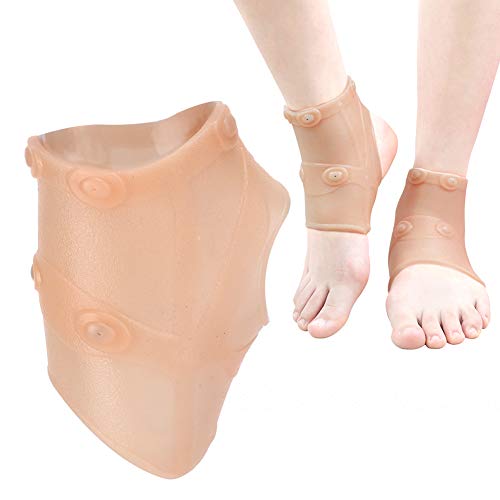
Live listings for the shortlist in this guide are pulled from Amazon below, so prices and availability are always current at the moment you look.

How long a well-chosen pair should be worn each day
Even an ideal slipper benefits from variation. Feet that spend sixteen waking hours in the same footwear, however gentle, experience unchanging contact points, steady warmth and constant low-level moisture, none of which helps irritated tissue settle. Alternating between the main pair and bare feet on soft surfaces for short periods, or between two different archetypes across the day, redistributes contact enough to matter. The goal is not rest in the clinical sense but variety: different edges, different linings, different micro-pressures from one part of the day to the next.
Breaks matter most during a flare, when the tendons are at their most reactive. During such periods, the roomiest pair in the house should become the default, structured pairs should be rested, and any footwear with a strap should be worn at its loosest secure setting rather than its habitual one. As symptoms calm over days, normal rotation can resume gradually, reintroducing the firmer designs for the shorter, busier periods first and keeping the forgiving pair for long evenings until confidence returns.
Households that track what changed when symptoms improved gain a quiet advantage. Noting which pair was worn, for how long, and alongside which socks builds a small personal evidence base that no general guide can supply, because individual instep shapes and daily rhythms differ too much for universal answers. After a month of such notes, most readers can predict their own difficult combinations in advance, and the next purchase becomes a refinement of something proven rather than another hopeful guess.
Ultimately, the right pair for this condition disappears from attention within minutes of being put on, asking nothing of the tendons it passes over and leaving the evening free for everything except thinking about footwear.