What's inside
- Key Takeaways
- Quick Picks
- How Did We Choose These Gas Steam Dryers?
- How Do the Six Compare on Drum, Steam and Smarts?
- What Does a Gas Dryer Actually Need at Installation?
- How Does Steam Actually Help Your Clothes?
- Gas or Electric: How Should You Decide?
- How Do You Match a Dryer to Your Washer?
- What Habits Keep a Gas Steam Dryer Efficient?
- Which Cycles Will Your Household Actually Use Every Week?
- How Loud and Hot Does a Gas Dryer Make the Laundry Room?
- What Should You Verify on the Listing Before Ordering a Gas Dryer?
- How Do You Care for the Steam System Over the Years?
- How Does a Steam Dryer Change the Morning Routine?
- When Is a Steam Dryer the Wrong Purchase?
- What Does the First Month With a Steam Dryer Teach Owners?
- What Mistakes Do Gas Dryer Buyers Make Most Often?
- Final Recommendation
- Frequently Asked Questions
- Related Guides
As an Amazon Associate I earn from qualifying purchases. This post may contain affiliate links at no extra cost to you.
cottageverdict.com is reader-supported. When you buy through links on our site, we may earn an affiliate commission.
Where to buy: all six dryers below are sold through Amazon, and their names in the Quick Picks table, the detailed sections and the comparison table link to their listings so you can check price on Amazon and confirm fuel type, finish and dimensions before ordering. The best gas dryers with steam share two defining commitments, and a buyer should make both with open eyes. First, gas: these machines heat with a gas burner, which means they need a gas line at the laundry position plus an ordinary 120-volt electrical supply for the drum, controls and ignition. Second, steam: every pick here can inject steam into the drum to relax wrinkles and refresh garments, and that function needs water — on full-size machines like these, plan on a cold-water connection shared from the washer’s supply line. If your laundry room offers both hookups, this is one of the most satisfying categories in home appliances.
Why choose gas at all, in a market full of perfectly good electric dryers? The burner heats quickly and cycles with a responsiveness that suits large drums, and in homes where gas is already piped to the laundry — common in older houses and much new construction — a gas dryer slots into infrastructure that already exists. The steam half of the proposition answers a different frustration: the shirt that needs wearing tonight but sits wrinkled from the basket, the dress that smells faintly of the restaurant, the bedding that could use a refresh between washes. A steam cycle handles those in minutes without a full wash, and once a household builds the habit, the ironing board starts gathering dust.
The six picks divide into three pairs. Kenmore bookends the guide with a 7.4 cubic foot model and two 8.0 cubic foot versions of its Accela Steam design in white and metallic silver. GE brings the largest drum here and a sanitize cycle in a graphite finish. LG contributes a matched pair of 7.4 cubic foot smart dryers, identical in capability and split only by colour — white or black — which makes the LG decision unusually simple. All six are front-load machines designed to sit beside, or stack above, a matching front-load washer.
A word about installation honesty, because this category punishes assumptions. Gas work belongs to qualified installers: the line must be sized and connected properly, the vent run must carry exhaust safely outside, and local codes in many places require a permit or a licensed fitter for the final connection. None of that is a reason to avoid gas — millions of homes run gas dryers uneventfully — but it is a reason to schedule the installation rather than improvise it, and to confirm your laundry position has the gas stub before the delivery truck is booked. The sections after the picks cover venting, steam plumbing, cycle choices and the habits that keep a dryer efficient.
Capacity language needs one translation. Dryer drums are measured in cubic feet, and the 7.4 to 8.0 cubic feet here are all genuinely large — each swallows a king-size comforter or a family week’s worth of towels. Bigger is not automatically better: a drum earns its size when loads regularly fill it, because steam and sensor drying both work best with enough tumbling mass to sense and treat. Match the drum to your washer’s capacity, and the pair will move through laundry day without one machine queueing for the other.
Key Takeaways
- Every pick is a gas dryer: each needs a gas line at the laundry position plus a standard 120-volt outlet for the drum motor, controls and ignition.
- Steam on these full-size machines needs water, so plan for a cold-water connection split from the washer’s supply when you plan the installation.
- Drums run from 7.4 to 8.0 cubic feet — all large enough for king bedding — so choose by features and finish rather than chasing capacity alone.
- The two Kenmore 8.0 models are the same dryer in white and metallic silver; the two LG models are likewise one design in white or black.
- Steam cycles refresh and de-wrinkle garments between washes, cutting ironing and rescue trips to the dry cleaner.
- Gas connections and vent runs should be fitted by qualified installers and checked against local code before delivery day.
Quick Picks
| Pick | Badge | Why it earns its place |
|---|---|---|
| Kenmore 7.4 Gas Dryer Steam | Best Straightforward Steam | Kenmore’s core gas steam dryer in white, with family-size capacity and no learning curve to speak of. |
| GE 7.8 Gas Dryer Steam | Best for Sanitize Seekers | A 7.8 cubic foot smart dryer in carbon graphite whose listing pairs steam with a dedicated sanitize cycle. |
| Kenmore 8.0 Gas Dryer Accela Steam | Best Large Drum, White | The biggest Kenmore here, with Accela Steam, Wrinkle Guard and touch controls in a white finish. |
| LG DLGX4001W Gas Dryer TrueSteam | Best Smart Pick, White | LG’s TurboSteam dryer with built-in intelligence and Wi-Fi, in the white finish most laundry rooms wear. |
| LG DLGX4001B Gas Dryer TrueSteam | Best Smart Pick, Black | The same LG machine in black, for laundry rooms designed around darker appliances. |
| Kenmore 8.0 Gas Dryer Silver | Best Large Drum, Silver | The 8.0 cubic foot Accela Steam Kenmore in metallic silver, the finish that hides laundry-room scuffs best. |
How Did We Choose These Gas Steam Dryers?
We started by enforcing the category’s two promises in the listings themselves: a pick had to be a genuine gas dryer — not an electric model wearing similar styling — and it had to offer a true steam function, verified in its own listing title or specification rather than assumed from the brand’s range. That filter is stricter than it sounds, because dryer line-ups mix fuel types and feature tiers freely, and a guide that quietly includes an electric model or a steam-free one has failed before the first recommendation.
Capacity came next. Family laundry has consolidated around large drums, so we kept the band between 7.4 and 8.0 cubic feet, where a dryer matches the big front-load washers most households pair it with and handles bedding without a second cycle. Within that band we deliberately retained the range’s natural pairs — the two LG colours, the two Kenmore 8.0 finishes — because in real showrooms those are the actual decisions buyers face, and pretending otherwise would make the guide less useful, not more rigorous.
We then weighed the steam systems on what they are asked to do: release wrinkles from garments worn once, refresh fabrics between washes, and reduce static so clothes leave the drum separable rather than clinging. Sensor drying mattered just as much, since a dryer that judges dampness accurately saves gas, saves time and saves fabrics from the slow damage of routine over-drying. Smart features earned credit only where they solve laundry problems — alerts when a load finishes, cycle downloads for unusual fabrics — rather than for novelty.
Finally we considered the ownership realities of gas: installation requirements, venting, and the finishes’ behaviour in a working laundry room where baskets bump doors and detergent drips happen. A dryer is a fifteen-year appliance in many homes, and its door swing, control layout and surface durability are lived with thousands of times. The six below balanced those ledgers best among the verified gas steam models available.
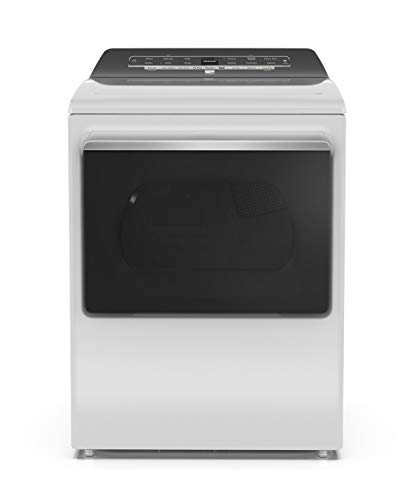
Kenmore 7.4 Gas Dryer Steam — Best Straightforward Steam
The Kenmore 7.4 is the guide’s baseline done right: a front-load gas dryer in white with steam technology, sized for the standard family load and free of theatrical extras. Its 7.4 cubic feet matches the most common large washers, so a full wash load transfers across without splitting, and the steam function covers the two jobs households actually assign it — relaxing wrinkles out of shirts left sitting, and refreshing garments that are not dirty enough to wash. For buyers who want gas heat and steam without a smart-home apprenticeship, this is the calm choice.
Daily operation is the Kenmore tradition: cycles you can read at a glance, a drum that handles a week of towels as happily as a load of delicates, and controls that a teenager or a grandparent can run without a briefing. That plainness is a genuine feature in a laundry room, where the machine is operated by everyone in the house including people who will never open its manual. The white finish is the standard laundry white that matches the majority of washers already installed, which matters when the dryer replaces one half of an older pair.
Plan the installation as you would for any pick here: a gas connection fitted properly, a vent run to the outside, and a cold-water feed for the steam function split from the washer’s supply. Nothing about this model complicates that standard picture, and its conventional design means any appliance technician in your area will know it on sight. Check price on Amazon and confirm the white finish and gas configuration on the listing before ordering.
- Fuel: gas burner with 120V electrical supply
- Capacity: 7.4 cubic feet
- Steam: steam technology per the listing
- Format: front load, white finish
- Role in this guide: the uncomplicated family default
Strengths
- Standard family capacity that pairs cleanly with common large washers.
- Steam covers refreshing and de-wrinkling without smart-system complexity.
- Conventional design that any local technician will service readily.
Trade-offs
- No headline smart features for households that want app control.
- Smallest drum in this guide, though only by a modest margin.
- White is the only finish offered on this model.
Best for: families replacing a dryer who want gas and steam with zero learning curve. Not suited for: buyers seeking the largest drum or app-connected laundry management.

GE 7.8 Gas Dryer Steam — Best for Sanitize Seekers
GE’s entry is the household-hygiene pick: a 7.8 cubic foot smart front-load gas dryer in carbon graphite whose listing pairs its steam function with a sanitize cycle. The pairing makes practical sense. Steam relaxes and refreshes; a sanitize cycle uses sustained high heat to freshen the loads households worry about most — the towels that sat damp, the gym kit, the bedding after a bout of illness in the house. Having both in one drum means the machine handles the laundry room’s anxious loads without resorting to harsh washing treatments that shorten fabric life.
The 7.8 cubic foot drum is the second-largest here and swallows bulky items gracefully — a king comforter tumbles with room to open rather than wadding into a ball that dries at the surface and stays damp at the core. Smart features on this model are of the useful kind: connectivity that lets the dryer communicate its status and finish times to a phone elsewhere in the house, which in a two-storey home with a basement laundry is the difference between prompt unloading and a load sitting wrinkled for hours. The carbon graphite finish gives the laundry room a designed look and shrugs off the scuffs that show on white.
As a smart appliance it asks slightly more of its owner at setup — a home network connection to configure and an app to install if you want the remote features — though the dryer runs perfectly well from its own panel if you never bother. Its gas and steam hookups follow the standard pattern for this guide: gas line, 120-volt supply, venting outside, and a water feed for steam. Check price on Amazon for the GFD65GSPVDS listing and its current specification.
- Fuel: gas burner with 120V electrical supply
- Capacity: 7.8 cubic feet
- Steam: steam plus sanitize cycle per the listing
- Format: front load, carbon graphite finish
- Connectivity: smart features with app alerts
Strengths
- Sanitize cycle answers the loads households most worry about.
- Generous drum gives bulky bedding room to tumble open.
- Graphite finish looks deliberate and hides working scuffs.
Trade-offs
- Smart setup adds steps for owners who will use the panel only.
- Dark finish commits the laundry room to a darker palette.
- Steam still depends on a water connection being planned in.
Best for: households that value a sanitize option and smart alerts in a large, good-looking drum. Not suited for: buyers who want the simplest possible controls or a white appliance suite.

Kenmore 8.0 Gas Dryer Accela Steam — Best Large Drum, White
This is the big Kenmore, and its listing tells a clear story: 8.0 cubic feet of drum, Accela Steam aimed at reducing wrinkles, static and odours, Wrinkle Guard to keep a finished load from setting into creases, smart sensor drying and touch controls, all in white. Read that list as a portrait of a household: large loads, clothes that come out ready to hang rather than ready to iron, and a dryer that keeps tumbling intermittently after the cycle so a delayed unload does not undo the steam’s good work. For big families, this combination is not luxury — it is the difference between laundry as a system and laundry as a recurring emergency.
The 8.0 cubic foot drum is the largest in this guide, and it changes what a single load can be. A week of family towels, a full set of bedding, or the output of a large-capacity washer all fit with tumbling room to spare, and tumbling room is what sensor drying and steam both need to work evenly. Smart sensor drying matters more as loads grow, because the cost of guessing wrong scales with the load: under-dried means a second cycle for a mountain of fabric, over-dried means heat damage to all of it at once.
Touch controls give the front panel a clean, wipeable face — a practical virtue in a room where lint and detergent mist settle on everything — though households that prefer physical dials should sit with that preference honestly, since it is the main ergonomic difference from the simpler Kenmore above. The white finish keeps the classic laundry look and matches the widest range of existing washers. Check price on Amazon to confirm the specification and delivery options for your area.
- Fuel: gas burner with 120V electrical supply
- Capacity: 8.0 cubic feet, largest in this guide
- Steam: Accela Steam for wrinkles, static and odours
- Extras: Wrinkle Guard, smart sensor drying, touch controls
- Finish: white
Strengths
- Maximum drum size for the biggest family loads and bedding.
- Wrinkle Guard protects finished loads from a delayed unload.
- Sensor drying scales its judgement to very large loads accurately.
Trade-offs
- Touch panel will not charm buyers who prefer a mechanical dial.
- Big drum is under-used by small households running half loads.
- Needs the full gas, vent and water installation planned properly.
Best for: large families who want the biggest drum and an anti-wrinkle system in classic white. Not suited for: small households, or anyone who dislikes touch controls on appliances.

LG DLGX4001W Gas Dryer TrueSteam — Best Smart Pick, White
LG’s DLGX4001W is the technologist’s gas dryer: 7.4 cubic feet, TurboSteam technology, built-in intelligence that learns and suggests, and Wi-Fi connectivity, in white. The steam system is the headline — LG’s implementation is designed for the quick refresh and the wrinkle release, the ten-to-twenty-minute cycles that rescue a shirt between the basket and the front door. Used that way weekly, it changes a household’s relationship with its wardrobe: clothes get worn again sooner, the ironing pile shrinks, and the dryer earns counter space in the daily routine rather than only on laundry day.
The intelligence features work quietly in the background. Sensor drying is standard in this class, but LG’s system pairs its moisture sensing with cycle suggestions based on what the machine detects, and the Wi-Fi link delivers the alert that actually matters — the load is done — to wherever in the house you happen to be. Paired with a matching LG washer, the two machines can coordinate so the dryer is ready with the right programme when the wash ends. None of this is mandatory to use; the panel runs the dryer completely on its own, which is how technology in a laundry room should behave.
At 7.4 cubic feet the drum matches the common large washers and handles family loads and bedding without strain, though the Kenmore 8.0 models out-size it for the very largest households. The white finish is the safe match for most existing laundry suites. Check price on Amazon for the current DLGX4001W listing details.
- Fuel: gas burner with 120V electrical supply
- Capacity: 7.4 cubic feet
- Steam: TurboSteam technology per the listing
- Connectivity: Wi-Fi enabled with built-in intelligence
- Finish: white
Strengths
- TurboSteam refresh cycles are fast enough for daily wardrobe rescues.
- Smart alerts end the forgotten-load problem in multi-storey homes.
- Full manual control remains available without touching the app.
Trade-offs
- Drum is a step smaller than the 8.0 Kenmore models.
- Connected features need home Wi-Fi configured at setup.
- Feature depth is wasted on households that run one cycle forever.
Best for: connected households that will use steam refresh as a weekly wardrobe tool. Not suited for: buyers wanting maximum drum size or the simplest possible dryer.
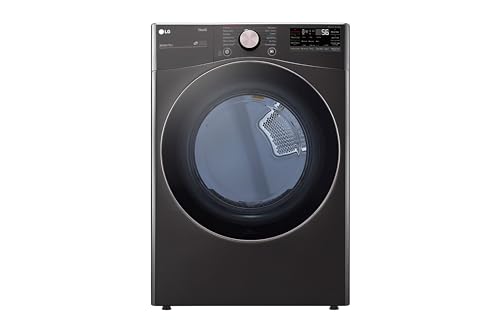
LG DLGX4001B Gas Dryer TrueSteam — Best Smart Pick, Black
Everything said about the white LG applies here unchanged, because the DLGX4001B is the same 7.4 cubic foot gas dryer — TurboSteam, sensor dry, Wi-Fi, built-in intelligence — wearing black instead of white. That identity is worth stating plainly rather than dressing up as difference: your decision between the two LG picks is a decision about your laundry room’s palette and about which finish your matching washer wears, nothing more. In a guide that prizes honesty, a colour variant deserves a shorter, clearer section rather than invented distinctions.
What can be said specifically about the black finish is practical. Dark appliances anchor a designed laundry room, pair with the growing number of black stainless and matte black washers, and show lint and detergent drips differently — pale lint reads more visibly on black, while the water spots and scuffs that mark white doors fade into a dark surface. Households with a black washer already installed have their answer; households planning a pair should choose the finish as a pair decision, since a mismatched stack looks accidental for fifteen years.
The ownership story is otherwise the LG story: steam refresh cycles that rescue garments between washes, sensor drying that stops at dry rather than at a timer’s guess, and alerts that travel to your phone. Installation follows the guide’s standard pattern — gas line fitted by a qualified installer, venting run outside, cold water shared to feed the steam. Check price on Amazon to verify the black finish listing before ordering.
- Fuel: gas burner with 120V electrical supply
- Capacity: 7.4 cubic feet
- Steam: TrueSteam technology per the listing
- Connectivity: Wi-Fi enabled with sensor dry
- Finish: black — the only difference from the DLGX4001W
Strengths
- Identical TurboSteam capability in a finish that suits dark laundry designs.
- Matches black washer models for a coherent pair or stack.
- Sensor dry and smart alerts carry over in full.
Trade-offs
- Pale lint and dust show more readily on a black door.
- Commits you to sourcing a matching dark washer.
- No functional advantage over the white version — buy it for the look.
Best for: households with black laundry appliances or a dark laundry-room design. Not suited for: white suites, where its twin above is the correct pick.

Kenmore 8.0 Gas Dryer Silver — Best Large Drum, Silver
The metallic silver Kenmore completes the guide’s second honest pair: the same 8.0 cubic foot gas dryer as the white model above — Accela Steam for wrinkles, static and odours, Wrinkle Guard, smart sensor drying, touch controls — finished in metallic silver. Like the LG pair, this is one machine offered in two finishes, and we list both because buyers genuinely choose between them at the point of purchase. The capability case is identical: the largest drum in the guide, steam that readies clothes for the hanger, and sensors that judge a big load’s dryness instead of guessing by the clock.
The finish case deserves its own words, because metallic silver is the working laundry room’s friend. It sits visually between white and black — modern without committing the room to a dark scheme — and its mid-tone surface conceals the everyday evidence of laundry life better than either extreme: lint dust, minor scuffs from basket rims, and the faint detergent splashes that white displays and black exaggerates in different ways. In garages and utility rooms pressed into laundry service, that forgiving quality is worth real money over a fifteen-year life.
Everything else follows the big-Kenmore pattern: plan the gas connection, the outside vent and the steam water feed as one installation project, ideally before delivery day, and consider a matching silver washer if a pair is planned so the finishes agree. The touch-control panel wipes clean in seconds, a small daily mercy. Check price on Amazon to confirm the metallic silver listing and specification.
- Fuel: gas burner with 120V electrical supply
- Capacity: 8.0 cubic feet, largest in this guide
- Steam: Accela Steam for wrinkles, static and odours
- Extras: Wrinkle Guard, smart sensor drying, touch controls
- Finish: metallic silver — the only difference from the white 8.0
Strengths
- Full 8.0 cubic foot capability in the most forgiving finish here.
- Silver bridges white and black schemes in mixed appliance rooms.
- Same sensor and steam systems as the white flagship Kenmore.
Trade-offs
- Finish must match or deliberately contrast with your washer.
- Touch controls remain a preference question for dial loyalists.
- Oversized for households whose loads never fill a large drum.
Best for: big-load households that want the flagship Kenmore capability in a scuff-forgiving silver. Not suited for: buyers matching an existing white pair, who should take the white 8.0 instead.
How Do the Six Compare on Drum, Steam and Smarts?
| Pick | Drum | Steam system | Notable extra | Finish |
|---|---|---|---|---|
| Kenmore 7.4 Gas Dryer Steam | 7.4 cu ft | Steam technology | Simple conventional controls | White |
| GE 7.8 Gas Dryer Steam | 7.8 cu ft | Steam | Sanitize cycle, smart features | Carbon graphite |
| Kenmore 8.0 Accela Steam Dryer — White | 8.0 cu ft | Accela Steam | Wrinkle Guard, touch controls | White |
| LG DLGX4001W Gas Dryer TrueSteam | 7.4 cu ft | TurboSteam | Wi-Fi, built-in intelligence | White |
| LG DLGX4001B Gas Dryer TrueSteam | 7.4 cu ft | TrueSteam | Wi-Fi, sensor dry | Black |
| Kenmore 8.0 Accela Steam Dryer — Silver | 8.0 cu ft | Accela Steam | Wrinkle Guard, touch controls | Metallic silver |
What Does a Gas Dryer Actually Need at Installation?
Three services meet at the back of a gas steam dryer, and planning all three at once is the whole secret of a smooth delivery day. The gas line comes first: the machine burns gas for heat, so a properly sized gas supply with a shut-off valve must reach the laundry position, and the final connection should be made by a qualified installer working to your local code — in many areas that means a licensed professional and sometimes a permit. The electrical requirement is modest by comparison, an ordinary 120-volt outlet, because electricity only runs the drum motor, fan, controls and ignition; the heat itself is gas.
Venting is the second service and the one most often botched in older homes. A gas dryer must exhaust outdoors through a short, smooth, preferably rigid metal duct; long runs of flexible foil venting trap lint, slow drying and create a maintenance hazard. Measure the run before ordering, keep bends few and gentle, and never vent into an attic, garage or crawl space. The third service is water for steam: full-size steam dryers draw from the cold-water line, typically through a splitter shared with the washer’s supply hose, so confirm there is access and a little slack in the hoses. None of this is exotic — installers do it daily — but a dryer that arrives before its services do will sit in its box while the laundry piles up.
How Does Steam Actually Help Your Clothes?
Steam in a dryer drum does three jobs, and it helps to know which one you are asking for. As a wrinkle treatment, steam relaxes fabric fibres while the load tumbles, so creases fall out of garments that were washed and dried earlier or merely crushed in a drawer; it readies a shirt for wearing, though it does not press a collar like an iron. As a refresh, a short steam cycle lifts stale odours from garments worn briefly — the blazer after a restaurant evening — and returns them to the wardrobe without a full wash, which over a year meaningfully reduces wash wear on good clothes.
The third job is static control: moisture in the drum during the final phase keeps synthetic fabrics from clinging and crackling as they come out, a benefit the Kenmore listings name explicitly alongside wrinkles and odours. What steam does not do is clean. It will not remove stains, ground-in dirt or the need to wash genuinely soiled clothing, and treating a refresh cycle as a wash substitute disappoints everyone. Used for its three real jobs, though, steam becomes the cycle many owners run most often between full laundry days — which is precisely why this category pairs it with every pick.
A practical note on timing closes the steam story: the refresh works best on garments that are dry or nearly so, since the cycle is calibrated to add moisture rather than remove it. A shirt that comes out of the washer should go through a normal drying cycle first — ideally unloaded promptly — and only then, if creases set in while it waited, through a short steam pass. Households that build that sequence into laundry day find the iron stays in its cupboard for months at a time.
Gas or Electric: How Should You Decide?
Decide by infrastructure first and preference second. If your laundry position already has a gas line — as many older homes and gas-heated houses do — a gas dryer uses what exists, heats its drum quickly and avoids the dedicated high-amperage circuit an electric dryer demands. If the position has no gas and adding a line means opening walls and hiring a gas fitter for a long run, the arithmetic changes: an electric model on an existing circuit may be the rational purchase, and this guide is not the one to talk you out of it. The machines here are for homes where gas is present or planned for other reasons.
Within gas, the operating character suits family laundry well. Burners bring a large drum to temperature briskly and recover quickly when a cold, wet load goes in, which keeps cycle times honest on the big bedding loads these drums are bought for. The maintenance picture is conventional: keep the vent clear, clean the lint filter every load, and have the burner and connections inspected if drying times lengthen noticeably. A gas dryer from any brand in this guide should give well over a decade of service on that modest regime.
One further consideration belongs in this section because buyers raise it often: resale and longevity of the laundry pair as a set. A matched gas pair from a major maker is a legible, desirable package to a future buyer of your home in a way that a mixed pair is not, and laundry appliances convey with houses often enough that the point is not trivial. It is never a reason to buy the wrong machine, but between two near-equal options — the white LG and its black twin, the two Kenmore finishes — choosing the version that completes a coherent pair is the tiebreaker with a practical payoff years later.
How Do You Match a Dryer to Your Washer?
Capacity pairing is the first rule: a dryer’s drum should equal or exceed the washer’s usable load, because wet laundry expands and needs tumbling room to dry evenly. The 7.4 cubic foot machines pair naturally with the common large front-load washers; the 7.8 and 8.0 cubic foot models suit the biggest washers and households whose loads are bedding-heavy. If your washer is a compact or an older small top-loader, every drum here is more than sufficient, and your choice can rest on features and finish alone.
Physical pairing matters next. Front-load dryers like these can stand beside the washer or stack above it with the manufacturer’s stacking kit — never improvise a stack without the kit, since a running dryer vibrates and an unsecured one can walk. Door swing deserves a thought in tight rooms: check which way each door opens against your walls and workflow, and whether the model allows reversing it. Finally, finishes: the pairs inside this guide exist because a matched washer and dryer read as one appliance for fifteen years, while a near-match reads as a compromise for just as long.
What Habits Keep a Gas Steam Dryer Efficient?
The lint filter is the whole religion: clean it before every load, without exception, because a clogged filter lengthens every cycle, wastes gas and stresses the machine. Twice a year, wash the filter with a soft brush if fabric-softener residue has filmed it, and check that water passes through freely. The vent run deserves an annual clean-out from the dryer to the outside cap, especially in homes with long runs or pets, and the outside flap should move freely and close fully when the dryer rests.
Loading habits come next. Fill the drum generously but not tightly — laundry needs to fall through the hot air, not rotate as a single damp log — and separate the very heavy items, like bath mats and denim, from light synthetics that dry in half the time and otherwise bake while they wait. Use the sensor cycles as the default and reserve timed drying for odd loads, because the sensors in these machines judge dryness better than a household’s clock does. For the steam system, run a refresh cycle occasionally even in quiet weeks so the water path stays exercised, and if your water is hard, expect the steam nozzles to want an occasional wipe like any water appliance.
Which Cycles Will Your Household Actually Use Every Week?
Strip away the marketing and a family dryer earns its keep on a handful of programmes. The everyday sensor cycle does most of the work, judging dampness load by load. A bedding or bulky cycle earns its place weekly in family homes, giving heavy items the longer, hotter treatment they need. A delicates cycle protects the clothes that heat damages quietly over months. And the steam refresh — the cycle this category exists for — slots into mornings and evenings rather than laundry day, rescuing single garments on demand.
Everything beyond that core is situational, and buyers should weigh it by their own household’s evidence rather than by brochure appeal. A sanitize cycle is essential if your home regularly handles illness laundry, cloth nappies or a healthcare worker’s kit, and superfluous if it does not. Wrinkle Guard matters enormously to households whose laundry finishes while everyone is at work, and barely at all to a home where someone always unloads promptly. Smart alerts are transformative in a house with the laundry two floors away and a gimmick in a flat where the dryer is beside the kitchen. Read each pick’s extras against your actual week, and the right machine usually identifies itself.
How Loud and Hot Does a Gas Dryer Make the Laundry Room?
Expect the ordinary sounds of a large appliance: the drum’s rumble, the soft whoosh of the burner igniting and cycling, and the fan moving heated air through the vent. Gas models add that burner note — a brief, deeper ignition sound at intervals as the flame maintains temperature — which startles nobody after the first week and is simply the machine working. None of the dryers here is a silent appliance, and a laundry room with a closing door remains the sensible arrangement in a small home; open-plan laundry nooks should be chosen with that honesty in mind.
Heat is the other by-product. A dryer warms its room noticeably across a long laundry day, more so in summer, and the venting carries most of the moisture outside only if the run is sound — another reason the vent deserves respect. Households in hot climates often schedule heavy drying for mornings or evenings, a habit these machines’ delay and alert features support well. None of this distinguishes gas from electric in kind, but first-time gas owners should know the burner cycle is audible and normal, not a fault to report.
What Should You Verify on the Listing Before Ordering a Gas Dryer?
Fuel first, in writing: confirm the listing states gas, and if a model offers both fuel variants, confirm the gas variant is the one in your basket — this single check prevents the category’s most painful delivery mistake. Second, confirm the capacity figure and the external dimensions, including depth with the door open, against your laundry position and the doorways the machine must pass through on its way in. Large dryers fail more deliveries on a narrow hallway turn than on any defect.
Third, read the steam description carefully so you know what the function promises on that model — refresh and wrinkle release are standard across this guide, while sanitize appears on the GE — and check whether the water connection kit is included or a separate small purchase. Fourth, confirm the finish photographs match the finish name, particularly between the white, silver, graphite and black options that run through these picks. Finally, note the venting and installation requirements the listing states, and line up your installer before the delivery window is set, so the machine goes from truck to first load without a week standing in the garage.
How Do You Care for the Steam System Over the Years?
A steam dryer adds one small water pathway to an otherwise dry appliance, and that pathway appreciates modest attention. Keep the supply connection checked when you inspect the washer hoses — the same habit, the same moment — since any slow drip in a laundry room announces itself late and damages quietly. If your home has hard water, mineral scale can narrow steam nozzles over the years; the symptom is a refresh cycle that steams weakly, and the remedy is the manufacturer’s descaling guidance for your model rather than improvisation with tools near the nozzle.
Run the steam function regularly enough that it never sits dormant for a whole season, because moving parts and water paths both prefer exercise. When the machine will stand unused during a long vacancy, closing the water supply to the laundry pair is the prudent habit for the washer’s sake as much as the dryer’s. Beyond that, the steam system asks nothing weekly: no tanks to fill on these full-size plumbed models, no filters to change on a schedule. It is one of the lowest-maintenance premium features in the laundry room, which is part of why owners who have it rarely give it up at replacement time.
How Does a Steam Dryer Change the Morning Routine?
Picture the weekday problem this category solves. A shirt needed at eight o’clock comes out of the basket at seven-thirty wearing the basket’s creases, and the traditional answers are all bad: iron it half-asleep, wear it wrinkled, or change the outfit. A steam refresh answers in the time it takes to make coffee — the garment tumbles in moist heat, the fibres relax, and it comes out ready to wear. Multiplied across a school-and-office household, that single capability quietly deletes one of the week’s recurring small stresses, which is why owners describe steam dryers with unusual affection for a laundry appliance.
The evening version matters too. Clothes worn for a few hours — a blazer, a dress, trousers after a dinner out — traditionally face a choice between the wash, which they do not need, and the wardrobe, carrying the evening’s smells back into it. A refresh cycle threads that needle, returning the garment to the hanger genuinely fresher. Over a year, those avoided washes add up to real fabric life, particularly for wool, dark denim and anything with a print or finish that washing fades. The steam dryer is therefore best understood not as a dryer with a bonus, but as a garment-care station that also dries.
When Is a Steam Dryer the Wrong Purchase?
Honesty about fit matters more than enthusiasm. If your laundry position has no gas line and no plan to add one, this entire category is wrong for you regardless of its charms — an electric steam dryer serves the same garment-care goals on your existing infrastructure. If nobody in your household irons, refreshes or owns clothes that wrinkle meaningfully — a household living in knitwear and gym kit — the steam premium buys a feature you will use twice a year, and a simpler gas dryer would serve better.
Space can also veto the category. These are full-size front-load machines, and a laundry closet built for a compact pair will not accept them no matter how the delivery crew feels about it; compact ventless machines, covered in our combo and compact guides, exist for those rooms. Finally, if your household’s laundry bottleneck is washing capacity rather than drying and garment care, money spent here solves the wrong problem. The right purchase is the one aimed at the frustration you actually feel weekly — and for households whose frustration is wrinkled shirts and stale blazers, that purchase is on this page.
What Does the First Month With a Steam Dryer Teach Owners?
New owners consistently report the same learning curve, and it is worth borrowing their lessons in advance. Week one is discovery: everything gets a refresh cycle, including garments that did not need one, simply because the capability is new and delightful. By week three the novelty settles into a routine, and the households that benefit most are those that give the steam function a fixed place in that routine — shirts refreshed on Sunday evening for the week, school uniforms rescued on weekday mornings, the good towels given a steam finish before guests arrive.
The second lesson is about load size. Steam works on contact and circulation, so a refresh cycle crammed with six garments treats none of them well, while two or three pieces come out genuinely renewed. Owners learn to think of steam in small batches, the way you would with an iron, rather than in the drum-filling terms of a wash load. The third lesson is subtler: sensor drying earns trust. Households arriving from timed dryers habitually add ten minutes “to be sure”, then discover over a month that the sensors were right and the extra heat was only ageing their clothes. Letting the machine judge is the final habit, and the one that pays for the dryer in fabric life over the years.
What Mistakes Do Gas Dryer Buyers Make Most Often?
The expensive mistake is ordering before checking the laundry position: no gas stub, a vent run that cannot reach outside sensibly, or no access to cold water for the steam feed. All three are solvable, but they should be solved before the delivery, not discovered during it. The second mistake is choosing by drum size alone, paying for 8.0 cubic feet that weekly half-loads never use, when the feature differences — sanitize, Wrinkle Guard, smart alerts — would have served the household better.
Buyers also underrate the finish decision, treating it as decoration when it is actually a fifteen-year daily view plus a cleaning personality; the pairs in this guide exist to make that choice deliberately. And a final, quiet mistake: ignoring the vent. A superb gas dryer on a crushed, lint-choked vent dries like a cheap one, and no steam system can compensate. Measure the space, verify the services, choose the features your household will actually run weekly — in that order — and this category rewards you for years.
Final Recommendation
For most gas-ready households, the LG DLGX4001W Gas Dryer TrueSteam is the sweet spot: fast steam refresh cycles, sensor drying that respects fabrics, and alerts that end the forgotten load, all in the finish most laundry rooms already wear. Households running the largest loads should step up to the Kenmore 8.0 Accela Steam model in white — or its silver twin — for the biggest drum and Wrinkle Guard’s protection of finished loads. If a sanitize cycle speaks to your household’s worries, the GE 7.8 Gas Dryer Steam is your machine. Whichever you choose, book the gas connection and vent work before the dryer ships, and let the first steam cycle rescue the shirt you were about to iron.
Frequently Asked Questions
Does a gas dryer need a special electrical outlet?
No. Gas dryers use a standard 120-volt outlet because electricity only powers the drum motor, fan, controls and ignition. The heat comes from the gas burner, which is why these machines need a gas line rather than the heavy circuit an electric dryer requires.
How does the steam function get its water?
On full-size machines like these, steam draws from a cold-water connection, usually split from the washer’s supply line with a small connector during installation. It is a simple plumbing step, but it must be planned — a dryer installed without the water feed cannot use its steam cycles.
Can a steam cycle replace ironing entirely?
It replaces most casual ironing. Steam relaxes wrinkles from everyday garments well enough for wearing, and refresh cycles revive clothes between washes. Sharp creases, formal collars and structured tailoring still benefit from an iron or a press, so think of steam as removing eighty percent of the ironing board’s workload.
Is 7.4 cubic feet big enough for a king comforter?
Yes. Every drum in this guide, from 7.4 to 8.0 cubic feet, handles a king-size comforter, provided it has room to tumble rather than being packed in with other items. Dry bulky bedding on its own load and check partway through, repositioning the piece so its centre gets full exposure to the airflow.
Can these dryers be stacked on a washer?
Front-load dryers like these are designed to stack above a matching washer using the manufacturer’s stacking kit. Always use the proper kit for the brand and model, and confirm the combined height against your room, especially where shelves or cabinets sit above the laundry position.
Who should install the gas connection?
A qualified installer — in many areas a licensed gas fitter — should make the final gas connection and check it, following local code. Venting and the water splitter are simpler tasks, but having one professional visit handle the whole installation is the pattern most households find safest and simplest.
Related Guides
If your laundry project extends beyond a standalone dryer, our all-in-one research is the natural next read: see Best Washer Dryer Combos With Steam for single-drum machines, take a break with Best Travel Pillows for the rest side of the house, and finish the preserving shelf with Best Food Dehydrator Machines for the kitchen’s longer projects.


