What's inside
- Key Takeaways
- Quick Picks
- How We Chose These Picks
- How Do the Six Picks Compare at a Glance?
- Where Does Plastic Taste Actually Come From?
- How Do You Get Rid of the New-Machine Taste?
- Steel Crock or Electric Cooler: How Do You Decide?
- How Should You Clean a Stainless Crock So the Water Stays True?
- What If the Taste Is Coming From the Water Itself?
- How Does the Bottle Itself Fit Into the Taste Story?
- How Does Temperature Change What You Taste?
- What Role Does the Rest of the Kitchen Play?
- How Should a Party or a Full House Stress-Test Your Choice?
- Can You Improve Taste Without Replacing the Machine?
- What Should You Check in the First Fortnight With a New Machine?
- How Do These Choices Age Over Five Years?
- What About Water for Tea, Coffee and Cooking?
- How Do You Store a Crock or a Cooler Through a Quiet Season?
- What Does a Family With Children Need to Know?
- Which Mistakes Do Taste-Sensitive Buyers Make Most Often?
- Final Recommendation
- Frequently Asked Questions
- Related Guides
As an Amazon Associate I earn from qualifying purchases. This post may contain affiliate links at no extra cost to you.
cottageverdict.com is reader-supported. When you buy through links on our site, we may earn an affiliate commission.
Where to buy: the six best water coolers without plastic taste below are sold through Amazon, and their names in the Quick Picks table, the detailed reviews and the comparison table link to the matching listing, where you can check price on Amazon and confirm materials, loading style and dimensions before ordering. The complaint behind this guide is specific, familiar and miserable: water that arrives in the glass tasting unmistakably of the machine it came from — a flat, chemical, plastic note that no amount of chilling quite hides. It ruins the one thing a water cooler exists to do, and it sends households back to the tap with a several-hundred-dollar ornament humming in the corner.
Plastic taste has addresses, and this guide is organised by them. It can come from the bottle the water sat in, from plastic reservoirs and lines inside the machine, from a new appliance’s first weeks, or from a filter or interior left too long between cleans. The defence is material: the more of the water’s journey that happens in stainless steel, and the shorter and cleaner its contact with plastic, the less the machine signs its work. That is why this list is built the way it is — three stainless-bodied electric coolers and bottleless machines whose listings emphasise steel, and three countertop gravity dispensers made of stainless steel that hold a standard bottle’s water in a steel vessel with a steel spigot, chilling nothing, heating nothing, and adding nothing.
Those two families must not be blurred, and we will not blur them. The electric machines refrigerate and heat; the countertop crocks are passive gravity dispensers that serve water at room temperature, usually fed by an inverted bottle or filled directly. Households buy them for different reasons, but for the single question of taste they are allies: steel where the water rests. Everything claimed here about materials comes from the listings themselves, and where a listing does not specify a reservoir material, we say so instead of guessing.
Key Takeaways
- Plastic taste comes from contact: bottles, plastic reservoirs, lines and neglected interiors. Stainless steel along the water’s path is the structural answer.
- Three picks are countertop gravity dispensers in stainless steel — RIMOO, New Wave Enviro and Sansone — a different species from floor-standing electric coolers: no chilling, no heating, no power, just steel and gravity.
- The Brio bottom loader’s listing leads with its stainless steel build, and the two Avalon bottleless machines bring stainless cabinets and certified filtration to the plumbed end of the market.
- New-machine taste is real and temporary: every pick here deserves a thorough flush and a first full week of ordinary household use before its water is judged fairly.
- Bottleless machines remove the bottle — one major plastic contact — from the chain entirely and permanently, replacing it with a simple filter schedule.
- Cleaning rhythm is the other half of taste: even a well-made steel machine will flavour water noticeably if its interior is left unwashed for a year or more.
Quick Picks
| Pick | Badge | Why it earns its place |
|---|---|---|
| Brio Bottom Loading Water Cooler Stainless Steel | Best Electric All-Rounder | A bottom-loading bottled cooler whose listing leads with stainless steel, serving hot, room and cold with a child lock and empty alert. |
| Avalon B8 Countertop Bottleless Water Cooler | Best Countertop Plumbed | A bottleless countertop machine with two-stage filters and an installation kit, NSF certified and UL listed, in white. |
| RIMOO Stainless Steel Water Dispenser | Best Gravity Crock, Modern | A 2.5-gallon stainless countertop dispenser with an 18/8 stainless spigot and airtight lid, fed by bottle or by filling. |
| New Wave Enviro Stainless Steel Water Dispenser | Best Gravity Crock, Classic | The long-running 2.2-gallon stainless countertop dispenser: the simplest possible answer to plastic contact. |
| Sansone NSF Stainless Steel Water Dispenser | Best Gravity Capacity | A 3.96-gallon stainless container with spigot and an NSF note in its listing — the biggest steel vessel here. |
| Avalon A5 Self Cleaning Bottleless Water Cooler | Best Full-Size Bottleless | A full-size, self-cleaning bottleless cabinet in black stainless steel with NSF certified filters, for the committed plumbed household. |
How We Chose These Picks
Material came first, and it was judged strictly from the listings. A pick had to put stainless steel somewhere meaningful in the water’s story — the Brio’s steel-led bottled design, the Avalons’ steel cabinets and certified filtration in a bottleless path that deletes the storage bottle, or the three countertop vessels that are stainless steel outright, spigot included where the listing says so. Machines whose listings offered no material story at all were set aside, however good their refrigeration, because this guide’s question is not “which cooler is best” but “which cooler keeps plastic out of the taste.”
The two-family structure was deliberate. A household with a plastic-taste complaint may want an electric cooler that behaves impeccably, or may want to leave powered cooling altogether and serve room-temperature water from steel, as kitchens did for a century. Pretending those are the same purchase would fail both households, so the guide keeps the families visibly separate, badges them honestly — the crocks are labelled gravity dispensers every time — and lets the reader choose their species before comparing within it.
Finally, we weighted the supporting evidence of taste: certifications named in listings, self-cleaning on the A5, the Brio’s alert-and-lock practicality, and the crocks’ sheer simplicity. Taste is decided by materials, maintenance and time; a pick that helps its owner with any of the three earned its place over one that merely promised purity in adjectives.

Brio Bottom Loading Water Cooler Stainless Steel — Best Electric All-Rounder
Brio puts the material in the product’s name: this is the stainless steel bottom loader, a 5-gallon bottled machine dispensing hot, room and cold water, with a child safety lock and an LED display carrying an empty bottle alert. For a household that wants an electric cooler — chilled water on demand, hot water for tea — without the flavour signature of an all-plastic machine, this is the natural first stop. The steel-led build addresses the reservoir side of the taste problem, while bottom loading keeps the bottle hidden in the cabinet rather than displayed on top.
Honesty requires the boundary: a bottled machine still serves water that has lived in a plastic bottle, and no reservoir material can rewrite the water’s earlier biography. What the Brio controls is everything after the bottle — the path through the machine — and households whose complaint was born inside a previous all-plastic cooler will taste the difference precisely there. Households whose complaint is the bottled water itself should read on to the bottleless pair, which remove that chapter entirely.
The daily package is the bottled family’s mature form: the alert that starts the swap before the tap runs dry, the lock that keeps the hot tap adult, the display that makes the machine legible at a glance. As a taste purchase it is the conservative centre of this guide — an electric cooler that takes materials seriously without asking the household to change its water supply, its plumbing or its habits.
- Loading: bottom load, for 5-gallon bottles
- Build named in the listing: stainless steel
- Temperatures: hot, room and cold spouts
- Features named in the listing: child safety lock, LED display, empty bottle alert
- Plumbing required: none
Strengths
- Steel-led build addresses the machine’s own contribution to taste
- Full electric service — hot and cold — without leaving the bottled family
- Alert and lock make it the easiest bottled machine to live with
Trade-offs
- The water still arrives in a plastic bottle; the machine cannot change that
- Reservoir materials beyond the headline are not itemised in the listing
- Bottle storage and swapping remain part of ownership
Best for: a household that wants chilled and hot water from an electric cooler, with the machine’s own plastic contact minimised.
Not suited for: a household whose taste complaint is the bottled water itself.

Avalon B8 Countertop Bottleless Water Cooler — Best Countertop Plumbed
The B8 takes the bottleless idea and shrinks it onto the counter. Avalon’s listing describes a countertop bottleless dispenser with two-stage water filters and an installation kit included, NSF certified and UL listed, finished in white. For the taste question, its argument is subtraction: no storage bottle at all, no water sitting for weeks in plastic, just your line water filtered at the point of use and served from a machine that lives where a kettle might.
Countertop scale changes who bottleless suits. A full-size plumbed cabinet demands a floor position and a permanent decision; the B8 asks for a stretch of worktop near a sink and a water connection, which puts plumbed water within reach of smaller kitchens, rental-adjacent arrangements where a floor cabinet will not fit, and households that want the bottle gone without rearranging the room around a tower. The included installation kit, named in the listing, lowers the one barrier bottleless ownership has.
The certifications carry their usual weight here — NSF certified filtration and a UL listing are the vocabulary of an appliance trusted on a home’s drinking line — and the two-stage filtration gives the taste project a second worker besides materials: water that arrives already filtered has less to say in the glass. If your complaint is specifically “my cooler tastes of plastic,” a machine with no bottle and a certified filter is the most direct structural answer in this guide.
- Type: bottleless countertop, connects to a water line
- Filtration: two-stage water filters, installation kit included
- Certifications named in the listing: NSF certified, UL listed
- Finish: white
- Bottles required: none
Strengths
- Deletes the storage bottle, a primary plastic contact, entirely
- Countertop footprint brings plumbed water to small kitchens
- Certified two-stage filtration supports the taste goal directly
Trade-offs
- Needs a water connection and counter space near it
- Filters become a scheduled household consumable
- Countertop scale means a smaller presence than a floor cabinet offers
Best for: a small kitchen or a bottle-weary household that wants plumbed, filtered water without a floor-standing cabinet.
Not suited for: anyone with no water line within reach of a counter.

RIMOO Stainless Steel Water Dispenser — Best Gravity Crock, Modern
Now the species change, stated as plainly as the listing states it: the RIMOO is a stainless steel countertop drink dispenser — a 2.5-gallon vessel with an 18/8 stainless steel spigot and an airtight lid, designed to serve as a water crock for parties and home use, fed by a 3- to 5-gallon bottle or filled directly. It does not chill. It does not heat. It has no plug. What it does, completely, is hold water in stainless steel and release it through a stainless spigot, which for the plastic-taste question is not a compromise but a distillation: the entire water path, after the bottle, is steel.
The 18/8 detail in the listing is the kind of specificity taste buyers should reward — it names the steel’s grade family for the spigot, the component every glass actually passes through. The airtight lid matters in the same direction: a sealed steel vessel keeps the kitchen’s smells — onions, spices, cleaning sprays — out of the water, where an open crock would slowly adopt them. Gravity does the dispensing, silently, at the speed gravity prefers, which at a party or a family table is entirely sufficient.
Buy it with clear eyes about temperature: this is room-temperature water, and households wedded to chilled glasses should stay with the electric picks. But a large share of the world’s water drinkers prefer it unchilled anyway, and for them the RIMOO offers the purest answer in this guide — steel, a lid, a spigot, and nothing else between the water and the glass to leave a signature.
- Type: countertop gravity dispenser — no power, no chilling, no heating
- Vessel: stainless steel, 2.5-gallon capacity
- Spigot: 18/8 stainless steel, per the listing
- Lid: airtight, per the listing
- Feed: inverted 3- to 5-gallon bottle or direct filling, per the listing
Strengths
- Entire post-bottle water path is stainless steel, spigot included
- Airtight lid keeps kitchen odours out of stored water
- No power, no noise, no parts to fail
Trade-offs
- Room-temperature water only; this is not an electric cooler
- Gravity flow is slower than a pumped tap
- Vessel needs manual refilling or a bottle mounted on top
Best for: a household happy with room-temperature water that wants the water’s container to be steel from wall to spigot.
Not suited for: anyone whose definition of a water cooler includes ice-cold glasses.

New Wave Enviro Stainless Steel Water Dispenser — Best Gravity Crock, Classic
New Wave Enviro’s listing is the shortest in this guide, and it suits the product: a stainless steel water dispenser, 2.2 gallons. That is nearly the whole story, because the product is nearly the whole argument — a steel countertop vessel with a spigot, of the kind that has served water on counters for generations, sold by a brand whose entire identity is built around alternatives to plastic bottles. Where the RIMOO adds an airtight lid and a named steel grade, the New Wave keeps to the classic crock form, and its long presence in the market is its own specification: designs that disappoint do not stay listed for this many years.
The case for the classic form is the case for any mature simplicity. There is nothing to configure, nothing to update, no filter schedule unless you add one upstream, and the vessel can be scrubbed in a sink like a stockpot — a cleaning honesty no plumbed machine can match, since every surface the water touches can be reached by a brush. For taste, that reachability is a genuine feature: a vessel you can fully wash cannot develop the hidden interior film that flavours water in machines cleaned by faith.
Its limits are the family’s limits, stated once for all three crocks: room temperature, gravity pace, counter space surrendered permanently. Within those limits, the New Wave is the purest purchase in this guide — the one a buyer chooses when the goal is not a better appliance but fewer materials between the water and the glass, full stop.
- Type: countertop gravity dispenser — no power, no chilling, no heating
- Vessel: stainless steel, 2.2-gallon capacity
- Spigot and fittings: as supplied; grades not specified in the listing
- Filtration: none built in; the vessel serves the water it is given
- Feed: bottle-mounted or direct filling, per the product’s crock format
Strengths
- The simplest possible steel water path, fully washable in a sink
- A long-market design from a brand built on plastic alternatives
- Nothing to power, programme or maintain beyond washing
Trade-offs
- Room-temperature water at gravity pace, like all the crocks here
- Listing is brief; fitting materials are not itemised
- No filtration of its own — water quality is the source’s quality
Best for: a traditionalist who wants water from steel, washable by hand, with the fewest possible parts.
Not suited for: households wanting chilled water or any filtration built in.
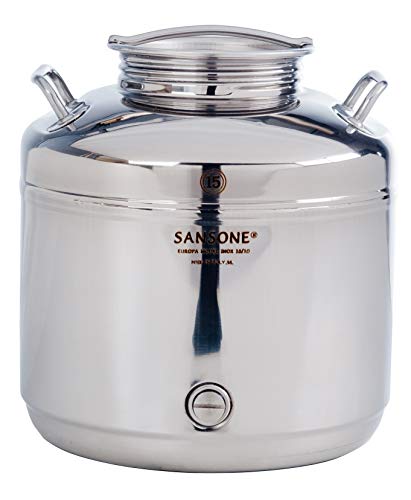
Sansone NSF Stainless Steel Water Dispenser — Best Gravity Capacity
The Sansone scales the crock idea up: its listing describes an NSF stainless steel water dispenser container with a spigot, at 3.96 gallons — a 15-litre vessel, the largest steel capacity in this guide. Size is a taste feature in disguise. A bigger vessel is refilled less often, and every refill is a disturbance; more importantly, a household that drinks heavily no longer faces the small crock’s daily top-up rhythm, which is where gravity dispensers lose their charm for big families. At nearly four gallons, the Sansone serves a party, a large household or a small office corner without apology.
The NSF in its name deserves its honest framing: the listing presents the dispenser under an NSF banner, which we report as the maker’s presentation of the product. Combined with the stainless construction, it positions the Sansone as the crock for buyers who want the classic form with a certification’s reassurance attached — the vessel equivalent of the Avalons’ approach at the electric end of the guide.
Counter space is the price, and it is not trivial: a four-gallon steel vessel is a presence, closer to a stockpot that lives out permanently than to an accessory. Measure the counter and the clearance under the wall cabinets before ordering, and remember it will be lifted — full, it is a two-handed, bend-your-knees object. Households with the space and the thirst will find it the most capable of the three crocks; smaller kitchens should take the RIMOO or the New Wave and refill with a smile.
- Type: countertop gravity dispenser — no power, no chilling, no heating
- Vessel: stainless steel, 3.96-gallon (15 litre) capacity
- Spigot: included, per the listing
- Listing note: presented as NSF in the product title
- Feed: direct filling or bottle service, per the crock format
Strengths
- Largest stainless capacity here — built for families and gatherings
- Steel vessel and spigot keep the water path metal throughout
- NSF presentation adds a certification note to the classic form
Trade-offs
- Big counter footprint, and heavy when full
- Room-temperature, gravity-paced service like its fellow crocks
- No filtration built in
Best for: a large household, a party-prone kitchen or a small office that drinks a great deal of room-temperature water.
Not suited for: a small counter, or anyone who cannot lift a full vessel safely.
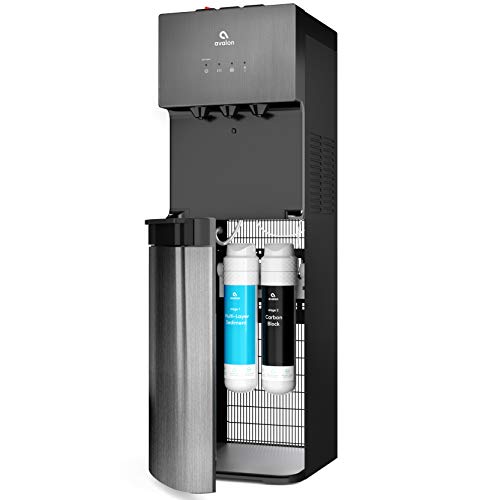
Avalon A5 Self Cleaning Bottleless Water Cooler — Best Full-Size Bottleless
The A5 is the electric family’s heavyweight answer: a full-size, self-cleaning bottleless cooler in black stainless steel, with NSF certified filters and UL and NSF certifications named in its listing. Its taste argument is the complete one. The bottle is gone, so the water’s longest plastic residence is gone with it. The filtration is certified, so the water is improved at the point of use rather than merely stored. And the self-cleaning cycle maintains the interior, so the machine’s own contribution to flavour is policed by the machine itself.
Black stainless is the right finish for this role — a full-size cabinet is the largest object in many kitchens after the fridge, and a finish that reads as a deliberate appliance colour lets it stand in the open without apology. Full-size also means the complete service: this is a floor-standing fixture for a household that has decided, permanently, where its water lives, and wants that fixture to need nothing from it but a filter on schedule.
Against the B8, its smaller sibling in this guide, the A5 trades countertop convenience for presence and permanence; against the bottled Brio, it trades flexibility for the deleted bottle. It is the pick for the household whose plastic-taste complaint was the last straw in a longer story — the household that is done with bottles, done with plastic reservoirs, and ready to plumb once and drink cleanly for a decade.
- Type: bottleless, full-size floor cabinet, connects to a water line
- Self-cleaning: yes, per the listing
- Filtration: NSF certified filters, per the listing
- Finish: black stainless steel
- Certifications named in the listing: UL and NSF certified
Strengths
- Removes the bottle and polices the interior — the complete taste argument
- Certified filtration on a full-size, permanent cabinet
- Black stainless finish suits a design-conscious kitchen
Trade-offs
- Permanent installation; the least portable pick here
- Filter schedule is a permanent household commitment
- Full-size footprint must be planned, not improvised
Best for: a settled homeowner household that wants the bottle era and the plastic question both closed, permanently.
Not suited for: renters, movers, or anyone still deciding where their water should live.
How Do the Six Picks Compare at a Glance?
| Pick | Species | Water path (per listing) | Standout trait |
|---|---|---|---|
| Brio Bottom Loading Water Cooler Stainless Steel | Electric, bottled | Stainless steel build, bottled source | Hot, room and cold with alert and lock |
| Avalon B8 Countertop Bottleless Water Cooler | Electric, bottleless countertop | No bottle; two-stage certified filtration | Plumbed water at countertop scale |
| RIMOO Stainless Steel Water Dispenser | Gravity crock | Stainless vessel, 18/8 stainless spigot | Airtight lid, 2.5 gallons |
| New Wave Enviro Stainless Steel Water Dispenser | Gravity crock | Stainless vessel, 2.2 gallons | Classic, fully washable simplicity |
| Sansone NSF Stainless Steel Water Dispenser | Gravity crock | Stainless vessel with spigot, NSF in listing | Largest steel capacity, 3.96 gallons |
| Avalon A5 Self Cleaning Bottleless Water Cooler | Electric, bottleless full-size | No bottle; NSF certified filters, self-cleaning | Black stainless floor cabinet |
The table’s lesson is that “without plastic taste” is achieved by three different strategies: steel inside an electric bottled machine, filtration plus deletion of the bottle in the plumbed machines, and steel-everywhere simplicity in the crocks. They are ranked here by nothing but fit, because a household that wants ice-cold water and a household that wants a washable steel vessel are not competing for the same product at all.
Where Does Plastic Taste Actually Come From?
Four sources account for nearly every complaint. The first is residence time: water is an excellent solvent of faint flavours, and water that sits for days in any plastic vessel — a storage bottle, a plastic reservoir — slowly adopts a note of its container. The second is newness: a brand-new appliance’s tanks, seals and lines carry the faint signature of their manufacture, which the first weeks of flushing retire. The third is warmth: plastic notes express themselves more strongly in warm water, which is why a machine can taste acceptable cold and disappointing from the hot tap. The fourth is neglect, and it is not plastic at all — the interior film that grows in any unwashed water system tastes stale and chemical, and gets blamed on the materials because the materials are what the owner can see.
Each pick in this guide answers a different combination of those four. Steel vessels and steel-led machines shorten the water’s plastic residence. Bottleless designs delete the storage bottle, the longest residence of all. Certified filtration improves the water on arrival. And the crocks answer neglect with radical washability, while the A5 answers it with a self-cleaning cycle. A buyer who can name which of the four sources is theirs can choose in one step; a buyer who cannot should suspect newness or neglect first, because both are free to fix.
How Do You Get Rid of the New-Machine Taste?
With water, time and one honest week. Flush the machine as its instructions direct — typically several litres drawn and discarded through each tap — then fill it, let it stand, and flush again the next day. Run the self-cleaning cycle if the machine offers one. Then judge nothing until the machine has served the household for a week of normal use, because the manufacturing note fades on a curve, not on a schedule, and glasses drawn on day one are evidence about a factory, not about your purchase.
Two accelerants are safe and traditional. A solution of bicarbonate of soda, run through and thoroughly flushed out, is the classic treatment for a new vessel’s taste, and it suits the steel crocks beautifully since they can be scrubbed and rinsed completely. What not to do is reach for strong detergents or scented cleaners inside a drinking system: they replace a fading taste with a persistent one and create the very problem this guide exists to solve.
Steel Crock or Electric Cooler: How Do You Decide?
Temperature is the honest fork. If your household drinks its water cold — genuinely cold, from a machine, through a hot summer — the crocks cannot help you, and the decision is among the electric three. If your household drinks water the way most of the world does, at the temperature it comes, the crocks offer something no electric machine can: a water path that is steel at every point, washable in a sink, silent, unpowered, and immune to breakdown. Many households discover, to their surprise, that the chilled-water habit was the cooler’s habit, not theirs.
The second fork is plumbing appetite. The bottleless electrics delete the bottle but demand a line; the bottled Brio demands nothing but floor and a socket; the crocks demand nothing but a counter. Rank your household’s constraints in that order — temperature, then plumbing, then everything else — and this guide’s six picks resolve into a shortlist of one or two with unusual speed.
How Should You Clean a Stainless Crock So the Water Stays True?
The crock’s whole virtue is that it can be cleaned completely, so clean it completely, on a rhythm. Empty it, take it to the sink, and wash the vessel and lid with hot water and ordinary washing-up liquid, using a brush that reaches the base’s corners where film begins. Work the spigot deliberately: run the soapy water through it, then rinse through it several times, because the spigot is the one narrow passage where residue can hide from a casual wash. Rinse the vessel until the water runs with no slickness, dry it with a clean cloth or leave it inverted to air, and refill.
Monthly suits most households; a crock in heavy party or office service wants a fortnight. The signs that the rhythm has slipped are the same as in any water system — a faint slipperiness on the steel, a taste that survives a change of source water — and the remedy is always the same wash, done today rather than next week. Steel forgives this maintenance completely, which is more than can be said for the hidden interiors of machines.
What If the Taste Is Coming From the Water Itself?
Run the one-glass experiment before blaming any machine. Draw water from the cold tap into a glass that has never met the cooler, let it stand the same time your cooler water stands, and taste them side by side. If both carry the note, the machine is innocent and the source is guilty — a supply that has changed with the seasons, a household filter elsewhere in the system that is exhausted, or a hot-water system flavouring a shared line. Machines are blamed for their water’s biography more often than any other injustice in this category.
If the source is the problem, the bottleless picks change their meaning: their filtration is no longer a supporting feature but the main event, and the Avalons’ certified filters become the reason to buy. Bottled households in the same position should interrogate their bottle supplier with the same one-glass test. Either way, diagnose before you purchase; the most expensive cooler in this guide cannot fix a taste it never caused, and the cheapest test in this guide can tell you whether it will.
How Does the Bottle Itself Fit Into the Taste Story?
With respect and realism. The large refillable bottle is a practical miracle — food-grade, reused many times, and the backbone of an entire industry — and it is also, unavoidably, the water’s longest plastic residence. Water drawn from a freshly filled bottle, kept cool and turned over quickly, rarely troubles anyone. Water from a bottle that has stood a month in a warm room is a different drink. Bottled households chasing taste should manage the bottle’s life before they manage the machine: shade, cool, turnover, and a supplier whose bottles look cared for.
This is also where the crocks perform their quiet trick. A steel crock fed by a bottle still receives bottled water — but the water’s residence in steel, in a sealed vessel, with a steel spigot as its last contact, shortens the plastic chapter to the bottle alone and removes the machine’s contribution entirely. Households can thus improve taste in stages: crock first, source later, or bottleless when ready. Taste, like most household qualities, is usually won by accumulation rather than by a single heroic purchase.
How Does Temperature Change What You Taste?
Cold is flavour’s anaesthetic. Chilled water tastes cleaner than the same water at room temperature partly because cold dulls the palate’s sensitivity to faint off-notes — which is why a mediocre cooler can hide behind its refrigeration, and why the honest taste test of any machine is a glass at room temperature from its unchilled path. Households shopping for taste should perform that test during the first fortnight: draw from the room-temperature tap or the crock, wait, and taste without the cold’s assistance. What survives that test is genuinely clean water.
The crocks, serving everything at room temperature, submit to this examination permanently — one more reason their owners tend to be confident about their water. Electric households can borrow the discipline: a weekly room-temperature glass tells you more about your machine’s interior than a month of chilled glasses, and it will announce a filter’s exhaustion or a cleaning’s necessity weeks before the cold tap confesses.
What Role Does the Rest of the Kitchen Play?
Water is a gossip: it repeats what it has been near. A crock or reservoir standing beside a fruit bowl, a spice rack or a cleaning cupboard slowly adopts the room’s perfume, which is the practical argument for the RIMOO’s airtight lid and for siting any open vessel away from the kitchen’s strong smells. Glasses matter too — a glass that has held juice, or been washed in scented detergent and inadequately rinsed, will sign the water’s taste before the machine gets a chance. The one-glass experiment in this guide specifies a plain glass for exactly this reason.
Ice deserves its own sentence, since iced water is where taste complaints often surface first. Ice made in a tray or a machine from the same supply carries the supply’s character, and ice stored loose in a freezer absorbs the freezer. A household that finds its still water clean and its iced water strange has located the problem outside the cooler entirely — a reminder that taste is a chain, and the cooler is only its most expensive link.
How Should a Party or a Full House Stress-Test Your Choice?
Gatherings expose every water arrangement’s true capacity. The electric machines answer with recovery: a chilled tank drawn down by twenty glasses needs time to chill the next twenty, and a household that hosts often should watch how their machine behaves in the party’s second hour, not its first. The crocks answer with volume and indifference — gravity does not tire — and the Sansone’s near-four gallons exist precisely for the long table. A crock’s water warms to the room as the evening goes, which the room-temperature drinkers at the party will not even register.
The taste dimension of a party is subtler: many glasses, much standing water, and a vessel opened and closed all evening. The airtight lid earns its keep here, and the electric machines’ closed systems earn theirs. What no arrangement survives is the morning after — water left standing in a warm room in an open vessel should be replaced, not debated, and a host who builds that refresh into the tidy-up keeps the household’s standard without thinking about it.
Can You Improve Taste Without Replacing the Machine?
Often, yes, and the order of attempts matters because it runs from free to expensive. First, the flush: draw and discard generously through every tap, especially after any quiet period. Second, the clean: the full wash for a crock, the maker’s cycle and a tray-and-taps session for an electric machine. Third, the consumable: a bottleless filter changed on evidence rather than on hope, or a bottled household’s supplier and storage examined with fresh eyes. Fourth, the source test, to establish whether the machine was ever the author. Only after those four should replacement enter the conversation — and a household that has done them will choose its next machine with a precision no review, including this one, can give it.
There is a fifth, unfashionable lever: time at temperature. Water drawn and left in a glass jug in the fridge loses some volatile notes to the air and gains the fridge’s neutrality, and households in transition — saving for the bottleless machine, say — can bridge the gap with a steel or glass jug and patience. Taste problems are rarely solved by a single gesture; they are managed by a household that understands its own chain.
What Should You Check in the First Fortnight With a New Machine?
Keep the one-glass test as a weekly ritual. Draw the comparison on the same day each week — source in a plain glass, machine water beside it, both at room temperature — and note the gap. On a healthy new machine the gap narrows visibly across the fortnight as the newness flushes out; on the crocks it should be negligible from the first wash. A gap that widens is information: something in the chain is changing, and it is far better to learn that in week two than in month six.
Also use the fortnight to fix the machine’s permanent systems while motivation is fresh: the filter date recorded for a bottleless pick, the bottle storage corner established for the Brio, the crock’s washing rhythm attached to an existing weekly event. Taste is a maintenance outcome wearing a purchase’s clothes, and the fortnight is when the maintenance gets designed.
How Do These Choices Age Over Five Years?
Steel ages by patina; plastic ages by accumulation. A stainless vessel in year five is the same vessel, perhaps water-marked, washing as clean as the day it arrived — which is why the crocks in this guide are effectively permanent purchases, limited by nothing but their owners’ thirst for novelty. An electric machine’s fifth year depends on its consumables’ story: filters changed on rhythm and interiors cycled regularly, it serves its tenth year with the same water as its first; neglected, it becomes the cautionary tale that sends its owner to guides like this one.
The bottleless machines carry the longest horizon question, because they are fixtures: their fifth year asks whether the household still lives there and still drinks there, which is a question about the household, not the appliance. This is the final argument for choosing the family before the features. A machine matched to a household’s real permanence, real temperature habits and real maintenance character does not merely taste better — it is still there, tasting better, when a mismatched machine has been replaced twice.
What About Water for Tea, Coffee and Cooking?
The taste question follows the water out of the glass. Tea is the most sensitive instrument in any kitchen — a delicate green or white tea will display a water’s character more ruthlessly than any palate drinking it plain — and households that brew seriously often discover their cooler’s signature through the teapot before the tumbler. Coffee is more forgiving, being a strong flavour itself, but a persistent plastic note survives even there, particularly in the hot water a cooler supplies for cafetière or pour-over. Cooking water matters least, since it meets salt, heat and ingredients, yet even there a strong off-note in a plain rice or a poached egg has ended more than one machine’s career.
The practical upshot is a testing order: judge a new machine by its plain room-temperature glass first, its tea second, and let coffee and cooking follow. A machine that passes the first two will pass everything. And households whose brewing is the point — the tea household above all — should weight the bottleless and crock picks heavily, since those are the water paths with the least to say for themselves in the cup.
How Do You Store a Crock or a Cooler Through a Quiet Season?
Some of these machines live second lives — the party crock that serves monthly, the cooler in a holiday house, the office dispenser over a long break — and storage decides whether the second life begins with clean water or with a fortnight of flushing. The rule for every species is the same: empty, wash, dry, and leave open. A steel crock washed and dried with its lid ajar can wait a year and return with a single rinse. The same crock stored wet and sealed becomes a chemistry experiment with a spigot.
Electric machines want the fuller ceremony: reservoirs drained as the manual directs, the self-cleaning cycle run before the draining if the model offers one, and the cabinet left with its door open until the interior is honestly dry. On return, reverse the ceremony — flush generously, cycle again, discard the first glasses. Households that treat storage as part of ownership never meet the legendary stale taste that gives this category its folklore; that taste is almost always a storage story wearing a materials costume.
What Does a Family With Children Need to Know?
Children are the household’s most honest tasters and its most vulnerable drinkers, and both facts shape the choice. The honesty is useful: a child who announces that the water tastes funny is performing the one-glass test without being asked, and households should listen before they correct. The vulnerability is practical: the hot tap on the electric picks is a genuine scald risk, which is why the Brio’s child safety lock, named in its listing, is not a garnish but a requirement in a house with a climbing toddler, and why any electric cooler in such a house should be positioned with the hot tap’s reach in mind.
The crocks present the opposite profile: nothing hot, nothing powered, nothing to lock — and a spigot at exactly a small child’s height, which will be operated, experimentally and repeatedly, usually over the floor. A towel under the crock and a household rule taught early solve it, and many families find the crock’s independence is a virtue: a child who can serve their own water from a steel vessel is a child hydrated without negotiations. Species, as everywhere in this guide, follows the household.
Which Mistakes Do Taste-Sensitive Buyers Make Most Often?
Judging a new machine on its first glass is the classic, and it has returned more good coolers than any defect. Second is confusing the species — buying a gravity crock and feeling betrayed by warm water, or buying an electric cooler and feeling betrayed that it is not a washable steel vessel. The listings in this guide label the crocks’ nature every time; read them as the honest documents they are. Third is neglecting the clean: a steel machine left unwashed for a year will flavour water as surely as a plastic one, and its owner will blame the steel.
Two more deserve naming. Buyers chase taste with scented or chemical cleaners inside a drinking system, trading a fading note for a permanent one. And buyers replace the machine before testing the water, spending a second purchase on the first problem. The one-glass experiment costs nothing and should precede every decision in this category, including the decision to read this guide’s picks as anything more than a shortlist.
Final Recommendation
Choose your species first. If you want an electric cooler that takes materials seriously, the Brio Bottom Loading Water Cooler Stainless Steel is the balanced centre of this guide. If you are ready to delete the bottle, the Avalon A5 Self Cleaning Bottleless Water Cooler makes the complete argument at full size, with the B8 doing the same work on a counter. And if room-temperature water suits your household, the RIMOO Stainless Steel Water Dispenser offers the purest steel path here, spigot included. Flush any of them patiently, keep their small cleaning rhythms, test your source before blaming your machine, and the water in the glass will taste of nothing but water — which is, after all, the flavour this entire category exists to protect.
Frequently Asked Questions
Do stainless steel crocks chill the water?
No. The RIMOO, New Wave Enviro and Sansone are gravity dispensers: they hold water in stainless steel and serve it at room temperature through a spigot, with no power and no refrigeration. They are a different species from the electric coolers in this guide, included because their all-steel water path is a direct answer to plastic taste — not because they cool.
Will a bottleless cooler always taste better than a bottled one?
It removes one major variable — the storage bottle — and filters at the point of use, which is why the Avalon picks are here. But a bottled machine with a steel-led build, fresh bottles and a clean interior can serve excellent water. Taste is decided by the whole chain: source, container, machine and maintenance, in that order of suspicion. The fairest comparison is also the slowest: live with each arrangement’s water at room temperature for a week, because chilled glasses flatter every machine, and the household that tests honestly once rarely has to shop for taste twice.
How long does new-machine taste last?
Typically the first days to a couple of weeks, fading with every litre drawn. Flush thoroughly on arrival, run any self-cleaning cycle, and withhold judgement for a week of normal use. A taste that is unchanged after a month of honest flushing is no longer newness — test the source water with a plain glass, then look to cleaning and filters.
Does the spigot material really matter?
It is the last thing the water touches, and on the RIMOO the listing names an 18/8 stainless steel spigot, which is the kind of specific, checkable detail worth rewarding when a listing offers it. On any dispenser, the spigot is also where residue gathers quietly between cleans, so whatever its material, it wants deliberate cleaning — run the wash water through it under a little pressure, not just around it, and let it drain fully before the vessel goes back into daily service.
Can I put a steel crock on top of a bottle, or fill it directly?
The RIMOO’s listing describes it as a countertop dispenser for use with 3- to 5-gallon bottles, and crocks of this format are commonly either bottle-fed or filled directly from a tap or filter jug. Direct filling with filtered water is the taste purist’s route: the water’s only residences are your filter, the steel vessel and the steel spigot.
What if my water tastes of plastic from the hot tap only?
That pattern points at the machine, not the source: warmth expresses plastic notes more strongly, and hot water sits in the machine’s tank longest. It is the specific complaint the steel-led Brio and the bottleless Avalons address. Flush the hot side patiently first — draw and discard several tanks over the first week — before concluding the machine itself is the problem.
Related Guides
For the rest of the water story around the house: Best White Kitchen Faucets covers the tap the one-glass experiment starts at, Best Bath Mats That Will Not Get Mold handles the bathroom’s own water-and-materials question, and Best Air Purifiers for Cat Litter Smell returns to the other end of the house’s freshness.


