What's inside
- Key Takeaways
- Quick Picks
- Which Condo Rules Did We Apply Before Looking at Features?
- Condo Fit, Compared: Width, Voltage and Venting
- How Do You Measure a Laundry Closet So the Machine Actually Fits?
- Vented, Ventless or Convertible: Which Drying Suits Your Building?
- How Should a Condo Household Load a Combo Differently?
- What Do Condo Boards and Landlords Actually Object To?
- Which Mistakes Send Condo Combos Back to the Seller?
- What Does a Combo Ask of Your Water and Drainage?
- How Loud Is a Laundry Closet, Really?
- Renting the Condo Instead of Owning It?
- What Changes After the First Month of Condo Laundry?
- How Do the Six Divide by Household, One Last Time?
- What Does In-Unit Laundry Do to a Condo’s Daily Texture?
- Final Recommendation
- Frequently Asked Questions
- Related Guides
As an Amazon Associate I earn from qualifying purchases. This post may contain affiliate links at no extra cost to you.
cottageverdict.com is reader-supported. When you buy through links on our site, we may earn an affiliate commission.
Where to buy: the six machines below are sold on Amazon, and for a condo purchase the listing title is your building-rules document in miniature — width, voltage and venting are all stated there for most of these picks, so read the title the way you would read a clause in your condo association’s alteration agreement; check price on Amazon only after the machine has passed your building’s three tests.
Condo laundry is a constrained optimisation problem, and the best washer dryers for condos are the ones that respect the constraints in the right order. Constraint one is width: the classic condo laundry closet was framed around a 24-inch machine, and a 27-inch full-size unit does not negotiate. Constraint two is power: many condo closets offer only a standard 110V or 120V outlet, with no 240V dryer circuit and no prospect of adding one without an electrician and a board approval. Constraint three is air: a vented dryer needs a duct to the outside, and plenty of interior condo closets have no exterior wall to vent through. Every machine in this guide survives at least two of those three tests outright, and the reviews grade them by how completely they survive all three.
This framing is what separates the guide from a general roundup of washer dryer combos. A general combo guide asks which single-drum machine washes and dries best in the abstract. A condo guide asks a prior question — which machine is your building even allowed to contain? A wonderful combo that needs 240V and a vent is, in a ventless 110V closet, not a worse machine; it is furniture that will never run. So the spec boxes below lead with width, voltage and venting, and treat capacity and cycles as the second conversation.
All six picks are all-in-one combos — one drum that washes and then dries — because that is the format the condo constraints select for. Two machines side by side need double the width; a stacked pair needs the height and usually the 240V circuit; the combo needs one 24-inch footprint, one outlet and, in its ventless forms, no duct at all. Where a stacked arrangement genuinely fits a condo, that path is covered in Best Stacked Washer Dryers; this guide stays with the single-box answer.
Key Takeaways
- Condo fit is decided by three numbers before any feature matters: cabinet width around 24 inches, a 110V/120V supply, and ventless or convertible venting.
- Every pick here is a single-drum combo — wash and dry in one box — because that is the format a one-metre laundry closet can actually hold.
- Dry capacity is smaller than wash capacity wherever both are printed: one listing here washes 25.6 lbs. and dries 13.2 lbs., so load for the dry figure.
- Convertible machines, which can run vented or ventless, are the hedge for buyers who may move between buildings with different rules.
- Two Equator models anchor the list because that brand builds specifically for the 24-inch, 110V, small-space brief.
Quick Picks
| Condo combo | Badge | Why it earns its place |
|---|---|---|
| Equator 2.5 Convertible Combo Washer Dryer Vented Ventless 110V | The convertible flagship | Vented or ventless from the same machine, on 110V, at 2.5 cu. ft. — the largest drum here. |
| BLACK+DECKER Washer and Dryer Combo 2.7 BCW27MW | The honest capacity split | The title prints both figures — 25.6 lbs. washed, 13.2 lbs. dried — so you can plan loads truthfully. |
| Midea Washer Dryer Combo 2.7 24in All-in-One | The overnight-dry specialist | A named overnight dry program and steam care inside a true 24-inch ventless frame. |
| KoolMore 2-in-1 Front Load Washer and Dryer Combo 2.7 | The cycle-rich alternative | Sixteen wash cycles and four dry cycles on 120V, aimed squarely at apartment and condo closets. |
| Equator 24in 110V Convertible Compact Combo White | The 24-inch native | Built to the exact condo template — 24 inches, 110V, convertible — with a pet cycle as a bonus. |
| 23.4in 2.7 All in One Ventless Washer Dryer Combo | The narrowest full-capacity option | A 2.7 cu. ft. drum in a 23.4-inch cabinet for closets that fail even the 24-inch test. |
Which Condo Rules Did We Apply Before Looking at Features?
The selection began with a tape measure and a building manual rather than a feature list. Any machine wider than the mid-24-inch class was out, however good its washing, because a condo closet’s framed opening is not a suggestion. Any machine that could only dry through a fixed vent was out for the interior-closet case, though convertible machines that offer venting as an option stayed — optionality is not a violation. Any machine demanding a 240V circuit was out; the titles here state 110V or 120V, and that statement was treated as a headline specification, checked before drum size.
Only after those filters did the ordinary virtues get their hearing: drum capacity, spin speed (which quietly governs drying time, since a 1400 RPM extraction leaves far less water for the dry stage than a gentler spin), cycle range, and the honesty of the listing itself. Two listings in this guide print their wash and dry capacities separately, and that transparency was weighted heavily, because a condo owner planning around a shared laundry schedule needs the dry number more than the wash number.
A last filter was rhetorical. Machines whose titles addressed apartments, condos, RVs and tiny homes were read as designed for the brief; machines that merely happened to be small were read as shrunken versions of full-size thinking. The distinction shows up in details like convertible venting and pet cycles — features that exist because the maker imagined the actual room the machine would live in.
Everything below follows that order of operations. Where a specification appears in a spec box, it comes from the listing title of that exact machine; where a title is silent — and two of these titles are silent on voltage, two on venting — the box says so and directs you to the product page, because a condo purchase made on an assumed circuit or an assumed duct is the one purchase this category reliably punishes. Read the boxes as a building inspector would: the stated facts are the machine’s promises, and the gaps are your homework, assigned before money moves.

Equator 2.5 Convertible Combo Washer Dryer Vented Ventless 110V — The convertible flagship
Convertibility is the most valuable word in condo laundry, and this Equator is built around it. The machine is a 2.5 cu. ft. combo — the largest drum in this guide — that can dry vented or ventless, runs on 110V, and spins at 1400 RPM. Each of those four facts answers a different condo anxiety. The 110V supply answers the wiring. The 1400 RPM spin answers the drying-time complaint that haunts low-voltage combos, because water removed mechanically by spinning is water the heater never has to evaporate. The drum size answers the capacity anxiety. And the convertible drying answers the building question you cannot fully know until you open your own closet wall: is there a duct, or isn’t there?
That last point deserves expansion, because it is really an argument about uncertainty. Condo buyers routinely discover their venting situation late — a closet that looks vented turns out to have a capped duct, or a supposedly ventless nook reveals a proper vent behind a panel. A fixed ventless machine in a vented closet wastes an asset; a fixed vented machine in a ventless closet is a return waiting to happen. The convertible design prices that uncertainty at zero: whichever closet you actually have, the machine adapts, and if you move to a different unit in two years, it adapts again.
The silver finish is the visible difference from its smaller white sibling further down this list, and in a condo where the laundry closet opens off a kitchen or a living area — a common floor plan — a silver machine reads more like a kitchen appliance and less like a utility box when the closet door stands open. It is a cosmetic point, but condo living makes cosmetics functional: you see this machine from your sofa.
Installation, for this machine, is a story of one of everything: one footprint, one outlet, one water connection set, one drain — plus a decision. The convertible drying hardware means the installer chooses the vented or ventless configuration on the day, based on what the closet actually offers, and can reverse the choice later if the closet changes. Keep the vent kit components you do not use, labelled, in the closet’s corner; the next configuration of your life may want them, and a convertible machine whose unused parts were thrown away has been quietly converted into a fixed one.
Capacity honesty requires one note. The title gives the drum as 2.5 cu. ft. without splitting wash and dry figures, and combo drying always handles less than combo washing. Plan your loads by the conservative habit this guide repeats everywhere: fill for the wash you intend to dry in the same run, which on any combo means a drum that looks about two-thirds full at loading.
- Drum: 2.5 cu. ft., all-in-one combo
- Venting: convertible — vented or ventless, per the listing title
- Power: 110V
- Spin: 1400 RPM
- Finish: silver
- Where to buy: the Equator 2.5 Convertible Combo Washer Dryer Vented Ventless 110V listing on Amazon — check price on Amazon
Strengths
- Convertible venting removes the biggest unknown in a condo purchase.
- The largest drum in this guide on a 110V supply.
- A 1400 RPM spin shortens the low-voltage dry that follows it.
Trade-offs
- Wash and dry capacities are not split in the title — plan loads conservatively.
- Convertible hardware you never use is still hardware you paid for.
- Silver shows fingerprints in a closet you open daily.
Best for: condo buyers who have not yet confirmed their closet’s venting, or who expect to move within the building stock. A poor fit for: buyers with a known, good vent and a 240V circuit — a full-size pair will out-wash this machine, and you would be paying for flexibility you cannot use.
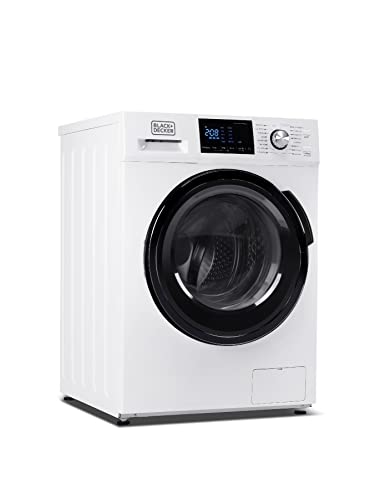
BLACK+DECKER Washer and Dryer Combo 2.7 BCW27MW — The honest capacity split
Most combo listings print one capacity and let you discover the other. This BLACK+DECKER title prints both: it washes up to 25.6 lbs. and dries up to 13.2 lbs., in a 2.7 cu. ft. all-in-one with an LED display and 16 cycles. That pair of numbers is the most useful sentence in this entire guide, because it converts the combo category’s open secret into arithmetic you can plan a week around. A household that washes 25 lb loads must split each one before drying, or wash at the dry figure and run the machine more often — and knowing that before purchase, rather than during the first soggy evening, is the difference between a machine that suits its home and one that gets reviewed angrily.
Sixteen cycles on a condo combo is a generous program library, and its value is specific rather than general. Condo wardrobes skew towards the mixed, the delicate and the work-from-home comfortable — loads that benefit from a genuine delicates program and a quick cycle for the two-shirt emergency — more than they skew towards boil-washing farm overalls. Read the cycle list on the product page against your own laundry basket’s contents; a cycle you will use weekly is worth more than four you will use never.
The model designation BCW27MW and the white finish make this the most appliance-anonymous machine here, which in a rented condo is sometimes the point. Landlords and condo boards notice unusual installations; a plain white combo in the laundry closet reads as a like-for-like replacement of whatever stood there before, and attracts no questions at inspection time.
One planning note follows from the split capacities. Because drying caps at roughly half the wash load, this machine rewards the habit of washing smaller and more often — a rhythm condo life, with its smaller wardrobes-per-person and in-unit convenience, actually supports well. The load you start after dinner dries while you watch a film; there is no trip to a basement laundry room in the story at all.
- Drum: 2.7 cu. ft., all-in-one combo
- Wash capacity: up to 25.6 lbs., per the listing title
- Dry capacity: up to 13.2 lbs., per the listing title
- Programs: 16 cycles, LED display
- Model: BCW27MW; finish: white
- Where to buy: the BLACK+DECKER Washer and Dryer Combo 2.7 BCW27MW listing on Amazon — check price on Amazon
Strengths
- Both capacities printed in the title — the most plannable listing here.
- Sixteen cycles cover the delicate-heavy wardrobes condo households actually own.
- Anonymous white styling keeps landlords and boards incurious.
Trade-offs
- The dry figure halves the wash figure — big wash days become split loads.
- Venting arrangement is not stated in the title; confirm it on the product page before ordering.
- No spin speed is printed in the title, so drying pace is harder to predict than the 1400 RPM machines.
Best for: planners — buyers who will genuinely organise their laundry week around the printed dry capacity. Not the right match for: anyone who wants to wash a full drum and dry it untouched in one pass; no condo combo does that, and this one’s honesty about it should not be mistaken for a unique weakness.

Midea Washer Dryer Combo 2.7 24in All-in-One — The overnight-dry specialist
Midea’s combo is the one that names the condo owner’s actual schedule. Its title lists a 2.7 cu. ft. drum in a 24-inch front-load frame, 1400 RPM, ventless fully automatic operation, steam care, sixteen wash cycles — and an overnight dry program. That program is the design’s thesis: a ventless combo dries slowly by physics, so instead of apologising for the slowness, the machine schedules it into the hours when slowness costs nothing. You load after dinner, and the laundry is dry when the coffee is on. In a condo, where the alternative is a machine audibly tumbling through your evening, overnight operation is not a feature; it is the whole quality-of-life argument.
Ventless drying carries a second condo-specific benefit that rarely gets mentioned: humidity management is internal. A vented dryer exports warm moist air through a duct; a ventless condenser keeps the moisture in the machine’s own system and drains it as water. In a small, well-sealed modern condo, not pumping laundry moisture into the unit’s air — or depending on a duct run that may be long, shared or poorly maintained — is a genuine building-health advantage, and it is why so many newer condo developments effectively assume ventless laundry.
One more virtue of the ventless design shows up in winter. A vented dryer in a cold-climate condo pushes heated indoor air outside for the length of every dry cycle, and the building’s heating system quietly replaces it; a condenser keeps that warmth in the unit and sends only water down the drain. Nobody buys a combo for its effect on the heating bill, and this guide will not pretend the effect is large — but in a small, well-sealed condo the direction of the effect is favourable, and it compounds with the humidity argument above: the ventless machine is simply the design that treats the condo as a closed system and behaves accordingly.
Steam care, the title’s other named feature, earns its keep on the condo wardrobe specifically. Steam programs refresh garments that are worn but not soiled — the blazer, the knit, the trousers from one evening out — reducing full washes, which in a machine with a halved dry capacity is a load-management strategy as much as a fabric one. Every refreshed-instead-of-washed item is capacity returned to the week’s real laundry.
The 24-inch width is stated outright in the title, which matters more than it sounds. Several machines in this category are 24-inch-class by implication and 24.4 inches in fact; a title that commits to the number invites you to hold the seller to it, and your closet will thank you for choosing a machine whose width was a promise rather than an estimate.
- Drum: 2.7 cu. ft., front load, all-in-one
- Width: 24 inches, stated in the listing title
- Venting: ventless, full-automatic
- Power note: voltage not printed in the title — confirm the supply requirement on the product page
- Programs: 16 wash cycles, steam care, overnight dry
- Spin: 1400 RPM
- Where to buy: the Midea Washer Dryer Combo 2.7 24in All-in-One listing on Amazon — check price on Amazon
Strengths
- Overnight dry turns ventless slowness into a schedule instead of a wait.
- Steam care reduces full washes, easing the dry-capacity bottleneck.
- Width committed in the title — a checkable promise for a tight closet.
Trade-offs
- Ventless-only: a condo with a good vent gains nothing from the condenser design’s patience.
- Voltage is not stated in the title, so the condo power test needs the product page.
- Overnight programs assume your sleep tolerates a machine running in the unit.
Best for: condo owners in sealed, modern units whose laundry closet has no vent and whose evenings are their own. Poorly suited to: light sleepers in studio units where the closet is two metres from the bed — run any combo’s dry stage in your waking hours instead, whichever model you choose.
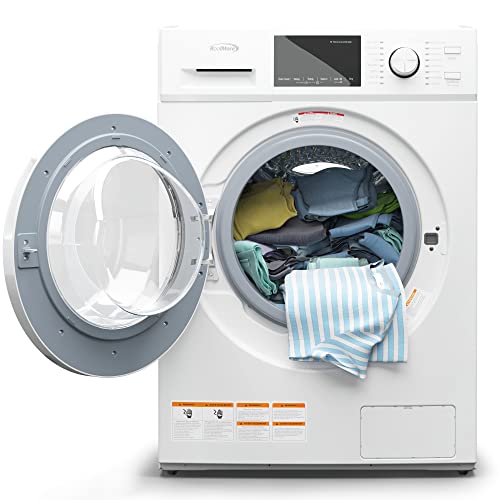
KoolMore 2-in-1 Front Load Washer and Dryer Combo 2.7 — The cycle-rich alternative
KoolMore’s entry reads like a checklist written by someone who has actually read condo listings before: 2.7 cu. ft., front load, sixteen wash cycles and four dry cycles counted separately, a compact space-saver frame, and the electrical fact printed plainly — 120V. The separate counting of dry cycles is a small honesty worth rewarding. Most titles give one program number and let buyers assume it describes both halves of the machine’s job; this one admits the dry library is its own, smaller list, which is true of every combo and stated by few.
The title also names its intended rooms — apartment, dorm, RV — and condo buyers should read that list as a size statement rather than a lifestyle one. A machine designed to satisfy dorm and RV buyers has been engineered for hostile installation environments: uneven floors, shared circuits, minimal clearance, users who did not choose it and will not baby it. A condo closet is a gentle posting by comparison, and machines built for the harder brief tend to arrive with their clearances and tolerances honestly stated.
Four dry cycles, thought about properly, cover the condo reality: a full dry for cottons, a gentler pass for synthetics and delicates, a refresh, and a timed option for the load you understand better than the sensor does. The sixteen wash programs will inevitably include some you never touch — every maker’s library does — but the ratio between the two lists tells you where this machine’s engineering attention went, and for a condo household the wash side is indeed where variety gets used.
Consider also what the 120V statement quietly guarantees about the install day. A machine that runs on a standard circuit can be tested the moment it is levelled — no waiting on an electrician’s visit to energise a new line — and can be moved to a different closet or a different unit without an electrical conversation at either end. In buildings where units trade hands and closets get repurposed, that portability is a resale argument as much as a convenience: the machine leaves with you, or stays as a listing feature a buyer can verify in the title.
White, front-load, unremarkable to look at: the KoolMore competes on the legibility of its listing rather than on any single headline feature. In a category full of implied specifications, that is a defensible strategy, and it makes this machine the natural cross-check against the Midea above — same drum class, same cycle count, different drying philosophy.
- Drum: 2.7 cu. ft., front load, 2-in-1 combo
- Programs: 16 wash cycles and 4 dry cycles, counted separately in the title
- Power: 120V, stated in the listing title
- Intended settings, per the title: apartment, dorm, RV
- Model: FLC-3CWH; finish: white
- Where to buy: the KoolMore 2-in-1 Front Load Washer and Dryer Combo 2.7 listing on Amazon — check price on Amazon
Strengths
- Wash and dry cycle counts stated separately — rare, useful honesty.
- 120V requirement printed in the title, passing the condo power test at a glance.
- Built for harsher small-space briefs than a condo closet presents.
Trade-offs
- Venting arrangement is not named in the title — verify before ordering.
- No spin speed in the title, so dry-stage pace is unquantified at title level.
- The brand’s service network is thinner than the biggest names here.
Best for: buyers comparing directly against the Midea who prefer their specifications enumerated. A weak match for: shoppers who want a named venting system decided at title level — the two Equator machines state theirs outright.

Equator 24in 110V Convertible Compact Combo White — The 24-inch native
If the condo brief were written as a product specification, it would read like this machine’s title: 24 inches wide, 110V, convertible venting, compact combo. The drum is 1.6 cu. ft. and 15 lbs — the smallest in this guide — spinning at 1400 RPM, with a pet cycle among its programs and a list of intended homes that names the condo explicitly alongside apartments, RVs and tiny homes. This is not a full-size machine that shrank; it is the native species of the 24-inch closet, and everything about it is scaled to that habitat.
The pet cycle deserves its sentence, because in condos it solves a building problem as well as a laundry one. Pet hair in a shared-building drainage and lint ecosystem is a genuine nuisance, and a dedicated program that flushes hair from the drum keeps both the machine and the building’s pipes happier. Condo pet ownership is common enough that the feature’s presence in the title tells you the maker interviewed actual small-space owners rather than imagining them.
Size honesty cuts both ways, and this review should say plainly what 1.6 cu. ft. means in practice: it is a one-to-two-person drum. Singles and couples with a little-and-often rhythm will find it perfectly matched; anyone laundering for children, or washing bedding weekly, will find the flagship Equator’s 2.5 cu. ft. the wiser spend. The convertible venting and 110V supply are shared with the flagship — the difference between the two Equators is purely how much laundry fits through the door.
There is also a furnishing argument for the smallest machine in a tight condo: the closet that holds a 1.6 cu. ft. combo often has room left for the shelf, the ironing board or the vacuum that a larger machine would evict. In small homes, the space a machine does not take is a feature of the machine. Buyers furnishing compact rooms generally — where every piece must justify its footprint in two currencies, function and fabric — tend to think the same way about seating, choosing non-leather upholstery that survives close quarters gracefully, a line of thought explored in Best Non-Leather Reading Chairs.
- Drum: 1.6 cu. ft. / 15 lbs, compact combo
- Width: 24 inches, stated in the listing title
- Venting: convertible
- Power: 110V
- Spin: 1400 RPM
- Programs note: PET cycle named in the title
- Where to buy: the Equator 24in 110V Convertible Compact Combo White listing on Amazon — check price on Amazon
Strengths
- The exact condo template: width, voltage and convertible venting all stated.
- Pet cycle addresses a real shared-building laundry nuisance.
- Leaves closet room for storage that larger combos consume.
Trade-offs
- The smallest drum here — a one-to-two-person machine, honestly labelled.
- Bedding and bulky items will challenge or defeat the drum.
- Convertible flexibility is shared with the larger Equator, so size is the only reason to choose this one.
Best for: singles and couples in true 24-inch closets, especially with a pet. Not suited for: families, or anyone whose weekly wash includes regular bedding loads.

23.4in 2.7 All in One Ventless Washer Dryer Combo — The narrowest full-capacity option
Some condo closets fail even the 24-inch test. Older conversions, closets framed around a stacked unit’s narrower footprint, and doorways trimmed by a previous renovation can leave a clear width where a 24-inch machine physically will not pass. This unbranded listing exists for that measurement: a 23.4-inch cabinet holding a 2.7 cu. ft. all-in-one ventless combo in white. The pairing of those two numbers — the joint-largest drum class in this guide inside the narrowest cabinet — is the entire proposition, and for the right closet it is not a compromise at all; it is the only full-capacity option that fits.
Ventless-only operation defines its building fit. There is no vented mode to convert to, so this machine belongs in the interior closet with no duct, full stop — and in exchange it asks nothing of the building at all beyond water, drainage and an outlet. For condo boards that regulate alterations, a machine requiring no duct, no new circuit and no exterior penetration is the easiest laundry proposal a unit owner can make, and sometimes that administrative ease is the deciding feature.
The absence of a brand name in the title cuts both ways and the review should not pretend otherwise. On one side, you are paying for a cabinet dimension and a drum rather than for a badge. On the other, the specification trail is thinner: the title gives width, capacity, format and venting, and nothing about spin speed, cycles or voltage. Every one of those must be confirmed on the product page, and the confirmation matters — a condo purchase made on an assumed voltage is a gamble this guide has argued against from its first paragraph.
Treat this machine as the answer to a measurement, not as a general recommendation. If your closet clears 24 inches with room for hoses, the branded machines above offer richer listings and clearer specifications at the same drum size. If it does not, this is the listing that keeps you in the 2.7 cu. ft. class instead of dropping to a portable.
- Cabinet width: 23.4 inches, stated in the listing title
- Drum: 2.7 cu. ft., all-in-one combo
- Venting: ventless only
- Finish: white
- Spin, cycles and voltage: not stated in the title — confirm all three on the product page
- Where to buy: the 23.4in 2.7 All in One Ventless Washer Dryer Combo listing on Amazon — check price on Amazon
Strengths
- Full 2.7 cu. ft. capacity in the narrowest cabinet in this guide.
- Ventless-only design asks nothing of the building — no duct, no penetration.
- The specialist answer for closets that fail the standard 24-inch measurement.
Trade-offs
- Unbranded listing with a thin title — several key specifications need page-level verification.
- No vented option if your circumstances change.
- Service and parts trail will be thinner than the named brands here.
Best for: owners whose measured clear width is genuinely under 24 inches. A poor fit for: everyone else — if a standard 24-inch machine fits your closet, the richer listings above are the better-documented buys.
Condo Fit, Compared: Width, Voltage and Venting
| Combo | Width story | Drum | Power as titled | Venting route |
|---|---|---|---|---|
| Equator 2.5 Convertible Combo Washer Dryer Vented Ventless 110V | Compact class | 2.5 cu. ft. | 110V | Convertible — vented or ventless |
| BLACK+DECKER Washer and Dryer Combo 2.7 BCW27MW | Compact class | 2.7 cu. ft. | Not stated in title | Not stated in title |
| Midea Washer Dryer Combo 2.7 24in All-in-One | 24 inches, stated | 2.7 cu. ft. | Not stated in title | Ventless |
| KoolMore 2-in-1 Front Load Washer and Dryer Combo 2.7 | Compact space saver | 2.7 cu. ft. | 120V | Not stated in title |
| Equator 24in 110V Convertible Compact Combo White | 24 inches, stated | 1.6 cu. ft. | 110V | Convertible |
| 23.4in 2.7 All in One Ventless Washer Dryer Combo | 23.4 inches, stated | 2.7 cu. ft. | Not stated in title | Ventless only |
How Do You Measure a Laundry Closet So the Machine Actually Fits?
Measure the doorway, not the closet. The binding constraint on a condo install is usually the clear width of the closet door frame — and sometimes the bathroom door the machine must pass on its way there — rather than the closet’s interior. Record three numbers: the narrowest clear passage on the route, the closet’s interior width with the door’s swing accounted for, and the depth available once hoses are connected, because a combo pushed flush against its hoses is a combo whose connections are being crushed. Add the height of any shelf or water heater sharing the closet, since several condo closets stack their utilities vertically.
Then measure the invisible infrastructure. Find the outlet and note its type; find the water supply and the drain; then settle the vent question physically — open the closet, look for the duct cap or the vent grille, and photograph what you find. Half the returns in this category are born from a venting assumption that a five-minute look would have corrected, and the convertible machines in this guide exist precisely for buyers whose five-minute look produced an ambiguous answer.
Vented, Ventless or Convertible: Which Drying Suits Your Building?
Vented drying is faster and simpler where a short, clean duct exists, and it is the wrong choice everywhere else. Ventless condensing drying is slower, indifferent to ducts, and gentle on a sealed building’s humidity balance. Convertible drying costs a little more and answers the question with a shrug — whichever your closet turns out to be, the machine complies. The decision procedure is therefore embarrassingly short: if you have verified a good vent, a vented or convertible machine serves you; if you have verified no vent, ventless or convertible; if you cannot verify, convertible, and the uncertainty premium is the cheapest insurance in the whole purchase.
There is a furnishing parallel worth a sentence. Condo rooms are chosen under constraint everywhere — the closet dictates the laundry, the alcove dictates the seating, and the seating that survives is the piece specified honestly for its space, in materials that tolerate close living; Best Leather Bar Chairs applies the same discipline to kitchen islands, where seat height and material honesty decide whether a chair works in a compact condo kitchen. Constraints first, taste second, is the whole method of small-home buying.
How Should a Condo Household Load a Combo Differently?
Load for the dry number. Where a listing prints both capacities, as the BLACK+DECKER does, treat the dry figure as the load size and the wash figure as headroom you ignore. Where only one figure is printed, load the drum to roughly two-thirds and let the machine’s dry stage work with air in the drum. Sort by drying behaviour rather than by colour alone: the load that mixes heavy cottons with light synthetics finishes unevenly in any combo, while a load of similar fabrics dries as a unit and comes out ready to fold.
Timing is the second habit. A combo’s full wash-and-dry run is a long appointment, so condo households do best treating it as one: start the machine when you leave, or run the overnight program where one exists, and the slowness leaves your lived experience entirely. The households that hate their combos are almost always the ones standing in front of them, waiting — a posture no specification can survive.
What Do Condo Boards and Landlords Actually Object To?
Rarely the machine; usually the alterations. A new 240V circuit, a new vent penetration through an exterior wall, a moved drain — those are the proposals that trigger approvals, and the beauty of this guide’s entire category is that none of the six machines requires any of them when matched to the right closet. Water is the second objection, and it is answered with hardware rather than argument: braided supply hoses, a drain pan under the machine, and a water alarm in the closet cost little and convert a board’s abstract worry into a managed detail. Mention them in your alteration request, if your building requires one, and the conversation changes tone.
Noise is the third objection, and it is a scheduling answer again: a combo spinning at 1400 RPM in a closet with a solid door is a muffled event, and running the spin-heavy stages at sociable hours is the kind of neighbourliness that keeps in-unit laundry uncontroversial in a building.
Which Mistakes Send Condo Combos Back to the Seller?
Buying by drum size alone, in a closet that was never measured. Assuming the voltage instead of reading it — two titles in this guide do not state it, and the product page check takes minutes. Assuming a vent exists because the closet has a grille, when the grille may serve the bathroom fan. Forgetting the drain: a combo still needs somewhere for the water to go, and a closet plumbed only for a stacked unit’s arrangement may place the drain where hoses reach awkwardly. And the quietest mistake — ordering the machine before reading the building’s alteration rules, so that a compliant machine sits in a hallway while paperwork catches up.
What Does a Combo Ask of Your Water and Drainage?
Less than a pair, but not nothing. A single combo needs one cold supply (some models accept hot and cold), one drain point at a height the machine’s pump can reach, and a floor that can tolerate the small chance of a leak — which is why a drain pan under a condo machine is cheap wisdom in a way it is not in a ground-floor utility room with a floor drain. Check the drain’s position against the closet before ordering: a standpipe at the wrong height or a drain shared awkwardly with a water heater’s overflow can turn a one-hour install into a plumbing visit. None of the six machines here asks for anything exotic; all of them ask for the basics to be present and reachable, and verifying that is a ten-minute job with a torch.
Water pressure is the quiet variable. Upper-floor condos at the end of a riser can run modest pressure at peak hours, and a combo filling slowly is merely a longer cycle — but a combo filling slowly while a neighbour’s renovation has half-closed a valve can error out mid-program. If your unit’s pressure is known to wander, run your first cycles at off-peak hours and learn the machine’s behaviour before trusting it with an overnight load.
How Loud Is a Laundry Closet, Really?
No title in this guide prints a decibel figure, so this section deals in the variables you control rather than numbers nobody stated. A combo’s loudest moments are the spin — 1400 RPM is fast, and fast is audible — and the drain pump’s short cycles. Three things govern how much of that reaches your living space: the closet door’s solidity, the machine’s level, and the floor beneath it. A hollow-core closet door is a loudspeaker; a solid door with a gap sealed is a muffler. An unlevel machine walks its vibration into the frame; a level one keeps it in the drum. A concrete slab is silent; a timber floor is a drum skin, and an anti-vibration mat under the machine is the standard, inexpensive answer on timber.
Scheduling completes the picture. The spin stage of a wash-and-dry run arrives at a predictable point in the cycle, and households that start a load before dinner hear the spin during washing-up rather than during sleep. The overnight programs discussed in the Midea review move the whole appointment into the night deliberately — which suits deep sleepers in units with solid closet doors, and nobody else. Choose the machine and the schedule together, and noise stops being a specification you lacked and becomes a habit you built.
Renting the Condo Instead of Owning It?
Renters face the same three constraints with an added fourth: reversibility. Everything you install must uninstall without a trace. The combos in this guide are inherently renter-friendly — freestanding, standard-voltage, and in ventless form entirely free of ductwork — but the details decide. Keep the landlord’s written agreement to the installation, photograph the closet’s plumbing before and after, and keep the machine’s shipping bolts and packaging if storage allows; a combo moved without its transit bolts can damage its own suspension on a single staircase. The 23.4-inch ventless machine and the two Equators, none of which asks the building for anything, are the easiest proposals to put in front of a landlord — and a proposal that names the drain pan and the braided hoses usually gets its yes.
What Changes After the First Month of Condo Laundry?
The novelty fades and the arithmetic remains. By the second month, most combo households have settled into a load size — usually smaller than their old laundry-room loads — and a schedule anchored to the machine’s long cycle: a load started before work, a load started after dinner, an overnight run before a trip. What surprises new owners is how completely the laundry room disappears from their lives; the building’s shared facility, with its queues and its card system, becomes a place they walk past. What surprises them second is the lint discipline: a ventless machine’s condenser and filter want regular attention, and the owners who build the ten-second filter habit into the unloading ritual never meet the slow-dry decline that owners who skip it eventually blame on the machine.
The honest long-term cost of the category is time elasticity. A household that suddenly doubles — a partner moving in, a baby, a parent staying for a season — will feel a 1.6 or 2.5 cu. ft. drum’s limits immediately, in a way a full-size pair would absorb silently. That is not a defect in these machines; it is the condo bargain itself, space traded against capacity, and it is why this guide keeps pointing growing households towards the largest drum their closet can hold rather than the smallest machine that fits it.
How Do the Six Divide by Household, One Last Time?
Strip the features away and the six machines sort themselves by the size of the life they serve. The 1.6 cu. ft. Equator is a one-person or two-person machine with a pet-shaped bonus, bought when the closet is the classic 24 inches and the wardrobe is modest. The 2.5 cu. ft. convertible Equator is the same household with bedding ambitions, or the buyer whose next home is unknown. The 2.7 cu. ft. trio — BLACK+DECKER, Midea, KoolMore — serves couples and small families, and divides by temperament: the planner who wants capacities printed, the sleeper who wants the work done overnight, and the comparer who wants every cycle counted in the open. The 23.4-inch machine serves a measurement rather than a household: it is for the closet that rejects all the others while the household still needs a full-size drum. Read your own situation into that map honestly — household first, closet second, temperament third — and the shortlist usually narrows itself to one machine and one understudy, which is exactly where a purchase decision wants to be.
What Does In-Unit Laundry Do to a Condo’s Daily Texture?
It removes a recurring negotiation from the week. The shared laundry room asks for timing, for cards, for diplomacy over other people’s forgotten loads; the basement trip runs on the building’s rhythms, not yours. A combo in the closet returns the chore to the household’s own clock: laundry happens while dinner cooks, and loads shrink to match, because an always-available machine never needs a week’s accumulation at once. Owners consistently describe the change less as convenience than as quiet: one fewer shared resource, one fewer errand with a basket, one fewer reason to plan a Sunday around a room in the basement. That quiet is what the constraints in this guide are purchasing, and it is why getting the width, the voltage and the venting right matters so much more than any single program on any single dial — the machine that fits your building disappears into your life, and the machine that does not fit it disappears back to the seller.
Final Recommendation
Start with the convertible flagship: the Equator 2.5 cu. ft. machine passes every condo test this guide applies — 110V power, convertible venting, the largest drum here, a fast spin to shorten the dry — and it keeps passing them if you move. Choose the Midea if your closet is verifiably ventless and your household keeps evening hours the overnight program can work around; choose the BLACK+DECKER if you plan your loads by numbers and want them printed where you can read them; choose the small Equator if your household is one or two people and the closet is truly 24 inches. The 23.4-inch machine is the specialist for the closet that fails every standard measure. In a condo, the right washer dryer is the one your building allows, your closet fits and your schedule forgives — and a machine chosen on those three honest tests will still be earning its square footage when the novelty of in-unit laundry has long since become the ordinary pleasure of it.
Frequently Asked Questions
Can I install a washer dryer in a condo without board approval?
Often, yes — when the machine connects to existing water, drainage and power without alterations, many buildings treat it as an appliance replacement rather than a renovation. The six machines here are designed for exactly that: standard voltage, no new vent penetration for the ventless and convertible models. Your own building’s rules govern, so read them before ordering rather than after delivery.
Why do condo combos run on 110V when full-size dryers use 240V?
Because the condo closet often has only a standard outlet, and adding a 240V circuit means an electrician and usually an approval. The trade is drying speed: lower voltage heats more gently, which is why these machines compensate with fast 1400 RPM spins that remove water mechanically before the dry stage begins.
Will a ventless combo make my condo humid?
A condensing ventless machine collects its moisture as water and drains it, rather than blowing it into the room — that is the design’s point. You may notice warmth around the closet during a dry cycle, but the water itself leaves through the drain, not into your air.
How much laundry can a 2.7 cu. ft. combo really handle?
For washing, a 2.7 cu. ft. drum suits one to three people’s regular loads. For drying, plan on roughly half the wash load at a time — the one listing here that prints both figures washes 25.6 lbs. and dries 13.2 lbs. Wash at the dry figure and the machine runs as advertised.
Is a convertible combo worth it if my closet already has a vent?
It is worth it if you might move, or if the vent’s condition is doubtful — a convertible machine vents where a good duct exists and condenses where it does not. If your vent is verified, short and clean, and your tenure is long, a ventless or straightforward machine may serve you just as well.
What is the smallest closet that can hold one of these?
The 23.4-inch ventless machine in this guide is built for closets that fail the standard 24-inch measure, and the 24-inch Equators fit the classic condo closet. Depth and hose room matter as much as width — measure the full route and the connected depth, not just the cabinet’s front.
Related Guides
This guide applied the condo filter to the wider combo category. To see the full field it was drawn from — every format, without the width, voltage and venting tests — continue with Best Combo Washer Dryers, and bring your closet’s three numbers — its clear width, its available voltage and its venting situation — written down with you as you read it.



[…] many cottage and condo kitchens where a range shares duty with the laundry decisions we cover in Best Washer Dryers for Condos, since compact homes tend to choose every appliance by the same space-and-simplicity […]