What's inside
- Key Takeaways
- Quick Picks
- How Do You Judge Value Without Talking About Money?
- Four Linked Machines, Read as a Value Table
- Which Features Are Worth Chasing at This Tier — and Which Are Tinsel?
- How Does a Decade of Ownership Change the Value Sum?
- What Should You Inspect on Any Economy Machine Before Committing?
- Economy Mistakes That Cost More Than They Save
- What Do Landlords and Fleet Buyers Know That Households Forget?
- How Did Sensing Cycles Change What “Economy” Means?
- The Running Ledger: Detergent, Rinse Aid and the Monthly Filter
- Repair or Replace? The Economy of the Second Decision
- First Flat, Small Kitchen: Economy Under Real Constraints
- The Warranty Question at This Tier
- Noise: The Economy Feature Nobody Budgets For
- How to Read a Value Brand’s Listing Without Being Fooled
- The Batch Cook’s Economy: One Big Wash, Done Once
- What Does a “Designer Series” Label Mean at the Value End?
- Who Should Not Buy at This Tier at All?
- Final Recommendation
- Frequently Asked Questions
- Related Guides
As an Amazon Associate I earn from qualifying purchases. This post may contain affiliate links at no extra cost to you.
cottageverdict.com is reader-supported. When you buy through links on our site, we may earn an affiliate commission.
Where to buy: each linked machine below is sold through Amazon, and every pick section ends with the listing to look for, where you can check price on Amazon and weigh the current offer against the feature-per-tier thinking this guide teaches. Economy is a moving target — the tiers are stable even when offers shift — so shop the logic first and the listing second.
The best economy dishwashers are not the cheapest dishwashers. That sentence is the whole guide, and everything after it is evidence. A dishwasher’s true economy is measured across a decade of cycles: in the features that prevent re-washing, in the tub that does not stain or smell by year three, in the drying help that saves a daily towel ritual, in the certification that trims every cycle’s appetite. The machine that wins that decade is rarely the one with the lowest shelf figure, and it is never the one whose specification was trimmed in the places owners feel daily. This guide therefore talks about value the honest way — qualitatively, feature by feature, tier by tier — and it prints no prices at all, because a number captured today would mislead you tomorrow while the reasoning stays true.
Four linked machines anchor the argument, each a different shape of value: a high-capacity, many-program machine from a value-led maker; two Kenmore models that import near-premium features into the economy tier; and a designer-series machine from a household-name brand whose economy is its tub and its simplicity. Around them, two prose slots cover the routes listings cannot: the used and refurbished market, discussed honestly with its risks named, and the countertop economy class for kitchens where a built-in is not the question. Read the tiers, not the tags.
Key Takeaways
- Economy in this guide means features per tier over a decade — never a printed price, a price band or a discount claim.
- Two of the four linked picks are Kenmore models carrying third racks, named wash systems and drying help that used to live a tier up.
- All four linked picks state Energy Star standing in their titles — at economy tier, per-cycle thrift is part of the value, not a garnish.
- The BLACK+DECKER’s economy is structural: a stainless tub and six programs, the essentials done properly.
- The used and refurbished route is covered in prose with its risks named plainly; it suits the handy and punishes the hopeful.
Quick Picks
| Option | Badge | Why it earns its place |
|---|---|---|
| SUNVIVIPRO 24-Inch Built-In Dishwasher | Capacity-per-tier leader | A stated fourteen-to-sixteen place settings and eight wash programs — the broadest stated package in this guide. |
| Kenmore 24-Inch EasyFlex Dishwasher | Third-rack value | An EasyFlex third rack, UltraWash Plus, TurboDry and a stated 45 DBA at the economy tier. |
| Kenmore 24-Inch UltraWash Dishwasher (Black) | Safety-and-sanitize value | Sani Rinse, SmartDry and leak detection stated — the protective features, in black, a tier below their usual home. |
| BLACK+DECKER BDW300MHS Designer Dishwasher | Structural value | A stainless steel tub and six programs from a household-name brand — the essentials, properly built. |
| The used and refurbished route | The hands-on shortcut | Yesterday’s premium machines at economy-tier commitment, for buyers who can inspect, install and accept risk. |
| The countertop economy class | The no-installation tier | Value measured in avoided plumbing rather than features, for renters and tiny kitchens. |
How Do You Judge Value Without Talking About Money?
By counting what a tier normally withholds. Every appliance category arranges itself into tiers, and each tier has a customary feature set: the things you get, the things you give up, the things that only appear when you step up. Economy shopping, done well, is the art of finding the machines that cheat their tier — the model that carries a third rack where its tier-mates carry a bare lid, the one whose tub is steel where the tier’s default is plastic, the one whose drying system has a name where the tier usually offers a shrug. Those cheats are visible in listing titles, which is why this guide reads titles the way accountants read ledgers. The four linked picks were chosen because their titles confess tier-cheating in at least one way that matters weekly.
The second discipline is to price the decade qualitatively. A machine run daily consumes water, energy, detergent and the owner’s patience in amounts set by its engineering: a stated Energy Star standing speaks to the first two, a real drying system to the last, and a tub material to whether the machine still feels civilised in year six. A third discipline is to distrust the opposite cheat — the economy machine that spends its whole budget on one glamorous feature while its racks wobble and its tub is the tier’s cheapest. Value is a balance sheet, and this guide keeps it in words because words are what stays accurate. Readers whose economy brief extends to the control layout will also want our guide to the Best Front-Control Dishwashers, where the simplest, most serviceable interface in the category gets its own hearing.

SUNVIVIPRO 24-Inch Built-In Dishwasher — Capacity-per-tier leader
The SUNVIVIPRO’s title makes the boldest capacity claim in this guide: fourteen to sixteen place settings in a 24-inch built-in, alongside eight wash programs, a stainless steel build and Energy Star certification. Read as an economy argument, that is capacity per tier in its purest form — the family-sized load swallowed whole, the dinner party absorbed without a second cycle, the eight programs giving the big tub the flexibility to run half-loads of glasses without feeling absurd. Big stated capacity is the feature economy buyers most often underrate, because its value arrives disguised as absence: the second cycle never run, the sink never filled with the overflow, the evening never extended by a second unload.
There is a household this machine fits with unusual precision: the multi-generational kitchen, where grandparents, parents and teenagers produce a dish output that resembles a small café’s. Such households do not need delicacy from a dishwasher; they need throughput, forgiveness and a tub that treats a mountain as a routine. A stated capacity at the top of the category, eight programs to sort the mountain’s strata, and a certification to keep the daily ledger sane — that is the SUNVIVIPRO’s whole argument, and for the café-scale kitchen it is a persuasive one.
The cautions are the honest companions of any value-led maker’s listing. A capacity stated as a range invites the buyer to plan around the lower figure and be pleased by the higher. Eight programs invite the question of how many a household truly rotates — three, in most lives — though the breadth costs nothing to own. And a maker without the giants’ service footprint asks the buyer to value the stated package against a thinner support story, a trade this guide names rather than hides. Weighed whole, the SUNVIVIPRO is the pick for the large household whose economy is measured in cycles avoided: it earns its place by the loads it makes unnecessary.
- Format: 24-inch built-in, as titled
- Capacity: 14–16 place settings, as titled
- Programs: 8 wash programs, as titled
- Build: stainless steel, as titled
- Certification: Energy Star Certified, as titled
- Finish: silver, as titled
- Where to buy: the SUNVIVIPRO 24-Inch Built-In Dishwasher listing on Amazon — check price on Amazon
Strengths
- The broadest stated capacity in this guide.
- Eight programs give a big tub real half-load manners.
- Energy Star standing is stated, not assumed.
Trade-offs
- Capacity stated as a range — plan on the lower figure.
- No noise figure is stated in the title.
- The maker’s service footprint is thinner than the giants’.
Best for: large households whose economy is counted in cycles avoided.
Not suited for: buyers who need a stated decibel figure before shortlisting.

Kenmore 24-Inch EasyFlex Dishwasher — Third-rack value
Kenmore’s EasyFlex model is the clearest tier-cheat in this guide. Its title assembles a feature set that reads like a machine from the shelf above: an EasyFlex third rack, UltraWash Plus, TurboDry, a SmartWash cycle, fifteen place settings, a stated 45 DBA, fingerprint-resistant stainless and Energy Star certification. Take them in the order an owner feels them. The third rack is felt daily — cutlery and utensils migrate up, the lower tub breathes, and loading stops being a negotiation. TurboDry is felt at every unload of plastics. The stated 45 DBA is felt in open-plan evenings, where a figure in the mid-forties is the difference between a machine that joins the room and one that interrupts it. SmartWash, the sensing cycle, is felt in the utility of trusting the machine to judge soil rather than performing the judgement yourself at every load.
Step back and notice what the EasyFlex’s title is really evidence of: the migration of features down the tiers has reached the point where the economy shelf’s best machines embarrass the premium shelf’s recent past. A buyer who last shopped a decade ago will misread this landscape entirely, hunting for the old signals — brand altitude, program counts — while the value has moved into sensing, drying and racking. This Kenmore is the machine to show that buyer. It is not cheap pretending to be premium; it is the new shape of the middle, arriving early at the economy tier.
Fingerprint-resistant stainless deserves its own sentence in an economy guide, because it is a quality-of-life feature disguised as a finish: in a household with children, it is the difference between a front that looks clean and a front that is a diary of small hands. Fifteen stated settings put the machine in genuine family territory. If this guide had to defend the proposition that the economy tier now contains machines that would have been premium five years ago, this Kenmore would be exhibit A — and the follow-up question it raises, about what the tier above is now for, is one the whole category is asking.
- Format: 24-inch built-in, as titled
- Racking: EasyFlex 3rd rack, as titled
- Systems: UltraWash Plus, TurboDry, SmartWash, as titled
- Capacity: 15 place settings, as titled
- Noise: 45 DBA, as titled
- Finish: fingerprint-resistant stainless steel, as titled
- Certification: ENERGY STAR Certified, as titled
- Where to buy: the Kenmore 24-Inch EasyFlex Dishwasher listing on Amazon — check price on Amazon
Strengths
- A third rack and named drying at the economy tier.
- Stated 45 DBA suits open-plan living.
- Fingerprint-resistant finish suits family traffic.
Trade-offs
- A long feature list is a long list of things to learn.
- No leak detection is stated, unlike its black sibling.
- Stainless front only in this listing.
Ideal when: you want the tier above’s daily features and refuse its altitude.
A weak match when: you prefer the simplest possible machine with nothing to configure.

Kenmore 24-Inch UltraWash Dishwasher (Black) — Safety-and-sanitize value
The second Kenmore cheats its tier in a different direction: protection. Its title states UltraWash and SmartWash like its sibling, then adds the features that guard the house rather than pamper the load — Sani Rinse for the high-temperature reassurance on bottles and boards, SmartDry for the plastics, and leak detection, the feature nobody values until the night it matters. A leak detector on an economy machine is a genuinely significant tier event: water damage is the dishwasher’s one catastrophic failure mode, and a machine that watches for its own leaks converts a potential insurance claim into a minor annoyance. Fourteen stated place settings, a stated 51 DBA and Energy Star certification in a black finish complete a package aimed at the prudent.
Choose between the two Kenmores by temperament. The EasyFlex model spends its value on the daily experience — the third rack, the drying, the hush. This model spends it on reassurance — the sanitize rinse, the leak watch, the extra care for a household with babies, illness, or a wooden floor it loves. Its 51 DBA is a working level for a closed kitchen rather than an open-plan whisper, and black remains the finish that suits kitchens which never went stainless. Neither Kenmore is the other’s poor relation; they are two different answers to what value means, printed in the same brand’s typeface, and this guide is pleased to offer both.
- Format: 24-inch built-in, black, as titled
- Systems: UltraWash, SmartWash, Sani Rinse, SmartDry, as titled
- Protection: leak detection, as titled
- Capacity: 14 place settings, as titled
- Noise: 51 DBA, as titled
- Certification: ENERGY STAR Certified, as titled
- Where to buy: the Kenmore 24-Inch UltraWash Dishwasher listing on Amazon — check price on Amazon
Strengths
- Leak detection at this tier protects the whole house.
- Sani Rinse answers the bottles-and-boards household.
- SmartDry addresses the plastics problem directly.
Trade-offs
- 51 DBA is a closed-kitchen figure.
- No third rack is stated, unlike the EasyFlex sibling.
- Black finish only in this listing.
Choose it if: your value calculus is led by protection — of babies, boards and floors.
Pass on it if: a third rack and open-plan quiet top your list instead.
BLACK+DECKER BDW300MHS Designer Dishwasher — Structural value
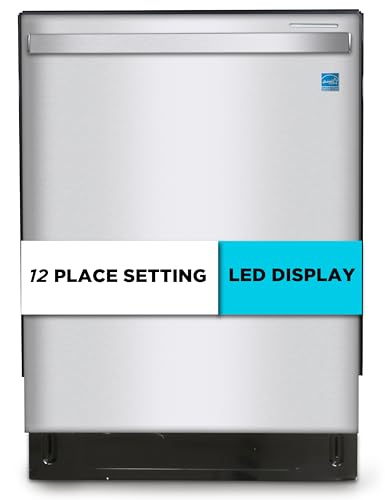
The BLACK+DECKER BDW300MHS argues for value in the oldest way: structure over systems. Its title states a 24-inch built-in from the brand’s Designer Series with a twelve-place-setting capacity, a stainless steel tub, six wash programs and Energy Star standing. No named wash theatre, no third rack, no sensing vocabulary — instead, the two decisions that determine whether a dishwasher feels sound in year six: what the tub is made of, and whether the program set covers a household’s real rotation. A stainless tub at the economy tier is the structural cheat this guide exists to celebrate, because tubs are the one component that cannot be upgraded, accessorised or worked around; the machine is its tub, wearing controls.
There is a temperament this machine suits precisely: the buyer who keeps things. The phone in a case, the car serviced on schedule, the knives sharpened — people whose possessions age slowly because they are chosen structurally and maintained ritually. For that temperament, a feature list is mostly noise and a tub is a promise. The BDW300MHS is the only pick in this guide pitched exactly at that temperament, and its presence here is deliberate: every tier needs its keeper’s machine.
Twelve settings is the honest capacity of a couple or a small family, and six programs is the honest program count of a household that will use three and appreciate having the others in reserve. The Designer Series label signals the brand’s better-dressed line, and BLACK+DECKER’s household-name presence carries a documentation and familiarity dividend similar in kind, if not in scale, to the giant appliance badges. This is the pick for the buyer who reads feature lists with suspicion and asks the unfashionable question — what will this feel like in year six? — of every machine. On the evidence of its title, this one will feel like a stainless tub that still gleams, running the same three cycles it ran in year one.
- Format: 24-inch built-in, Designer Series, as titled
- Model: BDW300MHS
- Capacity: 12-place setting, as titled
- Tub: stainless steel, as titled
- Programs: 6 wash programs, as titled
- Certification: Energy Star Certified, as titled
- Where to buy: look for the BLACK+DECKER BDW300MHS Designer Dishwasher listing on Amazon — check price on Amazon
Strengths
- A stainless tub where the tier’s default is lesser.
- Six honest programs, no theatre.
- A household-name brand’s documentation depth.
Trade-offs
- Twelve settings is the smallest stated capacity here.
- No named drying system or third rack is stated.
- No noise figure appears in the title.
The right kitchen: a couple or small family buying structure over systems.
Look elsewhere when: your loads need fifteen settings or a cutlery rack of their own.
The Used and Refurbished Route — The hands-on shortcut
Every economy discussion eventually arrives at the second-hand market, and this guide will not pretend otherwise. The logic is seductive and real: premium machines depreciate brutally, yesterday’s flagship — with its steel tub, its quiet engineering, its third rack — changes hands at economy-tier commitment, and a handy buyer with a van and a Saturday can install in a weekend what a new-machine budget could not reach. Manufacturers’ own refurbished channels add a middle path, with inspected machines and some warranty standing behind them. For the right buyer, this route is not a compromise; it is the smartest money in the entire guide.
The risks deserve the same plainness. A used dishwasher’s history is unwritten: its filter may carry years of neglect, its seals may be a season from perishing, its racks may be rusting at the tine tips where the coating failed. Transport damages doors and bends racks. Installation is yours, warranty is nobody’s, and a machine that fails in month two converts the saving into a second purchase. The route suits buyers who can inspect in person, test a hot cycle before money moves, and fit the machine themselves; it punishes hopeful distance-buying. Treat it as a skill-based discount — real, substantial, and earned — and read the rest of this guide’s feature logic as your inspection checklist, because knowing what a tier should contain is exactly how you spot a used machine that still does.
Strengths
- Premium engineering reaches the economy tier’s commitment.
- Refurbished channels add inspection and some warranty.
- Keeps sound machines out of landfill — an economy of another kind.
Trade-offs
- History is unwritten; seals and filters carry strangers’ habits.
- Installation and risk are entirely the buyer’s.
- A bad one costs the saving twice.
Worth it when: you can inspect, test and install with your own hands.
Frustrating when: bought hopefully, at distance, without a test cycle.
The Countertop Economy Class — The no-installation tier
The final prose slot belongs to the machines whose economy is measured in avoided costs of another kind. A countertop dishwasher asks for no cabinet, no plumber and no landlord’s permission; for a renter, its value is not features per tier but the entire category of installation expense and lease risk deleted from the ledger. Capacities are small, big pans still meet the sink, and the machine occupies worktop that tiny kitchens begrudge — the class’s honest debits, which our countertop-focused guides elsewhere on this site weigh model by model. Travellers and seasonal workers will recognise the pattern from another category entirely: the compact machines in our roundup of the Best RV Microwaves win their owners the same way, by fitting a life that permanent appliances cannot.
Within this guide’s built-in brief, the countertop class is the economy of circumstance: the right answer when the alternative is not a better built-in but no machine at all. Judge it by whether it will actually be used daily — a small machine used daily beats a grand plan deferred for years — and by the discipline of its water arrangements, tank or faucet, in your particular kitchen. Chosen knowingly, it is not the poor relation of this list. It is the tier where economy means something the other tiers cannot offer: a dishwasher, this week, in a kitchen that was never going to have one.
Strengths
- No installation cost, permission or carpentry at all.
- Moves with the renter; suits seasonal and temporary homes.
- Daily use of a small machine beats a deferred grand plan.
Trade-offs
- Capacity is a few settings; pans still meet the sink.
- Worktop space is the rent it charges.
- Not a substitute where a built-in genuinely fits.
Suits best: renters and tiny kitchens where built-in is not the question.
Not suited for: homeowners with a waiting cabinet bay and family loads.
Four Linked Machines, Read as a Value Table
| Machine | Stated capacity | Its tier-cheat | Stated noise |
|---|---|---|---|
| SUNVIVIPRO 24-Inch Built-In | 14–16 settings | Capacity and eight programs | Not stated |
| Kenmore EasyFlex | 15 settings | Third rack, TurboDry, SmartWash | 45 DBA |
| Kenmore UltraWash (Black) | 14 settings | Sani Rinse, SmartDry, leak detection | 51 DBA |
| BLACK+DECKER BDW300MHS | 12 settings | Stainless tub, structural honesty | Not stated |
| Used / refurbished route | Varies | Yesterday’s premium, inspected by you | Verify per machine |
| Countertop class | A few settings | Installation cost deleted entirely | Varies by model |
Which Features Are Worth Chasing at This Tier — and Which Are Tinsel?
Chase the tub. Chase drying help with a name. Chase a third rack if your household is utensil-heavy, because it reorganises every load. Chase a stated noise figure in the mid-forties if your kitchen opens to your living space, and chase leak detection if your floors are timber and your machine will run while the house is empty or asleep — the Kenmore in black built its whole case on that sentence. Chase Energy Star standing, which all four linked picks state, because a machine run daily repays per-cycle thrift with compound interest. These are the features whose absence is felt weekly and whose presence is never regretted.
Now the tinsel. Program counts beyond six mostly duplicate soil levels a sensing cycle already spans. Finish theatre — the exotic colour of the season — adds nothing a decade of Tuesdays will thank you for. Connectivity at this tier solves problems economy households rarely have, while adding a dependency they did not ask for. And capacity claims should be read at their floor: a stated range is a promise of its lower number. The economy buyer’s skill is not finding the longest list; it is knowing which three entries on the list will still matter when the machine is old, and letting the rest go to buyers who enjoy lists.
How Does a Decade of Ownership Change the Value Sum?
Run the thought experiment this guide keeps returning to. Two neighbours buy on the same street in the same spring: one takes the machine with the steel tub, the named drying and the certification; the other takes the tier’s bare minimum and pockets the difference in tier. In year one their kitchens are indistinguishable. In year three the minimum machine’s tub carries odours its owner fights with vinegar, its plastics emerge wet enough to keep a towel in permanent service, and its racks have begun to freckle at the tine tips. In year six the difference is no longer a comparison of features but of temperaments — one household never thinks about its dishwasher, the other thinks about it weekly, with irritation. Attention is a cost. The economy machine is the one that never bills you for it.
There is also the household’s wider storage economy to consider: the family that trusts its freezer and its dishwasher runs a tighter, cheaper kitchen in every sense, wasting less food and fewer evenings. Readers building that wider economy will find the storage half of the argument in our roundup of the Best Mini Chest Freezers, where the same feature-per-tier discipline is applied to the cold side of the kitchen. Value, in a home, is a system — and the dishwasher is where the system washes up.
What Should You Inspect on Any Economy Machine Before Committing?
Read the title as a ledger, then interrogate the listing beneath it for the four things titles omit: the tub’s material if unstated, the rack’s adjustability, the warranty’s length and terms, and the dimensions against your cabinet’s honest measurements. Weigh the maker’s service story — a household name, a value brand with a real support channel, or a listing that will be somebody else’s problem. Read owner accounts for patterns rather than verdicts: one complaint is an anecdote, but the same complaint in a dozen mouths is a specification. And plan the installation’s true shape — hoses, cords, a plumber if the bay lacks services — because an economy machine installed expensively is a contradiction the careful buyer avoids by measuring first.
Economy Mistakes That Cost More Than They Save
The founding mistake is buying the tier’s floor and calling it thrift; the floor is where tubs are plastic, drying is theoretical and racks are the first thing to rust, and its decade costs more than the tier above it. The second mistake is the mirror image: paying for a glamorous single feature — a vast program count, a fashionable finish — while the structure beneath stays at the floor. The third is ignoring the stated noise in an open-plan home, a saving repaid in nightly irritation. The fourth is the used-market error in both directions: refusing it on principle when you have the skills to inspect, or embracing it hopefully when you do not.
Fifth, buyers forget the running ledger entirely — detergent dosing, rinse aid, the monthly filter — and then blame the machine for results that chemistry co-authors. Sixth, and most quietly: they buy for the household they wish they had. The fifteen-setting machine for a couple who eat out four nights a week is not economy; nor is the twelve-setting machine for the family of six that cooks nightly. Economy is fit — between the machine’s stated facts and the household’s actual week — and fit is the one thing no tier can sell you. You have to bring it yourself, in the form of honesty about your own kitchen.
What Do Landlords and Fleet Buyers Know That Households Forget?
People who buy dishwashers by the dozen — landlords, housing associations, holiday-let operators — converge on a philosophy households find unglamorous and eventually adopt: standardise on machines whose failures are cheap, whose parts are everywhere, and whose controls a stranger can operate without a manual. Their economy is measured in call-outs avoided and tenancies uninterrupted, and it produces a distinctive shortlist shape: mid-tier machines with strong stated basics, no exotic features, and brands with a service story. Notice how much of this guide’s linked list rhymes with that shape. The Kenmores’ named systems are mainstream engineering, widely understood; the BLACK+DECKER is a household name with a structural brief; even the SUNVIVIPRO’s case is capacity, the least exotic virtue of all.
The household translation is not “buy what landlords buy” — a family should absolutely chase the third rack and the drying help a fleet buyer skips. The translation is to borrow their time horizon. A landlord never asks what a machine costs this spring; the question is what it costs across ten springs, including the springs when it breaks. Households that adopt that horizon stop experiencing economy as deprivation and start experiencing it as a form of respect — for their own future attention, which is the scarcest resource in any kitchen.
How Did Sensing Cycles Change What “Economy” Means?
A generation ago, economy in a dishwasher meant a smaller motor and fewer buttons. The sensing cycle changed the definition. A machine that measures soil and adjusts water, temperature and time to the load in front of it — the SmartWash idea stated on both Kenmore titles in this guide — spends resources in proportion to need, which is economy as a behaviour rather than a specification. Light loads stop paying heavy-load prices in water and energy; heavy loads stop being under-washed into a second cycle, which was always the dirtiest secret of cheap machines: the rewash is the most expensive cycle of all, and it never appears in any brochure.
This is why the modern economy tier can be simultaneously cheaper to run and better at washing than the premium tier of a decade ago, and why this guide reads named wash systems as value features rather than luxuries. When you compare the four linked picks, notice that three of the four carry either a sensing cycle, a named drying system, or both. That is not an accident of selection; it is the shape of value now. The economy machine of the present is not the stripped machine of the past. It is the machine whose intelligence is spent on thrift.
The Running Ledger: Detergent, Rinse Aid and the Monthly Filter
No economy guide is complete without the confession that the machine is only half the ledger. Detergent discipline — dosing to the load rather than the dispenser’s brim — saves money and improves results simultaneously, one of the rare trades with no loser. Rinse aid, kept filled, prevents the spotting that sends owners into extra rinse cycles and hand-polishing rituals, both of which are unbilled labour. The monthly filter rinse protects the pump, the drainage and the machine’s smell, and its neglect is the single most common cause of the “economy machines don’t clean” verdict that follows neglected machines of every tier.
Households that keep these three habits find their machine’s stated virtues — its certification, its sensing, its drying — actually materialise, because specifications assume a maintained machine. Households that skip them are running a different, worse appliance inside the same door. If this guide has a cheapest recommendation, it is not a product at all: it is the calendar reminder, set once, that keeps the filter rinsed and the rinse aid full. Everything else on these pages costs commitment; that one costs thirty seconds a month, and it outperforms half the features in the category.
Repair or Replace? The Economy of the Second Decision
Every economy machine eventually presents its owner with the second decision, and the honest framework is qualitative but firm. Repair when the machine’s structure is sound — tub gleaming, racks honest, door sealing square — and the failure is a component: a pump, a valve, a board. Replace when the failure is the structure itself, or when components begin failing in sequence, because sequential repairs are a replacement purchased in instalments at a worse rate. The tub decides more of these verdicts than any other part, which is the final echo of this guide’s founding argument: the buyer who prioritised the stainless tub at purchase has also, without knowing it, bought the right to repair cheaply later.
Sentiment corrupts this decision in both directions — the machine that “has always been trouble” gets replaced at its first fault, the beloved one gets repaired into its third. Use the structure test instead, and let the machine’s body, not its biography, cast the vote. And when replacement does come, the household’s own history becomes the shopping brief: you now know your true capacity, your real program rotation, your room’s noise tolerance. The second purchase is the easiest appliance decision a household ever makes, provided the first one’s lessons were written down somewhere — ideally in the margin of a guide like this one.
First Flat, Small Kitchen: Economy Under Real Constraints
The first-flat buyer is the economy tier’s most sympathetic customer and its most mis-served, because the constraints are triple: the budget is thin, the kitchen is small, and the household’s habits are still forming, so nobody knows yet whether the machine will run daily or weekly. The discipline this guide offers that buyer is sequencing. Buy the structure first — tub, racking that fits the dishes you actually own, a certification that keeps the running ledger kind — and let features wait, because features can be lived without and structure cannot be retrofitted. Of the linked picks, the BLACK+DECKER is the first-flat archetype: twelve settings honest to a couple’s life, a stainless tub that will still be sound if the flat becomes a house and the machine moves with you, six programs that cover the rotation a young household actually cooks.
And keep the countertop prose slot in view without embarrassment. For the renter whose lease forbids installation, the countertop tier is not a lesser chapter of this guide; it is the chapter written for them, and a small machine used daily will teach the habits — loading, dosing, filter care — that make the eventual built-in a triumph instead of a mystery. Economy, at the start of a household’s life, is mostly the art of not buying the same thing twice. Everything in these pages is arranged toward that single mercy.
The Warranty Question at This Tier
Economy buyers are sold extended warranties with particular enthusiasm, and the honest treatment is symmetrical. A warranty’s value is the probability of failure multiplied by the cost of the failure it covers, minus the friction of claiming — and at this tier, the failures that matter most, leaks and structural decay, are often the ones standard terms treat most grudgingly. Read what is covered with the same title-first discipline this guide teaches: named components, named durations, the call-out terms, the exclusions in the small print where warranties keep their real personality. A maker’s own refurbishment and support channel, a credit card’s extension benefit, or a household repair reserve may each serve the same risk more honestly.
What should never be skipped is the free warranty work: registering the machine, keeping the receipt somewhere findable, and knowing the standard term’s expiry. A surprising share of economy-tier pain is a covered failure paid for out of pocket because the paperwork was lost. The decade ledger rewards the organised as reliably as it rewards the well-chosen machine — keep the documents with the manuals, and the machine’s economy includes its own safety net.
Noise: The Economy Feature Nobody Budgets For
Quiet is sold as a luxury, which conceals its true nature: in an open-plan home, noise is a recurring charge levied on every cycle, paid in raised voices and deferred runs. The household that buys a loud machine to save money and then runs it only when the room is empty has not saved anything — it has converted a purchase saving into a scheduling tax, collected nightly. This is why the two stated figures in this guide matter out of proportion to their size. The EasyFlex Kenmore’s stated 45 DBA buys back the evening: the machine can run through dinner, homework and conversation. The black Kenmore’s stated 51 DBA buys less of the evening and is honest about it, suiting the kitchen with a door. Neither figure is a luxury specification. Both are economy, correctly understood — the price of the room’s peace, stated in the title where a buyer can weigh it.
For the two picks whose titles state no figure, the practical advice is to treat noise as an unknown to be resolved on the listing or in owner accounts before committing, especially in studio and open-plan homes. And remember that installation writes part of the noise story: a machine standing level, bracketed tight, with its door sealing square, runs measurably calmer than the same machine rocking on an uneven floor. Economy includes the fitter’s spirit level. It always did.
How to Read a Value Brand’s Listing Without Being Fooled
Value-led makers — the SUNVIVIPRO in this guide is the type specimen — write titles that front-load their strongest numbers, and the skill is neither cynicism nor faith but sequence. First, extract what the title states and grant it: capacity, programs, build, certification are all real claims a maker can be held to. Second, note what the title omits and price the omission as a question, not a verdict: an unstated noise figure means “ask,” not “loud.” Third, read the listing’s own specification block for the omitted facts, and the warranty terms for the maker’s confidence in its own machine. Fourth, search owner accounts by the failure words — leak, rack, pump, board — and read for patterns over months, because a value machine’s truth accumulates in its second year, and the internet, whatever its faults, keeps that diary faithfully.
Followed honestly, that sequence makes value brands compete on their merits, which is all this guide has ever asked of any tier. The SUNVIVIPRO’s stated package survives the sequence well — its omissions are questions with answers findable on its listing — and that, in the end, is the difference between a value machine and a cheap one. A cheap machine’s listing dissolves under questions. A value machine’s listing answers them, one by one, until the buyer runs out. Shop for the listing that runs out of questions last.
The Batch Cook’s Economy: One Big Wash, Done Once
A growing tribe of households cooks the way small restaurants prep: one enormous session, a week of meals, and a mountain of containers, trays, boards and pans arriving at the dishwasher in a single geological layer. For the batch cook, economy has a specific shape — capacity first, because the session’s output must clear in one or two cycles while the cook still has the evening; a tub and racks that take sheet pans and stockpots without theatre; and drying that finishes storage containers completely, because a week of meals goes into boxes that must be dry when they are sealed. Read against that brief, this guide’s list rearranges itself interestingly: the SUNVIVIPRO’s stated capacity leads, the Kenmores’ named drying systems argue strongly, and the third rack becomes the utensil session’s best friend — a whole prep session’s knives, spatulas and thermometers laid flat in their own tray.
The batch cook also teaches the rest of us the tier’s deepest lesson: the most expensive cycle is the one you run twice. Every feature in this guide that prevents a rewash — sensing that judges soil honestly, spray that reaches the corners, heat that finishes the dry — is worth more to the batch cook than any badge of thrift, because their loads are the least forgiving in domestic life. If your Sundays look like a small catering operation, buy for the Sunday load and let the weekdays take care of themselves. They will.
What Does a “Designer Series” Label Mean at the Value End?
Two of this guide’s brands gesture at design within the economy tier — the BLACK+DECKER carries a Designer Series badge outright — and the label deserves a moment’s honest parsing, because at this end of the market “designer” rarely means couture. It usually means the maker’s better-dressed line: the cleaner front, the more considered handle, the interior specified a step above the brand’s own floor. Read that way, the label is useful — it tells you where in the maker’s own range the machine sits, which is real information when the range is wide. The BDW300MHS’s stated facts support the reading: the stainless tub is a structural step above the brand’s most basic offerings, and structure, as this guide has argued from its first paragraph, is the kind of step that matters.
The caution is to let the stated facts, never the label, close the sale. A designer badge on a plastic tub would still be a plastic tub at unload time in year four. Conversely, an unlabelled machine with a steel tub and a sensing cycle — the shape of value this guide keeps finding — deserves to beat a labelled one without them. Labels are shelving. Specifications are the machine. The economy buyer who learns to see through the first to the second will be well served by every tier, in every category, for the rest of their furnishing life.
Who Should Not Buy at This Tier at All?
Honesty requires the counter-case, briefly. Households for whom the dishwasher is a design object in a panelled, architectural kitchen are shopping in a different guide — the integration brief — and will find this tier’s fronts interrupt their cabinetry no matter how strong the value case. Households with extreme noise sensitivity in a true one-room dwelling should verify figures beyond this tier’s stated range before committing. And households that entertain at scale weekly — twenty covers, two sittings — will wear an economy machine’s racks and patience faster than its engineering intends. None of these are failures of the tier; they are mismatches of brief, and naming them protects both the buyers and the tier’s good name.
For everyone else — the families, couples, landlords, first-flat buyers and batch cooks who populate these pages — the economy tier is not where you settle. It is where the category’s value now lives, stated in titles that cheat their shelf in the buyer’s favour. Buy the cheat, keep the filter clean, and let the decade make the argument.
Final Recommendation
Let your household’s shape choose among the four. Big families and big loads belong with the SUNVIVIPRO’s stated capacity; feature-hungry households in open-plan rooms belong with the EasyFlex Kenmore, the tier’s most complete daily machine; the prudent — babies, boards, beloved floors — belong with the black Kenmore and its leak-watching conscience; and the structural purists belong with the BLACK+DECKER, whose stainless tub will still be making its quiet argument in year ten. If your hands are handy and your eyes are sharp, walk the refurbished route with this guide’s checklist in your pocket. And if no built-in can come home with you, take the countertop tier without apology. The true economy was never the smallest commitment on the shelf; it is the machine whose value you can still feel on an ordinary Tuesday, years after the purchase has been forgotten.
Frequently Asked Questions
Why does this guide print no prices?
Because a printed price is a fact with an expiry date, and this guide is written to stay true. Offers shift weekly; the feature-per-tier logic — tub, drying, racking, noise, protection — is how you judge whatever figure you find when you shop. Each pick section points you to its listing, where the current figure lives.
Is a stainless tub really worth prioritising at this tier?
Yes — it is the one component that cannot be upgraded later, and it decides how the machine ages: staining, odours, heat tolerance, the feel of the door. The BLACK+DECKER’s whole case rests on it, and even among the feature-led Kenmores, interior quality is where the tier’s money is best spent.
Which matters more, a third rack or better drying?
It depends on your loads. Utensil-heavy cooks who hand-wash nothing will feel the EasyFlex Kenmore’s third rack at every load; households drowning in plastic containers will feel TurboDry and SmartDry more. Inventory your worst weekly load and let it vote.
How much should I trust a capacity stated as a range?
Plan around the lower figure, as with the SUNVIVIPRO’s stated range, and treat anything above it as a pleasant surprise. Place-setting counts also assume standardised loads; your family’s pans and platters will always be the truer measure.
Is the refurbished route safe for a family home?
It can be, through a manufacturer’s refurbished channel with inspection and some warranty, or through a private sale you can test through a full hot cycle before paying. What it should never be is an untested distance purchase — the saving is payment for your inspection skill, and skipping the inspection spends it blindly.
Can an economy machine really last a decade?
The structure-led ones can, and the tub is the tell: a stainless interior, honest racking and a maintained filter give a machine the body to reach ten years, while the plastic-tub floor of the tier is where early replacements cluster. Longevity at this tier is not luck; it is the purchase criteria in this guide, applied in order.
Does Energy Star standing actually change running costs?
Modestly per cycle, meaningfully per decade — and all four linked picks state it. In a machine run daily, small per-cycle thrift compounds into the ownership ledger’s quietest line, which is exactly the sort of economy this guide exists to count.
Related Guides
Economy thinking pairs with energy thinking, since the same certification that trims a cycle’s appetite also anchors the value case. Our guide to the Best Energy-Saving Dishwashers takes that single axis as far as it goes, and makes the natural second read for any buyer who found this guide’s decade-ledger argument persuasive.


