Our Top Picks


What's inside
- Salt air does not ask permission
- How corrosion actually eats a condenser
- The defences that matter, in the order they matter
- The archetypes on the coastal shelf
- Warranty fine print: the shoreline clause that surprises everyone
- Placement: negotiating with the wind
- The rinsing habit: small, regular, decisive
- Materials, chosen like a boatbuilder would
- Window and portable units in beach houses
- Knowing when corrosion has already won
- Storm season: before, during and after the weather
- Questions to put to any dealer selling you the sea air
- Aftermarket coatings and field treatments: help, hype and timing
- Second homes, rentals and the economics of absence
- The decade arithmetic
- A seasonal calendar for the coastal condenser
- The indoor half of a coastal system ages too
- Sizing still matters where the sea breeze helps and hurts
- Learning from the street you live on
- Mistakes that shorten coastal lives most reliably
- What to do with the condenser you already own
- A note on guarantees, expectations and the word lifetime
- Reading a coastal specification sheet without a translator
- Bays, estuaries and the deceptive middle distances
- Check prices on Amazon
- Living well beside the water
As an Amazon Associate I earn from qualifying purchases. This post may contain affiliate links at no extra cost to you.
Full openness about the economics behind this page: Cottage Verdict is reader-supported in a quiet, ordinary way, since the retailers linked from our guides pay a modest referral fee whenever a purchase follows, and that fee comes out of their margin rather than out of your pocket.
Salt air does not ask permission
Inland, an outdoor condenser ages the way a garden gate ages: slowly, visibly, mostly at the hinges. Near the sea, ageing accelerates into something closer to digestion. Salt aerosol rides the onshore breeze far beyond the beach itself, settles on every exposed surface as an invisible film, and wakes up each time humidity rises or dew forms. Dissolved in that thin layer of moisture, the salt becomes an electrolyte, and the aluminium fins, copper tubing and galvanised cabinet of an ordinary air conditioner turn into a small, patient chemistry experiment that runs day and night whether the unit operates or not.
The damage announces itself in a familiar sequence. Fin stock on the outdoor coil begins to flake and crumble at the edges, shedding the very surface area the coil needs to reject heat. Efficiency sags a little each season, almost imperceptibly, until the system that once loafed through August starts labouring through June. Fasteners rust into their holes. Cabinet corners bloom with white and orange corrosion. Eventually a refrigerant line or a coil passage thins to a pinhole, the charge escapes, and a unit whose compressor might have served another decade is condemned by its skin rather than its heart.
Distance from the water sets the tempo. A condenser a few streets from open surf, breathing spray-laden air daily, can show serious fin decay within a handful of years. The same model several miles inland, where salt deposition thins dramatically, might look merely weathered after twice that span. Everything in this guide flows from that gradient: how exposed your site truly is, how the equipment you choose resists the exposure, and how your habits either slow the chemistry or feed it.
How corrosion actually eats a condenser
Understanding the enemy helps you spend money in the right places. The outdoor coil is a marriage of dissimilar metals, typically copper tubes expanded into aluminium fins, and dissimilar metals in contact within an electrolyte form a galvanic couple. The aluminium, being the more reactive partner, sacrifices itself. Salt film plus overnight dew supplies the electrolyte with dreary reliability, and the fins corrode preferentially, which is why coastal coils so often look moth-eaten while their copper cores remain sound.
Crevice corrosion works the quieter corners. Where fins meet tube sheets, where the coil frame touches the cabinet, where leaves and grit lodge against metal, trapped salt solution concentrates and attacks in hiding. Paint and powder coat slow the process until the first stone chip or screw hole breaches the film, after which corrosion creeps underneath the coating and lifts it in blisters. Stainless steel resists because its chromium content forms a self-repairing oxide skin; ordinary galvanised steel resists only until its zinc layer is consumed, which salt air accomplishes with enthusiasm.
Electrical components suffer their own version. Contactor points, capacitor terminals, control board traces and fan motor shafts all live inside that same salty cabinet air. Boards coated at the factory with a conformal layer survive noticeably longer, and sealed contactors shrug off conditions that pit exposed contacts within a few seasons. When a coastal unit fails mysteriously in its middle years, the culprit is frequently a corroded connection rather than a failed major component, which is maddening and merciful in equal measure.
Reading your own exposure honestly
Walk your property with the corrosion question in mind. Can you see open water from the condenser’s position, or hear surf on quiet nights? Does a prevailing onshore wind cross the beach and arrive at your side yard carrying the smell of the shore? Are cars on your street replaced early for rust, do metal garden fixtures pit quickly, and do neighbours speak of outdoor units as consumables rather than appliances? Affirmative answers place you in the severe zone where dedicated coastal equipment and disciplined rinsing are not luxuries but the entire game.
Micro-exposure matters as much as distance. A unit tucked on the seaward side of the house, unshielded, ages faster than the same unit on the leeward wall at the same address. Rooftop installations near the shore catch unobstructed spray-laden wind and suffer accordingly, while a condenser sheltered by a fence or a hedge, without being smothered by either, often outlives its exposed twin by years. Before shopping for hardware, decide where the hardware will stand, because placement is the cheapest corrosion treatment ever sold.
The defences that matter, in the order they matter
Coil protection stands first, because the coil is both the most vulnerable component and the most expensive to replace. Manufacturers answer with a spectrum of treatments. At the modest end, factory-applied coatings over the finished coil add a barrier layer that delays salt’s contact with the fin stock; these coatings vary in chemistry and durability, and their quality shows in how evenly they cover the fin edges where corrosion begins. More thorough approaches coat the coil before assembly or use fin materials and treatments engineered specifically for marine duty, trading a little thermal performance for a great deal of endurance.
Cabinet and hardware come next. A coastal-worthy unit wraps its internals in a heavy-gauge, well-finished cabinet whose fasteners are stainless rather than merely plated, because a single rusting screw can stain, seize and eventually open a seam. Look for stainless or coated hardware on the fan grille, access panels and coil guards, and ask whether replacement fasteners in the same material are available locally, since a technician who substitutes ordinary screws during a repair quietly reintroduces the weakness the factory engineered out.
Sealed and coated electronics complete the picture. Conformal-coated control boards, sealed contactors and fan motors with corrosion-resistant shafts and hardware separate equipment designed for the shore from equipment merely tolerant of it. None of these features appears in a headline efficiency figure, which is why coastal shoppers must interrogate specification sheets and dealer literature with a different checklist than their inland cousins. Readers dealing with the region’s other great burden will recognise the overlap in our guide to best air conditioners for humid climates, since salt and moisture conspire together along most shorelines.
The archetypes on the coastal shelf
Archetype one: the standard unit with a factory coastal package
Several mainstream lines offer a coastal variant or option package applied to an otherwise conventional condenser: a treated coil, upgraded cabinet finish and stainless fasteners over familiar mechanicals. This archetype suits homes in the moderate exposure band, perhaps a mile or more from open water, shielded by buildings or vegetation, where salt deposition is real but not relentless. It keeps purchase cost close to inland equipment and preserves wide dealer coverage, which matters when service is needed quickly in August.
Its limits are honest ones. Coatings delay rather than defeat corrosion, and in the severe zone this tier buys years rather than decades. Treat it as a well-judged compromise for middling exposure, and pair it with the rinsing discipline described later in this guide, because the package and the habit together outperform either one alone.
Archetype two: the purpose-built coastal condenser
Designed from the fin outward for salt service, this archetype combines a heavily protected coil, a cabinet and hardware specification that assumes a marine atmosphere, and electronics sealed against the environment as a matter of course. Some designs go further, isolating the coil’s dissimilar metals or selecting fin treatments that specifically resist the galvanic pattern described earlier. Purchase cost climbs meaningfully above the coastal-package tier, and distribution narrows toward dealers who actually work the shoreline.
For a home within sight or easy smell of the surf, this is usually the rational purchase despite the premium, because the relevant comparison is not against an inland unit’s price but against the cost of replacing an inland unit twice in the same span. Ask the dealer how many of this exact model they have installed within your exposure band and how the oldest of them look today. Local track record, inspected with your own eyes on a drive past older installations, outweighs any brochure photograph.
Archetype three: the ductless coastal installation
Mini-split systems have earned a genuine coastal following, partly because their outdoor units are compact enough to tuck into sheltered positions that a full-size condenser cannot use, and partly because several manufacturers build their ductless lines to global specifications that include serious corrosion protection as standard. A leeward wall, a sheltered alcove or a position beneath a deep eave can transform the exposure equation for these smaller cabinets. Condominium owners in particular gravitate here, a pattern explored further in our overview of best air conditioners for condos, where balcony placement and salt exposure so often collide.
Judge ductless candidates by the same checklist: coil treatment, hardware material, board protection and the manufacturer’s stated position on coastal installations. Compactness is an advantage only when the internals share the flagship’s defences; a lightly built small unit in salt air is simply a smaller thing to replace sooner.
Archetype four: the sacrificial budget unit, chosen with open eyes
Some households, particularly those equipping a rental cottage or a property they expect to sell within a few seasons, deliberately choose inexpensive standard equipment and accept a shortened life as a business decision. There is no shame in the arithmetic when it is done honestly. The error lies in choosing this tier accidentally, paying mid-range money for unprotected equipment, or installing a sacrificial unit where a protected one would have served the length of a mortgage. If you take this path, at least site the unit in the most sheltered legal position available and rinse it faithfully; even a disposable condenser appreciates not being fed to the sea ahead of schedule.
Warranty fine print: the shoreline clause that surprises everyone
Here is the paragraph coastal buyers most often read too late. Many manufacturers qualify their corrosion-related coverage by geography, and some exclude or shorten protection for installations within a stated distance of salt water unless the equipment carries their specific coastal designation. The distances and definitions vary by brand and by model line; some speak of the immediate shoreline, others draw the line further inland, and the wording may hinge on breaking surf rather than on a sheltered bay. A unit that would be covered for a decade at an inland address might carry far weaker corrosion protection at yours.
Before signing anything, ask the dealer to show you, in the actual warranty document for the exact model quoted, how coastal installations are treated. Ask what registration steps preserve the coverage, whether the coastal package must be factory-applied rather than dealer-added to qualify, and whether any part of the protection depends on documented maintenance. A dealer who works the shoreline will have answered these questions before and should produce the language without rummaging. A dealer who waves the subject away is telling you something important about who will stand beside you in year seven.
Keep the paperwork as if it were money, because eventually it may be. Dated photographs of the installed unit, the registration confirmation, invoices for professional maintenance and even a simple log of your own rinsing routine together build the record that turns a disputed claim into a settled one. Corrosion disputes often hinge on whether the environment or a defect caused the failure, and a household that can demonstrate faithful care negotiates from a far stronger chair.
Placement: negotiating with the wind
Given a choice of walls, put the condenser on the side of the house away from the prevailing onshore breeze. The leeward position receives a fraction of the salt deposition that the windward wall endures, and the building itself becomes a free corrosion shield. Respect the manufacturer’s clearances while doing so; a sheltered unit still needs to breathe, and a condenser suffocated by a tight alcove will fail from heat long before salt gets its chance.
A fence panel or a dense hedge positioned to interrupt the direct line between sea and unit, while standing far enough away to preserve airflow, can cut deposition further. What you are building is a baffle, not a box. Avoid enclosures that recirculate discharge air, and be wary of sprinkler systems whose overspray soaks the coil with mineral-laden water on a schedule, since irrigation deposits create their own corrosion and scaling problems entirely separate from the sea’s contribution.
Elevation helps in two distinct ways. Raising the unit on a stand or a raised pad lifts it above the worst of the ground-level splash zone, where rain striking salty soil throws contaminated droplets against the cabinet base, and it protects against the standing water and minor flooding that coastal storms deliver. In hurricane country, elevation and secure anchoring also belong to the storm-survival conversation, and local codes may dictate both; let the stricter requirement win whenever the two discussions meet.
Think about the indoor half of the system as well. Air handlers in vented coastal attics breathe the same salt air through every gap, and ductwork in unconditioned spaces collects condensation that carries its own corrosive load. Sealed, insulated ducts and an air handler position inside the conditioned envelope where feasible extend the coastal strategy indoors. Sleeping rooms in particular repay the attention, since the quiet, steady comfort discussed in our guide to best air conditioners for bedrooms depends on equipment that has not been slowly dissolving above the ceiling.
The rinsing habit: small, regular, decisive
No maintenance practice returns more life per minute invested than rinsing the outdoor coil with fresh water. The logic is simple: salt that is washed away cannot dissolve into the next dew and go to work. In severe exposure, a gentle rinse every few weeks during the cooling season is a reasonable rhythm, with an extra rinse after storms that leave visible salt crust on windows and cars. Moderate zones can stretch the interval; the principle is to rinse on a schedule rather than waiting until the fins look distressed, because by the time corrosion is visible the chemistry has been winning for months.
Technique matters more than enthusiasm. Switch the power off at the disconnect before you begin. Use an ordinary garden hose with a soft stream, never a pressure washer, whose jet can fold the delicate fins flat and convert a healthy coil into an air-starved one in a single careless pass. Work from the inside of the cabinet outward where access allows, so debris and salt are pushed out of the coil rather than driven deeper into it, and let the water run until it leaves the fins clear. A mild coil cleaner approved for coated coils can help during the annual deep clean, but harsh alkaline products can strip the very factory coatings you paid for, so check compatibility before any chemical touches a protected coil.
Rinse the cabinet and the base pan while you are there, clear the drain path, and glance at the fasteners and fan grille for the first freckles of rust. Early spots on accessible hardware can be cleaned and touched up with an appropriate protective coating before they undermine a panel. Keep grass, leaf litter and mulch away from the base, since organic debris holds salty moisture against the cabinet like a poultice, undoing between rinses what the hose accomplished.
What professional coastal maintenance adds
An annual visit from a technician who understands shoreline equipment goes beyond the standard checklist. Coating condition can be assessed while enough of it remains to matter. Electrical connections can be cleaned, protected and torqued before resistance and heat build at a corroded terminal. Refrigerant charge verification catches the slow pinhole leak early, while repair is still a repair rather than a replacement. Ask for the coil’s condition to be noted in writing each year; a dated series of observations is both a maintenance compass and, if the worst happens, the backbone of a warranty file.
Materials, chosen like a boatbuilder would
Coastal people learn material literacy from boats and boardwalks, and the same curriculum applies to cooling equipment. Stainless steel earns its keep in fasteners, fan grilles and brackets, but grades differ: the common hardware grade resists shoreline air well, while the more molybdenum-rich marine grade shrugs off direct spray that would eventually freckle its cousin. When a specification sheet boasts stainless hardware, asking which grade is a fair question, and a dealer fluent in coastal work will not blink at it.
Copper tells a subtler story. Bare copper tolerates salt air better than aluminium fin stock, which is one reason some heavy-duty coils use copper fins or copper-rich constructions at a considerable price premium, accepting weight and cost in exchange for a coil that corrodes as a unit rather than sacrificing its fins. At the other end of the budget, all-aluminium coils remove the galvanic couple entirely by making tube and fin from compatible material; their coastal record depends heavily on the quality of their protective treatment, since the metal itself is the reactive one in the pair it replaced.
Polymer and composite components quietly outperform metal in specific roles. Fan blades, drain pans, grille work and base pans moulded from corrosion-proof materials simply delete those parts from the corrosion ledger. When comparing two condensers, note how much of the exterior and the wet-path hardware is engineered polymer rather than painted steel; along the shore, plastic that keeps its shape for twenty years beats metal that was beautiful for three.
Window and portable units in beach houses
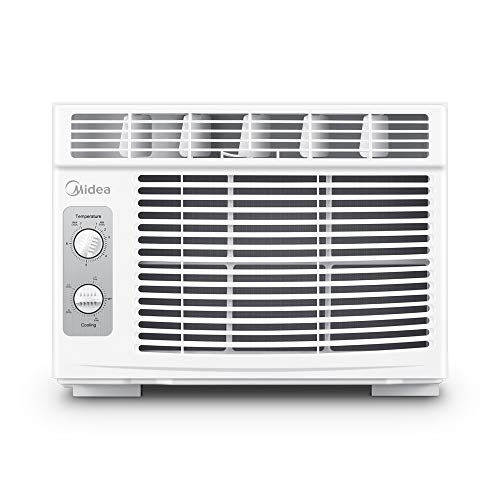
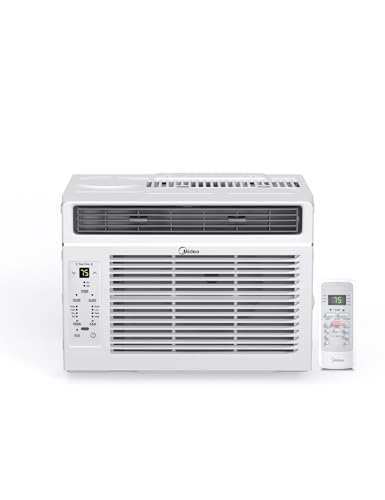
Not every coastal room justifies a central system. Guest cottages, studios above garages and the occasional stubborn sunroom often cool through window units, and salt air is no kinder to them; it is merely cheaper when it wins. Choose models with coated coils where the specification offers them, confirm the cabinet finish is a proper outdoor-grade coating rather than thin paint, and favour designs whose chassis slides out so the unit can be brought indoors for winter storage, which is the single most effective life-extender available to this category. Shoppers comparing capacities for a single stubborn room will find the sizing discussion in our guide to best 8000 btu air conditioners a useful companion before the corrosion checklist is even opened.
Installation details decide much of a window unit’s coastal fate. A slight outward tilt lets condensate escape rather than pool in the pan against the coil. Foam seals and side panels should be renewed when they perish, because gaps admit driven rain and salt spray directly onto the chassis. At season’s end, a thorough freshwater rinse, a day of drying in the sun and storage under a breathable cover in a dry room can double the useful life of a modest unit, turning the sacrificial strategy into something closer to stewardship.
Portable indoor units dodge direct exposure almost entirely, since only their exhaust hose meets the outdoors, and for a rarely used room in a severe-exposure property that shelter can outweigh their well-known efficiency compromises. Their window kits, however, live in the weather; inspect the plastic panels and seals each season, because a cracked kit leaks conditioned air and admits the salt breeze you bought the arrangement to avoid.
Knowing when corrosion has already won
There comes a season when rinsing and repairs stop being stewardship and become subsidy. Learn the signs. Fin material that powders or flakes away when a hose stream touches it means the coil has lost the surface area that made it a heat exchanger; no coating restores vanished metal. Refrigerant leaks recurring at different points along the same coil describe a fabric failing everywhere at once. Efficiency that slides despite clean filters, correct charge and healthy airflow is the financial echo of the same story.
At that point the honest comparison is between a replacement coil, where one is even available for the model, and a new coastal-rated system whose warranty clock restarts in an environment that has already revealed its appetite. Factor the age of the compressor and the condition of the indoor equipment into the decision, and let a technician you trust measure rather than guess. Households sometimes replace only the outdoor unit with a coastal model while retaining a sound indoor half, a legitimate path when the manufacturer blesses the pairing and the warranty language follows the new condenser rather than the old combination.
Plan the replacement before the failure plans it for you. Coastal dealers book out quickly in the first heatwave, and a household that orders in the mild season chooses equipment calmly instead of accepting whatever unprotected unit happens to be on a truck in July. The old system’s final winter is the right time to gather quotes, verify warranty language and decide placement changes while nobody is sleeping in a hot house.
Storm season: before, during and after the weather
Hurricane and storm preparation for a coastal condenser is brief but specific. Before the weather arrives, switch the system off at the disconnect if flooding or destructive winds are forecast for your street, clear the area of anything that could become a projectile against the coil, and confirm the unit’s anchoring straps or bolts are sound. A condenser that survives the wind only to be ruined by a flying patio chair is a particularly coastal tragedy.
Afterward, resist the urge to restart immediately. Inspect for debris driven into the coil, standing water around the base and damage to the electrical disconnect or the lineset insulation. Rinse salt and grit from the coil once conditions allow, since storm surge and wind-driven spray deposit in hours what ordinary weather delivers in a season. If the unit sat in floodwater, have it inspected before energising it; electrical components that have been submerged can fail dangerously rather than merely expensively, and insurers documenting storm damage will want the professional’s written assessment in any case.
Photograph the installation each spring as part of the seasonal routine. A dated image record of the coil, cabinet and connections gives you a baseline against which change becomes obvious, and after a storm it gives an adjuster a clear before picture. Two minutes with a phone each year is the cheapest documentation habit a coastal homeowner can build.
Questions to put to any dealer selling you the sea air
Ask how many installations the firm maintains within your exposure band and what the oldest coastal units under their care look like now. Ask which specific components of the quoted model are treated, coated or upgraded for salt service, and request the answer in the written quote rather than as a verbal flourish. Ask how the warranty treats your distance from the water, and read the clause yourself before signing. Ask what the firm recommends for rinsing frequency at your address, and be mildly suspicious of any answer that says maintenance does not matter; along the shore, that answer reveals a seller of boxes rather than a keeper of systems.
Ask, finally, about parts. Coastal variants sometimes use model-specific coated coils and hardware, and a firm that stocks or can quickly obtain those parts locally will return a failed system to service days sooner than one ordering from a distant warehouse in peak season. The best coastal dealer is rarely the cheapest quote on the table; it is the firm whose other customers’ ten-year-old condensers still have their fins.
Aftermarket coatings and field treatments: help, hype and timing
Owners of existing unprotected equipment often ask whether a coating applied in the field can retrofit coastal defences onto an ordinary condenser. The honest answer is that it can help, with qualifications that decide whether the money is well spent. A professionally applied coil coating on a young, clean, undamaged coil adds a genuine barrier and can meaningfully slow the galvanic attack, particularly when the applicator prepares the surface properly and the product is one formulated for heat-exchange equipment rather than a general-purpose paint. The same treatment sprayed over a coil whose fins are already thinning is cosmetics on a countdown; coatings preserve metal, they do not replace it.
Timing therefore governs value. Treat early, ideally in the unit’s first seasons, and treat through a firm that can show you its preparation process and its other coastal work. Be wary of any product promising to make an inland unit immortal, and of any application that visibly bridges the fins with thick material, since a coating that insulates the coil or blocks airflow taxes efficiency every hour the system runs. Ask what the treatment does to the manufacturer’s warranty position before authorising it, because a modification that voids corrosion coverage in order to prevent corrosion would be a poor bargain.
Sacrificial and supplementary defences exist at the margins. Mesh guards keep debris and wind-blown grit off the coil face, reducing the trapped-moisture pockets where crevice corrosion breeds, provided the mesh itself is a corrosion-proof material and is cleaned rather than forgotten. Cabinet waxes and protectant sprays suit the painted exterior as a renewable sacrificial layer. None of these substitutes for factory engineering, but layered over sound equipment and a rinsing routine, they tilt the arithmetic further in the homeowner’s favour.
Second homes, rentals and the economics of absence
Seasonal properties suffer a distinctive coastal pattern: the equipment sits idle for months in salt air, unwashed and unobserved, then is expected to perform flawlessly the week the family or the first tenants arrive. Idle metal corrodes on the same schedule as working metal, and an unnoticed failure discovered at check-in costs a holiday rather than merely a service call. Owners of second homes should weight durability and remote monitoring more heavily than first-cost, because every avoided emergency visit to a distant property pays for a surprising amount of factory coating.
Simple systems help. A thermostat that reports faults and indoor humidity to a phone lets an absent owner spot a struggling system before guests do. A standing arrangement with a local firm for preseason inspection and mid-season rinsing converts the maintenance schedule from a memory problem into a calendar entry on someone else’s clipboard. Where a property closes for winter, a breathable cover over a clean, dry condenser, with the power arrangement handled according to the manufacturer’s guidance, keeps wind-driven salt and nesting creatures out without trapping moisture against the coil the way a sealed plastic wrap can.
Rental owners should also think about the guest experience of corrosion’s early symptoms: a system that cools adequately but smells faintly musty, or a cabinet whose rust streaks stain the patio, colours reviews out of proportion to the mechanical facts. In a market where the property itself is the product, the visible condition of the equipment is part of the accommodation, and the coastal archetypes earn their premium in reputation as well as in years.
The decade arithmetic
Spreadsheet-minded readers can reduce the whole guide to one comparison. In severe exposure, an unprotected condenser may deliver a short and declining service life, its efficiency eroding as fins vanish, while a purpose-built coastal unit at a higher purchase price holds its performance across a span that can be twice as long or better, with the rinsing habit adding margin to both figures. Two purchases, two installations, two rounds of disruption and years of degraded efficiency on one side; one purchase, one installation and steady performance on the other. The coastal premium is rarely the extravagance it appears at the quote table; it is usually the cheaper decade, bought in advance.
The arithmetic softens as exposure moderates, which is why this guide keeps returning to an honest reading of your own shoreline. A sheltered home several streets back, behind other buildings and vegetation, may extract a perfectly respectable life from the coastal-package archetype with faithful rinsing, and overspending on the flagship there buys protection against a sea that barely reaches the garden. Match the defence to the deposition, keep the hose schedule, and let the warranty clause confirm that the manufacturer agrees with your reading of the map.
A seasonal calendar for the coastal condenser
Spring, before the first warm spell, is the year’s most valuable hour with the equipment. Rinse the coil thoroughly to clear the winter’s accumulated salt, since a unit that starts the season clean carries less electrolyte into every summer dew. Check the cabinet for paint breaches that appeared over the colder months and touch them up while they are still freckles rather than wounds. Clear vegetation back to a respectful distance, confirm the drain path runs free, replace the indoor filter, and run the system on a mild afternoon to discover any complaint it has been saving, while dealers still have appointment slots and nobody is sleeping hot.
Through the summer, the rhythm is rinse and glance. Rinse on the schedule your exposure demands, glance at fasteners and fan hardware while the water runs, and keep irrigation spray off the cabinet. After any storm with onshore winds strong enough to salt the windows, add an unscheduled rinse once the weather clears; storm deposition is concentrated, and removing it promptly is worth more than three routine rinses a month later. Note the dates in the same log that holds your warranty paperwork, building the maintenance record almost without effort.
Autumn asks for a deeper clean and a decision. Wash the coil and cabinet down thoroughly, clear the base pan and the area beneath the unit, and inspect the coil face honestly for fin loss; the off-season is when a deteriorating system should be quoted for replacement rather than coaxed toward one more summer. If the property closes for winter, follow the covering guidance described earlier, and if it remains occupied, simply carry the rinsing rhythm through the mild months at a gentler interval, since salt does not observe the calendar even when the cooling does.
The indoor half of a coastal system ages too
Attention naturally concentrates on the condenser because it stands in the weather, yet the indoor equipment in a shoreline home lives in air that is salted every time a door opens to the sea breeze. Evaporator coils in humid coastal attics collect condensate laced with whatever the household air carries, and drain pans that sit wet for months can corrode or grow biological films that perfume the supply air. An annual look at the indoor coil and pan, with the drain flushed and the trap checked, belongs on the same service visit as the outdoor inspection.
Ductwork deserves a sentence of its own. Metal ducts in unconditioned coastal spaces sweat during humid weather, and their exterior insulation and vapour barrier are all that stand between that moisture and slow rust. Torn jacketing on a duct run is a small defect inland and a genuine liability beside the sea. Flexible duct with intact jacketing, properly supported and sealed at its connections, avoids many of these failure paths, which is one reason it dominates shoreline retrofits despite its other trade-offs.
Thermostats and indoor electronics, mercifully, suffer least, though homes that stand empty with the power off through humid months sometimes return to corroded contacts in unexpected places. Leaving the system able to run occasional dehumidification cycles during absences, where the property’s arrangements allow, protects both the equipment and the furnishings, and costs less than the mildew remediation that a sealed, damp, silent house eventually requests.
Sizing still matters where the sea breeze helps and hurts
Corrosion dominates coastal thinking so completely that ordinary sizing errors slip in unchallenged. Do not let them. A shoreline home often enjoys a moderating breeze that trims peak temperatures, yet the same open exposure that delivers the breeze can leave western glass unshaded and solar gains fierce. The load calculation remains the starting point, performed with local design conditions rather than inland assumptions borrowed from a city an hour away. Oversized equipment at the coast carries the usual humidity penalties, compounded by the fact that every unnecessary start bathes a cold coil in salt-laden air and then lets it sit damp; a correctly sized system running longer, steadier cycles gives moisture less opportunity to loiter on the metal between operations.
Two-stage and variable-speed equipment earns an extra coastal argument beyond comfort: lower fan speeds and longer runtimes move air more gently across the coil, and the equipment spends fewer hours sitting cold and wet after short, violent cycles. None of this replaces coatings or rinsing, but machinery that treats itself gently in a corrosive atmosphere tends to keep its factory defences intact longer, since vibration, thermal shock and condensate behaviour all feed into how coatings age.
Learning from the street you live on
The finest coastal buying research available costs nothing but a walk. Older installations on your own street have been running the experiment you are about to fund, in your exact exposure, for years. Look at the condensers as you pass: which cabinets still hold their finish, which coils show the moth-eaten pattern through the grille, and which nameplates belong to households that replaced equipment suspiciously recently. Neighbours are usually candid about what failed and when, and a pattern of one brand’s units dissolving while another’s endure, on the same street under the same sky, is evidence no laboratory can improve upon.
Ask the dealers you interview about specific nearby installations and then drive past them. A firm proud of its coastal record will name addresses the way gardeners name their best roses. Check the details that brochures omit: whether the fan grille screws are still bright, whether the base pan has rusted through at the corners, whether the disconnect box shows the green bloom of neglected copper. The street’s verdict, gathered over a decade of salt and storms, deserves a vote equal to any specification sheet in your final decision.
Mistakes that shorten coastal lives most reliably
The catalogue of avoidable errors is short and repetitive. Installing unprotected equipment in severe exposure because the quote was due that day leads the list, followed closely by placing the unit on the windward wall because the lineset run was shorter from there. Skipping registration paperwork forfeits the strongest version of the warranty before the first summer begins. Pressure washing the coil folds fins and drives salt deeper in a single afternoon of good intentions. Planting a salt-tolerant shrub hard against the cabinet, where it traps moist air and drops litter into the base, converts landscaping into a corrosion accessory. Each mistake is small, ordinary and entirely optional, which is precisely why the households that avoid them end up with the oldest working condensers on the street.
The final mistake is treating the purchase as the end of the subject. Coastal ownership is a relationship with a schedule attached: rinse, inspect, log, repeat. Households that internalise that rhythm stop thinking of it as maintenance within a single season, the way brushing a boat’s waterline becomes part of sailing rather than a tax upon it. The equipment rewards the attention with the only currency that matters at the shore, which is more summers before the conversation about replacement has to begin again.
What to do with the condenser you already own
Most readers arrive at this guide mid-ownership, standing beside an ordinary unit that has already spent some seasons in the salt. Take heart: the remaining life of that machine is still substantially yours to influence. Begin with a thorough gentle rinse and an honest inspection, ideally alongside a technician who can grade the coil’s condition and test the charge. If the fins remain largely intact, the programme writes itself: adopt the rinsing schedule for your exposure band, touch up cabinet breaches, clear the splash zone, renew any perished fasteners with stainless replacements as they come due, and consider a professionally applied coil treatment while the metal is still worth protecting.
If the inspection finds early fin loss concentrated at the coil’s most exposed face, ask about realistic expectations rather than hopeful ones. A partially degraded coil can still deliver seasons of service, particularly in a moderated exposure, but its efficiency will trail its nameplate and its remaining span should inform how much further money it deserves. Setting a mental replacement horizon, and budgeting toward a coastal-rated successor during the mild months, converts an eventual emergency into a planned purchase made from strength.
Either way, record the baseline. Photograph the coil faces, note the technician’s assessment in the log, and date it. Next year’s photographs, compared against this year’s, will show you the slope of the decline more truthfully than memory ever does, and the household that can see its own trend line makes its replacement decision at the right time instead of the desperate one.
A note on guarantees, expectations and the word lifetime
Marketing language along the shore deserves translation. No coating makes a condenser immortal, no cabinet finish repeals chemistry, and any promise phrased as lifetime protection should be read as a prompt to find the underlying warranty document and study its definitions, its geography and its maintenance conditions. What the best coastal equipment genuinely offers is a slower clock: corrosion proceeding at a pace the household can manage, across a span measured in decades rather than in mortgage payments remaining. Judged by that honest standard, the purpose-built archetypes deliver exactly what they claim, and the discipline in this guide exists to make sure the clock runs as slowly as the engineering allows.
Reading a coastal specification sheet without a translator
Specification documents reward the reader who knows which lines carry the shoreline story. Hunt first for the coil description: the fin material, any named coating or treatment, and whether that treatment covers the complete coil or only its outer face. Move next to the cabinet entry, where gauge, finish process and fastener material should be stated plainly; silence on fasteners usually means ordinary plated hardware. Then find the electrical notes, looking for sealed or protected components and any statement about the control board’s environmental coating.
Efficiency figures still matter, because a coastal unit runs the same long summers as any other, but read them after the corrosion entries rather than before. A model that leads its class in seasonal efficiency while offering no stated salt protection is an inland champion visiting the shore, and it should be priced in your mind accordingly, with a shorter expected life entered honestly into the comparison. Conversely, a purpose-built coastal model whose efficiency sits a step behind the flagship tier may still be the cheaper machine across the decade it actually survives.
Finally, locate the warranty summary and treat any footnote about coastal, marine or corrosive environments as the most important sentence on the page. That footnote, more than any photograph of a gleaming cabinet against a dune, describes the manufacturer’s own confidence in what it built for your street. Believe the footnote, plan around it, and let the rest of the document compete for your attention only after the footnote has had its say.
Bays, estuaries and the deceptive middle distances
Not every shoreline sprays like the open ocean. Homes on sheltered bays, tidal rivers and estuaries often assume their exposure is gentle because the water looks calm, yet brackish air still carries salt, and a house downwind of a wide tidal flat can receive a steadier diet of it than a cottage behind dunes on the open coast. Judge exposure by evidence rather than by scenery: the behaviour of metal on your own property, the lifespan neighbours report for their equipment, and the salt crust that appears on windows after a blow from the water’s direction. Where that evidence is ambiguous, buy one tier of protection above the optimistic reading; the cost of over-protecting in a moderate zone is a modest premium, while the cost of under-protecting in a severe one is an early replacement, and the asymmetry should guide every doubtful call.
Islands and narrow peninsulas deserve their own caution, since a property can sit a reassuring distance from one shore while standing close to another, with winds that rotate through every compass point across a season. For such addresses there is no leeward wall that stays leeward all year, and the purpose-built archetype with full-perimeter protection stops being a luxury and becomes the only specification that matches the geography honestly.
One more quiet ally deserves mention before the guide closes: the humble garden hose left coiled within reach of the condenser rather than stored at the far end of the property. Habits survive on convenience, and a rinse that requires hauling equipment across the yard on a hot afternoon is a rinse that quietly stops happening by the second summer. Keep the hose near, keep the nozzle gentle, and the discipline this whole page argues for shrinks into a five-minute ritual performed with a cold drink in the other hand, which is exactly the level of effort a good coastal routine should demand of anyone. While the water runs, take the extra thirty seconds to look along the lineset insulation for splits, to confirm the disconnect box closes properly, and to notice whether the fan’s note has changed since spring, because small observations made often are how coastal households catch their problems while those problems are still cheap.
Neighbours who have kept the same condenser alive through fifteen shoreline summers all describe the routine the same way when you ask them: nothing heroic, nothing expensive, just the hose, the logbook and a spring walk-around performed before the season makes its own demands. Their consistency, more than any single product choice, is the true subject of this guide, and it is available to any household willing to trade a few unhurried minutes each month for years of quiet, unbroken cooling.
Check prices on Amazon
Live listings for the shortlist in this guide are pulled from Amazon below, so prices and availability are always current at the moment you look.

Living well beside the water
None of this should sour the pleasures of a coastal address. The same breeze that carries salt also carries the evening cool that lets a well-chosen system rest, and shoreline homes often enjoy milder peak temperatures than their inland counterparts roasting a county away. The discipline this guide describes is modest: choose equipment whose materials admit where they will live, place it out of the wind’s direct argument, read the warranty’s geography before you sign, and rinse away the sea’s deposits on a schedule measured in weeks rather than in regrets.
Do those things and the relationship between your house and the ocean returns to its proper terms. The water gives you the view, the air and the sound at night; in exchange you give your condenser a coated coil, a sheltered corner and a regular drink of fresh water. Stand on the porch some August evening a decade from now, listen to that unit still turning over quietly with its fins intact, and you will understand that on the coast, longevity is not a feature you buy once — it is a small habit you keep.