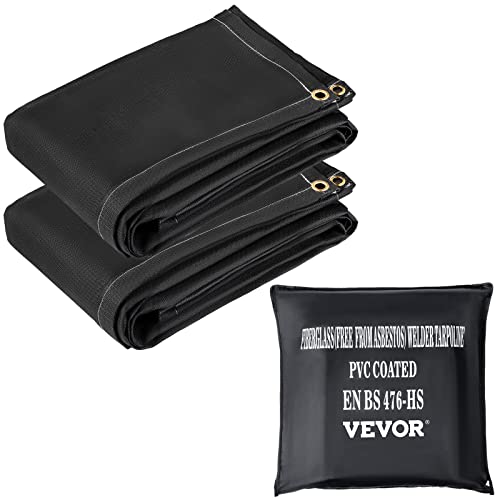
Our Top Picks
 PONGHEI 2 Moving Blankets 40"x 72" Heavy Duty40x72 in 2 Pack72 x 40 x 0.5 inches2.7 poundsCheck on Amazon
 WEN 72-Inch by 80-Inch Heavy Duty Padded Moving72-Inch by 80-Inch72 x 80 x 0.5 inches15.2 poundsCheck on Amazon


What's inside
- What a moving pad actually does during a move
- Woven shells versus non-woven shells
- Why weight per dozen is the headline number
- Fill materials and what sits between the shells
- The standard 72 by 80 inch size and when smaller pads win
- Zigzag stitching, quilting patterns, and binding
- Protecting wood furniture without damaging the finish
- Glass, mirrors, and framed pieces need a different wrap order
- Appliances, electronics, and awkward shapes
- Using pads on truck floors, in elevators, and along hallways
- How many pads a typical move actually needs
- Strapping, taping, and keeping the pad in place
- Thin value pads versus thick pads for valuable pieces
- Washing, drying, and storing pads between moves
- Second lives for pads after the move
- Reading a listing like a mover would
- Upholstered and leather pieces need breathable protection
- Pianos, heirlooms, and the top tier of protection
- Renting pads versus buying them outright
- A moving-day workflow that uses pads well
- Common mistakes that undo good padding
- Recycled content, shedding, and household sensitivities
- Matching pads to specific rooms and loads
- How pads behave on long-distance and multi-stage moves
- Questions worth asking before any pad purchase
- Dollies, hand trucks, and the pad interface
- Seasonal and regional considerations
- What to do when a pad is not enough
- Check prices on Amazon
- Putting the choice together
As an Amazon Associate I earn from qualifying purchases. This post may contain affiliate links at no extra cost to you.
Some links on this page may earn this site a commission if you buy through them, at no extra cost to you. That support helps keep these buying guides free to read and regularly updated.
What a moving pad actually does during a move
A moving pad, often sold as a moving blanket, is a thick textile barrier placed between furniture and everything that could damage it: truck walls, dolly frames, door jambs, stair rails, and other pieces loaded beside it. The damage it prevents is rarely a single dramatic impact. Most scratches, crushed corners, and cracked veneer happen through repeated small contact, vibration over a long drive, and shifting loads that rub finished surfaces against something harder for miles at a time.
That is why thickness alone does not describe a good pad. Buyers need to think about the outer fabric that faces abrasion, the inner filling that absorbs pressure, and the stitching that holds those layers together when the pad is dragged, folded, and strapped under tension. A pad that feels plush on a showroom floor can still fail if its cover tears at the first corner or its filling migrates into lumps after a few uses.
This guide compares pads using manufacturer-published specifications, published product data, and patterns in posted buyer feedback. The useful questions are consistent across brands: what is the shell made from, how heavy is the pad per dozen, what size does it cover, how is it stitched and bound, and what kind of load was it clearly designed to protect.
Woven shells versus non-woven shells
Woven pads use yarns interlaced on a loom, commonly a polyester and cotton blend, to form a shell that resists tearing and tolerates friction. When a woven pad slides across a truck floor or gets pulled around a dresser corner, the interlaced structure spreads the stress instead of letting a small snag run into a long rip. Published listings for woven models usually highlight this durability, and posted feedback frequently describes them surviving many moves without the cover opening up.
Non-woven pads take a different approach. Their outer layers are made from recycled fibers that are bonded, needle-punched, or pressed into a sheet rather than woven. This construction keeps cost and weight down and makes the pad easy to fold, but the surface is generally less resistant to dragging and sharp edges. A non-woven pad works well as a disposable or light-duty layer inside a vehicle, yet it is a weaker choice for repeated moves or for furniture with crisp, vulnerable edges.
Between those poles sit hybrid designs that pair a woven face on one side with a lighter bonded face on the other. The practical reading of any listing is to check which side the maker intends to face outward. If only one side is woven, that side should meet the truck, the strap, and the floor, while the softer side rests against the furniture finish.
Readers who have handled related household textiles will recognise the trade-off from other categories. The construction logic behind best cotton thermal blankets is different, because bed blankets prioritise drape and warmth, but the underlying lesson carries over: how fibers are assembled matters as much as which fibers are named on the label.
Why weight per dozen is the headline number
Moving pads are traditionally sold and compared by the dozen, and listings express heft as pounds per dozen rather than the weight of a single pad. The convention survives because professional movers buy in bulk, and it gives shoppers a quick density signal once they learn the scale. A very light dozen signals thin filling and minimal protection, while a heavy dozen signals dense padding that will absorb more pressure before a corner pushes through.
As a rough orientation drawn from published ranges, entry-level pads often sit at the light end of the market, mid-range pads cluster in the middle where most household moves are well served, and premium heavy pads sit at the top, marketed toward piano, antique, and fine furniture work. The exact breakpoints vary by maker, so treat any single number as a starting point and cross-check it against size, because a large pad and a small pad at the same dozen weight do not offer the same thickness.
Weight also predicts handling. Heavy pads protect better but they are harder to carry up stairs, slower to fold, and more tiring to position alone on top of a tall wardrobe. Light pads are easy to throw over a load quickly, which is why rental fleets and one-time movers accept their thinner cushioning. The right choice depends on whether the priority is maximum protection for a few valuable pieces or manageable coverage for a whole household.
Posted buyer feedback is especially useful on this point. Owners rarely praise a number; they describe outcomes, such as a table edge arriving unmarked or a pad feeling thinner than expected once unfolded. When many independent reports describe the same pad as surprisingly thin, that pattern usually reflects a genuinely low fill density rather than one disappointed expectation.
Fill materials and what sits between the shells
The filling does the cushioning work, and most pads use recycled cotton, polyester batting, or a blend of shredded textile fibers compressed into a uniform layer. Recycled cotton fill feels dense and deadens impact well, but it can hold moisture if stored damp. Polyester batting is lighter for the same loft, resists mildew better, and springs back after compression, though very light batting can feel hollow under a heavy point load.
Uniformity matters more than the fiber name. A pad whose fill has been evenly distributed and then locked in place by quilting will protect a flat dresser side far better than a pad with the same total fill bunched toward the middle. When reading a listing, look for language about the fill being distributed or quilted through, and be cautious with pads that describe only the outer fabric while saying nothing about what is inside.
Some pads add a reinforced center panel or extra padding along the middle band where furniture edges tend to rest. That design choice can help when a pad is folded over a tabletop, but it does not compensate for thin edges elsewhere. Buyers protecting framed artwork or glass-fronted cabinets should care about edge-to-edge consistency, because the vulnerable point is usually a corner near the pad boundary, not the cushioned center.
The standard 72 by 80 inch size and when smaller pads win
The most common full-size moving pad measures about 72 by 80 inches, a footprint large enough to wrap a dresser, cover a sofa back, or fold double over a dining table. That size became standard because it matches the proportions of typical household furniture and the interior width of rental trucks, so one pad can be oriented either way without leaving an awkward strip exposed.
Smaller pads, often sold in footprints closer to a large towel or a half-sheet, earn their place around chairs, nightstands, lamps with the shade removed, and small appliances. Using a full-size pad on a small object wastes material, creates bulky folds that shift in transit, and makes strapping awkward. A mixed inventory, mostly full-size pads with a handful of smaller ones, covers a real household more efficiently than a uniform stack of the largest size.
Oversized pads exist for sectionals, large mirrors, and king headboards, but they are a specialist purchase. Their extra area is genuinely useful for those pieces, yet they are cumbersome for everything else and slower to fold and store. Most households are better served by overlapping two standard pads with the seam placed away from the most delicate surface than by owning a few giant pads that rarely leave the shelf.
Before ordering, measure the two or three largest pieces you own and compare those dimensions with the pad size, remembering that wrapping consumes length on every side. A pad that exactly matches a tabletop leaves nothing to fold under and secure, so the usable coverage is always smaller than the flat measurement suggests. Buyers who plan for that overlap rarely run short on moving day.
Zigzag stitching, quilting patterns, and binding
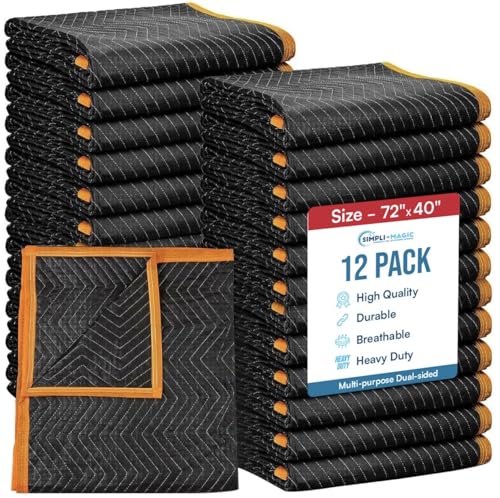
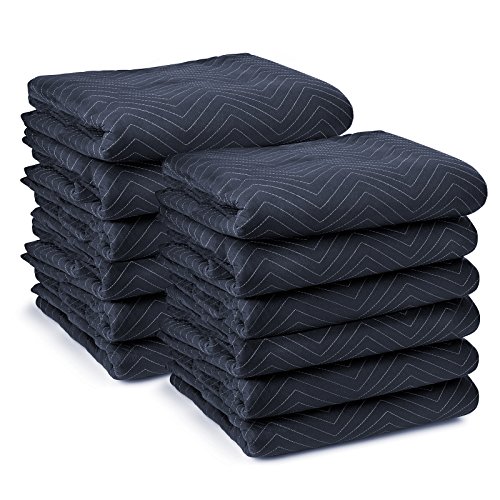
Stitching is what keeps a pad acting like one thick layer instead of three loose ones. Zigzag stitching is common because the angled thread path tolerates flexing and stretching better than a straight line when the pad is pulled around a corner. Rows of zigzag quilting across the face pin the fill in place, limit migration, and give the pad a consistent thickness from edge to edge.
The spacing of those rows matters. Closely spaced quilting holds fill firmly and keeps the surface even, which suits flat furniture sides. Very wide spacing lets the fill drift toward whichever end hangs lowest during storage, producing thin patches exactly where protection is needed. Published photos are often the clearest source here, since stitch spacing is visible even when a listing omits the measurement.
Binding is the fabric strip folded over the raw edge and sewn down around the perimeter. A well-bound edge resists fraying, survives being trapped under a dolly wheel, and gives handlers a stronger grip point than a raw hem. Pads with binding on all four sides consistently draw better long-term feedback than pads with a simple folded hem, which tends to open after repeated laundering or dragging.
Corners deserve a close look in product images. Reinforced or double-stitched corners handle the highest stress in the whole pad, because corners are where straps bite and where the pad is grabbed to drag a wrapped piece into position. A listing that shows tidy, dense corner stitching is signalling manufacturing care that usually extends to the rest of the construction.
Protecting wood furniture without damaging the finish
Wood furniture fails in predictable ways during moves: corners crush, veneer chips along edges, legs snap under lateral stress, and polished tops pick up fine scratches from grit trapped under a pad. The pad addresses the first, second, and fourth of those risks directly. Legs still need separate handling, because no blanket compensates for a piece being dragged sideways on its own legs.
Cleanliness is the hidden variable. A pad shaken out and free of grit protects a finish, while the same pad carrying sand from a previous move becomes a sheet of fine abrasive pressed against the wood for the entire drive. Experienced movers shake and inspect pads before each use, and buyers reading feedback should note reports about pads arriving with loose debris or shedding fibers onto finishes.
For high-gloss or antique surfaces, a soft clean layer against the wood, such as a clean sheet or a dedicated soft wrap, followed by the moving pad outside it, gives two-stage protection. The inner layer guards against texture imprint and fiber transfer, while the pad absorbs impact. That combination is also the logic behind sound-dampening textiles discussed in best acoustic blankets, where layered construction changes how a fabric behaves under pressure.
Drawers and doors should be secured before wrapping, either removed, taped with a residue-safe method recommended by the furniture maker, or strapped shut under the pad. A drawer that slides open inside a wrapped dresser can crack its own frame and tear the pad from within, turning a protective layer into part of the problem.
Glass, mirrors, and framed pieces need a different wrap order
Glass-fronted cabinets, mirrors, and framed artwork concentrate risk in a flat, brittle plane. The pad provides cushioning, but the first layer against glass should address surface contact and the second should address flex. Many movers place a rigid sheet, such as clean cardboard sized to the frame, against the glass before the pad goes on, so a point load spreads across the pane instead of pressing into one spot.
Orientation during loading matters as much as wrapping. Framed pieces travel best upright, on edge, wedged between padded vertical surfaces, never flat under other cargo. A pad folded beneath a frame that lies flat does little once a heavy box is stacked on top, because the frame was designed to bear load along its edges rather than across its face.
Marking the wrapped bundle helps whoever unloads it. A simple note on tape applied to the outside of the pad, identifying the contents and the upright direction, reduces the chance that a fragile piece is laid down carelessly at the destination. Posted feedback on moving supplies returns to this theme often: the pad did its job, and damage happened during a handling moment when nobody knew what was inside the bundle.
Appliances, electronics, and awkward shapes
Appliances present hard corners, protruding controls, and doors that must not swing open in transit. A pad draped over a refrigerator or washer shields the enamel and stainless surfaces from the scratches that dolly frames and truck walls inflict, but the pad must be secured so it does not slide down and bunch around the base, where it can catch under wheels and tear.
Manufacturers of major appliances publish their own moving guidance, and that guidance takes priority over any general pad advice. Some appliances need to rest upright for a period after transport before being switched on, and some doors and shelves should be removed or braced internally. The pad is the outer layer of a system, not a substitute for preparing the machine itself.
Televisions and large monitors sit between furniture and glass in their needs. Their screens dislike pressure and their thin housings dislike flex, so a pad alone is a minimum rather than an ideal. Where the original box survives, it remains the better container, with a pad added outside for load protection. Where it does not, a rigid facing sheet plus a pad, carried upright, is the widely described fallback in published moving guidance.
Awkward shapes such as floor lamps, exercise equipment, and bicycles benefit from smaller pads and offcuts of attention rather than one large wrap. Padding the contact points, the places where metal meets metal or where a protrusion will press into an adjacent piece, prevents most transit damage without cocooning the entire object.
Using pads on truck floors, in elevators, and along hallways
Not every pad in a move ends up wrapped around furniture. Spread on a truck floor, pads create a clean, slightly cushioned deck that keeps upholstered pieces off a dirty or splintered surface and reduces sliding. Lined along a hallway or draped over a stair rail, they protect the building as much as the belongings, which matters for deposits and for courtesy toward the next occupant.
Elevator protection is a recognised use in apartment buildings, where management sometimes requires walls to be padded before furniture moves. Full-size pads hang well from the hooks fitted in many service elevators, and their standard dimensions suit those cab walls. Renters planning a high-rise move should ask the building about its requirements early, because reserving the service elevator and confirming padding rules can shape the whole schedule.
Floor protection at the destination deserves equal thought. A pad laid inside the front door gives carriers a clean staging area and protects new flooring from dolly wheels tracking in grit. Readers organising a whole-home refresh may also be comparing protective textiles for animals and outdoor use, a neighbouring topic covered in best waterproof blankets for dogs, where washability and surface resistance are judged by similar criteria.
One caution applies to every floor use: a pad on a smooth surface can itself slide. Pads placed as walkways on polished floors or stairs should be treated carefully, kept out of the main foot path where possible, and never relied on as a stable step. Their job is surface protection, not traction.
How many pads a typical move actually needs
Estimating quantity is where many buyers under-order. A useful planning method counts the pieces that genuinely need wrapping: every dresser, table, bookshelf, sofa, armchair, mattress side exposed to the truck wall, appliance, and large framed item. Most of those pieces consume one pad each, and large or delicate pieces consume two, which brings a modest one-bedroom move into double figures quickly.
Rental providers and moving companies publish general quantity guidance tied to home size, and those ranges are a reasonable cross-check against your own count. The pattern in posted feedback is consistent: buyers who ordered exactly their counted number often wished for a few spares, because pads also end up on floors, over rails, and filling gaps between load items to stop movement.
Gaps matter more than they appear to. A tightly packed load where voids are stuffed with folded pads shifts less, and shifting is the mechanism behind most transit rubbing damage. Buying a modest surplus therefore buys protection twice, once as wrapping and once as load stabilisation, and leftover pads remain useful afterward for storage, workshop, and vehicle duty.
For a local move using a borrowed or rented vehicle, consider where the pads come from as part of the count. Rented pads vary in condition, and inspecting each one for tears, grit, and thin spots before loading is worth the few minutes it takes. A damaged rental pad placed against your best finish undermines the entire exercise.
Strapping, taping, and keeping the pad in place
A pad only protects while it stays positioned, so securing method is part of the product decision. Stretch film over a pad holds it snugly and adds a moisture barrier, which is why professional crews use the combination so often. The film should wrap the pad, not bear directly against delicate finishes for long periods, since trapped heat and plastic contact can mark some surfaces during extended storage.
Rubber moving bands, the large elastic loops sold for this purpose, grip a pad around a dresser or appliance quickly and come off without residue. They suit repeated moves and anyone who dislikes disposable film. Their limitation is tension: a band tight enough to hold on a highway drive can press a ridge into a soft finish if it sits directly over an unpadded edge, so bands belong over the thickest part of the wrap.
Tape should almost never touch furniture directly. Applied over the pad only, tape is a workable backup, but adhesive against wood, leather, or painted surfaces risks lifting the finish on removal. Published guidance from furniture care sources is consistent on this point, and the pattern in buyer feedback includes enough regret stories to treat it as settled.
Whichever method is chosen, check the wrap after the first few miles if the opportunity exists. Pads settle, straps relax, and loads compact as the truck moves, and a brief early adjustment prevents the slow rub that a loose pad allows over a long drive.
Thin value pads versus thick pads for valuable pieces
The cheapest pads on the market serve a real purpose, and dismissing them entirely would misread the category. For a short local move, for wrapping sturdy pine furniture, for lining a storage unit floor, or for protecting items whose surfaces are already worn, a thin pad provides a clean separation layer at minimal weight and bulk. The mistake is expecting that layer to absorb a corner impact it was never built to take.
Thick premium pads justify themselves on a narrower set of jobs: antiques, lacquered and high-gloss finishes, pianos, large mirrors, and anything whose repair cost dwarfs the price difference between pad tiers. Their denser fill keeps a hard edge from telegraphing through to the surface, and their woven shells survive the repeated handling that valuable pieces tend to receive across moves and storage periods.
A mixed strategy is what many experienced movers describe. Thick pads go on the valuable and fragile inventory, mid-weight pads handle the general furniture, and the thinnest pads serve as floor layers, gap fillers, and dust covers in storage. That allocation spends protection where damage would actually hurt and avoids paying premium weight and bulk across an entire household.
The surplus-blanket tradition sits inside this same logic. Heavy wool blankets long used outside the moving trade share the dense, forgiving character that fine furniture needs, a connection explored in best army surplus blankets. Modern woven moving pads are the purpose-built descendants of that approach, with quilting and binding added to keep the fill working evenly.
Washing, drying, and storing pads between moves
Most moving pads can be washed, but the method depends on construction. Woven pads with cotton-blend shells and recycled fill generally tolerate a large-capacity machine on a gentle cycle, while non-woven pads may shed fibers, distort, or separate at the binding when machine washed repeatedly. The maker care instructions, where published, should govern, and commercial laundries handle oversized pads more comfortably than domestic machines.
Drying deserves patience. Thick fill holds water, and a pad stored while still damp in the middle can develop mildew that transfers odor to everything it later wraps. Air drying spread flat or hung over a rail, with the pad turned so air reaches both faces, is slower but safer than aggressive heat, which can shrink shells unevenly and stress stitching.
Before storage, inspect each pad under decent light. Look for torn binding, thinning patches where fill has migrated, and embedded grit along the faces. Minor binding failures can be restitched, while a pad with a large shell tear is better demoted to floor and workshop duty than trusted against a polished top again.
Store pads folded or rolled in a dry place, off a concrete floor that can wick moisture, and away from chemicals whose fumes or spills would contaminate the fabric. A pad that picks up solvent odor in a garage will deliver that odor to upholstery in the next move. Keeping moving pads with moving supplies, rather than with workshop rags, preserves the cleanliness that makes them safe for finishes.
Second lives for pads after the move
A set of pads earns its keep long after moving day. In storage units, pads draped over furniture block dust and guard against the casual bumps of neighbouring tenants moving their own goods. In a vehicle, a folded pad protects the cargo area during hardware runs and gives fragile purchases a cushioned ride home, which is the same job on a smaller scale.
Workshops and garages absorb pads steadily: laid over a bench for finish work, hung to soften a wall where ladders rest, or spread under a project to catch dropped parts. Gardeners use them as kneeling and hauling layers, and pet owners press older pads into service as washable bedding under crates, accepting that this final duty is usually one-way.
Sound control is another documented second use. Heavy, dense pads hung in a garage studio or practice space absorb reflections noticeably, which is why the moving and acoustic categories overlap in construction even though their marketing differs. A pad bought for a move can therefore serve a hobby for years, provided it stays clean enough for indoor use.
When a pad is truly finished, textile recycling is a better destination than general waste where local schemes accept mixed fibers. Pads demoted in stages, from furniture duty to floor duty to workshop duty to recycling, return far more value than a single move suggests, and that long tail is a fair point in favour of buying woven construction when the budget allows.
Reading a listing like a mover would
A disciplined listing check takes under a minute once the pattern is familiar. Confirm the shell construction and whether both faces match. Note the size and the dozen weight together, never separately. Look for stitch type, stitch spacing in photos, and binding on all edges. Check what the maker says about fill composition and distribution. Then scan posted feedback for repeated themes about thinness, tearing, shedding, or pads arriving dirty.
Be wary of listings that lead with dramatic language and omit every measurement. Reputable makers publish dimensions, weight, and materials because professional buyers demand them, and the absence of those basics is itself information. Equally, treat a very heavy dozen weight paired with a very large size cautiously until you confirm thickness, because area spreads the same fill thinner.
Colour is the least important specification, despite dominating product photos. Dark pads hide grime and suit professional fleets, while lighter pads show dirt honestly, which some owners prefer because it prompts washing before a pad meets a pale sofa. Either choice performs identically if the construction matches.
Finally, match the pad tier to the move in front of you rather than to an abstract ideal. Distance, road quality, number of handling stages, and the value of the load all push the decision. A cross-country move with two load transfers justifies heavier protection than a single trip across town, even for the same furniture.
Upholstered and leather pieces need breathable protection
Sofas and armchairs are usually the largest soft items in a load, and their risks differ from wood. Fabric upholstery picks up dirt and abrasion, leather can scuff and also dislikes prolonged airtight wrapping, and light-coloured covers show every mark a dirty truck wall leaves behind. A clean pad over upholstery is therefore partly a cleanliness barrier, and its condition matters as much as its thickness for these pieces.
Leather deserves a specific caution drawn from furniture care guidance: avoid sealing leather tightly in plastic film for a long, warm move or storage period, because trapped moisture can affect the surface. A breathable pad layer against or over the leather, with film used loosely or not at all for short hops, respects that guidance while still blocking scratches from neighbouring cargo.
Cushions travel better removed and bagged or wrapped separately where the maker design allows, because loose cushions shift, fall into gaps, and arrive compressed at odd angles. The frame beneath them still needs its own pad, particularly along the arms, which are the widest point and the part most likely to meet a door frame on the way out of the house.
Reclining mechanisms and sleeper mechanisms add internal weight and pinch points. Published moving guidance commonly advises locking or securing moving mechanisms before wrapping, and a pad cannot substitute for that step. Once secured, wrap so the pad cannot slip into the mechanism gap during loading, where a caught fold can tear fabric on both the pad and the chair.
Pianos, heirlooms, and the top tier of protection
Upright pianos, grandfather clocks, and comparable heirlooms sit at the extreme of household moving, and general pad advice only partly covers them. Specialist movers use purpose-shaped padded covers for pianos, and manufacturer and conservator guidance for such instruments usually recommends professional handling outright. A standard pad still plays a supporting role for benches, clock cases under professional direction, and as extra layering, but it should not be presented as sufficient on its own for an instrument.
For heirloom furniture below that specialist threshold, such as a veneered sideboard or a carved wardrobe, the two-layer approach returns: a soft clean inner layer, then the thickest woven pad available, then careful strapping that distributes pressure across broad padded areas rather than narrow lines. Corners benefit from additional folded padding placed exactly at the point before the main wrap goes on.
Documentation helps these pieces in a different way. Photographing each face and corner before wrapping creates a condition record that settles any later dispute about when a mark appeared. The photographs take minutes, cost nothing, and are a standard recommendation in published consumer moving guidance for high-value items.
Insurance and declared-value arrangements are outside the scope of pad selection, but buyers moving genuinely valuable pieces should read their mover or rental terms on liability before deciding that padding alone is their protection plan. Pads prevent damage; paperwork addresses the residual risk that prevention cannot eliminate.
Renting pads versus buying them outright
Rental pads suit a single move when storage space afterward is scarce, and rental fleets typically stock mid-weight woven pads that handle general furniture competently. The conditions to verify are cleanliness, shell integrity, and whether the rental count can be increased at pickup if the load turns out larger than estimated. Inspecting pads at the counter, rather than at the truck, leaves time to reject a torn or gritty one.
Buying makes sense when a household expects repeated use: another move within a few years, a storage unit to furnish with covers, a workshop, or regular large-item transport. Ownership also guarantees the pads are clean and known, removing the inspection gamble, and the per-move cost falls with every reuse even though this guide avoids fixed figures for a category whose pricing shifts constantly.
A hybrid pattern appears often in posted owner accounts: buy a core set sized to the valuable inventory, rent additional general pads for the single peak day, and return the rentals afterward. That keeps the long-term storage burden small while covering the one day when quantity matters most.
Whichever route is chosen, the quality checks do not change. Shell, weight, size, stitching, and binding decide performance whether the pad is owned, borrowed, or rented, and a poor pad fails the same way regardless of how it was obtained.
A moving-day workflow that uses pads well
Sequence matters on the day itself. Wrap furniture inside the room where it stands whenever space allows, because carrying an unwrapped piece through doorways exposes it during the highest-risk metres of the whole move. Stage pads, bands, and film in each room before starting, so nobody is tempted to carry a piece out bare while supplies sit in another part of the house.
Load order interacts with padding. Heavy, sturdy wrapped pieces form the base and walls of the load, delicate wrapped pieces sit protected between them, and folded pads fill the voids that would otherwise let the load breathe and shift. Rebuilding that mental picture before the first item goes in prevents the common failure where fragile pieces end up wherever space remains.
Two-person carries deserve a brief word, because pads change grip. A wrapped piece is bulkier and its surface is smoother than bare wood, so carriers should agree on hand positions and the route before lifting, and should never grip solely by the pad, which can slide over the piece mid-carry. Handles, legs above the wrap line, and the base remain the reliable hold points.
At the destination, unwrap in reverse order of fragility where possible, checking each piece as its pad comes off rather than in a batch at the end. Early discovery of a problem, while the crew and the truck are still present, is far easier to address than a mark found a week later among unpacked boxes.
Common mistakes that undo good padding
The most frequent error in owner accounts is wrapping a dirty piece or using a dirty pad, trapping grit against the finish for the full journey. A quick wipe of the furniture surface and a shake of the pad before wrapping removes the abrasive that causes the fine scratching owners later blame on the road.
Under-wrapping large pieces ranks next. A pad draped over the top of a wardrobe while its sides and doors remain exposed protects the least vulnerable surface and leaves the rest to the truck. Full coverage, even if it takes two pads overlapped, is the standard that published professional guidance describes.
Over-tight strapping causes a quieter kind of damage. Straps cinched hard over thin padding can emboss lines into soft finishes and veneer, discovered only at unwrapping. Broad pressure over thick padding is the goal, and any strap crossing a delicate edge should pass over the thickest folded section of pad available.
Finally, storing wrapped furniture long-term in its moving wrap is a mistake the category sees repeatedly. Moving pads are transport protection, not archival storage covers, and pieces kept wrapped for months can trap moisture and odors against finishes. Unwrap on arrival, let surfaces breathe, and re-cover loosely with clean pads only if storage dust protection is needed.
Recycled content, shedding, and household sensitivities
Many pads advertise recycled fiber content in both shell and fill, which keeps textile waste in service and explains the colour variation buyers notice between batches. That variation is cosmetic, but recycled fill makes one check worthwhile: a new pad should be shaken and aired before its first use against pale upholstery, because loose fibers and dust from manufacturing are commonly reported in first-use feedback across the category.
Households with dust sensitivities should treat new pads like new bedding and air or wash them according to maker guidance before the move, rather than discovering shedding in a closed truck. Woven shells generally shed less than non-woven surfaces, another point in their favour for indoor-sensitive use.
End-of-life honesty matters too. Mixed-fiber pads are difficult to recycle in many local schemes, so the greener purchase is usually the durable pad that serves for a decade across moves, storage, and workshop duty, rather than a succession of thin pads discarded after each use. Longevity is the environmental argument that the specifications in this guide already support on performance grounds alone.
Matching pads to specific rooms and loads
A kitchen move leans heavily on pads for the table, chairs, and appliance fronts, and those pieces reward mid-weight woven pads that can be washed afterward, because kitchen furniture often carries grease film that transfers to fabric. Washing the pads promptly after a kitchen-heavy move keeps that film from becoming a permanent odor in storage.
Bedroom furniture is bulky but comparatively forgiving, with mattresses, bed frames, and dressers dominating the count. Headboards, especially upholstered or mirrored designs, are the exception and deserve the thick tier, while simple frame rails can travel with minimal padding concentrated at the contact points where they bundle together.
Home office loads mix desks with electronics and shelving, and the pads there do double duty as separators between flat-pack panels and finished desktops. Anyone who has moved flat-pack furniture knows its melamine edges chip at the slightest knock, so a pad between every panel in the stack is cheap insurance against a bookshelf arriving with a row of white nicks along each edge.
Children furniture and nursery pieces add a cleanliness priority, since pads that have served in garages and trucks should be washed before wrapping items that return to a child room. Keeping one clearly marked set of clean pads for indoor-sensitive duty is a simple household system that several owner accounts describe approvingly.
How pads behave on long-distance and multi-stage moves
Distance changes the physics of a load. Over a short trip, a slightly loose wrap may never shift enough to matter, while over a long highway drive the same looseness becomes hours of micro-movement against a finish. Long-distance buyers should therefore weight their decisions toward woven shells, secure wrapping methods, and gap filling, because time in transit multiplies every small weakness.
Multi-stage moves, where goods are unloaded into storage and loaded again weeks later, double the handling exposure. Pads for such moves should be inspected at the intermediate stage, since a tear acquired in the first leg will worsen in the second, and rewrapping a piece at the storage unit is far easier than repairing its finish at the destination.
Climate during transit is the third long-distance variable. A load crossing hot regions can bake inside a closed truck, which is another reason breathable pad layers suit leather and fine wood better than airtight film for extended journeys. Published furniture care guidance about heat and moisture applies with extra force inside a sealed vehicle in summer.
For moves that combine truck and container stages, pad quantity planning should assume some pads will be sacrificed to floor and wall lining in the container. Ordering with that consumption in mind prevents the late discovery that the best pads were left lining a floor while a dresser travelled thinly wrapped on the final leg.
Questions worth asking before any pad purchase
Ask what the shell is made from on both faces, and treat a listing that will not say as a light-duty product until proven otherwise. Ask for the dozen weight and the exact dimensions in the same breath, because the two numbers together reveal density in a way neither does alone. Ask whether the edges are bound on all four sides, and whether the quilting pattern is shown clearly enough in photographs to judge its spacing.
Ask about care next. A pad that can be machine washed in a large-capacity washer will stay in service longer in a normal household than one requiring specialist cleaning, and that practical difference compounds across years of storage and workshop use. Ask also whether the maker publishes any guidance about first-use shaking or airing, which signals honest recycled-fill handling.
Then read the feedback with specific questions in mind rather than a general impression. Search owner reports for mentions of tearing at corners, fill shifting after washing, fibers shedding onto dark furniture, and pads arriving smaller than the stated size. A handful of consistent reports on any one of those points outweighs a large volume of vague praise.
Finally, ask the simplest question of all: what in your home would you genuinely regret damaging. The honest answer to that question sets the top tier of the purchase, and every other specification in this guide exists to serve the list it produces.
Dollies, hand trucks, and the pad interface
Pads meet moving equipment as often as they meet furniture. A pad folded over the back of a hand truck cushions the contact face where appliance doors and dresser backs rest during the roll from house to truck, and that single habit prevents a whole class of vertical scratches that owners otherwise struggle to explain. The pad on the dolly should be secured so it cannot slip down into the wheels mid-route.
On four-wheel furniture dollies, a pad across the deck softens the platform and stops a piece from skating sideways on a smooth timber surface. The combination of a padded deck, a wrapped piece, and a strap over both is the standard arrangement described in published moving guidance for heavy items such as filing cabinets and safes below professional thresholds.
Ramps deserve the same thinking. A pad at the top and bottom transition of a truck ramp protects both the piece being carried and the carriers, since those hinge points are where loads tilt, hesitate, and most often bump. Keeping two pads assigned to the ramp area for the whole loading session is a small organisational choice with an outsized effect on damage counts.
Seasonal and regional considerations
Wet-weather moves change pad priorities. Rain at either end of the journey means pads will absorb moisture while protecting furniture from it, so spares matter more, because a soaked pad should be swapped rather than left against a finish for a long drive. Woven shells dry more predictably than dense non-woven constructions, and prompt airing after a wet move prevents the mildew problems described earlier in this guide.
Winter moves introduce grit of a different kind, since road salt and sand track into houses and trucks alike. The shake-and-inspect routine before wrapping becomes even more important in those months, and floor pads at entrances earn their place by keeping the worst of it away from the load.
Humid climates reward breathable storage after the move. Pads folded away in a sealed plastic bin in a damp garage can emerge smelling of mildew months later, while pads stored loosely in a ventilated space stay ready for use. A breathable storage bag or an open shelf is usually the better home for the stack between moves.
What to do when a pad is not enough
Honest guidance includes the limits of the product. A pad cannot protect a piece that is structurally unsound, a glass shelf carried loose, or a particleboard unit whose fasteners are already failing, because those items can collapse under their own weight no matter how softly they are wrapped. Weak furniture should be repaired, disassembled, or carried with dedicated support before padding enters the discussion.
Disassembly is frequently the better protection. Legs that unbolt, shelves that lift out, and mirrors that detach from dressers all travel more safely as separate, individually wrapped components than as one tall, top-heavy assembly. Makers often publish disassembly guidance for larger pieces, and following it converts an awkward load into several manageable ones.
Boxes remain the right answer for some categories entirely. Books, kitchenware, and loose small items gain nothing from pads and lose the stacking strength that proper boxes provide. Pads serve those loads indirectly, as void fill and as protective layers between furniture, rather than as a substitute container.
Recognising that boundary keeps expectations realistic and budgets focused. Spend pad quality on the furniture, glass, and appliances where a textile barrier is genuinely the deciding layer, and use the correct container or the correct specialist for everything outside that boundary.
There is also a human limit worth naming. Fatigue late in a loading day is when corners get clipped and wraps get skipped, and no specification on a product page compensates for exhausted carriers rushing the final pieces. Scheduling the most delicate items early in the load, while everyone is fresh and the best pads are still available rather than buried under finished work, is a planning decision that protects valuable furniture as reliably as any extra layer of fill.
Check prices on Amazon
Live listings for the shortlist in this guide are pulled from Amazon below, so prices and availability are always current at the moment you look.


Putting the choice together
Start with the inventory, not the product page. List the pieces that would genuinely upset you if they arrived marked, assign your thickest protection to them, and let the rest of the household be served by competent mid-weight pads. Add floor and gap-filling duty to the count, choose woven shells if the pads will see more than one move, and confirm size against your largest piece with wrapping overlap included.
That method, grounded in published specifications and the accumulated pattern of owner experience, avoids both failure modes of this category: the flimsy dozen that disappoints on the day, and the overbought premium stack that spends most of its life folded in a cupboard. Between those extremes sits the right purchase for almost every household move.
Keep the receipt and the specification details with the pads themselves, ideally noted on a tag tied to the stack in storage. Months later, when a single large item needs collecting or a neighbour asks to borrow protection for a weekend project, knowing the size, weight class, and wash history of the set at a glance saves guesswork and keeps the cleanest pads assigned to the most delicate jobs.
When the truck door finally closes on a load where every corner is cushioned, every gap is filled, and nothing hard rests against anything finished, the pads disappear from thought entirely, and that quiet uneventful arrival is exactly what good padding was bought to produce.