Our Top Picks
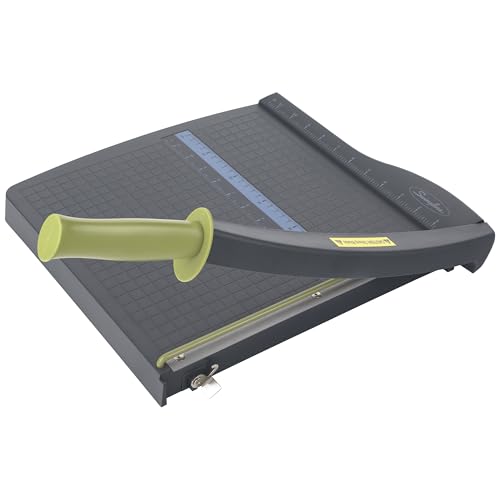
 VEVOR Heavy Duty Paper Cutter12" Cutting width20.47 x 15.16 x 26.18 inches26.2 poundsCheck on Amazon
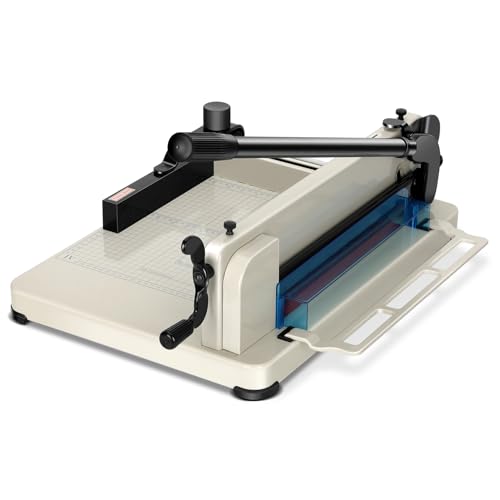
 VEVOR Electric Paper Cutter13" Electric Paper Cutter23.43 x 23.82 x 15.35 inches99.21 poundsCheck on Amazon


What's inside
- The rotary trimmer family
- The guillotine cutter family
- Die-cutting machines, manual and powered
- Electronic cutting machines
- Capacity figures and what they really promise
- Blade safety in a home setting
- Scrapbooking and card making workflows
- Accuracy, guides, and the pursuit of square
- Materials beyond plain paper
- The craft room environment
- Maintenance and blade economics
- Sizing the tool to the work
- Who should choose which family
- Buying checks that prevent regret
- Troubleshooting imperfect cuts
- Ergonomics during long cutting sessions
- Cutting for classrooms, offices, and small studios
- Planning projects around the cutter you own
- How the four families evolved
- Cost of ownership across the families
- Gift buying and first-tool advice
- Questions to settle before ordering
- Paper, stock, and blade pairings worth remembering
- A note on punches and hybrid tools
- Check prices on Amazon
- Storing finished work and protecting cut edges
As an Amazon Associate I earn from qualifying purchases. This post may contain affiliate links at no extra cost to you.
The comparisons in this guide rest on manufacturer specification documents, published engineering and safety literature for cutting tools, user manuals released by the brands, and recurring patterns across large samples of owner feedback from home crafters, teachers, and small-studio users. Capacity figures quoted here follow the way each maker states them in its own documentation, and the notes explain where those statements rest on ideal stock rather than everyday cardstock. How this guide is funded: certain outbound links placed near this article may pay us a small commission when a reader buys through them, money that keeps the editorial desk running while leaving the price paid by that reader exactly where it was.
Paper cutting machines sound like a single category until a crafter tries to buy one. Behind the shared name sit at least four distinct families of tools that happen to share a purpose: the rotary trimmer that slides a small circular blade along a rail, the guillotine cutter whose long arm blade descends in an arc, the die-cutting machine that presses shaped steel dies through material, and the electronic cutting machine that drags a fine blade along a digitally drawn path. Each family answers a different frustration. One buyer wants forty identical invitation edges without a single drift. Another wants to cut fifty layered shapes for a classroom display in an afternoon. A third simply wants a straight cut, every time, without the wobble that handheld scissors and a ruler always seem to introduce on the final sheet.
Choosing well starts with naming the work honestly. Trimming photographs, slicing stacks of cardstock, cutting intricate lace-like shapes from thin paper, and preparing fabric appliqué pieces are different jobs that punish the wrong tool in different ways. This guide walks through each family in turn, explains the specifications that actually predict performance, and spends serious time on blade safety, because a tool designed to shear paper cleanly will shear skin with equal indifference, and home craft rooms often include children, pets, and crowded tabletops where attention wanders.
The rotary trimmer family
A rotary trimmer guides a small circular blade, housed in a sliding carriage, along a fixed rail above a gridded base. The user places the sheet against a fence, holds it steady, and draws the carriage across so the blade rolls through the material against a cutting strip beneath. Because the blade rolls rather than chops, the action suits long straight cuts in light stock: single sheets, photographs, laminated pouches within the maker’s stated limits, and thin card. Published capacities for home rotary models usually describe a modest handful of sheets of standard copy paper at once, and experienced owners treat that figure as a ceiling for ideal conditions rather than a daily working number.
Cut quality in this family depends on rail rigidity and carriage play. A rail that flexes under hand pressure lets the blade wander mid-cut, producing the faintly bowed edge that ruins matting work where two pieces must meet invisibly. Better designs use a metal rail or a reinforced profile, a carriage that grips the rail at two points, and a base with a printed grid plus swing-out ruler arms for longer sheets. The cutting strip under the blade path is a consumable; as it grooves with use, cut edges grow fuzzy, and flipping or replacing the strip restores performance that owners often misattribute to a dull blade.
Rotary blades themselves are replaceable discs, and several blade styles exist beyond the straight disc, including perforating and scoring variants that fold or tear along a prepared line instead of severing it. Crafters who prepare coupons, ticket stubs, or fold lines for handmade cards value those alternate discs, though each swap is a moment of close contact with a sharp edge and deserves unhurried attention. Blade life in owner reports varies enormously with stock: clean paper is gentle, while glitter cardstock, sandpaper-textured specialty sheets, and adhesive-backed materials dull or gum a disc quickly.
The guillotine cutter family
The guillotine design is the oldest in this guide and still the capacity leader for straight cuts through stacks. A long blade, hinged at one end of a flat bed, descends in a controlled arc when the user pulls the handle down, shearing the stack against a fixed edge. Lever mechanics multiply hand force, which is why home and small-office guillotine models publish capacities in the range of a dozen or more sheets at once, with heavy-duty workshop versions rated far beyond that. The bed carries a grid, a paper clamp on better models to stop the stack shifting mid-shear, and an adjustable back stop for repeat cuts of identical width.
That capacity comes with the category’s most serious safety conversation. An exposed descending blade demands respect, and responsible designs incorporate a spring that holds the arm up when released, a latch that locks the arm down for storage, and a finger guard rail between the user’s steadying hand and the blade path. Owner feedback consistently praises models where the guard is wide and rigid, and criticizes any design where the clamp must be held by the same hand that hovers near the cutting line. Households with children should treat storage latch quality as a headline feature, not a footnote, and many owners store these cutters flat in a closed cabinet rather than standing on a shared craft table.
Cut accuracy in a guillotine depends on blade sharpness, stack discipline, and the squareness of the bed’s fence. A stack fed slightly askew shears into a parallelogram with total confidence, so the ritual of jogging sheets against the fence before clamping matters more than any specification. Thick stacks also exhibit a phenomenon owners call draw, where the blade’s arc pulls the upper sheets slightly, making the top sheet of a stack marginally narrower than the bottom one. Reducing stack height per pass and keeping the blade keen shrink the effect; production users who need identical pieces simply accept smaller stacks as the price of uniformity.
Die-cutting machines, manual and powered
Die cutting works by pressure rather than by a traveling blade. A die, essentially a shaped steel rule embedded in a backing, is sandwiched with the material between cutting plates, and the sandwich passes through rollers that press the rule through the sheet, punching out the shape in one pass. Manual machines drive those rollers with a hand crank; powered versions motorize the feed. The result is a shape with crisp, repeatable edges, produced identically fifty times in a row, which is why this family dominates card making, classroom decoration, quilting appliqué, and small-batch packaging embellishment.
The platform width defines what a die machine can accept, and home models cluster around a few standard widths suited to common die sizes and paper formats. Thickness capability, governed by roller pressure and plate stack recipes published in each manual, determines whether the machine handles only paper and card or also thin felt, foam, fabric with stabilizer, and specialty materials. Owners learn quickly that the sandwich recipe is a real variable: too little pressure yields an incomplete cut that tears on removal, while too much can crack plates, warp dies, or strain the roller mechanism, and every maker’s manual publishes a chart that deserves to be taped inside a nearby cabinet door.
Cutting plates are consumables in this family, bowing and scarring with use until they need flipping, rotating, or replacing. Dies themselves last for years when stored flat and kept dry, though intricate dies with fine bridges can bend if a user forces an overloaded sandwich through the rollers. The crafting community around these machines is enormous, and readers exploring shaped-card projects will find the neighboring category gathered in best card making machines a natural companion, since many card designs begin as die-cut elements layered onto a trimmed and scored base.
Electronic cutting machines
Electronic models replace the physical die with a software-drawn path. A small blade in a motorized carriage follows vector outlines sent from a computer or tablet, cutting shapes that exist only as files until the moment they are cut. The freedom is intoxicating for designers: any silhouette, lettering in any font, and nested layouts that squeeze maximum value from an expensive sheet. The trade-offs are equally real. Setup takes longer than cranking a die sandwich, the blade is tiny and suited to single sheets rather than stacks, and results depend on a sticky cutting mat holding the material flat, with mat adhesion fading over months of use until sheets shift mid-design and ruin the piece.
Blade systems in this family split between fine-point blades for paper and card, deeper blades for thicker stock, and specialty tools for scoring, foiling, or drawing with pens held in the same carriage. Software ecosystems differ in how they handle file formats, offline work, and design libraries, and those differences matter more to long-term satisfaction than fractional differences in cutting force. Owner feedback returns repeatedly to a simple theme: users who enjoy the software flourish with these machines, while users who wanted a purely mechanical tool sometimes let an expensive device gather dust. Honest self-assessment about that preference predicts happiness better than any specification in this section.
Noise and speed also distinguish electronic models from their manual cousins. A die machine with a hand crank is silent and instant; an electronic cutter hums, steps, and pauses its way through an intricate design over minutes. In a shared living space or a classroom during quiet work, that soundtrack matters. Conversely, the electronic machine’s ability to cut one perfect prototype, adjust a dimension by a hair in software, and cut again is a workflow no die library can match, because the equivalent die change means buying and waiting for new steel.
Capacity figures and what they really promise
Every cutting tool in this guide advertises a capacity, and every capacity figure rests on assumptions a buyer should excavate. Sheet counts assume standard lightweight copy paper, freshly sharp blades, and a stack squared perfectly; substitute heavyweight cardstock and the honest working capacity may fall to a third of the headline. Manufacturers of die machines express capability differently, through lists of compatible materials and maximum thicknesses, while electronic cutters publish downforce figures and material lists that reflect what their blades and mats can manage without tearing or skating.
Practical buyers translate ratings into their own units. A teacher preparing classroom sets thinks in multiples of a class count. A card maker thinks in card fronts per sheet of the stock she actually buys. A scrapbooker thinks in photo mats and journaling cards. Testing a candidate tool against your real material, where a shop or a friend’s craft room allows it, settles questions that paper specifications leave open, and where that is impossible, owner reports from people cutting the same stock carry more signal than any laboratory number. The recurring owner wisdom is blunt: buy for the thickest material you cut monthly, not the thinnest you cut daily, because a tool strained at its ceiling performs badly and wears quickly.
Repeatability deserves its own mention within capacity. Cutting one sheet cleanly is easy; cutting the two-hundredth identically is the production question. Guillotine back stops, rotary fence locks, die registration, and electronic mat alignment all exist to serve repetition, and their quality separates tools that merely cut from tools that produce. Anyone preparing wedding stationery, market-stall packaging, or fundraising craft batches should weigh those alignment features as heavily as raw capacity, since a drift of a single millimeter, invisible on one piece, becomes obvious when finished pieces are stacked, boxed, or photographed together.
Blade safety in a home setting
Safety engineering differs sharply across the four families, and households should match the tool to the room it will live in. Rotary trimmers conceal most of their blade inside the carriage, exposing the edge mainly at the cutting line, which is why they are the common recommendation for younger crafters working under supervision. Electronic machines enclose their small blade in a carriage too, though loading mats and changing blade housings still bring fingers close to a point finer and sharper than most users expect. Die machines present no traveling blade at all, their cutting edges recessed inside dies that are nevertheless sharp to handle and store, particularly intricate designs with exposed rule edges.
The guillotine stands apart and should be chosen with open eyes. Its guard, latch, and spring are meaningful protections, yet the fundamental action, a long exposed edge descending through a stack, leaves less margin for a distracted moment than any other family here. Craft rooms shared with children often adopt a simple rule set: the guillotine lives in a latched, closed cabinet, comes out for a defined cutting session, and returns before other activities resume. Owners who follow that rhythm report years of incident-free use, and the pattern in accident accounts is almost always a departure from it, a cutter left armed on a table while its owner answered the door.
Blade disposal is the forgotten chapter of cutting safety. Worn rotary discs, snapped craft blades, and dull guillotine edges remain dangerous in household rubbish, where they can slice a bin liner and the hand that carries it. A rigid puncture-proof container dedicated to spent blades, emptied according to local guidance for sharps, costs little and closes that risk. Similarly, blade changes should happen over a clear surface with good light, never over a lap or a cluttered desk where a dropped disc can hide in paper offcuts waiting for the tidying hand.
Scrapbooking and card making workflows
Scrapbooking assembles nearly every cutting task in this guide onto a single page. Photographs need trimming to size, mats need cutting a measured border larger, decorative shapes arrive from dies or an electronic cutter, and lettering may be cut, punched, or printed. A rotary trimmer with a clear grid serves as the workstation’s anchor because photo paper is exactly the light, single-sheet stock it handles best, and because its fence makes the repeated border widths of matting fast to reproduce. Pages built around heritage photographs add one caution: original prints deserve a trimmer whose blade and strip are clean, since a gummed strip can emboss a faint track along a priceless image.
Card making leans harder on scoring and folding than newcomers expect. A crisp fold begins as a scored line, made by a scoring disc on a rotary platform, a dedicated scoring board, or a bone folder against a ruler, and the quality of that line decides whether a card stands square or twists. Die cutting then supplies the layered shapes, sentiments, and apertures that give handmade cards their dimension, while the guillotine earns its keep in batch work, slicing a ream of card blanks to identical halves before decoration begins. Crafters who sell at seasonal markets often describe exactly this division of labor, with each family doing the job its mechanics suit.
Quilters and fabric crafters cross into this category more often than the paper label suggests. Rotary cutting began in fabric work before paper crafters adopted it, and appliqué shapes for quilts are die cutting’s home ground, with dedicated fabric dies and machines appearing in the same product lines discussed for paper. Readers whose projects mix paper templates with fabric pieces may also browse best basic sewing and quilting machines for the stitching side of the workflow, because template accuracy at the cutting stage determines how forgiving the sewing stage can afford to be.
Accuracy, guides, and the pursuit of square
Every family promises straight or faithful cuts, and every family depends on reference surfaces to deliver them. The fence, grid, back stop, and mat markings are the real accuracy system; the blade merely executes what alignment decided. Grids printed under a clear coating survive years of sliding stock, while surface-printed grids on budget bases can fade where hands rub them most. Metric and imperial markings both appear on better bases, a small mercy for crafters following tutorials written on the other side of an ocean. A metal edge along the cutting line resists the nicking that gradually turns a plastic edge into a wavy guide, and owners who cut daily rank that detail surprisingly high in hindsight.
Squareness can drift as tools age. A guillotine hinge loosens, a rotary carriage develops play, a die machine’s rollers wear unevenly when one side always carries the work. Periodic checks with a reliable square and a sacrificial sheet reveal drift while it is still correctable through the adjustment points most manuals document quietly in their maintenance pages. Treating that check as a seasonal ritual, like cleaning a sewing machine’s lint trap, keeps a good tool honest for years; speaking of which, owners who maintain several craft machines often batch these chores together, and the checklist mindset in best affordable sewing machines coverage applies neatly to cutting tools as well.
Materials beyond plain paper
Modern craft cutting reaches well past office stock. Cardstock in its many weights is the daily bread, but owners regularly feed vellum that tears if a blade drags, acetate that cracks under a chopping action yet slices cleanly under a rolling one, chipboard that demands die pressure or a deep-cut electronic blade, craft foam that compresses under a guillotine and springs back uneven, and adhesive-backed vinyl that gums blades and mats alike. Each material interacts with each cutting method differently, which is why universal claims on packaging deserve skepticism and why experienced crafters keep a scrap envelope for dialing in settings before committing the good sheet.
Photographs and laminated pieces introduce their own rules. Lamination film can separate at a cut edge if the blade is dull, leaving a lifted corner that catches and peels further, so sharpness matters more for laminated stock than for any plain paper. Magnetic sheets, cork, thin balsa, and leather each appear in die-machine material lists with thickness ceilings that owners ignore at the cost of cracked plates. The manual’s material chart, conservative as it may seem, reflects warranty reality: damage from unlisted materials is the kind manufacturers decline to cover, a fact worth knowing before experimentation rather than after a roller gives way.
The craft room environment
Cutting tools perform best on a stable, flat, adequately lit surface, and they share the room with dust, fibers, and adhesive mist from other crafts. Fine paper dust infiltrates rotary rails and electronic carriages, where a soft brush and occasional careful cleaning keep motion smooth. Humidity swells paper and can make stacks cut less cleanly at the edges, one reason archivally minded crafters store stock flat in closed cabinets. Readers refining a dedicated workspace may find the air-quality discussion in best air purifiers for home office relevant, since the same airborne fibers that coat a cutting rail also circulate through the room where a crafter breathes for hours.
Storage shapes longevity as much as use does. Rotary trimmers hang or lie flat away from knocks that could bend a rail. Guillotine arms stay latched. Dies live flat, ideally in sleeves or on magnetic sheets that keep their edges from kissing other metal. Electronic machines want dust covers and relief from the sun that ages their screens and mats. None of this is elaborate, yet owner accounts of tools failing early so often trace back to a cutter stored under a pile of heavier supplies, its alignment quietly bent by kindness-free stacking.
Maintenance and blade economics
Running costs in this category hide in consumables, and a clear-eyed buyer budgets for them from the start. Rotary discs, cutting strips, die plates, electronic mats, and replacement blades all wear on schedules set by material choice more than by calendar. A crafter cutting plain cardstock may run a rotary disc for many months, while the same disc meeting glitter stock weekly dulls in a fraction of that span. Guillotine blades hold an edge longest of all, and many home models treat the blade as a lifetime component that can be professionally honed rather than replaced, though the shipping and service involved mean some owners simply retire an elderly cutter instead.
Recognizing dullness early protects work quality. A rotary cut that begins to feather, a guillotine stack whose bottom sheets tear rather than shear, die cuts that need rocking and persuasion to release, and electronic cuts that skip in dense areas all announce a tired edge in their own dialect. Continuing with a dull blade is false economy: pressure rises, alignment suffers, hands compensate in ways that erode the safety margins discussed earlier, and good material dies on the base. The discipline of changing a blade at the first consistent symptom, rather than the tenth, separates production-minded crafters from hopeful ones.
Cleaning routines are short but specific. Adhesive residue lifts from blades with the solvents each manufacturer permits, and some widely used household oils attack plastic carriages, so the manual’s list governs. Rails appreciate a dry wipe rather than lubrication unless the maker specifies otherwise, because oil in a rail collects paper dust into an abrasive paste. Mats for electronic machines can be washed gently to restore tack a limited number of times before replacement becomes the honest answer, and owners who rotate two mats extend the working life of both.
Sizing the tool to the work
Cutting length and platform size filter the catalog quickly. A trimmer whose rail spans only common photo and letter sizes will frustrate a scrapbooker working in the larger square format that dominates that hobby, and a die machine whose platform refuses the dies a crafter already owns creates a compatibility debt from day one. Measure the largest sheet you cut regularly, add the margin the fence and carriage consume, and let that total set the minimum platform. Occasional oversize work can be handled by scoring and folding, by a print shop’s cutter, or by a friend’s larger machine; buying a permanently oversized tool for twice-yearly jobs burdens every ordinary session with extra bulk on the table.
Portability divides the market further. Crafters who attend crops, classes, and retreats prize trimmers that lock their carriages, weigh little, and survive a tote bag, accepting modest capacity as the fare. Studio-based users invert those priorities, choosing cast beds and wide platforms that never travel. Teachers occupy a third position, needing classroom-safe designs in multiples, where per-unit simplicity and enclosed blades outweigh every other virtue. Naming your tribe honestly prevents the classic error of buying a studio tool for a traveling hobby, or a featherweight trimmer for a production bench.
Who should choose which family
Choose a rotary trimmer if
Your cutting is mostly single sheets, photographs, and light card; you value an enclosed blade around family members; and your projects reward long, clean, measured edges over stack throughput. Add a scoring disc and the same platform prepares card folds, which is why this family anchors more general craft desks than any other. Its ceiling is equally clear: stacks, chipboard, and shaped work all belong elsewhere, and a rotary owner who begins selling batch stationery will feel that ceiling within the first large order.
Choose a guillotine cutter if
Stacks are your daily reality: identical blanks, classroom handouts, zines, or packaging inserts in quantity. You gain unmatched straight-cut throughput and a blade that stays keen for years, in exchange for storing and handling the family that demands the most deliberate safety habits. A model with a real clamp, a confident latch, and a guard you cannot defeat accidentally is the only version of this tool worth bringing into a home, and the bed size should cover your largest routine stack with room for the clamp to land fully on the paper.
Choose a die-cutting machine if
Shapes are your language: layered cards, appliqué, party decorations, and any project where the fiftieth piece must match the first exactly. Budget for the dies themselves, which become a library and a long-term investment, and for plates as recurring consumables. Manual cranks suit most home volumes and never need a socket or a software update; powered feeding helps users with limited hand strength and those running genuine production counts, at the cost of more machinery to maintain.
Choose an electronic cutter if
You design on a screen already, crave lettering and silhouettes without buying steel for each one, and accept single-sheet pacing and mat upkeep as the price of infinite shapes. This family rewards the digitally comfortable and quietly punishes anyone who dislikes software dialogs standing between intention and result. Households often end up pairing one: an electronic machine for design freedom alongside a humble rotary trimmer for the hundred small straight cuts that should never require booting anything.
Buying checks that prevent regret
Before ordering, confirm the consumables situation for the exact model under consideration: disc or blade availability, plate sizes, mat dimensions, and whether third-party equivalents exist or the design locks you into proprietary supplies. Check the manual’s material chart against your three most-used stocks by name and weight. Read the warranty for what it excludes, especially regarding materials and commercial use, since a crafter who begins selling finished work may cross a line the maker drew between home and business duty. Finally, look at the base and fence with a skeptic’s eye in photographs or in person, because those humble parts, not the blade, decide whether your cuts land square in year three.
Secondhand cutting tools circulate widely and can serve beginners well, with caveats per family. A used rotary trimmer needs a straight rail and a fresh disc. A used guillotine needs a hinge without wobble and a blade edge free of nicks, since a single nick prints its defect onto every sheet thereafter. A used die machine needs rollers that grip evenly and plates that have not bowed into a permanent smile. A used electronic cutter needs a working screen, a carriage that travels smoothly, and clarity about any software account transfer the ecosystem requires. In every case, the manual’s availability online is a fair proxy for how supportable the tool remains.
Troubleshooting imperfect cuts
When a straight cut emerges with a feathered edge, the cause is usually a tired blade, a grooved cutting strip, or stock fed with its grain fighting the cut direction. Paper has grain, inherited from its manufacture, and sheets fold and tear more willingly along it than across it; cutting behavior differs subtly by orientation, and rotating a troublesome sheet ninety degrees occasionally transforms the result without any other change. Feathering that appears only on the bottom sheet of a stack points toward blade condition, while feathering on every sheet from a rotary trimmer often indicts the strip beneath the blade path, a part owners forget exists until a replacement restores cuts they had blamed on their own technique.
Slanted results have their own short list of suspects. A fence that is not square to the blade path manufactures parallelograms faithfully, and checking it requires nothing more exotic than cutting a sheet, flipping one half over, and comparing edges. Stacks that creep during a guillotine stroke reveal a clamp applied unevenly or a stack jogged carelessly before clamping. Electronic cuts that drift from their intended outline usually trace to a mat losing grip, a blade housing seated imperfectly, or material thicker than the chosen setting assumed, and the remedy order matters: confirm the mat, then the housing, then the setting, before suspecting the machine itself.
Incomplete die cuts invite a methodical response as well. Adding a shim layer, rotating the die a quarter turn so its rule meets the rollers at a fresh angle, or moving the sandwich toward the platform’s center, where pressure runs most even, resolves many partial cuts without any new purchase. A die that cuts well everywhere except one corner may have a bent bridge in its rule, visible under strong light, and makers’ support channels can advise whether that die is repairable. Keeping notes on which recipe worked for which material turns this troubleshooting from folklore into a personal reference that grows more valuable with every project.
Ergonomics during long cutting sessions
Batch work exposes ergonomic truths that a single cut conceals. A guillotine handle pulled two hundred times asks for a grip diameter and stroke arc that shoulders tolerate, and owners with joint complaints often prefer several lighter stacks to fewer heroic ones for reasons beyond cut quality. Rotary trimming rewards a standing position with the rail at a height where the carriage can be drawn with a relaxed arm rather than a raised shoulder. Die cranking loads the wrist in rotation, which powered feeding exists partly to relieve, and electronic machines shift the strain to the eyes and the mouse hand instead.
Lighting deserves deliberate thought at a cutting station. A blade line shadowed by the user’s own hand invites misalignment, and raking light from the side reveals score lines and faint pencil marks that overhead light washes out. Magnification aids some crafters for intricate weeding of electronic cuts, the patient removal of negative pieces from a design, and a stable seated position with forearms supported turns that fiddly work from a strain into a meditation. None of these details appear on a product box, yet together they decide whether a long session ends with finished pieces or with a sore neck and a quieter enthusiasm for the next one.
Cutting for classrooms, offices, and small studios
Shared environments multiply both the users and the consequences of a poor choice. Classroom cutting favors enclosed blades, simple fences that survive being reset by small hands, and platforms that tolerate construction paper, poster board, and the occasional material nobody specified. Teachers consistently value a trimmer that can be carried between rooms and locked, and they retire more tools for lost carriages and missing parts than for worn blades, which argues for designs whose consumables are few and whose moving pieces stay captive.
Small studios and home businesses add throughput and presentation to the calculation. A studio wrapping orders daily needs cuts that photograph well, because customers judge edges in product pictures before they ever hold the piece. That standard pushes studios toward sharper consumable discipline, backup blades on the shelf rather than on order, and a second inexpensive trimmer reserved for rough work so the precision tool never meets gritty stock. Record keeping enters here too: noting which settings produced a sellable run converts experimentation into an asset the studio can hand to a helper or revisit after a season away.
Offices occupy the modest end of the spectrum, trimming handouts, laminating pouches, and signage in bursts. For them, a guillotine with a trustworthy latch in a supply room, or a rotary trimmer that occasional users cannot easily misuse, beats any specialized machine. The office lesson generalizes: the best tool for a shared space is the one whose safe operation is obvious to a first-time user without a manual in hand, and whose failure modes are boring rather than dangerous.
Planning projects around the cutter you own
Experienced crafters design backward from their cutting tools. Card dimensions get chosen to divide a stock sheet with minimal waste given the trimmer’s fence range. Die purchases favor sizes that nest inside the platform with margin to spare. Electronic designs are laid out to respect mat boundaries and to group cuts by material so a session flows without constant reloading. This backward design is not a limitation on creativity; it is the craft’s quiet arithmetic, and observing it explains why two people with identical machines produce work of visibly different polish.
Waste deserves a sentence of respect in that arithmetic. Offcuts sorted by size and material become the testing scraps, gift tags, and children’s craft supplies of future sessions, while unsorted offcuts become clutter that hides the very piece you need. A simple two-box habit, one for usable remnants and one for true scrap, keeps a cutting station honest. Paper recycling in most municipalities accepts clean offcuts readily, though glittered, laminated, and adhesive-backed remnants belong in general waste, a distinction worth teaching younger crafters as part of the hobby’s housekeeping.
How the four families evolved
The guillotine’s lineage runs through print shops, where cast-iron cutters sheared reams long before home crafting existed, and the home models in this guide are scaled descendants of that industrial furniture. Rotary cutting traveled the opposite direction, popularized for fabric in the late twentieth century and adopted by paper crafters who recognized the same rolling action suited photographs and card. Die cutting began in leather and packaging industries, migrated into education through classroom shape cutters, and bloomed for home use when steel-rule and thin metal dies became affordable to collect. Electronic cutting arrived last, borrowing motion control from plotters and sign-making, and its software roots still show in both its power and its learning curve.
That history explains each family’s instincts. Print-shop heritage makes guillotines honest about stacks and indifferent to shapes. Fabric heritage makes rotary tools brilliant on long straight runs and helpless on curves tighter than a gentle arc. Industrial die heritage delivers repetition without imagination beyond the die library. Plotter heritage gives electronic machines infinite outlines at the pace of a drawing instrument. A buyer who understands those instincts stops asking which family is best in the abstract and starts asking which ancestry matches the work on the table, which is the question this entire guide has been circling.
Cost of ownership across the families
The purchase is only the visible part of what a cutting tool costs its owner over five years. Rotary trimmers ask for discs and strips on a rhythm set by stock abrasiveness, modest sums that arrive predictably. Guillotine ownership is the cheapest in consumables and the most expensive in the rare event of professional honing or hinge service. Die machines convert spending into a growing library, where the machine itself may eventually represent a minority of the total invested in dies, plates, and storage for both. Electronic cutters spread their cost across mats, blades, software-related purchases, and the designs a user accumulates, and they carry the additional risk that a discontinued model loses software support while its mechanics remain sound, a form of obsolescence the purely mechanical families never face.
None of that arithmetic argues against any family; it argues for entering each with eyes open. A crafter who delights in collecting dies experiences that library as the hobby itself, not as overhead. A designer who sells digital files may recoup an electronic machine’s ecosystem costs through work no die could produce. The misalignment to avoid is buying a platform whose ongoing appetite does not match the household budget’s patience, because a cutting tool starved of its consumables performs like a broken one, and craft rooms are full of excellent machines idled by an empty blade drawer.
Gift buying and first-tool advice
Cutting machines make tempting gifts and treacherous ones, since the right family depends on projects the giver may only vaguely understand. A rotary trimmer is the safest present for a general crafter: broadly useful, comparatively gentle in its safety profile, and unlikely to duplicate a specialized machine already owned. A die machine given without dies is a promise rather than a tool, so thoughtful givers include a small starter selection matched to the recipient’s known themes. Electronic cutters should rarely be surprises; their software relationship is personal, and the recipient’s comfort with a particular ecosystem decides success more than the hardware’s merits.
For a first purchase made for oneself, sequencing beats comprehensiveness. Begin with the family that covers the majority of current projects, live with it through several real pieces of work, and let the gaps that actually appear, rather than the ones imagined in a catalog, dictate the second tool. Crafters who grow their cutting station this way end up with tools that all earn their shelf space, and with skills that transfer between families: alignment discipline from the trimmer improves guillotine work, sandwich judgment from die cutting informs electronic material settings, and blade respect learned anywhere protects hands everywhere.
Questions to settle before ordering
A short written checklist closes most buying mistakes in this category. What is the largest sheet, and the thickest stock, cut in a typical month? How many identical pieces does the largest recurring project require? Who else will use the tool, and what safety profile does that audience demand? Where will the machine live between sessions, and does that storage suit its latches, rails, or mats? Which consumables does it eat, are they stocked by more than one seller, and what does a year of them cost at your pace? What does the manual promise for materials, and does that list name your actual stocks? A candidate that answers all six cleanly has earned its place on the table; one that stumbles on two or more is a compromise looking for a different home.
Delivery and setup hold few surprises in this category, yet unboxing deserves the same care as a first cut. Inspect rails for straightness and beds for shipping dents before discarding packaging, run a sacrificial sheet through every function the machine offers, and store the manual where the troubleshooting charts can be found in the middle of a project rather than after it. Registering the product and noting the purchase date in the manual’s first page takes two minutes and quietly supports every warranty conversation that might ever follow.
Paper, stock, and blade pairings worth remembering
Certain pairings recur so often in owner advice that they deserve collecting in one place. Photographs pair with rotary trimmers because the rolling blade neither drags emulsion nor chips a drying print the way a chopping stroke can. Heavyweight watercolor paper pairs with die pressure or a keen guillotine used in single sheets, since its cotton fibers resist sliding blades and reward a decisive shear. Tissue and crepe papers pair with very sharp rotary discs and a fresh strip, or with dies that press rather than drag, because dull edges snag their fragile webs into wrinkles. Adhesive-backed sheets pair with electronic machines whose settings can kiss-cut the face stock while leaving the backing intact, a trick no stack cutter can perform, and with rotary trimmers whose blades are cleaned often enough that adhesive never builds into a steering problem.
Children’s construction paper, the unofficial fuel of elementary classrooms, pairs with whichever enclosed-blade trimmer a school already owns, and its mineral fillers dull edges faster than its soft appearance suggests, which explains the classroom rhythm of fresh discs each term. Metallic and mirror cardstocks show every flaw, so they pair with the sharpest available edge and a sacrificial underlay that keeps exit-side burrs off the visible face. Vellum pairs with patience in any family: it reveals fingerprints, curls under pressure, and rewards handlers who support the whole sheet rather than pinching a corner.
A note on punches and hybrid tools
Hand punches sit adjacent to this guide’s families, cutting one fixed shape per tool through a squeezing or lever action, and many crafters own a drawer of them alongside a machine. Punches excel at tiny repetitive shapes and at working anywhere without a table, yet their per-shape cost and storage appetite mirror die libraries in miniature. Hybrid tools also exist: trimmers with interchangeable cartridges that swap cutting for scoring or perforating, and platforms that accept both rotary heads and small guillotine modules. These hybrids serve space-starved crafters honestly, provided the shared base is rigid; a flexible base undermines every head attached to it, and no cartridge cleverness can compensate for a foundation that bends under the hand.
Circle cutters and specialty guides fill the remaining niches, swinging a blade around a pivot for discs and apertures that straight tools cannot approach. They demand a cutting mat beneath and a steady center pin, and their results improve dramatically once a user learns to rotate the paper rather than contorting the wrist. Mentioning them completes the honest map of the category: most craft rooms ultimately run a small fleet, not a single champion, and the art lies in assigning each tool the work its mechanics were born to do.
Check prices on Amazon
Live listings for the shortlist in this guide are pulled from Amazon below, so prices and availability are always current at the moment you look.


Storing finished work and protecting cut edges
The life of a cut piece after it leaves the machine receives too little attention in most buying advice. Freshly cut edges are the most vulnerable part of any paper project, prone to curling when humidity shifts, to dinging when pieces are stacked carelessly, and to picking up oils from handling that later show as smudges on pale stock. Flat storage with interleaving sheets protects finished card fronts and die-cut elements, while rigid envelopes guard pieces in transit to a class, a market stall, or a recipient. Scrapbookers who cut elements ahead of a page session often keep them in labeled pockets sorted by project, a small system that prevents the heartbreak of finding a perfect shape weeks after its page was finished without it.
Adhesive choices interact with cutting more than newcomers expect. Pieces destined for intricate gluing should be cut before any adhesive is applied wherever possible, because glue webs foul blades and mats and because a piece that must be trimmed after mounting rarely survives the adjustment gracefully. Where an electronic machine cuts adhesive-backed material by design, the backing becomes part of the engineering, and settings that score the face without severing the liner are the entire point. Keeping one inexpensive trimmer dedicated to messy, adhesive-adjacent rough work preserves the precision tools for clean stock, a division of labor that production crafters adopt instinctively and home crafters usually adopt after one gummed rail teaches the lesson.
A final word belongs to technique, the variable no purchase can replace. Slow, even pressure outperforms force in every family gathered here. Sheets should be squared against a fence with the fingertips spread wide rather than bunched, stacks should be jogged on the table edge before they ever meet a clamp, and a new material should always meet the blade first as a sacrificial corner rather than as the centerpiece of a finished project. Crafters who internalize those habits find that even a modest tool produces work strangers assume came from expensive machinery, while crafters who skip them can coax mediocre results from the finest cutter money can buy. The machine matters, and this guide has treated its differences seriously, but the hand guiding it remains the senior partner in every clean edge produced on any table, in any craft room, on any ordinary working afternoon.
Keep the original packaging longer than pride suggests, too. A cutter that must travel for warranty service rides far more safely in its molded inserts than in an improvised carton, and the box also stores the machine dust-free during long gaps between projects, which is how many seasonal crafters protect a tool that works hard for two months and then rests for ten.
The right paper cutting machine is the one whose mechanics match your most frequent job, whose blade your household can live with safely, and whose consumables you can replace without drama for years, and a crafter who chooses on those three honest grounds will still be reaching for the same trusted tool long after trendier gadgets have been given away.