What's inside
- Key Takeaways
- Quick Picks
- How Did We Judge Value Without Chasing the Lowest Ticket?
- How Do the Six Compare on What You Actually Get?
- What Does Affordable Really Mean When You Buy a Sewing Machine?
- Which Fabrics Should a Budget Machine Be Able to Handle?
- How Many Stitches Do You Need Before Extra Ones Stop Adding Value?
- Why Do Included Feet and Accessories Change the Real Price?
- How Should a First-Time Buyer Practise Without Wasting Fabric?
- What Maintenance Keeps a Budget Machine Sewing Like New?
- How Do You Thread and Set Up Correctly on the First Evening?
- When Is a Mini Machine the Right Purchase, and When Is It a False Saving?
- What Should You Check on the Listing Before You Order?
- How Can Sewing at Home Actually Save a Household Money?
- How Should You Set a Realistic First-Year Sewing Budget?
- Which Projects Give a Budget Machine the Best Return First?
- How Do You Spot a Bargain That Will Cost More Later?
- Why Does Resale and Hand-Me-Down Value Matter at This Price?
- How Should Left-Handed and Younger Sewers Judge These Picks?
- What Role Does Thread Quality Play in a Tight Budget?
- How Do You Compare Two Machines That Look Identical on Paper?
- When Should a Value Buyer Choose Computerized Over Mechanical?
- How Can You Test a Machine’s Value in Its First Fortnight?
- Why Does Buying Once, Properly, Beat Buying Twice?
- What Mistakes Do Value Hunters Make Most Often?
- Final Recommendation
- Frequently Asked Questions
- Related Guides
As an Amazon Associate I earn from qualifying purchases. This post may contain affiliate links at no extra cost to you.
cottageverdict.com is reader-supported. When you buy through links on our site, we may earn an affiliate commission.
Where to buy: all six machines below are sold through Amazon, and their names in the Quick Picks table, the detailed sections and the comparison table link straight to their listings so you can check price on Amazon and confirm what is in the box before ordering. The best affordable sewing machines are not the cheapest machines on the internet; they are the ones where every part of the purchase still works in your favour a year later, when the novelty has gone and only the sewing remains.
Value in this category hides in places a headline cannot show. A machine that arrives with six useful presser feet saves a string of small follow-up purchases. A free arm removes the need to wrestle cuffs and trouser legs around a flat bed. A clear printed stitch chart ends the evening spent hunting through a manual. None of those things raises the ticket, yet together they decide whether a modest machine feels generous or mean.
The six picks divide into three honest tiers of spending. At the very bottom sit two genuinely small machines, a mini and a compact portable, suited to repairs, crafts and learning hands. In the middle stand three full-size Brother machines whose differences are about stitch counts and screens rather than capability. At the top of this guide’s idea of affordable sits one heavy-duty SINGER, included because thick fabric is exactly where flimsy budget machines waste their owners’ money.
Read the sections after the picks before deciding, because the expensive mistakes in this price band are rarely about stitch quality. They are about buying a mini for adult garment work, paying extra for decorative stitches you will never select, or discovering that needles, bobbins and feet cost more across a year than the gap between two machines did on the day.
Key Takeaways
- Affordable should mean low total cost of ownership: included feet, a free arm and standard bobbins all reduce what you spend after the machine arrives.
- The Brother XM2701 anchors the value end of full-size sewing, with 27 stitches and six feet covering nearly every household task.
- Mini and compact machines are honest value only for repairs, crafts and small hands; they are not substitutes for a full-size machine.
- A computerized model such as the CS5055 earns its premium through easier stitch selection, not through stronger sewing.
- Heavy fabric changes the value calculation completely, which is why one heavy-duty machine belongs in an affordable guide.
Quick Picks
| Pick | Badge | Why it earns its place |
|---|---|---|
| Brother XM2701 Sewing Machine 27 Stitches | Best Overall Value | Twenty-seven stitches, six feet and a free arm deliver the most complete household sewing kit in this guide for the money. |
| Brother CS5055 Computerized Sewing Machine | Best Computerized Value | An LCD display and push-button stitch selection bring computerized convenience into the affordable bracket. |
| SINGER 4423 Heavy Duty Sewing Machine | Best Heavy-Duty Value | A metal frame, strong motor and fast top speed protect buyers whose cheap alternative would simply fail on denim. |
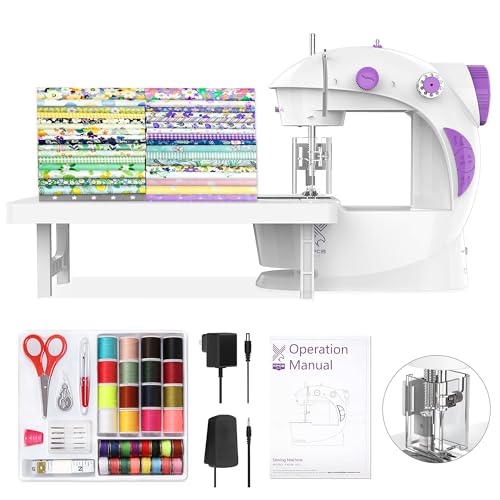
| KPCB Tech Sewing Machine for Beginners Mini | Best Ultra-Budget Starter Kit | A mini machine bundled with fabrics, a 42-piece kit, finger guard and extension table makes starting almost free of extras. |
| Portable Sewing Machine for Beginners 12 Stitches | Best Compact Budget Pick | Twelve stitches, reverse sewing, LED light, extension table and a 32-colour thread kit pack surprising completeness into a compact body. |
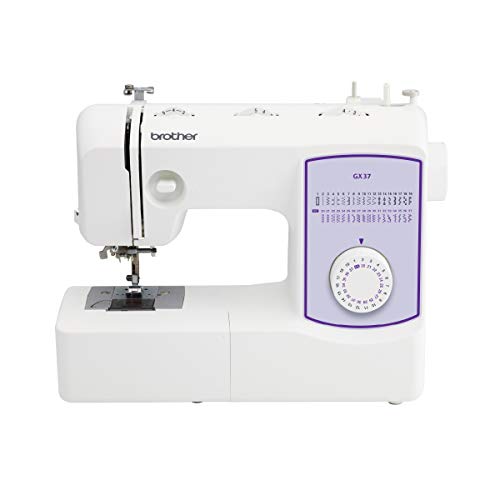
| Brother GX37 Sewing Machine | Best Value With Extra Stitches | Thirty-seven stitches printed on the machine itself, plus six feet, stretch the decorative budget without computerized cost. |
How Did We Judge Value Without Chasing the Lowest Ticket?
We scored value as capability divided by everything the machine asks of you: purchase, accessories, learning time and frustration. A model gained ground when its listing bundled equipment that other brands sell separately, when its controls were printed or displayed on the machine itself, and when its stitch set covered the unglamorous work — straight seams, zigzag finishing, buttonholes — before offering decoration.
We also penalised false economy. A machine too small for the fabrics in a normal wardrobe is not cheap at any price, because it gets replaced. Conversely, we refused to reward stitch counts inflated with near-identical decorative patterns. Where two Brother models overlap, the sections below explain which buyer each one actually serves, so the extra money, when it is worth spending, is spent on a difference you can feel at the table.

Brother XM2701 Sewing Machine 27 Stitches — Best Overall Value
Judged purely on what arrives in the box against what the machine asks you to spend, the XM2701 is the benchmark every other pick here must answer. Twenty-seven built-in stitches sounds modest beside computerized rivals, yet the selection is edited rather than padded: the utility stitches that mend, hem and construct are all present, the stretch stitches handle jersey, and the decorative remainder is small enough that you might genuinely use each one. Six included sewing feet is the figure that matters most at this end of the market, because feet bought separately, one small packet at a time, quietly erase the saving made by choosing a lesser machine.
The automatic needle threader and free arm both punch above the price in daily use. Threading is the task beginners dread and repeat most often, so automating it protects the habit of sewing itself. The free arm turns cuffs, sleeves and pant legs from a wrestling match into a routine pass under the needle. As a value proposition the machine is really selling completeness: sit down on the first evening and there is very little a household can ask that it cannot attempt.
Ownership economics favour this Brother in quieter ways too. It uses the ecosystem of standard needles and bobbins that every sewing shop stocks, so a Sunday-afternoon shortage is a small errand rather than a mail-order delay. Its mechanical layout also means the settings you learn this year remain the settings you use in five years, with no interface updates rearranging your habits. Resale and hand-me-down value follow the same logic: a complete, well-known model with all six feet present is the easiest budget machine to pass to a niece, a student or a neighbour, and a machine that gets handed on has delivered its full worth even after it leaves your table.
- Stitch library: 27 built-in stitches covering utility, stretch and decorative work
- Feet in the box: 6 sewing feet, unusually generous at this spending level
- Threading help: automatic needle threader fitted as standard
- Bed shape: free arm for cuffs, sleeves and pant legs
- Format: portable full-size mechanical machine
Strengths
- Six included feet postpone accessory spending for a long time
- Free arm makes garment repairs genuinely easier, not just possible
- Stitch set is edited for usefulness rather than inflated for marketing
Trade-offs
- Mechanical dials give no screen-based stitch preview
- Decorative range is small beside computerized alternatives
- Lightweight build prefers a firm, steady table
Best for: households wanting one complete, low-cost machine for repairs, alterations and first garments.
Not suited for: sewers who want hundreds of decorative stitches or screen-guided settings.

Brother CS5055 Computerized Sewing Machine — Best Computerized Value
The CS5055 asks a fair question of value shoppers: is easier operation worth paying for, even when the needle does the same work? Its LCD display shows the selected stitch and its settings plainly, replacing the dial-and-chart routine of mechanical machines. For a beginner, that visibility prevents the quiet errors — wrong stitch length, wrong width for the foot fitted — that chew fabric and confidence in equal measure during the first months of learning.
Where the money goes is therefore time and certainty rather than raw power. Selecting a stitch becomes a deliberate, readable act, and returning to a favourite setting is repeatable instead of approximate. Buyers who sew in short evening sessions benefit most, because none of the session is spent relearning where things were left. If your sewing is occasional but you want each sitting to start smoothly, this is the affordable machine whose premium is easiest to justify in hours rather than features.
Consider also what the screen prevents. Beginners lose fabric to invisible settings more than to weak motors: a stitch length left long from basting, a width that no longer suits the foot, a pattern selected one click away from the intended one. The display turns each of those into a five-second check before the needle moves. Spread across a year of projects, the fabric and thread not wasted form a real part of this machine’s value argument, and they never appear in a specification table. For methodical sewers who like to confirm before committing, that quiet prevention is the feature they will use every single session.
- Control style: computerized selection with a clear LCD display
- Display role: shows stitch choice and settings at a glance
- Format: full-size machine for garment and craft sewing
- Best value route: paying for ease and repeatability, not extra muscle
- Ownership note: settings return reliably between short sessions
Strengths
- LCD removes guesswork from stitch and setting choices
- Push-button selection suits stop-start evening sewing
- Repeatable settings help beginners build consistent habits
Trade-offs
- Costs more than mechanical models of similar sewing strength
- Electronics add a repair consideration years down the line
- No heavy-duty claim for sustained thick-fabric work
Best for: beginners who value calm, readable controls and sew in short regular sessions.
Not suited for: buyers whose entire budget must go into fabric handling strength.

SINGER 4423 Heavy Duty Sewing Machine — Best Heavy-Duty Value
An affordable guide earns the 4423 its place through avoided waste. Its listing promises fifty percent more power for denim and canvas, a metal frame underneath, and a top speed of 1,100 stitches per minute across 23 stitches delivering 97 applications. A lightweight budget machine fed a folded jeans hem often responds with skipped stitches, a bent needle and eventually a replacement purchase. Spending once on a frame and motor built for that work is the cheaper story told over five years.
The one-step buttonhole matters to value as well, because buttonholes are where home sewers most often outsource or abandon a project. Speed, meanwhile, should be read as headroom rather than an invitation: the machine can run fast on long curtain seams, while its control still allows the slow, deliberate pace that thick layered work demands. For households whose sewing leans toward jeans, canvas bags, upholstery repairs and curtains, this is the pick where affordable means durable rather than minimal.
Running costs on the SINGER stay low in the ways that matter for heavy work. It takes standard needles, including the heavy-duty sizes denim demands, and its appetite is for fabric rather than accessories. The honest way to test its value is to price the alternative: a lighter machine plus the tailor’s bills for every jeans hem, canvas repair and curtain alteration it could not manage. Two or three outsourced jobs a year close the gap quickly. Owners who sew workwear, pet beds, tote bags and home furnishings will find the arithmetic especially kind, because those are precisely the projects where thickness, not stitch variety, decides whether sewing happens at home at all.
- Stitch library: 23 stitches delivering 97 stitch applications
- Power claim: 50% more power aimed at denim and canvas
- Top speed: up to 1,100 stitches per minute
- Frame: metal construction beneath the outer shell
- Buttonhole: one-step style for repeatable results
Strengths
- Handles thick layers that defeat lighter budget machines
- Metal frame supports long service on heavy household work
- Fast top speed shortens long straight runs on curtains
Trade-offs
- Heavier to move between rooms than the Brother picks
- Stitch count looks small beside computerized models
- Power is wasted on sewers who only mend light fabrics
Best for: households sewing denim, canvas, curtains and upholstery repairs on a budget.
Not suited for: crafters who mainly sew light cottons and want decorative variety.
KPCB Tech Sewing Machine for Beginners Mini — Best Ultra-Budget Starter Kit
The KPCB mini competes on a different definition of affordable: not cost per stitch, but cost of beginning at all. It arrives with fabric bundles and a 42-piece kit, so a curious beginner, a parent buying for a child, or a crafter testing whether sewing is enjoyable can start the same afternoon without a second shopping trip. The finger guard is a thoughtful inclusion for young hands, and the extension table gives the small bed more support than its size suggests.
Dual speed and a foot pedal teach real sewing habits — starting, stopping, guiding — at a scale where mistakes are cheap and fabric scraps suffice. Honesty about limits protects the value here: a mini machine is for light fabrics, small crafts, dolls’ clothes, bunting and simple repairs, not for jeans hems or adult garments. Bought with those expectations, it is the least risky money in this guide. Bought as a substitute for a full-size machine, it would be the most disappointing, and the distinction is entirely about the work you plan.
There is also a social value to a machine this small and complete. It can be lent without anxiety, carried to a school club or a friend’s kitchen table, and set up in minutes for a group craft afternoon. Because the kit includes fabrics, a borrowed machine does not arrive as an empty promise. Supervised children learn the rhythm of feeding fabric and lifting the presser foot on equipment sized to their hands, and adults who suspect they might enjoy sewing can test the suspicion for the price of a family takeaway. Few purchases in this guide retire so much uncertainty for so little money.
- Format: mini size machine for crafts and first projects
- Bundle: fabric bundles plus a 42-piece starter kit included
- Safety: finger guard fitted for younger or newer hands
- Control: dual speed with foot pedal and US adapter
- Support: extension table included to steady small work
Strengths
- Starter kit and fabrics remove nearly all extra spending
- Finger guard and dual speed suit supervised young beginners
- Tiny footprint stores in a drawer between craft sessions
Trade-offs
- Not built for denim, canvas or adult garment construction
- Small bed limits quilting and large project handling
- Keen learners may outgrow it within a single season
Best for: children, crafters and the sewing-curious who want the cheapest safe start.
Not suited for: anyone planning regular clothing repairs on medium or heavy fabrics.

Portable Sewing Machine for Beginners 12 Stitches — Best Compact Budget Pick
Sitting one step above the mini, this compact portable makes its value case with a 32-colour thread kit and an extension table included in the box. Twelve built-in stitches is a deliberately short list, yet it covers the grammar of everyday sewing: straight stitch for seams, zigzag for edges and stretch, and reverse sewing to lock thread ends properly — a feature bargain machines sometimes omit, leaving beginners to knot and hope.
The LED light deserves more credit than listings usually give it, because compact machines tend to live on kitchen tables and spare-room desks rather than under proper task lighting. A clear view of the needle area prevents the squinting errors that waste fabric. As a budget proposition this model suits renters, students and occasional menders who need real seams on light to medium fabrics, want colour choice without buying thread sets separately, and need everything to pack away afterwards into a cupboard.
The thread kit quietly changes beginner behaviour for the better. With thirty-two colours on hand, a new sewer practises more, because no exercise waits on a matching spool, and visible contrast thread makes stitch faults easy to diagnose on samplers. The extension table similarly removes the wobble that small machines suffer when fabric weight pulls at the needle. Taken together, the bundle turns a compact portable into a small workstation rather than a toy, and that distinction is what makes its low price honest value instead of a compromise dressed in accessories.
- Stitch library: 12 built-in stitches for everyday tasks
- Essential feature: reverse sewing for locking seam ends
- Lighting: LED light over the needle area
- Bundle: extension table plus a 32-colour thread kit
- Format: compact electric model for home crafts and repairs
Strengths
- Thread kit and table included, reducing first-month extras
- Reverse sewing teaches proper seam finishing from day one
- Compact body suits renters and shared living spaces
Trade-offs
- Twelve stitches leave little room for decorative ambitions
- Not intended for sustained heavy or layered fabric
- Serious garment makers will want a full-size bed
Best for: students, renters and occasional menders sewing light fabrics in small spaces.
Not suited for: quilters or anyone sewing bulky layered projects regularly.
Brother GX37 Sewing Machine — Best Value With Extra Stitches
The GX37 is the value pick for sewers who looked at the XM2701, liked everything about it, and wished for a little more creative range. Thirty-seven built-in stitches widen the decorative and utility palette, while the stitches being conveniently printed on the machine itself removes the manual from daily life. That printed chart is a small thing with an outsized effect on cost of ownership: no booklet to lose, no phone balanced beside the presser foot, no interrupted flow.
Six included sewing feet repeat the XM2701’s generosity, keeping accessory spending low while the stitch count climbs. The comparison between the two Brothers is therefore unusually clean. Choose the XM2701 when its 27 stitches already cover your plans and keep the difference for fabric. Choose the GX37 when decorative edging, heirloom-style details or a broader stretch selection will genuinely appear in your projects. Paying for ten extra stitches you use monthly is value; paying for them as insurance against boredom is not.
Long-term, the GX37 protects its buyer against the most common upgrade trigger: boredom with a plain stitch list. Heirloom-style patterns, scallops and decorative rows give table runners, pillowcases and children’s clothes a finished look that plain zigzag cannot imitate, and they arrive without the cost or complexity of a computerized model. Because selection stays mechanical and the chart is printed on the body, the extra range never complicates the basics. It is the rare upgrade that adds play without adding friction, which is why owners tend to keep this class of machine for years as their decorative workhorse even after larger equipment arrives.
- Stitch library: 37 built-in stitches including decorative options
- Reference: stitch chart printed directly on the machine body
- Feet in the box: 6 included sewing feet
- Format: full-size mechanical machine with dial selection
- Value angle: more creative range without computerized pricing
Strengths
- Printed stitch chart ends manual hunting entirely
- Extra stitches serve decorative and heirloom-style projects
- Six feet keep the accessory budget as low as the XM2701
Trade-offs
- Mechanical selection lacks a screen preview of settings
- Decorative stitches still need practice to look their best
- Buyers sewing only basics pay for range they may skip
Best for: creative beginners who will actually use decorative stitches on gifts and garments.
Not suited for: pure repair sewers, for whom the XM2701 covers everything cheaper in spirit.
How Do the Six Compare on What You Actually Get?
| Pick | Badge | Distinguishing detail |
|---|---|---|
| Brother XM2701 Sewing Machine 27 Stitches | Best Overall Value | 27 stitches, 6 feet and a free arm: the completeness benchmark |
| Brother CS5055 Computerized Sewing Machine | Best Computerized Value | LCD-guided computerized selection at an entry-level spend |
| SINGER 4423 Heavy Duty Sewing Machine | Best Heavy-Duty Value | Metal frame and 1,100 stitches per minute for thick fabric |
| KPCB Tech Sewing Machine for Beginners Mini | Best Ultra-Budget Starter Kit | Mini format with fabrics, 42-piece kit and finger guard |
| Portable Sewing Machine for Beginners 12 Stitches | Best Compact Budget Pick | 12 stitches, reverse sewing and a 32-colour thread kit |
| Brother GX37 Sewing Machine | Best Value With Extra Stitches | 37 stitches printed on the machine, with 6 feet included |
What Does Affordable Really Mean When You Buy a Sewing Machine?
Affordable is a relationship between price and service, not a number on a tag. A machine that sews weekly for six years costs less per project than a bargain that frustrates its owner into a drawer by spring. That is why this guide weighs included equipment so heavily: feet, tables, thread kits and guards are all purchases you either make once, inside the box, or repeatedly, outside it, at prices that feel small individually and large in total.
Running costs continue quietly after purchase. Standard needles and bobbins are inexpensive everywhere, which favours mainstream models. Proprietary accessories, by contrast, tax every new technique you try. Thread, too, adds up; the two bundled kits in this guide genuinely offset a beginner’s first months. When you compare two machines, compare the whole first year: machine, feet for your planned projects, needles in several sizes, bobbins, thread and a basic maintenance kit.
Which Fabrics Should a Budget Machine Be Able to Handle?
A sensible affordable machine should master the middle of the fabric world: quilting cotton, linen, light denim in single layers, jersey with the right stitch and needle, and fleece for simple projects. That middle covers school uniforms, curtains, cushion covers, tote bags, pyjamas and most alterations a household actually requests. Struggling at this level is not a budget compromise; it is a defect in the match between machine and owner.
At the edges, be realistic in both directions. Chiffon and silk demand slow control and fine needles on any machine. Multiple layers of canvas or a folded jeans hem demand torque and frame strength, which is the SINGER 4423’s territory here. The mini and compact picks are honest tools for the light end of the middle. Trouble begins when marketing language blurs those edges and a buyer expects one small machine to span the entire wardrobe without complaint.
How Many Stitches Do You Need Before Extra Ones Stop Adding Value?
Most home sewing runs on a handful of stitches: straight in two or three lengths, zigzag in two widths, a stretch stitch, a blind hem and a buttonhole. Everything beyond that wardrobe of essentials is either convenience or decoration. Convenience can be worth money — a one-step buttonhole saves real time — but decoration only earns its keep when your projects visibly use it, on children’s clothes, table linens, appliqué or gifts.
Count applications rather than stitches when reading listings. The 4423 turns 23 stitches into 97 applications because each stitch adjusts in length and width. The GX37’s 37 stitches offer broader ready-made variety. The CS5055 makes its selection easiest to manage. All three approaches are legitimate; the waste lies in paying for a large number that describes patterns you will scroll past for the life of the machine.
Why Do Included Feet and Accessories Change the Real Price?
Presser feet are the tools that turn a general machine into a specific one: a zipper foot makes cushions possible, a buttonhole foot makes shirts finishable, a walking foot civilises slippery or layered fabrics. When six feet arrive in the box, as with both full-size mechanical Brothers here, the beginner’s first year needs almost no accessory spending. When a machine arrives with only a general-purpose foot, the true starting cost is the machine plus a queue of small parcels.
Apply the same accounting to tables, kits and thread. An extension table steadies fabric and reduces drag errors. A starter kit supplies the needles, bobbins and tools that otherwise delay the first project by days. A 32-colour thread set will not match every fabric perfectly, but it covers crafts, mending and practice completely. Bundles are not decoration on a listing; at this end of the market they are a measurable part of the price.
How Should a First-Time Buyer Practise Without Wasting Fabric?
Begin on paper, unthreaded, following printed lines and curves with the needle, to learn speed control and steering without consequences. Move to fabric scraps from old sheets and shirts, stitching straight rows, corners and gentle curves, and keep those ugly first samplers. They become your reference library: what a balanced seam looks like, how your machine behaves on jersey, when a needle needs changing.
Graduate through projects in an order that forgives: a drawstring bag, an envelope cushion cover, a simple tote, then a hem on clothing you like but do not love. Each project adds one new skill — a corner, a zip, a buttonhole — rather than five at once. This patience is also a value strategy. Fabric is the most expensive consumable in learning to sew, and scrap-first practice keeps the cost of every lesson close to zero.
What Maintenance Keeps a Budget Machine Sewing Like New?
Budget machines reward small, regular kindness. Brush lint from the bobbin area after every few sessions, because compacted fluff changes stitch quality long before it causes a visible fault. Change needles far more often than instinct suggests — a needle is the cheapest part in the system and the one most often blamed on the machine when it dulls. Keep the machine covered against dust when it lives on a table.
Use the manual’s oiling guidance only where it applies, since some models are designed to run without owner oiling. Store minis and portables with the presser foot down on a scrap of fabric, which protects both foot and feed dogs. None of this costs meaningful money, and all of it extends the years over which an affordable purchase proves itself genuinely affordable rather than merely cheap at checkout.
How Do You Thread and Set Up Correctly on the First Evening?
Thread with the presser foot raised, always, because raised feet open the tension discs so thread seats properly between them. Follow the printed path slowly, seat the bobbin so it unwinds in the direction the diagram shows, and draw the bobbin thread up before starting. Most first-evening disasters labelled as machine faults are threading faults wearing a disguise, and rethreading from scratch cures a remarkable share of tangles, loops and jams.
Set stitch length and width to the middle of their ranges for practice, choose a fresh universal needle, and sew a test seam on two layers of scrap cotton. Adjust one thing at a time and keep notes on the scrap itself. Ten unhurried minutes of this ritual teaches more about your machine than an hour of frustrated project sewing, and it costs nothing but two offcuts.
When Is a Mini Machine the Right Purchase, and When Is It a False Saving?
A mini is right when the sewing itself is small: paper crafts, felt toys, dolls’ clothes, bunting, simple repairs to light fabrics, and teaching children under supervision. Its small bed, modest power and short stitch list match those jobs, and its storage footprint matches flats and dorm rooms. The KPCB bundle strengthens the case by including fabrics and a kit, so the experiment of starting sewing carries almost no additional spending.
It becomes a false saving the moment the plan includes adult clothing construction, curtains of any weight, denim hems or quilting. Then every project fights the tool, seams suffer, and the replacement full-size machine arrives within the year — making the mini an added cost rather than a saving. The honest question is not whether a mini is good, but whether your project list is mini-shaped. Answer that plainly and the purchase decides itself.
What Should You Check on the Listing Before You Order?
Confirm the included feet by name, not just by count, and match them against your first three planned projects. Check whether an extension table is genuinely included or photographed as an optional extra. Read the stitch list for a buttonhole style and a stretch stitch, the two omissions that most limit a budget machine. Verify the adapter and voltage suit your home, particularly on compact imported models.
Look for the weight and dimensions if the machine will travel between rooms or to classes, and for a free arm if you will sew sleeves and cuffs. Finally, scan what consumables it uses: standard needles and common bobbin types keep running costs low everywhere. Listings reward careful readers in this category, because the differences between near-identical boxes are usually printed plainly — just distributed across the whole page.
How Can Sewing at Home Actually Save a Household Money?
The savings arrive through repairs first: hems restored, seams restitched, buttons and zips replaced, school clothes altered to fit a second child. Each small rescue postpones a replacement garment. Curtains shortened at home, cushion covers made from remnants and simple alterations to charity-shop finds extend the effect. A machine used monthly for mending alone can justify an affordable purchase without ever making a garment from scratch.
Making clothes enters the ledger more honestly when skills mature: fabric costs money, and a beginner’s dress is rarely cheaper than a discounted shop dress. The durable savings are fit and longevity — clothes adjusted to the body get worn more and replaced less. Add gifts, Halloween costumes and household textiles, and the machine’s value becomes a blend of money saved, waste avoided and the plain satisfaction of fixing things yourself.
How Should You Set a Realistic First-Year Sewing Budget?
Divide the year into three envelopes: the machine itself, the consumables that keep it sewing, and the fabric that gives it purpose. Consumables are predictable — needles in several types, bobbins, thread in neutrals plus project colours, and a seam ripper you will use more than you expect. Fabric is where beginners overspend, buying beautiful material before skills can honour it. Remnants, end-of-roll bins and repurposed household textiles carry the first months honourably.
Hold a small reserve for the one accessory a real project suddenly demands, such as a zipper foot before cushion season or a walking foot before a fleece blanket. Buying that foot at the moment of need is good value; buying a full accessory case in advance, most of which never leaves the box, is not. The machines in this guide were chosen partly to shrink that reserve: the more complete the box, the more of the year runs on fabric money instead of equipment money.
Which Projects Give a Budget Machine the Best Return First?
Start where savings are immediate and skills compound. Shortening curtains replaces a paid alteration and teaches long straight seams. Envelope cushion covers use straight stitching and corners while transforming a room for the cost of remnant fabric. Drawstring bags consume scraps and make useful gifts, teaching casings and cord channels. A simple tote introduces boxed corners and handles, and emerges genuinely useful every shopping trip afterwards.
Alterations follow naturally: hemming trousers, taking in a waistband, repairing a torn pocket lining. Each is a small job a tailor charges real money for, and each rehearses a garment skill. By the time a sewer attempts a first full garment — an apron, pyjama trousers, a gathered skirt — the machine has already repaid a noticeable share of its cost in avoided services, which is the most satisfying definition of affordable this hobby offers.
How Do You Spot a Bargain That Will Cost More Later?
Warning signs repeat across listings. A very low price paired with a single included foot, no buttonhole detail and no mention of a free arm usually means the savings were taken from your future. Proprietary bobbins or unusual needle systems create a lifetime of hunting for parts. Vague stitch lists that promise dozens of patterns without naming a stretch stitch or buttonhole style hide the omissions that matter most to clothing repairs.
Genuine value advertises specifics instead: feet counted and named, tables and kits listed as included, stitch applications explained, frame materials stated. Compare the cost of completing each machine to the same working standard — feet, needles, thread, table — and the apparently expensive option often becomes the cheaper one. That completion cost, not the headline, is the number this guide has used throughout to rank the six picks.
Why Does Resale and Hand-Me-Down Value Matter at This Price?
Budget machines change hands constantly: learners upgrade, children leave for university, hobbies fade and restart. A recognised model with its feet, manual and accessories complete is easy to sell locally or give away confidently, and that liquidity is part of what you bought. Machines from major ranges also keep their manuals and parts information available for years, which protects the second owner as much as the first.
Caring for that value costs little. Keep the box if storage allows, coil the pedal lead rather than wrapping it tightly around the machine, and keep feet together in their tray. When the day comes to upgrade, a complete and tidy machine funds part of its replacement; when it goes to a beginner instead, it arrives as a working start rather than a puzzle. Either way, completeness compounds.
How Should Left-Handed and Younger Sewers Judge These Picks?
Most machines in this guide are operated from the front with controls reachable by either hand, and the practical differences for left-handed sewers lie in lighting and visibility of the needle area. The compact portable’s LED light helps every sewer, and the CS5055’s display removes squinting at dials from the process entirely. For younger sewers, supervision, a finger guard where fitted, and a machine whose speed can be kept gentle matter more than any stitch list.
Whatever the sewer’s age or dominant hand, set the workspace before judging the machine: chair height that lets forearms rest level, light falling on the needle from the front, and fabric supported so hands guide rather than haul. Many supposedly unsuitable machines become perfectly comfortable once the table is arranged, and the cheapest improvements in sewing are usually furniture, not equipment.
What Role Does Thread Quality Play in a Tight Budget?
Thread is the one consumable where cheapness reliably backfires. Poor thread sheds lint into the bobbin area, snaps under tension and leaves fuzzy seams that make a good machine look faulty. A modest machine fed with decent branded thread sews above its station; an excellent machine fed with brittle bargain thread sews below its own. Beginners diagnosing mysterious breakage should change the spool before they change any setting.
Economise intelligently instead: buy quality thread in a small palette of neutrals — white, black, grey, navy and a warm beige cover most repairs — and add colours project by project. Store spools away from sunlight, which weakens fibres over months. The kits bundled with two picks here are ideal for practice and crafts, while garments that will be washed and worn for years deserve the best thread you can comfortably buy.
How Do You Compare Two Machines That Look Identical on Paper?
Place their listings side by side and hunt the quiet fields: included feet by name, buttonhole type, free arm or flat bed, the presence of a needle threader, extension tables, lighting and the bobbin system each uses. Then read for what is missing. A missing stretch stitch limits knitwear. A missing one-step buttonhole taxes every shirt. A missing accessory tray sounds trivial until feet migrate into kitchen drawers and vanish.
Finally, imagine the second year. Which machine still has parts, feet and manuals easy to find? Which one’s controls will a returning sewer remember after a three-month break? Value lives in that second year far more than in the unboxing, and the picks in this guide were ranked with the longer view deliberately in mind.
When Should a Value Buyer Choose Computerized Over Mechanical?
Choose computerized when your sewing sessions are short, interrupted and precious, because visible settings let you resume mid-project without reconstructing your place. Choose it also when several family members share one machine, since a display communicates the current setup to the next user better than dial positions do. The CS5055 represents that case here, and its premium is honestly a payment for clarity.
Choose mechanical when the budget must stretch to fabric strength, when the machine will live in a workshop or classroom where simplicity survives knocks, or when you simply enjoy direct dials. Neither camp is the value answer in the abstract. The affordable mistake is paying for a screen and then feeding the machine denim it was never built to chew, or buying muscle and then losing evenings to settings you cannot read.
How Can You Test a Machine’s Value in Its First Fortnight?
Give the new machine a deliberate curriculum. Week one: seams on cotton scraps, a buttonhole sampler, a zigzag-finished edge and one real repair from the household mending pile. Week two: a stretch stitch on an old T-shirt, a hem using the free arm, and a small finished project such as a cushion cover. Note where the machine helped, where it hindered, and which accessories you reached for that were not in the box.
That fortnight tells you whether the value judgement was right while change is still easy. A machine that passes it becomes a fixture; keep its sampler squares in a folder as your personal reference for tensions, stitches and needle pairings. The habit of testing on scraps before garments, learned in these two weeks, will save more fabric money across the years than any single buying decision in this guide.
Why Does Buying Once, Properly, Beat Buying Twice?
Every hobby has a graveyard of first purchases that were almost right. In sewing it fills with machines that lacked a buttonhole, a free arm or the strength for real clothes, each replaced within two years by the machine that should have been bought first. The combined cost of the pair always exceeds the honest machine bought once, and the frustration of the first quietly taxes enthusiasm for the craft itself.
That is the deeper argument running through this guide’s rankings. Affordable does not mean the lowest figure that can be defended; it means the lowest figure at which the machine stops being an obstacle. For a mending household that figure is the XM2701’s completeness. For a denim household it is the 4423’s frame. Spend up to the line where the obstacle disappears, keep the change for fabric, and the purchase will still look wise when the machine is old enough to lend to someone else.
What Mistakes Do Value Hunters Make Most Often?
The classic error is buying by stitch count, paying for a library of decorative patterns while the machine lacks a decent buttonhole or arrives with a single foot. Close behind comes the opposite bargain: choosing the smallest machine for work it cannot physically do, then blaming sewing itself when seams fail on denim. Both mistakes come from shopping the headline instead of the project list.
Other buyers forget the accessories budget entirely, discovering that feet, needles and thread consume the saving they celebrated. Some skip the test seam and ruin good fabric learning tension. A few store a portable machine by its handle in a damp cupboard and meet rust in spring. Every one of these errors is avoidable with the checks in this guide, and avoiding them is worth more than any discount.
Final Recommendation
Buy the machine whose total first-year cost matches your real project list, and the value follows by itself. For most households that answer is the Brother XM2701, complete in the box and calm on everyday fabrics. Creative sewers who will use the extra patterns should step to the Brother GX37 with a clear conscience, while homes full of denim and canvas belong with the SINGER 4423 Heavy Duty and its stronger frame.
Whichever of the six you choose, spend the money you saved on decent fabric and fresh needles rather than a second gadget. A modest machine, honestly matched and regularly used, will mend birthdays, curtains and costumes for years — and value measured in finished projects is the only kind that ever really counts.
Frequently Asked Questions
Is a mini sewing machine worth buying, or should I save for a full-size model?
A mini is worth buying when your projects are genuinely small: crafts, felt work, dolls’ clothes and light repairs, or when a child is learning under supervision. The KPCB bundle makes that start especially cheap because fabrics and a kit are included. If your plans include adult garments, curtains or denim, save for a full-size machine instead, because the mini would become an extra purchase on the way to the machine you needed.
How long should an affordable sewing machine last?
With lint brushed out regularly, needles changed often and sensible fabrics fed through it, a mainstream budget machine should serve for many years of household sewing. Longevity depends more on matching the machine to the work than on the badge: a mechanical Brother mending cotton weekly will outlast a stronger machine abused on unsuitable layers, and a heavy-duty frame earns its keep precisely where thickness is routine.
What else do I need to buy alongside a first machine?
Less than marketing suggests. If the box includes several feet, you mainly need fabric, thread in a few neutral colours, spare needles in universal and ballpoint types, extra bobbins of the correct class, fabric scissors and pins or clips. The two bundled kits in this guide cover much of that list already. Add items project by project afterwards, so every purchase answers a real need.
Can an affordable machine sew stretch fabrics like jersey?
Yes, with the right partnership of stitch and needle. Use a stretch or zigzag stitch so the seam can move with the fabric, fit a ballpoint needle that slides between knit fibres instead of piercing them, and let the feed dogs move the fabric rather than pulling it from behind. Practise on an old T-shirt first; jersey forgives slowly but teaches quickly.
Is computerized worth the extra money at this level?
It is worth it when ease and repeatability are what you are buying. The CS5055’s LCD display makes stitch choices visible and settings easy to return to, which suits beginners and short-session sewers. It does not make the machine stronger on thick fabric. If your budget forces a choice between a screen and heavy-duty strength, let your fabric pile decide which premium deserves the money.
What is the cheapest way to learn before my machine arrives?
Watch threading and setup demonstrations for your exact model so the first evening feels familiar, and gather free practice fabric: worn sheets, outgrown shirts and offcuts all serve. Paper exercises need no machine at all — drawing seam lines, curves and corners trains the eye for guiding. Arrive at the machine with scraps ready and patience stocked, and the learning costs almost nothing.
Related Guides
Value thinking continues in our guides to simpler machines, easier threading and even timed coffee for early sewing mornings: Best Basic Sewing Machines Best Automatic Threading Sewing Machines Best Alarm Clock Coffee Machines



[…] the home’s projects await, and these guides cover the machines that furnish the other rooms: Best Affordable Sewing Machines Best Affordable Heavy Duty Sewing Machines Best Affordable Coffee […]