What's inside
- Key Takeaways
- Quick Picks
- How Did We Assess These Soft Baby Blankets?
- Comparison Table
- What Should You Understand About Softness Before Choosing a Soft Baby Blanket?
- How Do You Wash Plush Baby Blankets Without Ruining the Pile?
- What Mistakes Do Buyers Make With Plush Baby Blankets?
- How Do Soft Blankets Fit Into a Baby’s Day Beyond the Nursery?
- How Does a Baby’s Relationship With Texture Change Across the First Year?
- What Should Families With Sensitive Skin Consider in a Soft Blanket?
- Why Do Grandparents So Often Choose the Softest Blanket in the Shop?
- What Happens When a Favourite Soft Blanket Starts to Look Tired?
- How Do Soft Blankets Earn Their Place in Childcare Bags and Waiting Rooms?
- How Should Colour Influence a Soft Blanket Purchase?
- Final Recommendation
- Frequently Asked Questions
- Related Guides
As an Amazon Associate I earn from qualifying purchases. This post may contain affiliate links at no extra cost to you.
cottageverdict.com is reader-supported. When you buy through links on our site, we may earn an affiliate commission.
Where to buy: the linked names take you to Amazon, where prices sit beside the three details worth a second look before ordering: the blanket’s dimensions, which fabrics are paired on its two faces, and which colourway can actually be shipped. The closing entry arrives unlinked on purpose: it examines a premium fabric family that many labels sell, and families are assessed on their shared character rather than on one box.
The best soft baby blankets are bought by hands before they are bought by eyes. A parent in a shop will stroke a dozen plush surfaces in a row, and the one that makes the hand slow down is the one that goes home. Soft baby blankets exist for the held hours of early life: the cuddle after a feed, the supervised sprawl on a rug, the stroller ride with a grandparent narrating the ducks. Their job is comfort against skin during attended time, and they do it with pile, plush and texture rather than with the flat practicality of flannel or the open weave of muslin.
That job description carries a boundary worth stating while the blankets still look innocent. However cloudlike the marketing photographs look, plush loose bedding stays out of the crib whenever a baby is sleeping without an adult present. These are blankets for arms, laps, rugs and prams under an adult’s eye. Warmth at night comes from the room and from suitable sleep clothing, while the soft blanket waits folded for the morning’s first cuddle, which is a schedule it fulfils magnificently and without complaint.
Within that boundary, the category divides by texture. Smooth fleece offers even, quiet softness. Sherpa brings a deep, lamb-like pile on one face. Minky fabrics add dimpled dots that small fingers discover early and return to often. Coral fleece splits the difference with a dense, velvety nap. The six entries below explore those textures one by one, because in this category the surface is not a detail of the product; the surface is the product.
Key Takeaways
- Softness here means pile and plush for supervised cuddles, never loose bedding for unattended sleep.
- Eonkasp’s reversible striped fleece is the versatile all-rounder in cream or blue colourways.
- Yurhap pairs a heart design with sherpa depth for the most giftable presentation.
- Hudson Baby and BORITAR both play two textures against each other on one blanket.
- The coral fleece entry is the travel-sized option, cut smaller for bags and car seats.
- Plush fabrics reward gentle washing; heat and harsh cycles flatten pile permanently.
Quick Picks
| Pick | Badge | What recommends it |
|---|---|---|
| Eonkasp Soft Fleece Baby Blanket Unisex | Best Versatile Fleece | Reversible stripes and even fleece softness sized for crib-side and stroller life. |
| Yurhap Heart Baby Blanket Sherpa | Best Plush Gift | A heart motif over deep sherpa pile that presents beautifully at a shower. |
| Coral Fleece Fuzzy Baby Blanket | Best Compact Travel Blanket | A smaller, dense coral fleece square in flint grey for bags and journeys. |
| Hudson Baby Plush Mink and Sherpa Blanket | Best Two-Texture Classic | Smooth plush on one side, sherpa warmth on the other, in a floral finish. |
| BORITAR Minky Baby Blanket Dotted Backing | Best Sensory Surface | Woodland print minky with a dotted backing that invites small fingers. |
| Organic Cotton Velour Baby Blanket | Best Natural-Fibre Softness | A premium-tier velour type for families avoiding synthetic pile entirely. |
How Did We Assess These Soft Baby Blankets?
Touch led the assessment, described as precisely as words allow. We distinguished between initial softness, the showroom stroke that sells blankets, and settled softness, the hand a fabric keeps after twenty washes when the baby actually lives with it. Synthetic plush generally holds its pile well if washed kindly, while very lofty budget fleece can mat into patches. The reviews below judge each blanket by the texture it is likely to keep, not merely the texture it advertises on day one.
Construction came next, because a soft blanket fails at its edges and its backing before it fails at its centre. We looked for tidy binding, backing fabrics that did not fight the face fabric, and sizes honest to their stated purpose. Most entries here sit near thirty by forty inches, a lap-and-pram dimension suited to supervised cuddles and floor time. One deliberately smaller travel entry is judged by travel standards instead, and its review says so openly.
We also weighed the sensory dimension, which adults underestimate. Babies explore cloth with fingers, cheeks and eventually mouths under supervision, and a dotted minky backing or a sherpa ridge gives that exploration something to find. A blanket that interests small hands buys calm minutes during tummy time and car rides, a benefit no specification table captures. Texture variety across a household’s small collection is worth more than owning three identical fleeces, however soft each one is.
Finally, we kept the safety frame visible in every judgement. Each blanket below is recommended for attended use: held cuddles, supervised floor play, pram layers while an adult pushes and checks. None is recommended as crib bedding for a sleeping baby. That framing does not diminish these products; it places them in the hours where they genuinely shine, which happen to be the hours parents remember most warmly anyway.

Eonkasp Soft Fleece Baby Blanket Unisex — Best Versatile Fleece
Eonkasp’s fleece is the quiet professional of this list. The cream colourway reviewed here carries reversible stripes, so the blanket presents a subtly different face depending on which side lands upward, and the fleece itself is the even, low-pile kind that feels uniformly soft without the drama of deep plush. At thirty by forty inches it covers a lap, lines a pram and drapes a feeding chair with equal adequacy, and it folds into a changing bag without the bulk that sherpa carries.
Versatility is the argument. This is the blanket a household reaches for when the plan is simply the day: a supervised cuddle on the sofa, a layer across little legs in a café while a parent drinks something hot, a clean soft surface on a relative’s rug. The fleece washes without ceremony, dries quickly, and returns to service with its hand largely intact, which matters in a category where some rivals demand spa treatment. The unisex styling also makes it a safe registry line for families keeping colours neutral.
The trade-off is excitement. Beside sherpa and minky rivals, plain fleece can read as the sensible shoe of the blanket drawer, admired for reliability rather than adored for texture. Babies who love to knead a deep pile will find less to explore here. Families should buy the Eonkasp as the dependable base of a soft-blanket collection and let a more theatrical texture join it later, rather than expecting one fleece to perform every emotional register at once.
- Dimensions: 30 x 40 in as listed
- Fabric: fleece with reversible striped faces
- Colourway: cream in the version reviewed
- Care: machine washable, quick drying
- Role: everyday supervised cuddle and pram layer
Strengths
- Even softness survives frequent ordinary washing
- Reversible stripes double the styling options quietly
- Folds slim for bags where sherpa will not fit
Trade-offs
- Low pile offers less sensory interest than dotted rivals
- Sensible styling may underwhelm as a centrepiece gift
- Light fleece warmth suits attended layers, not cold rooms alone
Best for: households wanting one dependable soft blanket for daily attended use.
Not suited for: buyers seeking the deepest, most luxurious pile available.
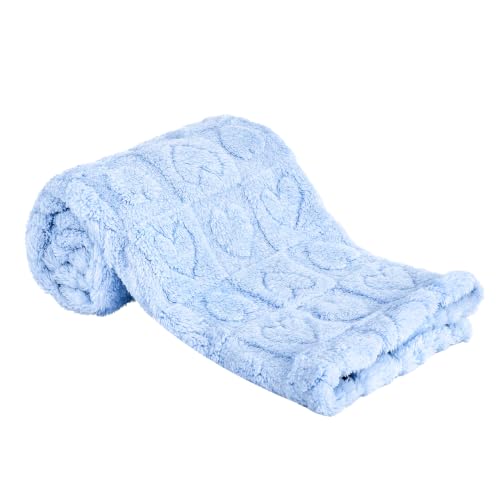
Yurhap Heart Baby Blanket Sherpa — Best Plush Gift
The Yurhap heart blanket understands the assignment of a baby-shower present. A heart motif scattered across plush fleece, backed with the deep, curly pile of sherpa, gives it an immediate visual and tactile generosity that photographs well in a gift box and feels indulgent in the hand. The blue colourway reviewed here aims at boys’ nurseries, though the design’s charm is broader than its marketing, and the thirty-by-forty size keeps it practical beneath the prettiness.
Sherpa changes how a blanket behaves in arms. The pile traps warmth and gives a held baby a surface that feels enclosing, which many parents find settles a cuddle quickly during supervised time on a sofa or in a glider chair. Against that, the same pile makes the blanket the bulkiest in this guide to pack, and the warmest across a lap on a mild day. It is a blanket with a season and a setting: cool rooms, stationary cuddles, and adults who are staying put rather than travelling light.
Care is the other consideration sherpa brings. Deep pile rewards cool, gentle washing and patience in drying, and it punishes hot, hurried cycles by clumping. Households willing to treat one blanket slightly kindly will keep its cloud impression for a long time; households that wash everything identically on hot should admire the Yurhap, gift it to someone gentler, and buy the Eonkasp for themselves. Matching a blanket’s care needs to a family’s real laundry habits is the recurring wisdom of this entire batch of guides.
- Dimensions: 30 x 40 in as listed
- Fabric: plush fleece face with sherpa backing
- Design: heart motif, blue colourway reviewed
- Care: gentle cool cycles protect the pile
- Role: stationary supervised cuddles and gifting
Strengths
- Deep sherpa pile delivers the most enveloping feel here
- Heart design presents beautifully as a present
- Warmth suits cool rooms and evening cuddles
Trade-offs
- Bulk makes it the least bag-friendly option listed
- Pile needs gentler washing than plain fleece
- Can feel too warm across a lap in mild weather
Best for: gift buyers and cool-room households who cuddle in one favourite chair.
Not suited for: frequent travellers packing a single slim blanket.
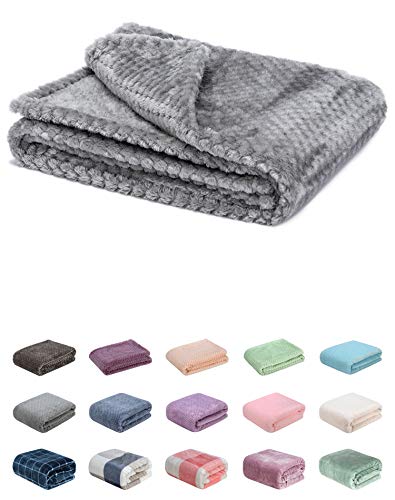
Coral Fleece Fuzzy Baby Blanket — Best Compact Travel Blanket
Coral fleece earns its name from density rather than colour: a tight, velvety nap that feels smooth in every direction and packs smaller than its warmth suggests. This entry, in a flint grey finish at twenty-eight by forty inches, is deliberately the compact one in the guide. It rolls into a changing bag’s side pocket, lives in a car seat’s vicinity for supervised journeys, and serves as the soft layer a family carries rather than the one that waits at home.
The grey tone is a traveller’s friend. Road dust, café spills and the general evidence of a day out show less against flint grey than against cream or pastel, so the blanket keeps presenting respectably between washes. Its nap also forgives compression; a coral fleece square pulled from a packed bag shakes back into softness more readily than a lofty sherpa, which can emerge from luggage looking personally offended. For families whose soft blanket must earn its space daily, those behaviours matter as much as the first stroke in a shop.
Smallness is the honest cost. Twenty-eight inches across covers a lap and a small baby comfortably, yet it will be outgrown as a full cuddle wrap sooner than the thirty-inch standards, and it offers less floor territory during supervised play. Buy it as the travelling member of a pair, with a larger blanket holding home duty, and its dimensions become a feature. Buy it as the only soft blanket in the house and its limits will introduce themselves within the first month.
- Size: twenty-eight by forty inches per listing
- Fabric: coral fleece with dense velvet nap
- Colourway: flint grey in the version reviewed
- Care: machine washable, compression tolerant
- Role: bag, car and journey blanket
Strengths
- Dense nap packs small without feeling thin
- Grey finish hides travel wear between washes
- Recovers softness quickly after being packed
Trade-offs
- Smaller span is outgrown sooner as a cuddle wrap
- Less floor coverage for supervised play sessions
- Utilitarian colour offers limited nursery theatre
Best for: families whose blanket must live in a bag and perform anywhere.
Not suited for: serving as a household’s only soft blanket.

Hudson Baby Plush Mink and Sherpa Blanket — Best Two-Texture Classic
Hudson Baby has dressed a great many American newborns, and this blanket shows the brand’s formula at its most complete: a smooth plush mink-style face in a floral finish on one side, and a warm sherpa surface on the other. The pairing gives one blanket two distinct personalities. The smooth face feels sleek against a cheek during a held cuddle; flip it, and the sherpa side brings the deep, insulating pile that cool evenings in a glider chair call for.
That duality solves a real nursery negotiation. Different carers often prefer different textures, one reaching for sleek and another for plush, and a two-faced blanket ends the argument by containing both. It also extends the blanket’s useful day: smooth side up for a mild afternoon on the rug, sherpa side up when the room cools and the cuddle lengthens. The floral styling leans traditional, which will delight some households and leave modern minimalists unmoved, a matter of taste the photographs make easy to judge.
The compromises are the familiar sherpa ones, plus a sizing note. The blanket is a one-size nursery standard rather than a generous wrap, so its career is cuddles and layers rather than floor kingdoms. Its sherpa face wants the same gentle washing as the Yurhap’s pile. Within those expectations, this is among the most complete single purchases in the guide, a blanket that behaves like two and has the brand history to suggest it will keep behaving that way after many washes.
- Size: one-size nursery blanket per listing
- Fabric: plush mink-style face, sherpa reverse
- Design: floral finish in the version reviewed
- Care: gentle cycles keep both faces at their best
- Role: two-texture supervised cuddle blanket
Strengths
- Two genuinely different textures in one blanket
- Established brand with long nursery presence
- Adapts across a day’s temperature changes by flipping
Trade-offs
- Traditional floral styling will not suit every room
- Sherpa face requires kinder laundering
- Standard size limits floor-play territory
Best for: households divided between sleek and plush preferences.
Not suited for: minimalists seeking one plain, uniform surface.

BORITAR Minky Baby Blanket Dotted Backing — Best Sensory Surface
BORITAR’s blanket is built around a discovery babies make with their fingertips. The face carries a woodland design in plush minky, while the backing is studded with the raised dots that define dotted minky fabric. Those dots are the point. A baby lying on a rug during supervised play, or held against a parent’s chest, finds a surface that answers back, and the small, repeated exploration of dot after dot can hold attention in a way a flat fleece simply cannot.
At thirty by forty inches the blanket covers the standard cuddle and floor roles, and the woodland artwork threads a middle path between cute and tasteful that many nurseries aim for. The minky pile sits between fleece and sherpa in depth, giving noticeable plushness without the full bulk of a sherpa backing, so the blanket still travels reasonably well in a pram basket. For parents who have watched a baby ignore expensive toys in favour of a label’s texture, this blanket’s priorities will feel immediately correct.
Dotted fabric has one housekeeping habit worth knowing: the dots collect the nursery’s small debris in their valleys, so the blanket benefits from a shake outside and regular washing rather than occasional. The raised texture also means the backing is not the side to choose for a perfectly smooth drape in photographs. Neither point diminishes the design; they simply describe a sensory tool rather than a styling prop, and households buying it for the right reason will be pleased every day.
- Dimensions: 30 x 40 in as listed
- Fabric: minky face with dotted minky backing
- Design: woodland artwork in the version reviewed
- Care: machine washable; shake out before washing
- Role: sensory-rich supervised cuddles and floor time
Strengths
- Raised dots give small fingers genuine exploration
- Mid-depth pile balances plushness with portability
- Woodland design suits a wide range of nurseries
Trade-offs
- Dot valleys gather lint and small debris
- Textured back drapes less smoothly for photographs
- Sensory focus matters less to brand-new sleepy newborns
Best for: babies entering the exploratory, grabby stage of floor time.
Not suited for: parents wanting a perfectly flat, formal-looking blanket.
Organic Cotton Velour Baby Blanket — Best Natural-Fibre Softness
Not every family wants synthetic pile, and the market answers with cotton velour: a knitted cotton fabric with a short, dense, velvet-like surface, usually positioned at a premium tier and sold by labels emphasising organic sourcing. No individual product represents this family, so the entry below sketches the type in general terms. Its softness differs in character from minky or sherpa; it feels smooth and cool rather than lofty, more like a favourite worn T-shirt than a cloud, and many adults honestly prefer that register against a baby’s skin.
Velour’s virtues are breathability and simplicity. A single-fibre blanket washes without separating its loyalties between two faces, ages evenly, and avoids the static that synthetic piles can generate in dry winter rooms. It also drapes flat and folds small, suiting families who found sherpa’s bulk theatrical. In supervised cuddles it offers gentle warmth without insulation drama, which makes it a thoughtful choice for mild climates and warm houses.
The costs are literal and textural. Premium natural-fibre blankets ask premium money for a surface that, to a hand expecting plush, can feel understated. Velour will not deliver the deep-pile theatre of the Yurhap or the dotted play of the BORITAR, and its nap can wear shiny at fold points across years of use. Buy it because your household values natural fibres and calm softness, and it will satisfy daily; buy it expecting a cloud, and no cotton fabric will rescue the expectation.
- Fabric: cotton velour, short dense nap
- Feel: smooth and cool rather than lofty
- Tier: premium positioning in most ranges
- Care: machine washable; single-fibre simplicity
- Role: gentle supervised layers in mild rooms
Strengths
- Natural fibre with breathable, even ageing
- Folds flat and drapes without bulk
- No static-prone synthetic pile in dry rooms
Trade-offs
- Premium pricing for an understated surface
- Lacks deep-pile and dotted sensory drama
- Nap can shine at folds across long service
Best for: natural-fibre households that prefer calm softness to plush theatre.
Not suited for: anyone shopping specifically for a cloud-like pile.
Comparison Table
| Pick | Texture pairing | Size note | Defining trait |
|---|---|---|---|
| Eonkasp Soft Fleece Baby Blanket Unisex | Fleece, reversible stripes | 30 x 40 in | Dependable daily versatility |
| Yurhap Heart Baby Blanket Sherpa | Plush face, sherpa back | 30 x 40 in | Deepest giftable pile |
| Coral Fleece Fuzzy Baby Blanket | Dense coral fleece | 28 x 40 in | Compact travel softness |
| Hudson Baby Plush Mink and Sherpa Blanket | Mink-style face, sherpa back | One size | Two classics combined |
| BORITAR Minky Baby Blanket Dotted Backing | Minky face, dotted back | 30 x 40 in | Sensory dot exploration |
| Organic Cotton Velour Baby Blanket | Cotton velour | Varies | Natural calm softness |
What Should You Understand About Softness Before Choosing a Soft Baby Blanket?
Softness has at least three separate meanings in this category, and confusing them causes most disappointments. The first is surface softness, the immediate stroke of a hand across pile. The second is pressure softness, how the blanket feels when a baby’s weight rests on it during floor time, where backing and thickness matter as much as nap. The third is aged softness, the character remaining after months of washing, which is where dense coral fleece and good minky quietly outperform very lofty budget piles that mat into felted patches.
Temperature belongs in the same conversation. A sherpa-backed blanket across a held baby in a cool room is bliss; the identical blanket in a warm flat becomes a small sauna that an adult must manage by flipping, folding or removing it. Soft blankets are attended tools, and the attending adult is the thermostat. Choosing pile depth for your actual rooms, rather than for the coldest evening you can imagine, keeps a blanket in daily use instead of folded away as too much of a good thing.
Size interacts with softness in a way listings rarely mention. A thirty-by-forty plush blanket covers a lap and a pram generously, yet during supervised floor time a baby will roll off its edge within minutes once movement begins, which is fine and expected; the blanket is a comfort station, not a play mat. Families wanting a larger soft territory should layer the blanket over a bigger plain mat rather than hunting for an enormous plush, because washability and drying time deteriorate quickly as plush blankets grow.
Finally, consider whose hands will do the holding. Grandparents with sensitive skin often adore minky’s smoothness; partners who run warm may prefer velour’s cooler register; a baby developing preferences will announce them by reaching, repeatedly, for one texture in the drawer. A small collection spanning two textures covers a household’s range better than duplicates of a single favourite, and this guide’s six entries are chosen to combine rather than to compete.
One more test separates satisfying purchases from drawer clutter: imagine the blanket’s worst day rather than its best. Picture it damp from a spilled drink in a café, dragged briefly across a pavement by a toddler who was only holding it a second ago, washed at midnight and needed again by morning. The blanket that survives that imaginary day with its dignity recoverable, through dense pile, forgiving colour and uncomplicated care, is the blanket your household will still be using when the baby in question starts school. Buying for the worst day sounds pessimistic until you notice it is simply buying for real life, which is where these soft, hardworking textiles spend their entire careers.
How Do You Wash Plush Baby Blankets Without Ruining the Pile?
Plush fabrics ask for a truce with the laundry rather than a battle. Cool or warm water, a gentle cycle and a mild detergent preserve the fibres that make sherpa curly and minky smooth. Hot water and aggressive agitation flatten pile, encourage shedding and can leave a blanket feeling tired long before its service should end. Since these blankets serve attended cuddle duty rather than changing-mat duty, they rarely need the hottest wash in the house; that mercy is built into their job description.
Drying decides the rest. Low heat or air drying keeps synthetic piles springy, while high heat can glaze fibres into roughness that no later kindness reverses. Shake a blanket out before drying, and again after, to lift the nap and release anything the dots or pile have gathered. A soft brush across minky, used occasionally and gently, restores direction to a nap that has been slept against during a hundred supervised naps on a parent’s chest.
Fabric softener deserves a nuanced word. Heavy softeners coat fibres and can dull both softness and any moisture-handling the fabric offered, leaving a blanket that feels slick rather than plush. Most households find that a thorough rinse and kind drying keep these textiles pleasant without additives. Vinegar rinses and similar household tricks circulate widely; follow the maker’s label first, because the label knows the fibre blend and the internet does not.
Storage is the quiet final step. Fold plush blankets loosely, or roll them, rather than compressing them under heavier items for months, since pile recovers from a day of pressure more readily than from a season of it. Keep the current favourite in open rotation and rest the others in a breathable drawer. When a second baby inherits the collection years later, one gentle wash usually returns the pile to service, which is a small economic miracle worth the drawer space.
What Mistakes Do Buyers Make With Plush Baby Blankets?
Placing a plush blanket in a crib for sleep is the mistake that matters most, and it usually comes from love rather than carelessness: the room felt cool, the blanket felt kind, the photograph looked peaceful. Resist it. Loose soft bedding and unattended infant sleep do not belong together, and every blanket in this guide is intended for arms, laps, rugs and prams under supervision. Night warmth has safer sources, and the blanket will be waiting, folded, for the morning.
Buying pile for the wrong climate follows. A household in a warm region that purchases the deepest sherpa available will use it for three weeks a year and resent its drawer space for forty-nine. Match depth to your rooms honestly. The coral fleece and velour entries exist in this guide precisely because many homes need softness without insulation, and choosing them is not settling; it is fitting the tool to the weather.
Judging by the packet stroke is the third trap. Showroom softness is partly finishing, and finishes wash away. Denser, better-made piles reveal themselves over time, while some cloudlike first impressions thin quickly. Reading for construction, backing quality and fibre type, as the reviews above attempt, predicts month six far better than any first touch can, whether that touch happens in a shop or on a doorstep.
Overbuying one texture completes the set. Three identical fleeces give a household depth in a single register and nothing for the baby who falls in love with dots, or the grandparent who finds sherpa too warm. Two blankets of contrasting texture, rotated thoughtfully, outperform a uniform trio for comfort across a whole family, and they cost no more. Variety, in a category built on touch, is a practical feature rather than an indulgence.
How Do Soft Blankets Fit Into a Baby’s Day Beyond the Nursery?
The pram is their second home. A soft blanket across little legs, with an adult pushing and checking, turns a windy promenade into a cosseted expedition, and the same blanket becomes the café layer, the car layer and the layer produced triumphantly at a chilly garden party. Because these moments are supervised by definition, plush textures can be enjoyed without reservation, and a blanket’s beauty finally gets the audience its maker intended.
Photographs form another honest chapter. The soft blanket is the backdrop of the first hundred pictures: spread beneath a baby on a bed while adults hover, draped over a chair arm, clutched in a fist during a milestone portrait. Choosing one blanket whose colour flatters your rooms and your baby, as the Yurhap and Hudson Baby entries aim to do, pays compound interest across an album. This is not vanity; it is recognising that textiles in early photographs become part of a family’s visual memory.
Travel tests softness differently, rewarding the blanket that compresses and forgives. The coral fleece entry earns its travel badge here, while sherpa stays home like a favourite armchair. A familiar soft texture also carries home’s smell into hotel rooms and relatives’ spare beds, giving a small traveller continuity that adults can pack in a side pocket. Many a family journey has been rescued by exactly that square of familiar plush produced at the right moment in an unfamiliar place.
As babies become toddlers, the soft blanket’s role shifts from surface to possession. A particular blanket becomes the chosen comfort object, dragged, clutched and consulted during storms of feeling. Parents cannot fully choose which blanket receives this honour, but buying textures with genuine character, and keeping one blanket consistently available during cuddles, stacks the odds. When the honour lands, buy a backup of the same blanket if it still exists; future you, at a motorway service station, will be grateful.
How Does a Baby’s Relationship With Texture Change Across the First Year?
In the opening weeks, texture is mostly something that happens to a baby rather than something a baby seeks. A soft blanket during held time registers as part of the general kindness of being warm, fed and against a heartbeat, and almost any gentle surface serves. This is the stage where parents should buy for their own hands and their own laundry habits, because the adult is the blanket’s primary user, wrapping, draping, folding and washing it a dozen times for every once the baby notices it exists.
Around the middle of the first year, hands wake up. Fingers begin to patrol surfaces during supervised floor time, and the difference between a flat fleece and a dotted minky backing stops being theoretical. Babies pat, scratch lightly, grip and release, returning to textures that respond interestingly. A blanket collection with contrast built in, one smooth and one dotted or deep-piled, gives that exploration range without a single toy being purchased, and carers quickly learn which surface buys the calmest ten minutes before a nap that will happen, properly, on a clear surface afterward.
Later in the year, texture becomes memory. The baby who has been cuddled against one particular blanket begins to seek its specific feel when tired, upset or in a strange room, and the blanket graduates from equipment to companion. This transition cannot be scheduled or forced, and it does not always choose the blanket the parents would have picked. What adults can do is keep one or two candidates consistently present during the comforting rituals of the day, so that when attachment forms, it forms around something washable, durable and still available to buy again.
Understanding these stages prevents two opposite buying errors. The first is spending heavily on sensory sophistication for a newborn who cannot yet appreciate it, while neglecting the laundry-friendly basics the adults actually need. The second is assuming the plain newborn choices will serve forever, and being caught without an interesting, attachable texture when the baby’s hands and heart both come online. A small collection that grows by one thoughtful blanket at each stage outperforms a large collection bought all at once in a pre-birth enthusiasm.
What Should Families With Sensitive Skin Consider in a Soft Blanket?
Some babies react to the world more readily than others, and their blankets deserve an extra round of thought. This guide offers comfort observations, not medical guidance; any persistent skin concern belongs in a conversation with your own clinician, who knows your child. Within those limits, a few practical patterns help. Single-fibre blankets, like the cotton velour type described above, simplify life because there is exactly one material against the skin and one set of washing instructions to follow, which makes cause and effect easier to observe at home.
Washing practice matters as much as fibre choice for reactive skin. Residue from heavily fragranced detergents can linger in deep pile, so households often run plush blankets with a plain detergent and an extra rinse, then judge the result over several cuddles. New blankets of every kind deserve a wash before first use, both to remove finishing treatments from manufacture and to reveal the texture the baby will actually meet. A blanket that feels divine in its packaging and ordinary after washing has told you something important while there is still time to return it.
Temperature regulation deserves a mention, because overheating is a comfort issue long before it is anything else. A baby who runs warm will be happier against velour or a single fleece layer during held time than against deep sherpa, whatever the weather outside, simply because an adult’s body already supplies considerable heat during a cuddle. Watching your own baby’s cues, flushed cheeks, restlessness, a sweaty neck, teaches more than any fabric label, and a two-texture collection lets you respond to those cues without a shopping trip.
Finally, keep expectations proportionate. A blanket can be gentle, clean and well chosen, and a baby’s skin can still have its own opinions for reasons no textile controls. The goal is a thoughtful shortlist and kind laundering, not a promise that the right purchase will settle every rash or restless evening. Parents who approach the category that way tend to buy the Eonkasp or the velour, wash them plainly, and get on with the larger project of the first year.
Why Do Grandparents So Often Choose the Softest Blanket in the Shop?
Watch a grandparent shop for a first grandchild and a pattern emerges: they stroke everything, reject anything merely adequate, and gravitate to the deepest pile available. There is biography in that behaviour. This is a generation buying back the held hours, anticipating a small person asleep against their shoulder during a long afternoon visit, and they are choosing the blanket partly for the baby and partly for the tenderness of the memory it will hold. Retailers understand this perfectly, which is why the softest blankets occupy eye level in every baby department.
The instinct produces lovely gifts and occasional mismatches. A magnificent sherpa presented to a family in a warm climate, or to parents whose washing machine eats delicacies, will be admired and quietly underused. The fix is not to suppress the instinct but to aim it: the Yurhap and Hudson Baby entries in this guide exist to receive grandparental generosity in forms that households can actually live with, deep pile included, sized and priced for real nurseries rather than for shop theatre.
Parents receiving such gifts can help everyone by being specific early. Naming a texture, a size and a colour family on a registry is not fussiness; it is how a family ensures that three generous relatives produce a varied, usable collection instead of three identical clouds. And when a duplicate does arrive, the gracious solution is geographic: one cloud for home, one for the grandparent’s own house, where it will be produced with pride at every visit and used exactly as its giver imagined.
There is a coda worth adding. The blanket a grandparent chooses often becomes the blanket in the photographs that outlive everyone, draped over the chair where generations were held. Softness, in that long view, is not a trivial specification at all. It is the texture of being welcomed into a family, and choosing it with care, as this guide has tried to do pick by pick, is a small but genuine form of foresight.
What Happens When a Favourite Soft Blanket Starts to Look Tired?
Pile has a life story, and reading it correctly saves money and heartache. The first stage is simple flattening along the lines where a blanket folds and where a baby most often lies. A gentle wash, a thorough shake and an air dry usually lift much of this, because the fibres were compressed rather than damaged. Households that intervene at this stage with kind laundering can keep a minky or fleece looking generous for years, while households that respond with hotter, harder washing accelerate the very tiredness they were trying to cure.
The second stage is local wear: a patch where the nap has thinned, a corner whose binding has loosened, a spot where sherpa has clumped into ropes. Small repairs are worthwhile on a beloved blanket. A few stitches in a binding, a careful trim of a clumped lock, a soft brushing of a flattened field can return a blanket to dignified service, especially if its emotional value to a child exceeds its textile value to anyone else. Comfort objects operate under different economics, and parents learn this the first time a toddler inspects a repair like a surgeon.
The final stage is honest retirement, and it arrives when the blanket can no longer be made clean and pleasant by ordinary care, or when its surface has roughened in a way no washing reverses. Retirement need not mean disposal. A demoted blanket becomes the pram’s rain-day layer, the car boot’s emergency wrap, the pet’s new favourite, or the padding inside a memory box. What matters is that the front-line rotation always offers a baby a surface at its best, while the veterans serve where their remaining softness is still more than enough.
Rotation is the preventative medicine behind all of this. Two blankets alternating cuddle duty age at half the speed of one blanket serving alone, because each gets rest days in which its pile recovers and its wash cycles space out. This is the practical core of the pair-building advice in this guide’s recommendation: pairs are not an upsell, they are how plush survives contact with real family life long enough to become the keepsake everyone hopes for.
How Do Soft Blankets Earn Their Place in Childcare Bags and Waiting Rooms?
A childcare bag has limited volume and unlimited demands, yet a soft blanket claims space in most of them for defensible reasons. It gives a baby a familiar surface for floor time in a room full of unfamiliar surfaces, carries the household’s smell into a setting where comfort is rationed, and provides staff with a clean layer that unmistakably belongs to your child. Settings usually ask that such blankets be labelled and laundered frequently, which returns the argument to washability: the Eonkasp and coral fleece entries travel to childcare happily, while deep sherpa prefers to remain a home luxury.
Waiting rooms and clinics tell a similar story at smaller scale. A soft blanket across a parent’s lap gives a baby a known texture in a bright, strange environment, and it absorbs the small accidents of a long wait without involving the room’s furniture. Parents who keep one designated outing blanket, washed after each expedition, describe the routine as a small anchor in days that otherwise feel improvised, and small anchors are disproportionately valuable in the first year.
There is also a social choreography to the outing blanket. It signals, in cafés and on trains, that this small passenger is equipped and attended, and it gives helpful strangers something to admire that is not the baby’s face at close range. Experienced parents deploy a beautiful blanket the way diplomats deploy a flag: pleasantly, visibly, and with a clear sense of the boundary it marks. The Yurhap’s hearts and the BORITAR’s woodland creatures perform this duty as happily as they perform any other.
How Should Colour Influence a Soft Blanket Purchase?
Colour in plush fabrics behaves differently from colour in flat cloth, because pile catches light unevenly and a shade that looks rich folded in a shop can look patchy spread across a lap. Deep tones hide that unevenness and also hide the evidence of daily service, which is why the flint grey traveller in this guide ages so gracefully. Pale creams and pastels show pile direction honestly and photograph with a softness no filter can imitate, at the cost of announcing every mark until wash day. Neither family is superior; they simply distribute their honesty differently across a blanket’s life.
Hand-me-down thinking adds a second filter. A household expecting siblings, or embedded in a circle where baby things circulate, gets more total service from colours that every family in the circle will accept without negotiation. Cream, grey and gentle woodland prints travel between houses gracefully, while a blanket saturated in one child’s very specific theme tends to retire early. None of this should override a colour a parent genuinely loves; love is a usage multiplier, since the loved blanket is the one that gets carried, washed kindly and kept in rotation.
There is a final, quieter consideration: the adult’s eye at three in the morning. The blanket draped over the feeding chair will be looked at in low light, half asleep, for hundreds of hours. A colour that soothes in that light, whether it is the Eonkasp’s cream or a muted blue, contributes something real to those hours, and parents are entitled to count their own comfort in a purchase that serves two people at once. The baby gets the softness; the parent gets the softness and the view, and both deserve choosing well.
Final Recommendation
Build the collection in pairs. Start with the Eonkasp fleece for dependable daily softness, then add the texture your household will love most: Yurhap’s sherpa for cool-room cuddles and gifts, Hudson Baby’s two-faced classic for divided preferences, or BORITAR’s dotted minky for a baby whose fingers are beginning to explore. Let the coral fleece be the traveller and velour the natural-fibre calm. Used in arms, on rugs and in prams under a watchful eye, these blankets will hold your baby’s earliest comfortable hours, and when one of them becomes the beloved, battered favourite, you will understand that softness was never a luxury specification at all.
Gift receipts deserve a practical footnote in any blanket guide. When a soft blanket arrives from a relative, keep its packaging details until after the first wash, because that wash is the moment of truth for pile quality and the last easy moment for an exchange. A blanket that emerges from a kind cycle already matting has announced its future, and swapping it early, while the giver’s feelings can be protected by a story about colour, is kinder to everyone than a year of quiet disappointment in a drawer.
Twins deserve a brief note of their own in this category, because two babies can attach to two different textures with complete conviction. Households with multiples often buy one blanket in each of two textures per child, colour-coded, so that a comfort object is never a contested resource at the exact moment two tired toddlers need one simultaneously.
Frequently Asked Questions
Are plush blankets safe for a newborn?
For attended time, yes: held cuddles, supervised floor play and pram layers while an adult is present and checking. For sleep, no loose blanket of any texture belongs in the crib with an unattended baby. Keep sleep spaces clear and flat, manage night warmth through the room and suitable sleep clothing, and reserve plush for the waking hours it enhances.
Which is softer, minky or sherpa?
They are soft in different directions. Minky feels smooth and sleek, with a short plush nap that glides under a hand. Sherpa feels deep and curly, more like a lamb’s fleece, and reads as warmer. Babies develop preferences between the two surprisingly early, so a household collection containing both textures covers more moods than a double helping of either.
How often should a soft baby blanket be washed?
Wash it when it has served a messy day, and routinely enough that it returns to the drawer fresh; these blankets live against skin during cuddles. Use cool, gentle cycles to protect pile, dry on low heat or air, and shake the nap out afterward. Because they avoid changing-mat duty, they seldom need aggressive hot washing.
What size soft blanket is most useful?
Thirty by forty inches is the category’s sweet spot, covering laps, prams and cuddle sessions while staying washable and portable. Smaller travel sizes earn their place as second blankets. Much larger plush becomes heavy to wash and dry, so families wanting a big soft territory usually layer a standard blanket over a plain play mat.
Will a baby become attached to one blanket?
Many do, usually somewhere in the second half of the first year, and the chosen blanket is not always the most expensive one. Texture consistency helps the honour land where you hope: keep a favourite available during cuddles and travel. If a clear favourite emerges, consider a duplicate while the model is still sold, stored as insurance against loss.
Related Guides
Softness is one chapter of a larger blanket story in a young household. The next stage arrives quickly, so browse Best Blankets for 2-Year-Olds when cuddles turn into dragging and den-building, compare grown-up plush in Best Faux Mink Blankets, and appreciate a different fibre entirely in Best Alpaca Blankets. For the other end of bath-and-bed routines, see Best Baby Bathtubs for Infants.



[…] smallest recipients will enjoy Best Baby Blankets for Gifts. For the plush end of the nursery, see Best Soft Baby Blankets, and anyone whose bedding runs on batteries rather than body heat can detour into Best 12-Volt […]
[…] neighbouring decisions in a new baby’s house. Compare the flannel side of the family in Best Soft Baby Blankets, keep one eye on the summer ahead with Best Sand-Free Beach Blankets for the family’s first days […]