What's inside
- Key Takeaways
- Quick Picks
- How We Chose These Picks
- How Do the Six Blenders Compare Side by Side?
- Why Does Ice Separate Good Blenders From Pretenders?
- Pitcher or Personal Cup: Which Format Fits Your Mornings?
- How Should You Load a Blender for the Smoothest Result?
- What Can You Blend Besides Smoothies?
- How Do You Keep a Blender From Smelling Like Last Week?
- How Loud Is Too Loud at Six in the Morning?
- What Should Gym-Goers and Protein-Shake Drinkers Look For?
- How Do You Blend for Children Without Making a Second Breakfast?
- What Does Frozen Fruit Quality Change in the Glass?
- How Should You Handle Thick Blends Like Nice Cream and Nut Butter?
- What Is the Difference Between Peak Watts and Working Watts?
- How Do You Stop a Blender From Walking Across the Counter?
- What Should You Check in the Box Before the First Blend?
- How Can Meal Prep Make a Blender Earn Its Place All Week?
- How Do You Choose Between the Two Big Ninja Pitchers?
- What Role Do Blade Assemblies Play Over a Blender’s Lifetime?
- How Should You Blend Iced Coffee and Frozen Drinks for Guests?
- What Does a Blender Need From Your Kitchen’s Electrics and Space?
- How Do You Adapt Smoothie Recipes Written for a Different Machine?
- When Is a Blender’s Warranty and Brand Network Worth Paying For?
- How Do You Keep Smoothies Bright Instead of Brown?
- What Should Students and First-Flat Kitchens Prioritise?
- How Does a Blender Fit a Kitchen That Already Owns a Juicer and a Food Processor?
- What Mistakes Do New Blender Owners Make Most Often?
- How Should You Test a New Blender in Its First Week?
- How Should You Choose a Blender as a Gift for a New Smoothie Drinker?
- What Is the Simplest Sign a Blender Has Become Part of the Household?
- Final Recommendation
- Frequently Asked Questions
- Related Guides
As an Amazon Associate I earn from qualifying purchases. This post may contain affiliate links at no extra cost to you.
cottageverdict.com is reader-supported. When you buy through links on our site, we may earn an affiliate commission.
Where to buy: all six blenders below are sold through Amazon, and the model names in the Quick Picks table, the detailed reviews and the comparison table link to the matching listing, where you can check price on Amazon and confirm exactly which cups, lids and blades ship with each machine.
The hunt for the best blenders for smoothies and ice begins with a sound nobody forgets: a weak blender meeting frozen strawberries and producing gravel. Ice is the honest examiner of this category. Fruit can be bullied, yoghurt can be persuaded, but frozen water at full hardness either shatters into snow or bounces around the jar mocking the motor beneath it. A smoothie blender earns its counter space by turning ice and frozen fruit into something that pours like silk, morning after morning, without a burning smell or a rubber gasket surrendering by spring.
Six machines take that examination here, and they split by lifestyle as much as by power. Two full-size Ninja pitchers serve households that blend for a crowd. Three personal blenders, from Ninja and KOIOS, blend directly in the cup you carry out the door. One high-speed Colarlemo set arrives with a small armoury of cups and blades at a budget position. Wattage headlines range from 700 to 1200, yet the reviews below will keep reminding you that blade design, jar shape and your own routine decide the texture in the glass far more than a single number does.
Key Takeaways
- Ice crushing is a blade-and-geometry test before it is a wattage test; stacked blades and a well-shaped pitcher beat raw power in a poor jar.
- Full-size 72-ounce pitchers suit families and batch prep, while personal blenders win weekday mornings by blending in the travel cup itself.
- Auto-iQ programs on the Nutri-Blender Pro remove guesswork by pulsing and pausing on a schedule built for smoothies.
- Dishwasher-safe parts, claimed across this line-up, decide whether a blender gets used daily or only when motivation runs high.
- Frozen ingredients should meet liquid first and the blade early; even the strongest machine here blends better with a sensible loading order.
Quick Picks
| Pick | Badge | Why it earns its place |
|---|---|---|
| Ninja Professional Blender BL610 1000W | Best Full-Size Family Workhorse | A 72-ounce pitcher and Total Crushing technology built to turn ice into snow for a tableful of smoothies. |
| Ninja Blender Pro+ BL660 1100W | Best Pitcher-Plus-Cups Combo | The big pitcher for weekends plus two 16-ounce to-go cups for weekday escapes, on one 1100W base. |
| Ninja Fit Compact Personal Blender QB3001SS | Best Compact Personal Blender | A 700W base and two 16-ounce cups for single smoothies in small kitchens and dorm rooms. |
| Ninja Nutri-Blender Pro BN401 | Best Smart Personal Blender | Auto-iQ programs and 24-ounce cups on an 1100-peak-watt base for set-and-walk-away blending. |
| KOIOS Smoothie Blender 900W | Best Multi-Cup Value Set | Three to-go cups in two sizes and 900W of personal blending for households with staggered mornings. |
| Colarlemo 1200W Smoothie Blender | Best High-Speed Budget Set | A 12-piece set spinning at 25000RPM with spare blades and three cup sizes for variety seekers. |
How We Chose These Picks
Ice performance anchored the judging, because the keyword promises it. We looked for crushing systems designed for frozen loads: Ninja’s stacked blade assemblies and Total Crushing approach in the big pitchers, and in the personal machines, blade geometry that pulls a whole cup of frozen fruit down into the cutting path instead of letting it ride above the blades. Power figures were read as supporting evidence, never as the verdict; a 1000W motor behind a good blade stack will out-blend a stronger motor behind a lazy one.
Format came second. A household blending four smoothies at once needs the 72-ounce pitchers, full stop. A commuter blending one needs a cup that becomes the bottle, with a spout lid, a base that stores in a drawer and parts that survive the dishwasher on a Tuesday night. We also counted the cups and lids actually included, because a personal blender with one cup is a queue, while two or three cups turn it into a system a couple or family can share without negotiation.
Finally, we weighed the morning-after test: noise tolerance at 6 a.m., cleanup friction, and how the machine behaves with the unglamorous loads, protein powder that clumps, spinach that wraps, nut butters that smear. Programs like Auto-iQ scored for removing thought at exactly the hour when thought is scarcest. Every pick here is dishwasher-friendly in its removable parts according to its listing, which we treated as a threshold requirement rather than a bonus.
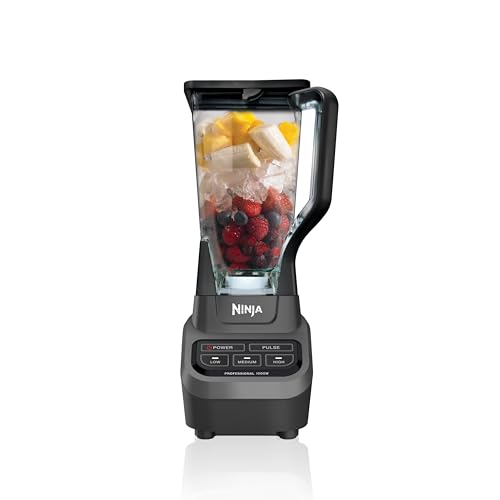
Ninja Professional Blender BL610 1000W — Best Full-Size Family Workhorse
The BL610 is the blender equivalent of a family estate car: a 72-ounce pitcher, a 1000W motor and Total Crushing technology that stacks blades up the centre of the jar so ice meets steel at several heights instead of settling at the bottom. Load it with frozen fruit, ice and milk and it returns a pitcher of smoothie with the texture of soft-serve rather than the gravel-and-chunks lottery of lesser machines. Sauces, soups and frozen drinks all fall within its working day, which is why so many households buy it once and stop thinking about blenders for years.
Its virtues are scale and simplicity. There are no programs to learn and no screen to navigate with wet hands; you choose a speed and the machine works. The pitcher serves a crowd in one cycle, and the parts go in the dishwasher afterwards. The trade is size and voice: this is a tall, loud, unapologetic appliance that will dominate a small counter and announce a 7 a.m. smoothie to the entire house. For families, that announcement is just breakfast. For light sleepers in studio flats, read the personal blender reviews below with care.
- Format: full-size countertop pitcher blender
- Power: 1000W with Total Crushing technology
- Pitcher: 72 oz capacity for family batches
- Model reference: BL610
- Cleanup: dishwasher-safe parts per the listing
- Best loads: smoothies, frozen drinks, sauces
Strengths
- Stacked blades crush ice evenly through the jar
- One cycle fills glasses for the whole table
- Simple controls suit every age of user
Trade-offs
- Too large and loud for tiny or quiet kitchens
- Overkill for a single daily smoothie
- The tall pitcher needs cabinet clearance to store
Best for: families and batch-prep households blending daily. Not suited for: solo commuters or noise-sensitive flats.

Ninja Blender Pro+ BL660 1100W — Best Pitcher-Plus-Cups Combo
The BL660 answers the question households ask a month after buying a big blender: what about the mornings when only one person wants a smoothie? Its 1100W base drives the same style of XL 72-ounce pitcher for the weekend crowd, then swaps to single-serve mode with two 16-ounce to-go cups and spout lids for the weekday dash. One motor, two lifestyles, no second appliance colonising the counter. The extra hundred watts over the BL610 is a margin rather than a transformation, but the cups are a genuine change in how the machine gets used.
In practice the combo reshapes the week. Saturday sees the pitcher full of frozen mango and ice for four. Tuesday sees one cup, spinach and all, blended and carried out the door in the same vessel, leaving one cup and a blade to rinse. Dishwasher-safe parts keep that rhythm sustainable. If your household contains both a brunch habit and a commuter, this is the configuration that respects both, and it is why the BL660 edges its sibling for mixed households despite their shared DNA.
- Format: pitcher plus single-serve cups on one base
- Power: 1100W motor
- Pitcher: XL 72 oz for family batches
- Cups: two 16 oz to-go cups with spout lids
- Model reference: BL660
- Cleanup: dishwasher safe parts per the listing
Strengths
- Covers crowd batches and solo cups equally well
- Blend-and-go cups cut morning washing-up
- Slightly stronger motor than the BL610
Trade-offs
- More parts to store than a pitcher-only machine
- Still a large, assertive countertop presence
- Cup blending suits drinks, not thick sauces
Best for: mixed households with brunch and commute modes. Not suited for: minimalists who want one vessel only.

Ninja Fit Compact Personal Blender QB3001SS — Best Compact Personal Blender
The Ninja Fit strips the smoothie ritual to its essentials: a 700W base small enough for a drawer, two 16-ounce cups, and blades that turn frozen fruit, shakes and iced drinks into a single serving you carry away in the blending vessel itself. Sixteen ounces is the honest size of a personal smoothie, generous without becoming a meal you abandon at noon. For students, office workers and anyone whose kitchen counter is measured in centimetres, this format is not a compromise; it is the correct tool wearing the correct dimensions.
Power discipline is the Fit’s one lesson to learn. A compact motor rewards sensible loads: liquid in, frozen fruit in pieces rather than boulders, and a pulse to start the collapse before the full run. Treat it that way and it will serve daily for years. Ask it to imitate the BL610 with a cup packed solid with ice cubes and it will tell you, audibly, that physics has limits. Buy it for the job it describes on the box and it is one of the most satisfying small appliances in this guide.
- Format: compact personal blender
- Power: 700W base
- Cups: two 16 oz to-go cups with spout lids
- Model reference: QB3001SS
- Cleanup: dishwasher safe parts per the listing
- Best loads: single smoothies, shakes, frozen drinks
Strengths
- Drawer-friendly base suits the smallest kitchens
- Two cups keep a couple’s mornings moving
- Blend, lid and leave in under two minutes
Trade-offs
- No pitcher option for family batches
- Large ice cubes need breaking or patience
- Small motor dislikes overfilled cups
Best for: singles, students and small-kitchen commuters. Not suited for: families or frozen-drink parties.
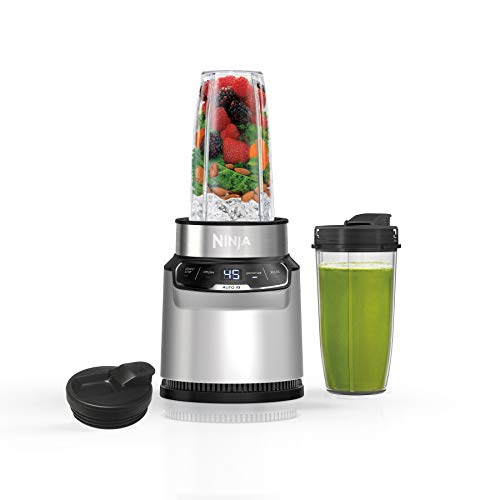
Ninja Nutri-Blender Pro BN401 — Best Smart Personal Blender
The BN401 is the personal blender for people who like their mornings automated. Its 1100-peak-watt motor is the strongest in the personal class here, and its two Auto-iQ programs run timed patterns of pulsing, blending and pausing that break down frozen fruit and ice without the user hovering over a button. You load a 24-ounce cup, press once, and dress or pack a bag while the machine thinks. The larger cups also matter: 24 ounces swallows a serious breakfast smoothie, greens and all, where 16-ounce machines ask you to edit the recipe.
Auto-iQ’s second program extends the machine beyond drinks into salsa and dips, which suits cooks who like one base earning several jobs. Two cups with lids are included, and the parts are dishwasher safe. The honest costs are noise and commitment: peak power in a small cup is loud in a concentrated way, and the program-led approach gives you less manual control than a dial if you are the sort of blender who nudges textures by ear. For everyone else, this is the personal format at its most polished.
- Format: personal blender with programs
- Power: 1100 peak watt motor
- Programs: 2 Auto-iQ programs for drinks and dips
- Cups: two 24 oz to-go cups included
- Model reference: BN401
- Cleanup: dishwasher safe parts per the listing
Strengths
- Strongest personal motor in this line-up
- Programs blend hands-free with repeatable results
- Large 24 oz cups fit full breakfast recipes
Trade-offs
- Concentrated noise at full personal power
- Less manual finesse than dial-controlled models
- Cups are too tall for some car cup holders
Best for: busy professionals wanting push-button smoothies. Not suited for: texture tinkerers who blend by ear.

KOIOS Smoothie Blender 900W — Best Multi-Cup Value Set
KOIOS competes on completeness. The 900W personal base arrives with three to-go cups, two at 23 ounces and one at 16, inside a fourteen-piece set that even includes a recipe booklet. For a household where two people leave at different times and a third smoothie happens at lunch, the extra cup is the difference between a system and a queue. Power sits comfortably in the personal class’s upper middle, enough for smoothies, shakes, juices and frozen drinks built from sensibly sized frozen pieces.
The twist-lock cup fitting deserves a mention because personal blenders live or die by their seals; a cup that locks positively and opens without a wrestling match gets used on tired mornings, and one that dribbles gets retired to a cupboard. Dishwasher-safe parts keep the set in rotation. What KOIOS cannot offer is Ninja’s decades of brand infrastructure, so weigh the generous box against your feelings about long-term spares. As a starter system for a smoothie household, the arithmetic of three cups and a recipe book is persuasive.
- Format: personal blender set
- Power: 900W motor
- Cups: two 23 oz cups and one 16 oz cup
- Set size: 14 pieces including a recipe booklet
- Fitting: twist-lock cup attachment
- Cleanup: dishwasher safe parts per the listing
Strengths
- Three cups suit staggered household mornings
- Two cup sizes match appetite and recipe
- Recipe booklet helps new smoothie makers start
Trade-offs
- Smaller brand footprint than Ninja’s
- No programmed blending cycles
- More pieces to keep track of in drawers
Best for: couples and families adopting a smoothie routine. Not suited for: brand loyalists or program fans.

Colarlemo 1200W Smoothie Blender — Best High-Speed Budget Set
The Colarlemo arrives like a variety pack: 1200W of claimed power, a blade speed of 25000RPM, twelve pieces including two six-leaf blade assemblies and three cup sizes, pitched at ice crushing, frozen drinks and even nuts. The spare blade is a thoughtful inclusion in a category where the blade assembly is the hardest-working and most losable part, and the spread of cup sizes lets one base serve a small protein shake and a large smoothie with equal willingness. Dishwasher-safe parts complete a specification that reads generously for its position in the range.
Temper the enthusiasm with the usual budget-set wisdom. Headline wattage and RPM describe a motor spinning freely; what reaches your frozen mango depends on blade design, cup shape and how the load circulates, and a newer brand’s long-term spares story is unproven next to Ninja’s. Used with sensible loading and the pulse-first habit, the Colarlemo handles the smoothie brief well and adds a grinder’s ambition for nuts and seeds. Buy it as a capable, well-stocked starter or second-location blender and it will not embarrass the decision.
- Format: personal blender set, 12 pieces
- Power: 1200W, blade speed 25000RPM
- Blades: two 6-leaf blade assemblies included
- Cups: three cup sizes in the set
- Jobs: smoothies, ice crushing, frozen drinks, nuts
- Cleanup: dishwasher safe per the listing
Strengths
- Spare blade assembly included in the box
- Three cup sizes cover shakes to smoothies
- High headline power for frozen loads
Trade-offs
- Newer brand with an unproven spares record
- Headline figures flatter real-world blending
- No pitcher for family-scale batches
Best for: budget-conscious variety seekers and second homes. Not suited for: buyers wanting a decade-long brand promise.
How Do the Six Blenders Compare Side by Side?
| Pick | Format | Power | Standout detail |
|---|---|---|---|
| Ninja Professional Blender BL610 1000W | 72 oz pitcher | 1000W | Total Crushing blade stack |
| Ninja Blender Pro+ BL660 1100W | Pitcher + cups | 1100W | Two 16 oz cups included |
| Ninja Fit Compact Personal Blender QB3001SS | Personal | 700W | Compact drawer-size base |
| Ninja Nutri-Blender Pro BN401 | Personal | 1100 peak W | Auto-iQ programs |
| KOIOS Smoothie Blender 900W | Personal set | 900W | Three cups, 14 pieces |
| Colarlemo 1200W Smoothie Blender | Personal set | 1200W | Spare 6-leaf blade |
Why Does Ice Separate Good Blenders From Pretenders?
Ice is dense, angular and unforgiving, and it exposes the two ways blenders fail. In a weak jar, cubes bounce on top of the blades while the liquid below turns to slush, a traffic jam of hardness. In a well-designed system, the jar’s shape and the blade stack keep pulling the frozen load downward into the cutting path until every cube has met steel enough times to become snow. That circulation, more than any wattage figure, is what you are buying in the Ninja pitchers, and what the better personal cups imitate at small scale with tight, vortex-friendly walls.
You can help any machine pass the test. Use crushed ice or small cubes when the recipe allows, add frozen ingredients in two waves rather than one iceberg, and give the blend a pulse start so the load collapses before full speed. If a blender still leaves marbles after honest technique, the machine is the problem, and this guide’s full-size picks exist precisely for households tired of chewing their smoothies.
Pitcher or Personal Cup: Which Format Fits Your Mornings?
Count servings and sinks. A pitcher blender serves a household in one cycle and washes up as one jar, one lid and one blade assembly, but it demands counter space and produces a family-sized noise event. A personal blender serves one person in the vessel they carry away, stores in a drawer and cleans in seconds, but multiplies into queues when three people want breakfast at once. The BL660’s hybrid answer, pitcher plus cups, suits homes that live in both modes across a week.
Texture expectations differ subtly too. Big pitchers excel at silky, aerated smoothies in volume. Personal cups, blended upside down with the blade at the base of the load, are superb at small, dense blends and protein shakes. Neither format is the premium one; they are different tools that happen to share a motor principle. Choose by your calendar, and the blender will feel tailor-made.
How Should You Load a Blender for the Smoothest Result?
Order matters because gravity and circulation are your staff. Liquid goes in first, enough to cover the blades, then soft ingredients, then powders and greens, with frozen fruit and ice last, sitting on top where the forming vortex will drag them down. In a personal cup the order inverts in your hands, since the cup flips onto the base, so think backwards: what lands nearest the blade when inverted should be the liquid and soft goods, with the frozen load at the far end arriving as the blend progresses.
Resist the full-to-the-brim temptation. Blending needs headroom for the vortex to fold the load over itself; an overfilled jar blends the bottom third beautifully and leaves the top third as a garnish. Work in two batches for big recipes, blend greens with the liquid first for thirty seconds before adding fruit if you hate flecks, and let nut butter ride in the liquid layer rather than smearing the jar wall where no blade will ever reach it.
What Can You Blend Besides Smoothies?
The big pitchers moonlight across the menu: silky soups blended in the jar, pancake batter without lumps, frozen margaritas and granitas, breadcrumbs, and sauces from romesco to curry pastes. The BN401’s second Auto-iQ program explicitly courts salsa and dips, and its cup format suits small, intense blends like pesto and spice pastes where a pitcher’s volume would strand the ingredients under the blades. The Colarlemo set even reaches for nuts with its grinding ambition.
Knowing the second job helps you choose. A household that blends soup weekly should weight the pitchers heavily. A cook who makes small batches of sauce for two will get more joy from a strong personal machine. Either way, a blender bought for smoothies that also handles three other weekly tasks stops being a single-purpose appliance and starts being infrastructure.
How Do You Keep a Blender From Smelling Like Last Week?
Blend a cup of warm water with a drop of washing-up liquid for twenty seconds immediately after use, and most days that is the entire cleaning job. The failures come from delay: smoothie residue dries into the blade assembly’s crevices and ferments quietly under the gasket. Periodically dismantle what the design allows, wash the gasket itself, and let every part dry fully before reassembly, because a sealed damp blender grows its own aroma with scientific reliability.
Dishwasher-safe parts, which every pick here claims for its removable pieces, make the deep clean easy, but hand-washing the blade assembly remains the kinder option for edge longevity. Store the jar or cups unsealed, or with the lid ajar, and a blender that blends daily will smell of nothing at all, which is the correct fragrance for an appliance that makes breakfast.
How Loud Is Too Loud at Six in the Morning?
Blending ice is briefly violent, and no machine in this guide will ever be library-quiet. The full-size pitchers produce a broad roar that carries through a house, while personal blenders concentrate a higher-pitched burst into a shorter window, often under a minute. Which disturbs your household more depends on its sleepers and its walls. Thin-walled flats with a baby in the next room are the strongest argument for blending the night before, since a smoothie keeps acceptably overnight in a sealed cup in the fridge.
Small courtesies reduce the blast radius. Blend on a folded towel to decouple the base from a resonant counter, close the kitchen door before the ice goes in, and choose the shortest effective program rather than a gratuitous extra thirty seconds. The Auto-iQ cycles on the BN401 help here in an unexpected way: a defined pattern ends the moment the work is done instead of whenever a sleepy human remembers the button.
What Should Gym-Goers and Protein-Shake Drinkers Look For?
Protein powder exposes lazy blending instantly, clumping against cup walls and hiding dry pockets under the foam. Personal blenders shine for this job because the whole serving is small enough for the vortex to police, and a ten-second pre-blend of liquid and powder before the fruit lands prevents most clumping. The 24-ounce BN401 cups swallow a full post-workout recipe with room for ice, while the Ninja Fit’s 16-ounce cups suit the standard scoop-and-milk formula precisely.
Portability decides the rest. A cup that travels from base to gym bag without a decanting step, sealed by a spout lid that survives a commute, is the entire product for this audience. Check that the included lids match how you drink: spouts for the train, open rims for the desk. And rinse the cup at the gym if you can, because protein residue left until evening becomes a cleaning event rather than a rinse.
How Do You Blend for Children Without Making a Second Breakfast?
Kids’ smoothies succeed on sweetness, colour and the absence of detectable virtue. The pitcher blenders let you build one base for the family and pour small glasses, adjusting the adult cups with ginger or greens afterwards. Personal cups suit older children who want authorship of their own recipe, and pressing the button themselves converts breakfast into a privilege rather than a negotiation. Keep frozen banana in every child’s blend and most other ingredients become negotiable.
Texture is the battleground. Children reject flecks and seeds with a detective’s eye, so blend children’s portions a few seconds longer and favour the strong machines for berry-heavy recipes whose seeds need thorough work. Serve in a cup with a lid and straw for the youngest drinkers, because a 72-ounce pitcher’s pour is a two-handed adult job, and the floor has already eaten enough smoothies this year.
What Does Frozen Fruit Quality Change in the Glass?
The blender gets blamed for fruit it never chose. Bagged frozen fruit varies enormously: individually frozen ripe pieces blend into silk, while a cheap mixed bag frozen into a single glacier block defeats circulation in any jar. Let the hardest blocks sit on the counter for five minutes while you assemble the rest, or buy fruit frozen in separate pieces and keep the bag sealed against freezer burn, which toughens texture and dulls flavour no motor can restore.
Home-frozen fruit deserves technique too. Freeze banana slices and berries on a tray before bagging them and they will stay separate, measure easily and blend kindly. Freeze them as a solid brick and you have manufactured the exact load that makes personal blenders complain. The machine and the freezer are partners in this recipe; when the smoothie disappoints, audit both before replacing either.
How Should You Handle Thick Blends Like Nice Cream and Nut Butter?
Thick blends invert the usual rules: liquid becomes the scarce resource, added by the spoonful rather than the glass. Frozen banana soft-serve and smoothie bowls need a machine that can keep a dense load moving, which is where the big pitchers and the strongest personal motor earn their keep, plus a human willing to stop, scrape and restart twice. Expect the process to be iterative rather than one heroic continuous run.
True nut butter, ground from dry nuts alone, is the sternest test in home blending and the honest answer is that most smoothie-focused machines do it slowly, in batches, with rests to protect the motor, if they do it well at all. The Colarlemo set’s grinding ambition and spare blade suit experimentation here, but households blending nut butter weekly should treat it as a food-processor job. Knowing a tool’s border is not criticism; it is how tools survive to do their real work for years.
What Is the Difference Between Peak Watts and Working Watts?
Personal blender listings love the phrase peak watts, and the BN401’s 1100-peak-watt figure is a fair example of the genre. Peak describes the motor’s maximum draw in a brief surge, often at start-up or under sudden load, not the power it sustains through a blend. Working power is lower and steadier. This does not make peak figures lies, but it makes them poor comparison tools between brands, each of which measures its surge differently.
Compare instead within a maker’s own range, where the measurement habit is at least consistent, and lean on format and blade design for cross-brand judgements. A pitcher that circulates a frozen load properly will always beat a sealed cup with a heroic peak figure and a lazy vortex. Your frozen strawberries are the only laboratory whose results matter, and every machine in this guide has passed that bench in its intended format.
How Do You Stop a Blender From Walking Across the Counter?
A blender walks when vibration beats friction, usually during the first chaotic seconds of an ice load on a smooth stone counter. Suction feet help when they are clean and the surface is dry; a single wipe of both before a big blend is a legitimate technique. A thin, dense mat under the base adds grip and quiets the drumming at once. Never hold a dancing pitcher by its handle and blend harder; stop, redistribute the load, and restart with a pulse so the machine settles into its rhythm.
Personal blenders mostly sit still because the cup locks to the base and your hand is naturally near, but the same physics applies at small scale during a frozen start. If a machine repeatedly travels, the load is probably too dry or too solid for its format, and the fix is liquid and patience rather than a heavier hand. Appliances that stay where they are put also keep their cords out of the puddle zone, which is a safety dividend beyond tidiness.
What Should You Check in the Box Before the First Blend?
Count the cups, lids and blade assemblies against the listing while the packaging is still on the table, because a missing spout lid discovered on a Monday morning is a worse surprise than one discovered on delivery day. Wash every food-contact part before first use. Run the base empty for a few seconds and listen for a smooth, even note; rattles at birth are warranty conversations, best held immediately.
Read the manual’s two honest pages: the maximum load lines and the duty cycle, which tells you how long the motor may run and how long it must rest. Personal blenders in particular live by these numbers, and owners who respect them measure their machines’ lives in years. Mark the max-fill line with your eyes on each cup you own, because overfilling past it is the one error that produces both bad texture and a leaking seal in a single move.
How Can Meal Prep Make a Blender Earn Its Place All Week?
Sunday batching is where the pitchers justify their footprint. Blend a double smoothie base, portion it into the personal cups or jars, and the week’s breakfasts become a grab rather than a project, with the caveat that green smoothies taste brightest within two days. The same session can produce a soup, a sauce and a batch of pancake batter, turning one washing-up into four meals’ head start. Freezing smoothie portions in the cups themselves, with headroom for expansion, makes even the personal machines into prep tools.
Keep a small rotation logic: blend on Sunday what keeps until Wednesday, and plan a midweek mini-session for the rest. Label cups with painter’s tape and a date, because three identical green jars in a fridge become a guessing game by Thursday. A blender used this way stops being a breakfast appliance and becomes the kitchen’s quiet production department, which is when its cost per use drops to pennies.
How Do You Choose Between the Two Big Ninja Pitchers?
The BL610 and BL660 share a silhouette and a philosophy, so the choice collapses to one question: does your household blend for one person on weekdays? If every smoothie in your home is a group event, the BL610’s simpler box and lower complexity win, and its 1000W motor will never be the reason a blend fails. If a commuter, a gym-goer or a teenager with a bus to catch blends solo three mornings a week, the BL660’s included cups convert those mornings from pitcher-washing chores into ninety-second routines.
Storage nudges the decision too. The BL660’s extra cups and lids need a home, ideally the same drawer every time, or the system’s convenience leaks away into cupboard archaeology. Households that keep tidy drawers extract the combo’s full value. Households that lose lids on principle should buy the pitcher-only machine and accept the washing-up as the price of their nature.
What Role Do Blade Assemblies Play Over a Blender’s Lifetime?
Blades dull slowly, gaskets perish faster, and the blade assembly is where a personal blender’s performance quietly retires if it is neglected. Rinse assemblies immediately, dry them before storage, and never leave one soaking overnight in smoothie water, which corrodes and smells in equal measure. The Colarlemo’s spare six-leaf blade is a genuinely useful hedge here, and KOIOS and Ninja cup systems benefit from the availability of replacement parts through established channels.
Judge a strange new noise at the blade before anywhere else. A clicking or grinding that was not there in month one usually means the assembly is loose, worn or harbouring a fruit stone that should never have been invited. Stones and pits, incidentally, are the one frozen ingredient class to exclude on principle: they damage blades, survive blending, and ambush teeth, a hat-trick of bad outcomes.
How Should You Blend Iced Coffee and Frozen Drinks for Guests?
Entertaining loads differ from breakfast loads: they are bigger, icier and timed to a roomful of people watching. Work in pitcher batches, blend to order in waves, and keep a tray of ice beside the machine rather than commuting to the freezer mid-conversation. Sweetness and dilution need balancing because melting ice keeps working after the pour; blend slightly stronger and colder than the target and let the glass finish the job.
Frozen coffee drinks reward a pre-chilled base and coffee frozen into cubes, which chill without watering the flavour down. The BL610 and BL660 pitchers turn those cubes into the café texture guests assume took a commercial machine. Announce nothing, serve promptly, and accept the compliments on behalf of a blade stack that did the actual work.
What Does a Blender Need From Your Kitchen’s Electrics and Space?
Motors in the 1000W class draw serious current for short bursts, so give the blender a proper wall outlet rather than a tired extension strip shared with a kettle. Two appliances of this size on one circuit will introduce themselves to your breaker panel eventually. Space-wise, measure height with the pitcher seated and the lid on, because under-cabinet storage that fails by a centimetre fails completely, and personal blender bases forgive almost any kitchen that has a drawer.
Ventilation is the forgotten requirement. A blender working hard under a low cabinet traps its own warm air, and repeated hot running shortens motor life. Pull the machine forward for big sessions, let it breathe, and push it back when the show is over. These are thirty-second habits that separate appliances retired at two years from appliances inherited at ten.
How Do You Adapt Smoothie Recipes Written for a Different Machine?
Recipes assume a blender, rarely yours. When a recipe written for a high-end pitcher meets a personal cup, halve the load, keep the liquid ratio, and expect to blend in two bursts with a shake between. When a personal-cup recipe meets a big pitcher, double it at least, because a small load in a vast jar hides beneath the blades and blends badly. The ingredient order inverts between formats too, as the loading section explained, so translate the sequence, not just the quantities.
Texture words also translate loosely. One writer’s silky is another’s drinkable, and frozen fruit sizes vary by brand and season. Keep a line of notes on your three most-made recipes with your machine’s actual times, and within a fortnight the translations become instinct. A blender is a dialect; fluency is quick, but it is earned per machine.
When Is a Blender’s Warranty and Brand Network Worth Paying For?
Motors live hard lives in this category, spinning frozen loads at dawn for years, and the value of an established service network compounds quietly. Ninja’s presence behind four of these six picks means replacement cups, lids and blade assemblies are findable long after purchase, which is the practical difference between a machine retired by a lost gasket and one still blending at year seven. Newer brands compete with generous boxes, and for a second home or a starter kitchen that trade can be entirely rational.
Decide by expected mileage. A blender that will run twice daily for a family deserves the deepest support bench you can buy. A blender for weekend smoothies at a holiday flat can happily be the value set with the spare blade. Both decisions are correct; confusing one use case for the other is where money gets wasted in this category.
How Do You Keep Smoothies Bright Instead of Brown?
Oxidation dulls a smoothie faster than any blade can save it. Green blends brown when they sit, fruit blends darken at the surface, and the cure is partly chemistry and partly speed: a squeeze of citrus slows the browning, a full cup with little air at the top slows it further, and drinking within the hour beats every preservation trick. Blending the night before is a fair convenience trade, but pour into a filled, sealed vessel and accept that morning’s glass will taste good rather than perfect.
Ingredient order plays a supporting role here too. Acidic fruit blended early coats the mixture, while delicate greens added late keep a brighter colour in the glass. None of this rescues a smoothie left on a desk until lunch, which no machine in this guide can legislate against, however honest its motor.
What Should Students and First-Flat Kitchens Prioritise?
Small spaces, shared kitchens and tight budgets all point the same way: a compact personal blender that stores in a drawer, washes in a minute and costs its owner no counter at all. The Ninja Fit is built for exactly this life, and the KOIOS set suits a shared flat where cups multiply like coat hangers. Noise diplomacy matters in shared housing, so blend before the house’s agreed quiet hours or take the cup to the kitchen farthest from sleeping flatmates.
Durability in this setting means surviving other people. Cups will be borrowed, lids will migrate, and the machine that tolerates communal life is the one with findable spare cups. Buy the format your living situation can protect, and let the dream pitcher wait for the first kitchen that is truly yours.
How Does a Blender Fit a Kitchen That Already Owns a Juicer and a Food Processor?
Three machines overlap less than their boxes suggest. A juicer separates pulp and gives you juice, which a blender cannot imitate. A food processor chops, slices and kneads in ways a blender’s vortex cannot. The blender owns the territory of emulsions and frozen drinks: smoothies, shakes, frozen cocktails, silky soups and sauces. Households that assign each machine its territory stop duplicating purchases and start using all three without resentment.
If counter space forces a single survivor, the blender usually wins on frequency, because breakfast happens daily and pastry projects do not. Choose the survivor by your week’s actual repetitions rather than your most impressive recipe, and the surviving machine will be the one still earning its place in December.
What Mistakes Do New Blender Owners Make Most Often?
Overfilling wins again, in this category by a landslide: a jar packed to the lid cannot form a vortex, so the bottom burns while the top sulks. Second is the dry start, frozen fruit and powder with too little liquid, which cavitates the blades in an air pocket and convinces owners their strong machine is weak. Third comes the marathon blend, running a personal blender for minutes at a stretch and cooking both the motor and the smoothie, when thirty to sixty seconds of honest work was the actual requirement.
Fourth, people blend hot liquids in sealed personal cups, a pressure experiment nobody should run; soups belong in vented pitchers, cooled slightly, filled halfway. Fifth, the gasket never gets washed because it never gets noticed, until the day every smoothie tastes faintly of onion. And sixth, owners store cups sealed in gym bags and blame the blender for the resulting biology. Every one of these mistakes is free to avoid, and avoiding them is most of what separates delighted owners from disappointed ones with identical machines.
How Should You Test a New Blender in Its First Week?
Give the machine three honest examinations before the return window closes. First, a frozen-fruit smoothie at your normal recipe size, judged on texture and time. Second, plain ice with water, the purest crushing test, judged on whether the result is snow or gravel. Third, your messiest real load, the protein shake or green blend you actually drink, judged on cleanup as much as smoothness. A blender that passes your own three tests will not surprise you in month six.
Note the sounds and times as you go. That small record becomes your baseline for the machine’s whole life, the reference that tells you years later whether a new rattle is age, damage or imagination. Keep the box until the tests are done, and the decision, whichever way it falls, will be one you made with evidence.
How Should You Choose a Blender as a Gift for a New Smoothie Drinker?
Gift the format that removes friction from a habit that does not exist yet. A new smoothie drinker needs the morning to be easy more than they need it to be powerful, so the personal machines with cups included, the BN401 for its programs or the KOIOS set for its three cups, make the kindest presents. Include the first bag of frozen fruit if you want the gift used in week one, because a blender waiting for a shopping trip is a blender learning to be furniture.
What Is the Simplest Sign a Blender Has Become Part of the Household?
It stops being put away. The machine that survives the first month on the counter or in the front of the drawer has passed the only review that compounds, and its cost per blend falls every single morning afterwards. Choose the format your kitchen can keep visible, and you have chosen the blender your future self will actually use, on the rushed mornings and the slow ones alike.
Final Recommendation
Households blending for a table should start with the Ninja Professional Blender BL610 1000W, whose stacked blades and 72-ounce pitcher make ice surrender at family scale. Homes split between weekend batches and weekday dashes belong with the Ninja Blender Pro+ BL660 1100W and its two travel cups. Commuters who want the machine to do the thinking should choose the Ninja Nutri-Blender Pro BN401 and its Auto-iQ programs. Match the format to your mornings before you compare a single watt, and your smoothies will pour like they were always meant to, cold enough to fog the glass on the hottest day of the year.
Frequently Asked Questions
Can a personal blender really crush ice, or is that marketing?
Yes, within its scale. The personal machines here crush the ice for one smoothie happily, especially with liquid present and cubes of ordinary size. What they cannot do is crush ice for six drinks in a row without rest, which is pitcher work.
Why does my smoothie come out foamy?
Foam is air beaten into the blend, usually from over-blending or a jar with too much headroom for the volume. Blend just until smooth, keep the jar sensibly filled, and let the smoothie settle for a minute before pouring if the froth bothers you.
Is a higher wattage always better for frozen fruit?
No. Wattage sets a ceiling, but blade design and jar circulation decide how much of that power becomes blending. The 1000W BL610 will out-smooth many stronger-on-paper machines because its blade stack keeps the frozen load moving through the cut.
Can I blend hot soup in these machines?
Only in the pitcher models, with the lid vented, the jar no more than half full and the soup slightly cooled, because steam expands. Never seal hot liquid in a personal cup; the pressure has nowhere polite to go.
How long should a smoothie blend take?
Most loads finish in thirty to sixty seconds once the vortex forms. If chunks remain after a minute, stop, add a splash of liquid, redistribute the load and run again rather than grinding on and heating the motor.
What is the best way to blend leafy greens without flecks?
Blend the greens with the liquid alone first, until the liquid is uniformly green, then add fruit and frozen ingredients. Giving the leaves their own stage is the reliable route to a smoothie with no salad confetti.
Related Guides
Smoothies are one chapter of the jar story. If you prefer your glassware honest and your pitchers transparent, Best Glass Blenders for Smoothies looks at the same job through glass jars. Recovery after the workout that follows the smoothie is covered by Best Memory Foam Pillows Cooling Contour, because training is only half the contract. And if the kitchen renovation bug has bitten, Best Bathroom Vanities 36 Inch Wide starts the other room’s upgrade list.



[…] mixer anchors one end of the counter; blending anchors the other. Our roundup of Best Blenders for Smoothies and Ice covers the morning side of that counter in detail. If sore shoulders are what sent you shopping, […]