What's inside
- Key Takeaways
- Quick Picks
- How Did We Choose These Bottom Freezer Refrigerators?
- How Do the Six Refrigerators Compare Side by Side?
- How Do You Measure a Kitchen for a New Refrigerator?
- Why Does Ventilation Clearance Matter So Much?
- How Much Capacity Does Your Household Actually Need?
- What Should You Check About Ice Maker Installation?
- How Should You Organise a Bottom Freezer Drawer?
- What Should You Do in the First Week With a New Fridge?
- How Do You Keep a Stainless Finish Looking Good?
- How Long Should a Refrigerator Last, and How Do You Help It?
- What Is the Best Way to Move Food From the Old Fridge?
- Why Does Door Swing Deserve a Rehearsal?
- What Mistakes Do Refrigerator Buyers Regret Most?
- Final Recommendation
- Frequently Asked Questions
- Related Guides
As an Amazon Associate I earn from qualifying purchases. This post may contain affiliate links at no extra cost to you.
cottageverdict.com is reader-supported. When you buy through links on our site, we may earn an affiliate commission.
Where to buy: Each refrigerator below links to its Amazon listing, where you can check price on Amazon and, most importantly, confirm the full delivery dimensions before ordering. With appliances this size, the listing’s measurements matter more than any other detail on the page.
Shopping for the best bottom freezer refrigerators with ice makers begins with a tape measure, not a brochure. The layout itself is easy to love — fresh food at eye level, frozen goods in a drawer below — but the right model depends on your doorway widths, your alcove, the ventilation space you can spare and the number of mouths your weekly shop must feed. This guide matches six cabinets, from a 7.1 cubic foot apartment fridge to a 22.3 cubic foot family Kenmore, to the homes they genuinely fit.
Read the reviews with your own kitchen in mind. Note which models name an ice maker in their verified listing and which simply offer the bottom freezer layout, because we do not credit any refrigerator with features its listing does not state. Then work through the measuring and capacity sections that follow the reviews; they are the difference between a smooth delivery day and a very large box going back on the truck.
One promise before the reviews: every capacity, width and named feature quoted here comes from the model’s verified listing, so the numbers you plan your kitchen around are the numbers the manufacturer publishes, not figures borrowed from a sibling model with a similar name.
Bring a notebook to this decision. Doorway widths, alcove depth and a honest list of what your current fridge holds will answer most of the questions this guide raises before you reach the final recommendation.
Key Takeaways
- Measure doorways, hall turns and the alcove before falling for any cabinet, however perfect.
- Fresh food at eye level is the bottom freezer layout’s everyday gift to home cooks.
- Capacity should follow your shopping rhythm: weekly bulk buyers need more cubic feet.
- Leave the ventilation clearance the maker specifies, or the fridge works harder and louder.
- Only some listings name an ice maker; check for a water line if the model you want has one.
- Counter depth cabinets trade shelf depth for a calmer, flush-fitting kitchen profile.
Quick Picks
| Pick | Badge | Why it earns a place |
|---|---|---|
| Whirlpool WRB329DMBM 18.5 Cu Ft Bottom Freezer | Family All-Rounder | An 18.5 cubic foot layout in stainless steel suits a family kitchen that wants fresh food at eye level. |
| Kenmore 22.3 Cu Ft 31 Inch Bottom Freezer Refrigerator | Largest Capacity Pick | At 22.3 cubic feet with an ice maker and fingerprint resistant steel, it is built for big weekly shops. |
| Kenmore 15.1 Cu Ft 28 Inch Bottom Freezer Refrigerator | Slimmer Family Fit | A 28 inch width brings the bottom freezer layout to kitchens that cannot accept a full-width cabinet. |
| Sharp SJB1255GS 11.5 Cu Ft Counter Depth Refrigerator | Counter Depth Space Saver | An 11.5 cubic foot counter depth cabinet in a 24 inch width sits flush and suits compact kitchens. |
| Sharp SJB1045SNS 10.3 Cu Ft Refrigerator | Compact Two-Door Pick | A 10.3 cubic foot counter depth cabinet suits small households wanting a proper two-door layout. |
| Upstreman 7.1 Cu Ft Refrigerator with Bottom Freezer | Apartment and Dorm Pick | A 7.1 cubic foot apartment fridge with bottom freezer, adjustable thermostat and an efficient brief. |
How Did We Choose These Bottom Freezer Refrigerators?
We selected for spread rather than sameness: a family all-rounder, a maximum-capacity model, a slimmer cabinet for narrow kitchens, two counter depth compacts and an apartment-scale fridge, because refrigerator buying is really space buying. Every model appears in our verified pool, and each review quotes only what its listing states — capacity, width, finish and named features — rather than borrowing specifications from similar-looking models.
Within that discipline we judged the things owners live with: whether fresh food sits where eyes and hands naturally go, whether shelving adjusts to real food, whether a finish resists the fingerprints of a busy household, and whether the cabinet’s size matches the shopping pattern it will serve. Delivery practicality counted heavily too, since a refrigerator that cannot enter the kitchen is not a bargain at any specification.
Ice makers deserve a specific note. Where a listing names one, the review says so and discusses the water line it needs. Where a listing is silent, we treat the model as a bottom freezer refrigerator without that claim and judge it on layout and capacity instead. That honesty keeps your shortlist grounded in what will actually arrive at your door.
We also kept the apartment-scale model in the list deliberately. Refrigerator advice usually assumes a family house, yet a large share of readers live in flats where the kitchen is also the dining room and part of the living room. A guide that ignores those homes fails them, so the smallest cabinet here is judged by the same serious standards as the largest: layout, honesty of capacity and fitness for the life it will actually serve.
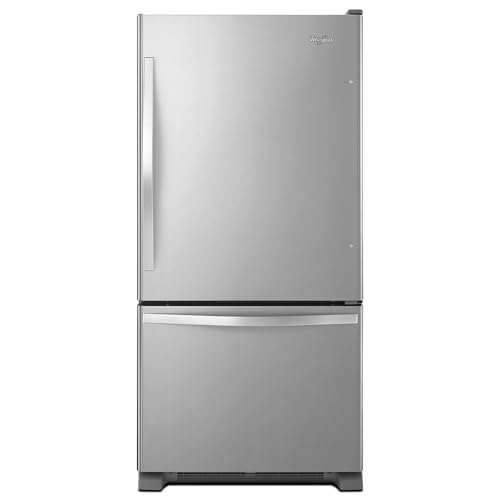
Whirlpool WRB329DMBM 18.5 Cu Ft Bottom Freezer — Family All-Rounder
The bottom freezer layout exists for one simple reason: we open the fresh food section ten times for every visit to the freezer. Putting salads, dairy and leftovers at eye level ends the era of discovering forgotten yoghurt behind the milk, while frozen peas accept their exile below without complaint. This Whirlpool’s 18.5 cubic feet lands in the family sweet spot — a full weekly shop fits, yet the cabinet does not dominate a mid-size kitchen.
Stainless steel is the finish most buyers picture, and it earns its popularity by suiting other appliances rather than matching them perfectly. Expect fingerprints; expect also that a microfibre cloth becomes a kitchen drawer staple. The single fresh-food door keeps the front clean and uncluttered, and the freezer drawer below glides out so you can see the whole frozen inventory instead of excavating a chest of frosted mysteries.
Measure before you fall in love. This is a full-size refrigerator, so doorways, hallway turns and the kitchen opening itself all need checking against the delivery dimensions on the listing. Leave the ventilation clearance the manufacturer specifies at the back and sides; a fridge pushed tight into an alcove works harder, runs louder and ages faster than one allowed to breathe.
Capacity planning deserves honesty about your household. Eighteen and a half cubic feet serves four people who shop weekly and cook most meals, but a household that buys monthly in bulk or freezes garden produce by the crate should look at the larger Kenmore below. Conversely, couples who eat out often may find this size generous to the point of echoing. Match the cabinet to the shopping rhythm and the fridge stops being a compromise.
Daily life with this layout rewards a small organising habit: keep a shallow basket for tonight’s ingredients in the fresh section, so dinner assembly takes seconds and the door stays open briefly. Shorter door-open time means steadier temperatures and less work for the compressor. It sounds like a magazine tip until a month of calmer cooking proves it to you.
Guests notice the eye-level fresh section more than owners expect. Drinks, desserts and cheese live where people can find them without kneeling and excavating, which makes hosting feel easier. A refrigerator’s social ergonomics rarely appear in specifications, yet they shape every gathering the kitchen hosts across the appliance’s long life.
Consider the seasons before deciding this size is enough. Summer adds drinks and salad volume, winter adds party food and leftovers, and a family that freezes soup in autumn batches uses the drawer hard. Eighteen and a half cubic feet absorbs those swells gracefully for most households, which is precisely why this capacity class has become the default family choice.
Long-term owners develop a fondness for unremarkable reliability: doors that still seal, drawers that still glide, a cabinet that simply continues. In a category full of novelty, a family fridge that asks for nothing but its ventilation space and an occasional wipe earns a loyalty that flashier appliances rarely inspire.
- Capacity listed in pool title: 18.5 cu. ft.
- Finish listed in pool title: stainless steel
- Layout: fresh food above, freezer drawer below
- Model reference in pool title: WRB329DMBM
- Category fit: full-size kitchen refrigerator
Strengths
- Fresh food sits at eye level where it gets used, not forgotten
- Capacity suits a family weekly shop without overflow
- Stainless finish blends with most modern kitchen suites
Trade-offs
- Full-size footprint demands careful doorway measurement
- Freezer drawer means bending for frozen goods daily
- No extra features beyond the listing are promised here
Best for: families upgrading from a top freezer who cook fresh most nights
Not suited for: narrow galley kitchens or homes with tight delivery turns

Kenmore 22.3 Cu Ft 31 Inch Bottom Freezer Refrigerator — Largest Capacity Pick
Volume changes behaviour. With 22.3 cubic feet, the weekly shop stops being a packing puzzle: party trays lie flat, the big turkey fits without removing shelves, and leftovers find homes instead of being exiled to a cool bag. The adjustable glass shelving named in the listing is the feature that turns raw volume into usable volume, because shelves that move let the cabinet follow your menu rather than forcing your menu to follow the cabinet.
The listing’s fingerprint resistant finish deserves more respect than it usually gets. In a house with children, a standard stainless door becomes a gallery of small handprints by Tuesday; a resistant finish keeps the kitchen looking calm with a fraction of the wiping. LED lighting, also listed, spreads bright light into corners where older bulbs left salads in shadow, which genuinely reduces food waste because people eat what they can see.
An ice maker is a lifestyle feature disguised as a specification. Summer drinks, cool bags for sport, and a house that hosts often all drain ice trays faster than anyone refills them. Remember it needs a water line connection, so confirm your kitchen has one or budget for fitting it during installation. The freezer space it occupies is the honest trade, and for most hosting households it is a trade made gladly.
Check the 31 inch width twice. Many older kitchens were built around 30 inch or narrower openings, and no amount of delivery-day optimism will widen brickwork. Measure the alcove, the narrowest doorway on the route and any hallway turn, then compare with the listing dimensions. ENERGY STAR certification, noted in the listing, means the big cabinet has been assessed for efficient running, which matters more as capacity grows.
Batch cooks should picture their largest real day: a market shop, two slow-cooker meals to freeze, a birthday cake to chill. This cabinet absorbs that day without the usual overflow onto worktops and into cool bags. The crisper drawers named in the listing keep greens from being crushed under heavier shopping, which is where much fresh food quietly dies in smaller fridges.
Running costs deserve a thought at this size. A large cabinet that is kept reasonably full actually holds its temperature more steadily than an empty one, because the food itself acts as cold storage. Keep it stocked sensibly, avoid overpacking to the point where air cannot circulate, and the big Kenmore behaves like a calm larder rather than an energy-hungry monument.
Hosts should imagine the drinks question at a summer gathering: ice in the freezer, chilled bottles in the fresh section, desserts waiting without being stacked on the cheese. A cabinet of this size removes the cool-bag overflow that litters kitchens during parties, and that composure alone justifies the extra width for households that entertain monthly.
Photographers of family life will recognise this cabinet’s role at Christmas and birthdays: the cake fits, the leftovers fit, the drinks are cold, and nobody performs the annual ritual of begging fridge space from neighbours. Capacity, at the moments that matter, is hospitality in appliance form.
- Capacity listed in pool title: 22.3 cu. ft.
- Width listed in pool title: 31 inches
- Features listed: ice maker, adjustable glass shelving, crisper drawers
- Lighting listed: LED interior lighting
- Finish listed: fingerprint resistant stainless, ENERGY STAR certified
Strengths
- Generous volume swallows a big family’s weekly shop whole
- Fingerprint resistant finish reduces daily polishing dramatically
- Adjustable glass shelves adapt to tall bottles and party trays
Trade-offs
- 31 inch width will not fit older 30 inch openings
- Large cabinet needs a clear delivery route through the home
- Ice maker occupies a share of freezer storage space
Best for: large families and bulk shoppers with a wide enough kitchen opening
Not suited for: homes with a strict 30 inch alcove or narrow entrance doors

Kenmore 15.1 Cu Ft 28 Inch Bottom Freezer Refrigerator — Slimmer Family Fit
Width is the silent deal-breaker in refrigerator shopping, and this Kenmore exists for the kitchens it excludes elsewhere. At 28 inches wide it threads into older alcoves, terraced-house kitchens and compact flats where a standard cabinet simply cannot go, while keeping the civilised bottom freezer layout that puts fresh food at eye level. Fifteen cubic feet is a considered compromise, not a defeat.
Living with the compromise means shopping a little differently. A small family that shops twice a week, plans loosely and avoids keeping three of everything open will find the space ample. A household that buys a month of meat at once will not. The freezer drawer below suits organised freezing — flat bags, labelled boxes — rather than a geology of forgotten tubs, and tidy freezers always feel larger than chaotic ones.
The fingerprint resistant style finish mentioned in the listing keeps a narrow kitchen looking composed, since a slim cabinet sits closer to eye level and to passing sleeves. Keep the ventilation gaps the manufacturer specifies, especially in tight alcoves where the temptation is to push the cabinet hard against the wall for an extra centimetre of floor.
Delivery is where this model quietly shines. A 28 inch cabinet passes through standard doorways and up most staircases with far less drama than its wider rivals, which matters in older homes where the kitchen sits beyond a narrow hall. Measure the route anyway — handrails and tight turns have embarrassed many confident buyers — but expect an easier day than the big cabinets demand.
Renters in older properties will appreciate another quiet virtue: a cabinet this width can often be installed without removing doors or negotiating the kind of turns that defeat wider models. When you move, it is also more likely to fit the next kitchen. Appliances that travel well between homes hold their value and their usefulness far longer than behemoths tied to one alcove.
Small households sometimes worry that fifteen cubic feet still sounds large. In practice the fresh section fills with the ordinary abundance of a week — vegetables, dairy, jars, leftovers — while the freezer takes bread, ice and a few prepared meals. It is the smallest size at which a couple stops playing refrigerator chess with every shopping bag, and that relief is its real specification.
Energy behaviour in a mid-size cabinet pleases quietly. There is less air to chill after each door opening than in a giant, yet enough thermal mass in a normal shop to keep temperatures steady. For households watching running costs, the middle sizes often deliver the sweetest balance of space and restraint.
For a household stepping up from a small under-counter fridge, this Kenmore feels transformative without overwhelming the room. The first full weekly shop that fits — with room to see everything — is a small domestic celebration, and it arrives without any building work or doorway surgery.
- Capacity listed in pool title: 15.1 cu. ft.
- Width listed in pool title: 28 inches
- Finish described in pool title as FPR stainless
- Layout: bottom freezer beneath fresh food section
- Category fit: compact full-height refrigerator
Strengths
- Narrow width slips into older kitchens and small homes
- Bottom freezer layout keeps fresh food at standing height
- Capacity still covers a small family’s weekly needs
Trade-offs
- Weekly shops for four will test the fresh food section
- Less freezer room than the larger cabinets here
- Slim shelves dislike oversized catering trays
Best for: small families and couples in kitchens with narrow openings
Not suited for: bulk buyers or households freezing large seasonal batches

Sharp SJB1255GS 11.5 Cu Ft Counter Depth Refrigerator — Counter Depth Space Saver
Counter depth design is about how a kitchen feels, not just how it measures. A cabinet that sits nearly flush with the worktop line leaves walkways clear, keeps the room’s sightlines calm and removes the looming presence a deep fridge brings to a small kitchen. This Sharp’s 24 inch width doubles down on that discretion, fitting into studios and compact homes where every appliance must justify its footprint daily.
Eleven and a half cubic feet asks for a particular lifestyle: shop for a few days at a time, keep the freezer for essentials, and let markets and corner shops act as your overflow storage. Couples who cook fresh food nightly thrive under that rhythm. The listing also describes the model as garage ready, which opens a second career as an overflow fridge for drinks, preserves and holiday extras in a garage or utility room.
Because the shelves are shallower, organisation matters more than in a deep cabinet. Use the full width, keep like with like, and resist keeping tall bottles lying down where they roll and hide. The two-door layout keeps the freezer separate below, so the fresh section stays a calm, visible space rather than a cavern where small items vanish behind big ones.
Measure depth as carefully as width here. Counter depth only delivers its flush look if your worktops are a standard depth and the cabinet’s doors can still swing clear of handles and corners. Stand in the kitchen, open imaginary doors, and check the swing against islands and walls before ordering; a tape measure used in time saves a very awkward delivery morning.
Designers of small kitchens lean on counter depth cabinets for a reason beyond space: visual calm changes how a room feels at breakfast. A fridge that does not jut past the worktop line lets light and movement flow, and in a compact home that calm is worth several cubic feet. This Sharp is bought as much for the room it creates as for the food it chills.
As a garage or utility overflow, the garage ready description in its listing gives it a second life few compact fridges can claim. Overflow drinks at Christmas, preserves from a glut of tomatoes, ice for a garden party — a cabinet rated for outbuilding conditions handles the swings of temperature that defeat indoor-only models. Few purchases offer two careers so clearly.
Apartment landlords and annexe builders choose cabinets like this for good reason: tenants get a real refrigerator, the room keeps its proportions, and the unit can be replaced or moved without a specialist crew. Practicality at the property scale is a different lens, and this Sharp passes through it cleanly.
Quiet kitchens suit some homes more than others, and a compact cabinet placed correctly contributes to that quiet. Level it, space it, and the Sharp becomes part of the room’s background hum of domestic order rather than a presence anyone has to think about or work around.
- Capacity listed in pool title: 11.5 cu. ft.
- Width listed in pool title: 24 inches
- Depth described in pool title as counter depth
- Note in pool title: garage ready
- Layout: two-door design with freezer below
Strengths
- Counter depth profile sits nearly flush with worktops
- 24 inch width fits studios, offices and small flats
- Garage ready note suits overflow storage in outbuildings
Trade-offs
- Capacity asks couples to shop little and often
- Counter depth shelves are shallower than full-depth rivals
- Not a main fridge for a large family’s weekly shop
Best for: couples, studios and anyone needing a tidy second refrigerator
Not suited for: families who shop weekly in bulk for five or more people
Sharp SJB1045SNS 10.3 Cu Ft Refrigerator — Compact Two-Door Pick
There is a growing class of kitchens — studio flats, annexes, garden offices, small rental homes — where a full-size refrigerator would consume the room, yet a mini fridge insults the cooking. This Sharp’s 10.3 cubic feet answers that gap with a proper two-door layout: a real freezer section below and a fresh food cabinet above, in a 24 inch counter depth frame that respects the room.
Living well with ten cubic feet is a skill worth learning. Shop with a list, keep a small set of versatile ingredients rather than a museum of sauces, and let the freezer hold butter, peas, bread and one or two prepared meals. The counter depth shelves reward shallow, visible storage: nothing hides three rows deep, so food gets used while it is still good, and waste quietly falls.
As a second refrigerator the case strengthens further. Drinks for a party, overflow at holidays, a teenager’s snacks in a family room, produce from an allotment — a compact cabinet in the utility room absorbs all of it without forcing a giant into the kitchen. Its modest size also makes delivery and positioning a one-person conversation rather than a household event.
Check the basics before ordering: the door swing in a tight corner, the ventilation space the maker specifies, and whether your doorway and hall give the cabinet a clean path. Compact fridges forgive many things, but a staircase turn measured in hope rather than centimetres is not one of them. Get the tape measure out, and this little cabinet will slot into its intended life without drama.
Students sharing a small house often inherit the worst fridge in any guide: a landlord’s mini unit with a frozen-solid icebox. Replacing that experience with a proper two-door cabinet of this size changes eating habits measurably — real vegetables get bought, leftovers survive, and the freezer holds bread and peas instead of a single neglected pizza. Dignity, it turns out, has a cubic footage.
Noise matters in studio living, where the fridge shares a room with the bed. Compact modern cabinets generally run quietly, but placement decides the rest: level the cabinet carefully so nothing rattles, keep it off a hollow floorboard if possible, and give it its ventilation space. A level, breathing fridge is a quiet fridge, whatever its size.
Breakfast in a small home shows this cabinet’s logic: milk, butter, eggs and jam all visible in one glance, nothing lost behind a giant’s depth. When a fridge shows you everything it holds, meal planning becomes effortless and the sad discovery of expired food behind newer shopping mostly disappears.
A final case for this size: holiday lets and staff kitchens, where guests and teams need a real fridge that nobody has to be taught to use. Two doors, sensible sections, no mysteries. Equipment that explains itself is equipment that survives contact with strangers gracefully.
- Capacity listed in pool title: 10.3 cu. ft.
- Width listed in pool title: 24 inches
- Depth described in pool title as counter depth
- Layout: two-door refrigerator design
- Category fit: compact kitchen or secondary fridge
Strengths
- Small footprint respects tiny kitchens and studio flats
- Counter depth stance keeps walkways open and calm
- Two-door layout separates frozen from fresh properly
Trade-offs
- Shopping for a family requires frequent smaller trips
- Freezer section suits essentials rather than batch freezing
- Shallower shelves limit very large platters and pans
Best for: singles and couples in compact homes cooking fresh food
Not suited for: large households or keen batch cookers needing freezer volume

Upstreman 7.1 Cu Ft Refrigerator with Bottom Freezer — Apartment and Dorm Pick
Apartment refrigerators usually mean a sad icebox compartment and a door that will not hold a milk bottle upright. The Upstreman’s bottom freezer layout is its quiet rebellion: a genuine separate freezer below and a fresh food section above, in a 7.1 cubic foot cabinet scaled for flats, dorms and small households. For one or two people it covers the real essentials — milk, eggs, vegetables, cheese, a few frozen meals — without pretending to be a family appliance.
The adjustable thermostat named in the listing matters more in small fridges than large ones, because a compact cabinet’s temperature swings faster with loading and room heat. A full shop after a warm day wants a colder setting; a half-empty cabinet in winter wants restraint to avoid freezing the salad against the back wall. Learning that dial in the first week is the whole user manual philosophy of this machine.
The listing describes it as energy-efficient and aimed at apartments, dorms and kitchens, and the silver finish keeps it looking like a appliance rather than a camping accessory. Place it with the ventilation room the maker specifies — small fridges are often pushed into cupboards and corners where warm air pools — and it will run quietly and economically in the background of a small home.
Set expectations by lifestyle and it will not disappoint. This is a fridge for people who shop at markets, cook simple fresh meals and treat the freezer as a supporting player. Batch cookers and big families should climb this list toward the Kenmores. But for a first flat or a student house, a proper two-section cabinet at this scale feels like a genuine upgrade in daily dignity.
For a home office or garden room, this cabinet plays a useful supporting role: lunches, milk for coffee and Friday drinks all live separately from the household fridge. The bottom freezer then holds ice and frozen lunches where they are actually needed. Small appliances that remove daily friction from working at home earn their electricity many times over.
Dorm and flat-share buyers should agree the house rules on day one: labelled shelves, a rota for the crisper clean-out, and freezer space divided fairly. The Upstreman’s honest scale makes those rules easy to keep, because nothing can hide for long in seven cubic feet. Shared fridges fail through ambiguity, not capacity, and this one’s size keeps everything visible and accountable.
First-flat cooks learn quickly that a real freezer section changes what is cookable on a budget. Batch soup, frozen vegetables and marked-down bread all become strategies rather than wishes. This little cabinet enables that thrift at a scale a bedsit can house, which is a more meaningful feature than many a gadget on larger models.
Silver finishes forgive the scuffs of small-space living, where chair backs and shopping bags brush past daily. In a flat where the fridge stands in the living space’s sightline, a finish that stays composed under that attention is worth more than a dramatic one that marks at a glance.
- Capacity listed in pool title: 7.1 cu. ft.
- Layout listed: refrigerator with bottom freezer
- Controls listed: adjustable thermostat
- Description in pool title: energy-efficient apartment fridge
- Finish and model in pool title: silver, BM71
Strengths
- Bottom freezer layout rare and welcome at this size
- Adjustable thermostat lets you tune for load and season
- Compact scale suits flats, dorms and office kitchens
Trade-offs
- Capacity demands frequent small shops by design
- Freezer space suits essentials, not bulk storage
- Not intended as a family kitchen’s main refrigerator
Best for: apartment dwellers, dorm rooms and small office kitchens
Not suited for: families needing a full week’s shopping stored at once
How Do the Six Refrigerators Compare Side by Side?
| Pick | At a glance |
|---|---|
| Whirlpool WRB329DMBM 18.5 Cu Ft Bottom Freezer | 18.5 cu. ft., stainless steel, bottom freezer layout, model WRB329DMBM |
| Kenmore 22.3 Cu Ft 31 Inch Bottom Freezer Refrigerator | 22.3 cu. ft., 31 inch width, ice maker, ENERGY STAR certified per listing |
| Kenmore 15.1 Cu Ft 28 Inch Bottom Freezer Refrigerator | 15.1 cu. ft., 28 inch width, fingerprint resistant stainless per listing |
| Sharp SJB1255GS 11.5 Cu Ft Counter Depth Refrigerator | 11.5 cu. ft., counter depth, 24 inch width, garage ready per listing |
| Sharp SJB1045SNS 10.3 Cu Ft Refrigerator | 10.3 cu. ft., 24 inch width, counter depth, two-door layout |
| Upstreman 7.1 Cu Ft Refrigerator with Bottom Freezer | 7.1 cu. ft., bottom freezer, adjustable thermostat, silver finish, model BM71 |
How Do You Measure a Kitchen for a New Refrigerator?
Start at the front door and walk the delivery route like a removal driver. Measure the narrowest doorway, any hallway turn, stair railings and the kitchen entrance, because the cabinet must survive every one of them, often tilted or turned. Then measure the alcove itself: width between walls or cabinets, depth to the wall, and height beneath any overhead cupboard, allowing for uneven floors that steal a centimetre where you least expect it.
Compare those numbers with the delivery dimensions on the listing, not just the cabinet’s nominal width, and remember that doors and handles add depth. If the route includes a tight turn, sketch it on paper with the cabinet’s footprint; removal teams perform small miracles, but they cannot fold steel. A model that fits on paper fits on the day, and the five minutes with a tape measure is the cheapest insurance in appliance buying.
Why Does Ventilation Clearance Matter So Much?
A refrigerator is a heat pump: it moves warmth from inside the cabinet to the air around it. Strangle that airflow by pushing the cabinet hard against walls and cupboards, and the compressor works longer, runs louder and consumes more energy to hold the same temperature. Food near the walls can also suffer uneven cooling when the cabinet struggles in hot weather.
Follow the clearance the manufacturer specifies for the back, sides and top of your chosen model, and treat those gaps as part of the appliance’s real footprint when measuring your alcove. In tight kitchens this sometimes argues for a slightly smaller cabinet that can breathe over a larger one wedged in place. A fridge with room to exhale will repay the kindness in quieter running and a longer working life.
How Much Capacity Does Your Household Actually Need?
Work from your shopping rhythm rather than your ambitions. A couple shopping twice weekly lives well in ten to twelve cubic feet; a family of four shopping once a week should look at fifteen to nineteen; and households of five or more, or anyone freezing bulk meat and garden produce, will use twenty or more without waste. Party hosts should add a little headroom, because trays and cakes consume space in awkward shapes.
Remember that freezer and fresh sections serve different habits. The bottom freezer drawer suits organised freezing — labelled, flat-packed and rotated — while chaotic freezing shrinks any drawer’s useful size. If your current freezer is a mystery archive, a slightly smaller new one plus a labelling habit will outperform a giant filled the same way. Capacity is a behaviour as much as a number.
What Should You Check About Ice Maker Installation?
Where a model includes an ice maker, it needs a cold water supply within reach of the cabinet. Many kitchens already have a line from a previous installation; others need a plumber or a competent fitting before delivery day. Confirm the arrangement when ordering, because an ice maker without water is simply lost freezer space, and discovering that on delivery morning helps nobody.
Also decide where the cabinet will sit relative to the sink, since shorter water runs are simpler and less prone to kinks behind the appliance. Leave enough slack in the line for the fridge to be pulled out for cleaning, and check the connection for drips a day after installation and again a week later. Small diligence at fitting time prevents the slow, silent leak that ruins kitchen floors.
How Should You Organise a Bottom Freezer Drawer?
Think of the drawer as a filing cabinet rather than a treasure chest. Freeze soups, sauces and portions flat in labelled bags, then stand them upright in rows once solid, so a week’s meals can be flicked through like records. Keep a small box for loose items — peas, herbs, ice packs — that would otherwise migrate into every corner and make the drawer feel smaller than it is.
Date everything with a marker on the bag, and run a strict first-in, first-out habit at the front of each row. Once a month, spend five minutes evicting the genuinely forgotten. A bottom freezer rewards this mild administration with a surprising amount of usable space, and dinner decisions become a glance rather than an excavation.
What Should You Do in the First Week With a New Fridge?
Let the cabinet settle and reach temperature before loading it fully, following the maker’s guidance; a few hours of patience protects a whole shop of food. Place inexpensive thermometers in both sections and check them morning and evening for two days, adjusting the controls gradually until readings sit where you want them. Note the settings that work, because summer heat will ask you to revisit them.
Load thoughtfully as you go: raw meat low and contained, dairy away from the warm door edge if your layout allows, and leftovers in clear containers at eye level where they will be remembered. That first week’s habits tend to become the cabinet’s permanent culture, so it is worth founding them deliberately rather than by accident.
How Do You Keep a Stainless Finish Looking Good?
Wipe with the grain of the steel, never across it, using a soft cloth and warm water for everyday marks. Fingerprint resistant finishes, like those named in some listings here, reduce the frequency dramatically but do not abolish it, especially around handles. A drop of washing-up liquid handles greasy cooking splashes; dry the surface afterwards so water spots do not set up home.
Avoid abrasive pads and harsh sprays, which scratch the finish into a permanent haze that no cleaning can reverse. Clean little and often rather than heroically once a season, and keep a dedicated microfibre cloth in the nearest drawer. Thirty seconds twice a week is the entire secret behind the showroom look that owners imagine requires effort.
How Long Should a Refrigerator Last, and How Do You Help It?
A refrigerator is among the longest-lived appliances in the home, and its lifespan is mostly a story of kindness: ventilation space respected, coils kept reasonably dust-free where the maker allows access, door seals wiped so they close fully, and temperatures set sensibly rather than at maximum. A seal that leaks cold air makes the compressor labour invisibly for years, so check the doors close with a gentle pull test each season.
Listen to your cabinet occasionally. New rattles usually mean something touching the back wall or a cabinet slightly off level; new loudness after a house move often means the ventilation gaps shrank in the new position. Small corrections early prevent the slow wear that shortens an appliance’s life, and they cost nothing but attention.
What Is the Best Way to Move Food From the Old Fridge?
Plan the changeover like a relay. In the days before delivery, eat down the fresh food, freeze what can be frozen, and prepare cool bags with ice packs for the hour of transfer. Photograph your old fridge’s shelf arrangement if it worked well; recreating a proven layout in the new cabinet saves a week of hunting for the mustard.
Once the new cabinet reaches temperature, load in order of sensitivity: frozen food first, then dairy and meat, then everything else. Resist the urge to overfill on day one while you learn the cabinet’s cold spots. A calm changeover protects both the food and your temper, and it starts the new appliance’s life in your home on the right footing.
Why Does Door Swing Deserve a Rehearsal?
Stand where the fridge will live and mime opening its doors fully, then pulling out the freezer drawer and the crisper. If a wall, island or radiator blocks any of those movements, daily life will involve a small, permanent irritation that no specification can compensate for. Some kitchens solve it by shifting the cabinet a few centimetres; others need a different model entirely.
Rehearsing costs nothing and reveals everything: handle clearance, the swing against open oven doors, the path from fridge to worktop with a hot dish in hand. Do it with the tape measure in one hand and honesty in the other, and the cabinet you choose will feel designed for your kitchen rather than merely installed in it.
What Mistakes Do Refrigerator Buyers Regret Most?
Measuring only the alcove and forgetting the journey is the classic disaster: the perfect fridge that cannot pass the hallway turn goes back on the truck while the old one sits disconnected. The second regret is buying capacity for the household you imagine rather than the one you feed, ending with either a cavern chilling three jars or a cabinet that cannot accept the weekly shop.
Ignoring door swing causes quieter misery. A door that cannot open fully against a wall or island makes drawers and shelves awkward for years, so rehearse the swing with a tape measure and an open mind before ordering. Finally, many buyers skip the ventilation gaps in their measurements and then wonder why the new cabinet hums like a small aircraft. Measure everything, including the air.
Buyers also forget to ask where the old appliance goes. Confirm whether removal is included when you order, and measure the exit route with the same care as the entrance; a fridge that arrived through a since-renovated hallway may not leave by the same path. Planning the farewell avoids a stranded appliance decorating the hall while everyone argues about options.
Final Recommendation
Let your doorway and your shopping list choose together. Families with room should take the Kenmore 22.3 for its volume and ice maker, while the Whirlpool 18.5 remains the balanced default for a standard family kitchen. Narrower homes are well served by the Kenmore 15.1, the two Sharp counter depth cabinets suit compact and design-conscious kitchens, and the Upstreman gives flats and dorms a proper two-section layout at apartment scale.
Do the measuring this week, while the decision is still enjoyable, and write the numbers down. When delivery day comes and the cabinet slides into place with air around it and doors swinging free, you will understand that the best refrigerator is not the biggest or the cleverest — it is the one that fits your home so completely you stop thinking about it at all.
If the choice has narrowed to two, let the delivery route break the tie. A household with a wide hall and a weekly bulk shop should lean toward the Kenmore 22.3 Cu Ft 31 Inch Bottom Freezer Refrigerator and enjoy its ice maker and shelving, while a home where every centimetre of doorway is spoken for will be happier with the Kenmore 15.1 Cu Ft 28 Inch Bottom Freezer Refrigerator. Couples in a compact kitchen who value a flush profile above raw volume should study the Sharp SJB1255GS 11.5 Cu Ft Counter Depth Refrigerator closely. Each of these is the right answer somewhere; your tape measure and your shopping list already know which home is yours, so trust the evidence you gathered rather than the loudest specification in the showroom.
Measure twice, order once, and let the new cabinet disappear into the background of a kitchen that finally works the way your household actually lives, cooks and eats every single day of the year, in every season, without exception, daily frustration or the nagging sense that the kitchen almost works properly at last.
Frequently Asked Questions
Do all of these refrigerators include an ice maker?
No, and the reviews are careful about the distinction. Only models whose verified listing names an ice maker are described as having one; others are judged on their bottom freezer layout and capacity. If an ice maker is essential to you, confirm it on the listing of the specific model before ordering, and arrange the water line it requires.
How much space should I leave around a refrigerator?
Follow the clearance stated by the manufacturer for your model, measured at the back, sides and top. Those gaps let the cabinet shed heat, run efficiently and stay quiet. When you measure your alcove, add the specified clearance to the cabinet’s dimensions so the total footprint, not just the steel box, is what you plan around.
Can a bottom freezer drawer hold a large frozen turkey?
It depends on the drawer’s dimensions and how the rest of the freezer is packed. Larger cabinets in this guide suit party birds more comfortably, while compact models ask you to plan ahead or buy the bird closer to the day. Check the listing’s interior dimensions if a specific item matters, and remember that flat, organised packing frees surprising room.
What temperature should I set in each section?
A common guidance is to keep the fresh food section cold enough to protect dairy and meat safely, and the freezer cold enough to keep food solidly frozen, adjusting gradually and allowing a day between changes. Use an inexpensive fridge thermometer in each section for the first week; the reading on the dial and the reality inside often differ slightly.
How do I prepare for delivery day?
Clear the route from front door to kitchen, remove doors from their hinges if the passage is tight and you are able, empty the old refrigerator into cool bags, and confirm where the new cabinet will stand, including its ventilation gaps. Have the water line ready if your model has an ice maker. Ten minutes of preparation saves the crew time and saves you stress.
Is counter depth worth the lost shelf space?
For small or narrow kitchens, usually yes. A cabinet that sits flush keeps walkways clear and the room feeling open, and the shallower shelves reduce forgotten food hiding at the back. Large families who shop weekly in bulk feel the lost depth more keenly. Judge it against your kitchen’s width and your shopping rhythm rather than fashion.
How do I stop the freezer drawer icing up?
Most icing comes from warm, moist air entering during long openings or through a seal that is not closing fully. Open the drawer with a plan, close it firmly, and wipe the seals occasionally so crumbs and splashes do not hold them ajar. Pack food in sealed bags rather than open trays, and let cooked food cool before freezing it, so its steam does not become tomorrow’s frost.
Should I unplug the fridge before a holiday?
For a short holiday, leave it running with temperatures set normally and perishables eaten down. For a long absence, many owners empty, clean and switch off the cabinet, leaving doors ajar so the interior stays fresh. Decide by the length of the trip and the value of what would remain inside, and never leave a closed, off refrigerator sealed with food residue inside.
Related Guides
Continue planning a kitchen that works hard with our guides to Best Kitchen Faucets for Hard Water, Best Food Dehydrators, Judged by Test-Kitchen Standards, Best Barrel Charcoal Grills.


