What's inside
- Key Takeaways
- Quick Picks
- How Did We Choose These 3-Season Sleeping Quilts?
- How Is a Sleeping Quilt Different from a Sleeping Bag?
- What Temperature Rating Do You Need for Three Seasons?
- How Do the Six Sleep Systems Compare?
- How Do You Pair a Quilt with a Sleeping Pad?
- How Should You Care for a Down Quilt Between Trips?
- What Mistakes Do Quilt Buyers Make?
- What Do You Do When the Night Drops Below Your Quilt’s Rating?
- Which Pick Suits a Hammock, a Tent or a Thru-Hike?
- How Do You Choose a Quilt’s Size and Width?
- Why Does This Guide List Down Quilts Only?
- How Do You Vent a Quilt When the Night Is Warmer Than Expected?
- Why Should You Test a New Quilt at Home First?
- Final Recommendation
- Frequently Asked Questions
- Related Guides
As an Amazon Associate I earn from qualifying purchases. This post may contain affiliate links at no extra cost to you.
cottageverdict.com is reader-supported. When you buy through links on our site, we may earn an affiliate commission.
Where to buy: each linked name opens that quilt’s Amazon page, where you can check price on Amazon and confirm the maker’s stated temperature rating, packed weight and size against your own planned trips. Two of the six picks are technically sleeping bags rather than open quilts, and they are labelled as bags every time — they earn their place as the zippered alternative for quilt shoppers, not by pretending to be something else entirely.
The best 3-season sleeping quilts exist because the sleeping bag’s zipper, hood and full wrap are overkill for most of the nights most campers actually sleep out. From the first mild weekends of spring to the last crisp, frost-edged ones of autumn, a quilt — insulation that drapes over you and fastens loosely to your sleeping pad, open at the back where the pad does the insulating work — saves weight, packs smaller, and lets a sleeper turn, sprawl and vent a foot the way a zippered bag forbids. The six picks below span that three-season territory honestly: four true quilts at different weights and warmth levels, and two ultralight bags for campers who want the quilt’s weight savings without surrendering the zip.
Three numbers govern every decision in this category, and this guide will keep returning to them. The first is the maker’s temperature rating — treat it as a claim to compare between brands, not a promise about your night, because rating methods and sleeper warmth vary enormously. The second is weight, where the spread in this list runs from twenty ounces to just over two pounds, a difference your knees will audit on any climb. The third is fill power for the down models: higher fill power lofts more warmth per ounce, which is why the lightest warm quilts cluster around the highest numbers. A camper who knows their coldest expected night, their tolerance for carrying, and their sleeping style can read this list in one pass and land on the right row of the comparison table without a single wasted purchase along the way.
One habit of mind matters more than any specification: a quilt is half of a system. The pad underneath supplies the insulation your body compresses away, the quilt supplies the loft above, and neither forgives the other’s absence. Every review below assumes a proper insulated pad, because a thirty-degree quilt over a summer pad is a summer system wearing a winter costume. Buy the system, not the headline number, and three seasons of nights will take care of themselves. The campers who sleep best outdoors are rarely the ones with the most expensive quilt; they are the ones whose quilt, pad, clothing and expectations were all chosen for the same trip, on the same honest reading of the calendar.
Key Takeaways
- Featherstone’s Moondance 25 and the 850-fill top quilt are the warmth leaders; both are rated well below freezing by their own makers.
- OneTigris Featherlite is the versatile middle — thirty-five ounces, a real footbox, and hammock-friendly manners for campers who mix their trips.
- Therm-a-Rest’s Corus in Long suits tall sleepers who are tired of standard quilts ending at the shin.
- The two bags, from ZOOOBELIVES and Naturehike, trade the quilt’s sprawling freedom for a zip’s draught-proof simplicity and certainty.
- Naturehike’s twenty-ounce bag is the lightest sleep system here, rated by its maker for mild nights around fifty degrees and warm valleys.
- Every rating in this guide is the maker’s own figure; your pad, clothing and personal warmth move the real number.
- Width is a warmth feature in a quilt — the wrap that seals to the pad matters as much as the fill above it.
- Rehearse a new quilt at home for one night; straps, footbox and venting are skills with a three-night learning curve.
Quick Picks
| Pick | Badge | Why it earns its place |
|---|---|---|
| OneTigris Featherlite Ultralight Sleeping Quilt | Best All-Round Quilt | Thirty-five ounces with a proper footbox, friendly to side sleepers, ground tents and hammocks alike. |
| Ultralight 850 Down Top Quilt 1.9 lbs 30F | Best Warmth for Weight | 850-fill down at under two pounds with a maker rating of thirty degrees for cold three-season nights. |
| Featherstone Moondance 25 Down Top Quilt | Best for Serious Miles | A thru-hiking quilt with 850 fill power and a twenty-five-degree maker rating for committed backpackers. |
| Therm-a-Rest Corus 32F Down Camping Quilt | Best for Tall Sleepers | The established gear maker’s down quilt in a Long size, rated by the maker to freezing. |
| ZOOOBELIVES Ultralight Down Sleeping Bag 650FP | Best Bag Alternative | A twenty-seven-ounce down bag with a compression sack for campers who still want a zip. |
| Naturehike Ultralight 650FP Down Sleeping Bag | Best Ultralight Mild-Night Pick | Twenty ounces of 650-fill down for warm three-season nights where every gram argues its case. |
How Did We Choose These 3-Season Sleeping Quilts?
We began with the definition, because the category’s name invites smuggling. A three-season quilt must be a genuine top quilt — open-backed, pad-paired, with a footbox or the means to form one — or else be admitted openly as a bag. Four picks meet the strict definition; two are ultralight bags included under their true names because a large share of quilt shoppers are really choosing between the two architectures, and a guide that hides the bag option serves them worse than one that labels it. Naturehike’s pick in particular is a bag by its maker’s own title, and it is reviewed as one.
Warmth claims were handled with gloves. Every temperature figure in this guide is attributed to its maker, stated in the form the maker states it — comfort, limit or a single headline number — and never converted, averaged or improved by us. Fill powers and weights are likewise the listings’ own. Where a maker publishes little beyond the headline, the review says what is known and judges the pick on architecture and weight class rather than inventing a specification sheet. Campers deserve to know which numbers are measurements and which are marketing, and the reviews keep the two visibly separate.
We also refused to duplicate variants. OneTigris sells this quilt in more than one configuration, and the guide takes a single pick — the Featherlite as listed — rather than padding the list with its siblings. The same discipline kept the list to one representative per idea: the warm 850-fill quilt, the premium thru-hiking quilt, the big-brand long quilt, the versatile footboxed quilt, and the two bag alternatives at two weights. Six picks, six distinct decisions.
Finally, we weighted the unglamorous system questions: does the quilt fasten to a pad or merely lie on the sleeper, does the footbox close or merely gather, and what does the whole arrangement weigh with its sack? A quilt is carried farther than any other object in a camper’s kit relative to its size, and the picks that respect the carrying — in grams, in packed volume, in hardware that does not snag — are the ones still being recommended after the first season ends.
How Is a Sleeping Quilt Different from a Sleeping Bag?
A bag wraps the sleeper completely: insulation below, insulation above, a zip to seal the tube and usually a hood. A quilt insulates only where insulation works — above and around the sleeper — because the down or fill compressed beneath a body contributes almost no warmth; the pad does that job. Removing the bag’s underside and zip saves meaningful weight and bulk, and the open design lets the sleeper regulate temperature by degrees: a foot out, an edge lifted, the whole quilt kicked half off on a warm night in a way no zippered tube permits.
The freedom cuts both ways. A quilt can draught at the edges when its sleeper turns carelessly, and it asks more of its user — pad straps fastened, edges tucked on cold nights, the footbox arranged rather than zipped and forgotten. Restless sleepers split into camps: some find the quilt’s liberty is exactly what their turning needed, others discover they were the draught problem all along and return to a bag grateful. The two bag picks in this guide exist for the second camp, and there is no shame in it; the best sleep system is the one its owner sleeps in, not the one with the cleverest architecture.
Hammock campers tilt the verdict toward quilts almost automatically. In a hammock the bag’s underside is not merely useless but awkward, compressed inside a cocoon that already needs an underquilt beneath it; a top quilt drapes into the hammock’s curve, enters and exits without a wrestling match, and vents beautifully on warm nights. Ground sleepers on wide pads get most of the same benefit. Tent campers on narrow pads in cold, windy sites are the bag’s remaining stronghold — and even there, a well-strapped quilt at the right rating holds its own through the three seasons this guide is named for.
What Temperature Rating Do You Need for Three Seasons?
Three seasons is a longer span than its name suggests — in many regions it covers nights from sixty degrees down to the edge of freezing — and no single quilt is perfect across all of it. The working rule is to buy for the coldest nights you genuinely expect, then vent for the warm ones, because a quilt that is too warm can be opened, draped or half-kicked, while a quilt that is too cold offers no adjustment in the other direction except the clothing you happened to pack. For most campers that coldest honest night sits somewhere in the thirties, which is why the thirty-to-thirty-two-degree maker ratings dominate serious three-season lists.
Read ratings as dialects, not as measurements. Some makers publish a comfort figure — the temperature at which an average sleeper stays comfortable — and some publish a lower limit, the edge of the survivable and the wakeful. A thirty-degree limit rating and a thirty-degree comfort rating describe different nights. The reviews below repeat each maker’s figure in its own terms where the listing provides them, and where it does not, we say the number is a headline. Your own warmth is the final variable: cold sleepers should choose a rating ten degrees below their coldest expected night, warm sleepers can take the number at face value, and everyone should remember that the pad, the site’s shelter and the wind move the real temperature more than any label argues about.
Altitude rewrites the calendar. A valley’s three seasons and a mountain’s three seasons share a name and little else; a quilt that cruises through October at low elevation can be out of its depth in July at altitude, where frost keeps no schedule. Campers whose three seasons happen high should shop the warm end of this list — the twenty-five and thirty-degree picks — and treat the mild-night bags as valley tools. The mountains are not being difficult; they are simply running a different season under the same month’s name.
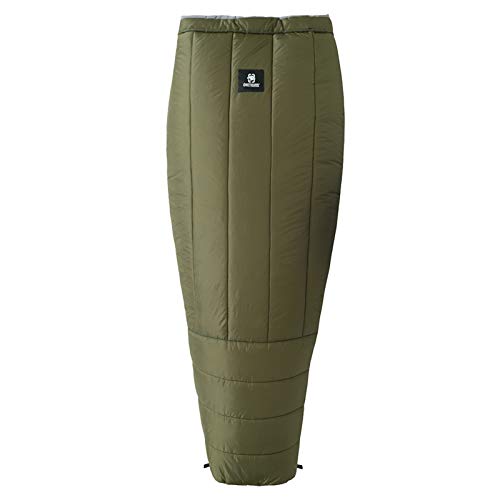
OneTigris Featherlite Ultralight Sleeping Quilt — Best All-Round Quilt
The Featherlite is the quilt for campers who do a bit of everything: ground tents one month, a hammock the next, a friend’s borrowed gear the month after. At thirty-five ounces it sits in the honest middle of ultralight — light enough to backpack without apology, substantial enough to feel like equipment rather than a compromise — and its footbox gives the feet a formed, draught-free home that open blankets cannot. OneTigris explicitly builds it with side sleepers in mind, and the generous drape shows it: there is room to turn inside this quilt’s embrace without the edges staging an escape.
Versatility is this pick’s argument and its limit. A quilt designed to serve hammocks, tents and three full seasons will not beat the specialists at their own games — the 850-fill picks below are warmer per ounce, and the bags are simpler for a careless sleeper. What the Featherlite offers instead is the single-quilt answer for the camper whose trips vary more than their budget does. It packs to a friendly size, behaves on a pad and in a hammock with equal manners, and carries the season from spring’s first outing to autumn’s last without asking its owner to maintain a wardrobe of insulation. For most campers, most years, that is the correct definition of best.
- Form: top quilt with footbox
- Weight: 35 oz per the maker
- Season rating: 3 seasons per the maker
- Role: ground tent and hammock backpacking, side-sleeper friendly
- Buying note: check price on Amazon for size and colour options
Strengths
- Genuine all-rounder across tents, hammocks and seasons.
- Footbox keeps feet warm without a zip’s weight.
- Side-sleeper roominess reduces edge draughts when turning.
Trade-offs
- Heavier than the 850-fill specialists in this list.
- Jack-of-all-trades warmth will not lead the coldest nights.
- Versatile sizing may feel generous on very petite sleepers.
Best for: mixed-style backpackers who want one quilt for every trip. Not suited for: weight-obsessed thru-hikers counting single ounces or winter campers.

Ultralight 850 Down Top Quilt 1.9 lbs 30F — Best Warmth for Weight
The numbers on this pick tell a serious story: 850 fill power down, a total weight of one point nine pounds, and a maker’s rating of thirty degrees. That combination — high-loft down doing maximum work per ounce — is the recipe behind every premium quilt in the category, and this one delivers it in a straightforward top-quilt design that emphasises the freedom quilts exist for. The maker talks about customised sleep and movement, and the architecture agrees: this is a quilt for sleepers who turn, sprawl and arrange their insulation nightly rather than zipping themselves into a decision.
A thirty-degree rating at under two pounds covers the cold heart of three seasons for most regions — the frosty shoulder-season nights that send lesser quilts home. Cold sleepers should still read it as the maker’s figure and dress their system accordingly, with the pad and the base layers carrying their share. What this pick does not compete on is brand furniture: it is a specification-led purchase, bought by campers who shop fill power and grams the way others shop labels. For that shopper it is the sharpest value in warmth per ounce on this list, and the quilt most likely to still be earning its pack space when the trips get higher and colder.
- Form: down top quilt
- Fill: 850 fill power down
- Weight: 1.9 lbs per the maker
- Rating: 30°F per the maker
- Buying note: check price on Amazon; confirm size against your pad width
Strengths
- 850-fill down delivers serious loft at under two pounds.
- Thirty-degree maker rating covers cold three-season nights.
- Open quilt freedom for restless, arranging sleepers.
Trade-offs
- Specification-led brand offers less hand-holding for beginners.
- High-loft down demands careful storage and moisture respect.
- Warmth assumes a proper insulated pad underneath.
Best for: experienced backpackers shopping warmth per ounce above all. Not suited for: first-time campers who want a famous label and a forgiving design.
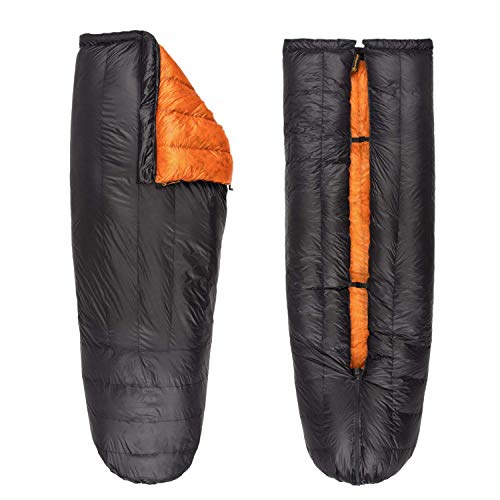
Featherstone Moondance 25 Down Top Quilt — Best for Serious Miles
The Moondance 25 is the thru-hiker’s entry: 850 fill power down, a maker’s rating of twenty-five degrees, and a design brief written by people who count a quilt’s worth in months of continuous trail rather than in weekends. Featherstone positions it as a mummy-bag alternative for ultralight backpacking and thru-hiking, and every choice follows from that — the quilt trims what a long-distance walker does not need and keeps what the coldest three-season night on a long trail demands. Twenty-five degrees is the warmest rating in this guide, bought for altitude, for late autumn, and for the sleeper who runs cold and is tired of apologising for it.
Premium quilts earn their keep in the details a specification sheet flattens: baffle behaviour that keeps down where the body needs it, a footbox that closes properly, and hardware that works with cold fingers at the end of a long day. The Moondance’s reputation among distance walkers rests on exactly that layer. Its honest costs are the premium school’s costs — it asks the most care of any pick here, it is the wrong purchase for a twice-a-year car camper, and its warmth will swamp warm sleepers on summer nights unless they drape it like a blanket and accept the comedy. For the walker whose three seasons include high passes and frost, it is not an extravagance; it is the margin that lets the trip continue.
- Form: down top quilt, mummy-bag alternative
- Fill: 850 fill power down
- Rating: 25 per the maker’s naming and listing
- Role: ultralight backpacking and thru-hiking
- Buying note: check price on Amazon for size options
Strengths
- Warmest maker rating in this guide for cold three-season work.
- 850-fill down keeps the weight in thru-hiking territory.
- Design details aimed at months of nightly use.
Trade-offs
- Premium pick whose abilities exceed casual campers’ needs.
- Too warm for hot sleepers on mild summer nights.
- High-loft down requires disciplined storage and drying.
Best for: thru-hikers, altitude campers and cold sleepers. Not suited for: car campers or warm sleepers on lowland summer trips.

Therm-a-Rest Corus 32F Down Camping Quilt — Best for Tall Sleepers
Therm-a-Rest built its name on the pad half of the sleep system, and the Corus is its down quilt designed by the same house — a fact that shows in how naturally the quilt thinks about the pad beneath it. This listing is the Long size, rated by the maker to thirty-two degrees, and length is its headline virtue: tall sleepers know the particular misery of a quilt that ends mid-shin, and the Corus Long exists to end it. The maker’s own description pairs lofted warmth with open, adaptable sleep freedom, which is the quilt philosophy stated by a company that also sells you the other half of the system.
The big-brand virtues follow: a design refined across seasons of production, sizing that corresponds to the pads the same maker sells, and a rating stated in the sober dialect of a company with a reputation to protect. Thirty-two degrees is the classic three-season figure — freezing point, the honest edge of autumn — and in Long it covers the sleeper completely while doing it. The compromises are equally characteristic: you pay for the badge and the refinement, and the quilt’s adaptability still asks its owner to learn the strap-and-tuck technique that all quilts reward. For tall campers and for buyers who like their quilt and pad to come from one engineering culture, the Corus is the list’s most reassuring purchase.
- Form: down camping quilt, Long size
- Rating: 32°F / 0°C per the maker
- Role: three-season backpacking for taller sleepers
- System note: designed in the same house as a leading pad line
- Buying note: check price on Amazon; confirm Long versus Regular sizing
Strengths
- Long size ends the shin-length problem for tall sleepers.
- Maker’s pad expertise shows in the quilt’s system thinking.
- Freezing-point rating is the classic honest three-season target.
Trade-offs
- Brand refinement costs more than specification-led rivals.
- Long size is wasted fabric on shorter sleepers.
- Still requires quilt technique on the coldest nights.
Best for: tall backpackers and system buyers who value one maker’s engineering. Not suited for: petite sleepers or bargain hunters shopping pure specifications.

ZOOOBELIVES Ultralight Down Sleeping Bag 650FP — Best Bag Alternative
Let the record show what this pick is: a sleeping bag, by its maker’s own title, included because it competes for the quilt shopper’s money at a quilt-like weight. Twenty-seven ounces of 650 fill power down, a stated comfort figure of fifty degrees and a lower limit of thirty-two, and a compression sack in the box — ZOOOBELIVES has built the bag for the camper who read the quilt argument, agreed with the grams, and still wants a zip between themselves and the night’s draughts. That camper is numerous and rational, and this is their pick.
The dual temperature figures are the most honest labelling in this guide and worth learning from: comfort at fifty describes the night the average sleeper enjoys; the limit at thirty-two describes the edge. A three-season camper whose nights live in the forties and fifties is properly served here; a camper chasing frost should read the comfort figure, not the limit, and shop warmer. As a bag it forgives restless sleeping completely — turn all night and the insulation turns with you — and the compression sack keeps its pack manners quilt-like. Its ceiling is its architecture: less freedom than a true quilt, more weight than the lightest bags below, and a zip that is one more thing to snag at midnight. Judged as the bridge between the two architectures, it is a well-built bridge.
- Form: ultralight down sleeping bag (not a quilt)
- Fill: 650 fill power down
- Weight: 27 oz per the maker
- Ratings per maker: 50°F comfort, 32°F lower limit
- Buying note: check price on Amazon; compression sack included per listing
Strengths
- Zippered security for draught-prone, restless sleepers.
- Honest dual comfort and limit figures to plan by.
- Quilt-class weight with a compression sack included.
Trade-offs
- A bag, with a bag’s limits on sprawling and venting.
- Comfort figure of fifty degrees excludes frosty nights.
- 650 fill lofts less per ounce than the 850-fill quilts.
Best for: quilt-curious campers who still want a zip and sleep in mild three-season weather. Not suited for: cold sleepers or anyone chasing freezing nights on the comfort rating.

Naturehike Ultralight 650FP Down Sleeping Bag — Best Ultralight Mild-Night Pick
Twenty ounces. Naturehike’s little down bag — again, a bag by its own title, reviewed as one — is the lightest sleep system in this guide, built from 650 fill power down with RDS-sourced fill per the listing, and rated by its maker for nights around fifty-two degrees. At that weight a sleep system stops being a packing decision and becomes a rounding error, which is the entire argument for fast-and-light campers whose three seasons run warm: summer in the hills, spring and autumn in the valleys, and never a frost they did not choose.
The discipline this pick demands is honesty about the calendar. A fifty-two-degree maker figure is a mild-night tool, and the camper who stretches it into the thirties with optimism and a puffy jacket will spend the night conducting a seminar on their own judgment. Used inside its season, though, the bag is a delight — tiny in the pack, quick to deploy, warm enough that its owner forgets it until the stars come out. Naturehike’s ultralight line has built a following on exactly this value equation, and this bag is its purest expression in the list: the fewest ounces that still deserve the name sleep system, for the camper whose miles matter more than their margins.
- Form: ultralight down sleeping bag (not a quilt)
- Fill: 650 fill power down, RDS per the listing
- Weight: 20 oz per the maker
- Rating: around 52°F per the maker
- Buying note: check price on Amazon; a mild-night tool by design
Strengths
- Lightest pick in the guide at twenty ounces.
- Packs to a size that disappears into a small pack.
- Honest mild-season design from an ultralight specialist line.
Trade-offs
- Maker rating around fifty-two degrees excludes cold nights entirely.
- Minimal margin for weather that turns colder than forecast.
- A bag’s enclosure, without a quilt’s sprawling freedom.
Best for: fast-and-light campers in warm three-season territory. Not suited for: shoulder-season frost, altitude or cold sleepers anywhere.
How Do the Six Sleep Systems Compare?
| Pick | Architecture | Weight | Maker rating |
|---|---|---|---|
| OneTigris Featherlite Ultralight Sleeping Quilt | Quilt with footbox | 35 oz | 3-season |
| Ultralight 850 Down Top Quilt 1.9 lbs 30F | Top quilt | 1.9 lbs | 30°F |
| Featherstone Moondance 25 Down Top Quilt | Top quilt | Ultralight class | 25 |
| Therm-a-Rest Corus 32F Down Camping Quilt | Quilt, Long | Light class | 32°F |
| ZOOOBELIVES Ultralight Down Sleeping Bag 650FP | Sleeping bag | 27 oz | 50°F comfort / 32°F limit |
| Naturehike Ultralight 650FP Down Sleeping Bag | Sleeping bag | 20 oz | ~52°F |
Read down the rating column and the list sorts itself into three intentions: the warm quilts for nights near and below freezing, the versatile Featherlite for the broad middle, and the mild bags for warm-season speed. Read across any row and the trade is always the same shape — warmth, weight and freedom, choose the two you refuse to surrender and let the third be managed by technique, clothing and honest trip planning. No row in this table is the best row; each is the best answer to a different version of the question.
How Do You Pair a Quilt with a Sleeping Pad?
The pad is the quilt’s silent partner, and the pairing rules are few and absolute. First, insulation: the pad’s warmth rating must match the trip, because the quilt insulates only the top half of the sleeper and the ground will take its tax through any pad that cannot pay it. A camper who upgrades the quilt and keeps a summer pad has bought a warmer ceiling for a cold floor. Second, width: a quilt drapes over the sleeper and fastens at the pad’s edges, and a narrow pad under a broad sleeper leaves the quilt’s edges floating at exactly the points where draughts apply for entry. Wide pads and quilts are natural allies; restless sleepers should size the pad up before they blame the quilt.
Third, attachment: use the straps or clips the quilt provides, every night, even the warm ones, because the habit formed on easy nights is the one that survives the cold night when fumbling costs heat. Arrange the footbox first, settle, then fasten from the feet upward, leaving the top edge free enough to pull to the chin or push to the waist as the night’s temperature argues. In a hammock the ritual differs — the quilt drapes inside the hammock’s curve with the underquilt doing the pad’s work below — but the principle holds: the system is set up once, deliberately, before the sleeper is tired enough to skip steps.
How Should You Care for a Down Quilt Between Trips?
Down’s whole virtue is loft, and loft dies by compression and moisture. Store every pick in this guide loose — in a large cotton storage sack or hung — never in its compression sack, which is a transport device with the same relationship to storage that a sprint has to a lifestyle. Air a quilt after every trip before it goes away, because a night of body moisture sealed into down becomes the smell and the clumping of the next season. On the trail, the stuff sack’s job is protection from the pack’s damp corners as much as from its geometry; a liner bag keeps skin oils off the shell and stretches the interval between washes from seasons to years.
When washing becomes unavoidable, treat it as a project: a gentle cycle, a down-appropriate detergent, an extra rinse, and a long, patient dry with breaks to unclump the baffles by hand. A down quilt washed carelessly emerges as a rumour of itself. Spot-clean the shell for trail marks instead, and save the full wash for the day the loft truly needs rescuing. Campers who follow that discipline routinely get a decade from a good quilt — the picks here are built to repay exactly that kind of ownership.
What Mistakes Do Quilt Buyers Make?
Shopping the limit rating as if it were the comfort rating leads the list, and it has chilled more campers than any weather. A limit figure describes survival with a night of poor sleep included in the price; plan your trips on comfort figures, and when a listing gives only one number, assume it flatters. Second is neglecting the pad, already covered and worth repeating because it is the mistake with the coldest consequences. Third is buying the warmest quilt on the list for a summer calendar, then spending July nights draped in a twenty-five-degree quilt like a sail, cursing the category — warmth is a tool, and the mild-night picks exist because most nights are mild.
Fourth is storing the quilt compressed all winter and meeting a flattened stranger in spring. Fifth is judging a quilt on the first night: the strap ritual, the tuck, the footbox arrangement are skills, and skills have a learning curve of about three nights, after which the same quilt that draughted on night one seals like a system. Give the technique its three nights before writing the review your colder self would regret.
What Do You Do When the Night Drops Below Your Quilt’s Rating?
Weather lies politely and then all at once, and every experienced camper has met the night that arrived ten degrees colder than the forecast’s opinion. The quilt system has answers, and they begin before dark. Eat a real meal — a fed body heats its quilt better than a hungry one — and put on every dry layer you carried, because clothing inside a quilt is insulation the system counts. Arrange the quilt with unusual care: footbox closed and tucked, straps fastened, edges sealed against the pad, and the whole arrangement moved out of any hollow where cold air pools through the night. Site selection is a warmth technology: a sheltered spot under trees, out of the wind’s road and off the valley floor’s cold lake of air, can be worth more than a second quilt.
Inside the quilt, small physics helps. Warm water in a bottle at the feet is an old and honourable trick. A hat and dry socks do disproportionate work, because the sleeper’s sense of cold is governed by extremities out of proportion to their size. If the night still wins, it wins honestly — the correct response to a system at its limit is to shorten the trip’s ambition, not to shiver heroically at altitude. And afterwards, let the night edit your gear list: a quilt that met its match at a known temperature has given you the most valuable specification in the whole category, which is your own.
Which Pick Suits a Hammock, a Tent or a Thru-Hike?
The hammock camper’s shortlist starts with the Featherlite, whose maker builds for the hammock case explicitly, and extends to any quilt whose footbox and drape cooperate with the hammock’s curve. In a hammock, the quilt’s partner is the underquilt beneath, and the pair should be chosen as a couple — matched seasons, matched expectations — because the coldest surface in a hammock is always the one facing the night air below. Hammock sleepers also feel draughts differently, along the hammock’s edges, and a generous quilt width is worth more there than an extra degree of rating.
The tent backpacker has the widest freedom and should spend it on the rating decision. Ground sleepers on good pads can exploit every quilt in this guide; the choice turns on the calendar and the altitude rather than the architecture. The thru-hiker’s calculus is the sternest: the quilt will be carried further than everything else in the pack combined relative to its weight, slept in for months, and judged on the coldest night of a season rather than the average one. That is the Moondance’s home ground, and the 850-fill top quilt’s — the two picks whose warmth-per-ounce and durability arguments were written by and for people who measure a season in states rather than weekends. The car camper, finally, should ignore weight entirely and buy warmth and room: the Featherlite’s generosity or the Corus’s length will serve better at a drive-in site than any gram saved, because the car, not the back, is doing the carrying.
How Do You Choose a Quilt’s Size and Width?
Quilt sizing is a conversation between the sleeper’s shoulders and the pad’s edges. A quilt must wrap the body and still reach the pad on both sides with enough margin to tuck or fasten; a quilt that only just covers the sleeper becomes a draught machine the moment its owner turns. Broad sleepers, side sleepers who sprawl, and anyone who sleeps in bulky layers should take the wide option whenever a maker offers one, because width is warmth in quilt architecture — it is the material that seals the system. Length follows the same logic as the Corus’s existence: the quilt should reach the chin with the feet settled in the footbox, and tall sleepers who size down to save grams are saving them out of their own sleep.
Petite sleepers face the mirror-image temptation — a quilt far larger than the body wastes weight, packs bigger, and can feel draughty in its own excess, since warm air inside an oversized quilt is a volume the body must heat. The honest method is unglamorous: lie on your pad at home, measure the wrap you actually need with a tape over the shoulders and hips, and shop that number rather than a category’s default. Makers’ size charts reward this homework; a quilt bought by measurement fits like clothing bought by measurement, which is to say it disappears into use, and gear that disappears is gear that was chosen correctly.
Why Does This Guide List Down Quilts Only?
Every pick here is down-filled, and the reason is the three-season backpacking brief itself: for warmth carried on a back, down’s loft per ounce remains the standard the category is judged by, and the pool of verified quilts for this guide reflected that. Synthetic quilts have an honest counter-argument — they insulate better when damp, they forgive wet climates and careless drying, and they cost less — and a camper whose three seasons are maritime or monsoonal should weigh it seriously. What synthetic cannot yet do is match down’s packed size at equal warmth, and on a long carry that difference compounds daily.
Down’s responsibilities deserve their sentence: it must be kept dry with religious consistency, stored loose, and sourced with some conscience — one pick here notes RDS-certified fill, and buyers who care about sourcing should read each maker’s current statement. A camper unwilling to keep a quilt dry should not buy down and blame it in October; the material’s terms are clear, and within those terms it repays its owner for a decade. The two fill families are not rivals so much as climates made portable — choose the one your weather actually speaks.
How Do You Vent a Quilt When the Night Is Warmer Than Expected?
The warm night is the quilt’s home advantage, and venting is a skill with a ladder of escalations. The first rung is the foot: one foot out from the footbox’s edge regulates more temperature than any other single move, because feet are radiators the body trusts. The second is the edge lift — unfasten the top strap, fold the quilt’s upper third down across the waist, and sleep under half a quilt with the other half in reserve against the small hours, when the night’s temperature reliably drops its guard. The third rung is the full drape: quilt opened flat as a blanket, or pushed to the pad’s side entirely, close enough to pull back without waking fully.
Site and timing help before the quilt is even unrolled. A pitch that catches the evening breeze, a tent’s vents opened at dusk rather than at midnight, and delaying the quilt’s deployment until the body has shed the day’s walking heat all lower the night’s starting temperature. Campers who master the ladder discover the real argument for buying warmth generously: a warm quilt vented skilfully covers more of the calendar than a mild quilt at its limit, which is why this guide’s centre of gravity sits at thirty degrees rather than at fifty. The mild bags still win their own nights — the hot, low and fast ones — but the vented warm quilt is the three-season system’s most versatile citizen.
Why Should You Test a New Quilt at Home First?
The garden, the balcony or the living-room floor is the cheapest classroom in backpacking. A new quilt deserves one home night before it earns a mountain: straps adjusted to your pad in daylight, footbox arranged without a headtorch, the venting ladder practised while nobody’s warmth depends on it. Campers discover their personal facts in that rehearsal — that they sleep hotter than the forums promised, that the wide size was not a luxury, that the footbox’s closure sits exactly where a restless ankle argues with it. Every one of those discoveries costs nothing at home and a night’s sleep at altitude.
The rehearsal also calibrates the clothing system. Which base layer, which socks, whether the hat stays on — these are the quilt’s supporting cast, and they should be cast before opening night. A camper who has rehearsed arrives at the trailhead with a system; a camper who has not arrives with a collection of products and a hope. Hope is not insulation, and the three seasons reward the rehearsed with the only luxury the backcountry reliably offers, which is a full night’s sleep in a beautiful and indifferent place. One rehearsal night also protects the wallet: a quilt that fails the home test can still be exchanged, while a quilt that fails at altitude can only be endured, remembered and replaced at full price.
Final Recommendation
Decide by your coldest honest night and your carrying temperament, and this list resolves quickly. The Featherstone Moondance 25 is the choice when the miles are long and the nights run cold; the 850-fill top quilt matches its warmth-per-ounce logic for the specification shopper; the Therm-a-Rest Corus Long is the tall sleeper’s and the system loyalist’s answer; and the OneTigris Featherlite remains the single quilt we would hand to the camper who does a bit of everything. The two bags close the list honourably — ZOOOBELIVES for the zip-lover in mild weather, Naturehike for the gram-counter in warm country. Match the rating to the real calendar, marry the quilt to a proper pad, and the three seasons will feel less like a compromise and more like the main event they actually are. Spring’s first cold morning, summer’s high meadow, autumn’s frosty last weekend — a well-chosen quilt is present for all of them, light on the back and warm where it counts, asking only that its owner learn its three simple rituals and keep it dry. That is a fair trade for most of the sleeping year, and it is why the quilt, a decade into its rise, has stopped being the alternative and become the default.
Frequently Asked Questions
Can a 3-season quilt handle a frosty night?
The warm picks here are maker-rated to twenty-five, thirty and thirty-two degrees, so a light frost sits inside their stated territory — provided the pad is insulated to match, the site is sheltered, and the sleeper dresses in their base layers. The mild-night bags are a different story: their comfort figures sit near fifty degrees, and a frosty night in one is an endurance event, not a sleep. Know which tool you packed.
Do I need a special pad for a quilt?
You need an insulated pad of adequate warmth and, ideally, generous width. The pad supplies all the insulation beneath you, since compressed quilt fill contributes almost none. Restless sleepers and broad sleepers benefit from wide pads that give the quilt’s edges somewhere to fasten. Beyond that, the pad you already backpack with is probably the right partner — check its warmth rating against your coldest trip rather than its thickness.
Why do quilts not have hoods?
Because the hood belongs to the bag’s architecture, and the quilt replaces it with the camper’s own kit — a warm hat, a buff, or the insulated hood of a jacket, all of which the backpacker is usually carrying anyway. On the coldest nights a hat is not a compromise but the standard practice of quilt users worldwide. Sleepers who know they want a built-in hood are telling themselves something honest: they may be bag people, and this guide’s two bag picks will welcome them.
How small do these quilts pack?
Down compresses in proportion to its fill power and quantity: the twenty-ounce Naturehike bag packs smallest, the warm 850-fill quilts pack remarkably small for their loft, and the thirty-five-ounce Featherlite sits in the friendly middle. Exact packed volumes vary by size option, so confirm on the listing against your pack’s capacity. Whatever the figure, pack the quilt in a waterproof sack inside the pack — a dry quilt is the whole point of the exercise.
Is a quilt or a bag better for a restless sleeper?
It depends on the kind of restlessness. Sleepers who turn because they feel confined usually sleep better the first night in a quilt — the freedom is the cure. Sleepers who turn constantly and unconsciously sometimes draught a quilt open by morning and do better in a bag’s sealed tube. If you do not know your kind yet, the ZOOOBELIVES bag is the low-risk first purchase; if you already know confinement is your enemy, go straight to a true quilt.
What is a footbox, and do I need one?
A footbox is the quilt’s closed or closable end — a shaped pocket that holds the feet inside the insulation instead of letting them slide out from under a flat blanket’s edge. Sewn footboxes are warmest and simplest; drawcord or snap designs open flat for warm nights and for use as a camp blanket, at the cost of a small draught path where they close. Three-season campers who run cold at the feet should insist on a real footbox; warm sleepers who mostly vent will love the convertible kind. The Featherlite’s footbox is a large part of its all-round appeal — feet are where a quilt system either feels finished or feels like a blanket with ambitions.
How do I stop my quilt sliding off the pad at night?
Use the attachment system every night, not only on cold ones: straps under the pad, clips at the quilt’s edges, adjusted so the quilt can move with you without migrating off you. A pad with a less slippery surface helps, as does placing the pad itself so it cannot skate inside the tent. If sliding persists, the usual culprit is a quilt too narrow for its sleeper — the wrap runs out, the fasteners sit at their limit, and every turn spends the margin. Width, again, is the quiet fix that solves the problem at its source rather than at its symptoms.
Related Guides
The quilt is one layer of a wider system that this site’s other guides complete, indoors and out. Best Animal Rag Quilts returns to the decorative end of the quilt family, where the warmth is measured in charm rather than degrees. For the shoulder seasons at home, Best Affordable Down Blankets covers the indoor cousins of these trail quilts — the same down logic at sofa scale. Back at the house the pack gets unpacked in, Best 5×8 Living Room Rugs handles the foundations of the room where trip planning happens, and Best Accent Rugs for a Charcoal Sofa finishes that room’s colour story for the evenings spent recovering on it.



[…] bolster belongs to a family of shaped pillows, and the rest of the shelf fills in around it. Best 3-Season Sleeping Quilts leaves the bedroom for the campsite, where long shapes serve warmth instead of posture. For the […]