What's inside
- Where to buy these picks
- Quick Picks
- How these picks were chosen
- The six picks in detail
- Evidence tiers: named, equipped, silent
- How do you choose a blender for nut butter specifically?
- The four stages, and how to hear them
- Oils, salt and the additions that change everything
- Seed butters and allergy households
- Roasting at home for the butter you actually want
- The economics of the homemade jar
- Common mistakes
- Final recommendation
- Frequently asked questions
As an Amazon Associate I earn from qualifying purchases. This post may contain affiliate links at no extra cost to you.
As an Amazon Associate, cottageverdict.com earns from qualifying purchases.
Nut butter is the sternest examination a blender can sit. There is almost no liquid to help, the load starts as dry, rattling nuts, passes through a discouraging phase of powder and clumps, and only becomes butter if the machine can keep that thick mass moving over the blades long enough for the nuts’ own oils to release. Shoppers researching the best blenders for making nut butters deserve a guide that separates printed promises from hopeful ones, so here is the disclosure up front: three of these six titles name nut butter outright, one names crushing nuts and includes a tamper and scraper, and two are silent on nut butter entirely while listing nuts or sheer capacity among their credentials. Each review grades its pick on exactly that evidence.
Our Top Picks
 Vitamix 5200 Professional-Grade BlenderSelf-Cleaning 64 oz8.75 x 7.25 x 20.5 inches10.9 poundsCheck on Amazon
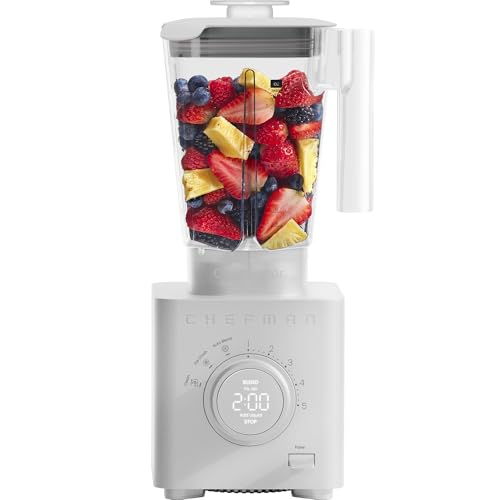 Chefman Obliterator 48 oz Countertop Blender for Smoothies48 oz4.5 x 6 x 16 inches9.92 poundsCheck on Amazon
Where to buy these picks
Vitamix’s 5200 opens with the classic professional specification: a 64-ounce container, variable speed, stainless-steel blades, self-cleaning, and nut butters named among its stated duties.
COZII answers with a 2000W machine, a 64-ounce pitcher plus a 21-ounce cup, seven presets and eight speeds, with nut butter written into its duty list and dishwasher safety stated.
AMPOIA matches the 2000W headline and adds specification fireworks — 32,000 RPM, a pure copper motor, a six-leaf blade — plus a 70-ounce pitcher, a 28-ounce grinder and nut butter named.
Chefman’s Obliterator brings the tools of the trade, a tamper and a scraper, behind a 1380W motor stated to crush nuts, in a 48-ounce pitcher with an auto blend function.
OMMO offers 1800W, a 60-ounce BPA-free jar and durable stainless blades, listing nuts among its smoothie-maker duties without ever saying nut butter.
nutribullet’s Full-Size Combo closes with 1200W, a 64-ounce pitcher and a 24-ounce tumbler cup, a smoothie-led specification that never mentions nut butter at all.
Quick Picks
| Pick | Best for | Highlight from the listing title |
|---|---|---|
| Vitamix 5200 Professional | The established nut-butter benchmark | Nut butters named, variable speed, 64oz, self-cleaning |
| COZII Professional 2000W Nut Butter | Presets and a second cup | 2000W, nut butter named, 7 presets, 64oz plus 21oz cup |
| AMPOIA 2000W Nut Butter | Grinder attachment for small batches | 2000W, 32,000 RPM, 70oz pitcher plus 28oz grinder |
| Chefman Obliterator Tamper | Tamper and scraper in the box | 1380W stated to crush nuts, tamper included, 48oz |
| OMMO 1800W Countertop | High power at a simpler specification | 1800W, 60oz jar, nuts listed among duties |
| nutribullet Full-Size Combo | Smoothie households adding nut butter | 1200W combo, 64oz pitcher plus 24oz tumbler |
How these picks were chosen
The first sort was by evidence, and it produced three tiers that structure this whole guide. Tier one names nut butter in the title: the Vitamix, the COZII and the AMPOIA can be held to that promise in writing. Tier two is the Chefman, whose title states nut crushing and — just as importantly — includes the tamper and scraper that nut butter making physically requires, without using the words nut butter. Tier three is silent: the OMMO lists nuts among smoothie ingredients, and the nutribullet title does not mention nuts in any form. Tier three machines may well make nut butter; their titles simply do not say so, and the reviews price that uncertainty honestly.
The second sort was by tooling. Nut butter fails in the pitcher, not the motor: the load climbs the walls, bridges over the blades and spins in place while the motor races. Tampers, scrapers, pitcher geometry and speed control are the countermeasures, and titles that name them were credited accordingly. Raw wattage was recorded as stated — two machines here claim 2000W, one adds an RPM figure — but treated as the supporting actor rather than the lead, because a powerful motor stirring air makes excellent noise and no butter.
Batch size was the third consideration. Nut butter is made in quantities that must cover the blades and circulate, yet few households need a litre at once. The spread here — 48 to 70 ounces, plus a 28-ounce grinder attachment and two personal cups — lets batch philosophy drive the choice, and the reviews return to it repeatedly, because the right-sized batch is the difference between silk and a stalled, overheating pitcher.
A note on the two 2000W claims, since they will draw the eye: both are headline figures from their makers, recorded here as written, and neither was allowed to outrank the evidence tiers. A household choosing between the COZII and the AMPOIA should decide on vessels — cup against grinder — and on which machine’s wider duty list matches its kitchen, because on the nut-butter question itself both titles make the same promise in the same words, and the difference lives in the hardware around the promise, in the cupboards that must house it, and in the washing-up that follows every single batch either machine ever makes.
The six picks in detail
Vitamix 5200 Professional
The Vitamix 5200 is the machine this category is measured against, and its title states the essentials without flourish: professional-grade, a 64-ounce container, variable speed, stainless-steel blades, self-cleaning, and a duty list that runs from smoothies and soups through frozen drinks to nut butters in so many words. No wattage is quoted in the title at all — a notable restraint in this company — because the 5200’s reputation rests on pitcher design and speed control rather than a number.
- Container: 64 oz
- Speed: variable
- Blades: stainless steel
- Stated duties include: nut butters, named outright
- Extras: self-cleaning; wattage not stated in the listing title
Strengths
- Nut butter is a printed duty, not an inference
- Variable speed lets the cook walk a load from crumbs to butter
- Self-cleaning answers the stickiest wash in blending
Trade-offs
- No tamper is mentioned in the title, unlike the Chefman below
- Premium positioning without a stated wattage to compare
- A 64-ounce container asks for respectable batch sizes to circulate well
Variable speed is the 5200’s nut-butter argument in one phrase. The transformation has stages — nuts to shards, shards to powder, powder to a clumping mass, mass to a suddenly flowing butter — and each stage wants a different speed and a different patience. A cook with a dial can hold the powder stage steady instead of blasting it, then climb as the oils release and the load begins to move as one body. That control, more than any ceiling figure, is why this design has anchored the category for so long.
Self-cleaning sounds like a footnote until the first batch of almond butter has coated a pitcher in a film that laughs at a rinse. A machine that can run warm water and a drop of soap into a self-scouring vortex turns the worst cleanup in home blending into a minute’s work, and for a food as clingy as nut butter that feature will be used after literally every batch. It is the kind of specification that never wins a showroom comparison and wins the second year of ownership outright.
The absent tamper must be discussed fairly. Vitamix’s pitcher geometry is famously designed to fold loads back toward the blades, and the title’s silence about a tamper may reflect that confidence — but this guide grades titles, not fame, so the fact stands as written: no tamper is stated. Buyers whose batches will be small or whose nuts run dry should confirm the accessory situation on the full listing, because the tool question is the one practical gap in an otherwise complete nut-butter specification.
Batch economics favour this machine in a particular household: the one that makes nut butter weekly, in family quantities, and counts the saving against shop-bought jars. Sixty-four ounces of capacity is more than a single batch needs, which is precisely the point — a comfortable load with room to move circulates better than a brimful one. Households making a small jar monthly will find the same virtues oversized, and the grinder-equipped AMPOIA below speaks more directly to them.
There is a steadiness to buying the benchmark that deserves naming. Recipes for nut butter across the internet are quietly written assuming this class of machine — its timings, its sounds, its stages — so a 5200 owner inherits a library of compatible guidance that owners of newer, louder specifications must translate. That ecosystem is not in the title either, but unlike a tamper, it costs the buyer nothing to verify and much to ignore.
Best for: weekly nut-butter households that want the named duty, variable control and self-cleaning in one benchmark machine
Not suited for: small-batch makers who need a tamper confirmed in the box, because this title never mentions one
Check price on Amazon — the dial is the instrument; if you like conducting, start here.
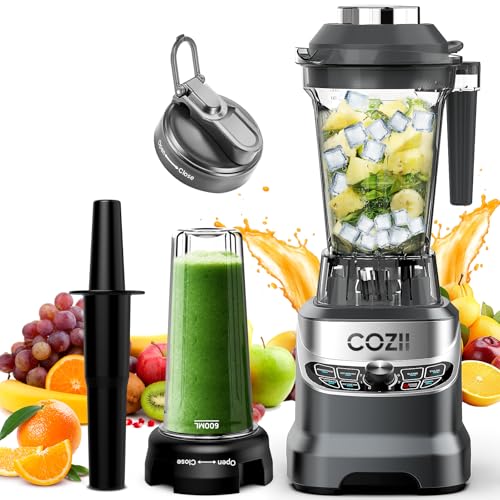
COZII Professional 2000W Nut Butter
COZII’s machine states its nut-butter ambition in its duty list — smoothies, ice crush, frozen drinks, dips and nut butter — behind a 2000W motor, with a 64-ounce pitcher for the main work and a 21-ounce cup riding along, seven presets and eight speeds to choose from, and BPA-free, dishwasher-safe construction stated outright. It is the most completely itemised specification in this group, and nut butter sits inside it as one named citizen among several.
- Motor: 2000W, as stated
- Pitcher: 64 oz, plus 21 oz cup
- Controls: 7 presets, 8 speeds
- Stated duties include: nut butter, named outright
- Materials: BPA-free; dishwasher safe, per the title
Strengths
- Nut butter is named in the duty list in plain words
- A 21-ounce cup suits small experimental batches
- Presets offer a repeatable programme once a recipe is dialled in
Trade-offs
- No tamper or scraper is mentioned for the thickest stage
- Preset suitability for nut butter specifically is not detailed
- 2000W is a headline figure; control quality matters more
The two-vessel arrangement is this machine’s smartest answer to the batch problem. Nut butter experimentation — a new nut, a roast level, a pinch of salt or cocoa — belongs in the 21-ounce cup, where a failed experiment costs a handful of nuts rather than a pitcherful. Proven recipes then graduate to the 64-ounce pitcher for the household’s standing jar. Few titles in this category acknowledge that nut-butter making is partly a hobby of small trials, and the COZII’s cup quietly builds that hobby into the hardware.
Seven presets and eight speeds present a fork: the presets promise repeatability, the speeds promise control. Nut butter’s stages reward control during the making and repeatability once a recipe is known, so a household can honestly use both — manual speeds while learning a new nut, a preset once the timings are proven. What the title cannot tell you is whether any preset is designed for nut butter’s long, thick middle stage, and that is the listing question a serious buyer should ask first.
Dishwasher safety, stated here where the Vitamix offers self-cleaning instead, is the rival answer to the sticky-pitcher problem. Both philosophies work; the dishwasher route suits households that batch their washing, while self-cleaning suits the rinse-immediately temperament. BPA-free construction is stated for the pitcher, which matters more in this category than most, because nut butter is fatty and stored foods in plastic raise the questions that BPA-free wording exists to answer.
The 2000W figure should be read the way this guide reads all ceilings: as headroom for the moment the load is thickest and the motor works hardest, not as a promise that butter emerges twice as fast as from a 1000W machine. What actually protects a motor in nut-butter work is the cook’s staging — rests between runs, speeds matched to stages — and no wattage in any title repeals that. Buy the COZII for its vessels and its named duty; operate it with the patience the food demands.
Dips in the duty list deserve a nod, because they are nut butter’s cousins: hummus, thick spreads and pastes share the same low-liquid, high-resistance physics. A machine whose maker groups dips with nut butter is signalling that its presets and pitcher were tested against thick loads generally, which is the most transferable evidence a title can offer. Households whose blending runs thick — spreads, butters, pastes — should read that duty list as this machine’s true character reference.
Best for: experimenters who want nut butter named, a small cup for trials and presets for proven recipes
Not suited for: cooks who insist on a tamper in the box, since none is stated here
Check price on Amazon — trial in the little cup, produce in the big pitcher; that is its rhythm.

AMPOIA 2000W Nut Butter
AMPOIA matches COZII’s 2000W headline and raises it a spec-sheet flourish: 32,000 RPM, a high-speed pure copper motor, a six-leaf blade, multiple speeds, and a two-vessel system of a 70-ounce pitcher and a 28-ounce grinder. Nut butter is named in the duty list alongside crushing ice, frozen drinks and milkshakes, and BPA-free construction is stated. The grinder is the detail that should slow a nut-butter shopper down — in the good way.
- Motor: 2000W, stated 32,000 RPM, pure copper
- Blade: 6-leaf
- Vessels: 70 oz pitcher and 28 oz grinder
- Stated duties include: nut butter, named outright
- Materials: BPA-free, per the title
Strengths
- The 28-ounce grinder suits the small batches nut butter often is
- Nut butter appears in the title’s own duty list
- Six-leaf blade and stated RPM describe a high-speed cutting system
Trade-offs
- No tamper or scraper is mentioned for pitcher batches
- RPM is a no-load style figure; butter is made under load
- The biggest pitcher here is oversized for a solo jar of butter
A grinder attachment changes the small-batch game completely. Nut butter for one household’s week is often a 300-gram affair, and in a 70-ounce pitcher that quantity hides under the blades and refuses to circulate. In a 28-ounce grinder it is the whole chamber — every nut passes the blades constantly, the stages arrive quickly, and the batch finishes before heat builds. Households that make several small butters — peanut for the children, almond for a parent, seed butter for a lunchbox allergy — should weight this attachment heavily.
The RPM figure needs its honest translation. Revolutions per minute describe blade speed, most easily achieved unloaded; nut butter is made at the opposite condition, with the load resisting every turn. What matters under that resistance is torque and control, neither of which a title can number. The six-leaf blade is the more useful datum: more cutting edges working the load per revolution, which suits the powder stage where surface area is everything. Read the specification as enthusiasm around a genuinely relevant blade design.
A pure copper motor is a materials claim about the motor’s windings, the kind of detail makers include when they expect the machine to be worked hard and judged on stamina. Nut butter is stamina work — minutes of high resistance rather than seconds of ice — so the claim is at least aimed at the right virtue. As ever, the buyer’s protection is behavioural: stage the blend, rest the motor between runs, and even an honest motor will outlast a cook who runs any machine at full resistance without pause.
Seventy ounces of pitcher, meanwhile, belongs to this machine’s other life: smoothies and frozen drinks for a crowd. The AMPOIA is really two appliances sharing a motor — a family pitcher blender and a small-batch grinder — and nut-butter households should buy it as such, valuing the grinder for the butter and the pitcher for everything else. Judged only as a butter machine the big pitcher is excess; judged as a kitchen system it is the most versatile hardware arrangement in this six.
Ice crushing and milkshakes in the same duty list as nut butter mark this as a generalist with a grinder, not a specialist. That breadth suits households whose counter holds one machine for all tasks. The specialist question — how the pitcher handles a full load of nuts without a stated tamper — remains the listing check, but the grinder route means the AMPOIA owner may never need to ask it, because their butter will be made in the small vessel where circulation is guaranteed by geometry.
Best for: multi-butter households making small batches of several kinds, who also want a crowd-size pitcher
Not suited for: large pitcher batches of nut butter that call for a tamper, since none is stated
Check price on Amazon — the grinder is the headline for butter; the pitcher is for everything else.
Chefman Obliterator Tamper
Chefman’s Obliterator is the tooling pick. Its title never says the words nut butter — this guide will not pretend otherwise — but it states a 1380W motor to crush ice, nuts and frozen fruit, fits a 48-ounce pitcher, adds an auto blend function, and includes the two implements nut-butter makers actually reach for: a tamper and a scraper. On physical evidence, this is a machine equipped for the job its title stops just short of naming.
- Motor: 1380W, stated to crush nuts
- Pitcher: 48 oz
- Included: tamper and scraper
- Controls: auto blend function
- Nut butter: not stated in the listing title
Strengths
- Tamper and scraper included — the two tools thick loads demand
- Nut crushing is stated outright, even if butter is not
- 48 ounces is a right-sized batch for a household’s weekly jar
Trade-offs
- The words nut butter never appear, so the duty is equipped-for, not promised
- 1380W is the lowest stated figure among the high-power claims here
- No presets or speed count is detailed in the title
Understand what the tamper and scraper do and the Obliterator’s case makes itself. The tamper keeps the thick, climbing load pressed into the blades through the lid, continuously, while the motor runs — the single most valuable capability in nut-butter making. The scraper retrieves the finished butter from the pitcher’s corners and blade well, where a spatula-less household otherwise abandons a serving’s worth of every batch. Together they describe a maker who has watched someone make nut butter and equipped the failure points.
The 48-ounce pitcher is the other half of the argument. Nut butter circulates when the load is proportioned to the vessel, and 48 ounces holds a family batch with working room without demanding the near-full loads a 70-ounce pitcher prefers. For the specific job in this article’s title, the smallest full-size pitcher here may be the best-sized one — a reminder that in blending, capacity is a Goldilocks specification rather than a bigger-is-better one.
Auto blend is the open question. A programme that senses or cycles the load could be genuinely useful across nut butter’s stages, or it could be tuned for smoothies and merely present here. The title claims the function without describing its intelligence, so the listing must answer for it. Even in the worst case, the manual route remains: a motor stated to crush nuts, a tamper to feed it, and a cook staging the speeds will make butter regardless of what the programme thinks.
Honesty about the missing words matters for expectations, not capability. A buyer who needs the promise in writing — for a gift, for a cautious first entry into the hobby — has three named-duty machines above to choose from. A buyer who trusts equipment over vocabulary gets, in the Obliterator, the only title here that includes both working tools. This guide’s judgement is that the tools are the stronger evidence; the review simply refuses to upgrade that judgement into a quotation the maker never made.
Ice and frozen fruit in the same breath as nuts describe a machine aimed at hard loads generally, which is the correct family for butter work. Stainless steel blade, singular and unadorned in the title, keeps the specification grounded. Households whose blending is a portfolio of hard jobs — ice on Friday, nuts on Sunday, frozen fruit between — will find the Obliterator’s plain, equipped specification easier to live with than a longer list of programmes they never select.
Best for: practical makers who value the included tamper and scraper over a printed promise
Not suited for: a gift purchase that needs nut butter named as a duty in writing, because this title equips for it without naming it
Check price on Amazon — judge the tools in the box; they are this machine’s honest vocabulary.

OMMO 1800W Countertop
OMMO’s blender is this list’s second exercise in reading silence. The title states an 1800W high-speed countertop machine, a 60-ounce BPA-free jar, durable stainless steel blades and dishwasher safety, and lists its smoothie-maker duties as shakes, nuts and frozen fruits. Nuts are present; nut butter is not. The specification describes a powerful generalist in whose repertoire nuts appear as an ingredient — and ingredients in a smoothie are a long way from a pitcher of nothing but nuts.
- Motor: 1800W, as stated
- Jar: 60 oz, BPA-free
- Blades: stainless steel, described as durable
- Stated duties: shakes, nuts, frozen fruits — as smoothie ingredients
- Nut butter: not stated in the listing title
Strengths
- 1800W is serious headroom for hard loads
- A 60-ounce jar is a versatile middle capacity
- Dishwasher safety eases the sticky-clean problem
Trade-offs
- Nut butter is never claimed; nuts appear as a smoothie ingredient
- No tamper, scraper or grinder is mentioned
- No speed count or presets are detailed in the title
The distinction this review insists on is physical, not pedantic. Nuts in a smoothie arrive with liquid, fruit and motion; the blades meet them suspended in a flowing medium. Nut butter is nuts alone, resisting as a solid mass, and it defeats machines that handle the smoothie version effortlessly. The OMMO may possess the power and geometry to cross that gap — 1800W is not a trivial figure — but its title does not claim the crossing, so a butter-first buyer should treat this as a capable candidate requiring verification, not a promise requiring only payment.
What the OMMO unquestionably offers is a strong generalist specification at a sensible capacity. Sixty ounces splits the difference between the couple-sized and crowd-sized pitchers here, BPA-free construction is stated, and dishwasher safety addresses cleanup in the most conventional way. A household whose blending is ninety percent smoothies and shakes, with nut butter as a monthly experiment, may rationally choose this machine and accept the experiment’s uncertainty as the price of a simpler purchase.
Experimenters choosing the OMMO should stack the odds with technique: small batches that cover the blades without overloading, nuts roasted and warm so their oils release sooner, staged runs with rests, and a spatula ready for the wall-climbing stage in place of the unstated tamper. Worked that way, powerful generalists often do produce butter, and the household learns its machine’s true repertoire by practice — the oldest way any of these appliances has ever been understood.
There is a budget logic to this tier that deserves respect. Named-duty specialists and tool-laden machines price their promises; a powerful generalist whose title underclaims may cost less for similar hardware. The buyer is trading certainty for value, knowingly. That trade is legitimate when the primary job is the stated one — shakes and smoothies — and butter is a bonus. It is a poor trade when butter is the whole reason for the purchase, because then the uncertainty sits exactly where the money was spent.
Durable is the title’s chosen adjective for its blades, and durability is the right worry for a machine that will meet nuts regularly in any form. Blade and jar stamina under hard, dry loads is what separates a blender that ages gracefully from one that loosens and dulls. The OMMO states the intention; the listing’s detail and the model’s track record must carry it from there. As with the nutribullet below, the review’s role is to mark the boundary between what is printed and what is hoped.
Best for: smoothie-first households with serious power who want to try nut butter as a secondary experiment
Not suited for: butter-first buyers, because the title lists nuts only as a smoothie ingredient and never claims nut butter
Check price on Amazon — buy it for the shakes it promises; let any butter be a discovered bonus.

nutribullet Full-Size Combo
nutribullet’s Full-Size Combo is the smoothie household’s machine: 1200W, a 64-ounce pitcher for family batches, a 24-ounce tumbler cup for single servings, matte black finish, dishwasher-safe parts, and a title that mentions smoothies and capacity — and never mentions nuts, let alone nut butter, at all. It earns its place in this guide as the honest boundary case: the popular machine a shopper might assume makes nut butter, examined strictly on what it claims.
- Motor: 1200W, as stated
- Vessels: 64 oz pitcher and 24 oz tumbler cup
- Format: full-size combo, single-serve and large capacity
- Stated duty: smoothies
- Nut butter: not stated in the listing title
Strengths
- Two vessels cover single servings and family batches in one system
- A widely owned format means recipes and accessories are easy to find
- Dishwasher safety is stated for the parts
Trade-offs
- Neither nuts nor nut butter appear anywhere in the title
- No tamper, scraper or grinder is mentioned
- 1200W is the lowest stated power in this group
The Combo’s genuine virtues deserve their due before its silence is examined. The pitcher-and-tumbler system is the most lived-in format in home blending: a smoothie for one in the cup on weekdays, a family batch in the pitcher on weekends, both vessels dishwasher-safe. Households drink more smoothies because the washing is trivial and the serving is the vessel. As a smoothie machine, the specification is coherent and complete — it is only this article’s specific question that it does not address.
That question, asked plainly, is whether a smoothie-led 1200W machine makes nut butter well. The title offers no evidence, and the physical omens are mixed: adequate power, no stated tamper, no grinder for small batches, and a pitcher designed for liquids. Experienced owners do coax butter from such machines with warm nuts, small batches, oil assistance and patience — but a buyer choosing a machine for nut butter should not have to rely on coaxing as the plan. Three machines above state the duty; one equips for it; this one does neither.
The tumbler cup raises the one interesting possibility: small-batch butter in the single-serve vessel, where a modest quantity of nuts is the whole chamber and circulation is forced by geometry, much like the AMPOIA’s grinder logic. The title does not propose it, cup blades and seals vary in their tolerance for thick, hot loads, and this guide will not invent the application. A buyer curious about it should verify with the listing whether the cup is rated for such work before experimenting.
Where the Combo does belong in a nut-butter household is downstream: the morning smoothie that uses the butter. A kitchen can rationally pair a specialist butter maker with this as its smoothie station, or buy the Combo first for smoothies and add butter capability later. What it should not do is buy the Combo as the butter machine on the strength of brand familiarity. Familiarity is not a specification, and this category punishes assumed specifications more than most.
Matte black, a model code, dishwasher safety — the title is a tidy piece of smoothie marketing, and read on its own terms it promises a good smoothie system. This review’s caution is therefore narrow and should be quoted narrowly: for nut butter specifically, the nutribullet Combo is the unverified option in this six, included so that the boundary of the evidence is visible. Shoppers whose priority is smoothies lose nothing by choosing it; shoppers whose priority is butter should choose where the word butter, or at least the tools, actually appear.
Best for: smoothie households that want one combo system now and treat nut butter as a later, separate question
Not suited for: anyone buying primarily for nut butter, because the title never mentions nuts in any form
Check price on Amazon — love it for smoothies if you buy it; do not buy it for butter.
Evidence tiers: named, equipped, silent
| Model | Nut butter in the title | Tools for thick loads | Capacity as stated |
|---|---|---|---|
| Vitamix 5200 Professional | Named outright | No tamper stated | 64 oz container |
| COZII Professional 2000W Nut Butter | Named outright | No tamper stated | 64 oz plus 21 oz cup |
| AMPOIA 2000W Nut Butter | Named outright | Grinder attachment | 70 oz plus 28 oz grinder |
| Chefman Obliterator Tamper | Not named; nuts crushed | Tamper and scraper included | 48 oz pitcher |
| OMMO 1800W Countertop | Not named; nuts as ingredient | None stated | 60 oz jar |
| nutribullet Full-Size Combo | Never mentioned | None stated | 64 oz plus 24 oz tumbler |
Read down the first column and the guide’s whole argument is visible at a glance: three promises, one equipped inference, two silences. Shoppers furnishing the rest of the outdoor kitchen alongside the blender shelf may also be weighing grill formats for the same weekends. Best Outdoor Electric Grills
How do you choose a blender for nut butter specifically?
What evidence should you demand before buying?
Demand one of two things: the words nut butter in the duty list, or the tools in the box. The words mean the maker tested and claims the job; the tools — a tamper above all — mean the machine can physically manage a load that climbs walls and bridges over blades. Ideally a buyer gets both, and it is worth noticing that no single title in this six offers both together, which is exactly why the choice requires thought rather than a ranking.
Treat wattage as the weakest evidence. Every machine here claims enough power on paper to trouble a nut; the ones that fail at butter fail in the pitcher, stalled and overheating with the load riding above the blades. A title that spends its words on vessels, grinders and tampers is telling you where the real contest happens.
What batch size will you actually make?
Nut butter batches obey a window: enough load to cover the blades and circulate as one mass, not so much that the motor labours and the top never reaches the blades. For most households the weekly reality is a jar or two — a few hundred grams — which argues for the smaller vessels and attachments in this list: a 48-ounce pitcher, a 28-ounce grinder, a 21-ounce cup. The big pitchers earn their place when one batch feeds a family’s whole week or a small business.
Be honest about leftovers too. Fresh nut butter is at its best in its first weeks, and a household that makes small batches often eats better butter than one that makes a monthly mountain. Frequency is a flavour argument for modest capacity, quite apart from the circulation physics.
Roasted or raw, plain or flavoured — what is your butter style?
Roasted nuts release their oils readily and forgive a machine; raw nuts are drier, slower and more demanding of both power and patience. A household committed to raw almond butter is shopping for the top of this list’s evidence tiers and should not compromise downward. A household making roasted peanut butter — the most cooperative butter of all — can succeed with a wider range of machines, including the equipped and even the powerful silent ones, worked with good technique.
Flavoured butters add their own physics: honey and syrups seize a load if added early, cocoa and spices belong in the powder stage, salt at the end where it stays perceptible. None of that is in any title, but it decides how much control — variable speed, staged running — a household needs, and control is a specification several of these titles do state.
Weekend blending projects tend to sit alongside weekend cooking projects, and the rotisserie grill question often surfaces in the same households that mill their own nut butters. Best Rotisserie Grills
The four stages, and how to hear them
Every nut butter batch passes the same four stages, and learning their sounds is worth more than any preset. First, rattling chaos as whole nuts fracture. Second, a dry, sandy hush as the load becomes powder and the motor’s note rises — the stage where impatient cooks add oil they did not need. Third, clumping: the powder balls together, the sound deepens, the load may stall or climb, and this is where tampers earn their purchase and motors earn their rests. Fourth, release — the mass suddenly flows, the pitch drops, and butter is minutes away.
Resting is part of the method, not a failure of it. A minute’s pause at the clumping stage lets heat dissipate and oils begin their work; the next run often flows immediately. Cooks who stage and rest make silk in machines that impatient cooks declare incapable of butter at all. Choose a machine from the evidence tiers above, then give it this technique, and the combination will outperform a better machine badly driven.
Oils, salt and the additions that change everything
A teaspoon of neutral oil is the oldest negotiation in nut butter: purists refuse it, pragmatists use it to rescue dry loads, and both are right depending on the nut. Almonds and cashews vary by harvest and roast far more than any machine varies, so a flexible cook adjusts the batch, not the blame. Add oil late, a little at a time, after the natural release has had its chance — butter helped too early never develops the body that patience produces.
Salt is the flavour lever with the longest reach: a small amount at the end makes a butter taste like its nut rather than like paste, and grinding it in for only the final seconds keeps it bright. Sweeteners, if used, go in after the flow begins, because sugars tighten a struggling load. These are small disciplines, but nut butter is a food of small disciplines — which is why the households that love making it tend to be the ones who enjoy process for its own sake.
Seed butters and allergy households
For households managing nut allergies, the same machines open a parallel craft: sunflower seed and pumpkin seed butters follow the identical four stages, usually with a touch more oil needed and a greyer-green colour that children find either fascinating or suspicious. The technique, the tampers and the batch logic transfer whole, which makes a nut-butter-capable blender a genuinely inclusive appliance in an allergy household — the lunchbox spread stops being the expensive exception.
Cross-contact discipline belongs to that household’s routine: a blender used for both nuts and seeds needs a thorough wash between duties, and the self-cleaning and dishwasher-safe designs in this list earn a practical point there. Some households dedicate the small vessel — a grinder or a cup — to the allergy-safe butter permanently, a cheap and elegant separation that the multi-vessel machines here make possible.
Roasting at home for the butter you actually want
Households that roast their own nuts gain control no machine can offer: the roast sets the flavour and the oil readiness in one decision. A moderate roast — nuts fragrant, a shade deeper, cooled only until warm — blends fastest and tastes fullest, because warm nuts release their oils eagerly. Nuts roasted to darkness make dramatic butter and unforgiving blending, while raw nuts make the mildest butter by the hardest road. The blender decision and the roasting decision are really one decision about how the household likes its mornings to taste.
Cooling matters in the other direction too: nuts straight from a hot oven can overheat a load that is already generating friction, so warm, not hot, is the target. Spread them, wait ten minutes, and let the machine meet them at the temperature where both can work. It is the kind of small, unglamorous timing that separates households whose butter always works from households whose butter works when it feels like it.
The economics of the homemade jar
Shop-bought natural nut butter is mostly nuts and a jar, which is why the homemade arithmetic is so favourable: bulk nuts, especially peanuts and sunflower seeds, cost a fraction per jar of the finished product, and the machine’s cost divides across every batch it ever makes. Households that eat nut butter weekly typically recover a mid-range blender’s price in saved jars within a season or two, and the specialist machines here simply shorten the payback with reliability.
The honest ledger includes time — ten staged minutes a batch — and the occasional failed experiment, which the small cups and grinders in this list exist to make cheap. Counted whole, the habit still wins comfortably, and it pays a second dividend in control: the salt, the roast, the texture and the ingredient list all belong to the household, which for many buyers was the point long before the arithmetic was.
Common mistakes
Adding oil at the powder stage
It feels like rescue and works like sabotage: oil added before the nuts release their own turns the load into a slick paste that slides instead of grinding, and the butter never builds body. Wait for the clump stage to pass and the first natural gloss to appear. Most batches that seem to need oil need only two more minutes and one rest.
Running the motor without rests
Nut butter is the longest, hardest work a blender does, and continuous full-speed running against a thick load heats motors and butter alike. Stage the blend — run, rest, scrape or tamp, run again — and the machine will finish the batch with its temper intact. A burnt smell is the load and the motor filing a joint complaint; stop, rest, and resume at a lower speed.
Making a batch too small for the pitcher
A handful of nuts in a 70-ounce pitcher rattles beneath the blades and powders without ever gathering into a circulating mass. Match the vessel to the batch — the grinders and cups in this list exist for exactly this problem — or scale the batch up to the pitcher’s working minimum. Geometry, not power, is what a small batch lacks.
Buying on wattage for a pitcher problem
The household that upgrades from one stalled blender to a more powerful stalled blender has misread the failure. If the load bridged and climbed, the answer is a tamper, a grinder or a better-matched vessel, not a bigger ceiling number. Read the failure before replacing the machine; this list’s evidence tiers are organised around that reading.
Assuming a smoothie blender makes butter because it is famous
One pick in this very list is a household name whose title never mentions nuts at all. Fame in smoothies certifies performance in liquids, and nut butter is not a liquid until the machine has already won. Buy the duty in writing or the tools in the box, and let famous names earn this particular job like everyone else.
Judging a batch in its first minute
Every nut butter looks like failure at sixty seconds: powder, noise, no resemblance to food. Cooks who intervene then — oil, water, despair — ruin batches that were proceeding normally. The stages are the recipe, and the powder stage is supposed to look hopeless. Commit to the full sequence, with its rests and tamping, before concluding anything about either the nuts or the machine.
Kitchens that mill, blend and roast their own staples usually take their coffee just as seriously, and the espresso pod conversation is where convenience and ritual negotiate. Best Espresso Pod Machines
Final recommendation
Name a default and it is the Vitamix 5200: the duty in writing, the variable control the process rewards, and self-cleaning for the aftermath. Name the value engineer and it is the AMPOIA, whose grinder solves the small-batch problem outright; name the pragmatist and it is the Chefman, unequipped with the words but equipped with both tools. The COZII stands as the preset-and-cup all-rounder whose title also names the duty in full.
The OMMO and the nutribullet close the list as capable smoothie machines whose butter credentials their titles do not establish — fine purchases for their stated jobs, speculative ones for this article’s job. That distinction, kept visible, is the most useful thing this guide can give a nut-butter shopper: buy the promise or buy the tools, but do not buy a hope wearing a famous name.
One more consideration belongs to households buying their first serious blender for this job: choose the machine whose evidence you can explain to a sceptical partner in one sentence — the duty is printed, the grinder is included, the tamper is in the box. Purchases that survive on a clear sentence get used, maintained and defended; purchases justified by a wattage number get doubted at the first stalled batch, even when the stall was technique all along.
Frequently asked questions
How long does nut butter take to make?
Minutes of staged work rather than seconds of blending: fracturing, powdering, clumping and release, with rests and tamping between stages. Roasted peanuts move fastest; raw almonds test everyone’s patience. The exact count matters less than the method — a batch rushed without rests overheats and stalls, while a staged batch in the same machine flows. Judge doneness by the sudden gloss and flow of the release stage, not by a timer.
Do I really need a tamper?
For pitcher batches of dry nuts, it is the difference between managing the load and fighting it. A tamper feeds the climbing mass back to the blades while the motor runs, which no amount of stopping and stirring matches for flow. Grinder attachments and small cups sidestep the need by geometry. If your chosen machine has neither, expect to stop and scrape often — possible, but a slower craft.
Can I make nut butter with no added oil?
Yes, with roasted nuts, adequate batch size and patience through the powder stage; the nuts carry enough oil of their own once the cell walls break down. Raw or very dry nuts may still ask for a teaspoon’s help at the end. Add any oil late and sparingly, because early oil changes the grinding physics for the worse, as the mistakes section explains.
Why does my nut butter separate in the jar?
Because it is a suspension, not an emulsion with stabilisers: the oil rises over days, exactly as it does in natural shop-bought butters. Store the jar upside down, stir once when opened, and treat separation as evidence of an honest ingredient list. Refrigeration slows the rise and firms the texture; room temperature keeps it spreadable. Neither is wrong — it is a household preference with a spoon’s worth of consequence.
Which nuts are easiest for a first batch?
Roasted peanuts, by a wide margin: oily, cooperative and quick to release, they teach the four stages in their friendliest form. Cashews follow, creamier and milder. Almonds — especially raw — are the advanced class, dry and stubborn, and hazelnuts sit between. Learn on peanuts in whichever machine you choose, and the harder butters become a technique question rather than an equipment doubt.
Can I make nut butter from frozen nuts?
Thaw them first. Frozen nuts are harder, colder and slower to release their oils, and they chill the load precisely when friction warmth is doing useful work. Room-temperature or gently warmed roasted nuts are the fastest route in every machine here. If frozen storage is how the household buys in bulk, move the batch to a bowl an hour ahead and let the freezer’s grip relax before the blades ever meet it.
May your batches pass the clumping stage with grace, and your jars empty at exactly the pace your household’s spoons can defend.


