Our Top Picks
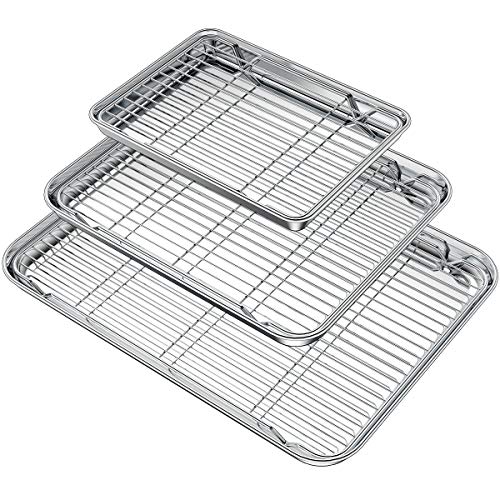
 Spring Chef 10" x 15" Stainless Steel Cooling10"x15"15 x 10.04 x 0.8 inches0.72 poundsCheck on Amazon
 Briout 2PCS Cooling Rack for Cooking and Baking16"x10"-2PC16 x 10 x 0.6 inches1 poundsCheck on Amazon


What's inside
- Why fried food steams itself soft
- Height, spacing and tray: the three decisions
- The draining archetypes worth hunting for
- Resting times: how long crisp actually lasts
- Food by food: matching the grid to the fry
- Cleaning up after oil has done its work
- Common frying-station mistakes
- Oil behaviour across a long frying session
- Frying for a crowd without losing the crust
- Small kitchens, small fryers, same principles
- Questions fryers bring to the draining station
- Check prices on Amazon
- A short checklist before your next fry
As an Amazon Associate I earn from qualifying purchases. This post may contain affiliate links at no extra cost to you.
Affiliate disclosure: if you buy through an affiliate link in this guide, this publication may earn a commission that helps fund future testing, and you will not pay anything additional for that support. All recommendations appear as descriptive prose, so verify the latest details directly on the seller listing before purchasing.
Fried food gives a cook roughly ninety seconds of glory before physics starts negotiating. The crust leaves the oil blistered, fragrant and audibly crisp, then the battle begins: oil clinging to the underside looks for somewhere to settle, steam trapped inside the coating pushes outward, and a flat plate or a sheet of paper quietly undoes everything the fryer achieved. A wire rack set over a tray changes that negotiation completely. Oil falls away instead of pooling, air moves beneath the food instead of stagnating, and the crust keeps the character it had when the basket first lifted and dripped over the pot.
Anyone who has rested fried chicken on kitchen paper knows the disappointment by heart. The top stays handsome while the bottom turns soft and greasy, because paper absorbs a little oil and then holds warm moisture directly against the coating it was meant to protect. A raised grid avoids that trap by separating the food from its own drainage. What drips off stays off, collected in the tray below where it can cool, be strained or be discarded without ever soaking back into a crust that took careful breading and hot oil to build.
This guide treats the rack as frying equipment rather than baking equipment that happens to be nearby. The questions change accordingly. How high must the feet stand for oil to clear the lowest curve of a chicken thigh? Which spacing lets chips fall through yet supports a delicate fritter without marking it? How should the tray beneath be arranged so drainage helps rather than splashes? And how long should fried food actually rest before serving, given that a rack extends crispness but cannot suspend time forever? Those practical questions shape every archetype that follows.
Why fried food steams itself soft
Understanding the enemy makes the equipment choices obvious. A piece of fried chicken, a bhaji or a breaded cutlet carries intense internal moisture that turns to steam the moment frying ends. That steam travels outward through the crust, which is desirable, because it keeps the coating dry from within. Trouble starts when the escaping steam meets a solid surface underneath. It condenses, wets the lowest layer of crust and mixes with residual oil into a softening film. Within minutes the underside loses the shattering quality that made the first bite memorable, even while the upper surface still crackles.
Oil behaves in partnership with that steam. Straight from the fryer, a coating holds more oil than it will keep, and gravity patiently pulls the surplus downward. On a rack, the surplus completes its journey, dropping through the wires into the tray. On a plate, the surplus stops at the surface and forms a shallow bath in which the food continues to sit, effectively shallow-frying its own base at falling temperature while simultaneously steaming it. The result tastes heavier, looks duller and leaves fingers greasier than the cooking ever intended.
Air underneath interrupts both processes at once. Moving air carries steam away before it can condense against the crust, and the open grid gives oil an exit that no absorbent sheet can match. The improvement is not subtle when tested side by side: wings rested on a grid stay distinct and dry to the touch, while wings rested on paper from the same batch slump into each other and shine with surface grease. Cooks who fry for guests notice the difference most at the table, ten minutes after cooking, when rack-rested food still eats like frying and plate-rested food eats like leftovers.
Temperature plays a supporting role that racks handle gracefully. Fried food needs to lose a little heat so mouths can enjoy it, yet it needs to lose that heat in dry air rather than in its own vapour. A grid over a tray creates exactly that environment, a small chimney of clearance where heat rises, moisture disperses and the coating sets firmer as it cools slightly. Serving straight from a rack also protects the food during the walk to the table, because nothing slides around in pooled oil while the tray is carried.
Height, spacing and tray: the three decisions
Foot height decides whether drainage truly clears the food. Shallow grids suit thin items such as crisps or flat fritters, whose undersides sit nearly level and shed only a film of oil. Plump items need genuine clearance, because the lowest point of a drumstick or a stuffed pepper hangs below the line where its sides touch the wires. If that lowest point dips into the collected oil, the rack has merely rearranged the puddle. Measure clearance with your bulkiest regular fry in mind, place the grid inside its tray, and confirm a visible gap between food and tray floor even before any oil accumulates.
Spacing divides fried foods into families. Broad gaps welcome large, sturdy pieces: chicken portions, thick potato wedges, whole breaded fish and chunky vegetable fritters all rest securely while oil escapes freely through the openings. Narrower crosswire patterns protect smaller or softer items, including prawns, whitebait, onion petals, herb fritters and bite-size croquettes that would tilt, slip or lose their coating through a wide grid. Delicate batters deserve special care, since a wire pressing into a fragile crust can tear the very surface the rack exists to preserve, so soft items belong on finer patterns with more points of gentle contact.
The tray beneath deserves thought rather than habit. A rimmed sheet tray catches drainage, protects the counter and lets the whole station move as one unit from fryer to table. Leave the tray bare for clean drainage when oil will be strained and reused under your own safety routine, or line it when the frying involves sugary glazes, sticky marinades or heavily spiced crumbs that bake onto metal. Foil linings speed washing yet can reflect heat upward if crumpled tightly beneath the grid, so lay any lining flat and keep it below the feet rather than tenting it toward the food.
Position completes the setup. Park the draining station close to the fryer, on a stable surface, with enough room for the basket to travel without dripping across the floor. A station that requires a journey invites cooks to rest the first batch on whatever sits nearest, which is usually the dreaded paper-lined plate. When the rack stands ready beside the heat, correct draining becomes the easiest action in the room, and easy actions are the ones that survive the pressure of hungry guests and a second batch already bubbling.
The draining archetypes worth hunting for
Five patterns cover nearly every frying habit found in home kitchens, from Friday fish suppers to celebration platters of fried chicken. Each archetype below is described by construction and behaviour rather than by brand, spanning budget patterns that suit occasional fryers through premium stainless builds for households that fry weekly. Match the pattern to the food you fry most, verify the physical example with your own trays and tongs, and treat any single do-everything claim with friendly suspicion.
Archetype one: the high-clearance in-tray draining grid
Imagine a sturdy grid standing tall inside a rimmed tray, legs long enough to hold a chicken thigh completely above the oil gathering below. This archetype exists for one purpose and performs it beautifully: separation. Oil leaves the coating, falls the full height of the legs and settles in the tray where it cannot touch the food again. Steam escapes downward through the same generous gap, so the underside dries instead of stewing. For households whose frying centres on chicken, chops or thick breaded cutlets, this pattern delivers the most noticeable upgrade over paper and plates, and it does so from the very first batch.
Seasoning behaviour improves alongside drainage, a benefit cooks rarely predict. Salt and spice blends scattered over freshly fried food tend to slide off greasy surfaces and dissolve into puddles, seasoning the tray instead of the dinner. On a high grid the surface dries quickly, so seasoning clings where it lands and distributes more evenly across the batch. Shake the grid gently once, halfway through resting, and loose crumbs drop away while the crust keeps its savoury coat, a small ritual that regular fryers adopt within a week.
Build quality matters most at the legs. Tall feet absorb the weight of heavy pieces landing from tongs, often unevenly, and weak legs splay or bend until the grid lists like a tired table. Look for legs braced by the rim wire, welds that wrap cleanly around each joint and a stance that feels immovable when you press one corner. Premium stainless examples justify themselves here, while mid-range versions with honest bracing serve perfectly well for weekly frying. Test stability in the tray you will actually use, because a grid that fits loosely can skate sideways at the worst possible moment.
Serving from this archetype feels natural after a little practice. Carry tray and grid together, set the whole station in the middle of the table for informal meals, or transfer pieces with tongs once they have drained and firmed. The tray keeps the table clean, the grid keeps the crust honest, and latecomers to the meal still find food worth eating. Few frying upgrades repay their cupboard space so reliably across so many different menus.
Archetype two: the fine crosswire grid for small crisp bites
Small fried food lives dangerously on wide grids. Prawns curl through gaps, onion rings tilt and crack, tiny croquettes roll toward the tray edge whenever the station gets nudged. The fine crosswire archetype spreads support across many small contacts, holding each piece level while oil still finds paths downward between the wires. Bite-size frying, from spiced chickpeas to miniature samosas, suddenly becomes orderly: pieces rest in a single layer, drain at a similar pace and reach the table with their shapes intact rather than welded into a greasy cluster.
Crispness on this pattern has a particular character worth describing. Because each small piece touches the grid at several points, no single patch of crust sits in its own drainage, and the whole surface dries evenly. Herb fritters keep their lacy edges, battered sage leaves stay recognisable and cheese croquettes hold their golden shells without leaking across a puddle. Cooks preparing appetisers for guests, where appearance counts almost as much as flavour, will find this archetype quietly transformative across an evening of small batches.
Washing asks for a soak and a brush, since fine patterns collect crumbs in their many junctions. Fill the tray with warm soapy water the moment frying ends, submerge the grid while everyone eats, and the residue lifts away afterwards without a struggle. Households that leave a fine grid to cool unwashed will curse it unfairly the next morning, when set oil and batter demand real scrubbing. Build the soak into the serving routine and the pattern stays friendly for years, even in budget form.
Choose this grid when your frying leans toward snacks, starters and garnishes rather than centrepiece portions. Pair it with a small tray so the station matches the scale of the food, keep single layers religiously, and resist piling pieces while they drain, because a heap defeats the airflow that makes the pattern work. Used with that discipline, the fine crosswire grid turns fiddly frying into the calmest part of the meal.
Archetype three: the wide-bar grid for big, sturdy pieces
Some fried food needs room more than it needs coddling. Whole fish, bone-in chicken halves, thick wedges and large stuffed vegetables rest best on widely spaced bars that support the frame of the piece while leaving broad channels for oil and steam to escape. The wide-bar archetype feels almost like a miniature grill grate, rigid, open and unbothered by weight. Heavy-gauge wire matters enormously here, since long spans between supports will bow under a loaded fish unless the metal carries real substance, and a bowed surface pools oil exactly where the cook hoped it would drain.
Drainage speed distinguishes this pattern from finer grids. Oil sheets off large surfaces in volume during the first minute, and wide channels let that volume fall without bridging between wires. Surface tension can hold a film across tight patterns when oil arrives quickly, briefly recreating the puddle problem at wire level, whereas broad openings break that film and keep the underside genuinely separated. For big celebratory fries, where several large pieces land in quick succession, that rapid clearance protects the earliest pieces while later ones join them.
Handling large pieces on wide bars rewards wide spatulas and calm movements. Slide the support fully beneath a whole fish before lifting, turn pieces by rolling them along the bars rather than dragging them across, and season after the first drainage minute so the coating has firmed enough to hold its dusting. The grid doubles happily as a resting stage before a brief return to gentle oven warmth when guests run late, provided the construction is plain metal without coatings that dislike heat.
Budget versions of this archetype can serve occasional fryers well, though the welds deserve scrutiny because long bars concentrate stress at their ends. Premium versions add rim strength that keeps the whole rectangle true after years of heavy landings. Either way, measure the grid against your largest pan and your largest typical piece together, since a grid that fits the tray yet crowds the food has solved only half of its assignment.
Archetype four: the dual-purpose roasting and draining grid
Versatility earns cupboard space in smaller kitchens, and the dual-purpose archetype earns it twice by working inside the oven as happily as beside the fryer. Shaped to sit within a roasting tray, this grid lifts breaded cutlets, sausages and vegetable fritters above their juices during cooking, then continues the same job on the counter while the food rests. Air beneath the food during cooking promotes even browning on undersides that would otherwise braise in fat, and the seamless move from oven to resting station means nobody hunts for a second rack with greasy hands.
Fried-style results from oven cooking improve noticeably on this pattern. Breaded items that emerge pale underneath from a flat tray develop colour and firmness when air and heat circulate below them, and excess fat renders away into the tray rather than soaking the crumb. The texture will never perfectly mimic deep frying, yet the gap narrows enough to satisfy weeknight cooking, especially when the grid is preheated with the tray so the coating meets hot metal and begins setting immediately instead of steaming against a cold surface.
Material discipline decides whether this archetype thrives. Plain stainless or uncoated steel handles oven heat, fryer-side drainage and enthusiastic washing without complaint. Coated versions promise release yet restrict the temperatures and scrubbing the dual role demands, so most households should treat coatings as a warning rather than a feature in this category. Mid-range stainless examples hit the sweet spot for most kitchens, sturdy enough for a Sunday roast and light enough to wash without a sigh.
Think of this grid as the connective tissue of a frying household. It drains the Friday fritters, roasts the Sunday vegetables, rests the midweek cutlets and reheats leftover fried food better than any plate, because warm air underneath revives a crust instead of steaming it. Leftover fried chicken reheated on this grid, in a hot oven, on its own tray, comes closer to its first-day glory than any microwave attempt, a trick worth remembering whenever a big batch outlasts a big appetite. Guidance on reheating temperatures pairs well with the probe advice in best meat thermometers for oven, since revived crust and safe centres should arrive together.
Archetype five: the stacking draining station for batch frying
Batch frying creates a traffic problem that single grids solve poorly. The first round of fritters still drains while the second round leaves the oil, and piling fresh pieces onto resting ones crushes coatings and traps steam between layers. A stacking station answers with two or three grids held apart by legs or frames above a shared tray, multiplying draining space without multiplying the counter footprint. Early batches rest undisturbed on lower levels while new arrivals claim the top, and the whole tower travels to the table as a single, impressive piece of organisation.
Airflow management separates a good stacking routine from a steamy disappointment. Load the hottest, wettest pieces on the top level, where their steam rises away from everything else, and move them downward only as they dry and firmer pieces arrive. Leave gaps between pieces on every level, because a crowded tier behaves like a solid shelf regardless of its wire pattern. Cooks who stagger batches by a minute or two, rather than frying continuously, give each level time to clear its vapour and keep the whole station breathing comfortably.
Stability checks matter more with height involved. Each tier should seat positively, with legs that locate into the frame below instead of balancing on smooth wire, and the loaded tower should survive a gentle nudge without swaying. Test the full stack with your heaviest typical load before trusting it during a party, and keep the tower away from the counter edge where sleeves and curious children pass. Mid-range to premium constructions dominate this pattern, and the extra engineering in the joints is exactly what the money buys.
Parties reveal the full value of this archetype. A cook can fry in relaxed waves, hold earlier batches in good condition and serve everyone within the same few minutes instead of feeding the table in shifts. Fried food is social food, and a station that lets the cook rejoin the conversation between batches protects the evening as surely as it protects the crust. When the meal ends, the tiers separate, wash as ordinary grids and store flat, leaving no monument behind.
Resting times: how long crisp actually lasts
A rack extends crispness generously but not indefinitely, and honest resting guidance helps cooks plan around that truth. Thin items such as crisps, fries and delicate fritters peak within the first several minutes after draining, firming as surface oil departs and then slowly softening as internal moisture migrates outward. Serve these promptly, hold them only briefly and reheat leftovers rather than expecting a rack to preserve them through a long evening. Their glory is immediate, and the rack simply ensures that immediacy arrives in perfect condition.
Thick items follow a kinder curve. Chicken portions, dense cutlets and chunky wedges need a genuine rest so juices settle and the coating finishes setting, and a grid supports them through that interval without penalty. Many cooks find the sweet spot arrives after a short drain, when the surface feels dry, the crust sounds firm under a fingertip tap and the interior has relaxed enough to eat juicy rather than scalding. Holding beyond that window belongs in a low oven on the same grid, where gentle warmth defends crispness far better than a cooling counter ever could.
Sauces and serving choices interact with resting more than cooks expect. A crisp piece drowned in sauce at the table keeps its dignity, while the same piece sauced on the draining station softens before anyone lifts a fork. Serve sauces alongside, dress salads at the last moment and keep gravy in its jug until plates are ready. The rack has done delicate work preserving texture; the serving routine should honour that work rather than casually undoing it in the final thirty seconds before eating.
Salt timing deserves its own sentence in every frying notebook. Season while the surface still glistens faintly, immediately after the first drainage shake, and the crystals adhere without dissolving. Wait until the crust dries completely and seasoning bounces onto the tray. Season over the oil and much of it washes away with the drips. That narrow, glistening interval is where flavour locks in, and a cook who watches for it across several batches will soon hit it by instinct.
Food by food: matching the grid to the fry
Fried chicken rewards height above all else. Mixed portions vary in thickness, carry heavy coatings and release a generous amount of oil during resting, so the high-clearance archetype handles them with room to spare. Arrange pieces skin side up, leave breathing space between neighbours and resist stacking under any circumstances. Dark meat tolerates a slightly longer rest than breast portions, which dry as they wait, so serve breast pieces first when a batch spans both. A grid that keeps every portion separated lets the cook manage that timing piece by piece instead of rescuing a greasy pile.
Fish and seafood ask for gentleness. Battered fish carries a fragile shell that cracks under rough tongs and sticks to coarse wire if pressed while molten hot. Let pieces settle for a breath on the basket, transfer with a wide spatula onto a crosswire or wide-bar grid according to size, and move them as little as possible afterward. Prawns, squid and whitebait belong on the fine pattern, drained in a single layer and served quickly, because seafood coatings soften faster than poultry coatings and forgive almost no delay between fryer and plate.
Vegetable frying splits into two tribes. Sturdy vegetables such as potato wedges, aubergine rounds and cauliflower florets behave like small chicken portions, draining happily on open grids with good clearance. Delicate vegetables, including courgette flowers, herb leaves and thin onion petals, need the fine crosswire and a light touch, since their coatings carry more water and less structure. Blanching, salting or pre-drying watery vegetables before battering reduces the steam burden the rack must handle afterward, and no grid, however clever, can fully rescue a coating that steamed itself from within.
Sweet frying brings sugar into the drainage equation. Doughnuts, churros and fruit fritters shed oil like their savoury cousins, yet they also meet sugar coatings that melt against hot, wet surfaces. Drain sweet items briefly on a clean grid, separate from any savoury station, then toss or dust while the surface still holds a faint sheen for the sugar to grip. A grid reserved for sweet work avoids the quiet horror of a doughnut carrying yesterday’s spice blend, and a quick rinse between batches keeps sugar from caramelising onto the wires during a long session. Households that fry both ways often keep their towel and cloth discipline just as separate, a habit echoed in guides such as best bamboo kitchen towels.
Reheating leftovers deserves a final mention in this tour, because racks rescue second-day frying better than any other household method. Arrange cold pieces in a single layer on a grid over a tray, warm them in a hot oven until the crust crackles again and the centre reaches serving temperature, and let them rest briefly on the same grid before plating. The underside dries as it reheats instead of steaming against a tray, and the result honours the original cooking in a way that soft, microwaved revivals never approach.
Cleaning up after oil has done its work
Frying leaves a particular residue that hardens its attitude as it cools. Oil that felt liquid and friendly during service polymerises into a clinging film on wires, especially where heat, air and repeated use combine across many sessions. The defence is timing. While the meal is eaten, let grids soak in their trays with hot water and a little washing-up liquid, so the film stays soft and the crumbs loosen. A grid soaked during dinner washes in moments afterward, while a grid abandoned until morning demands scrubbing that shortens both its life and the cook’s temper.
Brush with the grain of the wires, work the junctions where residue hides and rinse until the metal feels squeaky rather than slick under a fingertip. Stainless grids tolerate a firm brush and the occasional paste of bicarbonate for stubborn patches. Plated grids ask for softer treatment, because every scratch in the finish becomes a future rust point, and coated grids should never meet abrasive pads at all. Dry grids thoroughly on edge, since oil and water trapped at the feet will mark storage surfaces and invite stale smells into a closed cupboard.
Trays need the same attention, because a clean grid returned to a greasy tray restarts the problem it just solved. Strain reusable oil only under your own careful routine, discard spent oil responsibly once cooled, and wash the tray until it no longer feels slippery. Wipe the counter zone around the fryer as part of the same ritual, since fine oil mist settles widely during a long session and transfers to handles, hooks and the rack itself whenever hands move between stations. A clean station at the end of the night is the true beginning of the next successful fry.
Inspect during washing, as fingers notice what eyes overlook. Bent feet, loosening welds and rough spots where finish has lifted all announce themselves under soapy water. Straighten a minor bend promptly before it worsens, retire any grid whose surface has begun to flake, and keep one spare plain grid in reserve so a failure never forces a household back to paper and plates mid-celebration. Heavy pots and trays used alongside frying follow the same inspect-while-washing logic, a point explored for cookware in best dutch ovens not cast iron.
Common frying-station mistakes
Overcrowding tops the list and causes half the disappointments blamed on recipes. Pieces placed touching each other steam their shared edges, weld together as coatings set and drain unevenly because oil bridges between neighbours. Fry in smaller batches, drain in single layers and let the stacking station, rather than a heap, absorb the pressure of volume. The cook who accepts a slightly longer frying schedule serves food that tastes freshly cooked from first plate to last, while the cook who crowds serves a gradient from excellent to tired.
Resting food directly over the fryer or a still-hot hob forms the second classic error. Rising heat and vapour from below keep the crust working instead of setting, and splashes from the next batch can spot the resting pieces with fresh oil. Move the draining station sideways, onto a cool, stable surface, and let each batch finish in peace. Distance from the heat also protects hands, because a grid parked beside bubbling oil invites hurried movements in exactly the space where calm matters most.
Skipping the shake loses more crispness than cooks realise. A gentle shake or a careful turn halfway through resting releases oil trapped in crevices, underneath folds and inside the textured valleys of a heavy coating. Pieces rested motionless keep those pockets, which reveal themselves as greasy bites scattered unpredictably through the meal. Build the shake into the routine, using tongs for large pieces and a careful tilt for small ones, and the whole batch eats more evenly from edge to centre.
The final mistake is treating every fried food identically. Fries want speed, chicken wants a patient drain, delicate seafood wants gentleness and doughnuts want a sugar window that closes quickly. A household that learns those four rhythms, and owns grids that support them, stops experiencing frying as a gamble. Planning the draining station before heating the oil, much as dehydrator owners plan slice thickness before loading trays in best food dehydrators america s test kitchen, turns a chaotic process into a sequence the cook can actually enjoy.
Oil behaviour across a long frying session
A single batch teaches only the opening chapter of drainage, because oil changes character as a session lengthens. Early pieces meet fresh, lively oil that sheets off a hot crust quickly and falls in clean droplets through the grid. Later pieces meet oil that has darkened slightly, gathered crumb particles and absorbed moisture from everything fried before them, and that older oil clings more stubbornly, drains more slowly and leaves a heavier film if the resting routine stays lazy. A cook who watches the tray during a long session can literally see the drainage slow, which is the tray quietly reporting the condition of the fryer itself.
Crumb management protects both oil and rack across those later batches. Loose coating that escapes into the fryer burns gradually, flavours the oil and then settles on resting food as bitter specks whenever drainage splashes. Skim the fryer between batches, shake baskets gently over the oil rather than over the draining station, and keep the grid itself free of accumulated crumbs that would otherwise glue themselves to the next round of hot crusts. A small skimmer, used patiently for twenty seconds between batches, preserves the quality of everything that follows more effectively than any heroic rescue attempted at serving time.
Temperature recovery shapes drainage too. Crowding the fryer drops the oil temperature, and food fried in recovering oil absorbs more grease before its crust seals, arriving at the rack already burdened with extra oil that even perfect clearance cannot fully remove. Patient batch sizes therefore protect crispness twice: once inside the fryer, where a sealed crust forms promptly, and once on the grid, where a modest amount of surplus oil drains away cleanly. The rack and the fryer succeed or fail together, and blaming either alone for a greasy result usually misses their partnership.
Resting space should grow with session length rather than shrinking under pressure. As batches accumulate, move finished pieces that must wait into a low oven on a spare grid, freeing the main draining station for fresh arrivals that need its clearance most urgently. Label the rhythm mentally: drain beside the fryer, hold in gentle warmth, serve in waves that match the table rather than the fryer. Households that adopt that three-stage flow stop experiencing the familiar end-of-session collapse, where the final batch drains beautifully while the first batch quietly tires in a corner.
Frying for a crowd without losing the crust
Crowd frying tests organisation more than technique, because the food itself follows the same rules at twenty portions as at four. The difference lies in sequencing. Fry sturdy items first, since chicken portions and dense wedges forgive holding, and save delicate seafood, thin fries and herb fritters for the final waves before serving. Stage grids in advance, one beside the fryer, one in the warming oven and one ready for the table, so no batch ever waits for equipment. Assign a second person to seasoning and moving trays if the gathering allows, freeing the fryer cook to watch colour and temperature without dividing attention at the hottest moment.
Menu design quietly decides whether crowd frying feels joyful or frantic. Choose items that share oil temperature where possible, avoid mixing strongly flavoured batches before mild ones, and limit the menu to a number of different foods that the draining space can genuinely hold in single layers. A smaller menu served in perfect condition beats a sprawling menu served in declining waves, and guests remember the crisp pieces far longer than they remember the variety. Write the frying order on paper before heating anything, because decisions made beside bubbling oil tend to favour urgency over wisdom.
Children, pets and party traffic add a safety dimension that home cooks must plan rather than improvise. Keep the draining station outside the walking route between kitchen and table, turn tray handles inward and never carry a loaded grid across a room where people are moving with drinks. Serve from a stable side table when the gathering fills the kitchen, and let the fryer zone shrink to a calm, cook-only corner. Crisp food matters, yet the cook who protects the room protects the meal, because a single accident ends both the frying and the party in the same unhappy moment.
After the crowd leaves, the draining station tells the story of the evening to anyone who reads it. Heavy drainage in one tray corner suggests pieces rested unevenly, crumbs fused to a fine grid suggest batches arrived too wet, and a barely marked tray beneath chicken suggests clearance and temperature both behaved. Read those traces while washing, adjust the next session accordingly and the household system improves party by party. Experienced hosts keep mental notes of exactly this kind, which is why their tenth gathering runs more smoothly than their second despite identical equipment.
Small kitchens, small fryers, same principles
Compact kitchens sometimes assume that proper draining belongs to cooks with wide counters and dedicated fryers, yet the principles scale down gracefully. A quarter-size grid inside a small tray drains a modest batch of fritters beside a saucepan of oil just as honestly as a full station beside a deep fryer. The cook simply fries in smaller waves, serves more promptly and washes the little station in the sink corner while the next batch bubbles. Scale changes the rhythm, never the physics, and small households often achieve the finest results of all because their batches never wait long enough to tire.
Air fryers and oven-frying methods belong in this conversation as well, since their food faces the same resting physics despite different cooking heat. Pieces emerging from an air fryer carry less surface oil yet still release steam that softens undersides on a solid plate, and a brief rest on a small grid preserves the texture those appliances worked to create. Breaded oven dishes benefit identically, resting on the same grid they cooked upon whenever construction allows. The draining habit, once learned, quietly improves every crisp food in the house regardless of the machine that cooked it.
Storage for small kitchens favours flat, dual-purpose patterns that earn their footprint daily. A single dual-purpose grid that roasts, drains, rests and reheats justifies its slot in a crowded cupboard far more easily than three narrow specialists. Pair it with one small fine grid only if bite-size frying happens often, and store both inside their trays so the station assembles in seconds. When equipment assembles quickly, cooks use it for even the smallest batch, and that consistency, rather than any grand occasion, is where better texture becomes an everyday expectation instead of a party trick.
Questions fryers bring to the draining station
Is paper ever the right choice under fried food?
Paper has one honest job in frying, which is a brief landing for very small items that need a second of blotting before joining a salad or a garnish. As a resting surface for a main batch it fails predictably, holding moisture against the crust and absorbing oil only until saturation turns it into a wet blanket. If paper is all a kitchen owns tonight, fry happily and serve immediately in small waves. Tomorrow, buy the grid, because the difference across a full meal is large enough that guests will comment without knowing what changed.
How high should the feet really stand?
High enough that the lowest curve of your bulkiest regular piece clears the tray floor with visible space to spare, even after drainage gathers below. Thin fries forgive short feet, while chicken portions and stuffed items expose shallow clearance within a single batch. Test with real food rather than measurements alone, watch where the oil line settles in the tray, and choose the taller pattern whenever the two come close. Clearance that looks excessive on an empty counter looks sensible beneath a loaded grid.
Can one grid handle both chicken and doughnuts?
Physically, yes, provided washing between sessions is thorough enough to remove every trace of savoury spice and salt. Practically, many households prefer a dedicated sweet grid, because sugar work reveals leftover flavours cruelly and because two grids allow simultaneous draining during mixed menus. If budget or space forces a single grid, wash it scrupulously, dry it fully and run savoury batches before sweet ones within a shared session, since sugar forgives a hint of salt far better than spice forgives a hint of sugar.
What should I do when guests arrive late?
Hold drained pieces on their grid inside a low oven, in a single layer, with the door opened briefly now and then to release gathered vapour. Accept that texture will drift gently downward despite your care, and plan the menu so late holding falls on forgiving items such as chicken portions rather than fragile seafood. When guests finally sit, a brief return to higher heat on the same grid revives surfaces respectably. The rack makes all of this possible; without it, late holding becomes a slow surrender to sogginess.
Does the tray lining change the result?
A flat lining under the feet changes washing more than draining, catching spiced crumbs and sticky drips before they bake onto the tray. Tenting or crumpling a lining up around the grid, however, narrows the air gap and can splash drainage back toward the food. Keep linings flat, keep them below the feet and keep them out of the drainage path. Cooks who fry alongside processors and other batch equipment will recognise the same flat-and-clear principle behind tidy prep layouts in best food processors america test kitchen.
Check prices on Amazon
Live listings for the shortlist in this guide are pulled from Amazon below, so prices and availability are always current at the moment you look.


A short checklist before your next fry
Choose the grid by the food, not by habit. Bulky pieces go to the high-clearance pattern, small bites go to the fine crosswire, large sturdy pieces go to the wide bars and mixed batches go to the stacking station. Confirm the grid sits firmly inside its tray without rocking, skating or overhanging, then position the whole station beside the fryer before any oil heats. Lay out tongs, seasoning, a wide spatula and a clean plate for transfers, because a draining routine improvised mid-batch always loses crispness somewhere along the way.
During frying, drain in single layers, shake once midway, season during the glistening interval and move finished stations away from rising heat. Watch the oil gathering in the tray and swap or drain the tray during very large sessions before the level can meet the food. Keep sweet and savoury stations separate where the menu allows, and soak every grid while the meal is eaten so washing stays trivial. Those habits, repeated across a handful of sessions, become automatic, and automatic good habits are what separate households that fry confidently from households that fry hopefully.
Afterward, judge the batch honestly while the memory is fresh. Note which pieces stayed crisp longest, which spacing suited which food and whether clearance ever came close to failing. Adjust one detail next time rather than redesigning the whole station, because frying rewards incremental learning more than dramatic reinvention. A small notebook near the oil, marked with a few greasy fingerprints, has improved more home frying than any single piece of equipment ever sold.
Above all, respect the brief and beautiful window that frying creates. The cook has already done the hard work of heating oil safely, breading carefully and judging doneness by colour, sound and feel. The rack simply protects that work during its most vulnerable minutes, carrying each piece from the basket to the table with its crust, its seasoning and its dignity intact.
Seasoned fryers develop small superstitions around the draining station, and most of those superstitions turn out to be compressed experience wearing a colourful coat. They warm the grid slightly before the first batch on cold days, because a chilled grid can shock a delicate crust and slow the first drainage. They keep a dedicated pair of tongs for resting food so raw-side tools never touch finished pieces. They listen for the change in sound as a batch settles, from the lively hiss of escaping steam to the quiet tick of a crust setting firm, and they serve by that sound as much as by any clock hanging on the kitchen wall.
New fryers should borrow those habits gradually rather than attempting a complete transformation in a single session. Start by moving one familiar recipe from paper to a grid and tasting the difference across the whole meal, including the final pieces that usually suffer most. Then add the midway shake, then the seasoning window, then the habit of staging the station before the oil heats. Each layer improves the result on its own, and stacking them across several weekends builds a routine that feels personal rather than imposed. Confidence in frying grows exactly this way, batch by batch, until the cook stops apologising for the food before anyone has even tasted it.
Families notice the change in unexpected places. Packed lunches built from leftover fried cutlets stay pleasanter when the originals drained properly, because less trapped oil means less greasiness after chilling and reheating. Picnic fritters travel better, sharing platters stay cleaner and the cook’s own clothes carry less of the evening home with them. Even the washing improves, since oil that fell into a tray during resting is oil that never spread across plates, counters and serving spoons. Small advantages compound quietly across a year of frying until the grid feels less like an accessory and more like the fryer’s oldest, most trusted partner at the stove.
Neighbours and friends who eat fried food at a practiced house often ask for the recipe, assuming the secret hides in a spice blend or a marinade they could carry home in a jar. Sometimes it does. More often, the honest answer involves a wire grid, a rimmed tray and ninety patient seconds that nobody witnessed because the cook performed them without ceremony between the fryer and the table. Sharing that answer feels almost disappointing in its simplicity, yet anyone who adopts the habit discovers the same disproportionate reward, meal after meal, batch after batch, until fried food at home stops tasting like an approximation of the real thing and simply becomes the real thing, served hot, dry and proudly crisp to people who will ask for the recipe all over again next time they visit your kitchen table.
Keep the chosen grid beside the fryer rather than buried in a distant drawer, wash it while the evening still feels young, and let every small batch reinforce the same calm sequence of lift, drain, season and serve. Habits formed at the draining station travel surprisingly far, teaching patience with resting meat, respect for cooling bread and care with any food whose texture depends on a few unhurried minutes after the heat has done its work. A kitchen that learns those minutes learns something larger about cooking itself, namely that finishing well is a skill, practised quietly, every single time the oil settles and the room fills with the smell of something properly fried.
Trust the grid, give every batch its brief moment of air and clearance, and carry the food to the table while the crust still speaks for itself without any help from sauces, excuses or apologies offered in advance.
When the last fritter lifts clean from the wires and still crackles against the plate, you will understand that draining was never a pause in the cooking, but the final, decisive act of frying itself.


