What's inside
- Key Takeaways
- Quick Picks
- How We Chose These Picks
- How Do the Six Covers Compare at a Glance?
- Why Does a Weighted Blanket Need a Cover at All?
- How Do Ties and Strings Stop a Blanket From Bunching?
- Which Material Sleeps Coolest, and Which Sleeps Warmest?
- How Do You Put a Cover on a Weighted Blanket Without a Fight?
- How Should You Wash the Cover — and the Blanket?
- How Do You Match a Cover to Your Blanket’s Size?
- Can a Cover Change How a Weighted Blanket Feels?
- What Should You Check Before Ordering a Cover?
- How Does a Cover Help a Weighted Blanket Last Longer?
- What About Covers for Couples Sharing One Blanket?
- How Do You Store a Spare Cover and Rotate Two Covers?
- What Should Allergy-Conscious and Skin-Conscious Buyers Consider?
- How Does the Cover Interact With the Rest of the Bed?
- When Should You Replace a Weighted Blanket Cover?
- How Do You Gift a Cover to Someone Who Owns a Weighted Blanket?
- What Is the Difference Between a Cover, a Duvet and a Blanket Bag?
- How Should You Dry and Iron a Cover Without Ruining It?
- How Do Covers Work for Children’s and Guest Weighted Blankets?
- How Much Should You Expect to Spend, and Where Does the Money Go?
- What Mistakes Do Weighted Blanket Cover Buyers Make Most Often?
- Final Recommendation
- Frequently Asked Questions
- Related Guides
As an Amazon Associate I earn from qualifying purchases. This post may contain affiliate links at no extra cost to you.
cottageverdict.com is reader-supported. When you buy through links on our site, we may earn an affiliate commission.
Where to buy: the six best duvet covers for weighted blankets in this guide are sold through Amazon, and each name in the Quick Picks table, the detailed reviews and the comparison table links to its own listing, where you can check price on Amazon and confirm the cover’s size, tie count and fabric before ordering.
First, the fact that governs everything on this page: every pick here is a cover only. No weighted blanket is included, none is implied, and the heavy, bead-filled blanket you already own — or are buying separately — is the thing these covers exist to dress, protect and make washable. That sounds like a disclaimer, but it is really the product’s whole logic. A weighted blanket is heavy, awkward to launder and often barred from the machine entirely; a cover takes the sweat, the spills and the weekly wash in its place, and turns a difficult object into ordinary bedding.
The question in the keyword is material — best duvet cover material for weighted blankets — and it deserves a material answer. Washed cotton breathes and feels like the bedding you grew up with. Minky dot fabric brings plush texture and warmth. Cooling fabrics answer the weighted blanket’s great paradox, that an object bought for comfort can sleep hot. Bamboo viscose brings a smooth, cool hand from a plant-derived fibre. Around the materials orbit the mechanics that make or break a cover: internal ties — sixteen, twelve, or unspecified, counted honestly below — zippers, and sizes matched to the blanket, chiefly 60 by 80 inches with one 48 by 72 exception.
Key Takeaways
- Every pick is a cover only — the weighted blanket itself is never included, and the cover exists so the blanket rarely needs washing.
- Sixteen ties or strings is the full-security standard here; the Acdyion cover’s twelve ties are noted plainly where they differ.
- Material is the real decision: washed cotton for breathability, minky for plush warmth, cooling fabrics and bamboo viscose for hot sleepers.
- Most picks fit 60 x 80 inch blankets; the YnM cooling cover is 48 x 72 — measure your blanket before anything else.
- A zipper on the long side, as on the F.Y.Dreams cover, makes loading a heavy blanket dramatically less of a wrestling match.
- Buy the cover to your blanket’s exact dimensions; a loose cover lets the blanket bunch, fold and migrate inside it.
Quick Picks
| Pick | Badge | Why it earns its place |
|---|---|---|
| F.Y.Dreams Weighted Blanket Cover | Best Washed Cotton Cover | Washed cotton, 60 by 80, sixteen ties and a zipper on the long side — the complete specification, honestly labelled ‘just duvet cover’. |
| RelaxBlanket Weighted Blanket Cover | Best Minky Dot Cover | Premium minky dot fabric at 60 by 80 in dark grey — the plush, strokeable cover for cold rooms and texture lovers. |
| YnM Cooling Weighted Blanket Cover | Best Cooling Cover, Smaller Size | A cooling cover with sixteen strings at 48 by 72 in blue grey — the hot sleeper’s answer for the smaller blanket size. |
| ZonLi Weighted Blanket Cover | Best All-Season Cover | A breathable, soft, removable and washable cover at queen 60 by 80 in grey, pitched for all seasons — the diplomat of the list. |
| Acdyion Weighted Blanket Cover | Best Reversible Cover | Cooling on one side, soft minky on the other, queen 60 by 80 in navy with twelve ties — two covers in one reversible skin. |
| YnM Bamboo Weighted Blanket Cover | Best Bamboo Viscose Cover | Bamboo viscose with sixteen strings at the full 60 by 80 in blue grey — the smooth, cool, plant-derived option at standard size. |
How We Chose These Picks
We started with the tie count, because a weighted blanket inside a cover is a heavy animal that wants to migrate. Covers that anchor the blanket at many points — sixteen ties or strings on the F.Y.Dreams and both YnM covers — keep the weight distributed the way the blanket’s own quilting intended. Where a listing does not state its fastening count, as with the RelaxBlanket and ZonLi covers, we say so rather than guess, and we weigh those covers on their fabric and finish instead.
Then we built the material ladder the keyword asks for. Washed cotton, minky dot, cooling fabric, breathable all-season cloth, a cooling-and-minky reversible, and bamboo viscose: six genuinely different answers to the question of what should touch your skin while twenty pounds of blanket does its work. Sizes were audited against the dominant blanket dimensions, and closures — zippers against openings — were judged by the only test that matters, which is loading a heavy blanket alone at bedtime, in a hurry, in the dark.
One more consideration shaped the final order: how a cover behaves in the wash, because the cover is the part of the arrangement that actually meets the machine every week. A cover whose fabric, closure and ties survive that rhythm without tangling, fading or sulking is worth more than a theoretically superior fabric that must be babied — the weighted blanket’s cover is a working garment, and it was judged as one.
Colour, finally, was treated as a legitimate criterion rather than a frivolous one: a cover is the bed’s largest visible surface, and a grey, navy or blue grey that the room can live with will be washed, used and kept, while a colour the room argues with will be exiled to the drawer regardless of its fabric’s virtues.
- Cover-only status confirmed for every pick — no blanket included, none implied.
- Tie and string counts taken from each listing: 16, 16, 16 and 12 where stated, unstated where not.
- Material range built deliberately: cotton, minky, cooling fabric and bamboo viscose all represented.
- Sizes checked against real blankets: 60 x 80 as the standard, 48 x 72 labelled as the exception.
- Closure practicality weighed — a heavy blanket punishes a badly placed opening every single wash day.
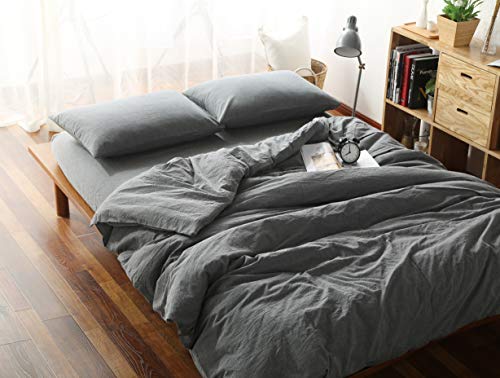
F.Y.Dreams Weighted Blanket Cover — Best Washed Cotton Cover
The F.Y.Dreams Weighted Blanket Cover earns the lead by completeness. One hundred percent washed cotton, sized 60 by 80 inches, with sixteen internal ties and a zipper on the long side, in grey — and a listing that ends with the words ‘just duvet cover’, which this guide wishes every cover in the category were honest enough to print. Nothing here is implied that is not delivered, and everything a weighted blanket cover needs is present.
Washed cotton is the traditionalist’s material, pre-softened so it arrives feeling like bedding rather than packaging. It breathes through the night, which matters more under a weighted blanket than under any other cover, because the blanket’s own insulation is considerable and the cover should not add a plastic-bag effect to it. Cotton also washes without ceremony at the temperatures household laundry actually uses, week after week, which is the cover’s entire reason to exist.
The mechanics are the quiet triumph. Sixteen ties distribute the blanket’s anchoring so no single point takes the migration strain, and the long-side zipper changes the loading ritual completely: lay the blanket flat, lay the cover over it, tie, fold and zip along the long edge, rather than feeding twenty pounds of beads through a narrow opening like a duvet into a pillowcase. Anyone who has done the latter will read that sentence as poetry.
Grey keeps it adult and unisex, the cotton keeps it breathable, and the specification keeps it honest. If your blanket is 60 by 80 and your taste runs to natural fibre and proper engineering, the F.Y.Dreams Weighted Blanket Cover is the benchmark the rest of this list is measured against.
- Fabric: 100% washed cotton
- Size: 60 x 80 inches
- Fastening: 16 ties, zipper on the long side
- Colour: grey
- Includes: cover only — blanket not included
Strengths
- Full 16-tie anchoring plus a long-side zipper
- Breathable natural cotton, pre-softened by washing
- Listing states plainly that it is just the cover
Trade-offs
- Cotton is not the coolest option for hot sleepers
- Grey is the palette — no pattern adventure here
- Heavier to wash than the thinnest synthetic covers
Best for: 60 x 80 blanket owners who want cotton and proper mechanics. Not suited for: hot sleepers who need an actively cooling fabric.
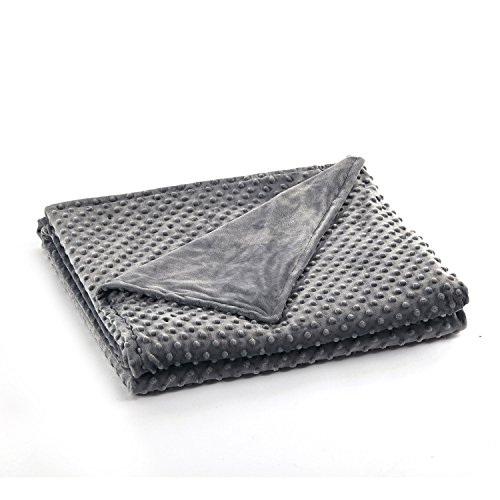
RelaxBlanket Weighted Blanket Cover — Best Minky Dot Cover
The RelaxBlanket entry is the texture candidate. Its fabric is minky dot — the plush, raised-dot material that children’s blankets made famous and adults quietly covet — at 60 by 80 inches in dark grey. Under a weighted blanket’s pressure, that dotted plush does something flat fabrics cannot: it gives the skin a varied, interesting surface, and for the many weighted-blanket users who are seeking sensory comfort as much as warmth, the cover’s texture is not decoration but half the therapy-adjacent pleasure of the object. This guide makes no medical claims for any of it; it simply notes that people love how this feels, and feeling is the product.
Dark grey is the right colour for minky. It keeps the plush adult, hides the week’s evidence between washes, and sits calmly in a grown-up bedroom where a pastel dot might read as borrowed from the nursery. The cover’s job — protecting the blanket, taking the wash — is performed with the same competence as the cotton picks, in a fabric that asks for a gentler wash to keep its pile cheerful.
Honesty about the listing: it does not state a tie count, so this guide does not invent one. Check the fastening arrangement on the listing itself if anchoring is your priority, and weigh this cover on what it declares — premium minky dot, correct size, a brand that lives in this category. Buyers whose blankets migrate aggressively may prefer the stated sixteen-tie covers; buyers whose priority is the surface against their skin will not hesitate.
In a cold room, with the heating low and the blanket’s weight settled, a minky cover turns the weighted blanket into the cosiest object in the house. The RelaxBlanket Weighted Blanket Cover is the winter and texture pick, and for its constituency it is not a compromise at all — it is the entire point.
- Fabric: minky dot, premium super soft per listing
- Size: 60 x 80 inches
- Colour: dark grey
- Fastening: tie count not stated in the listing
- Includes: cover only — blanket not included
Strengths
- Raised-dot plush gives unmatched tactile comfort
- Dark grey keeps plush looking adult
- Correct 60 x 80 sizing for the standard blanket
Trade-offs
- Warm fabric — not for hot sleepers or summer
- Tie count unstated; check the listing if that matters
- Pile prefers a gentler wash routine
Best for: cold rooms and anyone who buys bedding by touch. Not suited for: hot sleepers, or buyers who need a stated tie count.

YnM Cooling Weighted Blanket Cover — Best Cooling Cover, Smaller Size
Size first, because this pick breaks the page’s pattern: the YnM Cooling Weighted Blanket Cover measures 48 by 72 inches, not 60 by 80. That is not a flaw but an address — a large population of weighted blankets, especially single and throw sizes, wear exactly those dimensions — and a cover bought at the wrong size is a cover that bunches, so this guide labels it in the headline and repeats it here. Measure your blanket; if it reads 48 by 72, this may be your cover.
The material is the story. Cooling fabric exists to answer the weighted blanket’s central complaint: the weight comforts and the warmth suffocates, in the same night, in the same bed. A cover that feels cool to the touch and breathes against the skin lets a hot sleeper keep the pressure and shed the sauna, and YnM — a name that lives in weighted bedding — builds this one as its exclusive cooling entry, in a blue grey that looks like evening and feels like it too.
Sixteen strings anchor the blanket at as many points as any cover here, so the cooling surface stays where it was spread rather than migrating into a warm heap at the foot of the bed — a failure mode that defeats the entire cooling purpose. The fastening count, stated plainly in the listing’s title, is the kind of commitment this guide rewards wherever it finds it.
Hot sleepers with the smaller blanket size have historically been served last by this category; this cover serves them first. The YnM Cooling Weighted Blanket Cover is the specialist pick of the list — wrong for a 60 by 80 blanket, exactly right for its own — and it demonstrates the guide’s first principle better than any other entry: in covers, fit and fabric outrank everything.
- Fabric: cooling fabric per the listing
- Size: 48 x 72 inches — note, not 60 x 80
- Fastening: 16 strings
- Colour: blue grey
- Includes: cover only — blanket not included
Strengths
- Cooling surface answers the hot-sleeper problem directly
- Full 16-string anchoring keeps the blanket spread
- Serves the underserved 48 x 72 blanket size
Trade-offs
- Wrong size for the common 60 x 80 blanket
- Cooling feel is a warm-season virtue, a winter vice
- One colour in this listing
Best for: hot sleepers whose blankets measure 48 by 72. Not suited for: any 60 x 80 blanket, however much you like the fabric.

ZonLi Weighted Blanket Cover — Best All-Season Cover
The ZonLi Weighted Blanket Cover makes the all-season argument: breathable and soft, removable and washable, queen size at 60 by 80 inches, in grey, for all seasons. Where the other picks specialise — cotton’s tradition, minky’s plush, cooling fabric’s chill — the ZonLi aims at the middle of the road and paves it well: a cover that does not ask you to own a winter cover and a summer cover, but asks only to be washed and returned to duty.
Breathability is its declared mechanism, and it is the right one for the middle path. A weighted blanket already insulates by mass; a cover that lets air move keeps that insulation honest across spring and autumn, the seasons where bedding choices are hardest. In high summer the hot sleeper will still migrate to the cooling covers, and in deep winter the plush devotee to minky — but for the long middle of the year, and for households that want one cover, this is the rational address.
The listing does not state a tie count, and the guide records that without inventing one; check the fastening details on the listing if your blanket is a known wanderer. What the listing does commit to — size, removability, washability, breathability, season range — it commits to plainly, and ZonLi’s presence across the weighted bedding category gives those commitments a maker’s weight behind them.
Grey, queen, all seasons, washable: the ZonLi cover is the one for the buyer who finds this whole category faintly over-thought and wants the sensible object. There is more wisdom in that position than the specialists like to admit, and this cover serves it with dignity.
- Fabric: breathable, soft per the listing
- Size: queen, 60 x 80 inches
- Colour: grey
- Fastening: tie count not stated in the listing
- Includes: cover only — blanket not included
Strengths
- All-season breathability covers the long middle of the year
- Removable and washable, as a cover must be
- Queen 60 x 80 fits the standard large blanket
Trade-offs
- Neither the coolest nor the plushest option here
- Tie count unstated in the listing
- Grey-only palette in this listing
Best for: one-cover households and moderate climates. Not suited for: specialists who already know they run hot or cold.

Acdyion Weighted Blanket Cover — Best Reversible Cover
The Acdyion Weighted Blanket Cover refuses to choose, and builds the refusal into the product: one face is cooling fabric, the other is soft minky, and the cover is reversible between them. Queen size at 60 by 80 inches, in navy, machine washable, with twelve ties. Flip it cool-side-in for July, plush-side-in for January, and the two-cover wardrobe that the specialists in this guide quietly require collapses into a single purchase.
Reversibility is more than a seasonal trick. It is a nightly negotiation tool — the hot sleeper and the cold sleeper sharing a bed can at least choose which climate the shared blanket wears — and it doubles the cover’s surface life, since wear and washing distribute across two faces. Navy is a handsome, adult choice that hides the week’s evidence nearly as well as the dark grey picks while giving a bedroom actual colour to work with.
Now the honest arithmetic: twelve ties, not sixteen. The listing states twelve, and this guide prints twelve. In practice, twelve well-placed anchors hold most blankets respectably, and the reversible design’s convenience may fairly outweigh four ties for many households — but a blanket with a known wandering habit, or an owner who hates re-spreading a bunched cover, should weigh the sixteen-tie picks above this one. The guide’s job is to make that a conscious trade, not a discovered one.
Machine washable, queen-sized, two climates in one skin: the Acdyion Weighted Blanket Cover is the pragmatist’s favourite in this list, the cover that admits households contain both seasons and both sleepers, and declines to make them buy twice for the admission.
- Fabric: cooling and soft minky, reversible
- Size: queen 60 x 80 inches
- Fastening: 12 ties — stated in the listing
- Colour: navy
- Includes: cover only — blanket not included
Strengths
- Two climates in one cover — flip with the seasons
- Navy gives the bedroom real colour
- Machine washable, queen standard size
Trade-offs
- 12 ties anchor less thoroughly than 16
- Neither face is the extreme of its type
- Reversible construction needs both faces cared for
Best for: mixed-climate households and couples who sleep at different temperatures. Not suited for: owners of blankets that migrate aggressively in their covers.
YnM Bamboo Weighted Blanket Cover — Best Bamboo Viscose Cover
The YnM Bamboo Weighted Blanket Cover completes the material ladder at its smoothest rung. Bamboo viscose — a fibre derived from bamboo, spun into a fabric with a cool, silky hand — at the full 60 by 80 size, with sixteen strings, in blue grey. Where its YnM sibling serves the smaller blanket with cooling fabric, this one serves the standard blanket with the fabric that hot sleepers and smooth-sheet devotees ask for by name.
Bamboo viscose’s virtues are tactile before they are thermal. It drapes rather than tents, slides rather than grips, and feels cool on first contact in a way cotton takes minutes to match. Under a weighted blanket, whose pressure is the point, a low-friction cover lets the weight settle evenly across the body instead of dragging at the skin — a subtle mechanical kindness that owners notice on the first night and miss forever after if they return to grippier fabrics.
Sixteen strings keep the blanket anchored at the full standard this guide uses as its benchmark, so the smooth surface stays spread and the weight stays distributed. Blue grey repeats the cooling YnM’s evening palette, and the pairing is deliberate: a household can own the feel across two blanket sizes without the bedroom changing colour.
Care is bamboo’s one request: wash it kindly, cool and gentle, and it will keep its hand for years; scorch it with heat and rough company and it will remind you it is a refined fabric. For the smooth sleeper, the hot sleeper and the 60 by 80 owner who found the cooling YnM’s size wrong, the YnM Bamboo Weighted Blanket Cover is the cover this whole guide has been arranging as its final answer.
- Fabric: bamboo viscose
- Size: 60 x 80 inches
- Fastening: 16 strings
- Colour: blue grey
- Includes: cover only — blanket not included
Strengths
- Cool, silky hand that lets weight settle evenly
- Full size with full 16-string anchoring
- Plant-derived fibre for the natural-materials buyer
Trade-offs
- Asks for gentler washing than cotton
- Smooth surface can feel cool in winter
- Blue grey only in this listing
Best for: hot sleepers and smooth-fabric devotees with 60 x 80 blankets. Not suited for: hot-wash laundry households or winter plush seekers.
How Do the Six Covers Compare at a Glance?
Read this table in three passes: size first, because a wrong-size cover is a wrong cover; ties second, because anchoring decides whether the blanket stays spread; material last, because fabric is preference while the first two are physics. Five covers serve 60 by 80 blankets and one serves 48 by 72, and the guide has kept that exception labelled at every mention.
A last observation before the detail: two of these covers come from YnM, a maker whose name is on a great many of the blankets themselves, and that is worth something in a category where fit between cover ties and blanket loops decides daily satisfaction. Brand-matching is not a rule, but where a blanket and cover share a maker, their fastenings were at least introduced to each other at the factory.
| Pick | Badge | Distinguishing detail |
|---|---|---|
| F.Y.Dreams Weighted Blanket Cover | Best Washed Cotton Cover | 100% washed cotton, 60 x 80, 16 ties, long-side zipper, grey |
| RelaxBlanket Weighted Blanket Cover | Best Minky Dot Cover | Minky dot fabric, 60 x 80, dark grey, cover only |
| YnM Cooling Weighted Blanket Cover | Best Cooling Cover, Smaller Size | Cooling fabric, 16 strings, 48 x 72, blue grey |
| ZonLi Weighted Blanket Cover | Best All-Season Cover | Breathable soft fabric, queen 60 x 80, grey, all seasons |
| Acdyion Weighted Blanket Cover | Best Reversible Cover | Cooling and minky reversible, 60 x 80, 12 ties, navy |
| YnM Bamboo Weighted Blanket Cover | Best Bamboo Viscose Cover | Bamboo viscose, 16 strings, 60 x 80, blue grey |
Why Does a Weighted Blanket Need a Cover at All?
Because the blanket itself is nearly unlaunderable in a domestic machine. It is heavy dry and far heavier wet, its fill — typically tiny beads distributed in quilted pockets — dislikes agitation, and many makers advise spot cleaning only. Life, meanwhile, happens on top of it nightly: skin, sweat, spills, pets, and the general evidence of being a bed. The cover is the sacrificial, washable skin that makes the whole arrangement hygienic and sustainable.
The cover also completes the blanket as bedding. It gives the object a fabric chosen for skin rather than for containing beads, a colour chosen for the room, and a surface that can be changed with the seasons. A weighted blanket without a cover is equipment; with the right cover, it becomes part of the bed — which is where it will either be used nightly or exiled to a cupboard, and use is the whole point.
How Do Ties and Strings Stop a Blanket From Bunching?
Inside a cover, an unanchored weighted blanket behaves like a heavy animal in a bag: it slides to the low side, folds at the corners, and concentrates its weight wherever gravity files it. Ties and strings — the blanket’s loops fastened to the cover’s internal anchors — pin the two layers into one object, so the blanket’s own quilted distribution survives inside the cover and the weight stays spread across the sleeper as designed.
Count matters because migration is patient. Sixteen anchor points, the standard on the F.Y.Dreams and both YnM covers, leave no long free span for the blanket to travel along; twelve, on the Acdyion, still serve most blankets honestly; an unstated arrangement asks you to check the listing and weigh the maker’s reputation. Whatever the count, tie every point, every time — half-tied covers bunch in the untied half with a fidelity that feels personal.
Which Material Sleeps Coolest, and Which Sleeps Warmest?
Coolest first: the dedicated cooling fabric of the smaller YnM and the Acdyion’s cool face are engineered for the hot sleeper, and bamboo viscose follows them closely with its cool first touch and breathability. Washed cotton sits in the temperate middle — it does not feel cool, but it breathes honestly and never feels synthetic against the skin. The ZonLi’s breathable all-season cloth neighbours it there.
Warmest, by a distance, is minky: the RelaxBlanket’s dotted plush and the Acdyion’s reverse face trap air and deliver contact warmth the moment the blanket settles. Warmth is not a flaw — for cold rooms and cold sleepers it is the feature — but it must be chosen, not discovered in July. The reversible cover exists precisely because so many households contain both discoveries in the same calendar.
How Do You Put a Cover on a Weighted Blanket Without a Fight?
Work flat, work patient, and use gravity as staff rather than opponent. Lay the cover inside-out on the bed, lay the blanket over it aligned corner to corner, and fasten every tie or string to its loop, starting at the far corners. Then roll or fold the pair together as you turn the cover right-side-out around the blanket — the long-side zipper on the F.Y.Dreams makes this a guided process rather than an excavation — and finish with a shake from the top corners, holding the blanket’s corners through the cover, to settle everything into place.
Two people make it a two-minute job; one person makes it a technique. Either way, never skip ties to save time: the five minutes saved at loading are repaid, with interest, at 3 a.m. by a blanket that has folded itself into a heavy rope along one side of the cover. The cover change is the weighted blanket’s only real chore, and doing it properly is what keeps it a chore measured in minutes per month.
How Should You Wash the Cover — and the Blanket?
The cover washes like bedding, with its fabric’s manners: cotton thoroughly and without anxiety, bamboo viscose cool and gentle, minky at moderate temperatures with its pile protected from high dryer heat, cooling fabrics per their maker’s instructions. Zip or fasten closures before washing so ties do not tangle into a single melancholy knot, and wash the cover on the rhythm of your sheets — it is, functionally, the blanket’s sheet.
The blanket itself, freed from weekly duty, needs only occasional care: spot cleaning for incidents, airing for freshness, and a full wash only when the maker permits it and a machine of sufficient capacity is available — many owners use a commercial laundrette’s large drum for the annual event. This division of labour is the cover’s economic argument in one paragraph: it converts an almost unwashable object into bedding with a normal laundry life.
How Do You Match a Cover to Your Blanket’s Size?
Measure the blanket flat — length and width, seam to seam — and buy the cover at those dimensions, not at the bed’s size and not at the size you vaguely remember ordering. The weighted blanket world runs on a few standards, 60 by 80 above all and 48 by 72 behind it, and this guide’s picks map onto them deliberately. A cover one size up will let the blanket fold inside it; one size down will not close, or will compress the blanket into a smaller, denser, angrier object.
Check the loop positions while you measure. Blankets carry their fastening loops at corners and edges in patterns that vary by maker, and a cover whose ties sit near those loops will anchor kindly, while a mismatched pattern strains both. YnM covers naturally suit YnM blankets; the universal picks suit most others. Thirty seconds with a tape measure, again, is the cheapest expertise in bedding.
Can a Cover Change How a Weighted Blanket Feels?
Profoundly, and within honest limits. The cover cannot change the blanket’s weight or its distribution — those are sewn into the blanket itself — but it governs everything the skin knows: temperature, texture, friction and sound. A bamboo cover makes the same blanket feel cooler and smoother; a minky cover makes it feel warmer and more tactile; a cotton cover makes it feel like ordinary bedding, which for many sleepers is exactly the normalcy they want.
This is why owning two covers is not indulgence but range. The blanket is a single, expensive, long-lived object; covers are its wardrobe, and a winter minky over a summer bamboo extends the blanket’s useful nights across the whole calendar. Buyers who find their weighted blanket ‘too hot’ or ‘not cosy enough’ very often do not need a new blanket at all. They need the other cover.
What Should You Check Before Ordering a Cover?
Four facts, in order: your blanket’s measured dimensions; its loop arrangement for ties; the cover’s stated tie count and closure type; and the cover’s fabric, matched to your sleeping temperature. Then a fifth, which this guide has repeated deliberately: confirm that the listing is for a cover only, so that no one in the household expects a blanket to arrive in the parcel and plans a first night around its arrival.
Read the size in the title, not the photograph — covers photograph identically at every size, which is how a 48 by 72 cover gets ordered for a 60 by 80 blanket by a tired person at midnight. The YnM cooling cover’s size is printed in its title; honour that honesty by reading it. Measure, match, then choose fabric with your heart. In that order, cover buying almost never goes wrong.
How Does a Cover Help a Weighted Blanket Last Longer?
A weighted blanket ages at its surfaces: skin oils work into the shell fabric, spills stain it, friction thins the outer layer over the bead pockets, and every full wash — heavy, awkward, hard on seams — costs it a little of its life. The cover intercepts nearly all of that. Oils and spills land on a washable skin; friction wears a replaceable layer; the blanket itself rests inside, washed rarely, handled gently, its quilting and fill undisturbed season after season.
The economics follow the physics. A blanket is the expensive object; a cover costs a fraction of it and can be replaced when its own service shows. Households that cover their blankets from the first night simply do not meet the faded, stained, thinning blanket that uncovered owners describe in year three. Protection is the least glamorous reason to buy a cover and, across a decade, the most valuable one.
What About Covers for Couples Sharing One Blanket?
A shared weighted blanket is a treaty, and the cover is its constitution. Two sleepers rarely agree on temperature, so the reversible Acdyion — cooling one face, minky the other — at least lets the treaty be renegotiated seasonally without a new purchase. Two sleepers also double the cover’s laundry duty, which argues for a second cover in the rotation so wash day never leaves the blanket undressed and exiled.
Size discipline matters more, not less, when a blanket is shared: a cover that lets the blanket migrate will deliver its weight to whichever partner it prefers, nightly, and domestic harmony has survived smaller provocations but why test it. Tie every anchor, spread the blanket deliberately at bed-making, and let the cover’s engineering keep the peace that the blanket’s weight was bought to create.
How Do You Store a Spare Cover and Rotate Two Covers?
Two covers are the grown-up arrangement: one on the blanket, one clean in the drawer, and wash day reduced to a swap rather than a deadline. Store the spare folded flat with its ties loosely bundled so they do not arrive as a knot, in the same drawer as the bed’s spare sheets, because the cover is bedding and should live with bedding rather than in the blanket’s original packaging in a cupboard of good intentions.
Rotate by season if your pair spans climates — bamboo forward in spring, minky forward in autumn — and by wear if they are twins, so both age together and neither becomes the shabby one that only emerges on laundry emergencies. Label nothing; the fabrics announce themselves. The two-cover household has quietly solved the weighted blanket’s only real chore, and it solved it with a drawer.
What Should Allergy-Conscious and Skin-Conscious Buyers Consider?
Without making claims no cover can keep, the practical points are simple. A cover that washes thoroughly and often is the main tool: it is the layer that collects the night’s dust and skin, and it is the layer that can actually go through the machine on a hot, thorough cycle when the fabric allows — cotton above all. Bamboo viscose and cotton both suit buyers who prefer fibres with a natural origin against the skin, and both are represented here at full size.
Wash a new cover before its first night, as you would any bedding, and keep the washing rhythm regular rather than heroic. Beyond that, let comfort be the guide: a sleeper who finds a fabric’s hand pleasant will use the blanket nightly, and a blanket used nightly under a clean cover is the entire arrangement working as designed. The cover cannot promise more than cleanliness and comfort, and it should not be asked to.
How Does the Cover Interact With the Rest of the Bed?
A covered weighted blanket usually replaces the duvet rather than joining it — weight plus a full duvet overheats most sleepers and buries the bed-making in layers. The cover therefore becomes the bed’s visible top surface, which promotes its colour and fabric from underwear to outfit: the grey cottons and navy of this list were chosen by their makers with that visibility in mind, and your choice should be made with the bed made, in daylight, at least mentally.
Under the cover, keep the stack simple: sheet, sleeper, weighted blanket in its cover. Additional light layers can go over the blanket for cold sleepers — a throw at the foot is the classic — rather than under it, where they interfere with the weight’s even contact. The weighted blanket’s effect, such as each sleeper experiences it, is clearest when nothing mediates between the blanket and the body but the cover you chose for exactly that contact.
When Should You Replace a Weighted Blanket Cover?
Replace on function first: ties torn away, a zipper that will not run, seams opening at the corners where the blanket’s weight argues hardest. A cover that cannot anchor is no longer a weighted blanket cover, whatever its fabric still promises. Replace on fabric second: minky pile worn bald in the centre, bamboo thinned by kind washing’s long accumulation, cotton faded past the point where the bed looks dressed rather than apologetic.
Keep the retired cover if it still closes — as the laundry-day spare, the guest blanket’s dress, the travelling cover that can be lost without grief. Covers, like sheets, retire by degrees through a household’s softer duties. But do not let sentimentality keep a failed cover on the main blanket: the anchor points are the product, and when they go, the cover has honourably finished.
How Do You Gift a Cover to Someone Who Owns a Weighted Blanket?
It is a better gift than it sounds, because weighted blanket owners are a defined constituency with a known need: ask, or discreetly discover, the blanket’s size, and then buy the fabric the recipient’s sleeping temperature calls for. The hot sleeper’s bamboo, the cold sleeper’s minky, the pragmatist’s reversible — each lands as evidence that the giver understands the recipient’s actual nights, which is the rarest quality in a gift.
Include the receipt and no apology for the gift’s practicality. A cover is used nightly, washed weekly and thought of warmly each time the blanket is dressed without a fight — a usage record few decorative gifts approach. If the size turns out wrong, the exchange is painless, and the thought, being measurable in inches, survives it intact.
What Is the Difference Between a Cover, a Duvet and a Blanket Bag?
Terminology in this corner of bedding is loose, so let the functions define the words. A weighted blanket cover is a fitted skin with internal anchors, sized to the blanket, closed by zipper or opening, and meant to be slept under nightly. A regular duvet cover is the same idea without the anchor count and at duvet sizes. A storage bag is a sack with a zip, meant for a cupboard, and sleeping under one would be a warm, rustling mistake.
Listings blur the three because the photographs look alike. The discriminating details are always the same: internal ties or strings by count, dimensions that match blanket standards, and a closure placed for loading a heavy object. Find those three in a listing and you have found a cover, whatever the headline calls it; miss them, and you are looking at a bag wearing a cover’s clothes.
How Should You Dry and Iron a Cover Without Ruining It?
Dry by fabric, as you washed by fabric. Cotton tolerates the tumble dryer with its usual indifference and emerges softer for it. Bamboo viscose prefers a gentler heat or a line, keeping its smooth hand out of the dryer’s roughest moods. Minky should never meet high heat, which can dull and stiffen the pile it exists for; shake it, dry it moderate, and let air finish the job. Cooling fabrics follow their makers’ labels, which in this category are worth obeying literally.
Ironing is mostly a cotton question, and mostly unnecessary: a cover stretched over a weighted blanket smooths itself under the weight within a night. If you iron for the pleasure of a made bed, iron the cotton, warm, and leave the synthetics and pile fabrics out of the ceremony entirely. The blanket inside is the best clothes press its cover will ever meet.
How Do Covers Work for Children’s and Guest Weighted Blankets?
Where a weighted blanket serves an older child, under the same adult judgement that chose the blanket itself, the cover’s role is unchanged and its laundry duty doubles — choose the fabric that washes most forgivingly, cotton or the all-season ZonLi, and own two, because a child’s blanket cover will meet every substance the household contains, sometimes in the same week. The cover, as ever, is bought separately from the blanket and sized to it exactly.
Guest blankets argue for the cover as hospitality: a freshly washed cover dresses a stored blanket for a visitor in minutes, and comes off again afterwards for the wash, leaving the blanket itself untouched by its social life. Keep the guest cover with the guest sheets, and the spare room’s weighted blanket becomes a five-minute preparation instead of a laundering project with a deadline.
How Much Should You Expect to Spend, and Where Does the Money Go?
In this category the money goes to three places: fabric, fastenings and size honesty. Natural and engineered fabrics — washed cotton, bamboo viscose, true cooling cloth — cost more than plain synthetics; sixteen ties and a long zipper cost more than an open hem; and a cover cut generously to a true 60 by 80 costs more than one that shaves the dimensions and hopes. None of those is a vanity expense, because each is paid back nightly in fit, anchoring or feel.
What Mistakes Do Weighted Blanket Cover Buyers Make Most Often?
The mistakes in this category are unusually concrete — a wrong size, a skipped tie, an expectation that a blanket was included — and therefore unusually preventable. The recurring list is short and worth reading before you order.
- Expecting a weighted blanket in the parcel when every listing here is a cover only.
- Ordering by bed size instead of by the blanket’s measured dimensions.
- Skipping half the internal ties at loading time and meeting the bunched result at 3 a.m.
- Buying minky for a hot sleeper or cooling fabric for a cold room, against the household’s own thermometer.
- Washing the blanket itself weekly while the washable cover sits in a drawer.
- Choosing a cover with no stated fastening for a blanket known to migrate in its sleep.
Each of these is a five-minute check at purchase against a season of nightly irritation, which is the standard economics of bedding done carelessly. The cover is a small, precise object; buy it precisely and it disappears into the bed’s routine, surfacing only on wash day, exactly as designed.
Final Recommendation
For the standard 60 by 80 blanket, the benchmark is the F.Y.Dreams: washed cotton, sixteen ties and that long-side zipper, a specification with no gaps. Hot sleepers at the same size should take the YnM bamboo viscose; hot sleepers at 48 by 72, the YnM cooling cover written for them. Cold rooms belong to the RelaxBlanket’s minky dot, mixed households to the Acdyion’s reversible diplomacy, and the one-cover pragmatist to the ZonLi’s all-season grey.
Measure your blanket, count the ties, choose the fabric your nights actually need, and the best duvet cover material for weighted blankets stops being a search query and becomes the reason your weighted blanket finally lives on the bed — washed, anchored, and dressed for the season it is in.
Frequently Asked Questions
Is a weighted blanket included with any of these covers?
No. Every pick in this guide is a cover only — several listings say so explicitly — designed to dress a weighted blanket you own or buy separately. The cover’s purpose is to protect that blanket and take the regular washing in its place.
How many ties should a weighted blanket cover have?
Sixteen ties or strings is the full standard in this guide, found on the F.Y.Dreams and both YnM covers, and it anchors a blanket most thoroughly. The Acdyion’s twelve ties serve most blankets well. Where a listing states no count, check its details and weigh the maker’s reputation.
What is the best cover material for hot sleepers?
Dedicated cooling fabric, as on the YnM cooling cover and one face of the Acdyion, followed closely by bamboo viscose, whose cool touch and breathability suit warm sleepers at the full 60 by 80 size. Avoid minky as a hot sleeper’s main cover, however lovely it feels in the shop.
What size cover do I need for a queen weighted blanket?
Most queen weighted blankets measure 60 by 80 inches, and five of the six covers here are cut to exactly that. Measure your own blanket seam to seam before ordering — the 48 by 72 YnM cooling cover is the exception in this guide and is labelled as such throughout.
How often should I wash the cover?
On your sheet rhythm — weekly to fortnightly for most households. That regular washing is the cover’s purpose: it absorbs the nightly wear so the blanket itself needs only occasional spot cleaning and rare, careful full washes per its maker’s guidance.
Can I use a regular duvet cover on a weighted blanket?
You can, but it will disappoint: ordinary duvet covers usually lack enough internal ties, so the heavy blanket slides, folds and bunches inside them. A cover made for weighted blankets anchors the weight at many points and is sized to blanket dimensions rather than duvet dimensions.
Related Guides
The bedroom is not the only room being made more comfortable this season: the sofa that hosts the evening’s first hour gets its rescue in Best Upholstery Steam Cleaners for Sofas, the kitchen workhorses are compared in Best Nonstick Skillets for Gas Ranges, and the seats for the film that follows dinner are ranked in Best Movie Theater Chairs for Home.


