What's inside
- Key Takeaways
- Quick Picks
- How Did We Choose These Bargain Offset Smokers?
- How Do the Six Bargain Offsets Compare Side by Side?
- Why Are Bargain Offsets Cheap, Exactly?
- How Do You Manage a Fire in a Thin-Steel Pit?
- How Do You Stop a Bargain Offset from Rusting Away?
- How Do You Season a New Bargain Offset Before the First Cook?
- What Is the Heat Gradient Across a Barrel, and How Do You Cook With It?
- How Much Fuel Does a Long Cook on a Bargain Pit Use?
- Which Simple Upgrades Improve a Bargain Offset Most?
- How Long Does It Take to Learn Offset Cooking on a Cheap Pit?
- How Do You Smoke Ribs on a Bargain Offset, Step by Step?
- Should You Choose a Barrel or the Vertical Cabinet?
- What Should You Check When the Pit Arrives?
- How Do Bargain Offsets Behave in Winter and Rain?
- How Do the Combo Grills Handle Ordinary Weeknight Cooking?
- How Long Does Assembly Take, and What Tools Help?
- What Mistakes Do Buyers Make with Bargain Offset Smokers?
- Final Recommendation
- Frequently Asked Questions
- Related Guides
As an Amazon Associate I earn from qualifying purchases. This post may contain affiliate links at no extra cost to you.
cottageverdict.com is reader-supported. When you buy through links on our site, we may earn an affiliate commission.
Where to buy: each of the six pits below is sold through Amazon, and the names link to their listings in the Quick Picks table, the review headings, the comparison table and the check-price buttons, so you can confirm dimensions and hardware before ordering. This guide to the best offset smokers for bargain money begins with the confession the category deserves. “Bargain” here means the inexpensive end of the offset market described in plain qualitative terms — no prices are quoted in this guide — and inexpensive offsets are inexpensive for identifiable reasons. The steel is thinner, so the cooking chamber sheds heat faster and drinks more charcoal on a cold day. The doors are stamped rather than machined, so their seals leak wisps of smoke that a costly pit would keep. The paint is a finish, not armour, and near the firebox it will eventually bubble and peel under repeated high heat. None of that makes these pits useless. It makes them a trade: you pay less money and more attention.
An offset smoker cooks the way barbecue was cooked before thermostats: a firebox bolted to the side of a horizontal barrel, heat and smoke drawn across the food by the chimney’s pull, the cook managing a live charcoal and wood fire for hours. It is the most demanding format in this batch of guides and the most rewarding to learn, because everything — fire size, coal bed, vent positions, weather — is in your hands. Five of the six picks are barrel-style grill-and-smoker combos with a side firebox; the sixth, Dyna-Glo’s wide body, stands the same idea upright in a vertical cabinet. Stated cooking areas run from 783 to 900 square inches where titles publish them.
Buy one of these pits to learn firecraft without first committing to a heavyweight welded smoker, and you will learn the real lessons — coal bed management, vent discipline, the cost of opening the lid — on equipment that forgives your budget if not always your technique. The reviews below are deliberately blunt about each model’s evidence: what its title states, what it does not, and where the bargain compromises will show up in your cooking.
Key Takeaways
- Bargain offsets trade steel thickness for price: expect faster heat loss, hungrier charcoal consumption and more fire tending than heavy pits require.
- Door seals on stamped-steel pits leak some smoke; that is normal in this tier and manageable with vent discipline rather than despair.
- Paint near the firebox will age, bubble and peel over time on inexpensive pits — cosmetic, common, and worth knowing before you buy.
- The largest stated cooking area is the Oklahoma Joe’s Highland at 900 square inches; the Realcook states 800 and the Royal Gourmet 783.
- The VEVOR stands out for hardware: heavy-duty steel in its title, six adjustable grates, a thermometer and air vents, on a movable frame.
- Every pick doubles as a charcoal grill, so the pit earns its patio space on weeknights as well as smoke days.
Quick Picks
| Pick | Badge | Why it earns its place |
|---|---|---|
| Royal Gourmet CC1830S Offset Smoker Grill | Best All-Round Bargain Offset | 783 square inches with front and side tables, an adjustable charcoal pan, a side door and a lid thermometer. |
| Realcook Charcoal Grill with Offset Smoker | Largest Stated Cooking Space under 900 | A barrel combo stating 800 square inches of cooking space for backyard parties and weekend barbecues. |
| SUNLIFER Charcoal Grill Offset Smoker | Best Patio-and-Camping Combo | A spacious barrel grill and smoker combo positioned for patios, backyards, camping and parties. |
| VEVOR Charcoal Offset Smoker | Best Grate Count and Mobility | Heavy-duty steel, a side firebox, six adjustable grates, a thermometer and air vents on a movable frame. |
| Oklahoma Joe’s Highland Offset Smoker | Best Step-Up Brand Pick | The established offset name in this guide, with 900 square inches of cooking area in black. |
| Dyna-Glo Wide Body Vertical Offset Smoker | Best Vertical Offset Format | A wide-body vertical charcoal offset cabinet for cooks who want offset fire in a tower footprint. |
How Did We Choose These Bargain Offset Smokers?
We chose within the inexpensive tier deliberately rather than apologising for it, because the tier has a real job: it is where most offset cooks start, and a guide that only respects welded plate-steel pits abandons the beginners who need guidance most. Within the tier, we required the defining offset architecture — a distinct firebox offset from the cooking chamber, with a chimney to draw heat and smoke across the food. Grills with a token smoker box did not qualify. Five picks are horizontal barrels, the classic layout; one is vertical, included because some patios have the floor space for a tower and not for a barrel on wheels.
Stated cooking area anchored the comparisons where titles provide it: 900 square inches for the Oklahoma Joe’s, 800 for the Realcook, 783 for the Royal Gourmet. Where a title offers hardware instead of area — the VEVOR’s six adjustable grates, thermometer and vents — we weighed working equipment heavily, because in a bargain pit the difference between frustration and pleasure is usually a vent that adjusts smoothly and a grate that sits where you put it. Tables mattered too: the Royal Gourmet’s front and side tables are unglamorous and genuinely useful, since offset cooking generates trays, tongs, splits of wood and a cook’s drink, all needing somewhere to be.
Finally, we read every title for what it does not promise. None of these listings claims thick plate steel, welded construction or gasketed doors, and this guide does not claim it for them. The bargain tier’s physics are stated in the introduction and repeated in the trade-offs of each review, because a buyer who understands thin steel before purchase becomes a satisfied fire manager, while a buyer promised otherwise becomes a one-star review.

Royal Gourmet CC1830S Offset Smoker Grill — Best All-Round Bargain Offset
The Royal Gourmet CC1830S is the most completely described bargain pit in this guide, and its description reads like a checklist of what a working cook touches. Cooking area is stated at 783 square inches across the barrel. There are front and side tables — plural surfaces, which any offset cook will tell you is the difference between a workflow and a juggling act. The charcoal pan adjusts, so the same pit that smoulders ribs at noon can raise its fire to sear burgers at six. A side door serves the fire, and a lid thermometer watches the chamber. As a specification for learning offset cooking, it leaves the student nothing to improvise around.
The adjustable charcoal pan deserves emphasis, because it quietly doubles the pit’s working life. As a grill, height-adjustable coals are how you manage the gap between a flare-up and a finish; as a smoker setup, the main chamber’s pan is not the fire — the offset box is — but a flexible grill chamber makes the combo honest rather than nominal. Many bargain combos grill badly; a pan that cranks toward and away from the grate is the feature that separates a grill you will use from a grill you will apologise for. The side door matters on smoke days too, since tending the firebox through its own door disturbs the cooking chamber’s climate least.
The bargain physics still apply, and this review will not pretend otherwise: the steel is of the tier, the doors will breathe a little smoke, and the finish near the firebox will show its years. But as the complete, legible, learn-on-it package — tables, pan, door, gauge, stated area — the CC1830S is where this guide sends the first-time offset buyer who wants the fullest kit for the tier’s money.
- Format: barrel charcoal grill with offset smoker, black
- Cooking area: 783 square inches
- Charcoal pan: adjustable height per the listing title
- Work surfaces: front table and side table
- Temperature reading: lid thermometer
- Fire access: side door named in the title
Strengths
- The most complete stated kit in the guide, with two tables and an adjustable pan.
- A published cooking area makes capacity comparisons honest.
- Grill and smoker duties are both taken seriously by the design.
Trade-offs
- Thin-tier steel means attentive fire management in cold or wind.
- Stamped doors will leak some smoke at the seams.
- Finish near the firebox will age faster than the rest of the pit.
Best for: first-time offset buyers who want the fullest feature set in the bargain tier. Not suited for: cooks who want set-and-forget temperature behaviour.

Realcook Charcoal Grill with Offset Smoker — Largest Stated Cooking Space under 900
Realcook’s title makes one big claim and makes it plainly: 800 square inches of cooking space in a barrel charcoal grill with an offset smoker, built for backyard parties and weekend gatherings. Eight hundred is the second-largest stated area in this guide, ahead of the Royal Gourmet and behind only the Oklahoma Joe’s, and in the bargain tier that number is the argument. Party cooking is where cheap pits are usually exposed — a barrel that fits four racks of ribs is a smoker, while a barrel that fits two is a hobby — and the Realcook’s stated space is event-sized.
What the title does not enumerate is the supporting hardware, and a careful buyer will open the listing to check for the working details: thermometer provision, table or shelf arrangements, grate construction, vent design. This guide reports the absence honestly rather than filling it in, because at this end of the market the difference between two similar barrels is precisely those details. What can be said is that the combo architecture is the proven one — barrel chamber, side firebox, chimney draw — and that Realcook positions the pit for gatherings, which matches the capacity claim’s intent.
For the buyer whose smoking is social and whose budget is firm, the Realcook represents the tier’s capacity play: maximum stated room for the money’s neighbourhood, in the standard layout, with the standard bargain compromises of steel and seal accepted knowingly. Pair it with a good probe thermometer and a chimney starter and it will feed a street party while teaching its owner firecraft at full scale.
- Format: barrel charcoal grill with offset smoker
- Cooking area: 800 square inches per the listing title
- Positioning: backyard parties and weekend gatherings
- Thermometer: not stated in the listing
- Tables or shelves: not given in the listing
- Grate count: none stated in the listing
Strengths
- 800 stated square inches is party capacity in the bargain tier.
- The classic barrel-and-firebox layout is proven and learnable.
- Combo design covers weeknight grilling as well as smoke days.
Trade-offs
- Hardware details are absent from the title and need listing checks.
- Tier-typical thin steel demands fuel and attention on long cooks.
- No thermometer is named, so budget for a probe unit.
Best for: social cooks who want the most stated room in the tier. Not suited for: buyers who want every hardware detail published up front.

SUNLIFER Charcoal Grill Offset Smoker — Best Patio-and-Camping Combo
SUNLIFER describes its barrel combo with an adjective instead of a number: spacious. The title promises a spacious cooking area in a charcoal barbecue grill and smoker combo aimed at patios, backyards, camping and parties. The camping word is the interesting one. A barrel offset is not a backpacking tool, but a pit that its maker imagines travelling to a campsite or a tailgate is a pit designed to be moved, loaded and set up away from home — which implies a size and weight its owner can manage in a vehicle, and a simplicity that survives transport.
Because the area is described rather than measured in the title, this is the pick where the listing’s dimension figures matter most, and this guide flags that plainly instead of converting “spacious” into invented inches. Buyers cross-shopping the Realcook’s stated 800 or the Royal Gourmet’s stated 783 should hold the SUNLIFER to the same standard on its listing page. What the title does establish is intent and architecture: barrel chamber, offset smoker, combo grilling, aimed at the movable social end of the market.
Within the bargain tier, the SUNLIFER’s niche is the household whose barbecue travels — the family that smokes at home monthly and at a campsite or a relative’s garden twice a summer, and wants one pit that does both without a trailer. Judged on that brief, a combo that emphasises portability of spirit and a spacious chamber is a coherent product, and its compromises are the tier’s usual ones of steel gauge and seal, accepted in exchange for a pit that goes where the party is.
- Format: barrel charcoal grill and offset smoker combo
- Cooking area: described as spacious; no figure stated in the listing
- Positioning: patio, backyard, camping and parties
- Thermometer: not given in the listing
- Charcoal pan adjustability: not stated in the listing
- Tables: none stated in the listing
Strengths
- Combo architecture suits both home smoking and away-day grilling.
- Maker’s camping positioning implies manageable size and setup.
- A spacious chamber claim suits party-scale loads.
Trade-offs
- No numeric cooking area is published in the title.
- Hardware details require checking the full listing.
- Bargain-tier steel and seals apply as elsewhere in this guide.
Best for: households whose barbecue travels to campsites and family gardens. Not suited for: comparison shoppers who buy by published square inches.
VEVOR Charcoal Offset Smoker — Best Grate Count and Mobility
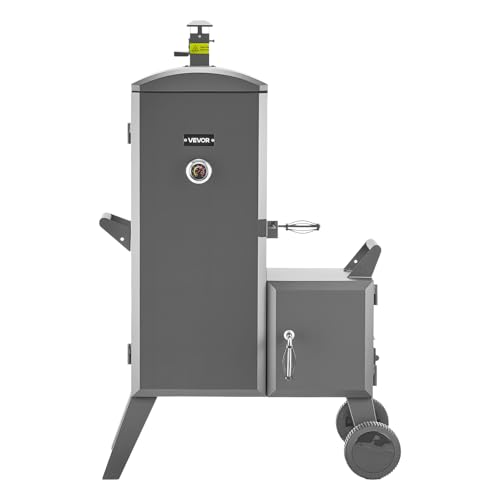
VEVOR’s title competes on substance rather than size: heavy-duty steel, a side firebox, six adjustable grates, a thermometer and air vents, on a movable frame. Start with the grates, because six is a number with consequences. Six adjustable grates in a barrel chamber means the cooking surface can be arranged in levels and spacings to suit the load — ribs spread across levels, a brisket given its own stratum, vegetables riding high where the heat is gentler. Adjustability is the feature that turns a fixed barrel into a flexible one, and no other title in this guide states anything like it.
Air vents are the second half of fire control, the half beginners underestimate. An offset fire is governed from two ends: fuel added at the firebox, and air admitted through vents that decide how hot that fuel burns. A pit whose title names its air vents is a pit designed to be driven, not merely lit, and paired with a fitted thermometer it gives the cook the complete manual instrument set — read the temperature, adjust the air, watch the response. The heavy-duty steel claim, in a tier defined by thin metal, is the maker’s promise of a sturdier shell; this guide reports the claim as the title makes it and notes that even a sturdier bargain pit is not a welded plate smoker, so heat discipline still applies.
Movability completes the picture: a pit on a frame designed to move gets stored under cover, wheeled out of the wind, and repositioned as the garden’s seasons change — all behaviours that extend a bargain pit’s life. For the technically minded beginner who wants the most controllable, most configurable pit in the tier, the VEVOR’s title makes the strongest case here.
- Format: charcoal offset smoker with side firebox, movable
- Construction: heavy-duty steel per the listing title
- Grates: 6 adjustable grates
- Control: air vents and thermometer named in the title
- Cooking area: not stated in the listing
- Tables: not given in the listing
Strengths
- Six adjustable grates offer unmatched load flexibility in this guide.
- Named vents and thermometer complete the manual control set.
- A movable frame aids storage, shelter and wind management.
Trade-offs
- No cooking area figure is published in the title.
- Heavy-duty is a maker’s claim within the bargain tier, not plate steel.
- More grates mean more surfaces to clean after greasy cooks.
Best for: tinkerers and learners who want maximum control and configuration. Not suited for: buyers who rank pits by a single headline capacity number.

Oklahoma Joe’s Highland Offset Smoker — Best Step-Up Brand Pick
Oklahoma Joe’s is the name in this guide with a lineage: the brand built its reputation on offset pits, and the Highland is its barrel-format standard-bearer, stating 900 square inches of cooking area — the largest figure published here — in black. In the bargain conversation, the Highland plays a specific role: it is the step-up that still belongs to the accessible tier, the pit bought by the cook who has read the warnings about thin steel and leaky doors and decided to start one rung higher, with the established maker’s version of the barrel layout.
Nine hundred square inches changes what a smoke day can be. It is two briskets with room between them, a forest of ribs, a turkey with its supporting cast of sides — the capacity at which the pit stops rationing the menu. The Highland’s title is otherwise as spare as the Dyna-Glo propane cabinet’s was: no tables, grates or gauges are enumerated, and the honest reading is that the brand expects its name and the capacity figure to carry the argument, with details waiting in the listing. That is a defensible posture for an established maker and an incomplete one for a comparison shopper; this guide notes both.
Set expectations by tier, not by logo. The Highland belongs to the same broad bargain-to-midland world as its rivals here — it will ask for fire management, its finish will age near the firebox, and it will reward the cook who learns its vents. What the extra commitment buys is the largest stated chamber and a maker’s long experience with the format. For many buyers in this guide, that is exactly the right trade, and the Highland is the pit they will still be cooking on when the others are memories.
- Format: offset charcoal smoker grill, barrel, black
- Cooking area: 900 square inches per the listing title
- Brand: Oklahoma Joe’s Highland line
- Grate count: not stated in the listing
- Thermometer: not given in the listing
- Tables: none stated in the listing
Strengths
- The largest stated cooking area in this guide at 900 square inches.
- An established offset specialist’s barrel design and support network.
- Capacity suits event cooking without leaving the accessible tier.
Trade-offs
- The title enumerates little hardware, so verify details in the listing.
- Still a managed-fire pit; no bargain offset runs itself.
- Its size is the largest footprint among the barrel picks here.
Best for: committed learners who want the established name and the biggest chamber. Not suited for: casual grillers who smoke twice a year.
Dyna-Glo Wide Body Vertical Offset Smoker — Best Vertical Offset Format
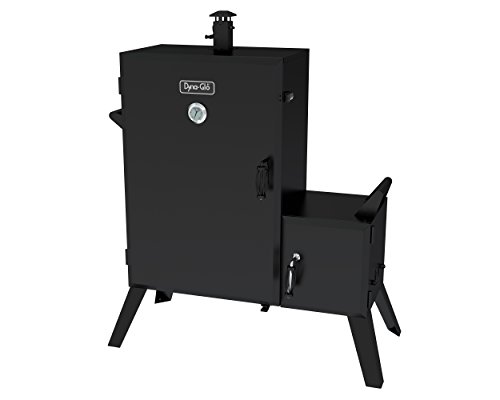
Every other pick in this guide lays the offset idea on its side; the Dyna-Glo DGO1890BDC-D stands it up. A wide body vertical offset charcoal smoker keeps the defining architecture — fire in a separate offset box, smoke drawn across and through the food — but stacks the cooking chamber into a tower. The footprint argument is decisive for some homes: a vertical cabinet occupies the floor space of a small cupboard where a barrel on its frame sprawls like a locomotive, and on a narrow patio or a balcony-adjacent garden that difference decides whether offset smoking happens at all.
Vertical geometry cooks with a gradient the barrel does not have: heat rises through the chamber, so levels differ, and the wide body answers the usual vertical complaint — narrow shelves — by widening the tower so briskets and rib racks fit its floors properly. The cook manages the same firecraft as any offset here, reading the chamber, feeding the box, working the draw, but arranges food by altitude: the robust and the fatty low, the delicate high, poultry placed with the food-safety discipline vertical cooks learn once and keep forever.
Dyna-Glo’s title, like its propane sibling’s, is brief — no area, no rack count — and this guide reports that plainly. What the format itself promises is legible without numbers: offset flavour and firecraft in the smallest footprint of the six, from a maker whose vertical cabinets are its home territory. If your constraint is space rather than capacity, this is your door into the offset world.
- Format: vertical offset charcoal smoker, wide body, black
- Model: DGO1890BDC-D
- Cooking area: not stated in the listing
- Rack count: not given in the listing
- Thermometer: none stated in the listing
- Footprint: tower format, smallest floor area in this guide
Strengths
- Offset firecraft in a compact tower footprint.
- Wide body answers the narrow-shelf problem of vertical smokers.
- Stacked levels suit mixed loads cooked by altitude.
Trade-offs
- Vertical heat gradient demands deliberate food placement.
- No capacity or rack figures are published in the title.
- Total load volume trails the big horizontal barrels.
Best for: space-limited cooks who still want a real offset fire. Not suited for: event cooks who need maximum flat cooking area.
How Do the Six Bargain Offsets Compare Side by Side?
| Pick | Format | Stated area | Notable stated hardware |
|---|---|---|---|
| Royal Gourmet CC1830S Offset Smoker Grill | Barrel combo | 783 sq in | Adjustable charcoal pan, two tables, lid thermometer, side door |
| Realcook Charcoal Grill with Offset Smoker | Barrel combo | 800 sq in | None enumerated in title |
| SUNLIFER Charcoal Grill Offset Smoker | Barrel combo | Described as spacious | None enumerated in title |
| VEVOR Charcoal Offset Smoker | Barrel, movable | Not stated | 6 adjustable grates, thermometer, air vents, heavy-duty steel |
| Oklahoma Joe’s Highland Offset Smoker | Barrel | 900 sq in | None enumerated in title |
| Dyna-Glo Wide Body Vertical Offset Smoker | Vertical cabinet | Not stated | Wide body tower format |
Why Are Bargain Offsets Cheap, Exactly?
Because steel is money. A heavy offset pit is, by weight, mostly a steel purchase: thick plate holds heat like a battery, smooths the fire’s mood swings, and shrugs at decades of weather. The bargain tier builds the same shapes from thinner sheet, and the physics follow the gauge. A thin chamber wall conducts the fire’s heat to the outside air quickly, so the fire must be fed more often and the temperature moves more with every gust and every added log. Stamped doors on simple hinges seal approximately, so smoke escapes at the seams — visible as the wisps every bargain owner recognises — and each leak is heat leaving by an unplanned route. Paint rated for ordinary heat blisters where the firebox runs hottest. None of this is fraud; it is arithmetic. The tier exists for buyers who would rather spend attention than money, and attention, applied skilfully, genuinely compensates: a well-tended thin pit outcooks a neglected thick one, which is the bargain tier’s enduring defence.
How Do You Manage a Fire in a Thin-Steel Pit?
Small, steady and ahead of the thermometer. Build a proper coal bed first — a chimney of lit charcoal spread in the firebox — because a mature coal bed is the pit’s flywheel, smoothing the spikes that thin steel cannot. Add fuel in small splits or handfuls before the temperature falls, not in armloads after; a thin chamber loses heat fast and regains it fast, and small inputs match that rhythm. Work the vents in small movements and wait to see each one’s effect, since the same responsiveness that makes the pit twitchy makes it correctable. Keep the cooking chamber closed and trust your probe; every lid lift in a thin pit is a bigger percentage of its stored heat than in a heavy one. In wind, shelter the pit or turn its firebox away from the gusts, and in cold weather accept a hungrier fire as the price of the season. These habits are the actual curriculum of offset cooking, and a bargain pit teaches them faster than a forgiving one — which is why so many excellent cooks started exactly here.
How Do You Stop a Bargain Offset from Rusting Away?
Water is the enemy and ash is its accomplice, because ash plus moisture makes a corrosive paste that eats thin steel from inside. Empty the firebox ash after cooks once it is cold, keep the pit covered or under shelter between uses, and oil the interior cooking surfaces lightly as you would a cast-iron pan — a seasoned film is rust’s opposite. Touch up exterior paint where it blisters near the firebox with heat-rated paint, not because looks matter but because bare thin steel rusts quickly. Store charcoal dry and elsewhere. A bargain pit maintained this way serves for years; neglected, the same pit perforates at the firebox floor in a few seasons. The tier’s real price difference is measured in this maintenance as much as in money, and buyers who enjoy caring for tools will find the bargain genuine.
How Do You Season a New Bargain Offset Before the First Cook?
A new pit arrives with manufacturing oils on its steel and a paint finish that has never been hot, and the first fire’s job is to deal with both. Wash or wipe the grates, then build a moderate fire and run the pit empty for a few hours with the vents managed as if you were cooking, adding a little wood for smoke. Spray or wipe the interior with a high-heat cooking oil before and during this run if the maker suggests it; the polymerised film that forms is the beginning of the seasoning that protects thin steel from the inside. Expect the paint near the firebox to smell and possibly to discolour on this first burn — that is the finish curing and beginning its long negotiation with heat, and it is better met now than over a brisket. Use the run as rehearsal: learn how the vents move the gauge, how long a coal bed holds, how the chimney draws in your garden’s usual breeze. The pit you season thoughtfully is calibrated before food ever depends on it, and the cook who treats the first fire as practice rather than delay starts the second fire as something like an expert on this specific machine.
What Is the Heat Gradient Across a Barrel, and How Do You Cook With It?
In a conventional offset barrel, the firebox end runs hot and the chimney end runs cooler, because heat enters at one side and surrenders itself to the food and the steel as it travels. Beginners read this as a defect; experienced cooks read it as two cooking zones in one chamber. The hot end finishes chicken skin, crisps the edges of burnt ends, and gives thick cuts their final push. The cool end coddles ribs through their long middle hours and holds finished food at serving warmth without cooking it further. A mixed load arranged along the gradient — brisket centred, ribs toward the chimney, chicken finishing near the fire — comes off the pit in a coordinated sequence instead of a scramble. Rotating food once during a long cook evens the exposure for items that cannot be zoned. Learn your own pit’s gradient with a row of plain biscuits or bread slices on a test fire, noting where they brown fastest; that cheap experiment maps the chamber more honestly than any diagram, and every offset, bargain or bespoke, has its own map.
How Much Fuel Does a Long Cook on a Bargain Pit Use?
More than the same cook on a heavy pit, and planning for that fact is the difference between a smooth smoke and a midnight charcoal run. Thin steel radiates the fire’s work to the neighbourhood, so the fire must be replenished in a steady rhythm of small additions across the whole cook — a brisket’s dozen hours might involve tending every forty minutes or so in mild weather, more often in cold or wind. Stock fuel by the event rather than by the bag: have the whole cook’s charcoal and wood on site before the meat goes on, stored dry within reach of the firebox. Lump charcoal burns hotter and less evenly; briquettes burn steadier and longer, which is why long offset cooks so often run on briquettes with wood for flavour. The economics still favour the bargain pit for learners — charcoal costs less than the price difference between tiers — but the honest ledger includes the cook’s hours, and a buyer should enter them willingly rather than discover them resentfully at 3 a.m.
Which Simple Upgrades Improve a Bargain Offset Most?
The tier invites tinkering, and three improvements repay their small cost reliably. First, a proper probe thermometer at grate level, which converts the lid gauge’s vague neighbourhood into the food’s actual climate — the single highest-value addition to any pit in this guide. Second, sealing attention: many owners fit heat-resistant gasket tape around the cooking chamber door once they see where their particular pit breathes, and while this guide makes no promises for any specific pit, reducing the worst leaks steadies both temperature and smoke. Third, a fitted cover or a sheltered station, because the cheapest pit kept dry outlasts the dearer one left in the rain. Beyond those, a charcoal basket for the firebox organises the coal bed and extends its even burn, and a second chimney-starter’s worth of lit coals held in reserve smooths refuelling. What does not repay effort is chasing the heavy pits’ thermal mass with bricks and tiles beyond a modest water pan’s worth of ballast; at some point the wiser purchase is the heavier pit, and part of the bargain tier’s honesty is knowing it is a school, not a destination, for the cooks who fall hardest for the craft.
How Long Does It Take to Learn Offset Cooking on a Cheap Pit?
Plan on three cooks to competence and a season to confidence. The first cook teaches the pit’s appetite and vents, and should be something forgiving — chicken halves or a small shoulder — eaten with humility. The second teaches timing: when to start, how the stall behaves in thin steel, how much earlier than the guests the fire should be lit. The third, usually ribs, teaches smoke judgement, the difference between the sweet thin wisp and the bitter billow, in the cook’s own nose rather than in a book’s description. Across a season of monthly cooks, the movements become reflexes — vent by feel, fuel by rhythm, doneness by probe and by the bend of a rib rack — and the pit’s compromises fade into the background of a practised routine. This learning curve is the same on a costly pit; the bargain tier simply charges less tuition and demands slightly more homework, which is why it remains the craft’s most popular first classroom.
How Do You Smoke Ribs on a Bargain Offset, Step by Step?
Start the fire ninety minutes before the ribs need it, because a thin pit rewards a settled coal bed and punishes haste. While the chamber stabilises at smoking temperature, peel the membrane from the bone side of each rack, salt and season them, and let them stand at room temperature only as long as the pit needs — food safety and bark both prefer a cool start into a ready pit. Lay the racks bone-down in the chamber’s middle zone, away from the firebox’s direct blast, with space between them for the draw to work. For the first two hours, your job is the fire and nothing else: small fuel additions, vent patience, thin smoke. Spritz if that is your style after the bark sets, wrap when the colour is right rather than when a schedule says, and judge doneness by the bend — a rack lifted at one end that cracks its bark without breaking apart. Rest them wrapped briefly, sauce at the table if at all, and write down what the pit did. Ribs are the offset’s teaching food because they are quick enough to cook often and honest enough to grade your fire management without mercy.
Should You Choose a Barrel or the Vertical Cabinet?
Choose by floor space first and cooking style second. The barrel is the classic classroom: a long grate at one height, a visible gradient from firebox to chimney, room for the largest single items laid flat, and a frame that wants a patio’s width to live in. The vertical Dyna-Glo stacks its cooking into a tower with a fraction of the footprint, cooks by altitude across levels, and suits the garden where a barrel simply does not fit. Capacity comparisons mislead here — a tower’s total area can rival a barrel’s while holding different shapes — so think in menus. Whole briskets and multiple rib racks lying flat argue barrel; mixed loads of smaller items on several levels argue tower. Both burn charcoal in an offset box, both teach the same firecraft, and both carry the tier’s thin-steel physics. The wrong choice is the one that does not fit the space and therefore does not get used; the right one is whichever pit stands where you will actually light it every month.
What Should You Check When the Pit Arrives?
Bargain pits travel flat-packed and assemble on your patio, and the first quality inspection is yours to perform. Inventory the panels and hardware against the parts list before a single bolt turns, because a missing caster discovered at step fourteen is a weekend lost. As you assemble, watch the seams: panels that meet cleanly will seal as well as the tier allows, while a warped door or a twisted firebox flange is worth exchanging immediately rather than fighting for years. Tighten in stages, check that doors swing and sit evenly, and confirm the chimney and vents move through their full range without binding. Once assembled, the seasoning fire doubles as the second inspection — watch where smoke escapes, note which seams breathe, and mark the vent positions that hold your target temperature. A pit checked this way on day one has no surprises left; a pit rushed into service keeps its defects as recurring characters in every cook. The tier’s value survives this scrutiny precisely because its flaws are visible and manageable rather than hidden.
How Do Bargain Offsets Behave in Winter and Rain?
Cold is the thin pit’s sternest examiner. A chamber wall that sheds summer heat pleasantly sheds winter heat extravagantly, so January cooks burn noticeably more fuel, take longer to stabilise, and swing wider with every door opening. The compensations are the cook’s, not the pit’s: shelter from wind above all, a fuller coal bed maintained ahead of the gauge, smaller and more frequent fuel additions, and a schedule padded without apology. Rain adds its own tax, cooling the lid with every shower and testing the cover’s worth between cooks. None of this makes winter smoking unwise — the pit that runs in February produces the year’s most appreciated barbecue, precisely because nobody else is doing it — but it should be entered as a deliberate expedition rather than a casual afternoon. Owners in cold climates who smoke weekly all winter are the one audience this guide steers toward saving for heavier steel; everyone else can treat winter as the bargain pit’s advanced class, attended a few times a year with extra charcoal and a warm coat.
How Do the Combo Grills Handle Ordinary Weeknight Cooking?
It is easy to forget, amid firecraft, that five of these six pits are also the household’s charcoal grill, and for many owners the grill will light ten times for every smoke. Direct grilling on the main chamber is conventional and effective: coals under the grate, vents open, food over the fire. The design detail that decides weeknight happiness is coal management — the Royal Gourmet’s adjustable pan, which raises coals toward the grate for searing and lowers them for gentler work, is the clearest example in this guide of a combo taking its second job seriously. Burgers, sausages, corn and skewers ask nothing of the firebox at all, and a pit bought for weekend smoking that also covers Tuesday’s dinner justifies its patio space to the whole household rather than to one enthusiast. Keep a small reserve of charcoal separate from the smoking stock, because the cook who raids the brisket supply for burgers eventually faces a Sunday with neither.
How Long Does Assembly Take, and What Tools Help?
Budget an unhurried afternoon rather than the optimistic hour on the carton. A barrel combo has dozens of fasteners across its frame, firebox, chamber and chimney, and the work goes better with a socket set, a second pair of hands for the chamber lift, and a magnetic tray that keeps the hardware from emigrating into the lawn. Work on a flat surface, leave bolts finger-loose until the frame stands square, then tighten in a cross pattern so panels pull together evenly instead of racking. The payoff for this patience appears at the first fire: doors that sat true on the driveway seal as well as stamped doors can, and vents that were checked during assembly move the way the cook expects. Rushing assembly is the one bargain-tier compromise that is entirely self-inflicted, and the only one this guide refuses to excuse.
What Mistakes Do Buyers Make with Bargain Offset Smokers?
The first is expecting heavy-pit behaviour from light steel — setting a brisket, walking away for four hours, and returning to a cold chamber and a lesson. The second is buying by cooking area alone: a stated 800 square inches with poor vents teaches misery, while a well-vented smaller pit teaches craft, so hardware deserves equal billing with size. Third, beginners build fires that are too big, chasing temperature with volume instead of air control, and overshoot into acrid smoke and scorched bark. Fourth, owners leave ash sitting in the firebox between cooks, quietly corroding the thinnest steel in the pit. Fifth, buyers skip the probe thermometer because a lid gauge exists, then cook by a number that describes the lid’s neighbourhood rather than the meat’s. Finally, shoppers read “bargain” as a verdict on the food these pits can produce; it is a verdict on their materials, and the food, in skilled hands, is indistinguishable from the heavy pits’ — which is rather the point of learning, and of this entire guide.
Final Recommendation
For the first-time offset buyer, the Royal Gourmet CC1830S Offset Smoker Grill is this guide’s recommendation: the fullest stated kit in the tier, with tables, an adjustable pan and a published capacity to learn on. The cook who wants the established name and the largest chamber should choose the Oklahoma Joe’s Highland Offset Smoker, while the tinkerer who values control hardware will be happiest with the VEVOR Charcoal Offset Smoker and its six adjustable grates. The Realcook serves the party cook, the SUNLIFER the travelling one, and the Dyna-Glo wide body the household whose patio is measured in inches. Whichever barrel or tower you bring home, bring it home with clear eyes about thin steel and a willingness to tend a fire — the bargain is real, and so is the barbecue.
Frequently Asked Questions
Can a cheap offset smoker really produce good barbecue?
Yes. The fire does not know what the pit cost. Thin steel demands more attention and more fuel, and its temperature swings more, but a cook who manages the coal bed and the vents will produce brisket and ribs that stand comparison with heavy pits. The tier’s compromise is effort and longevity, not a ceiling on quality. Many respected competition cooks began on exactly such pits, because a demanding teacher produces attentive students, and attention is the ingredient no amount of steel can supply.
How long will a bargain offset last?
With ash emptied, a cover used and blistered paint touched up, years of regular service. Neglected outdoors with ash sitting in the firebox, thin steel can rust through in a few seasons. Lifespan in this tier is mostly a maintenance decision the owner makes weekly. It is worth adding that even a worn bargain pit often finds a second life — passed to a beginner, kept at a cabin, or retired to grill-only duty — because the skills it taught remain valuable long after its own steel retires.
Why does smoke leak from the doors of my offset?
Because stamped doors on bargain pits seal approximately, and smoke under pressure finds the gaps. Small leaks are normal in this tier and cost some heat and smoke; manage them with vent balance rather than chasing a hermetic seal, and never block the chimney to compensate, since the draw is what pulls clean heat across the food.
Should I burn charcoal or wood in the firebox?
Most bargain offset cooks run a charcoal base for its steady coal bed and add wood splits or chunks for smoke flavour. Pure wood fires burn hotter and less evenly in small fireboxes and demand constant feeding. Charcoal first for stability, wood second for character, is the tier’s reliable formula.
What size offset should a beginner start with?
One that fits the food you actually cook and the space you actually have. The stated areas here run from 783 to 900 square inches among the barrels, all party-capable; the vertical Dyna-Glo trades area for footprint. Beginners learn fastest on the pit they can shelter, feed and clean easily, not on the largest chamber in the guide.
Is a combo grill and smoker a compromise at both jobs?
It is a compromise at neither, if the grill side is properly built — an adjustable charcoal pan, as on the Royal Gourmet, makes direct grilling genuinely good. The offset firebox does the smoking exactly as a dedicated pit’s does. What combos trade away is usually chamber thickness and seal quality, the tier’s usual physics, not the concept.
Do I need to modify a bargain offset before it cooks well?
No. Every pit in this guide cooks properly out of the box, provided the fire is managed with the attention the tier requires. Modifications like door gasket tape or a firebox basket refine a pit you already understand; they cannot substitute for understanding. Cook three times first, keep notes, and then improve the specific annoyance your notes keep naming.
How do I keep the firebox from rusting through first?
The firebox lives the hardest life — the hottest heat, the ash, the weather at the pit’s lowest point. Empty its ash once cold after every cook, keep the pit covered between uses, and maintain the interior’s seasoned oil film. Those three habits address nearly all firebox corrosion, and they cost minutes rather than money.
Related Guides
From the firebox, the natural next read is the insulated end of the smoking world in our guide to the Best Insulated Cabinet Smokers, where holding heat is the whole design brief. Indoors, the household that plans long smoke days might also appreciate the Best Battery Operated Travel Alarm Clocks for early starts, and summer weekends continue with the Best Beach Towels for Kids.


