What's inside
- Key Takeaways
- Quick Picks
- How Did We Choose These Steam Mops for Tile and Rugs?
- How Do the Six Steam Mops Compare Side by Side?
- Why Does Tile Need Scrubbing, Not Just Steam?
- How Should You Steam an Area Rug Without Ruining It?
- Which Floors Should Never Meet a Steam Mop?
- How Do You Keep Grout Looking Light Between Deep Cleans?
- What Should You Check About Pads, Tanks and Cords Before Buying?
- How Does a Steam Session Run, Start to Finish?
- How Much Water Does a Steam Session Really Use?
- Can Steam Mops Handle Pet Hair and Muddy Paw Prints?
- How Should You Store a Steam Mop and Its Pads?
- How Do You Steam Clean Around Toilets, Baths and Sinks?
- What Is the Difference Between Sanitising Steam and a Deep Clean?
- How Often Should Tile and Rugs Be Steamed in a Real Household?
- What Mistakes Do Steam Mop Buyers Make Most Often?
- Final Recommendation
- Frequently Asked Questions
- Related Guides
As an Amazon Associate I earn from qualifying purchases. This post may contain affiliate links at no extra cost to you.
cottageverdict.com is reader-supported. When you buy through links on our site, we may earn an affiliate commission.
Where to buy: every machine in this guide is a complete, full-size steam mop sold through Amazon, and the names in the Quick Picks table, the detailed sections and the comparison table all link to the matching listing so you can check price on Amazon and confirm tank size, pad count and cord length before ordering. If you are hunting for the best steam cleaner for tile floors and area rugs, the shortlist below sticks to whole machines — no replacement pads, no accessory bundles dressed up as cleaners.
Tile and rugs ask opposite things from the same appliance. Glazed ceramic and porcelain want heat, moisture and enough pad pressure to lift grease out of grout lines, while an area rug wants a lighter touch: a glide, a freshening pass, steam that revives pile without soaking the backing. A mop that bulldozes both jobs with one fixed output usually disappoints at one end of the hallway, which is why variable steam and pad design matter more here than raw wattage claims.
Homes with mixed flooring feel this tension daily. The kitchen tile collects cooking film, the entry porcelain catches gritty shoe prints, and the living-room rug absorbs whatever the dog tracked in before anyone noticed. Dragging out a bucket, a string mop and a separate carpet routine for those three zones eats a Saturday; a good steam mop turns the same circuit into one fill of the tank and a lap of the ground floor.
Six machines made the cut, and they split into clear camps. Three are upright mops built around scrubbing — rotating pads, scrub brushes, stiff pad textures — while the others trade some aggression for detachable handheld units that steam grout, glass and upholstery between floor sessions. One veteran design keeps things deliberately plain: two-sided pads, no electronics to speak of, and a flipping head that doubles the cleaning face before laundry day.
One honesty note before the picks: steam freshens and loosens soil on rugs, and several of these mops include a carpet glider for exactly that job, but steam alone is not deep extraction. A rug that needs shampoo pulled back out of its fibres wants a different appliance; what these machines offer rugs is surface revival, odour loosening and a quick reset between deeper cleans.
Consider the household this guide is really for: hard floors in the wet zones, rugs where people actually live, and a cleaning cupboard with no room for three separate appliances. That household does not need the most powerful steamer on the market; it needs the one whose settings, pads and temperament match a weekly circuit of porcelain, ceramic and pile — which is why the six sections below argue from rooms and routines rather than from specification sheets.
Key Takeaways
- Whole machines only: every pick below is a complete steam mop, not a pad pack or an attachment set.
- Scrubbing power separates the field — rotating pads and scrub brushes handle grout film that flat pads merely polish.
- Variable steam output protects rugs and delicate tile finishes while still driving heat into kitchen grease.
- Detachable handheld units stretch one purchase across grout lines, shower glass, hobs and upholstery.
- Washable pads keep running costs sane; count how many pads ship in the box before comparing listings.
- Steam freshens area rugs and loosens surface soil, but it does not replace extraction cleaning for deep spills.
Quick Picks
| Pick | Badge | Why it earns its place |
|---|---|---|
| BISSELL PowerFresh Steam Mop | Best Overall | Variable steam, a scrubber flap and a 12-inch path make this the most complete tile-first package here. |
| PurSteam 10-in-1 Steam Mop | Most Versatile | The handheld half pops out for grout and glass, so one machine covers floors and the fiddly jobs above them. |
| Shark Steam & Scrub Mop | Best Scrubbing Action | Twin rotating pads do the scrubbing for you, with headlights that expose the film you would otherwise miss. |
| 10-in-1 Steam Mop Handheld | Best Handheld Flexibility | A detachable handheld steamer and eleven accessories stretch this mop across floors, carpets and odd corners. |
| DEVOAC VM6 Steam Mop | Best Rotating Pads | Spinning pads plus three steam modes give renters and big-floor households a lighter, faster scrubbing option. |
| Shark Steam Pocket Mop | Best Simple Classic | The veteran flip-head design with two double-sided pads keeps the routine beautifully free of fuss. |
How Did We Choose These Steam Mops for Tile and Rugs?
We started by excluding everything that was not a machine. Replacement pads, glider frames and accessory kits crowd search results for this category, and none of them cleans anything on its own; the six picks are complete mops that heat water, make steam and push it through a pad the moment they leave the box.
Scrubbing evidence came next. Tile fails steam mops politely: the surface looks clean while grout stays grey and a greasy film survives near the cooker. Models earned their place by offering a mechanical answer to that film — rotating pads, a flip-down scrubber, stiff scrub strips — rather than asking the owner to lean harder on the handle.
Rug manners were the third filter. Each pick had to offer a believable way to cross an area rug without drenching it: a carpet glider, a low steam setting, or pads soft enough for a freshening pass. We also weighed tank size against room count, cord behaviour around furniture, pad laundry logistics, and how honestly each listing describes what its steam can and cannot do.
We also discounted headline steam temperatures and boiler wattages, which listings advertise loudly and floors experience modestly. What reaches the tile is pad temperature under pressure, and that depends on pad condition, pace and contact as much as on the boiler. Machines earned their places here through the mechanics of their cleaning — scrubbing, gliding, flipping, spinning — because those mechanics are what an owner can actually feel working on a Tuesday evening.

BISSELL PowerFresh Steam Mop — Best Overall
The PowerFresh has been the default recommendation in this category for years, and the reasons are mechanical rather than sentimental. Its 12-inch cleaning path covers kitchen tile at a sensible pace, variable steam lets you back the output down before crossing onto a rug, and the flip-down Easy Scrubber at the back of the head attacks the stubborn band of film that gathers along kick plates and around the cooker.
In daily use the variable dial is the feature owners actually touch. High steam suits porcelain entryways after muddy weather; the middle setting handles the weekly bathroom lap; the lowest output, paired with a steady walking pace, freshens a wool-blend rug without leaving it damp enough to smell musty later. The mop heats quickly, stands upright for storage in a broom cupboard, and the pads are thick enough to cushion the head over uneven grout.
BISSELL describes the cleaning as natural sanitization on sealed hard floors when used as directed, and that framing is fair: hot steam loosens and lifts soil so the pad can carry it away, with no detergent bucket to rinse afterwards. Households switching from chemical floor cleaners usually notice the difference in residue first — tile feels squeakier under socks because nothing soapy is left behind to dry on the surface.
Ownership settles into a rhythm with this mop: pads rotated in pairs, the scrubber reserved for the fortnightly kitchen deep-clean, the dial left at the middle setting for most laps. Parts and replacement pads for the PowerFresh line are easy to find years after purchase, which quietly matters — a mop is a system of consumables, and a system you can still feed in five years is worth more than a marginally stronger rival whose pads vanish from sale. For households that keep appliances a long time, that support tail may be the most practical argument on this page.
- Form: upright steam mop, complete machine
- Cleaning path: 12 inches per the listing
- Steam control: variable output dial
- Scrubbing: flip-down Easy Scrubber brush
- Surfaces named: hard wood and tile, sealed floors
Strengths
- Variable steam makes the tile-to-rug transition calm and controlled
- Scrubber flap reaches the greasy band along kitchen kick plates
- Thick pads ride uneven grout without chattering or stalling
Trade-offs
- No detachable handheld unit for grout detailing above floor level
- Corded design means outlet planning on long hallways
- Pads need laundering after heavy kitchen sessions to stay absorbent
Best for: households wanting one proven mop that treats tile seriously and rugs gently.
Not suited for: cleaners who want a handheld steamer for shower glass and hobs.

PurSteam 10-in-1 Steam Mop — Most Versatile
PurSteam builds its case on the second life of the machine. On the floor it behaves like a straightforward steam mop for tile and hardwood; lift the handheld unit out of the body and the same boiler starts detailing grout with a jet nozzle, loosening soap film on shower glass, and steaming curtains or upholstery where they hang. For flats where storage rules out two appliances, that double duty is the argument.
The floor half performs respectably on tile. Steam output is generous, the pad is wide enough for kitchen work, and the swivel head slips around table legs without the wrist-fighting stiffness cheaper mops show. On rugs, run it with the carpet glider and a brisk pace: the aim is a freshening pass that lifts surface odour and revives flattened pile in the traffic lane, not a soak.
Where the PurSteam asks patience is in its accessory management. Ten functions mean a bag of nozzles, brushes and pads that needs a home, and swapping between floor and handheld modes mid-session interrupts momentum. Owners who batch their cleaning — floors on Saturday, grout and glass monthly — get the best of it; owners who want a single-purpose tool may find the flexibility becomes clutter.
The handheld half of this machine changes how bathrooms get cleaned. Grout that once waited for a scrub-brush weekend gets a nozzle pass while the floor steam is still in hand, and the same session can finish with the shower screen and the hob surround. Owners consistently describe the PurSteam less as a mop with extras and more as the appliance that absorbed three others — a consolidation that small kitchens and flat-dwellers feel in cupboard space long before they feel it in cleaning power.
- Form: upright mop with detachable handheld steamer
- Configuration: 10-in-1 per the listing
- Floor surfaces named: tile and hardwood floors
- Handheld work: grout, glass, fabric freshening
- Pads: washable microfibre floor pads
Strengths
- Handheld unit turns grout detailing into part of the same session
- Generous steam output loosens kitchen film without detergent
- One boiler covers floors, glass and upholstery in small homes
Trade-offs
- Accessory bag needs storage and a little organisational patience
- Mode swapping breaks the rhythm of a fast floor lap
- Handheld tank time is short during long grout sessions
Best for: small homes and flats that need one steamer to cover floors and detailing.
Not suited for: owners who prefer a single-purpose mop with nothing extra to store.

Shark Steam & Scrub Mop — Best Scrubbing Action
The Steam & Scrub attacks the central weakness of flat-pad mops: they glide, and gliding polishes dirt as often as it removes it. Shark fits two round pads that rotate while you push, so the pad edges continually work fresh microfibre across the tile and into the grout shadow lines. The effect on a kitchen floor that looked clean is mildly embarrassing — the pads come up grey from ground you thought was finished.
LED headlights sound like a gimmick until the first pass under kitchen cabinets, where the low light exposes the sticky halo around the bin and the cooker plinth. The XL water tank stretches sessions across a whole ground floor of tile, and swivel steering keeps the head flat through chair-leg slaloms. Four Dirt Grip soft scrub pads ship in the box, which matters: rotating systems eat pads faster than gliding ones, and starting with spares keeps the rotation honest.
On area rugs this is the pick to use with restraint. The scrubbing action that flatters tile can rough delicate pile, so treat rugs to short, moving passes on a low setting and skip fringed or loosely woven pieces entirely. As a tile specialist that occasionally freshens a sturdy rug, it is superb; as a gentle all-floors diplomat, others here are calmer.
A practical note on pads: the rotating Dirt Grip pads pick up a startling amount of soil on the first pass over a floor that was mopped conventionally the week before, which recalibrates owners’ sense of what clean tile means. Budget for the second set of pads from day one, run the rotation strictly — clean set on, dirty set straight to the wash — and the machine’s performance stays at its impressive first-week level instead of decaying into ordinary mopping by month three.
- Form: upright steam mop with rotating pads
- Pads included: 4 Dirt Grip soft scrub pads
- Visibility: LED headlights on the cleaning head
- Tank: XL water tank per the listing
- Steering: swivel head for furniture work
Strengths
- Rotating pads genuinely scrub grout lines instead of skimming them
- Headlights reveal sticky patches hiding in cabinet shadows
- Four pads in the box delay the first replacement purchase
Trade-offs
- Scrubbing action is too assertive for delicate or fringed rugs
- Rotating pads wear faster than flat gliding pads
- Heavier head feel during long sessions than the plain classics
Best for: tile-heavy kitchens and hallways where grout grime is the main enemy.
Not suited for: owners of delicate rugs who want one gentle setting for everything.
10-in-1 Steam Mop Handheld — Best Handheld Flexibility
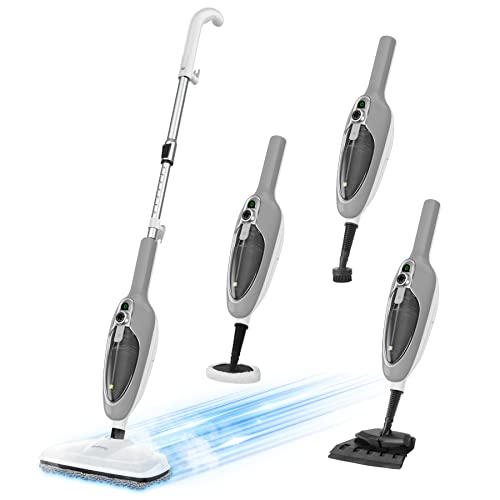
This unbranded 10-in-1 follows the same two-lives idea as the PurSteam but leans harder into the accessory count: eleven attachments ride along for whole-home use, and the handheld section detaches for work on carpets, curtains, car seats and the awkward ring of grime around taps. As a floor mop it covers hardwood, tile and laminate, which suits rented homes where the flooring changes from room to room.
Floor performance is honest mid-field. Steam arrives steadily, the pads wash clean, and the head is light enough that a quick midweek lap of the kitchen never feels like an event. Grout work benefits from the pointed nozzle in handheld mode, although you will refill more often than with a dedicated detail steamer, and the pad grip over very rough stone tile is less tenacious than the scrubbing specialists above.
The buying logic here is breadth per pound spent and per cupboard shelf used. A first flat, a rental with mixed floors, a household building its cleaning kit from zero — those are the homes where eleven accessories stop sounding like marketing and start replacing four separate gadgets. Just keep expectations calibrated: breadth is the headline, depth on any single job belongs to the specialists.
First-time owners should expect a learning lap. The handheld section’s weight distribution differs from the floor mode’s, the trigger discipline takes a session to internalise, and the accessory that transforms grout work — the small nozzle — is easy to leave in the bag for a month before discovering it. None of this is criticism; it is the normal cost of a machine that does the work of several, repaid every time a job that used to need a second appliance gets finished with the one already in your hand.
- Form: steam mop with detachable handheld cleaner
- Configuration: 10-in-1 with 11 accessories listed
- Floor surfaces named: hardwood, tile and laminate
- Handheld work: carpet freshening and detail steaming
- Use case stated: whole-home cleaning kit
Strengths
- Accessory breadth replaces several separate gadgets in small homes
- Light head encourages quick midweek laps of kitchen tile
- Handheld nozzle makes tap bases and grout corners reachable
Trade-offs
- Refills interrupt longer handheld grout sessions
- Pad grip on rough stone tile trails the scrubbing specialists
- Unbranded support and spares are a longer-term question mark
Best for: renters and first homes building a whole cleaning kit around one boiler.
Not suited for: buyers who want the deepest tile scrubbing above all else.

DEVOAC VM6 Steam Mop — Best Rotating Pads
DEVOAC’s VM6 pairs rotating pads with a lighter body than the Shark, and the combination suits big, open floor plans where the mop has to travel. The spin pads do the grout work while three steam modes let you choose how wet the pass runs — useful when the same lap crosses kitchen tile, marble-look porcelain and then the edge of a rug that should only ever meet the lowest output.
The Onyx finish and low-profile head make it the easiest of the scrubbers to live with visually and physically: it slides under sofa fronts and kitchen plinths, and the lightweight build keeps wrist strain down across a long ground floor. Pad changing is quick, which quietly matters — a scrubbing mop whose pads are fiddly gets used with dirty pads, and dirty pads smear rather than lift.
Marble and laminate owners should read the three modes as the real feature. Delicate surfaces want minimal moisture delivered evenly, and the VM6’s lowest setting with the spin keeping pads moving avoids the puddling that makes flat mops risky on moisture-sensitive floors. It is a thoughtful machine for mixed hard floors, with rug work kept to brisk freshening passes.
The VM6 suits a particular choreography: long, unbroken runs of hard floor where the mop travels in lanes and the spinning pads keep the pace brisk. Hallway into kitchen into dining space without a doorway threshold interrupting — that is its home terrain. The three modes also make it the kindest pick here to the cautious owner of pale marble-effect tiles, who can run the gentlest output with confidence and still watch the pads come up grey with honest soil.
- Form: scrubbing steam mop with rotating mop pads
- Steam control: 3 steam modes per the listing
- Build: lightweight spin mop design, Onyx finish
- Surfaces named: hard floor, laminate and marble floors
- Configuration: 10 in 1 per the listing
Strengths
- Three steam modes give delicate floors a genuinely dry option
- Light body suits long laps across open-plan ground floors
- Quick pad swaps keep the scrubbing honest session after session
Trade-offs
- Rotating pads are consumables that need periodic replacement
- Rug work is freshening only, like every mop in this guide
- Less handheld detailing than the detachable designs here
Best for: open-plan homes mixing tile, marble-look floors and laminate in one lap.
Not suited for: shoppers wanting a handheld unit for above-floor detailing.
Shark Steam Pocket Mop — Best Simple Classic
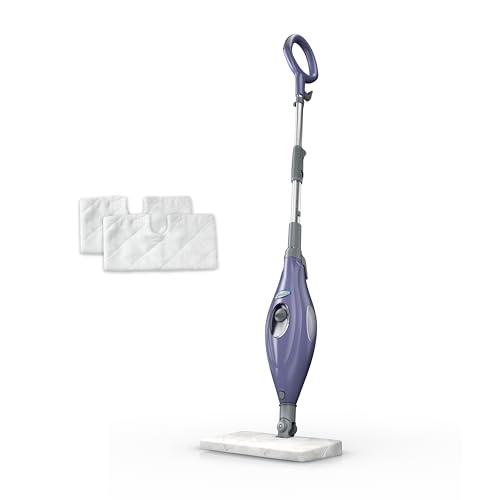
The Steam Pocket Mop is the elder statesman of this group, and its party trick remains elegant: the rectangular head flips over, so when one face of the double-sided pad is dirty you turn the mop and keep cleaning on the fresh side. Two washable double-sided pads come in the box, giving four cleaning faces before the laundry basket calls — a small arithmetic that makes weekly tile laps feel effortless.
There are no dials to learn. Fill the tank, wait for the steam, and the mop delivers a steady output that the pumping action of pushing and pulling modulates naturally. Swivel steering is genuinely good, the purple head is slim around toilet bases, and the whole machine stores on a hook without dominating the cupboard. On bathroom tile and small kitchens it remains a pleasure precisely because there is nothing to configure.
The limits are the flip side of that simplicity. Fixed steam output means rug passes need pace and judgement rather than a low setting, and there is no scrub brush for the greasy band behind a cooker — that job falls to a hand brush on scrub days. Buy it as the low-fuss classic for hard floors, and it will repay you in years of uncomplaining service.
There is a nostalgia-proof argument for this design: it has survived in the market while flashier rivals cycled through, because its single trick — the flipping head — solves a real problem completely. Owners who mop small bathrooms daily, carers cleaning up after toddlers and pets in real time, and anyone who has ever resented a mop mid-session for needing a pad change at the furthest point from the sink: this is the machine that respects your time by asking almost nothing of it.
- Form: upright steam pocket mop, flip-head design
- Pads included: 2 washable double-sided pads
- Pad material: microfibre per the listing
- Steering: swivel head for bathroom work
- Surfaces: sealed hard floors per the listing
Strengths
- Flip head doubles every pad into two cleaning faces
- No settings to learn — fill, heat and clean
- Slim head and swivel suit small bathrooms beautifully
Trade-offs
- Fixed steam output demands judgement on rugs
- No scrub brush for baked-on kitchen film
- No handheld mode for grout detailing above the floor
Best for: anyone who wants the simplest reliable tile routine with minimal kit.
Not suited for: homes needing variable steam for delicate floors and rugs.
How Do the Six Steam Mops Compare Side by Side?
The table below lines the six machines up by the trait that actually decides ownership: how each one scrubs, how it treats a rug, and where its patience runs out.
| Pick | Badge | Standout trait | Watch out for |
|---|---|---|---|
| BISSELL PowerFresh Steam Mop | Best Overall | Variable steam plus a flip-down scrubber for kitchen film | No handheld unit for above-floor jobs |
| PurSteam 10-in-1 Steam Mop | Most Versatile | Detachable handheld covers grout, glass and upholstery | Accessory kit needs organising and storage |
| Shark Steam & Scrub Mop | Best Scrubbing Action | Rotating pads scrub grout while headlights expose dirt | Too assertive for delicate rug pile |
| 10-in-1 Steam Mop Handheld | Best Handheld Flexibility | Eleven accessories stretch across a whole first home | Mid-field depth on any single job |
| DEVOAC VM6 Steam Mop | Best Rotating Pads | Three steam modes and a light spinning body | Pads are ongoing consumables |
| Shark Steam Pocket Mop | Best Simple Classic | Flip-head pads give four faces before laundry | Fixed output, no scrub brush fitted |
Why Does Tile Need Scrubbing, Not Just Steam?
Steam loosens; it does not lift. The heat softens grease and swells dried spills so a pad can carry them away, but a pad that only glides applies almost no sideways force, and grout lines sit below the pad’s contact plane anyway. That is why kitchen tile can pass a barefoot test near the sink yet still show grey grout and a tacky film near the cooker after a gliding mop has done its rounds.
Mechanical help closes the gap. Rotating pads keep fresh fibres moving across the grout shadow, scrub brushes reach the recessed lines directly, and stiff pad textures bite into the film that microfibre alone burnishes. The BISSELL PowerFresh answers with its flip-down scrubber, the Shark Steam & Scrub answers with rotation, and both approaches beat leaning your bodyweight through a mop handle and hoping.
There is also a rhythm to scrubbing tile well. Work in overlapping lanes at walking pace, let the steam dwell a few seconds on the worst patches by parking the head briefly, and flip or change pads before they saturate — a soaked pad redistributes the very soil you just loosened. Two shorter passes with a clean pad beat one long pass with a grey one, every time.
How Should You Steam an Area Rug Without Ruining It?
Start by respecting what a rug is: fibres over a backing that hates prolonged moisture. Vacuum thoroughly first, because steam over loose grit grinds particles into the pile. Fit the carpet glider if your mop provides one, choose the lowest steam output available, and keep the mop moving at a steady, unhurried pace — motion is what separates freshening from soaking.
Work the traffic lanes and the spots where shoes land, then lift the mop away and let air do the rest; a room fan pointed across the rug for half an hour leaves it dry and revived. The DEVOAC VM6 Steam Mop on its gentlest mode and the PurSteam 10-in-1 with its glider both handle this routine well on sturdy, colourfast rugs.
Know the exclusions. Loosely woven, fringed, antique or visibly delicate rugs should not meet a steam mop at all, and neither should anything whose backing is already cracked or whose dyes run when dabbed with a damp white cloth. Test an unseen corner first, always: steam is forgiving of tile, but rugs keep receipts.
Which Floors Should Never Meet a Steam Mop?
Unsealed wood is the firmest no. Steam drives moisture into boards that lack a sealed finish, and repeated sessions can raise grain, dull the surface and encourage gaps at the joints. Waxed floors object for a different reason — heat softens the wax and the pad drags it into cloudy streaks. When in doubt, the floor manufacturer’s care guidance outranks any mop listing.
Laminate sits in the cautious middle. Most modern laminate tolerates light steam on a low setting with a moving mop, because the joints are the vulnerability rather than the surface; pooling water at seams is what causes swelling. The variable-output machines in this guide exist partly for this floor: lowest setting, brisk pace, no parking the head while you answer the door.
Stone needs a seal check rather than a blanket ban. Sealed marble, granite and slate handle steam well; unsealed stone drinks moisture and can carry loosened soil deeper into its pores. A simple water-drop test on an inconspicuous patch — if the drop darkens the stone quickly, it is thirsty and unsealed — tells you whether to proceed or to choose a different cleaning method.
How Do You Keep Grout Looking Light Between Deep Cleans?
Grout darkens by accumulation, not by single disasters. Every week that loosened soil dries back into the lines adds a shade, which is why the winning routine is unglamorous: steam the kitchen and bathroom tile weekly, change pads before they saturate, and give the worst lines a handheld nozzle pass monthly if your machine detaches, as the two handheld models here do.
Entrances deserve their own micro-routine. Grit is grout’s grinding paste, so a stiff doormat outside, a washable runner inside and a rule about outdoor shoes shrink the soil load before any mop gets involved. Five seconds of prevention at the door saves five minutes of scrubbing at the weekend, and pale grout near the threshold is where visitors unconsciously judge the whole floor.
When grout has already gone dark, manage expectations honestly. Steam and scrubbing will lift the surface share of the staining and can transform the look of a floor, but soil that has lived in porous, unsealed grout for years may need a dedicated grout treatment or resealing. The mop’s job is to stop the clock and hold the line from the day it arrives.
What Should You Check About Pads, Tanks and Cords Before Buying?
Pads are the consumable heart of the system. Count what ships in the box, price the replacements, and check whether the pads are machine washable without fabric softener, which coats microfibre and kills its grip. Rotating systems use round pads; pocket systems use sleeves; buying the wrong shape later is the most common ownership annoyance in this category.
Tank size trades against weight. A large tank finishes a ground floor without a refill but makes the mop heavier at the end of the session when your arm is tired; a small tank keeps the machine nimble and asks for one refill pause. Match the tank to your largest single floor area, not to the whole house, because refills between rooms are painless.
Cords decide real-world reach. Measure your longest run from an outlet — hallway plus kitchen, say — and compare it with the listed cord length, remembering that furniture eats slack. A mop that falls two metres short of the far bathroom will be resented weekly, while one with cord to spare gets used for the quick midweek laps that keep tile honest.
How Does a Steam Session Run, Start to Finish?
Dry work first: sweep or vacuum every hard floor on the route, because steam over crumbs makes mud and wastes pad life. Fill the tank with clean water — households in hard-water districts may prefer distilled water to slow scale inside the boiler — then let the mop heat fully before the first pass rather than starting on lukewarm enthusiasm.
Clean from the far corner towards the door, in lanes, at a pace that lets the pad stay in contact without flooding the surface. Cross rugs only with the glider or lowest setting and constant motion. Park the mop on its rest pad, never directly on the floor, during pauses, and empty the tank at the end so the machine stores dry.
Pads go straight into the wash while the lesson of the session is fresh: if they came up filthy from one room, that room wants a shorter interval between cleans. Floors should feel dry within minutes; a room that stays damp means the pace was too slow or the output too high, and adjusting either one makes the next lap noticeably better.
How Much Water Does a Steam Session Really Use?
Far less than a bucket. A conventional mop-and-bucket clean of a kitchen and bathroom can run through ten litres or more once rinsing and a mid-session water change are counted, while a steam mop typically works in fractions of a litre per tank and finishes the same rooms on one or two fills. The savings show up twice: at the tap, and in drying time, because a floor left barely damp is a floor the household can walk on again in minutes.
Low water use also changes floor behaviour. Wood-adjacent trims, laminate joints and rug backings all suffer from excess moisture rather than from cleaning itself, so a method that delivers its water as steam — most of which leaves in the pad or evaporates — is gentler on the whole room than a sloshing bucket. This is one of the quiet reasons steam converts stay converted: the floors look better and the house returns to normal faster.
Can Steam Mops Handle Pet Hair and Muddy Paw Prints?
Hair first: steam does nothing for loose hair except dampen it into clumps, so the vacuum or a dry sweep remains the essential first act in pet households. Where steam earns its keep is the paw-print layer beneath — the dried mud film, the drool spots by the water bowl, the faint traffic map a dog draws between door and sofa. A scrubbing pass lifts that film without detergent smells that pets then investigate with their tongues.
Mud season rewards the rotating-pad machines particularly, because gritty soil needs mechanical encouragement to leave grout lines. Work smaller areas, change pads sooner than pride suggests, and rinse the worst of the mud off the first pad before laundering so the machine is not asked to digest a garden. Pet households that adopt that rhythm find the mop becomes the most-used cleaning tool they own.
How Should You Store a Steam Mop and Its Pads?
Store the machine dry: tank emptied, head resting on its pad or a mat rather than sealed against a cupboard floor, cord looped loosely. A mop put away wet develops the stale smell its owners then blame on the pads, and boilers scale faster when water sits in them between sessions — a particular consideration in hard-water districts, where a monthly descale according to the manual keeps steam output honest.
Pads deserve their own small system: a mesh bag for the dirty ones awaiting wash, a folded stack of clean ones within reach of where the mop lives. The households that keep up a steam routine are invariably the ones that removed friction from it — mop, clean pads and an outlet in one cupboard — while the machines that migrate to the garage behind the paint tins are the ones that quietly retire.
How Do You Steam Clean Around Toilets, Baths and Sinks?
Bathroom bases are where flat mops go to be humbled: the curve behind a pedestal, the sealant line at the bath panel, the grout corners where the floor meets the skirting. Work these zones slowly with the head angled, let steam dwell on the sealant edges where mildew stains begin, and use a handheld nozzle — on the machines that detach — for the ring behind the toilet that no mop head has ever honestly reached.
Sequence matters in a bathroom: start at the far corner by the bath, work towards the door, and save the toilet surround for last so the pad’s cleanest minutes are spent where guests walk. Rinse the pad or flip to a fresh face before the final lap, because bathroom soil is the kind nobody wants redistributed. Two extra minutes of order turn the smallest room into the most satisfying clean in the house.
What Is the Difference Between Sanitising Steam and a Deep Clean?
The words deserve untangling, because listings lean on them. Steam at the temperatures these mops produce loosens soil and, used as directed with dwell time on sealed hard floors, sanitises the surface it touches — the BISSELL listing uses exactly that framing. A deep clean is a different event: soil extracted, grout treated, the works. Steam mopping is the weekly discipline that postpones the deep clean and makes it shallower when it comes.
Households that understand the distinction stop asking the mop to perform miracles on a neglected floor and start asking it to keep a rescued floor rescued. The first session on a long-unsteamed kitchen may need two passes and modest expectations; the tenth weekly session needs one pass and delivers the gleam the listing photographs promised. The machine did not change — the floor’s history did.
How Often Should Tile and Rugs Be Steamed in a Real Household?
Kitchens and bathrooms earn a weekly lap: they collect the moisture, grease and grit that compound fastest, and a weekly rhythm keeps each session short enough to stay a habit rather than become an event. Hallways and entrances follow the weather — fortnightly in dry months, weekly when mud season turns the threshold into a soil exchange. Bedrooms with hard floors can coast at monthly intervals without consequence.
Rugs run on evidence rather than calendar: steam the traffic lanes when they look flattened and smell like the household instead of like wool, typically every few weeks in pet homes and every couple of months elsewhere. Over-steaming a rug is its own small harm — moisture without need — so let the pile’s appearance set the schedule and the mop will always be answering a real request.
What Mistakes Do Steam Mop Buyers Make Most Often?
Buying accessories instead of a machine is the category’s signature trap. Listings for pad packs and glider frames use photographs of complete mops, and more than one household has unboxed a set of pads with nothing to attach them to. Every pick in this guide is a whole appliance; check any listing you stray towards for the words that confirm a boiler, a handle and a power cord are actually in the box.
Soaking rugs is the second classic error. Steam freshens pile beautifully at a moving pace on a low setting, but parking a mop on a rug while you move furniture drives moisture through to the backing, where it dries slowly and smells of its mistake for days. Keep the head moving, use the glider, and give the rug air afterwards.
Neglecting the pads quietly ruins results. A pad washed with fabric softener, or used for a fourth session because it merely looks acceptable, smears soil in widening arcs while the owner blames the machine. Wash pads plainly, air-dry them, and retire them when the fibres mat flat — fresh pads restore a tired mop more completely than any other intervention.
Finally, steaming the wrong floors: unsealed wood, waxed boards and thirsty unsealed stone all object to heat and moisture in ways that appear slowly and reverse reluctantly. The five-minute seal and finish checks in this guide are cheaper than any floor repair, and they turn a versatile machine into a safe one.
Using the mop on unvacuumed floors deserves its own warning because it is the most common and the most forgivable error. Steam over crumbs and grit manufactures a thin mud, drags it in arcs and convinces the owner the machine underperforms. Ninety seconds with a vacuum or a broom beforehand transforms the same session — the pads come up dirty with soil rather than debris, and the floor dries to the finish the listings promised.
Leaving the mop standing in its own puddle mid-session is a small sixth error with a long memory: a parked, steaming head soaks one patch of floor, can mark delicate finishes, and drips its soil load back where it stands. Park on the rest pad, switch off during interruptions, and the machine’s manners will match its performance.
Impatience with heat-up closes the list: a mop pushed across tile before its steam has fully arrived merely dampens the soil and polishes it. Wait for the ready signal or the first honest plume, count ten slow seconds, and the session that follows will take half the passes.
Final Recommendation
For most mixed-floor homes the BISSELL PowerFresh Steam Mop is the recommendation to beat: variable steam for the tile-to-rug transition, a scrubber that means business in the kitchen, and a long track record of standing in broom cupboards without complaint. Tile-heavy households should look hard at the Shark Steam & Scrub, whose rotating pads do the grout work your shoulders currently do.
Choose the detachable designs — the PurSteam or the 10-in-1 handheld model — when grout detailing, shower glass and upholstery share your cleaning list, and the DEVOAC VM6 when open-plan floors and delicate surfaces reward its three gentle modes. The Shark Steam Pocket remains the connoisseur’s simple answer: flip the head, keep walking, wash the pads, repeat for years.
Whichever machine you bring home, let the first session be a slow one — vacuum well, work in lanes, and watch what the pads pick up from floors you believed were clean, because that grey evidence, more than any listing promise, will tell you how often your tile has been asking for exactly this.
Frequently Asked Questions
Can a steam mop really clean grout, or is that marketing?
Steam alone softens the soil sitting in grout; the lifting is done by the pad or brush that follows it. Mops with rotating pads or a scrubber reach into the recessed lines and produce visibly lighter grout, while a gliding pad mostly improves the tile surface. Deep, years-old staining in unsealed grout may still need a dedicated treatment afterwards.
Is it safe to steam clean an area rug every week?
A sturdy, colourfast rug tolerates a brisk freshening pass on the lowest steam setting, ideally with a carpet glider fitted, and that rhythm suits traffic lanes and pet zones. Delicate, fringed or antique rugs should be excluded entirely. Always vacuum first and let the rug dry fully with moving air before furniture goes back.
Do I need detergent or cleaning solution with these mops?
No — the six machines here clean with water converted to steam, which is the point for households avoiding residue on floors where children and pets play. A soaked pad and sufficient dwell time handle ordinary soil. Stubborn grease spots can be pre-treated by hand before the steam pass if a kitchen has been neglected for a season.
How often should the pads be replaced?
Wash pads after every substantial session and air-dry them. Replace them when the microfibre mats flat, loses its grip on the head or stops picking up soil evenly — for weekly cleaners that is usually a matter of months rather than weeks. Keeping one spare set means a mid-session pad change never has to wait for laundry.
Will steam damage laminate or engineered wood floors?
Sealed engineered wood and modern laminate generally tolerate light steam on the lowest setting with the mop kept moving, because joints and pooling are the real risks. Unsealed or waxed wood should not be steamed at all. When a floor manufacturer prohibits steam in its care guidance, that instruction wins over any mop listing.
How long does a full cleaning session take?
A ground floor of tile, once vacuumed, typically takes fifteen to twenty-five minutes including one tank refill on larger layouts. The rotating-pad models work faster per square metre on dirty tile but ask for pad changes on long runs. Most owners find a weekly lap keeps sessions short, because soil never gets the chance to bake in.
Do steam mops work on textured or anti-slip tiles?
Yes, with the scrubbing designs favoured here. Textured tiles hold soil in their relief where flat pads skim, so rotating pads or a scrub brush earn their keep, and a slower pace lets steam dwell in the texture. Expect the first deep clean of rough anti-slip flooring to take longer and to dirty pads quickly; subsequent weekly sessions run much faster.
Can I add scent or detergent to the water tank?
Unless the manufacturer of your specific machine provides a scent disc or approves an additive, keep the tank to water alone. Additives can damage seals and boilers and may leave residues the steam then bakes onto the floor. If fragrance matters, launder the pads with a scented rinse or open a window — the clean the mop leaves smells neutral, which most households come to prefer.
How hot does the steam from these mops actually get?
Hot enough at the pad to loosen grease and sanitise sealed hard floors when used as directed — that is the functional answer, and the one that matters. Listings quote boiler temperatures that the pad never quite delivers to the grout, so judge by behaviour: steam visible, pads hot, soil lifting. Respect the output regardless; steam at any of these temperatures scalds skin instantly.
Can a steam mop replace my regular mop entirely?
For sealed hard floors, most households find that it does: the steam routine handles the weekly clean faster, with less water and no detergent residue, and the bucket mop retires to spill emergencies. Keep a conventional option for unsealed floors the steamer cannot touch, and for the occasional job — a dropped jar of jam — where flooding and scooping beat steaming.
Are steam mops safe around children and pets during cleaning?
The steam itself is the hazard — it scalds on contact — so treat a working mop like a working iron: children and animals out of the room being cleaned, the machine never left standing unattended while hot, and the cord routed where small feet cannot trip it into a lap. Once floors are dry and the mop is stored cool, the room returns to normal family service immediately — one more reason a simple, manageable design like the Shark Steam Pocket Mop suits family homes so well.
Related Guides
Keep the cleaning circuit going with our guides to Best Waffle Bath Towels Best Faucets for Freestanding Tubs Best Air Purifiers for Dust and Pet Hair


