What's inside
- Key Takeaways
- Quick Picks
- How We Chose These Picks
- Gentle Credentials, Side by Side
- What Actually Damages Clothes in a Wash Cycle?
- How Should You Run a Gentle Load, Step by Step?
- Which Fabrics Gain Most From These Machines?
- Mistakes That Make a Gentle Washer Harsh
- How Does the Dryer Half of the Routine Treat Gentle Clothes?
- What Does a Gentle Wardrobe Cost to Maintain, Honestly?
- How Do You Handle the Bulky Gentle Items: Curtains, Duvet Covers, Table Linen?
- What Changes for Households With Babies and Sensitive Skin?
- How Should You Judge a Gentle Machine in a Showroom?
- A Season-by-Season Gentle Laundry Calendar
- What Do Textile Makers Wish Washer Owners Knew?
- How Do You Rescue a Garment a Harsh Wash Already Damaged?
- Why Do Compact Machines Keep Winning This Category?
- How Does Water Quality Affect Gentle Washing?
- What Should a Gentle Machine’s Owner Do in the First Week?
- How Do You Talk About Gentleness When Buying for Someone Else?
- What Does Gentle Washing Look Like for a Shared or Rental Household?
- How Long Should Gentle Clothes Last, and How Will You Know the System Works?
- A Final Distinction: Gentle Is Not the Same as Weak
- How Do You Build the Gentle Habit Into a Busy Household’s Week?
- What About Ironing, Steaming, and Finishing Gentle Clothes?
- One Wardrobe Audit to Do Before You Buy
- What Will You Notice After a Year of Gentle Washing?
- Final Recommendation
- Frequently Asked Questions
- Related Guides
As an Amazon Associate I earn from qualifying purchases. This post may contain affiliate links at no extra cost to you.
cottageverdict.com is reader-supported. When you buy through links on our site, we may earn an affiliate commission.
Where to buy: The five linked machines below lead to their Amazon listings, where you can check price on Amazon; the closing prose entry is discussed without a link, as a programme class to verify wherever it is sold.
Gentleness in a washer is mechanics, not mood. The best washers gentle on clothes share a physical recipe: a front-load drum that lifts and drops laundry through water instead of grinding it against an agitator, a spread of cycles that includes genuinely delicate settings, and spin control that does not crush fibres in the name of dryness. Every linked pick in this guide is a compact front-loader, because that is where the verified pool for this brief lived — machines of 2.2 to 2.7 cubic feet whose titles state their cycle counts, displays, and in two cases steam care — and the guide builds its case from those titles: cycle counts as evidence of delicate options, front-load tumbling as the gentle mechanism, and compact drums that suit the smaller, more frequent delicate loads these wardrobes generate. Households that also need a brand-led top-load tradition can compare the very different philosophy in Best Speed Queen Top-Load Washers.
One exclusion deserves stating at the top: detergents and laundry additives surfaced in the searches behind this guide are not picks. A gentle detergent helps any machine, but this is a guide to machines, and no bottle earns a slot among them. Gentleness here is judged on the washer’s own design and on the method sections that follow, which matter as much as the hardware — a truth the prose closing entry, on wool and silk programme design, develops in full.
Key Takeaways
- All five linked picks are compact front-loaders, the format whose tumbling action is inherently kinder than agitator washing.
- Cycle counts from the titles — 15, 16, and 15 across the TABU, BLACK+DECKER, and West Bend — signal the delicate options gentleness requires.
- The Avanti adds a steam wash and stainless steel tub at 2.2 cubic feet; the Midea adds steam care and cold wash design at 2.5.
- Compact drums suit delicate wardrobes because gentle loads should be small, frequent, and uncrowded.
- The prose entry covers the wool and silk programme class, judged by spin and temperature figures on the chart.
Quick Picks
| Pick | Badge | Why it is here |
|---|---|---|
| TABU 2.5 Front Load Washer Black | Best all-round gentle compact | Fifteen cycles in a stackable, space-saving 2.5 cubic foot design with LED display. |
| BLACK+DECKER 2.7 Compact Front Load Washer | Best cycle variety | Sixteen cycles, the broadest menu here, in a 2.7 cubic foot compact with LED display. |
| West Bend 2.2 Compact Front Load Washer | Best visibility and access | Fifteen cycles and a see-through door in a stackable 2.2 cubic foot design for small spaces. |
| Avanti 2.2 Front Load Washer | Best steam-assisted gentleness | Steam wash and a stainless steel tub across fifteen cycles in a freestanding or stackable cabinet. |
| Midea MLH25N7BWW 24in Compact Washer | Best cold-wash design | Steam care and cold wash engineering in a 24-inch, 2.5 cubic foot stackable machine. |
| Wool and Silk Programme Class (prose-only) | Programme class to verify | Machines judged by their gentlest programme’s spin, temperature, and load figures, discussed without a link. |
How We Chose These Picks
The verified pool for this brief was read for gentleness evidence, defined strictly. First, format: front-load tumbling, which moves clothes through water by gravity rather than by a central agitator’s force, is the gentlest mainstream mechanism, and every linked pick has it. Second, cycle breadth from the titles, because a machine cannot be gentle on demand without delicate settings among its programmes, and the counts here — fifteen and sixteen — indicate wardrobes were considered in the design. Third, the supporting details the titles offer: steam wash or steam care in two picks, a stainless steel tub in one, cold wash design in another, see-through doors and LED clarity for the small, careful loads these machines serve.
Size is a deliberate part of the selection, not an accident of the pool. Delicate and gentle washing is small-load washing: a drum of 2.2 to 2.7 cubic feet fills correctly with the knitwear, blouses, and gym kit of a gentle routine, where a cavernous family drum tempts owners to mix delicates into heavy loads. The guide therefore presents these compacts as the gentle specialists they are, while the method sections explain how their owners should handle the occasional bulky item honestly — split it, or accept a laundromat trip for the king duvet — rather than pretending compact drums defy geometry.
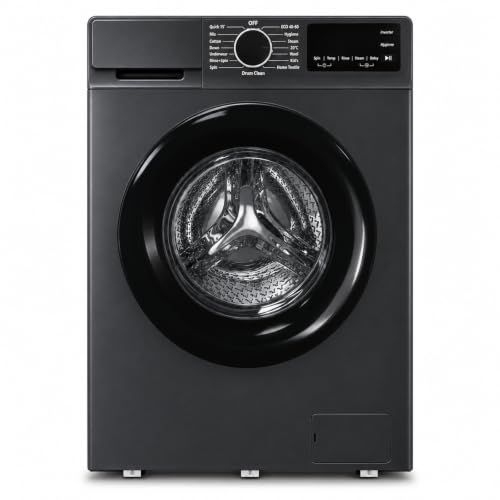
TABU 2.5 Front Load Washer Black — Best all-round gentle compact
TABU’s 2.5 cubic foot front-loader in black brings fifteen washing cycles to a compact, space-saving, stackable design with an LED display, aimed at apartments and laundry rooms. Fifteen cycles in a gentle guide means options: the delicate and low-action settings a knitwear wardrobe lives on, alongside the normal and heavy programmes a real household also needs, because a gentle specialist that cannot wash towels is a second machine, not a solution. The front-load tumble does the mechanical kindness, and the cycle spread lets the owner choose how much of that kindness each load receives.
The black finish and stackable form suit the small, visible spaces where gentle wardrobes usually live — flats, dressing-room laundries, compact utility closets — and the LED display keeps programme selection legible in those dim corners. At 2.5 cubic feet it asks for the compact discipline this guide teaches: modest loads, bedding in bundles, delicates uncrowded. Households wanting the same recipe larger should note its white sibling appears in this batch’s general front-load guide; here, in black, at this size, it is the balanced centre of the gentle shortlist.
- Capacity: 2.5 cu. ft. front load, black finish
- Cycles: 15 washing cycles per listing title
- Design: compact, space-saving, stackable, LED display
- Where to buy: the TABU 2.5 Front Load Washer Black listing on Amazon — check price on Amazon
Strengths
- Broad cycle menu gives delicates dedicated settings, not compromises.
- Compact drum fills correctly for gentle, small-load routines.
- Stackable design pairs upward when space allows a dryer.
Trade-offs
- No steam feature is named in its title.
- Compact capacity excludes single-load king bedding.
- Gentleness still depends on the owner choosing the gentle settings.
Best for: apartment households whose wardrobes mix delicates with everyday laundry.
Not suited for: large families whose volume would keep its drum running all weekend.

BLACK+DECKER 2.7 Compact Front Load Washer — Best cycle variety
Sixteen cycles is the widest menu in this guide, and BLACK+DECKER fits it into a 2.7 cubic foot compact front-loader with an LED display. Variety is a gentleness feature when it is real: each additional well-designed programme is a fabric family that does not have to be forced through a neighbour’s settings. At 2.7 cubic feet this is also the largest drum among the linked picks, a small margin that matters for the household whose gentle loads include a double duvet cover, a set of curtains, or a week’s knitwear in one careful session.
The brand brings the other compact virtue: recognition. A BLACK+DECKER laundry appliance sits in a wide retail and service landscape, which owners of small machines in rented or temporary spaces quietly value. The review claims only what the title verifies — cycles, capacity, display, format — and directs readers to the listing’s programme list to confirm the specific delicate settings before buying, because in a gentleness purchase the names and figures of the gentlest two programmes are the whole ballgame.
- Capacity: 2.7 cu. ft. compact front load
- Cycles: 16 cycles, the broadest menu in this guide
- Display: LED per listing title
- Where to buy: the BLACK+DECKER 2.7 Compact Front Load Washer listing on Amazon — check price on Amazon
Strengths
- Sixteen cycles give the finest-grained gentle choices here.
- Largest compact drum in the set eases bulky gentle loads.
- Widely recognised brand and service landscape.
Trade-offs
- Programme names must be confirmed on the listing before relying on them.
- No steam care is named in the title.
- Still a compact: family bedding days need splitting.
Best for: varied wardrobes that want a programme per fabric family in one compact machine.
A poor fit for: buyers who want steam-assisted care as a headline feature.

West Bend 2.2 Compact Front Load Washer — Best visibility and access
West Bend’s 2.2 cubic foot compact offers fifteen wash cycles, an LED display, a see-through door, and a stackable, space-saving design for apartments, RVs, and small spaces. The see-through door is this pick’s gentle signature, and it is more than a styling note: gentle washing rewards observation. Watching a load tells you whether garments are tumbling freely or plastered to the drum, whether suds are overwhelming a delicate load, whether a strap has escaped its bag — information an opaque cycle hides until the damage is done. Owners of delicate wardrobes learn their machine through that window in the first month.
At 2.2 cubic feet it is the joint-smallest drum here, suited to singles, couples, RV life, and second-station duty near the bedrooms. Fifteen cycles at this size is a serious menu, and the stackable form lets a small home build upward. Its gentleness case is the format-plus-visibility case, honestly stated: front-load tumbling, a real cycle spread, and a window that turns the owner into a participant rather than a bystander.
- Capacity: 2.2 cu. ft. compact front load, white finish
- Cycles: 15 wash cycles, LED display
- Design: see-through door, stackable, space-saving
- Where to buy: the West Bend 2.2 Compact Front Load Washer listing on Amazon — check price on Amazon
Strengths
- See-through door lets owners monitor delicate loads in motion.
- Fifteen cycles at the smallest size in the set.
- RV and apartment positioning suits mobile gentle wardrobes.
Trade-offs
- Smallest capacity class; bulky items need another plan.
- No steam or special tub material is named in the title.
- Visibility tempts mid-cycle interference the programme does not need.
Best for: careful owners who like to see a delicate load behaving, in small spaces.
Not the right match for: households washing for more than two people as their only machine.

Avanti 2.2 Front Load Washer — Best steam-assisted gentleness
The Avanti’s title is the most materially specific in the guide: a 2.2 cubic foot front-load machine, freestanding or stackable, with fifteen wash cycles, an LED display, a steam wash, and a stainless steel tub. The stainless tub matters to gentleness in a way owners feel over years: a smooth, corrosion-resistant drum surface treats fabric kindly cycle after cycle, with no roughening, chipping, or rust risk at the surface garments actually touch. Steam wash adds the refresh-and-loosen tool — used on its proper settings, steam relaxes fibres and helps release light soil and odours from garments that do not need a full aggressive wash.
Steam in a gentle guide needs its caution, and this review gives it: steam settings are for the garments and programmes that welcome warmth, not a blanket upgrade for wool or silk, and the chart for this model should be read for which programmes carry the steam. Within that discipline, the Avanti offers the richest gentle toolkit at the smallest size here — material, motion, cycles, and steam in one 2.2 cabinet — which is why it anchors the steam-curious end of the shortlist. Larger households comparing full-size alternatives will find the dryer side of the wardrobe equation in Best Large-Capacity Washers and Dryers.
- Capacity: 2.2 cu. ft. front load, white finish
- Cycles: 15 wash cycles, LED display
- Materials and features: stainless steel tub, steam wash, freestanding or stackable
- Where to buy: the Avanti 2.2 Front Load Washer listing on Amazon — check price on Amazon
Strengths
- Stainless tub surface is durably kind to fabric.
- Steam wash refreshes lightly worn garments with less agitation.
- Flexible freestanding or stackable installation.
Trade-offs
- Steam must be matched to fabrics that welcome warmth.
- Compact drum caps load size like every pick here.
- Long-running model; confirm the current listing’s specification before ordering.
Best for: small households wanting material quality and steam refresh at compact size.
Poorly suited to: wool-heavy wardrobes that would rarely dare the steam settings.

Midea MLH25N7BWW 24in Compact Washer — Best cold-wash design
Midea’s MLH25N7BWW is a 24-inch, 2.5 cubic foot compact whose title pairs steam care with cold wash design, in an energy and space-saving stackable machine positioned for family daily use. Cold wash is a gentleness philosophy in itself: dyes hold, elastic lasts, wool stays calm, and energy falls, all from refusing heat the load never needed. A machine engineered to clean credibly in cold water — through motion, time, and detergent management rather than temperature — is a machine aligned with how delicate and modern synthetic wardrobes actually want to be washed.
Steam care then covers the opposite occasional need, the refresh or the thorough hot treatment, giving this compact a wider temperature personality than its size suggests. At 24 inches it enters the true compact slot class, stackable for paired installations in closets and small laundry rooms. For households whose gentle strategy is cold-by-default with steam in reserve, this is the most conceptually complete pick in the guide, and its family-daily positioning acknowledges that gentle machines still have to wash ordinary clothes on ordinary Tuesdays.
- Capacity and size: 24 in, 2.5 cu. ft. compact front load, white, model MLH25N7BWW
- Design: energy and space-saving, stackable
- Features: steam care and cold wash per listing title
- Where to buy: the Midea MLH25N7BWW 24in Compact Washer listing on Amazon — check price on Amazon
Strengths
- Cold-wash engineering protects dyes, elastic, and wool by default.
- Steam care in reserve covers refresh and thorough treatments.
- True 24-inch slot size with stackable pairing.
Trade-offs
- Cold cleaning demands correct detergent choice to perform.
- Compact drum limits bulky loads, as with all picks here.
- Programme specifics should be confirmed on the listing’s chart.
Best for: cold-wash households with dye-rich, elastic-rich modern wardrobes.
A weak match for: buyers who wash everything hot on principle and would never use its design.
Wool and Silk Programme Class — Programme class to verify (prose-only)
The closing entry steps back from products to the standard by which gentle machines should be judged: the wool and silk programme class, meaning any machine whose chart demonstrates fibre-first figures on its gentlest settings. Wool felts when heat, moisture, and agitation combine; silk dulls under friction and harsh chemistry; both punish spin. A machine that respects those facts prints restrained spin ceilings, cool temperature defaults, and honest load limits for its wool and silk programmes, and those printed figures — not the word gentle on a badge — are the credential. This entry is prose-only because it describes a standard across brands rather than a verified listing in this pool, and because detergents and additives found in the searches are products, not programmes, and earn no place in a machine guide.
Use the standard as a shopping instrument anywhere: open the chart, find the wool programme, read its spin and temperature, and compare it against the linked compacts’ gentlest settings. Machines that publish proudly are courting informed buyers; machines that hide the figures are telling you the figures. Gentleness, in the end, is a number before it is an adjective.
- Standard: gentlest programme’s spin ceiling, temperature default, and load limit, printed on the chart
- How to verify: read the wool and silk programme figures for any model, at any dealer or listing
- Where to buy: the wool and silk programme class is sold across premium and mainstream laundry brands — check each maker’s cycle chart first, then its retailer listings for availability
Strengths
- The standard judges every machine, including future ones.
- It protects the two fibres that punish error most permanently.
- It costs nothing to apply and cannot be marketed around.
Trade-offs
- It is a method, not a machine; it cannot be delivered.
- Applying it requires reading charts many buyers skip.
- Truly restrained programmes limit load size and speed.
Best for: wool and silk owners who wash at home weekly and buy by figures.
Not suited for: shoppers who want gentleness as a badge rather than a practice.
Gentle Credentials, Side by Side
| Entry | Size | Cycles from title | Gentle evidence |
|---|---|---|---|
| TABU 2.5 Black | 2.5 cu. ft. | 15 | Front-load tumble, broad menu, stackable |
| BLACK+DECKER 2.7 | 2.7 cu. ft. | 16 | Widest programme spread |
| West Bend 2.2 | 2.2 cu. ft. | 15 | See-through door for load monitoring |
| Avanti 2.2 | 2.2 cu. ft. | 15 | Steam wash, stainless steel tub |
| Midea MLH25N7BWW | 24 in / 2.5 cu. ft. | See listing | Cold wash design, steam care |
| Wool/silk class | Prose-only | Chart figures | Spin and temperature restraint, printed |
What Actually Damages Clothes in a Wash Cycle?
Four forces do the damage, and gentle machines manage all four. Abrasion: fibres rubbing fibres and drum under load, worst in packed drums and agitator action. Tension: garments stretched by their own wet weight, by tangling, and by being lifted by one strap or sleeve. Heat: the slow enemy of elastic, dyes, and wool scales. Centrifugal force: spin pressing fabric against the drum, creasing, stressing seams, and crushing delicate structures. A front-load tumble reduces abrasion and tension by design; cycle choice governs heat; spin settings govern force; and load size governs whether any of the design’s kindness survives contact with reality. That is the whole physics of this guide, and every pick and method in it maps onto those four forces.
Detergent chemistry is the fifth, quieter factor: harsh dosing at high concentration attacks dyes and finishes, especially in the low water of front-loaders. Measure modestly, choose mild products for the delicate loads, and rinse adequately, and the machine’s mechanical gentleness will not be undone by the soap.
How Should You Run a Gentle Load, Step by Step?
Sort by fibre before colour: wool with wool, silk with silk, knitwear together, elastic gym kit in its own company. Bag the embellished and the strappy, turn everything inside out, close fastenings. Load to a third of the drum by loose volume — gentle loads should look almost sparse. Choose the gentlest programme whose figures fit the labels, cool water unless a label invites warmth, the lowest spin that leaves clothes manageable, and a light, mild detergent dose. Rescue the load at the beep: unbag, reshape, dry flat or on padded hangers, and never let a gentle load sit damp while the day moves on.
Run that routine on any linked pick here and the wardrobe will show it within a season: knitwear keeping its measurements, colours holding their register, elastic still elastic. The routine is the product as much as the machine is, which is why this guide teaches it in full rather than assuming the badge will do the work.
Which Fabrics Gain Most From These Machines?
Knitwear gains first, because tumbling and low spin end the stretching and abrasion that age jumpers fastest. Modern sportswear gains next: cold-capable, gentle cycles protect elastic and technical finishes that heat destroys. Silk and silk blends gain when the programme figures are respected and the bags are used. Linen and cotton gain least drama but steady benefit — less surface wear, better dye life — from the front-load tumble alone. Heavy denim and canvas gain nothing and lose nothing; they are indifferent to gentleness and can ride any programme, which is precisely why they should never share a load with the fabrics above: their indifference becomes everyone else’s abrasion.
Mistakes That Make a Gentle Washer Harsh
Mixing weights is the founding error — a pair of jeans in a knitwear load is a wrecking ball in a china shop. Overriding spin upward is the second, trading the programme’s protection for ten minutes of drying. Hot water by habit is the third, fading and felting by increments too small to notice weekly and too large to forgive yearly. Leaving the load sitting is the fourth, and skipping bags for the one embellished piece is the fifth. Each is a thirty-second decision, and gentle laundry is nothing more than making those five decisions correctly, load after load, on a machine built to reward them.
How Does the Dryer Half of the Routine Treat Gentle Clothes?
A gentle wash can be undone in twenty hot minutes. Tumble drying is the most violent common event in a garment’s life — heat, tumbling impact, and lint-filter evidence of fibre loss on every cycle — and delicate wardrobes should treat the dryer as an exception tool rather than a default. Air drying on racks and padded hangers preserves elastic, shape, and surface; where a dryer must be used, its lowest heat and a short, checked cycle are the ceiling of acceptable force. Households planning the full gentle system should read Best Clothes Dryers with that lens, favouring machines whose low-temperature and delicate settings are genuine programmes rather than afterthoughts, and whose drums and sensors stop the cycle when clothes are dry instead of when the timer feels finished.
The compact washers in this guide pair naturally with that philosophy: small gentle loads air-dry quickly, especially after a well-chosen spin, and a household that racks its knitwear rarely misses a dryer for anything but towels. Gentleness, pursued honestly, turns out to be a whole-laundry design — wash, dry, store — and the washer is simply where the design starts.
What Does a Gentle Wardrobe Cost to Maintain, Honestly?
Less than its reputation. The machine premium over a basic compact is modest in this guide’s set; mesh bags cost almost nothing and last for years; mild detergent is a small bottle bought occasionally; the drying rack replaces dryer energy rather than adding cost. The real currency is attention: a minute of sorting, a glance at a label, a prompt rescue at the beep. Against that, price the alternative honestly — knitwear replaced seasons early, silk dulled to ordinariness, elastic dead in a year — and gentle laundry is revealed as the economical household strategy wearing an indulgent costume. Owners who run the numbers once rarely go back.
There is also a sustainability ledger that needs no embellishment: clothes kept in service longer are clothes not replaced, and the gentlest machine is the one that extends the life of everything washed in it. Buyers who care about that ledger should weight the method sections of this guide as heavily as the picks, because method is where the years are actually added.
How Do You Handle the Bulky Gentle Items: Curtains, Duvet Covers, Table Linen?
Bulky gentle items test compact drums honestly. A duvet cover, washed alone and loosely loaded, fits these machines and benefits from their tumbling; curtains should be measured against the drum and washed one panel at a time, with hooks removed and the fabric bagged if it is delicate; table linen rewards a gentle programme and prompt hanging, since linen creases set fast but also release with gravity and a warm hand. The king duvet itself remains the honest exception — split the problem by taking it to a large machine occasionally, rather than forcing a compact drum to fail at it monthly. A gentle household plans that exception without embarrassment, the way a careful cook owns one large pot for two jobs a year.
What Changes for Households With Babies and Sensitive Skin?
Baby clothes are small, frequent, and washed with unusual care, and they sit closer to the gentle category than parents expect: soft fibres, elastic everywhere, and garments whose comfort is the entire point. The gentle routine serves them directly — mild detergent, measured dosing, an extra rinse where the machine offers one, prompt drying — with the standing caution that this guide discusses laundry practice only and offers no medical guidance for skin conditions, which belong to clinicians. Compact machines earn a specific mention here: a small drum near the nursery, running small gentle loads daily, is the pattern many new parents independently invent, and the picks in this guide formalise it with real cycle menus and stackable forms.
How Should You Judge a Gentle Machine in a Showroom?
Open the door and run a hand over the drum surface and the lifters; gentleness begins at the surfaces fabric touches, which is why the Avanti’s stainless tub earned its emphasis. Read the chart’s gentlest two programmes for spin and temperature figures, and be suspicious of any machine whose delicate story cannot be found in numbers. Check the door’s feel and the dispenser’s clarity, because gentle routines are frequent and fiddly. Ask how the machine handles a single delicate item, since gentle loads are often tiny. And picture the machine in your actual space at your actual wash hour — the compact that fits the flat and gets used gently every week outperforms, in wardrobe years, the flagship that lives in a garage and gets used in angry bulk.
A Season-by-Season Gentle Laundry Calendar
Spring asks for the wardrobe audit: knitwear washed gently before storage, because soil and perspiration degrade fibres invisibly over summer, and stored clean wool is also less attractive to the pests that ruin it. Summer is the season of elastic and technical fabric — swimwear rinsed and washed cool, gym kit kept out of hot programmes, linen revelling in gentle cycles and line drying. Autumn returns the heavy knitwear to rotation with a refresh wash that relaxes fibres after storage. Winter is delicacy under load: layers multiply, drying moves indoors, and the discipline of flat drying and prompt rescue matters most when radiators tempt every shortcut. A household that thinks seasonally about gentle laundry finds the machine’s programmes mapping onto the year almost without effort, and the wardrobe arrives at each spring audit intact.
What Do Textile Makers Wish Washer Owners Knew?
That the care label is a tested instruction, not a legal disclaimer. Garment makers wash-test their products against the label they print, and the label’s limits — temperature, action, spin, drying — are the conditions under which the garment survived its own testing. Exceeding them is not bravery; it is uninsuring the garment. They would also say that most returns blamed on fabric quality trace back to wash violence the label forbade, which reframes gentle laundry as a partnership: the maker engineered the garment for a defined wash, the machine maker engineered programmes to deliver it, and the owner’s whole job is to connect the two documents — label and chart — at every load. This guide’s prose standard is simply that connection, written out longhand.
How Do You Rescue a Garment a Harsh Wash Already Damaged?
Some damage is negotiable. Pilling yields to a fabric shaver and a gentler future. Minor shrinkage in cotton sometimes relaxes with a lukewarm soak and patient reshaping. Faded dyes do not return, felted wool does not unfelts, and dead elastic stays dead — which is why the rescue conversation belongs early, as prevention, rather than late, as repair. Keep a small kit beside the machine: shaver, mesh bags in three sizes, a mild detergent, a reshaping towel station. The kit’s presence changes behaviour more than its use does; households that equip for gentleness practise it, the way a laid-out running kit gets a person out the door.
Why Do Compact Machines Keep Winning This Category?
Because gentleness is a load-size discipline before it is a feature list. A compact drum makes the right load size the natural one, fills efficiently at gentle volumes, and lives where the wardrobe lives — in flats, annexes, and dressing areas — rather than in a distant utility room that encourages bulk washing. Its owners wash little and often, which is the rhythm delicate fibres prefer, and its modest spin forces forgive the occasional imperfect load. The full-size gentle machine exists and serves big households honourably, several of them elsewhere in this batch, but the compact’s alignment between size, rhythm, and fibre care is why this verified pool, assembled without prejudice, kept returning compact names for a gentle brief. Design follows use, and use, in gentle laundry, is small.
How Does Water Quality Affect Gentle Washing?
Hard water is gentle laundry’s quiet saboteur: minerals dull colours, stiffen fibres, and leave deposits that make towels and knitwear feel harsher with every wash, tempting owners to blame the machine’s action for what the supply delivered. Households in hard-water areas should dose detergent for their water, consider the maker’s guidance on softening or descaling, and rinse delicate loads adequately, because mineral residue left in fine fibres abrades from within. Soft water reverses the trap — detergent foams eagerly and overdosing leaves residue that dulls silk and weights knitwear — so the measured, modest dose this guide keeps recommending is really a water-matching exercise. Learn your water once, write its dose on the detergent bottle, and a whole category of mysterious harshness disappears from the laundry.
What Should a Gentle Machine’s Owner Do in the First Week?
Read the chart and mark the gentlest two programmes with a pencil dot, because those are the household’s new home settings. Wash a test load of replaceable delicates with the full method — bags, third-full drum, cool, low spin — and inspect the results dry, in daylight, against a mental photograph of how the old machine treated the same items. Set up the drying station before the second load, not after it. Photograph the settings that worked and pin the card above the machine for the household’s other users. By the second week the routine should feel boring, and boring is the correct emotional register for a system that will quietly protect a wardrobe for a decade.
How Do You Talk About Gentleness When Buying for Someone Else?
Gentle machines are frequent gifts — for a student leaving home, a parent downsizing, a new household forming — and the kind way to give one is with the method attached. Include bags, a small mild detergent, and a handwritten card with the three rules that matter: third-full loads, cool and low for anything loved, rescue at the beep. Choose the pick whose character matches the recipient: the West Bend’s window for the anxious beginner who wants to see, the TABU’s breadth for the varied wardrobe, the Midea’s cold design for the modern synthetic closet. A machine given with its method is a wardrobe protected; a machine given alone is an appliance. The difference costs one card and ten minutes, and it is the difference this entire guide has been about.
What Does Gentle Washing Look Like for a Shared or Rental Household?
Shared laundry is where gentle intentions go to be tested by other people’s urgency. The workable system is zoning: a clearly marked delicate hamper that housemates agree is never bulk-washed, bags kept visibly at the machine, and the gentle rules on a card that nobody has to memorise. Landlords furnishing a rental with one of these compacts perform a quiet kindness by choosing a broad cycle menu, because tenants’ wardrobes vary more than any single household’s, and by leaving the chart and a starter set of bags with the machine. In shared settings the machine’s job is to make the gentle choice the easy choice at 11 p.m. on a work night, and cycle clarity — the LED displays and legible menus across this guide’s picks — is a social feature as much as a technical one.
How Long Should Gentle Clothes Last, and How Will You Know the System Works?
Measure in seasons, not washes. A merino jumper washed gently should hold its size and surface across years of winters; elastic in regular rotation should still be working when the garment’s style, not its fabric, retires it; colours should fade at the pace of sunlight, not of laundry. Keep one reference garment — a favourite knit photographed yearly in the same light — and the system’s success becomes visible rather than argued. Households that adopt the full method in this guide consistently report the same surprise: they stop replacing the clothes they love and start replacing only the clothes they merely use, which is as clean a definition of a gentle washer’s value as any laboratory could phrase.
A Final Distinction: Gentle Is Not the Same as Weak
New owners sometimes mistake a gentle programme’s restraint for ineffectiveness when a load emerges merely clean instead of dramatically processed. Judge gentle washing by the garment’s condition after drying and after a season, not by the theatre of the cycle. Soil on delicate items is usually light — a day’s wearing, not a building site — and the programme that removes it while leaving fibre, dye, and elastic untouched has done the harder job, not the easier one. The machines in this guide were chosen for exactly that harder job, and their spec boxes state the evidence plainly: format, cycles, surfaces, and temperature design. Everything else is method, and the method is now yours.
How Do You Build the Gentle Habit Into a Busy Household’s Week?
Anchor it to an existing rhythm: delicates on the evening the week’s work clothes are done, dried while dinner cooks, folded before the day ends. Keep the bags in the hamper itself so sorting and bagging happen in one motion at undressing time, not in a separate ceremony at the machine. Let the machine’s gentlest programme become as unremarkable as the normal cycle — because for the households in this guide’s audience, it is a normal cycle, run on the clothes they care about most. Systems that depend on special effort collapse by February; systems built into the week’s furniture run for years, and gentle laundry, of all household crafts, is the one that pays its rent in years.
What About Ironing, Steaming, and Finishing Gentle Clothes?
Finishing is the gentle routine’s last mile, and it can refund or squander everything the wash preserved. Shake and hang garments straight from the drum so gravity does the first pressing for free; steam, used at a distance on fabrics that welcome it, relaxes fibres without the friction of an iron’s soleplate; where an iron is needed, use its lowest effective heat, a pressing cloth for silk and wool, and the inside of the garment where possible. Store knitwear folded, hang wovens on shapes that respect their shoulders, and give the wardrobe air. Owners who finish gently find their clothes need less rescue work over time, because creases never set hard and fibres never bake — the same compounding kindness, applied at the wardrobe door, that the washer applied at the drum.
One Wardrobe Audit to Do Before You Buy
Before choosing among the five linked machines, spend ten minutes with the wardrobe itself. Count the garments you wash gently each week and their total loose volume; that number, honestly taken, chooses the drum size more reliably than any household-size formula. Note which fibres dominate — wool points you toward chart figures and cold design, variety points toward the sixteen-cycle menu, visibility and anxiety point toward the see-through door, material pride points toward the stainless tub. Then read the five reviews again with the audit in hand. Guides can rank, but only the wardrobe can decide, and a decision made from the wardrobe outward is the one that still looks correct when the machine is three years old and the novelty is a memory.
What Will You Notice After a Year of Gentle Washing?
The drawer tells the story. Favourite knitwear still fits the body it was bought for. Colours sit in their original register next to newer purchases instead of looking like their own faded photographs. Elastic waistbands and straps still work, quietly, which nobody celebrates and everybody benefits from. The replacement purchases slow down, and the wardrobe’s average age rises — the surest household metric that gentleness is real. Against that evidence, the compact machine on its closet shelf and the card of rules above it look less like appliances and instructions, and more like what they actually are: a small, well-kept promise between a household and the clothes it loves, renewed one careful load at a time.
Final Recommendation
Choose the TABU 2.5 for the balanced gentle all-rounder, the BLACK+DECKER 2.7 when programme variety is the wardrobe’s demand, the West Bend when you want to watch a delicate load behave, the Avanti for its stainless tub and steam refresh, and the Midea when cold-wash design matches your fibre philosophy. Judge every other machine you meet by the prose standard at this guide’s close — spin, temperature, load limit, printed plainly — and run the gentle routine as written. Do that, and the clothes you love will stop ageing in the wash and start ageing only where they should: slowly, in the wearing, across years of being chosen first from the drawer because they still look and feel like themselves.
Frequently Asked Questions
Why are all the linked picks compact machines?
Because the verified pool for this brief centred on compact front-loaders, and because gentle washing is small-load washing: compact drums fill correctly with delicate loads instead of tempting owners to mix them into heavy family loads. The guide states the pool’s shape honestly rather than inventing full-size entries.
Is front-load really gentler than top-load?
Its tumbling action avoids the agitator’s concentrated force and generally treats fabric more kindly, especially knitwear and delicates. A gentle top-load programme run carefully can still serve sturdy clothes well; format is an advantage, not a guarantee.
Does steam help or harm gentle laundry?
Both, depending on the fabric and programme. Steam refreshes and relaxes many garments with little agitation, but heat is wrong for wool and some silks. Read the chart for which programmes carry steam, and match it to labels.
Why are detergents not picks in this guide?
Because this is a guide to washing machines. A mild detergent supports any pick here, but no additive is a washer, and including one would confuse the category the reader came to research.
How full should a gentle load be?
About a third of the drum by loose volume, with embellished pieces bagged separately. Space is a gentleness ingredient: garments that can move through water without pressing on each other age far more slowly.
Can I wash trainers and soft toys in these machines?
Trainers survive a gentle, cool, bagged or pillowcased cycle on most charts, with laces contained and spin kept low, though adhesives age faster with every wash and air drying is essential. Soft toys depend on their filling and construction; surface-clean the irreplaceable ones, and machine-wash only the sturdy, in a bag, on the gentlest programme, accepting that beloved toys should always be tested by sentiment before settings.
Is a stainless drum always gentler than other tubs?
A smooth, well-finished drum of any durable material treats fabric kindly; stainless earns its reputation by staying smooth — resisting rust, chips, and roughening — across years of service. Judge the surface you can touch today and the material’s record of keeping that surface, rather than the material’s name alone.
How do I stop knitwear pilling in the wash?
Pilling is fibre ends working loose under abrasion and balling on the surface, so the countermeasures are the gentle canon itself: inside-out garments, bags for the worst offenders, uncrowded loads, no heavy neighbours, and restrained spin. Existing pills yield to a shaver; future pills are prevented in the drum. Knitwear washed this way keeps a clean surface for seasons rather than months.
Should delicate clothes be washed after every wear?
Not automatically. Many delicate fibres benefit from rest and airing between wears, and washing is wear in itself, however gentle. Wash when soil, odour, or the label’s guidance says so, and air and rotate otherwise; the gentlest cycle ever designed is still second to the cycle not run, for garments that did not need it.
What temperature is safe for most delicate loads?
Cool is the working default across wool, silk, elastic, and dyes, and the labels of individual garments overrule any general rule. Warm water earns its place only where a label invites it and soil demands it, which in a delicate wardrobe is the exception rather than the habit.
Do gentle machines clean everyday clothes well enough to be an only machine?
Yes, for households at their scale. Every linked pick carries a full menu beyond its gentle settings, and a couple or small household will wash towels, bedding in bundles, and everyday clothes without apology. The limit is volume and bulk, not cleaning ability: a large family’s weekly throughput, or a king duvet in one piece, asks for a bigger drum, not a stronger one.
Why does my knitwear stretch even on gentle cycles?
Usually water weight and handling, not the cycle: a wet knit lifted by one shoulder or hung to dry stretches under its own load. Support garments with both hands, roll them in a towel to remove water, reshape them to their measurements, and dry them flat, and the same cycle that seemed to stretch them will suddenly seem to preserve them.
Are fifteen cycles meaningfully better than twelve for gentleness?
Only if the extra cycles include the delicate settings your wardrobe needs. Count the programmes you will actually use for your fibres, not the total on the dial; a focused twelve with a true wool setting beats a padded sixteen without one, which is why this guide keeps sending readers to the programme list itself.
Should I separate whites even in gentle loads?
Yes, when dyes are young or colours are strong, because dye transfer respects no programme’s gentleness — a cool, slow load can still tint a white blouse from a new indigo neighbour. Sort gentle loads by fibre first and by colour second, wash new dark items alone until their dye settles, and the two sorting systems will rarely argue with each other in practice.
What is the gentlest way to wash a wedding dress or heirloom at home?
Honestly, often not at home at all: heirloom and heavily constructed garments belong with specialist cleaners whose processes are built for them, and this guide’s basin list exists precisely for such pieces. If a maker or specialist confirms home washing, use the full method — bagged or supported, coolest, slowest, smallest load, flat dried — and accept that the decision, not the machine, carries the risk from the first minute to the very last one of the whole careful process from basin thinking to flat drying on the rack at home in good light where every seam and surface can be checked slowly before the garment is folded away for the season ahead with the rest of the wardrobe it belongs to and loves to wear every week of the year without exception or shortcut anywhere at all today either, ever again soon enough.
Related Guides
Our earlier verified roundup, Best Bath Rugs for Front-Load Washers, covers the small-load, front-load routine from the bathroom side and makes a practical companion to the gentle method above.


