What's inside
- Key Takeaways
- Quick Picks
- How We Chose These Picks
- Vibration Evidence, Compared Honestly
- How Much of Low Vibration Is the Machine, and How Much Is the Floor?
- How Do You Install for Minimum Vibration, Step by Step?
- Loading Habits That Keep Any Washer Calm
- Mistakes That Make Even a Low-Vibration Washer Shake
- What Does Vibration Do to the Machine Itself Over Time?
- How Should Flat-Dwellers and Landlords Handle Laundry Noise Fairly?
- What Changes When the Washer Lives in an RV, Cabin, or Garden Room?
- How Do You Diagnose a Machine That Has Grown Louder With Age?
- What Should a Buyer Ask in the Showroom About Vibration?
- Pairing Matters: The Dryer Beside the Washer
- A Tale of Two Laundry Rooms: Same Machine, Different Floors
- How Do You Keep a Stacked Pair Calm?
- What Role Does Load Size Play in Spin Behaviour?
- What About the Human Side: Sleep, Babies, and Shift Work?
- How Should You Budget Across Machine, Installation, and Floor?
- What Will the First Fortnight With a Calmer Machine Teach You?
- How Do You Verify a Bundle or Pair Listing Before the Money Moves?
- When Is Vibration a Sign to Replace Rather Than Adjust?
- What Does the Warranty Conversation Sound Like for Vibration?
- A Closing Word on Expectations
- How Should Second-Hand and Inherited Machines Be Judged?
- What Do Builders and Renovators Get Wrong About Laundry Placement?
- Final Recommendation
- Frequently Asked Questions
- Related Guides
As an Amazon Associate I earn from qualifying purchases. This post may contain affiliate links at no extra cost to you.
cottageverdict.com is reader-supported. When you buy through links on our site, we may earn an affiliate commission.
Where to buy: The five linked entries below lead to their Amazon listings, where you can check price on Amazon; the bundle and pair listings state their contents on the listing, and those contents vary by seller.
Vibration is the laundry complaint that travels through walls. The best washers with low vibration are not simply quieter machines; they are machines whose motors, balance systems, and drum control keep spin forces inside the cabinet instead of sending them into floorboards, picture frames, and the ceiling of the room below. This guide gathers the five verified listings whose titles speak directly to that problem — through named vibration reduction technology, low-vibration bundle language, inverter motors, or anti-vibration design — plus one prose-only discussion of the anti-vibration design class as a whole. If your laundry lives above a bedroom, beside a nursery, or on a timber upper floor, this is the shortlist built for your house. Readers whose priority is fabric kindness rather than floor kindness will find the companion angle in Best Washers Gentle on Clothes.
Two of the five linked entries need an honest label before any praise: the Samsung bundle and the LG pair are bundle and pair listings, not bare washers. Their contents — dryers, cords, hoses, protection plans — are defined by the seller and vary, so their reviews treat the washer as the subject and the package as a list to verify line by line. That diligence aside, both earn their place because their titles put low-vibration washing at the centre of the offer, which is precisely this guide’s subject.
Key Takeaways
- The Samsung WF45T6000W front-loader is the purest pick: its title names Vibration Reduction Technology+ outright.
- The Samsung top-load bundle states Low Vibration Quiet Wash in its title and bundles a full laundry set; contents vary by seller.
- The LG entry is a washer and dryer pair in Black Steel; treat it as a pair purchase and verify its contents.
- Inverter motors in the Muhub compact support smooth, low-vibration running in small spaces.
- Installation decides half the result: levelling, shipping bolts, and floor stiffness matter as much as the badge.
Quick Picks
| Pick | Badge | Why it is here |
|---|---|---|
| Samsung Smart Top Load Washer and Electric Dryer Bundle | Best low-vibration bundle | Low Vibration Quiet Wash named in the title, with dryer, cords, hoses, vent duct, and a protection plan bundled. |
| Samsung WF45T6000W Front Load Washer VRT Plus | Best dedicated vibration technology | Vibration Reduction Technology+ in a 4.5 cubic foot high-efficiency front-loader. |
| Muhub 2.5 Compact Washer Inverter Black | Best compact low-vibration | Inverter motor and steam hygiene cycles in a 2.5 cubic foot black compact for tight spaces. |
| TABU 4.0 Front Load Washer Black | Best stackable apartment option | Fifteen cycles in a compact, stackable, space-saving 4.0 cubic foot design with LED display. |
| LG WM6500HBA Front Load Laundry Pair | Best matched pair | A 5 cubic foot smart washer with a 7.4 cubic foot electric dryer as a Black Steel pair. |
| Anti-Vibration Design Class: Inverter Drive Plus Balance Ring (prose-only) | Design class to understand | The engineering pattern behind the category, discussed without a link so buyers can judge any machine by it. |
How We Chose These Picks
The verified pool for this article was read for one thing: vibration evidence in the title. That evidence takes several forms, and the guide ranks them transparently. Strongest is a named vibration technology, which only the Samsung front-loader offers. Next is explicit low-vibration language in a bundle title, which the Samsung top-load bundle provides. Then come the enabling technologies — inverter motors, whose smooth speed control reduces the surging that excites floors — and compact stackable designs whose modest drums generate smaller spin forces. The TABU earns its place on that last basis plus its apartment brief, where low disturbance is the entire point of the machine’s design context.
The prose-only entry exists because low vibration is ultimately a design pattern, not a brand: an inverter or well-controlled drive, a balance system that redistributes an uneven load, suspension tuned to absorb what remains, and a cabinet that does not amplify it. Teaching that pattern lets readers judge machines beyond this list, including the ones in their local showroom, by asking for the pattern’s parts rather than for a decibel promise no title here makes. No listing in this pool publishes a vibration measurement, and this guide invents none; it works from named technologies and design, and says so.
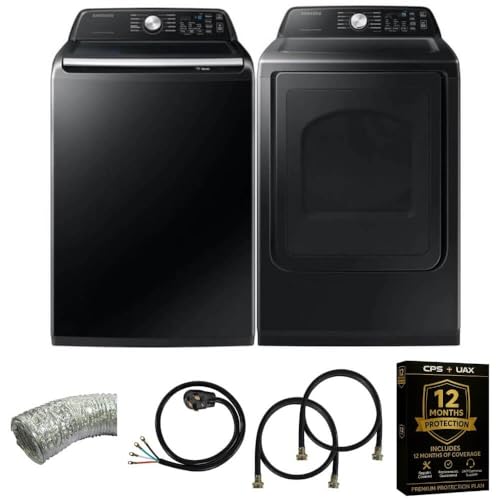
Samsung Smart Top Load Washer and Electric Dryer Bundle — Best low-vibration bundle
Label first, as promised: this is a bundle listing. Its title describes a Samsung smart 4.7 cubic foot top-load washer with a 7.4 cubic foot electric dryer, sensor drying that stops overdrying, Low Vibration Quiet Wash, a WaterJet feature, power cords, hoses, a vent duct, and a one-year CPS protection bundle, in black. Contents of bundle listings vary by seller, so the correct way to buy it is to read the seller’s contents list as the contract, confirm each element, and screenshot it at ordering. The washer is the subject of this review; the bundle is the context that makes it a one-decision laundry purchase.
Within that context, the low-vibration claim sits in the title itself, which matters for a top-loader: top-load spins generate strong vertical and lateral forces when a load clumps, and a top-load design that advertises quiet, low-vibration washing is addressing its format’s known weakness head-on. The 4.7 cubic foot drum gives family loads room to distribute, which is itself a vibration strategy — balanced loads spin calmly in any machine. For a household equipping a laundry space in one purchase, near living areas, this bundle’s combination of stated low-vibration washing and complete contents is the most direct answer in the guide, provided the contents check is done with care.
- Configuration: bundle — 4.7 cu. ft. top-load washer plus 7.4 cu. ft. electric dryer, black
- Vibration evidence: Low Vibration Quiet Wash named in title
- Bundled elements per title: sensor dry, WaterJet, power cords, hoses, vent duct, 1 Year CPS Protection
- Buying note: bundle contents vary by seller; verify the contents list before ordering
- Where to buy: the Samsung Smart Top Load Washer and Electric Dryer Bundle listing on Amazon — check price on Amazon
Strengths
- Low-vibration washing stated in the title of a top-load design.
- Complete bundle ends the accessory hunt in one purchase.
- Family-size drum helps loads balance before the spin begins.
Trade-offs
- Bundle contents vary, demanding careful listing verification.
- Buyers with a good dryer pay for a pair they may not need.
- Top-load format still asks for load discipline on bulky items.
Best for: households fitting a laundry space near living areas in a single coordinated purchase.
Not suited for: washer-only replacers who want a bare machine and nothing else in the box.
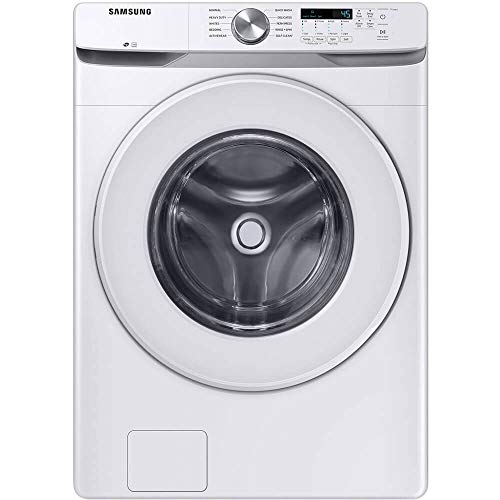
Samsung WF45T6000W Front Load Washer VRT Plus — Best dedicated vibration technology
This is the guide’s reference machine, because its title carries the category’s clearest credential: a 4.5 cubic foot high-efficiency front-load washer with Vibration Reduction Technology+, model WF45T6000AW/A5, in white. Vibration reduction systems of this kind work by sensing imbalance early and managing the spin’s ramp — redistributing the load, adjusting speed, and refusing to let a lopsided drum reach the speeds at which vibration becomes structural. The result owners notice is not silence but civility: a machine that spins a towel load upstairs without announcing the fact to the whole house.
The front-load format helps the mission. A horizontal drum on a tuned suspension, spinning a well-distributed load, presents a kinder vibration profile than most top-load designs, and 4.5 cubic feet is the family size at which that profile matters most, because family loads are the heavy, wet, unbalanced ones. Buyers comparing formats for a flat or an upper floor should weight this machine heavily; buyers on a ground-floor slab may find its talents underemployed. Either way, it is the pick whose vibration claim needs no inference — the technology is in the name, and the name is in the verified title.
- Capacity: 4.5 cu. ft. high-efficiency front load, white, model WF45T6000AW/A5
- Vibration evidence: Vibration Reduction Technology+ named in title
- Format: front load, suited to stacking or under-counter laundry planning
- Where to buy: the Samsung WF45T6000W Front Load Washer VRT Plus listing on Amazon — check price on Amazon
Strengths
- Named vibration technology, the strongest evidence class in this guide.
- Full family capacity without compact compromises.
- Spin management protects both the machine and the floor.
Trade-offs
- Front-load format brings the usual gasket-care routine.
- No steam or smart headline competes for attention in its title.
- Its talents are wasted on a ground-floor concrete slab installation.
Best for: upper-floor and flat laundry where spin vibration is the household’s chief complaint.
A poor fit for: buyers whose priority is steam features rather than floor peace.

Muhub 2.5 Compact Washer Inverter Black — Best compact low-vibration
Muhub’s 2.5 cubic foot compact in black pairs an inverter motor with steam and hygiene cycles described in its title as lifting set-in stains from bedding and kids’ clothes while fitting tight closets and rental units. The inverter motor is its vibration credential: inverter drives control drum speed continuously and precisely, avoiding the abrupt starts and surges that excite a cabinet and floor, and in a compact machine installed in a closet or a rental — the exact settings its title names — that smoothness is the difference between a tolerated appliance and a complained-about one.
Small drums also generate smaller absolute spin forces, and a 2.5 cubic foot load simply cannot clump with the mass of a family load. The black finish suits the design-led small spaces these machines inhabit. Its limits are the compact limits: bedding in modest bundles, no family volume, and a brand service story thinner than the giants’. For the renter above a neighbour’s bedroom, though, this combination of inverter control, compact mass, and hygiene programming is the most considerate washer in the guide, and consideration, in shared buildings, is a feature with daily cash value. Compact-format questions more broadly are answered in Best Front-Load Washers in Compact Sizes.
- Capacity: 2.5 cu. ft. compact front load, black finish
- Motor: inverter motor per listing title
- Programmes: steam and hygiene cycles per listing description
- Intended spaces: tight closets and rental units
- Where to buy: the Muhub 2.5 Compact Washer Inverter Black listing on Amazon — check price on Amazon
Strengths
- Inverter smoothness suits thin floors and shared walls.
- Compact mass keeps spin forces inherently modest.
- Hygiene cycles add family usefulness to a small drum.
Trade-offs
- Small capacity caps bedding and weekly volume firmly.
- No named vibration technology; the case rests on motor and mass.
- Newer brand, so confirm local service before buying.
Best for: renters and small households washing above or beside someone else’s quiet.
Not the right match for: families, whose loads will overwhelm its drum and its virtues alike.
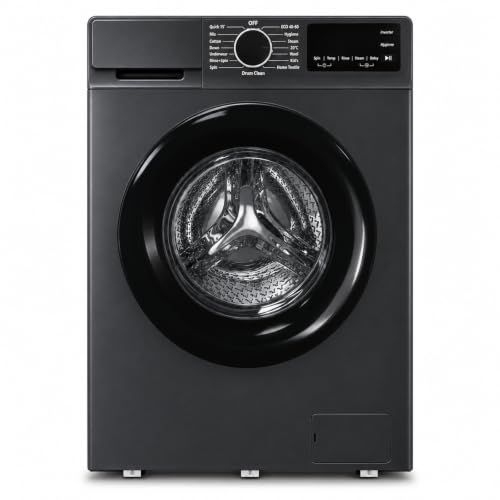
TABU 4.0 Front Load Washer Black — Best stackable apartment option
TABU’s 4.0 cubic foot front-loader in black offers fifteen washing cycles in a compact, space-saving, stackable design with an LED display, positioned for apartments and laundry rooms. Its place in a low-vibration guide rests on design context rather than a named technology, and the guide says so plainly: apartment machines live in the vibration-sensitive world by definition, and a compact stackable drum at 4.0 cubic feet generates moderate spin forces while serving real household volume. Stacking, done with the correct kit on a level floor, also stabilises the washer under the dryer’s mass, a small physics bonus owners of stacked pairs notice.
Fifteen cycles at this size is generous, letting apartment households protect delicates and attack workwear without a second machine. The black finish distinguishes it from the white compact crowd. What it does not carry is a vibration technology name, so buyers whose floor problem is severe — a flexing timber upper storey — should treat the Samsung VRT machine as the guide’s heavy artillery and this TABU as the versatile apartment all-rounder whose moderate forces suit ordinary floors and considerate hours.
- Capacity: 4.0 cu. ft. front load, black finish
- Cycles: 15 washing cycles per listing title
- Design: compact, space-saving, stackable, LED display
- Where to buy: the TABU 4.0 Front Load Washer Black listing on Amazon — check price on Amazon
Strengths
- Near-family capacity in an apartment-shaped cabinet.
- Stacking adds stability as well as saving floor space.
- Broad cycle menu covers a whole wardrobe in one machine.
Trade-offs
- No vibration technology is named in its title.
- Moderate forces still punish a badly levelled installation.
- Black finish shows dust in bright laundry rooms.
Best for: apartment households wanting one capable machine that respects the neighbours.
Poorly suited to: severe floor-flex cases that need named vibration technology and professional levelling.

LG WM6500HBA Front Load Laundry Pair — Best matched pair
The second honest label of the guide: this LG entry is a laundry pair, a Black Steel front-load smart washer of 5 cubic feet with a 7.4 cubic foot electric dryer, sold together. Pair contents and seller definitions vary, so verify what the listing includes — machines, kits, cords, terms — before ordering, and treat the washer as this review’s subject. That washer is a substantial machine: the largest drum in this guide, smart-controlled, in a finish designed to anchor a modern laundry room, paired with a dryer sized to match its throughput.
Its low-vibration relevance is the modern flagship pattern: a large smart front-loader from a maker whose range emphasises controlled, quiet operation, installed as a matched pair whose combined mass and aligned installation settle the whole laundry wall. A five-foot drum also balances family loads well when loaded with the discipline this guide teaches. Households buying a pair for a primary laundry room near bedrooms get capacity, finish, and civility in one decision — with the pair-verification diligence this guide keeps repeating because it keeps mattering. Origin questions about such machines are a separate axis, explored in Best USA-Made Washers.
- Configuration: pair — 5 cu. ft. smart front-load washer plus 7.4 cu. ft. electric dryer, Black Steel
- Positioning: flagship capacity with matched dryer throughput
- Buying note: pair contents vary by seller; verify the listing’s contents list
- Where to buy: the LG WM6500HBA Front Load Laundry Pair listing on Amazon — check price on Amazon
Strengths
- Largest washer drum here, with a dryer matched to it.
- Matched-pair installation settles a whole laundry wall at once.
- Smart control supports managed, balanced spinning.
Trade-offs
- Pair pricing and contents require careful verification.
- No vibration technology is named in the pair’s title.
- Oversized for households replacing a washer only.
Best for: households renovating a primary laundry room near sleeping space, buying the pair once.
A weak match for: anyone whose dryer is new, loved, and not part of the negotiation.
Anti-Vibration Design Class: Inverter Drive Plus Balance Ring — Design class to understand (prose-only)
The final entry is a pattern rather than a product, included so readers can recognise low-vibration engineering anywhere. The pattern has four parts. A drive that controls speed smoothly — inverter motors are the common modern form — so the drum never lurches. A balance system, whether a liquid-filled balance ring that self-corrects small imbalances or sensor-driven redistribution that re-tumbles a clumped load before spinning, so uneven mass is corrected rather than endured. Suspension and cabinet engineering that absorb the residual forces instead of broadcasting them. And software patience: spin profiles that ramp gradually and retreat when imbalance is detected, trading a minute of time for a quiet room.
When you shop beyond this guide, ask for those four parts by name. A seller who can describe the drive, the balance method, and the spin behaviour is selling engineering; a seller who offers only a quiet badge is selling vocabulary. This class is discussed without a link because it describes machines across many brands and listings, none of which was verified as a standalone entry in this pool — and because the pattern, once learned, is worth more than any single additional pick.
- Pattern parts: smooth drive control, active balance correction, absorbing suspension, patient spin software
- How to verify: ask for the drive type, balance method, and spin behaviour on any machine’s documentation
- Where to buy: the anti-vibration design class is sold across major laundry brands — check each maker’s documentation for the four pattern parts before choosing a retailer
Strengths
- The pattern explains every linked pick’s behaviour in one framework.
- It travels to any showroom, brand, or future model year.
- It separates engineering from vocabulary at a glance.
Trade-offs
- It is knowledge, not a product; it cannot be delivered to your door.
- Applying it takes questions some sellers would rather not answer.
- Even a perfect pattern cannot rescue a dreadful installation.
Best for: buyers comparing machines beyond this list, now or in a future purchase.
Not suited for: shoppers who want a single link and no homework, for whom the Samsung VRT pick above is the shortcut.
Vibration Evidence, Compared Honestly
| Entry | Type | Evidence class | Capacity |
|---|---|---|---|
| Samsung Bundle | Bundle (washer + dryer) | Low Vibration Quiet Wash in title | 4.7 cu. ft. washer |
| Samsung WF45T6000W | Linked washer | Named Vibration Reduction Technology+ | 4.5 cu. ft. |
| Muhub Inverter Black | Linked washer | Inverter motor, compact mass | 2.5 cu. ft. |
| TABU 4.0 Black | Linked washer | Compact stackable apartment design | 4.0 cu. ft. |
| LG Pair | Pair (washer + dryer) | Flagship smart pair pattern | 5.0 cu. ft. washer |
| Design class | Prose-only | Four-part engineering pattern | Any |
How Much of Low Vibration Is the Machine, and How Much Is the Floor?
Roughly half and half, and the honest half matters. A superb machine on a springy floor, unlevel, with a shipping bolt forgotten, will shake a house; a modest machine, levelled on a solid floor with balanced loads, will behave politely for years. Floors differ by construction: concrete slabs forgive almost anything, ground-floor timber forgives less, and upper-floor timber — the classic flat and townhouse case — forgives least, amplifying spin forces into the structure. Before spending on technology, assess the floor honestly: jump beside the current machine’s position and feel the give, check whether the present washer’s noise is airborne sound or structure-borne thump, and look at what sits below the laundry space.
Then match the purchase to the diagnosis. Structure-borne thump on a flexing floor calls for named vibration technology, professional levelling, and possibly a stiffening platform or relocation of the laundry to a slab. Airborne sound in a solid-floored house calls for quiet motors and sensible hours more than for flagship systems. The guide’s picks span that spectrum deliberately, from the VRT Samsung for the hard cases to the apartment TABU for the ordinary ones.
How Do You Install for Minimum Vibration, Step by Step?
Remove every shipping bolt and keep them for any future move. Place the machine on the stiffest available floor area, ideally near a load-bearing wall where joists flex least. Level with a spirit level in both axes, adjusting feet until the cabinet is rock-solid with no corner lift, then lock the feet. Route hoses without tension and confirm the drain cannot kink when the machine is pushed home. Run a test spin with a medium, evenly distributed load of towels and watch the machine through the fastest phase: a well-installed washer shudders briefly at ramp-up, settles, and spins with a hum rather than a rhythm of thumps. If it walks, stop, re-level, and redistribute — walking is information, not character.
Anti-vibration pads can help on marginal floors, but they are seasoning, not the meal: they cannot correct a slope, a bolt, or a broken suspension. Stacked pairs must use the maker’s kit and a verified level, because a stack multiplies the consequences of a lean. Recheck level after the first month, as feet settle into flooring, and after any move of the machine for cleaning behind it.
Loading Habits That Keep Any Washer Calm
Balance is a loading decision before it is a machine feature. Mix item sizes so wet mass distributes around the drum; never spin a single heavy item alone, and pair a lone blanket with towels to give the balance system material to work with. Fill the drum loosely to about three-quarters, because an overpacked load cannot redistribute and an underfilled one clumps. Zip and contain small items so they cannot migrate into one wet bundle. Choose spin speed by need: the fastest spin is for towels and bedding on solid floors, while a notch down on a flexing floor often dries nearly as well and shakes far less. Households that adopt these habits frequently discover their existing machine was calmer than they believed — and that their new one, bought with this guide, is calmer still.
Mistakes That Make Even a Low-Vibration Washer Shake
Leaving a shipping bolt in place is the catastrophic classic, and it still happens every week somewhere. Running the machine on a slope because the feet were never adjusted is the everyday version. Overloading, single-item spins, and ignoring a walking machine until its hoses fatigue complete the list. A subtler mistake is placing the washer on a loose rug or a hollow platform that drums with it, turning the floor into a loudspeaker. Every one of these is free to fix, which is why this guide treats installation and loading as half the product: the manufacturers built the other half, and the two halves meet at your floor.
What Does Vibration Do to the Machine Itself Over Time?
Vibration is not only a neighbour problem; it is a wear mechanism. A machine that routinely spins out of balance shakes its own suspension, works its hose connections, frets its wiring looms, and walks its feet across the floor, loosening the level that caused the trouble in a worsening circle. Bearings and dampers age under repeated shock loads they were not sized to absorb weekly. This is the self-interested reason to care about the pattern in the prose entry: balance correction and patient spin software are longevity engineering wearing a comfort costume. Owners who intervene at the first walk — re-levelling, redistributing, checking feet — routinely add years to a machine, while owners who let it thump are spending the machine’s life to save an evening.
The same logic explains why makers gate their fastest spins behind sensing. A drum allowed to reach full speed only when balanced is a drum whose components live at their design loads. When your machine pauses, re-tumbles, and tries again before spinning, it is not being indecisive; it is protecting itself and your floor in the same motion, and the correct response is patience, not cancellation.
How Should Flat-Dwellers and Landlords Handle Laundry Noise Fairly?
Shared buildings turn vibration into a social contract. The considerate pattern is simple: capable machine, correct installation, civilised hours, and loads balanced as a matter of routine. Landlords furnishing flats should weight the inverter compacts and named-technology machines in this guide heavily, because a quiet laundry is a retention feature tenants mention to friends, while a thumping one generates complaints that arrive as management problems. Tenants choosing their own machine for a rented flat should document the installation, keep the landlord informed where the lease requires it, and choose models whose running respects the building — the Muhub’s entire brief.
Where a dispute already exists, measure before arguing: note the times, the cycle phases, and whether the disturbance is airborne sound or structural thump, because the remedies differ and a landlord shown a pattern will act faster than a landlord shown an adjective. Most laundry conflicts dissolve once a machine is levelled and its worst loads are rescheduled, which is cheaper for everyone than the alternatives.
What Changes When the Washer Lives in an RV, Cabin, or Garden Room?
Lightweight structures amplify everything. An RV floor is a membrane, a cabin’s timber frame is a resonator, and a garden room often stands on pads that transmit spin directly. In these settings the compact picks earn their keep twice over — smaller forces, inverter smoothness — and installation becomes carpentry as much as plumbing: a rigid, well-supported platform, the machine sited over the stiffest structure available, and spin speeds chosen with the building in mind. Owners in such spaces also benefit from washing when the structure is occupied and awake, since an empty cabin amplifies perception as well as sound.
The CONTOURE-style RV machines in this batch’s wider pool exist precisely for this world, and readers fitting a vehicle should compare their mounting guidance with the compact picks here before deciding. Whatever the machine, the first test spin in a light structure should be attended, medium-loaded, and ready to stop — a five-minute experiment that teaches more than any specification.
How Do You Diagnose a Machine That Has Grown Louder With Age?
Work from the floor upward. Check level and feet first, because floors settle and feet loosen. Inspect for objects trapped between drum and tub — a coin or underwire can turn a quiet machine into a percussion instrument. Run an empty spin: noise that persists empty points to bearings, suspension, or a foreign object; noise that appears only loaded points to balance habits or a worn damper. Listen for the phase: ramp-up shudder that settles is normal sensing behaviour, while a rhythm that builds with speed is imbalance asking for intervention.
Record a short phone video of the behaviour before calling support; technicians diagnose faster from evidence than from imitation, and the video dates the problem’s onset for warranty conversations. Many age-related vibration complaints end at the first step of this ladder, with a spirit level and ten minutes, which is either reassuring or embarrassing depending on how long the household endured the noise before checking.
What Should a Buyer Ask in the Showroom About Vibration?
Ask which drive the machine uses, how it corrects imbalance, and what its spin profile does when correction fails. Ask whether the displayed model can be run through a spin on the shop’s floor — imperfect evidence on concrete, but the machine’s ramp behaviour and cabinet composure still show. Ask about the feet, the levelling range, and whether the maker supplies or recommends pads or platforms for timber floors. And ask the question that separates engineering from vocabulary: what, mechanically, makes this model calmer than the one beside it? The answers, or their absence, will rank the showroom faster than any badge printed on the glass.
Pairing Matters: The Dryer Beside the Washer
A calm washer beside a neglected dryer still yields a noisy laundry wall, because dryers vibrate through worn rollers, unbalanced loads of their own, and cabinets touching the washer and resonating with it. Leave a small gap between machines or use the maker’s stacking arrangement rather than an improvised one, level the dryer with the same care, and avoid the shared loose platform that couples the two into one instrument. The bundle and pair picks in this guide sidestep part of this by arriving as designed combinations, one more practical reason — beyond contents value — that households near bedrooms choose them, provided the contents check is done.
A Tale of Two Laundry Rooms: Same Machine, Different Floors
Consider the same mid-range washer installed twice. In the first house it stands on a ground-floor slab, levelled in five minutes, and its owner describes it for years as silent. In the second it stands on a first-floor timber landing, installed in a hurry with one foot visibly shorter than its brothers, and its owner describes it — same model, same loads — as a menace that rattles the banister. Both owners are telling the truth, and the difference between their reviews is a spirit level and a floor. This is why vibration is the least portable specification in laundry: it lives partly in the machine and partly in the building, and why this guide refuses to print decibel-style promises no title supports. Judge the machine by its engineering pattern, judge your floor by its stiffness, and put the two judgements together before money moves.
The practical corollary is that moving house can change a beloved machine’s character, and a washer that was calm on a slab may need pads, patience, and lower spin habits on timber. Owners who understand that adapt in a weekend; owners who blame the machine buy a replacement that behaves identically, on the same floor, for the same reasons.
How Do You Keep a Stacked Pair Calm?
Stacks concentrate mass high, so their rules are stricter. Use only the maker’s stacking kit, confirm the floor’s level before the dryer goes up, and check the whole assembly for rock with a firm push at shoulder height — any movement at all means the feet need work before the first load. Wash the heavier loads in the lower machine with the same balance discipline, keep the dryer loads matched rather than monumental, and re-check the stack’s level after the first month as the assembly settles. A calm stack is a small triumph of procedure, and households that achieve one rarely think about vibration again, which is the entire ambition of this category stated in one sentence.
What Role Does Load Size Play in Spin Behaviour?
Both extremes misbehave. A drum filled past three-quarters cannot redistribute, so its imbalance is locked in before the spin begins; a drum holding one wet towel gives the balance system nothing to distribute, so the towel becomes a hammer. The calm zone is the middle: mixed sizes, loose fill, enough mass to arrange itself and enough room to do so. Sensing systems widen that zone but do not abolish it, and the owners with the quietest laundry are, without exception, the owners who load inside it. Teach the zone to everyone who uses the machine, post it above the door if the household needs the reminder, and the technology you bought will finally get the conditions it was designed for.
What About the Human Side: Sleep, Babies, and Shift Work?
Low vibration is ultimately a sleep technology. The parent washing after a baby’s bedtime, the nurse sleeping days in a flat above a laundry, the teenager revising beneath a first-floor utility room — these are the users for whom spin forces are measured in rest rather than in millimetres. For them, the guide’s advice sharpens: named technology or inverter compacts, installed obsessively, run with balanced loads, and scheduled so the fastest spins land in waking hours anyway, as insurance. Machines in this guide can make laundry compatible with a sleeping household; they cannot make it silent at the wall, and planning the wash around sleep remains the cheapest decibel ever sold.
Households with a new baby should also expect the laundry itself to change: volume rises, loads become smaller and more frequent, and night-adjacent washing tempts. A compact second machine near the nursery, run gently in the day, often serves that season better than heroic efforts to silence the main machine at midnight — a division of labour several picks here, sized and priced as they are, make genuinely practical.
How Should You Budget Across Machine, Installation, and Floor?
Divide the budget honestly into three purses. The machine purse buys engineering: named technology or inverter control. The installation purse buys the kit, the pads, the longer hoses, and possibly an installer’s hour — small money that decides whether the first purse was well spent. The floor purse, rarely needed, buys stiffening or a platform when the building itself is the problem, and discovering that need before purchase is worth more than discovering it after. Buyers who fund all three purses in proportion report calm laundry; buyers who pour everything into the machine and nothing into its footing report forums posts. The arithmetic of this category is unglamorous and undefeated.
What Will the First Fortnight With a Calmer Machine Teach You?
That your old machine’s noise had trained the household’s behaviour — doors closed against it, conversations paused at the spin — and that the training fades slowly. That balanced loading, practised for the new machine’s sake, improves wash results as a side effect nobody advertised. That the laundry can run during a film, a call, a nap. And that the remaining noise, honestly assessed, is mostly water and motor — the ordinary sounds of a working appliance — which the ear accepts once the thump that travelled through the joists is gone. That distinction, between sound and vibration, is the one this entire guide exists to teach, and the fortnight teaches it better than the page can.
How Do You Verify a Bundle or Pair Listing Before the Money Moves?
Because two picks here are multi-item listings, their verification deserves its own drill. Read the contents list as a contract and count the items you are actually paying for: machines, connection parts, venting, protection terms. Confirm the washer’s model number inside the bundle matches the machine you researched, since bundles sometimes pair a current washer with an earlier dryer or the reverse. Confirm delivery scope — one drop or two, installation included or not — and save the contents page with the order confirmation. On delivery, check the items against the list before the crew leaves, while a missing hose is a signature away from being their problem rather than your weekend project. Bundles reward exactly this much diligence and punish exactly its absence, and the five minutes it takes is the best-value step in the whole purchase.
When Is Vibration a Sign to Replace Rather Than Adjust?
Adjust first, always: level, feet, bolts, load habits, foreign objects. Replace when the diagnosis reaches worn bearings or failed suspension on a machine whose other systems are also aging, when the cabinet has walked itself into hose damage repeatedly, or when the household’s situation has changed around a healthy machine — a move to an upper-floor flat can retire a slab-happy washer more honestly than any fault. Buyers replacing for situational reasons should sell or pass on the old machine without apology; it will be calm in someone else’s laundry, on someone else’s floor, which is the most fitting end this guide can imagine for it.
What Does the Warranty Conversation Sound Like for Vibration?
Vibration complaints sit awkwardly in warranty land because their causes divide between machine and installation, and the first question any support line asks is about levelling and shipping bolts. Arrive at that conversation prepared: photographs of the level bubble in both axes, confirmation the bolts are out, a video of the behaviour on a normal mixed load, and the floor type stated plainly. Prepared owners get engineers; unprepared owners get instructions to level the machine and call back. Neither outcome is injustice — the checklist genuinely resolves most cases — but the household that has already worked the ladder in this guide reaches the engineer in one call, with the evidence that makes the visit productive. Keep the installation photos from delivery day; they are the cheapest warranty insurance in appliances.
A Closing Word on Expectations
No washer is a ghost. Motors hum, water moves, pumps cycle, and a spinning drum of wet towels obeys physics in any cabinet ever built. What the machines and methods in this guide deliver is the removal of the excess — the thump in the joists, the walk across the floor, the rattle in the room below — leaving the ordinary working sounds of a well-kept appliance. Households that expect that, and install for it, are satisfied for years. Households that expect silence will be disappointed by perfection itself, and no guide can help them, though this one has tried to price the difference honestly on their behalf.
How Should Second-Hand and Inherited Machines Be Judged?
A used low-vibration machine deserves a spin test before money or gratitude changes hands: run it empty, then with a load of wet towels, on the fastest spin its chart allows, and watch its feet. A machine that stays planted and settles after ramp-up has kept its suspension; a machine that wanders empty is telling you its dampers or bearings are tired, whatever its age. Ask for its installation history — a machine that spent five years unlevel has lived a harder life than its years suggest — and factor a fresh set of hoses and a thorough cleaning cycle into any handover. Judged this way, the used market’s honest machines are bargains, and its tired ones announce themselves in ninety seconds of spinning.
What Do Builders and Renovators Get Wrong About Laundry Placement?
They place laundry rooms for plumbing convenience and discover the acoustics later: a utility cupboard sharing a joist run with the main bedroom, a first-floor laundry floating over the living room’s centre, a machine wall that is also a party wall. Renovation is the one moment when placement can be fixed cheaply — sited over a bearing wall, stiffened beneath, isolated from the quiet rooms — and households planning work should spend their vibration budget there first, before any machine is chosen. A well-placed ordinary washer will out-calm a flagship on a trampoline floor, and the picks in this guide will then do their best work on a stage that deserves them. Bring the floor plan to the machine decision, not the other way around, and the whole category becomes simpler than its marketing suggests.
Final Recommendation
For a proven, named technology, buy the Samsung WF45T6000W and install it like you mean it. For a one-purchase laundry near living space, take the Samsung bundle after verifying its contents line by line. Renters and small households should choose the Muhub inverter compact; apartment all-rounders, the TABU 4.0; renovators buying a pair, the LG, with the same contents diligence. And whoever you are, spend the first evening with a spirit level before you spend a single wash complaining — because in the low-vibration world, the calmest laundry rooms belong not to the biggest budgets but to the households that level the machine, balance the load, and listen to what the floor has been telling them all along.
Frequently Asked Questions
Which pick has the strongest vibration claim?
The Samsung WF45T6000W front-loader, whose title names Vibration Reduction Technology+. The bundle’s title states Low Vibration Quiet Wash; the other picks rest on motor type, mass, and design context, as their reviews state plainly.
Are the Samsung bundle and LG pair just washers?
No. Both are multi-item listings — a washer with a dryer and, in the Samsung’s case, cords, hoses, a vent duct, and a protection plan per its title. Contents vary by seller, so verify the contents list before ordering either.
Will a low-vibration washer fix a bouncy floor?
It will reduce what the floor receives, sometimes dramatically, but installation, levelling, load balance, and floor stiffness share the result. Severe flex may also need a stiffening platform or a different laundry position.
Do anti-vibration pads work?
They help modestly on marginal floors after levelling is correct. They cannot compensate for a slope, a shipping bolt, or chronic unbalanced loading.
Is front-load always quieter than top-load?
Not automatically. Format interacts with drive, balance systems, and installation. This guide includes a top-load bundle whose title states low-vibration washing and front-loaders whose cases rest on design, and judges each on its evidence.
My washer only shakes with bedding. Is it faulty?
Probably not. Bedding forms a single heavy, waterlogged mass that resists redistribution, especially duvets folded into one lump. Wash bedding loosely arranged, pair a single bulky item with towels to give the drum options, and choose a bedding programme where the chart offers one. Persistent violent shaking on ordinary mixed loads is the pattern that deserves a service call.
Should I wash at night if my machine is genuinely quiet?
Judge by your building, not by the badge. In a detached house on a slab, night washing disturbs nobody. In a flat, structure-borne vibration travels in ways airborne quiet does not predict, so keep spins to civilised hours as a standing courtesy even with the calmest machine here.
Do front-load washers need a pedestal to stay calm?
No. A pedestal is an ergonomic and storage accessory; it neither guarantees nor prevents calm running. A level machine on a stiff floor is calm with or without one, and a pedestal on a flexing floor simply raises the shaking to a more visible height. Spend on levelling and floor first.
Can I test my floor before choosing a machine?
Yes, cheaply. Run your current machine’s fastest spin with a normal load and note whether the disturbance is felt in the floor, heard in the room below, or merely heard in the room itself. Stand a glass of water near the machine and watch its surface during the spin; ripples that jump tell you the floor is participating. That five-minute test sorts buyers into this guide’s categories — named technology, inverter compact, or versatile all-rounder — more reliably than any questionnaire.
Why does my machine walk only sometimes?
Intermittent walking points to load-dependent imbalance: the loads that walk share a trait, usually a single heavy item or a packed drum. Correlate the incidents with the loads for two weeks and the pattern will name itself, after which the loading rules in this guide — mix sizes, fill loosely, never spin a lone heavy piece — will usually end the wandering without a single part being replaced.
Is a heavier machine always calmer?
Mass helps absorb force, which is one reason pairs and stacks can feel settled, but mass without balance correction merely shakes more furniture. Judge by the engineering pattern — drive, balance method, spin behaviour — and treat weight as a supporting actor, never the lead.
What is the first thing to check when a calm machine suddenly is not?
The feet and the level, because floors settle, feet loosen, and machines get nudged during cleaning. Then the load pattern of the offending washes, then the space between drum and tub for a trapped object. Sudden change almost always has a sudden cause, and it is rarely the motor.
Should I bolt a washer to the floor to stop it moving?
Almost never in a home. Domestic machines are designed to stand on their feet and be levelled, and rigid bolting can transmit vibration into the structure more efficiently while complicating service. The exceptions are vehicle and marine installations built for it, where the maker’s mounting guidance rules. For houses, level feet and balanced loads are the fastening system that works in ordinary houses with ordinary floors and ordinary family laundry running through the week without drama or complaint from anyone downstairs at any hour of the day or night at all, ever again.
Related Guides
Our earlier verified coverage of the domestic end of this category, Best Top-Load Washers That Don’t Go Unbalanced, approaches the same physics from the balance side and pairs well with the installation advice above.


