What's inside
- Where to Buy USA-Made Washers When No Listing Will Certify the Claim for You
- Key Takeaways
- Quick Picks
- How Did We Handle a Keyword Whose Central Claim Cannot Be Verified From Titles?
- Origin Evidence, Pick by Pick
- How Do You Read a Country-of-Origin Label Like an Inspector?
- Why Do Buyers Want Domestic Washers in the First Place?
- Which Origin Mistakes Do Buyers Make Most Often?
- How Should an Origin Requirement Be Written Into a Purchase?
- What Does a Decade With a Verified Machine Teach?
- What Is a Sensible Order of Operations on Buying Day?
- Final Recommendation
- How Does the Commercial Laundry World Handle Origin?
- What Should You Do When the Label Disappoints?
- How Do Parts and Service Follow From Origin?
- What About the Washers This Guide Could Not Cover?
- Why Does This Guide Link Only One Washer?
- How Do You Talk to a Seller About Origin Without Starting an Argument?
- How Do Retailers’ Own Descriptions Mislead Without Lying?
- Frequently Asked Questions
- Related Guides
As an Amazon Associate I earn from qualifying purchases. This post may contain affiliate links at no extra cost to you.
cottageverdict.com is reader-supported. When you buy through links on our site, we may earn an affiliate commission.
Where to Buy USA-Made Washers When No Listing Will Certify the Claim for You
The best USA-made washers are a harder purchase than this keyword suggests, and this guide begins with the fact that shapes everything after it: not one listing title in our verified pool certifies that its washer was made in the United States. Not one. Titles name capacities, finishes, cycles, and certifications of other kinds, but the words a buyer wants — an origin claim for the specific model on the specific listing — do not appear. A guide that responded to that absence by simply declaring some washers American-made would be inventing the very fact its readers came to verify, so this guide does the more useful thing instead: it teaches you how origin claims actually work, links the one pick whose brand-level facts are strongest, and discusses the other American-associated washer lines in prose, at brand level, with the verification left where it belongs — on the label of the individual machine.
The single linked pick is a Speed Queen top-load washer. Speed Queen, as a matter of public brand fact, builds its laundry equipment in Ripon, Wisconsin, and has done so for generations; that is a statement about the company, and this guide phrases it as exactly that. It is not a certification that the listing in front of you carries, and the individual machine’s own country-of-origin label remains the document that speaks for that machine. Readers who hold those two ideas separately — brand fact here, unit label there — understand more about appliance origins than most marketing will ever tell them.
It is worth pausing on why this standard, strict as it sounds, protects the buyer rather than the guide. Origin is one of the few appliance claims a purchaser cannot test by using the product — a washer washes identically whatever its birthplace — so the claim’s entire value rests on documentation. Where documentation is the whole value, a guide’s job is to grade the documentation honestly and teach the buyer to demand the top grade. Anything softer would be selling the feeling of a domestic purchase while delivering only a domestic story.
The five prose picks cover the other names an origin-conscious buyer will meet: the GE, Whirlpool, Maytag, and Amana washer lines, each with deep American manufacturing associations at brand level, and the Kenmore name, included as the cautionary case — a famous American brand whose machines have long been built by other manufacturers, proving that a badge is not a birthplace. None of the five is linked, none is assigned a model, and none is certified here as made in the USA, because none of that could be verified from a listing title.
Key Takeaways
- No verified listing title certifies US origin for its washer — this guide says so rather than decorating the gap.
- Only one pick is linked: a Speed Queen, whose brand publicly builds laundry equipment in Ripon, Wisconsin — a brand fact, not a listing certification.
- The other five picks are prose discussions of the GE, Whirlpool, Maytag, Amana, and Kenmore lines at brand level.
- The country-of-origin label on the individual machine is the only document that certifies that machine.
- “Assembled in the USA” and “made in the USA” are different claims, and brands also move production between plants and years.
- Verify per unit: read the rating label and the maker’s specification for the exact model and year you are buying.
Quick Picks
| Pick | Badge | Why it earns its place |
|---|---|---|
| Speed Queen ADA Top Load Washer Matte Black | The one linked pick | A 3.2 cu. ft. ADA top-loader from the brand that builds its laundry equipment in Ripon, Wisconsin. |
| GE Top-Load and Front-Load Washer Lines | Covered as a brand — verify the unit label | A line with long American appliance-manufacturing roots, discussed without certifying any single model. |
| Whirlpool Top-Load Washer Lines | Brand-level discussion — check each model | The Michigan-rooted maker’s washer range, covered as a class to verify unit by unit. |
| Maytag Top-Load Washer Lines | Discussed by line — origin varies by unit | The durability-branded line within the same corporate family, discussed at class level. |
| Amana Top-Load Washer Lines | Brand coverage only — read the delivered label | The value line of the same family, where per-unit verification matters most of all. |
| The Kenmore Name, as a Cautionary Case | The cautionary case — a badge is not a birthplace | A storied American brand whose washers are built by others — proof that a badge is not a birthplace. |
How Did We Handle a Keyword Whose Central Claim Cannot Be Verified From Titles?
By making the verification itself the guide’s content. We searched the pool for origin language and found none, so the structure below mirrors the honest state of knowledge: one linked pick where the brand-level fact is public and strong, five prose discussions where association exists but certification does not, and throughout, instruction in the only verification that settles the question — the country-of-origin marking on the individual appliance, supported by the maker’s documentation for that exact model.
It helps to know why titles stay silent. Origin claims on appliances are regulated claims, and marketplaces are conservative places to make them; a seller who cannot document a specific unit’s origin to the required standard simply omits the claim, which is why the absence of origin language in a title proves neither American nor foreign manufacture. It proves only that the title does not certify — and a buyer who needs the fact must go where the fact lives. Buyers whose interest is the machines themselves, origin aside, will find the dryer half of the laundry room covered in Best Clothes Dryers, which judges its pool on capacity and class without an origin test its listings would also fail to state.
One clarification belongs here for buyers arriving from search results full of confident lists. Many pages answer this keyword by ranking famous American brands and letting the reader assume the rest; the assumption is the product being sold. This guide’s refusal to do that will read, to some, as having fewer answers — when in fact it has the same answers, labelled by their strength. A brand association labelled as a brand association is worth more than the same association dressed as a certification, because only the first can be safely acted on.
Brand-level facts still matter, and this guide uses them carefully. A company that operates American plants, publishes its factory towns, and has built its identity on domestic manufacturing gives a buyer a rational prior — a reason to start the search there. But a prior is a starting point for verification, not a substitute for it, because production moves: models shift plants, years differ, and a line assembled domestically one year can be sourced differently the next. The label on the unit in front of you outranks every generalisation in this article, including ours.
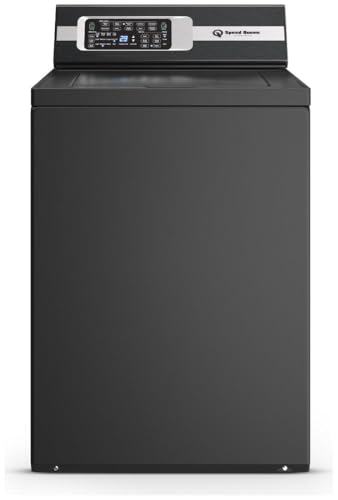
Speed Queen ADA Top Load Washer Matte Black — The one linked pick
The listing itself is modest and specific: a Speed Queen ADA top-load washer of 3.2 cu. ft., described as ultra-quiet, in matte black. ADA in the name signals a design attentive to accessibility standards — controls and reach considered for users who need them — and the 3.2 drum is the classic Speed Queen top-load size, a capacity the brand has defended for decades while competitors inflated theirs. Nothing in the title speaks of origin, and this review does not pretend otherwise.
What can be said, and is said as a brand fact rather than a listing claim, is that Speed Queen’s laundry equipment is built by its parent company in Ripon, Wisconsin, where the brand’s commercial and residential machines have been manufactured for generations. That public, checkable fact is why this pick carries the guide’s only link: of every washer line in the pool, this is the one whose domestic-manufacturing story a buyer can confirm from the brand’s own public record in one step. The final step remains the buyer’s — the individual unit’s origin label — and a purchaser for whom origin is the whole point should photograph that label at delivery the way one photographs a serial plate.
The machine’s other virtues travel with the brand’s reputation: commercial-derived construction, controls that favour the mechanical over the theatrical, and a matte black finish that takes this most traditional of washers somewhere visually new. Ultra-quiet in the title is a claim the listing makes and the buyer can test in the first week; the guide repeats it as the title’s claim, not as a measured fact.
For the origin-first buyer, then, this is the shortest honest path in the pool: a brand whose factory town is public knowledge, a listing that can be verified, and a label on the delivered unit that closes the question. Every other route in this guide is longer, and the prose picks below explain why they must be.
- Capacity: 3.2 cu. ft., top-load, ADA design
- Finish: matte black; ultra-quiet claimed in the title
- Origin status: brand publicly builds laundry equipment in Ripon, Wisconsin — a brand fact; the listing title itself makes no origin claim
- Unit verification: read the country-of-origin label on the delivered machine
- Format: traditional top-load, commercial-derived brand
- Where to buy: the Speed Queen ADA Top Load Washer Matte Black listing on Amazon — check price on Amazon
Strengths
- The strongest publicly checkable domestic-manufacturing story in the pool.
- ADA-attentive design broadens who the machine serves well.
- A traditional capacity and control philosophy with commercial roots.
Trade-offs
- The listing itself certifies no origin — the unit label remains the authority.
- A 3.2 cu. ft. drum is modest beside today’s mega-capacity machines.
- One linked option means the guide’s linked choice is narrow by design.
The ADA dimension deserves a fuller word, because it intersects with origin in an unexpected way: buyers purchasing for accessibility often purchase through dealers and programmes that document equipment carefully, and that paperwork trail makes origin verification easier to perform and to keep. A buyer in that channel should ask for the unit’s documentation as a matter of course — the channel is built to provide it — and will likely find the label question answered before the machine is even unboxed.
Best for: origin-first buyers who will verify the delivered unit’s label and value the brand’s Wisconsin story. Not suited for: buyers who need a listing that itself certifies origin — none in this pool does.
GE Top-Load and Front-Load Washer Lines — deep American roots, verified model by model
GE’s appliance business carries one of the deepest American manufacturing identities in the industry, centred historically on its Louisville, Kentucky appliance complex, and its washer lines — top-load and front-load alike — are the first place many origin-conscious buyers look. This guide discusses the line in prose for the disciplined reason that runs through the whole article: association is not certification, and GE’s range across years and models is too broad for any sentence here to certify a specific machine.
The buyer’s method for this line is the guide’s method in miniature. Shortlist the GE washer whose capacity and format suit the household; then verify that exact model’s origin in the maker’s documentation and on the unit’s label; then, and only then, let origin weigh in the decision. A buyer who performs those steps with a GE — or with any line below — has done something sturdier than trusting a badge: they have established a fact about the machine that will stand in their laundry room.
What the line offers beyond the origin question is breadth: agitator and impeller top-loaders, front-loaders with freshness systems, and a dealer network that makes in-person verification — walking up to the machine and reading its label before money moves — genuinely practical. For an origin-driven purchase, that last point is not a small one. The easiest label to read is the one in a showroom.
- Discussion level: brand and line only — no model is certified here
- Brand association: long American appliance-manufacturing history, centred on Louisville, Kentucky
- Verification path: maker’s documentation for the exact model, then the unit’s origin label
- Where to buy: through GE’s own channels or an appliance dealer, where the specific unit’s label can be read before purchase
Strengths
- Among the deepest domestic-manufacturing identities of any appliance brand.
- A broad washer range lets origin and function be satisfied together.
- Dealer access makes pre-purchase label verification easy.
Trade-offs
- No model in this guide is certified; each must be verified individually.
- Production arrangements vary across a wide range and across years.
- Brand history, however genuine, cannot substitute for the unit label.
There is also a corporate-transparency point in this line’s favour. Makers that publish their plant locations and discuss their domestic footprint in their own materials give buyers something to verify against — a claim with an address. Where a brand’s public record names its factory towns, the buyer’s label check becomes a confirmation; where a brand is vague about geography altogether, the same check becomes an investigation. Prefer, other things equal, the maker who makes verification easy.
Best for: origin-conscious buyers who will shortlist by function and verify by label. A poor fit for: anyone seeking a one-click certification this guide cannot honestly give.
Whirlpool Top-Load Washer Lines — a Michigan giant with factories on several continents
Whirlpool is the Michigan-rooted giant of American appliances, and its top-load washer lines are the default machines of the American laundry room — which is precisely why they belong in an origin guide with a warning label attached. A corporation of Whirlpool’s scale manufactures across a continent and beyond, and its lines have included, across the years, machines built in American plants and machines built elsewhere. The brand’s American identity is real; any individual model’s origin is a separate, checkable fact, and conflating the two is the exact error this article exists to prevent.
The practical path mirrors the GE discussion with one addition: because Whirlpool washers are everywhere, their labels are easy to inspect — in showrooms, in listings’ photographs of rating plates where sellers provide them, and in the maker’s model documentation. An origin-motivated buyer can verify a Whirlpool candidate more conveniently than almost any other line, and convenience in verification is a genuine buying advantage.
Functionally, the lines span the mainstream: agitator classics, impeller high-efficiency models, and the removable-agitator experiments of recent years. That breadth means the origin question and the laundry question can usually both be answered within the brand — provided the buyer asks the origin question of the specific model rather than of the logo.
- Discussion level: brand and line only — no model is certified here
- Brand association: Michigan-rooted maker with manufacturing on several continents
- Verification path: rating-plate and origin label inspection, aided by the line’s wide showroom presence
- Where to buy: through Whirlpool’s own channels, big-box showrooms, or an appliance dealer, reading the chosen unit’s label first
Strengths
- Ubiquity makes per-unit verification unusually convenient.
- The range covers nearly every top-load preference and budget tier.
- Service and parts networks are as broad as the brand itself.
Trade-offs
- Global manufacturing makes brand-level origin assumptions unsafe.
- Model years differ; yesterday’s verification does not cover today’s unit.
- The sheer range can paralyse a buyer who skips the shortlist step.
A note on used machines belongs here, because this brand dominates the second-hand market too. A used washer’s label is as readable as a new one’s, and the origin discipline transfers intact — arguably it matters more, since a used purchase has no marketing between the buyer and the plate. Buyers extending a domestic-manufacturing preference into the used market will find this line the easiest to shop honestly at any age of machine.
Best for: buyers who want mainstream choice with easy in-person verification. Not the right match for: anyone who believes a famous American logo settles a model’s origin.
Maytag Top-Load Washer Lines — heritage that still needs a label check
Maytag trades on the most evocative promise in American laundry — the lonely repairman, the machine built like the ones from Newton, Iowa — and today the brand sits inside the Whirlpool family, its washers marketed on commercial-grade components and durability. An origin guide must handle that inheritance with care: the heritage is genuine history, the current corporate structure is genuine fact, and neither one certifies where the Maytag washer in a given listing was built.
Discussed at class level, the line’s appeal to the origin-conscious buyer is twofold. Its brand story is American to the bone, which makes it a rational place to begin a search; and its durability positioning aligns with the deeper reason many buyers seek domestic manufacture in the first place — not flag-waving, but the belief that a machine built under a known roof, by a company that answers for it, will be built to be repaired rather than replaced. That belief should still end at a label, but it is a reasonable belief to bring to the showroom.
The verification discipline is unchanged: exact model, maker’s documentation, unit label. Maytag’s wide retail presence makes the showroom step easy, and its commercial-component marketing gives the buyer specific construction claims to test alongside the origin claim — two verifications for one visit.
- Discussion level: brand and line only — no model is certified here
- Brand association: historic Iowa marque, now within the Whirlpool family
- Verification path: exact-model documentation plus the unit’s origin label, ideally read in a showroom
- Where to buy: through appliance dealers and major retailers carrying the line, with the label check performed before purchase
Strengths
- A heritage American brand story backed by durability-focused engineering claims.
- Retail presence makes label verification straightforward.
- Commercial-component positioning suits buyers prioritising repairable build.
Trade-offs
- Heritage is history, not a certificate for the unit in front of you.
- Corporate ownership means production follows the parent family’s footprint.
- Durability claims, like origin claims, must be checked per model.
The durability and origin questions, often confused, are worth separating cleanly before leaving this line. A machine can be domestically built and ordinary, or imported and superbly durable; the two properties correlate only loosely, through the maker’s intentions. Buyers who want both should test both — the label for origin, the construction and warranty record for durability — and resist letting a strong answer on one stand in for an unasked question on the other.
Best for: buyers who value the durability tradition and will verify the individual machine. Poorly suited to: purchasers who treat a nostalgic brand story as proof of origin.
Amana Top-Load Washer Lines — the value line, checked unit by unit
Amana is the value line in the same corporate family, and its inclusion here carries the guide’s sharpest practical lesson: the less a machine costs, the more its production is governed by cost, and the less any buyer should assume about where a given run was built. Amana’s name is American-born and its washers are the honest, simple top-loaders of the budget shelf — agitator machines with few pretensions — but at this tier, per-unit verification is not a refinement of the origin search; it is the entire search.
That is not a dismissal. A buyer whose origin commitment is firm and whose budget is real may find, in a given year, an Amana model whose label satisfies them at the lowest price in this guide’s whole discussion — or may find the opposite and learn something worth knowing before the purchase rather than after. Either outcome is the verification process working as intended, and both are preferable to the assumption either way.
Functionally, the line’s simplicity is its own argument: a washer with an agitator, a knob’s worth of decisions, and a decade of parts behind it asks little and gives plainly. Buyers cross-shopping the value tier against the linked Speed Queen will feel the philosophical difference — commercial-derived tradition at one end, budget utility at the other — and origin verification is the discipline that lets them compare the two honestly.
- Discussion level: brand and line only — no model is certified here
- Brand association: American-born value marque within the Whirlpool family
- Verification path: strictly per unit — the label is the whole argument at this tier
- Where to buy: through major retailers and dealers stocking the value line, with the origin label read on the specific unit
Strengths
- The most accessible price tier among the lines discussed.
- Simple, proven top-load designs with broad parts availability.
- A clear test case for verification discipline — nothing can be assumed.
Trade-offs
- Cost-driven production makes origin assumptions least safe here.
- Feature sets are basic by design and by budget.
- Findings vary by production run, so verification expires quickly.
Renters and landlords meet this line often, and their origin calculus differs from a homeowner’s: a machine bought for a rental unit will be verified once, by the buyer, and then judged by tenants purely on whether it washes. The label discipline still applies at purchase — the commitment was the buyer’s, and it is kept or broken at the till — but the value tier’s simplicity serves the tenancy years well, which is its own kind of honest recommendation.
Best for: budget-bound buyers whose origin commitment survives contact with a label. A weak match for: anyone wanting brand-level reassurance instead of unit-level proof.
The Kenmore Name, as a Cautionary Case — a badge is not a birthplace
Kenmore closes the picks because it teaches the guide’s whole thesis in one name. For generations Kenmore was the American department-store appliance brand, the badge in millions of laundry rooms — and for just as long, Kenmore washers were manufactured by other companies under contract, their true makers varying across the decades. A Kenmore’s badge therefore certifies a retail brand, full stop. Its origin is the origin of whichever manufacturer’s line produced that model in that year, discoverable from the model number’s factory codes and the unit’s label, and from nowhere else.
None of this makes Kenmore washers bad machines; many were excellent, being the products of the very makers discussed above wearing a store’s name. It makes the name the perfect counterexample to badge-based origin thinking, and a useful training case: a buyer who learns to ask “who actually built this, and where does its label say?” about a Kenmore has learned to ask it about everything.
For the origin-first shopper, then, Kenmore is homework rather than a shortcut. Decode the model, find the maker, verify the unit. The process is the purchase’s due diligence in its purest form, and completing it once will change how you buy appliances for good — which is why this guide ends its picks with the lesson instead of with another logo. Readers who want the brand-heritage thread continued on firmer linked ground can turn to Best Front-Load Clothes Washers, where the linked pick’s maker is examined as a line in its own right.
- Discussion level: brand only — the name certifies a retailer brand, not a maker
- Brand association: historic American store brand; manufacture contracted to other makers across the years
- Verification path: decode the model’s factory origin, then read the unit’s label
- Where to buy: through the brand’s current retail channels, treating every unit as an individual verification case
Strengths
- The clearest available lesson in why badges do not certify origin.
- Underlying machines often come from the major makers discussed above.
- Model decoding is a skill that transfers to every appliance purchase.
Trade-offs
- The badge alone tells you nothing about maker or origin.
- Verification requires the most work of any pick in this guide.
- Brand stewardship has changed hands, complicating older documentation.
One practical coda: the decoding skill this pick teaches has a community. Appliance forums and parts suppliers maintain the factory-code knowledge for legacy brands, and a buyer researching an older machine can usually identify its maker from the model number’s prefix with an evening’s reading. That research is the opposite of a shortcut, and its reward is proportionate — certainty, earned the slow way, about a machine that will sit in your home for years.
Best for: buyers who want to understand appliance origins deeply, using this name as the teacher. Not suited for: anyone seeking a brand whose badge alone answers the origin question.
Origin Evidence, Pick by Pick
| Pick | Linked? | What can honestly be said | What would certify it |
|---|---|---|---|
| Speed Queen ADA Top Load Washer Matte Black | Yes | Brand publicly builds laundry equipment in Ripon, Wisconsin | The delivered unit’s country-of-origin label |
| GE Top-Load and Front-Load Washer Lines | No | Deep American manufacturing identity at brand level | Exact-model documentation plus unit label |
| Whirlpool Top-Load Washer Lines | No | Michigan-rooted maker; production spans several continents | Unit label, per model and year |
| Maytag Top-Load Washer Lines | No | Historic Iowa marque within the Whirlpool family | Unit label, per model and year |
| Amana Top-Load Washer Lines | No | American-born value marque; cost-driven production | Unit label — the only evidence at this tier |
| The Kenmore Name, as a Cautionary Case | No | A retail brand; machines built by other makers | Factory decoding plus unit label |
How Do You Read a Country-of-Origin Label Like an Inspector?
Start by knowing where the truth is printed. Appliances carry a rating plate or label — typically on the door frame, the back panel, or inside the lid on a top-loader — bearing the model and serial numbers and, with them, the country-of-origin marking for that unit. Photograph it. A photograph is dated, zoomable evidence that survives the delivery crew’s departure, and it converts your origin claim from a memory into a record.
Then learn the vocabulary, because the words are graded. “Made in the USA” is the strongest common claim and carries a regulatory meaning about domestic content and manufacture. “Assembled in the USA” describes a different, lesser fact — final assembly domestically, with components of unstated origin. “Made in the USA with US and imported parts” is its own honest middle category. A buyer who treats these three sentences as synonyms will be misled by perfectly truthful labels; a buyer who reads them precisely will not. When a maker’s website describes a model’s origin, check that the description names your exact model and, ideally, its production period, because lines move and pages linger.
Finally, use the serial number. Makers’ support lines and documentation can often tie a serial to a plant and a date, which settles arguments that marketing language leaves open. The front-load machines this batch covers elsewhere — the subject of Best Speed Queen Top-Load Washers — deserve the same label discipline from origin-minded buyers, whatever their titles claim about anything else.
Why Do Buyers Want Domestic Washers in the First Place?
The reasons are more practical than sentimental, and naming them helps a buyer choose well. Parts and service: a machine built by a company with domestic plants and a domestic parts network tends to be repairable deep into its life. Accountability: a maker whose factory town is public knowledge answers to that town. Labour and standards: some buyers simply prefer to fund manufacturing done under the rules of their own country. And longevity culture: the brands with domestic heritage in this guide built their names on machines that were serviced for decades rather than discarded in one.
None of those reasons requires a purity test no appliance could pass. Modern machines contain global components whatever their final assembly point, and the honest buyer decides which level of domestic involvement — brand, plant, assembly, or label claim — actually satisfies the reason they brought to the purchase. Deciding that in advance is what turns an origin search from a mood into a specification.
Which Origin Mistakes Do Buyers Make Most Often?
Trusting the badge heads the list — the Kenmore case exists to retire that habit. Second is trusting the showroom model’s label to cover the boxed unit delivered later; production runs change, and the label that counts is on your machine. Third is treating “assembled” as “made,” against the vocabulary laid out above. Fourth is freezing a verification in time: a model verified as domestic in one year is a hypothesis, not a fact, about the next.
Fifth, and most quietly, buyers let the origin question eat the laundry question. A washer that fits the household, the room, and the budget, verified to the buyer’s own origin standard, is the goal — in that order of operations, with verification as the gate rather than the whole journey. A machine that satisfies a label and fails a family will be replaced by one that does the opposite, and the replacement’s label will rarely be checked at all.
How Should an Origin Requirement Be Written Into a Purchase?
As a sentence the seller can agree to. “I am buying this model on the understanding that the delivered unit’s label will state domestic manufacture; if it does not, I will return it at the seller’s cost” — said before payment, ideally in the written thread of the order — converts a preference into a term. Reputable dealers accept such terms readily, because they can check their own stock’s labels in a minute; resistance to the sentence is itself information about the stock.
Online, the same discipline applies with the tools available: ask the seller the origin question through the platform’s messaging before ordering, keep the answer with the order record, and photograph the label on arrival while the return window is wide open. The process adds perhaps ten minutes to a purchase that will be lived with for a decade, which is the best exchange rate in this entire guide.
What Does a Decade With a Verified Machine Teach?
Mostly, that the verification was the easy part. The machine will be judged across its life by whether it washes, whether it can be repaired, and whether its maker still answers for it — and buyers often discover that the qualities they were really seeking under the origin heading were those: accountability, repairability, and a maker with a stake in its home market. A label check at purchase is a proxy for that whole bundle of hopes, and a reasonable one, provided the buyer also does the ordinary work of choosing a well-built machine of the right size.
Keep the file, keep the photograph, and when the machine is eventually replaced, sell or pass it on with its documentation intact. The next owner’s verification begins where yours ended, and the chain of evidence you maintained is part of the machine’s value — a small, transferable proof that somebody bought this appliance on purpose.
What Is a Sensible Order of Operations on Buying Day?
First, the shortlist by laundry needs — capacity, format, the room’s connections — drawn from the lines in this guide or any other. Second, the origin documentation for each shortlisted model, gathered from the maker’s own materials. Third, the label, read on the actual unit in the showroom or photographed by the seller. Fourth, and only then, the negotiation and the order, with the origin understanding written into the purchase as described earlier. Each step is cheap; skipping any of them makes the next one guesswork.
Buyers who follow that order usually discover the search is shorter than feared. The American-associated washer field is not vast, the labels are legible, and the sellers who stock these lines are accustomed to the question. What the process cannot survive is being run backwards — falling for a machine first and auditing its origin afterwards — because affection is a poor auditor.
Final Recommendation
Buy the fact, not the feeling. If you want the shortest verified path, take the linked Speed Queen, confirm the brand’s Ripon, Wisconsin manufacturing story from its own public record, and close the purchase by reading the delivered unit’s origin label. If your heart is set on a GE, Whirlpool, Maytag, or Amana machine, buy it the showroom way — shortlist by function, verify the exact model’s documentation, and read the label on the unit you will actually own. And whatever you buy, let the Kenmore lesson ride along: the badge is the beginning of the origin question, never its answer. A buyer who finishes this process owns something rarer than a domestic washer — they own a domestic washer they can prove.
How Does the Commercial Laundry World Handle Origin?
With less romance and more paperwork. Commercial buyers — laundromats, hotels, institutions — purchase against specification sheets that state manufacture plainly, because contracts require it and fleets must be serviced uniformly. The residential market’s fog around origin is partly a retail habit, not an industrial necessity: the information exists for every machine, and the commercial world’s practice proves it can be printed when a buyer with leverage asks. Individual buyers borrow that leverage by asking the same way — in writing, per model, before payment — and by being willing to walk to the next showroom when the answer is a shrug.
There is a lesson in that asymmetry for how to read guides like this one. Where a claim can be documented, it eventually is; where a marketplace tolerates vagueness, vagueness flourishes. The buyer’s insistence on the label is a small vote for the documented world, cast with the only ballot retail recognises.
What Should You Do When the Label Disappoints?
Decide, in advance, what the label is worth to you — because the moment of discovery is the worst moment to improvise an ethics of appliance purchasing. If origin was a hard requirement, a non-domestic label on a delivered unit is a return conversation, and it goes best when the requirement was stated to the seller before purchase. If origin was a preference ranked below capacity and budget, a disappointing label is information for the next purchase rather than a crisis for this one. Both responses are respectable; the unrespectable one is never having read the label at all.
Keep the photograph either way. A household’s appliance file — labels, serials, dates — is the raw material of every future verification, warranty claim, and resale description, and it costs four seconds per machine to build.
How Do Parts and Service Follow From Origin?
Imperfectly, but really. A maker’s domestic plants usually anchor a domestic parts pipeline: the components stocked nearest your home tend to be the ones its regional production uses, and service networks train deepest on the machines their market sells most. None of that guarantees a fast repair for any individual washer, and imported machines from organised makers are serviced perfectly well every day. But over a fifteen-year ownership, the probability mass favours the machine whose maker’s infrastructure is densest where you live, and domestic-manufacturing brands usually hold that density in their home market.
The buyer can test this before purchase with one phone call: ask a local independent servicer which lines they can get parts for fastest. That answer, unglamorous and specific, is worth more than a page of brand history — and it is the same species of evidence as the origin label: local, checkable, and about your machine rather than about a logo.
What About the Washers This Guide Could Not Cover?
Plenty of smaller and regional makers, commercial brands selling into homes, and import brands with American assembly operations sit outside this guide’s six picks, because the pool and the page are finite. The method, however, is portable: any line you meet can be taken through the same three questions — what does the brand publicly claim about where it builds, what does the exact model’s documentation say, and what does the unit in front of you state on its label? A line that answers all three cleanly has earned whatever confidence you place in it; a line that answers none has told you something too.
That portability is the real product of an honesty-first guide. Picks date, pools change, and production moves; a verification habit compounds for life, across every appliance, vehicle, and tool the household will ever buy with an origin preference attached.
Why Does This Guide Link Only One Washer?
Because linking is this site’s act of verification, and only one pick’s supporting facts met the standard the keyword demands. A longer link list could have been built by relaxing the standard — treating brand association as if it were origin evidence — and many pages on the internet are built exactly that way. The cost of that relaxation is borne by the reader who trusts it, in the specific form of a machine whose label contradicts the article that sold it. One honest link and five honest prose discussions serve that reader better than six confident links and a quiet falsehood among them.
The narrowness is also temporary in a way readers should understand: pools are re-verified, listings change, and a future edition of this guide may link more, or fewer, picks as evidence moves. What will not change is the rule that produced the count — the label outranks the logo, and the guide links only where the public record lets a buyer verify the rest in one step.
How Do You Talk to a Seller About Origin Without Starting an Argument?
By asking for documents instead of opinions. “Could you photograph the rating label of the unit I would receive?” is a request no honest seller resents, because it costs them a minute and closes a sale. “Is this really American?” invites a speech; the label request invites a photograph, and the photograph ends the matter in a way no speech can. Where a seller cannot photograph a specific boxed unit, the fallback is the model documentation plus a written understanding about the delivered label, as the purchase-terms section above describes.
Bring the same documentary courtesy to your own claims afterwards. If you describe the machine to family, a buyer, or an insurer, describe what the label said — the photograph in your appliance file — rather than what the brand’s story implied. Accuracy about origin is a chain, and every owner is one of its links.
How Do Retailers’ Own Descriptions Mislead Without Lying?
By selecting the true fact that implies the desired conclusion. A listing that says “from an American company since 1911” says something accurate about a corporation and nothing about the machine in the box; a listing that photographs the machine beside a flag says less. The reader’s defence is the discipline this guide has repeated: corporate facts describe corporations, model documents describe models, and labels describe units. When a description offers you the first kind of fact in a place where you need the third, notice the substitution and go find the third.
This is also why the guide quotes no marketing origin language for its prose picks. Repeating a brand’s heritage slogans would lend them the guide’s credibility, and the guide’s credibility is reserved for what it checked. The brands discussed are strong enough to be examined plainly; the examination, not the slogan, is the compliment.
Frequently Asked Questions
Is the Speed Queen in this guide certified as made in the USA?
Not by its listing, and this guide does not certify it either. What is public and checkable is the brand fact: Speed Queen’s laundry equipment is built in Ripon, Wisconsin. The certification for the individual machine is its own country-of-origin label, which the buyer should read on the delivered unit.
Why are five of the six picks not linked?
Because no listings for those lines could be verified with origin evidence in this guide’s pool, and the guide links only what it verifies. The prose discussions exist so the brands an origin-buyer will meet are covered honestly — at brand level, with the verification method spelled out.
What is the difference between “made in” and “assembled in” the USA?
“Made in” is the stronger claim, carrying a regulated meaning about the product’s manufacture and content. “Assembled in” states that final assembly happened domestically, with components that may be imported. Both can be truthful; they are not interchangeable, and a careful buyer reads them as the different claims they are.
Can a washer’s origin change between model years?
Yes. Production moves between plants for cost, capacity, and logistics reasons, and a line’s origin in one year is evidence — not proof — about the next. That is why this guide insists on the label of the specific unit, in the specific year, that you are buying.
Where exactly do I find the origin marking on a washer?
On the unit’s rating label, which typically sits on the door frame, inside the lid of a top-loader, or on the rear panel, alongside the model and serial numbers. Photograph it at delivery; it is the single document that certifies that machine.
Does buying a brand with American plants guarantee an American-made unit?
No. Large makers produce across several countries, and a brand’s plant list describes the company, not your machine. Brand facts are a rational place to start a search — this guide uses them that way — but only the unit’s label finishes it.
How do I verify origin when buying online without seeing the unit?
Ask the seller, through the platform’s messaging, for the origin stated on the unit’s label or in the model’s current documentation, and keep the reply with your order. Then photograph the label when the machine arrives, inside the return window, so a contradiction between the answer and the appliance can still be acted on.
Are commercial-style washers more likely to be domestically built?
The commercial-derived end of the market — the linked pick’s world — does concentrate several makers with public domestic plants, because institutional buyers demand documentation. It is a tendency worth starting a search with, and still not a substitute for the individual unit’s label.
Should origin outweigh capacity or features?
Only if you have decided so in advance, for reasons you can state. This guide’s order is function first, verified origin as the gate: a machine that fails the household will not be kept long enough for its origin to matter to anyone.
Is a refurbished or open-box unit’s origin easier to check?
Often, yes — the unit is physically present, its label readable before money moves, and its serial traceable. Buyers comfortable with refurbished appliances may find the origin question simpler there than anywhere, provided the label check is actually performed rather than assumed from the seller’s description.
Do extended warranties or badges on the box add origin evidence?
No. Warranty documents describe coverage, and box graphics describe marketing; neither is an origin certification. The rating label remains the only unit-level evidence, which is why this guide returns to it in nearly every section.
What if two sources disagree about a model’s origin?
Believe the unit label, then the maker’s current model documentation, in that order, and treat older articles and listings as history. Disagreement usually means production moved or a page aged; the hierarchy resolves it without drama.
Related Guides
Buyers who want the mainstream top-load field judged on efficiency credentials rather than origin will find Best HE Top-Load Washers a useful companion — a reminder that every guide can only certify what its evidence states, and honest ones say which evidence that is.


