What's inside
- Key Takeaways
- Quick Picks
- How We Chose These Picks
- How Do the Six Dishwashers Compare Side by Side?
- What Does a dBA Rating Mean in a Real Kitchen?
- How Does Installation Change the Noise You Actually Hear?
- What Loading Habits Keep a Quiet Machine Quiet?
- What Mistakes Do Quiet-Dishwasher Buyers Make?
- How Should You Maintain a Dishwasher So It Stays Quiet?
- How Well Do Quiet Dishwashers Dry?
- What Do Delay Start and Cycle Choice Do for a Quiet Life?
- Which Pick Suits a Nursery Wall, a Shift Worker or a Studio Flat?
- How Do Smart Features Earn Their Place in a Quiet Machine?
- How Should You Measure the Opening for a Built-In Dishwasher?
- What Does a Dinner Party Ask of a Quiet Dishwasher?
- How Do Water and Energy Use Fit the Quiet Story?
- What Should You Listen for in the First Week?
- How Does Hard Water Affect Quiet Machines?
- When Is a Louder Feature Machine the Right Call?
- How Do Racks and Layout Shape Daily Satisfaction?
- What Should Landlords and Renovators Specify?
- How Quiet Is Quiet Enough? A Room-by-Room Guide
- What Happens to the Old Machine, and Other Practical Endings?
- How Do You Talk a Household Into the Right Decibel?
- What Does the First Dinner Party Prove?
- Why Do Some Quiet Machines Seem Louder After a Year?
- Final Recommendation
- Frequently Asked Questions
- Related Guides
As an Amazon Associate I earn from qualifying purchases. This post may contain affiliate links at no extra cost to you.
cottageverdict.com is reader-supported. When you buy through links on our site, we may earn an affiliate commission.
Where to buy: the six dishwashers in this guide are sold through Amazon, and each model name in the Quick Picks table, the reviews and the comparison table links to its listing, where you can check price on Amazon and confirm the decibel rating, dimensions and installation requirements of the exact model before you plan the cabinet work.
Hunting for the best dishwashers that are quiet usually begins at about 11 p.m., standing in a dark kitchen, listening to an old machine grind through its cycle while somebody sleeps in the next room. The modern quiet class answers that moment with engineering rather than promises: thick insulation, brushless motors, water softening of spray pressure and tubs designed so the wash itself makes less noise. The six models here span 39 to 46 dBA as rated by their manufacturers, and that spread needs translating before any ranking makes sense.
So, the honest frame first. A dBA figure is a laboratory number, measured by the manufacturer under standardised conditions, not a recording of your kitchen on a Tuesday. Real-world loudness shifts with cabinet materials, flooring, load arrangement and how much of the noise is water movement versus motor hum. What the numbers do reliably is rank machines against each other, and the differences at this level are audible: each step of a few decibels is a step you can hear. We also flag the class’s loudest member plainly: the LG at 46 dBA is the noisiest pick in this guide, included for its steam and wash features, and it should be bought with open ears. Nothing here is silent; the best of them are simply easy to live beside.
Key Takeaways
- Manufacturer dBA figures are laboratory ratings that rank machines reliably against each other, not guarantees of silence in your kitchen.
- The quietest pick here is the Monogram at 39 dBA; the loudest, honestly labelled, is the LG at 46 dBA.
- Three Bosch models occupy the 42 to 44 dBA heartland where quiet engineering and mainstream positioning meet.
- Installation quality, a level machine, sealed gaps, solid cabinetry, changes real-world noise as much as a decibel or two of rating.
- Panel-ready models disappear into your cabinetry, which is a design decision to make before ordering, not after.
Quick Picks
| Pick | Badge | Why it earns its place |
|---|---|---|
| Bosch SHV78DM3N 42 dBA | Best Panel-Ready | A fully integrated 42 dBA Bosch that hides behind your own cabinet panel for a seamless fitted kitchen. |
| Bosch SHP78DM5N 42 dBA | Best All-Round Quiet | The stainless 42 dBA benchmark: Bosch’s quiet engineering in its most straightforward, widely suitable form. |
| Bosch SHP65DM5N 44 dBA | Best Quieter-Value Bosch | At 44 dBA it gives up little in lived quietness while occupying the calmer end of the brand’s range. |
| Samsung Bespoke 42 dBA | Best Wash Power | StormWash+ intensity and a third rack at the same 42 dBA as the Bosch leaders, for households with baked-on loads. |
| Monogram 39 dBA | Quietest Pick | The 39 dBA flagship for open-plan homes where the dishwasher effectively shares the living room. |
| LG LDTS5552S TrueSteam | Best Steam Features | TrueSteam, QuadWash and a third rack, with the honest caveat that 46 dBA makes it this guide’s loudest. |
How We Chose These Picks
Every candidate had to be a full-size built-in dishwasher whose manufacturer publishes a decibel rating at the genuinely quiet end of the market, which in practice means the mid-40s and below. Models that achieved quiet claims through a special silent cycle while roaring on their normal programme were treated sceptically; the rating in this guide refers to the machine’s standard character, the sound you will live with nightly.
We then weighed the things that decide whether a quiet dishwasher is also a good one. Wash performance for baked-on family loads, drying behaviour, rack flexibility including third racks for cutlery and utensils, and smart features that earn their complexity, such as leak protection and useful cycle information. Brand support mattered as it does for any plumbed-in appliance, and the panel-ready question was kept visible, because a fully integrated model is a cabinetry commitment as much as an appliance choice.
Finally, we arranged the six by honesty about noise. The two 42 dBA Bosch models and the Samsung form the class centre; the 44 dBA Bosch is the pragmatic step; the Monogram is the money-no-object hush; and the LG is included, labelled as the loudest here, because its steam system will be the right trade for some households. A guide that hides that trade would not deserve the word quiet in its title.
We also left out the ultra-budget end of the market entirely, not from snobbery but from acoustics: below a certain build standard, insulation thins, motors coarsen, and no programme name containing the word silent can rescue the physics, so shoppers on a strict budget are better served by the delay-timer strategy in this guide than by a hopeful badge.
Where a listing left a detail unstated, the reviews say what is known and stop there, because a plumbed-in appliance bought for a decade deserves the same standard of evidence as the quiet it promises.

Bosch SHV78DM3N 42 dBA — Best Panel-Ready
The SHV78DM3N is the dishwasher as disappearing act. Fully integrated and panel ready, it accepts a cabinet front matched to your kitchen, handle and all, so the appliance vanishes into the run and the only evidence of its existence is clean dishes and a 42 dBA murmur. In a cottage kitchen or a carefully designed fitted scheme, that invisibility is not vanity; it is the difference between a room that reads as a kitchen-diner and one that reads as an appliance showroom with a table in it.
Beneath the panel sits Bosch’s mature quiet engineering, the insulation, motor control and spray design that made the brand the default answer to this entire category. As a smart, fully integrated model it expects the usual modern arrangements, and the practical cautions are the panel itself, which must be sourced and fitted correctly, and the absence of a visible display, which panel-ready owners monitor through the machine’s indicators and app-era feedback instead. Buy it when the kitchen design is settled and the cabinetmaker is briefed; it rewards planning and punishes improvisation.
- Rating: 42 dBA manufacturer figure
- Style: panel ready, fully integrated
- Display: concealed behind cabinet panel
- Brand: Bosch smart dishwasher line
- Best context: fitted kitchens with matched cabinetry
- Note: cabinet panel sourced and fitted separately
Strengths
- Complete visual integration into bespoke cabinetry.
- 42 dBA places it with the quietest mainstream machines.
- Bosch’s wash and drying engineering is thoroughly proven.
Trade-offs
- The cabinet panel and its fitting add project cost and coordination.
- No front display means status checks take an extra step.
- A panel change in a future remodel must be planned around the machine.
Best for: design-led kitchens where the dishwasher should be heard faintly and seen never.
Not suited for: renters, quick swaps, or anyone who likes a countdown glowing on the door.
Check panel requirements on the Bosch SHV78DM3N 42 dBA listing and check price on Amazon.

Bosch SHP78DM5N 42 dBA — Best All-Round Quiet
If one machine defines the modern quiet dishwasher for most buyers, it is this stainless, fully integrated Bosch at 42 dBA. The rating matches its panel-ready sibling, but the presentation is the conventional one: a stainless door, visible controls and a machine that can be chosen on its merits without a cabinetmaker in the conversation. For open-plan homes it hits the level where conversation and television continue over a running cycle without anyone raising their voice, which is the lived definition of quiet that the laboratory number is trying to describe.
Bosch’s case rests on the whole system rather than a single muffler: a quiet motor, a well-insulated tub, spray arms that clean without battering the load, and drying that avoids the fanfare of lesser designs. Smart features connect the machine to the household’s routines, and the brand’s service network stands behind a plumbed appliance that most owners expect to keep for a decade. This is the pick to beat, and the others in this guide justify themselves by beating it on one specific axis: design integration, price posture, wash violence or sheer hush.
- Rating: 42 dBA manufacturer figure
- Style: stainless, fully integrated built-in
- Controls: top control with visible feedback
- Brand: Bosch smart dishwasher line
- Best context: open-plan family kitchens
- Role: the benchmark of this guide
Strengths
- Benchmark quietness with no design conditions attached.
- Balanced wash, dry and rack behaviour across family loads.
- Deep service network for a long-lived plumbed appliance.
Trade-offs
- Premium positioning within the mainstream class.
- Stainless shows fingerprints in a busy family kitchen.
- Buyers wanting steam-specific features should compare the LG.
Best for: most households replacing a loud dishwasher with a genuinely quiet all-rounder.
Not suited for: panel-matched bespoke kitchens, which want its sibling above.
Review dimensions on the Bosch SHP78DM5N 42 dBA listing and check price on Amazon.

Bosch SHP65DM5N 44 dBA — Best Quieter-Value Bosch
Two decibels separate this Bosch from its 42 dBA siblings, and the honest question is whether you would hear them. In laboratory terms the step is real; in a kitchen with a kettle, a radio and a family’s evening traffic, the difference between 42 and 44 dBA is the difference between very quiet and very quiet, noticeable in a silent house at midnight and largely academic at dinner time. That makes the SHP65 a shrewd buy for households whose dishwasher runs mostly in the evening bustle rather than beside a sleeping baby’s wall.
Everything else about the proposition is recognisably Bosch: stainless top-control presentation, smart features, the brand’s wash engineering and the same installation footprint as its siblings. Choosing it is a judgement about your own soundscape, and the guide respects that judgement by presenting the number plainly rather than burying it. If your kitchen opens to a studio flat’s sleeping area, take the 42 dBA models seriously; if it opens to a family room with a television, this machine will never once be the loudest thing in your evening.
- Rating: 44 dBA manufacturer figure
- Style: stainless, top control
- Brand: Bosch smart dishwasher line
- Position: the pragmatic step within the brand
- Best context: evening-run family kitchens
- Role: quiet enough, sensibly chosen
Strengths
- Real-world quietness close to the 42 dBA leaders.
- Full Bosch engineering and support behind it.
- A calmer step in the range for budget-conscious buyers.
Trade-offs
- Two decibels louder on paper than its siblings.
- Light sleepers in adjacent rooms may still prefer the 42 class.
- Feature set steps down with its series position.
Best for: families who run the dishwasher during waking hours and value the brand over the last decibels.
Not suited for: studio flats and nursery-adjacent kitchens chasing maximum hush.
Compare the specification of the Bosch SHP65DM5N 44 dBA on its listing and check price on Amazon.

Samsung Bespoke 42 dBA — Best Wash Power
Samsung’s Bespoke dishwasher matches the Bosch leaders at 42 dBA and then changes the subject to violence, of the useful kind. StormWash+ directs intensive spray at the zones where pans and oven dishes sit, aimed at the baked-on cheese, roasted edges and casserole geology that gentle machines leave for a second wash. A third rack takes cutlery and utensils out of the basket wars below, freeing space and improving how thoroughly each piece is washed.
The Bespoke design language suits kitchens furnished as rooms rather than workshops, with a clean stainless presentation that coordinates with the rest of the Bespoke family for households building a matched set. Smart connectivity is Samsung-deep, which delights households already in that ecosystem and should be weighed honestly by those who are not. On noise, the claim is parity with the class leaders, and the lived question becomes load discipline: any dishwasher is louder with a pan rattling against a plate, and StormWash’s energy is best directed at loads arranged to receive it.
- Rating: 42 dBA manufacturer figure
- Wash system: StormWash+ intensive zones
- Racks: third rack for cutlery and utensils
- Style: Bespoke design, stainless steel
- Model reference: DW80B7070US/AA per listing
- Role: quiet with a heavy-duty wash brief
Strengths
- Intensive wash zones tackle genuinely baked-on loads.
- Third rack improves cutlery results and lower-rack space.
- Matches the class leaders’ 42 dBA rating.
Trade-offs
- Smart features lean into Samsung’s ecosystem.
- Intensive cycles are the loudest moments of any machine’s repertoire.
- Bespoke styling suits coordinated kitchens more than mixed ones.
Best for: keen cooks whose pans need power and whose evenings need quiet.
Not suited for: households washing mostly glasses and light loads, who pay for unused force.
Inspect the rack layout of the Samsung Bespoke 42 dBA on the listing and check price on Amazon.
Monogram 39 dBA — Quietest Pick
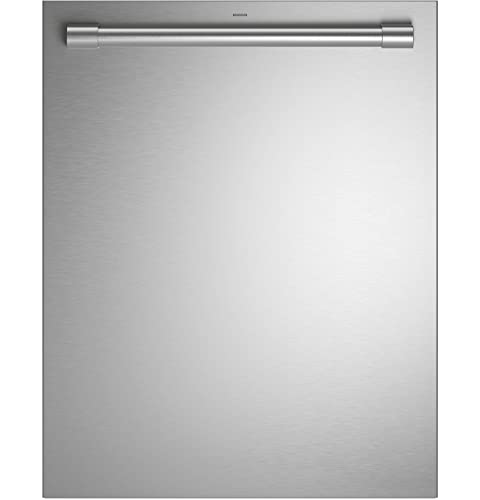
Thirty-nine decibels is the number this guide exists to find. Monogram, the luxury arm of its parent appliance family, builds the ZDT985SPNSS as a flagship statement: fully integrated, stainless, smart, and rated quieter than anything else here by a margin your ears will confirm. In a great-room home where the kitchen island is effectively a piece of living-room furniture, a cycle can run through a dinner party without becoming a topic, which is precisely the scenario this machine’s engineering budget was spent on.
Luxury positioning carries the expected terms. The price posture, which the listing will state, sits at the top of this guide, the feature set is correspondingly deep, and the ownership experience assumes a household that values the last decibels the way audiophiles value the last details of a recording: not everyone will, and the guide’s Bosch picks exist for them. But for the buyer whose open-plan life has been negotiated around a loud dishwasher for years, the Monogram is not an indulgence; it is the removal of a daily irritation, purchased once and enjoyed nightly.
- Rating: 39 dBA manufacturer figure, quietest here
- Style: stainless, fully integrated smart
- Brand tier: Monogram luxury line
- Model reference: ZDT985SPNSS per listing
- Best context: great-room and open-plan living
- Role: the maximum-hush flagship
Strengths
- The lowest rated noise in this guide by a clear margin.
- Flagship build and feature depth throughout.
- Suits entertaining while a cycle runs unnoticed.
Trade-offs
- The premium positioning is unapologetic.
- Its hush is wasted on a closed-door utility kitchen.
- Luxury-line service arrangements differ from mainstream ones; confirm locally.
Best for: open-plan households for whom dishwasher noise is a genuine daily grievance.
Not suited for: enclosed kitchens, tight budgets, or anyone who runs the machine overnight anyway.
Review the flagship details of the Monogram 39 dBA on its listing and check price on Amazon.

LG LDTS5552S TrueSteam — Best Steam Features
This LG enters the guide with its caveat printed on its badge in this review: at 46 dBA it is the loudest machine here, a full step noisier than the 42 dBA leaders and clearly audible as a presence in a quiet room. It earns its place despite that, on the strength of what it does to dishes. TrueSteam brings steam to the wash to loosen residues and reduce water spots, QuadWash uses multi-motion spray arms to cover the tub from more angles than a single rotating arm manages, and Dynamic Dry plus a third rack complete a feature set aimed squarely at households whose complaint about dishwashers was never only noise.
The PrintProof stainless finish resists the fingerprint archaeology that family kitchens deposit on lesser doors, and top controls keep the face clean. Choose this machine as a deliberate trade: steam-assisted results and thorough spray coverage, accepted alongside a noise level that suits a closed kitchen door or a household that runs its cycles during the day’s bustle. Bought knowingly, it will please its owners; bought by a light sleeper expecting Bosch-level hush, it would disappoint, and this guide would rather prevent that purchase than celebrate it.
- Rating: 46 dBA, the loudest in this guide
- Steam: TrueSteam system per listing
- Wash arms: QuadWash multi-motion coverage
- Drying: Dynamic Dry, third rack fitted
- Finish: PrintProof stainless steel
- Role: feature-led pick with an honest noise caveat
Strengths
- Steam loosens stubborn residues and helps with spotting.
- QuadWash coverage reaches corners single arms miss.
- PrintProof finish stays presentable in family service.
Trade-offs
- 46 dBA is plainly louder than the 39 to 42 dBA leaders.
- Steam and spray features reward full, well-arranged loads.
- Not the pick for open-plan evenings or nursery walls.
Best for: households prioritising wash features who run cycles while the kitchen is awake.
Not suited for: noise-first buyers, for whom the Bosch and Monogram picks exist.
Weigh the trade on the LG LDTS5552S TrueSteam listing and check price on Amazon.
How Do the Six Dishwashers Compare Side by Side?
| Model | Rating | Style | Signature trait |
|---|---|---|---|
| Bosch SHV78DM3N 42 dBA | 42 dBA | Panel ready | Disappears into cabinetry |
| Bosch SHP78DM5N 42 dBA | 42 dBA | Stainless | The all-round benchmark |
| Bosch SHP65DM5N 44 dBA | 44 dBA | Stainless | Pragmatic Bosch step |
| Samsung Bespoke 42 dBA | 42 dBA | Stainless | StormWash+ and third rack |
| Monogram 39 dBA | 39 dBA | Stainless | Quietest in the guide |
| LG LDTS5552S TrueSteam | 46 dBA | Stainless | Steam features, loudest here |
Read the ratings as a ladder of lived experience rather than a spec contest. At 39 to 42 dBA a cycle fades into a home’s background; at 44 it is present but polite; at 46 it is company. Match the rung to your floor plan and your family’s sleep geography, then let features break the tie.
What Does a dBA Rating Mean in a Real Kitchen?
The decibel scale is logarithmic, which is why small numbers carry big meanings: a drop of around ten decibels is heard as roughly a halving of loudness, so the seven-point gap between the Monogram and the LG is not a rounding error but a different domestic experience. For anchors, a quiet library sits near the level of the best machines here, a normal conversation is far louder than any of them, and the old dishwasher you are replacing may well be twenty points above the leaders, which is why the upgrade feels dramatic in person.
The laboratory caveat deserves repeating in plain terms: manufacturers measure under controlled conditions, with standard loads and installations, and your kitchen will add its own acoustics. Hard floors and bare walls reflect sound; rugs, curtains and a well-sealed installation absorb it. Two identical machines in two different kitchens are two different listening experiences, which is why this guide treats ratings as rankings rather than promises and keeps returning to floor plans.
How Does Installation Change the Noise You Actually Hear?
A quiet machine installed carelessly becomes a medium machine. Levelling matters first, because an unbalanced dishwasher rocks microscopically against its fixings and transmits vibration into cabinetry that acts as a sounding board. The gap around the tub should be insulated as the maker intends, toe-kick and side gaps sealed against the drum effect of an open cavity, and the door’s fit checked so spray and sound stay inside together.
The floor beneath contributes too: a machine standing on a hollow or springy floor broadcasts its motor’s work to the whole room, while a solid base swallows it. If your old dishwasher seemed louder than its reputation, the installation may have been the author of the noise, and a careful fitter is therefore part of this purchase. Ask the installer to run a full cycle before leaving and stand in the next room together; that minute of listening is the true specification sheet.
What Loading Habits Keep a Quiet Machine Quiet?
Most dishwasher noise complaints are really loading complaints. A saucepan lid resting against a plate will chatter through every spray pulse, a long utensil can tap the tub wall in rhythm, and an overloaded rack forces spray arms to strike the cargo they are meant to wash. Arrange loads with small clearances, angle bowls so they cannot collect a private pond, and let the third rack, where fitted, take the cutlery that otherwise rattles in a basket’s crowd.
Soil level is the other hidden volume control. Heavily baked loads provoke the intensive cycles, which are the loudest programmes any of these machines own; a quick scrape, not a pre-wash, keeps everyday loads in the quiet cycles where these models shine. Run the machine full rather than half, both for the water arithmetic and because a well-filled tub, properly arranged, is acoustically calmer than a sparse one full of loose travellers.
What Mistakes Do Quiet-Dishwasher Buyers Make?
Chasing the lowest number without reading the floor plan is the first: a 39 dBA flagship behind a closed utility door is money spent on an audience of mops. The second is forgetting the panel-ready commitment, ordering an integrated model before the cabinetmaker has agreed the panel’s weight and dimensions. Third is assuming quiet means silent, then feeling deceived by a machine that was always going to make the sound of water working; manage the household’s expectations with the ladder in the comparison section.
Fourth is neglecting the plumbing half of the purchase: old valves, kinked hoses and a drain arrangement that gurgles will add their own soundtrack to any machine. A new quiet dishwasher deserves new hoses and a checked drain as part of the same job, so the only sound left is the one the manufacturer measured.
How Should You Maintain a Dishwasher So It Stays Quiet?
Filters are the first movement of the symphony: a clogged filter makes the pump labour and the spray sputter, both of which you can hear. Rinse the filter on the maker’s schedule, clear the spray-arm holes of the occasional pip or shard, and wipe the door seals so the acoustic and water seals both hold. A monthly hot empty cycle with a dishwasher cleaner keeps the interior, and therefore the machine’s voice, as designed.
Listen diagnostically. A new rattle usually means something small and findable, a loose rack wheel, a utensil through the basket, a spray arm catching a tall pan, while a new grinding or straining note is a service call made early rather than a failure awaited. Quiet machines are unusually good at reporting their health, because any new sound stands out against their hush.
How Well Do Quiet Dishwashers Dry?
Quiet engineering and drying engineering are cousins: both dislike fans and fuss. The classic quiet approach dries with the residual heat of a hot final rinse held in a well-insulated tub, sometimes aided by minerals or by a door that opens a crack at the cycle’s end to let steam escape into the room rather than condense on your glasses. It is gentle, energy-thrifty and, on plastics, imperfect, because plastic holds little heat of its own and every drying system that respects quietness struggles with a cold lunchbox.
LG’s Dynamic Dry, named in its listing, represents the more active school, managing airflow to move moisture off the load, while steam systems like TrueSteam can leave glasses clearer by reducing the mineral spotting that reads as poor drying. Judge drying claims against your real cargo: a household of ceramic, glass and steel will be delighted by any of these machines, while a household of plastic storage tubs should expect to shake, tilt and occasionally tea-towel, whatever the badge.
Loading decides the rest. Cups angled to shed rather than collect, plastics on the top rack away from the fiercest heat, and a rinse aid dispenser kept filled, these habits improve drying more reliably than any cycle upgrade, and they cost nothing but attention.
What Do Delay Start and Cycle Choice Do for a Quiet Life?
The cheapest decibels are scheduling. A delay start lets a merely quiet-enough machine run at 3 a.m. or during the school run, when its audience is asleep elsewhere or absent entirely, and several households in this guide’s audience will find that the 44 dBA Bosch plus a timer outperforms a 39 dBA flagship run at story time. Choose the cycle with the same realism: eco programmes are typically the quietest and slowest, intensive programmes the loudest and fastest, and the everyday auto cycle is where these machines were designed to live.
Soil honesty keeps the schedule honest. A load of breakfast plates needs neither steam nor storm, and giving it the gentle cycle keeps both the noise and the energy where the household wants them. Save the heavy programmes for the roast-pan days they were built for, and the machine’s average voice across a month drops noticeably.
Overnight running deserves its safety sentence: modern machines with leak protection, run on sound hoses into a checked drain, are designed for unattended cycles, but the household that has never tested its shut-off valve should meet it during daylight, once, before trusting the night shift.
Which Pick Suits a Nursery Wall, a Shift Worker or a Studio Flat?
Map the machine to the sleeper. A nursery sharing a wall with the kitchen argues for the Monogram’s 39 dBA or a 42 dBA Bosch plus disciplined delay timing, because infant sleep reorganises a household’s entire acoustic budget. The studio flat is the sternest test of all, with the bed in the same airspace as the tub; there, the flagship’s margin is not luxury but sanity, and hand-washing the evening’s two plates remains a legitimate strategy the guide will not sneer at.
Shift workers invert the problem: their daytime sleep coincides with the household’s washing hours, and a quiet machine with a delay timer lets the family load at breakfast and schedule the cycle for the hour the sleeper leaves for work. In that household the Samsung’s or Bosch’s app-era scheduling earns its keep as surely as insulation does.
Everyone else, the ordinary open-plan family, lives comfortably in the 42 to 44 dBA heartland, which is why this guide’s centre of gravity sits there and why the extremes are framed as specialists rather than defaults.
How Do Smart Features Earn Their Place in a Quiet Machine?
The smart feature that matters most in a plumbed appliance is the one that watches the water. Leak detection that shuts off supply and calls your phone converts the small, real risk of any dishwasher into a managed one, and it justifies connectivity more than any recipe suggestion ever will. Cycle-end notifications are the second honest win, ending the era of opening a warm machine mid-dry because nobody knew it had finished.
Beyond those, judge features as you would a car’s options list. Remote start is pleasant when paired with delay scheduling; downloadable cycles are a hobby; a display that reports the filter’s condition will save more annoyance than either. Bosch, Samsung, LG and Monogram all connect their machines now, each within its own ecosystem, so households already committed to a platform should count that as a genuine, if minor, point in that brand’s favour.
None of it changes the wash. A quiet, well-installed, dumb cycle beats a loud smart one in this guide’s ranking every time, and the picks above were chosen on their hush and their cleaning first, with the apps as garnish.
How Should You Measure the Opening for a Built-In Dishwasher?
The standard built-in dishwasher space is a known quantity in most kitchens, but verify rather than assume: width between cabinets, height from floor to the underside of the worktop with the flooring’s thickness accounted for, and depth to the back wall with plumbing allowed for. Flooring laid after the old machine was installed is the classic trap, raising the floor until the old unit cannot leave or the new one cannot level, so check the escape route before the delivery is booked.
Panel-ready buyers add the cabinetmaker’s measurements to the same page: panel dimensions, weight limits and handle position all come from the appliance’s installation literature, and the time to discover a mismatch is at the design meeting, not with the machine standing in the hall. Photograph the water valve, the drain connection and the electrical point while the old machine is out; the fitter who sees those photographs in advance arrives with the right parts and the day stays calm.
What Does a Dinner Party Ask of a Quiet Dishwasher?
Everything, twice. The party scenario is this category’s final exam: a first load of prep and starter dishes that wants washing during the main course, a second of mains and glasses after, and an audience seated within earshot throughout. A 39 to 42 dBA machine passes that exam without the host performing the traditional apology, and a third rack earns its keep when twelve people’s cutlery arrives at once.
Strategy helps any machine pass. Run the first load on the everyday cycle as the mains are served, unload it during the natural pause before dessert, and stack the second load to run as guests leave, when even the LG’s 46 dBA becomes a farewell rather than an intrusion. Hosts who entertain monthly should weight this scenario heavily in their choice; hosts who entertain yearly should not let it overrule the other 364 evenings.
How Do Water and Energy Use Fit the Quiet Story?
Modern dishwashers of this class wash a full load with strikingly little water compared with a sink of hand-washing, and their eco cycles trade time for thrift, which happens to suit quietness too: a slower, gentler programme is usually a softer-spoken one. The energy label on each listing repays reading alongside the decibel figure, because the household that runs a machine nightly is buying a decade of both numbers.
Heat-pump and condensation drying approaches, mineral-assisted drying and auto-open doors all belong to the same philosophy: patience instead of brute force. It is why the quiet class and the efficient class overlap so heavily in modern ranges, and why choosing from this guide tends to lower the utility bills as a side effect of lowering the volume.
What Should You Listen for in the First Week?
Treat the first cycles as an audition with a notebook. Stand in the room where the machine will matter most, the sofa, the nursery doorway, the desk, during a normal load, and judge the sound’s character rather than its mere existence: a low watery murmur disappears from attention, while a high whine or a rhythmic knock occupies it, and character is what you will live with for a decade. Note which cycle produced which impression, because your household’s default programme should be chosen by ear as much as by soil.
Small discoveries belong to this week too. A rack configuration that swallows your tallest glasses, the detergent dose that leaves glassware clear in your water, the delay schedule that fits the family’s sleep. Write them on the inside of the cupboard door if your household shares the loading; a quiet machine loaded identically by everyone stays the machine you auditioned.
If a genuinely new noise appears, a rattle, a strain, a knock that repeats, photograph the load arrangement and call it in while the installation is fresh. Fitters would rather adjust a leg or a hose in week one than meet a resentful owner in month nine.
How Does Hard Water Affect Quiet Machines?
Hard water is an acoustic issue in disguise. Scale narrows spray holes until the pump works harder against the blockage, leaves the mineral film that makes owners choose hotter, louder intensive cycles, and roughens the very surfaces the water must glide over. Many machines in this class include water-softening arrangements or settings for local hardness; configuring yours correctly at installation is a quietness decision as much as a cleaning one.
Rinse aid earns its dispenser space in hard-water postcodes, helping water sheet off glassware instead of beading into spots, which in turn keeps the gentle cycles sufficient. Descale on the maker’s schedule and the machine’s voice stays the one on its rating label, rather than drifting upward year by year until the household wonders when the dishwasher got loud.
When Is a Louder Feature Machine the Right Call?
When the dishes, not the decibels, are the household’s recurring grief. A family whose every load is a roast pan, a lasagne dish and a grill rack may suffer more from a gentle machine’s second washes than from the LG’s extra few decibels, especially in a kitchen with a door that closes. Likewise a household that runs its machine at midday, in an empty house, while everyone is at work or school, is buying noise nobody hears, and features are the rational currency there.
The guide’s insistence is only that the trade be made with the number in view. Forty-six decibels is not a defect; it is a characteristic, like a sports car’s ride, delightful to the buyer who chose it and miserable for the one who discovered it. Read the badge, picture your evenings, and choose accordingly.
How Do Racks and Layout Shape Daily Satisfaction?
Decibels fade from attention within a month; a rack that rejects your bowls annoys you for a decade. Judge the interior with your own tableware in mind: the height between racks for tall stemware, tine spacing that holds plates upright without chipping neighbours, a cutlery solution, basket or third rack, that matches how your household actually unloads. The Samsung and LG third racks spread cutlery for a better wash and free the lower rack for the pans their intensive systems exist to serve.
Adjustability is the quiet luxury here. Racks that lift or lower by a lever, tines that fold for a stockpot, and stemware holders that fold away again let one machine serve Tuesday’s two plates and Sunday’s roast aftermath with equal grace. Photograph your largest pan and your tallest glass before shopping, and let those two tyrants vet every interior photograph on every listing.
What Should Landlords and Renovators Specify?
For a rental, the calculus favours the mainstream heartland: a 42 to 44 dBA Bosch-class machine whose parts and service are everywhere, whose quietness photographs well in a listing, and whose controls a new tenant can master without a tutorial. Panel-ready and flagship models earn their premium in owner-occupied homes, where the person paying for the hush is the person sleeping beside it.
Renovators should sequence the decision early, because the dishwasher’s opening, plumbing and electrical point are fixed while cabinets are being drawn, and a late change of model can strand a panel or a handle position. Keep the installation literature with the house documents; the next owner’s fitter will bless your name, and the machine’s quiet will survive the change of household intact.
How Quiet Is Quiet Enough? A Room-by-Room Guide
Answer by adjacency. If a wall and a closed door stand between the dishwasher and the nearest sleeper, almost anything in this guide is quiet enough, and features should lead the decision. If the machine shares an open-plan space with the sofa but no one sleeps there, the 42 to 44 dBA heartland will never once be mentioned after the first week. If someone sleeps in the same airspace, a studio, a bedsit, a nursery off the kitchen, the arithmetic tightens and the 39 to 42 dBA end of the ladder earns every step of its premium.
Daytime households can relax the rule by an entire class. A machine that runs at noon in an empty house is effectively silent at any rating in this guide, and the buyer in that position should shop the wash systems first and the decibels second, which is the LG’s and Samsung’s natural constituency.
When the answer is still unclear, choose the quieter machine. Regret in this category runs one way: nobody writes to a guide complaining their dishwasher turned out too hushed, while the opposite letter arrives with the reliability of the seasons.
What Happens to the Old Machine, and Other Practical Endings?
Plan the exit as carefully as the entrance. Retailers and installers commonly offer haul-away, and a working old dishwasher has a second life waiting through local marketplaces or donation channels, provided its noise is described as honestly as this guide describes the LG’s. Disconnecting a plumbed appliance is a water-off, towels-ready job; if that sentence makes you nervous, it belongs to the fitter, whose visit is already the best money in the project.
Keep the new machine’s paperwork, serial photographs and the installer’s notes together, and register the warranty while the details are warm. A decade from now, a quiet machine that needs a pump will be identified in one phone call by the household that filed its numbers, and will still be worth repairing, because hush of this quality does not date the way finishes do.
How Do You Talk a Household Into the Right Decibel?
Families rarely disagree about dishes; they disagree about evenings. One member hears the dishwasher as a comforting sign that the day is closing, another hears it as an intruder in every conversation, and both are reporting honestly. The useful conversation names the actual scenarios: the baby’s wall, the film nights, the working-from-home calls taken at the kitchen table. Once the scenarios are listed, the ladder in this guide usually settles the argument by itself, because each household discovers which rung its own life occupies.
If the vote splits, let the lightest sleeper win. Sleep outranks features in every honest accounting of domestic happiness, and the household that protects it will forgive a missing steam cycle long before it forgives a nightly rumble. The difference between the rungs of this ladder is a sum paid once; the sleep is collected, or lost, every night for a decade.
Bring evidence to that conversation rather than adjectives: the ratings ladder from this guide, a phone recording of the current machine from the sofa, and one evening spent noticing when the old dishwasher actually interrupts something. Households are often surprised to find their true complaint is a single rattling load or a machine that runs at the exact hour of the news, both of which the new purchase, or even a new habit, can solve precisely.
What Does the First Dinner Party Prove?
It proves whether the purchase understood your life. A machine chosen by floor plan runs through the evening as background, noticed only when a guest asks, half surprised, whether the dishes are really being washed already. A machine chosen by brochure alone announces itself between courses, and the host learns the difference between a laboratory number and a lived one in the most public way possible.
Use that first party diagnostically rather than defensively. Note which cycle you chose, where the loudest moment fell, and whether a different loading pattern or a delay would have dissolved it. Almost every household finds its peace within two or three gatherings, through habit as much as hardware, and the machine that seemed merely quiet in week one becomes, by month two, simply the way the kitchen sounds now.
There is a small vanity worth permitting yourself at that point: run the machine during coffee, say nothing, and enjoy the moment a guest registers the faint murmur and understands that the dishes are done. It is the quiet dishwasher’s only party trick, and unlike most party tricks it improves with repetition for about ten years.
Why Do Some Quiet Machines Seem Louder After a Year?
Drift is usually maintenance wearing a disguise. A filter cleaned less often than the manual hopes, a spray arm hole furred with scale, a door seal collecting grit until it no longer seats perfectly, a rack wheel worn flat so the loaded rack judders on its rails: each adds its own small voice, and together they compose the impression that the machine itself has aged noisily. The encouraging news is that nearly all of it reverses with an hour of attention and a descale.
Keep a baseline recording. Thirty seconds of the machine’s ordinary cycle, captured on a phone in the first week and stored with its paperwork, gives you an objective witness years later, distinguishing genuine mechanical change, which deserves a service visit, from the household’s imagination, which deserves a filter rinse and a cup of tea.
That recording habit has a second use: it is the evidence you play to a fitter or a helpline when words like “a sort of knocking, but only sometimes” fail everyone. Quiet machines are diagnosed by ear more than any other appliance in the house, and the owner who can reproduce the sound on demand shortens every service conversation that follows.
Final Recommendation
Most households should buy the Bosch SHP78DM5N 42 dBA, the benchmark balance of hush, washing and support, or its panel-ready sibling where the kitchen design calls for invisibility. Open-plan entertainers with the budget should hear the Monogram 39 dBA in person if they can, because its margin is the kind that changes how a room feels. And the LG LDTS5552S TrueSteam remains a deliberate, defensible choice for feature-first households who accept its 46 dBA honestly. Whichever badge you choose, spend as much care on the installation as on the model, because in this category the fitter’s level and sealant gun write half the review your ears will read nightly.
Frequently Asked Questions
Is 42 dBA quiet enough for an open-plan home?
For most households, yes: at 42 dBA a cycle sits below conversation level and fades into background within minutes. Very light sleepers in a studio layout may still prefer the 39 dBA Monogram or an overnight timer strategy.
Why is the LG included if it is the loudest here?
Because noise is one axis of a purchase, not the whole of it. Its TrueSteam and QuadWash systems will suit some households better than maximum hush, and the guide labels its 46 dBA plainly so the trade is made knowingly.
Are manufacturer dBA figures trustworthy?
They are laboratory measurements made under standard conditions, useful for ranking models against each other. Your kitchen’s surfaces and installation will shift the lived experience, which is why installation quality gets its own section in this guide.
Does a panel-ready model clean as well as a stainless one?
The panel changes the door’s face, not the wash system. The panel-ready Bosch here shares its engineering with its stainless sibling; the differences are visual integration, display visibility and the cabinet work required.
What is a third rack actually for?
A shallow top rack for cutlery, utensils and small items, which frees the lower basket’s space and lets each piece be washed spread out rather than nested. Both the Samsung and the LG in this guide include one.
Can I make my existing dishwasher quieter instead?
Sometimes, partly: levelling it, replacing worn door seals, insulating the cavity and fixing loading habits can tame an older machine. But insulation and motor design set a floor on noise, which is why a genuinely loud old unit is usually replaced rather than redeemed.
Related Guides
The cooking partner to a quiet cleanup is the slow, gentle work compared in Best Slow Cookers With Stovetop-Safe Inserts. Laundry at the same civilised volume is covered by Best Stackable Front Load Washer and Dryer Sets With Steam, and the table talk after dinner moves to Best Electric Hot Pots With Grill Plate for the next gathering.



[…] is served after the dishes, and the quiet cleanup is compared in Best Quiet Dishwashers for hosts who entertain at this scale. More countertop nostalgia lives in Best Small Retro […]