What's inside
- Where to Buy Economy Top-Load Washers, and What Economy Should Actually Mean
- Key Takeaways
- Quick Picks
- How Did We Judge Value Without Quoting a Single Price?
- Six Value Machines, One Spreadsheet-Free Comparison
- What Does a Washer Really Cost Across Ten Years?
- How Do You Match Drum Size to a Household Without Guessing?
- Which Corners Can You Cut, and Which Cut Back?
- Should a Thrifty Household Buy Second-Hand Instead?
- Reading a Warranty Like an Economist
- The Habits That Make a Value Machine Pay
- Three Households and Their Right Answers
- Timing the Purchase: When Value Machines Are Bought Best
- Installation on a Budget Without Installing Problems
- The Dryer Question: Half the Laundry Bill Stands Beside the Washer
- What Owners of Simple Machines Know That Showrooms Forget
- A Word on Detergent, the Recurring Cost Nobody Budgets
- When Economy Means Waiting: The Case for the Planned Purchase
- The Resale and Hand-Me-Down Value of a Sensible Machine
- Teaching Teenagers and Flatmates the Thrifty Settings
- Hard Water, Soft Budgets: Protecting a Value Machine From Its Supply
- The Quiet Cost of the Wrong Week: Laundry Backlog Economics
- Accessibility and Ease: The Economy of a Machine Everyone Can Run
- One More Ledger: The Environment, Counted Honestly
- Economy Mistakes That Cost Households Real Money
- Final Recommendation
- Frequently Asked Questions
- Related Guides
As an Amazon Associate I earn from qualifying purchases. This post may contain affiliate links at no extra cost to you.
cottageverdict.com is reader-supported. When you buy through links on our site, we may earn an affiliate commission.
Where to Buy Economy Top-Load Washers, and What Economy Should Actually Mean
The best economy top-load washers are not the cheapest machines on the page, and this guide will not pretend otherwise. Economy, properly understood, is a ratio: years of reliable washing divided by everything the machine costs you — purchase, water, energy, repairs, and the Saturday afternoons it does not steal. The six machines below earn their places by tilting that ratio in your favour: straightforward designs, capacities matched to real households, cycle menus sized to need rather than to brochure, and model numbers printed in their listings so parts and manuals stay findable for years. You will find no prices in this guide at all, by design — tiers are described in words, because a machine’s value tier is a property of its build and positioning, not of this week’s discount.
All six are sold through Amazon, and each linked name leads to its listing, where you can check price on Amazon against your own budget before deciding. Read the listings with the economy lens this guide teaches: look for the model number, the drum size, and the cycle list, and let the extras — the finishes, the theatrics — justify themselves or be ignored.
A note on who this guide serves best. If your laundry is the ordinary, endless, family kind — school clothes, work clothes, towels, bedding in rotation — and your priority is a machine that starts every time and asks little, you are in the right place. If you want app connectivity or a designer finish, other guides in this batch serve you better, and we will point to one before the end.
Key Takeaways
- Economy is cost per year of service, not the number on a tag — durability and simplicity are the real savings.
- Capacities here run from 3.5 to 4.6 cu. ft.; the thriftiest purchase is the drum that matches your household, not the largest.
- Every pick prints its model in the listing or carries a long-established name, which keeps manuals and parts within reach for years.
- Fewer electronics means fewer failure modes; the simplest machines here are economy picks precisely because there is less to break.
- Cycle menus matter more than cycle counts: a quick wash you will actually use saves more than a dozen programmes you will not.
- Position each pick by tier in words — entry, mid, or upper-mid value — and verify the live figure on the listing itself.
Quick Picks
| Pick | Badge | Why it earns its place |
|---|---|---|
| Amana 3.5 Cu. Ft. Top-Load Washer | Best entry-tier simplicity | A 3.5 cu. ft. white top-loader with its model printed in the listing and a reputation built on doing the basics without fuss. |
| Midea 4.1 Cu. Ft. Top-Load Washer | Best mid-size value in grey | A 4.1 cu. ft. drum with its model named, in a grey finish that shrugs off laundry-room dust. |
| BLACK+DECKER 4.1 Cu. Ft. Top-Load Washer with Agitator | Best featured value | A glass lid, stainless steel tub, LED display, and ten cycles — features that usually live a tier up. |
| Kenmore 4.1 Cu. Ft. Top-Load Washer with Triple Action Agitator | Best cleaning-per-tier value | A triple-action agitator and named quick cycles bring serious cleaning to the mid tier. |
| Kenmore 4.4 Cu. Ft. Top-Load Washer with Triple Action Agitator | Best family-size value | The same cleaning system in a 4.4 cu. ft. drum, for families who need volume without leaving the value tier. |
| GE 4.6 Cu. Ft. Top-Load Washer with Stainless Steel Basket | Best upper-mid capacity value | The biggest drum here, a stainless basket, and thirteen cycles, from a name with a deep service network. |
How Did We Judge Value Without Quoting a Single Price?
By scoring what survives the honeymoon. First, drum fit: a machine whose capacity matches its household wastes neither purchase money on unused volume nor running money on half-empty giants. Second, mechanical simplicity and parts prospects — a printed model number and an established maker are the strongest predictors that a part needed in year seven exists and can be found. Third, the cycle menu’s honesty: quick and everyday cycles that map onto real laundry, rather than a long list written for a brochure. Fourth, build details that protect the machine’s second decade, like a stainless tub that cannot chip.
We also weighted who the machine serves. A rental property, a first home, a family replacing a failed washer in a hurry — each values a different blend of thrift and capability, and the reviews below say plainly which household each pick suits. Readers whose space, rather than budget, is the binding constraint should detour to Best Small Front-Load Washers, where the same cost-per-year logic is applied to compact 24-inch machines.

Amana 3.5 Cu. Ft. Top-Load Washer — Best entry-tier simplicity
The Amana NTW4516FW is the entry tier drawn honestly: a 3.5 cu. ft. white top-load washer whose listing says its model, its size, its colour, and little else — because little else is the point. Amana’s long-standing proposition is that a great many households need a washer that fills, agitates, spins, and repeats that trick for years without a touchscreen mediating the relationship. Every control you will never use is a control that cannot fail, and in the economy ledger that absence is an asset.
The 3.5 cu. ft. drum is the size decision to make with open eyes. For a single person, a couple, or a rental unit, it is exactly right: loads stay small, fills stay modest, and the machine’s whole running story stays thrifty. For a family of five it would be a false economy, run twice as often and worn twice as fast. Judge it against your largest ordinary week. Landlords keep choosing this class of machine for a reason that has nothing to do with sentiment: when a tenant’s washer must simply work, simplicity is the feature.
- Capacity stated in the listing: 3.5 cu. ft.
- Model stated in the listing: NTW4516FW
- Tier, in words: entry — the most affordable positioning in this guide
- Format: top-load washer
- Finish named in the listing: white
- Feature detail in the listing title: kept minimal by design; see the product page
Strengths
- Mechanical simplicity minimises failure modes and keeps any repair a simple one.
- A right-sized drum for small households keeps water and energy per load modest.
- An established name and printed model keep manuals and parts findable for years.
Trade-offs
- Capacity is a hard ceiling — growing households will outgrow it and pay in extra cycles.
- Buyers wanting quick-cycle variety or a glass lid should look further down this list.
- The listing’s brevity means the product page must supply every detail beyond size and model.
Best for: singles, couples, landlords, and anyone whose creed is that a washer should just wash. A weak match for: large families, or feature hunters who enjoy a long cycle menu.
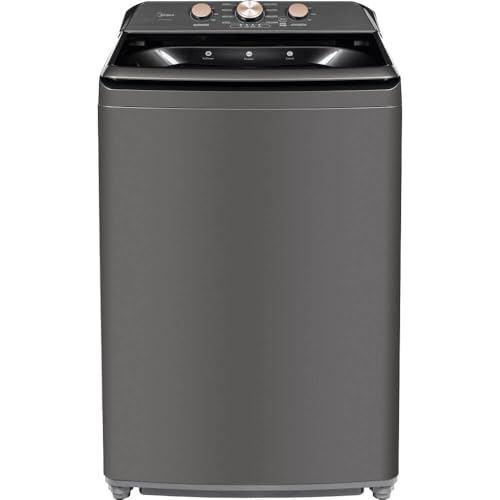
Midea 4.1 Cu. Ft. Top-Load Washer — Best mid-size value in grey
Midea’s entry states its model — MLTW41A1BMG — and its size, a 4.1 cu. ft. top-load drum, in a grey finish. The capacity is the interesting decision here: 4.1 cu. ft. is the size that fits the widest range of real households, big enough for a couple’s week or a small family’s rhythm, small enough to stay honest about fills. Midea has built its appliance reputation on delivering the core specification at a value tier without theatrical extras, and this listing is that philosophy in one line.
The grey finish deserves its small defence. Laundry rooms generate lint dust the way kitchens generate crumbs, and a mid-grey cabinet wears that reality more gracefully than glossy white or black, which matters to owners who would rather wash clothes than wipe appliances. Beyond the title, the product page carries the cycle and feature detail; as with every pick here, the model number printed up front makes verification, manuals, and any future parts order a straightforward errand rather than an archaeological dig.
- Capacity stated in the listing: 4.1 cu. ft.
- Model stated in the listing: MLTW41A1BMG
- Tier, in words: value mid-tier — core specification without theatrical extras
- Format: top-load washer
- Finish named in the listing: gray
- Cycle detail in the listing title: not detailed in the title; see the product page
Strengths
- The most versatile capacity in the guide for couples and small families.
- A printed model number supports a long, documentable service life.
- Grey finish forgives the laundry room’s dust between wipe-downs.
Trade-offs
- The title’s brevity leaves cycle and feature questions to the product page.
- Grey may not match an existing white dryer, if a matched look matters to you.
- Households washing bulky bedding weekly may want the larger drums below.
Best for: couples and small families wanting the sensible size at a value tier. A weak match for: buyers who need every feature enumerated before they will consider a machine.

BLACK+DECKER 4.1 Cu. Ft. Top-Load Washer with Agitator — Best featured value
This is the pick that tests the definition of economy from the other side: what if a value-tier machine includes the features? Model BTLW41MW, as its listing presents it, is a full-size 4.1 cu. ft. top-loader running on 120V, fitted with an agitator, ten wash cycles, an LED display, a glass lid, and a tub in stainless steel. A stainless tub is a decade-scale feature — it cannot chip like enamel, so it cannot develop the rust spots that eventually stain light loads — and its presence at this tier is the core of the machine’s value argument.
The glass lid, often dismissed as styling, earns its keep in an economy guide for a practical reason: it teaches loading. Watching how a load actually sits, fills, and moves corrects the two habits that waste the most money — overloading and overfilling — without a single lecture. Ten cycles is a menu sized to real laundry rather than to a brochure. And the stated standard voltage simplifies installation in homes where the laundry point is an ordinary receptacle, though the circuit should still be checked against a full-size machine’s draw.
- Capacity stated in the listing: 4.1 cu. ft., full size
- Model stated in the listing: BTLW41MW
- Tier, in words: value tier with upper-tier features
- Tub stated in the listing: stainless steel
- Cycles stated in the listing: 10, with LED display and glass lid
- Power stated in the listing: 120V
Strengths
- A stainless tub protects the machine’s second decade and your light fabrics with it.
- The glass lid turns every cycle into quiet instruction on loading and fill levels.
- Ten cycles and a clear display give real control without menu bloat.
Trade-offs
- More features than the Amana means more components, however well chosen.
- A glass lid shows fingerprints and invites watching instead of leaving.
- Standard-voltage convenience still deserves a circuit check in older homes.
Best for: value buyers who refuse to give up a stainless tub and a useful cycle menu. A weak match for: minimalists who want the fewest possible parts between them and clean clothes.

Kenmore 4.1 Cu. Ft. Top-Load Washer with Triple Action Agitator — Best cleaning-per-tier value
Kenmore’s 4.1 cu. ft. entry makes its value case on cleaning power per tier: a triple-action agitator designed to move clothes through the water in more than one pattern for tough dirt and stains, plus Express Wash and AccelaWash cycles for the days when time is the scarce resource, behind touch controls, in white. A household whose laundry includes genuinely dirty clothes — garden wear, sports kit, work clothes — gets more value from a machine that cleans them in one pass than from a cheaper machine that asks for a second.
The quick cycles deserve an economy framing of their own. Most loads in most homes are lightly soiled; a cycle that handles them in a fraction of the time saves water, energy, and the household’s evening, every single week. That is where this machine’s thrift actually lives — not in its purchase tier but in its calendar. The 4.1 cu. ft. drum suits couples and small families; those feeding a larger household should read the next review before deciding, because the same system exists in a bigger drum.
- Capacity stated in the listing: 4.1 cu. ft.
- Agitator stated in the listing: triple action
- Tier, in words: mid value tier, priced by capability rather than by minimalism
- Cycles named in the listing: Express Wash, AccelaWash
- Controls stated in the listing: touch controls
- Finish named in the listing: white
Strengths
- Serious agitator cleaning at a value tier reduces rewashes, the hidden cost of weak machines.
- Named quick cycles match the lightly soiled majority of real laundry.
- Touch controls keep cycle choice explicit and the panel easy to wipe clean.
Trade-offs
- Touch panels are a component the simplest machines do without.
- White-only finish, shared with its larger sibling.
- Delicate wardrobes will use its gentlest settings more than its headline power.
Best for: households whose dirt is real and whose weeks are busy. A weak match for: buyers prioritising absolute mechanical simplicity over cleaning muscle.

Kenmore 4.4 Cu. Ft. Top-Load Washer with Triple Action Agitator — Best family-size value
The larger Kenmore takes everything in the previous review — triple-action agitator, Express Wash, AccelaWash, touch controls, white finish — and stretches the drum to 4.4 cu. ft. That extra room is the family argument: bedding and towel loads that would split in two in a smaller drum consolidate into single cycles, and consolidation is an economy, because one full cycle almost always costs less than two partial ones in water, energy, detergent, and human attention.
The value question to ask of any upsized machine is whether your household will actually fill it, and this guide has asked it of every pick. A family of four or five, or a household washing sports kit for several athletes, fills 4.4 cu. ft. without trying. A couple will not, and for them the 4.1 above is the thriftier Kenmore. Neither answer is a criticism of the machine; drum fit is a property of the pairing between machine and household, and it is the single largest economy decision in this entire guide.
- Capacity stated in the listing: 4.4 cu. ft.
- Agitator stated in the listing: triple action
- Tier, in words: mid value tier at family size
- Cycles named in the listing: Express Wash, AccelaWash
- Controls stated in the listing: touch controls
- Finish named in the listing: white
Strengths
- Family capacity consolidates laundry into fewer, fuller, cheaper cycles.
- The same triple-action cleaning as its sibling, so size costs no cleaning ambition.
- Quick cycles scale the time saving to family-sized laundry weeks.
Trade-offs
- Half-filled by small households, its economy inverts — buy the drum you will fill.
- Needs the floor space and doorway clearance of a full family machine.
- Agitator drums give bulky items less rolling room than the capacity suggests.
Best for: families of four or more washing in a normal, heavy rhythm. A weak match for: couples, who should take the same system in the 4.1 cu. ft. drum.
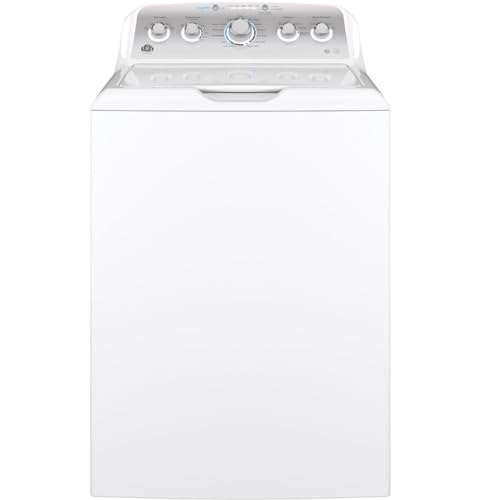
GE 4.6 Cu. Ft. Top-Load Washer with Stainless Steel Basket — Best upper-mid capacity value
GE’s GTW500ASNWS tops this guide’s range: a 4.6 cu. ft. top-load washer with a stainless steel basket and thirteen cycles, in white. It sits at the upper-mid value tier, and its case is the long game — the largest drum here for consolidating a big household’s laundry, a basket material chosen for a long service life, a cycle menu wide enough to match water to load across a whole wardrobe, and a maker whose service and parts network is among the deepest in the business. Economy measured over twelve years looks like this machine more often than it looks like the smallest ticket in the store.
Thirteen cycles invites the same discipline as any abundance: the menu saves resources only when someone selects with intent. The household that defaults to one sensible programme and reaches for the others deliberately will get the machine’s full value; the household that treats the longest cycle as the safest will pay for range it never uses. That is a user question, not a machine flaw — but this guide’s job is to ask it before the purchase rather than after.
- Capacity stated in the listing: 4.6 cu. ft.
- Model stated in the listing: GTW500ASNWS
- Tier, in words: upper-mid value — the long-service choice of this guide
- Basket stated in the listing: stainless steel
- Cycles stated in the listing: 13
- Finish named in the listing: white
Strengths
- The largest drum consolidates big-household laundry into the fewest cycles.
- Stainless basket and a deep parts network suit a twelve-year ownership plan.
- A wide cycle menu lets careful users match resources to each load precisely.
Trade-offs
- It is the guide’s upper tier; small households pay for volume they will never use.
- Menu abundance rewards deliberate users and quietly taxes habitual ones.
- Full family size needs full family space, in the room and on the delivery path.
Best for: large households planning to keep one washer for a long time. A weak match for: small households, tight laundry closets, or buyers who want the simplest possible control.
Six Value Machines, One Spreadsheet-Free Comparison
| Pick | Drum | Tier in words | The economy argument in one line |
|---|---|---|---|
| Amana 3.5 Cu. Ft. Top-Load Washer | 3.5 cu. ft. | Entry | Fewest parts to fail, sized for small households |
| Midea 4.1 Cu. Ft. Top-Load Washer | 4.1 cu. ft. | Value mid | The versatile size with a documented model |
| BLACK+DECKER 4.1 Cu. Ft. Top-Load Washer with Agitator | 4.1 cu. ft. | Value with features | Stainless tub and glass lid above its tier |
| Kenmore 4.1 Cu. Ft. Top-Load Washer with Triple Action Agitator | 4.1 cu. ft. | Mid value | Cleaning power that prevents costly rewashes |
| Kenmore 4.4 Cu. Ft. Top-Load Washer with Triple Action Agitator | 4.4 cu. ft. | Mid value, family size | Consolidation into fewer, fuller cycles |
| GE 4.6 Cu. Ft. Top-Load Washer with Stainless Steel Basket | 4.6 cu. ft. | Upper-mid value | Capacity, materials, and parts depth for the long game |
What Does a Washer Really Cost Across Ten Years?
Four ledgers run in parallel, and the purchase is only the first. The water-and-energy ledger is set mostly by drum fit and cycle habits: a right-sized machine run full and cool will out-save a giant run half-empty and hot, whatever either cost to buy. The repair ledger is set by simplicity and parts depth — every electronic feature is a small annuity of risk, and every printed model number is a discount on every future repair, because the technician can arrive with the right part the first time. The time ledger is the one households feel: quick cycles, reliable starts, and a machine that finishes what it begins return evenings that a temperamental machine taxes without mercy.
The fourth ledger is replacement timing. A washer replaced in an emergency is bought in a weekend, at the mercy of stock and delivery slots; a washer replaced on plan is bought from a guide like this one, in calm, with measurements taken. The most economical sentence in laundry is the one nobody enjoys: replace the machine when its repair pattern says so, not when it floods the floor to make the point. Readers furnishing a home for a household member who needs physical support as well as thrift may find Best Power Lift Recliner Chairs applies the same buy-once logic to the living room.
How Do You Match Drum Size to a Household Without Guessing?
Count a real week. Note the number of loads your household runs and the largest single item washed regularly — the duvet cover, the bath sheet bundle, the sports kit mountain. A household running four modest loads a week for two people lives in the 3.5 to 4.1 cu. ft. world. A household whose week includes bedding for several beds and towels for a crowd lives at 4.4 and above. The mistake is buying for the annual guest weekend instead of the weekly rhythm: the drum serves the rhythm, and guests can split a load.
Then check the room, not just the people. Measure the laundry space’s width, the doorway, and the swing of any door that must close behind the machine, and leave the few centimetres of air that hoses and sanity require. A value machine that fits the room it must live in beats a larger bargain that has to be returned — returns being the least economical transaction in all of retail.
Which Corners Can You Cut, and Which Cut Back?
Safe corners: finish, connectivity, and programme count beyond your real menu. A white cabinet washes identically to a designer one; a washer without an app loses nothing a timer and a habit cannot replace; and the cycles beyond your household’s five regular loads are decoration. Cut those without a pang.
Dangerous corners: drum fit, tub material, and the maker’s parts ecosystem. A drum too small multiplies cycles for a decade. A tub that chips becomes a fabric-stainer in year six. A machine whose parts vanish forces replacement at the first real fault, converting an economy purchase into the most expensive kind — the kind bought twice. The picks in this guide were chosen to cut the first list and protect the second, which is the entire editorial policy of this page in one sentence.
Should a Thrifty Household Buy Second-Hand Instead?
The question deserves a fair hearing, because a used top-loader from an established maker can be a genuinely economical machine — top-loaders are mechanically legible, and a competent inspection reveals most of what matters. Listen to a full cycle including the spin. Look for rust at the tub’s rim and cabinet’s base, smell for the mildew that betrays a machine stored wet, and check the hoses’ age with your eyes and fingers. A seller who can tell you the machine’s age, its model, and why it is being sold is selling a very different object from a seller who cannot.
The counterweights are real. A used machine arrives with its warranty spent and its suspension part-worn, its history written in other people’s loads. Delivery and installation are yours to arrange. And the efficiency figures of older designs belong to a thirstier era, so the running ledgers start behind. The balanced verdict: second-hand suits a confident inspector buying a simple, established model for a rental, a workshop, or a first home with a tight year ahead. Everyone else is usually better served by the new value tier in this guide, where the warranty and the full service life arrive with the machine.
Reading a Warranty Like an Economist
A warranty is a financial instrument wearing legal dress, and it should be read for three numbers: how long the whole machine is covered, how long the expensive organs — motor and tub — are covered beyond that, and what the coverage excludes. Long motor and tub coverage on a value machine signals a maker whose failure statistics let it make the promise cheaply, which is information about the machine as much as about the paperwork. Labour terms matter as much as parts terms; a free part that costs a callout to fit is a discount, not a rescue.
Keep the proof of purchase with the model number, register the machine if the maker asks, and note the coverage dates somewhere you will actually look — the laundry room wall beats a forgotten drawer. And treat any extended plan offered at checkout with the same arithmetic as the machine itself: divide its cost by the years it adds, ask what it excludes, and compare it honestly against the machine’s simplicity. On the simplest picks here, many households reasonably self-insure; on the featured ones, the calculation can tilt the other way. There is no universal answer, only an arithmetic one.
The Habits That Make a Value Machine Pay
A value machine’s return on investment is completed by its operator. Run full loads at the coolest temperature the fabric and soil allow, because heating water is the washer’s largest energy act. Dose detergent by the cap’s measure — overdosing buys extra rinses, residue, and a filmed drum, and it is the most common way households tax themselves voluntarily. Choose the cycle the load needs rather than the longest one available; the quick cycles on the Kenmore picks exist to be used, and a household that uses them banks the saving weekly.
Sort with intent, because a rewash is the most expensive cycle in the house — it costs a full second wash and quietly halves the value proposition of everything else. Maintain the machine’s cheap organs on schedule: inlet screens when the fill slows, the pump filter where one is fitted, hoses inspected yearly and replaced on suspicion rather than on evidence. And leave the lid open between washes so the drum dries; a fresh machine needs fewer cleansing cycles, and cleansing cycles are pure overhead. None of these habits costs money. Together, across a decade, they are worth more than the difference between any two tiers in this guide.
Three Households and Their Right Answers
A young couple in a first flat, washing for two and saving for everything else, should read the Amana and Midea reviews twice and the others once. Their loads are small, their space is smaller, and every unit of currency not spent on unused drum capacity is a unit spent on the rest of the home. If their laundry includes a muddy five-a-side kit every weekend, the Kenmore 4.1’s agitator earns its tier step; if not, simplicity wins and the difference goes into the holiday fund with our blessing.
A family of five replacing a failed machine mid-school-term needs the purchase to be right the first time and delivered without drama. Their answer lives at 4.4 or 4.6 cu. ft., chosen by whether the household’s identity is quick cycles through a busy week or maximum consolidation into weekend loads. What they must not do is downsize in a panic to whatever is in stock — a drum too small will tax them twice weekly for a decade, long after the panic is forgotten.
A landlord furnishing three units should standardise. Three identical simple machines mean one manual, one parts list, one set of tenant instructions, and a spare-parts conversation that gets easier every year. The Amana pattern — established name, printed model, minimal features — is the standardisation candidate, and the savings compound across the portfolio in reduced calls and faster repairs. Standardising on a featured model is defensible; standardising on three different bargains is how a portfolio becomes a museum.
Timing the Purchase: When Value Machines Are Bought Best
Without quoting a single figure, timing still matters. Appliance retail moves in seasons — new ranges arrive, older models are cleared, and holiday periods concentrate promotions — and a household that can choose its moment generally does better than one shopping in a flood’s aftermath. The deeper timing rule is about your own machine: buy the replacement when the old one’s repair pattern first suggests decline, while it still works, because a working old machine converts an emergency into a comparison. Keep the measurements of your space and your shortlist from this guide in the appliance folder, and the eventual purchase becomes an execution rather than a research project conducted beside a silent, full drum.
Installation on a Budget Without Installing Problems
Self-installation is the economy buyer’s traditional saving, and top-loaders are the most forgiving machines to fit — but the saving evaporates if the fitting is careless. Level the machine properly, in both directions, and lock the feet; an unlevel value washer wears its suspension early and spins its warranty away in noise complaints. Fit new inlet hoses rather than reusing the old machine’s, because hoses are the cheapest component in the room and the most expensive when they fail. Set the drain hose at the height the manual specifies: too low and the machine can siphon itself empty mid-cycle, too high and the pump strains on every load.
Run the first cycle empty and watch it — fill, agitation, drain, spin — with a torch aimed at every connection. A drip found in minute three is a quarter-turn of a fitting; the same drip found in month three is a floor. Photograph the model plate while the machine is new and the light is good, and file the paperwork the warranty section described. An hour of care at installation is the highest-paid hour in the machine’s entire life.
The Dryer Question: Half the Laundry Bill Stands Beside the Washer
An economy washer feeding a decrepit dryer is a relay team with one lame runner, and households budgeting for a washer should at least interrogate the partnership. Drying typically costs more energy per load than washing, so the dryer’s sensor — if it has one — and its vent’s condition dominate the laundry room’s running story. A vent clogged with lint can double drying time while presenting as a tired dryer, and its cure costs a brush and an hour. Before replacing a dryer that seems weak, clean its vent run end to end and test again; the economy guide that does not tell you this has left money on your table.
When both machines are due, buying a coherent pair from the same tier logic — right-sized, simply controlled, from names with parts depth — simplifies everything from installation to the eventual service call. When only the washer is due, match its capacity to the dryer’s reality: a washer that consolidates laundry into fewer, larger loads only saves money if the dryer can dry those loads in one cycle too. Capacity, like economy, is a property of the system.
What Owners of Simple Machines Know That Showrooms Forget
Spend time with households that have run a simple top-loader for a decade and a pattern emerges: they cannot tell you their machine’s cycle count, and they can tell you exactly how it behaves. They know its sounds the way drivers know an old car’s, and they notice a new noise in the week it starts rather than the month it fails. That familiarity is an economic asset no feature list confers — early attention is the cheapest maintenance there is, and it accumulates only around machines simple enough to be knowable.
They also tend to have spent the money they saved on things that compound better: a better dryer vent, a water softener where the water demanded one, an emergency fund that turns the eventual replacement into a planned purchase. The economy of a simple machine is not the saving itself; it is what the saving makes possible elsewhere in the house. Buy the machine that fits, run it with the habits this guide describes, and let the difference fund the rest of the home’s long game.
A Word on Detergent, the Recurring Cost Nobody Budgets
The machine is bought once; the detergent is bought forever, and its economics reward the same discipline. Dose by measure and the bottle lasts its intended span while the machine rinses clean; dose by enthusiasm and the household pays three times — in detergent, in the extra rinsing the excess demands, and in the dulling film that eventually needs a cleansing cycle to remove. Store brand or name brand matters less than concentration and honesty about soil: lightly worn clothes need less chemistry than the cap’s maximum line suggests. Households that pre-treat the genuinely dirty items — a collar, a cuff, a sports shirt’s underarm — can run the whole load on a modest dose, which is the detergent equivalent of the quick cycle: targeted effort where the dirt is, thrift everywhere else.
When Economy Means Waiting: The Case for the Planned Purchase
There is one economy strategy this guide endorses without qualification, and it costs nothing: start the replacement fund and the shortlist before the current machine fails. A household that knows its measurements, its drum size, and its two finalist models can wait for the right retail moment, compare listings calmly, and schedule delivery around its life instead of its laundry emergency. A household that starts from zero on the day of the flood buys whatever is in stock, at whatever tier the panic selects, and lives with the choice for a decade. The difference between those two purchases dwarfs every tier distinction in this guide. If your current washer is ageing audibly, the most economical act available to you this week is a tape measure, a notebook, and ten quiet minutes in the laundry room.
The Resale and Hand-Me-Down Value of a Sensible Machine
Economy does not end when the machine leaves your laundry room. A clean, documented top-loader from an established name, with its model plate photographed and its manual kept, has a second life — sold to a first-home buyer, handed to a student flat, or moved to a workshop for the dirtiest loads in the family’s life. Machines bought on the principles in this guide age into that second life gracefully, because their virtues are legible to the next owner: simple controls, a known model, a tub without chips or rust. The flashy machine with the orphaned app and the unavailable board, by contrast, is worth its weight in scrap at the same age. Buy the machine whose tenth year someone else would still want, and its lifetime cost falls again — the last, quiet dividend of choosing sense over theatre.
Teaching Teenagers and Flatmates the Thrifty Settings
A value machine in a shared house faces its sternest test: operators who did not buy it. The household that wants its economy to survive contact with teenagers and flatmates should make the thrifty choice the easy choice — a card inside the cupboard door naming the household’s default cycle and the detergent measure, and a house rule that the longest, hottest programme needs a reason anyone can state out loud. Most misuse is not malice; it is the assumption that maximum settings equal maximum clean, an assumption one conversation can retire. The machine will do the rest, cycle after uncomplaining cycle, which is rather the point of having bought it.
Hard Water, Soft Budgets: Protecting a Value Machine From Its Supply
In hard-water districts, a value machine’s economics are quietly taxed by scale: heating and fill components fur, fabrics grey, and users compensate with hotter washes and heavier doses, spending the machine’s thrift at the tap. The economical responses sit upstream of the washer — a softener where the whole house justifies one, a descaling routine where it does not, and detergent chosen for the water you actually have. If your kettle wears a mineral crust, your washer is wearing one too, and no tier choice in this guide can out-argue geology. Budget the water’s treatment as part of the laundry system, and the machine you bought for a decade gets to live like it.
The Quiet Cost of the Wrong Week: Laundry Backlog Economics
Every household knows the backlog spiral: the washer waits for a full load, the pile grows past a load and a half, and the eventual session becomes two loads, an occupied evening, and a drying rack colonised for days. A right-sized machine breaks the spiral at its root, because its full load is the household’s natural two-or-three-day accumulation rather than a week’s. This is the unglamorous heart of economy — not a figure on a tag but a rhythm that never quite gets behind. When you choose between the 4.1 and the 4.4 in this guide, you are really choosing the rhythm your laundry will keep for a decade, and the household that chooses its rhythm deliberately rarely regrets the machine that keeps it.
Accessibility and Ease: The Economy of a Machine Everyone Can Run
A machine that only one household member can operate confidently is a machine with a hidden staffing cost. Top-loaders earn part of their economy reputation here: loading from above at standing height, controls that read at a glance, and a start that needs no crouching, no door-seal wrestling, and no manual studied in advance. Touch panels and knob controls each have their partisans, and the honest test is personal — could every adult in your house, including the one who hates appliances, run a normal load at midnight without assistance? The pick that passes that test in your household is worth a tier step over the pick that fails it, because a machine everyone uses well is a machine whose cycles get chosen well.
One More Ledger: The Environment, Counted Honestly
A long-lived machine is also the environmentally serious choice, and the two economies agree more often than marketing suggests. The washer that serves twelve years instead of six halves the manufacturing footprint per load; the right-sized drum spends less water and energy on every cycle of those years; and the repairable machine with available parts stays out of the waste stream at the first fault. Households that care about this ledger should read this guide’s preferences — durability, fit, parts depth, repairability — as environmental criteria wearing economic clothes, because that is precisely what they are.
Economy Mistakes That Cost Households Real Money
The champion mistake is buying the smallest ticket for the largest household: the machine runs double cycles, wears at double speed, and is replaced years early, having cost more in every ledger than the right-sized machine would have. Second is its mirror — the giant drum bought for status by a couple, filled a third full for a decade. Third is ignoring the delivery path and paying for a return. Fourth is letting an emergency choose the machine: the failed washer replaced in a panic is rarely the one a calm week would have picked.
Fifth is neglecting the ten-minute maintenance that protects the whole investment — inlet screens, a lid left open to dry, hoses inspected yearly. And sixth, for outdoor-minded households furnishing a whole property at once: spreading the budget so thin that every purchase is the fragile version of itself. Buy the durable version of the things that work daily, indoors and out — a principle that serves a laundry room exactly as it serves a patio furnished from Best Portable Rocking Chairs.
Final Recommendation
Match the drum to the household and the tier to the temperament. Singles, couples, and landlords: the Amana’s simplicity is the economy. Couples wanting the versatile size: the Midea. Value buyers who want a stainless tub and a window on their wash: the BLACK+DECKER. Households with real dirt and busy weeks: the Kenmore 4.1, or its 4.4 sibling when the family fills it. And the long-game buyer with a big household: the GE, whose capacity and parts depth are built for a twelve-year plan.
One final test before ordering, and it takes thirty seconds: picture the machine in its tenth year, mid-repair, with a technician asking its model and age while your household’s laundry piles up beside it. The pick that makes that scene feel manageable — documented, simple, and supported — is the pick your future self is voting for, and in economy shopping the future self should always get the deciding vote.
Whichever you choose, write the model number and purchase date in one place, run the machine full and cool, and let the years do the arithmetic — because the most economical washer in this guide is the one still starting first time, without drama, long after a flashier purchase would have been replaced.
Frequently Asked Questions
Is the cheapest washer ever the economical choice?
Only when it is also right-sized and durable for its household. A very inexpensive machine that a family outgrows, overwears, or replaces early costs more across its life than a mid-tier machine that serves a decade. Economy is the total across the years, which is why this guide positions picks by tier in words and sends you to the listing for the live figure.
How long should an economy top-loader last?
A well-kept top-load washer should serve roughly a decade, and simpler designs often stretch beyond it because there is less to fail. The habits that protect it are unglamorous: balanced loads, clean inlet screens, hoses inspected and replaced on suspicion, and a drum left open to dry between washes.
Does a bigger drum waste money for a small household?
Yes, in three currencies at once: the purchase tier is higher, fills and heating scale with the machine’s defaults, and the temptation to wait for a full load stretches laundry across the week. The reverse error is just as costly for large households. Drum fit is the economy decision; everything else is refinement.
Are touch controls a risk on a value machine?
They are a component, and every component carries some risk, but on established models they are a known quantity with parts behind them. The Kenmore picks balance that consideration against quick cycles that save time and resources weekly. A buyer who wants the risk at its minimum should take the simplest pick here and accept its smaller menu.
Should landlords buy the same machine as homeowners?
Largely yes, with simplicity weighted higher. Tenants will not read manuals, will default to one programme, and will judge the property by whether the machine simply works. A straightforward, right-sized machine from an established name — the Amana pattern — minimises calls, complaints, and mid-tenancy replacements.
Why does this guide describe tiers instead of quoting prices?
Because a tier is stable and a price is weather. The Amana will still be the entry-tier simple machine and the GE the upper-mid long-service choice long after any figure printed here would have expired, and a guide that teaches you the tiers sends you to the listing — where the live figure lives — with the judgement to use it. Check the current figure there, against the tier, and you have the complete picture.
When is a repair better than a replacement?
When the machine is otherwise sound, the fault is singular, and the parts are available — a pump, a switch, a belt-era component on a simple machine. When faults arrive in a pattern, or the drum and tub themselves are compromised, replacement on your own schedule beats replacement on the machine’s. The model number you recorded at purchase makes either conversation faster.
Related Guides
And when the machine finally arrives, resist judging it by its first load. Run it for a month, through the household’s real rotation, and then look at the only figures that ever mattered: the loads it finished, the evenings it returned, and the trouble it never caused.
Keep this guide’s shortlist with your appliance paperwork even if you are not buying this month. A shortlist made in calm weather is a gift to the future household that will otherwise be making this decision in a hurry, beside a silent machine and a full laundry basket, and gifts of that kind are the purest form economy takes.
For machines built to commercial standards of endurance for home use — the far end of the buy-it-once philosophy — continue to Best Commercial Washers for Home Use.


