Our Top Picks
 Vidihill Portable Air Conditioner7.9 x 10.3 x 5.5 inches7.9 x 10.3 x 5.5 inches2.2 poundsCheck on Amazon


What's inside
- What Mechanical Control Actually Means Inside the Cabinet
- Why a Cottage Is the Natural Home of the Manual Unit
- The Segments That Still Sell Mechanical Control
- Sizing a Manual Unit for a Cottage Room
- Installation Notes Specific to Mechanical Units
- Living with the Trade Offs, Honestly Stated
- Care, Repair and the Long View
- Who Should Choose Manual, and Who Should Not
- The Sound of a Mechanical Machine
- Manual Units Room by Room
- Buying Second Hand, and Knowing When Not To
- The Seasonal Rhythm: Spring Start Up and Autumn Shutdown
- Storms, Surges and the Country Grid
- The Household Agreement: One Dial, Shared by Everyone
- A Note on Availability and Expectations
- Check prices on Amazon
- A Short Buying Checklist for the Manual Shopper
As an Amazon Associate I earn from qualifying purchases. This post may contain affiliate links at no extra cost to you.
One small disclosure before the knobs and dials: Cottage Verdict earns a small commission when a reader follows a link from this page and buys through the retailer at the other end, and that modest income is what pays for guides like this one to be researched slowly and written without a sponsor looking over our shoulder.
There is a particular kind of air conditioner that has almost disappeared from advertising while never quite disappearing from hardware store shelves. It has no screen. It has no remote control to lose down the side of a sofa, no account to create, no firmware to update, and nothing on its face that glows in the dark. What it has is a pair of chunky rotary knobs, a grille, and a mechanical thermostat that clicks softly when the room reaches the temperature the dial was set to hours, days, or whole summers ago. For a great many cottages, that near invisibility is not a missing feature list. It is the entire point.
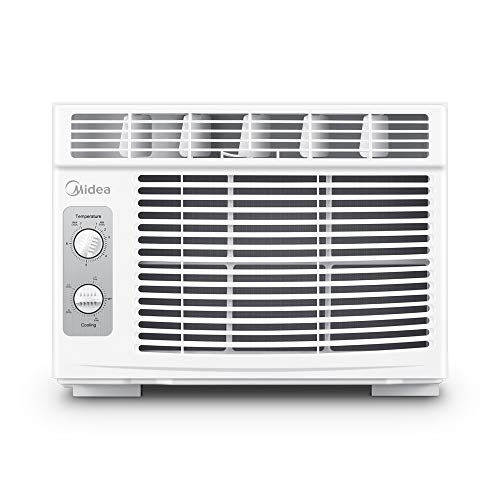
A manual air conditioner, in the sense this guide uses the term, is a room unit controlled entirely by mechanical means. One knob usually selects the mode: fan only at one or two speeds, cooling at one or two speeds, sometimes a ventilation position that opens a small vent to exchange stale indoor air for outdoor air. The second knob is the thermostat, typically a numbered dial rather than a temperature readout, and behind that dial sits a simple sensing bulb and a switch that has far more in common with the thermostat in an old refrigerator than with anything in a modern smart home. Turn the dial, the compressor starts, the room cools, the switch opens, the compressor rests. That is the whole conversation between you and the machine, and it can be conducted by anyone who can operate a volume control.
This guide explains where manual units still make sense, which segments of the market still sell them, what their genuine limitations are, and how to choose one for a cottage that may sit empty for weeks, host a rotating cast of guests, lose power in summer storms, and be opened up each spring by someone who would rather be out on the porch than reading an appliance manual. The case for mechanical control is narrower than it once was, but for the right building it remains surprisingly strong.
What Mechanical Control Actually Means Inside the Cabinet
The Thermostat Is a Switch, Not a Computer
The heart of a manual unit is its mechanical thermostat, and understanding it explains nearly every behaviour owners report, both the reassuring and the mildly annoying. A thin sensing bulb, filled with a fluid or gas that expands and contracts with temperature, sits in the stream of air returning to the unit. As the room warms, the pressure inside that bulb rises until it trips a simple electrical contact and starts the compressor and fan. As the room cools, the pressure falls, the contact opens, and the compressor stops while the fan may keep turning or stop with it, depending on the mode selected. There is no circuit board interpreting the signal, no software deciding anything, and nothing to reboot.
Two practical consequences follow. First, the dial is marked in numbers or in a sweep from less cool to more cool rather than in degrees, because the switch responds to the temperature at the bulb, right at the unit, rather than to a calibrated reading across the room. A setting that feels perfect on a mild evening may need a nudge on a humid afternoon when the air near the window runs warmer than the air by the bed. Second, mechanical thermostats have a built in dead band: the compressor does not restart the instant the room drifts a fraction warmer, but waits until the swing is wide enough to matter. Rooms cooled this way breathe a little, warming slightly, cooling slightly, in a slow rhythm that most people stop noticing within a day.
Knobs, Levers and the Vent Control
Everything else on a manual unit is equally direct. The mode knob is a rotary switch wired straight to the fan motor and compressor circuit, which is why the detents feel firm and why the settings are few. Fan speeds on mechanical models are usually limited to two, occasionally three, because each speed is a separate winding tap on the motor rather than a value in a menu. Louvres are adjusted by hand, by tabs and vanes you push with a fingertip. Many units include a small vent lever that opens a flap between the indoor and outdoor sides of the cabinet, letting the fan pull in a modest amount of fresh air or push stale air out. It is a crude feature by modern standards, and on a still, pollen heavy day you will keep it shut, but on a cool evening it can freshen a closed up cottage bedroom in a way a sealed electronic unit often cannot without a dedicated fresh air mode buried three menus deep.
Nothing in this arrangement stores a setting electronically, and that turns out to matter enormously in one specific situation, which deserves its own discussion below: the moment the power comes back on.
Why a Cottage Is the Natural Home of the Manual Unit
It Restarts Itself After an Outage, Exactly as You Left It
Rural power is not city power. Cottages sit at the ends of long lines, under old trees, in the path of summer storms that trip breakers and drop branches miles from the nearest repair crew. When the electricity fails at a house that stands empty between visits, an electronic air conditioner with a digital control board typically does one of two things when supply returns: it stays off, waiting politely for someone to press a button that nobody is there to press, or it returns in a default mode at a default setting that may bear little resemblance to what the room needs. A manual unit does neither. Its knobs are physical. The switch contacts are where you left them. When power returns, the compressor simply resumes the job the dial described, whether that moment comes twenty minutes later or three days later.
For a cottage, that behaviour is not a convenience, it is a form of protection. A building that sits closed in July heat does not merely become uncomfortable; it becomes a humidity trap. Warm, damp air condensing on cool surfaces feeds mildew on soft furnishings, swells wooden doors until they stick, curls the pages of books, and leaves the particular sour smell that owners dread opening the door to in August. A mechanical unit set to a moderate cooling level before you lock up acts as a crude but tireless caretaker, holding the interior dry enough to prevent the worst of it, asking for no network connection, no charged remote, and no one present to supervise it. Owners of electronic units achieve the same end with smart plugs and connected thermostats, but each added layer is another thing that can fail quietly in an empty house.
No Standby Draw Worth Measuring
An electronic air conditioner that appears to be off is usually not entirely off. Its control board stays awake, listening for a remote signal or maintaining a network connection, sipping a small but continuous amount of power through the whole off season if the unit stays plugged in. The draw of any single machine is modest, yet a cottage is precisely the setting where modest draws accumulate meaninglessly: weeks of standby consumption in a building nobody is using, on a meter somebody still pays for. A manual unit switched to its off position is genuinely off. The circuit is open. The machine will consume nothing until a human hand turns the knob again, which makes winterising simple to reason about: knob off, filter cleaned, cover fitted, done.
Guests Cannot Break a Setting That Has No Settings
Anyone who lends or rents a cottage knows the quiet comedy of the returned thermostat. A guest, chilly at midnight or warm at noon, presses buttons hopefully, enables a mode nobody recognises, sets a timer that fires at three in the morning, or pairs the unit to their own phone and takes the connection home with them. The next party arrives to a machine that behaves strangely and a host fielding messages from the road. Manual controls collapse that entire category of problem. There are two knobs. One makes air move, the other makes it colder or less cold. A child can learn it, a grandparent can learn it, and the most creative guest alive cannot put it into a state that the next visitor cannot undo with one glance and one turn of the wrist. For hosts who leave a laminated instruction card, the manual unit’s card can be a single line.
There is a related kindness in the other direction. Guests in an unfamiliar house at night do not have to hunt for a remote in the dark, decode a glowing display, or worry that silencing a beep will wake the room. The machine’s whole personality is tactile and audible: the click of the knob, the change in fan note, the soft clunk of the thermostat cycling. People raised on dials trust it instinctively, and people who did not grow up with dials usually find the directness refreshing rather than dated.
The Segments That Still Sell Mechanical Control
Small Window Units from the Big American Brands
The most familiar manual machines are the compact window units that large American appliance brands continue to sell season after season, the sort of models that appear on end caps every spring in home improvement warehouses. In their smallest sizes, aimed at a single bedroom or a snug cabin loft, mechanical control remains common because the economics favour it: at the modest end of the range, a rotary switch and a bulb thermostat cost less to build than a board, a display and a remote, and buyers shopping for a spare room or a workshop are rarely asking for connectivity. These small mechanical window units are the direct descendants of the machines that cooled motels and farmhouse bedrooms for decades, and their control layout has barely changed, which means anyone who has ever used one already knows how to use all of them.
Within a cottage, this segment suits the rooms that matter most at night. A small unit in a sleeping loft or a guest bunk room does not need to hold a precise temperature through the day; it needs to take the stored heat out of the room before bed and then cycle quietly enough not to dominate a small space. Owners comparing sizes for exactly that job will find the dedicated guide to best 5000 btu compact window air conditioners useful, because the smallest mechanical models live in that compact class and the fit questions there, window width, sill depth and support, are the same ones a manual buyer faces.
Mid Size Mechanical Window Units for Main Rooms
One step up, the mechanical format persists in mid sized window units intended for living rooms, open plan kitchen and sitting areas, and larger bedrooms. Here the appeal shifts slightly: buyers are often replacing a failed unit in a building with older wiring, or cooling a rental where the owner wants durability over features, or furnishing a seasonal property where the machine will be removed and stored each autumn and reinstalled by whoever is available in May. A unit with no board to corrode in damp storage and no remote to lose in a drawer of dead batteries survives that annual cycle gracefully. The controls also survive being operated with work gloves, sandy hands, or the side of a wrist when the other hand holds a mug, small things that matter in houses where summer life happens partly outdoors.
Capacity in this band covers most cottage main rooms, and the sizing conversation is the same one you would have for any window machine: measure the room, account for sun exposure and ceiling height, and resist the temptation to oversize, because an oversized manual unit short cycles even more noticeably than an electronic one, cooling the air near its own thermostat bulb quickly and shutting off before it has pulled much moisture from the room. Readers working through that calculation for a bigger space can cross check against the capacities discussed in best 10000 btu window air conditioners, keeping in mind that the mechanical versions of those sizes behave a little more loosely around the set point, for the reasons explained earlier.
Through the Wall Units with Mechanical Controls
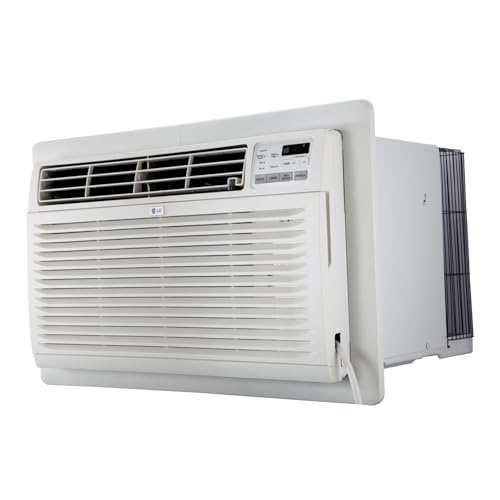
The second great stronghold of the manual format is the through the wall unit, the machine that lives permanently in a sleeved opening cut through an exterior wall rather than hanging in a window. Through the wall models serve apartment buildings, motels, granny flats, converted garages and substantial cottages where the owner long ago tired of seasonal window wrestling. A meaningful share of this segment is still sold with mechanical controls, because its buyers are often landlords, building managers and owners of older properties who prize interchangeability: when a unit fails after fifteen years, the replacement slides into the same sleeve, and a tenant or guest faces the same two knobs as before. Nothing about the building’s wiring, network or instruction binder has to change.
For a cottage with a permanent cooling spot, a through the wall mechanical unit has one more quiet virtue. It does not block a window. Cottages are frequently short on windows relative to their charm, and giving up the best one in the room to a seasonal box is a real sacrifice of light and view. The wall sleeve asks for a single act of carpentry, done once, and then the window stays a window forever. The trade is permanence: you cannot take the machine to a different room on a hot weekend, and the opening must be flashed and sealed properly or it becomes a winter draught with a grille on it.
Workshop, Garage and Outbuilding Models
A final, easily overlooked segment is the plain mechanical unit bought for spaces that are barely rooms at all: workshops, potting sheds, garages, pump houses and studios in converted barns. These environments are dusty, occasionally damp, and visited in bursts. Electronic controls dislike dust and condensation; mechanical switches tolerate both with indifference. A woodworker who wants the shop tolerable for an afternoon, or a gardener cooling a room where seedlings harden off, does not need scheduling or precision. They need a machine that starts when the knob turns after three idle months, without a flat remote battery or a board fault standing in the way. Much of the surviving demand for manual air conditioners comes from exactly these unglamorous jobs, and it is steady demand, which is one reason the format refuses to vanish.
Sizing a Manual Unit for a Cottage Room
Start with the Room, Then Discount for the Dial
Sizing guidance for manual units begins where all sizing guidance begins: with the floor area, the height of the ceiling, the direction the windows face, and the number of people and appliances adding heat. Cottages complicate each factor in characteristic ways. Ceilings may follow the roof line into a steep pitch, making the true air volume larger than the floor plan suggests. Walls may be thin, insulation modest, and a wood stove or an old range may share the space. A south facing wall of glass that makes February delightful can make July brutal. Work through the room honestly rather than hopefully, and if the calculation lands between two sizes, the manual format nudges the decision in a specific direction worth understanding.
Because a mechanical thermostat senses temperature at the unit and cycles across a wider band, a manual machine delivers its comfort in gentle waves. A slightly generous unit in a room with high heat gain will ride those waves comfortably. The same unit in a small, shaded, well sealed room will satisfy its thermostat quickly, rest, and restart often, moving air in bursts and removing less moisture than a smaller machine running longer, steadier cycles. In practice this means the old advice against oversizing applies with extra force here. When in doubt between two sizes for a small cottage bedroom, the smaller, longer running machine usually leaves the room feeling better by morning, even if the larger one can drag the temperature down faster at six in the evening. Whole house questions of matching capacity to a compact floor plan are explored further in best air conditioners for small homes, and the reasoning there transfers directly to choosing a single manual unit for the room that matters most.
Humidity Is the Hidden Half of the Job
Newcomers to cottage cooling often think in temperature alone, but in lake country, coastal country and river valleys, the moisture is the real adversary. Air at a tolerable temperature and high humidity still feels oppressive, still condenses on cold water pipes, and still feeds the mildew that haunts closed up buildings. A manual unit dehumidifies as a by product of cooling: moisture condenses on its cold coil and drains outside. It offers no dedicated dry mode and no humidity target, both of which some electronic models provide, so the owner manages moisture indirectly, by choosing sensible run times and settings. Leaving the fan on its lower cooling setting through a damp afternoon generally dries a room more thoroughly than blasting it cold for an hour and switching off, because the coil stays cold and wet for longer and the air passes over it more times.
Cottages in genuinely humid regions place the heaviest demands on this balance, and readers in those climates may want the broader discussion in best air conditioners for humid climates alongside this guide. The manual machine’s contribution to that fight is stamina rather than cleverness. Set at a moderate level and left to cycle for days, it steadily wrings water out of a closed cottage’s air and sends it dripping outside, which is most of what a seasonal building actually needs from any cooling system.
Installation Notes Specific to Mechanical Units
Level, Sealed and Free to Breathe
Installing a manual window unit involves no pairing, no network password and no app download, which leaves gloriously little to do beyond the physical job, and the physical job deserves the attention the electronics would otherwise steal. The cabinet must sit with a slight tilt toward the outdoors so condensate runs to the exterior rather than pooling at the indoor sill. The side curtains or filler panels must seal the gaps at the sash, because a manual unit has no way to compensate for the warm air leaking around it except by running its compressor longer. Foam weatherstripping where the sash meets the top of the cabinet, a support bracket under heavier models, and a check that the window frame itself is sound enough to carry the load are the whole craft. In older cottages with original wooden windows, that last check matters most; a rotten sill will not be improved by hanging a vibrating machine in it for a summer.
Through the wall installations trade the seasonal effort for a single careful one. The sleeve must be flashed into the wall’s weather barrier, pitched slightly outward, and sealed at its perimeter, and the unit’s rear grille needs clear space outdoors: shrubs grown up against it, a woodpile stacked in front of it, or a fence built too close will all strangle the airflow the condenser depends on. Mechanical units are forgiving machines, but no control system, simple or smart, can rescue a condenser that cannot shed heat.
Electrical Reality in Older Buildings
Cottages wired decades ago deserve a sober look before any air conditioner arrives. Manual units in the smaller sizes draw ordinary household current and plug into a standard outlet, while the largest window and through the wall models may need a dedicated circuit or a different plug configuration, and the nameplate, not the product listing, is the authority on which. What a manual unit will not do is soften its demands with clever electronics; its compressor starts with a direct, honest surge that weak circuits and long extension cords handle badly. Extension cords are not an acceptable answer for any window air conditioner, mechanical or otherwise. If the only outlet near the best window is across the room, the correct move is an electrician and a new outlet, and that job, done once, serves every future unit that window will ever host.
Living with the Trade Offs, Honestly Stated
No Timers, No Schedules, No Setbacks
The limitations of the manual format are real, and a guide that praised the knobs without naming them would be a poor friend to its readers. A manual unit cannot be told to start cooling an hour before you arrive on Friday, cannot ease off at two in the morning, and cannot follow a weekday and weekend pattern. If your cottage life runs on arrival rituals, the room will be warm when you open the door and will take its time coming down to comfort while you unpack. Some owners answer this with a plug in mechanical timer on the outlet, a device with its own rotating dial that suits the spirit of the machine, but a timer can only switch the whole unit on and off at the knob’s standing setting, and it introduces its own current rating questions that must be checked against the nameplate. Many owners simply accept the warm first hour as part of the cottage bargain, the same bargain that includes lighting the stove in winter rather than arriving to a preheated house.
Temperature Control Is Approximate, and That Cuts Both Ways
The numbered dial does not promise a degree, and the room’s temperature will wander across a band around whatever the dial achieves. For sleeping, for sitting, for most of cottage life, that band is perfectly comfortable, and some people honestly prefer it to the tight, slightly clinical constancy of an electronic unit cycling in short, frequent bursts. But there are rooms where approximation is not good enough. A nursery, a room where someone is recovering from illness, a workspace with heat sensitive materials or instruments, or a bedroom for a sleeper who wakes at the slightest warmth all argue for finer control than a bulb thermostat offers. The honest answer for those rooms is an electronic unit, and buying a manual machine for them out of nostalgia would be a mistake this guide would rather prevent than celebrate.
Efficiency Features Live Elsewhere
Modern electronic units earn their keep partly through refinements a mechanical design cannot match: variable speed compressors that sip power while holding temperature, sleep curves, occupancy sensing, and energy saver modes that stop the fan between cycles. A manual unit’s fan, on most models, runs whenever the mode knob calls for it, and its compressor is either fully on or fully off. Over a long season of heavy use in a primary home, that difference shows up in the electricity bill in a way that can justify the electronic machine many times over. The manual case rests on a different pattern of use: intermittent occupancy, moderate climates, smaller rooms, and buildings where reliability and restart behaviour matter more than squeezing the last efficiency from every hour of runtime. Where the pattern is daily, all summer, whole house cooling, the modern machine is usually the right purchase and the manual one the romantic one.
Care, Repair and the Long View
Maintenance a Mechanical Unit Actually Asks For
Looking after a manual unit is a short list, and every item on it is visible and physical. The filter, usually a washable mesh panel behind the front grille, needs rinsing whenever dust cakes it, which in a cottage near a gravel road may be often. The coil fins benefit from a gentle brush or vacuum each spring. The drain path at the back of the cabinet must be checked for the sludge and insect nests that block it, because a blocked drain announces itself as water on the floor or a sloshing sound on fan startup. The knobs themselves should be turned through their range occasionally in the off season if the unit stays installed, simply to keep the switch contacts exercised. None of this requires a manual thicker than a postcard, a service visit, or a diagnostic code, and a cottage owner already accustomed to maintaining a septic system, a wood stove and a dock will find the workload almost suspiciously light.
Fewer Things to Fail, and Cheaper Failures
Longevity is where the mechanical design quietly builds its strongest argument. The components most likely to end an electronic unit’s life are its control board and its sensors, parts that can be discontinued, that dislike power surges and damp storage, and whose replacement can approach the cost of a new machine. A manual unit’s corresponding parts are a rotary switch, a thermostat with a sensing bulb, a fan motor and a compressor: mature, generic, widely understood components that any appliance technician in any small town has met a hundred times. Switches wear and thermostats drift, and compressors do eventually fail, at which point replacement of the whole unit is usually the sensible course. But the path to that day tends to be longer and the failures along it simpler, which suits a building that may be two hours from the nearest showroom and is visited on weekends rather than lived in daily.
Storage reinforces the point. A window unit wintering in a barn or garage should be cleaned, dried thoroughly before it is put away, and kept upright so its oil stays where the compressor expects it. Electronics stored in unheated, condensing spaces develop corroded boards and mysterious faults; a mechanical machine stored the same way generally wakes in spring needing nothing but its filter rinsed and its knobs turned. Owners who have nursed a sophisticated unit through a damp winter of error codes will understand why that plainness has a cash value all its own.
Who Should Choose Manual, and Who Should Not
The Strong Cases
The clearest case is the intermittently occupied cottage in a region of unreliable power, where the self restarting behaviour protects the building between visits and the lack of standby draw suits a meter that mostly serves an empty house. Close behind is the rented or family shared cottage, where many hands operate the machine, instruction must fit on one line, and nobody’s phone should hold the keys to the cooling. Third is the secondary room problem: the loft, the bunk room, the workshop, the guest cabin, spaces cooled sometimes rather than always, where paying for connectivity buys nothing anyone will use. Fourth is the owner who simply values repairability and expects to keep a machine for a long time, maintaining it with basic tools and local help. In each case the manual format is not a compromise accepted for the sake of simplicity; it is the design that matches the building’s actual life.
The Weak Cases
Just as clearly, some buyers should walk past the mechanical models without regret. Anyone cooling a primary residence through a long, hot season will feel the efficiency gap and the coarse temperature control every single day. Anyone who needs the house cool on arrival, whether for a medically vulnerable family member, a pet travelling with them, or a work pattern that leaves no patience for a warm first evening, needs scheduling or remote control that knobs cannot provide. Anyone chasing the quietest possible bedroom will find that the quietest machines are the variable speed electronic designs, whose compressors can whisper along at low output rather than clunking on and off. And anyone furnishing a room where precise temperature protects something valuable, from instruments to wine to a recovering patient, should buy the precision. The manual unit’s virtues are genuine, but they are specific, and forcing them onto the wrong household serves nobody.
The Sound of a Mechanical Machine
Honest Noise, Evenly Spread
Noise deserves plain talk, because sellers of every kind of air conditioner describe their machines as quiet and cottages, with their thin walls and open rafters, forgive nothing. A manual unit makes the sounds its ancestors made: the steady wash of the fan, the deeper note of the compressor joining in, a soft clunk as the thermostat cycles the compressor off, and occasionally a gurgle or slosh as condensate moves through the cabinet. What it does not make are beeps, chimes, startup jingles or the faint electronic whine that some people hear from control boards in a silent room. Its noise is broadband and predictable, closer in character to rainfall on a roof than to anything mechanical in a modern kitchen, and many sleepers find that kind of sound easier to live with than a quieter machine whose pitch keeps changing.
It will not, however, win a contest against the best variable speed designs at their lowest settings, and light sleepers in small bedrooms should weigh that honestly. Placement helps more than specifications do. A unit seated firmly, with its cabinet sealed snugly into the window and no loose sash rattling in sympathy, sounds dramatically better than the identical machine hanging in a sloppy opening. Most of what owners describe as air conditioner noise in a cottage is actually the building joining in: a pane buzzing, a curtain rod trembling, a loose filler panel drumming. An hour spent with foam tape and a screwdriver during installation buys quiet that no control system, mechanical or electronic, can deliver later.
Manual Units Room by Room
The Sleeping Loft and the Bunk Room
Up under the roof is where cottage heat collects and where a small manual unit earns its keep most gratefully. Lofts and bunk rooms are typically cooled for a few hours in the evening and through the night, then left alone all day, a pattern that plays to every mechanical strength. The routine becomes ritual: climb the ladder at dusk, turn the knob, let the machine pull the day’s stored heat out of the roof space while everyone is down at the water or around the table, and return to a room that smells of cooled wood instead of a sun baked attic. Children in bunks, who can be trusted with exactly one instruction, manage a knob without a single follow up question, and the absence of a remote removes the small nightly drama of hunting for it among the blankets.
The Kitchen and Sitting Room
The main room asks more of a machine: cooking heat, bodies, a door that opens forty times a day. A mid sized manual unit handles it in the manner of an old farmhand, without finesse and without complaint, provided it is sized for the real load rather than the floor area alone. Expect to run it earlier and steadier than an electronic unit, starting it before the room becomes uncomfortable rather than asking it to rescue a space already saturated with heat and cooking moisture. Expect, too, to develop the cottage cook’s habit of turning the dial one notch cooler when the oven goes on and one notch back when the dishes are done. That small, physical conversation with the machine is the lived reality of manual control, and most people find it takes about two days to become automatic.
The Guest Cabin and the Studio Shed
Detached spaces are the manual format’s home ground. A guest cabin used six weekends a year, a studio in a converted shed, a sleepout for teenagers: each stands cold and dark most of the time, each may be opened by someone who has never visited before, and none justifies a connected appliance waiting on a network that the main house’s router barely reaches. A manual unit in the window, a one line note on the door, and the space is self explanatory. When the season ends, the machine comes out or is covered where it sits, and there is no account to close, no device to remove from an app, and nothing quietly drawing power in an empty building through the winter.
Buying Second Hand, and Knowing When Not To
Cottages attract second hand appliances the way porches attract rocking chairs, and manual air conditioners circulate through yard sales, estate clearances and the free listings of every small town each spring. The mechanical format is genuinely the safer used purchase: there is no board whose hidden corrosion will announce itself in July, and a seller can demonstrate the whole machine in a driveway in two minutes. Turn both knobs through their full range and feel for smooth, positive detents. Run it on its coldest setting for a quarter of an hour and confirm that the air from the grille turns properly cold, that the compressor cycles off when the thermostat dial is eased back, and that no grinding, screeching or frantic clicking joins the ordinary fan note. Check the filter, the coil fins and the drain opening, and look at the cord and plug with the suspicion any older electrical device deserves.
Walk away from a unit that cools weakly, because weak cooling in a machine this simple usually means the sealed refrigeration system is failing, and that repair is rarely worth its cost on an older box. Walk away from heavy rust in the cabinet’s base, from a fan that wobbles, and from any machine whose knobs spin freely without engaging anything, since a stripped control shaft can be harder to source than the part is worth. But a sound used manual unit, cleaned and installed carefully, can give a spare room a decade of service, and there is a particular satisfaction in cooling a hundred year old cottage with a machine whose entire user interface predates most of its furniture.
The Seasonal Rhythm: Spring Start Up and Autumn Shutdown
Opening the Cottage, Opening the Machine
Spring commissioning of a manual unit takes minutes and fits naturally into the opening weekend’s liturgy of water lines, shutters and mouse patrol. Rinse the filter and let it dry in the sun. Vacuum the coil face and the cabinet interior if the unit wintered in place. Confirm the drain is clear, the outdoor grille unobstructed, and the window seal still tight after another winter of the house moving on its foundations. Then turn the knob and listen: the fan first, the compressor a moment later, the room note settling into its summer register. There is no update to install, no clock to set, no connection to re-establish with a router that itself spent the winter unplugged. In a weekend crowded with small resuscitations, the air conditioner is the one appliance that simply resumes.
Putting It to Bed
Autumn asks slightly more care, and repays it. Run the fan alone on a dry day to clear moisture from the cabinet. Clean the filter a final time, wipe the grille, and check that no wasp has chosen the outdoor side as winter quarters. If the unit comes out of the window, store it upright, indoors if possible, with its cord loosely coiled and a note tied to the handle if it belongs to a particular room, a small kindness to whoever installs it next May. If it stays in place, fit a proper exterior cover that sheds water without sealing damp air inside, and turn the knob firmly to off. That single gesture is the whole winterising of the control system, and it will hold, unchanged, until the first warm weekend calls the machine back to work.
Storms, Surges and the Country Grid
Summer storms test cottage appliances in ways suburban equipment rarely faces, and the manual unit’s simplicity pays a second dividend here. The voltage on a rural line can sag when every pump and freezer along the road restarts at once, and it can spike when lightning finds the line a mile away. Electronic control boards are the most delicate part of any modern appliance under those conditions, and a board damaged by a surge often takes the whole machine out of service until a part arrives. A mechanical unit has no board to lose. Its switch, thermostat and motor tolerate the rough edges of country power with the indifference of equipment designed before delicacy was an option, and when the storm has passed and the line crews have done their work, the knobs are still set where the evening left them.
None of this makes the machine invulnerable, and sensible owners still unplug any air conditioner ahead of a severe storm if they are present, still keep the outdoor side clear of the branches that storms bring down, and still check on a unit that has ridden out a long outage before leaving it to run unattended again. A compressor that restarts against a system still equalising its pressures works harder than it should, and repeated rapid cycling during a flickering restoration can stress any machine, mechanical or not. The point is one of proportion: after the weather has done its worst, the manual unit asks for a glance and a listen, while a sophisticated machine may ask for a technician, a part number and a wait. At a cottage, where every repair competes with the short season itself, that difference is measured not in money but in summers.
The Household Agreement: One Dial, Shared by Everyone
Every shared house develops an unwritten constitution for its heating and cooling, usually after the first summer of mysterious settings and duelling adjustments. Manual control writes that constitution in hardware. Because the dial shows its position to anyone who glances at it, there is no hidden state, no schedule quietly overriding the room, no mystery about why the machine is running or resting. If the cottage rule is that the unit sits at a particular notch during the day and one notch cooler at night, the rule is visible, teachable and checkable in a second. Hosts of rental cottages report fewer messages about cooling than about almost any other system in the house, and the reason is not that guests love the temperature chosen for them. It is that the machine never surprises them, never locks them out of a menu, and never requires a call to ask what a blinking symbol means.
There is a small environmental grace in this arrangement too. A control that must be touched to be changed tends to be changed deliberately, and a machine with no standby appetite, no setback programming to fight, and no remote to aim idly from the sofa tends to run when someone has decided it should run, and rest when the evening cools on its own. Cottages have always taught that lesson, about fires built only when the room is actually cold and lamps lit only in occupied rooms. The manual air conditioner, alone among modern cooling machines, still belongs to that older household economy, and for many owners that belonging, as much as any specification, is what they are buying when they choose the plain box with two knobs.
A Note on Availability and Expectations
Shoppers should know that the mechanical range narrows a little more each year, and that finding a manual unit is easiest in spring, when seasonal stock is full, and in the smaller and through the wall sizes where demand for the format remains steady. Some retailers file these models under descriptions like mechanical control or manual thermostat rather than anything grander, and staff may steer you toward electronic versions out of habit, so it pays to state plainly at the outset that knobs are the requirement, not a preference to be upgraded away. If a beloved size has gone electronic only in one brand’s range, look at the neighbouring brands before concluding the format has vanished from that capacity altogether; the market is patchy rather than empty, and persistence is usually rewarded. Buy, if you can, from a seller whose return window covers your first visit to the cottage after purchase, because a machine can only truly be judged in the window it was bought for, on the first warm night it is asked to work. Keep the carton and the window kit complete until that night has passed, keep the receipt with the cottage’s other appliance papers rather than at home in a drawer, and write the purchase date on the cabinet’s side in pencil, a small habit borrowed from old workshops that makes every future conversation about the machine’s age a matter of reading rather than remembering.
Check prices on Amazon
Live listings for the shortlist in this guide are pulled from Amazon below, so prices and availability are always current at the moment you look.

A Short Buying Checklist for the Manual Shopper
- Confirm the control layout in person or from clear photographs: two knobs and a vent lever are the classic arrangement, and any small display or touch pad means the unit is a hybrid, not the fully mechanical machine this guide describes.
- Match capacity to the room with the sizing discipline described above, leaning toward the smaller of two candidate sizes for small, shaded rooms to avoid short, clammy cycles.
- Check the plug and circuit requirements on the nameplate against the cottage’s actual wiring, and plan a proper outlet rather than any cord based workaround.
- Measure the window or the wall sleeve twice, including the sill and frame condition, and budget for a support bracket and sealing materials in the same trip.
- Ask how the filter comes out and whether it is washable, because that thirty second job, repeated for years, is the maintenance task you will actually perform.
- Think through the outage question for your own building: if the house stands empty in hot months, the self restarting behaviour may be worth more than every electronic feature combined.
- Decide honestly whether anyone in the household needs timers, precise temperatures or remote control, and let that answer, not nostalgia, make the final call.
Stand in a hardware store in May and the manual units can look like leftovers from another era, plain boxes among glowing displays. Look again with a cottage in mind and the picture reverses. The glowing displays belong to houses with reliable power, permanent occupants and someone always home to press the right button. The plain box belongs to the house at the end of the gravel road, the one that rides out storms alone, hosts a dozen different hands across a summer, and asks only that its machines be understandable, restartable and hard to confuse. For that house, two knobs are not a shortage of features. They are the feature, and on the first hot night after a long drive, when the dial clicks, the fan turns and the room begins its slow settle toward cool, nobody in the cottage will wish the machine had an account, a password, or a single glowing light to its name.