Our Top Picks
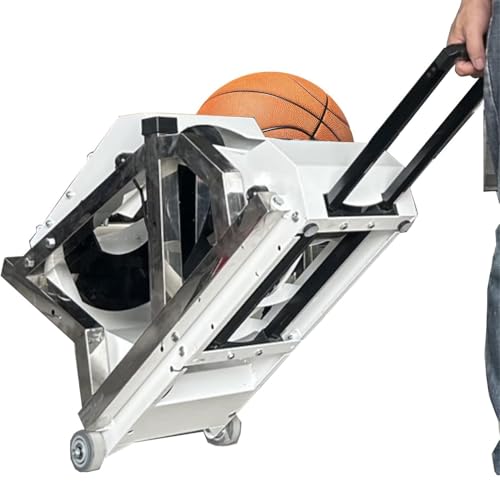
 Basketball Rebounding Machine Shooting Device with Automatic Touch31.5 x 19.7 x 17.7 inches71.6 poundsCheck on Amazon
 Basketball Shot Trainer with 180° Rotating Return Chute18 inches diameter45.2 x 14.5 x 7 inches28.8 poundsCheck on Amazon
 jvsufuik Basketball Rebounder MachineStandard Basketball Court Size39 x 39 x 79 inches33 poundsCheck on Amazon


What's inside
- How to read this guide
- What a powered rebounding machine actually does
- Powered machines versus passive return systems
- How the collection system gathers the ball
- How the return mechanism sends the ball back
- Pass distance, feed interval, and the rhythm of a session
- Release height, pass angle, and shooting locations around the arc
- Court space, ceiling height, and the footprint around the hoop
- Folding, wheels, and the reality of storage
- Power supply: cords, batteries, and cable discipline
- Ball capacity, multiple balls, and keeping the drill flowing
- Rim height compatibility and different hoop setups
- Indoor use, outdoor use, and weather exposure
- Motor noise and practicing around other people
- Safety systems, supervision, and sensible rules
- Assembly, daily setup, and the first two weeks
- Who benefits most, and the limits by age and skill
- Maintenance, wear parts, and long-term ownership
- Designing better drills with a machine
- A practical buying checklist
- Check prices on Amazon
- Common misunderstandings worth clearing away
As an Amazon Associate I earn from qualifying purchases. This post may contain affiliate links at no extra cost to you.
How to read this guide
This guide covers one narrow class of training equipment: powered basketball rebounding machines that collect a shot and then actively pass the ball back to the shooter. As an Amazon Associate we earn from qualifying purchases. That disclosure belongs at the front because the way these machines are sold can blur important distinctions, and readers deserve a clear starting point before any discussion of motors, feed rates, or folding frames.
Everything that follows is built from published specifications, manufacturer documentation, and careful comparison of how different designs handle the same physical problem. No single model is held up as the answer for every driveway, garage, or school gym. Instead, the guide walks through the working parts of the category — the collection net, the return mechanism, the power supply, the safety systems — so you can judge any machine you encounter against your own court, your own hoop, and the players who will actually use it.
A note on language will help throughout. When this guide says a machine rebounds, it does not mean the gentle roll-back you get from a sloped net hanging under a rim. It means a motor-driven system gathers the ball after a make or a miss, moves it through a chute or track, and delivers it outward again at a chosen distance and pace. That active return is the defining feature, and it is also the source of nearly every trade-off in cost, noise, size, and maintenance discussed below.
What a powered rebounding machine actually does
A powered rebounding machine exists to solve a simple inefficiency in solo shooting practice. Without help, a player shoots, walks or jogs to retrieve the ball wherever it bounced, dribbles back to a spot, and shoots again. Much of the session is spent chasing rather than shooting, and the rhythm that makes practice valuable — catch, set, release, reset — keeps breaking. A machine restores that rhythm by returning the ball to the player again and again, so repetitions accumulate quickly and footwork patterns can be repeated from the same spot or a planned sequence of spots.
The basic cycle has four stages. First, the shot leaves the player’s hands and travels toward the hoop. Second, a large collection system, usually a wide net assembly suspended below and around the backboard, intercepts the ball whether the shot went in, hit the rim, or struck the board. Third, the net funnels the ball toward a central channel that feeds it into the return mechanism. Fourth, a motor-driven launcher — in some designs a pair of spinning wheels, in others a rotating arm or a belt-driven track — sends the ball back out toward a programmed position on the court.
It helps to picture the machine as two systems bolted together. The collection system is passive in itself — netting, framing, and gravity doing the work — but it must be sized and angled correctly or nothing downstream matters. The return system is the active half, with a motor, controls, and moving parts that need power and periodic attention. Buyers often focus on the second half because it carries the impressive numbers, yet experienced coaches will tell you the collection half decides the real-world capture rate, and a missed capture is a broken repetition just as surely as a weak pass.
Powered machines versus passive return systems
Passive return systems deserve a brief, respectful explanation because they serve many players perfectly well and cost a fraction of what a powered machine requires. A passive system is typically a ramp or net chute attached beneath the rim. When a shot drops through, the ball lands in the chute and rolls back toward the free-throw line or another fixed point. There is no motor, no power cord, and nothing to program. Setup takes minutes, storage takes almost no space, and there is very little that can break.
The limits of that simplicity are equally clear. A passive ramp only returns made baskets, or at best balls that fall directly into its narrow catchment. Misses that carom off the rim head wherever physics sends them, and the player retrieves them by hand. The return point is fixed by the angle of the ramp, so the player cannot receive passes at the elbow, the corner, and the top of the arc in one continuous drill without stopping to adjust equipment or reposition. The return speed is whatever gravity provides, which means the tempo of the session is not adjustable.
A powered machine addresses each of those limits directly, at the price of complexity. Its wide collection net is designed to gather makes and most misses alike, including balls that glance off the board or drop short off the front of the rim. Its launcher can vary pass distance and interval, so a drill can move around the perimeter or stay locked on one spot for a hundred repetitions. Its tempo is set by the player or coach rather than by a slope. For a serious player logging long solo sessions, or a coach running stations for a whole squad, those differences are substantial.
How the collection system gathers the ball
The collection system is the broad net structure you see surrounding the lower half of the backboard in photographs of these machines. Its job is to turn a chaotic event — a basketball striking rim, board, or net at speed, then falling in an unpredictable direction — into an orderly one, with the ball arriving at a single collection point every time. Designers achieve that with width, depth, and slope. A wider net catches balls that rebound outward to the sides. A deeper net, extending further below the rim, catches balls that drop nearly straight down after swirling around the iron. Correct slope ensures that a ball landing anywhere in the net keeps moving toward the center instead of settling into a sagging pocket.
Net material and frame construction matter more than they first appear. The netting must absorb the energy of a falling ball without bouncing it back out, which is why most designs use a relatively soft, heavy mesh rather than a taut surface. The supporting frame, often a set of arms or hoops that hold the net open, must hold its shape under repeated impacts while still folding away for storage. In manufacturer documentation, look for how the net attaches to the frame — hooks, sleeves, and clips each behave differently over a season of use — and whether replacement netting is offered as a spare part, because netting is the component most exposed to sun, friction, and general wear.
Capture rate is the honest measure of a collection system, and it is rarely a headline number, so you have to reason about it from geometry. Consider where your misses actually go. A player who shoots mostly mid-range jumpers produces rebounds that fall within a few feet of the hoop. A player practicing three-pointers produces longer, livelier rebounds, including balls that strike the back of the rim and kick outward beyond a narrow net. If the published dimensions of a net seem modest relative to the shots you plan to take, expect more escapes, and expect each escape to cost you the rhythm the machine was bought to protect.
How the return mechanism sends the ball back
Once a ball reaches the launcher, the machine must accelerate it smoothly from rest to a speed that carries it to the chosen spot without drilling the receiver or floating so softly that the catch feels nothing like a real pass. Two broad approaches dominate the category. The first uses counter-rotating wheels: the ball passes between two motor-driven wheels that grip it and propel it outward, much like the pitching machines used in other sports. The second uses a mechanical arm or a belt-and-paddle arrangement that sweeps or pushes the ball along a short track and releases it toward the target area.
Wheel-based launchers tend to offer fine control over ball speed and, by adjusting the relative speed of the wheels, can impart a degree of spin. Backspin on a returned ball is more than a cosmetic detail. A pass that arrives with gentle backspin sits softly in the hands and mimics the feel of a good chest pass from a teammate, while a ball with no spin or slight topspin can feel dead or push through the fingers. Manufacturer documentation for wheel systems usually describes speed settings in general terms, and the practical question for a buyer is how wide the usable range is — gentle feeds for a young player standing close, and firmer feeds for an adult waiting beyond the arc, ask very different things of the same wheels.
Arm and belt systems have their own virtues. They often handle balls of slightly different sizes more forgivingly, because the ball is carried rather than squeezed, and they can be less sensitive to a ball that is damp or dusty from an outdoor court. Their passes may vary a touch more in pace from one delivery to the next, which some coaches actually welcome, arguing that a perfectly identical pass trains a perfectly narrow skill. For most home users, either mechanism works well when it is well made; the deciding factors are usually noise, maintenance access, and how the launcher behaves when a ball enters it slightly off-line.
Pass distance, feed interval, and the rhythm of a session
Adjustable pass distance is the feature that turns a rebounding machine from a novelty into a training tool. In practical terms, distance settings correspond to the familiar geography of the court: close feeds for work around the paint and the short corners, medium feeds for the free-throw line and the elbows, and long feeds for the wings and the top of the three-point arc. Typical powered machines cover a span from a few feet out to roughly the distance of a long perimeter shot, with some designs reaching further for half-court drills. What matters is not the single longest number in a specification sheet but the number of distinct, repeatable stops along the way, because a drill that progresses outward in small steps needs graduations, not just extremes.
Feed interval — the pause between one pass and the next — shapes the workout just as much. Short intervals create conditioning-style drills in which the player shoots, relocates, and shoots again with minimal rest, building stamina and a quick release. Longer intervals suit form work, where the player wants time to check foot placement, watch the ball flight, and reset mentally before the next repetition. Published ranges for interval settings commonly run from a couple of seconds up to ten seconds or more. Consider honestly which end of that range your training will live at, and be wary of a machine whose quickest setting is still leisurely if fast catch-and-shoot work is your main goal.
Players who train alone should also think about how settings are changed mid-session. Controls mounted on the machine itself mean walking back to the hoop to adjust distance or tempo, which breaks a drill. Remote controls, whether a small handheld unit or a phone-based interface on some designs, let the player change the plan from the shooting spot. Manufacturer documentation will make clear which arrangement a given design uses. For a coach standing courtside, machine-mounted controls are perfectly convenient. For a solo player in a driveway, a remote can be the difference between a fluid hour and a session full of interruptions.
Release height, pass angle, and shooting locations around the arc
Where the ball leaves the machine matters almost as much as how far it travels. Release height determines the arc of the incoming pass and therefore the catch position the player practices. A low release produces a flatter, quicker pass that arrives around waist height, resembling a feed from a guard driving and kicking the ball out. A higher release drops the ball into the shooting pocket from above, closer to the feel of an overhead pass or a lobbed entry reversed back out to the perimeter. Machines differ in whether release height is fixed by their frame geometry or adjustable within a modest range, and that detail is worth confirming in the manual before purchase rather than assuming flexibility that is not there.
Pass angle is the horizontal half of the same question. A machine that can only deliver straight ahead, toward one predetermined spot, forces the player to do all the moving. A machine whose launcher rotates — either automatically through a programmed sequence or by manual repositioning — can serve the corners, wings, elbows, and top of the key in turn. Published specifications often express this as a number of shooting locations or a rotation range in degrees. The meaningful translation is simple: count the spots in your favorite drills, from the left corner around to the right corner, and check that the machine can reach each of them without being dragged across the court and set up again.
Programmed sequences deserve a word of their own. Some designs let a coach or player define an order of locations — corner, wing, top, opposite wing, opposite corner, for example — and then cycle through it at the chosen interval. That capability supports the classic around-the-world style of drill and, more importantly, trains the footwork of relocating after each shot, which is how perimeter players actually earn their attempts in games. Other designs randomize locations within a chosen range, which sharpens reaction and balance. If sequence programming matters to you, look for documentation that describes how many locations a sequence can hold and whether distance and interval can vary within it, because a sequence that changes location but not tempo is only half a drill.
Court space, ceiling height, and the footprint around the hoop
Powered rebounding machines are not small, and the space they need extends well beyond the rectangle their wheels occupy. The collection net reaches outward and upward around the backboard, so the first measurement to take is the clear area immediately around and beneath your hoop. A machine set up under a garage-mounted board with storage bins stacked nearby will shed balls into those bins all session. A machine on a driveway hoop needs room behind and beside the pole, because the net and frame extend past the footprint of the base, and a ball that escapes sideways should land on open pavement rather than in a flower bed or a neighbor’s yard.
Ceiling height is the indoor version of the same problem. A regulation rim sits ten feet above the floor, and the collection net rises above and behind the board, while the ball itself arcs higher still on its way to the hoop. In a home gym or a low-ceilinged garage, check the clearance at the peak of a normal shot’s flight, not just the height of the equipment. Many garages have openers, rails, light fixtures, and stored items hanging exactly where a three-pointer wants to travel. Manufacturer guides typically state a recommended minimum ceiling clearance; treat that figure as a starting point and then stand at your usual shooting spots and look up along the line of a shot.
The shooting area itself needs thought as well. If the machine is set to deliver its longest passes, the player will be standing at a corresponding distance, and that space must be usable court — flat, dry, and free of the slope that many driveways have for drainage. A pronounced driveway slope changes shot mechanics in ways that can quietly distort practice, and it also affects how escaped balls roll. None of this disqualifies a driveway setup, which is where a great many of these machines happily live, but it argues for walking the whole practice area with a tape measure and a ball before committing to a purchase.
Folding, wheels, and the reality of storage
Almost every powered rebounding machine advertises that it folds, and almost none of the advertisements convey what folding actually involves at the end of a tiring practice. In typical designs, the collection net collapses or detaches, the supporting arms swing inward, and the main body compacts into a narrower, taller shape that can be rolled away. The published folded dimensions tell you whether that shape fits through your doorway, into your storage corner, or alongside a parked car. Measure the route, not just the destination: a machine that fits its closet but cannot make the turn through the hallway door will end up living on the court, exposed to weather and in everyone’s way.
Wheels are the other half of mobility. Larger wheels roll more easily over expansion joints, gravel edges, and the lip between a garage floor and a driveway, while small casters are happier on smooth indoor surfaces. Some designs use two fixed wheels and rely on tilting the unit back like a hand truck; others sit on four casters and glide in any direction but can wander slightly on sloped ground unless they lock. Published specifications usually give wheel diameter, and that single number predicts a surprising amount about how pleasant the daily move will be. If your routine involves crossing rough ground, favor diameter over elegance.
Weight interacts with both folding and wheels. These machines commonly weigh enough that moving one is a deliberate task rather than a casual nudge, and the weight is not evenly distributed — motors and launchers concentrate mass low and to one side. A solo user should be realistic about handling that bulk twice a day, every day, in all weathers. Handles, grip points, and the balance of the folded unit, all visible in manual diagrams, matter as much as the headline weight figure. A slightly heavier machine that rolls balanced and true can be easier to live with than a lighter one that fights you at every doorway.
Power supply: cords, batteries, and cable discipline
Most powered rebounding machines run from a standard household outlet, and the humble power cord shapes the session more than any specification sheet admits. Cord length determines how far the hoop can be from the nearest outlet. Published cord lengths vary, and many owners will need an outdoor-rated extension lead to reach a driveway hoop from a garage outlet. That is a normal arrangement, but the extension must be rated for the load and the environment, kept out of the shooting lanes where feet and rolling balls can snag it, and routed so that a tripped cord cannot drag the machine or pull the plug half out of its socket mid-drill.
Battery-powered designs trade that tether for freedom of placement. A machine that carries its own battery can work at a park court, at the far end of a long driveway, or anywhere an outlet is impractical. The costs of that freedom are runtime limits, charging routines, and eventual battery replacement. Manufacturer documentation for battery models should state expected runtime per charge under typical feed rates, and it is wise to translate that into your own sessions: an hour of rapid feeding draws more than an hour of slow form work, and a battery that comfortably covers a weekday practice may fall short of a long weekend session with several players rotating through.
Electrical safety around courts deserves plain language. Courts get wet — from rain, from sprinklers, from spilled drinks, from sweat. Keep connections off damp ground where the manual advises it, never operate a corded machine in standing water, and inspect cords for nicks where they pass door thresholds or rub against the machine’s own frame. Ground-fault protection on the circuit feeding an outdoor setup is a sensible precaution that an electrician can advise on. None of this is exotic; it is the ordinary care that any mains-powered equipment used outdoors deserves.
Ball capacity, multiple balls, and keeping the drill flowing
A rebounding machine changes character depending on how many balls are in play. With a single ball, the rhythm is strict: shoot, wait for the return, shoot again. That rhythm is excellent for form work because each repetition includes the full cycle of shot and recovery, and the player cannot rush. With several balls loaded or in circulation, the tempo can rise sharply, because while one ball is in flight or being collected, another is already on its way out. Published specifications for these machines describe how many balls the collection and feed system can handle in circulation, and typical designs accommodate a small handful rather than a ball-cart full.
Capacity interacts with the collection system in a way buyers sometimes miss. Multiple balls arriving at the net in quick succession — after a made shot and a putback, say — must queue without jamming at the funnel. Designs with a guided feed track handle that queue in order; simpler hoppers can occasionally present two balls to the launcher at once, which better mechanisms detect and refuse rather than forcing. If you plan to train with several balls, look in the documentation for how jams are cleared and whether the machine pauses itself when the feed path is blocked. A jam that takes ten seconds to clear is a nuisance; a jam that requires tools and partial disassembly is a session-ender.
Ball size and condition matter to the whole system. Regulation balls come in different sizes for different age groups and leagues, and a machine adjusted for one size may grip or carry another size inconsistently. Wheel launchers are the most sensitive to diameter and surface texture, because their grip depends on compression against the ball. Worn, slick, or slightly under-inflated balls behave differently from fresh ones, and a machine that feeds erratically is often simply reporting that its basketballs need attention. Keeping practice balls clean, correctly inflated, and reasonably matched in size is the cheapest performance upgrade available to any owner of this equipment.
Long sessions in warm spaces raise a practical comfort point that is easy to overlook when all attention is on the hoop, so for players planning extended solo work in a stuffy garage, our notes on staying cool during training point toward best cooling towels for sports as a related read.
Rim height compatibility and different hoop setups
Not every hoop stands at regulation height, and not every machine accommodates that variety equally well. Youth leagues play on lowered rims, many home systems adjust from well below regulation up to the full ten feet, and fixed in-ground installations never move at all. A rebounding machine’s collection net and launcher are aligned relative to the rim, so the published compatibility range — the span of rim heights a design can be set up for — is one of the first specifications to check against your own equipment. A machine aligned for a full-height rim but clamped under a lowered one will collect poorly and pass from the wrong height, and no amount of adjustment elsewhere fully compensates.
The type of hoop matters alongside its height. Portable systems with a base and an angled pole present different mounting geometry from in-ground posts or wall-mounted boards, and the machine’s frame must clear the pole, the base, and any height-adjustment mechanism behind the board. Breakaway rims, which flex under load, interact with a collection net differently from rigid rims, because the whole assembly moves slightly on hard impacts. Manufacturer fitment guides usually list the hoop styles a design suits and the clearance it needs behind and below the board. Reading that page of the manual before ordering saves the particular frustration of a machine that almost fits.
Households with players of different ages face a specific version of this puzzle. A machine that will serve a ten-year-old on a lowered rim this year and a teenager at full height in three years needs an adjustment range spanning both, and the adjustment itself should be something a parent can perform without dismantling the net assembly each time the rim moves. Documentation that describes height changes as a short, tool-light procedure is a good sign; a procedure buried in the assembly chapter, requiring the original two adults and an afternoon, is a warning that the rim will simply never get moved.
Indoor use, outdoor use, and weather exposure
Where a machine lives shapes what it must withstand. Indoor machines in school gyms and training facilities enjoy flat floors, controlled temperatures, and protection from rain, but they share space with other activities and often must be stored in crowded equipment rooms. Outdoor machines on driveways and home courts face sun, dust, temperature swings, and the occasional shower that arrives mid-session despite the forecast. Published guidance for a given design should state plainly whether it is intended for outdoor exposure, occasional outdoor use with prompt storage, or indoor service only, and that statement deserves to be taken at face value rather than treated as legal caution.
Rain policy should be decided before the first cloud appears. Electrical components and open water do not mix, and a machine caught by a sudden shower should be powered down, unplugged if corded, and dried before its next use, following whatever the manual specifies for moisture exposure. Balls used in wet conditions also change the launcher’s behavior, slipping where a dry ball grips, so a session resumed on a drying court may feed inconsistently until ball surfaces dry out. Patience here is not fussiness; it is how a machine survives to its third and fourth seasons.
Temperature extremes complete the picture. Batteries deliver less in cold weather, lubricants thicken, and plastics grow less forgiving of impacts, so a machine used through a northern winter in an unheated space will feel different from the same machine in spring. At the other extreme, a motor working hard in summer heat during long rapid-feed sessions needs the ventilation its designers intended, which means resisting the urge to drape towels or store items against its housing. The manual’s environmental section, often skipped, is in fact a short course in keeping the machine’s performance stable across the year.
Motor noise and practicing around other people
Every powered machine makes noise, from three sources layered together: the motor and launcher mechanism, the ball striking the collection net and frame, and the ball bouncing on the court itself. The last of those is ordinary basketball noise that neighbors already accept. The first is new — a mechanical whir, click, or thump repeated hundreds of times per session — and it is the layer most likely to draw comment in a quiet neighborhood, a shared gym, or a home where someone works in the next room.
Published noise figures, where manufacturers provide them, are usually given as a decibel level at a stated distance, and they describe the launcher’s peak rather than the average texture of a session. Use them for rough comparison between designs rather than as a promise about your driveway. Hard surroundings — garage walls, fences, the side of a house — reflect and amplify mechanical sound, while open space lets it dissipate. The same machine can seem modest on an open court and intrusive in a narrow side yard, which is another reason the trial of any setup begins with standing where your nearest neighbor stands and simply listening.
Noise is also diagnostic information for the owner. A launcher that develops a new rattle, a wheel that begins to whine, or a feed track that starts clunking where it once clicked softly is reporting wear or looseness before anything actually fails. Learning the machine’s normal soundscape during its first weeks — unglamorous as that sounds — turns every later session into a passive inspection, and small looseness corrected with a tightened fastener today is a breakdown avoided in the middle of a training block.
Garage sessions that double as general fitness space benefit from thinking about the floor as a whole, and readers arranging a basement or garage training corner may find a useful companion in best basement workout rugs for the areas away from the court itself.
Safety systems, supervision, and sensible rules
A rebounding machine concentrates several modest hazards in one place: moving wheels or arms that can catch fingers and clothing, a motor that should never be probed while energized, a tall frame that can tip if climbed or hung upon, and a stream of basketballs arriving at speed toward a person whose attention is on the hoop. None of these hazards is unusual for sports equipment, and the designs in this category address them with a familiar toolkit — guards over moving parts, sensors that pause the feed when the path is obstructed, and controls that require deliberate action to start the launcher.
Guards deserve a close look in any manual you review. The best arrangements fully shroud the pinch points where a ball enters the wheels or where an arm sweeps through its arc, while still allowing the owner to clear a jam safely after switching the machine off. If clearing a routine jam requires reaching past a guard while the unit is live, that is a design compromise you should weigh seriously, especially in a household where an impatient teenager will be the one clearing it. Documentation photographs usually show guard coverage clearly, and this is one area where a picture settles questions that specification tables leave open.
Sensors vary in sophistication. Simple designs detect a ball seated correctly in the feed position and refuse to fire on an empty or misaligned feed, which prevents both dry cycling and erratic passes. More elaborate arrangements pause the machine when a hand or a second ball intrudes into the launch path. Either way, the rule for users is constant: a sensor is a backup, not a permission. Hands stay out of the mechanism, loose sleeves and drawstrings stay clear, and long hair gets tied back around any machine with rotating parts, exactly as it would around shop equipment or a treadmill.
Supervision rules scale with age. Older teenagers who have been taught the setup routine can reasonably run sessions alone, provided the household agrees on what alone means — machine off before any adjustment, unplugged before any jam is cleared, and no bystanders standing in the pass lane or behind the net where escaped balls collect. Younger players need an adult present, not as a formality but because their judgment about moving machinery is still forming and their shooting sessions attract siblings, friends, and pets into the working area. The machine does not know who wandered into its line of delivery; the adults in charge have to be that awareness.
Finally, agree on the standing rules for spectators. A rebounding machine creates a natural theater — people drift toward the sides of the court to watch, which is exactly where long rebounds and wide passes travel. Marking a casual boundary, even with a couple of cones or a chalk line, keeps watchers in the safe zones behind the shooter and to the rear of the machine. It takes thirty seconds, it survives the whole session, and it prevents the one kind of accident that no guard or sensor on the machine itself can address.
Assembly, daily setup, and the first two weeks
Assembly is the buyer’s first real encounter with a machine’s design philosophy, and it is worth approaching with patience and the full manual open. Typical assemblies involve the base and launcher unit, the net frame, the netting itself, and the control connections, and manufacturers generally estimate the job in the range of a couple of hours for two adults working methodically. The sequence matters: frames built out of order must be partly undone, netting attached before the frame reaches full height is far easier than netting wrestled onto a finished structure, and every design has one step that only makes sense if a particular fastener was left loose two steps earlier. Reading the whole procedure before touching a tool is the oldest advice in any manual because it keeps being right.
Daily setup, as distinct from first assembly, is the routine that decides whether the machine gets used on busy days. Time yourself honestly during the first week: unrolling or unfolding the unit, positioning it under the hoop, connecting power, loading balls, and setting distance and tempo. If that routine runs long or involves a frustrating step — a stiff latch, a net corner that always snags — usage will quietly shrink to weekends. Small optimizations help disproportionately: a marked floor position so alignment is instant, the cord stored coiled on the machine rather than in a separate closet, and a default control setting left in place for the most common drill.
Expect the first two weeks to include calibration of your own expectations. Balls will escape the net in a particular direction until you nudge the frame. One shooting spot will receive slightly awkward passes until you adjust the launcher angle by a degree. A young player will need a few sessions to trust the timing of the return and stop flinching from firm passes. All of that is normal settling-in for equipment of this complexity, and it is why judgments formed on day one — glowing or grim — should be held loosely until the routine has had time to become a routine.
Who benefits most, and the limits by age and skill
The clearest beneficiaries of a powered rebounding machine are players in the long middle of development: good enough to have a repeatable shooting motion, hungry enough to want hundreds of repetitions, and old enough to run structured drills without constant direction. For that player, the machine multiplies the value of every practice hour, because nearly all of the hour becomes shooting rather than retrieving. Shooting percentages in practice climb, not through magic, but through the arithmetic of more attempts with better rest intervals and consistent pass delivery.
Coaches and trainers form the second clear group. A machine lets one coach supervise a high-volume shooting station while giving attention elsewhere, and it standardizes the station from player to player, which makes comparisons of form and output fairer. Team settings also exploit the multi-location programming discussed earlier, rotating a line of players through perimeter spots at a set tempo. In that environment the machine’s capacity, durability, and jam-clearing speed matter more than its subtler adjustments, and buying decisions should be weighted accordingly.
Younger players sit in a more qualified category. A child still learning to hold and release a ball correctly gains little from a high feed rate, and may gain bad habits from rushing to match the machine’s tempo. Used gently — slow intervals, short distances, an adult setting every drill — a machine can make practice feel like a game and build enthusiasm, which at that age is the real curriculum. But the honest assessment for many families is that a young beginner needs a lowered rim, a smaller ball, and a patient rebounder in human form more than any powered equipment, and that the machine becomes a sound purchase a few years later.
At the other end of the spectrum, advanced players should examine the ceiling of a machine’s capabilities before buying. A strong shooter training for competition needs passes that arrive at game speed, at varied heights, to spots all around the arc, delivered for the length of a serious workout without fading. Some designs meet that standard comfortably; others are built for recreational volumes and begin to feel limiting — in feed rate, in distance, in session endurance — exactly when the player is working hardest. Manufacturer documentation aimed at programs and facilities, rather than households, is usually the signal that a design was engineered for that heavier duty.
Maintenance, wear parts, and long-term ownership
Owning a powered rebounding machine means owning a small electromechanical system, and its long-term happiness depends on a short list of recurring attentions. The netting leads that list. Inspect it monthly for frayed strands, stretched pockets where balls have begun to linger, and attachment points working loose. A ball that hesitates in the net instead of funneling cleanly is often reporting net wear weeks before a visible tear appears. Replacement netting is a normal consumable for this category, and confirming its availability before purchase is wiser than discovering its absence in year two.
The launcher’s contact surfaces come next. Wheels accumulate rubber residue and dust that change their grip; tracks and arms collect grit that changes their timing. Cleaning guidance in the manual — usually a matter of wiping surfaces with appropriate, mild methods while the machine is off and unplugged — restores consistency that owners sometimes chase mistakenly through control settings. Resist the urge to apply improvised lubricants or grip compounds anywhere the documentation does not invite them, because residues migrate onto the balls and then onto everything else, including the court.
Electrical and structural checks round out the routine. Cords should be examined along their whole length for abrasion, plugs for bent or scorched pins, and switches for positive, unambiguous action. The frame’s folding joints and wheel axles deserve a look for developing play, since a joint that wobbles under load will not improve with time. Batteries, where fitted, follow their own calendar: charge them as the documentation directs, avoid storing them fully depleted through a long off-season, and expect gradual capacity loss across years of service rather than treating it as a defect when it arrives.
Anyone outfitting a shared training room around a machine like this will also be choosing seating for waiting players and parents, and the comparison collected at best captain chairs for exercise sits naturally alongside that planning.
Designing better drills with a machine
Equipment this capable tempts players into the laziest possible session: stand in one spot, shoot several hundred times, go inside. That session has some value — repetition grooves a motion — but it leaves most of the machine’s training power unused and can entrench a flat-footed, stationary style that games punish. A better session is built like a good lesson, in blocks, each block with a purpose the player can state in one sentence.
Begin with a form block at close range and a slow interval, where the only goals are balance, a clean catch into the shooting pocket, and a full follow-through held until the ball reaches the rim. Move next to a relocation block, in which the machine serves two or three neighboring spots in sequence and the player practices the small shuffle, hop, or one-two step that real perimeter movement demands. Follow with a conditioning block at a brisk interval from a favorite spot, where the score that matters is not makes but whether the shooting motion in the final minute looks like the motion from the first. Finish with a short free block — player calls the spots, machine obeys — because autonomy at the end of practice is both a reward and a rehearsal for self-directed training.
Record something. It need not be elaborate: attempts and makes per spot, kept in a notebook or a phone note, transform vague impressions into knowledge across a month. Players discover that their left corner is quietly ten points worse than their right, or that their percentage collapses at one particular interval, and those discoveries aim the next sessions better than any general resolution to practice more. A machine makes such records easy to keep honestly because the conditions — same passes, same spots, same tempo — stay stable enough for the numbers to mean something.
Vary one variable at a time when diagnosing a problem. If shots are missing short late in sessions, the candidates include tired legs, a rushing tempo, and passes arriving lower as a battery fades or a ball loses pressure. Changing the interval, checking the ball, and watching the pass height in turn will find the culprit; changing everything at once finds nothing and teaches nothing. That disciplined approach is the real difference between owning training equipment and being trained by it, and it costs nothing but attention.
Recovery between sessions is part of the program too, and players who stack shooting days back to back should treat hand and forearm care, sleep, and simple tidiness of the practice space as seriously as drill selection; even the humble habit of rotating clean towels, the subject of best workout towels, keeps grips dry and sessions comfortable.
A practical buying checklist
Start the checklist with your court, not with any product. Write down the rim heights you will use, the hoop style and backboard size, the clear space around and beneath the hoop, the ceiling or open-sky situation above your shooting spots, the distance to the nearest outlet, and the storage route with its tightest doorway. A machine that fails any one of those measurements is not a bargain at any specification level, and eliminating designs on fit first prevents the common error of falling for a feature list and then negotiating with reality.
Next, translate your training into demands. List the shooting spots your drills actually use and confirm the launcher reaches them. Decide whether you will train mostly alone, which elevates the value of remote adjustment, or with a coach or parent present, which relaxes it. Estimate your longest typical session and compare it against battery runtime or cord practicality. Count the balls you realistically want in circulation. Each answer narrows the field more usefully than another hour spent comparing headline feed rates.
Then examine the ownership details in the documentation: assembly time and whether it needs two adults, folded dimensions and weight, net replacement availability, cleaning procedures, jam-clearing method, and the stated environment — indoor only or outdoor tolerant. Look for the safety descriptions: guard coverage, feed sensors, and behavior after a power interruption. These pages are less exciting than the performance claims and far more predictive of your second year with the machine.
Finally, apply a whole-household test. Who moves the machine, and can they do it on a wet Tuesday in February? Where does it sleep, and what currently lives there? What hours will it run, and who else hears it? Which adult owns the monthly inspection? A purchase that survives those questions with comfortable answers is very likely to be used weekly for years, which is the only return on investment this category has ever really offered.
Check prices on Amazon
Live listings for the shortlist in this guide are pulled from Amazon below, so prices and availability are always current at the moment you look.

Common misunderstandings worth clearing away
The second is that capture is automatic. No net gathers every ball. Shots that hit the side of the board, airballs that fall short of the whole apparatus, and wild ricochets off the front rim will escape any collection system some of the time, and a realistic expectation — occasional retrieval, rhythm mostly intact — keeps owners satisfied where a promise of perfection would curdle into resentment. Setup alignment, net condition, and shooting distance all move the real capture rate, and all three are partly in the owner’s hands.
When the checklist is complete and the machine finally stands folded in its corner after a long evening session, the quiet measure of a good choice is simply that tomorrow’s practice requires no persuasion at all.