What's inside
- Key Takeaways
- Quick Picks
- What Did We Look for in a Basic Top Loader?
- How Does a Top Loader Treat a Household’s Delicate Things?
- What Do Capacity Numbers Mean in Actual Laundry?
- How Do the Six Washers Divide Real Households?
- Comparison Table
- What Happens on the Day the Washer Arrives?
- Agitator or Impeller: Which Wash Action Suits Your Laundry?
- What Laundry Habits Make Any of These Machines Look Brilliant?
- How Do You Install and Level a Top Load Washer?
- What Should Landlords and Rental Owners Choose?
- How Do Wash Cycles Translate Into Wardrobe Care?
- What Mistakes Do Top Loader Owners Keep Making?
- How Should You Think About a Decade of Ownership?
- Final Recommendation
- How Do You Keep a Top Loader Cleaning Like New?
- What Should You Check Before Replacing an Old Washer?
- Frequently Asked Questions
- Related Guides
As an Amazon Associate I earn from qualifying purchases. This post may contain affiliate links at no extra cost to you.
cottageverdict.com is reader-supported. When you buy through links on our site, we may earn an affiliate commission.
Where to buy: every washer below is listed on Amazon, and each name links to its listing so you can check price on Amazon and confirm dimensions and hookup requirements before ordering. The best basic top loading washing machines succeed by refusing to be clever. A top loader with a real agitator, a tub sized for family laundry, and controls a visiting grandparent can operate without a tutorial will out-serve a fragile smart appliance in most homes. This guide gathers five full-size machines built on that philosophy, plus one honest compact pick — a mini twin tub that we label clearly as such, because it serves apartments and cabins rather than family laundry rooms and should never be mistaken for a full-size washer.
Key Takeaways
- Agitator models wash heavy, muddy loads more decisively than impeller designs, at a small cost in gentleness.
- Cubic capacity between 3.5 and 4.5 feet covers most households; bigger tubs only help if your loads are genuinely bulky.
- Porcelain and stainless tubs both last, but stainless resists chipping that can snag fabrics over time.
- Express cycles matter in busy homes — a quick wash that actually cleans beats a dozen specialty cycles nobody selects.
- Measure your laundry space and doorways first; a washer that cannot reach its alcove is a return waiting to happen.
- The Giantex in this guide is a compact mini twin tub for small spaces, not a substitute for a full-size machine.
Quick Picks
| Pick | Badge | Why it earns its place |
|---|---|---|
| Kenmore 4.1 Cu Ft Top Load Washer | Best Overall | Triple Action agitation, express options, and touch controls in a sensibly sized tub. |
| Kenmore 4.4 Cu Ft Top Load Washer | Best for Bigger Loads | The same cleaning system with extra room for bedding and family-size washes. |
| Samsung WA50R5200AW 4.5 Cu Ft Top Load Washer | Best Capacity | The largest tub here, with a built-in faucet for pretreating stains at the machine. |
| Amana NTW4516FW 3.5 Cu Ft Top Load Washer | Best Simple and Sturdy | Straightforward cycles and a porcelain tub from a brand built on no-nonsense laundry. |
| BLACK+DECKER 4.1 Cu Ft Top Load Washer BTLW41MW | Best Glass-Lid Value | Full-size agitator washing with a see-through lid and stainless tub. |
| Giantex Portable Mini Twin Tub Washing Machine 20 lbs | Best Compact Pick (Mini) | A portable twin tub for apartments, cabins, and dorms without laundry hookups. |
What Did We Look for in a Basic Top Loader?
Cleaning action came first. A basic machine earns its floor space on work clothes, sports kits, towels, and bedding — loads with ground-in dirt rather than delicate lace. Agitator designs move clothes through the water with authority, which is why most of this guide uses them, and the Kenmore Triple Action system adds a second motion that rolls loads over for more even exposure. We also weighed cycle honesty: a normal cycle should finish in a reasonable time and rinse cleanly, because a washer that leaves soap in towels has failed at its only job.
Capacity was judged against real laundry rather than brochure math. A 3.5 cubic foot tub swallows a week of clothing for a couple; 4.1 to 4.5 cubic feet handles family loads and a queen comforter with less Tetris. Beyond size, we looked at tub material, lid design, and how the controls behave with wet hands. Touch panels look modern and wipe clean; knobs work with gloves and never need a reboot. Both appear here, matched to different households.
Installation and service rounded out the criteria. Every full-size pick here uses standard hookups and a standard footprint, so it can replace an old machine without replumbing the room. Brand service networks matter for an appliance expected to serve a decade, and the compact Giantex was judged by different rules entirely — portability, tolerance for manual filling, and honesty about its small-load purpose.

Kenmore 4.1 Top Load Washer — Best Overall
This Kenmore takes the overall spot because it pairs the strongest cleaning system in the guide with the cycle set busy households actually rotate through. The Triple Action Agitator moves loads in multiple directions rather than simply swirling them, which shows on the loads that matter: garden clothes, gym bags’ contents, and towels that have dried a dog. Express Wash handles a small load when a uniform is needed by morning, and the AccelaWash option shortens fuller cycles when the laundry pile has become a landscape feature.
The 4.1 cubic foot tub is the sensible middle of this guide — big enough for family laundry and most bedding, small enough that normal loads do not swim in excess water. Touch controls give the panel a clean, wipeable face and clear cycle readouts, and the white finish and standard footprint make it a straightforward replacement for an aging machine. It is not the quietest washer ever built, as agitator machines rarely are, but its noise is the sound of work being done rather than anything alarming.
- Capacity: 4.1 cu. ft. top load tub
- Wash action: Triple Action Agitator
- Cycles: Express Wash and AccelaWash time-saving options
- Controls: touch panel with cycle display
- Finish: white, standard laundry footprint
A season of family life tests this Kenmore in the ways that matter: mud season’s jeans, the sports kit rotation, bedding after a stomach bug does the school rounds. Owners value the way the express options integrate into that reality — not as marketing cycles but as the difference between a uniform existing and not existing at 7 a.m. The machine’s personality is competence without ceremony, and in a laundry room, competence is the entire luxury.
Strengths
- Agitation system cleans heavily soiled loads with real authority.
- Express options respect busy schedules without gutting cleaning.
- Capacity suits couples and families without wasted water on small loads.
Trade-offs
- Agitator action is firmer on delicates than impeller machines.
- Touch controls divide opinion among knob traditionalists.
- King-size bedding remains a squeeze despite the capable tub.
Best for: most households wanting decisive cleaning in a standard size. Not suited for: delicates-heavy wardrobes or king-comforter laundering at home.

Kenmore 4.4 Top Load Washer — Best for Bigger Loads
Think of this model as the same argument with more room inside. The 4.4 cubic foot tub keeps the Triple Action Agitator and the express cycle family, then adds the volume that changes laundry day for larger households: a full set of bath towels, a queen duvet, or a week of school clothes goes in as one load instead of two. Fewer loads means fewer hours tethered to the laundry room, and the math compounds across a year of weekends.
Everything said about its sibling’s cleaning applies here unchanged, which is precisely the point — Kenmore sells the size step without forcing a feature step. The touch controls, white cabinet, and standard hookups carry over, so the decision between the two Kenmores reduces to a tape measure and a laundry census. Households of five or more, or anyone washing bedding weekly, should take the extra capacity. Couples in small laundry closets should confirm the fit carefully, because the larger cabinet rewards the households that can house it.
- Capacity: 4.4 cu. ft. top load tub
- Wash action: Triple Action Agitator
- Cycles: Express Wash and AccelaWash options
- Controls: touch panel with cycle display
- Role: larger sibling of the 4.1 model above
The step from 4.1 to 4.4 cubic feet sounds incremental until a household watches a duvet and its cover wash together, properly, in one load. That single image explains this model. It also handles the arithmetic of growing families gracefully — the loads get bigger before they get more frequent — and delays the day a household starts eyeing commercial-size machines it does not actually need.
Strengths
- Extra capacity converts two-load days into single loads for big households.
- Same proven agitation and express cycles as the overall pick.
- Handles queen bedding without the usual stuffing ritual.
Trade-offs
- Larger cabinet needs its alcove and doorway measurements checked.
- Small households may rarely fill it efficiently.
- Agitator occupies center space that bulky items must arrange around.
Best for: families of five-plus and frequent bedding washers. Not suited for: tight laundry closets or small households washing little and often.
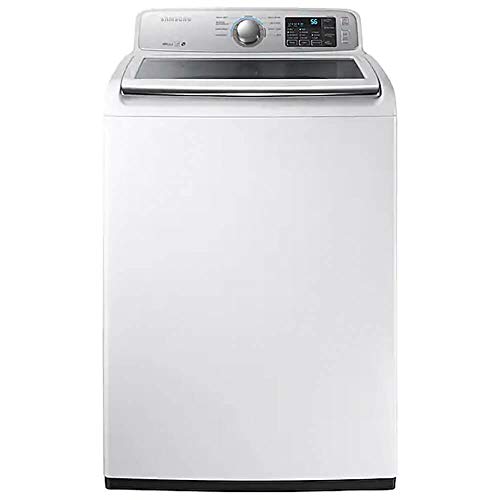
Samsung WA50R5200AW 4.5 Top Load Washer — Best Capacity
The Samsung brings the largest tub in this guide at 4.5 cubic feet, and pairs it with the feature stain-fighters quietly love: a built-in water jet at the rim of the tub for pretreating collars and cuffs right at the machine, so the laundry sink — if your home even has one — stops being a required stop. Its wash plate design moves loads with water currents rather than a central agitator post, which frees the full tub volume for bulky items and treats fabrics somewhat more gently in the bargain.
Self-clean reminders help the tub stay fresh, a detail that matters in a machine expected to run daily for years, and the overall cycle set covers the standard household rotation without menu spelunking. The trade against the Kenmores is cleaning style: impeller washing is thorough on everyday soil but asks heavily soiled work clothes to bring a pretreater or a soak to the fight. Households whose laundry is mostly ordinary family wear will prefer the Samsung’s capacity and gentleness; households washing farm or trade clothing will prefer an agitator’s insistence.
- Capacity: 4.5 cu. ft., largest in this guide
- Wash action: impeller wash plate, no central agitator
- Pretreat: built-in water jet for spot treatment
- Care: self-clean cycle reminders for the tub
- Finish: white top load design
Samsung’s pretreat jet changes a small behavior with outsized effects: stains get treated at discovery, in the laundry room, rather than in a mental note that expires by wash day. Households report that the collar-and-cuff category of laundry disappointment shrinks accordingly. Paired with the tub’s genuine roominess, the machine suits families whose laundry is plentiful and ordinary — the profile, in fairness, of most laundry ever washed.
Strengths
- Roomiest tub swallows bulky bedding and big family loads.
- Built-in pretreat jet handles stains where they are found.
- Impeller design is gentler on fabrics and frees tub space.
Trade-offs
- Ground-in work dirt may need soaking help the agitators do not.
- Loads can tangle more without a central agitator’s guidance.
- Large capacity tempts overloading, which undermines rinsing.
Best for: large households with everyday soil and bulky bedding. Not suited for: tradespeople washing heavily ground-in workwear daily.

Amana NTW4516FW 3.5 Top Load Washer — Best Simple and Sturdy
Amana built its name on appliances that do the job without theatre, and this 3.5 cubic foot washer is that philosophy with a lid on it. The dual-action agitator rolls clothes from the top of the load down into the wash, the porcelain tub shrugs off years of zippers and buttons, and the cycle dial offers the settings a household needs with nothing it must decode. It is the machine a landlord installs, a cabin owner trusts, and a first-home buyer appreciates precisely because nothing about it is experimental.
The smaller tub defines its audience honestly. Couples, singles, and small families will find 3.5 cubic feet entirely sufficient, and the machine uses water in proportion to its size rather than filling a cavern for a few shirts. What it lacks is the modern garnish: no express branding, no touch panel, no pretreat jet. In exchange it offers the deep service network of its parent brand and a design that independent repairers across the country know by heart — an ownership virtue that rarely appears on feature lists but dominates decade-two satisfaction.
- Capacity: 3.5 cu. ft. top load tub
- Wash action: dual-action agitator
- Tub: porcelain finish
- Controls: straightforward cycle dial
- Character: traditional, widely serviceable design
The Amana’s second audience deserves naming: the adult child equipping a parent’s home, the landlord furnishing a rental, the cabin owner who visits monthly. In each case the buyer is purchasing the absence of future phone calls, and this machine’s plain controls and proven design are precisely that absence in appliance form. It is the washer equivalent of a cast-iron pan — unglamorous, understood by everyone, and still working when trends have cycled twice.
Strengths
- Simple controls anyone in the house can operate confidently.
- Porcelain tub and proven design promise a long service life.
- Right-sized water use for couples and small households.
Trade-offs
- Smallest full-size tub here; family bedding days mean multiple loads.
- No express or specialty cycles beyond the basics.
- Styling and controls are plainly utilitarian.
Best for: couples, small homes, rentals, and buyers valuing serviceability. Not suited for: large families or bedding-heavy laundry routines.

BLACK+DECKER BTLW41MW 4.1 Top Load Washer — Best Glass-Lid Value
BLACK+DECKER’s entry in the full-size washer market surprises people who know the name from drills, but the BTLW41MW is a properly specified machine: 4.1 cubic feet, a true agitator, a stainless steel tub, and a glass lid that lets you watch the wash without lifting anything. Ten wash cycles cover the household rotation, an LED display keeps settings legible, and the whole package typically undercuts the legacy brands it competes with — value being the entire point of its badge here.
The glass lid is more than a novelty. Being able to confirm at a glance that a load is balanced, sudsing normally, and not harboring a stray red sock among the whites prevents the small disasters that open-lid checks interrupt cycles to catch. Stainless steel in the tub resists the chipping that eventually makes porcelain a fabric hazard. The honest caveat is network depth: the brand’s large-appliance service footprint is younger than Amana’s or Kenmore’s, so rural buyers should confirm local service before choosing it.
- Capacity: 4.1 cu. ft. full-size top load washer
- Wash action: agitator with stainless steel tub
- Lid: glass lid for at-a-glance load checks
- Cycles: 10 wash cycles with LED display
- Power: standard 120V household connection
Watching a wash through the glass lid turns out to have a practical curriculum: owners learn what a properly loaded tub looks like in motion, how much sudsing is normal for their detergent, and whether a load is balanced before the spin announces it. That education, absorbed passively over months, makes better laundry operators of an entire household — an argument for the lid that has nothing to do with novelty and everything to do with feedback.
Strengths
- Full-size agitator washing at a value-led price position.
- Glass lid makes load monitoring effortless and interruption-free.
- Stainless tub resists chips and rust over long service.
Trade-offs
- Large-appliance service network is younger than legacy rivals.
- Fewer premium cycles than the Kenmore models offer.
- Brand track record in washers is shorter than its tool history.
Best for: value seekers wanting full-size agitator cleaning with modern touches. Not suited for: buyers who prioritize the deepest local service network.
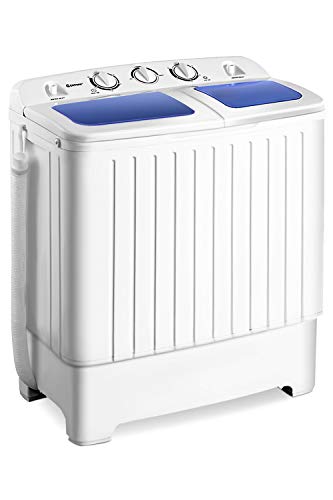
Giantex Portable Mini Twin Tub Washing Machine 20 lbs — Best Compact Pick (Mini)
Let us be completely clear about what this machine is: a compact portable mini twin tub, roughly countertop-appliance in spirit, with a wash tub on one side and a spin tub on the other and a combined capacity around twenty pounds. It is not a small version of the five machines above; it is a different species for a different problem — the apartment without hookups, the dorm, the cabin, the RV, the nursery that generates three small loads a day. Judged against that problem, it is genuinely excellent.
Operation is hands-on by design. You fill the wash tub with a hose or bucket, add detergent, set the wash timer, drain, move the load to the spinner, and let centrifugal force do what a dryer would otherwise finish. The spin side is the revelation for first-time owners: clothes emerge merely damp, air-drying on a rack in hours rather than a day. Loads are small — think a few shirts, baby clothes, delicates, or a day’s uniforms — and the machine asks for your presence rather than your absence. For the right household, that trade buys laundry independence where no full-size machine can go.
- Type: portable mini twin tub — compact pick, not full-size
- Capacity: about 20 lbs combined wash and spin
- Layout: separate wash tub and spin dryer tub
- Hookups: manual fill and gravity drain, no plumbing required
- Use: apartments, dorms, cabins, RVs, baby laundry
The Giantex earns a final clarification about dignity of purpose. Small-load laundry is real laundry: the cloth diapers, the single work uniform, the delicate wash a family machine would swallow in a full tub of water. A household that pairs this mini with a weekly laundromat run or a shared building machine often spends less and waits never. Judged as infrastructure for small living rather than as a shrunken family washer, it is not a compromise at all.
Strengths
- Works anywhere with an outlet and a drain — no hookups needed.
- Spin tub leaves clothes nearly dry, cutting air-dry time sharply.
- Ideal for small, frequent loads that waste a full-size machine’s water.
Trade-offs
- Strictly a compact mini: it cannot take bedding or family loads.
- Manual filling, draining, and load transfer require your attendance.
- Wash action is gentle; heavily soiled items need pretreating.
Best for: compact living, cabins, dorms, and dedicated small-load duty. Not suited for: any household expecting it to replace a full-size washer.
How Does a Top Loader Treat a Household’s Delicate Things?
Basic does not have to mean brutal, and the modern top loader’s delicate cycle is more considered than its reputation. Reduced agitation, cooler water, and a gentler spin handle most washable delicates respectfully, especially when garments travel in mesh bags that prevent straps and hooks from touring the tub. The agitator models here ask for that bag discipline more insistently than the Samsung’s impeller does, and households with a delicates-heavy wardrobe should weigh the difference honestly rather than discover it on a favorite blouse.
What no top loader should meet is the genuinely fragile: beaded garments, structured tailoring, anything whose label says dry clean with conviction. The machine’s honesty is that it washes; the owner’s honesty is knowing where washing ends. Between those poles sits the great middle of family clothing, and on that ground every machine in this guide performs with a clear conscience.
What Do Capacity Numbers Mean in Actual Laundry?
Cubic feet are abstract until translated into the loads a household recognizes. A 3.5 cubic foot tub, like the Amana’s, swallows roughly a week of one adult’s clothing or a full set of bath towels with room to move — and movement is the point, because clothes clean by tumbling through water, not by being submerged in a solid block. Step up to 4.1 cubic feet and a family’s mixed load fits without strategy; at 4.4 and 4.5, queen bedding and a household’s towel mountain become single loads instead of projects.
The trap is buying capacity for the largest load of the year and paying for it weekly. An oversized tub run half-empty uses water and time out of proportion to the laundry inside it, and small loads in big tubs tangle and unbalance more readily. The honest census is the ordinary week: count your typical loads, note the bulkiest regular item, and size the machine to that reality with a little headroom — which is why this guide’s middle capacities will serve most readers best.
Weight ratings on the compact Giantex obey a different logic entirely. Its twenty pounds is a combined wash-and-spin figure for small items, and translating it into family laundry is the category error its review warns against. In compact-land, the correct unit is the day’s small load: a uniform, a set of baby clothes, a few delicates — jobs it performs admirably and economically, on its own scale.
How Do the Six Washers Divide Real Households?
The Kenmore 4.1 is the median household’s machine: two adults, a child or two, a dog whose towels are a standing appointment, and bedding in the queen size. Its express cycles exist for the forgotten uniform and the gym kit discovered at bedtime. The 4.4 is the same house with teenagers — the laundry multiplies, the loads grow bedding-heavy, and the extra capacity converts a two-load Saturday into a one-load errand. Families feel that difference weekly, not theoretically.
The Samsung belongs to the household whose laundry is bulky but not filthy: duvets, throws, mountains of ordinary clothing, and a preference for gentler handling. Its pretreat jet earns its keep at the collar-and-cuff level of family life. The Amana is the rental, the cabin, the first home, and the laundry closet of a couple who wash little and value a machine any repairer in the county can service blindfolded. Its virtues compound quietly over years.
The BLACK+DECKER is the value renovator’s choice — a laundry room refresh where the budget also holds a dryer, shelving, and paint, yet the washer itself refuses to feel like the compromise. And the Giantex belongs to the studio apartment, the dorm floor, the narrowboat, the nursery corner: places where the alternative is a laundromat queue, and where its small, attended loads are not a limitation but the entire point of its design.
Comparison Table
| Washer | Capacity | Wash action | Best suited to |
|---|---|---|---|
| Kenmore 4.1 | 4.1 cu. ft. | Triple Action Agitator | Overall family cleaning |
| Kenmore 4.4 | 4.4 cu. ft. | Triple Action Agitator | Bigger households |
| Samsung WA50R5200AW | 4.5 cu. ft. | Impeller | Capacity and pretreat jet |
| Amana NTW4516FW | 3.5 cu. ft. | Dual-action agitator | Simple, sturdy service |
| BLACK+DECKER BTLW41MW | 4.1 cu. ft. | Agitator | Glass-lid value |
| Giantex Mini Twin Tub | 20 lbs compact | Twin tub wash and spin | Compact pick for small spaces |
What Happens on the Day the Washer Arrives?
Delivery day has a choreography worth rehearsing. The old machine leaves first, its hoses drained into a bucket that someone remembered to provide. The path gets measured one final time with the new machine’s true dimensions, including the lid’s arc, and door stops or a hanging laundry basket relocate without negotiation. A good crew levels as part of installation, but the wise owner watches the level come out and asks for the empty test spin before signatures happen, because a machine that dances on day one rarely learns stillness later.
The first loads should be teachers, not trials. Run the empty cleaning cycle, then a load of old towels — the load most forgiving of any residual manufacturing scent and most revealing of leaks, imbalance, and drainage sulks. Check under every connection with a dry hand after the cycle, read the manual’s cycle chart while the second load runs, and register the appliance or save its paperwork somewhere the household can find in year six. These small acts convert an appliance purchase into an appliance relationship.
Households replacing a beloved old machine should also expect a brief, irrational grief. The new washer’s sounds differ, its cycle times differ, and its lid feels wrong for a fortnight. This passes. What remains is the arithmetic that justified the change: loads cleaned properly, bedding washed at home, and a laundry day that ends earlier than it used to — the outcome every machine in this guide was selected to deliver.
Agitator or Impeller: Which Wash Action Suits Your Laundry?
The agitator’s case is soil. Its post twists loads through the water with mechanical insistence, scrubbing the dirt that farming, building, sport, and childhood deposit — which is why the Kenmore 4.1 and its sibling anchor this guide. The impeller’s case is space and gentleness: without a central post, bulky items settle fully into the tub and delicate fabrics meet less friction, the bargain the Samsung offers. Neither is universally better; they are answers to different laundry piles, and households should diagnose their pile honestly before choosing.
Water use complicates the folklore. Agitator machines traditionally fill deeper, while high-efficiency impeller designs wash in shallower water and depend on load sensing. In practice, matching machine size to load size saves more water than either mechanism: a half-empty 4.5 cubic foot tub wastes more than a full 3.5. Buy the capacity your household fills, and the efficiency argument mostly settles itself.
Rinsing deserves a mention too. Extra-rinse options help households with sensitive skin or heavy detergent habits, and most models here offer one. If your towels have felt stiff and soapy under a previous machine, the fix is usually less detergent rather than more technology — modern concentrated detergents dose far lower than the cap suggests, and top loaders reward restraint.
What Laundry Habits Make Any of These Machines Look Brilliant?
Sorting is the unglamorous multiplier. Loads grouped by weight as much as by color tumble evenly, rinse completely, and spin without drama: towels with towels, sheets with pillowcases, the single heavy hoodie escorted by midweight company. The household that sorts by weight alone will see cleaner results from the humblest machine here than a careless household extracts from the finest, because water and motion reach every layer of a well-composed load.
Pretreatment timing is the second habit. A stain addressed within the day, even with nothing fancier than a soak and a rub of detergent, surrenders to an ordinary cycle; the same stain baked through three wears becomes a permanent resident that no agitator can evict. Keep a small soak bucket or use the Samsung’s jet habit — the location matters less than the promptness. Third comes the full-load discipline: wash when the tub can be filled properly, and the machine’s design assumptions finally hold true.
Finally, close the loop with the dryer or the line. Loads left sitting in a closed tub re-wrinkle and re-odor themselves, wasting the wash entirely; a timer on the phone is the cheapest laundry appliance ever sold. These habits cost nothing, which is exactly why buying guides underrate them — and why households that practice them speak of their basic washers the way other households speak of premium ones.
How Do You Install and Level a Top Load Washer?
Measure twice before the machine arrives: alcove width and depth, doorway turns, and the distance to water and drain connections. Remove the shipping materials exactly as the manual directs — forgotten shipping bolts and bases are the leading cause of a new washer’s alarming first cycle. Connect hot and cold supplies with new hoses, hand-tight plus a quarter turn, then check for drips with a dry hand under each joint before pushing the machine home.
Leveling is the step owners skip and regret. A top loader spinning an unbalanced load on unlevel feet will walk across the floor and serenade the house. Adjust the front feet until a level reads true in both directions, lock them down, then run an empty rinse-and-spin while watching the corners. The Amana NTW4516FW and its rivals all include this guidance in their manuals because it decides whether the next decade is quiet or percussive.
Finish with a cleaning cycle before the first real load to flush manufacturing residues, and leave the lid open between washes thereafter. A closed lid on a damp tub breeds the musty smell owners later blame on the machine, when the machine is only storing the weather its owner sealed inside it.
What Should Landlords and Rental Owners Choose?
Rental laundry has its own economics: the machine must survive tenants who will never read its manual, clean loads whose composition nobody controls, and be serviceable by whichever repairer answers first in a small town. That brief points unerringly at the simple end of this guide. The Amana was designed in that image — dial controls that cannot be misprogrammed, a design every technician knows, and parts that exist everywhere. The Kenmores serve owner-occupied family homes better, where the people using the express cycles are the people who paid for them.
Durability in rental service is less about exotic materials than about the absence of fragile interaction. Touch panels survive fine in careful homes and suffer in hurried ones; a dial forgives everything. Landlords also weigh the cost of a service call against replacement, and a basic machine’s honest repairability wins that arithmetic for years before replacement becomes the sensible answer. Tenants, for their part, consistently prefer a simple machine that works to a sophisticated one awaiting a part — a preference worth more than any feature list when reviews and renewals are written.
For the compact end of the rental market — the studio, the in-law unit, the converted garage — the Giantex occupies its niche legitimately, provided the listing describes it truthfully as the mini it is. A tenant told plainly what the machine does will use it happily for small loads; a tenant promised a washer and handed a twin tub will remember the landlord accordingly.
How Do Wash Cycles Translate Into Wardrobe Care?
Cycle names read like weather reports, but each encodes three decisions: water temperature, agitation intensity, and time. The normal cycle balances them for the mixed cotton loads that dominate family laundry, and it should be the default against which others justify themselves. Heavy duty lengthens the wash and firms the action for the loads this guide’s agitators were born to clean — work clothes, towels, sports kits — while the delicate cycle shortens and softens everything for fabrics whose fibers resent enthusiasm.
Temperature deserves more thought than it gets. Modern detergents are formulated to perform in warm and even cool water for everyday soil, reserving genuinely hot washes for bedding hygiene and the occasional sanitizing load. Washing everything hot out of inherited habit fades colors, ages elastic, and spends energy to achieve cleanliness the load did not require. Conversely, the household that washes a sickroom’s bedding on cool to save pennies has misunderstood the assignment in the other direction.
Spin speed writes the dryer’s workload. A thorough spin leaves clothes merely damp and shortens drying time substantially, which is why a washer that extracts well quietly reduces the household’s total laundry energy. Bulky items benefit most and suffer most: a comforter spun hard dries in one dryer cycle, while a load thrown in unbalanced may abort the spin entirely and emerge dripping. Distributing weight evenly is the operator’s half of that bargain, and it takes ten seconds.
What Mistakes Do Top Loader Owners Keep Making?
Overloading leads the list. A tub packed to the lid cannot move clothes through water, so the center of the load emerges as dirty as it entered, merely wetter. Load loosely to the top of the agitator’s working zone and let bulky items go in singly. Second comes detergent excess, which leaves residue on fabrics and in the tub; the cap’s top line is a maximum for the filthiest loads, not a serving suggestion.
Third, owners ignore the balance lesson: one heavy item — a bath mat, a single pair of soaked jeans — will unbalance a spin that a distributed load survives. Wash heavy singles with a few towels as ballast. Finally, there is the compact-machine misunderstanding this guide flagged from the start: a mini twin tub bought as a family washer disappoints everyone, while the same machine bought knowingly for small loads delights its owner weekly. Expectations are an appliance feature too.
How Should You Think About a Decade of Ownership?
A washer is one of the few appliances whose cost should be divided by ten years before it is judged. Across that span, the differences that matter compound quietly: a service network that answers in your county, hoses replaced before they fail, a tub that never chipped a sweater’s worth of snags, and controls every member of the household — including the ones who arrive as teenagers and the ones who visit as grandparents — can operate without instruction. The Amana’s entire design philosophy is this paragraph; the Kenmores add cleaning muscle to it; the Samsung adds capacity and gentleness; the BLACK+DECKER adds value and visibility.
Energy and water costs across the decade exceed the purchase differences between these models, which returns the decision, as ever, to sizing. The machine whose capacity matches your loads wastes the least of everything — water, energy, time, and the fabric life of clothes washed in properly filled tubs. Buy the fit, keep the habits in the care section above, and a basic top loader becomes the least dramatic appliance in the house, which is the highest praise laundry equipment can earn.
Consider, finally, the laundry room itself as part of the machine’s performance. A washer installed in a room with a floor drain, a shelf for detergent at elbow height, and space to sort into two piles will outperform its specification, because the household’s system around it stops leaking time. The humblest improvement — a hook for the mesh bags, a small bin for the lint and the lost buttons — compounds across hundreds of loads. Machines are bought; laundry systems are built, and the building is mostly free.
Households upgrading from a laundromat routine should savor one specific arithmetic: the first month of home laundry typically returns hours that were previously spent traveling, waiting, and feeding machines with coins. Against those hours, the differences among the six machines here shrink to preference. Any of them, honestly sized and honestly installed, converts the worst errand of apartment life into a background process of home — which is the entire promise of the category, kept.
And households replacing a machine that served twenty years should know that its successor begins with an advantage the old machine never had: an owner who now knows exactly what their laundry is. That knowledge, applied to the choices in this guide, is worth more than any single feature compared above.
Noise is the last specification worth translating, because laundry rooms adjoin kitchens, bedrooms, and home offices in modern floor plans. Agitator machines announce their work honestly — a rhythmic, mechanical soundtrack that most households file under house noises within a week. Spin cycles are the loudest chapter in any top loader’s day, and balance and leveling, covered earlier, decide whether that chapter is a hum or a percussion solo. If your laundry sits beside a nursery, schedule washes with the same courtesy you would schedule vacuuming, and choose the machine whose spin your household’s layout can absorb at the hours laundry actually happens.
Second-floor laundry deserves its own sentence of respect: place the machine on a proper drain pan, confirm the floor’s stiffness with the installer, and treat any new vibration as information rather than ambience. The machines here are standard residential equipment and behave well in standard residential construction, provided the installation honors the basics this guide has repeated — level, balanced, connected with fresh hoses, and given a first empty cycle to prove itself.
Water hardness is the invisible variable in every laundry room, quietly deciding how much detergent a load needs and how often the machine itself wants cleaning. Hard water demands slightly more detergent and rewards a monthly cleaning cycle; soft water asks for restraint, because excess detergent in soft water rinses poorly and leaves fabrics stiff. A simple test strip in the first week of ownership calibrates both habits better than any label instruction, and households that know their water stop blaming their machines for chemistry.
The same realism applies to the loads themselves. A washer cannot launder a family’s habits — the floor-drobe that delivers every garment pre-crumpled and inside-out, the towel used as a bathmat, the single sock that arrives as an emissary of a lost pair. The machines in this guide will wash whatever a household honestly produces, thoroughly and for years. Composing loads with a little respect for water, weight, and balance is the owner’s half of the bargain, and it costs nothing but attention.
If the decision still feels open after all of the above, let the tape measure and the laundry census vote: measure the alcove, count a real week of loads, note the bulkiest regular item, and strike from the list any machine those facts exclude. What remains will contain the right washer, because at the basic end of this market the differences that survive honest measurement are preferences, not traps. Every machine left standing in this guide will serve a household well for years, provided the household chose the one shaped like its own laundry.
That is the whole method, and it has never once embarrassed a buyer who followed it honestly from the first measurement to the final signature.
Measure first, count honestly, and the laundry room will repay the attention every single week for the next decade of the household’s ordinary, essential life.
Final Recommendation
Most households should buy the Kenmore 4.1 for its cleaning authority, stepping up to the 4.4 when the family or the bedding pile justifies it. Choose the Samsung when capacity and gentler impeller washing match your laundry, the Amana when simplicity and serviceability outrank features, and the BLACK+DECKER when value with a glass lid appeals. Take the Giantex only as the compact specialist it honestly is. A basic top loader is a decade-long servant: pick the one whose size, action, and temperament fit the laundry you actually produce, and it will repay the decision every single week.
How Do You Keep a Top Loader Cleaning Like New?
Run a hot cleaning cycle monthly with the machine empty, using its self-clean setting where fitted or a washer cleaner, and wipe the lid rim and detergent areas afterward. Residue accumulates where water lingers, and the musty smell owners blame on a machine’s character is almost always a housekeeping backlog rather than a design flaw. Leave the lid open between wash days so the tub dries fully; a closed, damp drum is a greenhouse for odor.
Detergent discipline protects both clothes and machine. Modern concentrated detergents clean full loads at a fraction of the cap’s maximum line, and the excess beyond that line redeposits on fabrics as stiffness and on the tub as film. Measure for the load you are washing, not the load the bottle imagines. Households with soft water should start at the lowest dose and adjust upward only when results demand it — most discover they never need to.
Hoses and filters deserve a calendar note. Replace rubber supply hoses on a multi-year rhythm before they announce their age with a leak, and check the drain pump filter where the design provides one. Level the machine again if it begins to travel during spins; feet settle into flooring over the years, and a five-minute adjustment restores the quiet the machine had on its first day.
What Should You Check Before Replacing an Old Washer?
Begin with the space, not the showroom. Measure the alcove, the doorways on the delivery path, and the swing of the laundry room door, then compare against the new machine’s full dimensions including its lid at full height — a top loader whose lid strikes a shelf or cabinet is a daily irritation disguised as a good purchase. Confirm the electrical outlet and both water supplies are where the new machine expects them; standard layouts carry over, but older homes surprise.
Decide the fate of the old machine before delivery day: retailer haul-away, a donation with honest disclosure, or a second life in a rental or cabin where its remaining years are welcome. Photograph your existing hookups; the photo answers questions at the store that memory fumbles. Finally, plan the first week: run the new machine empty once, wash a load of towels second, and keep the manual’s quick-start page until the household’s hands know the controls by touch.
Frequently Asked Questions
Can a 4.1 cubic foot washer handle a queen comforter?
Generally yes, one at a time, arranged loosely so water can circulate. King comforters are the honest limit of this class and often fare better at a laundromat’s largest machines. The 4.4 and 4.5 cubic foot models here give bulky bedding more working room and are the safer choice for bedding-heavy households.
Do agitator washers damage clothes?
They are firmer than impeller designs, and delicate items should travel in mesh bags or on the gentle cycle. For everyday clothing, towels, and workwear, agitator action is not damage — it is the cleaning itself. Households whose wardrobes lean heavily to delicates may prefer the Samsung’s impeller approach.
How long should a basic top loader last?
A well-kept machine of this class commonly serves around a decade, with hoses, belts, and pumps the usual wear items along the way. Level installation, sane loading, and monthly tub cleaning are the habits that decide whether a given machine reaches the long end of that range.
What is the point of the Giantex if it is so small?
It solves laundry where full-size machines cannot exist: rentals without hookups, dormitories, cabins, RVs, and homes needing a dedicated small-load machine for baby clothes or delicates. Its spin tub leaves laundry nearly dry, which makes small-space living without a dryer practical. It complements a laundromat routine rather than replacing a family washer.
Should I choose touch controls or a dial?
Both work; the choice is household temperament. Touch panels wipe clean and display settings clearly, while dials operate with wet or gloved hands and feel familiar to every generation. Reliability differences are smaller than folklore suggests, so pick the interface your household will not argue with at midnight.
Can I wash shoes and backpacks in a top loader?
Generally yes, with preparation: laces loosened or removed, loose dirt knocked off outside, items placed in a mesh bag or pillowcase, and a couple of towels added for balance and cushioning. Choose a gentle cycle and cool water, and check the item’s own care label first — glued footwear and structured bags may object to immersion regardless of the machine’s kindness. The agitator models here handle such loads without complaint when they are balanced and bagged.
Why does my washer walk across the floor?
Almost always leveling or load balance. Confirm the shipping materials were fully removed, adjust the feet until the cabinet is level and all four corners bear weight firmly, and distribute heavy items evenly rather than letting one soaked mass claim a side. A machine that still travels after honest leveling deserves a service look, because persistent walking loosens connections and shortens the machine’s life one spin at a time.
Related Guides
For the rest of a small-space laundry and rest setup, our guide to Best Battery Operated White Noise Sound Machines covers portable sound for thin apartment walls. Kitchen planners should compare Best Basic Electric Ovens for compact cooking, and anyone curious about app-connected appliances can browse Best Air Fryer Smart Ovens to see what the smart label adds there.



[…] for a quilting household means washing finished quilts gently and often, so our roundup of Best Basic Top Loading Washing Machines covers the agitator and capacity questions that matter for bulky bedding. For the kitchen side of a […]