What's inside
- Key Takeaways
- Quick Picks
- How Did We Judge Brother Machines for Quilting Specifically?
- How Do the Six Compare for Quilting Work?
- What Is the Harp, and Why Does It Decide Your Quilt Size?
- Why Does a Wide Table Change Quilting So Much?
- How Does Feeding Work When Three Layers Travel Together?
- How Do You Piece an Accurate Quarter-Inch Seam?
- What Wadding and Backing Choices Suit a Domestic Machine?
- How Should a Beginner Choose a First Quilt Pattern?
- How Do You Quilt in Straight Lines Without Wobble?
- When Should You Attempt Free-Motion Quilting?
- How Do Embroidery and Decorative Stitches Serve a Quilt?
- How Do You Bind a Quilt So Its Edges Survive Years of Washing?
- What Maintenance Does Quilting Demand of a Machine?
- How Should You Arrange Your Space for Quilting Days?
- Which Quilting Accessories Are Worth Adding First?
- How Do You Scale From a First Throw to a Bed Quilt?
- Why Do So Many Quilters Stay With Brother as They Grow?
- What Should You Check on the Listing Before Choosing Your Quilting Machine?
- How Do You Choose Fabrics That Quilt Kindly?
- What Does Pressing Do That Sewing Cannot?
- How Can You Quilt With Rulers and Templates on a Domestic Machine?
- How Do You Keep a Quilt Project Organised Across Months?
- What Makes a Quilt Worth Giving Away?
- How Does Quilting Change With the Seasons of a Year?
- Why Does Every Quilter Need a Practice Sandwich?
- What Mistakes Do New Quilters Make Most Often?
- Final Recommendation
- Frequently Asked Questions
- Related Guides
As an Amazon Associate I earn from qualifying purchases. This post may contain affiliate links at no extra cost to you.
cottageverdict.com is reader-supported. When you buy through links on our site, we may earn an affiliate commission.
Where to buy: all six Brother machines below are sold through Amazon, and their names in the Quick Picks table, the detailed reviews and the comparison table link to their listings so you can check price on Amazon and confirm the included table and feet before ordering. The best Brother quilting machines are judged here by the three things quilting actually demands of a machine: room to move the work, a table that keeps layers level, and feeding that walks stacked fabric through the needle without shifting the sandwich.
Quilting is two crafts wearing one name. Piecing sews small shapes into a top with quarter-inch precision, and it rewards accuracy more than power. Quilting proper then stitches three layers — top, wadding and backing — into one textile, and it rewards space and feed: space in the harp, the gap between needle and machine body where the rolled quilt must pass, and feed that keeps three layers travelling together instead of creeping apart.
Brother’s range answers those demands at several levels, and this guide reads it through a quilter’s eyes. Two picks arrive with wide tables and quilting in their very names. One adds a screen and seventy stitches. One stretches to 165 stitches for quilters who decorate as they construct. One can embroider labels and motifs between quilting sessions. Two simpler machines serve piecing and smaller quilts honestly, at the gentle end of the range.
Be honest about quilt size as you read. Cot quilts, throws and table runners forgive a modest harp; a king-size quilt tests any domestic machine and rewards the widest table and calmest feed you can arrange. The picks are ordered to help both kinds of quilter, and the sections after them explain harp space, feed systems and quilting technique in the detail a first quilt deserves.
Key Takeaways
- Quilting needs harp room, a level table and even feeding more than it needs a huge stitch library.
- The XR3774 and CS7000X are the purpose-built quilting picks, both arriving with wide tables in the box.
- Feet matter enormously: eight to ten included feet across the top picks cover piecing, walking and free-motion work.
- The SE700 adds embroidery, which quilters use for labels, motifs and personalised blocks between quilting sessions.
- Smaller quilts forgive smaller machines; the XM2701 and CS5055 piece beautifully and quilt throws with patience.
Quick Picks
| Pick | Badge | Why it earns its place |
|---|---|---|
| Brother XR3774 Sewing and Quilting Machine | Best Quilting Starter | Thirty-seven stitches, a wide table and eight feet make this the natural first machine bought with quilting in mind. |
| Brother CS7000X Sewing and Quilting Machine | Best All-Round Quilting Pick | Seventy stitches, an LCD display, a wide table and ten included feet form the most complete quilting package in this guide. |
| Brother XR9550 Computerized Sewing Machine | Best for Decorative Quilting | With 165 stitches, an LCD display, a wide table and eight feet, it serves quilters who decorate their quilts as richly as they construct them. |
| Brother SE700 Sewing and Embroidery Machine | Best Quilting Plus Embroidery | Beyond 103 sewing stitches, its 135 embroidery designs and 4×4 hoop let quilters stitch labels, motifs and monograms into their work. |
| Brother XM2701 Sewing Machine 27 Stitches | Best Budget Piecing Machine | For piecing tops and quilting smaller pieces, its 27 stitches, six feet and free arm handle the fundamentals at the gentlest level here. |
| Brother CS5055 Computerized Sewing Machine | Best Compact Quilting Companion | Its LCD display keeps quilting stitch settings exact and repeatable, suiting piecers who quilt smaller pieces and value precision over table size. |
How Did We Judge Brother Machines for Quilting Specifically?
We scored the quilting evidence in each listing: a wide table included rather than photographed as an accessory, feet counts that suggest real quilting support, and stitch menus containing the utility stitches quilting leans on — straight stitch precision, zigzag for appliqué, and decorative patterns for finishing. Machines designed for sewing and quilting jointly outranked general models, because their tables and feet bundles show the maker intended the work.
We also respected scale honestly. None of these is a long-arm frame machine, and this guide does not pretend otherwise. They are domestic machines on which generations of quilters have pieced tops and quilted throws, lap quilts and cot quilts at home. Within that honest frame, the differences are real: table or no table, eight feet or ten, dial or display, and one machine that embroiders. The reviews match each difference to the quilter it serves.

Brother XR3774 Sewing and Quilting Machine — Best Quilting Starter
The XR3774 is where Brother’s quilting story properly begins. Its wide table arrives in the box, and that single inclusion changes the physics of learning to quilt: the fabric sandwich rests level instead of dragging off an edge, seams feed straighter, and a beginner’s attention can go to the stitching rather than to wrestling weight. Thirty-seven built-in stitches cover piecing, appliqué edges and the decorative finishing that turns a plain top into a personal one.
Eight included sewing feet is a quilting-relevant number, because quilting consumes feet the way cooking consumes knives — different feet for piecing accuracy, for walking layered fabric, for darning-style free motion. Arriving with eight means the first quilt’s techniques are mostly available from the start. Mechanical selection keeps the machine’s state visible and simple, which suits quilters who would rather spend complexity on fabric than on interfaces.
For a first quilt, choose a pattern that flatters this machine: squares or half-square triangles in a cot or throw size, straight-line quilting in channels or a gentle grid, and binding finished by machine. That curriculum teaches piecing precision, sandwich management and table use in one project. The XR3774 will still be teaching in the fifth quilt, when free-motion curves replace channels — the mark of a starter machine chosen at the right level.
- Stitch library: 37 built-in stitches for piecing and finishing
- Table: wide table included for level fabric support
- Feet in the box: 8 included sewing feet
- Format: sewing and quilting machine, mechanically controlled
- Quilting angle: the range’s natural starting point for quilt work
Strengths
- Wide table transforms control of layered fabric
- Eight feet cover the main quilting techniques early
- Mechanical simplicity keeps focus on the quilt
Trade-offs
- Harp space still limits very large quilts
- No screen to preview decorative stitch settings
- Free-motion skill must be learned, as on any domestic machine
Best for: new quilters making cot quilts, throws and runners as their first projects.
Not suited for: quilters planning king-size quilts as a routine output.
Brother CS7000X Sewing and Quilting Machine — Best All-Round Quilting Pick
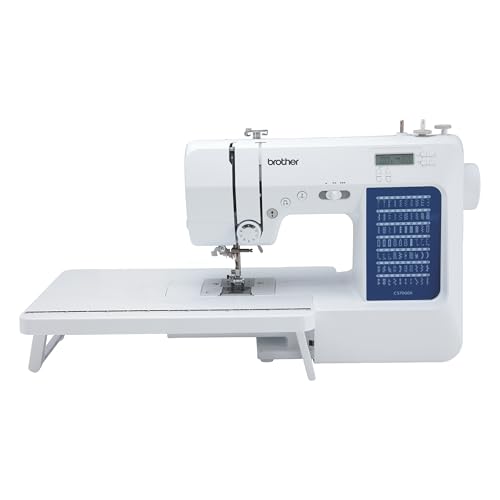
The CS7000X is the quilting pick for sewers who want the table, the feet and the display in one decision. Seventy built-in stitches widen the decorative and utility repertoire well beyond piecing basics, the LCD display keeps stitch and settings visible — valuable when a quilting stitch must be returned to exactly after a bobbin change — and the wide table supports the sandwich through long quilting passes. Ten included feet is the highest count in this guide.
That feet count deserves emphasis, because quilting techniques queue up quickly: accurate piecing, walking-foot quilting in channels, free-motion work, appliqué, binding. A machine that arrives equipped for the queue lets a quilter’s first year be about quilts rather than accessory orders. The display complements the bundle by making the expanded stitch library genuinely usable; seventy stitches behind a dial would be a chart to memorise, while seventy behind a screen are a menu to browse.
Consider this the machine for a quilter whose ambitions are already plural: pieced tops in winter, appliqué in spring, a decorative-stitched table runner whenever a gift is due. Its balance of table, feet and readable controls removes the three commonest frictions in domestic quilting at once. Owners stepping up from a basic machine will feel the upgrade not in raw sewing — the needle still simply sews — but in how seldom the work has to stop for equipment reasons.
- Stitch library: 70 built-in stitches across utility and decorative work
- Display: LCD screen for stitch and setting visibility
- Table: wide table included for quilting support
- Feet in the box: 10 included feet, the most in this guide
- Format: computerized sewing and quilting machine
Strengths
- Ten feet equip nearly every quilting technique immediately
- Display makes a large stitch library practical to use
- Wide table steadies long quilting passes
Trade-offs
- Computerized controls are more than piecing purists need
- Larger setup footprint on the sewing table
- Very large quilts still test domestic harp space
Best for: quilters wanting one complete machine for piecing, quilting and appliqué.
Not suited for: minimalists who piece only and want purely mechanical controls.

Brother XR9550 Computerized Sewing Machine — Best for Decorative Quilting
Some quilts are constructed; others are composed. The XR9550 serves the composers, with 165 built-in stitches presented through an LCD display and a wide table underneath the work. Decorative stitches become quilting tools in this context: a serpentine line softens a grid, a scallop finishes a border, heirloom patterns stitch texture into plain blocks. The wide table keeps those long decorative passes level, which is exactly when wobbling fabric would otherwise turn ornament into apology.
Eight included presser feet support the range, and the machine’s sewing-and-quilting brief means the fundamentals — piecing accuracy, layered feeding, table support — are present beneath the decoration. Choose it when your quilt plans include visible stitch artistry: crazy quilting, embellished wall hangings, table linen with patterned quilting lines. Choose a simpler pick when your quilts speak through fabric and geometry alone, because 165 stitches are a library that only pays rent when it is read.
A practical way to tame a library this size is to build a personal stitch sampler quilt: one block per favourite decorative pattern, labelled with its settings, bound as a small wall hanging. The exercise teaches the machine’s range, produces a reference that lives on the wall, and reveals which twenty stitches you actually love. Quilters who do this stop scrolling and start composing, and the XR9550’s abundance becomes a palette instead of a distraction.
- Stitch library: 165 built-in stitches, the largest here
- Display: LCD screen for navigating the stitch range
- Table: wide table included for quilting and décor passes
- Feet in the box: 8 included presser feet
- Format: computerized sewing and quilting machine
Strengths
- Decorative range turns quilting lines into design
- Wide table supports embellished, larger pieces
- Display keeps a huge library navigable
Trade-offs
- Most sewers will use a fraction of the stitches
- Premium capability exceeds plain piecing needs
- Learning the library takes deliberate sampler work
Best for: decorative quilters, crazy quilters and makers of embellished wall hangings.
Not suited for: plain piecers who want the simplest possible controls.
Brother SE700 Sewing and Embroidery Machine — Best Quilting Plus Embroidery
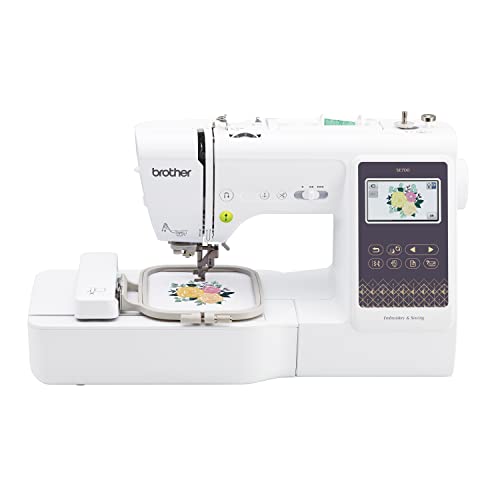
Quilters sign their work, and the SE700 turns that signature into embroidery. As a sewing machine it offers 103 built-in stitches for piecing and quilting; as an embroidery machine it brings 135 built-in designs, a 4 by 4 inch hoop and a 3.7 inch touchscreen, with wireless LAN for receiving designs. A quilt label embroidered with names and dates, a motif stitched into a plain block, a monogram on a quilted bag — these are the moments this hybrid exists for.
Judge it as a quilting machine with a second talent rather than a dedicated quilting flagship: it has no wide table in its headline specification, so large quilts need the usual domestic patience and support from the surrounding table. What it returns is personalisation no other pick here can offer. For quilters whose joy is the story a quilt tells — christenings, weddings, memorial quilts — the embroidery hoop may matter more than any table.
Embroidery also changes how plain quilting fabric behaves in your stash. A simple block becomes a canvas; a leftover square becomes a stitched picture for a cushion. Wireless transfer keeps designs flowing from computer to hoop without cables and cards, and the touchscreen preview prevents the classic error of stitching a design at the wrong orientation. Quilters who entertain even a small embroidery curiosity should weigh this pick seriously, because adding the capability later means buying a second machine.
- Sewing stitches: 103 built-in stitches for piecing and quilting
- Embroidery library: 135 built-in designs included
- Hoop: 4 x 4 inch embroidery area
- Display and transfer: 3.7 inch touchscreen with wireless LAN
- Feet: 8 included feet across its sewing work
Strengths
- Embroidered labels and motifs personalise every quilt
- Wireless design transfer is genuinely convenient
- Strong sewing specification beneath the embroidery
Trade-offs
- No wide table headline for very large quilts
- Embroidery adds learning beyond quilting itself
- Hoop size suits motifs and labels, not huge designs
Best for: quilters who personalise work with labels, names, dates and motifs.
Not suited for: quilters focused purely on large quilts and table support.

Brother XM2701 Sewing Machine 27 Stitches — Best Budget Piecing Machine
Read through quilting eyes, the XM2701 is a piecing machine first. Piecing asks for a reliable straight stitch, consistent feeding of two cotton layers, and a seam guide you can trust — and a light, simple mechanical machine delivers those without ceremony. Twenty-seven stitches include the zigzag that appliqué edges and raw-edge techniques need, six feet cover the early repertoire, and the free arm, famous for sleeves, also helps when quilting small tubular items like bags and cushion covers.
Its quilting limits are matters of scale rather than quality. Without a wide table, the sandwich of a large quilt drags unless the surrounding table is arranged to support it, and the harp asks for patience on big pieces. Throws, cot quilts, runners and wall hangings sit comfortably within its world. Many quilters begin exactly here, piecing happily for years, and only discover the machine’s ceiling when a bed quilt enters their ambitions — by which time it has earned its place many times over.
There is a discipline benefit to learning quilting on a simple machine: accuracy must come from cutting and guiding, not from settings. Quarter-inch seams sewn on the XM2701 teach the eye and hand skills that transfer to any equipment. Add a walking foot when layered quilting becomes regular, keep the table surface around the machine level with books or a board if needed, and this modest Brother will produce quilts whose quality surprises people who judge by specification sheets.
- Stitch library: 27 built-in stitches for piecing and appliqué
- Feet in the box: 6 sewing feet included
- Bed shape: free arm for small and tubular quilted items
- Threading help: automatic needle threader fitted
- Format: portable mechanical machine for tops and small quilts
Strengths
- Piecing accuracy is easy to achieve and repeat
- Light and simple to set up for a quilting session
- Free arm helps with bags and cushion covers
Trade-offs
- No wide table for large quilt sandwiches
- Harp space limits big quilts without patience
- Decorative quilting stitches are modest in range
Best for: budget quilters piecing tops and quilting throws, runners and cot quilts.
Not suited for: quilters whose standard project is a double or king quilt.

Brother CS5055 Computerized Sewing Machine — Best Compact Quilting Companion
The CS5055 approaches quilting from the precision end. Piecing is a game of repeatability — the same stitch length across hundreds of seams, the same settings returned to after every interruption — and an LCD display that states those settings plainly serves that game well. A quilter who pieces in short evening sessions can sit down, read the machine’s state at a glance, and resume exactly where the last session ended, which is a quiet luxury mechanical dials approximate but rarely guarantee.
As a quilting machine it suits the smaller formats: blocks, runners, cushions, wall hangings and throws, where harp and table demands stay modest. Appliqué benefits from settings that can be dialled back in precisely for each fabric. It will not pretend to be the wide-table quilting flagship of this guide, and it should not be bought as one; it is the thoughtful companion for quilters whose work is precise, portable and pieced more than it is vast.
Pair it with good quilting habits and its virtues compound: a quarter-inch guide marked on the plate, test blocks before committing to a quilt’s full cutting, and notes of the displayed settings that produced your best seams. The display turns those notes into exact instructions rather than approximations. For methodical sewers — the ones who label their blocks and press every seam — the CS5055 feels less like a compromise and more like a colleague.
- Control style: computerized selection with LCD display
- Display role: exact stitch settings, repeatable between sessions
- Format: full-size machine for piecing and smaller quilting
- Quilting angle: precision and repeatability over table size
- Best scale: blocks, runners, cushions and throws
Strengths
- Settings return exactly, session after session
- Display suits methodical, note-keeping piecers
- Comfortable scale for blocks and household quilting
Trade-offs
- No wide table in its headline specification
- Decorative quilting range is moderate
- Large quilts require substantial table improvisation
Best for: precise piecers and makers of smaller quilted pieces who sew in short sessions.
Not suited for: quilters prioritising wide-table support for large quilts.
How Do the Six Compare for Quilting Work?
| Pick | Badge | Distinguishing detail |
|---|---|---|
| Brother XR3774 Sewing and Quilting Machine | Best Quilting Starter | 37 stitches with wide table and 8 feet for quilting |
| Brother CS7000X Sewing and Quilting Machine | Best All-Round Quilting Pick | 70 stitches, LCD, wide table and 10 feet |
| Brother XR9550 Computerized Sewing Machine | Best for Decorative Quilting | 165 stitches with wide table and LCD guidance |
| Brother SE700 Sewing and Embroidery Machine | Best Quilting Plus Embroidery | 103 stitches plus 135 embroidery designs and 4×4 hoop |
| Brother XM2701 Sewing Machine 27 Stitches | Best Budget Piecing Machine | 27 stitches and 6 feet for piecing and small quilts |
| Brother CS5055 Computerized Sewing Machine | Best Compact Quilting Companion | LCD precision for piecing and smaller quilted work |
What Is the Harp, and Why Does It Decide Your Quilt Size?
The harp is the open space to the right of the needle, between the needle bar and the machine’s upright body. Quilting pushes the bulk of the quilt through that space, rolled or folded, for every pass that is not at an edge. A small harp does not forbid a large quilt — quilters have made bed quilts on modest machines for generations — but it taxes every pass with folding, rolling and repositioning, and the tax grows with the quilt’s thickness.
Manage the harp you have with technique: quilt from the centre outward so bulk is distributed, roll the side entering the harp tightly, and support the rest on the table so nothing drags. Choose quilting designs that suit the space — channels and grids forgive, dense all-over patterns demand. When a quilter’s ambitions permanently outgrow these negotiations, that is the honest signal to seek a wider harp, not a verdict on any machine in this guide.
Why Does a Wide Table Change Quilting So Much?
A quilt sandwich is heavy, and gravity is its enemy. Without a table, the part of the quilt beyond the machine’s small bed hangs off the edge, dragging the work sideways, stretching seams and exhausting the quilter’s arms. A wide table restores level physics: layers rest, feed dogs move fabric rather than fight its weight, and stitch lines go where the quilter aims them. The difference is visible in the first long quilting pass.
That is why table inclusion weighs so heavily in this guide’s rankings, and why the XR3774, CS7000X and XR9550 — all arriving with wide tables — lead it. If your chosen machine lacks one, improvise the level with a surrounding table, books under a board, or any arrangement that brings the world flat to the needle plate. Quilting quality is often decided by furniture before it is decided by machinery.
How Does Feeding Work When Three Layers Travel Together?
A quilt sandwich misbehaves because its layers grip differently: the backing slides, the wadding compresses, the top creeps. Feed dogs alone move only the bottom layer, which is why quilting tradition invented the walking foot — an accessory foot that feeds the top layer in step with the dogs, so the sandwich travels as one. Straight-line quilting with a walking foot is the most reliable technique on any domestic machine, and the feet bundles in this guide should be read with that in mind.
Free-motion quilting takes the opposite approach: feed dogs lowered or covered, the quilter’s hands moving the sandwich in any direction under a hopping foot. It unlocks curves, stipples and feathers, at the price of a genuine learning curve measured in practice sandwiches. Both techniques belong in a quilter’s life eventually; begin with the walking foot’s calm reliability, and let free motion arrive when your hands ask for it.
How Do You Piece an Accurate Quarter-Inch Seam?
Quilting patterns assume a quarter-inch seam allowance, and consistency matters more than hitting the figure to a hair. Mark your machine’s quarter-inch line — a needle-plate engraving, a guide foot’s edge, or tape placed and tested — then sew sample blocks and measure the finished unit. Adjust your guide until units come out at pattern size, and keep that setup unchanged for the whole quilt, because a quilt forgives a consistent seam far more readily than a wandering one.
Cutting accuracy partners stitching accuracy: pieces cut a thread off-size cannot be sewn into a true block by any machine. Press seams as directed, usually to one side, and square up units as you go rather than at the end. These habits, practised on any pick in this guide, are what separate quilts that lie flat from quilts that ripple — the machine supplies the stitch, but the quilter supplies the precision.
What Wadding and Backing Choices Suit a Domestic Machine?
Wadding loft is the domestic quilter’s main negotiation. Thin cotton or cotton-blend wadding feeds kindly, quilts flat and suits throws and cot quilts beautifully. High-loft polyester gives plush results but fights the harp and the presser foot, asking for patience and a walking foot’s diplomacy. For a first quilts on these machines, choose the thinner, calmer option and let the quilting lines, not the loft, supply the texture.
Backing should be a hand wider than the top on every side, because sandwiches shift as they quilt. Cotton backing grips predictably; slippery fabrics demand more pinning or basting. Spray baste, safety pins or hand basting all work — the sin is under-basting, which no machine can forgive once layers start travelling. Prepare the sandwich like the project depends on it, because mechanically, it does.
How Should a Beginner Choose a First Quilt Pattern?
Choose geometry that teaches without ambushing: large squares, simple rectangles, or half-square triangles in a modest size, with fabrics whose contrast makes the design legible. Avoid tiny pieces, inset seams and bias-heavy blocks until piecing feels boring, because a first quilt’s real syllabus is the process — cutting, seaming, pressing, sandwiching, quilting, binding — and the pattern should never shout over it.
Size the ambition kindly: a cot quilt or generous throw finishes in weeks and teaches every stage, while a bed quilt multiplies every stage by four. Finishability is a feature. The quilter who completes three modest quilts learns more, and enjoys more, than the one still quilting a masterpiece in year two. Every machine in this guide can carry a beginner through that sensible curriculum with room to spare.
How Do You Quilt in Straight Lines Without Wobble?
Channel quilting succeeds on preparation. Mark lines with a hera marker, painter’s tape or a quilting guide bar attached to the foot, spaced generously at first — a hand’s width apart reads as modern and forgives small wanderings. Start at the centre and work outward, supporting the quilt’s weight so the line is decided by your guide, not by gravity tugging the sandwich off course.
Stitch length slightly longer than piecing length sits better on layered fabric, and a walking foot keeps the layers honest. Ease off speed at intersections where seams stack thick, and roll or fold the bulk entering the harp before each pass rather than during it. Straight-line quilting is the domestic machine’s home ground; done calmly, its geometry looks deliberate and contemporary on any of these Brothers.
When Should You Attempt Free-Motion Quilting?
After straight lines feel easy, and first on practice sandwiches, never on a quilt top you love. Free motion replaces machine feeding with your hands, so the skills are rhythm and consistency: even movement, even stitch length, and the courage to keep curves smooth rather than perfect. Begin with large, lazy loops and meanders on a small piece, quilting for fifteen minutes at a time, because hands tire and tired hands scribble.
Expect the first attempts to look like a seismograph and the tenth to look like weather you intended. Keep every practice piece; the progression is the best encouragement in quilting. Machines with tables — the quilting trio here — support free motion best, since the sandwich must glide. When a whole throw finally gets stippled by your own hands, the machine that once seemed complicated becomes a drawing instrument.
How Do Embroidery and Decorative Stitches Serve a Quilt?
A quilt label is the classic case: names, dates and a line of verse, stitched permanently into the back. The SE700 embroiders such labels from built-in designs and transferred files, while the XR9550’s decorative stitches can frame a label or quilt a patterned line along a border. Decorative stitches also rescue plain quilts, adding rhythm to solid fabrics and emphasis to sashing without another yard of material.
Use decoration with a quilter’s restraint. Test decorative quilting stitches on a practice sandwich, because layered fabric changes their behaviour, and choose patterns whose scale suits the quilt’s blocks. A single repeated motif, confidently repeated, reads as design; twenty competing stitches read as indecision. The machines here offer the palette — the quilter’s editing is the artistry.
How Do You Bind a Quilt So Its Edges Survive Years of Washing?
Binding is the quilt’s frame and its armour, taking the wear that edges always take. Cut binding strips, join them into one long band, and attach them with the machine’s walking or general foot, mitring corners by folding rather than fighting. Machine-stitched binding — sewn to the front, folded and stitched down — suits quilts destined for children’s beds and weekly washing, trading a whisper of hand-finished elegance for real durability.
Press as you go, keep the binding’s fullness even, and do not rush the corners; a mitre is a small piece of geometry that rewards the unhurried. Finish with the label, embroidered or written, and a first wash that sets the crinkle quilters love. A bound quilt is a finished quilt, and finishing — as every section of this guide insists — is where domestic machines prove their worth.
What Maintenance Does Quilting Demand of a Machine?
Quilting manufactures lint at a rate garment sewing never matches, because wadding sheds fibres with every stitch. Brush the bobbin area after each quilting session, not each week, and check the needle plate for the felted pads of fluff that quietly lift fabric and spoil tension. Needles dull faster through three layers; a fresh needle per quilt is a fair rule, and a bent one after a thick seam intersection should be replaced without sentiment.
Keep the table’s surface clean so sandwiches glide, and store the machine covered between projects. Quilting is also the work most likely to reveal a machine’s need for a professional service — timing and feed issues show first under layered load — so treat a service as part of a long quilting life rather than a failure. These Brothers reward the routine with years of even stitching.
How Should You Arrange Your Space for Quilting Days?
Quilting is furniture choreography. The machine and its table need a surface large enough that the quilt’s weight always rests somewhere — a dining table pressed into service beats a small desk heroically. Place a chair at a height that lets your forearms float level with the bed, light the needle area brightly, and keep the iron within a swivel, because pressing happens constantly and standing for every seam breaks the rhythm.
Roll or fold the quilt’s bulk before it reaches the machine, clear the floor path for the quilt’s tail, and keep pins, clips and the lint brush in a tray that travels with the project. A room arranged this way makes even a modest-harp machine feel spacious, because most quilting struggles are the room’s fault wearing the machine’s name. Arrange once, quilt calmly.
Which Quilting Accessories Are Worth Adding First?
After the machine, the walking foot is the first quilting purchase if one is not already in your feet bundle, because it civilises every layered pass. A quarter-inch piecing foot follows for pattern accuracy, then a free-motion foot when curves call. Beyond feet, a large cutting mat and rotary cutter transform cutting accuracy more than any machine feature, and proper quilting rulers partner them.
Resist completing the catalogue in advance. Add each tool when a project asks for it, and the kit grows as a record of techniques actually learned. The generous feet bundles of the CS7000X and XR3774 postpone several of these purchases, which is part of their quilting value — but no bundle replaces the mat and cutter, the true second machine of every quilting room.
How Do You Scale From a First Throw to a Bed Quilt?
Scale changes the logistics more than the skills. A bed quilt multiplies fabric cost, cutting time, harp negotiations and quilting hours, while each individual seam remains the same seam you learned on a throw. Prepare by choosing simpler quilting — wider channels, a walking foot, thinner wadding — and by arranging the largest table your home can offer, because support is the whole battle at that size.
Quilt in sections if the pattern allows, joining quilted panels with sashing, a legitimate technique that keeps every stage domestic-machine sized. Or accept the slow, meditative pace of a whole large quilt, centre outward, a few passes a day. Quilters have finished king quilts on machines no larger than these for generations; what they never skip is preparation, support and patience, in that order.
Why Do So Many Quilters Stay With Brother as They Grow?
Continuity is the unglamorous reason: feet, bobbins and habits transfer between models, so stepping from an XM2701 to a CS7000X feels like learning an accent rather than a language. Manuals share a logic, dealers know the range, and the accessory ecosystem stays stocked because the owner base is enormous. A quilter’s skills compound fastest when the equipment’s grammar stays stable beneath them.
There is also a range logic visible in this very guide: a Brother exists at each quilting ambition — piecing starter, table-equipped all-rounder, decorative composer, embroidery hybrid. Growing quilters can climb without abandoning what their hands know. That is not brand romance; it is the practical economics of muscle memory, and it is why quilting forums are full of households on their second or third machine from the same maker.
What Should You Check on the Listing Before Choosing Your Quilting Machine?
Verify the wide table explicitly if quilting is the purpose, because a table photographed beside a machine is not always a table included with it. Count and name the feet, looking for the quilting-relevant ones among them. Confirm whether stitch selection is dial or display, according to your preference, and read the stitch count for the utility patterns quilting uses rather than the decorative total.
Check the free arm if quilted bags and sleeves are planned, the needle threader if your eyes will thank you for it, and the embroidery hoop size on the SE700 if labels are the dream. Finally, picture your largest intended quilt honestly against a domestic harp, and let that picture — not a feature list — arbitrate between the table-equipped trio and the smaller companions in this guide.
How Do You Choose Fabrics That Quilt Kindly?
Quilting cotton earned its name honestly: stable, smooth and consistent, it cuts true, presses crisply and feeds without argument. Build a stash around it, choosing quality over quantity, because a quilt holds its fabrics for decades and cheap cloth fades, thins and pills on a schedule the work does not deserve. Pre-wash where colour bleeding is a risk, especially deep reds and indigos beside pale partners, and press every piece before cutting.
Contrast is the beginner’s design engine. A quilt reads through value — light against dark — more than through hue, so lay chosen fabrics together, squint, and check that the pattern you intend will actually be visible across a room. Add one fabric that surprises the set slightly; quilts composed entirely of safe choices can look apologetic. The machine sews whatever you choose, but it cannot rescue a palette that never committed.
What Does Pressing Do That Sewing Cannot?
Quilters say a quilt is sewn with an iron as much as with a machine, and the saying survives because it is measurable: blocks pressed flat and true assemble into tops that lie flat; blocks left puffy and twisted assemble into arguments. Press every seam as it is made, with the iron lifted and set rather than dragged, so bias edges are not stretched by enthusiasm. Press toward the darker fabric where the pattern allows, so allowances do not shadow through pale tops.
Build the pressing station beside the machine, not across the room, because a step saved per seam is a habit kept per quilt. A small wool mat and a compact iron serve most piecing. When the top is complete, a final careful press before sandwiching removes the small distortions that quilting would otherwise preserve forever. In quilting, the iron is not finishing equipment; it is half the accuracy system.
How Can You Quilt With Rulers and Templates on a Domestic Machine?
Ruler work brings geometric precision to free-motion quilting: thick acrylic rulers designed for machine quilting are guided against a special ruler foot, producing straight lines, arcs and repeated motifs with a drafted quality hands alone rarely match. It demands the right foot — never improvise with thin hand-quilting templates, which are not built for machine use — and a table that lets the quilt glide while one hand minds the ruler.
Begin with a single straight ruler and channel variations before collecting curves. The technique suits the table-equipped picks in this guide particularly well, because support decides whether ruler work feels like drawing or wrestling. Many quilters find rulers the bridge between walking-foot geometry and freehand freedom, and a quilt finished with both carries a range of texture no single technique supplies.
How Do You Keep a Quilt Project Organised Across Months?
Long projects die of disorganisation more often than difficulty. Keep the pattern, the cut pieces in labelled stacks, and a note of the machine settings that produced your best test block together in one box or tray. Photograph the intended layout before assembly begins, because a picture settles arrangement arguments that memory loses. Record which fabrics came from where, in case a border needs one more strip in month three.
The computerized picks quietly help here: displayed settings can be written down exactly and restored exactly, turning the notebook into instructions rather than archaeology. Work in stages with visible milestones — blocks done, rows joined, top complete — so the project always shows progress. A quilt that lives organised on the table gets quilted; a quilt that lives in bags gets inherited unfinished.
What Makes a Quilt Worth Giving Away?
Technically, even construction, secure quilting and a binding that will survive washing. Emotionally, a label with names and a date, because the recipient will read it for decades. Practically, a first wash before giving, so the quilt arrives at its settled size and softness and its colours have proven themselves. Choose fabrics for the recipient’s rooms and habits rather than your own showcase, and the quilt will be used instead of preserved — the higher honour.
Give quilts with care instructions spoken plainly: wash gently, dry kindly, mend small damage early. A quilt made on any machine in this guide, finished completely and given with its story attached, becomes the kind of object families argue happily about inheriting. That destiny, not any specification, is the true measure of a quilting machine’s worth.
How Does Quilting Change With the Seasons of a Year?
Winter is piecing season, when evenings are long and a quilt top grows block by block beside a warm room. Spring suits quilting itself — the sandwich work is physical, and cooler rooms make handling layers pleasant. Summer pushes quilters toward smaller pieces: runners, cushions, baby quilts that do not cover the maker’s lap in wool-warm wadding while they work. Autumn is binding and gifting season, as finished quilts are labelled, washed and wrapped for the year’s celebrations.
Plan fabric buying against that rhythm and the hobby stays affordable and calm. A machine bought in any season should be judged by the whole cycle, because the quilt it starts in January it may not finish until October. The picks in this guide were chosen for that long companionship: tables for the quilting months, precision for the piecing months, and patience for everything between.
Why Does Every Quilter Need a Practice Sandwich?
Keep a small, permanent practice sandwich — two fabrics and wadding, basted once and reused until it is more stitch than cloth. It is where new needles are proven, tensions are tested, free-motion courage is rehearsed and decorative stitches are auditioned at quilting thickness rather than on a single layer that lies about their behaviour. Thirty seconds on the sandwich before a quilting pass has saved more quilts than any accessory ever sold.
Label its corners with dates and settings as it fills, and it becomes a diary of your developing hand. Beginners often discover, months later, that the sandwich shows their progress more honestly than any finished quilt, because it records attempts rather than outcomes. Make one the day your machine arrives, whatever model you chose, and let it live beside the machine permanently.
What Mistakes Do New Quilters Make Most Often?
Under-basting the sandwich leads the list: layers that are free to travel will travel, and no foot can call them back. Next comes skipping the walking foot for straight quilting, then wondering why the top layer arrives at the seam’s end with fabric to spare. Beginners also quilt a large design on a first quilt, choose high-loft wadding for its plush promise, and discover the harp’s opinion of both decisions simultaneously.
Other classics: piecing with a wandering seam allowance, pressing seams with a dry iron dragged sideways, and quilting before squaring the top. Each is cured by the same medicine — prepare thoroughly, test on a practice sandwich, and let the quilt grow in calm stages. Quilting forgives almost everything except haste at the preparation stage.
Final Recommendation
Let your quilt size cast the deciding vote. New quilters should start with the Brother XR3774 and its included table, while those who already know quilting is their craft belong with the Brother CS7000X, the most complete quilting package here. Quilters who sign and personalise their work should look lastingly at the Brother SE700 and its embroidered labels.
Whichever Brother you choose, baste generously, support the quilt’s weight, and finish the first one completely — binding, label and all. A finished modest quilt teaches more and warms more than a perfect one still in pieces, and it will be keeping someone warm long after its small imperfections are forgotten.
Frequently Asked Questions
Can these Brother machines really quilt a bed-size quilt?
With preparation, yes — quilters have done it on domestic machines for generations. Roll the bulk tightly, quilt from the centre outward, support the weight on a large table, choose thinner wadding and simple quilting lines, and the harp becomes a negotiation rather than a barrier. The wide-table picks make the negotiation kindest. What these machines cannot offer is the effortless throughput of a long-arm frame, and this guide does not pretend otherwise.
Do I need a walking foot to start quilting?
For straight-line quilting through three layers, a walking foot is the single most valuable accessory, because it feeds the top layer in step with the feed dogs and prevents the creep that puckers sandwiches. Check your chosen machine’s feet bundle for one, and if absent, make it your first accessory purchase. Free-motion quilting uses a different foot entirely, but that technique can wait until channels feel easy.
What is the best first quilt to make on these machines?
A cot quilt or throw built from large squares or half-square triangles, with thin cotton-blend wadding and straight-line quilting, teaches every stage at a kind scale. It finishes in weeks, fits the harp and table of every pick here, and forgives the small inaccuracies of a first attempt. Save tiny pieces, dense quilting and bed sizes for the second and third quilts, when your hands know the process.
How is quilting different from piecing, in machine terms?
Piecing sews two layers of cotton with precision; quilting sews three layers — top, wadding and backing — with endurance. Piecing rewards an accurate quarter-inch seam and a consistent guide. Quilting rewards table support, even feeding and harp management. A machine can be excellent at one and merely willing at the other, which is why this guide weighs tables and feet so heavily alongside stitch counts.
Can the SE700 embroider a quilt label with names and dates?
Yes, that is one of its most-loved quilting uses. Its 4 by 4 inch hoop suits labels and motifs, its 135 built-in designs and wireless transfer supply the artwork, and the touchscreen previews placement before stitching. Embroider the label fabric before sewing it to the quilt back, or stitch a motif directly into a block before assembly. Either way, the quilt leaves with its story attached permanently.
Why do my quilt layers shift even though I pinned them?
Pinning alone often is not enough for machine quilting; layers need basting density — pins every few inches, spray baste, or hand basting — plus a walking foot so the top travels with the bottom. Also check that the quilt’s weight is supported rather than dragging off the table, because gravity pulling sideways defeats any basting. Correct those three and the mysterious shifting usually retires.
Related Guides
Quilting days connect to beginner Brother guidance, fresh-ground coffee and gentle laundry for finished quilts: Best Brother Sewing Machines for Beginners Best Automatic Coffee Machines That Grind Coffee Best Anti-Vibration Washing Machines



[…] lead naturally to quilting ambitions, café breaks and the laundry care of everything you sew: Best Brother Quilting Machines Best Automatic Cappuccino Machines Best and Most Reliable Washing […]