What's inside
- Key Takeaways
- Quick Picks
- How Did We Choose the Best Black Friday Washing Machines to Shortlist?
- Comparison Table
- How Do You Spot a Genuine Deal Among the Best Black Friday Washing Machines?
- What Should You Measure Before the Sale Starts?
- What Are the Most Common Black Friday Washing Machine Mistakes?
- Final Recommendation
- How Should You Prepare Your Home in the Week Before Delivery?
- What Running Costs Should You Weigh Alongside the Sale Price?
- When Is the Right Answer to Buy Nothing at All?
- Agitator, Impeller or Front-Load Drum: Which Wash Action Suits Your Laundry?
- How Should You Read the Warranty and Returns Terms Before You Pay?
- What Does a Sensible Sale-Week Plan Look Like, Day by Day?
- Frequently Asked Questions
- Related Guides
As an Amazon Associate I earn from qualifying purchases. This post may contain affiliate links at no extra cost to you.
cottageverdict.com is reader-supported. When you buy through links on our site, we may earn an affiliate commission.
Where to buy: the six washers below are sold through Amazon, and the names in the Quick Picks table, the detailed reviews and the comparison table link to their listings so you can check price on Amazon when you are ready. Notice what this guide about the best black friday washing machines does not contain: no prices, no discount claims, no invented deals. That is deliberate. Sale-season figures change by the hour and by the postcode, and a guide that printed them would be lying to you by lunchtime. What does not change is how to shop — and that is what this page teaches, alongside six washers worth putting on your shortlist before the sale begins.
Black Friday laundry shopping rewards the prepared and taxes the impulsive, because a washing machine is the worst possible impulse purchase: it is heavy, it must fit a specific hole in your home, it must connect to plumbing that already exists, and returning one is a logistical project rather than a trip to a returns desk. The shoppers who do well in the sale are the ones who did their measuring, model-checking and shortlist-building in the calm weeks before it, so that on the day itself they are only deciding one thing — whether the price in front of them, for a machine they already understand, is low enough.
There is a second, quieter trap that this guide will return to more than once: the sale-season derivative model. Manufacturers produce special versions of popular washers for the big discount events — similar names, similar photographs, quietly different insides, fewer cycles, thinner materials, a model number that differs by a letter or two. Some are perfectly decent machines honestly sold. Others exist so that a dramatic discount can be advertised against an inflated reference price for a machine that was never sold at that price. The defence is not cynicism; it is the model number, checked character by character, which this guide will teach you to treat as the machine’s true name.
The six picks below span the realistic Black Friday hunting ground: two front loaders for households upgrading properly, and four top loaders across the capacity range for buyers who prefer the format or need a simpler machine. Every one is a machine we would shortlist at its ordinary price — because that is the only honest test of a sale. A discount on the wrong washer is not a saving. It is an expensive mistake delivered on a pallet.
Key Takeaways
- Prepare before the sale: measure the space, the doorways and the connections, and shortlist machines you would buy at full price.
- Check the full model number character by character — sale-season derivative models share names and photographs with better machines.
- This guide prints no prices or discount figures, because both change faster than any page can honestly track.
- Front loaders wash larger loads more gently and can stack; top loaders load without bending and usually cost less to buy and repair.
- Delivery, installation and haul-away terms matter as much as the machine’s ticket during the busiest delivery week of the year.
- A discount on the wrong capacity or format is not a saving — it is a decade with the wrong machine.
Quick Picks
| Pick | Badge | Why it earns its place |
|---|---|---|
| BLACK+DECKER 4.5 Cu Ft Front Load Washer BFLW45M | Best front-load shortlist pick | A full-size 4.5 cu ft front loader with twelve cycles from a value-focused brand, worth watching through the sale. |
| TABU 4.0 Cu Ft Front Load Washer | Best compact front loader | Fifteen cycles in a space-saving, stackable black cabinet for smaller laundry rooms and flats. |
| Kenmore 4.4 Cu Ft Top Load Washer | Best big top loader | A roomy 4.4 cu ft drum with a triple-action agitator aimed squarely at family laundry. |
| Samsung WA50R5200AW | Best established top loader | The largest top-load capacity here from a mainstream brand with a wide service network. |
| Amana NTW4516FW 3.5 Cu Ft Top Load Washer | Best simple workhorse | A 3.5 cu ft agitator machine with straightforward controls and a long reputation for plain durability. |
| BLACK+DECKER 4.1 Cu Ft Top Load Washer BTLW41MW | Best glass-lid value pick | A full-size 4.1 cu ft top loader with an agitator and a glass lid for watching the wash. |
How Did We Choose the Best Black Friday Washing Machines to Shortlist?
Our first rule was the full-price test: a machine only appears here if it would be a sensible purchase on an ordinary Tuesday, because a sale should accelerate a good decision rather than manufacture a bad one. That filtered out the no-name novelties that flood sale pages each November — machines with impressive cycle counts and no service network, no parts availability and no track record a buyer can inspect. Every pick below comes from a brand with an established laundry presence and documentation a buyer can read before the sale starts.
Second, we built the list across the real decision axes rather than stacking it with near-duplicates. Format first: two front loaders, four top loaders, because that is the first fork in any laundry purchase. Capacity second: from the Amana’s 3.5 cubic feet, suited to smaller households, up to 4.5 cubic feet machines that swallow family bedding. Character third: the Samsung and Kenmore represent the mainstream family choice, the TABU the compact and stackable niche, the BLACK+DECKER pair the value end of both formats, and the Amana the deliberately simple machine for buyers who distrust touchscreens on principle.
Third, we considered sale-season behaviour itself. These are standard, continuing models with stable model numbers — the kind of machines whose specifications you can verify in October, whose reviews accumulate across years rather than appearing overnight, and whose sale listings you can compare like for like across retailers. In a season built on urgency, a shortlist of verifiable machines is a form of armour. The reviews below therefore spend as much time on how to verify each machine during the sale as on the machine itself.

BLACK+DECKER 4.5 Cu Ft Front Load Washer BFLW45M — Best front-load shortlist pick
BLACK+DECKER’s entry into full-size laundry is built on a straightforward proposition: a proper 4.5 cubic foot front loader, twelve wash cycles, standard 120V connection, and the gentler, more water-efficient washing action that makes households switch formats in the first place. Front loading tumbles clothes through a shallow pool of water rather than drowning and twisting them, which is kinder to fabrics, better at bulky items like duvets that need room to move, and the reason this format dominates everywhere water is metered and laundry rooms are small.
For the Black Friday shopper, this model’s virtue is its position. It is a continuing, identifiable machine — BFLW45M, a model number you can write down now and verify on any sale listing in November — from a brand whose small appliances fill half the kitchens in the country. When you find it in a sale, you can do the thing this guide keeps urging: compare the full specification, cycle list and dimensions against the ones recorded here and in the manufacturer’s documentation, and know whether the listing in front of you is this machine or a seasonal lookalike wearing its name.
The honest caveats are the front-load format’s own. You will bend or kneel to load it unless it sits on a pedestal; the door seal needs a wipe and the door left ajar between washes to stay fresh; and cycle times run longer than a top loader’s, the trade for gentleness and efficiency. None of that is hidden cost — it is the known character of the format — and for the household upgrading deliberately, this is the front loader to have on the list when the sale emails start arriving.
- Format: full-size front load washer, 4.5 cu ft
- Cycles: 12 wash cycles
- Connection: standard 120V household supply
- Model number to verify in the sale: BFLW45M
- Loading: front door — allow knee room or a pedestal
Strengths
- Genuine full-size front-load capacity and action
- Stable, verifiable model number for sale comparisons
- Gentler washing suits delicates and bulky bedding
Trade-offs
- Front-load loading height will not suit every back
- Door seal needs routine wiping and airing
- Longer cycles than the top loaders here
Best for: households upgrading to front-load washing who want a value brand’s full-size machine on their sale shortlist.
Not suited for: anyone who cannot comfortably load at knee height.
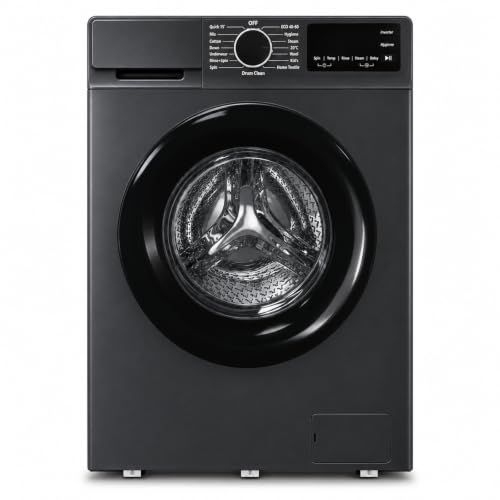
TABU 4.0 Cu Ft Front Load Washer — Best compact front loader
The TABU answers a question the big brands often dodge: how much front-load washing can fit into a genuinely small laundry space? Its answer is 4.0 cubic feet of drum — family-respectable capacity — inside a compact, stackable, space-saving cabinet finished in black, with fifteen wash cycles covering the realistic wardrobe from delicates to heavily soiled workwear. For flats, small utility rooms and households planning to stack a dryer above, that combination of real capacity and modest footprint is the entire point, and it is rarer than the market’s noise suggests.
Stackability deserves a word of sale-season caution that applies to every compact machine: stacking requires the correct kit, a level floor and a dryer whose dimensions genuinely match, so the time to verify those details is before the sale, in the calm, with a tape measure — not in a checkout queue with a countdown timer running. Measure the full stacked height against your ceiling and any wall cabinets, and check the door swing of both machines against the room’s walls. The TABU rewards that preparation by fitting where standard machines simply cannot go.
As a newer name in laundry, TABU also makes the case for the verification habits this guide teaches. Read the full listing specification, confirm the cycle count and dimensions against the model you researched, and weigh the warranty terms as part of the purchase rather than an afterthought. Judged on its specification, this is a thoughtfully aimed machine: big-drum washing for small-room households, in a finish that looks deliberate rather than apologetic, and a natural Black Friday target for buyers whose constraint is space rather than budget.
- Format: front load washer, 4.0 cu ft
- Cycles: 15 wash cycles
- Design: compact, space-saving and stackable
- Finish: black cabinet
- Efficiency: positioned as an energy-efficient model — verify the rating on the listing
Strengths
- Real family capacity in a compact footprint
- Stackable design suits small laundry rooms
- Generous fifteen-cycle programme range
Trade-offs
- Newer brand with a shorter track record
- Stacking needs the correct kit and careful measuring
- Compact depth may limit some bulky items
Best for: flats and small homes wanting front-load capacity and a stacked layout.
Not suited for: buyers who prioritise a decades-long brand service history above all.

Kenmore 4.4 Cu Ft Top Load Washer — Best big top loader
Kenmore’s 4.4 cubic foot top loader is the family workhorse shape of this list: a deep drum, a triple-action agitator that moves clothes through the water in more than one direction, and controls a household can operate without a manual in hand. The agitator question divides laundry buyers, so let us settle it plainly — a central agitator, especially a multi-action design like this one, is the more vigorous cleaner for genuinely dirty loads: sports kits, work clothes, the muddy end of family life. Households whose laundry is mostly office wear may never need that vigour; households with children and dogs will use it weekly.
Capacity is the headline and it is honest capacity, the kind that takes a week’s family wash in fewer loads and handles a king-size comforter without the drum becoming a solid block of wet fabric. Fewer, fuller loads is also the economical way to run any washer — less water and energy per garment than a small machine run daily — so a big top loader, bought at a sale price verified against the true model, is a defensible purchase on running costs as well as convenience.
For the sale shopper, Kenmore carries one specific instruction: the brand’s model numbers are long and its range is wide, with similar-looking machines at several capacities, so the 4.4 figure and the full model designation both belong on your pre-sale notes. A listing that says only “Kenmore top load washer” in a headline is a listing to open and verify, not a bargain to seize. Do that, and what you are buying is a known quantity: a big, vigorous, uncomplicated family machine from one of laundry’s oldest names.
- Format: top load washer, 4.4 cu ft
- Wash action: triple-action agitator
- Audience: family-size loads including bulky bedding
- Controls: straightforward dial-and-button layout
- Sale note: verify capacity and full model designation on the listing
Strengths
- Large drum cuts the weekly load count
- Agitator action suits genuinely dirty laundry
- Simple controls for multi-user households
Trade-offs
- Agitator washing is less gentle on delicates
- Deep drum can be a stretch for shorter users
- Top loaders use more water than front loaders
Best for: busy families who want vigorous washing and fewer, bigger loads.
Not suited for: wardrobes dominated by delicate fabrics.
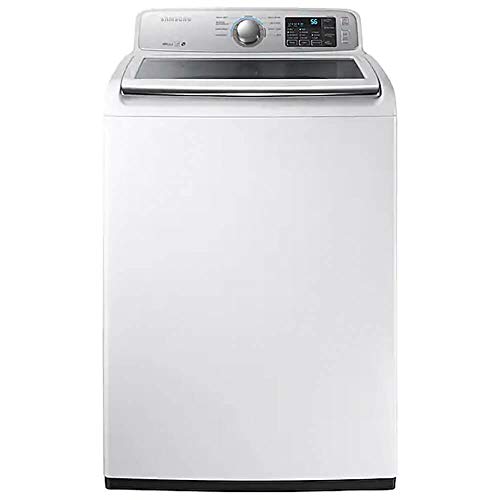
Samsung WA50R5200AW — Best established top loader
The WA50R5200AW is the machine in this list with the longest public paper trail, and in Black Friday season that history is a feature in itself. A model that has been sold, reviewed and serviced for years gives a sale shopper something no launch-day special can: a deep record of owner experience to read in October, parts and engineers available in every region, and a specification that has been stable long enough to verify against multiple sources. Its 4.5 cubic feet is the joint-largest drum here, in the top-load format that loads at waist height and finishes its work faster than front loaders typically do.
Samsung’s top-load design philosophy suits households that want capacity without ceremony. The wide drum takes bulky family loads, the control panel sits at the rear in the classic layout that keeps it dry and readable, and the machine’s programme range covers the ordinary week — bedding, towels, delicates, the quick wash for the forgotten sports shirt — without turning laundry into a settings seminar. For multi-generational households, where a grandparent and a teenager may both operate the machine, that restraint is a genuine usability advantage.
Sale guidance for this model is the guide’s core lesson in miniature. Samsung’s range contains many top loaders with similar faces and different capacities, features and model suffixes; the string WA50R5200AW is the machine, and any listing that abbreviates or alters it deserves a careful second read of the full specification before money moves. Verify the capacity figure, the colour and the included hoses against your notes. A disciplined buyer will find this Samsung exactly where a mainstream flagship should be in the sale: prominent, comparable across retailers, and honestly specified for anyone who checks.
- Format: top load washer, 4.5 cu ft
- Model number to verify in the sale: WA50R5200AW
- Controls: rear panel, family-friendly programme range
- Record: long-selling model with a deep owner history
- Loading: waist-height top loading
Strengths
- Largest top-load capacity in this guide
- Years of owner history to research before buying
- Wide service and parts network
Trade-offs
- Similar-looking Samsung models invite listing confusion
- Top-load water use exceeds front-load equivalents
- Rear controls can be a reach over a deep drum
Best for: families wanting the biggest mainstream top loader with a proven record.
Not suited for: buyers set on front-load efficiency and gentleness.

Amana NTW4516FW 3.5 Cu Ft Top Load Washer — Best simple workhorse
The Amana is the machine for the buyer who looks at a modern washer’s touch panel and feels tired. A 3.5 cubic foot top loader with a traditional agitator and controls that a person can understand from across the room, it comes from the value end of a major manufacturer’s range and has been bought for years by landlords, first-home buyers and families who want laundry done rather than laundry experienced. In a Black Friday guide full of strategy, the Amana represents the simplest strategy of all: buy the honest basic machine, on sale, and think about something else for a decade.
Its size is a feature when matched to the right household. Couples, small families and anyone whose laundry room is a cupboard will find 3.5 cubic feet adequate for the weekly rhythm, and a smaller drum run full is more efficient than a cavernous one run at a third. The agitator action handles everyday soil with the directness this format is known for, and the machine’s mechanical simplicity has a quiet economic argument behind it: fewer electronic boards and sensors means fewer expensive ways for a washer to grow old.
What it will not do is grow with a family. Twins, a dog and a king-size bed will outgrow this drum, and the buyer who suspects that future should size up to the Kenmore or Samsung now, sale or no sale, because the cheapest washer is the one bought once. Nor does the Amana pretend to delicacy or silence; it is a working appliance with a working appliance’s manners. For the household it fits, though, it is the easiest recommendation in this guide to defend in November or any other month.
- Format: top load washer, 3.5 cu ft
- Wash action: traditional central agitator
- Controls: simple, mechanical-feeling layout
- Position: value line of a major manufacturer
- Model number to verify in the sale: NTW4516FW
Strengths
- Uncomplicated controls anyone can use
- Simple mechanics promise economical longevity
- Right-sized drum for smaller households
Trade-offs
- Capacity will not suit growing families
- Fewer programmes and refinements
- Not the quietest machine in this list
Best for: couples, small homes, landlords and simplicity-first buyers.
Not suited for: large families or bulky-bedding households.

BLACK+DECKER 4.1 Cu Ft Top Load Washer BTLW41MW — Best glass-lid value pick
Close the list with the machine that splits the difference: a full-size 4.1 cubic foot top loader from BLACK+DECKER, with an agitator at its centre and a glass lid on top — the small luxury that turns laundry from faith into observation. Being able to see the wash matters more than it sounds. You can confirm the water level suits the load, spot the red sock invading the whites while there is still time to fish it out, and check that a bulky item is actually circulating rather than riding above the waterline for forty minutes.
As a sale target, the BTLW41MW shares its front-load sibling’s great virtue: a precise, stable model designation that a prepared shopper can verify in seconds. BLACK+DECKER’s laundry line is young compared with Kenmore’s or Amana’s parentage, and the honest way to weigh that is to read the warranty terms and the accumulated owner record as part of your pre-sale homework — exactly the process this guide exists to encourage. On specification, the machine is squarely aimed: family capacity, agitator cleaning, full-size footprint, no exotic features inflating the ticket.
Who should choose it over the Kenmore or the Samsung? The buyer who values the glass lid’s visibility, finds the capacity sufficient — 4.1 cubic feet covers most families’ bedding in a load or two — and is comfortable with a newer laundry brand in exchange for its value positioning. Who should not: the household that needs every last litre of drum, or the buyer for whom a multi-decade brand history is the deciding factor. In a sale, this is often the machine whose listing rewards the verifier — a genuine full-size washer hiding among the seasonal noise, waiting for the shopper who reads model numbers.
- Format: top load washer, 4.1 cu ft
- Wash action: central agitator
- Lid: glass, for watching the wash
- Model number to verify in the sale: BTLW41MW
- Size class: full-size footprint
Strengths
- Glass lid makes load-checking effortless
- Full-size capacity at a value position
- Clear model designation aids sale verification
Trade-offs
- Smaller drum than the biggest picks here
- Brand’s laundry history is comparatively young
- Agitator format will not suit delicates-first buyers
Best for: value-focused families who like the visibility of a glass lid.
Not suited for: maximum-capacity hunters or brand-history traditionalists.
Comparison Table
| Pick | Format and size | Standout trait | Watch out for |
|---|---|---|---|
| BLACK+DECKER BFLW45M (4.5 cu ft) | Front load, 4.5 cu ft | Full-size front-load value | Seal care, longer cycles |
| TABU 4.0 Front Loader | Front load, 4.0 cu ft | Compact and stackable | Newer brand record |
| Kenmore 4.4 Top Loader | Top load, 4.4 cu ft | Triple-action agitator | Verify exact model variant |
| Samsung WA50R5200AW (4.5 cu ft) | Top load, 4.5 cu ft | Long, verifiable track record | Similar models in the range |
| Amana NTW4516FW (3.5 cu ft) | Top load, 3.5 cu ft | Simplicity and durability | Smallest drum here |
| BLACK+DECKER BTLW41MW (4.1 cu ft) | Top load, 4.1 cu ft | Glass lid visibility | Young laundry brand |
How Do You Spot a Genuine Deal Among the Best Black Friday Washing Machines?
A genuine deal has a paper trail. The machine existed before the sale at a findable price, under the same model number, with the same specification — which means you can reconstruct its price history from retailer pages, price-tracking tools and your own notes taken in the calm weeks before. That is why the single most valuable Black Friday habit costs nothing: in October, write down the machines you want and the prices they are actually selling for. In November, arithmetic replaces adrenaline, and a discount becomes a number you can verify rather than a feeling a banner is trying to give you.
The derivative model is the pattern to learn once and recognise forever. Each sale season, manufacturers supply retailers with special-run variants: the cabinet and name of a popular machine, with a model number altered by a suffix, fewer wash programmes, a simpler motor arrangement or thinner insulation. Some are fair value honestly described. The tell is never the machine itself but the comparison — a huge claimed saving against a reference price at which that exact model was never generally sold. Your defence is mechanical: compare the full model number, then compare three specifications that derivatives most often trim — cycle count, capacity and spin speed — against the standard model’s documentation.
Finally, judge the whole transaction, not the headline. A washer’s true sale cost includes delivery, installation, the hoses or stacking kit the listing excludes, removal of the old machine, and the value of your own time if a too-good listing turns into a cancellation email in December. A slightly smaller discount from a retailer offering included delivery and haul-away in a named week is frequently the better deal in total than the spectacular headline that leaves a pallet on your drive and your old machine in your hallway. Read the delivery terms with the same care as the model number; in Black Friday week, logistics is where bargains go to die.
What Should You Measure Before the Sale Starts?
Measure the space the machine will occupy, in three dimensions, and write the numbers down: width between walls or units, depth from the wall to the front edge — remembering that hoses and the drain connection claim several inches behind the machine — and height beneath any counter or shelf. Then measure the journey, which is where large appliances most often fail to arrive: every doorway between the street and the laundry room, the narrowest stair turn, the lift if there is one. A washer that fits its alcove perfectly and cannot pass the bathroom door is a return, a restocking argument and a fortnight of launderette trips.
Check the connections while you are measuring. Confirm the water supply taps exist and turn, note whether the drain is a standpipe or a sink, and look at the electrical socket’s position and condition. Front loaders add two more checks: the direction the door must swing, given the room’s walls, and whether the floor is level and solid enough to avoid vibration on the spin cycle — a compact machine stacked in an upstairs flat lives or dies by that floor. Photograph the whole setup; when a delivery crew arrives in the busiest week of the year, a photograph ends arguments that memory would lose.
Measure your laundry, too, in the week before the sale. Weigh or simply observe your typical loads: how many, how bulky, how often. That diary is what chooses between 3.5 and 4.5 cubic feet far more reliably than any advertisement, and it protects you in both directions — from the small machine that turns laundry into a daily chore and from the giant whose drum never fills, wasting water and money on every wash for a decade. The sale will try to choose your capacity for you, based on which warehouse is fullest. Your measurements are how you choose it yourself.
What Are the Most Common Black Friday Washing Machine Mistakes?
The first is buying the countdown instead of the machine — letting a timer convert an unresearched listing into a panic purchase of the heaviest, least returnable object in the house. The second is its cousin: assuming every model on a sale page is the standard model, and never performing the thirty-second model-number check that separates a genuine discount from a derivative in a familiar coat. The third is forgetting the old machine; buyers who have not arranged haul-away spend December stepping around a dead washer in the hallway, and some discover their bargain excluded the service only when the delivery crew is standing in the drive.
Fourth comes the capacity error in both directions, already described in this guide and worth repeating because the sale manufactures it: discounts cluster on whatever size the retailer overstocked, which may be precisely the size your household does not need. Fifth, shoppers ignore the warranty and returns terms in the excitement, although for a plumbed appliance those terms are part of the product — who services it locally, what the parts cover is, and what happens if the machine arrives damaged in the busiest delivery week of the year. Read those lines before the sale, when you are calm, and keep screenshots of the listing you bought from.
The last mistake is treating Black Friday as the only door. Washers are discounted across the year — holiday weekends, model changeovers, retailer anniversaries — and a prepared shortlist keeps its value for months. The shopper who has measured, verified and priced their six machines in advance can afford to let a mediocre November deal pass, which is the strongest negotiating position a buyer can hold: the willingness to walk away with their homework intact.
Final Recommendation
Build your shortlist from the format decision outward. If your household is upgrading to front-load washing, the BLACK+DECKER 4.5 Cu Ft Front Load Washer BFLW45M is the full-size value to watch, and the TABU is the compact answer where space rules. If top loading suits your home — and for many families it genuinely does — the Samsung WA50R5200AW brings the deepest track record, with the Kenmore 4.4 top loader close behind for agitator strength.
Whichever machine you chase, chase it as this guide has taught: model number in hand, measurements in a notebook, the ordinary price recorded before the banners went up, and delivery terms read to the end. Do that, and Black Friday becomes what it should be — a discount on a decision you had already made well. May the machine you bring home be the one you meant to buy, at a price you verified yourself, washing its first load before the sale season’s noise has even faded.
How Should You Prepare Your Home in the Week Before Delivery?
The sale is won or lost twice: once at the checkout and once at your front door. In the days between paying and delivery, clear the machine’s entire journey — the path from the street, through the hall, to the laundry space — of the shoes, boxes, bikes and stored clutter that accumulate exactly where a two-person crew needs to swing a wide appliance around a corner. Measure nothing new; simply make the measured route real. Crews working the year’s busiest schedule will not rearrange your hallway furniture, and a machine abandoned in the wrong room because the route was blocked becomes your problem at the worst possible moment.
Prepare the destination as thoroughly as the path. Turn the water supply taps off and on once to confirm they move — a tap seized after a decade of stillness is a plumber’s visit discovered too late — and clear the space around them so the crew’s hands and tools can reach. Photograph the existing connections before anything is disconnected, decide where the old machine waits if haul-away is not part of your order, and keep children and pets entirely out of the route for the duration. None of this is glamorous. All of it is the difference between a forty-minute installation and a saga retold at family gatherings.
On the day itself, run the new machine empty once before the crew’s work is signed off in your mind — a short rinse cycle with nothing in the drum. That single cycle proves the machine fills, drains, spins and does not leak at any connection, while help is still metaphorically in the room. Check the transit bolts have been removed on a front loader, a step whose omission produces a machine that dances across the floor on its first spin and a mystery rattle that owners chase for weeks. Keep the manual, the warranty card and your listing screenshots together in one folder; the household that can find its paperwork in year three is the household whose warranty claim takes one phone call.
What Running Costs Should You Weigh Alongside the Sale Price?
A washing machine is bought once and paid for weekly, in water, energy and detergent, for a decade or more — which is why the cheapest ticket in the sale is not automatically the cheapest machine in your life. Front loaders earn their format’s reputation here: tumbling clothes through a shallow pool uses markedly less water than filling a deep top-load tub, and less water heated means less energy per load for the households that wash warm. Top loaders answer with shorter cycles, simpler mechanics and, often, lower repair bills when age eventually arrives. Neither side of that ledger is decisive for every home; your load count per week is the multiplier that decides which side matters.
Detergent is the quiet line item. Modern machines, front loaders especially, are designed for high-efficiency detergent in small doses, and the household habit of pouring generously — inherited from machines of another era — produces oversudsing, residue on clothes and extra rinse cycles that hand the savings back. Measure the dose for a month and most households discover they were using half again what the machine needed. The sale-season machine that arrives with a sample sachet is quietly teaching the right lesson: in laundry, the correct amount is a measured amount.
Repairs deserve one honest paragraph. Any washer can need a pump, a belt, a board or a bearing across a long life, and the brands with deep local service networks — a point in favour of the established names on this shortlist — turn those events into appointments rather than expeditions. When you compare two sale listings of similar machines, the one whose maker stocks parts in your country and answers a service line is carrying value that no banner will advertise. Price is a moment; ownership is a decade. Shop for the decade, and let the moment take care of itself.
When Is the Right Answer to Buy Nothing at All?
More often than the sale wants you to believe. If your current machine washes well and its only sins are age and noise, the greenest and cheapest Black Friday decision is a service visit, a new set of hoses and another few years of service from an appliance already installed, already plumbed and already the right size for its hole. The sale’s urgency is engineered to make a working machine feel like a problem; resist the feeling unless the machine itself — a failing bearing’s roar, a drum that no longer spins true, rust at the cabinet’s base — is genuinely presenting the evidence.
Buy nothing, too, when the measurements say the machine you want cannot come into your home, however beautiful the discount. A door that will not pass, a floor that will not bear a stacked pair’s vibration, a drain arrangement that needs building work — these are renovation facts, not shopping problems, and they should be solved in their own season at their own pace. The prepared shopper’s notebook keeps: the shortlist, the model numbers, the ordinary prices, the measurements. It will all still be true at the next promotion, and the machine bought calmly in a later sale will serve exactly as well as the one panic-bought in November — usually better, because it will be the one you actually chose.
Agitator, Impeller or Front-Load Drum: Which Wash Action Suits Your Laundry?
Three of the machines in this guide wash with a central agitator — a post rising from the drum’s floor that twists and pulls the load through the water — and it is worth understanding what that buys and what it costs. The agitator’s virtue is mechanical enthusiasm: clothes are moved decisively, water is forced through fabrics, and heavy soil on sturdy garments comes out in a way gentler systems sometimes only manage with a second pass. Its costs are equally physical: the post occupies drum space that its capacity figure quietly accounts for, the action is harder on delicate fabrics, and tangling around the post is a known habit that careful loading — garments placed in loose piles around it, not dropped in a heap — largely prevents.
The front-load drum, represented here by the BLACK+DECKER and the TABU, washes by lifting and dropping: paddles raise the load and let it fall through a shallow pool, hundreds of times a cycle. The action is the gentlest of the three and the most water-frugal, and it scales gracefully to bulky items that need room to tumble rather than a post to wrap around. Its price is time — cycles run longer — and the loading posture already discussed. Households choosing between the philosophies should interrogate their laundry basket rather than their instincts: a basket of workwear, towels and children’s clothes argues for the agitator’s vigour, while a basket of knitwear, gym fabrics and bedding argues for the drum’s patience.
Notice what this guide has not done: crowned one action universally best. Sale pages will try, usually in favour of whichever action fills their warehouse. Your household’s fabrics, soil level, water metering and patience are the actual specification, and they were true before the sale began and will remain true after it ends. Choose the action for the laundry you have, then let the discount hunt begin inside that decision — never the other way round.
How Should You Read the Warranty and Returns Terms Before You Pay?
Read the warranty as three separate promises wearing one coat. The first covers the whole machine for a relatively short period — parts and labour for manufacturing faults. The second, on many machines, covers specific expensive components for much longer: the motor, sometimes the drum, occasionally the control board. The third is the one nobody reads: the conditions, including what counts as domestic use, whether registration is required to activate the longer cover, and which failures are classified as wear rather than defect. A landlord fitting a machine in a tenanted property, for instance, should check the domestic-use clause before assuming the long motor cover applies.
Returns for plumbed appliances follow different rules from returns for a kettle, and Black Friday is the worst week to learn them by experience. Once a washer has been connected and run, many retailers treat it as installed rather than merely opened, and the conversation changes from refund to repair under warranty. That is precisely why the pre-purchase homework in this guide matters so much more for a washer than for almost anything else in the sale: your right to change your mind narrows sharply at the moment water first enters the drum. Measure twice, verify the model number twice, and let the first run be a confirmation rather than a discovery.
Keep the evidence as a habit, not a chore. Screenshot the listing you bought from — model number, specification and the delivery terms as they appeared on the day — and file it with the invoice and warranty documents. If a derivative-model mix-up or a delivery dispute ever needs resolving, that screenshot is the difference between a short conversation and a long one. The prepared shopper this guide has been training you to become does not merely buy well on the day; they remain able to prove what they bought, calmly, for years afterwards.
What Does a Sensible Sale-Week Plan Look Like, Day by Day?
In the final week of October, do the homework while the shops are quiet: settle the format question, measure the space and the journey, weigh a week of your household’s laundry, and write the shortlist — the six machines in this guide or your own equivalents — into a single notebook page with their full model numbers and their ordinary selling prices recorded beside them. Photograph your current installation. That page, unglamorous as it looks, is the most valuable shopping document you will own all season, because everything the sale throws at you can be checked against it in seconds.
When the early sale previews appear, use them for reconnaissance rather than buying. Note which of your shortlisted machines are actually being promoted, by whom, and on what delivery terms; confirm that the promoted model numbers match your page character for character; and identify the listings that turn out to be derivatives wearing familiar names, so they stop tempting you. If a machine you want is absent from the previews, that is useful knowledge too — it tells you to watch the main event, or to accept that this model’s season may be a different one.
On the day itself, your work should be almost boring, and that boredom is the sign the system worked. Open your notebook, open the listings, verify the model number, compare the price against your recorded ordinary price, read the delivery and haul-away terms one final time, and then — only then — decide. If the numbers justify the purchase, buy it and close the tabs. If they do not, close the tabs anyway, with the notebook intact for the next promotion. The shoppers who describe Black Friday as stressful are usually doing in one frantic day the thinking that this plan spreads gently across a month. Spread it, and the sale becomes what it always should have been: a discount applied to a decision, not a decision manufactured by a discount.
Frequently Asked Questions
Why does this guide contain no prices or discount figures?
Because both change constantly during the sale season — by retailer, by region and by the hour — and any figure printed here would mislead more readers than it helped. The honest help a guide can give is the method: shortlist machines you would buy at full price, record their ordinary selling prices beforehand, verify model numbers on sale listings, and judge the discount yourself at the moment of purchase.
What is a derivative or special-run model?
It is a variant produced for big sale events, sharing a popular machine’s name and appearance but carrying a different model number and, often, a trimmed specification — fewer cycles, smaller capacity or simpler internals. Not all are poor machines, but their claimed savings are frequently measured against prices the variant never sold at. Comparing the full model number and core specifications against the standard model exposes the difference in under a minute.
Should I choose a front loader or a top loader in the sale?
Decide it before the sale, on your household’s facts. Front loaders wash more gently, use less water and can stack under a dryer, but load at knee height and run longer cycles. Top loaders load standing up, finish faster and are usually simpler to repair, at the cost of higher water use. A discount should never flip this decision; it should only reward the one you already made.
What delivery details should I confirm before paying?
Confirm whether delivery is to the room or to the doorstep, whether installation and connection are included, whether the crew will remove packaging and the old machine, and what delivery window is realistic during the busiest week of the year. Confirm also what happens if the machine arrives damaged — who you contact and how quickly a replacement moves. These terms routinely differ more between retailers than the headline price does.
How do I verify a sale listing is the machine I researched?
Match the full model number character by character, then check three specifications that variants most often trim: drum capacity, number of wash cycles and maximum spin speed. Check the dimensions against your measurements as a fourth test. If any figure differs from the manufacturer’s documentation for that model, you are looking at a different machine — which may still be worth buying, but only knowingly, at a price judged on its own merits.
Is it worth paying for installation and haul-away during the sale?
For most households, yes — and the busier the week, the more the answer holds. A washing machine must be levelled, connected without leaks and tested, and its predecessor is a heavy, dripping object that cannot go in a car boot to the tip without preparation. Professional installation and haul-away convert the two most failure-prone hours of the purchase into somebody else’s insured problem. Price those services into your comparison of listings from the start, because a machine that looks cheaper can become the dearer purchase the moment the extras are added at the till.
What if the machine I want is not discounted?
Then the sale has given you information, not an obligation. Washers are promoted throughout the year, and a measured, verified shortlist remains useful at every future event. Buying the wrong machine at a discount commits you to a decade of the wrong capacity or format; waiting for the right machine at a fair price costs you a few weeks of patience. Keep your notes, keep your measurements, and let the countdown expire without you.
Related Guides
For the cooking side of a big household weekend, our Best 16 Quart Electric Roaster Ovens compares the countertop roasters that free up your main oven. See also Best Air Fryer Ovens for everyday capacity in a smaller box, and Best 36 Gas Ranges if the laundry upgrade is part of a wider refit.



[…] the event ends and laundry begins, our Best Black Friday Washing Machines guide explains how to shop the sales season for a family washer. For feeding a crowd instead of […]