What's inside
- Key Takeaways
- Quick Picks
- How We Chose These Picks
- Which of the Best Canister Vacuums for Tile Floors Glides With Your Home?
- How Do the Six Canisters Compare at a Glance?
- Why Does Grout Collect Dirt That Tile Itself Sheds?
- How Should You Vacuum Tile Without Scattering or Scratching?
- What Is the Real Difference Between Bagged and Bagless Ownership?
- How Far Can a Canister Reach, and Why Does It Matter on Tile?
- What Maintenance Keeps a Canister Honest for Years?
- How Do Canisters Handle Tiled Kitchens After Real Cooking?
- What About Tiled Bathrooms, Where Hair and Damp Conspire?
- How Should You Choose a Floor Head for Different Tile Types?
- What Role Does the Canister Play Alongside a Robot or a Stick?
- How Quiet Can a Canister Be, and Does It Matter?
- How Should You Move a Canister Around Furniture Without Damage?
- What Should You Check in a Canister’s First Fortnight?
- How Long Do Bags Last, and How Should You Budget for Them?
- How Do Canisters Serve Homes With Indoor-Outdoor Living?
- What Should You Know About Using a Canister on Stairs?
- How Can You Tell a Quality Hard-Floor Head From a Compromise?
- How Should You Vacuum Around Rugs, Mats and Thresholds on Tile?
- What Is the Best Order to Clean a Tiled Open-Plan Space?
- What Mistakes Do Canister Buyers Make Most Often?
- Final Recommendation
- Frequently Asked Questions
- Related Guides
As an Amazon Associate I earn from qualifying purchases. This post may contain affiliate links at no extra cost to you.
cottageverdict.com is reader-supported. When you buy through links on our site, we may earn an affiliate commission.
Where to buy: the six canisters below are sold through Amazon, and their names in the Quick Picks table, the individual reviews and the comparison table link to each listing, where you can check price on Amazon and confirm included floor heads, bag type and cord details. The best canister vacuums for tile floors are built around a simple division of labour that uprights cannot match: the motor and dust live in a body that follows you on wheels, while your hand guides a light wand and a floor head shaped for the surface in front of it. On tile that arrangement is close to ideal. Tile wants suction and a gentle, gliding head rather than a spinning brush; it punishes machines that scatter grit across grout lines; and tiled homes tend to be open-plan, where a canister’s hose reach lets you clean a wide radius from one socket.
Grout is the honest test. Anyone can vacuum the middle of a porcelain tile; the question is what happens along the recessed lines where grit settles, in the corners where the wand must pivot, and at the threshold where tile surrenders to a rug. A parquet-style hard-floor head, with soft bristles or a smooth glide, keeps contact across those lines without skating, and pure suction — no brush roll — means nothing flicks debris sideways and nothing scratches a polished finish. Four of these six are suction-led designs; the two with powered brushes earn their place for homes where tile is only part of the story.
The field splits by dust philosophy. Miele and Kenmore and Prolux argue for bags, which seal the dirt away and suit allergy-aware homes. Bissell and Eureka argue for bagless cups and zero consumables. Both philosophies are honestly represented, and this guide grades heads, hoses and handling first, because on tile those decide the clean; the bag question decides the ownership, and it is treated as a preference rather than a ranking.
Key Takeaways
- Pure suction with a hard-floor head beats a spinning brush on tile: no scattering, no scratching, better grout contact.
- Miele fields two picks here, the Guard M1 Parquet XL and the Classic C1 Pure Suction, both bagged and hard-floor minded.
- Bagged versus bagless is the ownership divide: bags seal dust away, cups cost nothing to empty.
- The Kenmore 600 Series is the carpet-capable outlier, with a powered Pet PowerMate for homes where tile is only half the map.
- Prolux’s Tritan brings sealed HEPA filtration and a five-speed motor for owners who like control.
- Wand lightness is the daily pleasure of the format: the heavy part stays on the floor behind you.
Quick Picks
| Pick | Badge | Why it earns its place |
|---|---|---|
| Bissell Hard Floor Expert Canister Vacuum 1547 | Best Bagless for Tile | A multi-cyclonic bagless canister built specifically around hard floors, from a brand that knows them. |
| Miele Guard M1 Parquet XL Canister Vacuum | Best Parquet Specialist | A bagged Miele with a Parquet XL brief, made for wide hard-floor expanses and gentle gliding. |
| Miele Classic C1 Pure Suction Vacuum | Best Classic Pure Suction | The long-running C1 formula: pure suction for hard floors and low-pile carpet, bagged and composed. |
| Eureka Bagless Canister Vacuum NEN180 | Best Lightweight Bagless Value | A WhirlWind canister with HEPA, automatic cord rewind and a 2-in-1 brief across floors and carpet. |
| Kenmore 600 Series Bagged Canister Vacuum | Best for Tile Plus Carpet Homes | Two motors, a Hair Eliminator brushroll and Pet PowerMate, with HEPA and a retractable cord. |
| Prolux Tritan Bagged Canister Vacuum | Best Sealed Filtration Control | Sealed HEPA filtration and a five-speed motor in a bagged canister pitched at pet hair and home cleaning. |
How We Chose These Picks
Tile set the criteria. First, the floor head: we favoured designs whose listings centre on hard floors — parquet heads, pure suction layouts, hard-floor expert branding — because a head that maintains gentle contact across grout lines is the whole game. Second, scatter behaviour, which on tile is governed by whether a brush roll exists to flick grit; suction-only heads win that test by design. Third, the wand and hose: light in the hand, long enough to work a room from few sockets, with a head that pivots into corners rather than arriving at them like a train.
Then ownership: bagged or bagless according to the household’s dust sensitivities and tolerance for consumables; filtration quality, with sealed HEPA credited where claimed; cord handling, where automatic rewind is a small daily luxury; and the machine’s second job, because most tiled homes also have a rug, a runner or a carpeted bedroom, and a canister that can only do tile is a part-time appliance. The Kenmore’s presence in the list is that criterion made visible.
Which of the Best Canister Vacuums for Tile Floors Glides With Your Home?
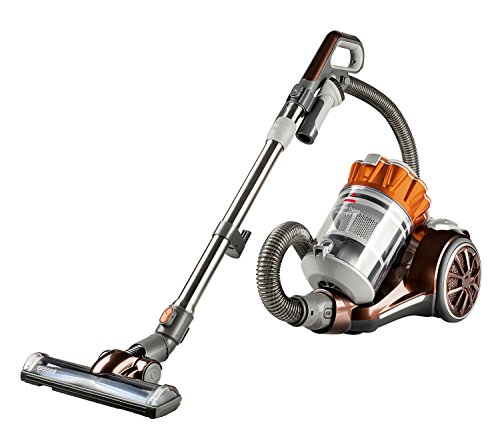
Bissell Hard Floor Expert Canister Vacuum 1547 — Best Bagless for Tile
Bissell named this machine’s brief on its badge: Hard Floor Expert. The 1547 is a corded, multi-cyclonic bagless canister, which translates to a hard-floor head driven by suction, a cup instead of bags, and cyclonic separation keeping the debris spinning down so airflow holds steadier as the cup fills with the particular dust tile produces — fine, pale and relentless. On tile that steadiness shows at the grout lines, where a fading machine starts leaving the recessed grit behind while still polishing the tile faces. The Expert’s whole design argues that hard floors are not the easy case upright marketing assumes, but a specialism, and the argument is persuasive in the hand.
Bagless ownership suits tile homes particularly well, because tile dust is clean dust as household dirt goes: emptying the cup is a low-drama event, and there is no bag budget quietly taxing the arrangement. The wand-led handling is the format’s usual pleasure — the body trails, the head glides, corners are approached with a pivot rather than a shove. Bissell’s hard-floor experience across its range shows in the head’s manners on smooth surfaces, where the goal is contact without clatter.
Where it concedes ground is filtration philosophy: a bagless cup, however cyclonic, returns a small dust event at emptying that a sealed bag avoids, and allergy-governed households should weigh that honestly against the Mieles below. For everyone else, the 1547 is the most tile-focused bagless answer here, and its specialism earns it the lead position.
- Format: corded bagless canister
- Separation: multi-cyclonic system
- Brief: hard floors as the specialism
- Model reference: 1547, per the listing
- Dust handling: cup, no bags to buy
- Handling: wand-led, body trails on wheels
Strengths
- Hard-floor head and suction suit grout lines well.
- Cyclonic separation resists fade as the cup loads.
- No bag costs for the life of the machine.
Trade-offs
- Cup emptying is dustier than a sealed bag swap.
- Bagless filtration trails sealed HEPA systems.
- Carpet work is secondary to its hard-floor brief.
Best for: tiled homes wanting bagless running costs and a specialist head.
Not suited for: allergy-governed homes needing sealed dust disposal.

Miele Guard M1 Parquet XL Canister Vacuum — Best Parquet Specialist
Miele’s Guard M1 Parquet XL is the connoisseur’s tile-and-timber machine: a bagged canister whose very name specifies the floor head’s purpose and its extra-large coverage. Parquet heads are the hard-floor aristocracy — wide, low, softly bristled or smoothly gliding, designed to maintain an unbroken seal across boards and tiles while treating delicate finishes as if they matter, because in the homes that buy Miele, they do. The XL width shortens sessions on the open-plan expanses where tile usually lives, and the glide is the point: no brush roll to scatter, no hard wheels chattering across grout, just suction delivered at a respectful distance of millimetres.
The bagged system is the other half of the Miele philosophy. Dust goes into a sealed bag, the bag goes into the bin, and at no point does the owner meet the month’s collection face to face. For households managing dust sensitivity, that sealed journey is not a luxury but the requirement, and Miele’s bags and filters are engineered as a system rather than as accessories. The Guard generation brings the brand’s current body design to that old, sound idea.
Costs are the standing Miele conversation: bags are a consumable with a price, and the machine itself sits at the considered end of the market. What the money buys is refinement of exactly the qualities tile exposes — quiet composure, head manners, filtration integrity — plus a brand infrastructure of parts and service measured in decades. If your tiles are expensive and your floors are wide, this is the pick that treats them as such.
- Format: bagged canister
- Head brief: Parquet XL for hard floors
- Dust handling: sealed bag system
- Surfaces: hard floors as the home territory
- Handling: wide head for open expanses
- Ownership: consumable bags, system filtration
Strengths
- Parquet XL head glides wide and gentle over tile.
- Sealed bags keep dust disposal contact-free.
- Refined manners suit expensive, delicate finishes.
Trade-offs
- Bags are an ongoing, brand-priced consumable.
- Premium positioning across machine and parts.
- Carpet ambitions are modest by design.
Best for: wide hard-floor homes with fine finishes and dust sensitivity.
Not suited for: buyers wanting zero consumable spending.

Miele Classic C1 Pure Suction Vacuum — Best Classic Pure Suction
The Classic C1 Pure Suction is the Miele formula in its most distilled and longest-running form, and its name is its specification: pure suction, no powered brush, aimed at hard floors and low-pile carpet. On tile that purity is a virtue with no caveats. The head cannot scatter what it never agitates sideways, the suction addresses grout lines directly, and the machine’s composure — Miele’s motors and bodies are built to a standard that assumes a long service life — makes the weekly round feel less like an appliance event and more like a household ritual performed with a good tool.
Low-pile carpet is the C1’s second room, and it matters because tiled homes so often pair their hard floors with flat runners, sisal and short bedroom carpet, all of which pure suction handles respectably. Deep pile is where the brief ends, and the listing says so by omission; households with plush carpet should look at the Kenmore below rather than asking this machine to be something else. Within its stated territory, the C1’s bagged, filtered system keeps dust sealed and exhaust composed.
Against its Guard M1 sibling, the C1 is the classic, narrower take: less XL theatre, the established body, the same philosophy. Homes with moderate hard-floor areas rather than sweeping open plans will rarely feel the difference in coverage, and the C1’s long production history means bags, filters and knowledge about it are everywhere. It is the pick for buyers who value the proven over the new.
- Format: bagged canister, pure suction
- Surfaces: hard floors and low-pile carpet
- Dust handling: sealed bag system
- Head style: suction head, no powered brush
- Lineage: Classic C1 long-running design
- Handling: wand-led, composed motor manners
Strengths
- Pure suction cannot scatter grit across tile.
- Proven design with deep parts availability.
- Sealed bags suit dust-aware households.
Trade-offs
- Deep-pile carpet is outside the brief.
- Bag consumables continue for its whole life.
- Narrower coverage than the Parquet XL sibling.
Best for: hard floors with low-pile rugs, bought for the long term.
Not suited for: plush-carpet homes needing powered agitation.

Eureka Bagless Canister Vacuum NEN180 — Best Lightweight Bagless Value
Eureka’s NEN180 WhirlWind is the approachable canister: bagless, lightweight by its listing, HEPA-filtered, and fitted with the small luxuries that make a budget machine feel considered — automatic cord rewind at the touch of a button, a stated noise ceiling of 82 dBA, and a 2-in-1 brief spanning hard floors, carpets and pet hair. The listing gives its power as 1000W, a figure we record as catalogue data; what matters on tile is that a suction-led canister with a proper floor head covers ground quietly and without scattering, and the WhirlWind’s design is pointed exactly there.
The cord rewind deserves its moment, because canister ownership’s daily friction is the cord: dragged, coiled, tripped over. A button that swallows it transforms the end of every session from a chore into a gesture, and gestures get repeated, which means the machine gets put away properly, which means it lives longer. HEPA filtration at this level of the market is equally welcome, narrowing the gap that usually separates bagless value from allergy respectability, though a cup still empties less cleanly than a sealed bag.
As the value pick, it concedes refinement rather than function: fittings and finish are workmanlike beside a Miele, and long-term parts depth is thinner. But for a tiled flat, a first canister, or a second machine for a hard-floored level of a house, the NEN180’s combination of lightness, filtration and that rewind button is a thoroughly sensible allocation of money.
- Format: bagless canister, WhirlWind design
- Stated power: 1000W, as printed on the listing
- Noise note: at or below 82 dBA, per the listing
- Filtration: HEPA
- Cord: automatic rewind
- Brief: 2-in-1 for hard floors, carpets, pet hair
Strengths
- Auto rewind removes the format’s daily friction.
- HEPA filtration at a value position.
- Lightweight body suits flats and second machines.
Trade-offs
- Finish is functional beside premium rivals.
- Cup emptying still trails sealed bags for dust.
- Parts ecosystem is shallower than Miele’s.
Best for: tiled flats and first-time canister buyers wanting value.
Not suited for: buyers prioritising heirloom build and service depth.

Kenmore 600 Series Bagged Canister Vacuum — Best for Tile Plus Carpet Homes
Every list needs its bridge machine, and the Kenmore 600 Series is this one’s: a bagged canister with two motors, a Hair Eliminator brushroll in its powered head, a Pet PowerMate attachment for furniture, HEPA filtration, a retractable cord and a Stair Grip design. On tile, you run it as a suction canister and it behaves with the decorum the surface wants. On carpet — real carpet, the deep bedroom kind that pure-suction machines politely decline — the powered head engages and the machine becomes the full-home vacuum the tile specialists are not. Homes split evenly between the two surfaces should start their reading here.
The Hair Eliminator brushroll addresses the powered head’s oldest flaw, hair wrapping, from inside the carpet camp: the roll is designed to reduce the tangle that pet homes feed it. The Pet PowerMate mini tool extends the same thinking to stairs and upholstery, where pet hair concentrates and full heads cannot go. Stair Grip, the design that lets the body sit securely on a step, solves the canister-on-stairs problem with similar practicality. This is a machine specified by people listing the actual annoyances of a mixed-floor, pet-owning household and answering them one by one.
The trade is weight and complexity against the pure tile picks: a two-motor powered system is more machine to store, maintain and eventually service. If your home is ninety percent tile, that surplus is wasted. If it is fifty-fifty with pets, the surplus is the entire point, and the Kenmore is the only pick here that refuses to make you choose which half of your house gets cleaned properly.
- Format: bagged canister with powered head
- Motors: two-motor design, per the listing
- Brushroll: Hair Eliminator, anti-tangle intent
- Tools: Pet PowerMate for furniture and stairs
- Filtration: HEPA filter
- Extras: retractable cord, Stair Grip design
Strengths
- Genuinely cleans both tile and deep carpet.
- Pet tools cover stairs and upholstery properly.
- Bagged HEPA system keeps dust sealed.
Trade-offs
- Heavier, more complex than pure tile specialists.
- Powered head is surplus in all-tile homes.
- Bags remain a lifetime consumable.
Best for: mixed-floor pet homes split between tile and real carpet.
Not suited for: all-tile homes paying for carpet machinery.

Prolux Tritan Bagged Canister Vacuum — Best Sealed Filtration Control
The Tritan’s proposition is control: a bagged canister with sealed HEPA filtration and a five-speed motor, so the owner, not the machine, decides how much suction a surface gets. On tile that dial is more useful than it sounds. Full power for the grout-line pass in the kitchen; a gentler setting for the lightweight rug that a strong canister tries to swallow; a lower, quieter speed for the early-morning hallway. Variable power is how a single canister becomes polite across an entire home’s surfaces, and five steps give finer judgement than the usual two or three.
Sealed filtration is the second pillar, and the word sealed is the load-bearing one: the system is designed so air passes through the HEPA path rather than leaking around it, which is what separates a filtration claim from a filtration result. The listing pitches the Tritan at pet hair and home cleaning, and a sealed bagged system is the configuration allergy-aware pet owners are usually steered toward, because the hair, the dander and the dust all leave the house inside a closed bag.
Prolux is a specialist name rather than a high-street one, and ownership reflects that: bags and parts are ordered rather than grabbed from a shelf, and the machine’s styling is functional. Buyers who value the control dial and the sealed system will accept that gladly. Buyers who want the deepest retail ecosystem should look at the Mieles. On tile specifically, the Tritan’s speed range makes it the most adjustable tool here, and adjustability, on a surface that punishes both excess and insufficiency, is a form of expertise.
- Format: bagged canister
- Filtration: sealed HEPA system
- Motor control: five-speed settings
- Stated work: pet hair and home cleaning
- Dust handling: sealed bags
- Handling: wand-led with dialled suction
Strengths
- Five speeds tailor suction to tile, rugs, drapes.
- Sealed HEPA path suits allergy-aware pet homes.
- Bagged disposal keeps dust contact at zero.
Trade-offs
- Specialist brand means ordered, not shelved, parts.
- Styling and finish are purely functional.
- Bags are a continuing purchase by design.
Best for: control-minded owners wanting sealed filtration and speed range.
Not suited for: buyers wanting high-street parts availability.
How Do the Six Canisters Compare at a Glance?
| Model | Dust system | Head philosophy | Signature strength |
|---|---|---|---|
| Bissell Hard Floor Expert Canister Vacuum 1547 | Bagless, multi-cyclonic | Hard-floor specialist | Tile focus without bag costs |
| Miele Guard M1 Parquet XL Canister Vacuum | Bagged, sealed | Parquet XL glide | Wide, gentle, refined coverage |
| Miele Classic C1 Pure Suction Vacuum | Bagged, sealed | Pure suction | Proven hard-floor classic |
| Eureka Bagless Canister Vacuum NEN180 | Bagless, HEPA | Suction-led 2-in-1 | Value with auto cord rewind |
| Kenmore 600 Series Bagged Canister Vacuum | Bagged, HEPA | Powered brushroll head | Tile plus deep carpet range |
| Prolux Tritan Bagged Canister Vacuum | Bagged, sealed HEPA | Suction with five speeds | Control and sealed filtration |
The dust-system column is a lifestyle choice, the head column is a flooring choice. Decide the flooring first — it determines the clean — and then let your feelings about bags settle the rest.
Why Does Grout Collect Dirt That Tile Itself Sheds?
Grout is recessed, porous and slightly rough — three invitations to grit that the glazed tile face refuses. Every footstep presses fine debris off the smooth surface and into the line, where it compacts below the reach of a broom and below the glide of a badly fitting vacuum head. Over months the lines darken from the edges of rooms inward, mapping traffic with embarrassing honesty. A canister answers with geometry: a low hard-floor head whose seal survives the step down into the line, and suction strong enough at the head to lift compacted grit rather than polish over it.
Technique completes what geometry starts. Run the head slowly along the grout lines themselves, not just across them, once in a while — a grout pass, in the same spirit as an edge pass — and let the wand’s crevice tool address the corners and the line behind the door where the head cannot square up. Wet mopping after, not before, keeps the loosened grit from turning to slurry. Homes that adopt the monthly grout pass find their tile floors aging evenly instead of developing the dark grid that makes a clean floor look tired.
How Should You Vacuum Tile Without Scattering or Scratching?
Slow down and let suction lead. The scattering that plagues tile cleaning comes from brush rolls and from speed: a head pushed fast creates a bow wave of air and debris that deposits grit ahead of itself, usually into the corner you just cleaned. A suction head at a walking pace ingests what it meets. Work from the far corner toward the door, overlap lanes slightly, and take the perimeter first so the field passes can collect anything the edges release. On polished or soft stone, confirm the head’s underside is clean before starting; a single trapped pebble under a gliding head is a scratch looking for somewhere to happen.
Rugs and mats get lifted, not vacuumed around, once in a while, because the grit beneath them is the floor’s scratch supply. Shake them outside, clean the revealed tile, and replace them on a dry surface. That small ceremony, monthly, protects the finish more than any product claim, and it is where a canister’s light wand makes the work pleasant enough to actually happen.
What Is the Real Difference Between Bagged and Bagless Ownership?
It is a difference in where the dirt waits and how it leaves. A bag is a sealed waiting room: dust, hair and dander accumulate inside a closed container, filtration stays consistent as it fills, and disposal is a ten-second, contact-free swap at the price of buying bags forever. A cup is an open one: nothing to buy, everything visible, and disposal is a small dust event that the owner manages with technique — outdoors, downward, gently. Neither is cleaner in the abstract; they allocate the dust encounter differently, one to a purchase, the other to a moment.
Choose by household. Dust-sensitive members, especially anyone whose clinician has opinions, point firmly to the sealed bagged systems represented by Miele, Kenmore and Prolux here. Households motivated by running costs and waste reduction point to the Bissell and Eureka cups, accepting the emptying ritual. The mistake is choosing by the machine’s first month rather than its fifth year: bags are still being bought in year five, and cups are still being emptied, so pick the recurring experience you mind least.
How Far Can a Canister Reach, and Why Does It Matter on Tile?
A canister’s working radius — cord plus hose plus wand — is its quiet superpower in open-plan tiled spaces. Park the body near a socket, and the wand covers a broad arc of kitchen, dining and hall tile without a single re-plug, while the body stays out of the wet-mopped zone and off the rugs. Compare that with an upright’s socket-hopping across the same plan and the session’s rhythm changes completely: continuous, unhurried, one pass. When you read listings, add the numbers mentally and picture your largest room; the machine whose radius covers it from one honest socket is the machine whose sessions will feel effortless.
Reach also governs the vertical world. A wand and hose take a canister up stair treads, along skirting tops, into ceiling corners and behind radiators with the body parked safely below — work an upright does reluctantly and a stick does briefly. Tiled bathrooms and kitchens accumulate exactly that high-corner dust, above splash zones and around extractor fans. The canister is the only format here that treats a room as a volume rather than a floor with obstacles.
What Maintenance Keeps a Canister Honest for Years?
The list is short and the intervals are kind. Bags changed before they are drum-tight, because an overfilled bag strangles airflow and stresses the motor; cups emptied at the line for the same reason. Filters checked on the maker’s schedule, since a canister’s suction advantage evaporates through a clogged filter. The floor head’s bristles or glide strips inspected for trapped grit and wear, especially in tile homes where the head is the finish’s closest companion. Wheels wiped, because a canister body dragged on gritty wheels across your tile is an irony nobody needs.
Hoses deserve a seasonal check for the partial blockage — the sock, the toy, the clump of pet hair at the bend — that presents as mysterious weakness. And store the machine with the cord rewound or loosely coiled and the wand parked, not dangling by its hose. Canisters are the longest-lived format in floor care when these small things are done, and the Miele end of this list is bought precisely on that expectation.
How Do Canisters Handle Tiled Kitchens After Real Cooking?
A working kitchen floor is tile’s hardest assignment: flour dusted into the grout, oil aerosol settled as a film, vegetable peelings’ moisture bonding the two together near the stove. A canister copes by sequence. Dry first, always — the suction head lifts the flour and the grit before any mop turns them into paste — and work the stove’s perimeter and the kick-board line slowly, because that is where the aerosol film concentrates its dust. The crevice tool earns its place along the kick boards and around the fridge’s feet, the two places a floor head’s geometry cannot square against.
Homes that cook daily should treat the kitchen as a separate, more frequent zone: a five-minute canister pass every other day keeps the film from ever bonding properly, and the monthly grout pass described earlier stays easy. The canister’s radius helps here, since a kitchen and its adjoining dining tile usually fall inside one socket’s arc. Cooking households that adopt the rhythm find the floor’s deep-clean day shrinking from an event to a formality, which is the highest compliment a cleaning routine can earn.
What About Tiled Bathrooms, Where Hair and Damp Conspire?
Bathroom tile collects a distinctive soil: shed hair, talc and cosmetic dust, all lightly glued by humidity. Dry vacuuming must come before any water touches the floor, or the hair becomes a wet rope that only hands can remove. A canister’s wand is the ideal instrument — light around porcelain, precise behind the pedestal and the toilet base where mops fear to go, and happy on the bath mat if it is shaken first. Keep the head dry and dedicated technique simple: slow passes, perimeter first, the crevice tool for the fixture junctions.
Damp is the machine’s boundary. A canister is a dry appliance; puddles belong to the mop, and sucking standing water into a bagged or cup system invites smells and damage. Work the bathroom when the floor is dry, or dry it first, and store the machine outside the steamiest room so its filters and bags do not live in permanent humidity. Small disciplines, but bathroom duty is where canisters quietly outclass every other format, because no upright fits behind a toilet and no stick has the wand’s patience.
How Should You Choose a Floor Head for Different Tile Types?
Glazed ceramic and porcelain are forgiving: almost any hard-floor head serves, and the choice turns on glide and grout contact. Polished stone and high-gloss porcelain deserve softness — bristle or felted edges, a clean underside, a walking pace — because their beauty is a surface that records insults. Textured and anti-slip tiles, common in bathrooms and porches, want suction patience: their grip that saves ankles also holds grit, and slower passes with a well-sealed head lift what a fast glide leaves. Large-format tiles reduce the grout mileage per room, which flatters wide heads like the Parquet XL; small mosaics multiply the lines and reward the narrower, more deliberate heads.
When in doubt, test the head on an inconspicuous area in the first week — behind the door is the traditional laboratory — and inspect in raking light. The right head leaves the surface unchanged and the grout lighter. That small experiment, performed once, settles questions that specification sheets argue about forever.
What Role Does the Canister Play Alongside a Robot or a Stick?
The deep partner. In automated homes the canister becomes the weekly or monthly truth-teller: the machine that takes the edges the robot approximates, the grout the stick skims, the stairs, the upholstery, the tops of things. That division flatters the canister, because its strengths — sustained corded suction, wand reach, filtration — are exactly the strengths the convenience formats compromise away. Homes that own all three rarely describe the canister as old-fashioned; they describe it as the one that comes out when the job must be finished rather than maintained.
If you are choosing a canister as that partner, weight filtration and heads over cup or bag size, since the convenience machines keep daily volume low. The Miele pair and the Prolux make particular sense in the role. And keep the canister accessible even in its seniority: a deep partner stored in the garage becomes a former partner, and the robot inherits jobs it was never built to finish.
How Quiet Can a Canister Be, and Does It Matter?
Canisters are the quietest full-power format by construction: the motor sits on the floor, inside a body, behind you, rather than at handle height beside your ear, and the better brands engineer the exhaust path for composure. The Eureka in this list states a ceiling of 82 dBA; premium machines speak more softly still. What matters practically is not the laboratory figure but the household’s tolerance map — the sleeping baby, the night worker, the dog that hates the noise — and the canister’s lower, steadier note disturbs most households less than an upright’s higher whine at the same measured level.
Speed control, the Tritan’s speciality, doubles as volume control: a lower setting for the early hallway, full voice for the kitchen grout. Use it. A machine whose noise can be scheduled and modulated gets used at hours other machines cannot, and total cleanliness follows total usage with the reliability of a physical law.
How Should You Move a Canister Around Furniture Without Damage?
The trailing body is the format’s one social flaw: it follows like an enthusiastic dog and clips chair legs, door frames and its own cord. Technique civilises it. Work in arcs that keep the body in the room’s open centre, pull the hose rather than yanking the wand when the body hesitates at a threshold, and glance back before crossing between rooms — the two seconds that prevent the body’s collision with the frame you just cleaned around. Modern bodies roll well and carry bumpers for a reason, yet a guided canister still outlives a dragged one.
Furniture legs deserve a soft approach with the head as well. The wand’s lightness is the advantage: you can feather the head around a table’s feet with a precision no upright matches, cleaning the dust crescent at each leg instead of battering the wood. Slow down in the furniture forest and the canister becomes the most surgical floor tool in the house, which is precisely why tiled, furnished, open rooms suit it so well.
What Should You Check in a Canister’s First Fortnight?
Test the radius: clean your largest tiled area from one socket and learn whether the cord and hose honestly cover it. Test the grout: choose the worst traffic line, clean it slowly, and inspect in raking light for the lift that justifies the format. Test the stairs if you have them, with the body parked and the wand working, and test the head’s manners on your most delicate floor area, briefly and watchfully. Empty a cup or change nothing on a bagged model, but learn where the bags live and what they cost before the first one fills, so the consumable never surprises you mid-month.
Finally, test the storage: the body, wand and hose should come to rest in their assigned place in under a minute, because a canister that takes three minutes to put away will be left standing in hallways, ageing in public. Machines that pass the fortnight on radius, grout and storage almost never disappoint later; those three are the format’s whole character in miniature.
How Long Do Bags Last, and How Should You Budget for Them?
Longer than newcomers expect, because a canister bag is a capacious, air-permeable reservoir that fills with compacted dust rather than fluffy volume — though pet hair inflates any estimate. Tile homes produce fine, dense dust that packs efficiently, so a bag there outlasts the same bag in a carpeted, hairy home. The honest budgeting method is empirical: note the date of your first change, and let your own household write the interval rather than trusting any generic figure, ours included.
Buy bags in modest multiples once your interval is known, store them dry, and treat a nearly-full bag as a performance item rather than an economy challenge: changing early costs a little money, while running a drum-tight bag costs airflow, motor ease and cleaning quality on every pass. Bagged ownership done this way is predictable to the pound per year, which is why its devotees describe it not as a tax but as a subscription to never meeting their dust again.
How Do Canisters Serve Homes With Indoor-Outdoor Living?
Where a tiled home opens to a garden, a terrace or a pool deck, the floor’s enemy is tracked grit: sand and fine gravel arriving on feet and paws, distributing itself exactly where bare feet will find it. A canister stationed near that threshold becomes the home’s border control. A daily two-minute pass over the entry tile, with the body parked by the door and the wand doing the work, intercepts the grit before it migrates to the kitchen and the bathroom, and the whole house’s floors age more slowly for it, because tracked grit underfoot is an abrasive that dulls finishes grain by grain.
Keep a mat outside and a mat inside, vacuum both rather than shaking them into the doorway’s air, and let the crevice tool police the door track itself, where grit compacts into a line that eventually objects to the door closing. Homes that run this small border ritual find their deep cleans transformed: the dirt was stopped at the frontier instead of pursued through every room.
What Should You Know About Using a Canister on Stairs?
Stairs are the canister’s party trick when technique cooperates. Park the body at the foot — or on a wide landing — and work upward with the wand and a compact tool, letting the hose’s length do what an upright’s body cannot. Models with a stair-grip design, like the Kenmore here, can sit on a tread securely for the upper flight. The crevice tool takes the tread-riser junction, the upholstery or mini tool takes the tread centres, and the whole flight is cleaned without ever balancing a machine on a step, which is the upright method’s standing hazard.
Work downward with the dirt and upward with the machine’s position in whatever order your staircase’s shape dictates, and keep the hose from becoming a trip line across a tread you are standing on. A flight takes minutes and, done monthly, stays in the category of routine rather than ordeal. Tiled or wooden stairs benefit most of all, since the suction head leaves them genuinely clean rather than swept-approximately.
How Can You Tell a Quality Hard-Floor Head From a Compromise?
Pick it up and look at its underside with a buyer’s suspicion. A quality head has a smooth, unbroken glide surface or soft bristles arranged to maintain a seal, wheels or pads that will not mark, and a neck that pivots in two planes so the head stays flat while the wand angles. It should feel planted when drawn toward you and silent in its joints. A compromise head rattles, rocks onto two wheels, and lifts its seal at the first grout line — and no motor downstream of it can recover what that broken seal loses.
On the floor, the test is sound and result together: a steady, low note with no chattering, and a grout line visibly lighter behind the pass. Heads are also the part most worth replacing rather than enduring, since a worn head on a strong body is a false economy. When you shortlist from this list, you are really shortlisting heads with bodies attached, and the listings that name their head’s purpose — parquet, hard-floor expert, pure suction — are telling you where their engineering money went.
How Should You Vacuum Around Rugs, Mats and Thresholds on Tile?
Thresholds are where tiled rooms keep their secrets: the metal strip between kitchen and hall collects a line of grit in its screws and seams, and rug edges on tile become dams where debris accumulates on the upstream side. Slow the head at every threshold and let the seal work; then, once a month, take the crevice tool along each strip and under each rug’s first inch. Rugs themselves should be vacuumed in place weekly with the suction head — gently, so as not to drag them across the tile — and lifted monthly for the full ceremony of shaking, cleaning beneath and replacing on a dry floor.
Bath mats deserve their own rule because they are washed often and vacuumed rarely: shake outside before every wash, and give the revealed tile its pass while the mat is in the machine. These small borders, kept honest, are what separate a tiled home that looks clean from one that is clean, and the canister’s wand is the only common tool that addresses all of them without kneeling.
What Is the Best Order to Clean a Tiled Open-Plan Space?
Start dry and start high. Skirting tops, shelf edges and the dust above the fridge get the wand first, because everything you dislodge there lands on the floor you have not cleaned yet. Then the perimeter of the whole plan, slowly, with the grout and kick-board lines getting their deliberate pass. Then the field, in lanes, working from the far corner toward the door and from the kitchen zone toward the living zone, so the dirtiest area is cleaned while your attention and the filter are freshest. Mats and rugs are lifted or cleaned at the moment the lane reaches them, not in a separate expedition.
Finish with the entryway, whatever the plan’s shape, because it is the last thing residents and guests will stand on and the first place new grit will arrive. Park the body, rewind the cord, and the space resets in one continuous story — the rhythm that makes open-plan tile feel effortless to own, and the rhythm a canister was essentially invented to perform.
What Mistakes Do Canister Buyers Make Most Often?
Buying a powered carpet head for an all-tile home is the first: extra weight, extra cost, extra scatter, zero benefit. The second is the reverse — a pure-suction specialist for a home whose bedrooms are deep carpet, followed by disappointment that was readable in the listing. The third is judging filtration by the word HEPA alone without asking whether the system is sealed, since an unsealed path leaks what the filter catches. The fourth is ignoring the working radius and discovering, mid-kitchen, that the dream session requires three sockets.
The fifth is storing the body somewhere damp or distant. A canister exiled to a garage will be used like it lives in a garage: rarely, and with resentment. These machines are compact enough to live in a hall cupboard or under-stair space in most homes, and proximity, as every guide in this series concludes in its own way, is the specification that decides how clean a house stays.
Final Recommendation
Tile-first homes should choose between the bagless directness of the Bissell Hard Floor Expert Canister Vacuum 1547 and the sealed refinement of the Miele Guard M1 Parquet XL Canister Vacuum, with the Miele Classic C1 Pure Suction Vacuum as the proven classic between them. Value belongs to the Eureka NEN180, mixed floors with pets to the Kenmore 600 Series, and control with sealed filtration to the Prolux Tritan.
Run the head slowly along the grout once a month, keep the body close to home, and your tile will keep the deep, even cleanliness that makes visitors assume you mop far more often than you do.
Frequently Asked Questions
Why choose a canister over an upright for tile floors?
Because the format separates weight from work. The wand and hard-floor head stay light and precise in the hand, gliding across grout lines under suction alone, while the motor and dust trail behind on wheels. Uprights push a heavier head whose brush roll can scatter grit on smooth tile. For open-plan hard floors, the canister’s reach from a single socket also shortens sessions noticeably.
Will a suction-only head really clean my rugs too?
Low-pile rugs, runners and flat weaves, yes — pure suction lifts surface and settled dust from short fibres respectably, which is why the Miele C1 names low-pile carpet in its brief. Deep or plush pile is different: it needs a powered brush to agitate grit out of the roots, and homes with substantial deep carpet should choose the Kenmore’s powered head or keep a second machine for those rooms.
Are bagged canisters better for allergies than bagless ones?
Generally, yes, when the system is sealed. A sealed bag keeps dust, hair and dander enclosed from collection to disposal, and sealed HEPA designs prevent the exhaust from leaking around the filter. Bagless cups can filter well during cleaning but release a small dust event at emptying. Allergy-governed households should favour the bagged, sealed picks and empty any cup outdoors if they choose bagless.
How do I stop my vacuum head scratching polished tile or stone?
Use a hard-floor head rather than a powered brush head, keep its underside and glide strips clean, and inspect for trapped grit before each session on delicate finishes. Move at a walking pace so debris is ingested rather than dragged. Lift rugs periodically to remove the grit reservoir beneath them. With those habits, a quality hard-floor head is gentler on stone than most brooms.
What size home suits a canister vacuum best?
Any size with substantial hard flooring, and open-plan layouts especially, because the hose-and-cord radius covers wide areas from one socket. Small tiled flats benefit from the light wand and compact body; large tiled homes benefit from the reach and the bagged capacity options. The format’s only awkward territory is a fully carpeted, multi-storey house, where an upright’s planted head and stair manners compete strongly.
Related Guides
The canister’s tile mastery pairs with portable and countertop thinking elsewhere in the home, and our related guides follow the water rather than the floor this time. Start with Best Portable 18 Inch Dishwashers for the tiled kitchen’s next space-saving decision, then Best Meat Thermometers for Oven for the cooking that happens above those floors, and finish with Best Top Load Washers and Dryer Sets for the utility room that shares the tile.


