What's inside
- Key Takeaways
- Quick Picks
- How We Chose These Picks
- How Do the Six Options Compare at a Glance?
- Agitator or Impeller: Which Wash Action Suits Your Clothes?
- How Should You Measure for a Washer and Dryer Pair?
- What Do Sensor Drying and Smart Controls Actually Do for You?
- How Do You Keep a Top Load Pair Running Well for Years?
- Top Load or Front Load: Why Are You Really Choosing?
- Which Cycles Earn Their Place on the Dial?
- How Much Water and Energy Does a Top Load Pair Use?
- What Should You Check on Delivery and Installation Day?
- How Do You Wash Bedding, Workwear and Delicates in the Same Household?
- What About Noise, Vibration and Upstairs Laundry Rooms?
- How Much Detergent Does a High-Efficiency Top Loader Really Need?
- How Do You Read a Laundry Pair Listing Without Being Fooled?
- What Does a Laundry Pair Cost to Run and Keep Over a Decade?
- How Should a Household Plan Its Weekly Laundry Around One Pair?
- How Do You Troubleshoot the Noises and Smells Owners Report First?
- Which Pair Fits Which Household, Honestly?
- How Does Hard Water Change the Way These Machines Behave?
- What Mistakes Do Washer and Dryer Set Buyers Make Most Often?
- Final Recommendation
- How Do You Keep a Laundry Pair Safe Around Children and Pets?
- Frequently Asked Questions
- Related Guides
As an Amazon Associate I earn from qualifying purchases. This post may contain affiliate links at no extra cost to you.
cottageverdict.com is reader-supported. When you buy through links on our site, we may earn an affiliate commission.
Where to buy: every pair in this guide is sold through Amazon, and each pick below links straight to its listing so you can confirm the fuel type, the delivery options and the current configuration before you commit. Start with the Samsung 4.7 cubic foot set if you want the balanced default, and treat the other five as answers to narrower questions about space, capacity and budget.
Shopping for the best top load washers and dryer sets usually begins with a tape measure and ends with an argument about agitators. The laundry room dictates more of this decision than any feature list does: door swing, vent run, water lines and the path from the street to the utility hookups all narrow the field before wash performance enters the conversation. A matched pair also has to survive a decade of family laundry, which means the controls, the lid and the dryer drum matter as much as any smart feature printed on the box.
Families return to top loaders for honest reasons. You can add a forgotten sock after the cycle starts, the wash action handles muddy work clothes without kid gloves, and there is no door seal to wipe dry after every load. Pairing the washer with its matching dryer keeps cycle times in step, so wet loads are not queuing up while the dryer falls behind. This guide walks through six options, from a mega-capacity LG pair down to a single Kenmore washer that you match with a separately sold dryer yourself.
Key Takeaways
- Measure the laundry space, the doorway and the vent path before falling for any capacity number.
- Agitator models scrub heavily soiled loads harder, while impeller models treat bulky bedding more gently and fit more of it.
- Five of these picks are true matched pairs; the Kenmore is a washer sold on its own and needs a companion dryer bought separately.
- Dryer capacity should equal or beat washer capacity, or the second half of laundry day becomes a bottleneck.
- Electric dryers dominate these listings, so confirm your outlet and venting before ordering any pair.
- Smart controls help most when they solve a real habit, like starting a load from upstairs, not as decoration.
Quick Picks
| Pick | Badge | Why it earns its place |
|---|---|---|
| Samsung 4.7 Cu Ft Top Load Washer and 7.4 Dryer Set | Best All-Round Pair | A roomy washer, a dryer that senses moisture to stop overdrying, and vibration control that suits upstairs laundry rooms. |
| Samsung WA44A320KIT1 Top Load Washer Dryer Pair | Best Straightforward Pair | A slightly smaller washer with the same generous dryer, aimed at households that want simple, familiar controls. |
| LG Top Load Washer and Dryer Pair TurboWash | Best for Big Loads | Mega capacity plus TurboWash speed and WiFi control for homes that wash bedding and towels in bulk. |
| Midea MLTW41A1KIT1 Top Load Washer Dryer Pair | Best Compact Pair | A 4.1 cubic foot washer and 6.7 cubic foot dryer in grey, sized for smaller laundry closets and lighter budgets. |
| Samsung 5.2 Cu Ft Top Load Washer and Dryer Set | Best Capacity per Pair | The largest washer here at 5.2 cubic feet, built for king bedding and week-long family wash piles. |
| Kenmore 4.4 Cu Ft Top Load Washer Triple Action Agitator | Washer Only — Pair It Yourself | A traditional agitator washer sold alone, for buyers replacing one machine or building a pair around a dryer they already own. |
How We Chose These Picks
Capacity came first, but not raw capacity alone. We weighed washer volume against dryer volume, because a pair only works when the dryer can swallow everything the washer just cleaned. Listings that hid the dryer size or blurred the two machines into one vague number were set aside. We also favoured pairs whose stated features solve laundry-day problems people actually describe: loads that come out twisted, dryers that bake shirts long after they are dry, and machines that walk across the floor on the spin cycle.
Wash action was the second filter. This category splits into agitator machines, which pull clothes through the water with a central post, and impeller machines, which use a low disc and water currents instead. Neither design wins for everyone, so the shortlist deliberately includes both, and each review below says plainly which soil levels and fabrics that pick suits. Where a listing names a specific technology, such as Samsung sensor drying or LG TurboWash, we treated it as a claim to explain rather than a trophy to repeat.
Finally, we checked the practical print: fuel type, smart features, colour, and whether the listing is genuinely a pair. That last test caught the Kenmore, which is a washer only. Rather than drop it, we kept it with an honest label, because plenty of shoppers need exactly one machine. Every pick here was confirmed against the live catalogue entry for this site before a link was attached to it.
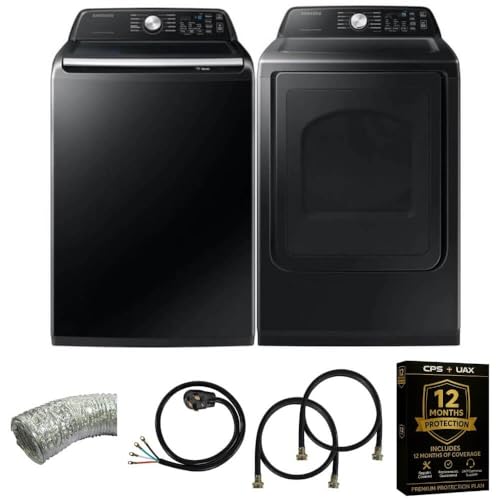
Samsung 4.7 Cu Ft Top Load Washer and 7.4 Dryer Set — Best All-Round Pair
Most households should start their comparison here and only move on if something specific does not fit. The 4.7 cubic foot washer swallows a family load without demanding the footprint of the mega-capacity machines, and the 7.4 cubic foot electric dryer gives that load room to tumble instead of steaming in a clump. Samsung highlights low-vibration, quieter operation, which matters more than people expect when the laundry pair sits near bedrooms or on an upper floor.
The dryer’s sensor drying is the feature with the clearest daily payoff. Instead of running a fixed timer and hoping, the machine watches moisture and stops when the load is done, which spares elastic, prints and thinner fabrics from needless heat. On the wash side, plan your loading honestly: this class of Samsung top loader works best when clothes can move freely, so stuffing the drum to the rim undermines the very cleaning you paid for. Leave headroom, sort the truly filthy items into a heavier cycle, and the pair rewards you with consistent results.
- Washer capacity: 4.7 cu ft top load
- Dryer capacity: 7.4 cu ft electric, sensor drying
- Operation note: low-vibration, quieter design
- Format: matched washer and dryer set
Strengths
- Balanced capacities that suit a typical three or four person household
- Sensor drying ends cycles when clothes are dry rather than by the clock
- Quieter running helps laundry rooms near living space
Trade-offs
- Not the largest tub here, so king comforters still need care when loading
- Smart features add little if you always start loads standing at the machine
- Electric dryer only, so gas hookup homes should look elsewhere
Best for: families wanting one sensible pair that handles everyday laundry without fuss. Not suited for: homes that need a gas dryer or routinely wash oversized bedding in a single load.

Samsung WA44A320KIT1 Top Load Washer Dryer Pair — Best Straightforward Pair
Think of this white Samsung pair as the calmer sibling in the range. The washer gives up a little volume at 4.5 cubic feet, while the dryer keeps the full 7.4 cubic feet, so the drying side never becomes the constraint. For couples, small families and rental properties, that trade is sensible: the loads most people run are medium ones, and an easier-to-reach, easier-to-fill tub gets used properly instead of being overloaded out of optimism.
High-efficiency top load washing asks for one habit change from anyone raised on old agitator machines. Detergent goes in measured, not glugged, because these machines use less water and excess suds cushion the wash action instead of helping it. Follow that rule and this pair cleans thoroughly while treating clothes more gently than its modest positioning suggests. The smart label on the listing adds connected controls, though the core appeal stays refreshingly plain: two matched machines, sensibly sized, in a finish that suits most utility rooms.
- Washer capacity: 4.5 cu ft, high-efficiency top load
- Dryer capacity: 7.4 cu ft electric
- Finish: white
- Format: matched washer and dryer pair, smart controls
Strengths
- Dryer capacity stays generous even as the washer steps down
- White finish and familiar layout suit rentals and utility rooms
- High-efficiency washing trims water use on everyday loads
Trade-offs
- Slightly smaller washer than the lead Samsung set
- Impeller-style washing needs measured detergent to perform
- Fewer headline features than the TurboWash or mega-capacity rivals
Best for: smaller households and landlords who want a matched pair without oversizing. Not suited for: large families who fill a 5 cubic foot tub every single week.
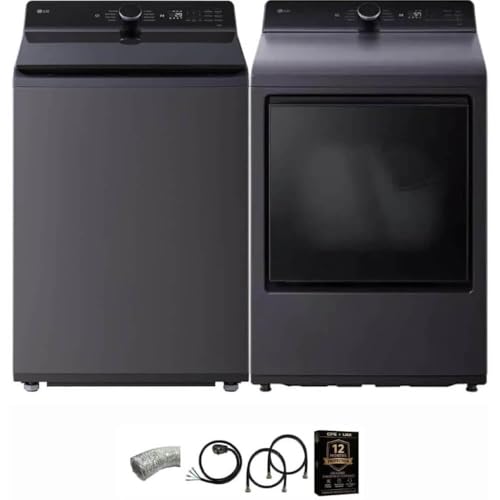
LG Top Load Washer and Dryer Pair TurboWash — Best for Big Loads
LG aims this matte black pair at the household that treats laundry as a batch operation: sports kits on Sunday, towels midweek, bedding whenever the guest room turns over. The listing leads with mega capacity and TurboWash technology, a combination meant to move big loads through faster without leaving the middle of the pile underwashed. WiFi through SmartThinQ lets you start, pause and monitor from a phone, which genuinely helps when the machines live in a basement and the household lives two floors up.
Big tubs create one predictable misuse. Owners see the space and postpone laundry until the drum is crammed, then wonder why everything emerges tangled and faintly grey. TurboWash helps water and detergent reach through a load, but physics still applies: leave room for turnover, split the heaviest denim from the bedding, and this pair shows what it was built for. The darker finish also deserves a thought before ordering, since matte black looks sharp in a designed laundry room yet shows lint and detergent dust more readily than white.
- Capacity class: mega capacity top load washer
- Wash technology: TurboWash
- Connectivity: SmartThinQ WiFi
- Finish: matte black; format: matched pair
Strengths
- Largest-load intent of the group, aimed at bedding and towel batches
- TurboWash targets faster cycles for full drums
- Remote monitoring suits basement and garage installations
Trade-offs
- Mega capacity tempts overloading, which dulls cleaning results
- Matte black shows dust and lint between wipes
- Connected features need a reliable signal in the laundry space
Best for: big households that wash in bulk and want cycle alerts upstairs. Not suited for: tight laundry closets where a mega tub crowds the doorway swing.
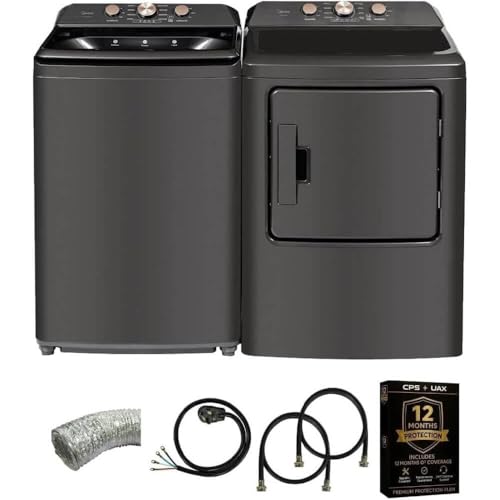
Midea MLTW41A1KIT1 Top Load Washer Dryer Pair — Best Compact Pair
Midea pitches this grey pair at the spaces the big brands tend to ignore. A 4.1 cubic foot high-efficiency washer and a 6.7 cubic foot dryer will not win a capacity contest, yet for a couple in a smaller home, a cottage laundry nook or a first owned property, the proportions are honest. You wash what two or three people wear in a week, the dryer keeps pace, and neither machine dominates the room it stands in.
Judge this pair by fit and running simplicity rather than by spec-sheet drama. The controls stay conventional, the cycles cover the loads a small household actually runs, and the grey finish hides the scuffs that laundry rooms collect. What you give up is headroom: a winter’s worth of hoodies in one drum, or a full set of king bedding, will need splitting into two runs. If your laundry arrives in modest, frequent loads, that limitation rarely bites, and the smaller footprint pays you back every day.
- Washer capacity: 4.1 cu ft, high efficiency
- Dryer capacity: 6.7 cu ft
- Finish: grey
- Format: matched washer and dryer pair
Strengths
- Sensible sizing for small homes, cottages and starter properties
- Grey finish shrugs off laundry room scuffs better than white
- Dryer stays proportionally roomy for the washer’s output
Trade-offs
- Bulky bedding loads may need to run in two halves
- Less feature depth than the Samsung and LG pairs above
- Smaller drum fills quickly during a family wash backlog
Best for: couples and small homes where laundry space is genuinely tight. Not suited for: families of five who expect one load to clear the whole hamper.

Samsung 5.2 Cu Ft Top Load Washer and Dryer Set — Best Capacity per Pair
When the complaint is sheer volume, this white Samsung set is the answer in the line-up. The 5.2 cubic foot washer is the biggest tub among these picks, paired again with the 7.4 cubic foot electric dryer, and that combination changes laundry day arithmetic for large families. Fewer, fuller loads replace the endless relay of half-filled drums, and items that defeat smaller machines, like a king duvet or a week of bath towels, go in whole.
Reach deserves a mention before you fall for the capacity. Deep, wide tubs ask shorter users to stretch for the last sock at the bottom, and a sturdy step or a pair of laundry tongs becomes part of the routine. Loading discipline matters too: distribute heavy items around the drum rather than dropping them in one dense pile, and the spin cycle stays calmer. Treated that way, this set delivers the thing large households actually want, which is laundry finished in an afternoon instead of spread across a weekend.
- Washer capacity: 5.2 cu ft, high efficiency, smart
- Dryer capacity: 7.4 cu ft electric
- Finish: white
- Format: matched washer and dryer set
Strengths
- Biggest washer tub in this guide for bedding and bulk loads
- Dryer volume matches the washer’s ambition
- Fewer loads per week for large, busy households
Trade-offs
- Deep tub can be a stretch for shorter users
- Large loads still need even distribution to spin smoothly
- Oversized for couples, who would rarely fill it properly
Best for: large families and anyone washing king bedding at home. Not suited for: small households that run little and often.

Kenmore 4.4 Cu Ft Top Load Washer Triple Action Agitator — Washer Only — Pair It Yourself
Read this listing carefully, because it breaks the pattern of the five picks above: the Kenmore is a washing machine sold on its own, not a set. You will need to pair it with a matching Kenmore dryer sold separately, or with a dryer you already own. That is not a flaw so much as a different job. When a washer dies and the dryer still runs well, or when you are assembling a laundry room piece by piece, a strong standalone machine is exactly the right purchase.
The machine itself argues for tradition. A 4.4 cubic foot tub with a Triple Action Agitator moves clothes through the water with a central post, the approach generations of workwear, farm clothes and sports uniforms have relied on for ground-in dirt. Agitators wash aggressively, which is their virtue and their warning label: delicate fabrics and loosely knitted items belong in a gentler machine or a wash bag. Buy this Kenmore knowing what it is, budget for the separate dryer if you need one, and it fills its role with no pretence.
- Washer capacity: 4.4 cu ft top load
- Wash action: Triple Action Agitator
- Finish: white
- Format: washer only — companion Kenmore dryer sold separately
Strengths
- Agitator action tackles heavily soiled work and sports clothes
- Ideal when only the washer needs replacing
- Familiar controls for buyers who dislike touch panels
Trade-offs
- No dryer included, despite appearing in a sets guide
- Agitator washing is rougher on delicate fabrics
- Central post reduces room for very bulky single items
Best for: replacing a dead washer or building a pair around an existing dryer. Not suited for: anyone expecting two machines to arrive in this order.
How Do the Six Options Compare at a Glance?
| Model | Washer | Dryer | Standout trait |
|---|---|---|---|
| Samsung 4.7 Cu Ft Top Load Washer and 7.4 Dryer Set | 4.7 cu ft | 7.4 cu ft electric | Sensor drying, quieter running |
| Samsung WA44A320KIT1 Top Load Washer Dryer Pair | 4.5 cu ft | 7.4 cu ft electric | Straightforward matched pair |
| LG Top Load Washer and Dryer Pair TurboWash | Mega capacity | Matched dryer | TurboWash plus WiFi control |
| Midea MLTW41A1KIT1 Top Load Washer Dryer Pair | 4.1 cu ft | 6.7 cu ft | Compact grey pairing |
| Samsung 5.2 Cu Ft Top Load Washer and Dryer Set | 5.2 cu ft | 7.4 cu ft electric | Largest washer tub here |
| Kenmore 4.4 Cu Ft Top Load Washer Triple Action Agitator | 4.4 cu ft | None — sold separately | Traditional agitator washer only |
Agitator or Impeller: Which Wash Action Suits Your Clothes?
An agitator is the finned post standing in the middle of older-style tubs. It twists back and forth, dragging clothes through the water, and that mechanical scrubbing shifts dried mud, ground-in grass and workshop grime better than water currents alone. The cost is friction. Straps twist, delicate knits stretch, and the post itself eats a little of the drum volume you thought you bought.
Impeller machines replace the post with a low disc that pulses water through the load. Clothes rub against each other rather than against a central fin, which is gentler and frees the whole tub for a duvet or a pile of towels. The trade is technique: impellers need enough water movement and correct loading in loose rings, not a compressed wad, and heavily soiled items may want a soak or a heavier cycle. Choose by wardrobe, not by fashion. Workwear households lean agitator; bedding and delicates households lean impeller.
How Should You Measure for a Washer and Dryer Pair?
Start with the room, then measure the route. Note the width, depth and height of the laundry space, add clearance behind each machine for hoses and the dryer vent, and confirm the lids open fully under any cabinets or shelves. Then walk the delivery path with the tape still in hand: front door, hall turns, stairwell corners and the laundry room doorway all have to pass a full-size appliance, and the tightest point decides whether your chosen pair can even enter the house.
Depth fools more buyers than width does. A pair that fits the alcove on paper can still block a door swing or pinch the vent hose once the connections are made, and a crushed vent makes any dryer slow and hot. Leave the space the manufacturer asks for, keep the vent run short with gentle bends, and check whether your electrical outlet matches an electric dryer’s plug before the delivery truck is booked.
What Do Sensor Drying and Smart Controls Actually Do for You?
Sensor drying replaces guesswork with measurement. Metal strips inside the drum detect moisture in tumbling clothes and end the cycle when the load reaches the dryness you selected. Clothes last longer because they stop baking, energy stops being spent on already-dry fabric, and bulky items mixed with thin ones come out more evenly finished. It is the single dryer feature most owners say they would not give back.
Connected controls earn their keep in narrower ways. A phone alert when a cycle ends prevents the forgotten wet load that smells by morning, and remote starting suits homes where the laundry sits far from the living space. Beyond that, be honest about your habits. If you load, press start and stay nearby, a clear dial and a reliable chime serve you just as well as any app.
How Do You Keep a Top Load Pair Running Well for Years?
Leave the washer lid open between washdays so the tub dries, and wipe the rim where detergent residue gathers. Run an empty hot cleaning cycle on the schedule the manual suggests, especially in humid climates or homes where most washes run cold. Use the detergent quantity meant for high-efficiency machines, because chronic overdosing coats the outer tub and eventually announces itself as a stale smell no cycle seems to shift.
On the dryer side, the lint filter wants emptying after every load, without exception. Check the vent run outside twice a year for lint build-up or a flap that no longer opens freely, and keep the area behind the machines vacuumed so the dryer breathes clean air. Level both machines on solid flooring; a rocking washer shortens its own life and makes the whole house aware of spin cycle o’clock.
Top Load or Front Load: Why Are You Really Choosing?
Plenty of pair shoppers arrive here after pricing front loaders and hesitating. The honest comparison helps. Front load machines wash gently with very little water and can stack in a closet, but they ask you to bend for every load, keep the door seal clean and leave the door ajar against odours. Top loaders trade a little of that efficiency for ergonomics and simplicity: load standing up, add a garment mid-cycle on many models, and never think about a door gasket again.
Households with back trouble, laundry in a garage, or a steady stream of filthy work clothes usually land on top load and stay happy. Households in tight apartments, or anyone set on stacking, belong in the other category. Neither answer is a downgrade. What matters is matching the format to the room and the body that will use it daily, because a washer is a fifteen-minute companion several times a week for years, not an appliance you meet twice a year.
Which Cycles Earn Their Place on the Dial?
Modern pairs list more cycles than most families will ever touch, so sort them by your actual hamper. The cycles that earn their keep are a true heavy-duty wash for work clothes and towels, a bedding cycle that adjusts water and spin for bulk, a quick wash for the small urgent load, and a delicates setting that genuinely slows the action rather than merely renaming the normal cycle. On the dryer, a steam or refresh option can rescue a wrinkled shirt, while a low-heat delicates dry protects elastic far better than habitually using medium heat for everything.
Treat the rest as bonuses rather than reasons to buy. If a cycle name sounds like marketing poetry, look for what it changes mechanically: water level, agitation pattern, temperature or spin speed. A pair whose heavy and bedding cycles differ in substance will outperform a pair with twenty renamed variations of the same wash, and it will be easier for everyone in the house to learn.
How Much Water and Energy Does a Top Load Pair Use?
High-efficiency top loaders use markedly less water than the agitator machines of decades past, because the load tumbles through a shallow pool instead of swimming in a full tub. Traditional agitator models, like the Kenmore here, generally use more water per load in exchange for their scrubbing style. Your real consumption, though, is set by behaviour: load size discipline, wash temperature and how often half-empty drums run. A family that waits for full loads and washes mostly cold will out-save a family running daily small warm loads on the most efficient machine sold.
The dryer is where the energy story concentrates. Electric dryers draw heavily while the element runs, so anything that shortens drying time pays: a washer with a strong spin that leaves clothes merely damp, a clean lint filter, an unobstructed vent and sensor drying that stops at dry instead of at a timer’s guess. Think of the pair as one system. Money spent on spin performance and venting returns itself quietly on every load for the life of both machines.
What Should You Check on Delivery and Installation Day?
Walk the route again before the truck arrives and clear it properly, not hopefully. Confirm the water shutoffs turn, the drain standpipe is open, and the outlet for an electric dryer matches the cord the machine expects. Keep the packaging until both machines have run a real load each, because transit damage sometimes announces itself only under a full spin or a heated dry cycle, and returns are far easier with the box still in the garage.
During setup, level each machine and then prove it: run the washer empty on spin and watch for rocking, and run the dryer empty for a few minutes to confirm heat and a freely turning drum. Check every hose connection with a dry hand after the first fill. Register the warranty, photograph the model plates with your phone, and keep the manuals somewhere the whole household can find, because the person who hears the strange noise is rarely the person who accepted the delivery.
How Do You Wash Bedding, Workwear and Delicates in the Same Household?
Bedding wants room more than force. Load one bulky item at a time, arrange it loosely around the drum wall, and pick the bedding cycle so the machine manages balance instead of fighting a single dense lump. Workwear wants the opposite: pre-treat the worst ground-in patches, use the heavy cycle, and accept the agitator’s rougher handling as the price of genuinely clean knees and cuffs. Keeping a small laundry basket for the truly filthy items stops workshop soil redepositing itself across the family wash.
Delicates survive top load ownership with two habits. A mesh bag for straps, lace and anything that can tangle, plus the gentlest cycle and cold water, protects most items owners fear for. What should never happen is the mixed heroic load: jeans, towels, a duvet cover and a silk blouse travelling together. Sorting feels slow and is actually the fastest route to loads that come out clean, undamaged and dry in one pass through each machine.
What About Noise, Vibration and Upstairs Laundry Rooms?
Placement decides how loud any pair feels. On a solid ground floor slab, even an enthusiastic spin cycle stays a background event. On a wooden upper floor, the same machine can telegraph every unbalanced moment through the joists, which is why the low-vibration design of the lead Samsung set matters and why levelling is not a suggestion. Anti-vibration pads help at the margins, but they cannot rescue a machine standing on a springy floor with one foot effectively in the air.
Dryers add their own soundtrack of tumbling zips and buttons. If the laundry room shares a wall with a nursery or a home office, run the pair in the shop before deciding, or at least weight quiet-operation claims and sensor features over novelty cycles. A pair you can run at night without thinking about it changes how a household schedules laundry more than any smart feature on the box.
How Much Detergent Does a High-Efficiency Top Loader Really Need?
Less than instinct suggests, and the difference decides how clean your laundry smells in six months. High-efficiency machines use a shallow pool of water, so the generous pour that suited an old full-tub washer now produces a cushion of suds that lifts clothes away from the wash action. The load emerges coated in diluted detergent, the outer tub slowly films over, and the machine develops the stale odour owners then blame on the format. The fix is embarrassingly small: measure the dose for the load size, use detergent formulated for high-efficiency machines, and treat the dispenser markings as a ceiling rather than a serving suggestion.
Water hardness quietly changes the equation. In hard water areas a measured dose may under-clean because minerals consume part of the detergent before it reaches the soil, while in soft water areas even a standard dose can overshoot into suds. If clothes feel stiff, look grey or carry a sour note after washing, adjust the dose in small steps before blaming the machine, and run the tub-clean cycle to reset the drum. Powder, liquid and pods all work in these machines when dosed sanely; pods simply remove the temptation to free-pour, which is why laundry rooms with several operators often standardise on them.
Fabric softener deserves the same scepticism. Used constantly, it coats fibres and towels lose absorbency, trading a pleasant scent for worse performance. Many households find that a thorough rinse, prompt drying and an occasional softener-free reset wash keep clothes comfortable without the build-up. Your pair will wash better, smell fresher and need less rescue maintenance when the chemistry going into it stays modest and deliberate.
How Do You Read a Laundry Pair Listing Without Being Fooled?
Start by separating the two machines on the page. A pair listing should state washer capacity, dryer capacity and dryer fuel in plain numbers; if any of the three hides inside a bundle name or a lifestyle photograph, slow down. Then check whether the photographs show the actual pair or a styled room with different machines, and whether the title’s capacity refers to the washer alone, which is the usual convention, or to some combined figure, which should make you suspicious of everything else on the page.
Next, translate feature names into mechanisms. Sensor drying means moisture strips in the drum. A steam option means a water connection or reservoir feeding the dryer. Smart or WiFi in the title means app control, not better washing. None of these are tricks, but each is worth exactly what it does in your routine and no more. Finally, confirm what is not in the box: power cords, hoses, vent kits and stacking hardware, where relevant, are frequently separate, and a delivery that cannot be completed for want of a cord is a self-inflicted delay.
The Kenmore pick in this guide is the worked example of careful reading. Its listing is honest once read closely — a washer, with a named agitator, at a stated capacity — yet a skimming shopper could easily order it expecting two machines. Every guide on this site flags cases like that in plain language, and every shopper should build the same habit: the title, the capacity lines and the format line, read twice, before the order button.
What Does a Laundry Pair Cost to Run and Keep Over a Decade?
Ownership cost is mostly behaviour wearing a disguise. Water and energy bills follow load discipline and wash temperature far more than they follow the badge on the door. The predictable consumables are detergent, the occasional inlet hose replacement, dryer vent cleaning and, over a long life, wear parts such as belts, rollers or a pump. Machines that are levelled, vented properly and never chronically overloaded ask for those parts later and less often, which is why installation day decisions echo for years.
Repairability is worth weighing before you need it. Established laundry brands with wide service networks tend to mean faster parts availability and more local technicians willing to attend, while the cheapest route into a pair can turn expensive if a control board takes weeks to source. Keep the model and serial numbers photographed, note the purchase date, and keep receipts with the manual. When something does fail, that small folder turns a stressful week into a single phone call with the facts already in hand.
There is also a fabric budget hiding inside the decision. Gentler wash action, accurate sensor drying and honest load sizes extend the life of everything you own that can be washed, from school uniforms to good towels. A pair that treats clothes kindly is quietly subsidising your wardrobe, and that saving, spread over a decade of family laundry, is larger than most shoppers expect when they compare two listings side by side.
How Should a Household Plan Its Weekly Laundry Around One Pair?
The smoothest laundry rooms run on rhythm rather than urgency. Anchor the week with the loads that block other things: bedding on the day beds get changed, towels before the bathroom caddy runs dry, work and school clothes with a day of slack before they are needed. A matched pair keeps that rhythm because washer and dryer cycle times sit close together, so a load can move across without sitting wet in the drum, and the next load can start while the first dries.
Batch by fabric behaviour, not by whose clothes they are. Heavy cotton tolerates heat and force; synthetics dry fast and hate high heat; delicates want the bag and the gentle cycle. A simple three-basket sort near the machines makes the right load the easy load, which is the only kind of system that survives contact with a busy family. Households that adopt the rhythm find the mega-capacity question often answers itself: steady medium loads through the week beat a heroic Sunday mountain for cleanliness, machine wear and everyone’s temper.
Finish the system at the folding end. A clear surface near the pair, hangers for shirts straight from the dryer and a rule that loads get folded while warm will do more for how your laundry looks than any steam feature. Machines wash and dry; the household system around them decides whether the result is a wardrobe or a permanent pile on a chair.
How Do You Troubleshoot the Noises and Smells Owners Report First?
A thumping spin almost always traces back to load distribution or levelling, in that order. Stop the cycle, spread the load evenly around the drum wall, remove a single heavy item if one piece has absorbed all the water, and restart. If the thump returns with balanced loads, check each foot for firm contact with the floor and look for a shipping restraint that was never removed. Machines rarely develop a rhythm section on their own; they report a setup problem in the only language they have.
Odours have an equally plain family tree. A washer that smells stale is usually holding moisture and detergent film: lid closed between washes, doses too generous, or a tub-clean cycle long overdue. Run the cleaning cycle, wipe the rim and dispenser, then leave the lid open for a week and notice the difference. A dryer that smells scorched wants its lint path investigated immediately, from filter to exterior flap, because restricted airflow is both a performance problem and the one maintenance issue in laundry that deserves genuine urgency.
Long drying times complete the trio. Before suspecting the element, confirm the vent is clear, the load was spun properly in the washer, and the sensor strips inside the drum are not filmed over with softener residue, which a wipe with a damp cloth usually cures. Work through the cheap mechanical causes first and most laundry complaints resolve without a service visit, a parts order or a weekend of damp towels.
Which Pair Fits Which Household, Honestly?
Picture the two-person flat first: modest loads, a laundry nook rather than a room, and no bedding bigger than a queen duvet. The Midea pair or the smaller Samsung pair serves that home without waste, and the money not spent on unused capacity stays available for everything else a first home needs. Add children, pets and a sports schedule, and the centre of gravity moves to the lead Samsung set, whose sensor dryer and balanced tubs absorb a varied weekly load without drama.
The multigenerational house, the farmhouse and the home with a rental unit on the same machines live at the other end of the scale. There the 5.2 cubic foot Samsung or the LG TurboWash pair earns its size, because the loads are genuinely large and frequent, and undersizing would mean the machines run all day. Between those poles sits the replacement shopper, for whom the Kenmore washer alone may be the smartest line in this guide: keep the dryer that still works, restore the laundry with one honest agitator machine, and spend nothing on capacity or features the household never asked for.
Notice what did not decide any of those matches: the colour of the control panel, the number of novelty cycles, or a feature a household might try twice. Fit, capacity rhythm, wash action and hookup compatibility decided all of them. Hold your own shortlist to the same four tests and the right pair usually identifies itself before price ever enters the discussion.
How Does Hard Water Change the Way These Machines Behave?
Mineral-heavy water works against every washer in this guide in slow, deniable ways. Detergent gets consumed neutralising minerals before it can lift soil, fabrics gradually stiffen as deposits lodge in the fibres, and heating elements and inlet screens accumulate scale that narrows flow and stretches fill times. The symptoms masquerade as machine failure — greying whites, scratchy towels, a washer that seems to take forever to begin — when the true cause arrives through the supply pipe with every load.
You cannot change the municipal supply, but you can adapt the routine. Use the warm cycle deliberately for the loads that need it, since heat helps detergent work in hard water, and consider a rinse additive or a periodic descaling wash if your manual allows one. Keep doses measured rather than generous; extra detergent in hard water mostly becomes extra residue. Homes with severe hardness sometimes add a softener upstream of the laundry, and for a household running a pair daily, that investment protects the machines, the fabrics and the water heater in one move.
Dryers feel hard water only indirectly, through the fabrics they receive. Towels carrying mineral stiffness tumble longer and emerge harsher, which owners misread as a dryer fault. If towels from a new pair feel worse than towels from the old one, test the theory with a softener-free strip wash of the towel load before booking anyone to look at the machine. Laundry problems often live in the water and the chemistry, while the appliances simply report them faithfully.
What Mistakes Do Washer and Dryer Set Buyers Make Most Often?
The costliest error is ordering a pair that cannot travel the delivery route, followed closely by discovering the dryer fuel or plug does not match the hookup. A third mistake is buying capacity by headline: a huge washer paired with an ordinary dryer just moves the queue from one machine to the other. Shoppers also misread listings, and the Kenmore in this very guide is the standing example — a fine washer that is not a set, however the search results framed it.
Overloading completes the list. Every design in this category cleans worse when crammed, spins louder and wears faster. Two honest medium loads beat one heroic stuffed load on cleaning, on fabric life and on the machines themselves. Buy the pair that fits your room, your hookup and your real weekly volume, then load it the way the design expects.
Final Recommendation
For most homes, the Samsung 4.7 Cu Ft Top Load Washer and 7.4 Dryer Set is the pair to beat, with sensor drying and quiet manners that suit family life. Step up to the Samsung 5.2 Cu Ft Top Load Washer and Dryer Set when bedding and bulk drive your laundry, or to the LG Top Load Washer and Dryer Pair TurboWash when you want connected control over mega loads. Smaller spaces point to the Midea pair, and the Kenmore serves the one-machine replacement job as long as you remember its dryer is a separate purchase.
Whichever pair you choose, measure the route, match the hookup and load the drum with room to move. Do those three unglamorous things and laundry day quietly stops being the chore your whole weekend bends around.
How Do You Keep a Laundry Pair Safe Around Children and Pets?
Top loaders remove one classic hazard — nobody climbs into a machine whose opening sits at waist height as easily as a floor-level door invites — but they introduce their own housekeeping. Engage the control lock if your pair offers one, because a curious hand on a touch panel can pause, drain or restart a cycle mid-load. Keep detergent, pods especially, stored up and closed; pods look like sweets to small children and are concentrated enough to be a genuine poisoning risk, which no convenience justifies leaving in an open tub on the floor.
Pets contribute hair, and hair accumulates where water drains and air flows. Wipe the washer rim and run the lint filter check on the dryer as part of the weekly rhythm rather than as a rescue, and shake pet bedding outdoors before it enters the drum so the machine is washing fabric rather than redistributing fur across everything else in the load. A household with a heavy-shedding dog may also find a dedicated pet-hair cycle or a pre-wash shake-and-brush routine keeps the pair draining freely and the dark clothes presentable.
Frequently Asked Questions
Is a 4.7 cubic foot washer big enough for a family?
For most families of four, yes. A tub in the 4.5 to 4.7 cubic foot range handles everyday loads and most queen bedding, provided you load loosely and split the heaviest towel batches. Families washing king bedding weekly, or clearing a full week of clothes in one session, will feel the extra room of a 5.2 cubic foot machine.
Does the Kenmore pick include a dryer?
No. The Kenmore listing in this guide is the 4.4 cubic foot agitator washer on its own. A matching Kenmore dryer is sold separately, so budget and plan for two purchases if you need a complete pair, or choose one of the five true sets above.
Why does my high-efficiency top loader use so little water?
These machines are designed to tumble clothes through a shallow pool rather than submerge them, which saves water and suits modern detergents. Clothes should look wet and move freely, not swim. If loads emerge barely damp, check that you are not overloading and that the detergent dispenser is not clogged with old residue.
Can I stack a top load washer and dryer?
No. Stacking belongs to front load designs with a stacking kit. A top loader needs its lid to open fully upward, so pairs like these stand side by side, which is worth confirming against your room width and any overhead cabinets before ordering.
How long should a matched laundry pair last?
A well-kept pair commonly serves around a decade, with life shortened by chronic overloading, poor venting on the dryer side and standing water left in the washer. The maintenance habits in this guide — vent checks, lid-open drying, measured detergent — are the cheapest years you can add to either machine.
Should both machines come from the same brand?
Matching brands make controls feel familiar and keep cycle timing in step, and a true set guarantees the capacities were planned together. Mixing brands is perfectly workable, though, as the Kenmore route shows: any washer can feed any dryer of suitable capacity and fuel type. What you lose is the matched styling and the single-manual simplicity, not cleaning performance.
Do I need a drain pan or new hoses with a new pair?
On an upper floor, a drain pan under the washer is cheap insurance against the leak you hope never happens, and braided supply hoses in good condition are worth fitting while the machines are out anyway. Downstairs on a slab with a floor drain nearby, both are optional rather than essential.
Related Guides
Laundry upgrades often travel with cold storage and cleaning projects elsewhere in the house. Readers planning a utility overhaul may also want our guides to Best Chest Freezers for Garage, Best Home Upright Vacuums and Best Portable Countertop Dishwashers, each written to the same measure-first standard as this one.



[…] Best Meat Thermometers for Oven for the cooking that happens above those floors, and finish with Best Top Load Washers and Dryer Sets for the utility room that shares the […]