What's inside
- Key Takeaways
- Quick Picks
- How Did We Judge Dishwashers Against Accessible-Kitchen Checkpoints?
- How Do the Six Compare on Reach, Height and Loading?
- What Does ADA-Friendly Actually Mean When You Are Shopping?
- Which Measurements Should You Take Before Ordering Anything?
- How Should You Arrange Loading for Limited Reach or Strength?
- How Do Drawers, Slim Built-Ins and Countertop Units Differ in Daily Effort?
- What Should an Accessible Installation Include Beyond the Machine?
- When Does It Make Sense to Remodel Around the Dishwasher?
- How Should You Maintain an Accessible Dishwasher Installation?
- What Mistakes Do Buyers Make With Accessible Dishwashers?
- Final Recommendation
- Frequently Asked Questions
- Related Guides
As an Amazon Associate I earn from qualifying purchases. This post may contain affiliate links at no extra cost to you.
cottageverdict.com is reader-supported. When you buy through links on our site, we may earn an affiliate commission.
Where to buy: all six machines below are sold through Amazon, and every name in this guide links to its listing, where the dimensions, control layout and installation notes that matter for accessibility can be checked line by line before anything is ordered.
Shopping for the best ADA-compliant dishwashers starts with a tape measure rather than a feature list. Accessibility in a dishwasher is mostly geometry: a lowered counter run that accepts a shorter machine, controls a seated user can reach without leaning across a steaming rack, and a door or drawer that opens without demanding a deep bend. None of that shows up in glossy marketing, so this guide judges six machines purely on the measurements and layouts a buyer can verify from the listing itself.
One honesty note before the picks. Manufacturers rarely print an accessibility certification on a consumer listing, and this guide does not invent one. What follows instead is a comparison against the practical checkpoints buyers use when they plan an accessible kitchen: an installation height in the low thirty-inch range rather than the standard thirty-four plus, controls on the front face instead of the top edge of the door, and loading that keeps everyday dishes within an easy reach envelope. Where a machine is a workaround rather than a true lowered built-in, the text says so plainly.
The six machines split into three families. Four are eighteen-inch built-ins that suit the narrower, lower openings common in accessible remodels and small accessible units. One is a single drawer that pulls toward the user instead of swinging down. The last is a countertop unit included for renters and for anyone whose kitchen cannot be altered, with its limits stated openly. Read the sections on measuring first if your opening is already built, because with this category the opening decides everything.
Key Takeaways
- Judge these machines on cutout height, control position and reach distance first; cycle menus come second.
- Eighteen-inch built-ins are the realistic lowered-height route for most accessible remodels.
- Front controls matter more than touch panels hidden on the door edge for seated users.
- A single drawer removes the door swing and the deep bend that come with a drop-down door.
- Countertop units avoid renovation entirely but sit outside any built-in accessibility standard.
- Confirm the exact listed height against your opening before ordering; a quarter inch decides the fit.
Quick Picks
| Pick | Badge | Why it earns a place |
|---|---|---|
| EdgeStar BIDW1802SS 18-Inch Built-In | Best Slim Front-Control Starting Point | A compact built-in whose front-facing layout keeps the controls visible and reachable in a lowered run. |
| SPT SD-9254SSB 18-Inch Built-In | Best Slim Pick With Heated Drying | Adds a stainless tub and heated drying to the slim format, cutting down on towel work after the cycle. |
| COMFEE’ 18-Inch Built-In | Best Slim Pick for Small Accessible Units | A slim built-in with an adjustable top rack and a listing that calls out apartment and small-kitchen use. |
| Midea 18-Inch Built-In | Best Black Slim Built-In | The black-finished slim option, with high-temperature wash and heated dry for hygiene-focused routines. |
| Fisher & Paykel Single DishDrawer | Best Drawer Instead of a Door | Replaces the drop-down door with a drawer that pulls toward you, the friendliest loading motion here. |
| EdgeStar DWP63 Countertop | Best No-Renovation Workaround | Sits on the counter and loads from the front at counter height, with its non-built-in status stated openly. |
How Did We Judge Dishwashers Against Accessible-Kitchen Checkpoints?
We started from the checkpoints an occupational therapist or an accessible-kitchen designer would hand a buyer. First, installed height: standard counters expect a machine roughly thirty-four inches tall, while accessible runs are built lower, so a dishwasher that fits a shorter opening widens the pool of usable kitchens. Second, control placement: buttons on the front face can be seen and pressed from a chair, while top-edge controls hide under the counter lip and force a reach over the open door. Third, loading geometry: how far a user must reach into the tub, whether the door blocks wheelchair footrests, and whether racks roll smoothly enough for one-handed use.
Listings were then read for the hard numbers behind those checkpoints: width, stated height, place-setting count, tub material and wash programs. Machines earned their place by matching at least one checkpoint unusually well, not by collecting features. A slim built-in with front controls and heated drying serves a different household than a drawer, and both appear here because accessible kitchens are not one shape. What we deliberately excluded were full-height twenty-four-inch machines with top controls, however well reviewed, because they fail the geometry test this guide is built on.
Finally, we weighed the unglamorous details: whether the tub is stainless for hygiene and durability, whether a heated dry reduces the need to towel items while balancing them on a lap, and whether the cycle range covers both a lightly soiled lunch load and a baked-on dinner load. The result is a short list where every pick answers a specific access problem.

EdgeStar BIDW1802SS 18 Inch Built-In Dishwasher — Best Slim Front-Control Starting Point
The EdgeStar BIDW1802SS is the straightforward answer when an accessible remodel includes a slim dishwasher opening. At eighteen inches wide it occupies half a standard cabinet bay, which lets a designer lower the surrounding counter or pair it with a knee-space sink arrangement without surrendering the whole run. Its controls sit on the front of the door, the single most important layout choice in this category, because a seated user can read the selected program and press start without peering over the door’s top edge or reaching beneath a counter overhang.
Inside, the listing promises eight place settings, which translates to a realistic day of dishes for one or two people rather than a holiday table. That scale suits the households most often planning accessible kitchens: a single occupant, a couple, or a carer-and-resident pair washing smaller, more frequent loads. Frequent small loads also mean the door is opened more often, and a slim door swings a shorter arc than a full-width one, clearing wheelchair footrests and walking aids with less choreography in a tight galley.
Treat this model as the template for what to verify elsewhere. Measure the opening height your cabinetmaker has actually built, compare it with the height on the listing, and check the door swing against the space where a chair or stool will sit. If those three numbers cooperate, the EdgeStar’s plain, legible layout makes daily operation about as undemanding as a built-in gets.
Day to day, the routine this machine suits is a rinse-free one. Slim tubs punish overloading more than full-size ones, because spray arms have less room to throw water into crowded corners, so the household habit to build is scraping plates properly and leaving gaps between bowls. Do that and an eight-setting load comes out ready to put away, which is the real goal: fewer minutes spent standing or seated at an open machine, sorting what needs a second pass. The EdgeStar’s simplicity helps here as well, since a short program list means the same two cycles get used almost every day, and muscle memory takes over within a week. Consistency of routine is an underrated accessibility feature, and plain machines deliver it almost by accident.
One more check belongs to this model specifically: door balance. Slim doors vary in how they behave half-open, and a door that drifts shut while a seated user is loading the lower rack will tap shins and test patience daily. Listings rarely describe door springs, so if a showroom within reach stocks any slim built-in, test the door’s manners in person and treat the behaviour you find as a fair guide to the class. A door that stays where it is left is a small mercy you will appreciate thousands of times.
Verdict on value: this is the machine to benchmark quotes against. If an installer proposes a costlier slim model, ask what it adds in reach, drying or rack flexibility, because those are the only currencies this category trades in.
- Format: 18-inch built-in, front controls
- Capacity: 8 place settings per the listing
- Tub: check the listing for the current tub specification
- Controls: front face, visible when the door is closed
- Installation: standard slim dishwasher hookups
Strengths
- Front controls stay readable and reachable from a seated position
- Slim door arc suits narrow accessible galleys
- Eight settings match small, frequent wash loads
Trade-offs
- Too narrow for large pans and serving platters side by side
- Eight settings will mean daily runs in a family home
- Accessibility depends on the opening height your cabinetry provides
Best for: a lowered slim opening in a one- or two-person accessible kitchen
Not suited for: households washing family-size loads or wide roasting pans
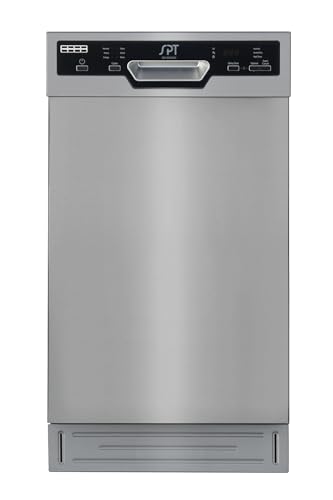
SPT SD-9254SSB 18 Inch Built-In Dishwasher — Best Slim Pick With Heated Drying
The SPT SD-9254SSB keeps the same eighteen-inch footprint as the EdgeStar but layers in two details that matter more in an accessible kitchen than they would elsewhere: a stainless steel tub and heated drying. Heated drying sounds like a luxury until you picture the alternative, which is lifting damp plates one at a time and towelling them dry while seated, with wet crockery balanced at lap height. A machine that delivers genuinely dry dishes removes a whole step from the routine, and it removes the step that involves the most handling.
The listing lists six wash programs and eight place settings, with Energy Star standing behind the model name. Six programs is a sensible spread for this size: enough to separate a gentle glass load from a scorched casserole cycle without burying the user in options they will never touch. The stainless tub resists the staining and odour retention that plastic tubs develop, which matters when loads run daily and the machine rarely sits empty and dry for long.
Like every slim built-in here, the SPT’s accessibility is conditional on the cabinetry around it. Set into a standard-height opening it is simply a small dishwasher; set into a lowered run with the front controls unobstructed, it becomes one of the most complete small machines in this guide. Ask your installer to confirm the stated dimensions against the finished opening, including flooring thickness, because a new floor laid after measuring has embarrassed more than one remodel.
Energy Star standing on the listing deserves a practical translation. A small household running a dishwasher daily will notice efficiency in two places: the water drawn for modest loads, and the heat retained by a stainless interior during drying. Neither transforms a utility bill on its own, but in an accessible flat where the machine may run twice on busy days, the savings compound quietly. The heated dry also protects wooden-handled utensils and plastic containers less than a gentle air dry would, so households washing lots of plastics should treat the hottest drying as an occasional tool rather than the default, and let the stainless tub’s retained warmth finish lighter loads on its own.
The six programs also give carers a simple shared language. Agreeing that everyday loads are one named cycle, and that the intensive program is reserved for roasting days, prevents the well-meant improvisation that leaves glasses etched or plastics warped. Write the household’s two chosen cycles on a card inside the cupboard door and the machine effectively runs itself, whoever is standing or seated in front of it that evening.
Verdict on value: the premium over the plainest slim machines buys dry dishes and a tub that ages gracefully, two things a daily-use accessible kitchen feels every single week.
- Format: 18-inch built-in
- Capacity: 8 place settings
- Tub: stainless steel per the listing
- Programs: 6 wash programs including heated drying
- Certification noted on listing: ENERGY STAR
Strengths
- Heated drying removes a handling step for seated users
- Stainless tub shrugs off daily-use staining and smells
- Six programs cover gentle through heavy loads without clutter
Trade-offs
- Still only eight settings, so big gatherings overflow to the sink
- Heated dry lengthens the cycle compared with air drying
- Needs a properly sized lowered opening to deliver its access benefits
Best for: accessible kitchens where dry dishes straight from the rack matter
Not suited for: buyers who need to wash oversized pans every day

COMFEE’ 18 Inch Built-in Dishwasher — Best Slim Pick for Small Accessible Units
COMFEE’ describes this eighteen-inch built-in as built for apartments and small kitchens, and that framing fits accessible units particularly well, because granny flats, accessible annexes and adapted studio apartments share the same constraint: a short counter run where every appliance must justify its width. The listing highlights an adjustable top rack, a small feature with outsized value here. Raising or lowering that rack lets tall tumblers and mugs live on the level a particular user reaches most comfortably, instead of forcing all tall items to the far end of the bottom rack.
The stated specification includes a stainless steel tub, six washing cycles, heated dry and a 52 dB operating level in the listing title. That noise figure deserves a word of context rather than celebration: in a small open-plan accessible unit, where the kitchen, chair and bed may share one room, a machine that can run during conversation or rest is a genuine quality-of-life point. Six cycles with heated dry mirrors the SPT’s practical spread, so the choice between them comes down to rack adjustability, finish and which listing dimensions match your opening.
Plan the reach before you plan the purchase. In a lowered installation the top rack of a slim machine sits close to lap height for many seated users, which is exactly where cups and bowls should be. Load a mental trial run: plates low and near, glasses on the adjusted upper rack, cutlery where the basket lands closest to the dominant hand. The COMFEE’ rewards that planning because its adjustments let the interior follow the user rather than the other way round.
The 52 dB figure in the listing title is worth one more layer of context. Noise in a small accessible unit is rarely about annoyance alone; it is about whether the machine can run while a support worker makes calls in the next room, while a partner sleeps after a night shift, or while the user rests in an open-plan space. A slim machine that stays in the low fifties can run on a daytime schedule, which also means dishes are washed and put away within the user’s active hours rather than waiting for an overnight cycle nobody is awake to unload. Scheduling freedom is a real benefit, and it flows directly from that unglamorous decibel line.
Renters in accessible apartments should note one more advantage of the slim built-in class generally: it is the size most likely to already have a prepared opening in modern accessible housing stock. If your unit has an eighteen-inch gap with services behind it, a machine like this one can be installed and later removed without altering the kitchen, which keeps both the landlord and the deposit happy while still delivering a genuine built-in routine.
Verdict on value: the adjustable rack is the line item that justifies choosing this model over near-identical slim rivals, provided your household actually loads tall glasses daily.
- Format: 18-inch built-in
- Capacity: 8 place settings
- Tub: stainless steel per the listing
- Cycles: 6 washing cycles with heated dry
- Rack: adjustable top rack; listing notes 52 dB operation
Strengths
- Adjustable rack lets tall items sit at the easiest reach level
- Listing explicitly targets apartments and small kitchens
- Heated dry and six cycles match pricier slim rivals
Trade-offs
- Slim width still caps pan and platter capacity
- Noise figure is a listing claim to weigh alongside layout
- Benefits depend on a lowered, well-planned installation
Best for: accessible annexes, studios and small units with a slim opening
Not suited for: anyone needing full-width capacity for entertaining

Midea 18 Inch Built-in Dishwasher — Best Black Slim Built-In
Midea’s eighteen-inch built-in covers the same slim ground as the COMFEE’ but arrives in black and leans on hygiene in its listing, which names a high-temperature wash alongside heated dry and Energy Star certification. High-temperature washing has a specific audience in accessible households: homes where a carer washes for someone with a fragile immune system, or where feeding equipment, medicine measures and reusable care items go through the machine alongside the plates. For those routines the hottest cycle is not a marketing line, it is the reason for buying.
Six washing cycles and eight place settings keep the format familiar, and the stainless tub matters here too, since a tub that tolerates repeated high-heat cycles without degrading is the right partner for a hygiene-led routine. The black finish is more than styling in one scenario: in low-vision kitchens, a dark appliance front against pale cabinetry gives a strong visual edge that helps a user locate the machine and its door line at a glance. Contrast is an accessibility feature, even when it arrives disguised as a colour choice.
Position this model against the COMFEE’ by routine rather than by badge. If the adjustable rack solves your reach problem, that pick leads. If the wash itself must do heavier hygienic work, or if a high-contrast front helps the person using the kitchen, the Midea answers better. Either way the same installation homework applies: lowered opening, unobstructed front controls, and a door swing checked against the chair position.
Consider also who else uses the machine. In supported living, the dishwasher may be loaded by the resident and started by a visiting carer, or the reverse, so a control layout that a second person can understand at a glance prevents the small daily frictions of wrong programs and half-finished cycles. Front controls with a legible program list serve that handover well. The Midea’s cycle set is conventional enough that most carers will recognise the logic immediately, and the high-temperature option gives a visiting nurse or family member a clear, single choice when hygiene is the day’s priority rather than a menu to interpret.
The black finish interacts with lighting in a way worth planning. Under warm evening light a dark front can nearly vanish against shadowed cabinets, so a thin contrasting strip along the handle or a nearby under-cabinet light keeps the door line obvious for low-vision users. That tiny addition preserves the contrast benefit through the whole day rather than only in bright morning kitchens, and it costs almost nothing compared with the machine itself.
Verdict on value: choose it for its wash, not its badge. Households with a genuine hygiene routine will use the hot cycle constantly; others are paying for a programme they may run twice a year.
- Format: 18-inch built-in, black finish
- Capacity: 8 place settings
- Tub: stainless steel per the listing
- Cycles: 6, including high-temperature wash and heated dry
- Certification noted on listing: Energy Star
Strengths
- High-temperature wash suits carer and hygiene-led routines
- Black front offers strong contrast against pale cabinets
- Stainless tub tolerates repeated hot cycles well
Trade-offs
- No adjustable-rack headline feature like its COMFEE’ rival
- Eight settings still means small, frequent loads
- Black finish shows dust and water spots readily
Best for: carer-supported households and low-vision kitchens wanting contrast
Not suited for: buyers whose main problem is rack reach rather than wash hygiene
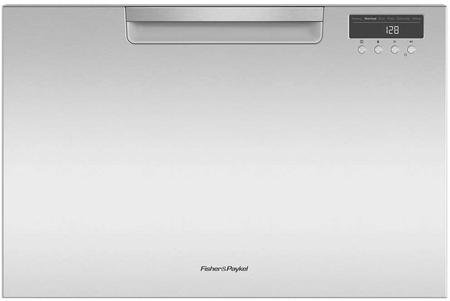
Fisher & Paykel Single DishDrawer DD24SAX9 — Best Drawer Instead of a Door
The Fisher & Paykel Single DishDrawer approaches the whole problem from a different direction. Instead of shrinking a door dishwasher, it removes the door: the wash compartment is a drawer that slides out toward the user at roughly bench height, and dishes are loaded from above into a space that asks for no crouching, no reaching past a lowered door, and no balancing act with the rack pulled out over a footrest. For many seated users and for anyone with limited bending, this is the most naturally accessible loading motion in the guide.
A single drawer holds less than a full tub, and the honest way to frame that is as a rhythm change rather than a defect. Drawer households wash after most meals instead of stockpiling a day of dishes, which keeps loads light, keeps the drawer easy to slide, and means nothing sits long enough to need aggressive scrubbing cycles. Installed in a lowered run, a single drawer can also sit beside a knee-space or above storage, letting the designer place the wash zone at the exact height of the person using it.
Two cautions belong with the praise. First, a drawer is a different installation from a door machine, with its own cabinetry requirements, so it belongs in a planned remodel rather than a like-for-like swap. Second, one drawer will not absorb a dinner party; households that entertain should look at double-drawer configurations instead. But for a single person or couple building an accessible kitchen from scratch, this is the pick that changes the daily experience most.
Living with a drawer changes small habits in ways owners tend to praise after a month. Cutlery can be dropped in from above the moment it leaves the table, rather than collected until a door machine is opened. The drawer can be cracked open mid-evening to accept a glass without committing to a full unload first. And because the wash space is shallow, nothing hides at the back: a missing teaspoon is visible at a glance instead of lurking in the rear of a deep tub. These are minor things individually, but accessibility is mostly the sum of minor things, repeated three times a day, every day, without negotiation.
Drawer owners should also think about what lives in the cupboard beneath. Because the drawer occupies the upper portion of its cabinet run, the space below often becomes storage, and it should store the things used with the machine: tablets, rinse aid and the everyday plates themselves. Keeping the whole wash-and-put-away circuit inside one vertical column of cabinetry is the kind of quiet design win that makes a kitchen feel built around its user.
Verdict on value: the drawer is the expensive answer and, for the right body and the right remodel, the cheap one over a decade, because a machine that gets used comfortably never needs a workaround bought later.
- Format: single DishDrawer, 24-inch class
- Loading: top-loading drawer, no drop-down door
- Controls: full console per the listing
- Finish: stainless steel
- Installation: drawer cabinetry, plan as a remodel item
Strengths
- Drawer loading removes bending and door-clearance problems
- Top-down loading keeps items visible and within easy reach
- Small frequent loads stay light to handle
Trade-offs
- Single drawer capacity is modest for gatherings
- Requires drawer-specific cabinetry, not a simple swap
- Costs more than slim door models as a rule
Best for: planned accessible remodels for one or two people
Not suited for: like-for-like replacements or households hosting large dinners

EdgeStar DWP63 Countertop Dishwasher — Best No-Renovation Workaround
The EdgeStar DWP63 is included with a clear label: it is not a built-in and it does not satisfy any built-in accessibility specification. What it offers instead is immediacy. It sits on the counter, connects at the sink, and puts its six place settings behind a front door at counter height, which for some users, particularly renters in accessible housing they cannot remodel, beats a theoretically ideal built-in that will never be approved by a landlord. Sometimes the accessible choice is the one that can actually happen this month.
Counter height loading cuts both ways and deserves an honest paragraph. For a standing user with limited bending, or for someone perched on a tall stool, a countertop machine removes the deep crouch a low built-in demands. For a seated user in a standard chair, a machine on a standard counter may sit too high for comfortable loading, and no amount of enthusiasm changes that geometry. Measure from your actual working position before treating this as the answer, and consider a lowered counter section or a sturdy cart as part of the setup.
As a stopgap or a renter’s solution it is genuinely useful: real wash cycles, real capacity for a small household, and no cabinetmaker. Just buy it with open eyes. It trades counter space for convenience, it will not integrate with an accessible kitchen design, and if a remodel is genuinely on the table, the slim built-ins and the drawer above are the better long-term money.
Budget a little setup thought for the countertop route. The unit needs a home where its door can open fully, where the faucet connection is reachable for the person who will attach it, and where the drain path does not cross the user’s main prep space. A short rolling cart beside the sink sometimes beats the counter itself, lowering the loading height and freeing worktop room in one move, provided the cart is braced so the machine cannot travel when its door is pulled. Spend an afternoon on placement and the DWP63 stops feeling like an appliance parked in the kitchen and starts feeling like part of the kitchen’s working layout.
Noise and vibration on a counter deserve a sentence of their own. A countertop machine sits at ear height for a seated user and transmits its hum through the worktop, so a dense mat beneath it and a position away from the main seating spot make evenings pleasanter. It is a five-minute adjustment that renters sometimes skip because the setup feels temporary, then live with for two years. Set it up as if it were staying, because it usually is.
Verdict on value: as a two-year renter’s solution it is money well spent; as a ten-year answer for an owned accessible home, the same money belongs in a properly installed built-in.
- Format: countertop unit, listed width 21-5/8 inches
- Capacity: 6 place settings
- Hookup: sink-connected countertop installation
- Controls: front-facing console
- Status: not a built-in; no built-in accessibility specification applies
Strengths
- No renovation, landlord-friendly and quick to install
- Front loading at counter height avoids deep bending
- Six settings cover a small household’s daily dishes
Trade-offs
- May sit too high for comfortable seated loading
- Consumes a large block of counter space
- Not a substitute for a compliant built-in in a planned remodel
Best for: renters and anyone who cannot alter their kitchen cabinetry
Not suited for: seated users whose counter height puts loading out of reach
How Do the Six Compare on Reach, Height and Loading?
Side by side, the differences that matter are physical rather than electronic: how the machine opens, where its controls live, and how much cabinetry cooperation each design needs.
| Pick | Format | Capacity note | Standout trait |
|---|---|---|---|
| EdgeStar BIDW1802SS 18-Inch Built-In | 18-inch built-in | 8 place settings | Front controls for seated reach |
| SPT SD-9254SSB 18-Inch Built-In | 18-inch built-in | 8 place settings | Stainless tub with heated dry |
| COMFEE’ 18-Inch Built-In | 18-inch built-in | 8 place settings | Adjustable top rack, 52 dB listing figure |
| Midea 18-Inch Built-In | 18-inch built-in, black | 8 place settings | High-temperature wash focus |
| Fisher & Paykel Single DishDrawer | Single drawer, 24-inch class | Drawer-format capacity | Top loading, no door swing |
| EdgeStar DWP63 Countertop | Countertop | 6 place settings | No-install workaround |
Notice what the table does not rank: raw cleaning power. All six will wash dishes competently, and in this category a machine that cleans brilliantly but cannot be loaded comfortably is the wrong machine. Rank your own shortlist by loading motion first, then by whether your cabinetry can host it, and only then by cycles and finishes.
The drawer and the countertop unit bracket the list deliberately. The drawer shows what happens when the format itself is redesigned around the user, while the countertop model shows the compromise available when nothing may be redesigned at all. The four slim built-ins sit between those poles, and for most accessible remodels one of them, set at the right height with its controls unobstructed, is where the search will sensibly end.
What Does ADA-Friendly Actually Mean When You Are Shopping?
The phrase gets used loosely in listings, so it helps to translate it into checks you can perform yourself. Start with height. Accessible design guidance works around lower counter heights than the standard kitchen, which is why a dishwasher that fits a reduced opening, or a drawer that can be positioned within a lower run, matters more than any badge. If a seller claims a model suits accessible installations, ask which installed height range they mean and compare it with the number on the specification, not the brochure.
Next, reach. Controls should sit where they can be seen and operated from the front, ideally without reaching across the machine, and the interior should present everyday items within a comfortable forward reach. Front-control slim machines pass the first test by design. Top-control machines, where the buttons hide on the door’s upper edge, fail it quietly: they look sleek in showrooms and frustrate seated users every single day.
Finally, effort. Rack glide, door weight and latch force decide whether a machine can be run one-handed or on a low-energy day. Listings rarely quantify these, which is why the loading format is such a useful proxy. Drawers glide, slim doors swing light, and full-size doors with heavy racks demand the most. Choose the format whose effort you can manage on your worst day, not your best.
Which Measurements Should You Take Before Ordering Anything?
Measure the opening, not the old machine. Dishwashers are described by the cabinet opening they fit, and the old unit may be smaller than the space or wedged into it. Record width, height from the finished floor to the underside of the counter, and depth to the back panel, then compare all three against the listing’s stated dimensions. In accessible remodels, record a fourth number: the height at which the user will actually load, taken from their chair or standing position in the finished kitchen.
Check the approach space as carefully as the hole. A dishwasher that fits its opening can still fail if the open door lands where a wheelchair’s footrests need to be, or if the user cannot pull alongside because a knee-space sink was placed too far away. Sketch the door arc on the floor with tape, sit in the working position, and mime loading the far corner of the bottom rack. Five minutes with tape prevents the most expensive mistake in this category.
Do not forget the services. A lowered or relocated machine may need its water feed, waste and power extended, and slim machines sometimes place their connections differently from the full-size unit they replace. Confirm with your installer that the existing services reach, and whether the listing describes a hardwired or plug-in connection, before the delivery date rather than during it.
How Should You Arrange Loading for Limited Reach or Strength?
Put the everyday items where the dominant hand lands first. In a slim built-in that usually means plates along the near side of the lower rack and the cutlery basket on the same side as the user’s stronger hand. Reserve the far side and the back of the rack for items washed weekly rather than daily, so the longest reaches happen rarely and with light objects. Heavy pans belong low and near, never high and far.
Use the upper rack as the prime shelf, not an afterthought. Cups, glasses, bowls and medicine measures are light, used constantly and easy to grip, which makes them perfect candidates for the level closest to a seated user’s chest height. Adjustable racks, like the one on the COMFEE’ pick, exist precisely for this kind of arrangement, letting tall glasses claim the upper level without forcing plates into awkward slots below.
Reduce the number of trips the loading process takes. A small caddy or tray that carries cutlery and utensils from table to machine in one movement beats four careful journeys with individual items. Rinse discipline helps too: a quick scrape at the sink beside the machine, in the same seated position, keeps the whole routine inside one comfortable work zone instead of scattering it around the kitchen.
How Do Drawers, Slim Built-Ins and Countertop Units Differ in Daily Effort?
Each format asks something different of the user’s body, and the differences compound across three loads a day. A slim built-in asks for a forward reach into a tub whose floor sits low, softened by a light door and racks that roll toward you. A drawer asks for a downward placement motion at bench height, the same motion as putting a plate into a kitchen drawer, which is why so many users describe it as the format that disappears into the day. A countertop unit asks for a lift: items travel up to counter height before they travel in, which is trivial for a mug and meaningful for a heavy casserole.
Strength matters alongside reach. Grip, wrist stability and the ability to hold a wet plate in one hand while opening a door with the other all shape which format feels safe. Door machines need that two-handed moment at the start of loading; drawers can be opened with a hip or an elbow nudge once the habit forms; countertop doors swing toward the user and need clearance at face height for taller users. None of this appears on a specification sheet, which is why a showroom visit, loading three plates and a pan into each format, teaches more than an evening of reading listings.
There is also a household dimension. If family members or carers share loading duties, the format everyone can use comfortably beats the format optimised for one person and awkward for the rest. Slim built-ins win that shared-use test most often, because their motion is the familiar one, merely smaller. Drawers win the single-user test. Countertop units win when the tenancy, not the body, is the binding constraint. Naming the real constraint out loud is the fastest route to the right format.
What Should an Accessible Installation Include Beyond the Machine?
Ask the installer about the details that never appear in appliance listings. A shut-off valve and power point the user or a carer can reach without crawling into the cabinet turns a leak or a fault from an emergency into an inconvenience. Anti-flood hose protection earns its small cost in any home where a leak might go unnoticed longer than usual. And the plinth or kick space beneath a lowered machine should be finished so a chair’s footrests can slide close without catching on raw cabinet edges.
Lighting deserves a line in the plan too. A slim tub is a shadowed box, and a user with low vision loading dark plates into a dark interior is working harder than necessary. A simple under-cabinet light aimed at the open machine transforms loading accuracy, and it costs less than almost any appliance upgrade. Similarly, a contrasting colour for the rack handles or a strip of tactile tape on the most-used program button personalises the machine to its user in ways no factory would think of.
Finally, plan the unload, not just the load. Cupboards for daily dishes should sit within the same reach envelope as the machine, ideally on the same side as the user’s dominant hand, so clean items travel a short, level path. A dishwasher chosen and installed with its unload path in mind completes the circuit; one chosen in isolation leaves the hardest carrying exactly where it always was.
When Does It Make Sense to Remodel Around the Dishwasher?
A remodel earns its disruption when the dishwasher is one symptom of a wider mismatch: counters at the wrong height, a sink that cannot be approached, storage that lives above shoulder level. In that situation the machine choice should be made with the designer, early, because opening heights, drawer positions and service runs are decided on paper long before an appliance is delivered. Bring the checkpoint list from this guide to that conversation: installed height range, front controls, loading motion, unload path.
When the kitchen otherwise works and only the dishwasher fails, resist the remodel entirely. A slim built-in swapped into an existing opening, or a countertop unit placed thoughtfully, can restore a comfortable routine in a weekend. The households that regret their choices in this category are rarely the ones that bought too little machine; they are the ones who rebuilt a kitchen around a problem a tape measure and one honest afternoon would have solved.
How Should You Maintain an Accessible Dishwasher Installation?
Maintenance is an accessibility topic too, because a machine that clogs or smells demands exactly the bending, reaching and scrubbing its owner bought it to avoid. Keep the routine light and scheduled: wipe the door seal weekly from the loading position, clear the filter on a fixed day rather than when performance drops, and run the hottest empty cycle monthly in households that mostly wash on gentle programs. Small habits, done from the chair, prevent the big interventions that need a helper on the floor.
Keep supplies where the machine is loaded, not across the room. Tablets in a drawer beside the dishwasher, rinse aid at the same station, and a spare filter if the manufacturer sells one, all shorten the distance between noticing a job and finishing it. Ask a visiting carer or family member to handle the two genuinely awkward tasks, topping up salt where fitted and checking hoses, during visits that are already happening, and write those tasks on the same household card as the chosen cycles.
Finally, keep the listing’s dimension sheet and the installer’s notes together in one folder. If the machine is ever replaced, the next purchase starts from the finished opening measurements and the service positions rather than from memory, and the replacement conversation takes an afternoon instead of a week. In accessible homes, good paperwork is a form of independence.
What Mistakes Do Buyers Make With Accessible Dishwashers?
The most common mistake is buying the badge instead of the geometry. A machine described with accessible language but installed at standard height with top controls delivers none of the benefit the buyer paid for. The installation is the accessibility feature; the appliance is only half the purchase, and the cabinetmaker and installer deserve as much scrutiny as the model number.
A second mistake is measuring the old dishwasher rather than the opening, then discovering the new machine is a quarter inch too tall for a lowered run that was built precisely. Flooring is the usual culprit: a new floor laid over the old raises the floor level and steals height from every appliance opening beneath the counter. Measure after the floor is finished, or allow for its thickness in writing.
Third, buyers overlook the door. They check cycles and capacity, then find the open door blocks the only comfortable chair position, or that the rack, pulled out over the door, sits further forward than they can reach across. The tape-on-the-floor test in the measuring section exists because this mistake is so easy to make and so hard to undo.
Finally, households sometimes dismiss the slim and drawer formats as compromised versions of a real dishwasher. For a small household they are nothing of the kind: they are machines sized to the loads actually washed, with loading motions many users find easier than any full-size tub. Judge by your Tuesday evening, not by a hypothetical Christmas dinner that a neighbour’s machine can absorb once a year.
Final Recommendation
For most accessible remodels, start with a slim front-control built-in and set it at the height the user actually needs. The SPT SD-9254SSB earns the headline recommendation on the strength of its stainless tub and heated drying, which together remove handling steps from every single load, while the EdgeStar BIDW1802SS covers the same ground for buyers who want the plainest possible layout.
If the kitchen is being designed from a blank page, give the Fisher & Paykel Single DishDrawer DD24SAX9 a serious trial, because its loading motion is the one users describe as effortless rather than merely manageable. Renters should skip the remodel daydream and take the countertop workaround with its limits understood.
Whichever route you choose, write the three governing numbers on one card before ordering: finished opening height, control position, and the loading height from the user’s real working position. A dishwasher that honours those three numbers will feel right every day, and in an accessible kitchen, feeling right every day is the entire point of the purchase.
Frequently Asked Questions
Can a standard-height kitchen still work with these machines?
Yes, with honest expectations. A slim front-control built-in at standard height still offers reachable controls and a light door, which helps standing users with limited bending. What it cannot offer is a lowered loading height, so seated users should test the reach in a showroom from their own chair before committing.
Are eighteen-inch dishwashers big enough for a couple?
For most couples, yes. Eight place settings absorb a day of breakfast, lunch and dinner dishes when loads run daily, and smaller loads suit accessible routines because they keep each loading session short. Roasting pans and party glassware are the overflow items, and they overflow in many full-size machines too.
Is a DishDrawer easier to use than a door model?
For loading, most users with limited bending or a seated position find the drawer easier, because dishes are placed from above at bench height with no door in the way. The trade is capacity and installation: a single drawer holds less and needs drawer cabinetry planned around it.
What should I check on the listing before buying for accessibility?
Check the stated height against your finished opening, confirm the controls are on the front face rather than the door edge, and note the tub material and whether heated drying is included. Those four listing facts predict daily usability better than the length of the cycle menu.
Does a countertop dishwasher count as an accessible solution?
It counts as a practical workaround, not a compliant built-in. It avoids renovation and deep bending, which genuinely helps some users, but its loading height depends entirely on the counter it sits on. Treat it as a renter’s answer or a stopgap while a proper remodel is planned.
Related Guides
If budget is shaping the remodel as much as accessibility, or the kitchen project extends beyond the dishwasher bay, continue with Best Affordable Dishwashers Best Air Fryer Toaster Ovens, Judged by Lab-Test Standards Best 14,000 BTU Portable Air Conditioners.