What's inside
- Key Takeaways
- Quick Picks
- How Did We Judge Machines Meant to Build a Wardrobe?
- What Does a Garment Ask of a Stitch, Stage by Stage?
- Fitting Is a Conversation Between the Body and the Machine
- Inside the Garment: Seam Finishes That Decide How Long a Dress Lives
- Zippers Without Tears: The Closure That Tests Everything at Once
- Hems: The Last Ten Centimetres That Everyone Sees
- Lining Up the Six for the Dressmaker
- A Working Tour of the Fabric Families a Dressmaker Actually Meets
- Alterations: The Daily Bread That Pays for the Machine
- How Do You Sew a Dress That Fits — the Toile, the Fit, the Fabric?
- Where Do Dressmakers Most Often Go Wrong?
- The Unsewn Half of Dressmaking: Marking, Pressing and Patience
- Final Recommendation
- Frequently Asked Questions
- Related Guides
As an Amazon Associate I earn from qualifying purchases. This post may contain affiliate links at no extra cost to you.
cottageverdict.com is reader-supported. When you buy through links on our site, we may earn an affiliate commission.
Where to buy: every machine in this guide is sold through its own Amazon listing, linked at its name in the quick-picks table and again above its review, so you can check price on Amazon and read the full specification in the seller’s own words. The best sewing machines for dressmaking are judged by a wardrobe, not a single fabric. A dressmaker’s week runs from silk that slips like water to ponte that stretches, from a linen bodice that must sit crisply to a hem that must fall invisibly — and the machine at the centre of it has to change character with every project: precise at a collar point, forgiving on a bias edge, patient with a buttonhole at midnight before a wedding. This guide reads six verified listings against that working life, weighting stitch quality, fabric range and the small civilities — a good needle threader, a readable screen, feet that cover the garment operations — that separate a machine you sew with from a machine you merely own.
Dressmaking is also the most fitting-obsessed branch of sewing. A cushion can be a centimetre generous and nobody knows; a bodice cannot. Seams are sewn, unpicked, re-sewn two millimetres over, and the machine is an accomplice in that iteration — it must start and stop exactly where told, hold a seam allowance with metronome fidelity, and sew a dart as willingly at the fiftieth fitting as at the first toile. Readers arriving from the costume side of the craft will recognise a cousin discipline in Best Sewing Machines for Cosplay, where the same garment skills are pointed at characters instead of occasions; this guide keeps its eyes on the classic wardrobe — dresses, skirts, blouses, trousers and the alterations that keep them alive.
Key Takeaways
- Dressmaking rewards versatility across fabrics — silk to stretch — more than any single power claim; stitch quality at slow, precise moments decides garments.
- Buttonholes are a headline feature here, not a footnote: dresses close with them, and one-step mechanisms turn a dreaded stage into a repeatable one.
- The SINGER C7290Q’s 417 stitch applications and lettering open embellishment territory the rest of this list does not attempt.
- Wide tables and generous foot sets matter to dressmakers because garments are sewn in pieces that must lie flat and unforced.
- The Janome MOD-30’s drop feed is the quilter’s-and-dressmaker’s shared gift: free-motion work and darning without feed-dog interference.
- The compact beginner pick earns its place for first garments and alterations, with honest limits for a growing wardrobe.
Quick Picks
| Machine | Badge | What earns its spot |
|---|---|---|
| SINGER C7290Q Computerized Sewing & Quilting Machine | The embellisher’s bench | 417 stitch applications, lettering, twelve presser feet and an LCD screen — the widest creative range in this guide. |
| Brother XR9550 Computerized Sewing and Quilting Machine | The all-round wardrobe | 165 stitches, a wide table and eight feet: the balanced computerized proposition for a full dressmaking life. |
| Brother GX37 Sewing Machine | The honest mechanical | Thirty-seven stitches printed on the machine itself — no menus, no mystery — for sewers who think in dials. |
| PooLin EOC02 Computerized Sewing Machine | The generous starter | 200 stitches, seven feet, a wide table and an automatic needle threader aimed squarely at newer dressmakers. |
| Janome MOD-30 Computerized Sewing Machine | The precise minimalist | Thirty stitches, three one-step buttonholes and drop feed — a curated bench from a maker dressmakers trust. |
| Portable Sewing Machine for Beginners (12 Stitches, Extension Table) | First garments | A compact twelve-stitch machine with an extension table and a thread kit, sized for learning the craft’s grammar. |
How Did We Judge Machines Meant to Build a Wardrobe?
Dressmaking refuses single-metric rankings, so the screening ran along the garment’s own journey. Cutting aside, a dress is: construction seams that must be straight and strong; seam finishes that decide whether the inside looks tailored or apologetic; closures — zippers, buttons, hooks — that carry the garment’s daily stress; hems that finish the silhouette; and details, from topstitching to lettering, that lift a make from homemade to handmade-in-the-good-way. Each pick was read against all five stages, and the spec boxes record what its title commits to at each one, flagging silences rather than filling them with hope.
Fabric range was the second screen. A dressmaking machine meets more fibre families in a month than most categories meet in a year: stable wovens, fluid rayons, knits with opinions, lace that is mostly holes, and the occasional denim or canvas interloper. Stitch benches were valued for coverage of that range — a stretch stitch for knits, a blind hem for skirts, an overcast for fraying edges — over raw count, though where a count is stated it is reported faithfully, because a count is a fact and coverage is a judgement, and this guide keeps the two labelled as such.
The third screen was temperament. Dressmaking involves more stopping, turning, easing and re-starting than any production sewing; a machine that starts with a lurch will chew the first centimetre of every dart. Computerized models were credited for the control their category promises, mechanical models for the directness theirs does, and every pick was asked the same question a dressmaker asks at a fitting: will you do exactly what I ask, at the speed I ask it, one more time?
What Does a Garment Ask of a Stitch, Stage by Stage?
Construction seams want invisibility and strength in equal measure — a straight stitch whose tension balances so neither thread loops on either face, at a length that holds without perforating. On a bodice, that seam will be pressed open, clipped at curves, and asked to survive a decade of being pulled over a head; on a skirt it will flex ten thousand times a day. The machine’s contribution is consistency: identical stitch formation at the start of the seam, after a pause to ease a sleeve cap, and at the end of a long day.
Finishing is where home dressmaking historically confessed itself. Raw edges inside a garment fray, and the zigzag or overcast stitch that seals them is the difference between a dress that survives fifty washes and one that unravels at the seams by spring. The fuller stitch benches in this guide earn their keep here — a proper overcasting stitch with the right foot produces an inside that a dressmaker can show a friend without apologising. Darts and easing ask a third thing: short, precise runs with clean starts, because a dart point that bubbles ruins a bodice front more completely than any wrong fabric choice.
Closures concentrate stress like nowhere else. A buttonhole is a small engineered object — two bars of dense stitching joined by parallel rails, slit open with a blade — and it is asked to survive being worked by fingers thousands of times. Machines that sew buttonholes in one measured step produce them identically down a blouse front, which is why this guide treats buttonhole style as headline data in every spec box. Zippers ask for foot clearance and nerve; hems ask for a blind stitch that catches two threads of the outer fabric and no more; topstitching asks for an even, unhurried line that the eye reads as intention. A dressmaking machine is really five small machines wearing one housing, and the picks below were chosen for covering the most of those five with the fewest apologies.
Fitting Is a Conversation Between the Body and the Machine
No other sewing discipline unpicks as much as dressmaking, and that is not failure — it is the method. A toile is sewn to be marked, pinned, let out, taken in; a fitting seam is basted, tried, adjusted, and only then committed. Machines serve this conversation when they make temporary sewing easy: a long basting stitch that pulls out cleanly, tension that behaves across the constant changes of stitch length, and starts and stops clean enough that a re-sewn seam two millimetres from its predecessor does not perforate the fabric into a tear line. The dressmaker’s machine is less a factory than a pencil — it must sketch as gracefully as it inks.
Patterns deserve a paragraph of their own in any honest dressmaking guide, because the machine sews what the pattern dictates and a misread pattern defeats a perfect machine. Read the envelope as a contract: the size chart is not the shop size you buy off the rack — measure the body, not the ego, and choose by the chart; the fabric suggestions are engineering advice about drape and weight, not decoration; the notions list is a shopping list to complete before cutting, because a garment stalled for want of a zipper loses its momentum and sometimes its maker. Inside, the instruction sheet’s order of construction is a distilled apprenticeship — follow it literally for the first make of any new pattern, and improvise only once you understand what each step was protecting. Dressmakers who treat patterns this way find their machines suddenly seeming more accurate, which is the pattern’s compliment to itself.
This is also why speed figures barely appear in this guide’s titles, and why their absence is no scandal. Garment sewing is measured in accuracy per hour, not stitches per minute; the fastest dressmaker is the one who sews each seam once. What the computerized picks offer instead is repeatability — stitch settings recalled exactly, buttonholes duplicated down a front, decorative rows placed with screen-guided confidence — and repeatability is the form speed takes in a fitting room. When a title does state a figure, it is reported; when it offers control features instead, those are weighed as the currency they are.

SINGER C7290Q Computerized Sewing & Quilting Machine — The embellisher’s bench
The C7290Q’s title is a manifesto: 417 stitch applications, twelve presser feet, lettering, an LCD screen, a built-in needle threader, a one-step buttonhole and a metal frame. Four hundred and seventeen is not a wardrobe’s necessity — no dress needs four hundred stitches — but it is a statement about where this machine sits: it is the pick for the dressmaker whose garments carry their maker’s signature in the surface, monogrammed cuffs, lettered labels sewn into linings, decorative rows tracing a yoke. Lettering on a sewing machine occupies a useful middle ground between plain sewing and full embroidery: names, dates and small motifs, stitched without a hoop, at the scale of a collar or a pocket.
The twelve presser feet are the quieter headline. Feet are how a machine specialises per operation — zipper, buttonhole, overcast, blind hem, button-sewing — and a dozen in the box means the dressmaker’s five stages are covered from the first project without a drip-feed of accessory purchases. The LCD screen and built-in threader are the daily civilities: settings legible at a glance, and threading that does not become a squinting ritual at the end of a long evening. The metal frame underwrites the whole proposition with steadiness. For a dressmaker building a serious practice — garments to wear, to gift, perhaps to sell — this is the guide’s fullest bench, and its quilting designation adds a second life making the jackets and quilted coats that blur the two crafts.
- Stitch range: 417 stitch applications, as stated in the listing title
- Lettering: included, per the listing title
- Presser feet: 12 included, listed in the title
- Display: LCD screen, from the listing title
- Needle threader: built-in, in the seller’s title
- Buttonhole: one-step style, as the title states it
- Construction: the listing describes a metal frame
- Where to buy: the SINGER C7290Q Computerized Sewing & Quilting Machine listing on Amazon — check price on Amazon
Strengths
- The widest creative bench here — lettering and hundreds of applications for embellished garments.
- Twelve feet cover the garment operations without an accessory queue.
- Threader and screen remove the small daily frictions that accumulate over a wardrobe.
Trade-offs
- Most owners will use a fraction of the stitch library; the surplus is possibility, not necessity.
- Computerized depth means a learning period before the machine feels like an extension of the hand.
- Its talents overlap embroidery’s border, which specialists may prefer to cross fully instead.
Best for: dressmakers who embellish — personalised, decorated, gift and occasion garments. Not suited for: minimalists who want three stitches and a dial, and will feel the menu as noise.

Brother XR9550 Computerized Sewing and Quilting Machine — The all-round wardrobe
If the C7290Q is the maximalist, the XR9550 is the balanced brief: 165 built-in stitches, an LCD display, a wide table and eight included presser feet, in Brother’s computerized sewing-and-quilting line. One hundred and sixty-five stitches is the range where a dressmaker stops counting and starts trusting — every construction, finishing and decorative stitch a wardrobe plausibly calls for, present without the library becoming a labyrinth. The wide table earns particular respect in garment work: dresses are sewn as large flat pieces before they are garments, and a bodice front or skirt panel that lies supported feeds straighter than one cascading off a small bed.
Brother’s computerized manners are the other half of the case. The LCD keeps stitch selection and adjustment visible, which matters mid-garment when you are alternating between construction, overcasting and a buttonhole within the same hour and cannot afford a wrong stitch discovered three centimetres in. Eight feet cover the standard garment operations. As a household’s principal dressmaking machine — school dresses to occasion wear, alterations to from-scratch makes — the XR9550 makes the fewest enemies of any pick here: no stage of the garment journey finds it empty-handed, and its quilting side handles the interlinings, quilted jackets and padded coats that winter dressmaking drifts toward.
- Stitch count: 165 built-in stitches, the title confirms
- Display: LCD display, per the listing
- Work surface: wide table included, per the title
- Presser feet: 8 included, listed in the title
- Buttonhole style: the listing title does not specify the mechanism — check the manufacturer documentation if buttonhole automation is decisive for you
- Where to buy: the Brother XR9550 Computerized Sewing and Quilting Machine listing on Amazon — check price on Amazon
Strengths
- A stitch bench sized to the whole wardrobe without menu fatigue.
- The wide table supports garment pieces at their flattest, most feed-sensitive stage.
- Computerized repeatability for closures and decorative rows down a garment front.
Trade-offs
- Buttonhole specifics are left to the documentation rather than the title.
- Eight feet is generous, though embellishment specialists will still shop for extras.
- No lettering is claimed in the title, unlike the C7290Q.
Choose it for: the principal-machine role in a dressmaking household, beginner-to-confident alike. Pass if: lettering and monogramming are central to your plans from day one.
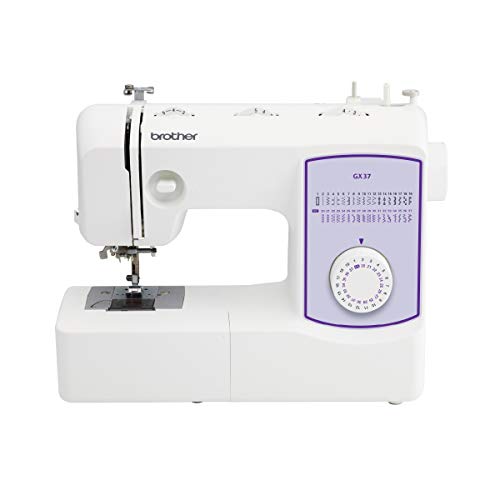
Brother GX37 Sewing Machine — The honest mechanical
The GX37’s title contains a small, telling detail: thirty-seven built-in stitches, six included sewing feet, decorative stitches — and the stitches are conveniently printed on the machine. That last phrase is a philosophy. On this mechanical Brother, the stitch library is not behind a screen or a menu; it is silk-screened on the body, chosen by dial, and visible from across the room. For a substantial tribe of dressmakers — including many who learned on a grandmother’s machine and see no reason to renegotiate the relationship — that directness is not nostalgia, it is workflow: glance, turn, sew.
Thirty-seven stitches in mechanical form covers the garment repertoire with room to spare: construction, zigzag family, stretch options, decorative rows for a hem or a yoke, and buttonhole capability in the mechanical manner. Six feet handle the standard operations. What the GX37 declines to offer is computerized repeatability — no memory, no screen-guided placement — and in exchange it offers the mechanical virtues: immediacy, a control layout that can be operated by fingertip memory while your eyes stay on the fabric, and a simplicity that ages gracefully. Dressmakers who sew by feel, who fit by instinct, and who regard a fitting session as a conversation rather than a computation will find this the most congenial machine in the guide.
- Stitch count: 37 built-in stitches, per the seller’s title
- Stitch reference: stitches printed on the machine itself, from the listing title
- Presser feet: 6 included sewing feet, in the seller’s title
- Decorative stitches: included, per the listing
- Display and threading aids: the listing title makes no claims here — consult the manufacturer documentation for the exact provision
- Where to buy: the Brother GX37 Sewing Machine listing on Amazon — check price on Amazon
Strengths
- Dial-and-print directness: the whole library visible and selectable at a glance.
- A mechanical temperament that suits fitting-led, hands-on dressmaking.
- Six feet cover the core garment operations from the start.
Trade-offs
- No computerized memory or screen guidance for repeated decorative work.
- Thirty-seven stitches is a wardrobe, not an embellishment studio.
- Buttonhole automation is not claimed in the title.
Right for: mechanical loyalists and tactile sewers building a classic wardrobe. Wrong for: dressmakers who want lettering, memory and screen-set precision.

PooLin EOC02 Computerized Sewing Machine — The generous starter
The EOC02’s title reads like a welcome pack: a computerized machine with 200 stitches, seven feet, an LCD screen, a wide table, an automatic needle threader, and a self-description as a friendly sewing machine for beginners, pitched as a gift for mothers and wives. Strip the gift-wrap phrasing and a serious proposition remains — this is the fullest computerized bench in the guide after the SINGER, offered with the two features beginners actually use daily, the threader and the table, rather than with exotic extras. Two hundred stitches gives a new dressmaker room to grow into decorative work without outgrowing the machine in the first year, which is the classic beginner-machine failure this pick seems designed to prevent.
The wide table deserves its recurring praise in garment terms: a beginner’s skirt panel is exactly the workpiece most likely to be dragged crooked by its own overhang, and the table removes that variable while skills are forming. The LCD and automatic threader lower the two thresholds that stall new sewers — choosing settings and threading the needle — to nearly nothing. Where the EOC02 asks for faith is brand depth: PooLin’s name is newer in sewing rooms than Brother’s or Janome’s, and long-term owners are buying into a younger support ecosystem. For the gift-buyer and the self-teaching dressmaker, the balance of bench, table and welcome is genuinely well struck.
- Stitch count: 200 stitches, as printed in the title
- Presser feet: 7 feet included, per the title
- Display: LCD screen, listed in the title
- Work surface: wide table included, from the listing title
- Needle threader: automatic, in the seller’s title
- Buttonhole provision: not detailed in the listing title — verify the style in the manufacturer documentation
- Where to buy: the PooLin EOC02 Computerized Sewing Machine listing on Amazon — check price on Amazon
Strengths
- Two hundred stitches and a wide table give a beginner years of headroom.
- Automatic threading removes the classic first-month frustration.
- The package is plainly designed around a new dressmaker’s real first projects.
Trade-offs
- A younger brand’s long-term parts and service story is still being written.
- Buttonhole mechanics need confirming in the documentation.
- Gift-market framing undersells a bench that experienced sewers could also use happily.
Suits: new and returning dressmakers who want one machine to learn on and keep. Skip it if: brand heritage and a long-established dealer network top your priority list.
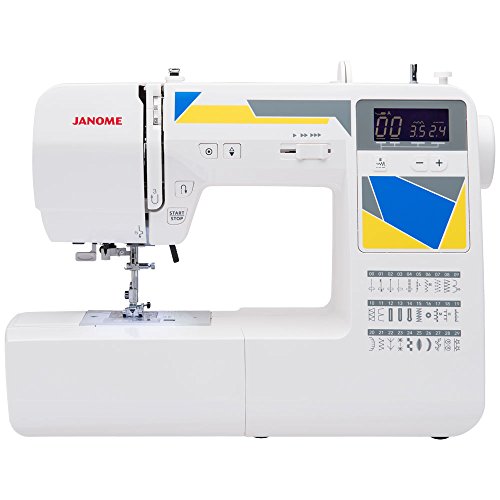
Janome MOD-30 Computerized Sewing Machine — The precise minimalist
Janome’s MOD-30 argues the opposite case from the stitch-count maximalists: thirty built-in stitches, three one-step buttonholes, drop feed, and accessories — a curated bench from a maker whose name dressmakers associate with stitch quality. Thirty stitches, chosen well, is not a small wardrobe; it is the wardrobe with the novelties removed. Construction, finishing, stretch, blind hem, and the decorative core all live inside thirty. What the MOD-30 adds, and what makes it this guide’s precision pick, is the buttonhole provision: three one-step buttonhole styles is a dressmaker’s detail, because blouses, shirt dresses and tailored closures each want their own buttonhole character, and sewing them in one measured step, identically, down a front, is the kind of repeatability that makes a handmade garment read as tailored.
Drop feed completes the portrait. Lowering the feed dogs frees the fabric to move under the needle by hand — free-motion quilting for the dressmaker’s quilted jacket, darning and free embroidery for visible mending, and unobstructed control for the small, curved, fiddly work around collars and cuffs. Janome’s accessories complete a package pitched at sewers who know what each feature is for. The MOD-30 will not letter a monogram or offer two hundred decorative rows; it offers instead the sense — prized by experienced dressmakers — that everything on the machine is there because a garment once needed it.
- Stitch count: 30 built-in stitches, as the listing title has it
- Buttonholes: three one-step buttonholes, per the listing
- Feed: drop feed included, per the title
- Accessories: included, listed in the title; the exact set is a matter for the product details
- Wide table: not mentioned in the listing title — check the manufacturer documentation if panel support is a priority
- Where to buy: the Janome MOD-30 Computerized Sewing Machine listing on Amazon — check price on Amazon
Strengths
- Three one-step buttonhole styles — a tailored-closure specialist’s provision.
- Drop feed serves free-motion work, darning and delicate manoeuvres.
- A curated bench with nothing ornamental standing between the sewer and the garment.
Trade-offs
- Thirty stitches will ceiling-out embellishment ambitions quickly.
- No wide table is promised in the title.
- Its virtues are connoisseur’s virtues; beginners may not feel them for a season.
Best for: precision-minded dressmakers whose garments live or die on closures and finish. Not suited for: decorative sewers who want the library as large as possible.

Portable Sewing Machine for Beginners (12 Stitches, Extension Table) — First garments
Every dressmaker in history began with a first garment, and most first garments are sewn on a machine like this: a compact electric model with twelve built-in stitches, reverse sewing, an LED light, an extension table and a thirty-two-colour thread kit, presented for home crafts and repairs. This guide includes it without condescension, because twelve stitches genuinely contain the grammar of garment sewing — straight stitch, zigzag, a stretch option, a buttonhole method — and a beginner who masters those twelve on real projects has learned dressmaking, not a machine’s menu. The extension table, unusual generosity at this level, supports the skirt panels and dress sections that teach feeding discipline.
The thread kit is a small thing with an outsized effect on a first wardrobe: matching thread is the invisible ingredient in every good-looking seam, and a beginner with thirty-two colours to hand will match, while a beginner with one reel of white will approximate — and learn the wrong lesson about why their seams look home-made. The honest limits are equally clear. Twelve stitches means seam finishes are the zigzag family rather than dedicated overcasting, decorative ambitions wait, and the machine’s compact scale will meet its match in heavy coats and layered tailoring. As the machine a first three garments are made on — and the alterations machine that stays in the cupboard for a decade after — it is a rational, kindly piece of equipment.
- Stitch count: 12 built-in stitches, as the title states it
- Reverse sewing: included, from the listing title
- Lighting: LED light, in the seller’s title
- Work surface: extension table included, per the listing
- Thread: 32-colour thread kit included, per the title
- Buttonhole style and foot set: not itemised in the listing title — see the manufacturer documentation for the details
- Where to buy: the Portable Sewing Machine for Beginners (12 Stitches, Extension Table) listing on Amazon — check price on Amazon
Strengths
- The garment grammar — twelve essential stitches — with an extension table to learn feeding on.
- A thread wardrobe in the box teaches colour-matching from the first seam.
- Compact enough to be the household’s permanent alterations machine afterward.
Trade-offs
- Seam finishing is zigzag-based; dedicated overcast quality comes with the bigger benches.
- Heavy tailoring and thick layers exceed a compact machine’s brief.
- Serious dressmakers will outgrow it — by design, and ideally with gratitude.
Choose it for: first garments, young sewers, and households wanting a permanent hemming-and-mending station. Pass if: you are already sewing weekly and need the bench your projects have begun to request.
Inside the Garment: Seam Finishes That Decide How Long a Dress Lives
Open a well-made dress and the inside reads like a second, quieter garment. Seam finishes are that garment’s construction, and they divide into families by fabric and ambition. The overcast family — zigzag or a dedicated overcasting stitch worked over the raw edge, ideally with an overcast foot guiding the thread around the edge — is the workhorse: fast, washable, honest. It suits medium cottons, linens and most everyday makes, and it is the finish the benches in this guide perform most often. Its limitation is bulk and show-through: on sheer or very light fabrics an overcast edge can print through to the face and stiffen a seam that wanted to melt.
The enclosed family answers for those fabrics. A French seam swallows its own raw edges inside a double stitch line, leaving nothing to fray and nothing to see — the finish of silk blouses, organza and anything translucent, at the price of extra sewing time and a seam that dislikes sharp curves. Hong Kong finishing binds each allowance edge in bias strip, a tailor’s flourish that turns an unlined jacket’s inside into a feature. Bound and flat-felled variants serve denim-adjacent and workwear makes. The machine’s contribution to all of these is unglamorous and total: a straight stitch you can place within a millimetre of a fold, repeatedly, and tension that stays balanced when the fabric sandwich changes from two layers to four mid-seam. When this guide praises a pick’s precision, it is these invisible operations that are being praised — the finishes nobody photographs and everybody’s garments depend on.
Choose finishes at the cutting stage, not the sewing stage, because they consume different allowances: a French seam eats more cloth than an overcast one, and discovering that at the machine means a garment that finishes a size smaller than its toile promised. The pattern’s instructions will suggest; the fabric decides; the machine obeys. Dressmakers who internalise that triangle stop having inside-of-garment accidents, which are the accidents that end dresses.
Zippers Without Tears: The Closure That Tests Everything at Once
More dressmaking confidence has been lost at zippers than at any other operation, and the loss is undeserved, because a zipper is three ordinary skills wearing a frightening name: sew close to a line, through a changing sandwich, with the work kept flat. The centred zipper — teeth hidden under two folded edges — is the apprentice piece: baste the seam closed, press the allowances open, place the zipper face-down on the seam line, stitch the tape through all layers, then remove the basting so the folds fall shut over the teeth. Every element is within a beginner’s reach, and the result looks like tailoring. The invisible zipper, whose teeth roll inside the seam, asks for its dedicated foot and for the seam to be sewn before the zipper is inserted — order of operations is its whole secret.
Where machines earn their keep is clearance and control. A zipper foot that rides beside the teeth without climbing them, speed that can be walked stitch by stitch past the slider, and a needle position that can be nudged to the exact distance the design wants — these are the provisions that turn the operation from a gamble into a routine. The spec boxes above note foot counts because feet are the zipper’s real machinery. Practise the first zipper of any new machine on a fabric sandwich matching the garment’s, with the zipper you will actually use; zippers differ by brand and coil, and the garment is not the place to learn that. After three practised zippers the operation becomes what it should be: the calmest ten minutes of the make.
Hems: The Last Ten Centimetres That Everyone Sees
A hem is the garment’s handshake with the world — the edge every eye reads — and dressmaking offers it more varieties than any other operation. The blind hem, sewn with the blind-hem stitch and foot found across these benches, catches the outer fabric with a few threads and leaves the face nearly unmarked; it is the hem of skirts and trousers that want to look tailored. Its success lives in the fold geometry and a test on the garment’s own cloth: too deep a bite shows, too shallow lets go, and the correct setting is discoverable only on a sample of the actual sandwich.
The narrow rolled hem serves the fluid end of the wardrobe — scarves, ruffles, silk camisoles — turning a raw edge into a thread-wrapped cord of fabric, usually with a specialised foot that folds as it feeds. It is the most magical-looking operation in home sewing and the most practice-hungry; budget a metre of the real fabric for rehearsal and the result will look bought. Bias-bound hems finish the inside and outside in one gesture and suit unlined jackets and children’s dresses that will be seen from both sides. And the humble double-fold machine hem, straight-stitched and pressed, remains the right answer for most everyday garments, provided it is pressed with the seriousness this guide keeps prescribing. Choose the hem by fabric weight, by how the garment moves, and by whether the inside will be seen — then sew it like the headline it is, because at ankle and wrist, it is.
Lining Up the Six for the Dressmaker
| Machine | Stitches (per title) | Buttonhole note | Dressmaking character |
|---|---|---|---|
| SINGER C7290Q | 417 applications + lettering | One-step | Embellishment and full wardrobe |
| Brother XR9550 | 165 built-in | Style per documentation | Balanced principal machine |
| Brother GX37 | 37 built-in | Mechanical manner | Dial-driven classic |
| PooLin EOC02 | 200 stitches | Style per documentation | Beginner-generous computerized |
| Janome MOD-30 | 30 built-in | Three one-step styles | Precision and closures |
| Portable Beginner (12 Stitches) | 12 built-in | Per documentation | First garments and alterations |
A Working Tour of the Fabric Families a Dressmaker Actually Meets
Stable wovens — cotton poplin, linen, light wool suiting — are the craft’s home ground: they stay where they are cut, press like they mean it, and forgive a beginner’s seam. Every machine in this guide sews them beautifully, and they are where a new dressmaker’s first year should be spent. The fluid family — rayon challis, silk, crepe, chiffon — behaves like poured water with an agenda: it shifts under the scissors, slides under the foot, and shows every tension error as a pucker. The answers are a fine needle, a longer stitch, tissue or stabiliser beneath, and a machine whose feeding is gentle and whose starts are clean; the computerized picks’ control is felt here as pure relief.
Knits form the third family and the modern wardrobe’s majority: jersey, ponte, interlock. They demand the stretch stitches and ballpoint needles discussed in the questions below, an unforced feeding hand, and seam finishes that can flex without snapping. Ponte, stable and double-knit, is the family’s diplomat — nearly as obliging as a woven — while single jersey curls at the edges and argues. The fourth family is the special-occasion shelf: lace, sequinned cloth, velvet, satin with a face that bruises. Each has one governing rule — sew lace by its motifs, sequins with the seam-line sequins removed, velvet with the pile all running one way and a foot that does not crush it, satin with a fresh fine needle and no second chances — and a machine that sews slowly and precisely is the common requirement. A dressmaking machine is not really chosen for the family you sew most; it is chosen for whether the family you sew most fearfully still comes out well.
Alterations: The Daily Bread That Pays for the Machine
For every dress sewn from a pattern, a working dressmaker alters a dozen bought garments: hems shortened as fashions and children change, waists taken in, seams let out where a beloved dress has been outgrown by life, straps shortened, linings replaced. Alteration is its own skill — part detective work, reading how the original maker built the garment, part surgery — and it places a premium on exactly the provisions this guide has been cataloguing: a free arm or a bed shape that receives a trouser leg, a blind-hem stitch that matches factory work, buttonholes that can be replicated singly, and feeding gentle enough for a silk lining that exists in exactly one copy in the world.
It is also, not incidentally, how these machines repay their purchase price in a household that never sells a stitch. A wardrobe kept in rotation by skilled alteration outlasts three wardrobes of replacements, and the dressmaker’s friends learn the address. Readers building toward that role should weight the picks by their hemming and closure provisions as much as by their construction benches — which is to say, the balanced machines in the middle of this list are the alterationist’s natural home, and the little portable, parked permanently near the wardrobe, is the alterationist’s trusty second.
How Do You Sew a Dress That Fits — the Toile, the Fit, the Fabric?
The sequence matters more than any single skill. Begin with a toile — a practice version in cheap cloth resembling your fashion fabric’s weight and drape — sewn with long stitches and no finishing, purely to interrogate the fit. Mark it on the body: where it pulls, where it pools, where the waistline wants to live. Transfer those marks to the pattern, not just to the toile, because the pattern is the garment’s memory. Only then cut the real fabric, and cut it generously at the side seams and centre back, because fabric can be taken in at a fitting and cannot be conjured at one.
Sew the real garment in fitting order: the seams that decide fit first, basted; the decorative commitments last. Try it on inside out, with the shoes and underpinnings it will be worn with, and let a mirror — or a brutally honest friend — arbitrate. The machine’s role in all this is the one described earlier: sketch gracefully, then ink. Basting stitches, easy unpicking, and settings you can return to exactly are the features a fitting consumes, and they are distributed across this guide’s picks in proportion to their computerized depth — one more reason the fuller benches earn their place in a serious dressmaking room, and one more reason the little beginner machine, whose basting is perfectly serviceable, remains an honourable place to start.
Embellishment planning belongs in this sequence too, before the fabric is cut rather than after the garment is closed. A monogram sits differently on a finished cuff than on a flat cuff piece, and decorative work of every kind is easier while the garment is still a set of panels. Dressmakers who add surface work regularly eventually explore dedicated equipment — the patch and motif world surveyed in Best Embroidery Machines to Make Patches shows how far that specialisation goes — but the lettering bench on the C7290Q covers the personalisation most wardrobes ever ask for, at the panel stage where it belongs.
Where Do Dressmakers Most Often Go Wrong?
The first error is skipping the toile because the pattern envelope shows a smiling model. Patterns are drafted for an average that no individual body matches, and the toile is where that truth is cheap. The second is choosing fabric by photograph: drape cannot be seen in a listing picture, and a fabric with the wrong drape will make a correct pattern look wrong on the body. Handle cloth, or order the swatch, before committing a garment to it.
Third, seams get finished — or not — as an afterthought, and the inside of the garment ages years faster than the outside. Build the finish into the plan and the stitch selection. Fourth, buttonholes are left to the very end and sewn in a state of fatigue and terror; practise them on the garment’s own fabric sandwich that morning, and sew the real ones while the practise is fresh. Fifth, pressing is treated as ironing’s poor cousin. In dressmaking, pressing is construction: every seam pressed as sewn, in the direction the pattern intends, is a seam that will still be sitting correctly after fifty wears. The machine sews the dress; the iron tailors it. And a household note for readers mid-wardrobe: a sewing room floor collects pins, offcuts and fabric dust at a rate carpets notice, and deep-pile carpet in particular holds onto craft debris — the survey at Best Carpet Cleaning Machines for High-Pile Carpet is the companion for readers whose sewing space doubles as a living space.
The Unsewn Half of Dressmaking: Marking, Pressing and Patience
Ask a professional what separates their garments and they will rarely mention the machine first. Marking is one half of the secret: darts, notches, buttonhole placements and hem lines transferred accurately from pattern to cloth, in a medium that vanishes — chalk, wash-out pen, tailor’s tacks for the fabrics that mock both. A dart marked two millimetres off is a dart sewn two millimetres off, on any machine ever built, which is why the precision this guide praises only pays when the marks it follows deserve it. Cut with the same reverence: grain lines respected, pattern weights instead of pins on slippery cloth, and a blade — shears or rotary — sharp enough that the fabric is cut rather than worried apart.
Pressing is the other half, and it is not ironing. Ironing moves; pressing lifts and sets. Every seam in a well-made garment has been pressed as it was sewn — allowances opened or directed, dart points coaxed flat, edges rolled fractionally to the inside so the seam line never shows on the face. A tailor’s ham and a sleeve roll are not affectations; they are how flat pressing respects a three-dimensional body. Build pressing into the rhythm — sew a seam, press a seam — and the garment assembles itself with a inevitability that no amount of end-stage ironing can imitate. The machines in this guide will sew whatever you put under them; marking and pressing decide whether what you put under them was worth sewing, and that is a compliment to the craft, not a criticism of the machines.
Final Recommendation
Match the machine to the wardrobe you actually intend to build. The dressmaker whose garments carry lettering, decoration and a maker’s signature should start at the C7290Q and never apologise for its surplus. The balanced household dressmaker — the guide’s centre of gravity — belongs with the XR9550’s wide table and complete bench, or with the MOD-30 if closures and precision outrank variety in your affections. Mechanical loyalists have the GX37’s honest dials; new dressmakers have the EOC02’s generous welcome or the little portable’s twelve-stitch grammar school. Whichever you choose, sew a toile first, press everything, and let the second dress be the one in the good fabric — the first is tuition, and every dressmaker you admire paid it.
Frequently Asked Questions
Do I need a computerized machine for dressmaking?
No — generations of superb dressmaking were done on mechanical machines, and the GX37 in this guide continues that line honourably. What computerization buys is repeatability and convenience: identical buttonholes down a front, stitch settings recalled exactly, lettering and decorative rows placed with screen guidance. If your dressmaking leans tailored and embellished, those returns compound. If it leans classic and fitting-led, a mechanical’s directness may suit your hands better. The craft is in the sewer either way.
What is the most important stitch for garments besides straight stitch?
The edge-finishing stitch — zigzag at minimum, overcast where the machine offers it — because it decides how the garment’s inside survives washing and wear. After that, a stretch stitch if you sew knits, and a blind-hem stitch for skirts and trousers. Notice how short that list is: a dressmaking bench is judged by how well it performs perhaps six stitches, which is why this guide weighs coverage and quality over raw counts, while still reporting the counts the titles state.
How do I stop delicate fabrics from puckering?
Puckering is usually a system, not a single fault: thread tension slightly high, stitch length slightly short, a needle slightly too large, and fabric slightly too fluid, conspiring. Answer in order — fit a fine needle, lengthen the stitch a touch, ease the tension, and sew with tissue or stabiliser under slippery cloth if it still misbehaves. Sew a test seam on the garment’s own offcut first and hold it to the light; puckers confess immediately at that stage and forgive cheaply.
Can these machines sew stretch fabrics and knits?
The fuller benches here include stretch stitches among their stated libraries, and stretch sewing succeeds with the right stitch — one that can flex with the fabric — plus a ballpoint needle that parts the knit rather than piercing it. Keep the fabric un-stretched as it feeds; a seam sewn stretched dries into ripples. The compact beginner pick covers knit basics for simple garments, while dedicated knit wardrobes justify the wider benches, where stretch options multiply.
What should my first dressmaking project be?
A simple skirt or a sleeveless top in a stable cotton or linen — garments that teach seams, a closure and a hem without demanding fitting heroics. Avoid slippery fabrics, plaids that must match, and anything with sleeves for the first outing; set-in sleeves are dressmaking’s traditional third-project boss fight. Finish the inside properly even though nobody will see it: the habit formed on garment one is the standard garment twenty will be held to.
Is a wide table really useful for sewing clothes?
More than its quilting origins suggest. Garments are cut and sewn as flat pieces — a skirt panel, a bodice front, a full dress laid open before its side seams close — and a piece that lies supported on a level surface feeds without the sideways drag that an overhanging panel exerts. The result is seams that run where they were pinned, which in dressmaking is the whole game. The table comes off or folds away when the garment turns three-dimensional at the fitting stage, so it costs nothing in agility; while the pieces are flat, it is quietly the most accuracy-enhancing accessory in this guide.
How long should a dressmaking machine last, and what maintenance does it need?
A well-kept machine in this class should measure its life in decades and wardrobes, not seasons. The care it asks is modest and mostly free: brush lint from the bobbin area after linty fabrics, change needles far more often than instinct suggests — a needle is a consumable with a working life of a few garments — oil only where and if the manufacturer directs, and keep the machine covered against dust between projects. Computerized models add one courtesy: surge protection on the socket, because their electronics deserve the same protection as a computer’s. Sewn on schedule and serviced when the stitch quality drifts, the machine you buy for this year’s dresses will hem your grandchildren’s.
Why do my buttonholes look different from each other down a blouse front?
Because something changed between them — fabric layers shifted, the garment was repositioned inconsistently, or fatigue crept into the measuring. One-step mechanisms, as on the C7290Q and the MOD-30’s trio of styles, remove most variables by measuring the button and sewing the identical object repeatedly. Whatever machine you use, sew all the buttonholes in one session, from the same fabric sandwich, marking every position before the first is cut, and cut them only after all are sewn and compared.
Related Guides
A handmade wardrobe deserves laundering that respects it, and readers who have watched a dress shrink will understand why our guide to Best Clothes Dryers That Don’t Shrink Clothes sits naturally beside this one. The cosplay and embroidery companions linked above extend the garment story in their own directions — costume construction on one side, surface decoration on the other — for readers whose sewing refuses to stay in a single category.


