What's inside
- Key Takeaways
- Quick Picks
- How did we assemble this impeller shortlist?
- How do the six impeller routes compare?
- How does a wash plate actually clean without a post?
- When does an agitator still beat an impeller, honestly?
- How should you verify a wash plate before money moves?
- What loading habits make or break an impeller machine?
- Which fabrics and loads suit a wash plate best?
- How do impeller machines behave over years of ownership?
- What does it cost to run a wash-plate machine over a year?
- How does tub size feel different without a central post?
- What should renters and landlords know about this format?
- How do you move from an agitator machine without a painful month?
- What mistakes do impeller buyers repeat most often?
- Final Recommendation
- Frequently Asked Questions
- Related Guides
As an Amazon Associate I earn from qualifying purchases. This post may contain affiliate links at no extra cost to you.
cottageverdict.com is reader-supported. When you buy through links on our site, we may earn an affiliate commission.
Where to buy: the linked machines below are sold on Amazon under the heading names shown here, so open each listing, study its tub photographs for the wash action it actually ships with, and check price on Amazon only after that visual confirmation satisfies you.
The best impeller top-load washers are built around an absence: no post rising from the tub’s centre, no auger twisting through your towels, just a low wash plate at the base that pulses, surges, and rolls the load over itself. That flat floor changes the physics of the wash, the capacity of the tub, and the fate of anything delicate you own. If you have ever unwound a bra strap from an agitator or watched a fitted sheet wrap itself into a rope, the impeller idea needs no further sales pitch.
An impeller, also sold under the plain name wash plate, works by moving water and fabric together in rolling waves. The plate’s fins catch the load, the load tumbles over itself, and cleaning happens as garments flex and rub against each other in a shallow, detergent-rich bath. Because nothing occupies the tub’s centre, the whole volume belongs to laundry, which is why impeller machines often swallow bulky items that an agitator model of similar footprint refuses. The motion is also inherently kinder to fabrics, since nothing twists a garment around a fixed obstacle under tension.
Honesty shapes this particular guide more than most. Only one of the three linked picks, a 4.5 cubic foot machine with a triple-action impeller, actually prints the word impeller in its listing title. The Samsung and LG listings below do not state their wash action in their titles at all, and both reviews say so plainly and instruct you to confirm the wash-plate configuration from the listing’s photographs and specification section before buying. Three further slots are prose-only, covering the impeller ranges of major makers whose full-size machines reach most buyers through dealers rather than clean marketplace listings.
If agitator machines are the subject of a neighbouring guide, consider this one its mirror. The two formats divide households cleanly by laundry temperament: those who prioritise mechanical scrubbing for filthy loads, and those who prioritise space, gentleness, and tangle-free unloading. Neither temperament is wrong. What follows simply serves the second one thoroughly, including its weaknesses, because an impeller asked to do an agitator’s dirtiest work will disappoint exactly the buyers who never learned the difference.
Read the three linked reviews in ascending order of certainty if certainty is what you crave, or in ascending order of ambition if a matched pair is on your horizon; either way, the verification notes are part of the reviews, not fine print beneath them.
Key Takeaways
- A wash plate frees the tub’s centre, so bulky items load more easily and nothing wraps around a central post.
- Only the first linked pick prints the word impeller in its title; the other two require visual confirmation on their listings.
- Impeller cleaning depends on loads rolling over themselves, which means loose loading matters even more than usual.
- Three prose-only slots cover dealer-channel impeller ranges from major makers, with no figures claimed for any of them.
- Gentleness is the format’s gift and its limit: ground-in grime prefers the agitator machines covered elsewhere.
- Tangle-free unloading is a daily quality-of-life gain that owners consistently underrate before purchase.
Quick Picks
| Pick | Badge | Why it earns its place |
|---|---|---|
| 4.5 Cu. Ft. Top Load Washer with Triple Action Impeller | The confirmed impeller pick | The one linked machine whose title names its impeller outright, with Express Wash and AccelaWash behind touch controls. |
| Samsung WA50R5200AW 4.5 Cu. Ft. Top Load Washer | Verify the wash plate first | A 4.5 cubic foot white Samsung top-loader whose title stays silent on wash action, so the listing’s tub photos decide its place here. |
| LG Top Load Washer and Dryer Pair with TurboWash | Pair with a plate to confirm | A matte black mega-capacity pair whose TurboWash story fits the impeller family, though its title never names the wash action. |
| GE’s Impeller Top-Load Range (Prose-Only) | Prose-only showroom range | GE’s dealer-sold wash-plate top-loaders, covered qualitatively because the range reaches most buyers through showrooms, not listings. |
| Maytag’s Impeller Top-Load Range (Prose-Only) | Prose-only heavy-duty lean | Maytag’s wash-plate machines carry the brand’s workhorse reputation into the impeller format, sold mainly through dealers. |
| Whirlpool’s Impeller Top-Load Range (Prose-Only) | Prose-only mainstream range | Whirlpool’s wash-plate top-loaders are a fixture of American laundry showrooms, covered here without a listing or figures. |
How did we assemble this impeller shortlist?
The pool discipline for this batch was unusually strict, because impeller is a claim listings love to imply and titles often omit. A machine earned a linked review only from a verified listing, and the reviews distinguish sharply between what a title states and what a shopper must verify. The 4.5 cubic foot triple-action machine states its impeller outright. The Samsung WA50R5200AW title states capacity, colour, and format only. The LG pair’s title talks about TurboWash, connectivity, and dryer features, not wash action. Each review is written to that evidence and no further.
Balance across the six slots came from mixing the three verifiable listings with three prose-only ranges, chosen because impeller buying in the real world so often happens in a showroom. GE, Maytag, and Whirlpool all sell substantial impeller top-load lines through dealers, and a guide that ignored those ranges would misrepresent the market even while keeping its links tidy. The prose reviews therefore describe each range’s character qualitatively, name the questions to ask in the showroom, and claim no capacities, cycles, or prices for them.
A final selection lens was temperament fit. Every pick was assessed on the jobs impeller machines genuinely excel at: family clothing in volume, bedding and bulky items, delicates that fear twisting, and households unloading laundry in a hurry. Picks were not rewarded for pretending to be heavy scrubbers. A guide that respects what a format cannot do serves its readers better than one that inflates every machine into an all-rounder, and the trade-offs under each review below are written in that spirit throughout.
One further filter deserves naming here as well: no cycle count, spin figure, or dimension appears in these reviews unless a listing title or a plainly general statement about the format supports it, and where the evidence runs out, the sentence says so instead of dressing a guess in confident clothing.
The shortlist also deliberately spans two shopping worlds that rarely share a page: machines you can order tonight from a listing, and ranges you can only evaluate standing in a showroom with a salesperson nearby. Presenting both in one guide, with the evidence standard labelled on each, respects the reader more than pretending the second world does not exist or quietly laundering its machines into listings they never had.
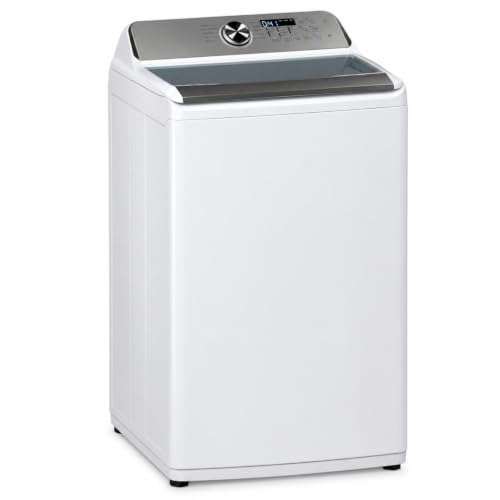
4.5 Cu. Ft. Top Load Washer with Triple Action Impeller — The confirmed impeller pick
Begin with the only certainty on this page. This machine’s listing title says triple action impeller in so many words, describing a 4.5 cubic foot white top-loader built to move loads hard without a central post. Triple action language promises motion in several patterns rather than a single repetitive surge, which matters for impeller sceptics who have watched lesser wash plates merely swish a load in circles while the top layer rides along unwashed. A plate that changes its attack keeps the whole load circulating, bringing buried garments to the surface and returning surface garments to the detergent-rich depths.
The supporting cast in the title will sound familiar to readers of this batch: Express Wash for the small urgent load, AccelaWash as the broader time-saving approach, and touch controls across a flat panel. In an impeller machine the quick cycles deserve particular respect rather than suspicion, because the format’s rolling action reaches full effectiveness quickly on lightly soiled clothing, which is exactly what quick cycles exist to serve. Reserve the longer programmes for bedding, towels, and the week’s accumulated family wash, and the machine’s rhythm will match most households’ real distribution of laundry urgency.
Four and a half cubic feet in an impeller tub behaves larger than the same figure around an agitator, because every litre of the volume is loadable space. A king duvet still deserves its own cycle, but it enters the tub without the wrestling match a central post imposes, and mixed family loads pack around the plate’s low profile naturally. Unloading is where owners convert: laundry lifts out in loose pieces instead of a twisted communal rope, and the morning hunt for a missing sock stops involving an archaeological dig through wrapped sheets.
Choose this machine when the impeller itself is your reason for shopping and you want that reason confirmed by the listing rather than inferred from a photograph. Its weaknesses are the format’s own: truly ground-in soil will still prefer an agitator’s insistence, and the touch panel will still divide households that love dials. Within its intended territory, though, it is the most straightforward recommendation this guide can make, because it is the one linked pick whose central claim needs no verification errand from you.
- Capacity printed in the listing title: 4.5 cu. ft.
- Wash action named in the title: triple action impeller
- Speed features named in the title: Express Wash, AccelaWash
- Controls described in the title: touch controls
- Configuration: standalone washer, white finish
Strengths
- Impeller confirmed by the listing title itself
- Flat tub floor swallows bulky items gracefully
- Quick cycles suit the format’s rolling action
Trade-offs
- Not the tool for habitually ground-in grime
- Touch controls will not convert dial loyalists
- Brand recognition trails the biggest national names
Best for: a buyer who wants the impeller claim verified in writing and a mid-size tub for family clothing and bedding.
Not suited for: a household whose laundry is dominated by mud, grease, and ground-in workwear soil.
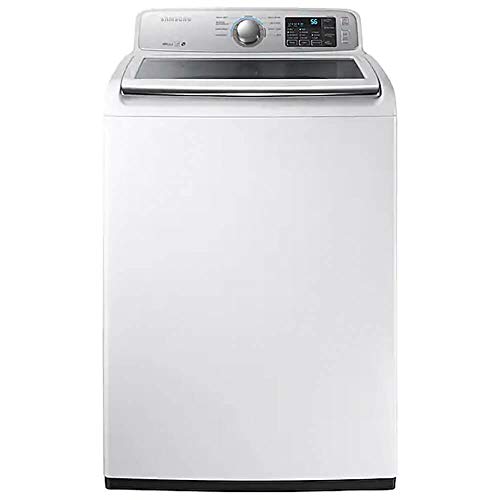
Samsung WA50R5200AW 4.5 Cu. Ft. Top Load Washer — Verify the wash plate first
This Samsung review begins with an instruction rather than a claim. Its listing title states a 4.5 cubic foot white top-load washer and nothing about the mechanism inside the tub, so before this machine earns a place in an impeller shortlist, you must confirm the wash-plate configuration on the listing itself, in its photographs and specification details. Samsung sells top-loaders in both wash-action families, and a model number neighbour can differ from the machine you expect. Treat that two-minute check as part of the purchase, and this review as an assessment of the machine you will have once the check confirms a plate rather than a post.
Assuming the listing confirms the impeller configuration, the proposition is attractive. Samsung’s full-size top-loaders at this capacity are aimed squarely at family laundry, and the 4.5 cubic foot class is the market’s centre of gravity for good reason: big enough for bedding as dedicated loads, civilised on small washes, and sized to the standard laundry footprint most homes already have. A wash plate at this scale gives the tub its full usable volume, which is where the format’s advantage over an agitator machine of identical stated capacity quietly lives.
The brand context matters for a purchase expected to serve for years. Samsung’s laundry distribution and parts ecosystem are extensive, and a model with a long sales history accumulates the kind of owner knowledge, in forums and service benches, that newer listings cannot offer. None of that substitutes for verifying the individual listing in front of you, since marketplace titles and images occasionally lag running changes in a product line. The check protects you from the one error this guide cannot correct after delivery: assuming the tub’s contents from the tub’s capacity.
Buy this machine if the listing’s photographs show the flat wash plate and its specification section agrees, and if a mainstream maker’s 4.5 cubic foot format matches your room and rhythm. Walk away without regret if the listing shows an agitator instead and the impeller was your whole reason for shopping; the confirmed pick above exists precisely for buyers who refuse ambiguity. Either way, let the evidence on the page in front of you, not this guide’s hopes, cast the deciding vote.
- Capacity printed in the listing title: 4.5 cu. ft.
- Wash action in the title: not stated, verification required
- What to check: tub photographs and specifications on the listing
- Colour and format in the title: white, top load
- Configuration: standalone washer
Strengths
- Mainstream capacity from a widely serviced maker
- Full plate volume if the listing confirms impeller
- Long-selling model line with deep owner knowledge
Trade-offs
- Wash action must be verified by the buyer
- Title offers no cycle or feature detail at all
- Neighbouring model variants risk shopper confusion
Best for: a careful shopper happy to verify the tub configuration in exchange for a mainstream 4.5 cubic foot machine.
Not suited for: anyone who wants the impeller claim guaranteed by the title alone.
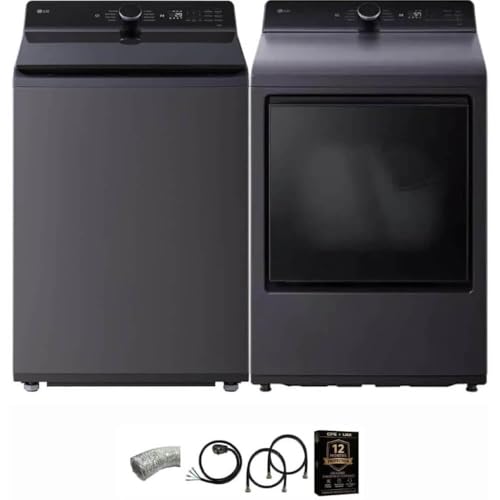
LG Top Load Washer and Dryer Pair with TurboWash — Pair with a plate to confirm
LG’s pair returns to this guide under a different lens than the efficiency one applied elsewhere in the batch. Here the question is whether its washer belongs in an impeller conversation, and the honest answer is conditional. The listing title describes a matte black mega-capacity top-load pair with TurboWash technology, SmartThinQ Wi-Fi, and a dryer offering steam and sensor drying. It does not name the wash action. LG builds much of its top-load identity around wash-plate designs and TurboWash’s intensive water movement suits that architecture, yet suitability is not confirmation, so confirm the plate configuration on the listing before treating this as an impeller purchase.
If the listing confirms the plate, the combination is compelling for a particular household: one replacing both machines, wanting capacity without a post in the tub, and valuing cycle speed. TurboWash aims to shorten thorough washing by intensifying the water’s work, and in a plate machine that intensity arrives as surging currents that roll the load rather than as mechanical stirring. Bulky items benefit most visibly, since a duvet in a plate tub can actually turn over, exposing new surfaces to the wash instead of orbiting a central obstacle in a fixed orientation.
The pair’s practicalities mirror those in its other appearance this batch, and repetition here is deliberate because the facts govern both decisions. The dryer side brings steam and sensor drying per the title, the bundle includes a vent, a power cable, and a twelve-month protection plan per the listing, and the matte black finish will show lint proudly. The title prints no exact washer capacity, calling the machine mega capacity, so measure your space against the listing’s specification section and confirm the tub configuration in the same visit.
Verdict: shortlist this pair if you are replacing both machines and the listing’s tub photographs show the flat plate this guide requires. If they show anything else, the pair may still be an excellent purchase, but it will not be an impeller purchase, and your shortlist should be honest about that distinction even when a bundle’s convenience argues otherwise.
- Capacity wording in the title: mega capacity, no figure printed
- Wash action in the title: not stated, verification required
- Washer technology in the title: TurboWash, SmartThinQ Wi-Fi
- Dryer features in the title: steam dry, sensor dry
- Configuration: washer and dryer pair, matte black
Strengths
- TurboWash suits plate-style rolling wash action
- Pair coherence for dual replacement households
- Steam dryer side reduces over-drying and creasing
Trade-offs
- Impeller configuration needs buyer verification
- Exact capacity absent from the listing title
- Dark finish demands frequent wipe-downs
Best for: a dual-replacement household that confirms the wash plate and wants capacity plus speed in a matched pair.
Not suited for: a washer-only shopper, or anyone unwilling to verify the tub before ordering.
GE’s Impeller Top-Load Range (Prose-Only) — Prose-only showroom range
General Electric’s laundry line includes a substantial family of wash-plate top-loaders, sold under both the GE name and its Profile tier through appliance dealers across the country. No verified marketplace listing for the range sits in this batch’s pool, so this slot is prose-only: no link, no model, and no figures. What can be said fairly is that GE’s impeller offerings occupy the mainstream of the format, spanning the capacity bands most families shop, and that the brand’s service footprint is among the deepest available to American buyers.
The showroom route suits impeller shopping particularly well, because the format’s virtues are tactile. Standing in front of a GE plate machine, you can load the display tub with the store’s towels, feel how the flat floor accepts a bulky pile, and judge the control layout with your own hands rather than a product render. Ask the dealer to state, in writing on the quote, that the configuration quoted is the wash-plate version, since GE sells agitator siblings whose cabinets look near-identical and whose prices can blur together in a busy conversation.
Position the range in premium-mainstream terms: not the cheapest route into impeller washing, and not a boutique purchase either, with the premium buying distribution depth and technician familiarity. Households far from major cities often find that the local dealer’s brand list decides their shortlist for them, and where GE is the locally serviced name, its impeller range becomes the sensible default against which marketplace picks must justify their shipping-and-self-install trade-offs.
If you pursue this route, bring the same discipline you would bring to a listing: room measurements, a photograph of your hookups, and a firm conversation about delivery, levelling, and haul-away. Ask which exact configuration sits behind any quoted figure, plate or post, and let the answer, rather than the badge on the cabinet, determine whether the machine belongs in your impeller shortlist at all.
- Buying route: big-box and dealer floors; the wash-plate configuration is confirmed on the model plate
- Format described: wash-plate top-load range, qualitative only
- Sales channel described: appliance dealers and showrooms
- No capacity, cycle, or feature figure is claimed for this range
- Positioning described in words only: premium-mainstream tier
Strengths
- Deep national service and parts footprint
- Showroom loading tests reveal the format honestly
- Multiple capacity bands under one brand umbrella
Trade-offs
- Quoted pricing resists easy home comparison
- Agitator siblings create real mix-up risk
- Stock and scheduling follow the local dealer
Best for: a buyer in GE service country who wants to handle an impeller machine before committing.
Not suited for: a remote shopper who needs a checkable listing and courier delivery.
Maytag’s Impeller Top-Load Range (Prose-Only) — Prose-only heavy-duty lean
Maytag built its name on machines that treat laundry as work, and its impeller offerings carry that personality into the wash-plate format for buyers who want gentleness without fragility. The range reaches most households through dealers rather than through a verified listing in this batch’s pool, so the coverage here is prose-only and qualitative, with no capacities or cycles claimed. The characterisation that matters is tonal: where other impeller lines emphasise delicacy, Maytag’s pitch leans toward durability and soil handling within the plate format’s natural limits.
That positioning speaks to a real household type: the one that loves the impeller’s open tub and tangle-free unloading but generates laundry closer to the heavy end of domestic soil. Farm-adjacent homes, trades households, and big active families often find pure delicacy-first plate machines underwhelming, and a workhorse-leaning range gives them a showroom conversation worth having. Keep expectations calibrated all the same. A plate, however robust the machine around it, cleans by rolling and flexing, and no brand badge converts that physics into an agitator’s grinding insistence.
Dealer conversations about this range should cover the unglamorous specifics that decide decade-long satisfaction: who services the machine locally, which components the dealer stocks, and how the quoted configuration is built. Ask to see the plate design in the actual tub rather than a brochure rendering, and ask directly how the range handles the loads your household produces most, named specifically, mud, sports kits, pet bedding, rather than laundry in the abstract.
Treat this slot as an invitation to a showroom shortlist rather than a product recommendation, and compare any quote against the delivered cost and verified claims of the linked machines above. If the dealer’s all-in figure, service story, and tub inspection satisfy you, the range earns its place on merit. If the conversation stays vague about configuration or service, the ambiguity itself is your answer.
- Buying route: dealer and big-box channels, with the heavy-duty line best checked in person
- Format described: wash-plate top-load range, qualitative only
- Brand character described: durability-leaning within the format
- No capacity, cycle, or feature figure is claimed for this range
- Positioning described in words only: mainstream to premium tier
Strengths
- Workhorse reputation suits heavier domestic soil
- Open tub keeps the format’s unloading advantages
- Dealer route bundles delivery and service conversation
Trade-offs
- Physics still caps soil aggression below agitator level
- No listing means no home verification of claims
- Local dealer quality varies by region
Best for: a heavy-laundry household wanting impeller convenience with a durability-first brand character.
Not suited for: a buyer expecting agitator-grade scrubbing from any wash plate.
Whirlpool’s Impeller Top-Load Range (Prose-Only) — Prose-only mainstream range
Whirlpool’s presence in American laundry rooms is so longstanding that its impeller top-loaders function as many shoppers’ default reference for the format, the machines relatives own and showrooms stock in depth. The range is covered here as prose-only because this batch’s verified pool holds no clean listing for it, and the review therefore claims no capacities, cycles, or features. What can be said is structural: the range spans the mainstream heart of the market, and its ubiquity means independent technicians across the country know these machines intimately.
That familiarity is a genuine ownership asset. A washer is a decade-long relationship with occasional service events, and a range that any competent local technician has opened a hundred times shortens every repair conversation. Showroom stock depth helps too: impeller configurations can be compared across the range’s own tiers in one visit, letting a buyer feel the difference between control layouts and tub sizes without cross-brand noise confusing the judgement.
The mainstream position carries mainstream cautions. Broad ranges include forgettable configurations alongside strong ones, so the specific machine in front of you, its plate design, its control feel, its tub depth against your reach, matters more than the badge. Insist on identifying the exact configuration being quoted, confirm in the showroom that it is the wash-plate build, and resist tier creep where a salesperson steers you upward through features your laundry will never request.
Close the comparison the way this guide closes every prose-only slot: with the dealer’s complete delivered figure on paper, set beside the verified linked picks above. Whirlpool’s range will win some of those comparisons on service logic alone, and lose others on transparency, and either outcome is a success for the method, because the decision will have been made on evidence rather than on familiarity’s comfortable gravity.
- Buying route: mainstream retail channels; confirm the wash-plate version before ordering
- Format described: wash-plate top-load range, qualitative only
- Market position described: mainstream, widely stocked
- No capacity, cycle, or feature figure is claimed for this range
- Service note: technician familiarity is the range’s quiet asset
Strengths
- Ubiquity shortens every future repair conversation
- Deep showroom stock enables within-range comparison
- Mainstream tiers cover most family requirements
Trade-offs
- Broad range quality varies by configuration
- Badge familiarity can dull critical inspection
- Quoted pricing still resists home comparison
Best for: a buyer who values service familiarity and showroom choice above listing transparency.
Not suited for: a shopper who wants every claim checkable from the sofa.
How do the six impeller routes compare?
| Pick | At a glance |
|---|---|
| 4.5 Cu. Ft. Top Load Washer with Triple Action Impeller | 4.5 cu. ft., impeller stated in title, standalone. |
| Samsung WA50R5200AW 4.5 Cu. Ft. Top Load Washer | 4.5 cu. ft., wash action unprinted, verify on listing. |
| LG Top Load Washer and Dryer Pair with TurboWash | Mega-capacity pair, TurboWash, plate to be verified. |
| GE’s Impeller Top-Load Range (Prose-Only) | Prose-only dealer range; no figures claimed. |
| Maytag’s Impeller Top-Load Range (Prose-Only) | Prose-only dealer range; durability-leaning, no figures. |
| Whirlpool’s Impeller Top-Load Range (Prose-Only) | Prose-only dealer range; mainstream, no figures claimed. |
How does a wash plate actually clean without a post?
The mechanism rewards a moment’s visualisation. The plate at the tub’s base carries fins or a contoured surface, and as it pulses and reverses, it drags water into currents that lift one side of the load while the other side settles. Garments ride those currents over the pile’s crest and tumble down its face, flexing as they fold and unfold. Soil leaves fabric through that repeated flexing, helped by detergent solution that the motion keeps exchanging at every fibre surface. It resembles, in slow motion, the way a river sorts and cleans what it carries, and it explains both the format’s gentleness and its dependence on movement room.
That dependence is the operating rule owners must internalise. A plate machine with space to roll its load cleans beautifully; the same machine packed to the lid merely vibrates a compressed mass in place, and the centre of that mass can emerge barely washed. Load to a loose dome, distribute bulk evenly, and leave visible headroom under the lid. When in doubt, split the load. Two free-moving washes outperform one imprisoned one on every measure that matters, including total time once rewash cycles enter the honest accounting.
Water level interacts with the mechanism in a way that surprises agitator veterans. The shallow bath is not a compromise imposed on the design; it is the medium the currents work in, concentrated with detergent and constantly exchanged. Adding water dilutes the solution and damps the rolling action, which is why deep-fill overrides, where they exist, should be reserved for specific bulky items that need immersion to wet through rather than applied as a philosophy. Trust the shallows, measure the detergent, and give the plate room to dance.
When does an agitator still beat an impeller, honestly?
Soil type decides this argument more than brand loyalty ever will. Ground-in dirt, the kind worked into fibres by friction and time, workshop grime, garden knees, mechanic’s cuffs, responds to mechanical insistence, and an agitator’s post delivers insistence with every stroke. An impeller will improve such loads, sometimes substantially across a long cycle, yet a household whose laundry is dominated by that soil profile will spend years vaguely dissatisfied with a plate machine, blaming detergents and cycles for what is actually a format mismatch chosen on day one.
Load composition writes the second chapter. Mixed family clothing, bedding, towels, and delicates all favour the plate, while loads built around a few extremely dirty items favour the post. Many households sit between the profiles, and for them the honest tiebreakers are secondary: tangle tolerance, tub volume needs, the height and reach of the primary user, and whether bulky items feature weekly. A household washing a duvet every week should weight the plate’s open tub heavily even if its workwear would marginally prefer a post.
There is also a wardrobe-longevity ledger that rarely enters the showroom conversation. Agitator action, especially older and more vigorous designs, is harder on seams, elastic, prints, and knit structures across hundreds of cycles. Families who keep clothes for years, sew, or buy quality garments they expect to last may rationally accept slightly less aggression on the dirtiest loads in exchange for gentleness on everything else. The impeller is not the soft option in a dismissive sense. It is the option that prices garment life into the decision.
How should you verify a wash plate before money moves?
Start with the listing’s own evidence, in a fixed order. Read the title for an explicit wash-action statement, as the triple-action pick on this page provides. Then study the tub photographs: a plate machine shows a low, dished base with no central post, while an agitator is unmistakable once seen. Then find the specification section and look for the manufacturer’s own wash-action wording. When all three agree, you have certainty. When they conflict, believe the photographs and the specification over any headline shorthand, and contact the seller if doubt survives.
In a showroom the same discipline applies with better tools. Open the lid of the exact configuration being quoted, not a neighbouring display model, and look at the tub with your own eyes. Ask the salesperson to confirm the configuration in writing on the quote, because cabinets within a range are often visually identical across wash actions and a delivery-day discovery helps nobody. If a quote’s model identifier can be checked against the manufacturer’s own site from your phone in the store, do it standing there, politely and without apology.
Finally, verify the surrounding facts while you are in verification mode: the machine’s dimensions against your room, its capacity class against your loads, and the seller’s returns reality against your risk tolerance. Wash-action confusion is the famous error in this category, but it travels with quieter cousins, the dryer that does not match, the doorway that does not clear, the outlet that does not suit. Ten minutes of checking before purchase outperforms ten days of remedy afterwards, every time.
What loading habits make or break an impeller machine?
Place laundry in loose handfuls around the tub rather than dropping in a single compressed hamper-ball, and alternate heavy and light items so the rolling action can circulate the mixture. The plate needs a load it can lift unevenly; a uniform dense mass defeats the asymmetry the currents depend on. Sheets deserve special handling: feed them in loosely gathered, never folded or balled, because a balled sheet becomes a waterproof parcel that carries other garments into its folds and hides them from the wash entirely.
Sequence matters on bedding days. Wash the duvet or comforter alone, let it roll freely, and resist adding towels as ballast unless the machine’s own guidance invites it, since mixed bulk often migrates into one heavy sector that triggers repeated balance corrections. For everyday mixed loads, zip closed anything with straps or cords, turn printed garments inside out, and keep the total fill visibly below the lid with headroom to spare. These are thirty-second habits that decide whether the format delights or disappoints.
Detergent discipline completes the picture. Plate machines concentrate their chemistry in shallow water, so measured doses of high-efficiency detergent do the work while excess merely coats. If loads emerge feeling slick or looking dull, reduce the dose before changing anything else, and if they emerge under-cleaned, check loading freedom before increasing it. Nine times in ten, the machine is reporting a loading problem in the only language it has, and the owner who learns to read that language stops shopping for a replacement they do not need.
Which fabrics and loads suit a wash plate best?
Delicates and knits are the format’s home crowd. Without a post to wrap around, straps stay untangled, lace avoids tension tears, and knit structures keep their shape across far more cycles than an agitator would grant them. Swimwear, athletic kit, and anything elastic joins the same happy category, emerging from the spin in loose, separate pieces that unload in seconds. Owners upgrading from an old agitator machine often describe the first impeller unload as the moment of conversion, because the absence of the communal laundry rope is felt physically, in the shoulders, every single wash day.
Bedding and bulky household textiles form the second constituency. The open tub accepts duvets, blankets, and mattress protectors without the folding negotiations a post imposes, and the rolling action turns them over in a way that fixed-orientation washing cannot. Pet bedding belongs here too, with the caveat that loose hair should be shaken out beforehand, since plate machines move hair into their filters and drains across the load rather than trapping it centrally.
The loads to manage carefully are the extremes of soil and delicacy at once: the mud-caked sports kit that is also technically a delicate synthetic, the vintage garment carrying decades of grime. For those, pre-treatment at the sink, a mesh bag for protection, and the longest suitable cycle form the honest compromise. No format wins every load, and the impeller’s owners thrive when they accept its map of strengths rather than demanding it redraw the borders weekly.
How do impeller machines behave over years of ownership?
Mechanically, the format removes one wear item and keeps the rest. There is no agitator to loosen, strip its drive, or crack at its base, yet suspension, bearings, pumps, and electronics carry the same service story as any modern washer, which means installation quality and loading discipline still write the longevity script. A plate machine that spends its life balanced and unoverloaded will serve like any well-kept appliance. One that is routinely stuffed will protest through its suspension long before its plate shows any wear at all.
Cleaning the machine itself is refreshingly simple. The plate’s low profile leaves fewer crevices than a post’s base, dispensers still want a monthly rinse, and the lid-up drying habit still prevents the stale odour that low-water machines can develop when sealed damp. Owners coming from front-load machines will find the hygiene burden lighter here, since there is no door gasket ecosystem to manage, only a tub, a plate, and a drawer asking for ordinary attention.
Resale and household handover deserve a closing thought, because impeller machines explain themselves poorly to the uninitiated. If the machine will serve renters, relatives, or a future buyer, leave the manual’s loading guidance where it can be found and consider a note on the lid’s inside about loose loading and measured detergent. The format’s reputation suffers mostly from inherited misuse, and a machine handed over with its method intact keeps delighting the next household instead of confusing it.
What does it cost to run a wash-plate machine over a year?
The running-cost story mirrors the broader high-efficiency picture with one plate-specific twist. Water and detergent consumption follow the shallow-bath method, so the savings against an old deep-fill machine accumulate load by load, and the vigorous spin common to these designs shortens dryer time afterwards. The twist is behavioural: owners who exploit the open tub by running fewer, larger loads save the most, while owners who keep old small-load habits save mainly on water per cycle. Either pattern beats the machine it replaced, but the household that reorganises its rhythm around the tub’s real capacity banks the full dividend.
Detergent deserves its own line in the ledger because plate machines expose waste so clearly. Excess suds visibly cushion the rolling action, so overdosing literally slows the cleaning you paid for, then charges you again in extra rinses. Measured dosing is therefore not frugality theatre in this format; it is performance maintenance that also happens to stretch every bottle. Across a year of family laundry, the difference between habitual and measured dosing can fund the machine’s own cleaning supplies several times over, with cleaner results as the larger prize.
How does tub size feel different without a central post?
Stated capacity and usable capacity diverge more in this format than any other, in the buyer’s favour. A 4.5 cubic foot impeller tub offers nearly all of its volume to laundry, arranged around a base that barely intrudes, while the same figure around an agitator surrenders its centre to the mechanism. The difference shows with awkward items: a sleeping bag, a washable rug with a flexible backing, a week’s accumulation of hoodies. Each settles into a plate tub in one motion, where a post design asks for folding choreography that some items simply refuse.
Depth perception changes too. Without the post as a visual reference, owners misjudge fill level at first, usually upward, because the tub looks emptier than it is. The learning aid is your own laundry basket: one standard basket, loosely filled, is a sane unit for a mid-size plate tub, and two baskets demand either a genuinely large machine or a split wash. A month of basket-based loading calibrates the eye better than any capacity sticker, and once calibrated, the format’s space advantage becomes a weekly pleasure rather than an occasional surprise.
What should renters and landlords know about this format?
Impeller machines appear increasingly in rental housing because their open tubs handle varied tenant laundry without a post to damage or be damaged, yet the format’s one behavioural demand, loose loading, is exactly what an uninstructed tenant will not supply. Landlords choosing a plate machine for a rental should pair it with the simplest possible instruction left at the property: load loosely, dose to the marked line, wash bulky items singly. A laminated card on the laundry wall protects the appliance more effectively than any extended service plan sold alongside it.
Tenants inheriting an unfamiliar plate machine should resist judging it by the first load, especially if that load was a stuffed one. Run a moderate, loosely loaded wash with measured detergent and watch the difference before concluding the machine is weak. Most impeller disappointment in rental settings is a methods problem wearing a machine’s face, and methods can be corrected in one cycle, free of charge, by the person standing in front of the controls.
How do you move from an agitator machine without a painful month?
Expect a short apprenticeship and plan for it rather than resenting it. The first week with a plate machine feels wrong to agitator veterans: the water looks low, the motion looks lazy, and the finished load looks suspiciously peaceful. Judge nothing until the laundry has been worn, slept in, and inspected in daylight, because the format’s results announce themselves on the body and the bed rather than in the tub. Most converts report that the suspicion evaporates somewhere around the second bedding wash, when a duvet emerges evenly cleaned from a machine it entered without a wrestling match.
Carry over nothing from the old routine except your sorting habits. Detergent doses shrink, load sizes grow looser, and the urge to intervene mid-cycle, to poke the load down or add a companion item, should be treated as nostalgia rather than expertise. Give the new method a dozen honest cycles before adjusting anything, then change one variable at a time if results disappoint. Households that grant the format that fair trial almost never go back, and the few that do at least return knowing the difference was temperament, not quality.
What mistakes do impeller buyers repeat most often?
Assuming the wash action from the brand or the cabinet shape leads the list. Ranges sell plate and post siblings in near-identical bodies, titles omit the mechanism, and the only reliable witnesses are the listing’s tub photographs, its specification section, and, in a showroom, your own eyes under the lid of the exact unit being quoted.
Stuffing the open tub is the second classic error, because the empty centre invites one more blanket, one more towel, until the load cannot roll. An impeller’s capacity figure assumes movement room. Fill to a loose dome with headroom beneath the lid, and split any load that compresses under its own weight when you press it down with a palm.
Third, owners judge the format by its fastest cycle on their dirtiest load, then declare the technology weak. Quick cycles are for light soil across every format. Give the machine its long programme, honest dosing, and a freely moving load for the weekly family wash, and judge it on that evidence instead, the way you would judge any tool by its intended use.
Finally, shoppers overlook unloading as a feature. The minutes and annoyance saved by lifting out loose garments instead of untwisting a rope, multiplied across years of laundry, amount to one of the format’s largest real benefits, yet it appears in no specification table. Weigh it anyway. Daily friction, or its absence, is what ownership actually feels like.
A quieter mistake is buying the plate for a household that will never load it as designed, because several people share the machine and none of them read guides. Where laundry is a communal free-for-all, choose the format whose failure mode you can live with, and be honest that you are buying forgiveness rather than finesse.
Final Recommendation
For a confirmed impeller with no verification errand attached, the triple-action 4.5 cubic foot pick leads this guide, and the Samsung joins it the moment its listing’s photographs confirm the plate. The LG pair serves dual-replacement households under the same condition. The three prose-only ranges serve buyers whose local service landscape matters more than any listing, and each earns its slot by representing how this market genuinely works.
If your laundry life is tangles, twisted straps, and bulky bedding wrestling a central post, the wash plate was designed as your answer, and a carefully verified machine from this page will keep proving it, load after loose and gentle load, for years.
Verify first, load loosely, dose honestly: those three habits, applied faithfully to any machine on this page, will do more for your laundry week after week than the difference between any two picks printed here ever could.
Frequently Asked Questions
Is an impeller the same thing as a wash plate?
Yes, the two terms describe the same low disc at the tub’s base, with impeller used more in model names and wash plate in general discussion. Both distinguish the design from a central agitator post.
Do impeller washers use less water than agitator models?
They are generally high-efficiency designs that wash in shallow water, though an HE agitator model can be similarly frugal. The plate’s main advantages are tub space and gentleness rather than a unique claim on low consumption.
Can an impeller handle a king-size duvet?
The open tub accepts bulky items more easily than a post design, and a duvet washed alone with room to roll is the format at its best. Check the specific machine’s capacity class and load it singly rather than with companions.
Why does my impeller load come out tangled anyway?
Tangling usually traces to balled sheets or an overfilled tub that could not circulate. Feed sheets in loosely gathered, keep headroom under the lid, and the rolling action separates garments instead of winding them together.
Are impeller machines quieter than agitator models?
Owners often perceive them as calmer because the load rolls rather than being stirred around a post, but installation, floor, and load balance influence noise more than wash action alone. Judge noise in context rather than by format label.
Should I choose impeller or agitator for a rental property?
Consider who will load the machine. Impellers reward loose loading and punish stuffing, while agitators forgive rough habits but twist laundry. For unsupervised tenants, durability of the overall machine and local service access may outweigh the wash-action debate entirely.
Related Guides
Continue around the laundry room and the linen shelf from here: compare the scrub-first tradition in Best Top-Load Washers for Large Families Best Clothes Dryers That Don’t Shrink Clothes Best Compact Portable Dryers Best Absorbent and Quick-Drying Bath Towels.